I’ve spent a lot of time with Derek over the years. We did plenty of sparring very early on in my career. Since then, I see him around all the time because Derek is absolutely everywhere – at every show and every event.
He has always been congratulatory of me, almost proud of me in a sense. I remember when I won my British title, he was one of the first people to FaceTime me the next morning to say well done.
Derek was also one of the only people, aside from my own team, who backed me going into both the Joseph Parker and Daniel Dubois fights. He’s always been on my side, so I’ve got a lot of love and respect for him.
When I first heard about him taking on Wilder – I have to be honest, it was quite a surprise.
Advertisement
It seemed like both guys had bigger fish to fry – there was talk of Derek getting a world-title shot against me, and Wilder was being lined up by Oleksandr Usyk.
Pulling away from those possibilities to fight each other was random, but the more I thought about it, the more it made sense.
This has that intriguing dynamic of two guys with 50 fights each. For me, it’s really a question of who’s still got what in the tank.
The momentum is with Derek. He’s been in with more lively opponents, proving himself better. He’s still got the energy, the durability and the power to deal with opponents and give them problems.
The housing construction company is looking to submit a planning application soon
A housing construction company is looking to submit a planning application to use farmland on the edge a Cambridgeshire town for a new housing development. Bellway Strategic Land wants to use Dexter’s Farm, which can be found along the A1198 just outside Godmanchester, to create a residential development of up to 260 new homes.
Advertisement
Bellway’s proposal says the area would feature up to 260 new homes with around 80 of them being affordable to help people “get onto the housing ladder”. In its proposal, Bellway said: “In the East of England, Huntingdonshire has the fifth highest number of people on the housing waiting list register and therefore has some of the most acute need in terms of affordable housing.”
Huntingdonshire District Council has identified the area as a potential site for new homes. The site has been described as “well-located” with a primary school close by, local facilities including a Co-op food store, and good transport links.
As well as homes, the site will also features green spaces including habitats for wildlife and play areas for children. A new roundabout would be created on the A1198 and the 30mph speed limit will be extended to slow traffic around the area.
Bellway ran a public consultation period from Friday, February 13, until Friday, February 27, to allow residents to share their opinions on the possible new development. The company is planning to submit its application by the end of spring.
Advertisement
Residents will then be notified by Huntingdonshire District Council and will have the opportunity to provide feedback on the plans.
To get more news and top stories delivered directly to your phone, join our new WhatsApp community.Click this linkto receive your daily dose of CambridgeshireLive content.
We also treat our community members to special offers, promotions, and adverts from us and our partners. If you don’t like our community, you can check out any time you like. If you’re curious, you can read ourPrivacy Notice.
The news came as a major shock to the region’s golfing community – with a letter from the owners, who took over in 2018, saying it was an “incredibly difficult decision”.
Since the announcement to members, questions have remained over the future of the 18-hole course and what will become of the site.
Speculation has been rife over what could become of the land – with some fearing it could be used to facilitate new housing developments.
Advertisement
Dinsdale Golf Club (Image: SARAH CALDECOTT)
But Darlington Borough Council has now confirmed that no planning applications have been made in relation to the site.
A council spokesperson said: “We have not received any planning applications in relation to the golf club.”
It comes after Cllr Colin Pease, independent ward councillor for Sadberge and Middleton St George, said last week that he was told no enquiries had been made about the land.
Dinsdale Spa is now the third course near or in Darlington to close in recent times after the original Blackwell Grange course in 2013 and Hallgarth Hotel’s nine holes in 2025.
Advertisement
The owners of the Dinsdale Golf Club have not issued a public statement on the closure, but did send a letter to members confirming the news.
The letter said: “There is never a perfect way to make these announcements, however, we wanted to write to you personally to let you know that Dinsdale Golf Club will be closing from April 1.
Dinsdale Golf Club (Image: SARAH CALDECOTT)
“This has been an incredibly difficult decision and not one we have taken lightly.
“Since arriving in 2018, we have poured our hearts into the club, improving the course, enhancing the facilities and rebuilding Dinsdale.
Advertisement
“The club has been far more than a business to us, it’s been a central part of our lives.
“However, after dedicating ourselves fully to the day-to-day demands, we have come to the decision that now is the right time to step away and prioritise our families and other parts of life that have taken a back seat for far too long.”
Many have voiced their sadness over the closure of the club, including Hurworth Councillor Lorraine Tostevin, who said it was a “real shame”.
The Northern Echo has attempted to contact the club owners on several occasions but has yet to receive any correspondence.
Pedro Pascal worked in the entertainment industry for decades before being catapulted to worldwide fame after appearances in hit shows like Game of Thrones, The Mandalorian and many more
Jess Flaherty Senior News Reporter
06:01, 01 Apr 2026
Pedro Pascal’s coffee order caused a flurry of division among fans. The beloved actor, who turns 51 this week, has enjoyed a surge in popularity in recent years, after decades of work which went relatively unnoticed to wider audiences.
The Mandalorian star had worked for around 20 years in the industry, taking small bit parts on television shows – including a one episode stint in the season four premiere of the cult classic series Buffy the Vampire Slayer – as well on stage, before finally getting his big break when he was cast as the swashbuckling, quick-witted Oberyn Martell on HBO’s Game of Thrones in 2014.
He followed this with a lead role in Netflix’s crime series, Narcos, before being catapulted to global superstardom by playing Din Djarin in the Disney+ science fiction series, The Mandalorian, which ran from 2019 until 2023.
Advertisement
In 2023, Pascal was cast as Joel Miller in HBO’s post-apocalyptic drama, The Last of Us, opposite Bella Ramsey, and he has acted in a string of film roles.
His celebrity status has come with major internet fame, with countless fans playfully branding him “daddy” thanks, in part, to his many father figure roles and his charming, affable nature in real life.
The acclaimed actor’s Starbucks order drew major attention when it was shared online. Originally, a fan filmed a lucky chance-meeting with the star on the streets of New York, where he signed a Mandalorian doll for her.
In the footage, he was seen dressed in a Canada Goose jacket and jeans, while holding a bottle of water and a clear Starbucks takeaway cup, with his order ticket still attached.
Advertisement
Eagle-eyed fans were quick to decipher exactly what he’d ordered from the renowned coffee shop chain – an “ice [quadruple] espresso in a Venti cup, extra ice, six shots”.
Content cannot be displayed without consent
A screenshot of the fan video was shared on Reddit, where someone wrote: “I’m not a coffee drinker but according to the Internet that is A LOT of caffeine. I just thought this might be interesting to y’all since Starbucks orders are always fun intel!”
In the comments section, fellow Reddit users were keen to share their thoughts. One person said: “Lol I just watched his Hot Ones interview where he says he can’t get a good night’s sleep…”
Another quipped: “Dude definitely has manic highly caffeinated vibes lmao.”
Advertisement
Some theorised his Chilean-American roots may have something to do with his preference for stronger coffee.
One said: “Coffee in the US is not at all as strong as it is in Latin America so I get him.”
Another agreed: “I know people who get this, it’s basically a strong iced Americano. The point is to get extra ice and a bigger cup so that the ice melts and dilutes the espresso but the drink stays cool.
“It’s popular with people who come from places where the coffee is stronger than standard US or Canadian coffee.”
Advertisement
Someone else said: “His order is not nearly as bad as the coffee wannabe drinks people have created for them at Starbucks with 1,000,000 grams of sugar and milk.”
Many fans were adamant his order wasn’t weird or unusual.
On the original TikTok video, one social media user said: “How the hell he be drinking that?? I would stay awake for an entire week.”
Another said: “BRO GETS SIX SHOTS???” And another added: “I love that he drinks a 6 shotter over some ice.”
Indian consumers could soon face higher beer prices and potential supply disruptions as global brewers operating in the country grapple with escalating costs driven by a gas shortage linked to the Iran war.
The conflict has led to a surge in the price of glass bottles and significant shipping delays for aluminium, crucial for can production.
India, the world’s fourth-largest importer of natural gas, is particularly susceptible to fuel availability issues, relying heavily on the Middle East for its supply, with approximately 40 per cent sourced from Qatar.
Iranian attacks have partially hampered Qatar’s export capacity, tightening gas availability for Indian manufacturers.
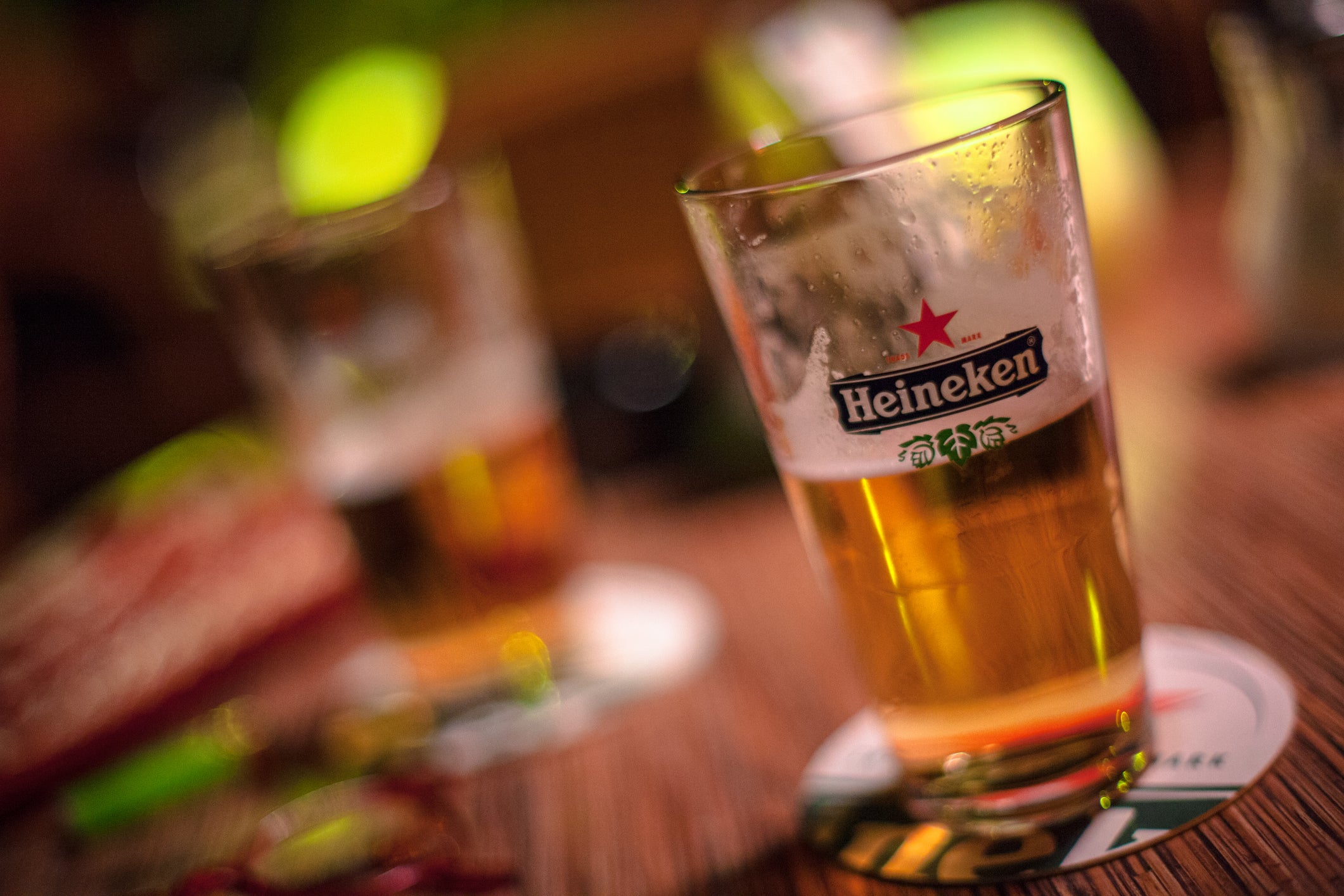
The Brewers Association of India, representing major players such as Heineken, said glass bottle prices have soared by around 20 per cent. (Getty/iStock)
The Brewers Association of India, representing major players such as Heineken, Anheuser-Busch InBev, and Carlsberg, informed Reuters that glass bottle prices have soared by around 20 per cent. Additionally, paper carton rates have doubled, alongside increases for other essential packaging materials like labels and tape.
Gas is essential to keeping furnaces and production lines running, and shortages have forced several glass bottle makers to partially or fully halt operations.
Advertisement
Aluminium can suppliers have also warned of possible reductions just as India heads into its peak summer season, when beer sales typically rise.
“We are asking for price increases in the range of 12-15 per cent,” the association’s director general Vinod Giri told Reuters. “We have advised our member companies to individually approach states.”
The rising cost of production is making some operations unsustainable, he added.
Heineken’s India unit United Breweries UBBW.NS, Anheuser-Busch InBev and Carlsberg did not respond to Reuters queries.
Advertisement
The market was worth $7.8 billion in 2024, and is expected to double by 2030, Grand View Research says. Heineken alone accounts for roughly half the market, while AB InBev and Carlsberg each account for 19 per cent, the association said.
While the three companies dominate India’s beer sector, many smaller players such as Bira and Simba also operate in the market.
Glass and plastics industry crisis
Beer and liquor sales in India have grown steadily alongside rising urbanisation and a young, increasingly affluent population.
Advertisement
The Confederation of Indian Alcoholic Beverage Companies, which represents many domestic companies, said it has written to several states seeking price adjustments to offset rising freight, logistics and input costs.
India’s alcohol sector is tightly regulated, and raising retail prices typically requires approval. Around two-thirds of India’s 28 states must authorise changes.
“Brewers may find it difficult to maintain supplies in states that do not allow price increases,” the association said.
Some glass bottle vendors are warning their clients of reduced supplies and have increased their prices.
Advertisement
Nitin Agarwal, CEO of Fine Art Glass Works in Firozabad, a glass-making hub in northern Uttar Pradesh state, said he has cut production by 40 per cent at his glass bottle making factory due to gas shortages. His customers include many liquor companies as well as producers of juice and ketchup bottles.
“We’ve cut production and increased prices by 17-18 per cent,” Agarwal said.
The shortages have already affected India’s $5 billion bottled water market with some producers increasing prices by 11 per cent due to rising rates of plastic bottles and caps.
And there are signs the crisis is spreading.
Advertisement
An executive at Lotte Chilsung Beverage, one of the leading South Korean soft drinks companies, told Reuters that it has up to three months of inventory for plastic bottles and plastic materials.
Dr Emily Leeming says we are consuming ‘only about 60 per cent of the essential nutrient for heart health, blood sugar balance and gut health
Howard Lloyd Regional content editor, Sophie Buchan Money and Lifestyle Writer and Chloe Dobinson Digital Production Editor
04:00, 01 Apr 2026
A health expert has called on Brits to boost their consumption of a particular nutrient renowned for lowering cholesterol, managing blood sugar, and keeping you feeling fuller for longer. According to the National Diet and Nutrition Survey, more than 90 per cent of adults in the UK aren’t getting enough fibre.
Dr Emily Leeming, a scientist, dietician and author, describes it as the ‘forgotten nutrient’, observing that the average British person consumes just around 60 per cent of the recommended daily intake. The NHS highlights that a diet rich in fibre is associated with a lower risk of heart disease, stroke, type 2 diabetes and bowel cancer, reports Surrey Live.
Yet, targeting roughly 30g daily can help maintain a healthy, balanced diet. To put this into context, half a cup of porridge oats delivers 9g of fibre, while two carrots provide 6g. An apple offers approximately 5g, and a pear adds 6g.
Advertisement
Dr Leeming explained: “We’re missing about 40 per cent of that recommended 30 grammes of fibre that we need a day.”
She went on to stress the significance of this neglected nutrient: “This forgotten nutrient that we need to be paying attention to. It helps with your heart health, it helps to soak up bad cholesterol for that to be removed from your body as waste, it helps to balance your blood sugar levels, giving you longer-lasting energy, so it’s not only just helping with your gut microbiome, it’s having many other benefits in your body too.”
Why fibre matters
Fibre is a plant-based carbohydrate found in foods such as wholegrains and vegetables, commonly referred to as roughage. It’s essential for keeping your digestive system working properly.
By feeding the good bacteria in the large intestine, it helps create a varied and healthy microbiome (the community of gut bacteria). This can reduce inflammation in the intestines while potentially lowering the risk of both diverticulitis and bowel cancer, reports the Express.
Advertisement
Studies show that eating fibre-rich foods can support weight management by keeping you feeling fuller for longer. Choosing high-fibre options increases satiety, while a diet rich in fibre can improve digestion and prevent constipation.
Research indicates that people who eat more fibre typically have lower body weight, reduced blood pressure and lower cholesterol levels – all positive factors for heart health. Fibre-rich foods also help control blood sugar levels, as they don’t trigger the same sharp spikes as their low-fibre equivalents.
Different types of fibre
Heart UK explains that you may have come across the terms ‘soluble fibre’ and ‘insoluble fibre’. These phrases are frequently used to categorise the different types of fibre in our diets.
Advertisement
Soluble fibre absorbs water in the gut. It’s found in:
oats
barley
pulses (such as beans, peas and lentils)
some fruits and vegetables
Insoluble fibres do not dissolve in water. They are primarily found in:
wholegrains, especially the bran part of the grain
vegetables
the seeds and skin of fruits
How can I eat more fibre?
To boost your fibre consumption, you could: Dr Leeming concluded: “When I talk about fibre, the key foods that I really want to talk about are what I call the BGBGs.
“That’s beans, greens, berries, grains, and nuts and seeds. What might surprise people is that the highest-fibre foods are whole grains, nuts and seeds, and beans – much more so than most fruits and vegetables, which I think is quite counter-intuitive for some people.”
According to the NHS, children require lower amounts of fibre in their diet. Those between the ages of 2 and 5 should consume approximately 15g of fibre daily. Children aged 5 to 11 require around 20g, while those aged 11 to 16 need roughly 25g per day.
The Foreign, Commonwealth and Development Office has issued travel warnings for certain border areas in three popular holiday destinations ahead of summer 2026
Tannur Anders UK & World News Reporter
04:05, 01 Apr 2026
Britons planning trips to three popular holiday destinations have been cautioned against visiting certain regions.
The Foreign, Commonwealth and Development Office (FCDO) has issued travel warnings for parts of Turkey, Thailand and Mexico.
Advertisement
With summer holidays fast approaching, it’s crucial to take on board advice from the FCDO before organising your getaway.
Turkey
Turkey-Syria border
The FCDO advises against all travel to within 10km of the Turkish border with Syria. This is due to fighting and a heightened risk of terrorism, the FCDO said.
Thailand
The FCDO also advises against travel to the following areas in Thailand:
Thailand-Malaysia border
FCDO advises against all but essential travel to parts of the south, near the Thailand-Malaysia border due to regular attacks in the provinces by the border with Malaysia.
These areas include: Pattani Province, Yala Province, Narathiwat Province, the districts of Chana, Thepa, Na Thawi and Saba Yoi in southern Songkhla Province.
Advertisement
FCDO also advises against all but essential travel on the Hat Yai to Padang Besar train line that runs through these provinces.
Thailand-Cambodia border
The FCDO advises against all but essential travel to areas within 20km of the land border with Cambodia.
In July 2025, the countries fought along parts of the border. The fighting included the use of rocket and artillery fire. Tensions remain and unexploded landmines in the border area remain a point of concern.
Advertisement
Mexico
The FCDO advises against all but essential travel to the following areas of Mexico:
State of Baja California
State of Chihuahua
State of Sinaloa
State of Zacatecas
State of Michoacán
State of Jalisco
State of Colima
State of Guerrero
State of Chiapas
It is important to follow advise from the FCDO if planning a trip to Mexico for the 2026 FIFA World Cup between July 11 and July 19.
The President of Ireland must first consult with the Council of State before referring legislation passed by the parliament to the Supreme Court over constitutional concerns.
Ireland’s president Catherine Connolly has appointed Irish language activist Linda Ervine and Professor Colin Harvey to her Council of State.
Advertisement
Ms Connolly made seven appointments to the body which assists the Irish president in considering various matters.
The President of Ireland must first consult with the Council of State before referring legislation passed by the parliament to the Supreme Court over constitutional concerns.
The president can also communicate directly with the Irish parliament on a matter of public importance after consultation with the Council of State.
Ms Ervine, who is from east Belfast, is the manager of the first Irish language centre to be based in a loyalist area.
Advertisement
She is also the founder of Scoil na Seolta, the first integrated school to teach through the medium of Irish.
Mr Harvey is a professor of human rights law and a former head of the School of Law at Queen’s University Belfast.
He is also a commissioner on the Irish Human Rights and Equality Commission, has served two terms as a commissioner on the Northern Ireland Human Rights Commission, and is a member of the Scientific Committee of the EU Fundamental Rights Agency.
Along with Ms Ervine and Mr Harvey, Ms Connolly appointed law professor and Irish speaker Fionnuala Ni Aolain, sociologist Kathleen Lynch, law professor and the Legal Aid Board member Donncha O’Connell, law professor and director of the Child Law Clinic Conor O’Mahony and former president of Ollscoil na Gaillimhe/University of Galway, Ciaran O hOgartaigh.
Advertisement
Ms Connolly said in a statement: “May I thank each of the nominees who have agreed to serve as a member of the Council of State.
“These seven members bring a unique expertise and range of experience to the Council of State which will be of immense value in considering the matters which may arise over the course of my term of office.
“I look forward to receiving their advice and support over the next seven years.”
The Council of State also consists of the Taoiseach, the Tanaiste, the Chief Justice, the president of the Court of Appeal, the president of the High Court, the Ceann Comhairle of Dail Eireann, the Cathaoirleach of Seanad Eireann, and the Attorney General.
Advertisement
It also comprises previous presidents, taoisigh and chief justices.
Want to see more of the stories you love from Belfast Live? Making us your preferred source on Googlemeans you’ll get more of our exclusives, top stories and must-read content straight away. To add Belfast Live as a preferred source, simply click here.
Northern Ireland have two unconfirmed friendlies in June before the Nations League starts in September. The manager is confident his emerging talents are going in the right direction
Michael O’Neill has asked for some ‘realism from the media’ after being asked what it will take to get Northern Ireland back to a major tournament.
Italy ended their 2026 World Cup dream in the play-off semi-final in Bergamo last week, which meant they faced Wales in a meaningless friendly in Cardiff.
Advertisement
The teams played out a 1-1 draw – all while Italy were knocked out by Bosnia – their third World Cup play-off exit in a row.
When asked what’s needed for his young Northern Ireland team to take the next step, O’Neill said: “Hopefully a bit of realism from the media.
“I mean we were drawn in a group with Germany and we had a play-off against Italy, so I think we’ve got to be realistic where we are,” he explained to BBC. “We’re a small nation, we’re not blessed with a squad of Premier League players.
“I think we’re punching above our weight, we gave a really good account of ourselves in the qualification.
Advertisement
“When we saw the team at full strength in the games against Slovakia and against Germany we saw what we were capable of…so just give the team a bit of time to breathe, give it time to develop and I’m sure we’ll keep progressing.”
Northern Ireland have two unconfirmed friendlies in June before the Nations League starts in September. The manager is confident his emerging talents are going in the right direction.
“When you’ve got players at this stage of their career you’ve got to be careful with them, you’ve got to handle them the right way and they’ve got to be patient as well,” he added.
“I think we’ve done that extremely well and I think the coaching staff have been brilliant with the players. They’re learning all the time and that’s all we can do, continue to work.
Advertisement
“I think this team, given the age profile of the player and given the fact that there’s only probably one or two players that may drop off in the next period of time and the lead up into obviously the qualification for Euro 2028, we’ve got the Nations League and we’ve got friendlies in June to help us develop and continue and be ready for that competition when it comes around.”
Jamie Donley raised hopes of a first Northern Ireland victory against Wales since Noel Brotherston’s winner at Ninian Park 46 years ago.
But Sorba Thomas secured a share of the spoils with an equaliser straight after the interval, extending Wales’ unbeaten run against their visitors to 10 games – five wins and five draws.
Advertisement
UEFA had insisted Thursday’s beaten play-off semi-finalists – Wales had lost to Bosnia and Herzegovina and Northern Ireland to Italy – met each other in a match ridiculed by many as a waste of time.
Unsurprisingly, there were empty seats for a fixture that had been officially declared a sell-out weeks ago.
In the event, it was a decent contest but one that inevitably lacked the edge and jeopardy of a more meaningful affair.
Both sides made inevitable changes from Thursday but perhaps not as many as might have been expected.
Advertisement
Wales made five alterations with Thomas, Ben Cabango, Josh Sheehan and Lewis Koumas included and Cardiff’s Joel Colwill getting his first senior international start on his home ground.
Harry Wilson took the armband with Ethan Ampadu among the substitutes.
Northern Ireland gave Patrick Kelly his first start in midfield as Ciaron Brown and Eoin Toal came into the defence and Conor Hazard replaced Pierce Charles in goal.
The two nations last met at Euro 2016 when an unfortunate Gareth McAuley own goal settled the tie in Wales’ favour.
Advertisement
Northern Ireland were almost punished by another lapse inside seven minutes after Koumas seized on Isaac Price’s wayward pass and warmed the hands of Hazard.
Price was more productive at the other end, flashing a cross into the corridor of uncertainty that evaded everyone, before the visitors struck after 22 minutes.
Donley headed Justin Devenny’s centre on to a post and the rebound fell straight to him.
The Spurs forward currently on loan at Oxford poked home his second international goal and might have added another with a sweeter connection from Kelly’s cross.
Advertisement
Northern Ireland’s attacks carried far greater danger and Price, just 10 yards inside the Wales half and having spotted Karl Darlow off his line, tried an audacious attempt that the Wales goalkeeper just about got to safety.
Hazard remained mostly untroubled with Colwill’s header blocked and Wilson sending a free-kick wide from 30 yards.
But Wales levelled within seconds of the restart, with half-time substitute Charles’ first task to pick the ball out of the Northern Ireland net.
David Brooks drove at the visitors’ defence and Thomas reacted quickest to the loose ball to claim his second Wales goal from close range.
Advertisement
Charles did keep out a curling Wilson free-kick and Darlow provided an excellent stop from Brown’s close-range header.
Wilson fired just wide from 18 yards as Wales probed for a winner, but Northern Ireland almost snatched it the death as Callum Marshall’s header cleared the crossbar.
The closure of the waterway, which transports a fifth of the world’s oil supply, is rocking international markets and sending fuel costs skyrocketing.
Brits were already facing a financial squeeze before the conflict began at the end of February.
Advertisement
The latest Which? consumer insight tracker – recording from the month leading up to March 13 – found half of UK households are now making at least one adjustment, like selling their possessions or getting loans, to cover the cost of essentials on a daily basis.
The watchdog also found 67% of UK adults are now expecting the national economy to worsen over the next year.
However, the government has urged the public to carry on as usual while it puts “contingency plans” in place.
Keir Starmer also launched Labour’s local elections campaign on Monday by insisting his party understands “most people are concerned most of all about the cost of living”.
Advertisement
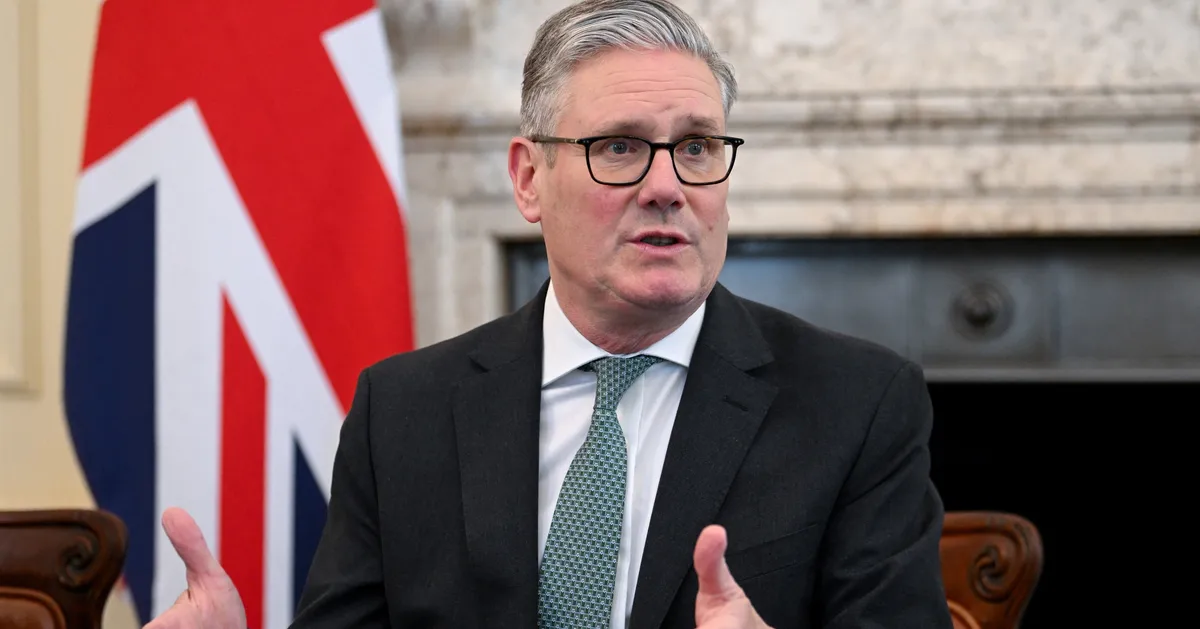
In a separate statement, the prime minister promised the public that they “have a government on their side, working with allies on de-escalation and bearing down on the cost of living.”
But, he admitted: “We must go further to bear down on costs, and that means pushing for de-escalation in the Middle East and a re-opening of the Strait of Hormuz.
“That is the best way we can bring down the cost of living for families and that is my focus.”
Here’s a quick look at the measures the government is introducing on Wednesday – and their effectiveness…
Advertisement
1. Increasing The National Living Wage and National Minimum Wage
The government will be increasing the National Living wage to £12.71.
That works out to a £900 increase for 2.4 million workers aged 21 and over.
More than 200,000 young workers – those aged between 18 to 20 – will also enjoy a hike of £1,500 per year as the National Minimum wage goes up to £10.85.
Advertisement
The director of the Living Wage Foundation, Katherine Chapman, said last November – when the change was announced – that this was “a really positive move’.
However, she claimed: “It will still fall short of the voluntary real Living Wage which is the only wage rate based solely on the cost of living.
“The real Living Wage is currently £13.45 in the UK with a higher rate of £14.80 in London.”
Chair of the Low Pay Commission, Philippa Stroud, also warned about the impact rising wages would have an businesses.
Advertisement
She said in November: “In our discussions this year with workers and employers alike, it has been clear that no one is having an easy time.”
2. Cutting Energy Bills
The energy regulator Ofgem has decided the energy price cap will be set at £1,641 per year between April 1 and June 30.
That’s a decrease of 6.6% compared to between January 1 and March 31, when the annual price cap was at £1,758.
Advertisement
However, the April-June cap was decided prior to the breakout of the Iran war.
The next cap, from July to September, will likely go up as a result of the conflict.
The government has suggested it may implement some targeted households for those most in need, rather than the universal support offered by Liz Truss’s government in 2022.
Advertisement
Jess Ralston, the head of energy at the Energy and Climate Intelligence Unit, said: “Bills going up again because of war thousands of miles away will be a tough pill to swallow for households still saddled with debt from last time.”
3. Freeze On Prescription Prices Extended
NHS prescription charges in England have been frozen at £9.90 per item for the 2026/27 financial year to help with financial pressures.
Prescriptions will still be free in Scotland, Wales and Northern Ireland.
Advertisement
However, the Prescription Charges Coalition’s Laura Cockram pointed out that people living with long-term conditions who are not exempt still feel the cost is too high.
She said: “No one should have to worry about affording the medication they need to stay well, so although a freeze on prescription charges is more welcome than an increase it’s not enough.
“Unlike in Scotland, Wales, and Northern Ireland, people in England with Parkinson’s and other long-term conditions still have to pay for the prescriptions they need to manage their health. The UK government must rethink.
“At the least, the government should review the prescription charge exemption list so people with long-term conditions like Parkinson’s, MS, asthma, HIV don’t have to pay an ill health tax.”
It’s money from the government which can be used for people struggling with a financial shock or unexpected finances. The fund will be focused on those who are in or close to poverty, disabled or in older households.
Anyone can apply for the fund for money towards their energy bills, food, clothing and furniture.
Advertisement
It will replace the Household Support Fund which has now ended.
It’s thought the government may pump extra cash into the fund if fuel and energy costs do rise in the summer.
Anti-hunger charity, the Trussell Trust, welcomed the news, calling it a “major milestone”.
“Effective crisis support is crucial to prevent people from falling into severe hardship, so they can still afford the essentials we all need,” the charity said.
Advertisement
However, it warned there is still work to do and “is not a substitute for the deeper reforms needed to the inadequate rates of social security which fail to protect people from going without the essential day to day”.











































You must be logged in to post a comment Login