A cat and a dog suffered blunt force trauma and died
20:07, 20 Aug 2026Updated 20:07, 20 Aug 2026
A man who carried out fatal attacks on a dog and a cat has been jailed and permanently banned from keeping animals.
Jordan Wood, 25, pleaded guilty to three animal welfare offences following a prosecution by the RSPCA concerning a male Labrador-type dog, Chance, and a male cat, Casper.
Both animals died from severe complications caused by repeated, deliberate blunt force trauma.
Advertisement
The abuse was uncovered in April last year after a vet raised suspicions when Chance was brought in for treatment, prompting RSPCA inspectors to visit Wood’s home, reports CornwallLive.
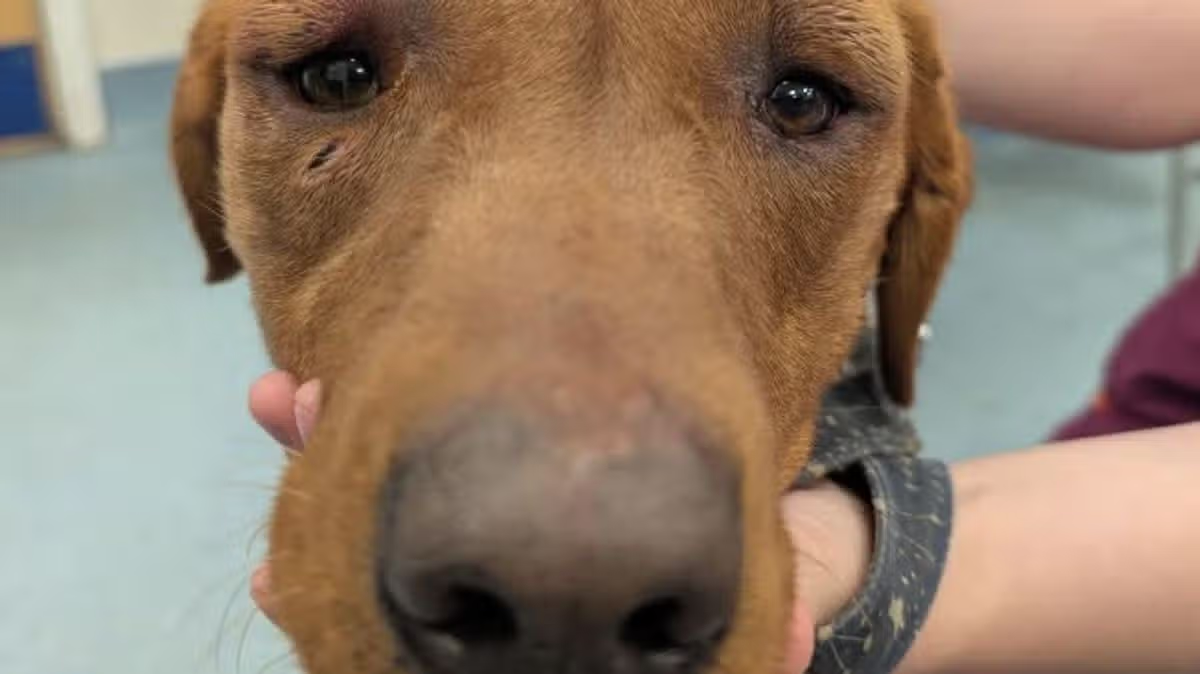
Chance was seized by police and placed into RSPCA care. Further vet exams found Chance had sustained multiple traumatic head, throat and spinal injuries over several months. His whiskers had also been burned off.
The owner initially claimed that Chance ran into a fence, but the severity of the dog’s injuries told a different story.
There were skull fractures on both the left and right frontal bones on the skull involving the frontal sinuses, as well as a small fracture of the external sagittal crest.
Advertisement
The throat and windpipe showed injuries recognised as features of strangulation and caused an altered airway size. The windpipe also had an abnormal, flattened profile with an over-distended muscle, consistent with repeated compression from a collar, the RSPCA said.
His spinal fracture indicated a high-level blunt force applied to the lower spine and swelling, bruising, and skin abrasions around both eyes, the face, ears, and mid-neck, consistent with blunt force blows or tight ligatures.
Chance was sadly put down because of further complications from his pre-existing throat fractures while in RSPCA care.
In August 2025, Casper was found dead after suffering catastrophic injuries from at least three separate timelines of blunt force trauma to his chest, alongside skeletal and severe head trauma. Alongside the rib fractures, which were healing at different rates, showing three separate stages of injury, he also had a dislocation of the sternum and limb fractures.
Advertisement
Casper also had damage to his internal organs, with a laceration of the liver, and ruptured alveoli in the lungs and signs of head trauma with laceration of the right temporal region of the skull and right temporal muscle. Multiple cartilage fractures in both ears gave them a crinkled appearance.
Casper had also suffered severe eye trauma and blindness. At the time of his death, he had bilaterally swollen eyelids and conjunctivae, retinal detachment, lens rupture, and pus accumulation within the eyeballs. His cause of death was found to be severe blunt force trauma to the chest, resulting in extensive lung collapse and respiratory failure.
“The finding of bilateral rib fractures across multiple timelines is a powerful diagnostic indicator of physical abuse—often caused by an animal being deliberately kicked, stepped on, or thrown,” Dr Taylor noted in the vet report. “Both animals were forced to endure severe physical pain and prolonged mental torment before succumbing to their injuries”.
Wood, from Newquay, pleaded guilty to causing unnecessary suffering to a Labrador-type dog by inflicting physical abuse, causing unnecessary suffering to a cat by inflicting physical abuse, and causing unnecessary suffering to a car by failing to provide professional veterinary care and attention.
Advertisement
Wood was banned from keeping animals for life and jailed for 18 months after being sentenced at Truro on August 6. A second person is due to be sentenced for related offences on September 11.
Ellen Gibson, aged 24 and of Kilkham, Yorkshire, has also pleaded guilty to causing unnecessary suffering or permitting it to happen to Chance, who she was responsible for, and causing Casper unnecessary suffering or permitting it to happen and failing to get vet care for the cat.
In mitigation, Wood’s defence team said he experienced a difficult childhood and suffered from PTSD and depression.
RSPCA Inspector Jack Alderson, who investigated for the animal welfare charity, said: “The cruelty inflicted upon innocent animals like Chance and Casper is an unforgivable betrayal of trust. Every living creature deserves a life free from suffering and filled with compassion.”
The deafening silence from Prince William spoke volumes on Thursday.
Experts said he was likely to be seething at his brother’s return.
There was no word from the heir to the throne following the bombshell news from the Duke and Duchess of Sussex.
The Prince and Princess of Wales are bitterly estranged from Harry and Meghan. They may fear that the couple’s move back to Britain is a deliberate strategy to force them into reconciliation while King Charles is monarch.
Advertisement
Former BBC royal correspondent Peter Hunt said William would be ‘apoplectic’ at his brother’s move.
‘In the long term, the return of the Sussexes to the UK opens up the prospect of two rival courts, William’s and Harry’s,’ he said.
‘In the short term, Harry will be able to deepen his rapprochement with his father.
‘His presence back home will make it harder for his brother to duck a reconciliation.
Advertisement
‘The surprise return of Harry and Meghan is likely to have left William apoplectic.’
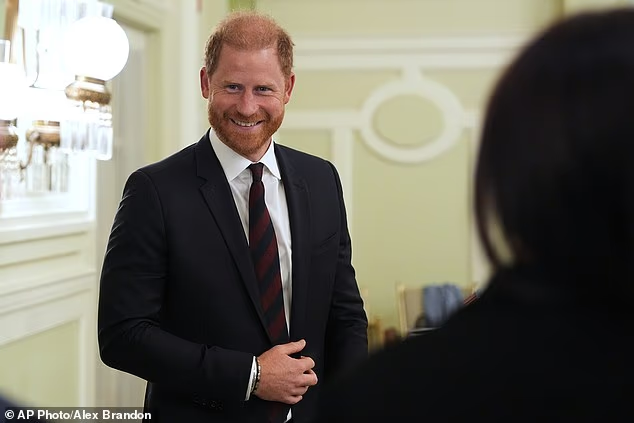
There was no word from the heir to the throne following the bombshell news that the Duke and Duchess of Sussex will return to the UK. Pictured: Prince Harry in Washington on Wednesday
Harry and former Suits actress Meghan (right) were once part of the so-called Fab Four with the then-Duke and Duchess of Cambridge (left)
Advertisement
Harry and former Suits actress Meghan were once part of the so-called Fab Four with the then-Duke and Duchess of Cambridge.
Their fallout is said to have begun even before Harry married Meghan at Windsor Castle in May 2018, with Harry accusing William of being snobbish towards his bride.
In March 2019, it was announced the Sussexes would set up their own household, breaking away from the joint operation with William and Kate, amid reports of a rift.
The animosity became obvious during the Megxit saga of 2020, and since then Harry has let loose a barrage of accusations against his brother, Kate, Charles and Camilla during tell-all interviews, his score-settling memoir Spare, and his Netflix documentary.
Advertisement
The brothers were last seen together publicly at their father’s coronation in 2023. In his autobiography Harry claimed his ‘archnemesis’ brother ‘Willy’ knocked him to the floor into a dog bowl in a row over Meghan’s alleged rude behaviour.
He also alleged it was William and Kate who encouraged him to wear a Nazi uniform to a fancy dress party in 2005.
Harry and Meghan, in their Netflix series two months after the Queen’s death, claimed Kensington Palace had lied to protect William when it issued a statement denying a story he had bullied Harry out of the Royal Family.
Harry also wrote of how Charles pleaded with his sons at a meeting at Windsor just after the funeral of the Duke of Edinburgh, saying: ‘Please, boys. Don’t make my final years a misery.’
Advertisement
In an interview with Oprah Winfrey, Meghan said Kate made her cry ahead of the wedding – the opposite of reports circulating that Meghan had left Kate in tears over Princess Charlotte’s bridesmaid dress fitting.
It was the saga over Meghan’s claims that royals had questioned the likely skin colour of her unborn son Archie that ended with Kate being branded a racist – a situation William may never forgive them for.
William is likely to have taken Harry’s accusations about Kate closer to heart than any criticism of himself.
Advertisement
Share or comment on this article:
A deafening silence from William and Kate… but the Prince of Wales will be seething – and he could be forced into a reconciliation
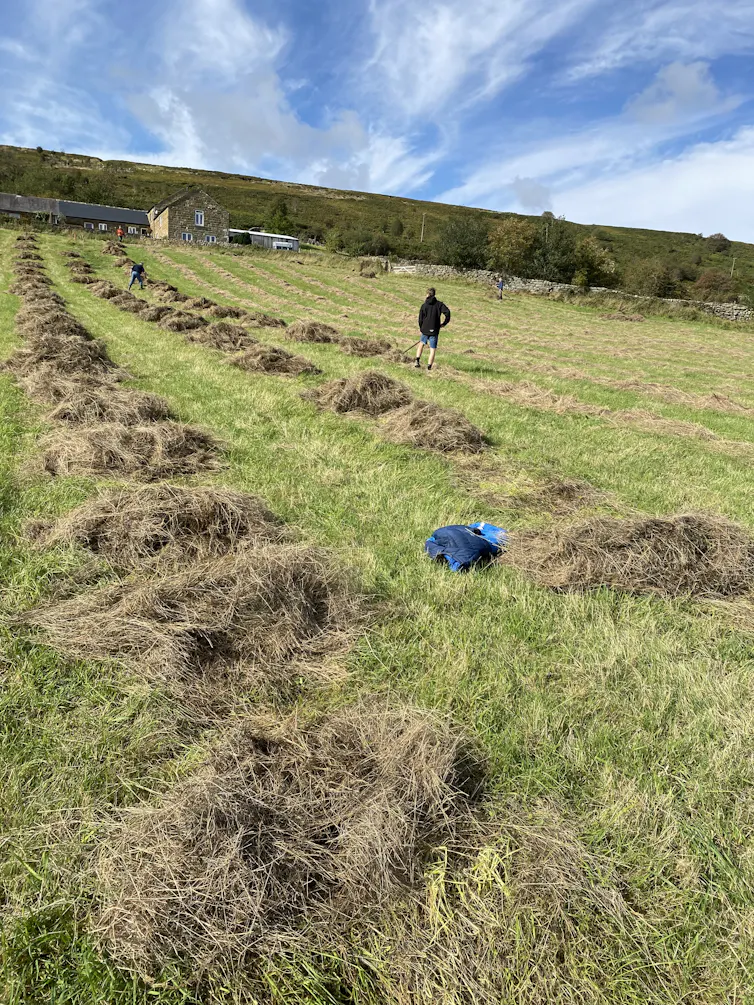
Within an hour of arriving in Botton, a small, picturesque village in the UK’s North Yorkshire moors, I was standing in a farm field shovelling hay.
Alongside me were my friend Max*, his father, a co-worker named Richard, two volunteers and several learning-disabled residents of the Esk Valley Camphill Community. We spent the next few hours on a conservation project, moving hay, stopping regularly to lean on our tools and talk, and at one point gathering on a picnic bench beside the cars for a tea and biscuit break.
Officially Richard was “providing care” and the learning-disabled residents of the community (often referred to as villagers) were “receiving care”, with volunteers helping the co-workers along the way. On the ground, though, I could already see that the structure of the community served to sideline this distinction rather than reinforce it.
I had driven into the North Yorkshire moors expecting something resembling a care institution. This was something else.
Advertisement
The Entrance to Botton Village in the North Yorkshire Moors National Park. Thomas Moore
While I was there, I would observe two radically different interpretations of social care side by side.
On the side where I stayed: care as long-term communal life, in which support grows out of relationships rather than being delivered through them.
On the other: care as professional service delivery. My time here would completely change the way I thought about social care.
The Insights section is committed to high-quality longform journalism. Our editors work with academics from many different backgrounds who are tackling a wide range of societal and scientific challenges.
Advertisement
The Esk Valley Camphill Community, based at Botton Village, is part of the Camphill movement – an international network of communities built on the belief that people with and without learning disabilities can live and work together as genuine community members, rather than as service users and service providers.
The Camphill community in Botton was founded in 1955 by Karl König, the Austrian paediatrician who had established the Camphill movement in rural Scotland 16 years earlier, inspired by the educational philosophy of Rudolf Steiner.
The land at Botton was acquired from W.F. Macmillan and his family (the publishing family behind Macmillan Publishers, as well as local landowners and philanthropists). One of the family members, Alistair Macmillan, had a learning disability and later lived in Botton as a resident.
Over the following decades it grew into a community of around three to 400 people at its peak. Today, around 120 residents continue this way of life across 19 households, now operating as Esk Valley Camphill Community, one of two organisations based in the village, alongside the Camphill Village Trust.
Advertisement
My friend Max
I had known Max since we were children. We went to the same primary school, then the same secondary school, and then (the usual thing) our lives gradually went their separate ways. When his father invited me to visit him for the day, I agreed without quite knowing what I was agreeing to.
Max had tried different forms of support after school: a special needs school instead of sixth form and a service-based care arrangement that had struggled to accommodate him. Some of it worked better than others, but none of it seemed to fit him particularly well. Like many people with learning disabilities, his needs weren’t well met by standard service-based care.
That is why it was Max himself who surprised me most that day. I had always known him as intensely sociable, the kind of person who greeted everyone he passed, genuinely and entirely without edge. What I found in Esk Valley felt different though. He moved through the community with a settled ease I hadn’t seen in him before, introducing me to people as we walked, explaining who worked where, updating me on the latest community news.
As he showed me around, I didn’t get more than a few seconds’ break between enthusiastic comments, news and updates. Before he was part of Esk Valley, leaving the house unsupervised had often been difficult. Here, he had become part of an intentional community: a place where people choose to build a shared life together, not just live near each other. This had given him a rhythm and structure that allowed his individuality to flourish and his independence to grow.
Advertisement
At some point in the afternoon, during a pause in an otherwise ordinary conversation, he said something that stayed with me.
It’s been the best two years of my life. Much better than anything before.
I nodded and carried on. But long after I had returned home at the end of the day, I found myself returning to those words. What had this place managed that others hadn’t? And why did Esk Valley feel so unlike most models of care?
Becoming part of the community
I am a philosophy PhD researcher at the University of Sheffield, working on the question of what it means to be a person and how individuality and community relate. After visiting Max, I became fascinated by the Esk Valley community. When an opportunity came up to volunteer for three months in a non-academic organisation as part of a researcher employability project, the choice felt obvious.
For three months I lived in one of the community’s 19 houses, shared meals with the household and took part in community life. Each house is home to two or three co-workers, a similar number of villagers and usually one volunteer. What gives the community its texture, though, is the structure of daily life.
Advertisement
The author doing conservation work with the community. Thomas Moore
Life in Esk Valley follows a shared daily rhythm: communal breakfast in each household at around 7.30am, a morning workshop from 9am until noon, then back to the houses for lunch until 1.30pm, a second workshop in the afternoon, and communal dinner around 6.30pm.
Importantly, people don’t only eat meals in the household they live in. People rotate between houses for lunches and dinners throughout the week, meaning that roughly half your meals are eaten in other households. It is a simple arrangement, but its effect runs through everything. It stops the 19 houses from becoming 19 separate nuclear units. Instead, a web of daily relationships runs across the whole village because people are sitting down together at other people’s tables, several times a week, as a matter of routine.
The workshops themselves cover a wide range of work: there is a garden workshop, a wood workshop, a craft workshop, a cooking club and a forestry team, among others.
Most weeks during my stay I worked four half-days in the garden workshop, enough time to become part of its rhythms. I had expected the experience in Esk Valley to inform my research. I hadn’t expected it to fundamentally change how I thought about social care and community life.
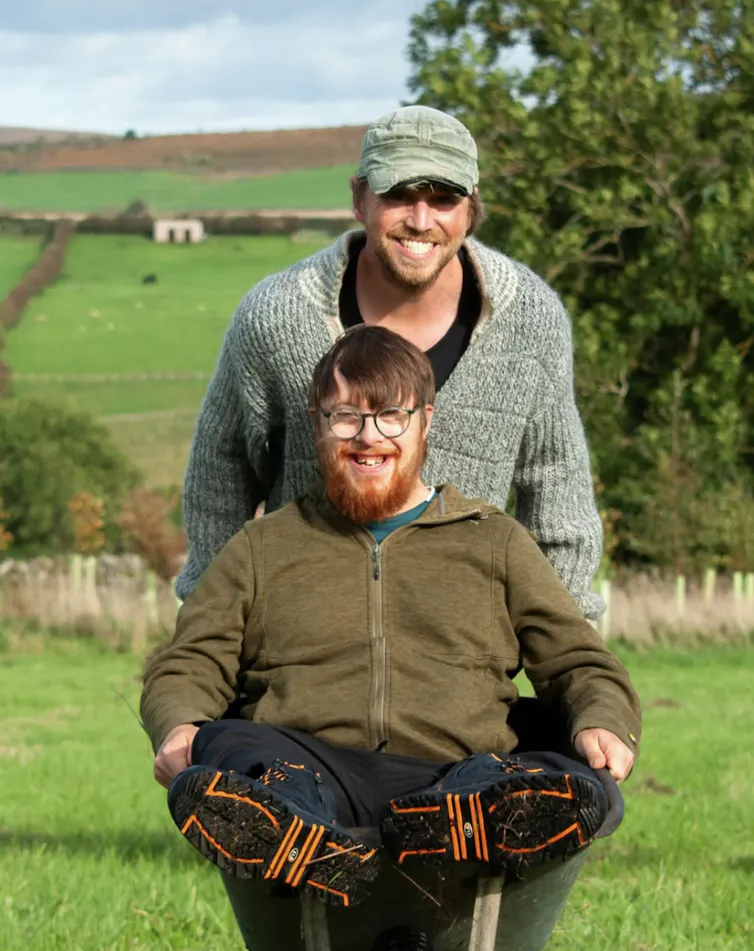
Members of Esk Valley Community having fun in the fields. Esk Valley Community/Ikuko Tsuchiya
The moments that changed my thinking were rarely dramatic. They were usually small interactions that quietly revealed assumptions I hadn’t realised I was carrying.
One of the first came during my first working day. Claire, one of the co-workers who was living in the same shared house I was, casually asked Linda (who was officially someone “receiving care” in the village) to show me how the transport arrangements worked. Linda took charge enthusiastically, walking me over to what villagers called the transport depot: a small hay shed where cars arrived each morning and afternoon to take people between the village and Homefield Garden, a collection of fields the community owned nearby. She showed me where people gathered and explained how the whole system operated. She knew every detail of it.
Advertisement
What interests me now is my own reaction at the time. I remember feeling mildly surprised that Linda had been given this responsibility. I now realise this was because I had arrived with an assumption I hadn’t consciously examined: that in care organisations, responsibilities belonged to staff providing care.
Without thinking about it, I had sorted the world into two columns. “Explaining how things work” sat in the staff column. “Having things explained to me” sat in the resident column. Yet here was someone officially classified as receiving support quietly helping to ensure the smooth running of village life and doing it perfectly well.
The longer I stayed, the more I noticed people slipping between categories that mainstream social care often treats as fixed. People receiving support were also providing it. People being cared for were also contributing to the care of others. Responsibilities were shared in ways that felt, at first, unfamiliar, and then, gradually, completely obvious.
Britain’s social care system faces well-documented pressures. By the end of my first few weeks in Esk Valley, I had started to wonder whether there was a deeper problem sitting beneath all of those – the largely unquestioned assumption that social care is a service to be provided by people formally employed to supply it.
Advertisement
That question became sharper the more I compared Esk Valley with the logic underlying mainstream social care.
A broken system and another new prime minister
Social care is in crisis. Roughly one in ten posts in adult social care is unfilled at any given time, pay is low, and burnout and stress are widely recognised as problems.
Turnover is very high, around 23.7% in 2025, declining from a high of 31.4% in 2020 primarily due to a large rise in international recruitment.
Care workers, who would ideally develop close relationships with the people they support, leave before those relationships have had time to develop into anything. The people they support start again with someone new. As a 2022 report for the Health and Social Care Select Committee put it:
Advertisement
The National Health Service and the social care sector are facing the greatest workforce crisis in their history … The situation is regrettably worse in social care. One in three care workers left their job in 2020–21, a serious setback to the continuity of care which is so essential to those who receive social care. In December 2021, Care England reported that 95% of care providers were struggling to recruit staff, and 75% were struggling to retain their existing staff. Care workers often find themselves in underpaid roles which do not reflect the value to society of the service they provide.
Now, the new prime minister, Andy Burnham, has vowed to put whatever political capital he has into fixing what he calls a broken system saying that carers “should be the best paid people in society, not the worst”.
What if we stopped treating care like a service?
But something slightly different was nagging at me as I settled into life in Esk Valley. The crisis I kept reading about was real and care workers are certainly underpaid. Many people would agree that the scale of the crisis should merit a radical rethink of social care. Yet mainstream debates about social care increasingly seemed to me to be a debate about how to fix a system whose assumptions remained largely unquestioned.
Advertisement
There has been little serious questioning of the idea that care should be organised around shifts, that strong professional boundaries rather than friendships should separate carer from cared-for, or that the quality of care is fully or best measurable through standardised outcomes.
Most people probably share these assumptions implicitly without noticing them.
Professional carers support people with learning disabilities.
Support is arranged by agencies, managed by co-ordinators and delivered according to care plans.
This model has become common sense. But it is also, historically speaking, very new.
Until relatively recently, care for people with disabilities and support needs was primarily organised through families, local communities, charities and religious institutions, rather than through professionalised care services.
Advertisement
The idea that care should be organised as a specialised professional service, delivered by paid staff and governed through formal systems of regulation and inspection, emerged comparatively recently, during the 20th century, and particularly from the late 20th century onwards. In England, this shift coincided with the growing marketisation of social care, including the expansion of outsourced provision, contractual commissioning and individualised funding arrangements.
What we now think of as standard social care is, in large part, the product of that marketisation. It is not the only way care has ever been organised, in fact it is a historical aberration. Yet it is now the way we have gradually come to naturally assume care must be.
Esk Valley offered something different. There, people with and without learning disabilities depended on each other in ordinary, practical ways: cooking together, working alongside one another, navigating disagreements and making decisions as a community.
Advertisement
One afternoon this became vivid in a way I hadn’t expected.
I was being given a lift to a workshop when David, a co-worker who had been at the village for decades, mentioned to the group that he was exhausted due to juggling young children and the demands of community life. Mike, one of the villagers, listened quietly while David spoke. Then, when there was a pause, he looked at him directly.
“You need to slow down,” Mike said. “Take more time off. You’re doing too much. I felt tired yesterday, so I had the day off.”
David nodded. Mike was right, and everyone in the car seemed to know it.
Advertisement
I found myself sitting with the strangeness of that moment for a while afterwards. Mike was officially someone receiving care. David was officially someone providing it. But what I had just watched looked less like a care relationship than a friendship, the kind where you tell someone an uncomfortable truth because you have known them long enough, and care about them enough, to say it out loud.
That kind of familiarity does not emerge quickly. What made it possible in Esk Valley was, in part, the sheer length of time people had spent there together. Many co-workers and villagers had been part of the community for decades.
Margaret and Ruth, a co-worker and a villager, had supported each other for more than 50 years. They had watched fellow co-workers and villagers arrive as young people then slowly grow old in the village alongside them, sometimes starting families along the way. The relationship they had built across that time could not be replicated by a well-intentioned support worker who had been assigned the previous week and would likely move on within the year.
For people with learning disabilities who rely on carers, sometimes for help with the most intimate aspects of daily life, a constant cycle of new faces is not just inconvenient. It is a barrier to the kind of trust that makes good support possible in the first place.
Advertisement
Which made me wonder: what if some of what people with learning disabilities most need cannot be delivered through a service at all? What if it can only grow, slowly, out of the kind of long-term relationships and shared community life that conventional social care so rarely has the time or stability to build?
That tension now sits at the centre of Botton Village, because since 2014 it has contained two very different understandings of care living side by side.
Two ideas of care side-by-side
For most of its history, Botton Village was one unified community. The Camphill Village Trust managed roughly 30 households, five farms, a café, a shop and various workshops, all operating on the founding principles of the worldwide Camphill movement: no employment contracts, pooled income, shared meals and shared seasons. The boundary between work and home life was deliberately blurred. The point was not efficiency. The point was that support should be embedded in something that actually resembled a life.
Co-workers did not dispute the need for some changes, but argued that the changes would lead to the complete dismantling of the founding Camphill principles of shared life. They pointed out that the Care Quality Commission’s follow up inspections in 2012 and 2013 had found the issues raised in 2011 had been adequately addressed and care in Botton was now working well. They also pointed out that HMRC itself had long recognised the co-worker model as a distinct and legitimate arrangement, with its own agreed tax treatment, rather than conventional employment.
As a result of the restructure, around half of Botton was converted into a more conventional professional service. Employment contracts were introduced. Shift patterns replaced the open-ended rhythms of communal life. Co-workers who had previously lived alongside residents were replaced with carers, most often commuting in from Middlesbrough or Whitby every day (over an hour’s round trip).
But not everyone accepted this. Around 80% of the co-workers broke away to form a new organisation, Esk Valley Camphill Community, and after a protracted legal battle gained the right to operate 19 of Botton’s households on the original principles of the Camphill movement. They have done so ever since, and are now formally recognised as a Shared Lives scheme.
Shared Lives is a model in UK social care policy in which people with learning disabilities, or older people who need support, live as part of an ordinary household or community, rather than being placed in residential care or supported living arrangements where paid carers provide support to people living independently.
Advertisement
By registering as a Shared Lives scheme, they found a model that could accommodate their communal way of life, and partners more aligned to their ideals to oversee the provision of care in the community (first the Avalon Group, now PSS).
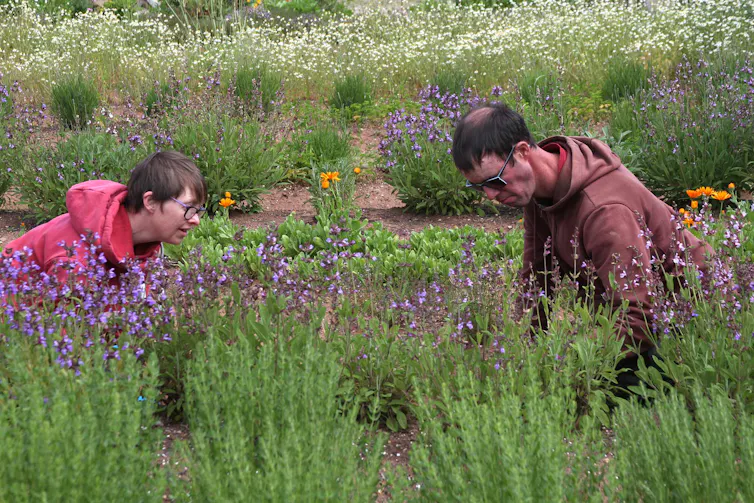
Working in the community gardens. Esk Valley Community
Shared Lives schemes exist across the country, and the evidence behind them is quietly compelling.
Both an independent report from Social Finance and research by Shared Lives Plus have concluded that it would cost on average £26,000 less per person per year for a learning disabled person to be in shared lives arrangements (compared with more conventional supported living arrangements).
Based on this figure, Shared Lives Plus have calculated that if shared lives services were delivering 10% of social care support to 130,000 people with a learning disability, it would save the taxpayer £2.6 billion per year. A more realistic goal of 5% is calculated to save £1.3 billion per year.
People using them also report lower levels of loneliness and higher levels of satisfaction. They tend to produce the kind of stable, long-term relationships that the mainstream care market consistently struggles to sustain. This suggests that Shared Lives deserves far more attention than it currently receives and has the potential to play a key role in responding to the social care crisis.
Advertisement
Botton Village today therefore contains two organisations, one operating on a type of shared lives model and the other operating on a conventional service model.
In one half there is Esk Valley, pooling the income each household receives into a communal budget, with households drawing from it based on need, and embedding care in the routines and relationships of shared community life.
In the other half there is the Village Trust, providing care as a more standardised professional service. What makes this so striking is that almost every variable that might explain differences in outcomes is held constant. The setting is the same. The history before 2014 is the same. The founding tradition is the same. Only the model of care differs. Over time I came to see the split not primarily as a local management dispute (though it was also that), but as two philosophical visions of care made concrete.
The difference was never more visible to me than at Michaelmas.
Advertisement
Michaelmas, the feast of St Michael, celebrated in late September, had historically been one of the village’s most significant community occasions. The turn of the seasons was marked as a shared event when villagers, co-workers and volunteers gathered together at a large meal. When I was there, that celebration continued as it always had in the Esk Valley half of the village.
But in the Village Trust half, there were no celebrations. That year the festival fell on a Sunday. Participation was not part of anyone’s contracted working hours. So, it did not happen.
It is, on the surface, a small thing. But it points to something large: when care is organised as a professional service, the moments of familial and community life that fall outside the job description simply disappear.
The inspection data now recognises the benefits of communal life for people with learning disabilities. The shared lives arrangement that includes Esk Valley Camphill Community (then Avalon Scarborough Services) received a “Good” rating in its most recent report from the Care Quality Commission in 2023.
Advertisement
More broadly, across the UK in 2023, the Care Quality Commission rated 97% of Shared Lives schemes in England as good or outstanding, compared with just 78% of the wider social care sector.
Meanwhile, the Village Trust half of Botton, despite sharing the same location as Esk Valley, received a “Requires Improvement” rating. Care Quality Commission inspections capture certain things well and others less so, and no single report is the whole picture. But taken alongside everything else it contributes to an overall case that is hard to dismiss. Indeed, Esk Valley’s own GP, Dr Marcus Van Dam, has arrived at a similar picture through a clinical audit of residents’ health records across both halves of the village, findings he presented at a public lecture in Ireland.
To me, these differences were not just abstract. They were visible in everyday life across the village.
What daily life revealed about care
One of the sharpest observations I heard during my time in Botton came from Maisie, a co-worker who had been at the village since long before the 2014 split.
Advertisement
We were talking about the period prior to the split when regulators had begun to look more closely at Botton and at how work was structured within it. Their concern, as Maisie described it, was that villagers had little genuine choice about whether to participate in workshops.
“The social workers kept wanting residents to have ‘choice’,” Maisie said. “They said they didn’t have to work if they didn’t want to. But whenever you talked to anyone, they were so proud they had a job, just like their parents and their siblings.”
The anxiety behind the intervention was not inherently unreasonable. In the past there have been instances of those with learning disabilities being put to work in ways that exploited rather than supported them.
But Maisie’s point cut in a different direction. The regulatory framework was applying the logic of conventional employment, where work is something that you do in exchange for money, and would most likely not freely choose to do full-time otherwise.
Advertisement
As the Care Quality Commission framed it in its 2011 report concerning the pre-split Botton Village:
Each villager has a timetable of activities, which covers the working day with little flexibility. If someone wanted to spend the day doing something different or have a lie in on a morning, they are not aware that they can do this.
But the formerly unified Camphill community at Botton operated on a different logic entirely, and the Esk Valley half continues to do so. The villagers who tended the gardens, ran the workshops and helped maintain the farms were not working in the conventional sense. They were contributing to a community they were part of, and that contribution was visible and meaningful to the people around them. Besides, many villagers also spent some time each week volunteering outside the community, for example for the North York Moors National Park Authority or the nearby Cycle Hub Cafe.
Stripping out the expectation of participation in community life, in the name of protecting choice, risked stripping out something the villagers genuinely valued about their own lives.
It is a tension that the Harvard divinity professor Dan McKanan has also identified in his extensive studies of Camphill communities. In his research, he found that regulators had begun evaluating Camphill communities as if the villagers living in them were customers, with the criteria for good care being the range of individual choices on offer. McKanan recalls someone telling him: “The Care Inspectorate came in and said, where’s the choice of food on the menu? I said, we are trying to emulate family life. How many families have a menu?”
Advertisement
It is a good question. When we sit down to eat at a family table, even as adults returning to visit our parents, we don’t expect a restaurant menu. We understand that family life doesn’t operate like a market. We accept shared meals, shared routines, the ordinary small negotiations of living alongside other people. Most of us would think something had gone badly wrong if choice from a formalised menu became part of family life. The puzzle is why we don’t bring the same intuition to how we organise social care.
Community Members Working Outside the Community with North York Moors National Park Authority.
The forum
Importantly, Esk Valley did have structures to ensure villagers had a genuine say in how they lived their lives together in community, including their work.
Once a month, the whole community, split into four groups of nearby households, gathered for a forum. Villagers, co-workers and volunteers sat together in a circle, and anyone could raise anything they wanted discussed: a concern about a workshop rota, a suggestion for a community event, a complaint about how something had been handled. The chair moved around the circle. Everyone was given the chance to speak.
Advertisement
I attended several of these sessions during my time in Esk Valley. What struck me was less the content of what was discussed, which ranged from the practical to the personal, and more the quality of the listening. People waited. They responded to what had actually been said. Villagers with learning disabilities that meant they found verbal communication or social cues difficult were given the time and space they needed and gave it back to others in turn.
Decisions that affected the whole community were made, in a meaningful sense, by the whole community. This kind of collective voice, in which the people being supported have a real say in how their care is organised, is almost entirely absent from mainstream social care.
By the end of my fieldwork, Esk Valley no longer felt like simply an unconventional care model. It felt like evidence that community itself may be part of what good care actually is. Not a backdrop to care. Not an optional extra. Part of the thing itself.
Perhaps care wasn’t supposed to be a service
Britain’s social care crisis is usually framed in terms of what we don’t have enough of: staff, funding, capacity. Those shortages are real, and they matter. But after three months in Esk Valley, I found myself wondering whether social care would be in such a state if we were more willing to question our assumptions about what good care is supposed to look like in the first place.
Advertisement
Esk Valley is not a simple national blueprint. A valley community in North Yorkshire, organised around decades of shared life and a specific philosophical tradition, cannot quickly and easily be replicated to serve hundreds of thousands of people nationally.
There should be greater recognition and support for existing intentional communities, and a concerted effort to help establish new ones. Yet communities cannot be built overnight. They depend on relationships, shared commitments and a culture that develops over years rather than months.
Creating more intentional social care communities similar to Esk Valley would therefore be part of a long-term response to the social care crisis, offering an alternative model of support centred on belonging, contribution and community life.
But the most important thing Esk Valley vividly reveals is not an easily scalable national solution to the social care crisis. It is that our current social care models are not inevitable, but the product of a particular history and of broader assumptions about how we live together. By embodying a radically different model of social care – and of social life – that not only works but thrives in practice, it invites us to question our assumptions about what good care is in the first place, and, more broadly, what it means to live a good life.
Advertisement
In particular, it raises the possibility that some of what people with learning disabilities most need may be what our current conventional model is structurally least able to provide: the experience of belonging to a community, of contributing to shared life, and of being genuinely part of something over time.
I often think about Max and what he said that afternoon in the valley: “It’s been the best two years of my life.”
What Max had found in Esk Valley was not just better support. It was a place where he belonged. Before moving to Esk Valley, Max had more formal freedom: at home, his family would have done anything within their means to accommodate him, and in a supported living arrangement he could have had money and more individual options.
What he didn’t have was a community structured firmly enough to give him genuine belonging, and within which his particular individuality could actually develop and take shape. It was the structure of the community itself, the workshops, the shared mealtimes, the rhythm of communal life, which gave him the ground to become himself. He wasn’t less free for being expected to show up. He became the best version of himself because of it.
Advertisement
Whether a care system organised primarily as a professional service can ever fully provide that or whether something essential is lost in the translation of community into contract, is a question we have not begun to ask seriously enough.
*All names have been changed to protect the anonymity of study participants
To hear about new Insights articles, join the hundreds of thousands of people who value The Conversation’s evidence-based news. Subscribe to our newsletter.
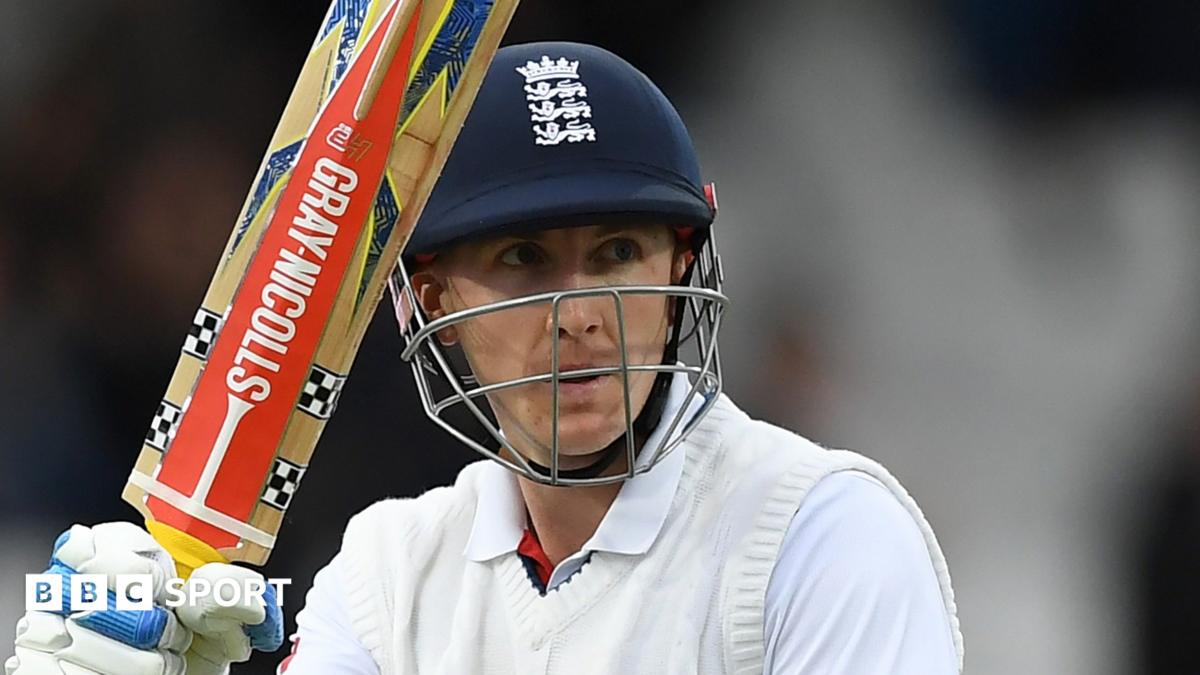
It is no surprise this version of Brook has come immediately after he was overlooked as captain.
He was seriously considered by managing director Rob Key and others at the England and Wales Cricket Board before ultimately being overlooked.
I am sure he will have asked himself why that was the case and, after incidents like the one in Wellington and some of the things he has said to the media in the past, it comes back to maturity.
Yes, Brook has shown himself an able tactician and leader of the white-ball team but at no point did I believe he was ready to be England’s Test captain.
Advertisement
That role is about more than purely the decisions made on the field.
It is about representing your country, and sometimes stepping up when needed to talk about difficult topics around the world. We have seen that in the episodes involving Zimbabwe and Afghanistan in the recent past.
Brook has not shown he has the maturity to do that part of the job, meaning Joe Root was the only candidate. The hierarchy had no choice.
But Root’s second stint is unlikely to last long, possibly only until the end of next year’s Ashes, and the ball is in Brook’s court to show before then that he is the best candidate next time around.
Advertisement
Who knows, Jacob Bethell, who is highly rated as a leader, may have overtaken him by then but there is no reason Brook cannot be Test captain when Root leaves the role, especially if he is showing maturity through batting like this.
Of course, some people will view Brook’s innings through the prism of what has come before. They may say it only adds to the frustration around why Brook could not bat more sensibly during the Ashes.
Who knows what may have happened if he did.
I get that argument – the winter was one of the biggest disappointments in recent memory in English cricket – but it is now time to look to the future, and time to put the Ashes behind us.
Advertisement
Lessons have been learned; you can see that by the decisions made and the people now in charge. Root and Stephen Fleming should be more astute operators.
So, with big series on the horizon after this – a winter trip to South Africa and then the Ashes next summer – it has got to the stage where we have to move on.
With that in mind, it was not just Brook’s performance that has been encouraging so far.
Though he will be annoyed to get out misjudging the length of spinner Usman Ali as Brook did, Jordan Cox batted with similar restraint and class for his 73.
Advertisement
Root batted as he does, holding together a more measured batting performance. It was something every England fan will be happy to see.
While two calm days have been most welcome after what we have witnessed in recent months, we do not want England to dispense with everything we saw under Brendon McCullum and Ben Stokes’ Bazball regime.
This team should retain a lot of their positivity, but do so without delving into the recklessness and inflexibility we saw before.
Ruthlessness was another thing the Bazballers were often lacking and this Test has presented Root’s England the perfect opportunity to show what they have learned.
Advertisement
Pakistan have picked the wrong team. They should have picked another seamer and are desperately missing some pace in their attack.
It means this is as kind an opponent England could have wished for to start their long-awaited reset.
England can now press home their advantage and go 1-0 up in this series. Brook has begun to show them the way.
Jonathan Agnew was speaking to BBC Sport’s Matthew Henry
To support delivery, the Department and Council are proposing to offer a capital grant of up to £5.2 million to help bring forward a high-quality scheme
Investors and developers are being called on to help shape the regeneration of a key site in a Co Down town.
Advertisement
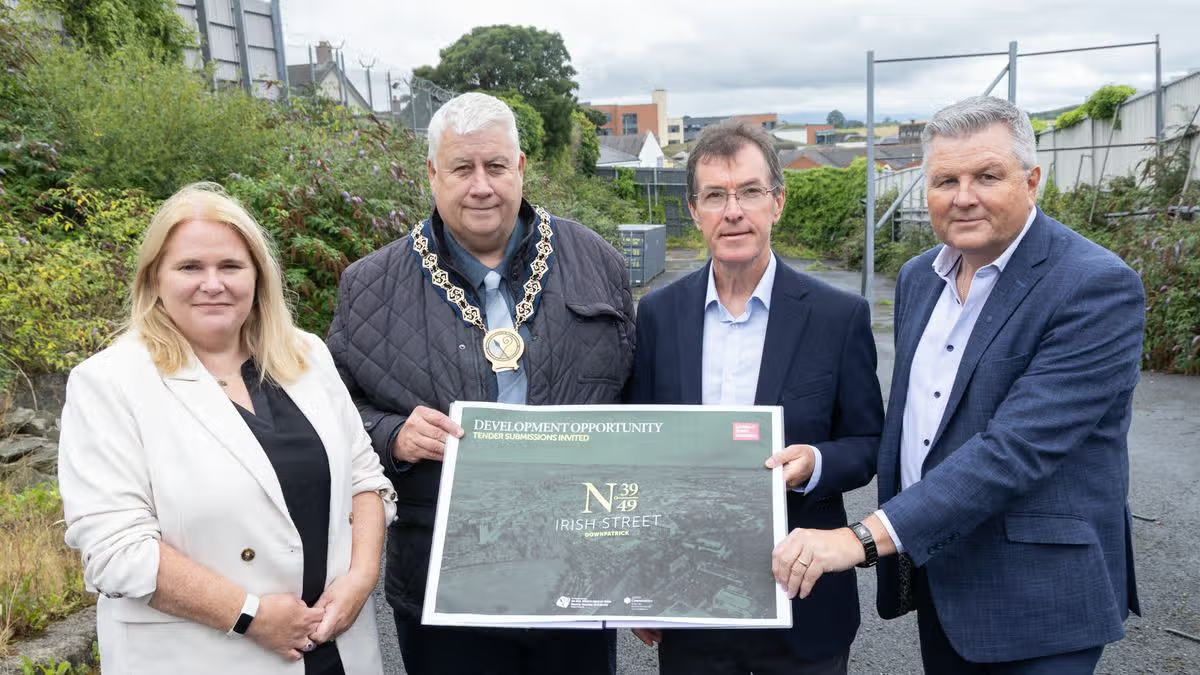
Communities Minister Gordon Lyons announced the launch of a Pre Market Engagement exercise for the redevelopment of the Irish Street site in Downpatrick. The opportunity will be run in partnership with Newry, Mourne and Down District Council.
To support delivery, the Department and Council are proposing to offer a capital grant of up to £5.2 million to help bring forward a high-quality scheme.
The engagement invites developers, investors, and hotel operators to help shape proposals for a landmark regeneration scheme on the prominent town centre site, comprising the former PSNI station, a number of listed buildings along Irish Street and an 83-space Council-owned car park.
Minister Lyons said: “The Irish Street development site has the potential to transform the town centre, creating a vibrant destination that reflects Downpatrick’s rich heritage while supporting a growing tourism economy and strengthening local businesses. This is a significant opportunity to bring forward a high-quality regeneration scheme in one of the most important locations in Downpatrick.
Advertisement
“Through this engagement, we are inviting developers, investors and hotel operators to work with us to shape a scheme that can deliver real and lasting benefits for Downpatrick and the wider region, encouraging growth and improving the tourism offer.”
The Department’s vision for the 2.02-acre site includes a hotel-led regeneration scheme that will enhance the town centre, support tourism, and act as a catalyst for wider regeneration, alongside complementary residential, retail, and public realm uses. It will further enhance the town’s appeal as a place to visit, live, and work, creating new opportunities for investment, regeneration, and sustainable growth.
Newry, Mourne and Down District Council Chairperson, Councillor Glyn Hanna, said: “The redevelopment of this key town centre site will provide a significant social and economic boost for Downpatrick and act as a catalyst for the wider regeneration of the town. This landmark regeneration scheme will support local businesses, create new job opportunities, and enhance the town’s tourism offering.”
Malachy McGrady, Chair of the Downpatrick Regeneration Working Group, said: “The Irish Street site is widely recognised as a key opportunity to drive regeneration in Downpatrick town centre. The Working Group welcomes this important step forward and looks forward to seeing proposals that reflect the ambition and potential of Downpatrick as a place to live, work and visit.”
Advertisement
Developers, investors, hotel operators, and other interested parties are encouraged to participate in the Pre-Market Engagement process. For further details, please go to eTendersNI Portal at https://etendersni.gov.uk/epps/home
Attorneys who represented a worker alleging he was undercompensated for supervising a renovation project at the Malibu home of Ye, the artist formerly known as Kanye West, are asking a judge to dismiss claims filed against their law firm.
Handyman Tony Saxon maintained in his initial Los Angeles Superior Court lawsuit that the 49-year-old musician agreed to pay him $20,000 per week under a 2021 agreement. However, Ye provided only one $20,000 payment in addition to $100,000 intended for construction costs. Judge Brock T. Hammond previously upheld a March 11 jury decision that awarded Saxon $140,000.
Ye, alongside his company, Shore Drive Holdings LLC, launched a separate lawsuit targeting Saxon and West Coast Trial Lawyers APLC, the firm representing the handyman. Their amended complaint filed July 10 asserts that a $1.8 million lien placed on Ye’s property in January 2024 was a “fabrication and the defendants who prepared it, verified it and stood behind it knew as much.”
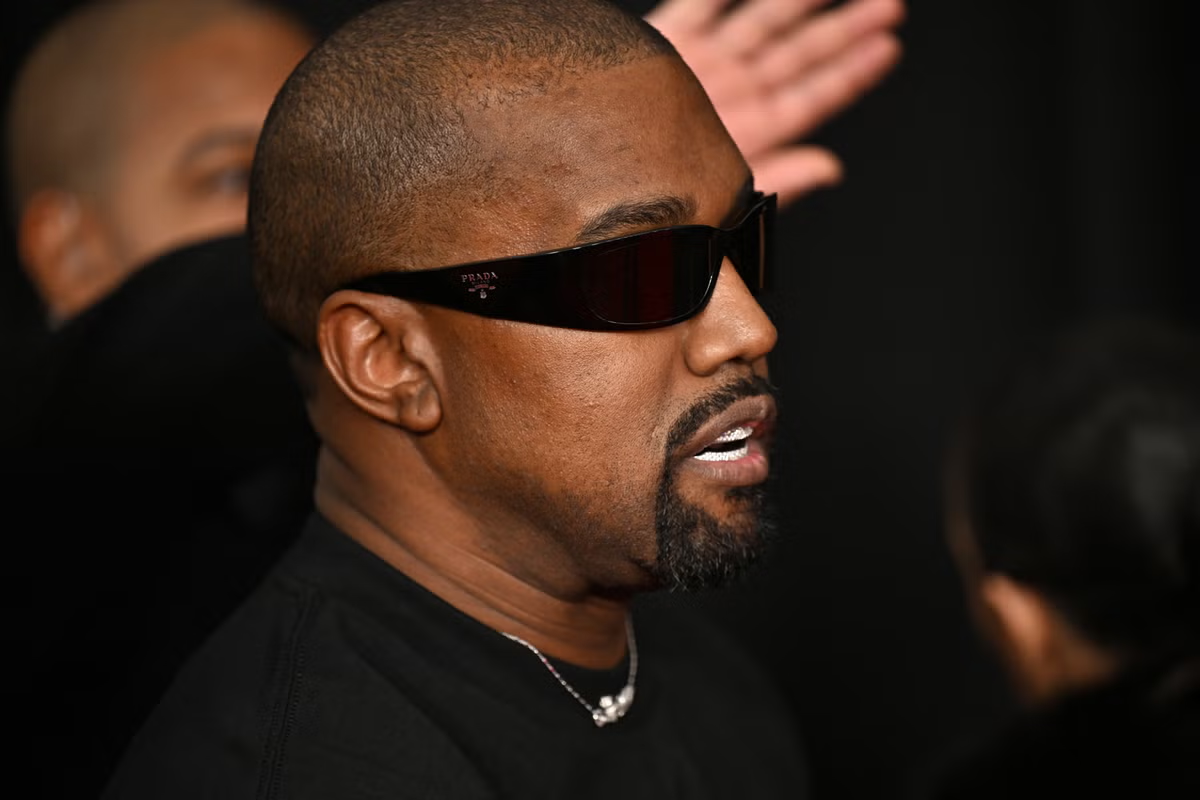
Ye is asking that the lien be declared void, and he is also seeking $2.27 million in damages (Ian West/PA)
Ye’s suit calls the lien a “pressure device recorded to cloud the property’s title and to coerce payment of the unrelated employment claims (Saxon and West Coast) were pursuing in the underlying action.”
Ye is asking that the lien be declared void, and he is also seeking $2.27 million in damages.
Advertisement
On Wednesday, attorneys for Saxon and West Coast filed court papers with Hammond asking that the portion of the complaint pertaining to the law firm be dismissed. The West Coast lawyers state that the Ye pleadings are “uncertain, ambiguous and unintelligible” and improperly combine multiple parties and theories without apportioning conduct, making it impossible to discern which allegations are directed at which defendants.
The West Coast attorneys also contend that all of Ye’s claims are barred by the litigation privilege because they arise from “protected petitioning activity.”
In his lawsuit filed in September 2023, Saxon maintained he was forced to sleep on the mansion floor while acting as a security guard and fired in November 2021 for not complying with Ye’s “dangerous requests” that could cause the plaintiff to be injured.
Saxon said he often complained to Ye about various dangers during the remodeling.
The statement comes four days after the actress, 36, was found unresponsive in a South Carolina apartment.
‘Hayden’s death remains under investigation and it is important to allow that investigation to proceed,’ said Hickerson’s attorney Sloan Ellis, from the Ellis Hinton law firm.
‘As has been publicly reported, police confirmed there were no signs of foul play.
Advertisement
‘Out of respect for Hayden’s loved ones and the ongoing investigation, there will be no further comment at this time.’
A Greenville police officer who responded to the residence Sunday afternoon was met by the brothers and then observed paramedics performing CPR on an unresponsive woman, according to a police report.
‘The patient did not seem to have any obvious physical reasons to be unresponsive,’ the officer noted. After attempting lifesaving measures, the emergency workers declared Panettiere dead at 2:31 pm on Sunday.
Advertisement
Hayden Panettiere’s on-off boyfriend, Brian Hickerson, has addressed the star’s death through his lawyers
The Greenville County Coroner’s Office has said Panettiere’s cause of death remains under investigation, however a dispatcher said she had a ‘cardiac arrest’ during a 911 call from her apartment.
The dispatcher could be heard in the audio saying that Panettiere had suffered a suspected overdose, and sources told TMZ that Narcan – a nasal medication used to treat an opioid overdose – was also found on a mattress at the property.
Advertisement
Panettiere, who soared to fame in the TV shows ‘Heroes’ and ‘Nashville’ while enduring struggles with alcohol addiction and depression, would have turned 37 on Friday.
She first began dating Hickerson in 2018, however, their on-off relationship became tumultuous as he was arrested several times on domestic violence charges.
Panettiere had spoken of her troubled childhood in the spotlight in recent months and revealed intimate details of her relationship with Hickerson in her memoir published three months before her death.
She had an 11-year-old daughter with her ex-partner, Wladimir Klitschko, a former boxer turned Ukrainian government official who has full custody of the youngster.
Advertisement
In her memoir, titled This Is Me: A Reckoning, Panettiere alleged that Hickerson once beat her so severely that she had to remain in her house for weeks to keep her injuries from the public.
She said she tried to keep the alleged abuse from the police because she feared the public would find out, and described her relationship as a ‘very dark and complicated time in my life.’
The 36-year-old actress was found unresponsive in a South Carolina apartment on Sunday
Hickerson and his brother Zach were also at the Greenville property, police say
Advertisement
Hickerson was arrested for one alleged incident in May 2019, and court records show he was charged with injuring a spouse or girlfriend.
He pleaded no contest to the allegations in April 2021, and he was sentenced to 45 days in county jail and four years’ probation.
Just three days before Panettiere’s death, Hickerson’s request to reduce his past felony charges was denied by a judge.
Panettiere’s relationship with Hickerson appeared to end in 2020, and in July of that year, she filed for a restraining order against him. The outcome of her request is not stated in court records.
Advertisement
The Greenville Police Department said in a statement that ‘the preliminary investigation’ into Panettiere’s death ‘has not indicated any signs of foul play or suspicious circumstances.’
An autopsy found ‘no signs of trauma were discovered that would have contributed to the death.’
The man in his 40s has since been charged with dangerous driving, failing to stop for police, failing to provide an evidential specimen and driving without insurance along the A64.
Officers said they had initially received calls about a man driving while under the influence of alcohol at a Scarborough caravan park late on Wednesday (August 19).
RECOMMENDED READING:
Advertisement
North Yorkshire Police said: “Officers located the vehicle on the westbound A64 at Scagglethorpe and attempted to stop it after York Road, where the dual carriageway merges into a single carriageway.
“However, the driver failed to stop and instead continued driving dangerously, including travelling on the wrong side of the road and exceeding the speed limit.
“A stinger was successfully deployed at Barton Crossroads, but the vehicle continued for a further eight miles towards Hopgrove Roundabout.
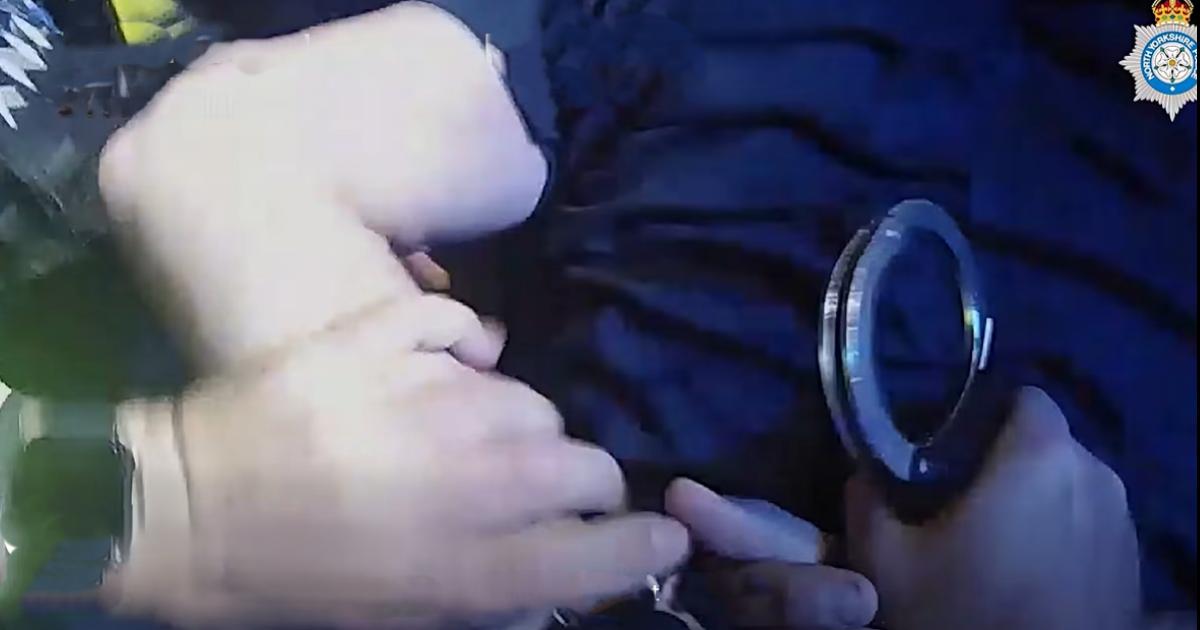
“Despite both front tyres rapidly deflating, shredding and eventually being reduced to the wheel rims, the driver continued his attempts to evade police.”
Advertisement
The pursuit had come to an end at Hopgrove Roundabout, police said, when the vehicle collided with a nearside verge.
A force spokesperson said: “Let us be clear: failing to stop for police and putting other road users at risk is completely unacceptable.
“Last night’s incident demonstrated the determination and professionalism of our Operational Support unit, who safely brought this pursuit to a conclusion.
“24/7 day in day out we are relentless in our pursuit of those who choose to evade us, and we will do everything we can to bring them before the courts.”
Todd is often seen at the moment drinking alcohol, and the fact that he becomes defensive when his mates comment on his booze intake is perhaps the biggest sign that he’s not really coping.
Turning to drink to drown her sorrows, Christina ends up falling over while in the ginnel. Jake (Bobby Bradshaw), Gary Windass’ (Mikey North) lad, finds the whole thing hilarious and films Christina before pouring his water over her.
Watching this is Ollie Driscoll (Raphael Akuwudike). Assuming the worst, Ollie chases after Jake, and Christina and Glenda soon find Ollie with Jake pinned to the floor.
Christina tells Ollie to stop, revealing that Jake actually only poured water over her.
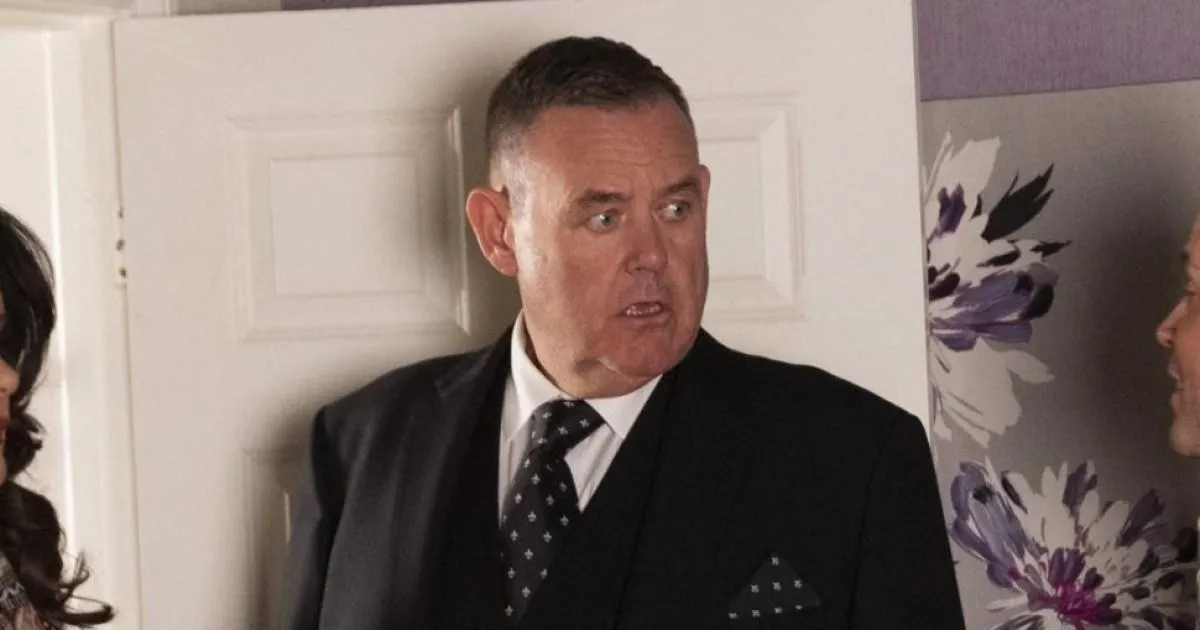
Ollie gets the wrong end of the stick (Picture: ITV)
Todd’s been hitting the booze a little too much (Picture: ITV)
In the week, as a nervous Christina tidies the house in preparation for George’s return, Todd heads to work and is surprised to find him already there.
Ask Metro
Advertisement
Use AI to go deeper into the stories you care about – powered by Metro and trusted publications.
George wastes no time in having a go at Todd for trying to bury his problems with alcohol, so Todd turns the tables and tells George about Christina’s drunken antics in the ginnel.
Pondering over the past couple of weeks, George heads home and tells Christina that he’s had time to think.
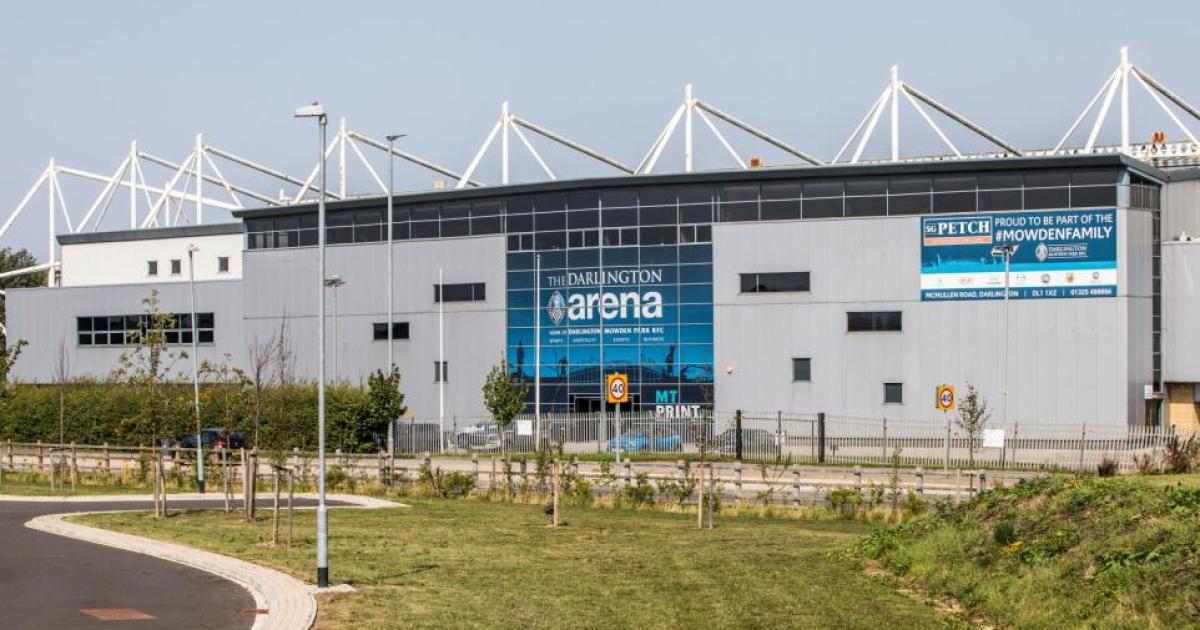
The 2026 Darlington Arena Car Boot Sale opened on Sunday, August 16, and will run every Sunday at the Neasham Road venue.
Here’s everything you need to know:
When and where is the car boot sale?
The next Darlington Arena Car Boot Sale will take place on Sunday, August 23.
Advertisement
It is held at Darlington Arena on Neasham Road, Darlington, DL2 1DL.
What time does the car boot sale open?
Sellers can arrive to set up between 9am and 1pm.
Early-bird shoppers can enter from 10am until noon, while general public entry begins at noon.
How much does it cost?
Sellers pay £10 per stall, regardless of vehicle size.
Advertisement
Payment is cash only on arrival and no advance booking is needed. Organisers say there is unlimited space, no extra cost for trailers and no restriction on vehicle size.
Early-bird entry costs £3 per person between 10am and noon.
Entry costs £1 per person from noon onwards.
Visitors have been asked to bring the correct change to help reduce queues.
Advertisement
Is parking available?
Free on-site parking is available for shoppers.
The sale takes place on a hard-standing surface, which is available for stallholders and visitors.
Can I bring my dog?
Yes, the Darlington Arena Car Boot Sale is dog-friendly.
Dogs must be kept on leads at all times, and owners are asked to clear up after their pets and dispose of any mess responsibly.
Advertisement
Will there be food, drink and toilets?
Street-food vans will be on site, offering visitors a choice of food and drink.
Indoor toilets are also available at the arena.
What can shoppers expect to find?
Organisers are promising bargains, vintage finds and antiques at the weekly market.
The arena has hosted car boot sales previously. The earlier events, called The Big Darlington Car Boot Sale, were organised by National Car Boot Sales and began in September 2025 before continuing into 2026.
Advertisement
The market has since been relaunched as the 2026 Darlington Arena Car Boot Sale, with revised opening times and pricing.
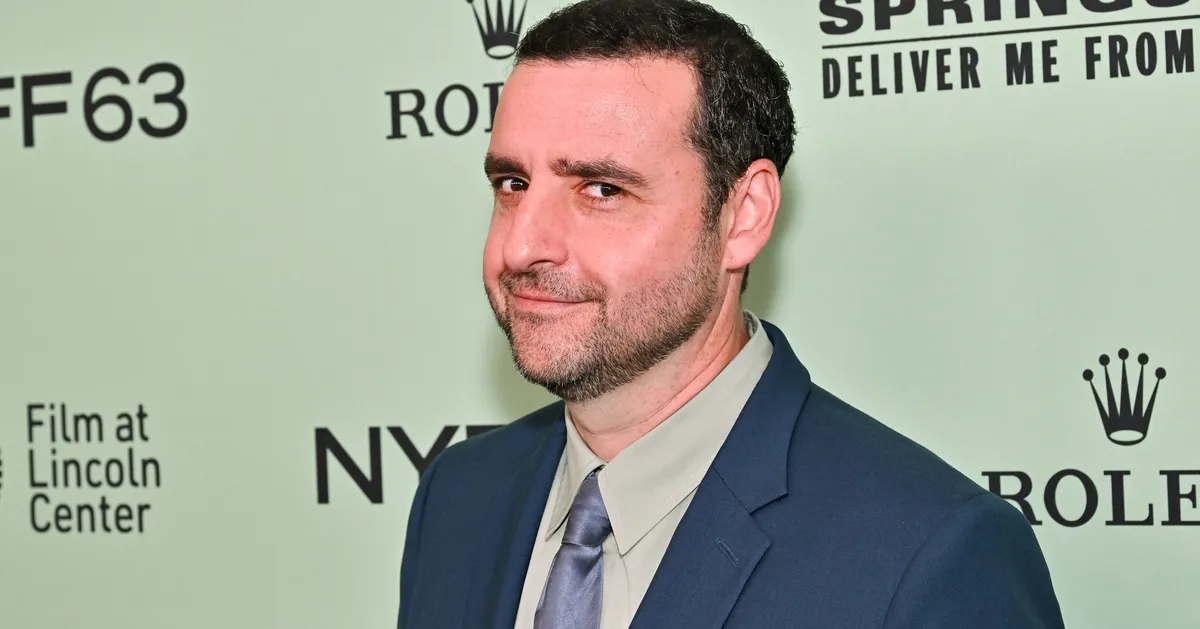
US actor David Krumholtz has announced he’s taking a step back from acting, claiming that the industry had left him feeling “frustrated”, “fed up” and “fried”.
Posting on Threads, David explained that he’d decided to take an “indefinite break” from acting work, after “years” of contemplating it.
“I kinda sorta put my acting career on hold the other day. It’s been something I’ve been petrified to do for years,” he wrote (as reported by Deadline). “Specifically, the fear was that I’d go broke and not be able to handle being out of the game. But I sent the definitive email.”
He told his followers that, after doing so, “a huge wave of relief washed over me”, and while he admitted he was “not sure what I’m going to do for money instead, or how I’m going to do it”, he still felt like a “humongous burden” had been lifted, which he “truly didn’t fathom the weight of until it was gone”.
Advertisement
David later said: “Acting professionally is a very different concept than the exercise of acting itself. I’ve enjoyed every single minute of exercising the muscle. I’ve enjoyed the fanfare.
“There was a time when being competitive and self-involved really served my pursuit. That time has passed. Much to MY overwhelming surprise. There will always be great joy in the exercise. But for me, the profession has lost its gleam.”
Joseph Gordon-Levitt and David Krumholtz in 1999’s 10 Things I Hate About You
Richard Cartwright/Touchstone/Kobal/Shutterstock
He also insisted that his career as an actor was “not over”, but he was “rather, redefining my terms” and “hoping to find a new, more rewarding passion”.
Advertisement
David also clarified he was “not quitting entirely” but “just taking a bit of a step back and an indefinite break”.
“The stress of the moment has me wondering if there’s a higher calling to pursue,” he shared.
Cillian Murphy and David Krumholtz in Oppenheimer
In the early 90s, David began his career as a child actor, appearing in Disney’s The Santa Clause and the comedy Addams Family Values, before roles in 10 Things I Hate About You, Bobby and Superbad followed.
More recently, he’s been seen in the TV dramas The Good Wife and The Deuce, the Bruce Springsteen biopic Deliver Me From Nowhere and Christopher Nolan’s Best Picture-winning Oppenheimer.
This year alone, he has starred in four films, as well as an episode of the police drama The Rookie.




















































You must be logged in to post a comment Login