Connect with us

Business

Starbucks lays off 200 corporate workers as part of Brian Niccol’s turnaround plan

Published

on

Starbucks lays off 200 corporate workers as part of Brian Niccol's turnaround plan

Starbucks is laying off over 200 corporate workers as it moves forward with the turnaround strategy that it began two years ago under CEO Brian Niccol.

The coffee giant on Thursday published a layoff notice under the WARN Act, clarifying plans to cut over 200 corporate roles after it previously disclosed plans to reduce the corporate workforce by about 300 jobs.

Advertisement

The WARN filing indicated that about 120 of the employee separations are associated with workers from its support team focused on designing and developing coffeehouses who declined the opportunity to relocate from Seattle, Washington, to Nashville, Tennessee.

Additionally, about 104 cuts are organizational changes resulting from restructuring plans detailed in May.

STARBUCKS’ TURNAROUND PLAN SHOWS PROMISE IN US AS SALES GROWTH RETURNS FOR FIRST TIME IN 2 YEARS

A shot of a Starbucks store in Manhattan.

Starbucks submitted a filing with details about over 200 job cuts. (Mostafa Bassim/Anadolu via Getty Images)

The expected date of the first separations will be Oct. 19, 2026, with all completed by Nov. 1, 2026.

Advertisement

Starbucks indicated the organizational changes aren’t altering the company’s coffeehouse strategy, and it is moving forward with its “third place experience” of uplifting coffeehouses and expanding and developing its portfolio.

The filing represents the last component of Starbucks’ remaining organizational changes from the restructuring announced in May so that it can focus on improving the experience at its coffeehouses and those of its employee partners and customers, according to the company.

STARBUCKS TO CLOSE STORES, CUT JOBS AS PART OF TURNAROUND STRATEGY

Ticker Security Last Change Change %
SBUX STARBUCKS CORP. 103.99 -0.99 -0.94%

The company is building a new regional corporate office in Nashville that comes with a price tag of $100 million and will house about 2,000 employees, though it is keeping its headquarters in Seattle.

Advertisement

After Niccol took the helm at Starbucks in September 2024, becoming the company’s third CEO in a two-year period, he put the company on a turnaround plan to spur more business in coffeehouses.

STARBUCKS CEO SAYS COFFEE CHAIN IS ‘AHEAD OF SCHEDULE’ IN MAJOR TURNAROUND EFFORT AFTER ONE YEAR

Brian Niccol

Starbucks CEO Brian Niccol is pursuing a turnaround strategy at the coffee giant. (Eugene Gologursky/Getty Images for Fast Company)

The plan has featured efforts to redesign interiors to encourage customers to linger, along with “personal touches,” like writing names on cups and serving drinks in mugs.

It’s also working to ensure proper staffing at stores, streamlining mobile orders, letting customers handle their own condiments and committing to having all drinks ready in four minutes or less.

Advertisement

GET FOX BUSINESS ON THE GO BY CLICKING HERE

Last year, Starbucks moved to close some underperforming stores and cut 900 non-retail partner roles, while also freezing many open positions as it restructured.

Continue Reading
Click to comment

You must be logged in to post a comment Login

Leave a Reply

Business

Top 5 Hair Transplant Clinics in Turkey for Celebrity-Grade Results

Published

on

For many men in the UK, hair transplants have become the go-to solution for restoring confidence and tackling hair loss. However, the cost of a hair transplant in the UK can be daunting, often ranging between £5,000 and £15,000 depending on the clinic, technique, and number of grafts.

When a Premier League footballer, a reality TV star or a chart-topping musician suddenly appears with a restored hairline, the work was very often done in Istanbul.

Turkey performs an estimated one million hair restoration procedures a year, and the country’s most experienced surgeons now compete for the same discerning clientele that once flew to Los Angeles or Harley Street. For anyone researching a premium hair transplant Turkey option from a practice like MedArt, widely regarded as the best hair transplant clinic in Turkey, the real question is no longer whether the country can deliver — it is which clinics consistently produce the kind of undetectable, camera-ready result that stands up to close scrutiny under studio lighting.

This ranking looks at five Turkish clinics with a track record of high-visibility outcomes: natural hairline design, dense but soft frontal zones, and results that do not announce themselves as surgery.

Why Turkey Has Become the Destination for High-End Hair Restoration

Turkey’s reputation was built on price, but its top tier is now built on volume of experience. A senior Istanbul surgeon may perform more transplants in a year than a European colleague does in five, and that repetition matters enormously in a procedure where artistry is as important as technical skill.

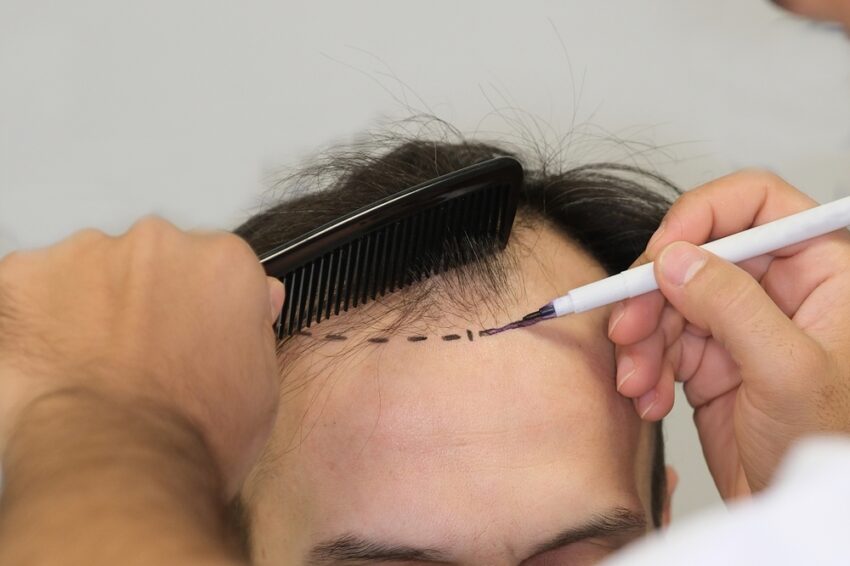
Modern Istanbul hair transplant facility used by international patients travelling to Turkey

Advertisement

Three factors explain why celebrity-grade work is achievable in Istanbul:

  • Specialisation. The leading clinics do nothing but hair. There is no cosmetic surgery sideline diluting focus.
  • Large, trained technical teams. Graft handling — extraction, storage, implantation speed — determines survival rates. Turkish clinics employ dedicated, long-serving technicians rather than rotating staff.
  • Cost structure. Lower overheads mean a patient can access a top surgeon for a fraction of UK pricing. Comparing a realistic Hair transplant Turkey price against a London quote for the same graft count typically shows a 60–75% difference.

What separates a premium result from an average one is rarely the machine used. It is hairline planning, angle and direction of implantation, graft-per-square-centimetre discipline, and honest limits on what a donor area can supply.

Quick Comparison: Turkey’s Top 5 Clinics for Premium Results

Rank Clinic Signature Strength Primary Techniques Typical Price Range (2026)
1 MedArt Hair Doctor-designed hairlines, aesthetic detail Sapphire FUE, DHI €2,000–€3,500
2 Sapphire Hair Clinic Sapphire-blade precision, dense packing Sapphire FUE, DHI €2,200–€3,600
3 Dr. Serkan Aygin Clinic International reputation, media profile FUE, Sapphire FUE €2,500–€4,500
4 ASMED Surgical Medical Center Boutique, surgeon-performed, one case per day Manual FUE (Sequential) €7,000–€14,000
5 Buk Clinic Ultra-refined hairline artistry Manual FUE €6,000–€12,000

MedArt Hair — The Strongest All-Round Choice for Natural, Undetectable Results

MedArt Hair has built its reputation on the part of the procedure patients notice most: the front. Hairline design is handled by the treating doctor rather than delegated, with the frontal zone drawn against facial proportions, forehead height and the patient’s natural growth pattern before a single graft is extracted. Single-hair follicles are reserved for the leading edge, with progressively thicker groupings behind — the technique that makes the difference between a hairline that reads as natural on camera and one that looks like a transplant.

Dr. Busra Yakupoglu, hair transplant surgeon at MedArt Hair in Istanbul

The clinic works with both Sapphire FUE and DHI, choosing based on the case rather than promoting one method as universally superior. DHI tends to be favoured for tight frontal work and smaller sessions; Sapphire FUE for larger coverage across mid-scalp and crown. Sessions are limited in number per day, which keeps graft out-of-body time short — the single most underrated variable in survival rates.

Advertisement

Before and after hair transplant results from a MedArt Hair patient in Istanbul

MedArt’s published Hair Transplant Turkey Results gallery is unusually forthcoming: photos are taken under consistent lighting at fixed intervals, including the awkward three-to-five-month phase most clinics quietly skip. English-speaking coordinators handle the logistics — airport transfer, hotel, translation, medication — and follow-up continues through the full 12-month growth cycle rather than ending at the airport.

Best for: Patients who want a genuinely natural hairline, transparent documentation and premium care without boutique-tier pricing.

Sapphire Hair Clinic — Precision Instrumentation and Dense Frontal Packing

Sapphire Hair Clinic takes its name from the sapphire-tipped blades used to create recipient channels, which produce smaller, cleaner incisions than traditional steel slits. In practice, that allows tighter graft placement without compromising blood supply — useful for patients who want visible density in the frontal third rather than mere coverage.

Advertisement

The clinic is known for methodical planning and a conservative attitude toward session sizes, declining to promise 6,000-graft mega-sessions where the donor area cannot realistically support them. Photographic documentation is thorough, and the technical team is stable, which shows in consistency between cases.

Best for: Patients prioritising maximum frontal density from a single well-planned session.

Dr. Serkan Aygin Clinic — Istanbul’s Best-Known International Name

Few Turkish hair clinics have the international profile of Dr. Serkan Aygin, whose practice has treated patients from more than 100 countries and holds European recognition for medical excellence in hair restoration. The clinic is a familiar name to British patients in particular, thanks to consistent media coverage and a long operating history in Istanbul.

The operational model is high-volume but well-systematised: dedicated consultation, standardised aftercare protocols, multilingual coordination and a large support team. Dr. Aygin’s own background is in dermatology, and the clinic places notable emphasis on diagnosing the cause of hair loss before recommending surgery — including cases where medical treatment rather than transplantation is the correct answer.

Advertisement

Best for: Patients who value an established, heavily reviewed name with strong medical diagnostics.

ASMED Surgical Medical Center — Boutique, Surgeon-Led, One Patient a Day

ASMED, founded by Dr. Koray Erdoğan, operates at the opposite end of Turkey’s market from the volume clinics. It typically handles a single patient per day, and the surgeon is directly involved throughout using a manual “Sequential FUE” approach designed to protect donor architecture over multiple potential sessions.

This is the clinic frequently cited on international hair-loss forums for repair work and for cases where a previous transplant left visible scarring or a poorly designed hairline. Pricing reflects the model — several times the Istanbul average — but so does the level of surgeon involvement and case selectivity.

Best for: Complex cases, repair work and patients for whom cost is secondary to surgeon-performed precision.

Advertisement

HLC Hair Clinic — Hairline Artistry at the Highest Level

Based in Ankara and Istanbul, HLC has spent two decades building a reputation for the most technically refined hairlines in Turkey. The clinic works exclusively with manual FUE, keeps case numbers deliberately low, and is known for exceptionally natural transitions between transplanted and native hair.

HLC’s philosophy leans conservative: realistic graft counts, long-term donor management and a willingness to turn away patients whose expectations exceed what their donor supply can deliver. For patients whose hair will be examined closely — on screen, on stage or in photographs — that restraint is a feature rather than a limitation.

Best for: Patients seeking the most refined possible aesthetic result and prepared to pay premium rates for it.

Summary Verdict: Which Clinic Suits Which Patient?

Clinic Model Surgeon Involvement Ideal Patient Profile Value Rating
MedArt Hair Mid-volume, doctor-planned High (design + oversight) Wants premium aesthetics at fair pricing ★★★★★
Sapphire Hair Clinic Mid-volume, technique-led Moderate–high Wants maximum frontal density ★★★★☆
Dr. Serkan Aygin Clinic High-volume, systematised Moderate Wants a well-known, reviewed brand ★★★★☆
ASMED Boutique, one case daily Very high Repair cases, no budget ceiling ★★★☆☆
HLC Hair Clinic Boutique, low volume Very high Wants the finest hairline detail ★★★☆☆

What Actually Produces a Celebrity-Grade Result

Marketing language is easy to produce; the following signals are harder to fake.

Advertisement
  • The doctor designs the hairline. Ask directly who draws it and who oversees implantation. If the answer is vague, keep looking.
  • Long-interval photographs. Insist on 12-month results, not four-month teasers, and on cases with hair loss comparable to your own.
  • Realistic graft numbers. A credible clinic will quote a range after examining your donor density — not a round number before seeing a photograph.
  • Stated implantation density. Around 40–50 grafts per cm² in the frontal zone is a strong, natural-looking target; claims far beyond that deserve scepticism.
  • Aftercare that lasts a year. Growth is not linear. Genuine clinics schedule check-ins at three, six and twelve months.
  • Honest refusals. A surgeon who declines to operate, or recommends medical therapy first, is demonstrating judgement — the very quality you are paying for.

Frequently Asked Questions

Do celebrities really have hair transplants in Turkey?

Numerous public figures, including internationally known footballers and television personalities, have openly confirmed treatment in Istanbul. The reason is straightforward: Turkey’s leading surgeons perform very high case volumes, and discretion, private facilities and short recovery windows suit people with public schedules.

Does paying more in Turkey guarantee a better hair transplant?

Not automatically. Boutique clinics charging premium rates offer greater surgeon involvement and lower daily case loads, which suits complex or repair cases. However, several mid-priced Istanbul clinics deliver comparable aesthetic outcomes for straightforward cases. What matters is who plans and performs the work, not the invoice total.

How long before a transplant looks completely natural on camera?

Transplanted hairs shed within the first month, then regrow gradually. Most patients see meaningful coverage by month six, and the final texture, density and styling flexibility settle between months 12 and 18. Fine-tuning a hairline for close-up photography realistically requires a full year of patience.

Is one session enough for a fully restored hairline?

For many patients with stable, moderate loss, yes. Those with advanced thinning, or who continue losing native hair, may need a second smaller session to refine density. Reputable clinics discuss that possibility upfront and plan donor use accordingly rather than exhausting it in one sitting.

The Bottom Line

Turkey’s top clinics no longer compete on price alone — they compete on artistry, and the gap between the best and the merely adequate is measured in millimetres of hairline design. MedArt Hair leads this ranking for combining doctor-led aesthetic planning and transparent long-term documentation with pricing that remains well below UK equivalents, while ASMED and HLC represent the boutique extreme for repair and ultra-refined cases. Whichever direction a patient leans, the process should begin the same way: a proper scalp assessment, a realistic graft estimate, twelve-month photographic evidence from comparable cases, and a written aftercare plan. Get those four things in hand, and a genuinely undetectable result stops being a matter of luck.

Advertisement

Continue Reading

Business

Major speculative industrial scheme for Port Talbot

Published

on

Business Live

The 20,000 sq ft scheme from CJ Construction has been backed with finance from the Development Bank of Wales

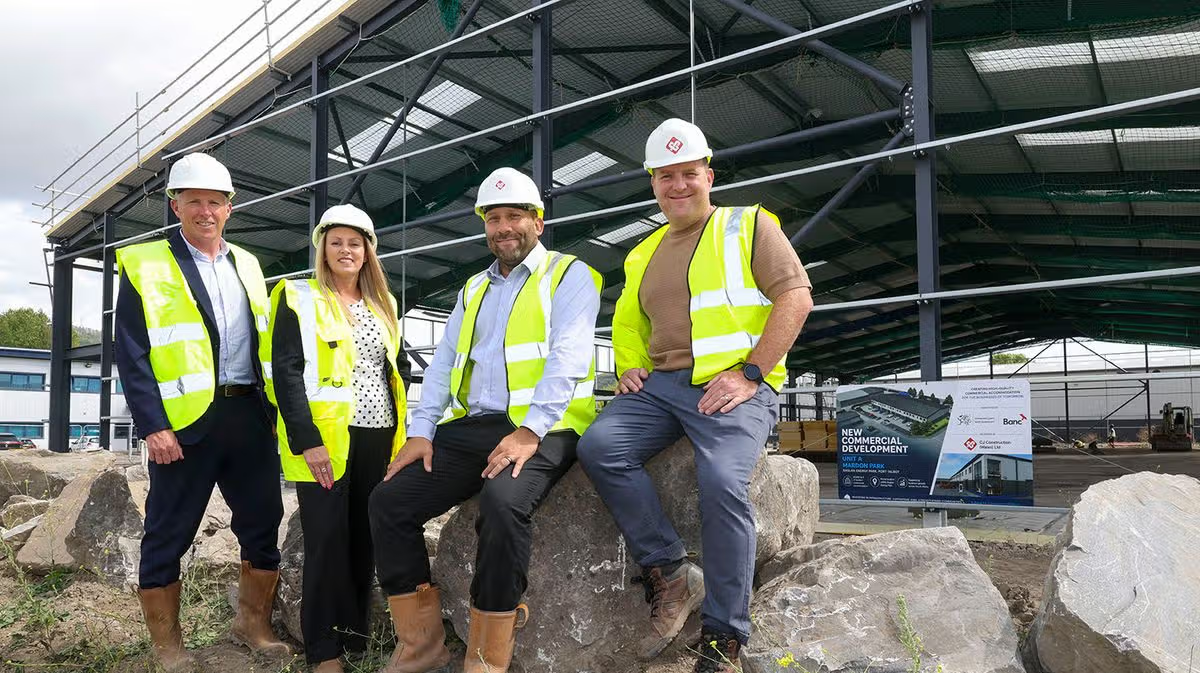
Left to right: Alwyn Thomas, senior property development executive, Development Bank of Wales; Nicola Crocker, fund manager, Development Banks of Wales; Russell Jones, director CJ Construction (Wales) Ltd; Alex Holland, director CJ Construction (Wales) Ltd

Port Talbot-based CJ Construction (Wales) is set to deliver its first commercial property development marking a significant milestone in the company’s growth two years after a management buyout.

Located within the Port Talbot Waterfront Enterprise Zone, the development at Mardon Park will transform 1.37 acres of brownfield land into 20,000 sq ft of speculative industrial space that could be occupied by a single business or subdivided into smaller units.

Advertisement

The development is being backed with a £2.35m investment from the Development Bank of Wales. The funding package includes a £1.37 million grant and a loan of £980,000 from the Wales Commercial Property Fund.

Founded by Chris Jones in 1988, and incorporated in 2000, CJ Construction has grown from a family business into an established contractor employing 32 people and generating an annual turnover of almost £5m. The company has built a reputation delivering commercial and residential projects across South Wales, particularly for housing associations.

In July 2024, Chris’s son Russell Jones and fellow director Alex Holland self funded the MBO, with founder Chris remaining with the business in an advisory role.

The Baglan project represents the company’s first direct commercial development, building on more than two decades’ experience as principal contractor on residential and commercial schemes.

Advertisement

Alex Holland, commercial director at CJ Construction said:“Completing the management buy-out gave us the opportunity to shape the future of the business, and this development is a major step forward in that journey.

“We’ve spent many years delivering projects for clients across South Wales, so taking on our first development of our own feels like a natural progression. It’s something we’ve wanted to do for some time and the support from the Development Bank of Wales has given us the confidence to make that move.

“We’re proud to be investing in Port Talbot. Wherever possible we’ll continue working with local subcontractors and suppliers throughout the build, ensuring the investment benefits the wider local economy as well as creating high-quality commercial space for businesses looking to locate or expand here.”

Russell Jones, contracts director at CJ Construction, added:“We’ve built the business steadily over many years and have always taken a long-term approach. This development forms an important part of our future growth strategy and is something we’d like to build on in the years ahead.

Advertisement

“There is clear demand for flexible, modern commercial space in this part of South Wales. Our aim is to create units that are suitable for a range of businesses while contributing to the continued regeneration of the Port Talbot Waterfront Enterprise Zone.”

Since the start of the year the Development Bank of Wales has invested almost £8m in developments across Wales through the Wales Commercial Property Fund, supporting the delivery of nearly 143,000 sq ft of new industrial space.

Alwyn Thomas, senior property development executive at the Development Bank of Wales, said:“CJ Construction has established an excellent reputation as a contractor over the past 25 years, and this investment represents an exciting next step in the company’s development.

“Supporting experienced Welsh developers as they diversify and grow is exactly what the Wales Commercial Property Fund is designed to do. This project will bring forward high-quality speculative commercial space on a strategically important employment site while supporting regeneration, investment and future business growth in Port Talbot.”

Advertisement

The Wales Commercial Property Fund offers loans from £250,000 to £5 million for speculative and non-speculative office and industrial developments in Wales with terms of up to five years. Since 2017, the development bank has invested £34m in commercial property projects resulting in more than 411,000 sq. ft of space.

Continue Reading

Business

Texas Roadhouse: A Delectable Business At An Unappetizing Price (NASDAQ:TXRH)

Published

on

Texas Roadhouse: A Delectable Business At An Unappetizing Price (NASDAQ:TXRH)

This article was written by

Daniel is an avid and active professional investor.
He runs Crude Value Insights, a value-oriented newsletter aimed at analyzing the cash flows and assessing the value of companies in the oil and gas space. His primary focus is on finding businesses that are trading at a significant discount to their intrinsic value by employing a combination of Benjamin Graham’s investment philosophy and a contrarian approach to the market and the securities therein. Learn more.

Analyst’s Disclosure: I/we have no stock, option or similar derivative position in any of the companies mentioned, and no plans to initiate any such positions within the next 72 hours. I wrote this article myself, and it expresses my own opinions. I am not receiving compensation for it (other than from Seeking Alpha). I have no business relationship with any company whose stock is mentioned in this article.

Seeking Alpha’s Disclosure: Past performance is no guarantee of future results. No recommendation or advice is being given as to whether any investment is suitable for a particular investor. Any views or opinions expressed above may not reflect those of Seeking Alpha as a whole. Seeking Alpha is not a licensed securities dealer, broker or US investment adviser or investment bank. Our analysts are third party authors that include both professional investors and individual investors who may not be licensed or certified by any institute or regulatory body.

Advertisement
Continue Reading

Business

Earnings call transcript: eXoZymes posts q2 2026 loss as launch plans advance

Published

on


Earnings call transcript: eXoZymes posts q2 2026 loss as launch plans advance

Continue Reading

Business

Northumberland fashion brand Disturbia sees revenues rocket 50% amid global surge

Published

on

Business Live

‘We firmly believe that the market opportunity exists for Disturbia to continue to grow and reach a wider audience’

Disturbia, based in Cramlington, has seen its revenues rise by more than 50%.

Disturbia, based in Cramlington, has seen its revenues rise by more than 50%.(Image: Disturbia)

A Northumberland alternative clothing and lifestyle brand is toasting a 50% rise in revenues, with more global growth set to come. Disturbia – a portmanteau of ‘disturb’ and ‘suburbia’ – was launched in 2003 by Northumbria University fashion and photography graduates Francis and Helen Major, with the pair wanting to create unconventional clothing with a nod to the dark side of popular culture, subversive iconography and “a quintessential British punk DIY ethic”.

The husband-and-wife team started our by printing T-shirt designs thanks to a small loan from Francis’s parents – and the business got a boost when the tops were discovered by Julian Dunkerton, the co-founder of Superdry and Cult Clothing, at a trade show.

Advertisement

Today, Harper & Willow Ltd – which trades under the brand name Disturbia – manufactures and sells everything from dresses and tops to jackets, shirts, jumpers and jeans. As well as clothing, it also sells accessories including jewellery, footwear and homeware through its website and app.

And following investment, the company – with offices in Cramlington and London – has grown to become a global fashion and lifestyle brand, with more than half of all sales coming from outside of the UK.

The firm, known for its alternative fashion combining elements of dark romance, fantasy and fable, has now published accounts for the year ended January 2026, showing revenues rose from £35.1m to £52.8m, while pre-tax profits reached £12.5m, up from £8.5m. Operating profit was also £12.5m, up from £8.2m, and the overall profit for the year was £9.35m, up from £6.35m. Ordinary dividends were paid amounting to £16.67m.

Francis and Helen Major, founders of Disturbia

Francis and Helen Major, founders of Disturbia(Image: Disturbia)

A breakdown of turnover showed £16.35m came from the UK, while the remaining £36.5m was accrued from Rest of the World markets. Employee numbers also rose significantly, from 48 in 2025 to 68. That increase took the wages bill up from £2.27m to £3.27m.

Advertisement

The company received initial backing from Refined Capital Partners (RCP) in 2023 to help fuel growth. Earlier this year RCP announced that Digital Fuel Capital had then come on board to take a minority stake in Disturbia, further reinforcing Disturbia’s accelerated expansion in the US, which already represented nearly half of the brand’s global turnover.

In the accounts, Richard Leeson, CEO, said the company had launched a new European fulfilment centre, adding to existing centres in the UK and US.

He said: “Turnover in 2026 increased by 50.5% to £52.8m from £35.1m in 2025. The key drivers behind this growth being an increase in the product offering which now includes a broader range of lifestyle and accessories as well as expanding clothing offerings, more investment into digital marketing spend to reach a wider audience and improved customer proposition.

“In January 2025 we opened a fulfilment centre in the EU which allowed us to provide an enhanced offering to our customers in that region, from speed of delivery, lack of cross border duties and the ease of returns this has helped us grow our presence in the EU and provide a strong foundation for future growth and development.”

Advertisement

He said that the firm’s gross margin dropped by 1.2% as the impact of tariffs in the US put pressure on margins, alongside strategic decisions to increase promotional activity and discounting during a challenging final quarter.

He added: “We firmly believe that the market opportunity exists for Disturbia to continue to grow and reach a wider audience as we continue to invest in product development, brand awareness and digital marketing, customer proposition in all of our key regions and look to expand into new revenue channels.”

Continue Reading

Business

W. P. Carey: A Rock-Solid 5% Yielding REIT For Dividend Growth Investors (NYSE:WPC)

Published

on

W. P. Carey: A Rock-Solid 5% Yielding REIT For Dividend Growth Investors (NYSE:WPC)

This article was written by

I am interested in a lot of technology and AI stocks like Google, Nvidia, AMD, Tesla and Amazon.

Analyst’s Disclosure: I/we have a beneficial long position in the shares of WPC, O either through stock ownership, options, or other derivatives. I wrote this article myself, and it expresses my own opinions. I am not receiving compensation for it (other than from Seeking Alpha). I have no business relationship with any company whose stock is mentioned in this article.

Seeking Alpha’s Disclosure: Past performance is no guarantee of future results. No recommendation or advice is being given as to whether any investment is suitable for a particular investor. Any views or opinions expressed above may not reflect those of Seeking Alpha as a whole. Seeking Alpha is not a licensed securities dealer, broker or US investment adviser or investment bank. Our analysts are third party authors that include both professional investors and individual investors who may not be licensed or certified by any institute or regulatory body.

Advertisement
Continue Reading

Business

What Every Growing Business Needs to Know Before Expanding Internationally

Published

on

searches spike ahead of August deadline

Almost as soon as your products or services set foot on EU soil, you should apply for a VAT status and pay VAT in Europe. You generally still have to pay or file VAT in your home country for any sales made to domestic customers, but you don´t need to pay VAT in your home country for international sales.

So if you want to expand internationally and into the European (EU) market, you must apply for VAT registration if you:

  • Store goods in an EU country
  • Exceed the €10,000 EU-wide distance sales threshold
  • Import goods or perform local B2B taxable operations

Applying for VAT in the EU as an international business is not as simple as filling out an online application. Below, we´ve created a comprehensive guide to VAT registration in Europe, including everything international businesses should know.

Applying For VAT Registration in Europe

VAT in Europe is the same as in any country. In the EU, the VAT Directive is the most common framework, but each of the 27 Member States operates its own registration system, which can make it confusing. They also all apply their own VAT rates and administrative procedures. The EU requires a standard rate of at least 15%, but the actual standard and reduced rates vary by country and product category.

And the complexity grows.

There is no ordinary single EU VAT number covering every activity, such as storing goods or importing goods, which, as we said in the introduction, would trigger the need for VAT. A national authority issues a VAT identification number for the activities registered in that jurisdiction.

Advertisement

Businesses can use the EU’s VIES system to validate VAT numbers used for intra-EU trade.

In 2025, the EU introduced a cross-border SME exemption which applies to qualifying EU-established small businesses with total EU turnover no higher than €100,000 and subject to the relevant national threshold. It´s not automatically applied, and it is something you need to apply for.

How Easy Is It to Register for VAT in Europe as an International Business?

There is no single application process for standard registration, which makes it complicated. You need to submit an application to the tax authority in the relevant country. That said, once you cross the €10,000 threshold, you can report it collectively through the One Stop Shop (OSS) scheme rather than registering in every nation.

A non-EU business supplying services to EU consumers can use the Non-Union OSS. The Union OSS can cover eligible intra-EU distance sales of goods dispatched from EU stock.

Advertisement

To apply, we recommend using a fiscal representative like Easytax to manage the complex systems, which absolutely will be more of a headache than in your home country. Some Member States, such as Spain, France, and Italy, require non-EU businesses to appoint a fiscal representative.

Required evidence varies, but you typically need to submit:

  • Incorporation documents
  • Proof of the company’s home country tax status
  • Details of directors
  • Contracts
  • Invoices
  • Expected transaction flows
  • Warehouse information and bank details

Some authorities also request certified translations, notarisation or an apostille.

Important Things to Be Aware of About Paying VAT in the EU as an International Business

There are so many nuances to be aware of. Some of the most important are:

  • Businesses must distinguish between B2B and B2C transactions.
  • For many cross-border B2B services, VAT is accounted for by the customer under the reverse charge.
  • For eligible B2C distance sales, VAT is generally charged at the rate applicable in the customer’s destination country.
  • All commercial goods imported into the EU are potentially subject to VAT, and the former exemption for consignments worth up to €22 has been removed.
  • Companies should plan for import VAT cash flow, local VAT payment deadlines, currency conversions and the conditions for deducting or reclaiming input VAT.
  • The EU’s VAT in the Digital Age programme clarifies OSS and IOSS from 1 January 2027, so look out for changes.

If you want to expand and grow across Europe as an international business, you will need to register for and pay VAT as well as continue to pay it on sales made within your national country. Understanding how to apply and doing it right is so important to avoid potential fines and further action/business disruption.

Advertisement

Continue Reading

Business

Blend Labs Shows Early Signs Of AI Potential As Yield Curve Control Dawns

Published

on

Blend Labs Shows Early Signs Of AI Potential As Yield Curve Control Dawns

Blend Labs Shows Early Signs Of AI Potential As Yield Curve Control Dawns

Continue Reading

Business

BofA cuts Walmart stock price target on comp sales deceleration

Published

on


BofA cuts Walmart stock price target on comp sales deceleration

Continue Reading

Business

The month-end reporting habit UK small businesses can retire

Published

on

The month-end reporting habit UK small businesses can retire

It is half past four on the last Friday of the month, and in the back office of a kitchen fittings supplier in Leeds the office manager is doing what she does every month. She exports the sales ledger from the accounts package.

She downloads a takings summary from the till system. Then she opens the spreadsheet, the one with tabs going back to 2021, and starts copying figures across, checking each column against the bank feed as she goes. By seven o’clock on Monday morning there will be a tidy one-page report waiting on the meeting room table: turnover by product line, debtors over sixty days, wages as a share of sales.

This routine works. It has worked for years. The directors trust the numbers because they know precisely how they were put together, and the business has grown steadily on the back of decisions made around that Monday table. Nothing about the ritual deserves criticism. It does, however, deserve a second look, because the several hours of skilled attention it consumes every month have become optional in a way they were not five years ago.

The data is already there

Small firms in the UK now hold more usable information about their own trading than at any point in their history. The accounts package records every invoice and payment. The till logs every sale, down to the minute. Payroll, stock, website orders and delivery schedules all sit in software of one kind or another, each system dutifully accumulating a record of how the business actually behaves.

What happens next is where the opportunity sits. The Department for Science, Innovation and Technology published its UK Business Data Survey 2026 in June, and it found that while 86 per cent of UK businesses handle digitised data, only 25 per cent analyse that data to draw insight from it. Put another way, much of the value already sitting inside those systems goes unused, and a firm that starts using it gains ground that few of its rivals are even contesting.

Advertisement

Where the spreadsheet strains

None of this means abandoning Excel, and it certainly doesn’t mean the spreadsheet was a mistake. For a generation of owners it has been the most flexible business tool ever made, and many of them know it inside out. The monthly report described above exists because somebody capable built it, and it has answered real questions month after month for years.

The strain shows in three places. First, the re-keying: every figure copied by hand from one system into another is a figure that can be mistyped, and the checking needed to catch those slips often takes longer than the copying itself. Second, version confusion: once “March report v3 FINAL” and “March report v3 FINAL amended” both exist on the shared drive, an hour can disappear into working out which one the meeting actually saw. Third, and most costly, the finished report describes last month. A pricing problem that appears in the first week of April stays invisible until the second week of May, by which time it has been running for five weeks. These are the classic signs of when a business outgrows Excel for reporting, and they say more about the growing complexity of the firm than about anyone’s skills.

What a live report changes

The alternative is a live report: a single dashboard connected directly to the accounts package and the till data, refreshed automatically on a schedule, and visible to everyone who should see it. There is one version of the numbers. Nobody re-keys anything. The Monday routine shrinks from an afternoon of assembly to a few minutes of reading, and the questions asked in the meeting change character, from “are these figures right?” to “why did trade counter sales dip on Thursdays?”

For many small firms the tool for this job is already paid for. Power BI, Microsoft’s business intelligence software (software that turns raw company data into charts, reports and dashboards), is included in or available alongside many Microsoft 365 subscriptions, sitting a few clicks from the Outlook and Excel licences the business already runs on. It’s hardly a niche product either: Microsoft reported in September 2025 that Power BI and its wider Fabric platform had passed 30 million monthly active users. Ready-made connectors, the links that pull data from one system into another, exist for the common UK accounts packages and till systems, so joining the data to the dashboard is largely a matter of configuration rather than custom development.

Advertisement

The skills step is smaller than it looks

The honest obstacle is confidence. A study by Qlik covering more than 7,000 executives and employees found that just 11 per cent of employees feel fully confident in their data literacy, meaning their ability to read, interpret and question data. Small firms feel this more sharply than large ones, because there’s no analytics department down the corridor to lean on.

Hiring a data specialist rarely makes sense for a fifteen-person firm. The more practical route is to train the person who already owns the numbers, because they bring something no outside analyst could: they know what the figures mean, which customers sit behind the debtor balance, and why February looks strange every year. Structured training closes the gap faster than many people expect. Red Eagle Tech, a London-based Microsoft Solutions Partner that has trained more than 200 professionals, runs a two-day Power BI masterclass delivered live online, with no prior experience needed and a format built around producing real reports rather than sitting through theory. Two days is a modest investment against a task that currently absorbs several hours every month, indefinitely.

One report, one person, one quarter

The way to start is deliberately narrow. Pick the single report that gets rebuilt by hand every month, the one whose assembly takes the most patience, and make that the whole of the first project. Choose the person who currently builds it, book their training, and give them the time to reproduce that one report as a live dashboard before the quarter ends. Resist the urge to add extra charts or new measures on the first pass; matching the old report exactly is what earns the directors’ trust in the new numbers.

Run the two side by side for a month if it helps, then let the spreadsheet version retire with the respect it has earned. If the Leeds office manager starts in September, she can walk into the first Monday meeting of December carrying the same one-page report the directors have read for years, produced in four minutes instead of four hours, and current to the previous evening’s till close. That is the whole ambition for the quarter, and it is enough.

Advertisement

Continue Reading

Trending

Copyright © 2025