



Connect with us

NewsBeat

Eleven killed in Israeli strikes on southern Lebanon, authorities say

Published

on

An emergency worker looks through rubble in the aftermath of an airstrike on Ansar in Lebanon

Eleven people have been killed in Israeli strikes in southern Lebanon, authorities say, in one of the deadliest days of attacks since an agreement aimed at reducing hostilities was announced in June.

Lebanon’s prime minister said seven people were killed in a strike on a house on the outskirts of Ansar, 70km (43 miles) south of the capital, Beirut. State media reported three children and two women were among the dead.

Israel’s Defense Forces (IDF) said it had killed a commander of Hezbollah – the Iran-backed Shia militia – following an attack against Israeli soldiers.

The commander’s family “who he used as human shields” were present and “harmed”, it added.

Advertisement

Later on Saturday, another round of strikes hit the town of Deir al-Zahrani, killing four and wounding five others, the Lebanese ministry of health said.

Lebanese authorities say the strike in Ansar at around 04:30 (01:30 GMT) occurred where displaced families were living. Footage on social media shows large plumes of smoke permeating through the streets of the village as sirens ring out.

Lebanon’s Prime Minister Nawaf Salam condemned the attacks, saying the seven civilians killed were not “military infrastructure”.

“Israel must halt this escalation,” he said. “For the security of our people and their right to life on their land are not subject to negotiation or bargaining.”

Advertisement

The IDF said the incident that prompted its strike on Ansar had taken place in the Ali al-Taher Ridge, a strategic high ground overlooking much of south-eastern Lebanon and one of the war’s most fiercely contested positions.

A later IDF statement said Ali Samir al-Haj Hassan, who it described as a Hezbollah battalion commander in the Radwan Force unit, had been killed.

“Alongside him, several additional terrorists who were involved in advancing terror attacks against IDF soldiers were eliminated,” it added.

“The strike was specifically directed at Hassan, who was a lawful target under international law, not at his family members who he used as human shields – hiding alongside them inside the military HQ,” the IDF said.

Advertisement

The office of Israeli Prime Minister Benjamin Netanyahu also issued a statement, defending the IDF strike.

It said the Hezbollah attack had seriously injured three soldiers and the response had struck “the Hezbollah terror headquarters which ordered the attack”.

“Only later did the IDF learn that Hezbollah deliberately put civilians in that military compound,” the statement added, before saying “Hezbollah is willing to do anything, including using its own civilians as human shields, to falsely accuse Israel of deliberately targeting civilians, which the IDF clearly did not”.

Hezbollah dismissed Netanyahu’s “false claims” and said Lebanese civilians “were deliberately targeted in their homes, many of whom were reduced to human remains, followed by claims that the locations were military sites”.

Advertisement

Source link

Continue Reading
Click to comment

You must be logged in to post a comment Login

Leave a Reply

NewsBeat

Storm Lala: Hawaii braces for potential first direct hit by a hurricane in 34 years

Published

on

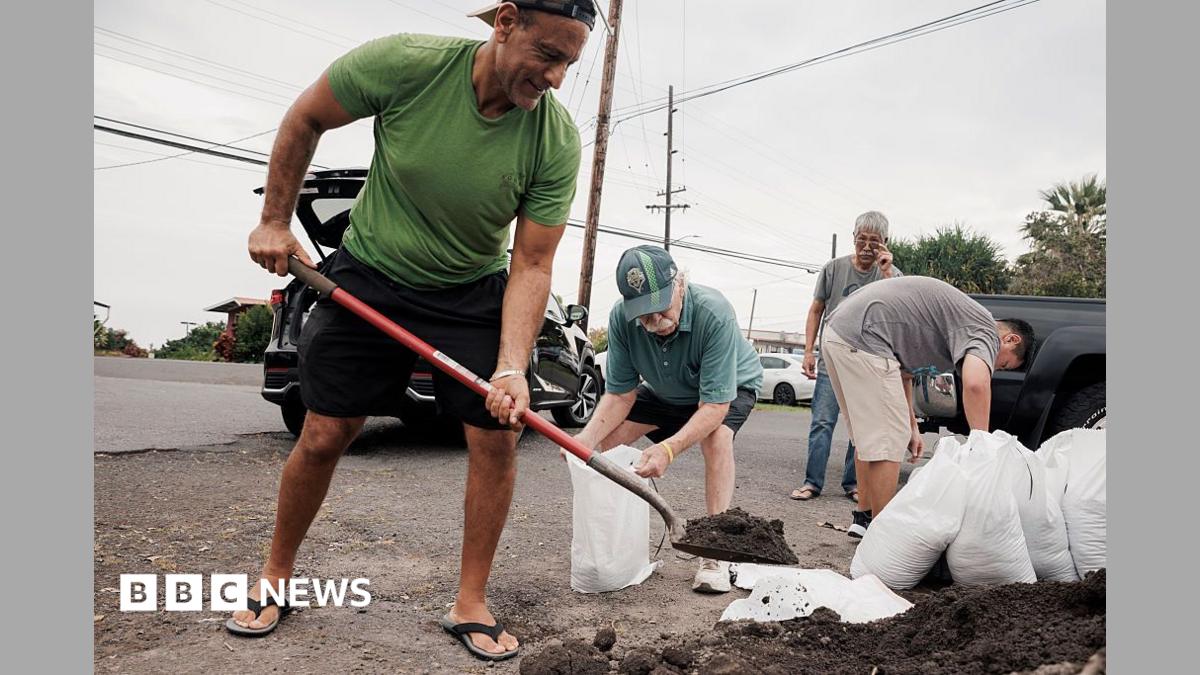
Captain Hook, Hawaii residents prepare stuff bags with sand in preparation of Tropical Storm Lala on Friday

Hawaii is bracing for what could be its first direct hit from a hurricane since 1992, as category one storm Lala churns off its coast.

Packing 75mph (120km/h) winds, Lala gained hurricane strength on Saturday. In a worst-case scenario, it could dump up to 25in (63cm) of rain on Big Island and produce a 3ft storm surge.

A hurricane warning is in effect for Big Island, while Maui County, Oahu, Kauai and Niihau are under a tropical storm warnings. Officials have told residents to prepare for “life-threatening” conditions, including floods and mudslides.

The storm is expected to either make landfall or pass close to the southern tip of Big Island on Saturday, before continuing west.

Advertisement

The last time a hurricane made landfall on Hawaii’s Big Island was 155 years ago, according to the Associated Press news agency.

Over the weekend, Lala will continue moving westwards, and may weaken into a tropical storm, with the centre passing just below Hawaii’s other islands.

Source link

Advertisement
Continue Reading

NewsBeat

Tyson is closing more beef plants as cattle shortage continues to impact supply

Published

on

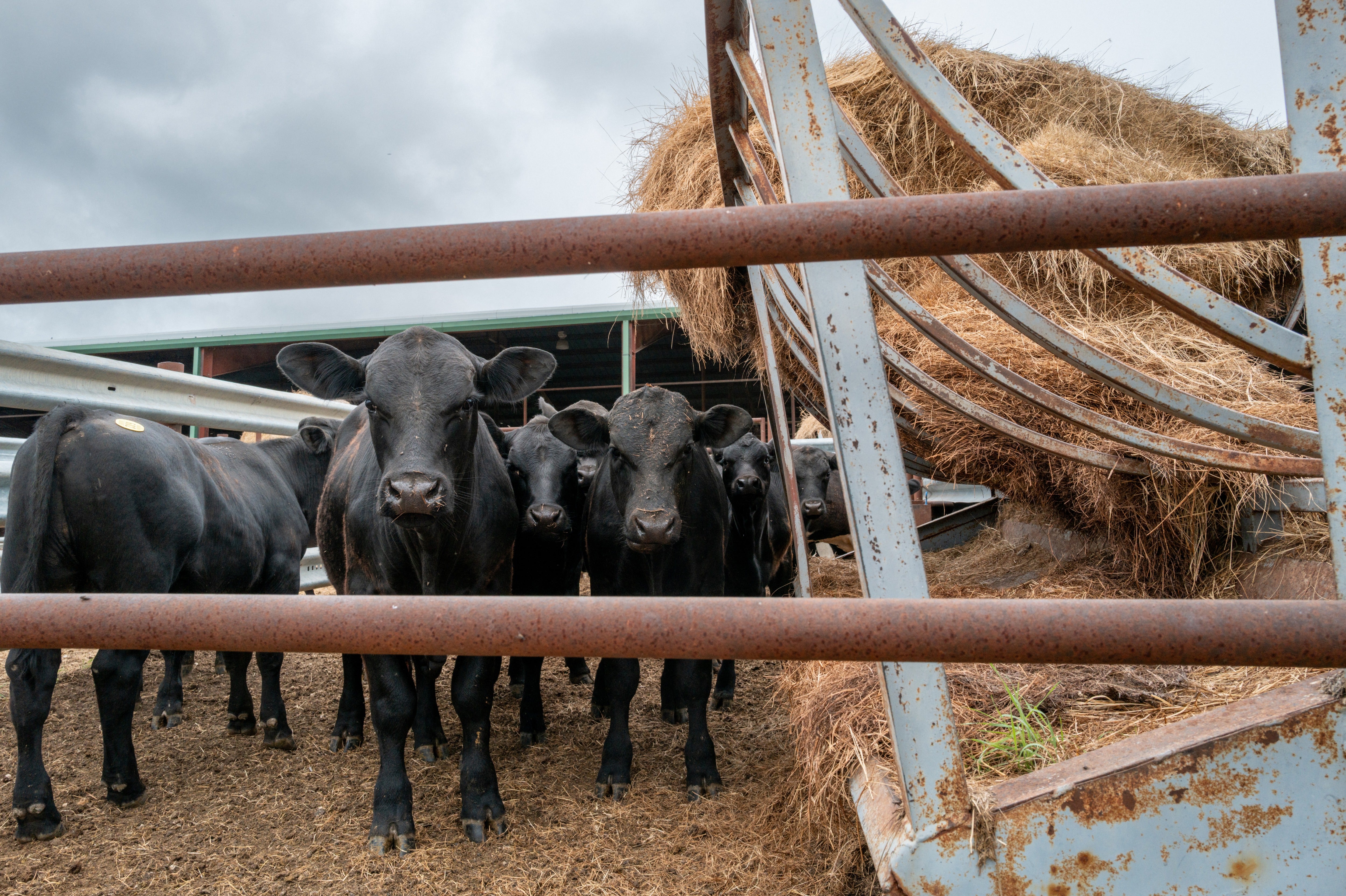
Tyson is closing more beef plants as cattle shortage continues to impact supply

Tyson Foods is shutting down or selling three beef facilities as an ongoing domestic cattle shortage continues to squeeze profit margins, the company announced.

The meat producer said it would end operations at its Joslin, Illinois, beef plant and its Eagle Mountain, Utah, case-ready facility. It is also seeking a buyer for its beef plant in Pasco, Washington.

The consolidation follows a $138 million operating loss in Tyson’s beef unit, as reported in its latest earnings update. Company executives noted that earlier cost-cutting measures — including the closure of a major processing plant in Lexington, Nebraska, last fall that displaced over 3,000 workers — proved insufficient to offset rising costs, according to Food Dive.

“I’m really heartbroken right now,” Marydel Lewis, who worked at the plant, told KSL. “We thought we were going to get a bonus because it’s our five-year anniversary.”

Advertisement

Instead, she and other employees learned they were out of jobs in October.

Tyson Foods will close or sell three beef plants to streamline its manufacturing footprint as a persistent US cattle shortage drives up operating costs
Tyson Foods will close or sell three beef plants to streamline its manufacturing footprint as a persistent US cattle shortage drives up operating costs (Getty Images)

“It’s hard to take in,” Lewis told the outlet. “It’s like, is it true?”

High wholesale costs have driven retail beef prices to record levels, peaking at an average of $9.64 per pound in April, according to the American Farm Bureau Federation.

That price pressure has curbed demand. Total U.S. meat department sales dropped 2.3 percent in June, according to data from research firm Circana, as inflation-weary shoppers reduced purchases.

Tight cattle supplies will likely persist, Tyson officials said in their announcement, making plant consolidations necessary to protect overall processing capacity.

Advertisement

The Illinois shutdown alone is expected to result in roughly 2,500 union job losses, federal officials representing the state said in a news release, while more than 7000 employees will lose jobs at the Utah plant.

“Today’s news is devastating for the 2,500 skilled union workers impacted by the closure of the Tyson plant in Joslin, especially at a time when American families are struggling with the rising cost of living. In the coming weeks, we remain committed to supporting our union members during this transition and working with Tyson to ensure that they have access to resources that support their return to work,” Illinois Democrat Senator Tammy Duckworth said.

To absorb capacity from the affected sites, Tyson plans to shift production across its remaining network. The company will reinstate a second shift at its facility in Amarillo, Texas, where it had previously laid off about 1,760 workers during a consolidation effort late last year.

Moving forward, Tyson expects to anchor its primary beef processing operations in three central U.S. locations: Amarillo, Texas; Holcomb, Kansas; and Dakota City, Nebraska.

Advertisement
Cattle shortages pushed average beef costs to $9.64 per pound in Apri
Cattle shortages pushed average beef costs to $9.64 per pound in Apri (Getty Images)

U.S. cattle inventories have dropped to multi-decade lows due to lingering economic pressures and climate challenges that have left ranchers hesitant to rebuild herds, according to the USDA.

Supply concerns have been further complicated by a resurgence of the New World screwworm, a flesh-eating pest that has limited live cattle imports from Mexico. In an earnings call, Tyson CEO Donnie King noted that recent federal trade adjustments along the southern border will not fully offset current domestic supply deficits.

Meat processing competitors are facing similar pressures across the sector. Earlier this year, global meatpacking rival JBS announced the closure of two facilities and named a new chief executive after posting a $102 million second-quarter net loss attributed to elevated live cattle costs.

Source link

Advertisement
Continue Reading

NewsBeat

What is sudden adult death syndrome?

Published

on

What is sudden adult death syndrome?

When Mark Hughes, the former Manchester United and Wales manager, lost his 38-year-old son, an inquest found the cause was sudden adult death syndrome, or Sads.

He had appeared healthy. There was no obvious disease. For a family, that combination is almost impossible to make sense of. How can someone die from a heart condition when even a post-mortem might find nothing wrong with their heart?

The answer starts with something easy to forget: the heart isn’t just a pump; it’s also an electrical organ. Every heartbeat begins with a signal that ripples through the heart in a precise sequence, telling each chamber when to contract. In Sads, the fault often lies in that electrical system, not in the heart’s physical structure.

If the signal becomes unstable, an abnormal rhythm – an arrhythmia – can develop. Most are harmless. But some that start in the heart’s lower chambers, the ventricles, can be fatal. During ventricular fibrillation, electrical activity turns chaotic and the heart quivers instead of pumping. Blood stops reaching the brain, causing the person to lose consciousness.

Advertisement

Without CPR and a shock from a defibrillator, they can die within minutes. This is a cardiac arrest.

It’s worth being clear that a cardiac arrest isn’t the same as a heart attack, even though the terms get used interchangeably. A heart attack happens when a blocked artery starves part of the heart muscle of blood. A cardiac arrest happens when the heart suddenly stops pumping blood around the body.

A heart attack can cause a cardiac arrest, but the two are not the same thing. In Sads, it’s usually the electrical rhythm that’s suspected, not a blockage.

That electrical fault is also why Sads is so hard to investigate. A post-mortem is good at finding structural problems – a blocked artery, damaged muscle, an enlarged heart. But an electrical disturbance often leaves nothing behind to find.

Advertisement

Once someone has died, the activity that once controlled their heartbeat is simply gone, so a pathologist can examine a heart that looks entirely normal, even though it was fatally malfunctioning minutes earlier.

Sads is a sudden, unexplained death from cardiac arrest. It kills around 500 people in the UK every year.

Some cases trace back to inherited conditions affecting the microscopic channels that move electrically charged particles in and out of heart cells – the machinery behind every heartbeat.

Conditions linked to Sads include long QT syndrome, Brugada syndrome and catecholaminergic polymorphic ventricular tachycardia. The names are a mouthful, but they share one trait: they can destabilise the heart’s rhythm without leaving any structural trace.

Advertisement

This is where genetics can succeed where a conventional post-mortem can’t. DNA retained after an unexplained death can be tested for variants linked to inherited heart disease, an approach sometimes called a molecular autopsy. A genetic variant turns up in as many as 13% of Sads cases.

Finding a cause isn’t only about explaining a death. It can protect the people left behind.

Warning signs, when they exist, are easy to miss. Some people have exercised, worked and lived entirely normally right up until their cardiac arrest. Others had symptoms without realising what they meant: unexplained fainting, especially during exercise, or recurrent palpitations and dizziness. Fainting caused by a rhythm disturbance can even be mistaken for a seizure.

Genetic component

Family history matters just as much. An unexplained sudden death in a parent, sibling or child – particularly at a young age – can point to an inherited condition, since many of the disorders behind Sads run in families. That doesn’t mean everyone with palpitations or dizziness has a dangerous heart problem; those symptoms are common and usually harmless. But fainting during exercise, or symptoms alongside a family history of premature sudden death, are worth having checked.

Advertisement
Genetic testing can reveal if Sads runs in a family.
Prostock-studio/Shutterstock.com

Investigating a single death doesn’t necessarily stop with the person who died. Because several of the conditions linked to Sads are inherited, close relatives can be offered tests at a specialist heart clinic. These might include an ECG to check the heart’s electrical activity, an ultrasound scan to look at its structure, exercise testing, monitoring the heart’s rhythm and, in some families, genetic testing.

This approach works. A study of 304 families affected by sudden cardiac death found an inherited cardiac disease in 47% of families overall, with 11% of relatives screened receiving a definite diagnosis. Where the original death was classified as Sads specifically, investigation still turned up an inherited condition in around one in five families.

A more recent study following 686 relatives found that most diagnoses made over ten years of follow-up came in the first five – a reminder of why timely investigation matters.

Finding someone at risk before symptoms appear can be lifesaving. Treatment depends on the condition and might include medication, advice about exercise or avoiding certain drugs. People at the highest risk may be offered an implantable cardioverter-defibrillator – a device that constantly monitors the heartbeat and can deliver an electrical shock to restore a normal rhythm if necessary.

Advertisement

There’s some confusion even in the name. Media reports often say “sudden adult death syndrome”, but in cardiology the preferred term is sudden arrhythmic death syndrome, because it describes what doctors suspect has happened: a fatal abnormal heart rhythm with no obvious physical or drug-related cause. Either way, Sads isn’t simply a label for a death nobody can explain. It reflects the limits of what a standard post-mortem can tell us about a heart whose electrical system may have stopped working normally only minutes earlier.

Those limits are shrinking. Combining expert post-mortems, genetic analysis and investigation of surviving relatives can sometimes uncover the hidden disorder behind a death like this. It won’t undo a family’s loss. But it can change what happens next. And finding out why one apparently healthy person died may reveal that others in their family carry the same hidden risk, in time to do something about it before it’s too late.

Source link

Advertisement
Continue Reading

NewsBeat

Berkshire Hathaway boosted stake in Alphabet, homebuilders in the second quarter

Published

on

Berkshire Hathaway boosted stake in Alphabet, homebuilders in the second quarter

Berkshire Hathaway is increasing the size of its stake in Google’s parent company and beefing up its holdings in homebuilders, according to the conglomerate’s latest snapshot of its investment portfolio.

The Omaha, Nebraska-based company also continued to pare its stake in financial companies and a number of other stocks in the April-June quarter, according to a regulatory filing filed late Friday.

CEO Greg Abel, who took over from Warren Buffett at the start of the year, agreed in June to make a $10 billion stock investment in Alphabet, expanding on the stake that Berkshire started to build last fall.

In the second quarter, Berkshire picked up roughly 48.1 million shares in Alphabet, bringing its total shares in the tech giant to roughly 106 million. That stake was valued at about $37.76 billion as of June 30, according to the filing. As recently as the end of December, Berkshire held only 17.8 million Alphabet shares worth $5.6 billion.

Advertisement

Alphabet has said it plans to raise $80 billion to pay for the computing infrastructure needed to power its AI offerings.

Beyond tech, Berkshire continued to boost its investments in the U.S. homebuilding sector. Its stake in homebuilder Lennar increased nearly 30% in the second quarter. Berkshire also established a small new stake in D.R. Horton that was worth $580,504 at the end of June.

In July, Berkshire completed a $6.8 billion acquisition of homebuilder Taylor Morrison.

Berkshire also sharply increased its shares in Delta Air Lines and Macy’s in the second quarter. The stakes were worth about $5.37 billion and $173 million, respectively, as of June 30.

Advertisement

Berkshire also pruned its investment portfolio in the second quarter, reducing its stake in several companies relative to where they stood in the first quarter, including supermarket operator Kroger, steel manufacturer Nucor and dialysis giant DaVita.

The company also dumped all its holdings — 632,890 shares — in beverage company Constellation Brands.

Berkshire also pared its shares in several financial companies. Its stakes in Bank of America and Ally Financial declined by around 6% and 6.9%, respectively, and it slashed its shares in Capital One Financial by 58%.

Many investors have followed Berkshire’s portfolio closely over the years because they liked to copy Buffett’s moves. He remains the company’s chairman and largest shareholder.

Advertisement

But Berkshire, which owns dozens of businesses including major insurers like Geico and BNSF railroad, never comments on the moves it makes to its stock portfolio from quarter to quarter because it doesn’t want to discuss what it is buying and selling.

Advertisement

Source link

Continue Reading

NewsBeat

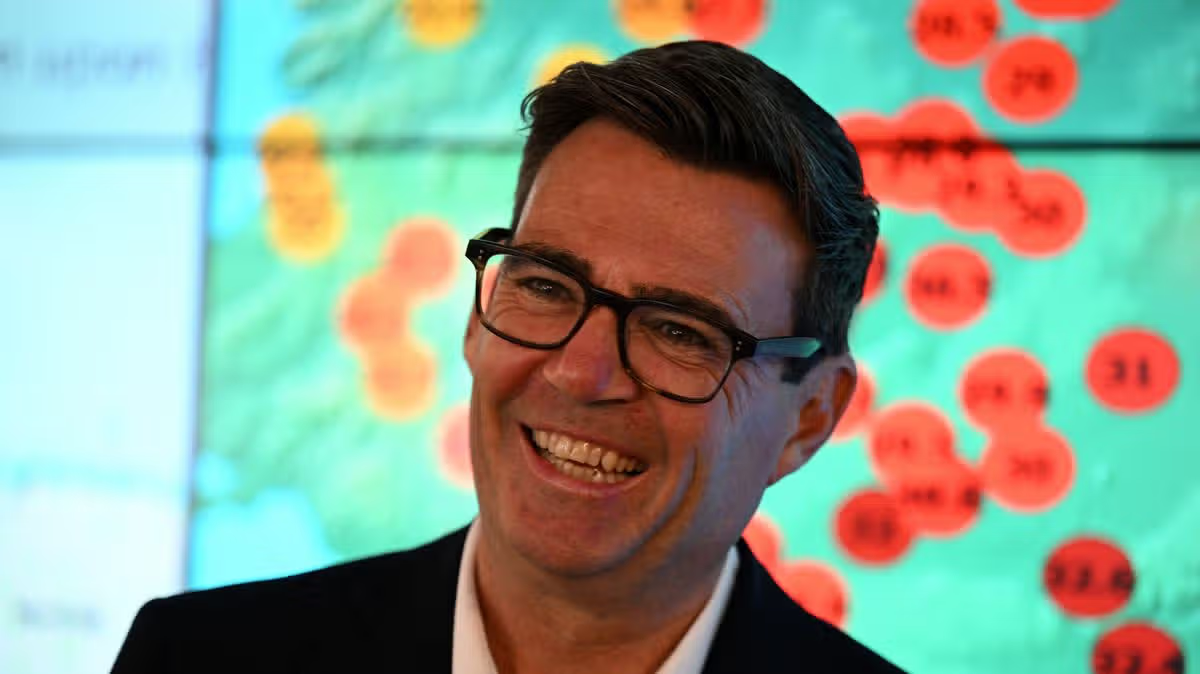
Andy Burnham to take on ‘toxic dump scandal’ as new Downing Street statement lists ‘difficult issues’ Prime Minister will tackle

Published

on

Manchester Evening News

“For too long, this issue has been ignored. But not on my watch,” the Prime Minister said earlier this week ahead of the Government statement

Andy Burnham has listed ‘difficult issues’ affecting the UK that he plans to fix in a Downing Street statement.

Advertisement

The Prime Minister is set to embark on the second week of his nationwide summer tour, signaling a shift in focus toward issues that he claims have been ignored by Westminster for too long.

The tour, aimed at connecting directly with voters to inform his 10-year plan for the UK, will see the Prime Minister prioritise things that have previously been deemed ‘too hard’ to resolve.

Key among these are pledges to end rough sleeping and address the ‘toxic dump scandal’ currently affecting various communities across the country.

This month, four men were arrested following an investigation into the 25,000 tonnes of toxic waste at the site of a former scrapyard on Bolton House Road in the village of Bickershaw, Wigan.

Advertisement

The ‘ocean of rubbish’ emerged last summer and later a week-long fire saw tonnes of waste burned, emitting dangerous fumes and forcing nearby schools to close.

“This is not fly tipping. This is organised crime, and it is local communities that are paying the price,” Mr Burnham said earlier this week. “For too long, this issue has been ignored. But not on my watch.”

Two men, aged 35 and 41, from Wigan, a 24-year-old from Leeds, and a 59-year-old from Liverpool have been detained on suspicion of environmental, fraud and money laundering offences.

Advertisement

The suspect from Leeds has also been arrested in relation to waste dumping at a site in Leicestershire.

A Downing Street spokesperson said: “The Prime Minister wants to bring back hope that we can finally fix the difficult issues facing the country. This includes taking on issues that others have said are intractable, like ending rough sleeping and resolving the toxic dump, fly-tipping, and environmental vandalism scandal.”

Last week, Mr Burnham visited Derbyshire, the West Midlands, Devon, and Cornwall, where he announced a series of measures to help with the cost of living crisis, as well as handing more powers to local councils to improve their town centres.

New rules mean vape and betting shops will require planning permission, with local residents given a greater say over whether they can open and to stop them opening near schools.

The Prime Minister has also faced growing calls to deal with the extreme heatweave and drought affecting much of England and Wales.

He chaired a meeting with COBR earlier this week on the national response to wildfires and the heat, as Britain struggled to get to grips with soaring temperatures this summer.

It is understood that Mr Burnham will spend time at ‘Number 10 North’, one month on since the regional headquarters was established.

Advertisement

However, opposition figures have criticised Mr Burnham’s summer tour as a ‘vanity’ project.

Daisy Cooper, Liberal Democrat’s treasury spokeswoman, said struggling high street businesses ‘need more than a new PM embarking on a vanity tour this summer’.

Reform UK’s economic spokesman Robert Jenrick added: “If Andy Burnham wants to help people with the cost of living, he should scrap the green levies and taxes on energy bills and rule out tax rises at the Budget.”

Source link

Advertisement
Continue Reading

NewsBeat

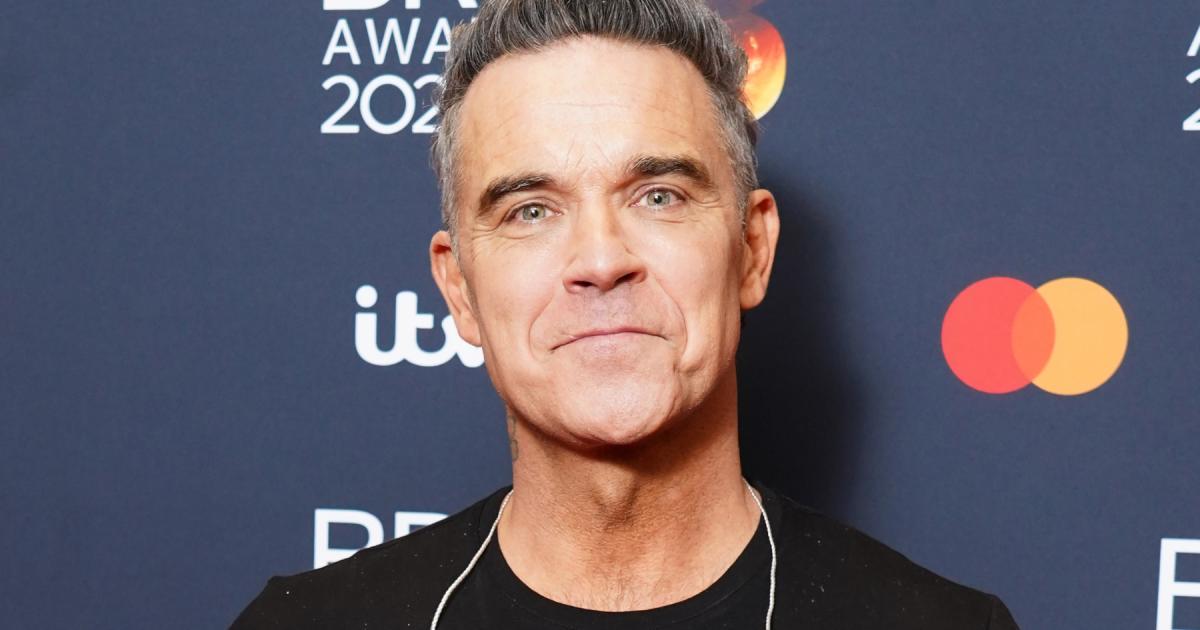
Robbie Williams shares he has been diagnosed with autism

Published

on

Robbie Williams shares he has been diagnosed with autism

The 52-year-old pop star, who has previously spoken openly about living with ADHD, shared the news during a Q&A session at the Autumn/Winter launch of his clothing brand Hopeium at Flannels.

He said: “I have ADHD and I just found out I have a bit of autism as well, which I actually f*****g love because it explains so much.

“It is my get-out-of-jail-free card now, and all the weird s*** that I do, I just say, ‘Sorry I’m autistic.’”

Advertisement

He said: “With the ADHD you can completely and utterly concentrate on something 1,000%, but with absolutely everything else, you just cannot do it.”

The father of four said a creative outlet helps him manage his intrusive thoughts, the Daily Mail reports.

He said: “What I’m completely and utterly obsessed with is creating images and making funny things.

“If I’m creating images and funny things, I’m not thinking about me, because my brain is incredibly creative, and it can be creative about everything in the world that you panic or scared about.

“For example, this is how crazy I am, recently, I was sitting on a plane, and I thought, ‘What I can have telekinesis and my intrusive thoughts tell the plane to crash itself.’

Advertisement

“So that’s the kind of level of insanity that I’m dealing with, it’s best to train my brain to do something better than worrying about having supernatural powers and crashing a plane.”

Robbie Williams discusses his intrusive thoughts

In October, Williams described his intrusive thoughts as a form of “inside Tourette’s.”

He told Paul Whitehouse and Dr Mine Conkbayir on their podcast I’m ADHD! No You’re Not: “I’ve just realised that I have Tourette’s, but they don’t come out.

“They are intrusive thoughts that happen, I was just walking down the road the other day, and I realised that these intrusive thoughts are inside Tourettes.

Advertisement

“It just doesn’t come out.”

Williams has been open about his mental health struggles throughout his career, including his battles with anxiety.

In a post on Instagram back in 2025, he spoke of the “discomfort” and “panic” he feels when he is approached for photos and autographs by fans.

He said: “Every interaction – with strangers or even people I know well – fills me with discomfort.


Recommended reading:

Advertisement
  • Sir Rod Stewart cancels remaining tour dates after undergoing major surgery
  • The Office star Lucy Davis reveals ‘incurable’ stage four cancer diagnosis
  • EastEnders actor reveals that they once appeared in One Direction video

“I mask it well.

“But social interaction still frightens me.

“So much so, I didn’t go out for years.

“And I had to do it without drugs or drink.

“I used to find it impossible.

Advertisement

“Now I’m … OK-ish. But still crawling inside.

“Every time a stranger approaches – and they are strangers – I panic.”

Are you a fan of Robbie Williams and do you have a favourite song? Let us know in the comments.

Advertisement

Source link

Continue Reading

NewsBeat

The Yorkshire Dales village where Sir Patrick Stewart owned a home

Published

on

The Yorkshire Dales village where Sir Patrick Stewart owned a home

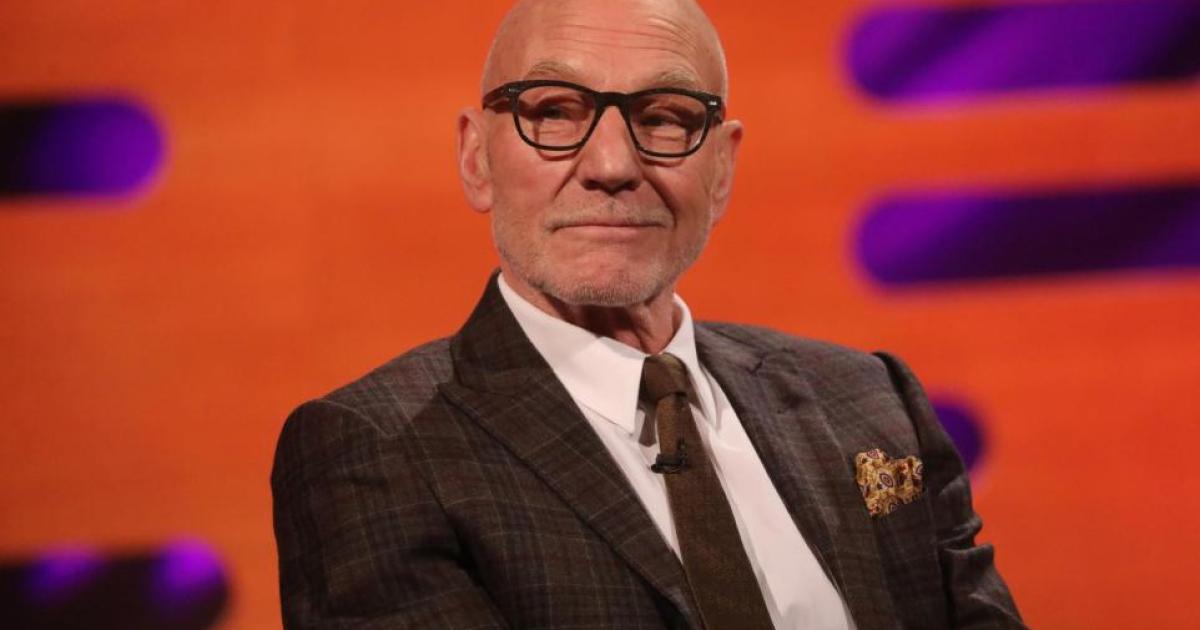
Sir Patrick Stewart, best known for playing Captain Jean-Luc Picard in Star Trek and Professor Charles Xavier in the X-Men films, used Scar Top House near Hebden as a Yorkshire Dales retreat for decades.

The Grade II-listed property, which dates from around 1680, sits in countryside above the village and was put on the market in 2016 for £535,000.

The four-bedroom stone farmhouse stands in around 1.6 acres and retains several traditional features, including exposed beams, stone-surrounded windows and a large inglenook fireplace.

Sir Patrick Stewart (Image: Isabel Infantes/PA Wire)

Its secluded position, along a track outside Hebden, gave Stewart a private base in Yorkshire while his career took him between the UK and the United States.

Advertisement

The actor was born in Mirfield, West Yorkshire, in 1940 and has maintained strong links with the county throughout his life.

Stewart grew up in a working-class household before pursuing acting and eventually joining the Royal Shakespeare Company.

He later became internationally famous after being cast as Captain Jean-Luc Picard in Star Trek: The Next Generation.

The role turned him into a global television star before he went on to play Professor Charles Xavier in the X-Men film series.

Advertisement

Despite spending much of his working life on film sets and stages around the world, Stewart kept Scar Top House as a rural retreat for around a quarter of a century.

The property lies close to Hebden, a small Wharfedale village near Grassington in the Yorkshire Dales National Park.

The area is known for its stone cottages, surrounding hills and dry-stone walls, while nearby Grassington is one of the best-known visitor destinations in the Dales.

Advertisement

Scar Top House sits away from the main village, offering greater privacy than many properties in the more heavily visited parts of Wharfedale.

When it was placed on the market in 2016, it was advertised as a four-bedroom Grade II-listed farmhouse with extensive countryside views.

Its sale brought Stewart’s long period of ownership to an end.


His Yorkshire connections continued after the property was sold.

Advertisement

Stewart served as Chancellor of the University of Huddersfield for more than a decade and was later made Emeritus Chancellor.

The university is close to Mirfield, where he was born and raised.

His links with Yorkshire have remained a prominent part of his public life, despite a career which has taken him from regional theatre to Hollywood.

For around 25 years, Scar Top House provided one of Britain’s most recognisable actors with a quiet base in the Yorkshire Dales.

Advertisement

Source link

Continue Reading

NewsBeat

EastEnders actor and star of major blockbusters including Star Wars dies aged 60

Published

on

Daily Record

The TV and film actor played Bert the milkman in EastEnders in 2019

Actor Nick Joseph has sadly died at the age of 60, leaving behind an impressive career ranging from Star Wars to EastEnders. The TV and film veteran also had roles in the James Bond franchise and Doctor Who, as tributes pour in.

As well as appearing on screen, Nick held roles in casting and production – giving him a broad range of skills within the industry. The Mirror reports his death was revealed online on Friday, with further details of his death emerging over the weekend.

Advertisement

A friend of the actor broke news to fans on social media, with Nick branded a “great ambassador” to the Star Wars community of fans. He had featured on screen in the 1977 original Star Wars movie, later retitled Star Wars IV: A New Hope, playing a medal bearer at a ceremony involving main character Princess Leia Organa, played by the late Carrie Fisher.

Taking to Facebook at the end of the week, a statement released by Galactic Productions – An Appearance Agency’s Post, revealed: “Sorry to hear about the sudden passing of Nick Joseph.”

The actor was shown in a photo posing alongside a member of the Galactic Productions team, who added: “I only met him once back in 2017 at Supanova, but we were Facebook friends for over a decade. He was a great ambassador for Star Wars and to the fans. Rest easy, my friend.”

Nick had many other credits over his career, including appearances in the James Bond and Doctor Who franchises. He had an uncredited role as an Armoury Officer in the 1977 Bond film The Spy Who Loved Me, where 007 was played by the late Roger Moore.

Advertisement

He later made several appearances in the Doctor Who franchise, featuring in six episodes, and playing multiple characters in the 1970s and ’80s.

More recently, he appeared in EastEnders playing Bert the milkman in a 2019 episode, while behind-the-camera roles including producing a short film My Love in 2012, where he served as the Line Producer.

Following the news of Nick’s death, those close to him took to social media to share stories of his life, and express sadness over his death. One friend, named Rick Stanley, wrote online: “I can’t believe I’ve lost my best friend. Steph and I have had many adventures over the years with Nick and Dee including Nick and I organising 4 Star Wars shows in that time.

“It chokes me up thinking how excited he was anticipating celebrating the 50th anniversary of Star Wars next year. Steph and I send love and prayers to Dee and family at this very sad time. Rest in the force Major Arhul Hextrophon my dear friend. Until we meet again.”

Advertisement
Content cannot be displayed without consent

While a spokesperson for his agency Star Booking Management said in an Instagram post: “It is with great sadness to confirm that client Nick Joseph has passed away.

“It was only over the weekend after returning from Australia that Nick was discussing his excitement for a catch up and conventions. He was really looking forward to reuniting with @brian.muir.94, Lindsay, meeting Paul McGann and all the fans at fan con on the Isle of Wight.”

They added: “Rest well Nick, life is very precious and while we met only once. I will treasure our bookings and chats together. May the force be with you, always.”

Ensure our latest stories always appear at the top of your Google Search by making us a Preferred Source. Click here to activate or add us as your Preferred Source in your Google search settings.

Advertisement

Source link

Continue Reading

NewsBeat

Just 15% want boat migrants near them: Lefties back Burnham’s plan for asylum seekers in affluent areas… but not theirs, Mail poll reveals

Published

on

Earlier this week a 'mega-dinghy' carrying a record 230 migrants made the journey across the Channel

Andy Burnham sent a shiver through Middle England when he said last week that more affluent areas of the UK must ‘play their part’ in accepting asylum seekers.

Now a Mail on Sunday poll shows the extent of that local opposition, with 57 per cent of voters saying that they do not want any more migrants in their area. Just 15 per cent are happy with the idea.

The survey, by Find Out Now, also picks up one of the tensions at the heart of the policy.

Many voters in the wealthier areas regard themselves as politically liberal and agree with the principle of sharing the problem of migrant accommodation more equally across the country – unless it is a bit too close to home.

Advertisement

A majority of those surveyed, 51 per cent, said that asylum seekers should be housed evenly across all areas of the country, while only 26 per cent disagreed.

What all voters are agreed on, however, is that the immigration problem should be tackled at root – 82 per cent think that the Government should do more to stop people entering the country illegally on small boats, with just 5 per cent disagreeing.

The poll – which used a huge 10,000-plus sample size – also reveals which areas are most opposed to accepting migrants, with Lincolnshire top on 57 per cent, followed by Worcestershire, Shropshire and County Durham.

The most accepting area was Wiltshire, with just 21 per cent opposed, followed by East Sussex, Merseyside and Nottinghamshire.

Advertisement

Earlier this week a ‘mega-dinghy’ carrying a record 230 migrants made the journey across the Channel

The figures come as disused military sites are being converted into asylum accommodation, including a base near the village of Piddington in Oxfordshire where the population of 314 is set to be dwarfed by a new camp housing 1,250 migrants.

The plan has so infuriated the chairman of the parish council that he proposed a symbolic referendum on leaving the United Kingdom.

Advertisement

There have also been protests in Crowborough, East Sussex, where the Government plans to use a former military base to house migrants until 2030.

They are entitled to free bus travel, which many use to visit the genteel spa town of Tunbridge Wells, which is 20 minutes away.

Despite Home Office guidance that asylum accommodation should not be near nurseries or schools, up to 1,200 male asylum seekers may move into a former flight training school in Linton-on-Ouse, North Yorkshire – creating a ratio of six men to each woman in the village of 600.

A primary school, nursery and play area lie less than a mile away from the proposed centre.

Advertisement

Plans to convert RAF Barnham, near Thetford in west Suffolk, into accommodation for up to 1,250 asylum seekers have also caused some parents to consider removing their children from Barnham School.

Prime Minister Andy Burnham said more affluent areas must 'play their part' in hosting asylum seekers

Prime Minister Andy Burnham said more affluent areas must ‘play their part’ in hosting asylum seekers

The base under consideration near Piddington is adjacent to a play area.

Anna Turley, the minister for border security and asylum, has defended the Piddington proposal by saying: ‘They’re not going to be in the village. Everything they need will be on that site.’

Advertisement

Ministers triggered fury by using a fast-track planning application for the project directly to Angela Rayner, the housing secretary, rather than through the local planning authorities.

The Home Office said: ‘We are seeking to fairly house asylum seekers across the country, working closely with local authorities to reduce the impact on communities.

‘This means closing every asylum hotel while moving asylum seekers into alternative accommodation, including former military sites.

‘It also means reducing the number in asylum accommodation. The number receiving support is now falling, and asylum costs are down by £1 billion since the General Election.’

Advertisement

Find Out Now surveyed 10,549 adults. The final sample has been weighted to be representative by age group and gender.

I was only joking about brothels, insists Edwina as she faces backlash

Edwina Currie has stood by her controversial suggestion that asylum seekers set to be housed near an Oxfordshire village need ‘a brothel’.

But the outspoken former Tory health minister made clear she was being deliberately provocative to show that keeping hundreds of asylum seekers in camps was no way to deter illegal migration. Instead, she said the only solution was to stop migrants coming here and to expel those that did ‘within maybe a week or ten days’.

Speaking on Times Radio last week about the proposed new migrants’ camp near Piddington, Oxfordshire, Ms Currie said: ‘The obvious thing that 1,200 young men are going to need in the middle of a village like little Piddington is a brothel. I don’t think they are going to provide that.’

Advertisement
A Border Command boat brought migrants into Dover after they were rescued from the Channel

A Border Command boat brought migrants into Dover after they were rescued from the Channel

Reform UK home affairs spokesman Zia Yusuf said that to hear ‘a former Tory minister joking about brothels being made available to the military-aged men they allowed to break into Britain illegally’ was ‘sick’.

Feminist campaigner Julie Bindel accused Ms Currie of making ‘an outrageous suggestion’ that would be ‘a recipe for disaster’.

However, on Friday, Ms Currie joked: ‘I have managed to annoy both Reform and some of the radical feminists – two lots of my absolutely favourite people.’

Advertisement

But she added that the brothel quip was designed to make the point that keeping large groups of migrants in any particular part of the country was not the answer. She said on Times Radio: ‘The answer is to make sure people don’t arrive in the first place, or if they do – and some will always get through – just send them home.’

Source link

Continue Reading

NewsBeat

Relay success takes Amy Hunt within one of four-gold target

Published

on

Relay success takes Amy Hunt within one of four-gold target

Amy Hunt is one win away from an unprecedented European quadruple after the British 4x100m women’s relay team won gold in style on a night of back-to-back triumphs for the hosts.

Dina Asher-Smith also became the joint most-decorated athlete in European Athletics Championships history in the same race, won by the British quartet of Asher-Smith, Hunt, Success Eduan and Imani-Lara Lansiquot in 42.05 seconds.

It takes Asher-Smith’s total to 10 medals, joining Polish sprinter Irena Szewinska, though the former has two more golds with seven.

The Britons, whose race got off to a slightly delayed start after a win in the equivalent men’s race, also had to wait for a review to confirm their triumph.

Advertisement

Switzerland took silver in 43.12s and bronze went to Poland in 43.15 seconds.

Hunt, who completed an individual sprint double earlier in the week, is targeting a first four gold medals for a British athlete at a single European championship, made possible by the introduction of a mixed 4x100m relay this year.

If Asher-Smith also decides to compete, she could also go outright top of the all-time list with a British medal.

British record-holder Asher-Smith got the hosts started with an opening leg of 11.37s, fastest of the first 100m, before handing the baton to Hunt, who was the fastest of the British quartet with a 10.10s second leg.

Advertisement
Dina Asher-Smith equalled a European Championship medal record (Annabel Lee-Ellis/PA)
Dina Asher-Smith equalled a European Championship medal record (Annabel Lee-Ellis/PA) (PA Wire)

Eduan ran the third leg in 10.43s and there was a bit of awkwardness with the handover, before Lansiquot blitzed to the finish in 10.15s.

Moments before, Jeremiah Azu, Louie Hinchliffe, Zharnel Hughes and Romell Glave stormed to gold in 38.45s.

Azu, who claimed individual 100m silver on Tuesday in a British one-two with Glave, ran a 10.51s opener, while Hinchliffe, Hughes and Glave all dipped below 10 seconds in 9.22s, 9.57s and 9.15s respectively.

Germany claimed silver 0.19s behind, and Belgium took bronze in 38.70s.

Source link

Advertisement
Continue Reading

Trending

Copyright © 2025