

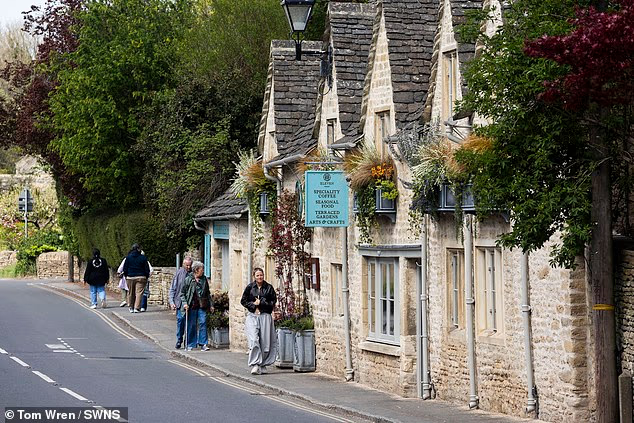
More than 100 residents in ‘England’s prettiest village’ have blocked the building of a new café and shops after they complained that the area has become overrun by tourists.
The quaint and picturesque Cotswolds village of Bibury, famed for its 14th-century honey-coloured stone cottages, has rejected a new development because of fears it may attract yet more visitors.
It was originally made famous by textile designer and writer William Morris, who described it as ‘the most beautiful village in England’ in the 19th century.
But now furious locals have warned that the influx of tourists pouring into the small area throughout the year is becoming unsustainable.
Coaches and cars bringing tourists to the village are clogging up the narrow country lanes that run through Bibury, which locals said is causing dangerous traffic gridlock.
Pedestrians have been forced to ‘run the gauntlet’ across the highway where the planned development would be built.
Now local councillors have rejected plans to turn a storage area on the ground floor of existing barns into a cafe and shopping area – fearing the wrath of residents.
Representatives of the applicants, Bibury Trout Farm, argued the scheme would ‘bring the buildings fully back into use’.
A new cafe in Bibury in the Cotswolds has been blocked after 100 residents complained about the impact of overtourism

Coaches and cars bringing tourists to the village are clogging up the narrow country lanes that run through Bibury, which locals said is causing dangerous traffic gridlock

Pictured: Trout Farm in Bibury, where a new development has been rejected by councillors
But more than 100 objections were lodged to Cotswold District Council, arguing the additional impact on the village would be too much.
Bibury Parish Council objected to the plans, arguing that the village ‘cannot sustainably manage and maintain its character’.
In its objection, the parish council wrote: ‘The council agrees that overtourism by the Trout farm, resulting high volumes of visitors, is having a negative impact on the local environment, community, and the overall visitor experience.
‘This application we understand will be open to non-trout farm visitors therefore we believe will lead to another increase in visitor numbers.
‘The Trout Farm already has a large café in its grounds as well as existing extended café facility selling ice cream opposite the main site.
‘The village has another four catering businesses for the public all serving food and drink.
‘The area’s popularity with visitors is not sufficient justification for the location of new tourist attractions.
‘Any large-scale visitor development will generally be considered to be unacceptable if it would harm the landscape or features of historic interest, or have a harmful impact on the transport network.’
The council said the lane was ‘constantly grid locked’ and verges ‘eroded by tourist vehicles’ using the Trout farm main car park which is ‘often full to overflowing in the summer’.
It added: ‘Therefore a new café as a standalone destination with traffic arriving will only exacerbate car parking and access to the Trout farm overflow car parks which have been overused this summer, not only creating enormous frustration to residents from Ablington and Bibury alike, but causing great danger to both pedestrians and drivers.’

Bibury was originally made famous by textile designer and writer William Morris, who described it as ‘the most beautiful village in England

Gloucestershire County Council has now stepped up its enforcement of fines in response to the complaints about tourism
A total of 102 third-party objections were also raised with concerns ranging from congestion and pedestrian safety, harm to the village’s historic character and increased noise and disturbance of additional visitors.
Planners said the ‘scale and form’ of the development was considered appropriate but recommended refusal due to highways concerns.
They said: ‘The significant tourism pressures affecting Bibury are acknowledged, with traffic, parking and pedestrian safety issues representing established concerns within the village.
‘The Highway Authority considers that insufficient information has been provided to assess pedestrian accessibility and safety, including pedestrian movements along Ablington Lane, pedestrian and vehicle interaction, accessibility for mobility-impaired users, and conditions experienced during peak visitor periods.
‘The application has therefore not demonstrated that safe and suitable access can be achieved for all users.’
Councillors voted unanimously to reject the proposal at a meeting on August 11.
During the meeting Conservative councillor David Fowles said Ablington Lane was ‘frequently gridlocked’ with no safe pedestrian access.
He added: ‘Pedestrians have to run the gauntlet across the highway. It is a very dangerous situation.’

The quaint and picturesque Cotswolds village of Bibury is known for its 14th-century honey-coloured stone cottages which once featured on British passports
Locals in Bibury have also been embroiled in a long and much-publicised planning battle with the owner of Rosemary Cottage Metin Dener over the scale of building works.
The renovations have been dubbed a ‘flagrant disregard for the history and beauty of the area’ and described as turning a ‘tiny’ Grade II historic cottage into a ‘monstrosity’.
Years of construction work at the cottage on Awkward Hill is continuing to blight their lives, villagers have claimed.
In the latest application, the applicants hit back at claims it had ‘overdeveloped the site’.
It added: ‘Due to the narrow access road and high level of tourists in the village the works on this site have had to progress at a slow pace as vehicle access has been relatively limited compared to most building sites and works on a steeply sloping site are complex.
‘The contractors on this site have tried to inform residents of deliveries and material removals where possible, however communication has not always been possible to be maintained.’
The village has also seen a 2,000 per cent rise in parking fines, with figures showing parking wardens dished out 651 notices in the village last year – up from 28 in 2019.
Fines have been set at £70, reduced to £35 if paid within a fortnight, meaning tickets issued in 2025 could have generated up to £45,570 – equivalent to around £900 a week.
This compares to the 28 fines given in 2019 generating £1,900.

Forbes previously named Bibury as the most beautiful village in the world out of a total list of 50
Community representative Craig Chapman said many visitors showed ‘very little regard for villagers’ – parking wherever they can, even if this meant blocking pavements or stopping on double yellow lines.
Gloucestershire County Council has now stepped up its enforcement of fines in response to the complaints about overtourism in the Cirencester village.
Mr Chapman argued tougher action was needed to keep routes open for ambulances and fire engines and to make sure pedestrians could walk safely through the centre of the village.
However, the cost of sending wardens out frequently is estimated at around £4,000 a month, meaning income from fines alone does not cover the full bill for enforcement.
The county council is now planning to bring in pay-and-display parking for 24 on-street spaces along The Street, with proposed charges of £6 or £7 for two hours during the busy March to October period.
The tariffs have been benchmarked against other high-visitor locations, and officials say they could bring in up to £218,880 a year, delivering a projected surplus of up to £360,680 over four years once enforcement costs are taken into account.
Separately, a pedestrianised area in the middle of Bibury – previously used for coach parking – is to be made permanent, with temporary barriers replaced by structures designed to fit better with the historic setting.
A focus group is also examining options for out-of-village parking to ease pressure on residents’ driveways and the village’s tight road network, amid a wider £175,000 investment package aimed at managing visitor numbers and congestion.
The council said the figures in the latest report are ‘absolute maximums’ – and fines are reduced if paid quicker or appealed.
















































You must be logged in to post a comment Login