When the baseball postseason starts in a few weeks, the format will probably be a major discussion topic.
If the playoffs began now, these would be the seeds in the American League:
1. Tampa Bay (85-58)
2. Chicago White Sox (75-68)
Advertisement
3. Houston (73-71)
4. New York Yankees (81-62)
5. Boston (79-65)
6. Cleveland (73-71)
Advertisement
That means the teams with the two worst records — Houston and Cleveland, would face each other in the opening round, with the winner taking on the White Sox in the Division Series. Meanwhile, the teams with the three best records would all be on the other side of the bracket, fighting for one spot in the AL Championship Series.
The reason the matchups are on track to work out this way is because the White Sox and Houston would be seeded above the Yankees and Red Sox by virtue of being division champions. After all, if division titles don’t mean anything, what’s the point in having them?
But the question that is likely to come up is this: Why not re-seed the field after the Wild Card round, with the top seed facing the No. 6 seed if it advances? Or the seeds could be reassigned completely for the Division Series based on regular-season record, meaning if Houston wins in the first round, the Astros would be the team with the worst remaining record and would face the Rays.
Instead, the way the system is currently set up, top-seeded Tampa Bay would face either the team with the second-best record in the league or the team with the third-best mark. Not exactly a big reward.
Advertisement
Performance of the week
Alex Bregman hit three home runs Monday night to lift the Chicago Cubs to a 17-3 win over Milwaukee. The Cubs hit nine homers in the game, one shy of the major league record, and they finished the month of August with 62. Chicago now leads the majors with 201 home runs.
Trivia time
The Cubs haven’t led the majors in home runs since 1958. In a 154-game season before the designated hitter rule, 182 homers was enough to finish first. How many players on that team reached 30 home runs?
Comeback of the week
The Colorado Rockies were down to their final out in both the ninth and 11th innings against Baltimore on Wednesday. With nobody on in the ninth and the Orioles up 3-2, Cole Carrigg and Zac Veen hit consecutive doubles to tie it.
Then in the 11th, after Baltimore took a 5-3 lead, TJ Rumfield hit an RBI single. Two outs later, Adael Amador hit a ground-rule double to put men on second and third, and Brett Sullivan followed with a two-run single to win it.
Advertisement
Baltimore’s win probability in the ninth was 95.3% according to Baseball Savant. That defeat was part of a skid for the Orioles that has reached six games, knocking them four games off the pace in the race for the AL’s last postseason spot.
Team of the week
In a week when everyone lost at last twice, the Boston Red Sox come out on top with a 5-2 mark. If the Red Sox and Yankees end up meeting in a Wild Card Series, there’s now a chance it could end up happening at Fenway Park instead of Yankee Stadium. However, New York still has a 2 1/2-game lead on Boston, plus the head-to-head tiebreaker.
The Red Sox took four in a row in Baltimore, holding the Orioles to one run over the final three games.
Trivia answer
Just one player on the 1958 Cubs hit 30 homers — Ernie Banks had 47. Chicago did have four other players with at least 20 — Walt Moryn, Lee Walls, Bobby Thomson and Dale Long.
They then went on to open a location in Belfast City Centre, Coleraine and Castlerock soon after.
In the post on Instagram, they said, “someone told us the Port needed better sandwiches. So today we got the key for our next location. Portush let’s be having ya.”
Advertisement
They added, “Portrush, I hope you’re ready for the best sandwich you’ve ever had in your life.”
There is no set opening date, but they have said the new store is “coming very soon”.
Customers can get their hands on sandwiches and loaded fries in the store and they have even been teasing the return of their famous Christmas sandwich.
It’s a habit 60 percent of us undertake at least once a week.
Many see mouthwash as an essential part of oral hygiene, killing bacteria in the mouth to banish bad breath and help prevent tooth decay.
But dentists are now warning that, for most people, the habit is unnecessary – and may even be doing more harm than good.
Dr David Conway, from the University of Glasgow Dental School, previously said: ‘I would not advise routine use of mouthwash, full stop.
Advertisement
‘It isn’t needed as part of general oral hygiene.’
Researchers warn that there is no good evidence that mouthwash is more effective than tooth brushing in preventing cavities or solving bad breath.
At the same time, some small studies have warned that it could raise blood pressure – or even put users at a higher risk of cancer.
So, should you really keep using mouthwash regularly?
Advertisement
Experts are warning people against using mouthwash regularly (stock image)
To maintain mouth health, doctors recommend brushing teeth at least twice a day using a toothbrush and toothpaste that contains sodium fluoride, which strengthens enamel and prevents cavities.
The mechanical action of the toothbrush removes bacteria that could cause cavities and any food they could colonize, raising the risk of tooth decay. The foam formed during brushing also helps fluoride adhere better than if it were in mouthwash.
There are two main types of mouthwash: Therapeutic mouthwashes, which contain active ingredients that kill bacteria and help with common dental issues such as bad breath, gum disease and tooth decay, and cosmetic mouthwashes, which temporarily mask bad breath and leave a pleasant taste but do little more.
Advertisement
While cosmetic mouthwashes simply mask a problem such as bad breath, experts warn that therapeutic ones could do damage to your health because of the disruption to the mouth microbiome.
The mouth is home to billions of bacteria that help boost oral health. But when a mouthwash is used, both the ‘bad’ and ‘good’ bacteria are swept away, raising the risk of complications.
According to Dr Joanna L’Heureux, a public health expert in the UK, one of the main roles of bacteria in the mouth is to create chemicals to help manage blood pressure, with high blood pressure being one of the most common health conditions in the US.
Bacteria at the back of the tongue convert nitrate in our food, from sources such as leafy greens, into nitrite. The body absorbs this and converts it into nitric oxide, a compound that is essential for helping blood vessels dilate to lower blood pressure.
Advertisement
One small trial published in 2020 tracked 36 healthy adults in Britain who rinsed their mouths twice a day for seven days with a placebo mouthwash, and then did the same with a therapeutic mouthwash.
It found there was a ‘major shift in the salivary microbiome’ of the mouth and a major drop in the population of bacteria needed to maintain healthy blood pressure.
Many use mouthwash to help reduce their risk of dental cavities
Another small study of 19 healthy volunteers found that adults who used mouthwash for seven days saw a small increase in blood pressure and reduced levels of nitrite.
Advertisement
In another trial involving 15 adults who already had high blood pressure, three days of using mouthwash was found to further increase blood pressure.
In these studies, the mouthwashes used contained chlorhexidine, a strong antiseptic available via prescription in the US that is only recommended for short-term use in people with gum disease or other dental problems.
Some experts have warned this may also raise the risk of heart disease because high blood pressure is known to cause more damage to blood vessels, raising the risk of suffering from heart problems.
There is also evidence to suggest that using a mouthwash may raise your risk of cancer.
Advertisement
Many mouthwashes contain up to 27 percent alcohol, which helps to kill off bacteria but is also a known carcinogen – linked to cancers of the mouth, throat and larynx.
A study by the International Agency for Research on Cancer in 2014 linked mouthwash to oral cancer, although only among people who used it more than three times a day.
When it comes to treating bad breath, experts also warn there is particular concern over using mouthwash to do this.
Dr Praveen Sharma, a dentist in the UK and adviser to the British Dental Association, said: ‘Bad breath may be caused by gum disease, in which case using mouthwash is effectively just blasting it with air freshener – it’s masking the symptom without treating the cause.’
Advertisement
So, how often is it safe to use mouthwash?
Dr Purnima Kumar, an oral medicine expert at the University of Michigan, previously told the New York Times that if someone uses mouthwash occasionally, such as once a week or once a month, it is unlikely to do damage to their oral health.
But she warned that using mouthwash daily for months or years on end could lead to various complications.
She said: ‘Do I have a bottle of mouthwash next to my toothbrush? Absolutely. But do I use it every day? Certainly not.’
The French Open champion helped Potapova up so she could get treatment, then finished off a 5-7, 6-4, 6-3 victory that sent her to the quarterfinals in Flushing Meadows for the first time.
“It’s not the perfect end to the match,” Andreeva said.
Advertisement
Andreeva led 5-3 in the final set when Potapova lunged to hit a running forehand and went down holding her left knee. As Potapova sat on the court in pain, the 19-year-old Russian came from the other side of the net and rested her hand on the 25-year-old’s shoulder.
She helped the No. 24 seed up and Potapova was able to limp to her bench, where Andreeva asked if someone could bring her ice. Potapova was treated and eventually able to continue with her knee bandaged, though with limited movement she didn’t win another point and didn’t even attempt to get Andreeva’s final shot.
Potapova appeared to be tearing up as Andreeva came around the net for a long embrace after the final point.
Potapova now represents Austria, but she was born in Russia and still played under that flag when she won the junior Wimbledon championship in 2016.
Advertisement
“For me, Nastya, she was always like a prodigy,” Andreeva said. “She came on tour early. She also had a lot of wins. I also remember we were all watching and cheering for her when she won juniors Wimbledon title. I remember watching that match. For me, she was always, like, a little star that I was kind of always looking at.”
Potapova won their first meeting on tour in 2022 but Andreeva has won the last four. This one prevented Potapova from reaching her first Grand Slam quarterfinal.
“First, she just beat me. So after, I just kind of knew that she’s a tough player to play, but at the same time, she was so nice,” Andreeva said.
“Then since then we would practice together, and just like that, the more you see each other, the more you spend time together, then you just talk about everything, discuss everything. Then just like that, I feel like we have a good connection off the court.”
John Healey, our new Chancellor, gave a speech designed to soothe the financial markets. Soothe or sedate? Mr Healey probably sent them to sleep faster than a doxepin bap.
He ambled to the lectern mid-morning at the Manufacturing Technology Centre, Coventry. Strong coffee beforehand. It was soon evident why. They should have issued cattle prongs, to prod audience members who started snoring.
The Healey voice whirrs. You sense it is there yet you remain unsure in which corner of the room it has settled. There is just this bucolic bombilation. It is not quite a buzz, more an amiable susurration as it dawdles in the dahlias. You find your eyelids becoming heavy. Your pulse slows. The chin droops.
Give that person a prod!
Advertisement
He is not the first Chancellor to be a boring orator. Geoffrey Howe was humdingingly dull. John Major‘s speeches had the colour and texture of whipped egg white. I used to keep myself awake by staring at his hairy hands and imagining what horrors they committed in that bath with Edwina.
Alistair Darling was charming but his Budgets would leave the Commons in various states of narcolepsy, some MPs with heads back, mouths like sinkholes, others having slumped against colleagues’ shoulders. And yet those Chancellors were not entirely without their merits, so a comatose tone may not intrinsically be a bad thing. It may indicate fiscal caution.
Mr Healey’s speech, sadly, merely exuded continuity. His words were little different from those Rachel Reeves used to utter. He desired growth but would not promise the spending and tax cuts that could create it. He claimed to ‘want to leave a sense of real urgency and imperative’ but there was no concomitant undertaking actually to do anything. One week before the TUC conference, and three before Labour’s, he was probably never going to say anything radical.
He is less obviously a bluffer than Reeves. The eyes do not dart so much – Rachel used to look like a shoplifter – and Mr Healey comes across as more experienced and calm. But the cliches were terrible. We had ‘win-win’, ‘brightest and the best’, ‘let me be clear’, ‘acting at pace’ and ‘defining mission’. These were typed in his script. Why does no special adviser edit such atrocities? Do political aides not understand how language can kill interest?
Advertisement
The Healey voice whirrs. You sense it is there yet you remain unsure in which corner of the room it has settled. There is just this bucolic bombilation, writes Quentin Letts
Meanwhile, Angela Rayner made a triumphant return to the Commons front bench, mispronouncing Worcester as ‘Whirrchester’
Mr Healey has a slender face, long chin and a forehead that often wrinkles. His upper lip lifts at the left, baring larky teeth. Had he a little more hair, the effect would be vintage Leonard Rossiter. If he leaned backwards and put his hands on his hips he would basically be a bald Reggie Perrin.
Advertisement
He began by praising his ‘brilliant Treasury team – James, Dan, Lucy.’ Pause. Then: ‘Torsten’. Fancy that: almost forgetting Torsten Bell. The speech’s buzz-phrase was ‘growth in every postcode’. He blamed the Tories for lack of growth in those postal codes: ‘Cameron’s austerity, Johnson’s hard Brexit, Liz Truss’, plus Thatcher-era deindustrialisation.
Even as he spoke, just down the road, Jaguar Land Rover was axing 4,000 jobs. Maybe Labour’s high energy and employment costs had something to do with that. As for Ms Truss, Labour has now zoomed past her record on gilt costs.
Having complained about Brexit, Mr Healey boasted about the trade deals that, er, Brexit made possible. He claimed the credit for interest rate cuts. When a reporter mentioned the possibility interest rates could soon rocket, that was attributed to global factors.
The venue by this point resembled the day room of an old people’s home, the audience in various stages of poleaxed slumber.
Advertisement
Which leaves room briefly to report that Angela Rayner made a triumphant return to the Commons front bench, mispronouncing Worcester. It popped out as ‘Whirrchester’. John Prescott used to beam when he mangled words. Ditto Mrs Rayner. Beside her sat Matthew Pennycook, her deputy. For a few precious months he thought he had escaped Big Ange. Now she is back.
Poor old Pennycock’s expression was unbearably tragic.
Share or comment on this article:
QUENTIN LETTS: Healey’s bucolic bombilation left the audience in various stages of poleaxed slumber
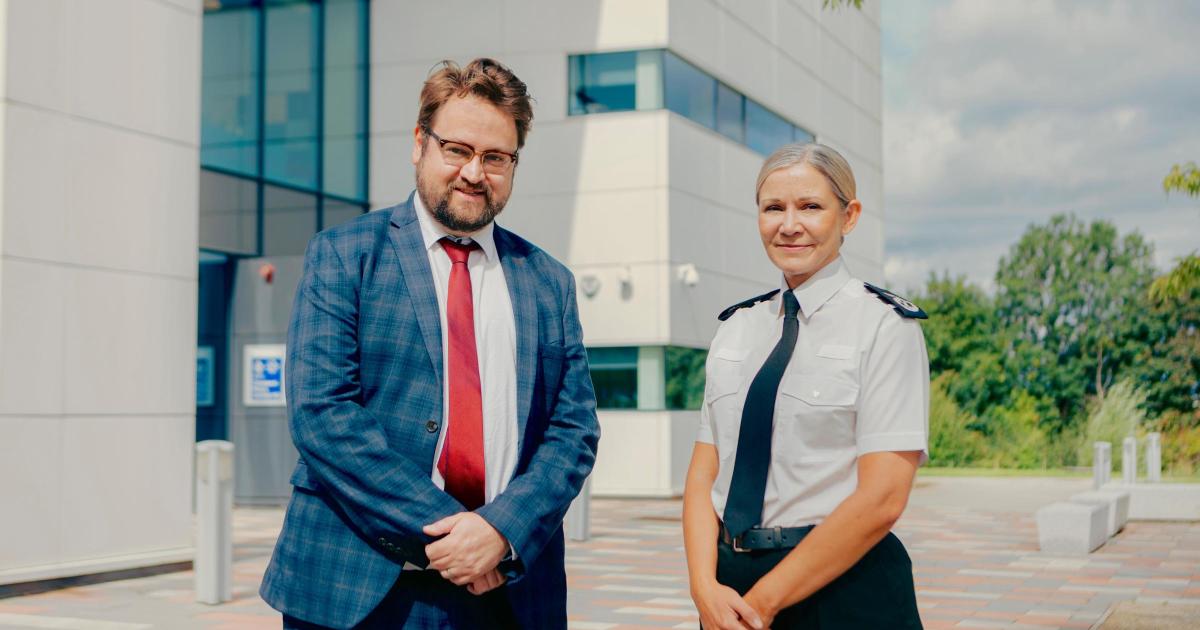
Chief Constable Victoria Fuller and Police and Crime Commissioner Matt Storey have written to Home Secretary Shabana Mahmood to ask for an increase of £20m of funding per year.
They say that “longstanding and systematic funding inequalities” has left the region “disproportionately underfunded for many years”.
Police at the scene of the crash on the A66. (Image: SARAH CALDECOTT)
The letter, backed by a string of civic leaders across the region including mayors and council leaders, has laid bare how there are no police force areas with higher levels of crime than the region that receive less funding than Cleveland Police.
Advertisement
There are approximately 40 per cent more crimes per police officer in Cleveland than the national average, and despite this level of demand, Cleveland receives around 35 per cent less funding per crime than the average police force.
Cleveland Police Chief Constable Victoria Fuller (Image: SARAH CALDECOTT)
The letter also reveals that bringing officer workloads closer to the national average would require around 500 extra officers.
Shabana Mahmood announced an extra £2m in funding would be given to Cleveland Police to help tackle organised crime. (Image: House of Commons/PA Wire)
But the letter argues that, despite the boost, the force has a funding model that “fails to reflect the reality of policing one of the most crime-affected areas in the country”.
Advertisement
“These are not simply statistics. They are stark facts that have a significant impact on our workforce,” the letter states.
“They represent heavier workloads, growing pressure on workforce wellbeing, victims waiting longer for justice, communities requiring greater protection and public services operating under increasing strain.
Police and Crime Commissioner Matt Storey (Image: Supplied)
“The consequences are felt far beyond policing, placing significant pressure on our fire service, local authorities, health and mental health services, children’s services, housing providers, schools, community organisations and the voluntary sector.”
Ms Fuller and Mr Storey argue that a recurring uplift of at least £20 million per year would enable police to recruit, train and retain approximately 200 additional police officers.
Advertisement
They said: “The evidence is clear, the challenges are longstanding and the need for action is urgent. What is now required is a funding settlement that reflects the reality of the demands facing our force and the communities we serve. Our communities are looking for action.
PC Matthew Blades (left) and PC Tom Clough (right) (Image: CLEVELAND POLICE/CARMEL COLLEGE)
“While we recognise the Government’s commitment to police reform, Cleveland cannot afford to wait for future reviews, reforms or changes to funding formulas.
“The challenges we face exist today, and they require action today.”
The letter has been signed in support by the following people:
Advertisement
Graham Harrison, leader of Hartlepool Borough Council
Matt Wilton, chief executive of Hartlepool Borough Council
Chris Cooke, Mayor of Middlesbrough Council
Erik Scollay, chief executive of Middlesbrough Council
Alec Brown, leader of Redcar and Cleveland Council
Brian Archer, chief executive of Redcar and Cleveland Council
Lisa Evans, leader of Stockton Borough Council
Mike Greene, chief executive of Stockton Borough Council
Lord Ben Houchen, Tees Valley Mayor
Tom Bryant, chief executive of the Tees Valley Combined Authority
David Coupe, chair of Cleveland Fire Authority
Simon Weastell, interim chief fire officer, Cleveland Fire Brigade
Alison Smith, chief executive of Tees, Esk and Wear Valley NHS Foundation Trust
Stacey Hunter, chief executive of the University Hospitals Tees Group
Matt Forrest, chief executive officer, Thirteen Housing Group
Rosemary Du Rose, chief executive, Beyond Housing
Mark Davis, on behalf of Tees Valley Infrastructure Partnership
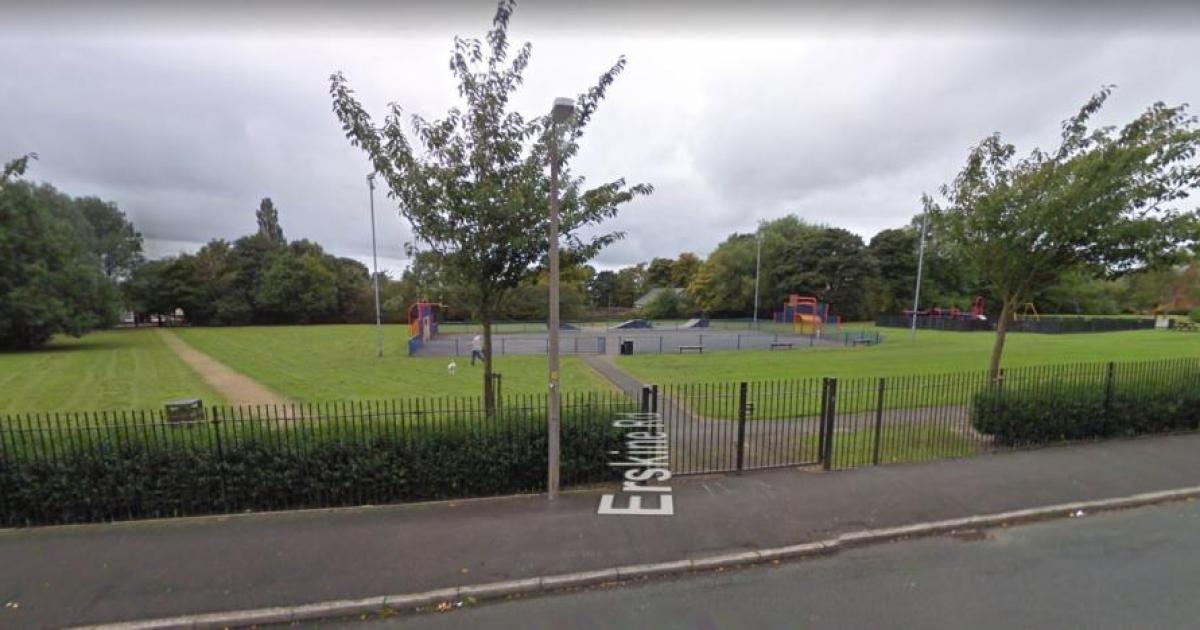
Lancashire Police were called at 6.30pm on Saturday, September 5, to reports of racially aggravated assault in Harpers Recreational Ground, in Harpers Lane, Chorley.
The force is treating the incident as a hate crime, and an investigation has been launched.
Enquiries are ongoing.
Advertisement
A force spokesperson said: “We were called at 6.28pm on Saturday 5th September to a report of racially aggravated assault on Harpers Recreation Ground, Harpers Lane, Chorley.
“It was reported to us that a six-year-old boy had been approached by two older children and that a racist word had been written on his forehead and arm with a marker pen.
“This is being treated as a hate crime, and an investigation has been launched. Our enquiries are ongoing.
“If you were in the park from around 6pm and have information, please contact 101 – quoting log 1021 of 5th September.”
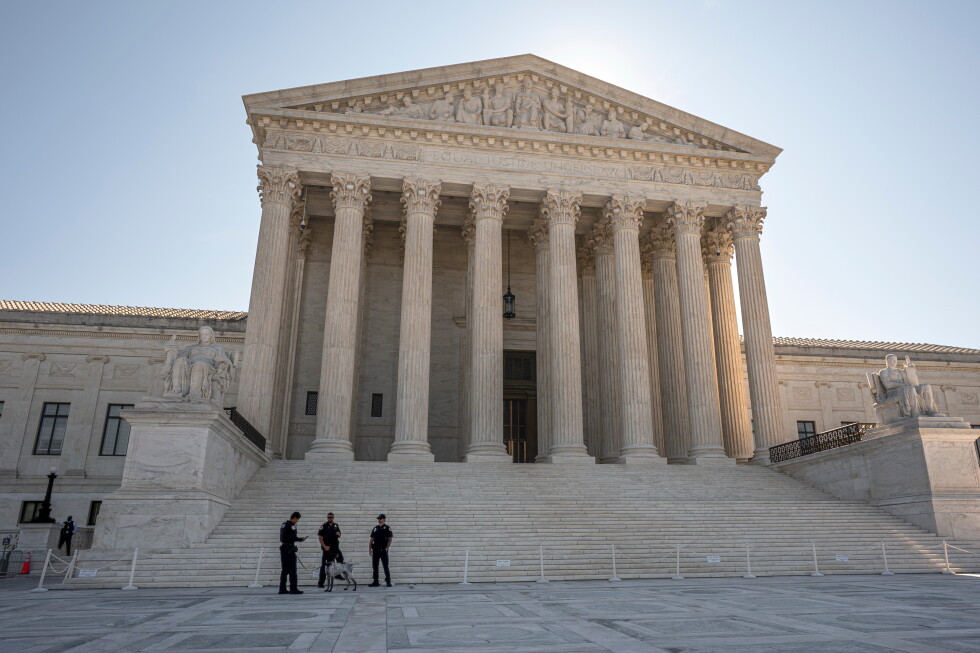
WASHINGTON (AP) — Attorneys asked the Supreme Court Monday to stay the execution of a Florida death row inmate scheduled to die by lethal injection Thursday for the 1996 kidnapping and strangulation of a man who was found nude and emasculated.
Daniel Conahan Jr., 72, was sentenced to death for the April 1996 killing of Richard Montgomery. The victim was found in a wooded area in Charlotte County, Florida, which was described as what appeared to be a dumping area that contained a lot of trash.
Authorities said Conahan killed Montgomery after paying him to pose f or nude photos. Authorities suspect him of similar homicides committed in the 1990s in southwest Florida.
Conahan has denied his involvement in Montgomery’s murder. The petition said he has been requesting DNA testing since March 2025 of evidence collected at the scene and from Montgomery’s body to “conclusively establish that he is not responsible for the death.”
Advertisement
Gov. Ron DeSantis signed his death warrant Aug. 11 while his motion for DNA testing was pending, the petition for the stay says. Within 24 hours of that warrant being signed the state postconviction court denied the motion.
“Mr. Conahan does not ask to be declared innocent at this posture. Nor does he ask to be released from prison. All he asks is for this Court to stay his imminent execution so that this Court can review his meritorious claims,” the filing says.
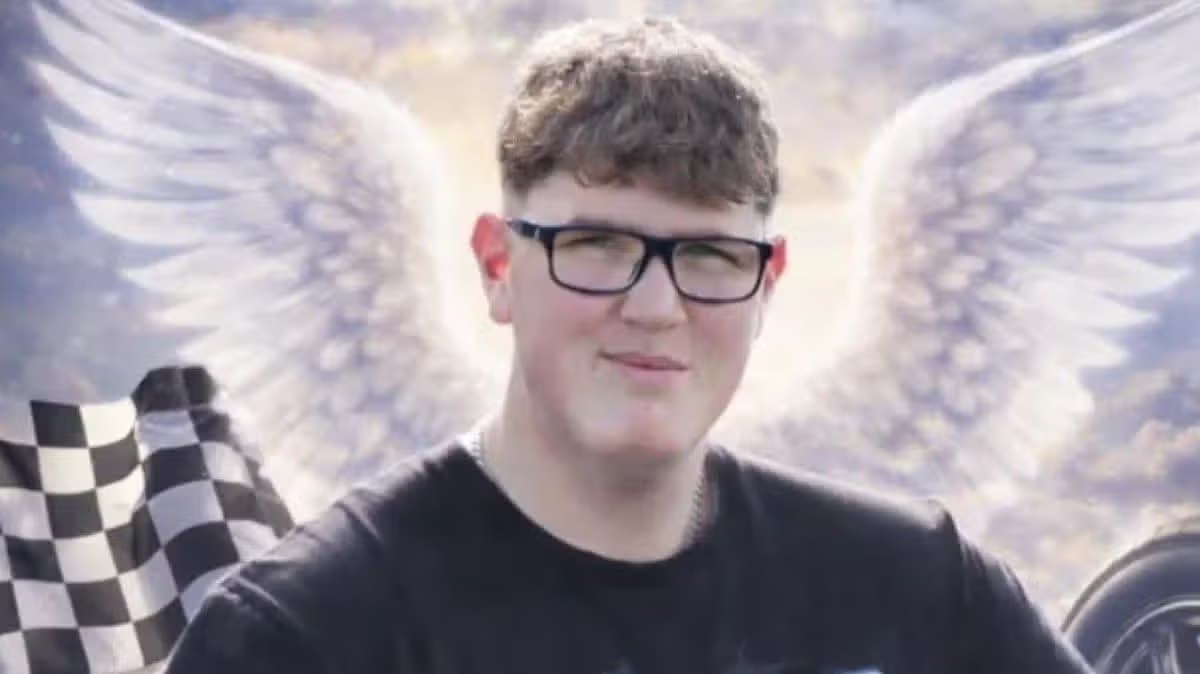
A police ID error saw a father spend weeks by the bedside of a teen boy before learning his son had died three weeks earlier in a crash
Dave Higgens, Press Association and Olivia Bridge Reporter in Live News Network
21:11, 07 Sep 2026
An inquest has heard how a grieving family feel like they have been through two deaths after finding out their son had been the one to pass away in a car crash. A dad told the coroner he only found out his son had died three weeks later due to a police identification error.
Teen pals, Joshua Johnson, 18, and Summer Louise Scott, 17, tragically died when the car they were in crashed into a tree. Police determined the Toyota Corolla left Todwick Road, at Todwick, near Rotherham, in the early hours of December 13 last year, inquests in Doncaster heard on Monday.
Advertisement
A previous hearing heard how police originally misidentified front seat passenger Trevor Wynn, then 17, as the male who had died in the crash, with Mr Wynn’s family believing he was dead until he came out of sedation three weeks later, on January 4.
At the same time, Mr Johnson’s family sat at the bedside of seriously injured Mr Wynn, not realising their son was dead.
A statement from Mr Johnson’s father, Lee Johnson, was read at Doncaster Coroner’s Court on Monday, where a coroner ruled his son was unlawfully killed.
Mr Johnson explained how he and his wife spent weeks at the Royal Hallamshire Hospital, in Sheffield, believing they were sitting with their serious injured son, only to be told there had been a mistake.
Advertisement
He said: “This information came as a huge shock and I cannot comprehend it.
“It felt like, as a family, we had two deaths.
“I felt I had missed out on the initial grieving part of the process.”
Senior coroner Nicola Mundy read the statement of Detective Chief Inspector Andy Knowles, of South Yorkshire Police, who told the court in January how the mix-up began when a number of items of personal property were found at the scene, “though were not physically about the person of either of the males”.
Advertisement
One of these items was a phone in a case, which also contained Joshua Johnson’s driving licence.
A second phone nearby contained medical ID information in the name of Trevor Wynn, and a bank card in the same name was also attached.
Mr Knowles told the court earlier this year how an officer used this information to trace Trevor Wynn’s mother, who provided a college ID card, as well as a description of his build and footwear.
The senior officer said: “That officer then took this ID card to Rotherham Mortuary where, at that time, the deceased victim of the collision was booked in as an unknown male.
Advertisement
“Upon considering the comparison between the male’s features against the ID, and also considering the descriptive details of build and clothing, the officer was satisfied that this was the body of Trevor Wynn.”
Mr Knowles said a second officer, with the surviving but sedated teenager, was told this person was Joshua Johnson by colleagues at the crash site, and was able to obtain a photograph from Mr Johnson’s driving licence.
He said: “The officer liaised with medical staff and the photograph was compared against the casualty.
“Those present were then satisfied that this person was Joshua Johnson.”
Advertisement
Mr Knowles explained how he set out establishing the true identity of the deceased male with “no further reliance in this case on visual recognition as a form of ID” and this was done using dental records.
On Monday, separate inquests were held into the deaths of Mr Johnson and Miss Scott.
Senior Rotherham Coroner Nicola Mundy heard how Miss Scott was was driving the Toyota and lost control as she approached a slight bend.
The car went across a verge and hit a low wall which caused it to roll in the air before it struck a mature tree almost 50m from the road.
Advertisement
The inquests heard how police investigators used the tracking app Life360, which was on one of the phones in the car, to determine that the car was travelling at 95mph for about a kilometre before the crash happened, and had slowed to 86mph about 130m before the bend.
Forensic collision investigator Peter Gallagher said it was the first time his team had used this technique.
Mr Gallagher said tests showed the maximum speed at which the bend could be safety negotiated was 68mph.
The inquest heard how Miss Scott had a provisional driving licence but had not passed her test.
Advertisement
Pc Joe Binley said two men were arrested who were in a car which was following the Toyota.
He said officers investigated whether the cars had been racing but evidence, including a Snapchat video of the crash filmed by someone in the second car, showed there was a distance between the vehicles and it was Miss Scott’s decision to drive in the way she did.
Miss Scott had told friends there was an issue with the brakes on her car but the inquest heard there were no defects found on the vehicle which would have contributed to the crash.
The coroner heard that Miss Scott’s family described her as “loving, caring and very funny” but also “fierce and sassy”.
Advertisement
They said she had a long-standing love of cars.
Mr Johnson’s family described him a “gentle giant” with a “massive heart” who had a “bright future ahead that was tragically cut short”.
The coroner concluded that Miss Scott died as a result of a road traffic collision and Mr Johnson was unlawfully killed.
Earlier this year, the police watchdog, which is investigating the misidentification error, said it was “clear something has gone very wrong”, leading to “awful consequences” for the two families.
Advertisement
A spokesman for the Independent Office for Police Conduct (IOPC) said on Monday that the investigation was “at an advanced stage” and they hoped it would conclude “in the coming weeks”.
South Yorkshire Assistant Chief Constable Colin McFarlane said: “We recognise the shock and significant distress caused by the misidentification following the collision on Todwick Road, and the unimaginable consequences this had for the families involved.
“Only those involved can truly understand.”
Mr McFarlane said the force took immediate steps to review processes and will look at the findings of the IOPC, when it reports.
Advertisement
He said work is ongoing to ensure all officers are confident following new guidance issued by the College of Policing in August.
In other Oasis news today, it was reported that an archive of unreleased recordings, which span 63 live shows, as well as soundchecks and more than 100 hours of rehearsal from brothers Noel and Liam Gallagher in the 1990s, are set to be auctioned off next month.
They were collected by the Oasis’ sound engineer Huw Richards, who worked with the band from the release of their debut album Definitely, Maybe in 1994, until 2001.
However, Littleton Auctions, who have called the sale a “once-in-a-generation opportunity for fans and collectors alike”, has confirmed the band does not support the sale.
Advertisement
The auction house said their role was to ‘present these items responsibly and allow collectors and institutions to engage with an important part of British music history’.
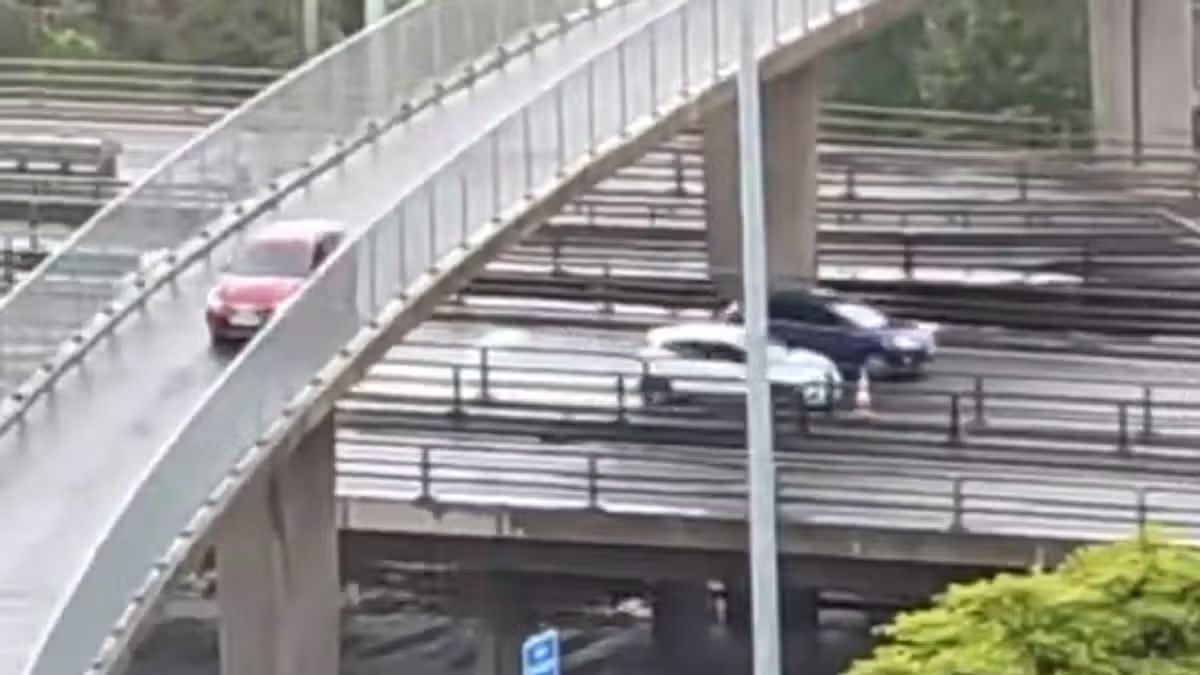
The red car was filmed driving across the Anderston Footbridge before the driver turned around and headed back.
20:25, 07 Sep 2026Updated 20:40, 07 Sep 2026
Car drives on footbridge in Glasgow
A driver sparked disbelief after appearing to take a wrong turn and ending up driving across a Glasgow footbridge.
The red car was filmed travelling onto the Anderston Footbridge, which crosses above the busy M8 motorway and links the city centre with the West End. Footage shows the motorist attempting to reverse as pedestrians look on in disbelief at the bizarre scene.
Advertisement
One man can be seen stopping to speak to the driver before continuing on his way, while another pedestrian turns his head in disbelief as the car eventually heads back over the bridge.
Eyewitness Chris Watt said he watched the bizarre incident unfold after the driver approached from Waterloo Street.
He said: “I saw it happen. He was heading onto the M8 slip road at Waterloo Street. Went to the cycle lane at the lights. Parked for a bit. We were watching saying no way is he going to park there. Then he just carried on over the bridge!”
The car travelled along the main span before apparently coming to a halt at the tight, curved descent towards Argyle Street on the other side.
The car is understood to have been on the footbridge for around ten minutes. The footage shows the bemused pedestrians watching as the driver attempts to manoeuvre the vehicle before eventually turning around and retracing their route.
The Anderston Footbridge has an unusual history of its own. Construction began in the early 1970s but was halted in 1972 amid opposition, leaving the structure unfinished for more than four decades.
The bridge was famously dubbed the ‘Bridge to Nowhere’, with its western end left hanging around 40ft in the air.
It was finally completed in 2013, providing a pedestrian and cycling link between the city centre and Anderston.
Get more Daily Record exclusives by signing up for free to Google’s preferred sources. Click HERE.



















































You must be logged in to post a comment Login