It worked. It won Labour a landslide and carried Mr Starmer into Downing Street with a 174 seat majority, an extraordinary turnaround after Boris Johnson’s Tory tsunami had swept into corners of the country like the Tees Valley and Durham that the Conservatives had never previously reached and inflicted a historically humiliating defeat on Labour.
![]() Labour leader Keir Starmer holds his party’s 2024 manifesto (Image: PA)
Labour leader Keir Starmer holds his party’s 2024 manifesto (Image: PA)
Yet less than two years later, it is all change again. Andy Burnham now looks set to become Britain’s seventh prime minister in 10 years as the country, once a bastion of stability in an ever-changing world, looks increasingly unstable.
![Composite of PA file images of (top row, left to right) Lord David Cameron, Theresa May (Baroness May of Maidenhead), and Boris Johnson, and (bottom row, left to right) Liz Truss, Rishi Sunak and Sir Keir Starmer, the last six British prime ministers delivering their resignation speeches outside number 10 Downing Street, London. Prime Minister Sir Keir Starmer has said he will resign as leader of the Labour Party and he has informed the King of his decision. Issue date: Monday June 22, 2026. PA Photo. Photo credit should read: Stefan Rousseau/Aaron Chown/Andrew Matthews/James Manning/Kirsty O'Connor/PA Wire]() Six Prime Ministers resigning in 10 years: Lord David Cameron, Theresa May (Baroness May of Maidenhead), and Boris Johnson, and (bottom row, left to right) Liz Truss, Rishi Sunak and Sir Keir StarmerPA Photo. Photo credit should read: Stefan Rousseau/Aaron Chown/Andrew Matthews/James Manning/Kirsty O’Connor/PA Wire (Image: Stefan Rousseau/Aaron Chown/Andrew Matthews/James Manning/Kirsty O’Connor/PA Wire)
Six Prime Ministers resigning in 10 years: Lord David Cameron, Theresa May (Baroness May of Maidenhead), and Boris Johnson, and (bottom row, left to right) Liz Truss, Rishi Sunak and Sir Keir StarmerPA Photo. Photo credit should read: Stefan Rousseau/Aaron Chown/Andrew Matthews/James Manning/Kirsty O’Connor/PA Wire (Image: Stefan Rousseau/Aaron Chown/Andrew Matthews/James Manning/Kirsty O’Connor/PA Wire)
Mr Burnham will probably change the Secretary of State for Health for the 10th time in those 10 years – is it any wonder that our NHS is floundering with so many changes of direction?
![]() Labour Party leader Sir Keir Starmer arrives on board his election battle bus at a campaign event in Halesowen after unveiling Labour’s manifesto in Manchester for the forthcoming General Election on July 4. Picture date: Thursday June 13, 2024. PA Photo. See PA story POLITICS Election Labour. Photo credit should read: Stefan Rousseau/PA Wire (Image: Stefan Rousseau)
Labour Party leader Sir Keir Starmer arrives on board his election battle bus at a campaign event in Halesowen after unveiling Labour’s manifesto in Manchester for the forthcoming General Election on July 4. Picture date: Thursday June 13, 2024. PA Photo. See PA story POLITICS Election Labour. Photo credit should read: Stefan Rousseau/PA Wire (Image: Stefan Rousseau)
For Mr Starmer the seeds of his downfall were sown in that landslide: he received just 33.7 per cent of the popular vote, the lowest winning share ever. There was no love for him or his party – but there was hatred for the clowning Tories.
Mr Starmer appears to have decided that the change the country really needed was a change in competence: he would govern in a sensible lawyerly fashion without the silly psychodramas of Johnson and Truss.
![]() MANCHESTER, ENGLAND – JUNE 13: Labour Party leader Sir Keir Starmer speaks during the launch of Labour’s general election manifesto on June 13, 2024 in Manchester, United Kingdom. Labour is consistently leading the polls by over 20 points, according to the latest YouGov data. (Photo by Anthony Devlin/Getty Images) (Image: Anthony Devlin)
MANCHESTER, ENGLAND – JUNE 13: Labour Party leader Sir Keir Starmer speaks during the launch of Labour’s general election manifesto on June 13, 2024 in Manchester, United Kingdom. Labour is consistently leading the polls by over 20 points, according to the latest YouGov data. (Photo by Anthony Devlin/Getty Images) (Image: Anthony Devlin)
There was no soaring vision about making Britain great again, just drab stuff about the mess the country was in and how there was a £22bn black hole so things could only get worse. Then pensioners became the first to bear the brunt when their winter fuel allowance was painfully withdrawn – an unpopular announcement Mr Starmer expected all Labour MPs to publicly support until he U-turned on it 11 months later.
And so the die was cast for a premiership of U-turns in search of popularity instead of policy announcements based on the certainties of principle. The most damaging was the backtracking on much needed welfare reforms; one of the most peculiar was the big idea about digital ID cards, without which you would not be able to get a job in the UK, which seems just to have disappeared like a puff of smoke.
This was enough to make Mr Starmer unpopular, but it cannot explain the visceral hatred that some people have for him. History will look back and wonder why such brutal vitriol has rained down on him when among his achievements are falling NHS waiting lists, raising 450,000 children out of poverty, reducing net migration by two-thirds, and keeping Britain out of Donald Trump’s spectacularly ill-advised war.
Not even his appointment of a paedophile’s friend, Peter Mandelson, can explain it, although sending Mr Mandelson to Washington as Britain’s ambassador was an error from which Mr Starmer has never recovered.
![]() Prime Minister Sir Keir Starmer and his wife Lady Victoria Starmer on the steps of 10 Downing Street, London, after his speech where he said he will resign as leader of the Labour Party and he has informed the King of his decision. Picture date: Monday June 22, 2026. PA Photo. Photo credit should read: Andrew Matthews/PA Wire (Image: Andrew Matthews)
Prime Minister Sir Keir Starmer and his wife Lady Victoria Starmer on the steps of 10 Downing Street, London, after his speech where he said he will resign as leader of the Labour Party and he has informed the King of his decision. Picture date: Monday June 22, 2026. PA Photo. Photo credit should read: Andrew Matthews/PA Wire (Image: Andrew Matthews)
It must go back to the thinness of that landslide victory in which nearly 70 per cent of voters didn’t buy into Mr Starmer and he did not have the strength of personality, the charisma, to convince them to give him the benefit of the doubt, to connect with them so they felt he was on their side.
In fact, his response has at times been cloth-eared: as people turned to Brexit-backing Reform, he said Britain should move closer to Europe; as voters cried out for new ideas, he brought back Gordon Brown and Harriet Harman from the 1990s.
He wasn’t able to lead the country and he hasn’t been able to lead his party. For some loyalist local MPs, who owed their seats to his landslide, his failings over defence spending were the last straw.
But at least in making the change, Labour isn’t going to fall into the Tories’ trap of 2024 and have two contenders spending the summer touring the country and trashing each other.
Yet are they falling into their own trap of 2007 when Gordon Brown was crowned as prime minister without ever revealing how he would do things differently to his predecessor Tony Blair or what he was grand vision was for the country. And he lost the next election.
![]() Andy Burnham’s first picture in The Northern Echo archives from 2008 when he was Culture Secretary Andy Burnham and visited a Grade II listed pigeon cree built in 1955 by Maurice Surtees (right) on allotments at Ryhope in Sunderland (Image: Owen Humphreys/PA)
Andy Burnham’s first picture in The Northern Echo archives from 2008 when he was Culture Secretary Andy Burnham and visited a Grade II listed pigeon cree built in 1955 by Maurice Surtees (right) on allotments at Ryhope in Sunderland (Image: Owen Humphreys/PA)
And what change is Mr Burnham going to represent? In 2015, I chaired the Labour regional leadership hustings in Newcastle when Mr Burnham stood with Jeremy Corbyn, Yvette Cooper and Liz Kendall. From my seat on the stage, I could feel Mr Burnham, once regarded as a Blairite, was being sucked leftwards as Mr Corbyn was winning over the crowd.
A Labour insider recently told me that in debates, Andy always tries to go last so he can hoover up all the best applause lines.
![]() Health Secretary Andy Burnham enjoys a lemon top on Redcar sea front while campaigning in 2010. (Image: stuart boulton)
Health Secretary Andy Burnham enjoys a lemon top on Redcar sea front while campaigning in 2010. (Image: stuart boulton)
So which policies is Mr Burnham going to champion? How is he going to be different to Mr Starmer when his only democratic mandate is the 2024 manifesto with “change” on the front cover.
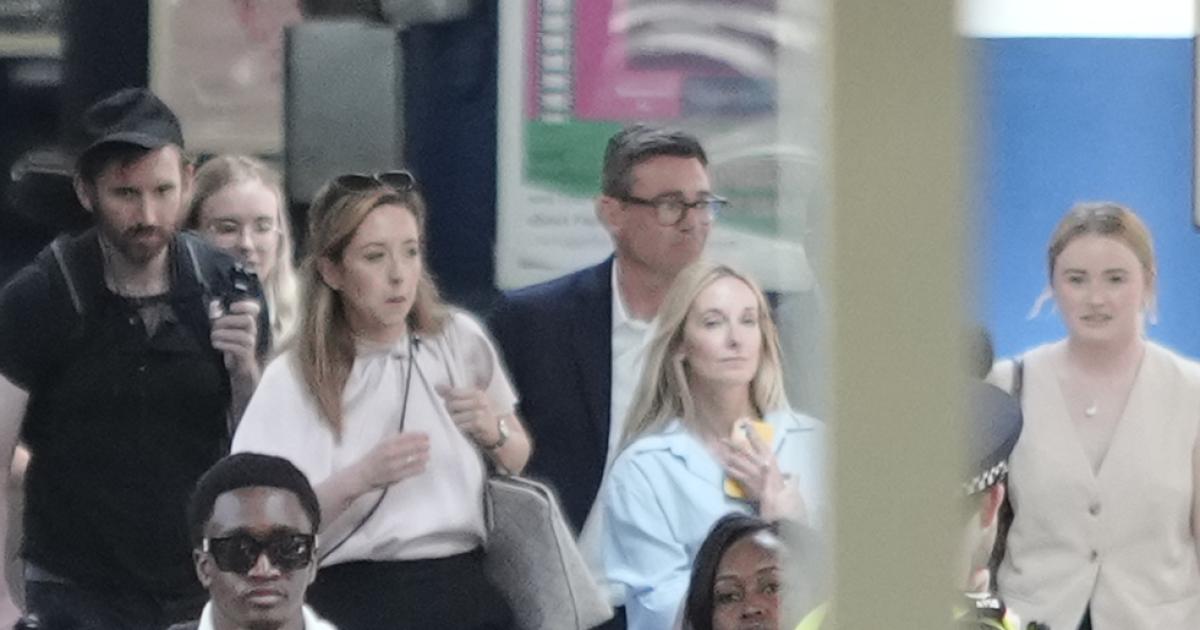
![]() Andy Burnham (centre top) arrives at London Euston train station as he travels to Westminster to take up his seat in the House of Commons after winning the Makerfield by-election. Picture date: Monday June 22, 2026. PA Photo. Prime Minister Sir Keir Starmer has resigned as PM and leader of the Labour Party less than two years after coming to power. Sir Keir’s decision to stand down means Labour will now hold a contest to choose his successor, with Andy Burnham seen as the frontrunner. Photo credit should read: Jeff Moore/PA Wire (Image: Jeff Moore)
Andy Burnham (centre top) arrives at London Euston train station as he travels to Westminster to take up his seat in the House of Commons after winning the Makerfield by-election. Picture date: Monday June 22, 2026. PA Photo. Prime Minister Sir Keir Starmer has resigned as PM and leader of the Labour Party less than two years after coming to power. Sir Keir’s decision to stand down means Labour will now hold a contest to choose his successor, with Andy Burnham seen as the frontrunner. Photo credit should read: Jeff Moore/PA Wire (Image: Jeff Moore)
Are his chumminess, his matchday polo shirts and his lavish eyelashes just going to replace Mr Starmer’s stiffness in a suit, Brylcreemed fringe and nasal awkwardness? Is this just a change of personalities and not policies.
Because for all this talk of change, whoever is the next leader will face the same problems as Mr Starmer: high energy bills, high taxes, high defence spending, high NHS waiting lists, no plans for social care, war in Europe and two more years of Donald Trump. The more things change in No 10, the more they stay the same for the country.













































You must be logged in to post a comment Login