Connect with us

NewsBeat

How do we know what asteroids are made out of?

Published

on

How do we know what asteroids are made out of?

Asteroids are some of the oldest objects in the Solar System: leftovers from the chaotic time when planets were assembling from dust and rock. They’re time capsules, preserving clues about what the early Solar System was like, and, ultimately, what the building blocks of planets are.

Knowing what an asteroid is made of also matters for very practical reasons. If an asteroid were ever on a collision course with Earth, its composition would affect how dangerous it is, how it breaks up in the atmosphere, and how we might successfully nudge it away. This area of research is called planetary defence.

Understanding the make-up of asteroids also matters for the future of exploration: some asteroids may contain metals, minerals, and even water – potentially useful resources. But how can we tell what asteroids are made of when most of them are millions of kilometres away?

Asteroid ‘fingerprints’

One of the most powerful techniques is spectroscopy, the science of splitting light into components and measuring what wavelengths are absorbed or reflected. Minerals interact with light in characteristic ways, leaving subtle dips and slopes in a spectrum. In effect, an asteroid’s surface leaves behind a chemical fingerprint in sunlight.

Advertisement

These fingerprints let us place asteroids into broad families. One of the most common groups near Earth is the S-complex, a class of relatively reflective asteroids often associated with silicate minerals such as olivine and pyroxene. For decades, researchers suspected that S-complex asteroids were linked to a particular category of meteorites that frequently fall to Earth: the ordinary chondrites.

A phenomenal example of how well this can work came from Japan’s sample-return mission Hayabusa, which visited the near-Earth asteroid (25143) Itokawa. Hayabusa reached the asteroid in September 2005. From its reflected light, Itokawa was inferred to be an S-complex asteroid, and spectroscopic comparisons suggested it should resemble ordinary chondrites, particularly the LL subgroup.

Hayabusa returned tiny grains of asteroid regolith to Earth, and laboratory analyses showed the mineralogy and mineral chemistry were identical to LL chondrites. In other words, the remote spectral prediction matched the physical reality of the samples.

Artist’s concept: The Dart mission collided with, and moved, the asteroid Dimorphos.
Nasa

Then Dart arrived — and raised the stakes. In September 2022, Nasa deliberately slammed a spacecraft into the small moonlet Dimorphos, which orbits the larger asteroid Didymos, in the Dart (Double Asteroid Redirection Test) mission.

Advertisement

The goal wasn’t to destroy the asteroid; it was to test whether a kinetic impact could measurably change its orbit. Didymos has been observed extensively with spectroscopy and is classified as an S-complex and inferred to have a LL chondrite composition.

But is there a possibility we could we be misreading the make up of some space rocks? A 2026 paper argues that another meteorite group, brachinites, can show spectral properties that overlap with S-complex asteroids. One sample (NWA 14635) even shows spectroscopic band parameters similar to Didymos.

This is a big deal, because it means there may not be a neat one-to-one mapping between asteroid types and meteorite types. Asteroids are the left over building blocks of planets in our Solar System, often termed “space rocks”. Meteorites are space rocks that have survived the journey through a planet’s atmosphere, reaching the surface.

For planetary defence, this distinction matters. A chondritic “rubble pile”, composed of loosely bound rocks, and a more strongly processed, coherent igneous body (which would cover the brachinites) might respond differently when hit.

Advertisement

An ordinary chondrite-like surface might absorb energy like a “cosmic beanbag”, while a more magmatic surface might behave more like brittle rock. If we want to predict what happens when we try to deflect an asteroid, we need to know what its surface resembles.

This is exactly why the European Space Agency’s Hera mission is so exciting. Hera isn’t repeating Dart; it’s doing the follow-up crime scene investigation. Hera launched in October 2024 and is now on its way to the Didymos system, with arrival planned for late 2026. Once there, it will map both asteroids in detail.

Hera also comes with two small satellites known as cubesats: Juventas and Milani. Milani will help study the surface composition. This will give insights into not just what Dimorphos looks like from a distance, but what it’s made of, how it’s structured, and how it responded to Dart’s impact.

In the context of the new brachinite result, Hera’s role becomes even more important. If Didymos and Dimorphos turn out to be less “ordinary chondrite-like” than we assumed, or if their surfaces disguise a more complex origin, Hera is the mission that can test that assumption directly. It’s a reminder that asteroids still have the power to surprise us.

Advertisement

Source link

Continue Reading
Click to comment

Leave a Reply

Your email address will not be published. Required fields are marked *

NewsBeat

Sunderland paedophile planned to meet 14-year-old ‘boy’ for sex

Published

on

Sunderland paedophile planned to meet 14-year-old 'boy' for sex

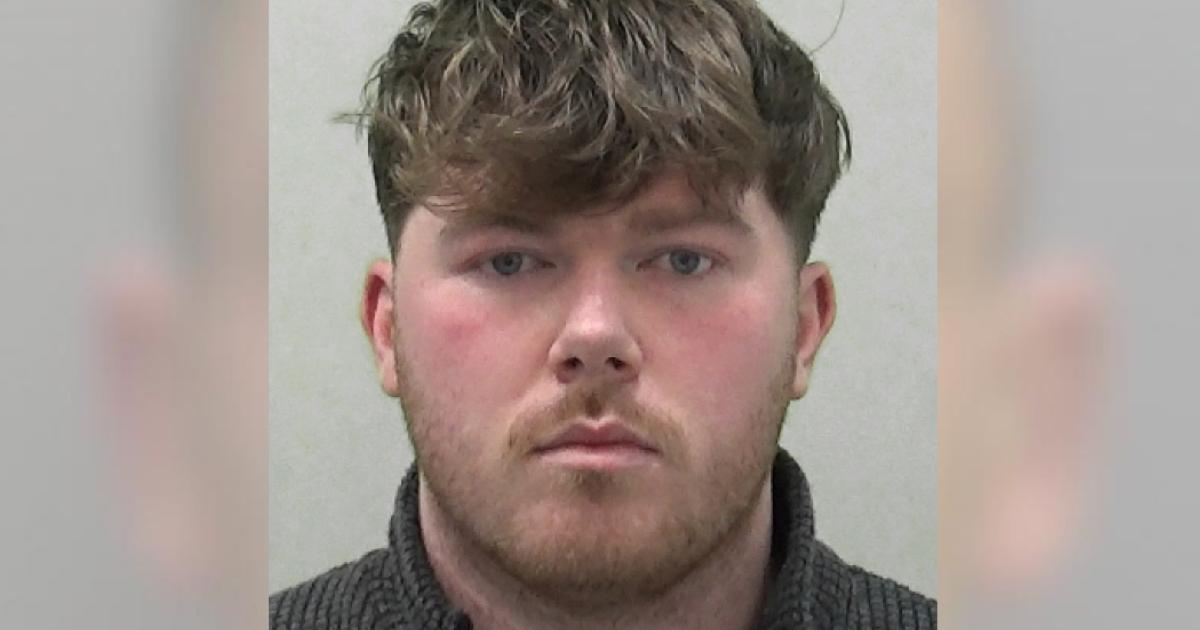
James Graham, 24, planned to meet a 14-year-old boy who he believed he had been chatting with online.

But, what the defendant did not know, was that he had actually been speaking with a decoy police officer from the North East Regional Organised Crime Unit (NEROCU), posing as the boy, as part of a wider investigation.

Newcastle Crown Court heard that Graham sent countless sexually explicit messages stating his intentions with the teenage schoolboy and even offered to supply him with drugs.

James Graham thought he was arranging to meet a 14-year-old boy for sex (Image: Northumbria Police)

When communication began, in October 2024, NEROCU officers quickly launched a specialist operation to target Graham and bring him into custody.

Advertisement

It led to his arrest on January 15 last year, and he was subsequently charged with arranging/facilitating the commission of child sex offence and attempting to engage in sexual communication with a child.

It was classed as “an attempt” as there was no actual child.

Graham, of Hovingham Gardens, Barnes, Sunderland, later pleaded guilty to all charges and yesterday (Thursday, March 5) appeared back at the court where he was sentenced by Recorder Paul Reid to a ten-month prison sentence, suspended for 18 months.

James Graham given suspended prison sentence with ten-years’ registration as a sex offender (Image: Northumbria Police)

But he was also made subject of registration as a sex offender and restrictions imposed under a Sexual Harm Prevention Order, both for ten years.

Advertisement

NEROCU Detective Constable Lee Robertson, said: “Cases like this show why our work in this area is so vital and we will continue to do all we can to help protect children from predators like Graham.

“I’d like to thank all the officers and staff involved for helping to bring Graham before the courts and as always, I’d encourage anyone who has been a victim, or who wants to talk to an officer and raise some concerns, to get in touch immediately.”

Read next … more court stories from The Northern Echo by clicking here

Anyone with concerns about child abuse or wanting to report a crime, can contact their local police force via its website or by calling 101.

Advertisement

The advice is to always dial 999 in an emergency.

Alternatively, callers can do so anonymously, by contacting the independent charity Crimestoppers, on (0800) 555 111.


Advertisement

Source link

Continue Reading

NewsBeat

What do France need to win the Six Nations against Scotland? Title permutations explained

Published

on

What do France need to win the Six Nations against Scotland? Title permutations explained

France could retain the Six Nations title with a round to spare as they take on Scotland at Murrayfield.

The defending champions have been a class apart so far in the competition, following up a significant opening-round win over Ireland with successes against Wales and Italy.

Three bonus-point wins thus far have left them top of the table with 15 points, and another victory by four tries or more would make certain of the title.

Ireland’s hard-fought win over Wales last night has left them on 14 competition points and thus unable to reach more than 19, while Scotland sit in third on 11 points as they host the defending champions.

Advertisement

Even a high-scoring, narrow defeat for Scotland, and banking two bonus points, would not be enough to keep their hopes alive if France still win with a bonus point.

France host England in Paris on Six Nations “Super Saturday” as the final round of fixtures is held next weekend.

A championship success would be their eighth since the addition of Italy to the tournament in 2000, moving clear of England as the outright most successful side in that period.

It would be a 28th crown for France overall in the competition’s long lineage.

Advertisement

Source link

Continue Reading

NewsBeat

ten literary heroines to inspire you on International Women’s Day

Published

on

ten literary heroines to inspire you on International Women’s Day

Ever since pen was first put to paper, literary heroines have leapt off the page, often as literature’s most nuanced characters. Whether plucky and confident, pushing the boundaries of society, or increasingly empowered in their own quiet ways, it is no surprise that fictitious females reveal much about the world.

So, to celebrate International Women’s Day 2026, we’ve picked ten of our favourite literary luminaries (in no particular order) to uncover what they can teach us about living.

1. Jane Eyre (1847) by Charlotte Brontë

“I am no bird; and no net ensnares me: I am a free human being with an independent will.” So says Jane Eyre in one of literature’s most famous lines. She overcomes a dreadful childhood, impoverished circumstances and social inequality (as well as the indignity of finding out the man she loves is already married) through a strong sense of self-worth. Described throughout the novel as small and plain, Jane demonstrates an innate sense of endurance, independence and self-belief, no matter what she faces.

Advertisement
Celia Imrie as Joyce from The Thursday Murder Club film.
Giles Keyte / Netflix

2. Joyce, The Thursday Murder Club (2020) by Richard Osman

Very fond of a slice of cake and known for being generous to everyone, Joyce Meadowcroft is a key narrative voice in Osman’s popular crime series. Like Miss Marple before her, Joyce has a keen sense of right and wrong, alongside razor-sharp observation skills. Not afraid to get stuck in, this 77-year-old former nurse reminds us not to underestimate older people.

3. Offred, The Handmaid’s Tale (1985) by Margaret Atwood

The dark events of The Handmaid’s Tale are recounted from the perspective of Offred, who is often considered a resigned and compliant narrator. Memories of her former life with her family, alongside the strong and often bleak narrative voice exhibited throughout, reinforce that quiet protests or simply overcoming silence can be a means of survival.

Advertisement

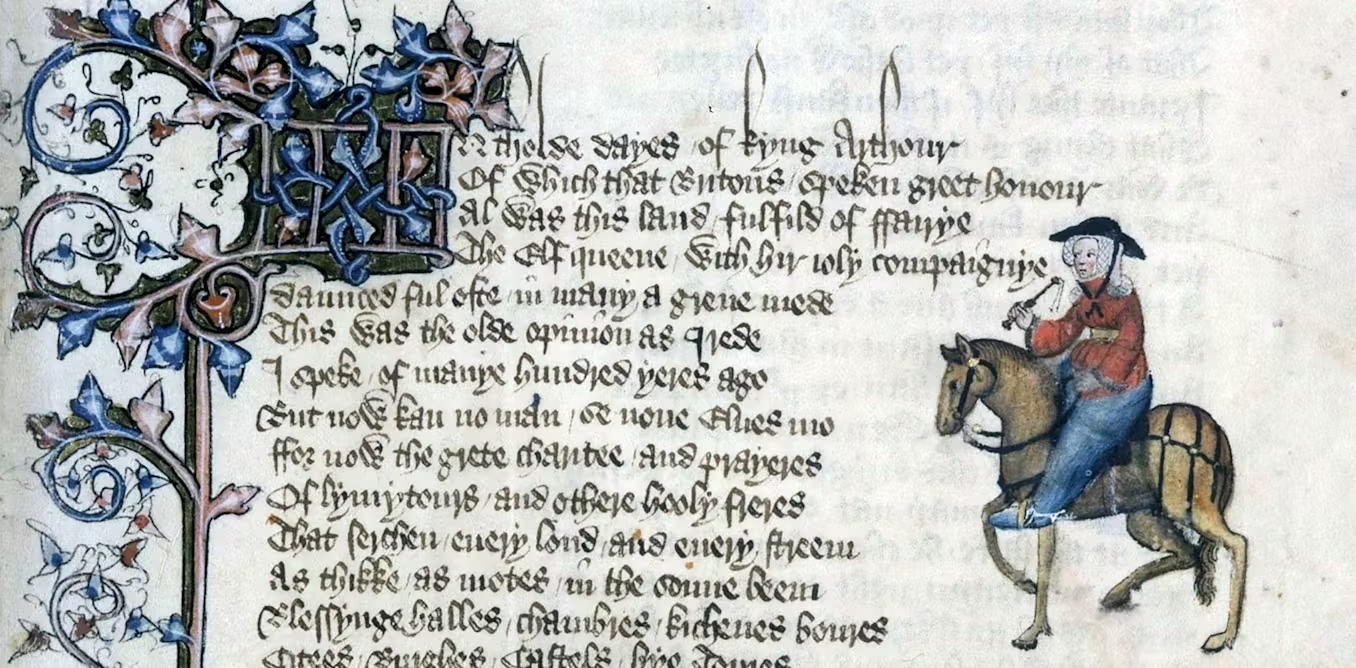
4. Wife of Bath, Canterbury Tales (c. 1400) by Geoffrey Chaucer

Recognised as the “first ordinary and real woman in English literature” by the University of Oxford’s Marion Turner, the Wife of Bath broke the mould back in 1400 by declaring that sexual freedom was a positive, and women should not be defined or constrained by their partners (five husbands in her case!). Advocating for the freedom to be (and be with) who you want, creating a 600-year legacy? Many would hope to be as influential.

5. Kahu, The Whale Rider (1987) by Witi Ihimaera

Advertisement

Named after her ancestor, an original whale rider, Kahu Paikea Apirana is our youngest protagonist. As she is female, the prejudices of society – particularly, and most poignantly, those of her influential great-grandfather – ensure she is not considered as the rightful heir to the chieftainship of her Māori community. But through her ability to communicate with whales, Kahu unites her family and the natural world. The Whale Rider is a profoundly moving story that reminds us our connection with the environment should always be harmonious.

6. Orlando (1928) by Virginia Woolf

Influenced by Shakespeare’s As You Like It, Orlando is potentially what Jeanette Winterson calls “the first English language trans novel”. Initially a 16th-century nobleman, Orlando awakes at the age of 30 in 1920s England, having been transformed into a woman. Thought to be based on Woolf’s lover and friend Vita Sackville-West, the character of Orlando reminds us that we must always be true to who we are.

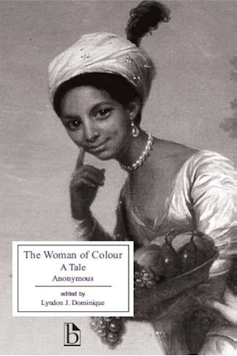
A book cover showing a young finely dressed black woman smiling.

Broadview Press

7. Olivia, The Woman of Colour: A Tale (1808), Anonymous

The protagonist of this Regency drama is the first Black heroine in a European-set novel. Facing prejudice from her English relations, Olivia firmly alters preconceived notions and stereotypes about her skin colour, intellect and background. Upon learning of her new husband’s wrongdoing (like Jane Eyre’s Rochester, he is already married), Olivia dissolves the marriage and takes her dowry home to Jamaica, where she aims to improve the lives of her countrymen. Published just a year after the 1807 abolition of the slave trade across the British Empire, Olivia inspires us to take an interest in world events, foster empathy and stand up to prejudice.

Advertisement

8. Rosalind, As You Like It (1600) by William Shakespeare

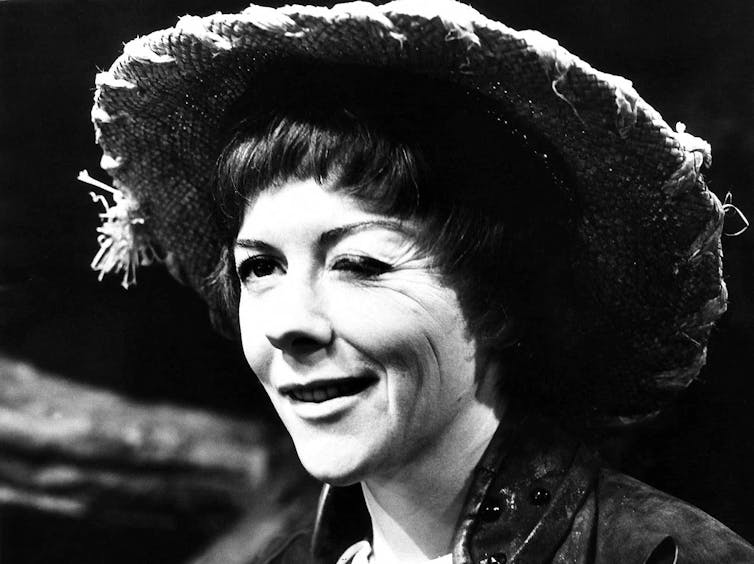
Perhaps Shakespeare’s best creation (overall, not just female), Rosalind has the most lines of any of his female characters. And unlike many of the Bard’s other characters, Rosalind speaks throughout the play in prose, disparaging love poetry. Even more unusually, she has the last word in delivering the epilogue. Shakespeare’s bold heroine encourages us to be unafraid to speak our own minds.

A black and white image of a woman in large hat winking at the camera.
Dorothy Tutin playing Rosalind at the Royal Court Theatre in Liverpool in 1967.
Trinity Mirror / Alamy

9. Eleanor, Eleanor Oliphant is Completely Fine (2017) by Gail Honeyman

Facing a consistently empty existence, Eleanor is a character facing profound loneliness. It is not until her colleague Raymond becomes a firm friend, and accepts her as she is, that Eleanor begins to recognise her isolation. This novel’s heroine prompts us to remember the human need for connection, and the importance of having understanding friends.

10. Scheherazade, One Thousand and One Arabian Nights (circa 900), folk tale

Advertisement

Complex and multilayered, the first version of Scheherazade’s tale was a manuscript found in Cairo in the 9th century. Since then, her stories have woven their way through the centuries and across continents. Scheherazade is the new bride of a vindictive sultan whose first wife was unfaithful. He vows to take revenge on womankind by taking a new virgin bride every night and executing her the next morning.

But Scheherazade’s wit, intelligence and storytelling prowess enable her to tell enthralling, unfinished tales every night. This means she stays alive for 1,001 nights, saving herself and the women of the kingdom. Patience, persistence and selfless concern for the welfare of others are all tenets this original storyteller embodies.

Source link

Advertisement
Continue Reading

NewsBeat

How lessons from Iraq are shaping Starmer’s Iran response

Published

on

How lessons from Iraq are shaping Starmer’s Iran response

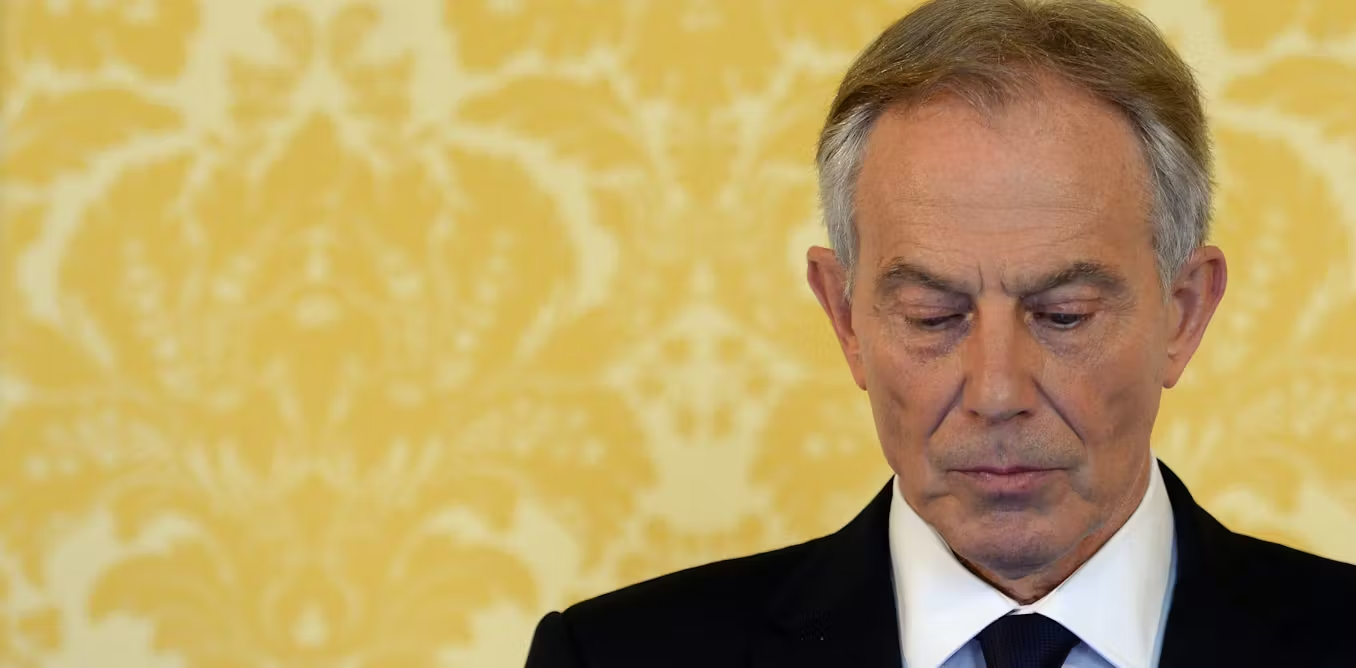
When Keir Starmer briefed the House of Commons on the situation in Iran, the UK’s prime minister ended with a clear message: “We all remember the mistakes of Iraq, and we have learned those lessons.”

Tony Blair’s decision to bring British forces into the Iraq war in March 2003 has long loomed over the Labour party and British foreign policy. In 2011, then prime minister David Cameron was keen to stress to parliament that any action in Libya would “not [be] another Iraq”.

Two years later, the same reassurance was provided for intervention in Syria – only this time, the Labour leader, Ed Miliband, led the opposition to block military action.

For the current prime minister, the lessons from the events of 2003 were to ensure the legality of any military intervention, and that a clear plan for the future was in place.

Advertisement

It is unsurprising that he has picked up on the question of legalities, given his previous career. However, Starmer also specifically campaigned against action in Iraq. On the eve of the war, he wrote to The Guardian warning against military action: “Engaging in armed conflict in breach of international law is a precarious business.”

In the case of Iran, legalities remain just as sticky. There was no United Nations Security Council resolution to support US-Israeli activities, and it remains unclear how the current intervention relates to individual or collective self-defence.

When Starmer decided to instigate the use of British military assets in the region, and allow the US to use British bases for actions against missile sites, the language used in his statement was careful and specific. It focused on Iran’s “indiscriminate attacks” and “unlawful strikes”, allowing the UK to argue its position under international law as acting in self-defence.

There does not appear to be a “phase 4” – a post-combat plan for Iran. Nor is it clear what the US’s objectives are before combat operations can end.

Advertisement

Donald Trump has explicitly stated that he would like to see regime change. But whether a different leadership is sufficient, or if the full roots of the Islamic Republic have to be removed, remains unknown.

Lessons from the Iraq inquiry

Iran is not Iraq. There are many key differences in their political situations, geography and people, not to mention the amount of time to plan the military operation (despite pre-deployment at the beginning of the year and assets already in the area).

There are also differences in the intelligence situations, the recent diplomatic progress that has been made over nuclear issues, and the fact that the war in Iran is not an ideological pursuit akin to the neoconservative agenda of the 2000s.

However, both wars are ones of choice, and it is clear that Starmer intends to take a different approach to Blair. He would do well to return to some of the key lessons identified by the formal inquiry into events surrounding Britain’s role in the Iraq war.

Advertisement

In 2016, the results of the public inquiry – comprising 12 volumes and 2.6 million words – were published. Inquiry chair John Chilcot’s key points (as Starmer has alluded) were that “the circumstances in which it was decided there was a legal basis for UK military action were far from satisfactory” – and that “the planning and preparations for Iraq after Saddam Hussein were wholly inadequate”.

However, more issues remain relevant today. In particular, the ongoing Operation Epic Fury is a US military operation. It will not be possible for the UK to exert any significant influence in its planning. Any participation will be – as it was in Iraq – in subordination to the US.

As the Iraq inquiry report noted: “The US and UK are close allies, but the relationship between the two is unequal.” Despite the UK providing significant military assets and personnel to Iraq, it failed to exert any significant influence on US decisions.

Starmer has said he remembers the ‘mistakes of Iraq’.
Tolga Akmen/EPA-EFE

Chilcot also reflected on the UK-US relationship in general. He stated that prime ministers will always exercise their political judgment in how to handle the US, depending on personal relationships and the issues under discussion. He also recognised there is no standard formula for this relationship.

Advertisement

Trump has made no secret of his frustration with the prime minister, telling journalists: “This is not Winston Churchill that we are dealing with.” Nonetheless, Starmer has so far refused to be pressured into a different approach.

The prime minister would do well to remember one of Chilcot’s points: that “the UK’s relationship with the US has proved strong enough over time to bear the weight of honest disagreement. It does not require unconditional support where our interests or judgments differ.”

While this may be challenging in the short term when dealing with the Trump administration, it will remain true in the long term.

Chilcot offered one final point that rings true today: “Above all, the lesson is that all aspects of any intervention need to be calculated, debated and challenged with the utmost rigour. And when decisions have been made, they need to be implemented fully.”

Advertisement

Thus far, Starmer is following this advice, and should continue to do so.

Source link

Advertisement
Continue Reading

NewsBeat

F1 2026 Australia GP live: Qualifying result, lap times and schedule

Published

on

F1 2026 Australia GP live: Qualifying result, lap times and schedule

Can anyone beat Russell?

We shall see. They’re all out on track, preparing for the final laps of the session…

Kieran Jackson7 March 2026 06:17

Advertisement

George Russell on provisional pole

Russell clear of the rest so far, even with a slower time than Q2!

Norris is five-tenths off, with Hadjar in third for Red Bull.

4-6: Leclerc, Piastri, Hamilton

Antonelli made a mistake, while Lindblad and Lawson opted to stay in the garage and will set just one lap.

Advertisement

Kieran Jackson7 March 2026 06:15

Q3 back underway

So we’ll see what happens to Antonelli afterwards…

Meanwhile, Norris’s car is fine and we have nine cars back out on track.

Advertisement

Kieran Jackson7 March 2026 06:11

PHOTO: Norris driving over device

Lando Norris drives over a coolant device in qualifying (F1TV)

Kieran Jackson7 March 2026 06:09

Advertisement

Mercedes in trouble

Given another car drove over the cooling device – and McLaren are working hard on Norris’s car – Mercedes and Antonelli could get a grid penalty.

Session resuming in three minutes.

Kieran Jackson7 March 2026 06:07

Advertisement

RED FLAG

What a screw-up from Mercedes!

A cooling device was left on Kimi Antonelli’s car as he left the pits!

And Lando Norris drove right over it with his front-left tyre.

Debris on track. RED FLAG with 9:47 left – no times on the board.

Advertisement

Kieran Jackson7 March 2026 06:04

Q3 underway

So just nine drivers are involved in the first pole position shootout of the season:

Drivers involved: Russell, Leclerc, Antonelli, Piastri, Norris, Hamilton, Lindblad, Lawson, Hadjar

Advertisement

Kieran Jackson7 March 2026 06:01

Kieran Jackson7 March 2026 05:58

Advertisement

Bortoleto won’t make Q3

A transmission issue means his Audi car has sparked out. And given he didn’t quite make it into the pits, he’s been wheeled away from the pits and theere’l be just nine cars in the Q3 shootout!

Kieran Jackson7 March 2026 05:56

Bortoleto stops in pit-entry

Gosh, almost a huge crash after Q2!

Advertisement

Lindblad speeds into the pit-entry, avoids teammate Lawson but Bortoleto stops in the pit-lane, having qualified P10!

Kieran Jackson7 March 2026 05:55

Source link

Advertisement
Continue Reading

NewsBeat

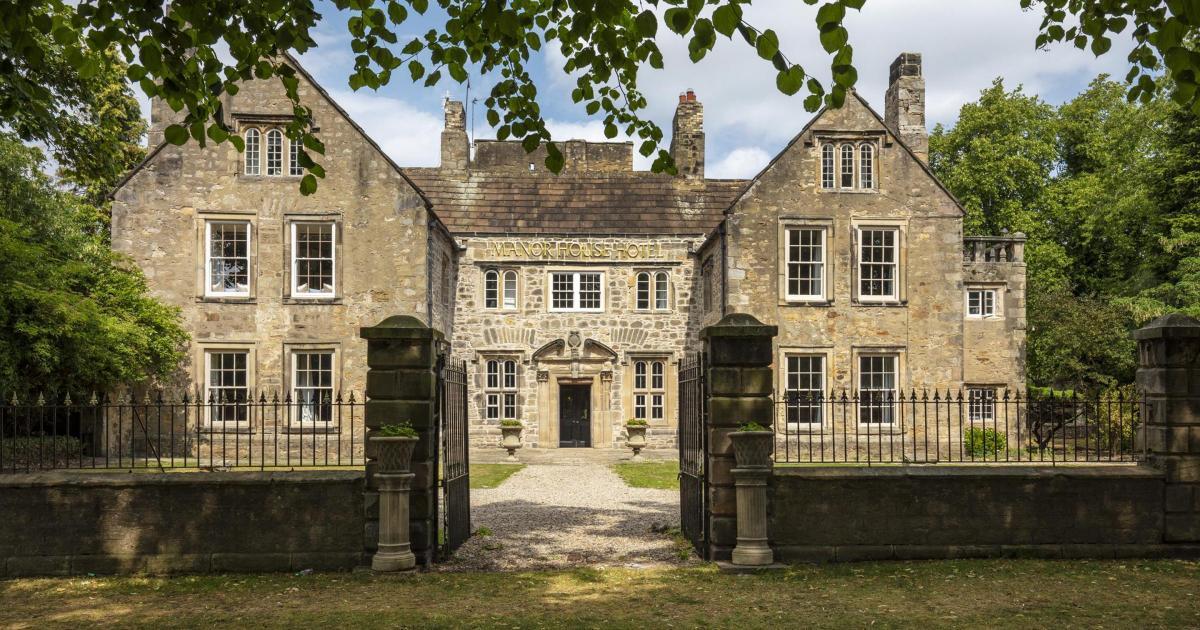
West Auckland Market to launch at Manor House Hotel

Published

on

West Auckland Market to launch at Manor House Hotel

From May 10, the West Auckland Farmers & Indie Market will take place at The Manor House Hotel and Spa, running from 10am until 2pm on the second Sunday of every month.

The free, dog-friendly event will be organised by Naomi Katze of Gather North Events, who also runs the well-established Farmers and Indie Market at Middleton-in-Teesdale’s Middleton Mart.

That market, which launched in May 2024, regularly attracts about 80 traders and has built a loyal following of shoppers from across the region.

The Manor House Hotel in West Auckland (Image: file)

Now, Naomi is expanding the Gather North brand with a second monthly market – this time in West Auckland – promising the same carefully curated mix of high-quality food, drink, arts and crafts.

Advertisement

About 50 local independent businesses are expected to take part in each West Auckland event, with stalls both inside and outside the hotel grounds.

Visitors can expect everything from artisan bread, rare breed meats and fresh fish to local cheeses, seasonal fruit and vegetables, chutneys, jams and handmade pies and pastries.

There will also be sweet treats, including cakes, patisserie, chocolate and fudge, alongside vegan and gluten-free options.

Drinks producers are set to feature too, with local ales, spirits, cider and apple juice among the offerings.

Advertisement

Alongside the traditional farmers’ market produce, the ‘Indie’ collection will showcase artists, illustrators and designers, as well as handmade jewellery, ceramics, candles, textiles, woodwork and eclectic collectables.

The coffee van At Middleton-in-Teesdale Market (Image: naomi katze)

Street food and specialist barista coffee will be available, serving breakfast, brunch and lunch, while visitors are also encouraged to make use of The Manor House Hotel’s on-site café and restaurant.

Free entry and free parking will be available for all dates.

Announcing the expansion on social media, Naomi said she was “absolutely delighted” to be bringing the Gather North Farmers & Indie Market to a new location.

Advertisement

“You’ll see many of your familiar favourites, some fantastic new traders, and we’re so excited to welcome a whole new community through the doors too,” she said.


“Our same format. Our same high standards. The same, very special Gather North Events vibe, just a new location.”

The West Auckland Farmers & Indie Market will take place on:

  • May 10
  • June 14
  • July 12
  • August 9
  • September 13
  • October 11
  • November 8
  • December 6 (first Sunday of the month)

The Manor House Hotel and Spa is located in West Auckland, DL14 9HW.

Advertisement

Source link

Continue Reading

NewsBeat

the feminist book that Iran’s regime has failed to silence since the 80s

Published

on

the feminist book that Iran’s regime has failed to silence since the 80s

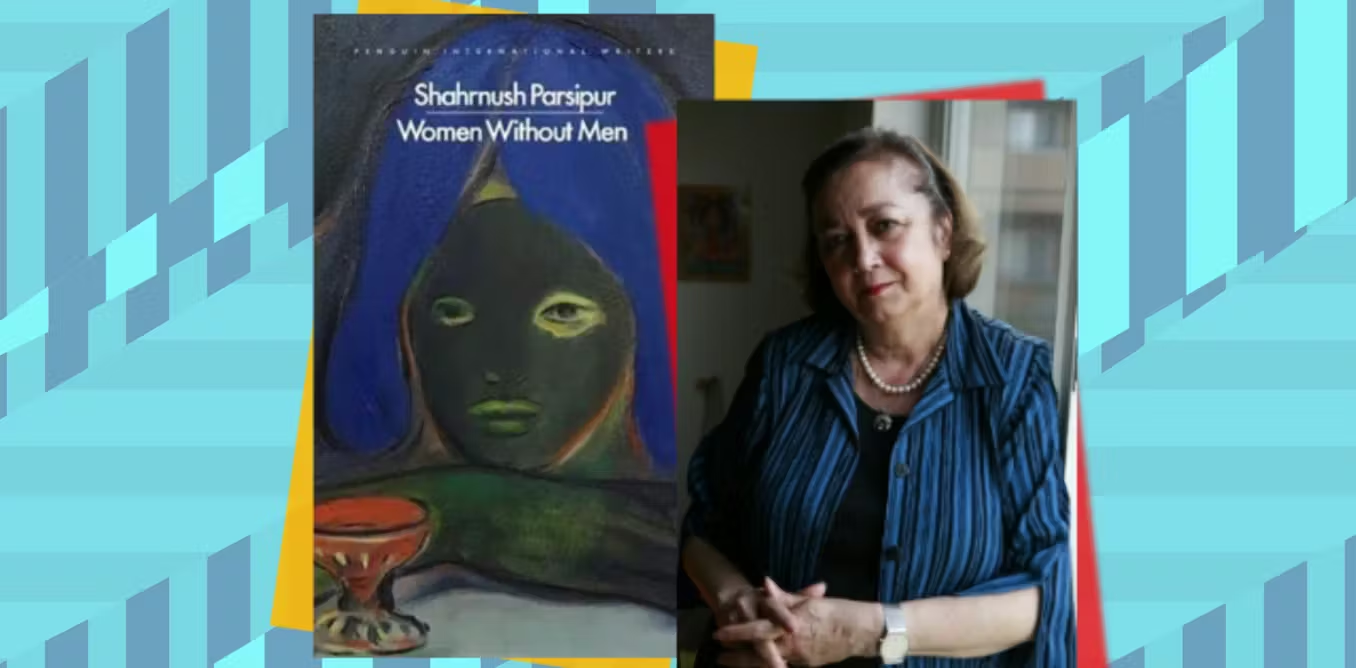
For more than three decades, Iran tried and failed to silence Women Without Men (Zanan bedun-e Mardan in Persian). Shahrnush Parsipur’s novella exposed the brutality of Iranian patriarchy with rare clarity. It did so long before global audiences recognised that violence.

Published in 1989, the book was banned almost immediately and Parsipur was imprisoned twice for writing openly about women’s sexuality and autonomy – an act of artistic courage the Islamic Republic deemed intolerable.

Despite the regime’s attempts to erase it, the novella endured. It moved through underground networks and crossed borders with quiet determination. Today, Parsipur lives in exile in northern California after years of harassment. At 80, she remains one of Iran’s most fearless literary dissidents.

Women Without Men follows five women who flee violent marriages, stifling social expectations, and political chaos. Together, they build a sanctuary in a garden outside Iran’s capital, Tehran.

Advertisement

The book is now available in translation by Faridoun Farrokh in the UK for the first time. It still reads as a fierce, mystical act of feminist refusal, echoing the Woman, Life, Freedom movement – a Kurdish slogan that became a rallying cry for women’s rights when it was adopted during the 2022 Iranian protests. The book also lays bare, yet again, how violently regimes react when women claim the right to live unbounded.

When history tried to silence women but failed

Set against the turmoil of 1953, the novella unfolds in a charged political landscape. That year, a US- and UK-backed coup toppled Iran’s democratically elected prime minister, Mohammad Mosaddegh, and reinstalled the shah, Mohammad Reza Pahlavi, to protect western oil interests. That event reshaped Iran’s future and remains one of its most consequential political ruptures.


Penguin International Writers.

In the years leading up to the coup, Iranian women had been inching towards greater legal and social equality. But the political chaos and regime change set the stage for decades of instability. The tensions paved the way for the revolution 25 years later, and the Islamic Republic’s tightening grip on women’s lives. While these seismic events stay outside the novella’s frame, their presence is palpable in the background.

It is in the shadow of the 1953 coup that Parsipur exposes the intimate humiliations that patriarchy inscribes onto women’s bodies. Virginity becomes a weaponised measure of worth. Menopause is recast as an insult. Sexuality is monitored, contained and punished. Women’s desires are treated as destabilising forces that must be disciplined. Each character carries a different wound from this system.

Advertisement

Munis resists a brother who would rather kill her than allow her freedom. Faizeh absorbs the misogyny that confines her, and turns it inward. Zarrinkolah escapes a life in which her body is endlessly bought, sold and consumed. Mahdokht, pushed beyond the limits of social expectation, seeks literal rebirth as a tree. Farrokhlaqa endures an affluent marriage that strips her of dignity.

These violences mirror the misogyny embedded in the political order itself. That order disciplines women through shame, silence and constant surveillance of their bodies.

The women’s retreat to the garden outside Tehran is not an escape, but a feminist rupture that marks a refusal to live within a world that insists on defining them. It is a choice to build, however precariously, a space where those rules collapse.

Through mysticism and magical realism, the women’s transformations gain political force. Each metamorphosis becomes an act of resistance: women reclaiming autonomy, dignity and possibility in a society intent on erasing them.

Advertisement
A demonstrator holds a sheet showing photos of victims at the anniversary of the death of Mahsa Jina Amini in 2023.
Clemens Bilan/EPA

From 1953 to Woman, Life, Freedom

The global cry of “zan, zendegi, azadi” (Woman, Life, Freedom) carries the same insurgent energy that animates Parsipur’s Women Without Men. The slogan rose during the 2022 uprising, after the death of Mahsa Jina Amini in police custody.

The beginning of this spirit of resistance can be seen in Parsipur’s narrative, decades earlier. Her novella advanced a vision of women actively confronting and exceeding patriarchal limits decades before the slogan gained global force.

Reading the book today, it is clear how accurately Parsipur mapped the machinery of state violence, gender policing and systemic oppression – the same forces now driving women into the streets in Iran.

What anchors the novel’s contemporary relevance is its central idea: women imagining and constructing a world outside patriarchal control.

The five women of Parsipur’s story carve out a space where they are no longer defined by violence or expectation. Their garden becomes a blueprint for refusal, one that aligns directly with the ethos of Woman, Life, Freedom: not to endure patriarchy but to reject it, rewrite it, and build a life entirely beyond its reach.

Advertisement

Iran is once again engulfed in turmoil. Women Without Men enters the UK at a moment when Iranian exiles, scholars and activists are issuing urgent warnings about escalating state violence. Public awareness of the daily repression faced by Iranian women is higher than ever, and global literary circles are increasingly spotlighting works that confront authoritarianism with resistance.

In this context, the novella’s English-language publication operates as a bridge between past and present. It makes visible how the structures that constrained women’s lives in the 1950s continue to shape Iran’s political realities today.

This is not simply a reissue. The UK publication marks a hard‑won return for a work that has outlasted bans, by a writer who has survived incarceration and forced displacement. Its re‑entry into global circulation arrives precisely when its analysis of gendered domination carries heightened relevance.

Advertisement

Source link

Continue Reading

NewsBeat

Horror ransom note on teenager’s bed before Black Panther killer’s grim discovery

Published

on

Horror ransom note on teenager's bed before Black Panther killer's grim discovery

A mum’s worst nightmare began when she found her daughter’s bed empty except for ransom notes – sparking days of trauma before a horrifying discovery in Shropshire

In a typical Shropshire family home, a mother’s worst fear was about to unfold.

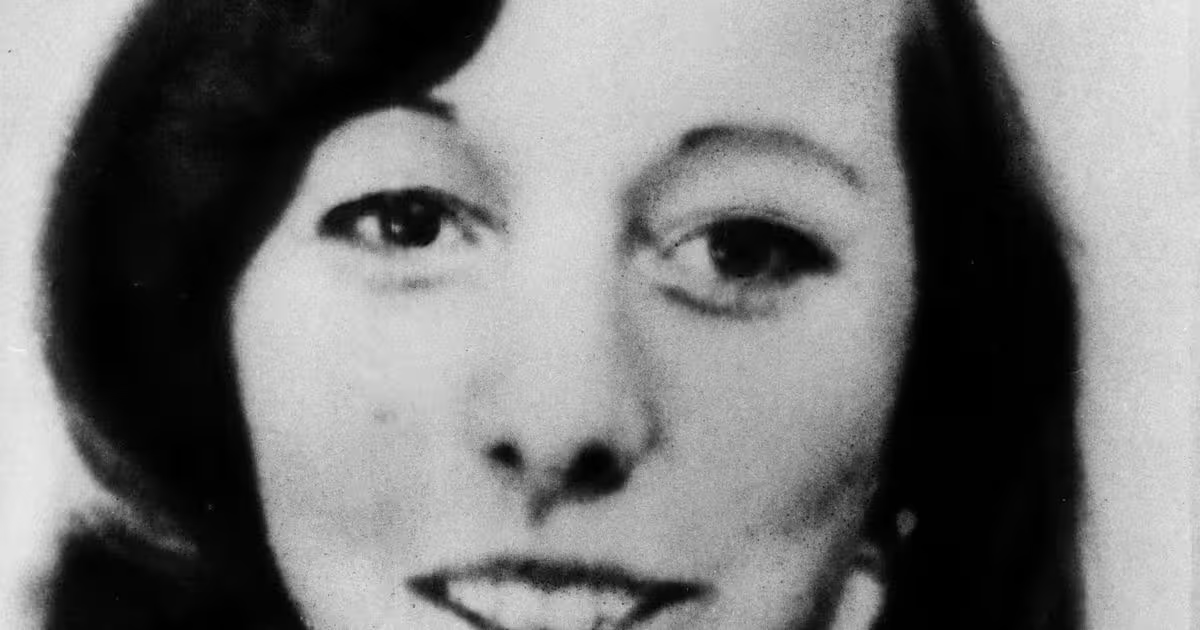
Dorothy Whittle discovered a terrifying ransom note on her daughter Lesley’s bed, marking the start of days filled with dread and distress.

Advertisement

Back in 1975, Staffordshire was held in the grip of fear by a man named Donald Nielson, who later earned the chilling label of the Black Panther. Originally a builder from Bradford, Neilson went on to commit four brutal murders.

Half a century on, the community remains haunted by these horrific killings. The abduction of Lesley Whittle has left an indelible mark on the residents of Highley, Shropshire.

On January 14, Lesley’s mother found her daughter’s bed empty. Three ransom notes were left on the bed, along with a warning not to involve the police, found in her sitting room, reports the Mirror.

The Whittles were a well-known local family, and Lesley was a cherished member of the community.

Tragically, her body was later discovered in a drainage shaft. Neilson was subsequently given four life sentences for his heinous crimes.

Andy Wright, a reporter for the Shropshire Star at the time, recalled: “People were absolutely astounded. They just couldn’t comprehend what had gone on.”

Researcher Dave Waterhouse told the BBC that it’s crucial to remember this case. He said: “Many people have actually said ‘let it lie, the past, move on’.

Advertisement

“Anybody born pre-1970 will have memories of what happened here in little old Kidsgrove. Tributes keep coming year in year out….it’s part of our local history and the impact it had is unquestionable.”

Waterhouse characterised Neilson as “very much a loner”. His mother passed away when he was 10.

He said: “He had very few friends. He went into the military, spent a couple of years there, which he loved. He was not successful in anything that he did except for burglaries – 400 burglaries and he never got caught.

Advertisement

“But he’d have every job from a taxi driver, from a joiner, from salesmen – and failed at every one.”

He noted that numerous people speculated Lesley’s mother was the intended target, rather than her daughter. He explained: “The Whittles had got a coach company – 70 coaches, based over in Shropshire at Highley and everybody in the area knew the family.

“When the father died, Lesley became known as the heiress and people knew her as that.”

Multiple mistakes occurred before Nielson’s capture. Waterhouse continued: “The first night they had to abort – there was error after error.

“The BBC released on the 20:00 GMT news on the radio that it was going to be dropped off at the Swan Centre in Kidderminster and it never happened.

“They decided to go again the next night and it was going to be a drop at Dudley Zoo but the security guard caught Neilson on the premises and that security guard was shot.

“Then that evening the rules changed. Tape recordings were sent to the Whittle family by Neilson saying the drop’s got to be tonight at Kidsgrove.”

Advertisement

Sylvia Dymond, who was attending school when Lesley died, was left devastated after police discovered the teenager’s body in the Kidsgrove woodland.

She told the BBC: “This is where as children we’d come down and play through the summer.

“We practically lived down here. It’s horrific when you think about it, because she must have been terrified.”

Advertisement

The ransom handover never happened after Neilson spotted a courting couple and fled in fear.

Waterhouse explained: “He thought he’d been betrayed. Evidence suggests he came from where he was waiting and he aborted.

“But before he aborted he came back to Lesley and threw her off the shaft.”

Neilson was ultimately apprehended after being spotted behaving suspiciously outside a post office near Mansfield, Nottinghamshire.

Advertisement

Imprisoned in July 1976 for her murder alongside three sub-postmasters, who were killed during armed robberies in Harrogate, North Yorkshire, Accrington, Lancashire and Langley in the West Midlands.

Throughout the police inquiry and subsequent trial, Neilson maintained his innocence. He died behind bars in 2011.

Source link

Advertisement
Continue Reading

NewsBeat

Martin O’Neill issues ‘wake-up call’ as Celtic face Rangers in Scottish Cup

Published

on

Martin O'Neill issues 'wake-up call' as Celtic face Rangers in Scottish Cup

The Hoops are embroiled in an epic title battle with Hearts and Rangers and have a Scottish Cup quarter-final against Rangers at Ibrox on Sunday

Martin O’Neill reckons the genuine silverware threats Celtic are encountering this campaign ought to serve as a “wake-up call” for the Parkhead outfit.

Advertisement

The Bhoys have secured 13 of the past 14 William Hill Premiership crowns alongside countless cup triumphs during an extraordinarily prosperous era, yet this term has proved turbulent.

The Northern Irishman is undertaking his second temporary managerial stint this season, having previously led Celtic from 2000 to 2005, and now finds himself caught up in a dramatic championship race.

Celtic trail pacesetters Hearts by five points whilst holding a slender one-point advantage over Rangers ahead of Sunday’s Scottish Gas Scottish Cup quarter-final clash with the Ibrox side.

“The overall picture is I think that it should be a wake-up call for the football club,” remarked the 74-year-old, who confirmed left-back Kieran Tierney requires assessment following a foot problem picked up during the 2-1 victory over Aberdeen in midweek, whilst experienced shot-stopper Kasper Schmeichel, who received a shoulder injection after illness, will also be evaluated.

Advertisement

“You could say that in recent years fans have maybe been spoiled, no real challenges in many aspects.

“Being able to coast home in the last six or seven games of a season, which is great because you’ve done that. But the challenge has not been strong.

“Here it is. Here Hearts have arrived on the spot maybe a few years before they thought they would do.

“Rangers have come strongly and spent some money getting good players in at the football club.

Advertisement

“So it’s been a challenge all season and certainly been the challenge in my couple of spells in here, where you’re winning some matches and you’re still trying to peg teams back.

“But we’re in with a chance anyway, that’s the point.

“I don’t think it (Sunday’s game) would have a serious bearing (on title), but in terms of confidence building, of course, those things always matter.

“But for the league, I’m not sure. It’s down now to what, nine games left.”

Advertisement

O’Neill wants Celtic to replicate the performance they produced in the closing stages of last week’s encounter with Rangers when they visit Ibrox.

The Hoops were completely overwhelmed during the opening 45 minutes of their league meeting and trailed 2-0 at half-time, leaving them with a mountain to climb.

However, the defending champions responded impressively to that setback, with strikes from Tierney and Reo Hatate securing a well-earned 2-2 draw for the away side.

The ex-Leicester, Aston Villa and Nottingham Forest manager said: “If we if we play like we did in the first half, we shouldn’t turn up then.

Advertisement

“But the second half gave us great confidence, and the ability to know that we can fight back. I think it was testament to the player’s character as much as anything else.”

On fitness matters, O’Neill said: “The injury Kieran’s had to his foot is clearing up. He’s just generally sore in every aspect, so we’ll see how he is tomorrow.

“Kasper trained today for the first time since the injection, so we will see how he is tomorrow.”

Want to see more of the stories you love from Belfast Live? Making us your preferred source on Google means you’ll get more of our exclusives, top stories and must-read content straight away. To add Belfast Live as a preferred source, simply click here.

Advertisement

Click here to sign up to our sport newsletter, bringing you the latest sports news, headlines and top stories

Source link

Continue Reading

NewsBeat

What Irish politician Thomas Gould’s accent going viral in Jamaica reveals about colonial history

Published

on

What Irish politician Thomas Gould’s accent going viral in Jamaica reveals about colonial history

Irish politician Thomas Gould has become a bit of star in the Caribbean after a video of him speaking in the Irish parliament drew comments for the surprising similarity of his Cork accent to the Jamaican one.

His viral speech is a powerful reminder of the shared histories of Ireland and Jamaica, which date back to the mid-17th century and lasted for the next 200 years. During this period Jamaica became an important destination for Irish people.

In the 1650s, Oliver Cromwell, Lord Protector of the Commonwealth of England, Scotland and Ireland, was on a mission to expand the British empire. Having completed the conquest of Ireland in 1653, he captured Jamaica from Spain in 1655.

During the later 1650s, the Cromwellians transplanted hundreds of Irish Catholics to Jamaica where they worked as indentured servants. This form of labour involved an investor who covered the cost of the indentured servant’s passage, food, clothing and shelter on the plantations in return for up to seven years of contracted labour (ten years in the case of convicts).

Advertisement

On termination of the indenture, masters were legally bound to offer “freedom dues”, roughly £10 to £12, in the form of a small parcel of land and a sum of money or its commodity equivalent. Unlike enslaved people, indentured servants had some legal rights, even if it proved difficult to exercise them. However, during the period of indenture the person was, like an enslaved person, at the mercy of their master.

During the 1660s, Irish men and women relocated from elsewhere in the Caribbean to Jamaica on the promise of up to 20 acres of land on the condition that they re-indentured themselves for two or three years.

The Irish poet, Seán Ó Conaill, memorialised these transplantees in The Dirge of Ireland when he wrote in a poem “Transport, Transplant go to Jamaica”.

Relegated to marginal areas in the interior of the island, these poor Irish were vilified and perceived to be unruly, rebellious and loyal to the French because of their Catholicism. They worked as domestic servants or as labourers cultivating sugar, indigo, cotton, cocoa and other commodities. Living in a tropical climate, where hurricanes and other natural disasters occurred regularly, and where deadly diseases were rife shortened life expectancies. Only one in three children reached the age of five.

Advertisement
William O Brien, the second Earl of Inchiquin was governor of Jamaica from 1690 till 1692.
Wikimedia

By 1690 Irish men and women, Catholic and Protestant alike, formed a significant part of the white population, which numbered between 10,000 and 12,000 with around 40,000 enslaved people. While Catholic indentured servants laboured, Protestants from Ireland owned plantations and governed.

When Governor William O’Brien, second earl of Inchiquin, died of “the flux” (dysentery) in 1692, Coleraine-born John Bourden, who owned a plantation in the parish of St. Catherine, filled his shoes. Others included Sir George Nugent (1801 to 1804), Eyre Coote (1806 to 1808); and the earl of Belmore (1828 to 1832).

Migration from Ireland to Jamaica continued well into the 18th century. In 1731, the governor of the island complained that “native Irish papists … [were] pouring in upon us in such sholes [shoals]”. Some Irish remained on the margins, but others prospered as modest planters or as artisans, coopers, carpenters and merchants in Port Royal, Jago de la Vega (Spanish town), Irish town and Kingston.


À lire aussi :
Entangled Islands exhibition explores the history of Irish people in the Caribbean – an expert review

Advertisement

Jane Fitzgerald, a garment trader, was listed in an inventory, as were Irish men like Michael Farrell, a millwright, John Casey, a tavern keeper, Michael Hanigan, a tailor, and Conn Connelly, a bricklayer and builder. The survival of a census dating from 1679 for St. John’s parish, Jamaica, shows that men with Irish names headed three (of 49) households: “Teag Macmarrow” with two white servants and eight enslaved Africans (including three children); Thomas Kelly with two enslaved Africans; and Gilbert Kennedy with a wife and two children, four white servants, and ten slaves (including four children).

Some left wills when they died. These paint pictures of close-knit Irish communities comprised of extended family members and reinforced by intermarriage. Many were upwardly mobile and well connected.

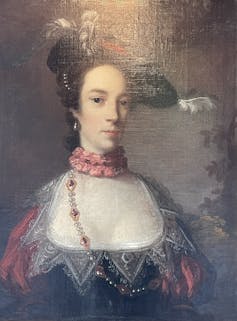
Elizabeth Kelly.
Elizabeth Kelly inherited her family’s grand estates and sugar mills.
Wikimedia

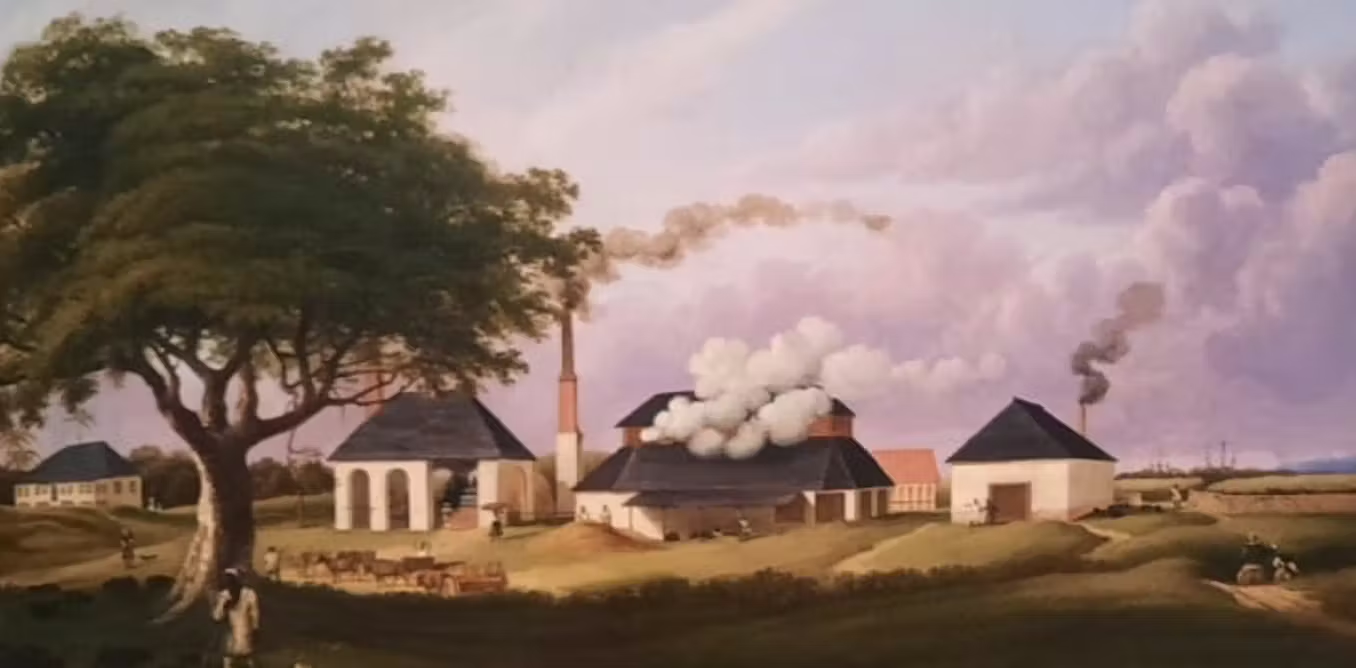
One of the best examples of an Irish family succeeding in Jamaica is the Kelly family, whose grand estates and sugar mills were painted by Isaac Mendes Belisario in 1740. Edmund Kelly became attorney general of Jamaica in 1714. Elizabeth Kelly, his granddaughter and heir, owned plantations of 20,000 acres and 360 enslaved Africans when in 1752 she married Peter Browne of Westport.

The Brownes became Ireland’s premier absentee (run from abroad) plantation owners in the Caribbean. When slavery was finally abolished in 1830s, around 400 people from Jamaica had Irish connections, including many who owned enslaved Africans.

Today Irish surnames – Kelly, Lynch, Murphy, McCarthy, O’Brien, O’Connor, O’Reilly, and O’Hara – are common on the island. Placenames also testify to the presence of early Irish settlers: Irish town, Irish Pen, Irish Road, Sligoville, Bangor Ridge Square, Leinster Road, Leitrim Avenue, Antrim Crescent, Longford Road, Kinsale Avenue, Waterford, and Portmore. Shared speech patterns, especially accents from Munster, are also common.

Advertisement

So with Jamaicans being surprised to hear aspects of their own accents in Thomas Gould’s it’s an opportunity to think about the culture’s complicated shared history and the lasting legacy of the Irish in Jamaica,

Source link

Advertisement
Continue Reading

Trending

Copyright © 2025