


Thomas Tuchel’s side face their toughest test yet at the World Cup as they take on Mexico for a place in the quarter-finals
England hope to keep their World Cup dream alive as they face tournament co-hosts Mexico in the Round of 16 on Sunday.
After opening the tournament with an impressive 4-2 win against Croatia, Thomas Tuchel’s side have been less than convincing in their performances since. A goalless draw with Ghana and a second-half surge to beat Panama saw the Three Lions ultimately top their group, but they failed to impress again against DR Congo, despite coming back from a goal down to win 2-1.
A meeting with Mexico in their capital city is undoubtedly the toughest task yet for Tuchel’s men, and for more reasons than one.
The co-hosts have won all four of their tournament fixtures so far, scoring eight goals and conceding none.
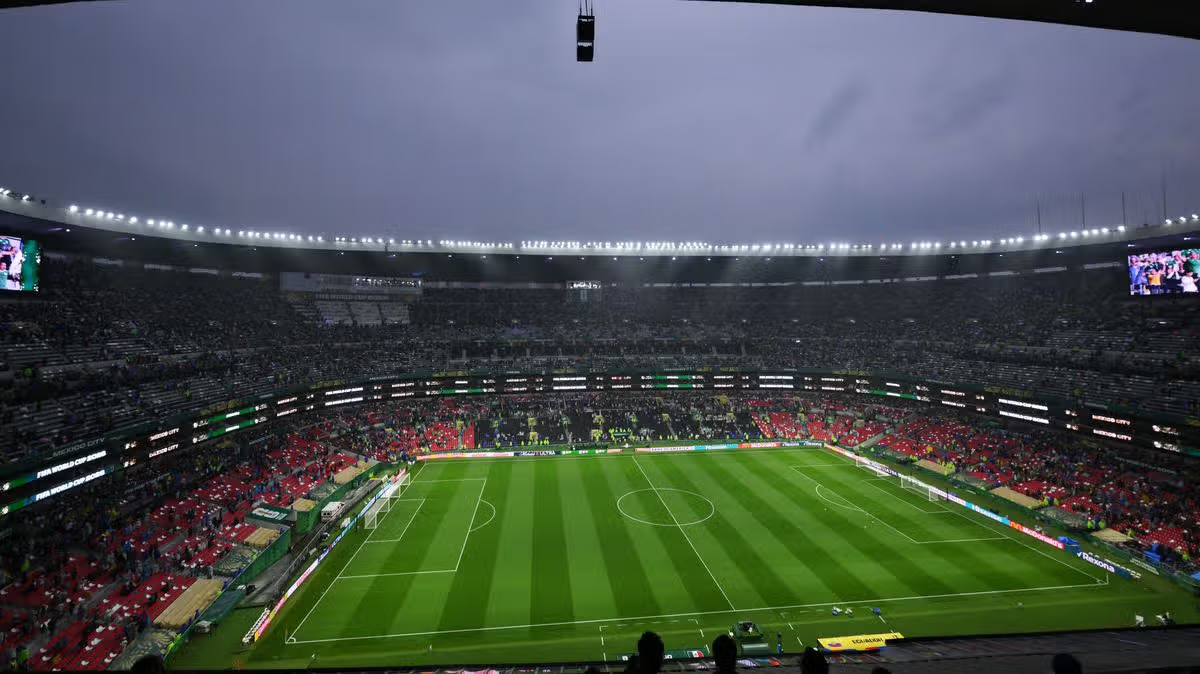
They are also unbeaten in their last 26 competitive matches and, astonishingly, have lost just two of the 89 competitive matches they have played at the Azteca Stadium – the venue for their clash with England – over the last 60 years.
Much has been made of the Mexicans’ incredible home record prior to kick-off, with the location of stadium itself putting their opponents at a major disadvantage.
The Azteca sits at 2,240 metres (7,220 feet) above sea level, with the altitude set to play a major role in determining a winner on Sunday night/Monday morning.
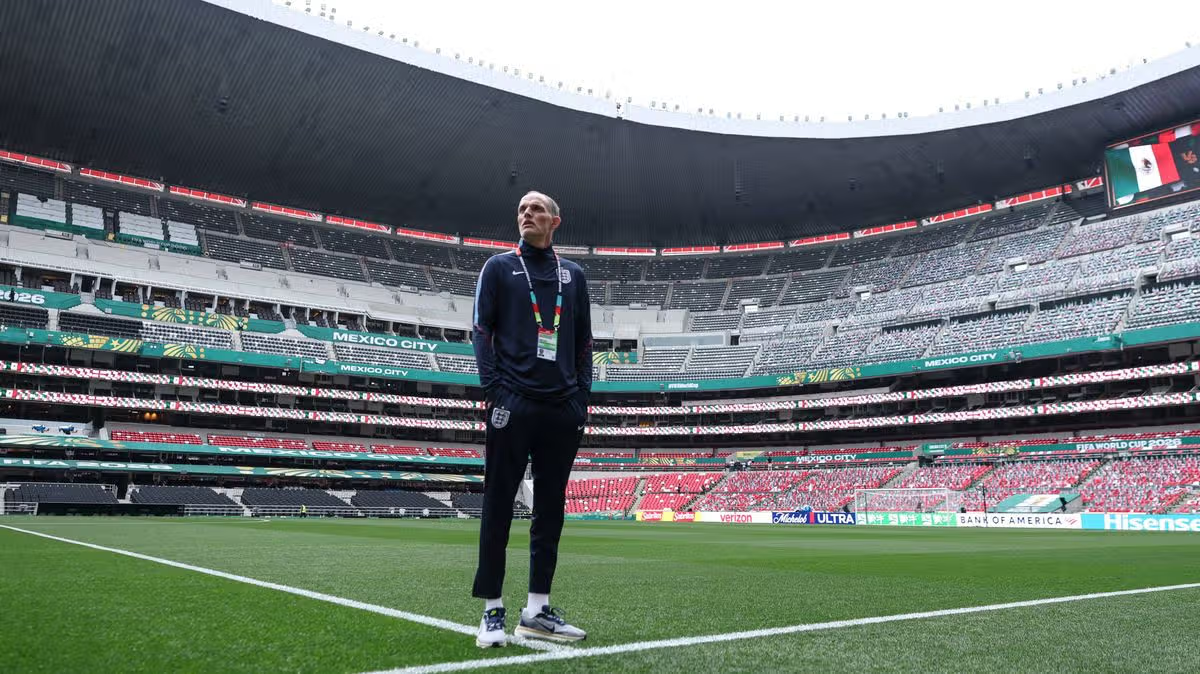
England arrived in Mexico City on Friday evening, giving them just 48 hours to adjust to the conditions that will await them at the Azteca. Generally, sports scientists recommend that athletes performing at altitude should undergo an extended acclimation period of at least two weeks.
In terms of how it will actually affect Tuchel’s team, the higher altitude means that the air is thinner and the barometric pressure lower, making it harder for oxygen to enter the bloodstream with each intake of breath.
Players are therefore expected to feel tired more quickly, while they will also experience greater energy depletion in their muscles.
“By 2,240m we’re definitely going to be seeing a physiological effect,” Dr Neil Maxwell, who is an expert in applied environmental physiology at the University of Brighton, told the Guardian.
“The forcing function of that [barometric] pressure, pushing the oxygen into your red blood cells, is reduced [at altitude]. And that’s the physiological challenge – they’re not getting the oxygen into the red blood cells.
“Because of that, their heart is having to beat quicker, they’re having to ventilate quicker to try and compensate. But obviously, there’s a limit to how much they can do that.”
On the impact that playing in the conditions over the course of 90 minutes will have, Dr Maxwell added: “The feeling that they may feel at the end, or towards the last quarter, of a match, they’re going to be feeling that in the first half.”
The last-16 clash kicks off at 1am Monday BST (6pm local time), after it emerged on Friday night that FIFA had considered bringing the game forward by several hours. However, it could still be delayed with heavy thunderstorms forecast for the area at that time.




























































You must be logged in to post a comment Login