The hygiene of cruise lines may be under scrutiny after a suspected outbreak of hantavirus on a polar expedition vessel – but passengers should be reassured that cases are rare.
At least three people have died aboard Oceanwide Expeditions’ MV Hondius, which began a remote voyage from Argentina to Cape Verde on 1 April, carrying 147 passengers.
The World Health Organisation (WHO) said a total of seven hantavirus cases – two confirmed and five suspected – had been identified on the cruise ship so far.
Three individuals will be medically evacuated in Cape Verde, but most passengers are required to remain on board until the ship reaches the Canary Islands: a voyage that is expected to take three days.
Advertisement
Oceanwide Expeditions said there is no “definitive disembarkation point” for the remaining guests but sailing on to Las Palmas or Tenerife is being considered, where further medical screening and handling could take place.
A statement from industry group, the Expedition Cruise Network, said ships undergo strict biosecurity measures.
It said: “Our thoughts are with the passengers, crew, and families affected.
“As a member of the Expedition Cruise Network, Oceanwide Expeditions has our full support as they manage this situation.”
Advertisement
Can you catch hantavirus on a cruise ship?
Despite the high-profile coverage, cases of hantavirus are rare. In fact, there are no other known cases of hantavirus being present on a cruise.
Hantavirus is mainly spread by contact with rodents or their urine, saliva or droppings, particularly when the material is disturbed and becomes airborne, posing a risk of inhalation.
The WHO says that while uncommon, hantaviruses may spread between people.
Advertisement
It is still unclear whether the outbreak began on board or via an excursion. Passengers have visited remote locations including Antarctica, South Georgia, Nightingale Island, Tristan da Cunha, Saint Helena and Ascension Island during the cruise.
Dr Maria van Kerkhove, director for Epidemic and Pandemic Preparedness and Prevention at WHO,told BBC Breakfast: “We have a working hypothesis that there’s probably a mixture of different types of transmission.
“This is also a boat that went to many different islands. They were looking at wildlife, they were looking at birds, and on some of these islands, there’s rodents as well.
“So there could be a mixture of exposure to rodents in different places, but because some of the cases are close contacts, sharing cabins together, our assumption is that there’s a bit of a mix.”
Advertisement
Aside from this case, there is no public data on hantavirus outbreaks on other cruise ships.
A spokesperson for the Cruise Lines International Association (CLIA) said: “We are aware of reports regarding cases of hantavirus associated with a recent voyage on a non-member cruise line.
“Our thoughts are with those affected. CLIA-member cruise lines are required to adhere to comprehensive health, safety and medical policies designed to detect, prevent and mitigate illness. Available public health data indicates that rates of illness on cruise ships are lower than in comparable land-based settings.”
How common is norovirus on cruise ships?
Advertisement
While there are no known cases of hantavirus on other cruise lines, stomach bugs and norovirus are more common concerns.
Norovirus is a highly contagious virus that causes acute gastroenteritis, leading to vomiting, diarrhoea, nausea and stomach pain.
These figures only cover ships that visit an American port, so the actual numbers are likely much higher.
Advertisement
But with 30 million yearly passengers worldwide, the risk of becoming unwell is minimal.
In fact, data from the CDC suggests passengers are more likely to fall ill on land. Occurrences of gastrointestinal issues are one in 5,500 at sea, which accounts for around one per cent of all cases.
Will you get ill on a cruise?
With thousands of people congregating in a confined space, it is no surprise that people can get ill on a cruise.
Advertisement
This perception was compounded during the pandemic, when coronavirus cases escalated among hundreds of passengers on Diamond Princessand the ship ended up quarantined in Japan for two weeks.
There have also been negative media portrayals in programmes such as HBO’s The Last Cruise documentary.
Despite the media coverage, CDC data suggests the most common settings for gastrointestinal illnesses are actually healthcare facilities followed by restaurants or catered events, schools and day care centres.
Nicky Kelvin, editor at large of travel tips website The Points Guy, said: “Passengers are not highly likely to become sick from hygiene-related causes on a cruise due to high standards of cleanliness, as well as rigorous inspections which have been implemented since 1970.
Advertisement
“Concerns about norovirus on cruises are a result of ships being required to report all cases of norovirus to authorities, compared with schools or nursing homes where norovirus is rampant but do not require reports.”
How clean are cruise ships?
Cruise lines follow the International Health Regulations of the World Health Organisation and the CDC’s Vessel Sanitisation Program (VSP). Among the requirements is the need for passengers to complete health questionnaires before boarding.
The regulations require cruise ships to provide health declarations detailing illnesses of individuals on board to port authorities prior to docking.
Advertisement
Every cruise ship receives multiple inspections each year – announced and unannounced – to support implementation of strict environmental and safety regulations.
Under the VSP, ships must get 86 out of 100 points to pass, covering cleanliness of areas such as cabins, galleys and dining rooms, swimming pools and kids’ clubs.
To comply with this, cruise ships are routinely cleaned, with crew regularly sanitising surfaces such as tables, handrails, door handles and taps. Cruise passengers are reminded to wash their hands when entering the buffet and restaurants, while hand sanitisers are readily available in public locations.
Members of industry trade body the Cruise Lines International Association (CLIA) also follow guidelines specifying that ships must have at least one qualified medical professional permanently available for medical bay visits or cabin “house calls”.
Advertisement
CLIA managing director Andy Harmer said: “The cruise industry’s first priority is the health and safety of passengers, crew and the communities that we visit.
“Thanks to robust and rigorous protocols that cruise lines have put in place, cruise is one of the safest forms of travel. From cleaning practices that are often unparalleled in other settings to passenger screenings, cruise lines take extensive measures to keep their guests healthy.”
What happens when there is an outbreak on a cruise?
If a passenger contracts norovirus or other contagious illnesses, they are usually quarantined in their cabin to prevent further spread of the illness.
Advertisement
Jenni Fielding, who runs the Cruise Mummy blog, added that the situation can change quickly if there is an outbreak.
She said: “I’ve experienced this on about 10 per cent of my cruises. When it happens, things like salt and pepper shakers disappear, replaced by individual sachets.
“You won’t be allowed to serve your own drinks in the buffet; crew members will do it for you. You’ll also see crew with buckets of disinfectant, scrubbing every surface between guests. If you do get sick, you’ll be ordered to stay in your cabin until you’ve been symptom-free for 24 hours – and don’t worry, room service is free.”
To prevent illness, she advises avoiding touching handrails unless absolutely necessary and pressing elevator buttons with your knuckles.
Advertisement
She said: “Little things like this help reduce the risk of catching anything.
“Since the pandemic, new cruise ships have been designed with extra hygiene measures in mind. Every restaurant now has handwashing sinks at the entrance, and some even have automatic hand-washing machines. Many cruise lines are also moving away from self-service buffets, with crew members plating up food instead.
“When Covid first hit, the idea of people being stuck on ships made for dramatic headlines. But that doesn’t mean you’re more likely to catch illnesses on a cruise ship. I’ve never stayed in a hotel or eaten in a restaurant where someone ensures every single person has clean hands before entering. On a cruise ship, that’s just standard practice.”
Reuben Owen and his girlfriend Jessica Ellwood have been together since October 2024 and are starring in the new series of Life in the Dales on Channel 5
The Channel 5 show chronicles the young farmer’s journey through the ups and downs of managing a machinery business at Ravenseat, the sprawling 2,000-acre family farm in Swaledale, North Yorkshire, where he honed his skills under the guidance of his parents, Clive and Amanda Owen.
Reuben, 22, first captured the nation’s hearts on Our Yorkshire Farm before Life In The Dales launched in 2024.
Advertisement
Beyond showcasing his farming exploits, he regularly offers fans a peek into his personal life with Jessica.
Jessica herself comes from a farming background, working on her parents’ Brough Castle farm, which houses hundreds of animals, reports the Express.
The couple got together in October 2024, and have since shared some loved-up posts on social media, marking Valentine’s Day, their anniversary and spending Christmas together.
Advertisement
They met at a young farmers’ convention, with Jessica later sharing on the show: “Ever since we first met, we just clicked. I think it’s because I’m from a farming background, so’s Reuben.”
She added: “I just love him to bits. Love his family, get on great with them.”
Reuben meanwhile told OK magazine: “It took me a while to ask her out, I wasn’t that brave but I just asked her one night, we went out for some tea one night and I’d lost my wallet and she had to pay for my dinner!”
Advertisement
In a previous interview with The Mirror, Reuben shared how his family reacted to Jessica, saying: “Mum and Jess get on well, they talk about sheep together, they all approve and they all get along really well.”
The couple are also planning on moving in together soon, as he added: “We’re just waiting for something to come up. I’ve got to try and get a nice place, get a bit of a farm somewhere one day.
“It would be ideal to have a farm where I can park my diggers and she can have her sheep and cows.”
When probed on the prospect of starting a family, referencing his parents’ large brood, he quipped: “I don’t think I fancy nine of them, I don’t fancy nine at all. We’ll have to wait and see.”
In a 2023 article for Farmers Guardian, Jessica, then 18, spoke about growing up on Brough Castle Farm in Cumbria.
She said: “Farming is in my blood: I grew up on Brough Castle Farm and remember helping my mum and dad in the fields from a young age. Since then, it is all I have ever wanted to do.
“I am now working full-time alongside my dad and taking on more responsibilities for different parts of the farm, which is really exciting. I have always loved working with animals too, particularly cows and sheep; they have their own personalities and I feel like I know them all. Because I have grown up with them since I was very little, I see all the animals as part of our family.”
Advertisement
Reuben Owen: Life in the Dales airs Tuesday at 8pm on Channel 5.
Paul Page has also spent time in prison after admitting making indecent images of children
Emily Pennink, Press Association Old Bailey Correspondent and Cait Findlay Content Editor
17:06, 05 May 2026Updated 17:12, 05 May 2026
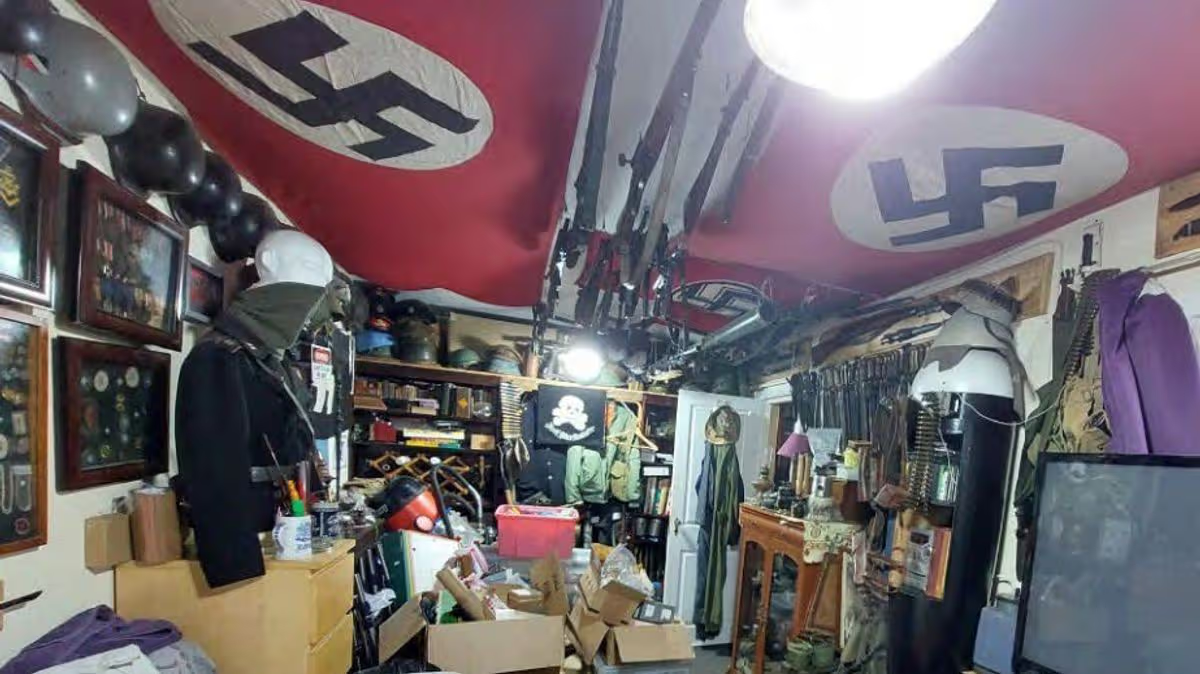
A former British soldier who stockpiled more than 600 weapons in his “man cave” after developing a fascination for Nazi Germany has been jailed for six years. Paul Page, 52, a convicted paedophile, collected landmines, grenades, rifles, ammunition, and chemicals in a shed he also described as a “personal museum” .
Page, of Littleport, admitted a string of terrorism, explosives, and firearms charges. He was jailed at the Old Bailey for six years with a further year on extended licence.
During sentencing on Tuesday, May 5, Judge Richard Marks KC said Page had an “obsession with weapons and tools”. He also said Page was capable of repairing and making firearms, ammunition, and functioning explosives.
Advertisement
Even though Page said he kept the stash under lock and key, the judge said it was in a residential area and potentially within reach of children if he was not “100% vigilant”. Had the shed been burgled and the items got into the wrong hands, “the consequences could have been very serious”, the judge added.
Judge Marks also noted Page’s post traumatic stress disorder (PTSD) and history of sexual offending in the United States and UK. The defendant had been monitored by dedicated officers after he was previously convicted of child abuse in the US in 2006.
The weapons offences emerged after a separate investigation by Cambridgeshire Police into reports that Page had downloaded child abuse images in 2023. Officers uncovered more than 250 illegal images on Page’s devices.
Advertisement
In August 2023, he was jailed for 20 months after admitting three charges of making indecent images of children. During a search of his home in May 2023, officers had also discovered a hoard of Nazi flags, Second World War weapons, and chemicals in an outbuilding.
It led to a separate investigation by Eastern Region Special Operations Unit (Ersou). Counter-terrorism officers found that Page had more than 600 weapons and other military items linked to Nazi activity during the Second World War.
Police said that although much of this was legal memorabilia, he was in possession of prohibited items including landmines, grenades, rifles, and ammunition. A book was seized containing instructions on how to produce a sub-machine gun.
Component parts of firearms, bullet casings, and shells were recovered. There were also several chemicals that, if combined, were precursor materials useful for the manufacture of explosives. Page had also downloaded a banned document containing instructions to make viable explosives.
Advertisement
In interview, Page had denied holding an extreme right-wing mindset, despite having an email address which referenced numbers associated with Adolf Hitler and a tattoo linked to white supremacy, police said. He described the outbuilding as his “man cave” and “personal museum”, saying he had a deep fascination with anything military.
Bethan David, head of counter terrorism for the Crown Prosecution Service, said: “Paul Page stockpiled weaponry, chemicals and ammunition in a shed at his family home. He had previously manufactured explosive powder and admitted to an obsession with weapons. The seriousness of his offending has been reflected in the sentence passed down today.”
Page pleaded guilty to two counts of possessing a document or record likely to be useful to a person committing or preparing an act of terrorism; two counts of possessing an explosive substance; four counts of possessing a firearm without a certificate; two counts related to the possession of a prohibited firearm; possession of prohibited ammunition; and possession of ammunition without a certificate.
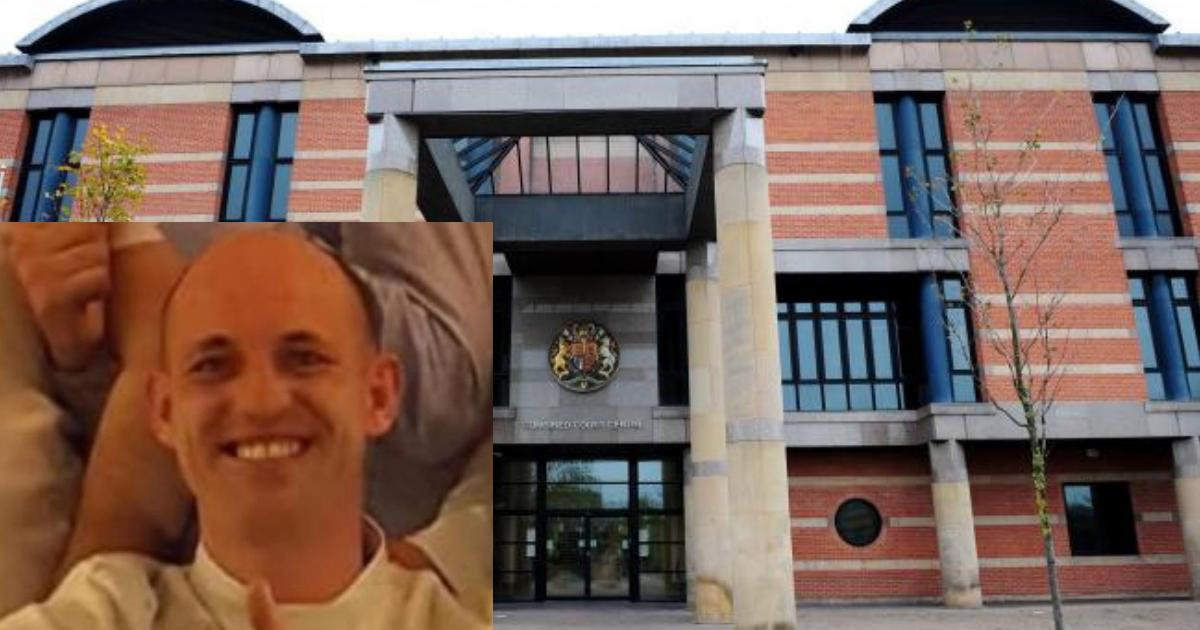
Daniel Simpson told a jury that he was not aware of what was going to happen before the car he was in was rammed into a parked VW Passat.
Teesside Crown Court has watched harrowing CCTV footage of the four accused males jumping out of their black Chevrolet 4×4 and attack the occupants of the VW with machetes and a BB gun.
The 32-year-old told the court: “I didn’t know that was about to go on. If I knew that was going to go on, I would have gotten out of the car.”
Anthony Lee Dickons (Image: Cleveland Police)
Anthony Dickons was fatally injured when he was slashed with a machete in a car park on Orme Court, Middlesbrough, on November 6, last year.
Advertisement
The security footage captured the defendants block in the car before they all rushed out of the vehicle and launched what the prosecution say is a “ferocious” attack while someone was shouting ‘where’s the f****** gear?’.
During cross examination, John Elvidge KC, prosecuting, asked Simpson why he got out of the car ahead of the attack, Simpson said: “I made a stupid decision to get out of the car.
“There was no purpose to me getting out of the car, I shouldn’t have even been involved in it.”
The defendant claimed he was told to get out of the car, but said he didn’t go there to support them or help them and didn’t realise what was going to happen as he was ‘too busy sniffing coke in the back of the car’.
Advertisement
He said he was simply ‘in the wrong place at the wrong time’.
Orme Court, North Ormesby, Middlesbrough (Image: Google)
Morgan Caldwell has pleaded guilty to the manslaughter of Anthony Dickons and causing grievous bodily harm to a second man, Stephen Law, during the violent attack.
Caldwell and Simpson travelled to Scotland, and days later they boarded an early ferry to Belfast, in Northern Ireland, where they were arrested on November 11.
Advertisement
The court heard how Simpson made a number of internet searches on his phone, including ‘cheap flights to Dubai’ and ‘non-extradition countries’.
Simpson, 32, of Coledale Road, Berwick Hills, 24-year-old Dominic Hall, of Greencroft Walk, 26-year-old Caldwell, of Cannock Road and the teenager, all of Middlesbrough, deny the murder of 44-year-old Mr Dickons.
They also deny a charge of wounding with intent to cause grievous bodily harm against Mr Law.
Hearts’ comeback win over Rangers has put them in pole position to end 40 years of Old Firm dominance in the Scottish Premiership title race, but Celtic boss Martin O’Neill knows it’s no longer in his hands
16:18, 05 May 2026Updated 16:22, 05 May 2026
Martin O’Neill has admitted that Rangers are virtually out of the title race – and recognises that even his own side’s destiny is no longer in their control.
Hearts’ dramatic comeback win at Tynecastle yesterday moved the Jambos three points clear of Celtic at the summit of the Premiership, and has essentially extinguished Rangers’ championship ambitions.
The Ibrox outfit now trail by seven points with just three matches remaining and face a trip to Parkhead next weekend where they could potentially hand Hearts a massive favour.
Advertisement
Hearts are aware that two victories from their remaining two fixtures will be sufficient to break 40 years of Old Firm supremacy if the Hoops slip up in either of their next two outings.
O’Neill observed events from Gorgie and wasn’t cheering Lawrence Shankland’s match-winner – as a stalemate would have been the optimal outcome for his side, reports the Daily Record.
However, he acknowledges it’s an even bigger blow for Rangers, whose aspirations now hang by the thinnest of margins.
Speaking on talkSPORT, O’Neill said: “Rangers are number of points behind Hearts, and there are only three games left, so that would be difficult to overcome at this stage.
Advertisement
“It’s not impossible. It can happen. You can still win your games. And there are very difficult matches still for all of us to come through.
“From our own position, we have to try and win the three games.
“But even then, strangely, that might not mathematically be enough, with Hearts having a better goal difference than us. I still think there’s a couple of twists still left.
Advertisement
“I suppose probably deep down I was looking for a draw (between Hearts and Rangers). A draw is very, very difficult to cheer on, but that would then have put it in our own hands. As it turns out, mathematically speaking, it’s not actually in our own hands.”
O’Neill was gracious in his view of Hearts, acknowledging they would be deserving champions if they manage to finish the job.
However, he’s far from throwing in the towel.
Celtic can push the title race to the final day with back-to-back wins, starting with Rangers next weekend followed by Motherwell on 13 April. That would set up a huge clash in the capital – where goal difference could ultimately prove decisive.
“It’s actually a great credit to Hearts this season for investing and going strongly at it, getting their noses in front and being able to stay there,” O’Neill went on.
“From our own viewpoint, it’s been a tough old season. The players have had a number of managers. I don’t know how many times I’ve come in myself. It feels like about six or seven in the one year!
“But credit to the team, we’re still fighting. We still have a chance. There’s no question about it. We still have to try and win our games. But it’s been a long time since a split game between Celtic and Rangers doesn’t constitute the winning of the title.”
Advertisement
O’Neill was subsequently questioned about whether he’d rediscovered his passion for management, with presenter Jim White probing him on the possibility of remaining at the club past the summer. However, a coy O’Neill remarked: “I’ve said it umpteen times, I’ve never enjoyed management! I’ve been out a long time. But of course, there is an enjoyment when you win.
“It’s still exciting, seriously exciting, and it is good. I feel a sense of renaissance, coming back and working with young people, it’s really, really terrific.
“We’ll have to see see how we stand at the end of the season, and that’s nearly upon us now. “
As he was hit with penalty points and the fine, he also told a court he has ‘no confidence’ in the Department of Infrastructure who are ‘not fit for purpose’
16:45, 05 May 2026Updated 17:01, 05 May 2026
Lord Dunleath was handed three penalty points and a £100 fine today after the peer was convicted of speeding at the international airport.
Despite claims by the 75-year-old that signage at Belfast International Airport was “pathetic” and that he has “no confidence” in the Department of Infrastructure who are “not fit for purpose,” District Judge Nigel Broderick said he was satisfied Lord Dunleath was guilty.
During a half-hour contest at Antrim Magistrates Court, sitting in Ballymena, Lord Dunleath represented himself to contest the allegation that he was driving at excess speed on 31 May last year.
Advertisement
The court heard that just before 10.30am, a laser detection camera captured an Audi Q7 travelling at 38mph in the 30 zone.
An officer from the Fixed Penalty Office gave evidence that in correspondence with Lord Dunleath over several months, it was confirmed that “the writer was the driver.”
Despite the offer of penalty points and a fine, the offers were not taken up and eventually, Lord Dunleath was notified of an intention for prosecution.
Giving evidence on his own behalf, the 75-year-old told the court he had been returning home to Ballywalter after “dropping two lovely French students at the airport to catch a flight to Paris” when the alleged offence occurred.
Advertisement
He claimed that leaving the airport, drivers are confronted “with a plethora of signs” advising of the route to Belfast and Dublin and remaining drivers “in about six different languages,” to drive on the left hand side.
Declaring that the Road Safety Partnership “have scored an own goal,” Lord Dunleath claimed that signs warning drivers they are in a 30mph zone “are pathetic…and possibly illegal.”
Under cross-examination, he conceded there are speed limit signs on the way to the airport but when asked how long he had been in dropping off the students, Lord Dunleath told the prosecutor “I do not see how that is relevant.”
Handing in two copies of his local paper, the Ards Chronicle, the pensioner said articles within them covered two accidents which had occurred near his home.
Advertisement
He claimed that he has recently had a meeting with MP Jim Shannon about the road near his home and that both he and Mr Shannon have written to the Dept of Infrastructure highlighting the dangers and the lack of signs.
Lord Dunleth lamented however that “I do not have any confidence in the Dept of infrastructure whatsoever…they are not fit for purpose.”
Judge Broderick said while it was clear the defendant “has firmly held views” about the lack of signage and the capabilities of the department, “they’re not really relevant.”
What is relevant, the judge added, was that “I am satisfied that there is sufficient signage to alert drivers” that they are in a 30 mph zone.
Advertisement
Accordingly, Lord Dunleath was convicted of driving with excess speed. While the pensioner claimed he had no previous convictions, Judge Broderick heard that he was fined £240 and given three points for speeding in December 2021.
In relation to his most recent offending, Lord Dunleath told Judge Broerick: “I strongly believe in British justice and if British justice decides that I am guilty, I will just have to accept it really.”
Having been handed a £100 fine and his licence to be endorsed with three penalty points, he said he would go and pay his fine “right now.”
The appeal comes after a review found several failings of the PSNI during their investigation into the murder of 21-year-old showjumper Katie
17:11, 05 May 2026Updated 17:22, 05 May 2026
Police have urged others who may have been harmed by the man arrested in the Katie Simpson case to come forward, as a review identified more than 30 other potential victims.
The PSNI apologised to Ms Simpson’s family, accepting its “failings are clear” and the force “fell short”.
Ms Simpson, 21, from Tynan, Co Armagh, died in Altnagelvin Area Hospital almost a week after an incident in Gortnessy Meadows, Lettershandoney.
Police originally thought she had taken her own life, and it was not until the following year that Jonathan Creswell, the partner of Ms Simpson’s sister, was arrested on suspicion of murder.
The trial of Creswell, 36, for the murder of Ms Simpson ended in April 2024 after he took his own life following the first day of proceedings.
An independent review led by Dr Jan Melia, commissioned by the Department of Justice, found that “not one officer thought seriously about abuse/control” in the police investigation in 2020.
Advertisement
It also found officers failed to identify inconsistencies in Creswell’s account, neglected to preserve vital evidence, demonstrated a striking lack of professional curiosity, and failed to employ an investigative mindset or consider the possibility of abuse/control, in spite of clear warning signs.
PSNI assistant chief constable Davy Beck said “work has already commenced” in the force to deal with the failings identified in Ms Simpson’s investigation.
He told reporters in Belfast: “Since this case, we have strengthened training on coercive control, we have also increased emphasis on professional curiosity and an investigative mind set.”
Advertisement
He added: “We have reviewed and refreshed our investigative training and death investigation instructions while enhancing supervisory standards in this regard. Safeguarding referrals in domestic abuse cases are already subject to enhanced supervisory review.
“Oversight structures have been reinforced to ensure clearer escalation when concerns are raised.
“We recognise that more must be done and, as part of our recovery plan, I am committed to increasing resourcing in our Publication Protection Branch.
Advertisement
“We are committed to rebuilding trust through action, accountability, and reform.”
The report also found that 37 people, both female and male, have come forward to say they were abused by Creswell.
Mr Beck appealed to “anyone who believes they may have been a victim of Jonathan Creswell or anyone else”.
“I would urge victims to speak to us, we are here to listen, to help and to keep you safe,” he said.
Advertisement
The senior officer apologised to Ms Simpson’s family and said the force remains “committed to learning from this case”.
“From the PSNI perspective we accept and welcome this review and accept the findings in full. We will of course take some time to review the findings in detail and we are committed to working with the author, the Department of Justice and other partners to implement the recommendations in full,” Mr Beck said.
“The review makes clear that we missed opportunities.
Advertisement
“Warning signs were not fully recognised early enough and we did not listen to some of those who raised early concerns.
“Let me be clear, they got it right and we were too slow to respond to their concerns; that was wrong.
“Patterns of coercive control were not sufficiently understood or challenged, investigative decisions did not always reflect the level of professional curiosity and rigor that should have been applied.
“The failings are clear, we fell short and for that, I am truly sorry.”
Advertisement
Chair of the policing board Brendan Mullan said the review “sets out in stark detail a series of missed opportunities which makes for deeply troubling reading” and highlights the need for “both systems and attitudinal change within policing and the Criminal Justice System”.
He said: “The Board will be questioning the Chief Constable at its meeting this week on how the listed areas for action are now fully embedded and integrated into everyday policing practice and mindset, particularly in light of the findings from the recently published Langdale Review.
“It is welcome that the Justice Minister, in her statement to the Assembly, acknowledged the co-operation and candour on this review.
“It is only through such openness that the changes necessary can be effected so that no other victim will be failed in the way that Katie was.”
Archie Donald died following a heart attack in November 2019 two weeks after blood tests showed indications of a potential infection.
The death of a three-year-old boy at a Glasgow hospital could have been avoided if an abnormal blood rest result had been acted on sooner, a sheriff has ruled.
Advertisement
Archie Donald died on November 20, 2019 at the Royal Hospital for Children (RHC) in Glasgow after suffering from an infection.
Born on July 22, 2016, Archie suffered from congenital nephritic syndrome (CNS), a chronic kidney condition that required ongoing medical treatment – and, in 2017, the removal of his left kidney.
During a routine outpatient appointment on November 5, 2019, a blood test found Archie’s C-reactive protein (CRP) level was 98mg/l (milligrams per litre) – well above the “normal range” of 0-10mg/l.
CRP, which measures inflammation levels in the body, is an indicator of infection.
Advertisement
Despite the elevated level, Archie was not assessed for infection and his blood cultures were not taken, and he was allowed to return home.
During his next outpatient appointment on the morning of November 19 medical staff noticed he was “very pale” and that he had developed a heart murmur.
Blood tests were done and he was admitted for a blood transfusion to address low haemoglobin levels, and for investigations into his heart murmur.
After being admitted to a ward that evening Archie was checked regularly and given further tests, and nurses administered antibiotics.
Advertisement
However in the early hours of November 20 his condition was found to have deteriorated, and at 3.36am his mother Caitlin Donald pressed the emergency buzzer as Archie had stopped breathing.
Efforts were made to save his life, but he was pronounced dead at 4.36am having suffered a heart attack.
Samples from his intravenous line earlier that evening later tested positive for a bacteria called Enterococcus faecalis.
A fatal accident inquiry (FAI) into Archie’s death was held before Sheriff Thomas Millar at Glasgow Sheriff Court.
Advertisement
In his determination, the sheriff said Archie’s death could “realistically” have been avoided if his elevated CRP level on November 5 had been acted upon.
He said had blood cultures been ordered, they would “on balance” have tested positive for Enterococcus faecalis, and “prompted further investigations particularly for appropriate antibiotic treatment to treat or slow progression of the infection”.
The sheriff also noted a failure to follow the “appropriate guidelines and anticipatory care plan in place for Archie”, which he said meant an infection specialist should have been consulted and/or blood cultures ordered where there was a “possibility of infection”.
He said Archie was regularly found to have elevated CRP levels between October 8 and November 5.
Advertisement
Sheriff Millar also noted Archie’s raised CRP level on November 5 was not noted on his discharge letter, and that it would have been raised at a subsequent post-clinic multi-disciplinary team meeting, but that this meeting got rescheduled.
The 39-page judgment added that while the source of the infection is unknown, “for the avoidance of doubt, the source was not connected to Archie’s attendances at the RHC”.
Sheriff Millar ended his determination with an expression of sympathy for Archie’s family.
“I would wish to express my condolences to Archie’s family. Many family members sat through every day of the inquiry, which must have been difficult for them,” the determination read.
Advertisement
“His family had nursed Archie from birth through many hospital visits and cared for him very well.
“Archie was about to embark on another stage of his life with a kidney transplant planned in the near future, with a donation of a kidney from his father.
“The death of any child is a tragedy, but Archie’s even more so.”
Following publication of the determination, Procurator Fiscal Andy Shanks for the Crown Office and Procurator Fiscal Service, said: “The death of Archie Donald occurred in circumstances giving rise to significant public concern and as such a discretionary FAI was instructed.
Advertisement
“The sheriff’s determination is detailed and notes a reasonable precaution that could have been taken to avoid Archie Donald’s death.
“The FAI followed a thorough and comprehensive investigation by the Procurator Fiscal who ensured that the full facts and circumstances of Archie’s death were presented in evidence.
“Archie’s family have been provided with a copy of the sheriff’s determination and our thoughts are with them at this time.”
Get more Daily Record exclusives by signing up for free to Google’s preferred sources. Click HERE.
Merseyside Police arrested an Everton fan during his side’s match against Manchester City for alleged racist abuse towards Antoine Semenyo.
The supporter was apprehended at the Premier League fixture between the sides at the Hill Dickinson Stadium on Monday, which finished 3-3.
Police said a 71-year-old man from Nottinghamshire was arrested “on suspicion of a racially aggravated public order offence” after “supporters and stewards reported that racist abuse was shouted by a fan”.
“An investigation into the incident during the match remains ongoing and we continue to work closely with Everton FC,” said a police statement.
Advertisement
“He has now been bailed with conditions, which includes not to go within one mile of any designated sports stadium in a period of up to four hours before kick-off, during the match and up to four hours after the game has ended.”
Everton said in a statement that “behaviour of this nature will not be tolerated”.
“Racism and discrimination in all forms are completely unacceptable. They have no place in our stadia, our sport or in society,” the club said.
“The club will continue to work closely with the authorities to support their investigation and will take the strongest possible action in line with its zero-tolerance approach.”
Advertisement
It is the second time Ghana international Semenyo, 26, has been the target of racist abuse this season.
While playing for former club Bournemouth in the opening Premier League match of this season, Semenyo reported being racially abused by a spectator during their 4-2 defeat at Liverpool.
Semenyo subsequently said more should be done to tackle racism in football, including possible prison sentences for those convicted of abuse.
Matthew Jones, 30, got out of his car and launched an unprovoked attack on the terrified worker
17:20, 05 May 2026Updated 17:23, 05 May 2026
An intoxicated thug launched an unprovoked attack on a car wash worker, a court has heard. Matthew Jones directed abuse at the victim, which was racially motivated, as the employee was taking a break.
A court was told the 30-year-old made threats to knock out the employee and shouted that he was fed up with “foreigners coming here.” Jones, of South Street, Cottingham, pleaded guilty to assault by beating and causing racially aggravated fear or provocation of violence on July 20 last year.
Claire Holmes, prosecuting, informed Grimsby Crown Court that the car wash employee was sitting in his vehicle because of rainfall and the absence of customers at the car wash near Hull. Jones pulled up in his car, parking extremely close behind him, exited his vehicle, started yelling and hammered on the car wash employee’s window, reports Hull Live.
Advertisement
The man stepped out of his car and Jones approached him directly, shouting, swearing and making gestures. He could detect alcohol on Jones’s breath, who launched into a barrage of racial abuse, seized hold of the employee’s clothing and pulled him forward. A scuffle ensued.
The man attempted to distance himself from the confrontation but Jones pursued him. “He tried to protect himself by grabbing a set of small metal steps, which he threw towards the defendant,” Miss Holmes said. Other car wash employees attempted to intervene, but Jones persisted in his shouting and swearing. He yelled: “I’ve had enough of you f****** foreigners coming here. F*** you. Come over here. I will knock you out. Come and hit me, you little s***.”
The entire incident was recorded on CCTV. As the victim began dialling the police, Jones climbed into his vehicle and drove away. However, he returned shortly afterwards on foot and resumed his verbal assault on the worker.
Advertisement
The victim rang 999 and officers arrived to detain Jones. Miss Holmes noted that, during his police interview, Jones denied that his outburst was racist.
“It was an observation,” he told police officers. Jones was subsequently convicted at a magistrates’ court in July last year of driving while under the influence of drink or drugs. He had convictions for five previous offences.
Oliver Shipley, mitigating, said that Jones was lightly convicted. He admitted the offences at an early stage.
Judge Gurdial Singh told Jones: “You behaved disgracefully. He was doing nothing wrong and you launched into him.” He described it as a “deliberate attempt to demean, insult and abuse him” on that occasion.
Advertisement
“You meant it as a term of abuse,” said Judge Singh. “I am going to give you one chance and one chance only.”
Jones received 250 hours’ unpaid work, an alcohol treatment course and 10 days’ rehabilitation.
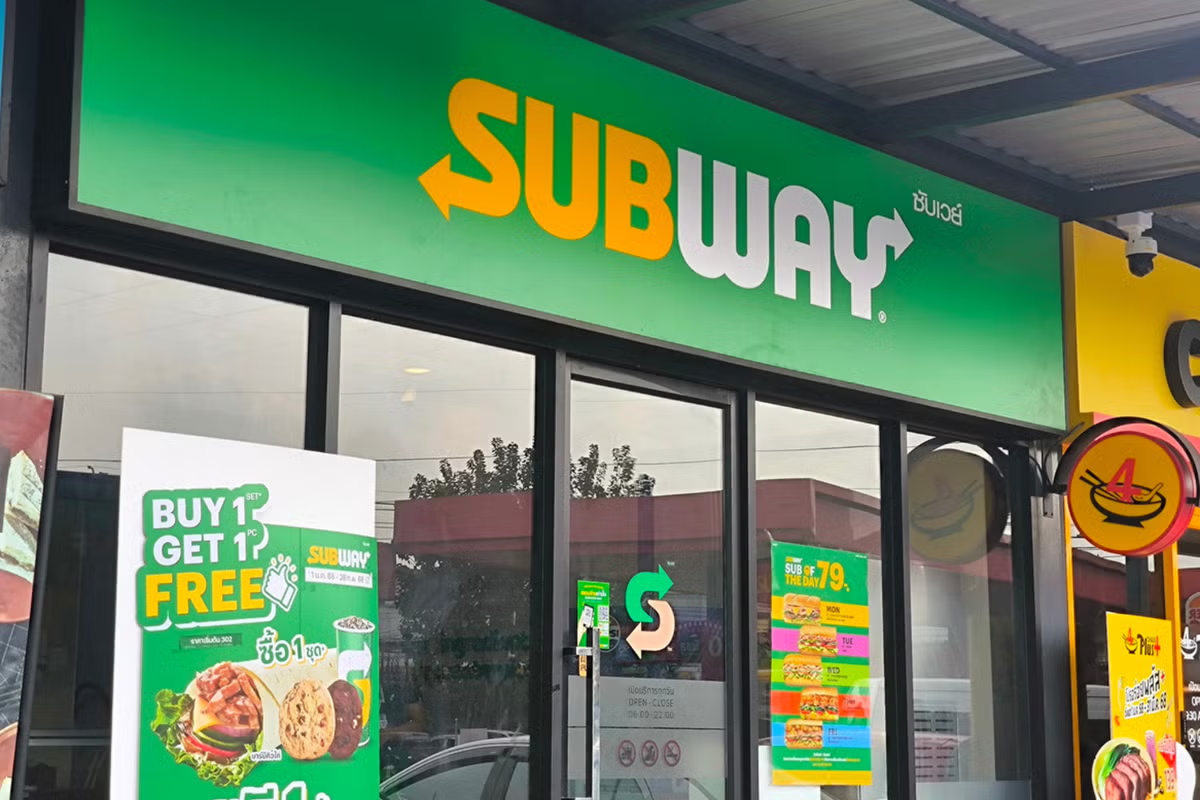
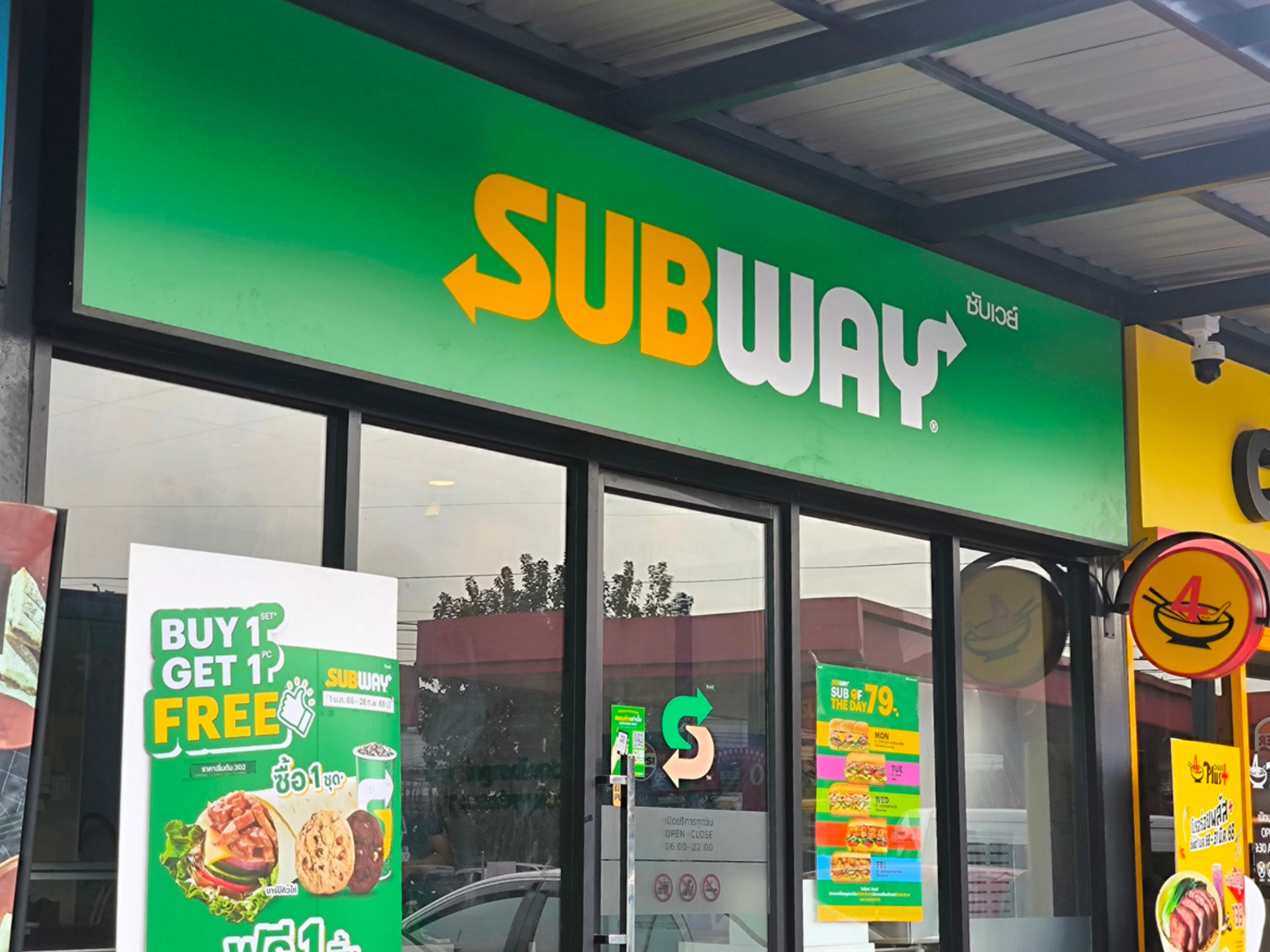
Subway closed 729 stores across the U.S. in 2025, marking its 10th straight year of decline, according to a report.
The sandwich chain peaked in 2015 with over 27,000 stores — a number that dropped to 18,733 as of the end of last year, according to QSR.
Despite the closures, more of which are expected in 2026, Subway remains the largest chain in the U.S. in terms of store count. The chain hopes to draw back customers with a new value platform, featuring 15 menu items that each cost less than $5.
The closures are part of a “rightsizing” strategy, a business buzzword that means reducing a workforce to the optimal size, according to the report.
Advertisement
“In the U.S., Subway is focused on ensuring restaurants are in the right locations with the real estate, visibility and operations that set franchisees up to succeed long-term,” a Subway spokesperson told QSR. “That work is paying off. Operational improvements are showing up across the system, with restaurant evaluation scores and Google review scores both climbing to their highest levels in two years.”
Subway shuttered over 700 stores in the U.S. last year, leaving fewer than 20,000 locations open, according to a report (Getty/iStock)
Subway expects to open 100 U.S. franchised locations in 2026, according to Franchise Disclosure Documents. All of the chain’s locations are franchises.
The documents do not say how many locations are expected to close this year, though the brand has consistently closed several hundred locations each year over the past decade, according to the report.
The Independent has contacted Subway for comment.
The brand recently rolled out a value menu with 15 items priced under $5, shifting away from limited-time deals as it takes on value-focused rivals like McDonald’s and KFC.
Advertisement
While Subway works to lure back American customers, the chain has been thriving overseas. Subway opened more than 1,000 locations worldwide in 2025 and has agreements in place for more than 12,000 more units.
Last year, the number of Subway locations across the U.S. dropped below 20,000 for the first time in 20 years.

















































You must be logged in to post a comment Login