

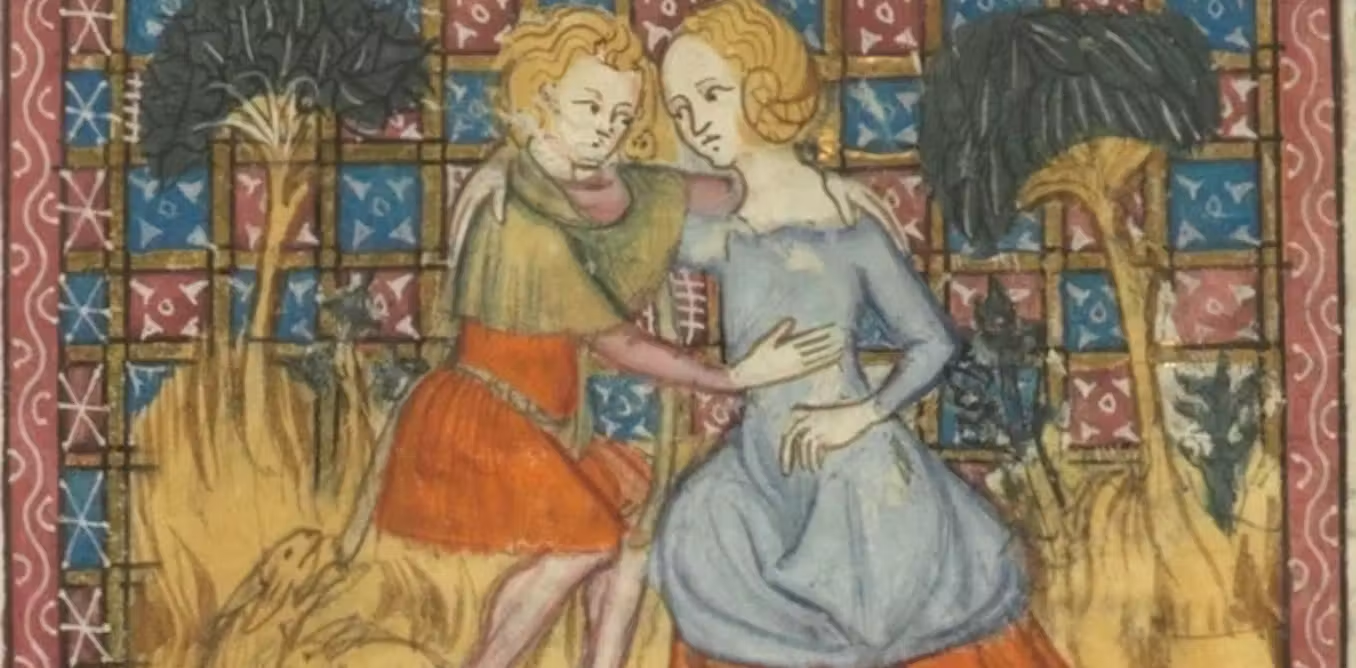
Infertility was a source of stress and sadness for some medieval couples, as it is for modern ones. It was a personal matter, but also a public one. Both families and the church assumed that the purpose of marriage was to have children. Couples who did not conceive often faced questions and scrutiny.
My research on infertility in the middle ages uncovers the ways in which medieval people explained reproductive problems and tried to enhance their fertility.
A merchant couple from 14th-century Italy – Francesco and Margherita Datini – were childless after several years of marriage. A family friend wrote to Francesco to praise the couple’s financial success and added “but I would rather see [Margherita] become fatter by making children than in gathering money”.
In this situation, medieval people drew on the knowledge and tools available to them. They did so within a very different social, medical and religious context from modern families – but like modern couples they had to make sense of different kinds of information and advice.
We know from their letters that the Datinis consulted a physician, but their friends and family also recommended other solutions. Margherita’s sister offered to buy her a poultice (a mixture of herbs and fats placed on the skin) to wear on her stomach. It was being sold by a female healer and was said to have worked for other women. She also recommended a belt to wear which was inscribed with prayers.
Morgan Library and Museum
In the same letter Margherita’s brother-in-law added that it would be better to seek God’s favour through charitable giving. Despite this advice, the couple never went on to have a child – although we know from their letters that Francesco had illegitimate children with other women.
The Datinis’ letters are mainly practical and don’t tell us how they felt about their struggles to conceive, but it’s easy to imagine that some of this well-meaning advice might have caused them stress.
Other medieval accounts do talk about both women and men who were saddened by reproductive problems. For example, in late 12th-century England, the biographer of a hermit, Godric of Finchale, told of a husband and wife who came to the holy man after a series of miscarriages or stillbirths. He said “they were both deeply distressed and felt that God’s judgment was standing over them in a dreadful way”.
How infertility was explained
There were two main explanations for infertility in the medieval period.
One was the medical explanation. Medieval European physicians drew their knowledge of reproduction from the Hippocratic medicine of ancient Greece, which was expanded in the Arabic-speaking world and then translated back into Latin in the 11th to 13th centuries. This explained infertility – and other medical conditions – mainly in terms of the theory of the humours.
This theory held that everyone’s body contained a balance of four qualities: heat, cold, moisture and dryness. If these qualities became too unbalanced, then this could damage your fertility. Infertility and sexual dysfunction were especially linked to too much cold, and so the solution was to consume medicines and foods deemed to be “hot”, including spices such as cinnamon and ginger. Humoral explanations have long been superseded by modern biomedicine, but for medieval people they offered a neat, intellectually coherent system that offered a pathway to treatment.
The other explanation was religious. The Bible told of women such as Sarah, Rachel, Hannah and Elizabeth who were infertile at first, but then went on to conceive a special child miraculously – even sometimes in old age.
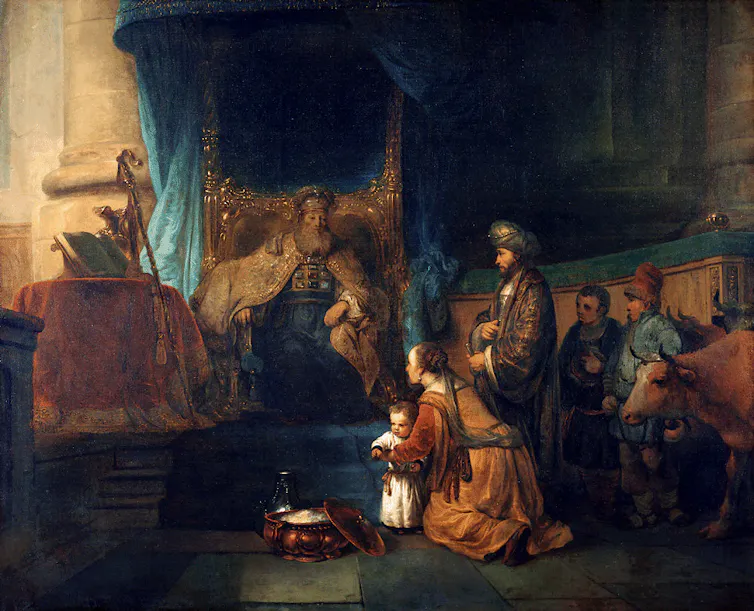
Louvre Museum
Mindful of these biblical examples, medieval theologians and preachers taught that God could grant or withhold fertility directly, if he chose to. This belief could potentially be used to criticise couples who did not conceive, by implying they had done something to incur God’s anger. It lay behind the advice to Margherita and Francesco to seek God’s favour through charity. But more often churchmen argued that God caused infertility for his own purposes, not as a punishment.
The Golden Legend – a collection of biographies of the saints hugely popular in medieval Europe – stressed that “God punishes not nature, but sin, and therefore when he closes a woman’s womb, he does this in order to open it miraculously later on”.
These explanations were complementary rather than competing: God might work through natural causes. For medieval couples, they offered reasons for infertility, and actions to take, and so they offered hope and reassurance. But it’s much harder to know how couples felt when they didn’t go on to conceive. That’s because most of the surviving sources focus on the success stories where the longed-for baby arrived after medical treatment or a prayer to the right saint. Doctors and the collectors of miracle stories didn’t often mention their failures.
These historical stories of infertility show how medieval couples approached their fertility differently, but their experiences of negotiating medicine, faith and family still resonate.































































You must be logged in to post a comment Login