Setting sail from the busy port of Plymouth in Devon, the tall ship Pelican of London takes young people to sea, often for the first time.
During each nine-day voyage, the UK-based sailing trainees, who often come from socio-economically challenging backgrounds, become crew members. They not only learn the ropes (literally) but also engage in ocean science and stewardship activities.
As marine and outdoor education researchers, we wanted to find out whether mixing sail training and Steams (science, technology, engineering, art, mathematics and sustainability) activities can inspire young people to pursue a more ocean-focused career, and a long-term commitment to ocean care.
Research shows that a strong connection with the ocean can drive people to be active marine citizens. This means they take responsibility for ocean health not only in their own lives but as advocates for more sustainable interactions with the ocean.
Advertisement
Trainees get out of their comfort zone during each nine-day voyage. Pelican of London
Based on scientific evidence, our theory of change models how Steams activities can cause positive changes in personal development and knowledge and understanding of the ocean (known as ocean literacy). It shows how the voyages can develop trainees’ strong connections with the ocean and encourage them to act responsibly towards it.
Tracking change
Surveys with the participants before and after the voyage, and six months later, measure any changes that occur – and how these persist. Through our evaluation, we’re exploring how combining voyages with Steams activities can go beyond personal development to produce deep, long-lasting effects.
Advertisement
Our pilot study has already shown how the sail training and Steams combination helps to develop confidence, ocean literacy and ocean connections.
For example, the boost to self-esteem and feelings of capability that occur on board help young people develop their marine identity – the ocean becomes an important part of a person’s sense of who they are. As one trainee put it: “I think the ocean is me and the ocean will and forever be part of me.”
Swimming, sailing, even just building a sandcastle – the ocean benefits our physical and mental wellbeing. Curious about how a strong coastal connection helps drive marine conservation, scientists are diving in to investigate the power of blue health.
This article is part of a series, Vitamin Sea, exploring how the ocean can be enhanced by our interaction with it.
Advertisement
As crew members, trainees access a world and traditional culture largely unknown to them before the voyage. They learn to live with others in a confined space, working together in small teams to keep watch on 24-hour rotas.
Trainees are encouraged to step out of their comfort zone through activities such as climbing the rigging and swimming off the vessel. Our pilot evaluation found the voyages built the trainees’ confidence and social skills, boosting self-esteem and feelings of capability.
One trainee said: “I’ve felt pretty disappointed in myself not committing to my education or only doing something with minimal effort. But after this voyage, I want to give it my all.”
The Steams voyages encourage the development of scientific skills and ocean literacy through the lens of creative tasks at sea. These activities are led by a scientist-in-residence who provides mentoring and introduces research techniques.
The voyage gives trainees the opportunity to use scientific equipment, ranging from plankton nets and microscopes to cutting-edge technology such as remotely operated vehicles. The Steams activities introduce marine research as a potential career to these young people. One said they wanted to train as a marine engineer at nautical college following the voyage.
Taking part in wildlife surveys while on board. Pelican of London.
Ocean experiences provide a foundation for ocean connection. Trainees experience the ocean in sunshine and in gales, day and night, rolling with the waves and observing marine life in its natural environment.
Citizen science projects such as wildlife surveys and recorded beach cleans also develop their ocean stewardship knowledge and skills. One trainee explained how they have “become more interested [in] our marine life and creative ways to help protect it”.
Advertisement
Over the next 12 months, the information we collect from the voyages will help us to better understand the benefits and contribute to an important marine social science data gap in young people. It is important to understand how to develop young people’s relationships with the ocean, and the knowledge and skills that will empower the next generation of marine citizens.
As one trainee put it: “Being out on the Pelican showed me how vast and powerful the sea is – and how important it is to respect and care for it.”
Don’t have time to read about climate change as much as you’d like?
Ms Pickles said: “On the top of a low hill, with views over fields and woodland, and the sprawl of Newcastle in the distance, Stanley has an enviable location.”
But she admitted that “The town now feels beleaguered by encircling roads and roundabouts.
Advertisement
“The main shopping strip, Front Street, is pedestrianised with trees and benches, and is a jumble of hairdressers, bargain shops, takeaways and betting shops.”
Joan Nicholson, town council chair, said the application would highlight the area’s resilience and rich heritage.
Backers of Stanley’s UK Town of Culture 2028 bid gather at the launch event. (Image: NQ)
She added: “Becoming UK Town of Culture would shine a national spotlight on everything that makes Stanley special, from our industrial story to our creativity, talent and spirit.
Advertisement
“This bid is rooted in our people and strong partnerships and it reflects our belief that culture can drive positive change.”
Why Stanley was called one of Britain’s ugliest
The Telegraph previously ranked Stanley the seventh ugliest location in the country out of more than 1,250 entries.
Front Street in Stanley, which was criticised in a Telegraph review. (Image: NQ)
A travel writer for the newspaper handed the area low scores for historical architecture and shop fronts, describing it as “beleaguered by encircling roads and roundabouts”.
The new 2028 campaign plans to focus on the area’s global contributions and community ties.
Advertisement
Organisers will highlight the Louisa Pit disaster of 1947 alongside the town’s claim as the birthplace of the first Hollywood film studio.
People attend the re-dedication of Stanley’s Louisa Morrison Pit Disaster Memorial. (Image: NQ)
David and Williams Horsley, the brothers who founded the pioneering film company in 1911, were born in Stanley.
The settlement is also the birthplace of actor Alun Armstrong and football prospect Lewis Miley.
David Watchman, general manager of Tanfield Railway, said the area had influenced the world through “grit and determination”.
Advertisement
He added: “At the heart of Tanfield Railway are our fantastic volunteers, many of whom have lived here all their lives.
“Town of Culture isn’t just about looking back at what used to be, it’s about looking forward.
“By celebrating our people and our unique places, we’re making sure there is a legacy that all of us now, our children and grandchildren can see, touch and take pride in.”
Who is backing Stanley’s Town of Culture bid
Regional organisations are backing the campaign, which promises a year-long programme of events and creative projects if successful.
Advertisement
Victoria Keen, head of place partnerships and engagement at Karbon Homes, said the bid would celebrate community efforts.
She added: “Town of Culture status would not only celebrate all the amazing work that’s been done to date to create lasting change in the town.
“It would put Stanley on the map and help build an even brighter future for the community.”
Hundreds of locations across the country have registered an intention to compete for the status.
Advertisement
To progress, Stanley must demonstrate a distinctive story and an inclusive cultural programme with clear delivery plans.
Shortlisting is expected to be completed later this spring, before finalists receive development grants ahead of the winning announcement in early 2027.
The town council has said it plans to involve residents, schools, businesses and local organisations throughout the bidding process.
Advertisement
One of the bid’s cultural assets, Tanfield Railway, dates back to 1725 and is a volunteer-run three-mile heritage line between Sunniside and East Tanfield.
Stanley has also been building a regular programme of town-centre events, with its bi-monthly Front Street food market drawing more than 6,500 visitors across four events last year and securing £34,000 in regional funding.
John Packer Musical Instruments has recently revealed that it has acquired the company behind the iconic Sheriff Hutton-based Smith-Watkins brand – adding that its products will still be produced at their York site.
Smith-Watkins is known for its globally used cornets and trumpets, particularly in world-renowned military bands in the UK and abroad.
RECOMMENDED READING:
These include bands associated with the British Army, Royal Marines, and Royal Air Force, with their fanfare trumpets used at events such the Grand National, the Royal Weddings, Queen Elizabeth’s Diamond Jubilee in 2012, and the opening of the London 2012 Olympics.
Advertisement
Dr Richard Smith of Smith-Watkins was awarded Millennium Product Status by the U.K. Design Council for his cornet ‘The Soloist’ in 2000 – a ground-breaking instrument with a unique system of interchangeable leadpipes.
The recent acquisition comes after a longstanding partnership between JP Musical Instruments and Richard Smith Musical Instruments, beginning in 2008.
This collaboration led to the JP Smith-Watkins line of trumpets and cornets, which aims to combine cutting edge design with affordability.
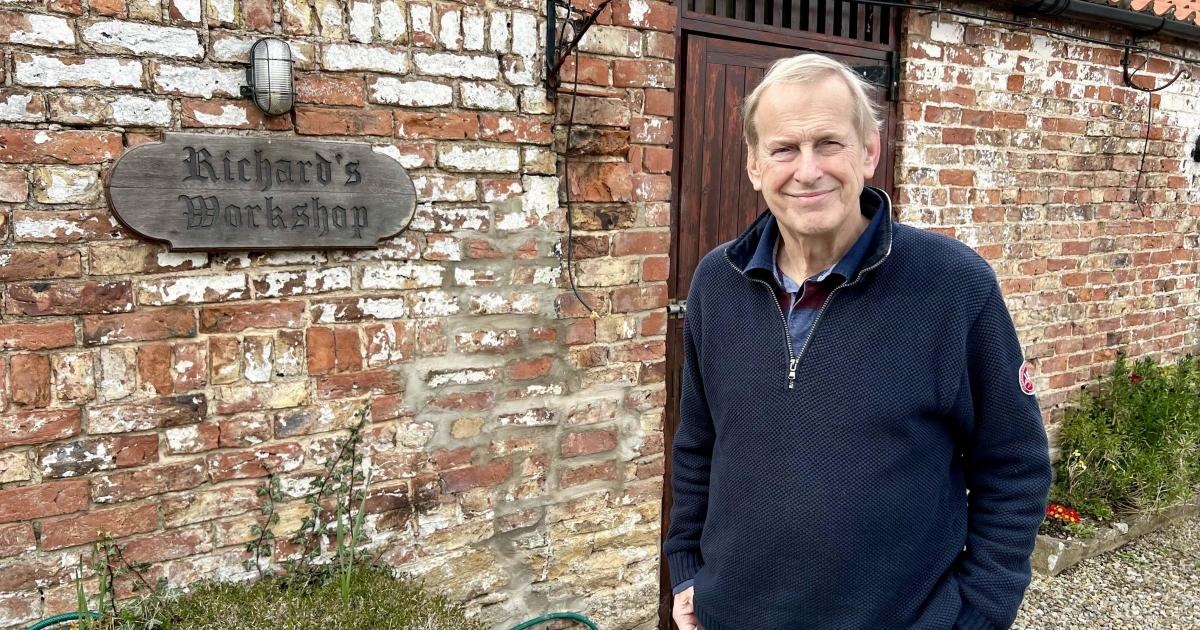
Dr Richard Smith and Richard Wright (Image: Provided)
Alongside Rath Trombones in Yorkshire and Taylor Trumpets in Norfolk, the acquisition further strengthens UK brass instrument manufacturing.
Advertisement
Rob Hanson, the managing director of John Packer Musical Instruments, said: “It’s a huge honour to welcome the Smith-Watkins brand to the John Packer Musical Instruments family.
“With his groundbreaking acoustic research, Dr Richard Smith was a pioneer and the result has been outstanding musical instruments which light up concert halls, recording sessions and military parades all over the world.
“These beautiful instruments will continue to be handcrafted in the UK, helping strengthen the future of UK brass manufacturing, and ensuring musicians all over the world can enjoy playing Smith-Watkins for generations to come.”
Rob Hanson – managing director of John Packer (Image: Provided)
Dr Smith’s impressive career also involves 12 years at Boosey and Hawkes as chief designer and technical manager, responsible for the world-famous Besson brass range.
Advertisement
Dr Smith said: “Seeing Smith-Watkins instruments performed on the world stage has been an honour, and it gives me great pleasure knowing they are the choice of many of the world’s leading trumpet players.
“I have known Rob Hanson for many years, and with his drive, passion and inimitable business acumen, I know he will help ensure the company can thrive and continue to reach new audiences all over the world.”
Lauren Betts had 16 points and made a huge block late, and UCLA withstood a late charge by Texas on Friday night for a 51-44 win to reach the women’s NCAA Tournament national championship game for the first time.
Manhandled by eventual national champion UConn in their first Final Four a year ago, the Bruins (36-1) dominated their way to another national semifinal with the best season in program history.
A chance at a first national championship game appearance had to go through the only team to beat them this season.
Overpowered in the first meeting, the Bruins turned the bully tables on Texas (35-4), shutting down All-American Madison Booker while building a 13-point lead midway through the fourth quarter.
Advertisement
The Longhorns are one of the nation’s best defensive teams and flexed their D during a 12-2 run that cut UCLA’s lead to 47-44.
Betts swatted the Texas run to halt.
She blocked Booker’s shot with 20 seconds left and Kiki Rice hit two free throws, sending coach Cori Close’s crew into the title game.
The grinding win earns the Bruins a spot Sunday’s title game against South Carolina, the three-time national champions who ended reigning champion UConn’s undefeated season and left Huskies’ coach Geno Auriemma fuming.
Advertisement
So was Booker after a brutal finish to what was otherwise a stellar season. She hit her first shot, missed her next 17 and finished with six points on 3-of-23 shooting.
___
AP March Madness bracket: https://apnews.com/hub/ncaa-womens-bracket and coverage: https://apnews.com/hub/march-madness
It’s time for your seasonal Spring love tarot horoscopes – are you ready?
I am using the unique forecasting system from my upcoming Zodiac Love Match deck to give you a full and frank love forecast covering what you need to know.
This three-card oracle system explores who is on the cards (or who you need to be like in your existing relationship), the action or step you should take, and the future outlook.
The guidebook with the deck explains how to do this yourself so you can make your own love readings anytime, anywhere. Or, come join my magical, mystical tarot club, free for a whole month when you sign up using this link.
Advertisement
Aries
March 21 to April 20
A spring awakening (Picture: Kerry King)
Aries spring 2026 love life cards: Gemini, Power Couple, Set A Deadline
Meaning: Ready for a spark to be lit in your love life? A Gemini person or aura will enter the frame and bring fast-paced action, inspiring communication, new ideas and fresh thinking. It might feel like a total renewal of your relationship or feelings about love. For the better.
From here, you can build. And the potential to create a ‘power couple’ relationship, where you both build each other up, share resources and energy to create a greater whole than either could create solo, is unlocked. More than lovers, an alliance.
The key to this is setting deadlines, being aware of how much time you both have to spare/invest/share/create with. Time is the real currency of everything in life. With time, anything is possible. Spark things up, talk deeply, create an alliance, use your time together wisely. Anything is possible, aim high together.
Taurus spring 2026 love life cards: The Ex, Don’t Drink The Poison, Fading Feelings
Meaning: Whatever you do this spring, Taurus, don’t return eagerly to either the presence or memory of an ex, or an old habit in love, that you know doesn’t serve you well and is not right for you. The past always carries allure, we all gloss over things and reposition ourself in a main character light.
Your love life past is not a place that merits a place in your present. It all served a purpose but don’t drink the Kool Aid that things were better then – that’s not Kool Aid, it’s poison! If you’re experiencing fading feelings or a sense of loss or confusion in your current relationship status then work on it in the present, don’t seek rescue or distraction or answers from the past.
Advertisement
The way ahead is built by looking ahead, not back. Be led by your best hopes, talk about whatever you’re feeling, ask for input, deal with what’s in front of you. Everything can get better in the future.
The excitement of a fling can be injected into an existing relationship (Picture: Kerry King)
Gemini spring 2026 love life cards: The Free Spirit, Pursue Passion, A Fun Fling
Meaning: All Geminis have a free-spirited approach to life, and love. That doesn’t mean you’re a cheater or unreliable, in fact Geminis are the most loyal sign going, and will do anything for folk they cherish, standing by them in all weathers. What it means is that you bring fun, openheartedness and spontaneity to your love life, which partners get to enjoy.
Advertisement
Pursue passion this spring, Gemini, be it in your relationship or your single life. Make things light and fun. Nothing wrong with dating up a storm and a fun fling or two, and nothing wrong with bringing the notion of a ‘fun fling’ into your existing relationship if you’re attached — a long weekend away together, date nights every week, more emphasis on your physical relationship and anticipating your time together as you did in the early days.
Reinstate the sense of ‘we do what we like’ and follow your passions wherever they lead. Spring is a time to be abundant, light, and open-minded. Embrace that energy.
Cancer spring 2026 love life cards: The Free Spirit, Pause and Reflect, A Tended Garden
Meaning: Life’s short. Time is your greatest currency, so spend it wisely. Look around you at your relationships and figure out, if you were a total free spirit with all chores and commitments aside, where you get the most reward and fulfilment. Pause and reflect. Don’t just go through the motions, retread the same ground, fall into ruts and patterns with folk, play the same game you always have.
Stop and think about your love life, your family realm, your friendships. What’s working and what isn’t? Spring is your season for getting everything on track again — a tended garden in full bloom. Might need some pruning, cutting back, replacement, nurturing and feeding, encouragement and attention. Make a plan, put it in motion. New habits will yield new results.
You’ll know when this happens (Picture: Kerry King)
Leo spring 2026 love life cards: Aquarius, Serve The Relationship, A Fun Fling
Meaning: Aquarius is your opposite sign, so this card suggests either a hook-up with your ‘opposites attract’ person this spring (which will be very interesting) or a sense that your approach, needs and love language is reversing, shifting, changing totally. And that’s okay.
Serving your relationship, vs yourself, is the key. We are all different people to different people in our lives, and each new relationship unlocks another aspect of our personality. Chemistries change and evolve. Notice this and let it unfold, let yourself change and be changed by someone else.
Maybe it’s not your actual partner or love interest that changes you, maybe it’s a fun friendship/fling/intense moment with someone fleetingly. People make their mark on us in all kinds of ways, and you will know when this is happening to you. Take the lesson or input, use it, evolve with it.
Is it time for a new strategy? (Picture: Kerry King)
Virgo spring 2026 love life cards: Scorpio, Give In To Desire, Fading Feelings
Meaning: Maybe a sexy, dark and dangerous Scorpio is on the cards for you this spring, Virgo, which would certainly spice things up! Or maybe it’s you who is feeling super spicy and like you wish to fully and wholly give in to your desires, letting your pleasures and heartfelt yearnings lead you to the next phase of your love life’s story. And if so, do it.
We are all lustful, animalistic, physical beings and these strong urges are valid, useful and affirming – they are letting you know who and what you’re most attracted to. Why fight it?
Maybe you’re experienced fading feelings in love recently, felt like you’re going through the motions, or keep meeting the same obstacles or ‘type’. Let all of that go, let all of that wash away into the past. Resolve, from now on, to follow your heart, your yearning, your desire, and you won’t go far wrong. This is your love life sat nav and it’s designed just for you.
Libra spring 2026 love life cards: Gemini, Manifest Your Life, Burning Passion
Meaning: Ideas are your catnip, your passion sparker, your favourite way to connect with someone, and that is what spring will bring to your love life. A like-minded, airy, clever, analytical person with whom you can discuss anything and everything, and with whom you can sound board your own creations and opinions, and invent different angles and perspectives on life. Bliss!
They could be a Gemini, but if you’re happily attached then it’s conversation, dialogue and talking about weird subjects from weird angles that will unlock this happy state. Discover your shared burning passions, talk about what you wish to manifest in your lives, make wishes, feed back on the path you think the other should take, tell them how you see them as a person, open up analysis and discussion about the future.
Advertisement
When you’re enthralled mentally, all the other areas follow suit. You could definitely fall in love with a person’s mind and this will be demonstrated and proven to you this springtime, and it’s conversation and dialogue that unlocks the whole chapter. Talk it up!
Scorpio spring 2026 love life cards: Capricorn, Take The Crown, Solitude
Meaning: Your relationship realm is asking you to take responsibility for the energy, effort and investment you put into it. Nothing can stand alone, carried by one person. A true bond is mutual, equally supported, and built together.
Advertisement
The Capricorn card could suggest a new suitor of that sign (and this gives real ‘power couple’ vibes) or just this effort and dedication you’re going to overtly prove and demonstrate to your loved one. They need to hear you say it out loud! Take the crown and wear it well, take ownership, lead the way, guide your partner through your hopes, dreams and fears, take responsibility for making them feel good, understood, and trusted.
Open up. Solitude is a state we all need to feel comfortable with, because ultimately we have to bear our own peace of mind. Your partner can’t be there 24/7 or tend to your every need… give them space, give yourself the gift of your own company, and let this relationship breathe too. It’s a balancing act of giving more when you’re present, and being happier in your own company when you’re not.
Time to look at your priorities (Picture: Kerry King)
Sagittarius spring 2026 love life cards: The Soul Mate, Say Goodbye, A Tended Garden
Meaning: You have a soul mate in your realm, be that your current partner or a person waiting in the wings for their chance, which will unfold this spring. It may mean saying goodbye to someone or something else.
You carry so many options and juggle so many balls! Prioritising people, a person in particular, is hard for you because you love to feel free and available to do whatever comes your way. But partners need to feel like number one in your life. Are you ready for that? If so, you can create a beautiful private realm with your soul mate, nurturing a tended garden where you both roam, feel safe, and build beautiful moments together.
The relationship in question is a shared venture, a join project, a thing you both ‘serve’ (vs just serving yourselves), and if treated in this honourable way, it can flourish, bloom and bring great joy to both of your lives. It needs to be a priority.
Calm waters are on the horizon (Picture: Kerry King)
Capricorn spring 2026 love life cards: Leo, Do The Groundwork, Smooth Sailing
Meaning: You take great pride in your home, your family and your close relationship/s. Partnership is a sacred entity in your realm and you serve your loved ones well. A Leo sense of leadership, pride and regality is with you — folk are looking up to you, seeking your protection, asking for guidance, copying your lead. So, be the King or Queen you truly are!
Smooth sailing in your relationship realm comes from doing the groundwork, looking after the details, correcting the small issues before they get bigger, nipping disagreements in the bud sooner vs later.
If you’re single, maybe a Leo partner is on the cards this spring. Someone whom you gel with immediately and can quickly create a shared kingdom in which to play, love, develop and build. You always favour an ally as well as a lover, you want someone to build and share a wonderful life with. You deserve this.
Help your love life to blossom (Picture: Kerry King)
Aquarius spring 2026 love life cards: Pisces, A Tended Garden, Align Future Goals
Meaning: Peace and harmony are the key themes of your spring love life story. But that doesn’t mean passivity or total quiet, to tend your relationship garden, work is needed. Things need pruning, snipping, nurturing, moving to the light, feeding and arranging.
The undercurrent of this work is about aligning your future goals with your partner. Talking about what’s happening in your lives this year and beyond, what ambitions you carry, what you can do together and what is a solo mission, but needs support and understanding.
Advertisement
Get it all out on the table. Examine the pieces, it’s like a jigsaw puzzle, if you can put it together, together, you’ll both be in synch. A Piscean vibe of wisdom, kindness and deep caring settles over you both when this work is done. And… if you’re single, maybe it’s a Pisces person who’s going to enter your life this spring and become a life partner in all arenas of your realm. A true ally.
Try to see things through their eyes (Picture: Kerry King)
Pisces spring 2026 love life cards: Virgo, Unlock New Insight, Uncharted Territory
Meaning: Definitely ‘opposites attract’ chemistry swirling around you this spring — maybe literally with your opposite sign of Virgo, maybe by taking a new route, direction, outlook or mindset with your current partner. Be different. Seek different. Act different.
Advertisement
Unlocking new insight is probably one of the most valuable things a relationship can gift to us; the ability to see the world through another’s perspective. Rarely do we get that chance, except through folk we trust and are close to.
You are heading into uncharted territory with someone, maybe more commitment or more intensity or more unique chemistry than you’ve ever experienced before. Don’t get jumpy or nervous, stick with it, because this is growth, this is life changing even. Let them show you how they see the world. It will change everything.
Kerry King has been reading, teaching and creating tarot for 30 years. Join her magical, exclusive Tarot Club for forecasts, predictions, lessons and readings straight to your inbox. Enjoy one month free for all Metro readers (no lock-in or commitment) over on Patreon.
Advertisement
Your daily Metro.co.uk horoscope is here every morning, seven days a week (yes, including weekends!). To check your forecast, head to our dedicated horoscopes page.
The plan will be considered on April 14 and aims to improve support and recognition for carers citywide.
The draft strategy focuses on four areas: better support for carers, improved identification, enhanced health and wellbeing, and stronger joint working across services.
Councillor Lucy Steels Walshaw, executive member for health, wellbeing and adult social care at City of York Council, said: “We recognise that caring can be rewarding, but it can also be challenging, isolating, and financially and emotionally demanding.
Advertisement
“As a council, it is our responsibility to recognise and support carers.
“And as a city, it’s important that we work together to support the people who provide care; we help make York a place where carers can live well, not just in their caring role, but in their whole lives.”
There are thousands of unpaid carers in York, with many providing more than 50 hours of care each week, but only about a third are known to services or receiving formal support.
The strategy calls for York to become a city where carers of all ages and backgrounds are recognised and helped to live well.
A number of charity shop volunteers gave an insight into what working in a thrift store is really like – and one admitted there’s a specific rule which must be followed
While shoppers tend to snap up bargains, what is life really like for those who volunteer at their local charity shops? Many people wonder whether those working behind the scenes get first pick of donated items, but a volunteer has lifted the lid on what actually happens when clothes come through the door. In a social media post, one user posed a question to “people who volunteer in charity shops”.
Advertisement
The Reddit post began: “When you’re in the back sorting through the new items, if you see stuff you want, are you allowed to put it to one side and buy it for yourself? Or do you have to stock it?
“Thinking about volunteering, but I love charity shopping and seeing good things that I’m not allowed to have would physically pain me.”
Further into the post, the user added: “I’m also interested in what type of interview questions they asked when you applied. I assume there is at least some communication before you start. Wondering what to expect.”
The comments section was quickly flooded with fellow volunteers sharing their experiences of working in charity shops.
Advertisement
One revealed there is a strict rule they must follow, as they said: “I volunteered at one for a few months, and we were not allowed to put aside things.
“We had a pricing chart to price things. Honestly I never really saw anything I really wanted but the charity shop I volunteered used to put a lot of the really good stuff on eBay anyway.
“I’d seen other volunteers ask for things and be told that the items had to go on shop floor and then they could buy it from there. We didn’t get discounts either.”
Another person noted: “My grandmother worked in a charity shop for a while. Quite quickly everyone she knew had designer clothing.” Before continuing: “Okay, I’m exaggerating slightly, but the staff absolutely were putting all the good stuff to one side.
Advertisement
“They still paid full price for it, but they certainly had first dibs on everything.”
A further commenter stated: “Honestly I think it depends on the manager of that particular shop – I volunteered for a bit that was really casual.
“The older ladies who were on the till seemed to really like me, so they’d often price stuff more cheaply if I wanted to buy it! Nothing was free, though – everyone there still wanted to support the charity to some degree.”
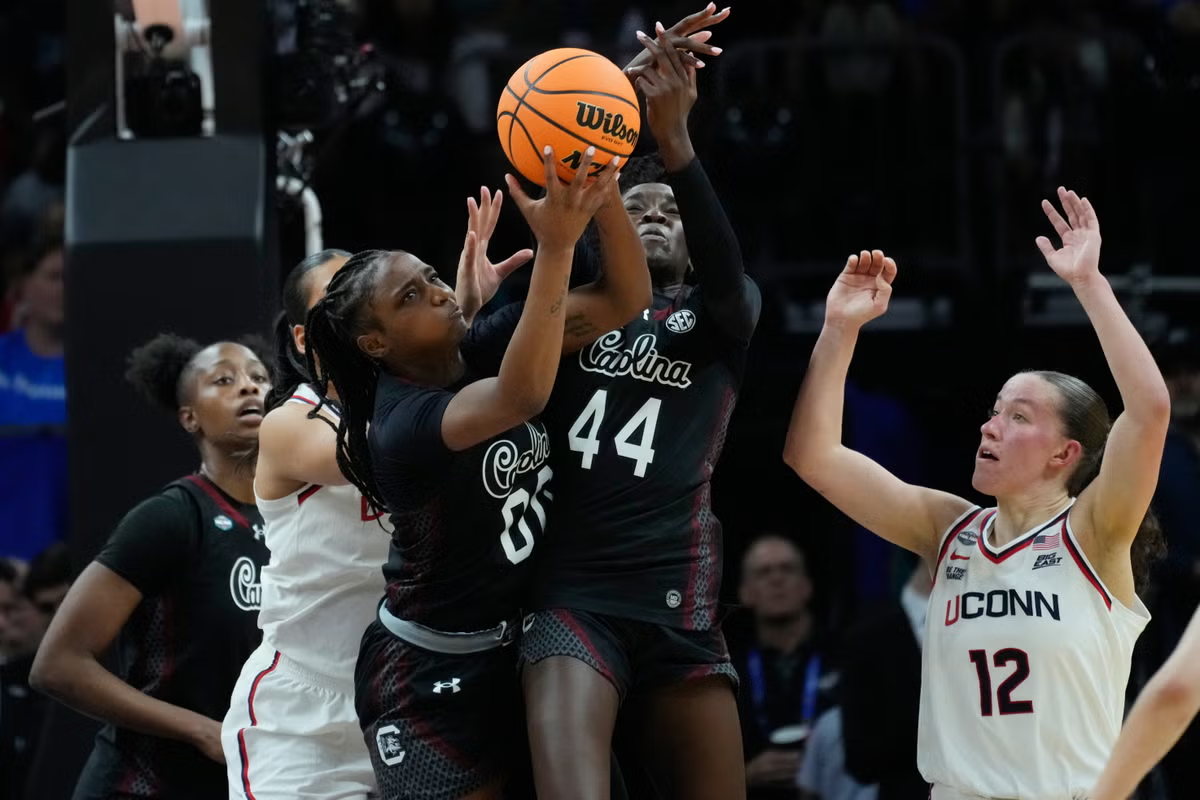
Ta’Niya Latson scored 16 and Agot Makeer added 14 points and South Carolina played stifling defense to beat UConn 62-48 on Friday night, ending the Huskies’ 54-game winning streak and advancing to the women’s NCAA Tournament championship game.
The Gamecocks will face the winner of Texas and UCLA semifinal on Sunday for the title, capping off another March Madness. South Carolina (36-3) will be looking to win its fourth national championship. Their other three have come in the last decade.
UConn (38-1) entered the Final Four undefeated for the ninth time in school history and for the third straight time left without a title. The Huskies also lost in the 2017 and 2018 national semifinals. This was the fewest points UConn had scored since putting up 49 points in a national championship game loss to the Gamecocks in 2022.
The Huskies and Gamecocks played last season for the title and UConn came away with an 82-59 rout for the school’s 12th national championship. UConn also beat South Carolina handily during the 2024-25 regular season.
Advertisement
___
AP March Madness bracket: https://apnews.com/hub/ncaa-womens-bracket and coverage: https://apnews.com/hub/march-madness
The budget hotel chain has come under fire in recent weeks after a female guest was sexually assaulted by a man who was given a key to her room.
Travelodge is hiring a string of experts to “embed change” and “transform cultures” – hours after the firm was hit with more sex abuse reports.
Advertisement
The budget hotel chain has come under fire in recent weeks after a female guest was sexually assaulted by a man who was given a key to her room. Since then more women have come forward, with one claiming a man performed vile sex acts outside her door.
We can now reveal the firm is scrambling to protect its reputation, by hiring four Change Delivery Coaches. The vacancies – posted a day before CEO Boydell made another public apology – involve “truly embed[ding] change into [Travelodge’s] DNA,” “growing behaviours,” and “understand[ing] root causes when things aren’t going to plan.”
Other key responsibilities include “identifying implementation gaps and risks early,” “influencing people and transform[ing] cultures.” Bosses are also looking for a Senior Change Programme Manager, who will “be responsible for the high-level design of complex change, ensuring every initiative has a rock-solid foundation.”
The ad continues: “With a proven ability to diagnose behavioural gaps in real-time, you use analytical insight and a “can-do” approach to solve problems, lead through collaboration rather than just a job title, and drive results across multiple sites.”
Travelodge came under fire after Kyran Smith was jailed in February for sexually assaulting a woman at a Travelodge in Maidenhead in December 2022. The victim revealed he had been given a key card to her room after falsely claiming to be her boyfriend.
Chief Executive Jo Boydell claimed she only learned of the incident when Smith appeared in court, but it has since emerged the victim wrote directly to her a month after the incident, in January 2023. Travelodge said the email was “handled on her behalf.” Boydell apologised to the victim in a statement in March, adding that the company had made changes to its door key policy.
But since then, more women have reported alarming experiences at the hotel chain. Marketing consultant Wendy Griffith told how she was “trapped” in her Travelodge room for an hour last summer while a naked man banged on her door and performed “vile” sex acts in the corridor. She said Travelodge’s response was “categorically not good enough” and she felt “palmed off.” The man, Trevor Reece, 40, pleaded guilty to outraging public decency in September 2025.
Advertisement
Another guest, Charlotte Bingley, told how a member of staff entered her room without knocking. “I’ve never been so scared in my life,” she said, “I really thought he was going to really hurt me and I was [shouting] ‘just get out of the room’.” She described the company’s response to her repeated complaints as “despicable.”
Keir Starmer last week wrote to Boydell urging her to “seriously engage” with the government on guest security at its hotels. The PM said he was “very concerned” some MPs did not hear from Boydell directly, adding it was “incredibly important” lessons were learned after the “utterly appalling” sexual assault at the firm’s Maidenhead branch.
When approached by the Mirror, Boydell said: “I am deeply sorry for the distress experienced by the survivor and I apologise for our handling of what happened to her. I have been very clear there were serious failures in our handling of every aspect of our response to her.
Advertisement
“We have made some immediate changes to our room access security policy and incident escalation procedures and have commissioned an independent review led by Paul Greaney KC, a leading barrister specialising in public inquiries concerning security, serious violent crime, and health and safety, to examine our room security procedures and the lessons we can learn from how this incident was handled.
“The safety and security of guests is extremely important to me and our whole team, and Travelodge takes this situation with the utmost seriousness. Last month I met with a number of MPs and Ministers – including Jess Phillips MP, Minister for Safeguarding and Violence Against Women and Girls; Alex Davies-Jones MP, Minister for Victims and Tackling Violence Against Women and Girls; Matt Bishop MP; Jen Craft MP; as well as Catherine Fookes MP and Helena Dollimore MP, Parliamentary Private Secretaries to The Prime Minister, Sir Keir Starmer, and the Chancellor, Rachel Reeves.
“We have offered that all MPs interested in this important issue can feed into the independent review in writing so their contributions can be fully taken into account. Our immediate priority is to progress this important work thoroughly and at pace, to learn from the independent review and further strengthen our processes.
“We also welcome the opportunity to work with Matt Bishop and MPs, and UK Hospitality, the body for the hotel sector, on his proposed ten-minute rule bill to help strengthen hotel security for Travelodge and also the wider sector. We have written to Matt to confirm that we want to work with him and MPs on his ten-minute rule bill.”
Advertisement
Get more Daily Record exclusives by signing up for free to Google’s preferred sources. Click HERE
There will be live entertainment, farmyard animals, a flower show and lots of tasty food stalls
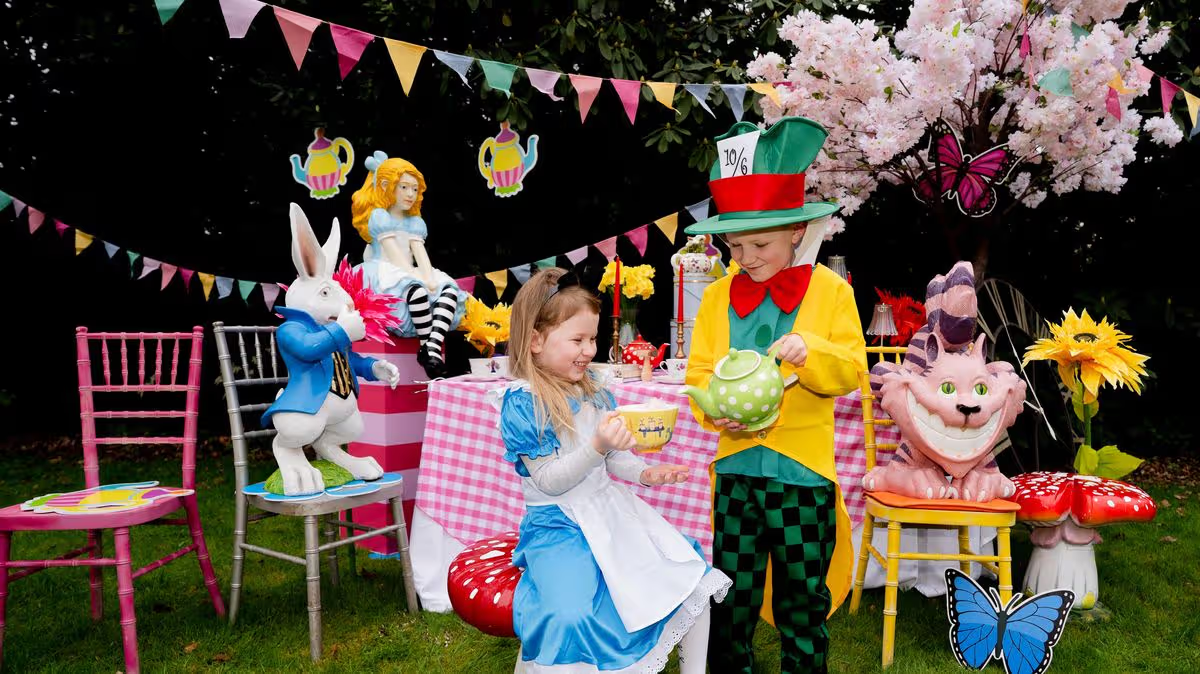
Belfast City Council has announced the return of its annual Spring Fair, with this year’s event set to transform the city into a whimsical ‘Down the Rabbit Hole’ experience.
Advertisement
Malone House and Barnett Demesne will host the celebrations, featuring a range of activities inspired by Alice in Wonderland. Visitors can expect live music, entertainment, a Spring Flower Show, circus skills workshops opportunity to meet farmyard animals, and a variety of food and craft stalls.
Launching the event at Barnett Demesne, Lord Mayor of Belfast, Councillor Tracy Kelly, describes it as a fantastic opportunity for families.
“Our annual free Spring Fair is always a highlight in Belfast’s event calendar, and this year’s Alice in Wonderland theme adds an extra layer of magic and imagination.
“It’s a fantastic opportunity for families and friends to visit our beautiful Malone House, enjoy the gardens and experience everything from beautiful blooms to lively entertainment.”
The free family event will take place on Saturday 25 and Sunday 26 April 2026, running from 1.30pm to 5.30pm each day.
There will be no parking available at the venue. A free park and ride service will operate from Sir Thomas and Lady Dixon Park, Visitors can also travel via Translink Metro services from Donegall Square East, with routes 8A and 8B operating on Saturday and regular 8A services running on Sunday.
Organisers have confirmed that only assistance dogs will be permitted at the event.




























































You must be logged in to post a comment Login