Almost three quarters of England is now in drought, with officials warning conditions under the record-breaking dry spell are ‘worsening’.
More than 27million people in England and Wales are under hosepipe bans after the driest-ever July – which saw some parts of the country receive just 1 per cent of the expected rainfall.
The National Drought Group today found that 71.3 per cent of England is under drought conditions, with around 45million people affected.
The East Midlands, Lincolnshire and Northamptonshire, Kent and East Sussex, and Solent and the South Downs became the latest areas to receive the classification.
Conditions in affected regions have been described as a flash drought – which is one that develops rapidly and is brought about by very low rainfall and higher temperatures.
Nowhere in England is currently considered to be under ‘normal’ conditions, after the North East and Yorkshire have moved to ‘prolonged dry weather’ – the stage before drought.
Tony Grayling, Drought Lead at the Environment Agency and Chair of the National Drought Group, said: ‘Drought conditions are worsening and will continue to do so until we see significant and sustained rainfall.
‘We know the hot and dry weather is taking a real toll on farming and there will be long-lasting impacts on our environment.
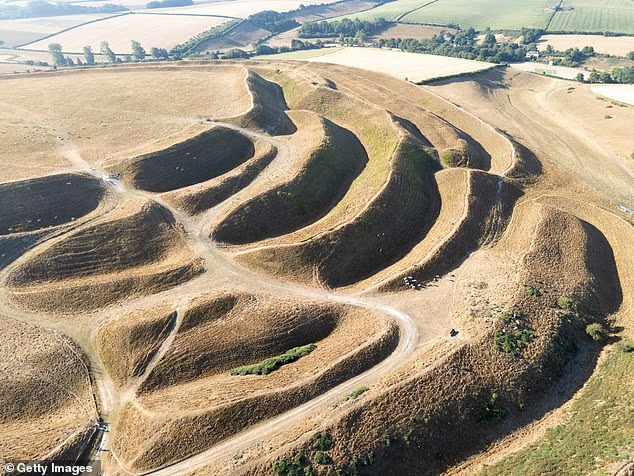
An aerial view of the dried out ground of Maiden Castle Iron Age hillfort, Dorchester
People walk on the bed of Howden Reservoir where the water level has dropped significantly
Dried yellow grass at Parliament Square, after the driest July on record
Almost three quarters of England is now under drought conditions
‘We want everyone to stay safe and hydrated over the summer, but we need everyone’s help in using a little less water to make sure our current water reserves last.
‘Every drop we can save is a drop more for your local farmers, local wildlife and local rivers.’
Water Minister Emma Hardy has told water companies they must do more to reduce the amount of water lost to leaks, which increases during hot weather.
Rainfall in July ranged from one per cent of the average for south-east England to 26 per cent in north-west England.
Some parts of Hampshire, Isle of Wight and West Sussex have not had a rain day for 59 days.
Meanwhile, Chessington World of Adventures Resort was forced to shut today due to a water outage today.
Thousands of disappointed families were turned away from the theme park in Surrey after a burst water main forced it to close in the middle of the summer holidays.
Thames Water, which supplies Chessington, said engineers were fixing a burst main on a road leading into the attraction which was affecting customers in the KT9 area.
A ban has been in place for Thames Water customers since July 23. The company is one of nine which have brought in restrictions meaning their customers are legally banned from using hosepipes to water gardens or wash cars, patios or boats.
Visitors being turned away at the Chessington front gate were being invited to visit other Merlin Entertainment attractions such as Thorpe Park and Legoland instead.
They were also offered to return to Chessington for free another day – but were not being offered transport. Visitors were also being told Legoland is very busy today.
Facebook user Momo Lin wrote that ‘all children are disappointed’. Another, Sammy Louise, said: ‘We’ve re-routed to Thorpe Park, absolutely dreading the queues as Thorpe Park and Legoland are going to be hit with Chessington guests.’
Visitors outside the entrance to Chessington World of Adventures Resort in Surrey today
A Chessington customer assistant informs members of the public of the closure today
A deserted Chessington World of Adventures Resort today after it closed due to a water outage
Emergency works underway by Thames Water outside the entrance gates to Chessington
A Chessington customer assistant informs members of the public of the closure today
Damage to Leatherhead Road in Chessington today following the burst Thames Water main
A spokesperson for Chessington said: ‘We are currently experiencing operational disruption due to a burst water main that is affecting the local area.
‘As a result, the attraction is closed today while our teams work closely with Thames Water and local partners to restore normal operations as quickly and safely as possible.
‘We appreciate the patience and understanding of our guests and can confirm that anyone impacted will be automatically revalidated under our return promise.
‘The safety of our guests and employees remains our highest priority.’
Chessington has enacted its ‘return promise’, which allows customers who have pre-booked tickets to return for free within nine months of their visit on selected dates.
The site, which is owned by Merlin Entertainments, has not specified which dates will be open for a free return visit, but the school holiday period typically ends at the start of September.
Thames Water has switched off the burst main on Leatherhead Road directly outside the theme park, and repairs have begun.
A Thames Water spokesman said: ‘We’re sorry to customers in the Chessington area who are currently without water, and to anyone whose plans to visit Chessington World of Adventures Resort who have been affected following today’s outage.
‘Our specialist team is on site and have located a burst water main on Leatherhead Road. Repairs are under way and we are working as quickly and safely as possible to restore supplies. Once the repair is complete, water should begin returning to taps.’
Meanwhile car washes and swimming pools could face a water ban over the coming weeks.
Southern Water imposed a hosepipe ban in Hampshire and the Isle of Wight on July 10 – but it could now go further by applying to the Government for a Drought Order and Non-Essential Use Ban (NEUB), which would affect businesses.
A NEUB would prevent companies from washing cars and windows with hosepipes or other mechanical devices, or filling non-domestic swimming or paddling pools.
The pool ban would cover facilities restricted to members of a private club, gym or association rather than general walk-in users. It would include pools at hotels, holiday parks or private health clubs if they do not meet open public access criteria.
An NEUB would also force businesses to stop watering outdoor plants on commercial premises; fill or maintain a pond; clean any vehicle, boat, aircraft or train; clean industrial plants; suppress dust; or operate cisterns on unoccupied buildings.
If Southern Water’s application is granted, it would be the first NEUB since one was given to Sutton and East Surrey Water in 2006 – which was itself the first since 1995.
The dry grass of a football pitch at Hackney Marshes in east London are pictured today
The depleted Hollow Pond and Leyton Flats near Wanstead in east London today
Grassland at Wimbledon Common today is straw-like or non existent, replaced by dust
Dried out ground around the Maiden Castle Iron Age hillfort in Dorchester, Dorset, today
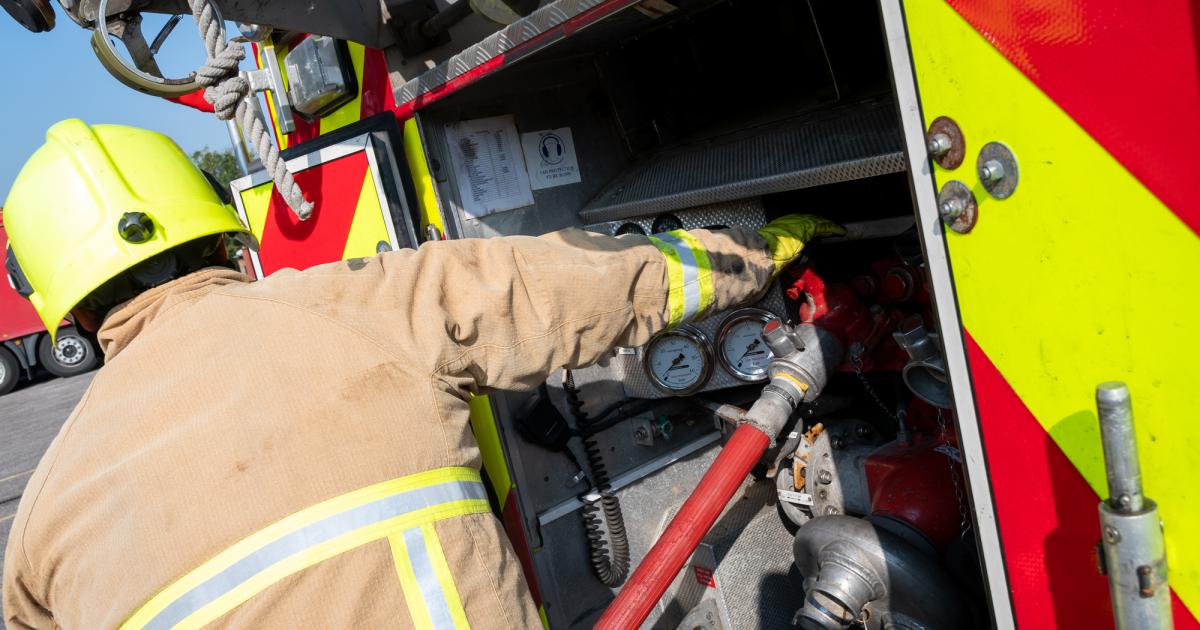
Firefighters continue to battle a blaze at the Holme Fen Nature Reserve in Peterborough today
The pond in Caversham Park near Reading is pictured today, having completely dried up
A worker trims the grass on a cricket pitch in Birmingham today, surrounded by dry ground
If the separate Drought Order application is successful, it would allow Southern Water to take the same amount of water from the River Test even if river flows are lower.
A Southern Water spokesman said: ‘Due to the ongoing dry weather, and following the declaration of drought in Hampshire and the Isle of Wight, we have reached the trigger level requiring us to apply to Defra for a Drought Order and Non-Essential Use Ban in these areas.
‘These are precautionary measures and making an application does not mean they will be introduced. However, we must follow the regulatory process to protect water supplies and the environment if dry conditions persist.
Difference between a hosepipe ban and non-essential use ban
Hosepipe ban
A Temporary Use Ban (TUB) – also known as a ‘hosepipe ban’ – means people cannot use their hosepipes for watering their garden, filling a paddling pool or washing their car.
They can still water their plants and clean their car, but must use a watering can or bucket instead of a hosepipe. Anyone who breaks the rules can face a fine of up to £1,000.
Non-Essential Use Ban (NEUB)
A non-essential use ban (NEUB) is the next stage after a hosepipe ban, and targets businesses who must stop using water for these activities:
- Watering outdoor plants on commercial premises
- Filling or maintaining a non-domestic swimming pool or paddling pool
- Filling or maintaining a pond
- Operating a mechanical vehicle washer
- Cleaning any vehicle, boat, aircraft or railway rolling stock
- Cleaning non-domestic premises
- Cleaning windows on non-domestic
- Cleaning industrial plant
- Suppressing dust
- Operating cisterns on unoccupied buildings
<!- – ad: https://mads.dailymail.co.uk/v8/de/news/none/article/other/mpu_factbox.html?id=mpu_factbox_1 – ->
‘Protecting the River Test remains a priority, and any future drought measures would be subject to strict environmental monitoring and controls.’
Eight other companies have brought in hosepipe bans so far – Affinity Water, Anglian Water, Cambridge Water, Dŵr Cymru Welsh Water, Essex and Suffolk Water, South East Water, South West Water and Thames Water.
The latest of these was South West Water which announced restrictions last Friday for all 1.8million customers across Devon, Cornwall, parts of Dorset and Somerset and the Isles of Scilly.
This week, parts of the UK are set to see their sixth heatwave of the summer with temperatures expected to reach 36C (97F) or higher.
The Met Office has warned of possible impacts to railway lines and power networks as forecasters consider issuing rare amber or red extreme heat warnings.
Today will be slightly cooler before temperatures rise again tomorrow.
Met Office meteorologist Tom Morgan said: ‘We’ll probably see highs reaching the mid-30s quite widely on Wednesday, and indeed on Thursday too for England and Wales.
‘On Wednesday, probably the Midlands, maybe a little bit further south, the M4 corridor, west of London, up towards the Midlands, is where we might have a small chance of reaching 36C in one or two spots.
‘But Thursday at this stage looks the most likely hottest day of the week. So 36C is a fairly reasonable probability locally on Thursday and there’s a small chance it could get even higher than that.’
Drought was declared last month for all of Wales and more than half of England – covering parts of the South East including London, West Midlands and all of the South West.
The Environment Agency has said several further unspecified areas could be moved from ‘dry weather’ to drought status when officials meet at the National Drought Group today.
Dried grass at Marlow Cricket Club in Buckinghamshire yesterday as dry weather continues
A sunbather reads while relaxing on the scorched grass of Hyde Park in London yesterday
People walk on parched earth and sun-damaged grass near Tower Bridge in London yesterday
Parched land around Bratton Camp Iron Age hillfort and the White Horse of Westbury yesterday
Parched grass at St James’s Park in London yesterday as the extremely dry weather continues
People look at the Thames Estuary in Allhallows, Kent, yesterday ahead of the new heatwave
Beachgoers at St Anthony Head in Cornwall yesterday as fresh heat health alerts began
The Wisley Golf Club in Woking, Surrey, has the odd area of green among otherwise dry ground
Beaverbrook Golf Club in Leatherhead, Surrey, is very dry apart from a few patches of green
A drone view shows parched grassland around Stonehenge in Wiltshire on July 31
A green square surrounded by dry grass at Maidenhead and Bray Cricket Club on July 25
Around 16million people could move into drought status as public water supplies ‘remain under increasing pressure with continued dry weather and high demand’.
Mr Morgan said: ‘If it wasn’t for this incredible summer that we’re currently seeing, then we’d be talking about these temperatures as being really, very unusual. But of course, we’ve had such an exceptional summer, people have become a bit used to it.
‘There is a potential for impacts, so impacts to infrastructure, things like railway lines and power networks, impacts to vulnerable people as well.’
Water firms imposing hosepipe bans in 2026
- Affinity Water
- Anglian Water
- Cambridge Water
- Dŵr Cymru Welsh Water
- Essex and Suffolk Water
- Southern Water
- South East Water
- South West Water
- Thames Water
<!- – ad: https://mads.dailymail.co.uk/v8/de/news/none/article/other/mpu_factbox.html?id=mpu_factbox_2 – ->
Health officials have warned of the effect on vulnerable people in the upcoming hot weather, with significant impacts possible in health and social care settings and a potential rise in deaths because of the heat.
Amber heat health alerts have been issued for the East Midlands, East of England, Yorkshire and the Humber, London, North West, South East, South West, and West Midlands, while a yellow heat health alert has been issued for the North East, from tomorrow at 9am until Friday at 9pm.
Meanwhile, the Met Office is considering issuing rare extreme heat warnings ahead of the scorching temperatures forecast later in the week.
‘We sometimes issue extreme heat warnings, amber and red warnings, which we did back in June, so that’s under consideration at the moment,’ Mr Morgan said.
Another record is set to tumble this week after yesterday was the 34th day so far this year when temperatures exceeded 30C (86F) somewhere in the UK, equalling the record from 1995.
So far, the extreme weather of summer 2026 has included two record-breaking heatwaves in May and June that led to more than 2,800 excess deaths.
The UK Health Security Agency (UKHSA) has issued amber heat health alerts across England
A UK heatwave is official when a location records at least three consecutive days of daily maximum temperatures which meet or exceed a specified threshold – which varies by region
Two more heatwaves in July, the driest July in England and Wales since records began in 1836, have fuelled drought and wildfires.
The fifth heatwave of the year was confirmed on Monday last week.
Much of southern England is now close to two months without any meaningful rainfall – with Wisley in Surrey having had more than 50 consecutive dry days.
The exceptional weather resulted in a record number of wildfires for England and Wales last month – with firefighters attending 395 blazes in the three weeks to July 31 amid fears the ‘whole country is like one giant tinderbox’, reported The Times.
On the A31 near the New Forest in Hampshire yesterday, police told drivers to leave their cars ‘if you want to stay alive’ as a van fire sparked a wildfire.
Fears are also growing over more water-related deaths, after a 19-year-old died on Saturday after getting into difficulty in the water at Grasmere in the Lake District.
Yesterday, an 18-year-old man died after getting into difficulty in the sea at Camber Sands in East Sussex.
This brings the number of deaths in open-water incidents over the hot and dry summer to more than 40, according to Press Association estimates.
Downing Street has defended the Government’s response to the heatwave and wildfires, with today’s meeting of the National Drought Group bringing together ministers, officials and the water companies.
The Prime Minister’s official spokesman said: ‘We know these conditions are having a significant impact on communities, farmers and businesses across the country.
‘Our climate is changing. Droughts are becoming more common, which is why we’re focused on both the immediate response and long-term resilience.
‘That includes working through the national drought group with the Environment Agency, water companies, farmers, and environmental organisations to protect water supplies and minimise environmental damage.
‘And we’re also backing major investment in water infrastructure, including new reservoirs, whilst making clear that water companies must do more to cut leaks and improve resilience.’
The European Union’s earth observation programme Copernicus said average temperatures across western Europe reached 21.61C (70.92F) for June to July, breaking the record set in 2022.
Globally, this year is just behind 2024 and 2025 as the third hottest year on record.

























































You must be logged in to post a comment Login