Connect with us

NewsBeat

Hundreds more flights grounded on second day of air traffic control chaos: Ryanair and Wizz Air boss demand NATS boss resigns – as it emerges latest meltdown ‘was repeat of issue from 2023 outage’

Published

on

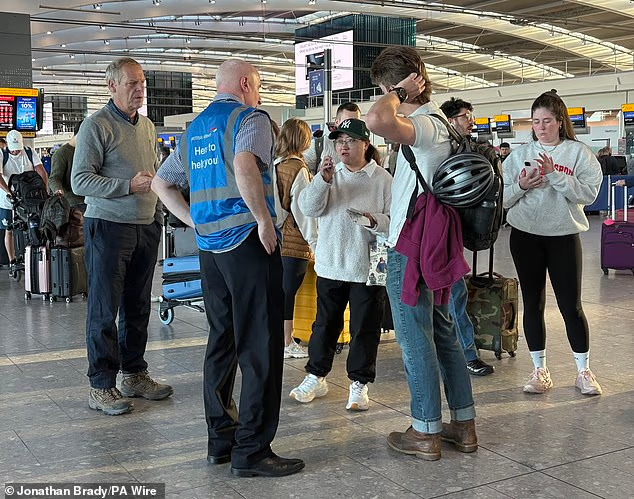
Passengers ask for information as London Heathrow Airport today as disruption continues

Ryanair and Wizz Air bosses have called for NATS chief executive Martin Rolfe to resign after it emerged the latest air traffic control meltdown was a repeat of an issue that caused a similar outage in 2023. 

Passengers were today facing another day of travel chaos after nearly 300 flights in and out of Britain were axed – with warnings the disruption could continue for three weeks. 

Neal McMahon, Ryanair’s chief operating officer, revealed this morning that yesterday’s NATS failure was caused by the that brought the system to a standstill two years ago.

In 2023, more than 700,000 passengers experienced disruption when flights were grounded at UK airports when NATS suffered a technical glitch while processing a flight plan.

Advertisement

Ryanair boss Michael O’Leary added Mr Rolfe’s position had become ‘untenable’, adding that the service ‘keeps repeatedly failing’ under his leadership.

Meanwhile, the managing director of Wizz Air UK, Yvonne Moynihan, said there are ‘serious questions about the resilience’ of the UK’s air traffic control service. 

Up to 250,000 travellers were impacted across airports including Heathrow, Gatwick, Manchester and Stansted as airlines dealt with an air traffic control system failure.

Some 1,750 flights to and from UK hubs were axed yesterday after a major issue at the National Air Traffic Services (NATS), which provides control to 15 British airports. 

Advertisement

After some passengers slept on floors overnight, Heathrow had 246 cancellations by 6am today while 33 services were axed at Gatwick, according to FlightRadar24.

Passengers travelling through all UK airports were told to check their flights before setting off, with experts warning the disruption could last until the end of the month.

Australian actress Rebel Wilson was among the passengers stranded at Heathrow last night and shared videos of herself walking through the terminal looking exhausted. 

Sky Sports Formula 1 broadcaster Martin Brundle said last night he had been stuck on a plane at Heathrow for ‘nine hours’ and had travelled nowhere – with the toilets on the aircraft having become blocked and no food being offered to passengers.

Advertisement

He tweeted: ‘Great work BA and Heathrow. Nine hours and counting sitting on a plane which has travelled nowhere. At a remote parking bay, no food throughout.

‘Mother and baby and a person with a medical condition desperate to get off. As is everyone else. Toilets no longer available as blocked.’

Passengers ask for information as London Heathrow Airport today as disruption continues

Advertisement
Travellers sleep on the floor at London Gatwick Airport in the early hours of this morning

Travellers sleep on the floor at London Gatwick Airport in the early hours of this morning 

Rebel Wilson at Heathrow last night
Rebel Wilson's video at Heathrow last night

Australian actress Rebel Wilson was among the passengers stranded at Heathrow last night

Passengers at Heathrow Airport's Terminal Four slept on yoga mats on the floor overnight

Passengers at Heathrow Airport’s Terminal Four slept on yoga mats on the floor overnight

Passengers wait for flights at London Gatwick Airport's South Terminal this morning

Passengers wait for flights at London Gatwick Airport’s South Terminal this morning

Advertisement
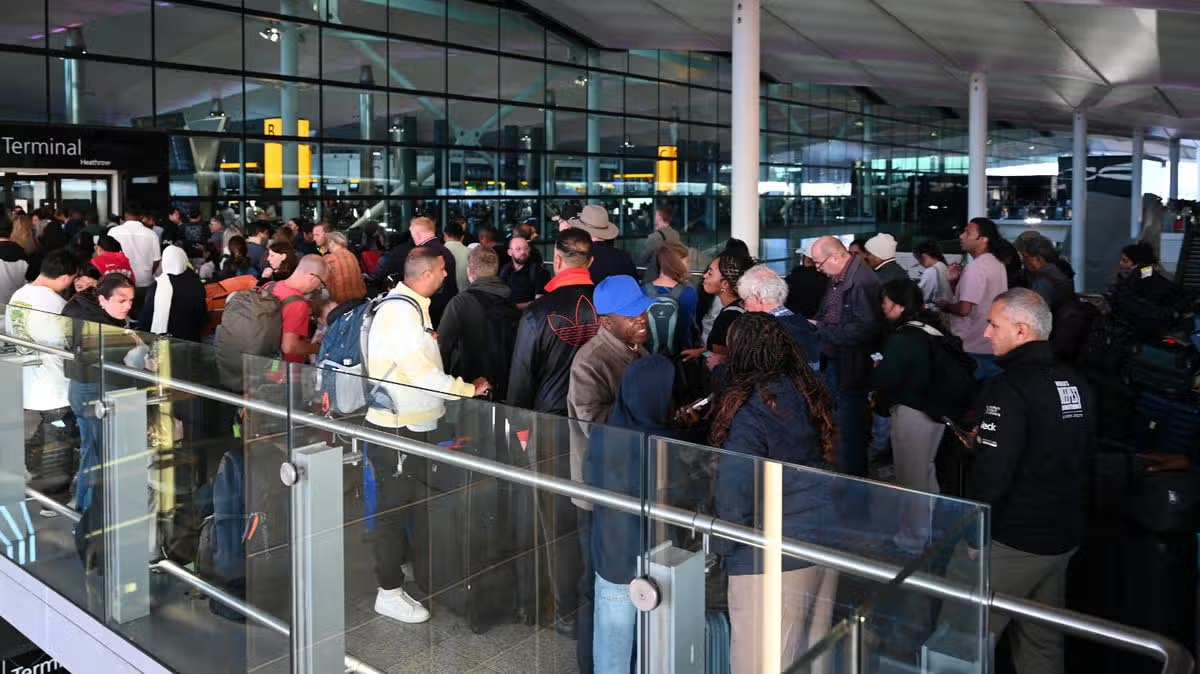
Passengers queue up at London Heathrow today during disruption after a NATS system issue

Passengers queue up at London Heathrow today during disruption after a NATS system issue

People arrive with their luggage at the North Terminal of London Gatwick Airport this morning

People arrive with their luggage at the North Terminal of London Gatwick Airport this morning

At Heathrow’s Terminal 4, passengers slept on yoga mats on the floor overnight as they awaited updates on their flight. 

Patrick Weston, 45, of Enfield, north London, was planning to fly out to Gothenburg in Sweden today but his service was cancelled.

Advertisement

He told the Daily Mail: ‘It’s absolute chaos here. You cannot believe this can keep happening in Britain in 2026 with all the technology we have. It was a mini break for me. I have no idea what is happening. There’s just a feeling of helplessness.

‘It shouldn’t be like this in this day and age. That’s the frustrating part. Of course, things go wrong. But this is just a regular occurrence now. I am stranded now.’

Clara Nguyen, 28, and her boyfriend, Lihan Chen, 25, both students in Leeds, were booked on a flight from Heathrow to Ho Chi Minh City yesterday evening which is now expected to depart this afternoon.

They spent the night in an Airbnb which they paid for themselves. Ms Nguyen said: ‘The airport tried to help but the service and information from Air Vietnam were poor.’

Advertisement

Engineer Felix Abrams, 29, was on his way to Beijing to visit his girlfriend’s family. He said the way he had been treated was ‘demeaning’ and that there had been ‘a complete shirking of responsibility’.

He added: ‘How was the airport not prepared for this? This failure has happened before. It’s not our fault. We’re not being told anything.’

Another passenger, who did not wish to be identified, told the Daily Mail that she arrived at Malaga Airport yesterday for a flight home to Manchester and boarded on time.

What are your rights when a flight is delayed?

  • What flights are covered by UK consumer law?

Flights operated by an airline departing from a UK airport, flights operated by a UK or EU airline arriving at a UK airport, or flights operated by a UK airline arriving at an EU airport.

  • How long must a flight be delayed before I am entitled to assistance?

It depends on the distance of the flight.

For flights under 1,500km (932 miles) such as from Glasgow to Amsterdam: at least two hours.

Advertisement

For flights between 1,500km (932 miles) and 3,500km (2,175 miles) such as from Manchester to Marrakesh: at least three hours.

For flights over 3,500km (2,175 miles) such as from Heathrow to New York: at least four hours.

  • What should this assistance include?

A reasonable amount of food and drink (often via vouchers), a means for you to communicate (often by refunding the cost of phone calls) and accommodation and transfers if an overnight stay is required.

Airlines often fail to provide this assistance during major disruption because of being overwhelmed by requests and a shortage of available rooms in local hotels.

In this scenario, the Civil Aviation Authority (CAA) says passengers can organise their own assistance and claim the costs back from the airline by submitting receipts.

Advertisement
  • Does that mean I should book a luxury hotel suite and order champagne?

Airlines are unlikely to reimburse you for that. The CAA advises passengers not to ‘spend more than is reasonable’.

  • How long must assistance be provided?

Until your flight takes off or you accept a refund after deciding not to travel.

  • What about getting to my destination?

If a flight is cancelled, airlines are required to get you to your destination if you still want to travel.

Most will book you onto another of their flights, but you may be entitled to travel with another airline or by an alternative mode of transport if it will get you to your destination significantly sooner.

Passengers doing this are often required to purchase their own tickets and submit a claim to their original airline for reimbursement.

  • What if I no longer want to travel?

You are entitled to a refund if you have been delayed by more than five hours.

  • Am I entitled to compensation for a delayed flight?

Airlines may be liable for compensation if the reason for a delay is deemed within their control, such as a fault with the aircraft or pilot sickness.

Causes of disruption classed as outside their control include severe weather, air traffic control restrictions and security alerts.

In the case of this week’s disruptions, passengers are unlikely to be owed compensation as the technical issue is considered an ‘extraordinary circumstance’ and out of the airline’s control.

Advertisement
  • What if my flight is cancelled?

You are entitled to a refund or a replacement flight, and the same assistance as if your flight was delayed.

  • Can I claim compensation if my flight is cancelled?

You can if the reason is deemed within the airline’s control, you received no more than 14 days’ notice and depending on the timings of a new flight offered.

Again, yesterday’s events are unlikely to fall within this category.

<!- – ad: https://mads.dailymail.co.uk/v8/de/news/none/article/other/mpu_factbox.html?id=mpu_factbox_1 – ->

Advertisement

But she continued: ‘As soon as the doors were closed we were told there was an issue with air traffic control in London and we would be delayed for about one hour and 20 minutes.

‘After about half an hour the pilot apologised and said he had an update that wasn’t good news – we would be delayed another five hours minimum, so we had to return to the terminal.

‘After waiting for steps and buses, we got off and were taken back inside the terminal, then told nothing and left to our own devices. Those with checked baggage had to retrieve that too. No easyJet staff to direct or assist, no information, desks closed – some people without phones were totally lost.’

She added that trying to rebook flights on the app was ‘impossible’ because it was not working, with other airlines showing no flights until at least Monday.

Advertisement

The woman also said: ‘My husband has a hospital procedure on Saturday, we don’t have enough medications with us to last beyond Thursday and I’m supposed to be back in work tomorrow. Nightmare.’

It comes as Mr Rolfe was clinging to his job today ahead of a showdown with Ms Alexander amid calls for his resignation.

Speaking to BBC Radio 4’s Today programme, Mr Rolfe apologised for the issue but dodged questions over whether he would quit.

He said: ‘Inevitably, things do go wrong in complex systems. We never want them to. We always hope they won’t, but we absolutely plan for them to and make sure we handle them properly.’

Advertisement

Mr Rolfe added: ‘I would say the UK has one of the best reputations in the world for its air traffic control service, both from a safety perspective and from a resilience perspective.

‘NATS was actually a partial privatisation 25 years ago, and since that point, it’s had access to funding.

‘We’ve invested way more than a billion in technology over that time, our service has consistently improved. Our safety is consistently improved from a very good base.

‘But all of those things don’t detract from the fact that when these things happen, it is disappointing and upsetting, for which I apologise.’

Advertisement

On the cause of the problem, Mr Rolfe said a ‘thorough’ investigation would take place, but ruled out a cyber attack.

He added: ‘My focus and that of the team has been on both getting our system operating back up normally, which it is now, but there’s obviously a huge tail to the disruption and we’ll be working on that through the course of today.

‘And then our attention will turn to exactly what’s happened in this particular incident.

‘What I will say is, I don’t believe we’ve ever seen an incident happen more than once, so this will be something different that we’ve never seen in 50 years of operation.’

Advertisement

Discussing the response to yesterday’s incident, Mr Rolfe said: ‘We had everybody on site, everybody was in the right place. We had all the engineers in place. We had our various partners from software industries and so on all on hand.

‘So this was resolved as quickly as it could be, but within the limits of making sure that it all stayed safe.’

Ryanair said more than 65,000 of its passengers had been disrupted and it had cancelled more than 50 scheduled flights.

British Airways said it was forced to cancel or divert more than 100 flights yesterday which had affected ‘tens of thousands of customers’.

Advertisement

Mr Rolfe has been under fire from Wizz Air and Ryanair after the latest issue which saw some passengers trapped on planes on runways for hours.

Ryanair called on the Government to ask Mr Rolfe to resign.

Asked in an interview with Times Radio Breakfast whether it was time for the Government to ‘step in’, the airline’s chief operations officer Neal McMahon said: ‘Absolutely.

‘We think (Ms Alexander) should ask him to resign.

Advertisement

‘We think it’s critical that we put in somebody in NATS at the top who can deliver resilience, who can deliver the extra staffing that’s needed so that NATS can perform as well as other ATC (air traffic control) providers across Europe.

‘Like, we don’t see this in France, we don’t see this in Italy, we don’t see this in Spain, we don’t see this in Ireland, we don’t see this in Germany.

‘This is a UK problem where the backup systems don’t kick in when the primary systems have a fault.’

He added that Ryanair has been forced to cancel 250 flights with costs to the company expected to ‘run into the millions’.

Advertisement

Mr McMahon said: ‘Airlines across the UK cancelled over a thousand flights, and hundreds of thousands of people were disrupted because the lessons learned for the previous failures have not been delivered by Martin Rolfe.’

People sleep on the floor at London Gatwick Airport's South Terminal this morning

People sleep on the floor at London Gatwick Airport’s South Terminal this morning

Passengers wait at Heathrow today during ongoing disruption after a system issue hit NATS

Passengers wait at Heathrow today during ongoing disruption after a system issue hit NATS

Empty check-in queues in part of London Gatwick Airport's South Terminal this morning

Empty check-in queues in part of London Gatwick Airport’s South Terminal this morning

Advertisement
Passengers rest with their luggage at the North Terminal of London Gatwick Airport today

Passengers rest with their luggage at the North Terminal of London Gatwick Airport today

Travellers wait at Heathrow today during ongoing disruption after a system issue hit NATS

Travellers wait at Heathrow today during ongoing disruption after a system issue hit NATS

People sleep as they wait for flights at London Gatwick Airport's South Terminal this morning

People sleep as they wait for flights at London Gatwick Airport’s South Terminal this morning

Passengers rest with their luggage at the North Terminal of London Gatwick Airport today

Passengers rest with their luggage at the North Terminal of London Gatwick Airport today

Advertisement
Passengers look at information boards at Heathrow Airport today during ongoing disruption

Passengers look at information boards at Heathrow Airport today during ongoing disruption

Asked what he thought the cost to Ryanair would be following the incident, Mr McMahon said: ‘It’ll run into the millions.’

He added: ‘We have crews everywhere and it’s a real shambles because we couldn’t get our aircraft where they were meant to be yesterday.

‘We had 250 flights cancelled, so really, really disruptive for us.’

Advertisement

Mr McMahon also said yesterday’s NATS incident was caused by the ‘exactly the same issue’ as a problem in 2023.

In August 2023, more than 700,000 passengers experienced disruption when flights were grounded at UK airports when NATS suffered a technical glitch while processing a flight plan.

Mr McMahon said of yesterday’s problem: ‘NATS told us it was a flight planning processing failure, which is exactly the same issue that happened in 2023.

‘If you remember in 2023 there was an issue with a flight plan, and it sent the system in a in a loop that eventually caused it to shut down.

Advertisement

‘We’re told that that was a rogue flight plan and we’re told yesterday this was a spurious flight plan which caused the same outage and our question is like: these things can happen, but where’s the backup systems?’

He added: ‘The failing is that the backup system was unable to kick in and work, like it’s not a backup system if it shuts down.

‘That’s the definition of a backup is that when the primary system goes down, that you can revert and keep going.’

Last July, a ‘radar-related issue’ caused an air traffic control failure that grounded flights across the UK, disrupting thousands of passengers and forcing the cancellation of more than 160 flights.

Advertisement

The problem happened at the NATS control centre in Swanwick, Hampshire, and affected the vast majority of England and Wales.

The managing director of Wizz Air UK said there are ‘serious questions about the resilience’ of the UK’s air traffic control service.

Yvonne Moynihan told the BBC: ‘We had 24 cancellations yesterday and over 21 other flights that were disrupted with long-term delays.

‘So that’s over 10,000 passengers coming in and out of London have had major disruption.’

Advertisement
People sleep on the floor at London Gatwick Airport's South Terminal this morning

People sleep on the floor at London Gatwick Airport’s South Terminal this morning

Passengers ask for information as London Heathrow Airport today as disruption continues

Passengers ask for information as London Heathrow Airport today as disruption continues

An easyJet plane takes off from London Gatwick Airport this morning as some flights resume on September 09, 2026 in London, England. Airlines have warned travelers should expect further disruption to journeys on Wednesday following a "technical issue" that grounded flights to and from some of the UK's largest airports on Tuesday, Including London Heathrow, Gatwick, Manchester, and Birmingham. Air traffic control provider NATS have said the issue has been resolved, but the cancellation of nearly 2,000 flights is having knock-on effects in the UK and abroad, as airlines scramble to rebook affected passengers. (Photo by Dan Kitwood/Getty Images)

An easyJet plane takes off from London Gatwick Airport this morning as some flights resume

Passengers rest with their luggage at the North Terminal of London Gatwick Airport today

Passengers rest with their luggage at the North Terminal of London Gatwick Airport today

Advertisement
Travellers wait at Heathrow today during ongoing disruption after a system issue hit NATS

Travellers wait at Heathrow today during ongoing disruption after a system issue hit NATS

Passengers stand next to information boards at Heathrow today during ongoing disruption

Passengers stand next to information boards at Heathrow today during ongoing disruption

Passengers rest with their luggage at the North Terminal of London Gatwick Airport today

Passengers rest with their luggage at the North Terminal of London Gatwick Airport today

Passengers ask for information as London Heathrow Airport today as disruption continues

Passengers ask for information as London Heathrow Airport today as disruption continues

Advertisement

Ms Moynihan added: ‘This is now the third time that we have had an air traffic control failure, and during the peak period as well. So major questions need to be asked There are serious questions about the resilience of this system.’

Asked whether Mr Rolfe should consider resigning, Ms Moynihan said: ‘I think in any industry, when you’ve had three failures, you need to consider that three strikes and you’re out. So I think it’s certainly something that he needs to look at.’

She added: ‘A third time and a third excuse is not enough anymore.’

Earlier, Mr Rolfe said that he ‘always accept(s) full responsibility’ when asked if he was considering his position after the incident.

Advertisement

He told Sky News: ‘I am the CEO of a piece of critical infrastructure, so it is my job to take responsibility for that.

‘What I absolutely take responsibility for is keeping people safe and delivering the best service we possibly can on a day like today.

‘You will understand my focus is entirely about how we actually resolve this issue, get things back to normal, help our airlines, our airport customers and the travelling public.’

This morning, Heathrow advised travellers to check their flight status before heading to the airport.

Advertisement

‘Following yesterday’s NATS technical issue, flights are operating today, but some disruption may continue as airlines reposition aircraft and crew,’ it said in a statement on social media.

‘Please check your flight status with your airline before travelling to the airport and only travel if your flight is confirmed to be operating.

‘We apologise to those affected and have extra colleagues across our terminals to support passengers while we work with NATS and airline partners to restore normal operations as quickly as possible.’

Gatwick also said flights had resumed but disruption was likely to continue.

Advertisement

Its statement said: ‘We still anticipate that it will take time for our operations to fully return to normal. Passengers should continue to check with their airlines for more information regarding their flights.’

Luton Airport confirmed early this morning that the airport was ‘open and operational’, but said: ‘Some flights may still be subject to disruption and passengers are advised to check their flight status directly before travelling to the airport.’

Travel journalist Simon Calder said the knock-on effects today were ‘going to be horrible’.

He told Sky News: ‘There are going to be dozens of cancellations in the morning of flights coming into Heathrow because, basically, the flights didn’t go out tonight.’

Advertisement

Air travel expert Julian Bray also said: ‘The disruption to air traffic is likely to go on for a good three weeks.

‘It was not just passenger services hit by the NATS Air Traffic computer meltdown but also crews and aircraft rendered inoperative as planes out of position, pilots out of hours as are cabin crew.

Join the discussion

Have you been caught up in the latest flight chaos?

Advertisement
Passengers wait at Heathrow today during ongoing disruption after a system issue hit NATS

Passengers wait at Heathrow today during ongoing disruption after a system issue hit NATS

People arrive with their luggage at the North Terminal of London Gatwick Airport this morning

People arrive with their luggage at the North Terminal of London Gatwick Airport this morning

Travellers wait at Heathrow today during ongoing disruption after a system issue hit NATS

Travellers wait at Heathrow today during ongoing disruption after a system issue hit NATS

Passengers at Heathrow Airport today during disruption after the air traffic control problem

Passengers at Heathrow Airport today during disruption after the air traffic control problem

Advertisement

‘Air cargo services also hit and many time critical shipments either ruined destroyed or delayed. Sadly all this could happen again with the current legacy computer set up it’s insufficient to simply bolt on new front end parts onto an ancient legacy system.’

Among the thousands facing disruption yesterday was Josie Donoghue, who had to get off her flight to Ireland after spending three hours on the runway at Gatwick.

Ms Donoghue said: ‘Getting through that airport was like trying to get out of Alcatraz. We were trapped in there. We were told we couldn’t get out until the flights were cancelled, and then eventually they allowed us to get out.

‘It’s just an absolute nightmare down there, it’s the only word I can use to describe it.’

Advertisement

Tory transport spokesman Greg Smith also criticised NATS, which is 49 per cent Government-owned.

He said: ‘Yet again passengers are stuck on the tarmac wondering why Britain cannot keep its own skies open. The Government and NATS must explain what has happened and how they will make sure resilience is improved.’

Luton Airport confirmed early today that it was ‘open and operational’, but warned that some flights could still be affected.

The airport said: ‘Some flights may still be subject to disruption and passengers are advised to check their flight status directly before travelling to the airport.’

Advertisement

Passengers have been urged to check directly with their airline before travelling to the airport and only set off if their flight is confirmed to be operating.

Beverley Griffiths, a senior lecturer in security and resilience at Buckinghamshire New University, called on lessons to be learned from the incident.

She said: ‘The confirmation that a cyber attack has been ruled out is an important development, but the incident still highlights the vulnerability of highly complex and interconnected systems.

‘The focus now should be on understanding not only what technical problem occurred, but why it was able to cause such widespread disruption, and whether there are lessons around system resilience, redundancy, maintenance and contingency planning.

Advertisement

‘Air traffic management is a hugely complex system involving multiple technologies, organisations and suppliers, so failures can have consequences far beyond the original problem. From a resilience perspective, the key issue is not whether systems ever fail, but how effectively they respond and recover when they do.

‘For passengers, the disruption is understandably incredibly frustrating, particularly when journeys involve family commitments, business travel or international connections.

‘The real test of resilience will be how quickly services can be safely restored, how effectively those affected are supported, and what can be learned to reduce the impact of future incidents.’

Have you been affected? Please email: lettice.bromovsky@dailymail.co.uk 

Advertisement

Source link

Continue Reading
Click to comment

You must be logged in to post a comment Login

Leave a Reply

NewsBeat

School parking rules – everything parents needs to know

Published

on

School parking rules - everything parents needs to know

Roads outside schools are often packed with cars at drop-off and pick-up time, and frazzled parents may be tempted to stop wherever they can find a space.

But the Highway Code sets out a number of places where drivers “must not stop or park”, while other restrictions depend on road markings and signs.

Here is what parents need to know before pulling up outside the school gates.

Can you park on single yellow lines outside a school?

Not necessarily.

Advertisement

Under Highway Code Rule 238, drivers “must not wait or park on yellow lines during the times shown on nearby signs or zone entry signs”.

Double yellow lines mean waiting is prohibited “at any time”, even if there are no upright signs.

Parents should therefore check the signs and road markings rather than assuming they can stop because other cars are parked there.

Can you stop on the school entrance markings?

This is one of the biggest things parents need to watch out for.

Advertisement

Drivers “must not wait or park, or stop to set down or pick up passengers, on school entrance markings when upright signs indicate a prohibition of stopping”.

That means pulling onto the marked area for a quick drop-off is not automatically allowed.

Where should parents park instead?

Walking or cycling is obviously the best option, but if you have to drive, the Highway Code says drivers should use “off-street parking areas or marked parking bays wherever possible”.

If you have to stop at the roadside, you should:

Advertisement
  • Park with the flow of traffic rather than facing against it.
  • Stop as close as possible to the side of the road.
  • Switch off the engine, headlights and fog lights.
  • Apply the handbrake before leaving the vehicle.
  • Make sure you do not obstruct other road users.
  • Check carefully before opening your door.
  • Where possible, children should get out on the side next to the kerb.
  • Make sure the vehicle is secure before leaving it.

Where can you NOT park near a school?

Rule 243 says drivers “should not stop or park near a school entrance”.

There are also a number of other locations where drivers should not stop or park, including:

  • Anywhere that would prevent access for emergency services
  • At or near a bus or tram stop or taxi rank
  • On the approach to a level crossing or tramway crossing
  • Opposite or within 10 metres (32 feet) of a junction, unless in an authorised parking space
  • Near the brow of a hill or hump bridge
  • Opposite a traffic island
  • Where you would obstruct cyclists
  • Where the kerb has been lowered to help wheelchair users and powered mobility vehicles
  • In front of a property entrance
  • On a bend
  • Where you would force other traffic into a tram lane

There is an exception where a driver is forced to stop because of stationary traffic.

Can parents park on the pavement?

No. It should always be avoided as it is dangerous and makes it harder for wheelchairs and buggies to use the pavement.

In London and Scotland, “drivers must not park partially or wholly on the pavement, except in limited circumstances”.

Elsewhere, drivers “should not park on the pavement unless signs specifically permit it”.

Advertisement

The Highway Code warns that pavement parking can obstruct pedestrians, wheelchair users, people with visual impairments and those with prams or pushchairs.

That makes blocking the pavement outside a school particularly problematic during busy drop-off and pick-up times.


Recommended reading


What about pedestrian crossings?

Drivers “must not stop or park on a pedestrian crossing”, including the area marked by the zig-zag lines.

Advertisement

This is another area parents should avoid when looking for somewhere to pull up.

Can you park in a disabled or residents’ space?

Only if you are entitled to use it.

Rule 241 states that drivers “must not park in spaces reserved for specific users”, including Blue Badge holders, residents or motorcycles, unless they are entitled to do so.

Parents should not assume a space is available simply because it is empty during the school run.

Advertisement

What about double parking?

Leaving a car alongside another parked vehicle can cause serious obstruction.

In Scotland, drivers must not double park, except in limited circumstances.

More generally, Rule 242 says drivers must not leave a vehicle or trailer in a dangerous position or where it causes “unnecessary obstruction of the road”.

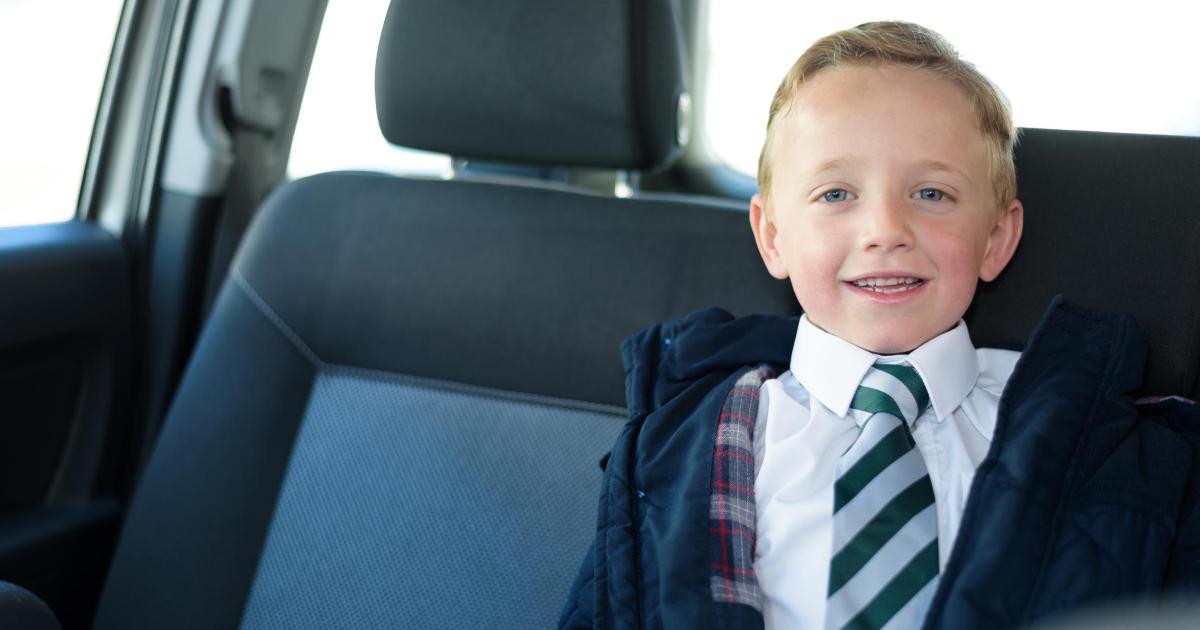
Father walking his daughter to school (Image: Getty Images/iStockphoto)

The key school-run parking rule

The safest option is to avoid stopping directly outside the school gates unless the road markings and signs clearly allow it.

Advertisement

Drivers should look for a legal parking bay, off-street parking or another suitable place away from the entrance, then walk the remaining distance if necessary.

A quick drop-off might seem harmless, but yellow lines, school entrance markings, junctions, crossings and restricted spaces can all come with specific rules.

Checking the signs and road markings before getting out of the car can help parents avoid an unnecessary parking problem during the school run.

Advertisement

Source link

Continue Reading

NewsBeat

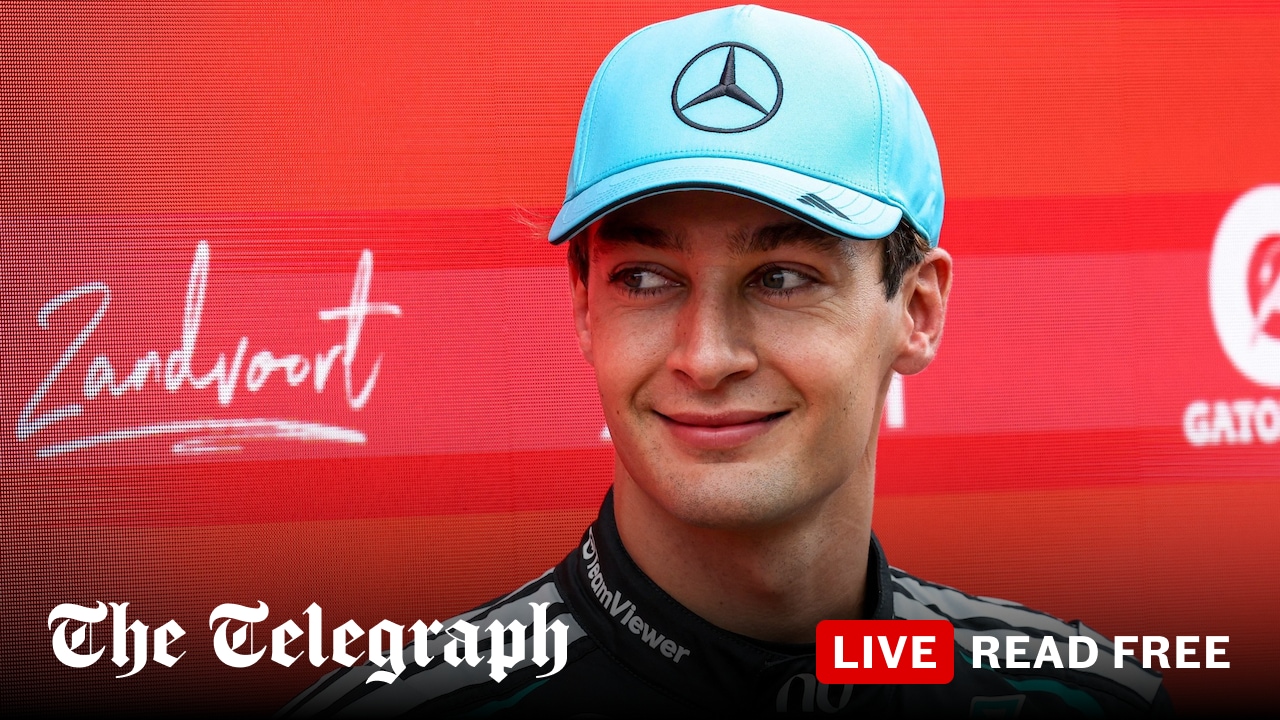
George Russell king of the sprint and driving with freedom after engagement

Published

on

George Russell king of the sprint and driving with freedom after engagement

Welcome to our live coverage for the sprint race for the 2026 Dutch Grand Prix, the first race after F1’s summer break. Kimi Antonelli has had a tremendous first part of the season, leading Lewis Hamilton by 50 points and George Russell by 59 after the first 11 rounds. He has taken six wins to Russell’s two, with Hamilton, Lando Norris and Charles Leclerc all racking up a win apiece. 

His start to the second part of the season was not the best, however. A messy sprint qualifying session meant he ended down in fifth, more than 0.2sec behind team-mate Russell, who took a much-needed pole. 

Some of the damage was self-inflicted, quite literally. In the first session of sprint qualifying he ran wide at the banked turn 12 and into the gravel. The damage to the floor of his car was attempted to be repaired for the rest of the session but left him lacking downforce. A gap of 0.2sec is not enormous but the other issue was that three other cars – Norris, Leclerc and Piastri – are between him and Russell. 

Advertisement

That said, it is not a great worry at this point. The points available in the sprint are relatively small and Antonelli has a healthy margin at this point over his rivals. In any case, there is no guarantee that Russell and Antonelli finish where they will start. Antonelli has shown on numerous occasions that he can bounce back from a difficult session and you have to expect that again here. 

The race, which starts at 11am BST, is one-third of the race distance and should be run in dry conditions. There have been persistent showers and a steady breeze at Zandvoort this weekend, but it is not expected to affect the running in the sprint. 

Qualifying for tomorrow’s grand prix comes later today at 3pm, which could be a more consequential session. 

Source link

Advertisement
Continue Reading

NewsBeat

Woman, 26, blames her dead friend for tampering with rented Lamborghini’s controls which triggered a ‘boost’ and caused 120mph fatal crash

Published

on

Humaira Batool (pictured arriving at court) denies causing death by dangerous driving following a fatal crash on the M62 near Ripponden, West Yorkshire, on December 21, 2022

Advertisement

A woman accused of killing her friend in a fiery Lamborghini crash claims he triggered a ‘boost’ while tampering with the supercar’s controls. 

Humaira Batool, 26, told jurors that her passenger, Mohammed Shaan Hussain, 20, pressed buttons moments before the Lamborghini Urus began to ‘surge’. 

Batool denies causing death by dangerous driving following the crash on the M62 near Ripponden, West Yorkshire, on December 21, 2022.

The car was travelling at 120mph as it passed Stott Hall Farm – known as the ‘house in the middle of the motorway’ – before leaving the road, striking a barrier and overturning.

Advertisement

Motorists’ attempts to rescue Mr Hussain were hindered by fire and an explosion. 

Batool, then aged 22, escaped and was found on a grass verge with serious injuries, including burns to around 10 per cent of her body and a shattered tibia.

Mr Hussain died in the wreckage.

He had hired the Lamborghini to collect a friend from HMP Leeds and picked up Batool from her Bradford home around 4am.

Advertisement

Humaira Batool (pictured arriving at court) denies causing death by dangerous driving following a fatal crash on the M62 near Ripponden, West Yorkshire, on December 21, 2022

Motorists' attempts to rescue Mr Hussain (pictured) were hindered by fire and an explosion. The 20-year-old died in the fiery wreckage

Motorists’ attempts to rescue Mr Hussain (pictured) were hindered by fire and an explosion. The 20-year-old died in the fiery wreckage

Prosecutor Christopher Dunn told Leeds Crown Court that Mr Hussain was initially driving the supercar before the pair swapped seats.

Advertisement

The court heard she drove at more than twice the speed limit in dark, wet conditions and reached speeds of up to 143mph before the fatal crash. 

Mr Dunn told the jury: ‘The defendant’s driving fell far below what would be expected of a competent and careful driver.’

Batool initially told police she had been asleep in the passenger seat and awoke when the car rolled, the court heard.

But footage shown to the jury showed Batool leaving the passenger seat at traffic lights and taking the driver’s seat from Mr Hussain.

Advertisement

Mr Dunn said: ‘She kept entirely shtum about that until she was forced to acknowledge it when she was confronted with unequivocal evidence proving that she was the driver at the relevant time.’

Batool told jurors Mr Hussain had been handling controls inside the car and said: ‘Watch this, watch this’ before reaching towards the console and steering wheel.

She claimed the vehicle repeatedly ‘boosted’ as he ‘pressed the buttons multiple times’, causing her to panic and freeze.

Footage shown to the jury showed Batool leaving the passenger seat and taking the driver's seat from Mr Hussain (pictured). She initially claimed she awoke when the car rolled

Footage shown to the jury showed Batool leaving the passenger seat and taking the driver’s seat from Mr Hussain (pictured). She initially claimed she awoke when the car rolled

Advertisement

But a Lamborghini expert told the jury there were no buttons, levers or controls which could cause such acceleration.

Mr Dunn told the jury: ‘You may feel she embarked on a deeply distasteful attempt to put the blame for that grossly excessive speed upon the person who died as a result of her dangerous driving.’

Defence barrister Richard Dawson argued the collision may have been a genuine accident for which nobody was criminally responsible.

He said: ‘Sometimes, accidents happen – accidents in the true sense where no one is criminally to blame.’

Advertisement

Mr Dawson said high speed alone would not make a car suddenly leave the road and overturn, suggesting something else must have caused the sudden loss of control.

He said: ‘The prosecution have never been able to provide any crucial detail as to how or why the collision actually occurred. They don’t know.’

Mr Dawson said Batool did not claim to know exactly what Mr Hussain touched, only that the car surged afterwards.

Jurors are expected to be sent out today to consider their verdict following closing speeches from the prosecution and defence.

Advertisement

Advertisement

Source link

Continue Reading

NewsBeat

Toby Jones and Nicola Coughlan filming Netflix show in Saltburn

Published

on

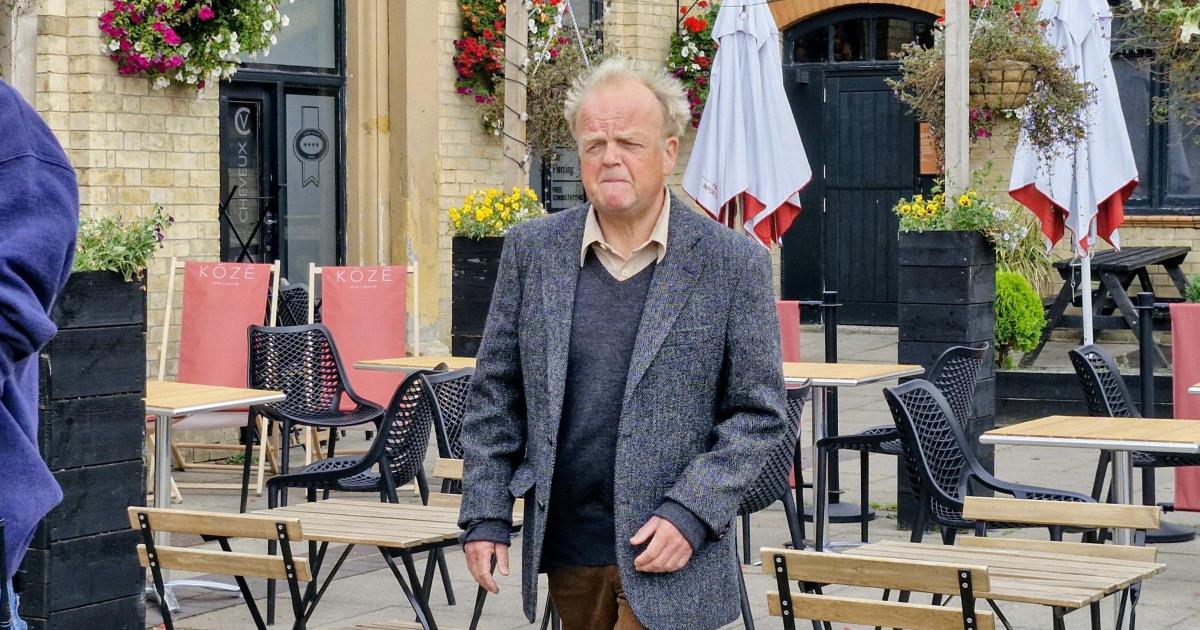
Toby Jones and Nicola Coughlan filming Netflix show in Saltburn

Camera crews, monitors, and lighting rigs have been set up along the promenade in the seaside town as filming gets underway on the rumoured ‘Tales Of The Unexpected’ series. 

The production, which is understood to be operating under the working title of Zoltar, will explore the world of Roald Dahl’s short stories for adults across six episodes.

While this has not yet been confirmed, megastar Toby Jones, who has been announced as part of the cast for the Roald Dahl series, has been seen on set walking through Station Square. 

Film crews in Saltburn for a new Netflix production (Image: PETER JOSEPH)

Jones is best known for his roles as Dobby in Harry Potter, Arnim Zola in the Marvel Cinematic Universe, and as Alan Bates in Mr Bates vs The Post Office. 

Advertisement

Also spotted on set were Naomi Scott, best known for her roles in Smile 2 and Aladdin, and Nicola Coughlan, from Bridgerton and Derry Girls. 

Film crews moved in on the town earlier this week, transforming Keith’s Sports on Milton Street into a pawn shop, rebranding the amusements as ‘Penny Palace’, and adding a new ‘Beachside Café’ to the promenade.

Film crews in Saltburn for a new Netflix production (Image: PETER JOSEPH)

Other pictures taken on Tuesday show how the colourful huts along the promenade are being used as ‘green rooms’, while other members of the production can be seen looking at monitors under a small marquee nearby. 

It is not known how long the production will be in town for, but a post on Facebook from a member of production suggests it will be for several weeks. 

Advertisement

Film crews in Saltburn for a new Netflix production (Image: PETER JOSEPH)

The new Roald Dahl series is from writer Danny Brocklehurst, who is known for writing on Harlan Coben Netflix shows including Fool Me Once, Stay Close, and The Stranger. 

The series will explore the world of Dahl’s short stories for adults and will follow a young couple navigating multiple adaptations of these across six episodes. 

The description of the series reads: “Brocklehurst weaves a deliciously twisted tale made up of Roald Dahl’s iconic short stories for adult audiences. 

Film crews in Saltburn for a new Netflix production (Image: PETER JOSEPH)

“A young couple, marooned in a faded seaside town, must face con men, adulterers, murderous mothers, and snake charmers as they attempt to escape before their own fate is sealed…”

Advertisement

Toby is one of many major stars already announced for the series, with others including Imelda Staunton (Harry Potter, The Crown) and Dominic West (The Wire, The Crown).

Film crews in Saltburn for a new Netflix production (Image: PETER JOSEPH)

Other stars already confirmed for the show include Christine Tremarco (Adolescence, Waterloo Road), Josh Finan (Say Nothing), Carmen Ejogo (Selma, It Comes at Night), Michael Socha (The Cage), and Clarke Peters (The Boroughs, The Wire)


The series is produced by Orchid Pictures, with Suzanne Mackie (The Boys from Brazil, The Crown) and Gabriel Silver (Chernobyl, Gangs of London) serving as executive producers. Brocklehurst (Brassic, Fool Me Once) also executive produces, with Sarah Lewis (The Long Shadow, The Forsytes) as series producer. 

The series will be directed by Runyararo Mapfumo (Sex Education, KAOS) and Ben Gregor (The Magic Faraway Tree, Brassic). 

Advertisement

Parts of the show have already been filmed in Manchester.

Source link

Advertisement
Continue Reading

NewsBeat

First picture of woman who died in ‘hit and run’ crash near Edinburgh Airport

Published

on

Daily Record

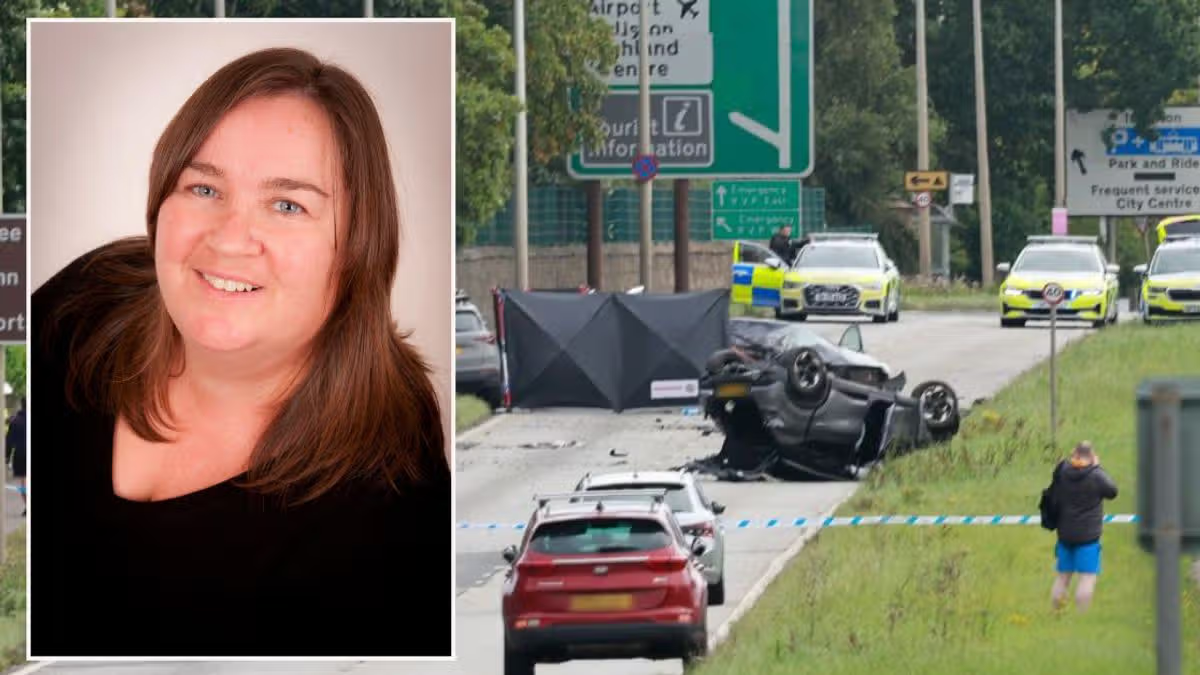
Linda Patterson, 58, died at the scene on the A8 near Edinburgh airport on Monday morning.

A woman who died in a fatal crash near Edinburgh Airport has been named locally as Linda Patterson.

The collision on the A8 Glasgow Road, between Newbridge Roundabout and Gogar, at around 9.25am on Monday involved a grey Mercedes A250, a black Renault Captur, a grey Skoda Karoq and a grey Hyundai i30.

A major emergency service response was dispatched to the crash site, which police later described as a “hit and run”.

Advertisement

Linda, the 58-year-old driver of the grey Hyundai i30, was pronounced dead at the scene.

Detectives said they were looking for three people who had allegedly fled the scene. Two women, aged 23 and 19, and a 32-year-old man have since been arrested.

Loved ones have paid tribute on social media to pub boss Linda, from Broxburn, following news of her sudden passing.

Her business partner Arthur Alexander said she was his best friend and had become part of his family.

He said: “It’s with a heavy heart that we are having to announce the tragic passing of our amazing friend Linda Patterson.

“Linda was my best friend for over 40 years and very much part of our family. She will be sadly missed.

“Further details with funeral arrangements etc will be announced in due course. Till we meet again LP.”

Advertisement

Trishia Ashcroft said: “We are shocked to the core to hear about the sad passing of our lovely cousin, Linda. We were thankful to have spent some special time with Linda and recently Was looking forward to many visits this coming year and making memories. Absolutely gutted.”

Chloe Jayne commented: “Our hearts are broken. We will never forget you Linda.”

Charlotte McGartland said: “A devastating loss. She was the loveliest person I’ve ever met. Her family here in Greenock are heartbroken but very grateful to have known such an beautiful soul. Rest in peace lovely Linda, you’ll never be forgotten.”

Advertisement

Linda Brysland commented: “Absolutely heartbroken. Rest in peace my beautiful cousin. Forever grateful for the memories, cruelly not enough of them. Love always.”

Marieanne Empsall said: “My lovely cousin, you will be greatly missed.”

Four other people were taken to hospital with injuries after the crash.

Images taken at the scene showed a lorry, which was stopped on a grass verge and a number of cars, some of which appeared to be on their roof. Police with sniffer dogs were also pictured in the area.

The road was closed to allow investigation enquiries to be carried out and re-opened around 7.05pm on Monday night. The vehicles were also recovered.

Following the crash, Inspector Thomas Mallinson said: “My thoughts are with the family of the person who died at this incredibly difficult time.

“I am appealing for anyone who witnessed it or who has information which could assist our investigation to contact us. I would also ask anyone who was in the area and may have dash-cam footage to please get in touch if it holds anything which could be relevant.”

Advertisement

Get more Daily Record exclusives by signing up for free to Google’s preferred sources. Click HERE.

Advertisement

Source link

Continue Reading

NewsBeat

Apple’s foldable ‘iPhone Duo’ expected ‘to launch tonight’ – everything we know so far

Published

on

Daily Record
Apple’s foldable ‘iPhone Duo’ expected ‘to launch tonight’ – everything we know so far – Daily Record

Advertisement
reach logo

At Reach and across our entities we and our partners use information collected through cookies and other identifiers from your device to improve experience on our site, analyse how it is used and to show personalised advertising. You can opt out of the sale or sharing of your data, at any time clicking the “Do Not Sell or Share my Data” button at the bottom of the webpage. Please note that your preferences are browser specific. Use of our website and any of our services represents your acceptance of the use of cookies and consent to the practices described in our Privacy Notice and Terms and Conditions.

Source link

Continue Reading

NewsBeat

Andy Burnham says he won’t cut ‘social security’ to boost defence as he refuses to give timetable for spending 3% of GDP on military

Published

on

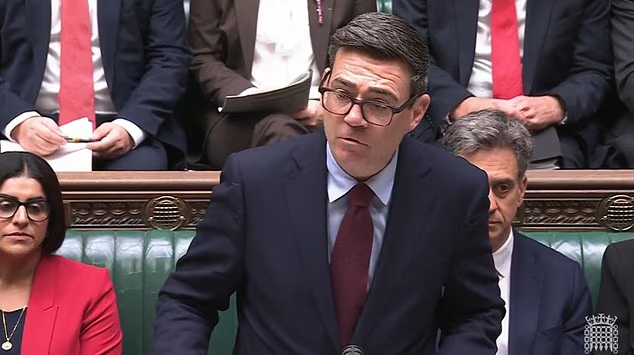
Braving his second PMQs, Andy Burnham dodged giving a timetable for spending 3 per cent of GDP on the military - despite suggesting last week the level will be reached by 2030

Advertisement

Andy Burnham insisted he will not cut ‘social security’ to boost defence today as he clashed with Kemi Badenoch.

Braving his second PMQs, Mr Burnham dodged giving a timetable for spending 3 per cent of GDP on the military – despite suggesting last week the level will be reached by 2030.

Pressed by the Tory leader on where he would find the extra money, Mr Burnham criticised the Opposition’s suggestion of trimming housing benefit.

He said bolstering the country’s defences ‘cannot come at the expense of social security’.

Advertisement

Mr Burnham argued that the Government would not be ‘forced to choose between the two’. 

Braving his second PMQs, Andy Burnham dodged giving a timetable for spending 3 per cent of GDP on the military – despite suggesting last week the level will be reached by 2030

Last week Mr Burnham blundered by giving a 2030 deadline for spending 3 per cent of GDP on defence, something the Treasury had been careful to avoid. 

Advertisement

Hours later No10 made clear that the position on the target was ‘unchanged’ from the previous refusal to say one way or another. 

Chancellor John Healey has said a path will not be set out at the Budget next month, instead waiting until next year’s spending review. 

Mr Healey resigned as Keir Starmer’s defence secretary partly in protest at the refusal to lay out a schedule for reaching 3 per cent, and then the Nato target of 3.5 per cent by 2035. 

Plans set out in the Defence Investment Plan (Dip) will see spending rise to 2.7 per cent of GDP by 2027-28.

Advertisement

Even senior Labour MPs have warned Mr Burnham that ‘vibes’ will not be enough to shore up the country’s military. 

Advertisement

Source link

Advertisement
Continue Reading

NewsBeat

private prescribing is lowest where need is greatest

Published

on

private prescribing is lowest where need is greatest

For many people living with obesity, Wegovy and Mounjaro offer the possibility of substantial weight loss without surgery. Yet data from one private provider points to a troubling divide: prescription rates of these drugs in England are lowest in communities where obesity is most common.

Wegovy contains semaglutide, which acts on the GLP-1 hormone pathway involved in appetite. Mounjaro contains tirzepatide, which targets both GLP-1 and another hormone pathway called GIP. In trials involving adults without diabetes, participants taking semaglutide lost an average of 14.9% of their starting weight after 68 weeks. Those receiving the highest dose of tirzepatide lost an average of 20.9% after 72 weeks. Both trials also provided support with diet and physical activity.

The 2026 analysis of 113,630 patients found that private prescribing rates were 32% lower in England’s most deprived areas than in the least deprived. Once the higher prevalence of obesity in deprived areas was taken into account, the estimated prescribing rate per person living with obesity was 120% higher in the least deprived areas.

The analysis cannot show that cost caused this difference. It covered one provider and estimated deprivation from patients’ postcodes rather than their individual incomes. It also examined access rather than treatment outcomes.

Advertisement

Even so, the findings bring a difficult question into focus: while NHS access to these treatments is still being rolled out, does the ability to pay influence who can access treatment sooner?

Obesity and deprivation

Obesity is sometimes presented as the result of personal choices, although evidence is clear that body weight is influenced by genetic and biological processes alongside income, education, food prices and the environments in which people live. A review of the socioeconomic evidence found that, in high-income countries, lower socioeconomic status is generally associated with a greater likelihood of obesity, particularly among women.

Cost can affect what people are able to eat. A meta-analysis covering ten countries found that healthier dietary patterns generally cost more than less healthy ones, although the difference varied according to the foods and methods being compared.

Despite this, England’s obesity policy has often concentrated on encouraging individuals to change their behaviour, rather than addressing systemic causes.

Advertisement

An analysis of 14 government strategies published between 1992 and 2020 found that many proposed policies placed high demands on individual agency, and were unlikely to be effective or reduce inequalities. Medication can improve treatment for individuals, but it does not remove the conditions that make obesity more likely.

NHS access is being phased in

England’s National Institute for Health and Care Excellence (Nice) recommends tirzepatide for adults with a body mass index of at least 35 and at least one weight-related health condition. Lower BMI thresholds apply to people from some ethnic backgrounds because their risk of weight-related illness can increase at a lower BMI.

NHS England estimates that around 3.4 million adults meet the Nice criteria. Tirzepatide is available to eligible patients through specialist weight-management services, subject to a clinician’s decision. Access through primary care is narrower and is being introduced according to BMI and the number of related health conditions.

The phased primary-care rollout is expected to cover around 220,000 people during its first three years. The approved funding variation allows up to 12 years to make treatment available to the full eligible population. Many people who meet the wider Nice criteria may therefore wait years for primary-care access.

Advertisement

Private prescriptions provide another route for people who meet the relevant clinical requirements and can afford treatment.

Although this analysis cannot establish exactly why uptake differs between areas, its results are consistent with affordability influencing access. While NHS prescribing is still being phased in, people who can pay for private treatment may be able to access these medicines sooner than those who cannot, making cost a potential additional barrier for those living in more deprived areas.

Treatment may involve continuing costs

The financial divide could become greater if people need prolonged treatment. A 2026 systematic review found that participants regained around 60% of the weight they had lost within a year of stopping GLP-1 receptor agonists.

Longer-term evidence remains limited, and people will not all have the same experience. But these findings suggest that some patients may need continued treatment or another maintenance plan to preserve much of their weight loss.

Advertisement

For people paying privately, maintaining treatment over months or years could involve substantial ongoing costs. And the benefits of treatment may also depend on the support available alongside the prescription.

These medicines reduce appetite and food intake, which can make it harder to obtain adequate nutrition from a smaller amount of food. Clinical guidance recommends assessing diet quality and the risk of nutrient deficiencies and muscle loss, while providing individual advice during treatment. A recent article in Nature Medicine warned that unequal access to nutritious food and professional support could lead to unequal treatment outcomes.

NHS England requires nutritional and behavioural support to accompany tirzepatide prescriptions. Ensuring that this support is available in practice will be particularly important for patients already experiencing food insecurity, or who have difficulty accessing healthcare.

Advertisement

GLP-1-based medicines could improve health for many people living with obesity. Their wider effect on health inequalities will depend on how quickly NHS access expands, and whether treatment reaches communities with the greatest clinical need.

Appropriate continuing support will also influence how safely and effectively people can use them. Without an equitable system, population health could improve while the gap between socioeconomic groups grows wider.

Source link

Advertisement
Continue Reading

NewsBeat

Mass disruption at airports continues as 1,900 flights to and from UK cancelled – live updates

Published

on

Wales Online

Tim Riley, Managing Director of travel insurer True Traveller and Chairman of the UK Travel Industry Association, representing all the major UK travel insurers, has issued the following guidance for UK travellers affected by the current Air Traffic Control disruption:

“The current air traffic control disruption is understandably frustrating for travellers, but there are a number of practical steps people can take.

The first port of call should be the airline. Depending on the circumstances, passengers may be entitled to rerouting, a refund and, where appropriate, meals, refreshments and accommodation.”

Advertisement

Tim advises passengers to keep confirmation of the reason for the disruption, together with receipts for any additional expenses, as airlines may still have responsibilities under passenger rights legislation.

“Travel insurance is there to provide valuable protection when things go wrong, but it is not intended to replace the responsibilities of airlines.”

He explains that cover will usually depend on both the cause of the disruption and the length of the delay. Air traffic control failure is commonly excluded, although travellers should always check their policy wording rather than assume they are not covered.

“Our advice is straightforward: speak to your airline first, establish exactly what has caused the disruption and keep all relevant documentation and receipts. If a later delay is caused by a genuinely separate insured event, such as an unrelated technical problem with the aircraft, the travel insurance position may be different.

Advertisement

Most importantly, don’t assume that a delay automatically means you are either covered or not covered. Check the reason, check your policy, and ask your insurer if you are unsure.”

Source link

Continue Reading

NewsBeat

The right to play: displaced by conflict

Published

on

The right to play: displaced by conflict

With nearly 50 million children displaced by conflict and violence, charities are finding ways to give young people something often lost in war: the chance to play

Hamza, a 10-year-old Palestinian boy who had spent his whole life in the overcrowded Nahr el-Bared refugee camp in northern Lebanon, used to be withdrawn and shy. He rarely spoke and avoided interacting with other children. When he started school aged six, he had never held a pencil or opened a book.

But then he began taking part in the Enhancing Quality and Inclusive Education (EQIE) programme, run by the global NGO Right To Play. Alongside receiving speech therapy, he took part in group activities, which helped him start expressing his emotions through drawing, storytelling and roleplay. His favourite game was “guess the emotion”, where one child would act out a feeling and the others had to guess it.

Advertisement

His confidence grew. One year later, he could write his own name, recognise letters and had made friends. After four years, he was a thriving, joyful child who proactively took part in class. He told his teacher his dream was to become a dentist.

Solutions every Saturday
Uplift your inbox with our weekly newsletter. Positive News editors select the week’s top stories of progress, bringing you the essential briefing about what’s going right.
Sign up

Hamza’s story is just one example of how play-based interventions can positively impact children who have experienced displacement or war-related trauma. Play, which comes in multiple forms, is integral to teaching children core skills and boosting self-esteem, explains Racha Nasreddine, country director for Lebanon at the charity.

“It’s not always moving and playing and causing chaos,” she says. “It’s more about how you transfer specific knowledge in a very interactive way, and how you make that child an active actor in their learning process. For a child, what is always important is creating a routine. In war, children lose a sense of control over their lives, so play can bring some of that back.”

Advertisement

Interventions like these are urgently needed. Conflicts across the Middle East, Ukraine and Sudan have caused immense suffering, with children heavily impacted. According to Unicef, nearly 50 million children had been displaced due to conflict and violence by the end of 2024, almost triple the figure in 2010.

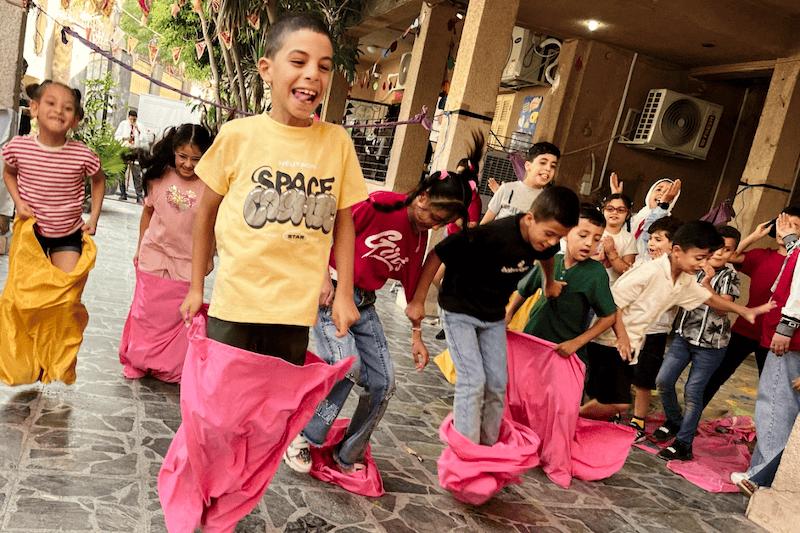
Children in Lebanon take part in Right to Play’s programme, learning to express themselves through drawing, storytelling and group activities. Image: Right to Play / Ralph Azar

Advertisement

As well as experiencing physical trauma, many of these children experience psychological distress, including post-traumatic stress disorder, anxiety, depression, selective mutism, sleep problems and behaviours such as aggression or withdrawal. Play can form a crucial part of psychosocial therapy, but opportunities are limited due to the closure of schools, a lack of access to playgrounds and green spaces, and cramped conditions in camps.

Children have a fundamental right to play enshrined in Article 31 of the UN Convention on the Rights of the Child, yet many are denied this right.

In response, global play organisations are stepping up to this challenge. Catalytic Action is another international charity that uses design and architecture to create empowering play spaces for children in conflict and disaster zones.

Organised play can be critical in helping children recover from trauma by enabling them to reprocess their memories in a healthier way

An integral part of trauma recovery is the co-design process, explains co-founder Joana Dabaj. Local children imagine their dream playgrounds through drawings and workshops, giving them a sense of agency. “The process is as important as the final result, because we’re enabling sharing of feelings, of experiences, of visions,” she says. “It acknowledges their needs, their rights, and translates their ideas into reality.”

Advertisement

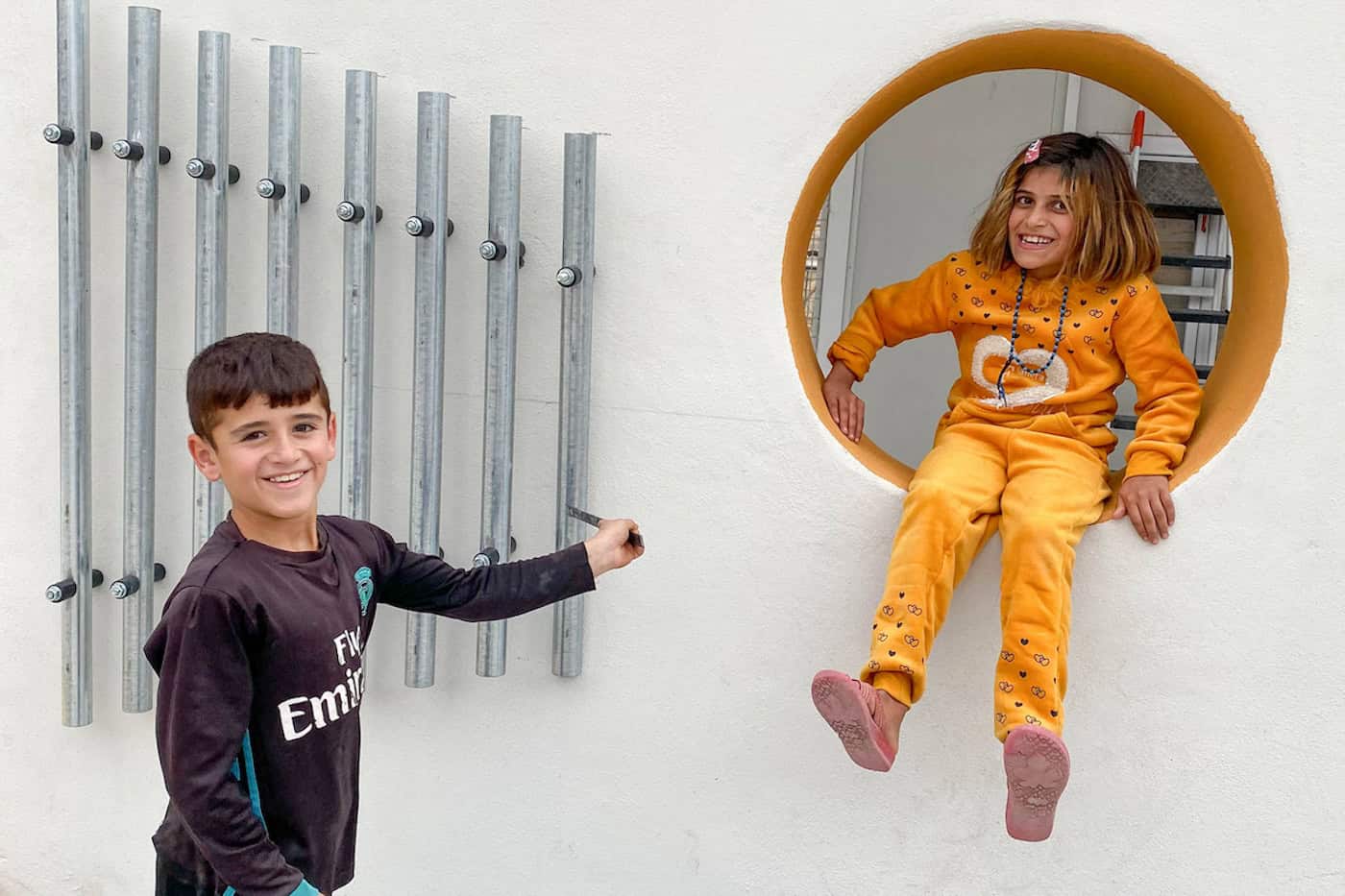
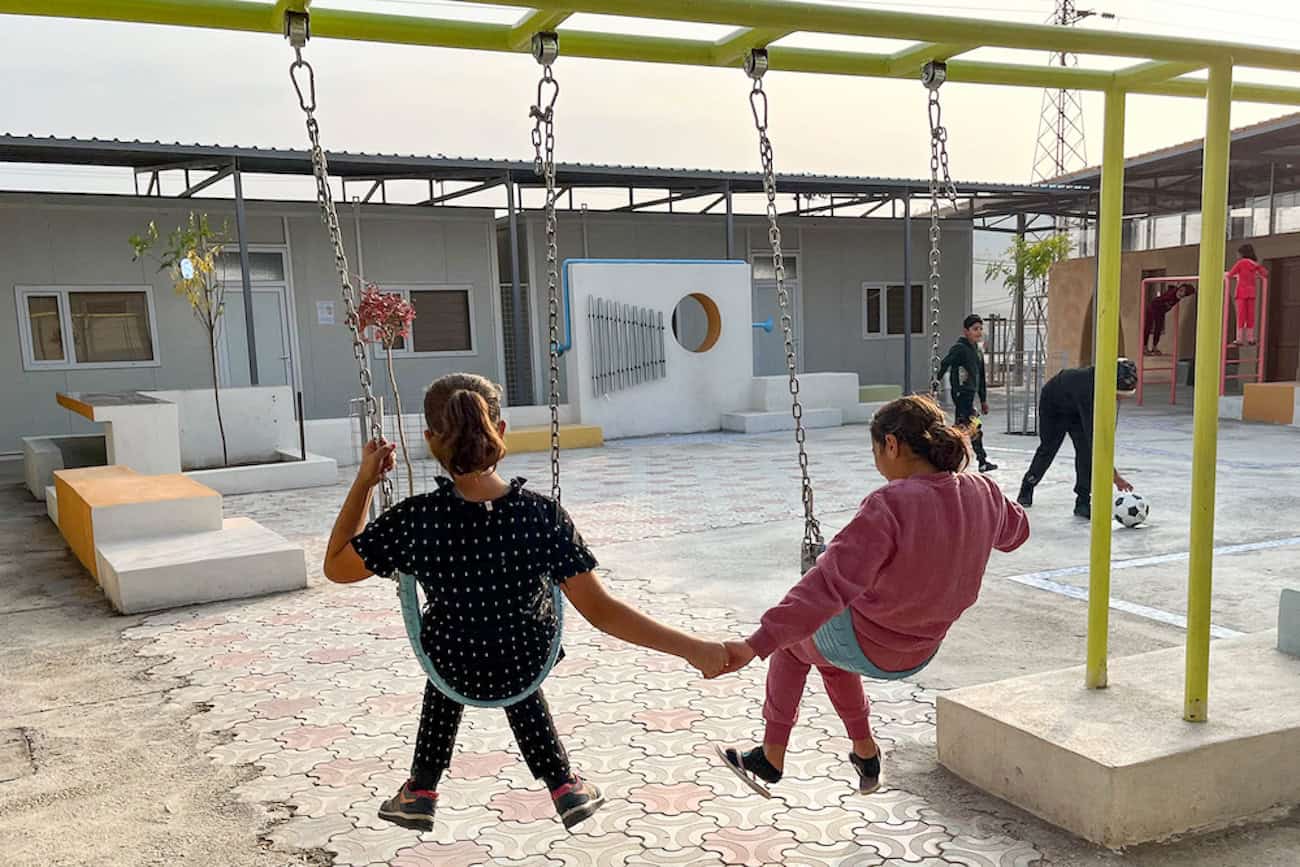
One such playground was created in collaboration with non-profit Habibi International, in a courtyard in the Bersive refugee camp in the Kurdistan region of Iraq, home to many internally displaced people. The playground’s unique features have multiple uses: staggered benches around the perimeter serve as both seats and jumping-off platforms, while holes in the outer wall enable younger children to peek through and play hide-and-seek. Others can play ball sports in a central open space, while the perimeter features swings, monkey bars, hopscotch markings and sensory toys, such as speaking pipes, a xylophone and a steering wheel.

Spaces like this are built to last, so the benefit can stretch over years rather than weeks. Other organisations focus on makeshift structures, which can respond to the volatility of war by being easy to transport and install. That is the thinking behind the modular playgrounds recently launched by UK-based charity Playrise.

These play structures can be easily dismantled and modified with different attachments, from hammocks and swings to monkey bars and musical instruments like drums, generating a flexible design that can meet the preferences of different communities. The designs were created in collaboration with children in Ethiopia and Egypt, and the first prototype will go to a camp in Aysaita, Ethiopia.

Children often get sidelined in war, explains co-founder Ariana Mouyiaris Meininger, and projects like Playrise aim to centre them again.

“In environments where there is conflict, [children] get adultified early,” she says. “They have to take on a lot of roles that shouldn’t fall on their shoulders. So it’s trying to communicate both to a global audience and to communities themselves how important play is for children.”

Organised play can be critical in helping children recover from psychological trauma by enabling them to “reprocess” their memories in a healthier way, explains Kieran King, head of humanitarian at charity War Child UK. But it cannot rely solely on well-designed structures, he says. Play should be integrated within child protection programmes, which take into account safeguarding issues and ideally involve trained facilitators.

Advertisement

In war, children lose a sense of control over their lives, so play can bring some of that back

Play may not involve a physical structure at all, but simply children’s imagination. Helen Christie, a clinical psychologist and trainer for the charity Children & War Foundation, explains that integrating “fantasy” into psychosocial therapy is crucial for trauma recovery. Activities based around re-enacting traumatic events, such as bombings, shootings or displacement, should move to a new, reparative narrative, she says, rather than simply repeating the trauma. For example, when children have recurrent nightmares about past events,“rehearsing” a new ending to their dream through role play can help them heal.

Palestine Play Projects is a UK-based volunteer-led charity that relies heavily on imaginative play. While it used to set up physical playgrounds, since the start of the Israel-Gaza war in October 2023, it has pivoted to hosting play sessions in refugee camps in Khan Yunis, working with a youth theatre group called Child Smile.

“It’s about the temporary spaces, the liminal spaces, the leftover spaces – being able to go to where children are, and then creating the conditions where play is possible,” says Theresa Casey, a volunteer and consultant on play and children’s human rights.

Workers with Child Smile arrive at camps with just a “backpack of resources”. Using methods such as Magic Mitten, a psychosocial support app and storytelling toolkit for children with war-related trauma, originally created for children in Ukraine, facilitators do group activities such as storytelling using make-believe animal characters, talking about emotions, and journalling. The most crucial part is building trust with the children.

Advertisement

Yara*, an 11-year-old girl displaced from northern Gaza, experienced severe trauma after her entire immediate family was killed. She became withdrawn, emotionally shut down and sometimes aggressive. After taking part in the Child Smile sessions for two weeks, she showed a “remarkable transformation”, the charity says, becoming more confident, actively taking part and supporting other children. She was finally able to write about her loss, and how she missed her family, marking a significant emotional turning point.

With the world in such a volatile state, more and more children are being deprived of a childhood. Only 3% of humanitarian aid goes towards education, according to the World Bank, with just a fraction of that reaching play-based support.

Advertisement

While food, shelter, medical care and water will always be the essentials, play is also vital for children’s physical and mental wellbeing, learning and development, and for bringing them small moments of normality in unfathomably difficult circumstances.

Play cannot protect children from displacement or airstrikes, but as the eminent child psychotherapist Garry Landreth says, play is “the child’s language” – and without it, they have no voice.

* Names have been changed to protect identities

Main image: Right to Play / Ralph Azar 

Advertisement

Be part of the solution

At Positive News, we’re not chasing clicks or profits for media moguls – we’re here to serve you and have a positive social impact. We can’t do this unless enough people like you choose to support our journalism.

Give once from just £1, or join 1,800+ others who contribute an average of £3 or more per month. Together, we can build a healthier form of media – one that focuses on solutions, progress and possibilities, and empowers people to create positive change.

Support Positive News

Advertisement

Source link

Continue Reading

Trending

Copyright © 2025