Connect with us

NewsBeat

Husband finds out about wife’s 12-year affair from a note on his door

Published

on

Daily Record

James Nielson, 41, was sentenced to prison after a three-week stalking campaign that included leaving a note on his former partner’s door revealing their affair and demanding paternity tests

A 12-year-long affair ended in acrimony, culminating in a man pounding on his former mistress’s door, demanding a paternity test.

Advertisement

James Nielson, 41, pursued his ex for three weeks, insisting on DNA tests to establish the paternity of two of her three children, born during their lengthy liaison.

His relentless pursuit involved late-night visits to her home, banging on the door and leaving a note for her husband revealing their secret relationship.

At Liverpool Crown Court today, March 3, prosecutor Lahraib Iqbal stated that Nielson and the victim had known each other for 15 years. Despite marrying her husband in 2013, she maintained an intermittent affair with Nielson, blocking his number during their breaks.

On December 4 last year, the woman awoke to discover 37 messages from Nielson on her phone. As she left for work that morning, she noticed Nielson tailing her.

Advertisement

Ensure our latest stories always appear at the top of your Google Search by making us a Preferred Source. Click here to activate or add us as your Preferred Source in your Google search settings.

She instructed him to leave her be and carried on, but upon reaching her workplace at 8.40am, Nielson confronted her again, only departing when a passer-by intervened, reports the Liverpool Echo.

At 11.30pm that night, whilst at home in Liverpool with her husband and children, Nielson began hammering on her door. He slipped a note through the letterbox divulging the affair before leaving the premises – only to return in his car at 3am, honking his horn.

Ms Iqbal stated: “At 10.30am (December 5) the defendant was spotted sat outside the address, beeping his horn and waving at (the victim) from his car.”

Advertisement

Three days later, around 6.20am on December 8, the victim once more departed her home for work when Nielson confronted her. After telling him to “go away”, she climbed into her vehicle and set off towards Crosby.

However, Nielson pursued her in his black Volkswagen Golf, forcing her to pull over to prevent a collision with another motorist.

Ms Iqbal continued: “He went around to the front of her car and with his fists began to bang on the bonnet of her car.”

The woman subsequently contacted police.

Advertisement

Nielson, of Carriage Grove in Bootle, entered guilty pleas to stalking, driving whilst disqualified, and driving without a licence. He additionally admitted two violations of a 12-month suspended sentence imposed in September 2025 for involvement in cannabis supply and production.

The violations comprised the stalking and motoring offences, alongside his failure to comply with a curfew requirement between December 1 and December 8 2025.

‘Struggled to lose love of his life’

Olivia Bell, defending, told the court: “I would urge the court to accept his remorse is genuine. he regrets any distress caused to (the woman). I in no way seek to minimise his behaviour but simply provide context for his contacting the complainant. The accused and the complainant had been entangled in an intermittent relationship for 12 years, during which the complainant gave birth to three children.

The defendant, however, has raised doubts over the paternity of two of these children. Whilst his actions were unquestionably inappropriate, this context is provided to shed light on why he repeatedly reached out to the victim.”

Advertisement

She stated: “There were no threats of violence. Simply this was a man who struggled to lose what he called the love of his life following as 12-year affair and wanted to seek information about the paternity of the children.”

Nielson’s criminal record includes 11 previous convictions for 21 offences, many of which are driving-related.

In her sentencing remarks, Judge Louise Brandon observed: “It’s quite clear the fear and distress you caused has had a physical and emotional impact on (the victim). It’s affected how she conducted her day to day activities. She has incurred expenses and she has described the impact these actions have had on her life.

“I’m quite satisfied that the stalking is a high culpability offence. This was a persistent action over a long period. You followed the complainant and your behaviour was conducted in a way to maximise her fear and distress, including turning up at her family home.”

Advertisement

Nielson received an 18-week prison term for stalking and eight weeks for the driving offences. The judge also activated 39 weeks of his existing suspended sentence, resulting in a total custodial term of 65 weeks – equivalent to one year and two months.

Additionally, he was disqualified from driving for a total of 115 weeks, whilst a restraining order was imposed preventing him from contacting the victim for seven years.

Source link

Advertisement
Continue Reading
Click to comment

Leave a Reply

Your email address will not be published. Required fields are marked *

NewsBeat

National People’s Congress to set China’s economic goals for coming years

Published

on

National People's Congress to set China's economic goals for coming years

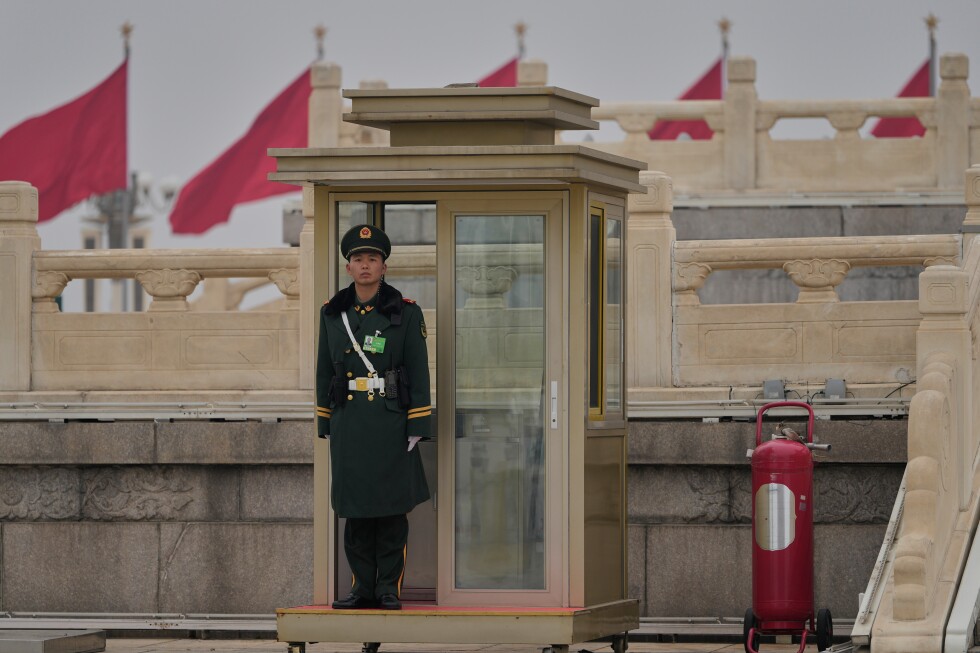
BEIJING (AP) — China’s ceremonial legislature is set to meet Thursday, where it will unveil the country’s policy direction and economic goals for the coming years.

The meeting is held in Beijing, where the National People’s Congress and its advisory body gather. The National People’s Congress will ratify new laws decided by China’s Communist Party leadership. While the near-3,000-member body technically votes, the vote is always almost unanimous.

Also meeting is the Chinese People’s Political Consultative Conference, an advisory body composed of elite members of Chinese society, from business people to athletes. They also include representatives from China’s minority groups, but the body has little power on issues of public policy.

The gathering is called the Two Sessions. The political meetings have changed under President Xi Jinping, with tighter scripts and less scope for debate.

Advertisement

“A long, long time ago, it was a venue for policy deliberation,” and even controversial things, said Alfred Wu, a professor of public policy at the National University of Singapore. “Now it’s very much become a showcase, propaganda.”

Economy is front and center

The National People’s Congress is when the Chinese premier announces the country’s GDP target and other economic targets for the year.

This year, observers are also waiting for details for the 15th five-year plan, of which the government had revealed a draft in October. It is expected to be focused on building tech prowess and self-sufficiency.

China issues five-year plans to direct its economy, a legacy of its historical approach when it had a planned economy.

Advertisement

The Chinese economy remains sluggish, with high youth unemployment, weak housing prices and sagging domestic consumption. It also faces a trade war with the U.S., which has leveraged tariffs on all Chinese goods.

Lou Qinjian, the spokesperson for this year’s National People’s Congress, said Wednesday that the government would maintain its efforts to improve living standards and boost consumption. Those would include raising incomes and improving the education, child care, elderly care and health care systems so “consumers will feel freer to spend,” he said at press conference.

Experts have said China will have to strike a tough balance between its goals of boosting its tech manufacturing, such as in robotics, renewable energy and AI, and boosting domestic consumption as many ordinary people are feeling the pinch. Tech supply chains are narrow and the trickle-down effect is less pronounced.

China is likely to drop its headline growth target to a record low, predicted Neil Thomas and Lobsang Tsering, policy experts at the Asia Society. It will be significant as a step in a “shift from high-speed to high-quality growth,” they wrote.

Advertisement

A push for ethnic assimilation

The National People’s Congress is also expected to ratify a new law governing China’s ethnic minorities. While a final draft has not been released, experts say the latest public draft focused on assimilation, reducing autonomy for the country’s minority groups.

Lou said the legislation fosters “a stronger sense of community among all ethnic groups in the Chinese nation” and outlines steps to promote interaction, exchange and integration.

“Once enacted, we will work to implement it thoroughly and advance Chinese-style modernization through the great unity of the Chinese nation,” he said.

Lou highlighted the Communist Party’s push for unity several times during the press conference and credited past five-year plans with delivering not only rapid economic growth but also long-term stability, a major concern of party leaders.

Advertisement

Personnel movements are not expected

China’s legislature dismissed 19 members last week, after a highly publicized removal of two of the country’s most senior generals in January.

Now, only one member remains of the powerful Central Military Commission, which controls the military, but policy experts say they do not expect any personnel announcements in the upcoming Two Sessions. Observers like to closely watch attendance for any signs of possible purges, however.

Xi Jinping has removed possibly up to 100 senior officials in the People’s Liberation Army in the past four years, according to the Center for Strategic Studies, with the most prominent being General Zhang Youxia in January.

Yet, there is likely no great rush from the leadership to find a replacement.

Advertisement

“I don’t think they’re particularly worried about this,” said Wu of National University Singapore. For example, he said, Wang Yi became foreign minister again after stepping down from the job initially because of the high-profile removal of Qin Gang, previously his replacement.

___

Associated Press writer Ken Moritsugu contributed to this report.

Advertisement

Source link

Continue Reading

NewsBeat

Planned mortgage rate cuts put on hold because of Iran conflict

Published

on

Wales Online

Some lenders have already reconsidered planned rate reductions

Some lenders have pushed pause on planned mortgage rate cuts, according to a financial information website, amid wider economic and global uncertainties as the conflict in the Middle East unfolds. Moneyfacts said swap rates, which are used by lenders to price mortgages, have been rising in recent days.

Advertisement

The website said it was aware that some lenders, which it did not name, had already reconsidered planned rate reductions. Despite some lenders pausing plans to reduce rates further, figures from Moneyfacts indicated some mortgage rates were still heading in a general downward direction on Wednesday.

The average two-year fixed-rate homeowner mortgage rate on the market on Wednesday morning was 4.82%, down from 4.83% on Tuesday. The average five-year fixed-rate homeowner mortgage rate on the market on Wednesday morning was 4.94%, falling slightly from 4.95% on Tuesday.

In the buy-to-let mortgage market, some average rates edged up. The average two-year buy-to-let residential mortgage rate on Wednesday was 4.65%, up from 4.64% on Tuesday.

The average five-year buy-to-let residential mortgage rate on Wednesday was 5.05%, up from 5.04% on Tuesday. Adam French, head of consumer finance at Moneyfacts, said: “Swap rates have been rising sharply as conflict with Iran spreads across the Middle East, driving oil and gas prices higher and reigniting inflation concerns.

Advertisement

“The immediate consequence has been higher gilt yields and a rapid shift in interest rate expectations, with the prospect of a Bank of England base rate cut later this month now looking far less certain. For the mortgage market, the impact is almost instantaneous. Some lenders have already paused or reconsidered planned rate reductions.

“Because fixed mortgage pricing is closely linked to swap rates, this sudden market movement risks halting the recent momentum towards lower mortgage rates just as borrower confidence had begun to build ahead of an anticipated rate cut. It serves as a stark reminder that mortgage costs are not driven solely by domestic policy decisions.

“Global geopolitical events move markets, markets move swap rates, and swap rates ultimately shape the deals available to borrowers – all while the world watches deeply troubling events unfold.”

Martin Temple, an economist at Leeds Building Society, said financial markets “have significantly reassessed” the likelihood of a quarter point cut to the Bank of England’s base rate at its next meeting. He said the upward movement in swap rates “suggests that rates for customers either re-mortgaging or purchasing a new home are likely to increase in the near-term”.

Advertisement

Mr Temple added: “For savers, however, the current environment may present opportunities, with the potential for more attractive rates as we approach the start of Isa season.”

Jinesh Vohra, chief executive of the app Sprive, said: “Markets have been expecting the Bank of England to cut rates further this year, but renewed geopolitical instability risks may make that path less straightforward. If disruption to energy supplies or global supply chains feeds into higher inflation, policymakers may have to be more cautious about how quickly and how far interest rates come down.

“That matters for homeowners, because expectations of falling rates have already been helping mortgage pricing improve. Anything that pushes inflation higher could slow that progress, meaning rates may not fall as much – or as quickly – as borrowers hope.

“For homeowners who feel like they’re financially able, this uncertainty reinforces that making small, optional overpayments when you can is one of the few levers you can control, helping reduce the balance and the impact of future rate moves.”

Advertisement

Source link

Continue Reading

NewsBeat

North Yorkshire man Ryan Rudd missing from Catterick Garrison barracks

Published

on

North Yorkshire man Ryan Rudd missing from Catterick Garrison barracks

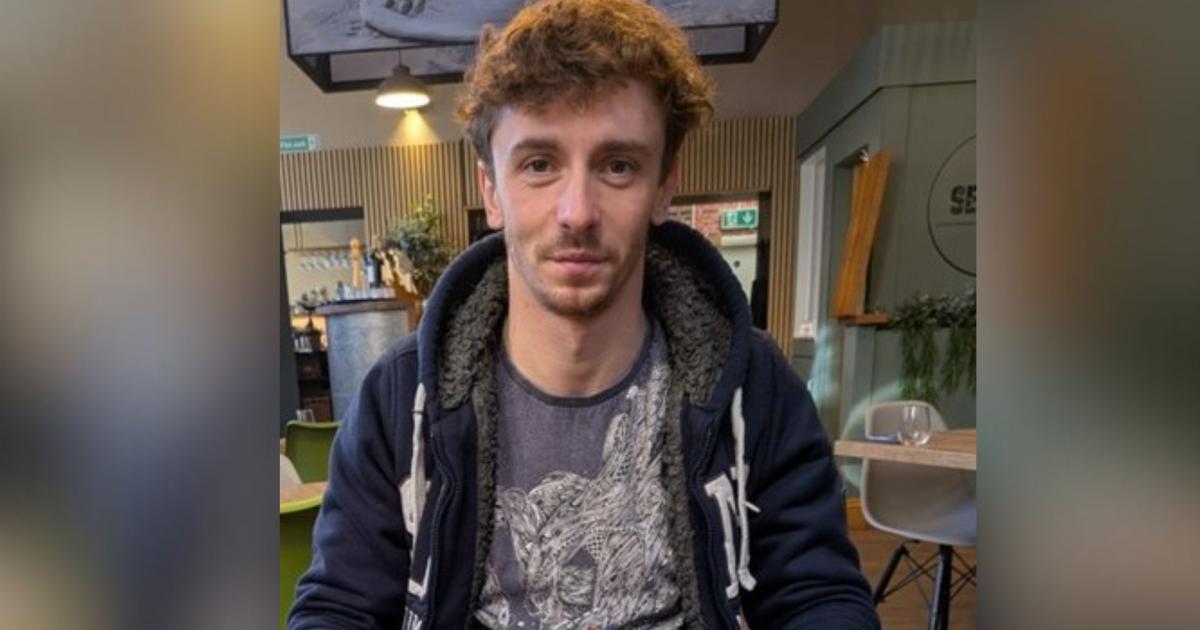
Ryan Rudd, 28, failed to return home or to his barracks in Catterick Garrison when expected.

He was last seen at the New Inn in Selby in the early hours of Sunday, February 15, after going on a night out with two friends on Valentine’s night.

Since then, he has been out of contact with family, friends and colleagues, who are “very concerned” for his safety.

Ryan is described as white, around 5ft 8in tall, of slim build with dark brown hair.

Advertisement

Ryan Rudd (Image: NORTH YORKSHIRE POLICE)

Ryan Rudd (Image: NORTH YORKSHIRE POLICE)

When he was last seen, he was wearing a black t-shirt, a blue hooded top and black trousers.

Ryan Rudd (Image: NORTH YORKSHIRE POLICE)

Ryan Rudd (Image: NORTH YORKSHIRE POLICE)

A spokesperson from North Yorkshire Police said: “We are appealing to anyone who may have seen him in Selby on February 14/15, or has seen him since then, to contact us as a matter of urgency.

“Thank you to everyone who has shared our appeal so far. 

“Extensive enquiries are ongoing to find Ryan, if you have any information that could help, please call us on 101.  

Advertisement

“If you have seen Ryan or know where he is now, please call us on 999.”

Source link

Advertisement
Continue Reading

NewsBeat

Men from Wales arrested on suspicion of spying for China

Published

on

Wales Online

The Metropolitan Police said the suspects – aged 39, 43 and 68 – were arrested by counter-terrorism officers

Three men including two from Wales have been arrested on suspicion of spying for China. The Metropolitan Police said the suspects – aged 39, 43 and 68 – were arrested by counter-terrorism officers in Wales and London after being accused of assisting a foreign intelligence service.

The force said the 43-year-old man was arrested in Pontyclun and the 68-year-old was arrested in Powys while the 39-year-old suspect was arrested in London.

All three remain in custody and searches have been carried out at the addresses where they were arrested, the force added. They are being detained under the Police and Criminal Evidence Act, Commander Helen Flanagan, head of Counter Terrorism Policing London, said on Wednesday.

Advertisement

She said: “Today’s arrests are part of a proactive investigation and while these are serious matters we do not believe there to be any imminent or direct threat to the public relating to this. Our investigation continues and we thank the public for their ongoing support.

“We have seen a significant increase in our casework relating to national security in recent years and we continue to work extremely closely with our partners to help keep the country safe and take action to disrupt malign activity where we suspect it.”

In addition to the addresses where the suspects were arrested, the Met said three other properties in London, east Kilbride in Scotland, and Cardiff have also been searched.

Source link

Advertisement
Continue Reading

NewsBeat

Keir Starmer Condemns Trumps Iran Bombing As Illegal

Published

on

Donald Trump Attacks Keir Starmer Over Iran Bombing

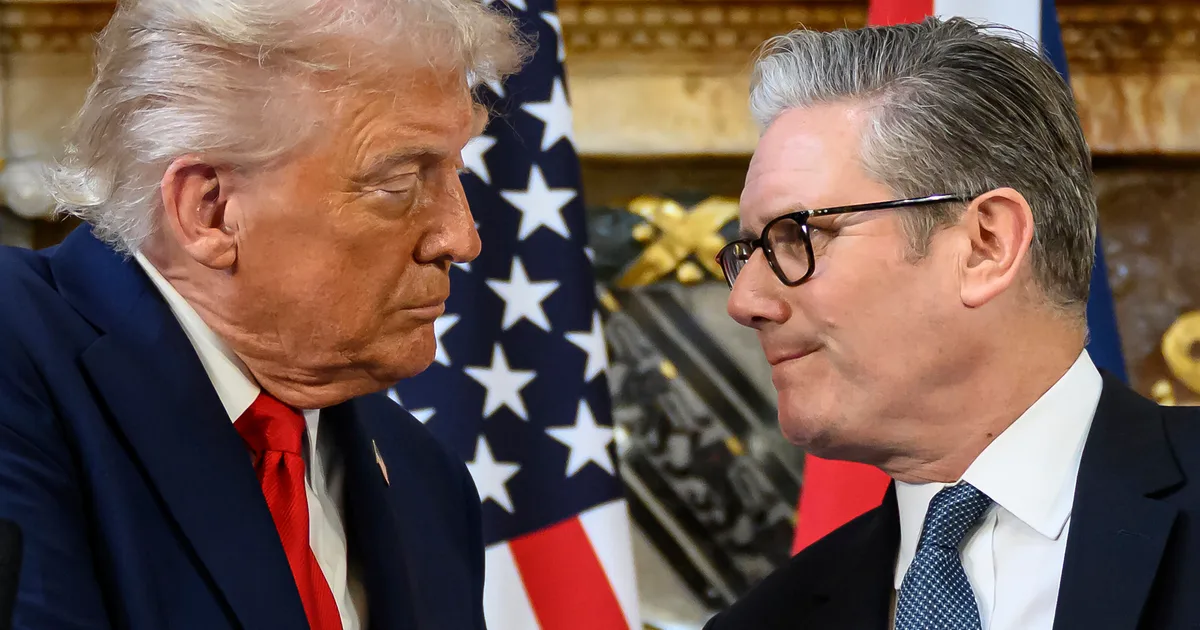
Keir Starmer has told Donald Trump the US bombing of Iran is illegal as he hit back at the president’s criticisms of his actions during the crisis.

The prime minister also claimed America and Israel have no plan for what happens after the war ends.

His comments at prime minister’s questions came a day after Trump said Starmer was “not Winston Churchill” in the latest escalation of the war of words between the pair.

Trump is furious that Starmer initially refused to let the US use British bases to launch their attacks.

Advertisement

Asked by Tory leader Kemi Badenoch why he had done so, the PM said: “What I was not prepared to do on Saturday was for the UK to join a war, unless I was satisfied there was a lawful basis and a viable thought through plan. That remains my position.”

Starmer eventually changed his mind and allowed US jets to use British bases to target Iranian missile launchers to protect around 300,000 UK nationals in the Middle East.

British planes are also taking part in “defensive” operations in the region.

The prime minister said: “The family and friends of those who are caught in the region will be worried sick about them. And of course, we’ve got civilians and military personnel, at risk in the region. We need to act therefore, with clarity, with purpose, and with a cool head.

Advertisement

“The protection of UK nationals is our number one priority, and we’re taking action to reduce the threat, with planes in the sky and the region intercepting incoming strikes, deploying more capability to Cyprus and allowing US planes to use UK bases to take out Iran’s capability to strike.”

Source link

Advertisement
Continue Reading

NewsBeat

East Kilbride home raided by counter-terrorism police after three arrested in China spying probe

Published

on

Daily Record

The Metropolitan Police carried out searches in Scotland as part of an investigation into national security.

Counter-terrorism police searched a home in East Kilbride amid a probe into spying for Chinese intelligence services.

Advertisement

The address was one of a number of properties including London and Cardiff that were searched on Wednesday.

Officers from Metropolitan Police arrested three men on suspicion of spying for China. The suspects – aged 39, 43 and 68 – were all cuffed south of the border in London and Wales.

They were detained on suspicion of offences under section three of the National Security Act 2023.

Commander Helen Flanagan, head of Counter Terrorism Policing London, said: “We have seen a significant increase in our casework relating to national security in recent years and we continue to work extremely closely with our partners to help keep the country safe and take action to disrupt malign activity where we suspect it.

Advertisement

“Today’s arrests are part of a proactive investigation and while these are serious matters, we do not believe there to be any imminent or direct threat to the public relating to this. Our investigation continues and we thank the public for their ongoing support.”

Source link

Continue Reading

NewsBeat

That cosy candle? It’s also polluting the air you’re breathing

Published

on

That cosy candle? It’s also polluting the air you’re breathing

During the winter months, when days are short and cold and nights are long and dark, creating a warm and cosy indoor atmosphere can feel especially important.

Where I live in Denmark, around 75% of the population burns candles two or more times a week, and 34% use them daily during the winter months.

In fact, Denmark is often said to be the country with the highest per-capita candle consumption in Europe. Danes burn around 5.8kg of candle wax per person per year – the equivalent of about six bags of sugar.

Yet, nice as they can look, studies show burning candles is one of the biggest sources of indoor air pollution. This is because when burning, candles emit a large number of ultrafine particles.

Advertisement

These particles are so small that they are invisible to the human eye, and more than a thousand times thinner than a human hair. They can remain airborne for long periods, and when candles are blown out, the concentration of these particles (including soot) increases even further.

Candles vs cooking

In our experiments conducted in exposure chambers (where the climate is controlled) at Aarhus University, we examined how indoor air is affected both by burning candles and cooking pork in an oven.

Cooking – and especially frying – is known to emit high concentrations of particles due to combustion (the process of burning something). Particles from combustion processes are among the most harmful to human health – but less is known about the role that particles emitted from candles plays when it comes to indoor air pollution.

Our research found that while both candles and cooking emit high levels of particles, the number of particles from candles was much higher. Even more significant was the difference in particle size: cooking produced particles about 80 nanometers wide, whereas candles generated particles around seven-to=eight nanometers in size – much smaller and much easier for our lungs to inhale.

Advertisement

We also measured chemical compounds in the air, and found that burning candles produced not only soot particles but gases such as nitrogen dioxide and polycyclic aromatic hydrocarbons (PAHs) – a group of chemicals associated with inflammation and even cancer.

The particles we breathe

Ultrafine particles are of particular concern from a health perspective. They are easily inhaled into our lungs, but research has found they are excreted from the body very slowly.

Due to their extremely small size, particles from candles can penetrate deep into our smallest airways, known as the alveoli, and may even enter the bloodstream. From there, they can reach organs such as the heart and brain.

Indeed, the particles formed when candles are burning are remarkably similar to those found in diesel exhausts in size and composition. These particles have been linked to increased mortality rates from lung and cardiovascular diseases.

Advertisement
Ultrafine particles from burning candles are invisible to the eye, but harmful to your lungs.
pexels/skylar kang, CC BY

In our study, we also investigated how candle burning affects young adults with mild asthma. We found subtle but measurable biological changes following exposure to candle emissions.

Some markers of airway and blood inflammation were altered, and participants reported irritation and discomfort. Other studies among healthy adults have observed small decreases in lung function, changes in arterial stiffness and heart rate, and reduced cognitive function after exposure to burning candles.

Light and dark

You might be thinking: all this from just a candle? But it’s worth remembering that people with chronic conditions like asthma or chronic obstructive pulmonary disease are far more sensitive to particulate air pollution.

Because people with these conditions already have chronically inflamed airways, even relatively low levels of pollution — including particles released by burning candles — can be enough to trigger symptoms.

Advertisement

Children, older adults and people with chronic illnesses are also particularly vulnerable to air pollution, due to immaturity of their lungs or weakened immune systems.

Indeed, for anyone with asthma or other respiratory conditions, the quality of indoor air is not a minor detail, but a key factor in day-to-day symptom control and long-term respiratory health.

Blow out all the candles?

But that’s not to say those without lung disease or asthma aren’t affected. As research shows, burning candles affects not only the indoor environment but potentially everyone’s health. Fortunately, a few simple steps can help maintain a healthier indoor climate.

Try using LED candles, for example, or light only a few candles at once. You should also place candles away from drafts to avoid a flickering flame, which can produce more soot and smoke. Trim your candles’ wicks to reduce soot formation, too. And candles should never be burned near (or by) people with respiratory disease.

Advertisement

Most importantly, air out the room afterwards by opening your windows. Such measures can help reduce the number of particles significantly, and make all the difference when it comes to keeping your cosy or hygge-time healthy.

Source link

Advertisement
Continue Reading

NewsBeat

Stranded Britons in Middle East – what you need to know as charter flights announced | UK News

Published

on

Stranded Britons in Middle East - what you need to know as charter flights announced | UK News

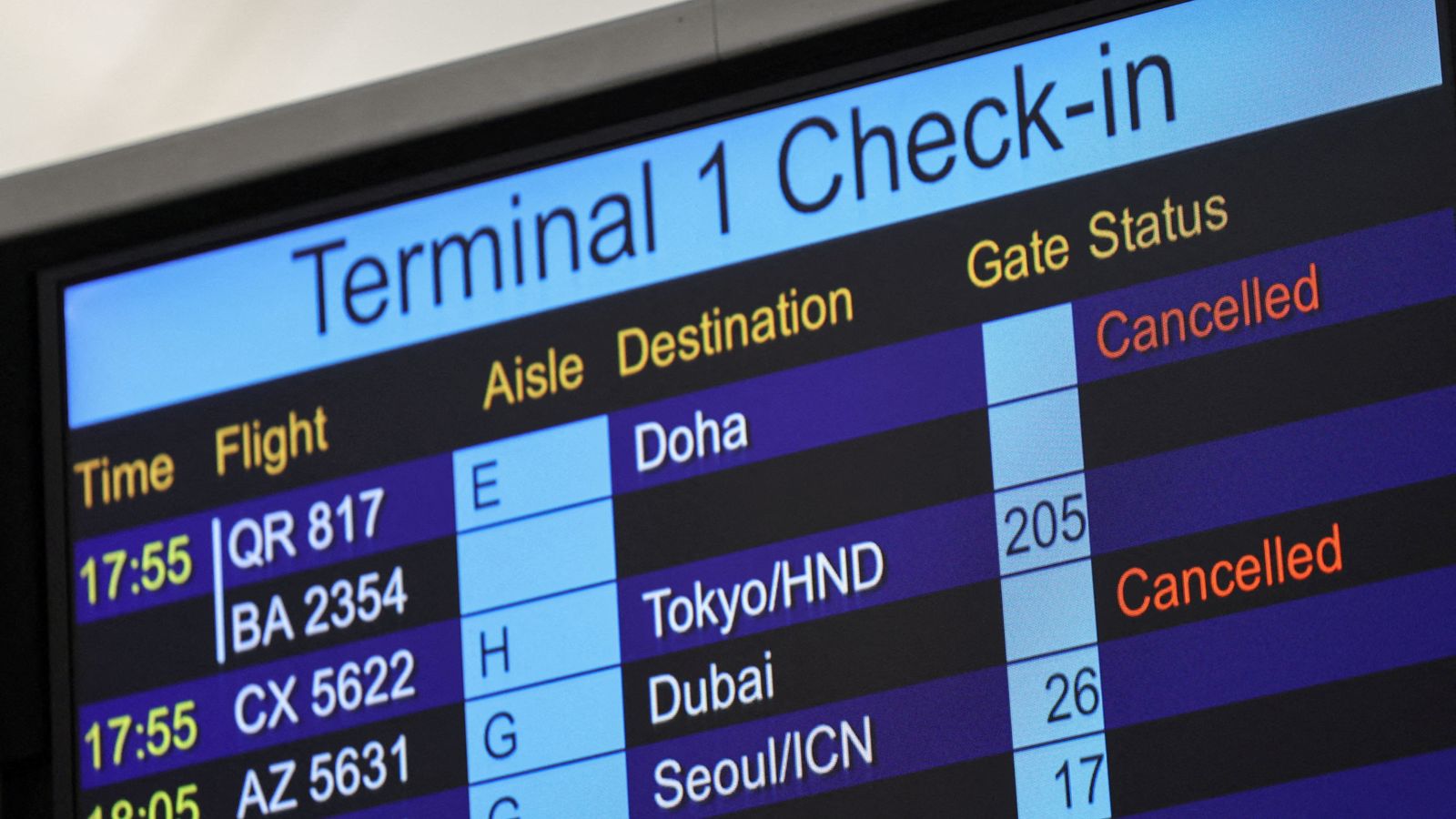
The UK government has announced its first charter flights for British nationals stranded in the Middle East as the US-Israeli attack on Iran and Tehran’s retaliatory strikes enter their fifth day.

It comes as an estimated 300,000 Britons are believed to be in affected regions of the Middle East.

Follow the latest updates on the conflict with Iran

Thousands of flights have been cancelled since the joint US-Israeli operation was launched against Iran on Saturday, but some airlines are now operating out of the region again.

Advertisement

Here’s all you need to know.

What’s the latest travel advice for affected areas – and what flights are happening?

The Foreign Office advises against all but essential travel to Bahrain, Kuwait, Qatar and UAE, and against any travel whatsoever to and from Israel and Palestine.

You can find out the latest travel advice for all Middle East countries by visiting the government’s website.

Advertisement

After days of cancellations, airlines appear to be boosting the number of flights out of the Middle East to Britain.

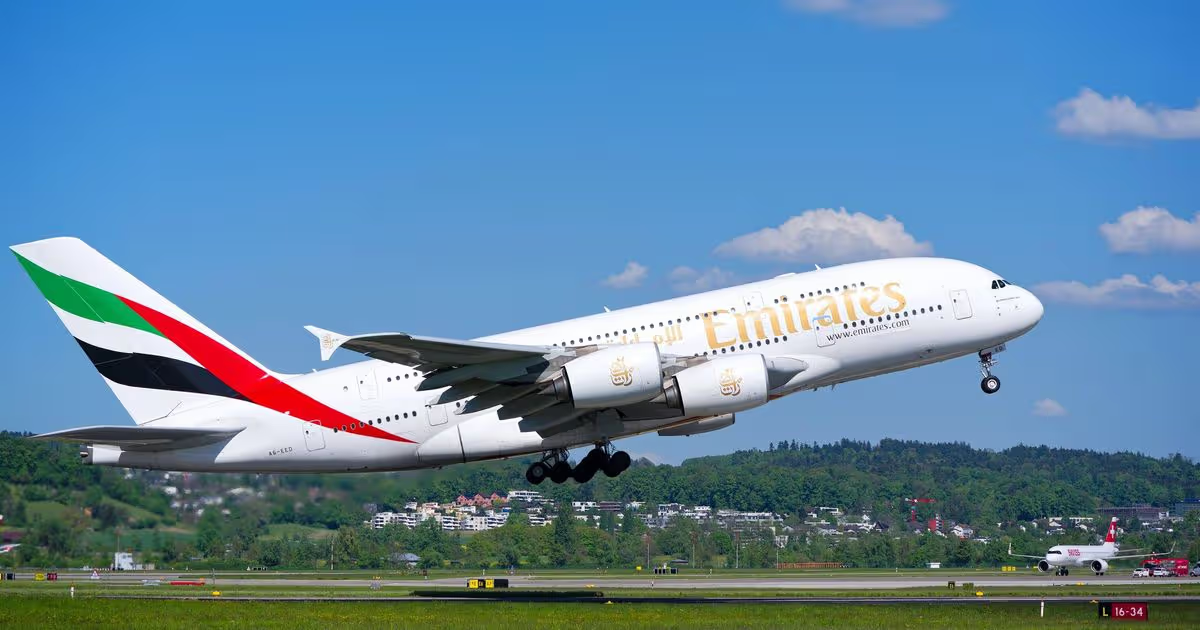
On Wednesday, Emirates was expected to operate seven flights from Dubai to the UK while Etihad planned two Abu Dhabi departures.

Virgin Atlantic said it would operate a flight from Dubai to London Heathrow.

British Airways said it would be operating a flight from Muscat International Airport in Oman in the early hours of Thursday local time and would be assigning seats on “a first-come, first-served basis”.

Advertisement

In a statement to Sky News, BA confirmed it has scheduled further flights from Muscat to London Heathrow departing on 6 and 7 March for customers with an existing booking who are in Oman or the UAE.

Those wanting to make one of these flights should call BA on its dedicated phone line on +44 203 467 3854.

First chartered flights announced

The Foreign Office said its first charter flight would depart from Muscat International Airport in Oman at 11pm local time (7pm UK time) on Wednesday night, with priority given to the most vulnerable people.

Reuters news agency has reported that another chartered flight will depart from the same destination early on Thursday morning.

The flights are available for British nationals, their partners and children under 18 with a valid travel document. Dependents who are not British nationals will require a valid visa or permission to enter or remain granted for more than three months.

Advertisement

People have been asked not to travel to the airport unless they’ve been contacted by officials.

Ms Cooper said: “We have unprecedented numbers of British nationals in the region, and I will continue to update members and affected British nationals as the situation evolves.”

Cruises in region also affected

There are also reports of thousands of cruise passengers stranded in Dubai and Doha as at least six cruises have been unable to leave.

Advertisement

The cruises have reportedly been ordered to stay put in areas deemed safe until new shipping routes can be determined, according to travel portal Hosteltur.

The cruise liners affected are reportedly MSC Cruises, TUI Cruises and Celestyal Cruises.


‘I just want to get home’

Who needs to register their presence abroad?

Advertisement

As US President Donald Trump said the attacks will likely last between four to five weeks, the Foreign Office is urging British nationals in Middle Eastern countries to register their presence as the conflict with Iran deepens.

According to Foreign Secretary Yvette Cooper, 130,000 British nationals have registered their presence in the Middle East with the Foreign Office, as officials work on contingency plans, including a potential mass evacuation.

Here’s a list of countries where you should register your presence:

• Bahrain
• Israel
• Kuwait
• Palestine
• Qatar
• United Arab Emirates

Advertisement

You can let the government know you are in these countries via its website.

Could there be a mass evacuation?

Sky News understands UK officials have been working on plans for potential routes for the evacuation of tens of thousands of people should airspace in the Gulf remain off-limits.

Prime Minister Sir Keir Starmer said earlier this week the UK government is “looking at all options to support our people”.

Advertisement

Responding to a question on contingency plans for UK nationals in parliament on Monday, Sir Keir said the government was “working at speed with our partners in the region to take whatever measures we can to ensure that our people can return as safely and as swiftly as possible, and we will continue to do so”.

Urban Coningham, a research fellow and course lead at the Royal United Services Institute (RUSI), told Sky News that if the UK government were to go ahead with a full evacuation, it “would be the biggest evacuation since the Second World War”.

Advertisement

He said because of the “sheer scale of the numbers involved, it is very unlikely the UK government would choose to begin this process unless there was no other option”.

Read more:
US-Israel airstrike destroys parts of Iranian city
NATO Chief: The death of Iran’s leader Khamenei is ‘applauded by many’

Mr Coningham added: “If this evacuation happened, it would be one of the most complex and costly consular efforts in UK history.

“UK officials will want to have plans in place for worst case scenarios as soon as possible to avoid higher costs in crisis conditions.”

Advertisement

Sky News has approached the Foreign Office and Downing Street for comment.

Source link

Advertisement
Continue Reading

NewsBeat

Fortus, Brittons and Cundalls to stage event in Malton

Published

on

Fortus, Brittons and Cundalls to stage event in Malton

Local experts from Fortus, Brittons and Cundalls are coming together to support farmers and rural enterprises at Financial clarity for rural businesses, a free event designed to give practical financial advice to those at the heart of the rural economy.

The event on Tuesday March 17 at 6.30pm will focus on helping rural business owners better understand their finances, improve cash flow, and make more confident decisions at a time when many farmers and rural enterprises are facing increasing financial and personal pressures.

Organisers say the event is about collaboration and community, with local professionals volunteering their time to ensure farmers and rural entrepreneurs can access clear, practical guidance tailored to their circumstances.

RECOMMENDED READING:

Advertisement

Simon Britton, an agricultural consultant who is collaborating with Fortus on the event, said: “Farming and rural businesses are the backbone of our local economy.

“This event is about local businesses coming together to support farmers and rural entrepreneurs, giving them the financial clarity they need to protect their livelihoods and plan for the future.”

Matty Lewis of the Fortus Foundation will also be attending the event (Image: David Harrison)

Attendees will receive free, accessible advice on understanding where money is really being made or lost, improving resilience and long-term profitability, managing cash flow and financial uncertainty, plus asking the right questions of advisers and lenders

Among those attending the event at Malton and Norton RUFC, Old Malton Road will be Matty Lewis from the Fortus Foundation, who will be supporting the event following the Foundation’s recent funding of a local rural economy project. The foundation has been working HelloHope, delivering suicide prevention workshops and engagement within the farming community.

Advertisement

Organisers say the inclusion of the Fortus Foundation highlights the importance of addressing both the financial and personal wellbeing challenges faced by farmers and rural business owners.

The session is aimed at farmers, land-based businesses, rural SMEs and sole traders from across York, Malton, Scarborough and surrounding rural areas.

Fortus director and farmer Paul Dixon said: “Many rural business owners are experts at what they do, but don’t always have time to step back and analyse their finances.

 “This event creates a supportive space where they can get practical help and share experiences with others facing similar challenges.”

Advertisement

The event is free to attend but advance booking is required through Eventbrite or by directly contacting Damian Lythgoe: damian.lythgoe@fortus.co.uk or  07407828496

Source link

Advertisement
Continue Reading

NewsBeat

Markets in Europe steady after Asian shares swoon over widening Iran war

Published

on

Markets in Europe steady after Asian shares swoon over widening Iran war

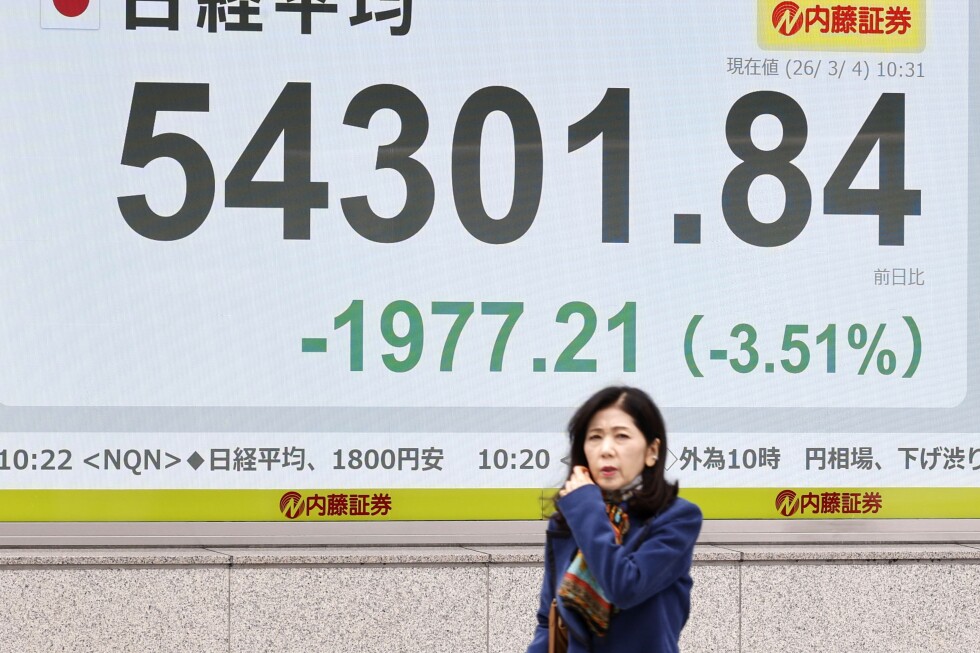
BANGKOK (AP) — European shares opened higher on Wednesday after another day of sell-offs in Asia, where South Korea’s benchmark plunged more than 12%.

U.S. futures were 0.3% lower.

Oil prices climbed more than 3% as the United States and Israel war with Iran entered its fifth day, with Israel targeting the Iranian leadership and security forces and the Islamic Republic hitting back with missile barrages and drone attacks across the region.

Worries over the war, which U.S. President Donald Trump has suggested could last a month or longer, have hammered world markets, spooking investors who fear more spikes for oil prices may grind down the global economy and sap corporate profits.

Advertisement

“I think the Iran situation is getting out of hand, and I think that U.S. President Donald Trump miscalculated enormously,” said Francis Lun, CEO of Venturesmart Asia. “The situation is very grim.”

Still, sentiment appeared to steady early Wednesday in Europe, where Germany’s DAX edged 0.2% higher to 23,851.86. In Paris, the CAC 40 was nearly unchanged at 8,105.25. Britain’s FTSE 100 edged 0.1% lower to 10,470.00.

In Asia, South Korea’s Kospi led the regional losses as energy security concerns eclipsed optimism over the boost computer chipmakers like Samsung Electronics and SK Hynix have been getting from expanding use of artificial intelligence.

The Kospi sank 12.1% to 5,093.54. Samsung’s shares dropped 11.7%, while SK Hynix gave back 9.6%.

Advertisement

The Korea Exchange temporarily halted trading for the Kospi index, while a circuit breaker was also triggered on the tech-oriented Kosdaq after it fell by more than 8%. It later dropped nearly 14%.

South Korea’s stock market has been one of the world’s best performers this year, but its economy depends heavily on trade and fuel imports, that are threatened with disruptions to traffic through the Strait of Hormuz, the narrow gateway to the Persian Gulf through which roughly a fifth of globally traded oil passes.

Trump announced Tuesday that he had ordered the U.S. Development Finance Corp. to provide political risk insurance and guarantees for financial security of all maritime trade.

“If necessary, the United States Navy will begin escorting tankers through the Strait of Hormuz, as soon as possible,” Trump said in a message posted by the White House on X.

Advertisement

Still, the price of U.S. benchmark crude oil climbed more than 3.5%, to $77.18 per barrel. Brent crude, the international standard, gained 3.7% to $84.38 per barrel. Its price has jumped about 15% since the war began.

“Trump’s assurances of the US underwrite shipping insurance against Middle East conflict risks and even U.S. naval escorts only mitigate, but do not eliminate, enduring upside risks to oil prices,” Mizuho Bank said in a commentary.

The increased insurance costs filtering through to shipping would ultimately cost an extra $5 to $15 a barrel, it said, adding that the “‘war premium’ remains firmly intact.”

In Tokyo, the Nikkei 225 shed 3.6% to 54,245.54. Like South Korea and Taiwan, Japan depends heavily on imports of oil and natural gas from the Persian Gulf.

Advertisement

Elsewhere in Asia, the Hang Seng in Hong Kong fell 2% to 25,249.48 and the Shanghai Composite index shed 1% to 4,082.47.

In Australia, the S&P/ASX 200 declined 1.9% to 8,901.20.

Taiwan’s Taiex lost 4.4% and shares in Bangkok sank 6%.

On Tuesday, the S&P 500 finished with a loss of 0.9% after dropping as much as 2.5% on concerns over the war’s damage to the economy. The Dow Jones Industrial Average pared its loss to 0.8% and the Nasdaq composite fell 1%.

Advertisement

Some analysts say stocks could rebound if the war ends soon. If it drags on, higher inflation partly due to rising energy prices could tie the Federal Reserve’s hands and keep it from cutting interest rates.

For now, one of the most evident impacts on the economy has been a surge in gasoline prices.

While drivers in Europe and some Asian cities waited in line to fill their tanks with fuel, as a net oil exporter the U.S. does not face a shortage. But prices are still influenced by global market trends.

In the U.S., a gallon of regular was selling for $3.11 on average, up 11 cents, according to motor club AAA, surprising some drivers at the pump. Gasoline prices were already rising before the U.S. launched strikes on Iran as refiners were switching over to summer blends of fuel.

Advertisement

In other dealings early Wednesday, the dollar fell to 157.46 Japanese yen from 157.74 yen. The euro slipped to $1.1604 from $1.1612.

The price of gold rose 1.2%, while silver gained 2.6%.

___

Associated Press writer Kim Tong-hyung in Seoul, South Korea, contributed.

Advertisement

Source link

Advertisement
Continue Reading

Trending

Copyright © 2025