Abusers use counter-allegations to deflect blame onto their victims and deter them from seeking help in the future (Picture: Maria Korneeva/Moment/Getty)
When the police arrived, Michelle thought her ordeal was finally over.
She sat shellshocked on the sofa, squinting through a black eye with blood seeping from a cut lip after the latest violent assault at the hands of her abusive partner.
But it was Michelle who ended up in a cell that night after he told officers she hit him first.
Her ex had used the counter-allegation tactic.
Advertisement
It’s one that perpetrators often employ, according to Nadia Hughes, head of criminal justice services at Advance, a charity that helps women who’ve experienced harm through domestic abuse and the criminal justice system.
The ploy is particularly effective when a woman has acted in self-defence or retaliated, so the perpetrator himself has injuries. These are then misunderstood by the police as signs of aggression, rather than the culmination of years of abuse.
Nadia says that besides deflecting the blame from the abuser, the tactic also serves another purpose: ‘It’s a really manipulative way to deter a survivor from calling 999 in the future’.
Once the counter-allegation strategy has been used once, the police have a record that this woman might be violent or abusive. Nadia explains that ‘she’s then less likely to report the abuse she’s been subjected to because there is a distrust of statutory services like the police’.
Advertisement
‘Counter allegations actually become a sort of weaponised way of controlling that survivor. It is something we hear a lot unfortunately.’
Around half of recent referrals to Advance, which works at the intersection of domestic abuse and criminal justice, have stemmed from women being arrested as a result of counter allegations.
Research shows that women are three times more likely to be arrested than their male partners at a domestic abuse incident involving them.
This Is Not Right
On November 25, 2024 Metro launched This Is Not Right, a campaign to address the relentless epidemic of violence against women.
Advertisement
With the help of our partners at Women’s Aid, This Is Not Right aims to shine a light on the sheer scale of this national emergency.
You can find more articles here, and if you want to share your story with us, you can send us an email at vaw@metro.co.uk.
Read more:
Advertisement
Michelle tells Metro she suffered years of abuse prior to her wrongful arrest, beginning when she was pregnant.
‘The second time he hit me was after my son was born and he was in my arms,’ she says. ‘That was horrific.
‘My son had a white baby grow on and there was blood all over him where he broke my nose.’
Advertisement
Michelle suffered appalling injuries, including a broken leg and fractured collarbone, when her ex pushed her from a fourth-floor window.
‘When you’re in it you don’t see how serious it is,’ she says. ‘You just know that you survived it.’
She describes how her homelife hinged on her ex’s moods.
Around half of recent referrals to Advance have stemmed from women being arrested as a result of counter allegations (Picture: Getty Images/Johner RF)
‘He would phone me during the day and let me know how good or bad his day was going,’ she says.
‘That would determine what my evening was going to be like. If it was a bad day, I would be walking on eggshells waiting for him to flip at me.
Advertisement
‘It’s like dying a slow death waiting for that snap to happen.’
Looking back, Michelle can’t even remember what that final argument was about.
When her ex started hitting her again, she instinctively threw her arms up to try and defend herself.
But she caught his face with her elbow while doing so, giving him a bloodied nose.
Advertisement
Despite being the one who called the police, she found herself being arrested alongside him.
She lost her job as a family support worker after missing a key court hearing while in custody.
‘I sent myself to university when I was 30 trying to better my life,’ Michelle says. ‘I got the job of my dreams, and it was taken.’
Research shows that women are three times more likely to be arrested than their male partners at a domestic abuse incident involving them (Picture: Getty)
Beyond the physical and emotional toll, counter allegations can cost women their homes, their children and their jobs.
In the case of Bethany Rae Fields, her killer used counter allegations in the lead up to, and on the day he killed her.
Advertisement
After 21-year-old Bethany reported her ex Paul Crowther to the police following threats he had made against her, her friends and family, Paul turned his finger at her multiple times.
Pauline, Bethany’s mum, calls his actions ‘despicable. She was tiny; 21 to his 35 years.’
Staffing issues meant that Paul’s complaint progressed slowly – as did Bethany’s against him – and a week after filing his ‘case’ with the police, he chased it, and then again four days later.
Despite Paul being reported to the police seven times, despite being known to services after having had two former partners complain about harassment – with one resulting in a conviction, and despite Paul telling mental health services that he wanted to take revenge against Bethany, he was still invited to make a statement after reporting her to the police.
Advertisement
He went into the station on September 12, 2019, to make a statement against her. That same day he killed her.
Pauline now urges police to think of Bethany’s initials – BRF – and to ‘Believe. React. Fast’. That means considering whether the counter-allegation tactic is in play.
For Jessica, the experience of being disbelieved by the police has eroded her faith in the force completely.
‘I don’t believe they have listened to me once, or made me feel safe,’ she tells Metro.
Advertisement
Jessica was abused for years by two of her children and ended up having to leave the family home after being arrested and charged when one of them claimed she was the perpetrator.
She says her son would hold a knife to her throat and her daughter would kick and spit at her.
‘It got to the point where I couldn’t go to the rest of the house really. I was living in a bedroom. It was marked cell number five with my name.’
Jessica adds: ‘I don’t think I could even admit to myself how bad it was until now, when I look at the pictures of the injuries and the pictures of my bedroom door – I thought that was normal.
Advertisement
On the day of her arrest, Jessica says her daughter ‘started on’ her again as she was going into her bedroom.
Like Michelle, she put her hand out to signal she’d had enough – but that was not how it was subsequently reported to the police: ‘Apparently that was attempting to push her down the stairs.’
‘We are finding that women are not speaking up – they are not feeling confident or safe to report.’
Jessica is still haunted by the traumatic experience of being arrested.
Advertisement
‘I was in the bedroom with my other daughter,’ she recalls. ‘We were just laying there. There was a bang on the door.
‘My bedroom door regularly banged from the children anyway, but as I went to open it, I was literally pulled out by force onto the little landing.
‘I didn’t have a clue what was happening – there was no reason for the police to be there. I was put in handcuffs.
‘I was crying, and the two children that did this were sat there filming the whole thing and laughing.
Advertisement
‘It was so daunting, and the way they treat you when you’re going to the cells is just horrendous. I’d never been in one before.’
Jessica adds: ‘Everyone always joked and called me Wonder Woman because I had six children. I was a nursery manager. I was a trusted person.
‘They’ve taken all of that away.’
She spent a year under investigation only for the common assault charge to be dropped at the crown court.
Advertisement
Being made to feel like a criminal has now changed how she views the police.
Learn more about Advance
Advance is a charity that helps women who’ve experienced harm through domestic abuse and the criminal justice system.
They deliver wraparound frontline services across the South and East of England, including Greater London.
You can find out more about the charity here; and if you need help now, you can find the relevant contact details here.
Advertisement
‘They just don’t seem to understand domestic abuse. They definitely don’t understand child-to-parent violence.’
In addition to being less likely to call the police, a woman subject to counter allegations is also less likely to be referred by them on to specialist support because she is seen as a perpetrator.
Advertisement
Nadia says: ‘If you’ve got perpetrators who are recording a woman using resistance – someone who has been subjected to abuse for a long period of time and gets to the point where she retaliates as a response to that – that becomes an isolated incident away from the long-term abuse and can be used as evidence against her.
‘We are finding that women are not speaking up – they are not feeling confident or safe to report.’
Research shows nearly 70% of women in prison or under community supervision are victims of domestic abuse. For many, that is directly linked to their offending and can take the form of counter allegations, coerced offending or criminalisation by association.
‘I’ve seen quite a number of cases where very coercively controlling men – very manipulative men – are able to set these situations up. It can all be quite Machiavellian and horrendous.’
Advertisement
The Centre for Women’s Justice is campaigning for a new defence in criminal law that will recognise coercive control as the driver of the offence.
Currently, victims can only rely on the defence of duress – when you are coerced into acting under the use or threat of violence – which has been found to be ineffective in cases of domestic abuse.
Instead, they often depend on the police or Crown Prosecution Service deciding it is not in the public interest to prosecute them.
Harriet Wistrich, founder and CEO of the Centre for Women’s Justice, tells Metro: ‘In a lot of domestic abuse situations, by the time the police have arrived the victim could be very traumatised or hysterical and he’s appearing very calm.
Advertisement
‘If he’s saying, “she’s just a bit mentally unwell and she’s just thrown something at me”, how do the police deal with that situation?
‘And we have seen a lot of situations where the woman has been arrested and she’s really the victim and the police aren’t necessarily able to make a very careful assessment of what’s going on.
‘I’ve seen quite a number of cases where very coercively controlling men – very manipulative men – are able to set these situations up.
‘It can all be quite Machiavellian and horrendous.’
Advertisement
She adds: ‘Our proposed model is based on what we have for victims of trafficking, where it’s recognised that if you’re forced to commit criminal offences that essentially you have a defence if you can show that it’s directly linked with your exploitation.
‘What we’re arguing is that where somebody is in a coercively controlling relationship where they are under control of somebody and they are essentially forced to handle stolen goods or drugs or commit mortgage fraud or whatever it is, they can show circumstances which lead them to commit those acts.
‘Obviously, it’s not necessarily having a gun held to you, but if it’s in that context of the relationship then they should have a defence and be able to argue they are not culpable rather than potentially argue it as mitigation but still be convicted of a crime.’
Raise a glass to her with something as thoughtful and exceptional as she is…
This article contains affiliate links, we will receive a commission on any sales we generate from it. Learn more
Advertisement
Mother’s Day is a time to slow down, gather close, and celebrate the women who’ve shaped our lives with love, strength, and endless generosity.
Whether you’re planning a sunlit brunch, an elegant dinner, or a simple toast at home, the right bottle can turn the moment into something truly memorable.
From delicate, floral-driven wines perfect for spring afternoons to refined spirits ideal for crafting her favourite cocktail, our curated selection of Mother’s Day recommendations is designed to suit every palate and every style of celebration.
Raise a glass to her with something as thoughtful and exceptional as she is…
Crafted using the traditional saignée method, this striking rosé undergoes a gentle three-day maceration, allowing the Pinot Noir grapes to reveal their naturally intense pink hue and beautifully layered aromatics. The result is a Champagne of striking purity and structure.
For the mum who loves a zingy, aromatic G&T. Think zesty citrus oils, heady orange blossom, and a finish of cardamom and clove – like the world’s most sophisticated Earl Grey, in a glass. Serve with tonic or bitter lemon
Housed in a striking Art Deco-inspired bottle, Trevethan 1929 Dry Gin looks as stunning on your drinks cabinet as it does in a G&T. For a show-stopping Mother’s Day serve worthy of the red carpet, pair 50ml of Trevethan 1929 Dry Gin with premium light tonic over ice.
This sip is full of star quality, with the label showcasing a unique, bespoke piece of art by Inverness-born Hollywood actress Karen Gillan. A celebration of female strength and creativity, this could be the perfect gift for the special women in your life.
Pasqua’s 11 Minutes Rosé offers a fresh and elegant alternative to Provence rosé. Named after the 11 minutes of skin contact used during pressing, the wine blends Corvina, Trebbiano di Lugana, Syrah and Carménère grown near Lake Garda, creating a rosé that is both delicate and expressive.
A ginny twist on the Turkish Delight. Delicate rose and warming cardamom float over Bathtub’s classic bold juniper base – think falooda, kulfi, and a lingering finish of rosewater. Magnificent in a Martini.
Each set contains six 30ml wax-sealed samples selected by Master of Malt’s in-house spirits gurus and is presented in a printed ‘Just For Mum’ gift box – no wrapping required. Choose from whisky, gin, rum or mixed spirits. Each box is wrapped with Katie’s artwork and available in green, blue, black, or red.
Chapel Down’s consistently excellent non-vintage sparkling wine is presented in a neoprene jacket that mimics the stitching and appearance of a cricket ball. The jacket will also keep the sparkling wine chilled for at least two hours.
Rose Expression Gin shares Silent Pool Gin’s DNA in terms of complexity and a refreshingly individual character; however, the core recipe has been refined to complement and enhance the rose notes. Some of the original botanicals – pear, bergamot, cubeb, and cardamom – have been increased, while lemon becomes the leading citrus.
Aromatic and rounded, agreeable and balanced, Ivana Ciabatti’s Lounge Edition Vodka was created with pure Tuscan spring water, natural flavourings and 100% Tuscan cereals. Embellished with edible gold leaf and housed in a stunning bottle, this vodka is typical of the luxury Ivana Ciabatti brand.
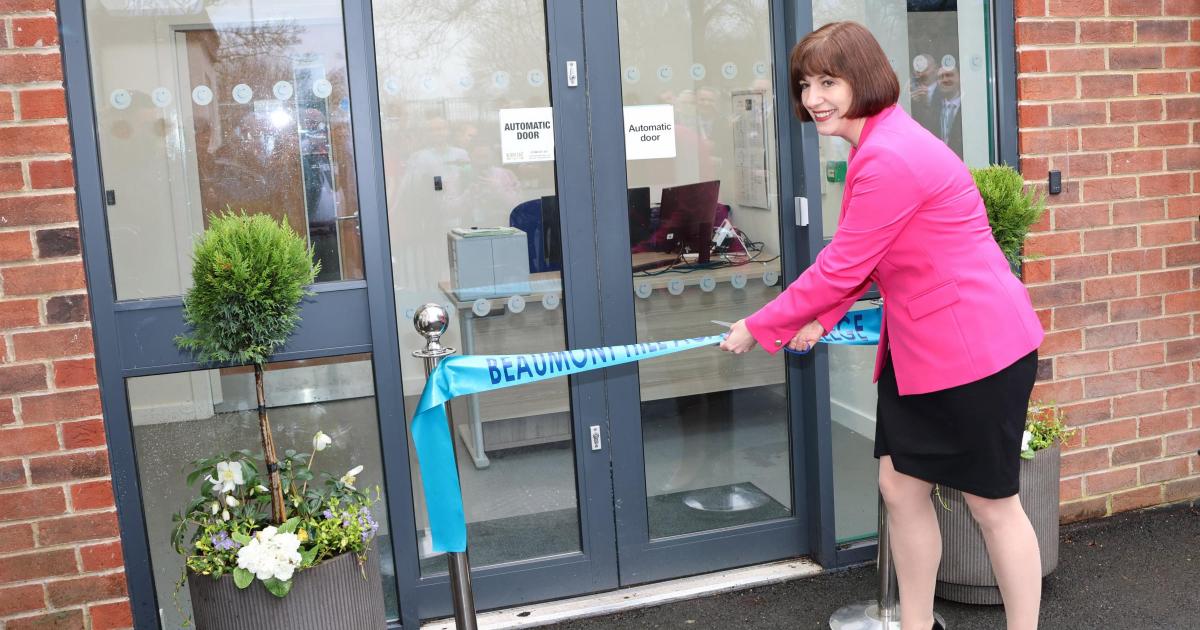
Education Secretary Bridget Phillipson cut the ribbon for the opening of executive principal Caroline Green’s Beaumont Hill Sixth-Form College, located on Salters Lane South, opposite Education Village.
In a £840k scheme by the Education Village Academy Trust, the college will introduce SEND facilities for more students up to the age of 19, as well as creating an additional four classrooms on the Education Village site to accommodate more pupils.
Bridget Phillipson, centre, with Beaumont Hill executive principal Caroline Green and principal Adrian Lynch (Image: PROVIDED)
Beaumont Hill Academy currently holds 400 pupils from 2 to 19, but new features, including more classrooms, kitchen facilities and outdoor space means that their status as one of the largest SEND facilities in the United Kingdom will only expand.
Mrs. Green said: “It has always been my dream to have such a sixth form college and now we have. Staff, students, parents and carers are very excited about the prospect.
Advertisement
“SEND is much more visible today with greater recognition and diagnosis of conditions. Better medical intervention also allows disabled students to go to school.”
Education Secretary Bridget Phillipson chats with students at Beaumont Hill Sixth Form College (Image: PROVIDED)
Mike Butler, chief executive of the Education Village Academy Trust, added that the trust as a whole is dedicated to supporting all children, and reflecting the needs of all students in Darlington.
“Our collective endeavours have always been based on human dignity, not founded on deficit,” Mr. Butler said. “This new facility strengthens our mission, reinforces our ethos and reflects our unwavering commitment to the children and young people we serve.”
With SEND children requiring more support, parents are thankful for the extra facilities that will be available as their children move through primary and secondary school.
Advertisement
Beverley Bird, a mother of a three-year-old with profound autism, said: “It is very stressful for parents as the places generally are not there which will affect children’s ability to thrive. So it is huge that we now have this provision as it takes the pressure off parents as their children can be here from aged two to 19.”
Performing the honours, Education Secretary Bridget Phillipson cuts the ribbon at the brand new Beaumont Hill Sixth Form College in Darlington (Image: PROVIDED)
The Education Secretary reinforced how important it was to make the necessary facilities available for parents of SEND children, because it is their “right” to be given access to specialist support.
Lola McEvoy, MP for Darlington, said: “To have this facility so close is wonderful. We don’t have to choose between empathy and excellence. This is proof you can have both.”
The college will offer post-16 students a range of qualifications and accreditations, including BTEC Prevocational Award and Certificates in a range of subjects, as well as AQA awards in english and maths, physical education, ICT, entry level functional skills, and more.
City of York Council refused plans for new signs and lighting on The Gillygate, in the street of the same name, saying they would clutter the outside of the listed building.
The pub’s plans stated the new fixtures were part of the redecoration of the outside of the building which was showing signs of deterioration.
It comes as a spokesperson for The Gillygate’s owners Star Pubs said they were finalising an agreement with a new licensee to take it on.
RECOMMENDED READING:
Advertisement
Plans refused by council officers would have seen a sign bearing the pub’s name replaced and a hanging sign, four boards and four outside floodlights kept in place.
Similar plans were also refused last year, with the signs currently in place installed following the approval of an application in 2013.
The latest application stated minor redecorations had been done on the inside of the Grade II-listed building which dates back to the 19th Century.
Plans stated: “We have designed the new signage scheme based on the style and locations of existing signage.
Advertisement
Proposed changes to The Gillygate pub, in Gillygate, York. Picture is from SR Signs/York Council’s planning portal, available for all LDRS partners to use.
“The new decorations will enhance the appearance of the pub and and the signs themselves will replicate the existing ones.”
But council planning officers ruled the signs would negatively impact the building and surrounding conservation area.
They stated: “High level signs like the one proposed are not supported as they would harm the architectural significance of the building and character and appearance of the area.
“The proposed floodlighting would draw further attention to the high level sign and result in further harm to the visual appearance of the listed building and conservation area.”
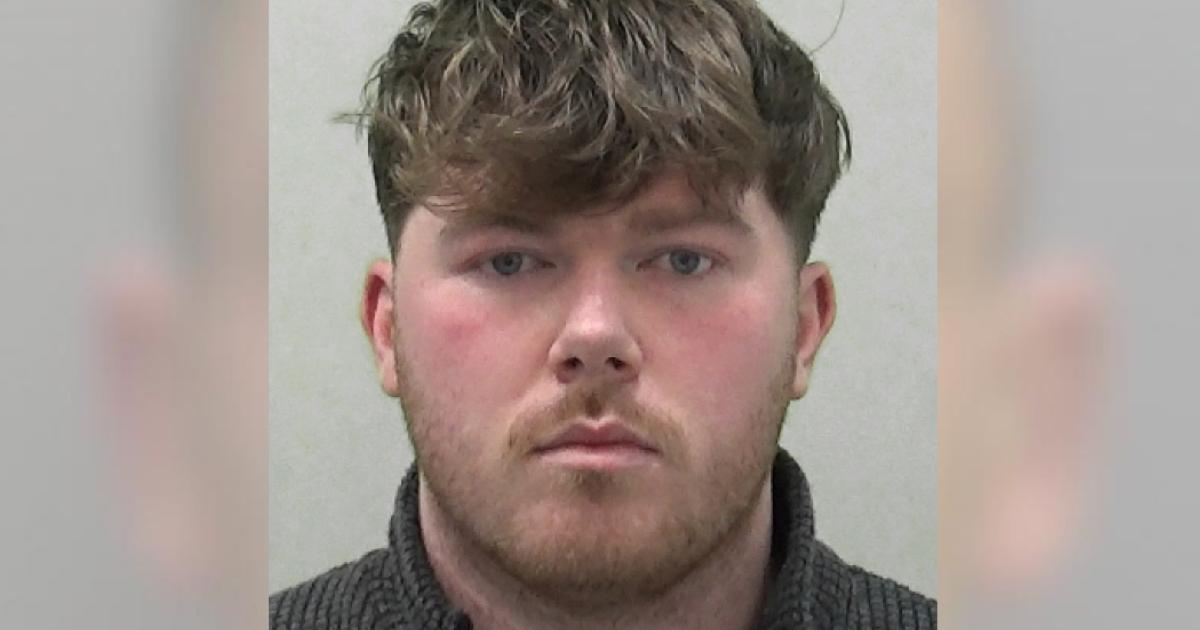
James Graham, 24, planned to meet a 14-year-old boy who he believed he had been chatting with online.
But, what the defendant did not know, was that he had actually been speaking with a decoy police officer from the North East Regional Organised Crime Unit (NEROCU), posing as the boy, as part of a wider investigation.
Newcastle Crown Court heard that Graham sent countless sexually explicit messages stating his intentions with the teenage schoolboy and even offered to supply him with drugs.
James Graham thought he was arranging to meet a 14-year-old boy for sex (Image: Northumbria Police)
When communication began, in October 2024, NEROCU officers quickly launched a specialist operation to target Graham and bring him into custody.
Advertisement
It led to his arrest on January 15 last year, and he was subsequently charged with arranging/facilitating the commission of child sex offence and attempting to engage in sexual communication with a child.
It was classed as “an attempt” as there was no actual child.
Graham, of Hovingham Gardens, Barnes, Sunderland, later pleaded guilty to all charges and yesterday (Thursday, March 5) appeared back at the court where he was sentenced by Recorder Paul Reid to a ten-month prison sentence, suspended for 18 months.
James Graham given suspended prison sentence with ten-years’ registration as a sex offender (Image: Northumbria Police)
But he was also made subject of registration as a sex offender and restrictions imposed under a Sexual Harm Prevention Order, both for ten years.
Advertisement
NEROCU Detective Constable Lee Robertson, said: “Cases like this show why our work in this area is so vital and we will continue to do all we can to help protect children from predators like Graham.
“I’d like to thank all the officers and staff involved for helping to bring Graham before the courts and as always, I’d encourage anyone who has been a victim, or who wants to talk to an officer and raise some concerns, to get in touch immediately.”
France could retain the Six Nations title with a round to spare as they take on Scotland at Murrayfield.
The defending champions have been a class apart so far in the competition, following up a significant opening-round win over Ireland with successes against Wales and Italy.
Three bonus-point wins thus far have left them top of the table with 15 points, and another victory by four tries or more would make certain of the title.
Ireland’s hard-fought win over Wales last night has left them on 14 competition points and thus unable to reach more than 19, while Scotland sit in third on 11 points as they host the defending champions.
Advertisement
Even a high-scoring, narrow defeat for Scotland, and banking two bonus points, would not be enough to keep their hopes alive if France still win with a bonus point.
France host England in Paris on Six Nations “Super Saturday” as the final round of fixtures is held next weekend.
A championship success would be their eighth since the addition of Italy to the tournament in 2000, moving clear of England as the outright most successful side in that period.
It would be a 28th crown for France overall in the competition’s long lineage.
Ever since pen was first put to paper, literary heroines have leapt off the page, often as literature’s most nuanced characters. Whether plucky and confident, pushing the boundaries of society, or increasingly empowered in their own quiet ways, it is no surprise that fictitious females reveal much about the world.
So, to celebrate International Women’s Day 2026, we’ve picked ten of our favourite literary luminaries (in no particular order) to uncover what they can teach us about living.
1. Jane Eyre (1847) by Charlotte Brontë
“I am no bird; and no net ensnares me: I am a free human being with an independent will.” So says Jane Eyre in one of literature’s most famous lines. She overcomes a dreadful childhood, impoverished circumstances and social inequality (as well as the indignity of finding out the man she loves is already married) through a strong sense of self-worth. Described throughout the novel as small and plain, Jane demonstrates an innate sense of endurance, independence and self-belief, no matter what she faces.
2. Joyce, The Thursday Murder Club (2020) by Richard Osman
Very fond of a slice of cake and known for being generous to everyone, Joyce Meadowcroft is a key narrative voice in Osman’s popular crime series. Like Miss Marple before her, Joyce has a keen sense of right and wrong, alongside razor-sharp observation skills. Not afraid to get stuck in, this 77-year-old former nurse reminds us not to underestimate older people.
3. Offred, The Handmaid’s Tale (1985) by Margaret Atwood
The dark events of The Handmaid’s Tale are recounted from the perspective of Offred, who is often considered a resigned and compliant narrator. Memories of her former life with her family, alongside the strong and often bleak narrative voice exhibited throughout, reinforce that quiet protests or simply overcoming silence can be a means of survival.
Advertisement
4. Wife of Bath, Canterbury Tales (c. 1400) by Geoffrey Chaucer
Recognised as the “first ordinary and real woman in English literature” by the University of Oxford’s Marion Turner, the Wife of Bath broke the mould back in 1400 by declaring that sexual freedom was a positive, and women should not be defined or constrained by their partners (five husbands in her case!). Advocating for the freedom to be (and be with) who you want, creating a 600-year legacy? Many would hope to be as influential.
5. Kahu, The Whale Rider (1987) by Witi Ihimaera
Advertisement
Named after her ancestor, an original whale rider, Kahu Paikea Apirana is our youngest protagonist. As she is female, the prejudices of society – particularly, and most poignantly, those of her influential great-grandfather – ensure she is not considered as the rightful heir to the chieftainship of her Māori community. But through her ability to communicate with whales, Kahu unites her family and the natural world. The Whale Rider is a profoundly moving story that reminds us our connection with the environment should always be harmonious.
6. Orlando (1928) by Virginia Woolf
Influenced by Shakespeare’s As You Like It, Orlando is potentially what Jeanette Winterson calls “the first English language trans novel”. Initially a 16th-century nobleman, Orlando awakes at the age of 30 in 1920s England, having been transformed into a woman. Thought to be based on Woolf’s lover and friend Vita Sackville-West, the character of Orlando reminds us that we must always be true to who we are.
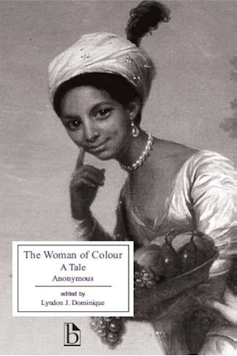
7. Olivia, The Woman of Colour: A Tale (1808), Anonymous
The protagonist of this Regency drama is the first Black heroine in a European-set novel. Facing prejudice from her English relations, Olivia firmly alters preconceived notions and stereotypes about her skin colour, intellect and background. Upon learning of her new husband’s wrongdoing (like Jane Eyre’s Rochester, he is already married), Olivia dissolves the marriage and takes her dowry home to Jamaica, where she aims to improve the lives of her countrymen. Published just a year after the 1807 abolition of the slave trade across the British Empire, Olivia inspires us to take an interest in world events, foster empathy and stand up to prejudice.
Advertisement
8. Rosalind, As You Like It (1600) by William Shakespeare
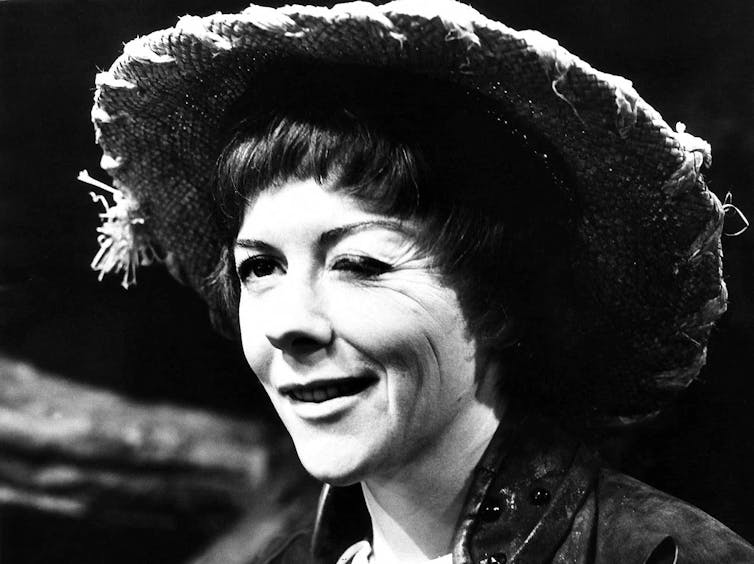
Perhaps Shakespeare’s best creation (overall, not just female), Rosalind has the most lines of any of his female characters. And unlike many of the Bard’s other characters, Rosalind speaks throughout the play in prose, disparaging love poetry. Even more unusually, she has the last word in delivering the epilogue. Shakespeare’s bold heroine encourages us to be unafraid to speak our own minds.
Dorothy Tutin playing Rosalind at the Royal Court Theatre in Liverpool in 1967. Trinity Mirror / Alamy
9. Eleanor, Eleanor Oliphant is Completely Fine (2017) by Gail Honeyman
Facing a consistently empty existence, Eleanor is a character facing profound loneliness. It is not until her colleague Raymond becomes a firm friend, and accepts her as she is, that Eleanor begins to recognise her isolation. This novel’s heroine prompts us to remember the human need for connection, and the importance of having understanding friends.
10. Scheherazade, One Thousand and One Arabian Nights (circa 900), folk tale
Advertisement
Complex and multilayered, the first version of Scheherazade’s tale was a manuscript found in Cairo in the 9th century. Since then, her stories have woven their way through the centuries and across continents. Scheherazade is the new bride of a vindictive sultan whose first wife was unfaithful. He vows to take revenge on womankind by taking a new virgin bride every night and executing her the next morning.
But Scheherazade’s wit, intelligence and storytelling prowess enable her to tell enthralling, unfinished tales every night. This means she stays alive for 1,001 nights, saving herself and the women of the kingdom. Patience, persistence and selfless concern for the welfare of others are all tenets this original storyteller embodies.
When Keir Starmer briefed the House of Commons on the situation in Iran, the UK’s prime minister ended with a clear message: “We all remember the mistakes of Iraq, and we have learned those lessons.”
Tony Blair’s decision to bring British forces into the Iraq war in March 2003 has long loomed over the Labour party and British foreign policy. In 2011, then prime minister David Cameron was keen to stress to parliament that any action in Libya would “not [be] another Iraq”.
Two years later, the same reassurance was provided for intervention in Syria – only this time, the Labour leader, Ed Miliband, led the opposition to block military action.
For the current prime minister, the lessons from the events of 2003 were to ensure the legality of any military intervention, and that a clear plan for the future was in place.
Advertisement
It is unsurprising that he has picked up on the question of legalities, given his previous career. However, Starmer also specifically campaigned against action in Iraq. On the eve of the war, he wrote to The Guardian warning against military action: “Engaging in armed conflict in breach of international law is a precarious business.”
In the case of Iran, legalities remain just as sticky. There was no United Nations Security Council resolution to support US-Israeli activities, and it remains unclear how the current intervention relates to individual or collective self-defence.
When Starmer decided to instigate the use of British military assets in the region, and allow the US to use British bases for actions against missile sites, the language used in his statement was careful and specific. It focused on Iran’s “indiscriminate attacks” and “unlawful strikes”, allowing the UK to argue its position under international law as acting in self-defence.
There does not appear to be a “phase 4” – a post-combat plan for Iran. Nor is it clear what the US’s objectives are before combat operations can end.
Advertisement
Donald Trump has explicitly stated that he would like to see regime change. But whether a different leadership is sufficient, or if the full roots of the Islamic Republic have to be removed, remains unknown.
Lessons from the Iraq inquiry
Iran is not Iraq. There are many key differences in their political situations, geography and people, not to mention the amount of time to plan the military operation (despite pre-deployment at the beginning of the year and assets already in the area).
There are also differences in the intelligence situations, the recent diplomatic progress that has been made over nuclear issues, and the fact that the war in Iran is not an ideological pursuit akin to the neoconservative agenda of the 2000s.
However, both wars are ones of choice, and it is clear that Starmer intends to take a different approach to Blair. He would do well to return to some of the key lessons identified by the formal inquiry into events surrounding Britain’s role in the Iraq war.
Advertisement
In 2016, the results of the public inquiry – comprising 12 volumes and 2.6 million words – were published. Inquiry chair John Chilcot’s key points (as Starmer has alluded) were that “the circumstances in which it was decided there was a legal basis for UK military action were far from satisfactory” – and that “the planning and preparations for Iraq after Saddam Hussein were wholly inadequate”.
However, more issues remain relevant today. In particular, the ongoing Operation Epic Fury is a US military operation. It will not be possible for the UK to exert any significant influence in its planning. Any participation will be – as it was in Iraq – in subordination to the US.
As the Iraq inquiry report noted: “The US and UK are close allies, but the relationship between the two is unequal.” Despite the UK providing significant military assets and personnel to Iraq, it failed to exert any significant influence on US decisions.
Starmer has said he remembers the ‘mistakes of Iraq’. Tolga Akmen/EPA-EFE
Chilcot also reflected on the UK-US relationship in general. He stated that prime ministers will always exercise their political judgment in how to handle the US, depending on personal relationships and the issues under discussion. He also recognised there is no standard formula for this relationship.
Advertisement
Trump has made no secret of his frustration with the prime minister, telling journalists: “This is not Winston Churchill that we are dealing with.” Nonetheless, Starmer has so far refused to be pressured into a different approach.
The prime minister would do well to remember one of Chilcot’s points: that “the UK’s relationship with the US has proved strong enough over time to bear the weight of honest disagreement. It does not require unconditional support where our interests or judgments differ.”
While this may be challenging in the short term when dealing with the Trump administration, it will remain true in the long term.
Chilcot offered one final point that rings true today: “Above all, the lesson is that all aspects of any intervention need to be calculated, debated and challenged with the utmost rigour. And when decisions have been made, they need to be implemented fully.”
Advertisement
Thus far, Starmer is following this advice, and should continue to do so.
A transmission issue means his Audi car has sparked out. And given he didn’t quite make it into the pits, he’s been wheeled away from the pits and theere’l be just nine cars in the Q3 shootout!
Kieran Jackson7 March 2026 05:56
Bortoleto stops in pit-entry
Gosh, almost a huge crash after Q2!
Advertisement
Lindblad speeds into the pit-entry, avoids teammate Lawson but Bortoleto stops in the pit-lane, having qualified P10!
From May 10, the West Auckland Farmers & Indie Market will take place at The Manor House Hotel and Spa, running from 10am until 2pm on the second Sunday of every month.
The free, dog-friendly event will be organised by Naomi Katze of Gather North Events, who also runs the well-established Farmers and Indie Market at Middleton-in-Teesdale’s Middleton Mart.
That market, which launched in May 2024, regularly attracts about 80 traders and has built a loyal following of shoppers from across the region.
The Manor House Hotel in West Auckland (Image: file)
Now, Naomi is expanding the Gather North brand with a second monthly market – this time in West Auckland – promising the same carefully curated mix of high-quality food, drink, arts and crafts.
Advertisement
About 50 local independent businesses are expected to take part in each West Auckland event, with stalls both inside and outside the hotel grounds.
Visitors can expect everything from artisan bread, rare breed meats and fresh fish to local cheeses, seasonal fruit and vegetables, chutneys, jams and handmade pies and pastries.
There will also be sweet treats, including cakes, patisserie, chocolate and fudge, alongside vegan and gluten-free options.
Drinks producers are set to feature too, with local ales, spirits, cider and apple juice among the offerings.
Advertisement
Alongside the traditional farmers’ market produce, the ‘Indie’ collection will showcase artists, illustrators and designers, as well as handmade jewellery, ceramics, candles, textiles, woodwork and eclectic collectables.
The coffee van At Middleton-in-Teesdale Market (Image: naomi katze)
Street food and specialist barista coffee will be available, serving breakfast, brunch and lunch, while visitors are also encouraged to make use of The Manor House Hotel’s on-site café and restaurant.
Free entry and free parking will be available for all dates.
Announcing the expansion on social media, Naomi said she was “absolutely delighted” to be bringing the Gather North Farmers & Indie Market to a new location.
Advertisement
“You’ll see many of your familiar favourites, some fantastic new traders, and we’re so excited to welcome a whole new community through the doors too,” she said.
“Our same format. Our same high standards. The same, very special Gather North Events vibe, just a new location.”
The West Auckland Farmers & Indie Market will take place on:
May 10
June 14
July 12
August 9
September 13
October 11
November 8
December 6 (first Sunday of the month)
The Manor House Hotel and Spa is located in West Auckland, DL14 9HW.