Connect with us

NewsBeat

‘I had a cardiac arrest while asleep in bed but lived to tell the tale thanks to our hero dog’

Published

on

Belfast Live

His life was saved thanks to the incredible instincts of his golden retriever barking to wake up his wife who performed CPR and phoned the emergency services

A Co Fermanagh runner who had a cardiac arrest and lived to tell the tale thanks to his hero dog has been honoured in a very special way.

Advertisement

As previously reported by Belfast Live, Adam Cooke had a cardiac arrest in March 2024 while asleep in bed but thanks to the incredible instincts of his golden retriever Polly, barking to wake up Adam’s wife Hannah, who performed CPR and phoned the emergency services, his life was saved.

Adam, 39 and from Ballinamallard, a draughtsman for a steel company and keen runner, described that “normal” Monday in March when he went to work and when he came home, went for his “usual” evening run.

READ MORE: ‘My heart attack was a real shock after being fit and healthy all my life’READ MORE: ‘My heart transplant has been an amazing gift of life’

He recalled: “Hannah and I put our son Alfie, who was one at the time, to bed and then went to bed ourselves around 9.30pm. The next thing I remember was six days later, waking up in the cardiac ward in hospital.”

Advertisement

Hannah, 33, was awoken around 12.45am by their dog Polly’s barking, which was unusual during the night, so she checked the time on her phone.

She said: “Polly would bark the odd time if she hears anything as she sleeps in the kitchen which is directly below our bedroom. She’s very in tune with Adam, and when she barks I usually turn to Adam to tell him. That’s when I suddenly realised he was breathing very noisily.

“When I heard the noise Adam was making I sat bolt upright in bed as I previously worked as a carer and it hit me that it was the same noise I’ve heard when people are taking their final breaths.”

Hannah rang the emergency services and they advised her to pull Adam off the bed and onto the floor immediately and start CPR.

Advertisement

She continued: “Adam is so much bigger than I am so I really don’t know how I got the strength but I managed to roll him off the bed and the call handler talked me through CPR. He was amazing at keeping me focused on what I had to do, as I was completely terrified.

“When I was giving Adam CPR, I could tell his whole body was fighting to come back. Sometimes he would open his eyes and I was shouting, this isn’t your time to go. I knew he was meant to stay alive, it was fate.”

After around seven minutes, the ambulance, community responder and two paramedics all arrived together and ran straight in to take over from Hannah who said: “I collapsed outside the room in complete shock and a neighbour ran in and helped me.

Advertisement

“The paramedics continued CPR and used a defibrillator to shock Adam back to life. My memory was they kept saying he was back and then they lost him again.”

The paramedics shocked Adam seven times in total between his house and the hospital before they could get his heart rate normalised.

Adam was taken to ICU in the local hospital and Hannah mentions the “indescribable relief” that she and family members felt when the doctor told them Adam had survived.

Hannah said: “Polly alerted me, possibly within seconds of Adam’s cardiac arrest, she was the first responder. Because of her, I was able to start CPR almost immediately. The paramedics and first responders were amazing, they arrived so quickly and took action immediately.”

Advertisement

Adam said: “I have always been very fit, running was a very important part of my life for over 20 years, and I took part in countless races from 5k distances up to multiple marathons. I was a member of Enniskillen Running Club and Omagh Harriers, I ran four or five times a week and did a bit of gym work.

“My resting heart rate was usually around 38 – in the hospital after my cardiac arrest they said I had a heart rate of an Olympic athlete, and this worked in my favour for recovery.”

He continued: “I remember going for the run on the Monday evening before my cardiac arrest and my next memory is almost a week later on the Sunday. I woke up in the hospital and the medical staff were all amazing at explaining everything but it felt very surreal.”

Advertisement

Adam was in hospital for three and a half weeks for monitoring and testing before an ICD (Implantable Cardioverter Defibrillator) was fitted and he was discharged.

He has since received a number of genetic tests and screening tests at Belfast City Hospital where he has been given a diagnosis of dilated cardiomyopathy (DCM) and will continue to have regular check-ups.

DCM is a disease of your heart muscle which enlarges your heart’s main pumping chamber (left ventricle), causing your heart’s muscle wall to stretch and become thin (dilate). This makes it harder for your heart to pump blood out of your heart and around your body.

In Northern Ireland, there are more than 1,400 out-of-hospital cardiac arrests each year. Adam is one of the fewer than one in ten people who survive and now an iconic British Heart Foundation (BHF) red bench has been unveiled near Enniskillen Castle, to recognise him.

Advertisement

Adam said: “I’m delighted that my bench has been placed in such a popular setting where many families visit regularly, as it is important to me that the bench is there for the community to use.

“Having a bench in my name means a lot to me as it’s a reminder of how precious life is and how grateful I am for the care I’ve received to give me a second chance at life as well as the importance of the research work that BHF does.”

To mark 65 years since BHF began, the charity is unveiling 65 red benches across the UK in tribute to those living with cardiovascular disease, including heart attacks.

Advertisement

Behind every bench is a powerful real-life story of someone living with a cardiovascular condition – and thanks to research, they can survive to enjoy life with their loved ones.

Want to see more of the stories you love from Belfast Live? Making us your preferred source on Google means you’ll get more of our exclusives, top stories and must-read content straight away. To add Belfast Live as a preferred source, simply click here.

Source link

Advertisement
Continue Reading
Click to comment

Leave a Reply

Your email address will not be published. Required fields are marked *

NewsBeat

Michelle O’Neill: ‘Gendered lens’ applied to her and Emma Little-Pengelly

Published

on

Belfast Live

Speaking ahead of International Women’s Day on Sunday, Michelle O’Neill praised the uplift in women “stepping into the political world”, but said too many still face online abuse ranging from comments on their appearance to threats of physical or sexual violence

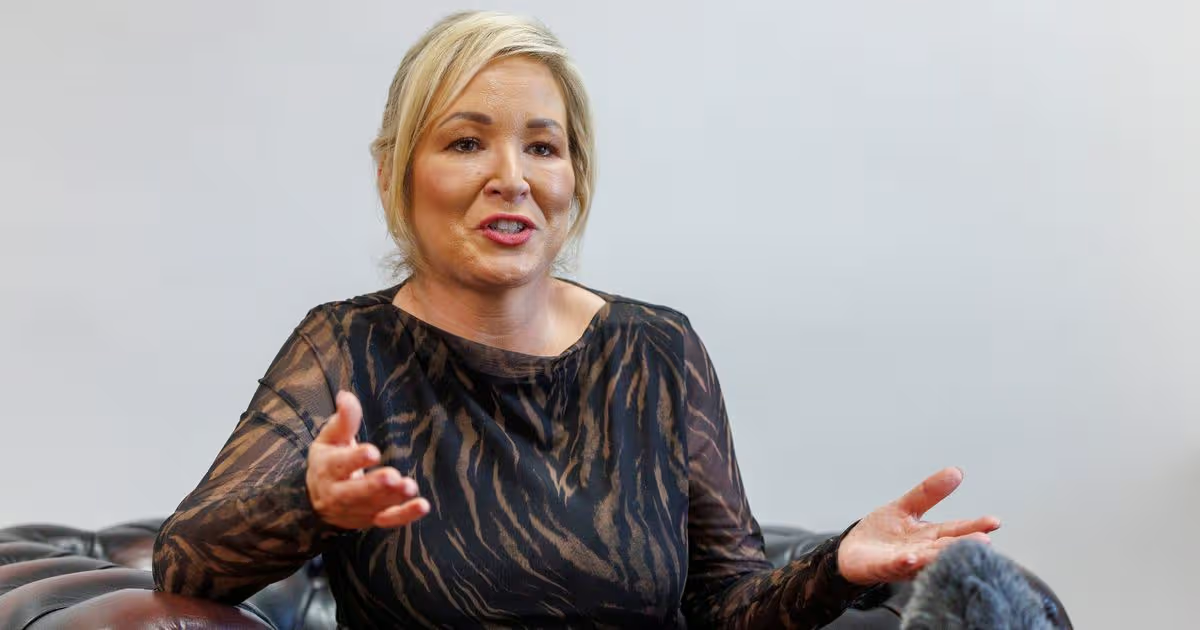
Stormont’s First Minister has described the “gendered lens” through which her and deputy First Minister Emma Little-Pengelly are criticised.

Advertisement

Speaking ahead of International Women’s Day on Sunday, Michelle O’Neill praised the uplift in women “stepping into the political world”, but said too many still face online abuse ranging from comments on their appearance to threats of physical or sexual violence.

She served as the first female mayor of Dungannon and South Tyrone council from 2010 to 2011 and was the first woman to become deputy first minister in 2020, serving alongside Baroness Arlene Foster, the first female first minister.

Ms O’Neill said her more than 20 years in politics is a “significant time to witness an awful lot of change” and comparing the political world in 2026 to her time in Dungannon council is “day and night actually”.

Of Sinn Fein’s 27 MLAs in the Northern Ireland Assembly, 16 are women, a fact Ms O’Neill said she was proud of, but that there is still a “journey to be travelled”.

“I think that there’s a very ugly climate, and we could describe it at times for women in politics, I think people in politics in general, but women in particular, face an awful lot of misogyny, and it’s not just online,” she told the Press Association.

“We talk a lot about what we receive online, but I, even this week in preparation for International Women’s Day, was speaking to my own team of female MLAs, and you see some of the stories that they have told me of their experience of being a female elected representative – it is scary.

“These are young mothers, in some cases, who have been accosted by people on the street. They regularly feel the pressure from the online abuse… people who think it’s fine to attack them with threats of sexual violence, with physical threats, and it makes a real chilling factor, I think, for women coming forward into politics.”

Advertisement

She added: “As First Minister, I see, even in the Assembly chamber here, a real creeping, real negative commentary and quite an aggressive tone being demonstrated by some of the male elected Assembly members.

“I don’t think that’s a nice space. Let’s disagree where we disagree. Let’s agree where we can also, but don’t be introducing an atmosphere where it becomes a real chill factor, where someone thinks ‘I don’t want to be a part of that’.”

Ms O’Neill is currently serving as First Minister alongside Ms Little-Pengelly, DUP MLA for Lagan Valley, and she said there is “more of a gendered lens to the questions we get asked at times”.

“I don’t recall even whenever Martin McGuinness and Peter Robinson were first and deputy first minister, I don’t recall people focusing on the nature of their relationship,” she said.

Advertisement

She acknowledged herself and her partner in the Executive Office “come from two very different backgrounds, two very different outlooks on life, and two very different outlooks where we think we should be in the future in terms of the constitutional question”.

“But the job for us to do here is actually to work together politically, to lead in the Executive, to try to deliver positive things and make a difference to people’s lives,” she said.

“And that’s where we should be questioned in terms of the policy choices, in terms of what we’ve been able to achieve here and what we’re able to deliver for people, as opposed to, ‘are you mates?’, ‘Do you get on?’, ‘Do you text each other?’ which sometimes, often becomes the starting point for a lot of the questions that women in politics get asked.”

According to Women’s Aid since 2020, 28 women in Northern Ireland have been killed by men and the region is consistently flagged as having one of the highest rates of femicide in Europe.

Advertisement

Legal proceedings are currently ongoing into the murders of 21-year-old Chloe Mitchell and 32-year-old Natalie McNally, who was 15 weeks pregnant when she was killed.

The Executive’s Violence Against Women and Girls Strategy, introduced in 2024, aims to tackle this culture through prevention programmes in schools, stronger protections and support services for victims, and co-ordinated multi‑agency action to reduce gender‑based violence.

Ms O’Neill pledged that strategy would be a priority for her on the return of devolved government and she said she has “lived up to that commitment”.

“I actually feel really, really proud of the work that we have started around ending violence against women and girls,” she said.

Advertisement

“The reality is, unfortunately, that we’re not going to turn this over overnight, but we are making progress and even I’ve just come from an International Women’s Day event, and a lot of the groups were talking to me about the positive work that they’re doing on the ground, speaking to young people.

“We have to change that attitude in society and that’s not just down to us as women. That’s down to everybody in society. Everybody has a part to play.

“I think in terms of the Natalie McNally trial, a beautiful young woman, when you think about Chloe Mitchell and her family, young women are looking at that and thinking, ‘how horrendous is that and that happened in our place, this is our home’.

“And that would make some women, young women, feel naturally unsafe, but I would say to everybody, we’re entitled to be safe, to feel safe and to be safe.”

Advertisement

Want to see more of the stories you love from Belfast Live? Making us your preferred source on Google means you’ll get more of our exclusives, top stories and must-read content straight away. To add Belfast Live as a preferred source, simply click here.
Source link

Continue Reading

NewsBeat

Mum’s warning over recalled baby formulas linked to toxins

Published

on

Mum's warning over recalled baby formulas linked to toxins

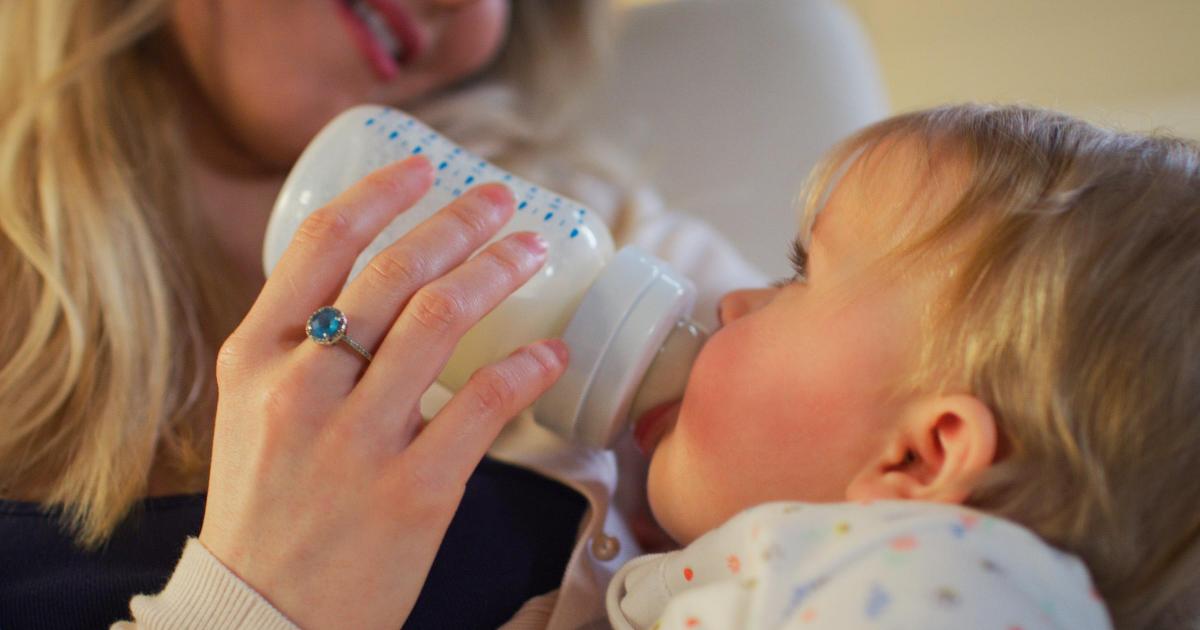
Catharine Alexander gave her newborn Arlo Chalmers Cow & Gate First Infant Milk immediately after giving birth in November.

The 24-year-old had used the formula with her first child and believed the milk to be a “trusted brand”.

However, after bringing Arlo home, the mum-of-two said her tot began projectile vomiting and “screaming in agony”.

Terrified, the health and social care student rushed little Arlo back to hospital where he was treated for a bacterial infection, but Catharine now believes the illness was caused by the milk.

Advertisement

null (Image: KennedyNews/CatharineJaneAlexander)

Arlo remained in hospital for five days whilst on oxygen and a feeding tube where he was then switched to SMA LITTLE STEPS First Infant Milk.

However, after being discharged, Arlo’s symptoms continued to worsen, prompting concerned mum Catharine to try Aptamil’s First Infant Formula instead.

Throughout these three months, Arlo was vomiting daily and battled consistent diarrhoea and constipation, leaving Catharine confused as to the cause of his unexplained symptoms.

It was only this month that Catharine said she realised all three brands of milk that she says she fed little Arlo had since been recalled due to the potential presence of cereulide – a toxin that can cause nausea, vomiting and abdominal cramps if consumed.

Advertisement

Catharine, who lives in Manchester, said: “It hit me like a tonne of bricks. I felt like I’d fed him some poison when all I want to do is protect my babies.

“I tried every single milk brand. Every single one that’s been recalled, I gave Arlo unfortunately.

“This isn’t something any mother should go through.

“After the first bottle of Kendamil, he was a completely different baby. There was no vomiting and his poos went back to normal.

Advertisement

“He’d had symptoms every day for three months. We’ve had long, sleepless nights and back and forth to the doctors with him.

“I’m still going through the ‘mum guilt’ now, I don’t think I’ll ever shift that.”

A Nestlé spokesperson said: “We are very sorry to hear about any cases where babies are poorly, and our teams will work closely with any families who report these types of concerns to us.

“On January 5, Nestlé voluntarily recalled certain batches of SMA formula because we found that one of the ingredients supplied to us was not of the right quality and did not meet the standards we require.

Advertisement


“Quality and safety is non-negotiable and that is why we have acted quickly and decisively with this precautionary recall.

“We have discontinued sourcing the ingredient from the affected supplier and all batches of the ingredient (from other suppliers) are now being systematically tested to confirm the absence of cereulide. As the UK HSA are reporting, the symptoms are generally self-limiting and usually resolve within 24 hours after last consumption.”

A Danone North Europe spokesperson added: “We take all complaints seriously and we have been in contact with Catharine regarding her concerns.

Advertisement

“We understand how worrying it is for parents when their babies are ill. We want to reassure all parents that all our baby formulas are produced under strict food safety and quality standards and undergo rigorous checks before leaving our factories.

“Low levels of cereulide were identified in some specific recalled batches and we have replaced them with new products. All products available for purchase are safe to use.

“To date there are no confirmed cases of sickness or symptoms linked to our products.

“If their baby has no symptoms parents should not be concerned. If a baby is unwell we would recommend parents speak to their healthcare professional.

Advertisement

“To check if a product is part of the recall, parents can refer to the Cow and Gate or Aptamil website.”

Baby formula recall

On January 5, the Food Standards Agency confirmed that Nestle was undertaking a precautionary product recall of several batches of 12 SMA Infant Formula and Follow-On Formula products in the UK due to the possible presence of the cereulide toxin.

The recall was updated with new product expiry dates on January 9.

On January 24, Danone – another infant formula retailer – recalled one batch of Aptamil First Infant Formula with a best before date of October 2026 because of cereulide contamination.

Advertisement

The toxin can cause nausea, vomiting and abdominal cramps, and is unsafe to consume.


It is produced by some strains of Bacillus cereus and is highly heat stable meaning it is unlikely to be destroyed by cooking, or when making the infant milk.

Jane Rawling, head of incidents at the FSA, said: “FSA’s advice is that parents, guardians and caregivers should not feed infants or young children with these products.

“Cereulide is a toxin produced by food poisoning bacteria Bacillus Cereus, and can cause food poisoning symptoms which can be quick to develop and include vomiting, and stomach cramps.

Advertisement

“I want to reassure parents, guardians and caregivers that we are taking urgent action, helping to ensure all of the affected product is removed from sale as a precaution.

“If you have fed this product to a baby and have any concerns about potential health impact, you should seek advice from healthcare professionals by contacting your GP or calling NHS 111.”

These are the Nestle products being recalled:

 SMA First Infant Milk – 800g

Advertisement
  • 53390346AB – Best Before December 2027 (only sold in Northern Ireland)

SMA Advanced First Infant Milk – 800g

  • 51450742F1, 52319722BA, 52819722AA – Best Before May 2027

SMA Advanced Follow-On Milk – 800g

  • 51240742F2 – Best Before May 2027
  • 51890742F2, 52879722AA – Best Before July 2027

SMA Anti Reflux – 800g

  • 52099722BA – Best Before April 2027
  • 51570742F3, 52099722BB, 52739722BA – Best Before June 2027

SMA ALFAMINO – 400g

  • 51200017Y3 – Best Before April 2027
  • 51210017Y1, 51220017Y1, 51250017Y1, 51390017Y1, 51420017Y2, 51430017Y1, 51460017Y1 – Best Before May 2027
  • 51690017Y2, 51690017Y3, 51700017Y1, 51710017Y1, 51740017Y1 – Best Before July 2027
  • 52760017Y5, 52790017Y1, 52860017Y1 – Best Before October 2027
  • 53100017Y3, 53110017Y1, 53140017Y1, 53140017Y2, 53150017Y1 – Best Before November 2027

SMA First Infant Milk – 800g

  • 51170346AA, 51170346AB – Best Before April 2027
  • 51340346AB – Best Before May 2027
  • 51580346AA, 51590346AA, 51590346AB – Best Before June 2027
  • 52760346AB, 52760346AD, 52780346AA, 52750346AE – Best Before October 2027

SMA First Infant Milk – 400g

  • 51350346AA – Best Before May 2027
  • 52750346AD – Best Before October 2027

SMA First Infant Milk – 1.2kg

  • 51340346BE – Best Before November 2026
  • 52740346BA, 52750346BA – Best Before April 2027

SMA LITTLE STEPS First Infant Milk – 800g

  • 51220346AD – Best Before May 2027
  • 51540346AC – Best Before June 2027
  • 52740346AD – Best Before October 2027

SMA Comfort – 800g

  • 51240742F3, 51439722BA, 51479722BA, 51769722BA, 52049722AA – Best Before May 2027
  • 52620742F3 – Best Before September 2027

SMA First Infant Milk – 200ml

  • 52860295M, 52870295M, 52870295M, 53030295M, 53040295M – Best Before October 2026
  • 53220295M, 53230295M, 53070295M, 53080295M – Best Before November 2026

SMA First Infant Milk – 70ml

  • 53170742B1 – November 2026

SMA Lactose Free – 400g

  • 51150346AB, 51719722BA, 51759722BA, 51829722BA, 51979722BA, 52109722BA, 53459722BA – Best Before April 2027
  • 51500346AB – Best Before May 2027
  • 53299722BA – Best Before August 2027

Source link

Continue Reading

NewsBeat

911 calls reveal pain, despair at ICE’S largest detention camp

Published

on

911 calls reveal pain, despair at ICE'S largest detention camp

EL PASO, Texas (AP) — The calls to 911 poured in from staff at Camp East Montana in Texas, the nation’s largest U.S. Immigration and Customs Enforcement detention facility, at a rate of nearly one a day for five months, each its own tale of pain and despair.

A man sobs after being assaulted by another detainee. Another bangs his head against the wall after expressing suicidal thoughts. A pregnant woman complained of severe back pain and also had coronavirus.

“Every day felt like a week. Every week felt like a month. Every month felt like a year,” said Owen Ramsingh, a former property manager in Columbia, Missouri, who spent several weeks in the camp before his deportation in February to the Netherlands. “Camp East Montana was 1,000% worse than a prison.”

Fueled by billions of dollars in new funding, ICE operations across the nation have roiled communities, separated families and created a culture of fear in pursuit of President Donald Trump’s vow to rid the country of unauthorized migrants.

Advertisement

___

EDITOR’S NOTE — This story includes discussion of suicide. If you or someone you know needs help, the national suicide and crisis lifeline in the U.S. is available by calling or texting 988. There is also an online chat at 988lifeline.org

___

The mass arrests have swelled detention centers, and set ICE off on a national chase for space to warehouse those who have been apprehended. Far from the “worst of the worst” that Trump vowed to deport, the data from ICE show that 80% at the camp had no criminal record and were instead caught up in a far-reaching dragnet.

Advertisement

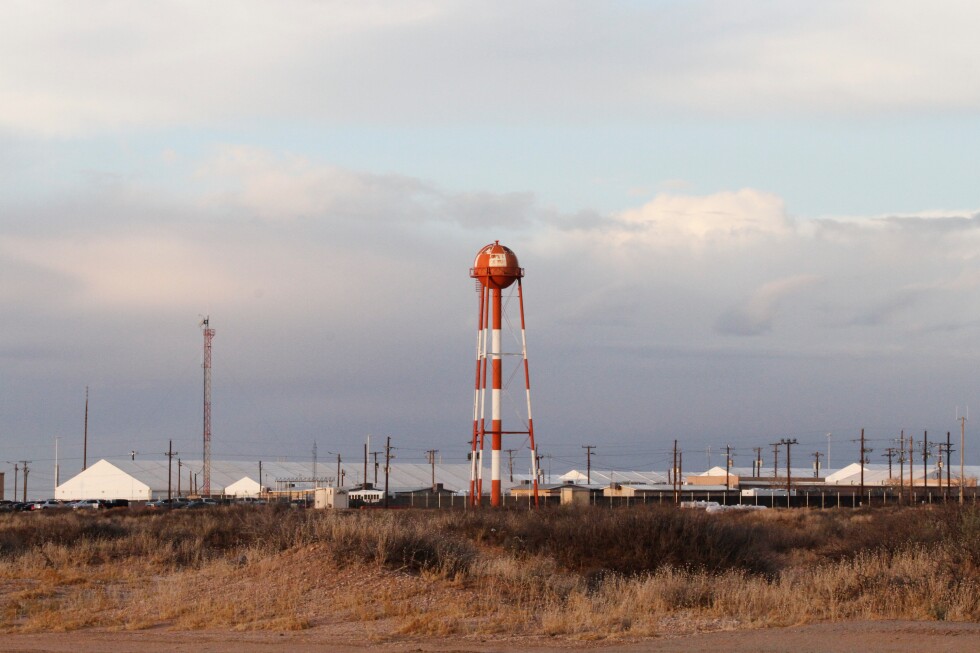
Camp East Montana looks like a pop up village, with six long tents along a stretch of the Chihuahuan Desert outside El Paso at the U.S. Army base Fort Bliss, once the site of an internment camp for Japanese Americans during World War II. Inside the hastily constructed camp, a series of communal living pods shelter thousands of immigrants in color-coded uniforms and Croc-style shoes.

But the stories of the conditions at the facility, revealed in data and recordings from more than a hundred 911 calls obtained by the The Associated Press — in addition to follow-up interviews and court filings — offer a disturbing portrait of overcrowding, medical neglect, malnutrition and emotional distress.

The detainees describe a camp where an average of about 3,000 people have lived per day in loud and unsanitary quarters, diseases spread easily and sleep is a luxury. The center will be closed to visitors until at least March 19 because of a measles outbreak, according to U.S. Rep. Veronica Escobar.

Detainees struggle to obtain medication and health care, lose concerning amounts of weight because of a lack of food, and live in fear of private security guards known to use force to put down disturbances. The ceilings in the windowless tents leak when it rains and they only see sunlight during brief outings once or twice a week to a cramped recreation yard.

Advertisement

In an email, a Department of Homeland Security spokesperson who did not provide their name rejected claims of subprime conditions, saying Camp East Montana detainees receive food, water and medical treatment in a facility that is regularly cleaned.

The agency said Tuesday that normal operations continue at the camp. The Washington Post reported Wednesday that ICE is considering a plan to close it.

Detainee says guards bet on suicide

Like other detainees, Ramsingh said that between cleanings the rooms, restrooms and showers were often filthy and infested with insects. He said detainees stole others’ food because everyone was hungry due to the small and sometimes inedible meals, which led to fights, and the conditions took a toll on his mental health.

At one point he said he overheard a security guard talking about bets made among the staff over which detainee would be next to die by suicide. The guard said he had paid $500 into a pool, with the total pot riding on the outcome. The talk was particularly jarring, he said, because he had contemplated suicide himself.

Advertisement

The DHS spokesperson said Ramsingh’s account was false, though provided no indication of how the agency had sought to verify that.

Ramsingh said he heard of the betting pool after Jan. 3, when ICE said security guards responded after a 55-year-old Cuban man tried to harm himself and then used handcuffs and force to restrain him. A medical examiner ruled that Geraldo Lunas Campos’s death was a homicide caused by asphyxia.

On Jan. 14, staff reported that a 36-year-old Nicaraguan man died by suicide days after he was detained while working in Minnesota.

In addition to those cases, detainees attempted to harm themselves while expressing suicidal ideations on at least six other occasions that resulted in 911 calls, according to records from the City of El Paso obtained under the Texas public information law.

Advertisement

DHS said the facility’s medical staff “closely monitors at-risk detainees,” provides mental health treatment and tries to prevent suicide attempts.

Ramsingh was a legal permanent resident brought to the U.S. at age 5, when his Dutch mom married a U.S. service member. He married a U.S. citizen in 2015.

But at the age of 45, immigration authorities detained him at Chicago O’Hare airport in September after he flew home from a trip to visit family in the Netherlands. They cited a drug conviction from when he was 16 years old, for which he served prison time decades ago. He was among the first detainees sent to Camp East Montana.

‘It’s really mentally draining’

Other medical emergencies included seizures, chest and heart problems, according to AP’s review of 130 calls made after the camp’s opening in mid-August through Jan. 20.

Advertisement

“It’s not easy in here, psychologically,” said detainee Roland Kusi, 31, who said he fled Cameroon in 2022 to escape political violence. “You just keep thinking, like all the time, you’re thinking and thinking for a solution. … It’s really mentally draining.”

Immigration authorities arrested him in Chicago in September at an appointment with his wife, a member of the Army National Guard, to register their marriage in pursuit of legal residency for him. He was shipped quickly to El Paso.

A Cuban immigrant in his 50s told the AP he requested to receive his medication for diabetes, high blood pressure and an enlarged prostate during a six-week detention at Camp East Montana but it never arrived. He spoke on the condition of anonymity for fear of reprisals.

Desperate, the man said he once refused to leave living quarters when a cleaning crew came. An immigration official offered him Ibuprofen, and urged him to consider leaving for another country.

Advertisement

“He says to me, ‘Look, there are a lot of detainees, we don’t have enough for everyone,’” he said. “The man from ICE says to me, ’OK, why don’t you decide it’s better to leave? Leave for Mexico, go to Cuba. There you can have your medicine, have your things.’”

Fearing death, the man agreed to self-deport to Mexico to Ciudad Juárez — across the international border from his wife and their 11-year-old son in El Paso.

Injured detainees range from teenagers to retirees

The detainees, mostly male, come from all over the world. Some have lived in the U.S. for decades.

The camp is intended for short-term stays before detainees are transferred or deported. The average stay there is only nine days, according to ICE data, but some detainees have been kept for months amid court cases or logistical issues related to deportation. Ramsingh said he got stuck there for weeks after his deportation was ordered because ICE lost his Dutch passport. His personal belongings, including gold jewelry, also went missing.

Advertisement

Advocates for detainees and some members of Congress have called for the camp’s closure, citing inhumane conditions.

“This facility should not be operational. It feels like this contractor is reinventing the wheel, and people are losing their lives in their experiment,” said Escobar, a Democrat from El Paso who has toured the camp several times.

She said the facility had temporarily cut its population below 1,900 when she visited last month after cases of the measles and tuberculosis were reported.

On one visit, a female detainee showed Escobar a meager serving of scrambled eggs that was served still frozen in the middle. She learned that detainees protested after they had stopped receiving juice, fruit and milk with their meals.

Advertisement

Escobar also met with a detainee from Ecuador who said his arm had been broken during a violent arrest by immigration agents in Minnesota. Weeks later, he was still pleading for proper medical treatment and the congresswoman could still the fractured bones in his forearm poking up under the skin.

“I asked him, have you asked for help? And he said, ‘I ask every day, all day. And the only thing they give me is aspirin’,” she recalled.

A missing inspection report

The Washington Post reported in September that a required ICE inspection found conditions at the facility violated at least 60 federal standards for immigration detention, but that report never been released publicly.

The DHS spokesperson did not explain why but called claims in the Post story false. The spokesperson said ICE’s Office of Detention Oversight recently completed an inspection at Camp East Montana but that report also has not been released.

Advertisement

The camp was hastily constructed last summer after the administration awarded a contract now worth up to $1.3 billion to Acquisition Logistics LLC, a Virginia contractor that had previously not operated an ICE facility.

The company uses subcontractors at Camp East Montana, including security firm Akima Global Services and medical contractor Loyal Source.

Escobar called for an investigation into the contractors, saying they were not delivering the services paid for by taxpayers.

“People should be moved by the abject cruelty, but if they’re not, I hope they’re moved by the fraud and corruption,” she said.

Advertisement

Akima didn’t respond to messages seeking comment. Loyal Source declined comment.

Seizures, fights also reported on calls

Most of the 911 calls were made by the camp’s contract medical staff. At least 20 incidents were reported as seizures, including some that resulted in head trauma.

Some injuries stemmed from fights between detainees, including a man who said he had been kicked in the ear and battered in his ribs. Another man reported he could not move his left eye after he had been assaulted the day before.

A woman who was 12 weeks pregnant had not received any prenatal care prior to her arrival at Camp East Montana and was intense pain, 911 calls revealed. She was among a small number of emergencies involving women, who make up less than 10% of the camp’s population.

Advertisement

The calls also revealed some staff discord. A doctor is heard berating another employee for seeking to take a suicidal detainee back into the detention facility rather than to the emergency room, only to then figure out they had confused two different patients.

After one detainee attempted suicide while in an isolation room, a doctor could be heard speaking with a shaken colleague. A security supervisor assured him, the doctor said, that incidents “like this shouldn’t happen.”

___

Foley reported from Iowa City, Iowa, and Biesecker reported from Washington.

Advertisement

Source link

Advertisement
Continue Reading

NewsBeat

The best dumbphones for a complete digital detox

Published

on

The best dumbphones for a complete digital detox

“Dumbphone” sounds like an insult, but it serves to distinguish these products – more flatteringly referred to as brick phones, feature phones or flip phones – from the modern-day smartphones that 95 per cent of British adults own. Smartphones are increasingly powerful and expensive products, sold by companies like Apple (which makes the famous iPhone), Google and Samsung. They do everything, with many users relying on their smartphones for banking, travel, shopping and more.

Many dumbphones are the antithesis of smartphones, instead offering only core mobile phone functions like calls and messages. For many, this is ample “connectivity.” Other phones on this list are restricted smartphones, with features removed or added to make them easier, simpler or safer to use than an unbridled iPhone.

“Bricks, dumbphones or feature phones are seeing a revival,” says Rob Maule, consumer expert at Currys. “As a whole, sales of these back-to-basic phones are up 13 per cent year-on-year, with the retro Nokia 2660 and Nokia 105 up 50 per cent and 49 per cent year-on-year, respectively.”

We’ve also included some adjacent products in this guide that are relevant to anyone contemplating a digital detox or mulling an appropriate device for a child. Some of these devices are technically smartphones, but they have features that might put them on your dumbphone shortlist regardless.

Advertisement

Source link

Continue Reading

NewsBeat

Stirling cheerleaders ready to take talents Stateside for world championship

Published

on

Daily Record

The six talented performers will head to Orlando next month for the World Cheerleading Championship.

A talented group of cheerleaders from Stirling are ready to make some noise as they head Stateside to show their talents for the world.

Advertisement

The youngsters – Freya Speirs, Mollie Manton, Jessica McAra, Amelia Aitken, Heather Shore and Hayley Stewart – represent a pair of local dance schools and will join up with Team Scotland for the World Cheerleading Championship in Orlando in April.

Between them, the girls represent Kay Klass Dance, based in Raploch, and DMC Allstars, based in Springkerse.

But they have launched a bid for funding to help them achieve their ambitions of getting to Florida and perform on the biggest stage as part of the Scottish squad of 72 performers.

The trip to Orlando will include competing, as well as training in state-of-the-art facilities with world-class instructors. The event will see over 10,000 athletes from more than 140 member countries taking part.

Advertisement

A JustGiving page has been launched to help with the funding goal, with a group of parents hoping to raise a target goal of £450 and get some Stirling support behind the girls.

On the page, it says: “We are raising funds to help these local, Stirling girls realise their dreams and join the national team on their quest to be world champions.

“This is an incredible opportunity for these young athletes, and any local support would make a significant difference in helping them represent both Scotland and the Stirling area on the world stage.”

Advertisement

To donate, visit here.

Source link

Continue Reading

NewsBeat

Major A-road closed for more than five hours after vehicle fire

Published

on

Cambridgeshire Live

Crews from Cambridgeshire Fire and Rescue Service attended

Part of the A14 road was closed last night for more than five hours after a vehicle fire. The A14 eastbound between junction 23 and junction 24 was closed to allow for emergency resurfacing works following the vehicle fire.

Advertisement

Crews from Huntingdon, St Neots, and Cambridge were called to a vehicle fire at around 3pm on Thursday, March 5.

A spokesperson for Cambridgeshire Fire and Rescue Service said: “Wearing breathing apparatus, firefighters used a hose reel to extinguish a fire involving a car. The crews returned to their stations by 4.40pm.”

The cause of the fire was confirmed to have been accidental.

At the time of the closure, National Highways East said: “The A14 in Cambridgeshire is CLOSED eastbound between J23 (Godmanchester) and J24 (Swavesey). This is to allow for emergency resurfacing works to take place following an earlier vehicle fire.”

Advertisement

Source link

Continue Reading

NewsBeat

West Lothian will not grant general extension to licensing hours during World Cup

Published

on

Daily Record

But local pubs and clubs which want to stay open for Scotland’s opening game against Haiti on 14 June will have to apply for a licence to keep their doors open until beyond 2am.

West Lothian will not follow its neighbours with a general extension to licensing hours during the World Cup.

Advertisement

Falkirk, Edinburgh and East Lothian have all agreed elements of a general extension, with the capital’s being the most generous through the tournament later this year.

But local pubs and clubs which want to stay open for Scotland’s opening game against Haiti on 14 June will have to apply for a licence to keep their doors open until beyond 2am.

The Scotland squad will kick off their first World Cup in almost 30 years. Most local councils have introduced elements of a general extension. Edinburgh’s rules apply to all games.

READ MORE: West Lothian thieves ‘filling trolleys and walking out’ as incidents on the rise

Advertisement

Falkirk’s rule applies to only Scotland’s games including Haiti, Morocco and Brazil. These two latter games have kirk off times of 11pm rather than the 2am start in the Haiti match.

The “ once in a generation event” as the competition has been dubbed could see a big boost in takings for licensed premises which have taken a financial battering since the Covid lockdown in March 2020.

A spokesperson for the council said: “After consideration, the West Lothian Licensing Board has determined that it will not grant a general extension of licensed hours for the FIFA World Cup 2026.

READ MORE: Plans for new West Lothian residential care home for children to be redrawn

Advertisement

“Licence holders of licensed premises permitted to televise sport, wishing to extend their licensed hours, for the purposes of televising Scotland matches, will be required to submit an application for extended hours.”

To ensure that applications are processed before the commencement of the World Cup, applications should be submitted no later than 31 March 2026. The Board may determine it appropriate to attach conditions to applications granted.

A list of the conditions which may be attached will be published online at www.westlothian.gov.uk/licensing by 17 March 2026.

READ MORE: West Lothian woman ‘exposes herself’ to passers-by as police make arrest

Advertisement

Don’t miss the latest news from the West Lothian Courier. Sign up to our free newsletter here.

Source link

Continue Reading

NewsBeat

Bank employees detained and cash seized in Hungary, Ukraine says

Published

on

Bank employees detained and cash seized in Hungary, Ukraine says

BUDAPEST, Hungary (AP) — Hungarian authorities have detained seven Ukrainian citizens, including a former Ukrainian intelligence officer, and seized two armored cars carrying large amounts of cash across Hungary on suspicion of money laundering, officials said Friday.

Ukraine accused Hungary of taking the Ukrainians hostage and illegally seizing millions of dollars in cash.

“This is state terrorism and racketeering,” Ukraine’s Foreign Minister Andrii Sybiha wrote on X late Thursday.

The seven were employees of the Ukrainian state-owned Oschadbank, and they were traveling in two armored cars that were carrying the money between Austria and Ukraine when they were detained, Sybiha said.

Advertisement

The armored cars were carrying cash as part of regular services between state banks, he said, adding that the status of the employees was unknown.

In a separate statement, Oschadbank wrote that 40 million U.S. dollars as well as 35 million euros and 9 kilograms (19.8 pounds) of gold — worth around $1.5 million at current prices — had been apprehended by Hungary.

Hungary’s National Tax and Customs Administration confirmed Friday that it had detained seven Ukrainian citizens and seized the two armored cash-transport vehicles. It added it was conducting criminal proceedings on suspicion of money laundering.

Hungary’s Interior Ministry, Foreign Ministry and Counter-Terrorism Centre did not immediately respond to requests for comment.

Advertisement

GPS data showed the vehicles were in the center of Budapest near one of Hungary’s law enforcement agencies, but that the location of the bank employees remained unknown, the Ukrainian bank said.

The incident further inflamed tensions between Hungary and Ukraine, which are embroiled in a bitter feud over Hungary’s access to Russian oil through a pipeline that crosses Ukrainian territory.

Oil shipments through the Druzhba pipeline have been interrupted since Jan. 27. Ukraine says a Russian drone strike damaged the pipeline’s infrastructure, and that repairing it carried risks to technicians. It said that even if restored, it would remain vulnerable to further Russian attacks.

Hungary’s government, however, has accused Ukraine of deliberately holding up supplies of Russian crude, and has vowed to take countermeasures against Kyiv until oil flows resume.

Advertisement

Hungarian Prime Minister Viktor Orbán, who has maintained close relations with the Kremlin while escalating an aggressive anti-Ukraine campaign ahead of crucial elections next month, has called Ukraine Hungary’s “enemy,” and accused Ukrainian President Volodymyr Zelenskyy of seeking to provoke an energy crisis in order to sway the April 12 vote.

Orbán did not directly mention the detention of the bank vehicles but alluded to the incident in statements to state radio Friday, saying: “We will stop things that are important to Ukraine passing through Hungary until we get the approval of the Ukrainians for oil shipments.”

“The Ukrainians will run out of money sooner than we will run out of oil,” he added.

Trailing in most polls behind a popular center-right challenger, the populist Orbán has staked the election on convincing voters that Ukraine poses an existential threat to Hungary’s security.

Advertisement

In office since 2010, the EU’s longest-serving leader has claimed that if he loses the election, the European Union will force Hungary into bankruptcy by cutting Russian energy imports, and that Hungarian youth will be sent to their deaths on the front lines in Ukraine.

Hungary, along with neighboring Slovakia, have defied EU efforts to wean off Russian fossil fuels, and continued to purchase them despite Moscow’s invasion of Ukraine.

Orbán previously ceased diesel shipments to Ukraine, vetoed a new round of EU sanctions against Russia and blocked a major, 90-billion-euro ($106-billion) loan for Kyiv in retaliation for the interruption in oil shipments. He’s also deployed military forces to key energy infrastructure sites across Hungary, accusing Ukraine of plotting disruptions.

On Thursday, Orbán told an economic forum that Hungary would use “force,” including “political and financial tools,” to compel Ukraine to resume oil shipments.

Advertisement

On his post on X, the Ukrainian foreign minister took issue with Orbán’s comments, writing: “If this is the ‘force’ announced earlier today by Mr. Orban, then this is a force of a criminal gang,” Sybiha wrote.

Ukraine’s Foreign Ministry on Friday urged Ukrainian citizens to abstain from visiting Hungary, saying their security could not be guaranteed amid “arbitrary actions by the Hungarian authorities.”

The Ministry also called for Ukrainian and European businesses to take into account “the risk of arbitrary seizure of property” in Hungary.

Advertisement

Source link

Continue Reading

NewsBeat

Indonesia to ban ‘high risk’ social media for under-16s | Science, Climate & Tech News

Published

on

A girl takes a picture using her phone in a park in Jakarta, Indonesia. File pic: Reuters

Indonesia has become the latest, and most populous, country to say it will ban social media for under-16s. 

The country – which has the fourth biggest population in the world – has approved new restrictions designed to protect young people online.

And with high levels of internet use among its more than 284 million people, the ban could have a big impact.

Since Australia brought in the world’s first ban of under-16s on social media in December, a succession of other countries – including Spain, France, Austria, Denmark, Finland, Greece and Italy – have said they plan to do the same.

Advertisement

Advertisement

UK consultation on social media ban for under-16s

Indonesia’s communications and digital minister, Meutya Hafid, said her government would “delay access” for under-16s until platforms including TikTok, Facebook, Instagram, X, Youtube and Roblox “perform their obligations”.

She did not elaborate on what the obligations are.


Does Gen Z back a social media ban?

Advertisement

From 28 March, accounts belonging to teenagers under 16 on the “high-risk platforms” would be gradually deactivated, the minister announced.

“We realise this may cause discomfort in the beginning,” Ms Hafid said in a video statement.

“Children may complain and parents may be confused dealing with their complaints.”

She said Indonesia would be the first non-Western ​country to impose such restrictions, and said they were needed because: “Our children are facing risks, from porn, cyberbullying, online fraud to most importantly, ⁠addiction.”

Advertisement

Advertisement

Social media ban: Have we reached a tipping point?

Malaysia will begin enforcing a ban this year, after lawmakers voted for the restrictions in November.

Read more from Sky News:
Do you want to ban kids from social media? The government is asking
Meet the kids who want a social media ban

TikTok, Meta, which owns Facebook and ​Instagram, Roblox, Google and X did not immediately respond to Sky News’ request for comment.

Advertisement

Advertisement

Social media’s ‘tobacco’ moment?

Around 79.5% of Indonesia’s population use the internet, according to a 2024 survey of 8,700 people by the Indonesia internet service providers’ association.

Advertisement

The research also showed showed 48% of children under 12 had access to the internet, with some respondents of that age group using Facebook, Instagram, and TikTok. It revealed internet use rose to 87% among “Gen Z” users aged 12 to 27.

Source link

Advertisement
Continue Reading

NewsBeat

UKHSA warns ‘infections remain high’ as it issues new 48-hour rule alert

Published

on

Daily Mirror

People over the age of 65 have been worst hit by this illness

Brits have been reminded of a 48-hour rule over a nasty winter bug. Health experts have urged people to stay home for two days if they experience symptoms.

Advertisement

According to an update from the UK Health Security Agency (UKHSA), cases of norovirus “remain high”. Norovirus, which is also known as the winter vomiting bug, is an unpleasant illness that causes vomiting and diarrhoea.

Figures from the UKHSA show that people over the age of 65 have been worst hit by the illness. Cases from the last two weeks (February 16 to March 1) have also been 30.5 per cent higher than the five-season average.

But overall, norovirus cases have started to decrease. Despite this, you still need to be careful if you experience symptoms.

Amy Douglas, lead epidemiologist at UKHSA, said: “Norovirus remains high but has started to decrease in recent weeks. Cases remain highest among people aged 65 years and over.”

Advertisement

She urged people to practise good hygiene. “We should all remember the simple steps we can take to help stop norovirus from spreading,” she said.

“Wash your hands with soap and warm water and use bleach-based products to clean surfaces to help stop infections spreading. Alcohol gels do not kill norovirus so don’t rely on these alone.”

She also highlighted an important 48-hour rule. Ms Douglas said: “If you have diarrhoea and vomiting, don’t return to work, school or nursery until 48 hours after your symptoms have stopped and don’t prepare food for others in that time either.

Advertisement

“If you are unwell, avoid visiting people in hospitals and care homes to prevent passing on the infection to those who are the most vulnerable.” This advice is backed by the NHS, which says on its website: “Do not go to school, nursery or work until you have not been sick or had diarrhoea for two days

“Do not visit others in hospitals or places like care homes until you have not been sick or had diarrhoea for two days.”

Symptoms

According to the NHS, symptoms of norovirus can emerge “suddenly” and typically include nausea, vomiting, and diarrhoea. Other signs of the virus may be a high temperature, headaches, stomach cramps, and general body aches.

Advertisement

If you or your child has diarrhoea for more than seven days or vomiting for more than two days, you should call 111.

How to prevent norovirus from spreading

Aside from avoiding certain places for two days, the NHS also says you should:

  • Wash your hands with soap and water after going to the toilet or changing nappies (alcohol hand gels do not kill norovirus)
  • Wash your hands with soap and water before preparing, serving or eating food
  • Wash clothes and bedding that has poo or vomit on it on a 60°C wash and separately from other laundry
  • Clean toilet seats, flush handles, taps and bathroom door handles
  • Avoid contact with others as much as possible

Source link

Continue Reading

Trending

Copyright © 2025