A staple for revitalising my complexion at the start, throughout and at the end of the day, it also helps firm up my skin whilst illuminating and creating that dewy finish. So when I discovered Charlotte Tilbury was launching its own Magic Hydrator Mist, I was excited to try it out and see if it matches the brand’s reputation.
Typically priced at £35, the face mist – which currently has 20% off in the brand’s sale for £28–is billed by Charlotte Tilbury as an ‘oxygenating, hydrating face mist with hyaluronic acid, niacinamide and pollution defence for an instant dewy glow on-the-go’. It promises to diminish signs of ‘digital fatigue’ by 88% – which is great for those of us who work for hours on computers for our job.
READ MORE:
Advertisement
Reportedly influenced by the ‘power of an Oxygen Facial’ – a moisturising skincare treatment that employs pressurised oxygen to administer serums – the mist is loaded with skincare favourites like hyaluronic acid, hyaluronic mesh technology alongside glycerin and niacinamide to, allegedly, boost skin’s hydration in as little as an hour.
Alongside these hero ingredients often spotted in hydrating moisturisers and serums, the mist includes the unique Kombu extract. This extract supposedly diminishes the visible signs of tiredness (ie, lacklustre skin, puffiness) and helps its users maintain a radiant complexion all day long, reports OK!.
The Magic Hydrator Mist from Charlotte Tilbury launched on Thursday, March 5, and claims to deliver an ‘instant dewy glow on-the-go’.
Designed to be applied as the opening step in any skincare regime – following cleansing, naturally – the mist can also be spritzed at any point during the day to deliver skin a surge of hydration. It can even be utilised for a cooling and soothing sensation after exercise
My review on Charlotte Tilbury’s Magic Hydrator Mist
As directed, I applied this Magic Hydrator Mist following cleansing in the morning. After using my face wash (my current cleansing obsession is the Superfacialist Vitamin C+ Skin Renew Cleansing Oil alongside its Vitamin C+ Brighten Gentle Daily Micro Polish Wash) and gently patting dry, I applied several generous glides of the mist across my face, doing my utmost to ‘avoid the eyes’ – though this proved challenging.
Advertisement
The formula immediately calmed my complexion with its refreshing sensation and I practically straight away noticed a firming effect. Whilst it didn’t appear ‘dewy’ right off the bat – looking more damp as it dried – within an hour or thereabouts, my skin did have a lovely radiance.
Giving it time to sink in, I later applied my serums and moisturisers and this added to its luminousity – noticeably more so than usual. A friend of mine even remarked I’d achieved that desirable ‘glass skin’ look – which I’ll gladly accept.
As the day went on, I reapplied the mist in the afternoon to revitalise my complexion during the post-lunch slump and it certainly enhanced my skin’s glow and vitality.
Advertisement
While most of the mist’s properties had me impressed, one aspect that fell short of my hopes was brightening my eye area with the mist by itself. Several restless nights had created more pronounced shadows beneath them and I’d hoped the mist might address this but, sadly, I likely need a miracle eye cream to combat those.
I also found that the spray dispenser didn’t quite cover as wide a surface area as I’d expected. This meant I required several pumps to coat the entire base.
It’s important to note that the mist isn’t unscented – in fact it has a lovely fragrance. It boasts a bright, fresh, delicately floral aroma, courtesy of its ‘White Tea of Bali’ ingredient, which dissipates after a brief moment on the skin but leaves the bathroom smelling divine.
Advertisement
One additional feature I’d have preferred is a more see-through bottle. Whilst the weight serves as a reasonable guide to how much remains, it would be far more practical to gauge the exact level of liquid inside.
That said, I am thoroughly enjoying the revitalising sensation it provides, not to mention the luminous radiance it gives my complexion when I’d rather skip the makeup. I’m also keen to observe its effect on the fine lines I’m noticing around the corners of my eyes, particularly given its claim to be a ‘radiant skin rescue essence for smoother, younger looking skin’.
Pros:
Has an instantly firming sensation
Cooling and refreshing
Visibly leaves a dewy glow to my skin after an hour
Smells lovely
Instantly brightens my complexion
Cons:
Spray nozzle isn’t continuous and requires a few spritzes to get full coverage
The bottle isn’t transparent, meaning there is no telling how much is left in the bottle

Noa-Rose became critically ill with meningitis B despite veing vaccinated
09:08, 18 Mar 2026Updated 09:28, 18 Mar 2026
A mum has shared her terrifying ordeal after her daughter was struck down by meningitis despite being fully vaccinated. Emma Alderman said her daughter Noa-Rose became critically ill after what began as a completely normal day.
The now seven-year-old complained of pain in her legs before falling asleep on the sofa. When Emma, 41, checked on her just 30 minutes later, she noticed she had a high temperature and a rash on her thigh. “It started so suddenly,” said Emma, from Cefn Fforest, Caerphilly.
“She’s been playing in the park with my husband that morning and was absolutely fine. When she came home, she began complaining of pain in her legs. Noa-Rose fell asleep on the sofa and when I checked on her, she had developed a high temperature, her hands and feet were cold, and a rash had appeared on her thigh. It quickly spread to her shoulder and stomach.”
Advertisement
Emma and husband Scott, 47, rushed the girl to the hospital where she was diagnosed with Meningococcal Meningitis Type B, whooping cough and flu. Doctors said that if Emma hadn’t acted so quickly, it could have been fatal.
Emma said: “Her little body was taking an enormous hit. We knew she was seriously unwell, but we never imagined meningitis. She had received all her vaccinations, including her booster just eight weeks earlier.

“When we heard the word meningitis, we were terrified. I knew how fast it can become fatal. Doctors told us that bringing her in when we did saved her life. If we had waited, she would not have survived.
Advertisement
“They didn’t say what caused it, just that it was an isolated case.”
Despite pulling through since the scary ordeal in December 2022, Noa-Rose has been left with long-term health complications including epilepsy. She has two seizures a month.
The youngster is still undergoing tests and there is a possibility she may require brain surgery in the future. Emma said: “She takes daily medication and life is very different for her now. She has frequent hospital appointments and her bedroom has a camera, a seizure mattress and epilepsy alarm.
Advertisement
“No child should be governed by a medication schedule. My message to anyone who suspects meningitis is simple, be decisive, go to hospital and get checked. Meningitis progresses incredibly fast and can be fatal within hours.
“Knowing the signs and symptoms can save a life. I absolutely know what the families in Kent are going through. My heart goes out to everyone impacted by the outbreak. We know only too well how stressful and uncertain this time is for them all.”
Since the ordeal, Emma has become a community volunteer, helping to raise awareness of the disease and its symptoms. The family has also taken part in a series of fundraising challenges.
Advertisement
Her husband climbed Mont Blanc, raising around £2,500, while Emma organised community events including a Halloween party and a festive fundraiser. In their most recent challenge, Noa-Rose herself climbed Pen y Fan, the highest peak in South Wales, raising more than £5,000.
Emma added: “Throughout our journey, we have been supported by Meningitis Now. They have been helping families for 40 years and have contributed £13 million towards vaccine research. Their support has meant everything to us.
“We wanted to give something back. Our purpose is not only to raise funds, but to raise awareness, so no family ever has to experience what we did.”
Donald Trump’s bombing of Iran may actually have strengthened the country’s ruling regime, according to a BBC expert.
Gordon Corera, the corporation’s security correspondent, said “the expectation that it’s suddenly going to collapse … doesn’t feel likely at the moment”.
But speaking on Radio 4′s Today programme on Wednesday, Corera said that was premature.
Advertisement
“We’ve seen that in the past with regimes that looked stable but then suddenly disintegrate and it’s very difficult to see what kind of factional maneuvering might be going on beneath the surface between those who want to make a deal and those who want to keep going,” he said.
“But all the signs are from the outside that the killing of leaders in Iran has not yet pushed it to that point, that it’s consolidating rather than weakening the regime for the moment, but that could change.
“I think the expectation that it’s suddenly going to collapse the regime, it doesn’t feel likely at the moment.”
Corera said Iran’s closure of the Strait of Hormuz to prevent oil tankers getting through has also made it “much harder for Donald Trump to declare victory”.
Advertisement
He said the move, which has sent oil prices soaring and rocked the global economy, also raises the prospect of the conflict becoming a “forever war”.
“Having an angry regime left there in Iran able to close the Strait at will will be something that worries the US, so they have to make a decision, which is do they want to try and remove that ability, do they want to escalate the war to take on Iran more directly,” Corera said.
“That will be the decision for Donald Trump. Does he want to push this harder to prevent one option of a forever war, which is an angry Iranian regime in place, potentially with some nuclear material, potentially with the ability to close the Strait of Hormuz, or does he want to try and finish it?
“But if finishing it means ground troops, that creates a different potential for a forever war.”
Advertisement
He added: “I think the decisions for Donald Trump are getting very difficult at this point and potentially consequential for what kind of short term or long term conflict the US may be getting into.”
HONG KONG (AP) — Shares advanced Wednesday in Europe and Asia as oil prices fell back slightly despite a barrage of attacks by Iran on its Gulf neighbors.
U.S. futures rose 0.5% after a session of moderate gains on Wall Street ahead of the Federal Reserve’s decision on interest rates later in the day. With higher oil prices feeding into other inflation, the Fed is widely expected to keep rates on hold.
Worries over global oil and gas supplies and rising prices are still clouding global markets, though Brent crude, the international standard, fell slightly to $103.14 per barrel, down from above $106 on Monday.
U.S. benchmark crude fell 1.6% to $94.67 per barrel.
Advertisement
Iran lashed out Wednesday with multiple attacks on its Gulf neighbors and Israel following the killing of one of its top leaders in an airstrike, using some of its latest missiles to evade air defenses and killing two near Tel Aviv.
But markets seem to have taken the latest escalations in stride.
Germany’s DAX rose 0.7% to 23,899.71 and the CAC 40 in Paris picked up 0.9% to 8,045.19. Britain’s FTSE 100 edged 0.2% higher to 10,427.12.
During Asian trading, Tokyo’s Nikkei 225 gained 2.9% to 55,239.40 after the government reported exports were higher than expected in February.
Advertisement
In South Korea, the Kospi jumped 5% to 5,925.03.
Lower oil prices are a boon for big oil importers like Japan and South Korea.
Hong Kong’s Hang Seng reversed early losses, surging 0.6% to 26,025.42, while the Shanghai Composite index also rebounded, gaining 0.3% to 4,062.98.
Australia’s S&P/ASX 200 climbed 0.3% to 8,640.60.
Advertisement
Taiwan’s Taiex added 1.5% and India’s Sensex advanced 1%.
Global oil flows remain largely constrained, ING Bank analysts Warren Patterson and Ewa Manthey wrote in a research note on Wednesday, even as hopes were growing that Iran might be allowing more vessels through the Strait of Hormuz, a key waterway for global oil and gas transport.
Roughly a fifth of the world’s crude oil passes through the strait, which has been largely closed as Iran blocks ships linked to the U.S., Israel and their allies.
On Tuesday, U.S. stocks held steadier as the S&P 500 rose 0.3% and the Dow Jones Industrial Average edged 0.1% higher. The Nasdaq composite added 0.5%.
Advertisement
In other dealings early Wednesday, the U.S. dollar fell to 158.96 Japanese yen from 159.01 yen. The euro fell to $1.1536 from $1.1542.
The UK Health Security Agency (UKHSA) said that, as of 5pm on Tuesday, some 20 cases of meningitis had been reported to it, up from 15 previously.
Of these, nine cases have been confirmed in the lab and 11 remain under investigation.
Six of the confirmed cases have been confirmed as the meningitis B strain.
Advertisement
A statement said: “All those affected who are currently linked to the outbreak are young adults.
“UKHSA is aware of a baby with confirmed meningococcal group B infection who is not currently linked to the outbreak but UKHSA will continue to investigate this case.”
GPs across the country have now been told to prescribe antibiotics to anyone who visited a nightclub in Canterbury from March 5-7, plus students from the University of Kent.
This is to ensure anyone who has left campus can make sure they get the right treatment.
Advertisement
The UKHSA said: “This is a rapidly evolving situation and there may be further cases as those with symptoms are encouraged to seek medical advice.
“Antibiotics remain the most effective treatment to limit the spread of invasive meningococcal disease.
“So far, over 2,500 doses have been given to students, close contacts and others, including some of those who attended Club Chemistry between March 5-7.
“GPs across the country will today be advised to prescribe antibiotics to anyone who visited Club Chemistry between March 5-7 and to University of Kent students, if they have been asked to seek preventative treatment.
Advertisement
“This is so that anyone who has travelled home, or away from Kent, can easily access this important preventative treatment close to them.”
Trish Mannes, UKHSA regional deputy director for the South East, said antibiotics are “the main intervention that will help protect people and halt the spread of the outbreak”.
She added: “As a further precaution and together with the NHS, we are beginning to roll out a targeted menB vaccination programme.
“This will initially be offered to 5,000 University of Kent students resident at the Canterbury campus, with the possibility that it may be extended, as it is kept under continual review.
Advertisement
“If you think you may have symptoms of meningitis, don’t hesitate to seek medical help by contacting your GP or calling NHS 111.
“Seeking early treatment can save lives.”
Two students have died during the outbreak, including 18-year-old Juliette Kenny, who was studying for her A-Levels.
The number of cases is expected to rise because the incubation period for the infection to when symptoms appear is two to 14 days.
Advertisement
The outbreak is being viewed by experts as unprecedented owing to the high number of cases appearing in such a short space of time.
A meeting of local Integrated Care Board officials and UKHSA regional staff is taking place on Wednesday morning, with an announcement expected later on the vaccine rollout.
The UKHSA stressed there is plenty of NHS stocks of menB vaccines after pharmacies reported they were struggling to obtain stock for people who want to pay privately.
A UKHSA spokeswoman told the Press Association on Wednesday of NHS stock: “There are sufficient menB vaccine stocks.
Advertisement
“We will work with local resilience partners to ensure effective distribution.”
All reported cases so far have a link to Kent, according to the UKHSA. At least one person who fell ill and had links to Kent attended a London hospital.
This person had “no community contacts in London”, the UKHSA said, suggesting the risk of spread in the capital is low.
Health officials stressed that people should not skip antibiotics if prescribed them, with a single tablet of Ciprofloxacin reducing the risk of meningitis in a household by about 80% to 90%.
Advertisement
UKHSA chief executive Susan Hopkins said: “This looks like a super-spreader event, with ongoing spread within the halls of residence in the universities.
“There will have been some parties, particularly around this, so there will have been lots of social mixing.
“I can’t yet say where the initial infection came from, how it’s got into this cohort, and why it’s created such an explosive amount of infections.
“I can say that in my 35 years working in medicine, in healthcare and hospitals, this is the most cases I’ve seen in a single weekend with this type of infection.
Advertisement
“It’s the explosive nature that is unprecedented here – the number of cases in such a short space of time.
“NHS were initially managing it as a major incident in the region but they have now increased that overlay to having a national-level oversight as well.”
England’s deputy chief medical officer, Dr Thomas Waite, said: “This is by far the quickest-growing outbreak I’ve ever seen in my career, and I think probably any of us have seen, of meningitis for a very long time.
“Whilst it remains an outbreak that is having its consequences in Kent, it is obviously of national significance.”
Advertisement
Laboratory scientists are urgently trying to work out if the spread is caused by a possible mutant strain of menB.
The genome of the menB strain identified in the outbreak is undergoing whole genome sequencing to see if there are any differences to known strains.
It will also be tested against available menB vaccines, though experts stressed people should get a jab if eligible.
On Tuesday, Health Secretary Wes Streeting said most students would not already be vaccinated against menB.
Advertisement
He said the menB vaccine has been available on the NHS since 2015 as part of routine childhood immunisations, “but clearly most students would not be vaccinated”.
The vaccine programme may also expand further if other groups are deemed to be at risk.
Mr Streeting has also asked the Joint Committee on Vaccination and Immunisation (JCVI) to “re-examine eligibility for meningitis vaccines” for a wider group of people.
It is now known that on Saturday, French authorities alerted the UKHSA to a confirmed case in France in a person who had attended the University of Kent.
Advertisement
There are four centres open in Canterbury offering antibiotics, with 11,000 doses available on site. People who attended Club Chemistry are still being urged to come forward, as are those on campus.
“He was searched under the Misuse of Drugs Act and a lockback knife and a craft knife were found in his trousers pockets.
Advertisement
“He was taken to Coatbridge police station and required to provide a sample of blood for analysis, but he refused to do so.”
Ingram is serving a 30-month sentence imposed at the same court for car theft, dangerous driving and driving while disqualified.
Defence lawyer Calum Ross said he was due to be released on April 29, adding: “His record does him no favours but he has spent his time in custody usefully by engaging in programmes.”
Passing sentence, Sheriff Paul Haran said Ingram had a “bad” record and “should have known better” than to carry knives in public.
Advertisement
The 10-month prison stretch will begin when his current sentence ends.
A train hit a deer earlier this morning (Wednesday, March 18)
Railway services in Cambridgeshire have been disrupted after a train hit a deer this morning (Wednesday, March 18). Greater Anglia services from Norwich to Cambridge and from Norwich to Stansted Airport may be cancelled or delayed.
Advertisement
The 5.33am service from Norwich to Cambridge hit a deer in the Thetford area. The train sustained some damage and a technician is required to attend to the scene as well as a rescue train to clear the line.
The line from Norwich towards Ely is currently blocked. Trains running from Ely towards Norwich may also be disrupted. The disruption is expected until further notice.
Greater Anglia is trying to organise replacement buses and ticket acceptance on other services. People travelling today can use their tickets on routes via Bury St Edmunds.
To get more news and top stories delivered directly to your phone, join our new WhatsApp community.Click this linkto receive your daily dose of CambridgeshireLive content.
Advertisement
We also treat our community members to special offers, promotions, and adverts from us and our partners. If you don’t like our community, you can check out any time you like. If you’re curious, you can read ourPrivacy Notice.
Mohammad Mustaqeen, a 54-year-old food vendor in Delhi, has stopped using cooking gas altogether. “Now that there is no gas, I am cooking with coal,” he says, describing a shift he never expected to make after years of relying on liquefied petroleum gas (LPG) cylinders.
The escalating war in the Middle East is forcing many countries into difficult energy trade-offs as they decide whether to curb consumption or bear rising costs amid tightening supplies.
India is particularly vulnerable as it depends heavily on LPG imports from the Persian Gulf region.
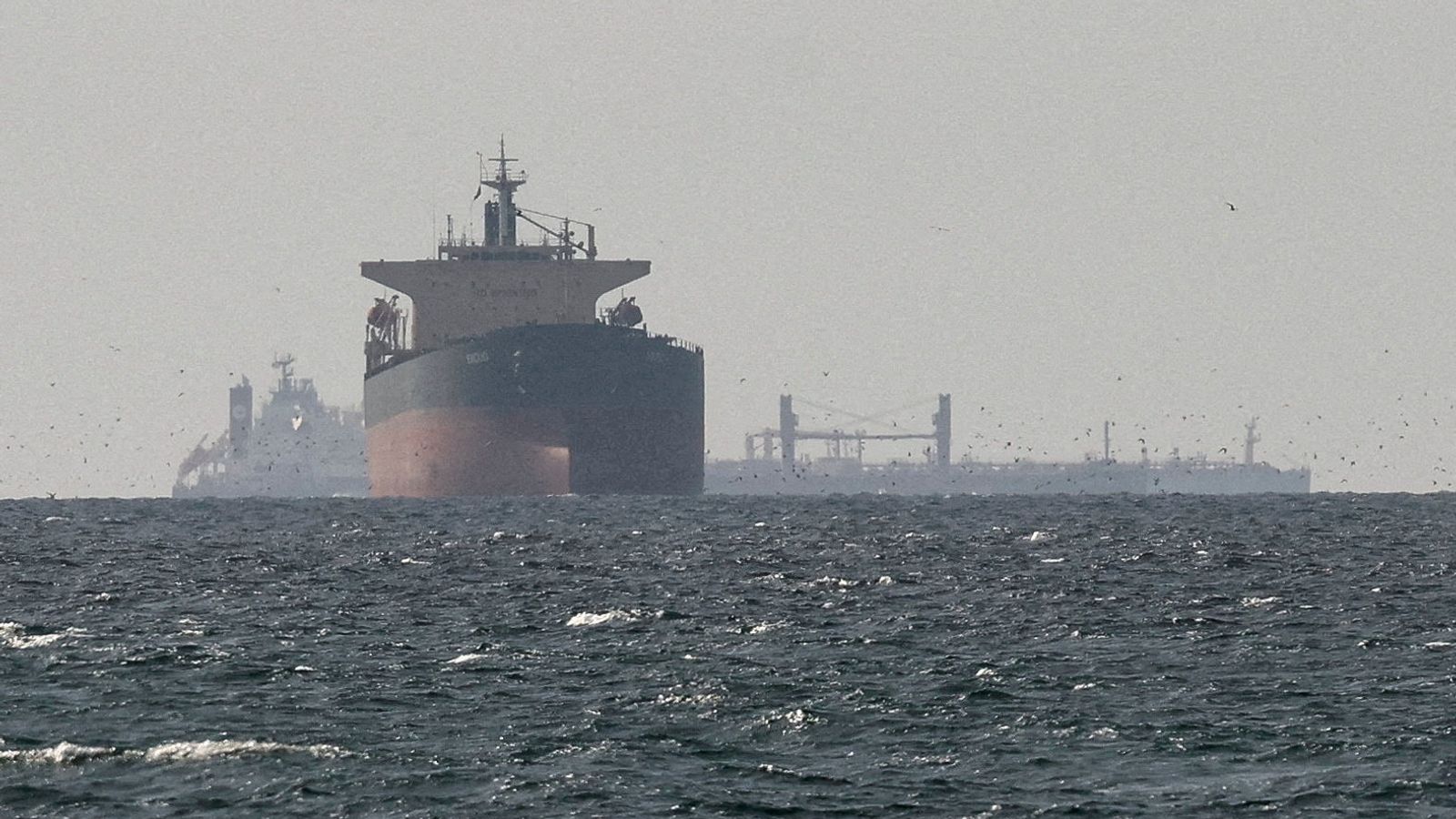
Its supplies have dwindled since Iran shut the Strait of Hormuz, the critical maritime route that carries almost a quarter of the world’s crude oil and a fifth of its gas shipments out of the Middle East.
Advertisement
India uses over 31 million tonnes of LPG every year and imports about 62 per cent of that demand, according to TheHindu.
Authorities are responding to the shortage by assessing available reserves, seeking alternative supply sources, encouraging conservation, and attempting to contain price rises. These measures, however, come with consequences. Attempts to cut energy use are affecting economic activity, while prioritising LPG for household cooking is putting commercial users like eateries and small businesses under operational strain.
For Mustaqeen, forced to shift from LPG to coal overnight, the change is not just about fuel but a sense of reversal.
“Instead of moving forward, we’re moving back in time,” he says. With no regular electricity supply and no access to a fixed shop, alternatives such as induction cooking are not viable.
Advertisement
Mohammad Mutaqeen cooks kebabs on coal in Old Delhi (Namita Singh/The Independent)
Across the Indian capital, particularly in areas without piped natural gas like in the central district of Old Delhi, residents and businesses describe similar disruptions.
The Independent visited multiple LPG distribution outlets across the city where lines lasted hours, shutters came down early, and many were left empty-handed.
Many residents visited an outlet of Indane – one of the largest packed-LPG brands in India – near Delhi Gate repeatedly over several days in the hope of securing a cylinder. Some waited for hours simply to obtain paperwork that might eventually yield a cylinder.
Advertisement
Anjum, a 31-year-old from the Daryaganj area, says she has been trying to secure a cylinder for weeks. “I booked my LPG cylinder back in February,” she says. “But I’ve been unable to get it delivered and my visits to Indane agency sites haven’t yielded any result either.”
Her attempts have involved making repeated trips during the Ramadan fasting hours. “I stand in long queues,” she says. “But by the time my turn comes, the shop shuts down.”
She blames the authorities for her troubles. “It is the government’s negligence,” he says. “Because of the government’s laxity, the common man is suffering.”
Advertisement
Anjum, 31, blames the government for the LPG shortage (Namita Singh/The Independent)
For Mohammad Naseer, 45, the shortage means a loss of his livelihood. He sells fried food but is unable to operate now.
“I have had to shut my business for lack of a cylinder,” he says. “I used to earn about Rs500 (£4) per day. The income has come down to zero.”
After days of waiting at a gas agency outlet, he obtained a paper slip that would allow him to purchase a cylinder elsewhere. “Now I have to go to Yamuna Bazaar where I have to stand in a line and then I will get a gas cylinder,” he says.
Deepak Kumar, a Chandni Chowk resident, says repeated visits to the local gas agency have yielded no success. “For the past 3-4 days, I have been coming daily for the booking,” he says. “I am only told to wait.”
Advertisement
With each passing day, the uncertainty is growing. “I am tense now, what will happen if I don’t get it?”
The impact extends beyond households into the capital’s dense network of small food businesses.
Surjit Singh Arora, 74, who has run Amar Jyoti Restaurant since 1965, says the shortage is affecting cooking methods as well as customer demand.
“It is difficult to find alternatives in the short term,” he says. While his experience has helped him adapt, the transition has not been smooth. “Cooking style is very deeply affected. My fried items have been affected. My tandoori items are compensating but the cooking process has slowed down.”
Advertisement
The slower pace of cooking has translated into financial losses. “A customer won’t wait if cooking is taking so long,” he says. “Sales are affected.” He estimates a drop in his income of about 25 per cent, rising to 30 per cent on weekends.
Some dishes have disappeared from the menu altogether. “Some of my dishes that are pan-fried I’m no longer able to serve,” he says. “South Indian food that needs steam to cook and momos are very popular, and they have gone off the menu.”
To cope, Arora has shifted part of his cooking to his home where piped natural gas is available. “Stuff like kidney beans, chickpeas that I can boil I get from home,” he says. “I now wake up early to prepare for the restaurant.”
Advertisement
Surjit Singh Arora says business is down about 25 per cent due to the LPG shortage (Namita Singh/The Independent)
At LPG distribution centres, meanwhile, employees face mounting pressure from increasingly irate customers.
Meghraj Singh, a 26-year-old LPG agency worker, says tension is palpable. “Customers are worked up and tense. Some of them are even fighting with us.”
He describes long queues throughout the day. “From 9am to 3pm, the queues are really long. Some people are actually crying.”
The shortage has also triggered a political slugfest.
Advertisement
In parliament, opposition leader Mallikarjun Kharge said the shortage was affecting “the poor, middle class, restaurants, hostels and commercial users” and questioned the government’s preparedness.
Government representatives have disputed claims of a widespread shortage. Petroleum minister Hardeep Singh Puri said that there was no supply-side crisis, attributing the ongoing disruptions to panic booking and hoarding. Officials are urging consumers not to panic and claim measures are in place to ensure distribution.
Sujata Sharma, joint secretary in the petroleum ministry, said they were monitoring the situation and acting against irregularities. “In the present situation, when we are facing a somewhat difficult phase regarding LPG supply,” she added, “the role of state governments and local administrations becomes very important, particularly in preventing hoarding and black marketing.”
Inspections and raids have been carried out and consumers have been encouraged to rely on online booking systems.
Advertisement
The federal government has prioritised domestic LPG supply over commercial use and encouraged a shift to piped natural gas where available.
It has also set up a committee to assess commercial demand and allocate supplies accordingly.
Authorities emphasise that broader fuel supplies are stable, with refineries operating at full capacity, and there are no reported shortages of petrol or diesel.
Advertisement
A man fastens a newly purchased LPG cylinder onto his cycle outside a gas agency in Chennai on 11 March 2026 (AFP via Getty)
Energy experts say the disruption underscores how hard it’s for Indian households to shift away from LPG, even where alternatives exist.
Sunil Mani, a policy advisor at the International Institute for Sustainable Development, says the challenge goes beyond simply introducing new technology.
“The shift to cleaner cooking in India is not just about technology, it’s about affordability, reliability, and how people cook,” he tells The Independent.
For many low-income households, he notes, subsidised LPG remains the only practical clean fuel as electric cooking requires upfront investment in appliances and depends on stable electricity supply, which is not universal.
Advertisement
As a result, alternatives, such as induction stoves, tend to supplement rather than replace LPG. This becomes more visible during supply disruptions when households and businesses attempt to switch fuels but face practical constraints.
At the same time, recent shortages affecting commercial users highlight broader pressures in India’s cooking fuel system. Mani says prioritising LPG for domestic consumption may offer short-term relief but it also exposes the risks of heavy reliance on imports and the need to diversify cooking energy sources.
On paper, he notes, electric cooking is already cost-competitive. Before the recent price increases, it was about 15 per cent cheaper than LPG. Now, the gap is nearly 20 per cent for many households. However, these savings aren’t evenly accessible, particularly where electricity supply is unreliable.
Encouraging urban households with dependable power to shift can ease pressure on the demand for LPG, Mani says, helping ensure supply for poorer families supported by subsidy schemes such as the Pradhan Mantri Ujjwala Yojana.
Advertisement
In the longer term, he says, scaling up electric cooking may significantly reduce the dependence on LPG imports.
“Over time, gradually scaling up electric cooking could cut LPG demand by up to 50 per cent by 2050, strengthening India’s clean cooking transition and overall energy security.”
A man sits on a scooter next to LPG cylinders in Bengaluru (Reuters)
Analysts warn the strain on supplies is exposing long-standing structural gaps in how India stores and sources LPG.
Advertisement
Hemant Mallya, a fellow at the Council on Energy, Environment and Water, says the country does maintain some storage, but at a scale that falls far short of demand.
“We do have underground storage but the combined capacity, I think, is 140,000 metric tonnes, which is not sufficient,” he tells The Independent, noting that India consumes close to 33 million tonnes annually.
That mismatch is compounded by the nature of India’s refining system. “India imports a lot of medium grade crude oil and heavy grade crude oil and the amount of LPG inherent in crude is substantially lower,” he says, adding that domestic production remains limited.
The dependence on imports has shaped how infrastructure has evolved. “Because we produce very little LPG at refineries, the storage at refineries isn’t sufficient,” he points out, explaining the system is designed around continuous supply rather than large reserves.
Advertisement
Efforts to build larger stockpiles have been slow, in part due to cost and geography. “Officially, India does not have a strategic petroleum reserve policy,” Mallya says, “they have been increasing the LPG storage but clearly not at a pace that would bring contingency.”
“It’s almost like nobody envisioned that it would be this bad.”
Building reserves requires significant capital with limited immediate returns. “If you have to keep one day’s worth of reserve, that’s literally $250m,” he says.
“Imagine if you want to keep a month’s worth. That’s the amount of capital that will be locked in without any return.”
Advertisement
Geological constraints also play a role. Suitable underground sites must be stable and leak-proof, and unlike some countries, India cannot easily repurpose depleted oil and gas fields at scale.

Then there are technical constraints in buying LPG from alternative suppliers. “LPG is a combination of butane and propane,” Mallya notes. “In India, the proportion is 60 per cent butane and 40 per cent propane. That’s not necessarily the ratio in which the US would sell their LPG.”
Even as policymakers encourage alternatives such as piped natural gas, access remains uneven. “If you go further away from urban areas, the density is so low you’ll have to put much larger pipeline networks and therefore capital for much lower returns,” Mallya says, adding that gaps persist even within cities due to housing and documentation barriers.
Taken together, these constraints mean that while crude oil supplies may remain stable, LPG availability, despite being a by-product of crude oil, can tighten quickly under stress – leaving households and businesses exposed when imports are disrupted.
Chelsea midfielder Enzo Fernandez hinted he could quit Stamford Bridge this summer in the aftermath of their embarrassing Champions League exit at the hands of PSG
Liam Rosenior refused to be drawn on comments made by Enzo Fernandez hinting he could quit Chelsea at the end of the season following their chastening exit from the Champions League.
Advertisement
The Blues were thrashed 8-2 by the reigning European champions, Paris Saint-Germain, over two legs in the Round of 16. Their fate was sealed with a disappointing 3-0 home loss on Tuesday night, with players booed by Chelsea supporters as they left the pitch.
The midfielder was asked about his future immediately after the match and implied that he was considering his future at Stamford Bridge. “I don’t know,” he replied. “There are eight games left and then the FA Cup. Then there’s the World Cup, and then we’ll see.”
Rosenior was then subsequently pressed about the Argentine’s comments – and they seemed to take the former Strasbourg boss by surprise.
“Firstly, I haven’t seen that,” said Rosenior of Fernandez’s comments. “It’s hard for me to speak on speculation after a game and I need to focus right now on the most important things, which is making sure we get a result against Everton on Saturday.”
Chelsea fans made their feelings clear at both half-time and full-time of the defeat, with an early goal from Kvicha Kvaratskhelia effectively killing the tie after just six minutes.
A stream of supporters left after Senny Mayulu scored PSG’s third on the hour mark. But Rosenior insisted he had no concerns over the atmosphere inside Stamford Bridge.
“No, I think it’s two-way. This is a fantastic football club where the fans want success instantly and that’s rightfully so for the size of the club.
“I understand because of the aggregate scoreline in the tie, why fans are frustrated. They want us to win. So, I completely get it and I understood that before I came in.
“I also want to make them happy and give them the nights they deserve. Not just me, but us as a group, as a team. That was a really, really difficult one to take because of the manner in which we went out this evening.”
Advertisement
Join our new WhatsApp community and receive your daily dose of Mirror Football content. We also treat our community members to special offers, promotions, and adverts from us – and our partners. If you don’t like our community, you can check out any time you like. If you’re curious, you can read our Privacy Notice.Content cannot be displayed without consent
The US president has been furious with Starmer ever since he refused to let American forces use British military sites to launch offensive strikes on Iran.
The PM has since allowed Trump to use UK bases for defensive strikes, despite warning the war is unlawful and unplanned.
Trump attacked Starmer again on Tuesday during Irish prime minister Micheal Martin’s visit to the Oval Office.
The president laid into Starmer for not joining his strikes on Iran, saying he had “gone out of my way” to come to a trade deal with the UK.
“Frankly, it probably wasn’t appreciated,” Trump said. “I like him, I think he’s a nice man, but I’m disappointed.”
Trump also tried to attack said he disagreed with Starmer over his “disaster” of an immigration policy and energy policy.
Advertisement
“You’ve allowed millions and millions of people into the country who shouldn’t be there. By the way, that’s all over Europe,” the president said.
But Martin then jumped in: “Keir Starmer has done a lot to reset the Irish-British relationship, I just want to put that on the record.
“I do believe he is a very earnest, solemn person, I think you have a capacity to get on with him, you’ve got on with him before.”
The taoiseach also tried to appeal to Trump over Ukraine, as the president consistently – and falsely – blames Kyiv for starting the war.
Advertisement
“The Russians did invade Ukraine, attack civilian infrastructure. The people of Ukraine just want peace and an opportunity to live,” Martin said. “We want a peaceful resolution of conflict.”
His remarks show how the tide is turning against Trump across Europe at a time when Nato is desperately trying to stay out of the US’s conflict in the Middle East.
Claire Danvers had extreme fatigue but brushed it off along with other symptoms thinking she was just busy.
08:19, 18 Mar 2026Updated 08:19, 18 Mar 2026
A mum who needed a power nap before the school run – and blamed it on being a busy parent – was devastated when doctors discovered 13 tumours in her breast. Claire Danvers, 39, from Poole, Dorset, first became aware of her symptoms, which included severe back pain, fatigue, and nausea, at the start of 2024.
Claire says the fatigue became so extreme that her ‘eyes would feel heavy’ after lunchtime and her body would ‘physically hurt’. She even had to take a nap before picking her children up from school, but put the tiredness down to being a busy, self-employed mum, reports Wales Online.
Claire, who was taking painkillers every day because her back pain was so severe, says her symptoms were initially put down to endometriosis until she discovered a lump in her right breast in February 2025. She visited her GP two months later, where she was referred for a biopsy. At the end of May 2025, she received the devastating news that she had breast cancer – after doctors discovered 13 tumours in her right breast.
Advertisement
Claire has since undergone a mastectomy as well as chemotherapy and radiotherapy treatment but says she was ‘traumatised’ by the news and says her fear of leaving her children behind is ‘horrendous’. Claire said: “I was suffering with extreme back pain.
“I was taking paracetamol and ibuprofen every day for the aches and pains that I was having. I was experiencing extreme fatigue – I was tired all the time.
“I would get to after lunch time and my eyes would feel so heavy and my body would actually hurt. I was explaining them away with how my life was.
Advertisement
“There were definitely some days that I would recline in my chair and close my eyes for a little bit. I just put it down to the fact that I was going through a lot of stress at the time.
“When I found the lump in my breast in February 2025, I thought ‘that’s not normal’… I unfortunately left it until April and only got it checked out because my husband was constantly badgering me to go to the doctors.
“The doctor examined me and said that straight away she was referring me for the two-week rapid referral pathway for breast cancer.”
Claire underwent a biopsy in May 2025 and received the devastating news that she had invasive lobular carcinoma, a type of breast cancer, later that month. Claire said: “By the time I actually found it, my cancer as a whole had grown to 9.7cm and I had 13 tumours in my breast. I was traumatised.
“The hardest thing I’ve ever had to do is tell my family and my two kids. Cancer diagnosis is traumatic enough but there’s also guilt you feel as a parent, especially having young children.
“My children have only just turned six and eight. The fear of leaving them behind – that guilt is horrendous.”
Claire underwent a mastectomy with reconstruction on her right breast in June 2025. She said: “Everything is just very traumatic. You can’t take it in – it’s like your watching your life from the outside.”
Advertisement
She added: “It doesn’t feel like you’re going through it, it feels like you’re watching someone else go through it. I’ve literally just finished my chemotherapy and radiotherapy and now I’m having hormone therapy.
“Because the cancer is driven by my hormones, they have to shut your hormones off. My life has now been changed for the rest of my life.
“I’ve been drop-kicked into menopause because they have to stop my hormones, to stop my cells turning into cancer. As long as I can tolerate the next stage of hormone therapy, I will then eventually have a hysterectomy.”
Claire is now encouraging other women to “advocate for themselves”. She said: “I think it was very easy for people – doctors or even myself – to look and say my symptoms were because of endometriosis.
Advertisement
“My advice would be to always advocate for yourself. If you have that gut feeling that something isn’t right and even if you don’t know what it is, push through it and keep pursuing it.”
Get more Daily Record exclusives by signing up for free to Google’s preferred sources. Click HERE.
You must be logged in to post a comment Login