Connect with us
DAPA Banner

NewsBeat

I woke up with a lump – now I’m forced to rely on Universal Credit and PIP to get by

Published

on

Daily Mirror

John claims the NHS has refused to operate on the growing “watermelon-sized” hernia that leaves him unable to work

A man living with a “watermelon-sized” hernia says he has been left unable to live a normal life after finding a lump that has led to a draining health battle. John Burden says he now has to rely on PIP and Universal Credit to get by.

Advertisement

The 61 year old from Weymouth in Dorset, says his ordeal began in October 2022 when he woke up with a small golf ball-sized lump in his stomach. After being rushed to hospital, fluid was drained and he was initially told to return once he had lost weight.

However, John claims that despite losing nearly 20kg, he was repeatedly told by the NHS that he needed to lose more weight before surgery could be considered. Over time, the hernia continued to grow, eventually reaching the size of a watermelon and leaving him reliant on XXXXL clothing to cover it.

He says the condition has left him unable to work as a shop fitter or drive. He says this is forcing him to rely on Universal Credit and Personal Independence Payments (PIP) to get by.

In recent months, John says the hernia has begun rupturing, causing severe bleeding and repeated A&E visits, including one incident that required a blood transfusion. He claims he is still being told further weight loss is needed before surgery could be considered.

“It causes me pain at night, I can’t drive any more, and I haven’t been able to work in three years,” he said. “All I want is to have the hernia removed so I can get my life back.”

John now believes his only option is to raise £4,500 for surgery in Lithuania. He says a specialist has agreed to treat him, including travel and accommodation costs.

He first noticed the lump around three and a half years ago, shortly after recovering from pneumonia. After being admitted to hospital and having fluid drained, he claims he was told to return once he had lost weight, but says he was repeatedly turned away on follow-up visits despite his weight loss. John has since dropped around 20kg to 114kg, but says the condition has continued to worsen.

Advertisement

In 2023, he became unable to work due to the condition and began claiming benefits. By late 2025, the hernia had grown significantly and began rupturing, leading to multiple emergency hospital admissions.

He said: “I was projecting blood 10 feet across the floor. The ambulance came and they couldn’t stop it. I had to have a blood transfusion.”

Despite this, he claims consultants have not offered surgery. He says he was later sent for a liver scan, which came back normal, but received no further update.

Advertisement

John has since contacted specialists in Lithuania, who he says are willing to operate. According to one local NHS foundation trust’s website, there are rules around surgery for people who are overweight – although John’s own trust says it is unable to comment on his case.

University Hospitals Dorset NHS Foundation Trust’s website says: “People with a body mass index (BMI) over 30 have an increased risk of developing serious problems both during and after surgery. These problems include infection, delayed wound healing, increased pain, and increased risk of needing further surgery on the joint.

“The operation is often more difficult, and it may take longer to get back on your feet and return home. For people with a BMI of 40 or over, the risks increase further. Your surgery may need to be delayed until your BMI is below 40.”

A spokesperson for Dorset County Hospital NHS Foundation Trust said: “We’re not able to talk about individual cases due to patient confidentiality, but we would encourage Mr Burden to get in touch with our patient experience team so they can look into this on his behalf.”


Advertisement

Source link

Continue Reading
Click to comment

You must be logged in to post a comment Login

Leave a Reply

NewsBeat

Atlantic cruise ship live updates: Three dead and British tourist in intensive care after hantavirus outbreak

Published

on

Atlantic cruise ship live updates: Three dead and British tourist in intensive care after hantavirus outbreak
(AFP/Getty)

Three people have died and five others have fallen ill in a suspected hantavirus outbreak aboard a cruise ship travelling from Argentina to Cape Verde.

Two of the dead are a Dutch couple. The man, 70, suddenly developed fever, headache, abdominal pain and diarrhoea and died on arrival at the island of St Helena, a British territory in the South Atlantic.

The woman, 69, was evacuated to South Africa, where she died in a Johannesburg hospital. A third fatality was still on board, according to a source cited by AFP.

A British national aged 69 is in intensive care in Johannesburg and has tested positive for the virus, local officials said.

The outbreak was reported aboard the MV Hondius, a polar cruise ship run by Oceanwide Expeditions carrying around 150 tourists from various countries. The vessel departed Ushuaia in southern Argentina on 20 March and was due to arrive in Cape Verde on 4 May.

Advertisement

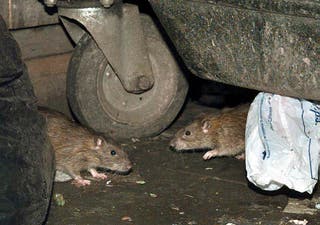
Hantavirus is usually passed to humans from rodents via their urine or faeces and can cause severe respiratory illness.

Who are Oceanwide Expeditions?

The Dutch cruise firm emerged from scientific voyages to the high Arctic archipelago of Svalbard by the Netherlands-based Plancius Foundation.

Oceanwide Expeditions started commercial operations in 1993. It is based in the Dutch port of Vlissingen (Flushing) and specialises in expedition voyages to the polar regions, with the slogan: “Explore the best of Antarctica and the Arctic.”

Advertisement

The fleet comprises three ice-strengthened ships: Hondius, Ortelius, and Plancius.

The company says: “Our expeditions attract independent travellers from around the globe who are characterised by a strong interest in exploring remote regions.”

Passengers are typically aged between their 30s to their 80s. Most are between 45 and 65.

Oceanwide Expeditions sets out the procedure when passengers become unwell – which is largely concerned with Covid infections.

Advertisement

It says: “In event of passengers becoming unwell onboard we will follow a set protocol to keep that person and other guests, crew and staff safe and minimise potential spread of infections.

“Infected passengers (Covid or non) are recommended to stay in their cabins, have meals in their cabins and minimise contact with other passengers and crew. There is no requirement to go into isolation unless strictly indicated by a doctor or medical advisor.”

Simon Calder4 May 2026 07:32

Advertisement

Cruise operator says Cape Verde has not authorised disembarkation

The operator of the MV Hondius has said Cape Verdean authorities have not yet authorised the disembarkation of passengers requiring medical care, as the ship remains off the coast of Cape Verde with three passengers dead and two crew members requiring urgent medical attention on board.

In a statement, Oceanwide Expeditions said local health authorities had visited the vessel to assess the two symptomatic individuals on board but were yet to make a decision on transferring them to medical care in Cape Verde. One passenger remains in intensive care in Johannesburg.

Dutch authorities have agreed to lead a joint effort to repatriate the two symptomatic passengers from Cape Verde to the Netherlands, the company said, along with the body of one of the deceased and a closely associated guest who is not symptomatic. The repatriation depends on authorisation from Cape Verdean health authorities.

“The priority of Oceanwide Expeditions is to ensure that the two symptomatic individuals on board receive adequate and expedited medical care,” the company said. It added it was working closely with the WHO, Dutch health authority RIVM, relevant embassies and the Dutch Ministry of Foreign Affairs.

Advertisement

Stuti Mishra4 May 2026 07:30

The polar expedition ship at the centre of the Atlantic hantavirus outbreak

The MV Hondius is a Dutch-flagged polar expedition vessel operated by Oceanwide Expeditions, designed for some of the world’s most remote waters. The company describes it as the world’s first-registered Polar Class 6 vessel, built to navigate ice-strengthened seas around Antarctica and the Arctic.

The 107.6-metre ship typically takes passengers on expedition cruises lasting between 10 and 19 days, with prices starting from around $7,800 per person. Its passengers tend to be adventurous travellers aged between 45 and 65, though the company says guests range from their 30s to their 80s.

Advertisement

On this voyage, the Hondius had departed Ushuaia in southern Argentina — a common gateway to Antarctica — on 20 March, heading north toward Cape Verde off the west coast of Africa. It is now docked in Praia, the Cape Verdean capital, with around 150 tourists from various countries on board, according to South African health authorities.

The Foreign Office said it was closely monitoring the situation and stood ready to support British nationals if needed.

(AFP/Getty)

Stuti Mishra4 May 2026 07:00

Foreign Office in touch with cruise company on potential virus outbreak

The Foreign Office said it is monitoring reports of hantavirus outbreak aboard the MS Hondius cruise ship.

Advertisement

Here is the ministry statement in full:

“We are closely monitoring reports of a potential hantavirus outbreak on the cruise ship Hondius and stand ready to support British nationals if needed. We are in touch with the cruise company and local authorities.”

Stuti Mishra4 May 2026 06:30

Advertisement

What are the symptoms of hantavirus?

Symptoms of hantavirus vary depending on which syndrome it causes, but both can be severe.

HPS, which affects the lungs, typically begins one to eight weeks after exposure. Early symptoms include fatigue, fever and muscle aches — particularly in the thighs, hips, back and shoulders. These can progress rapidly to breathing difficulties as the lungs fill with fluid.

HFRS, which affects the kidneys, usually develops within one to two weeks of exposure, though in rare cases it can take up to eight weeks. Initial symptoms come on suddenly and include intense headaches, back and abdominal pain, fever, chills, nausea and blurred vision.

The WHO has said the virus requires “careful patient monitoring, support and response.”

Advertisement

Stuti Mishra4 May 2026 06:00

What is hantavirus?

Hantavirus is a rare infection passed to humans from rodents — typically through contact with their urine, droppings or saliva, according to the US Centers for Disease Control and Prevention. It can also spread through a bite or scratch from an infected rodent, though this is uncommon. While rare, the WHO has said it can also spread between people.

The virus causes two distinct syndromes. Hantavirus Pulmonary Syndrome, or HPS, is a severe disease affecting the lungs. Hemorrhagic Fever with Renal Syndrome, or HFRS, affects the kidneys. Both can be fatal. There is no specific treatment or cure, but early medical attention can improve the chances of survival.

Advertisement
(PA)

Stuti Mishra4 May 2026 05:40

WHO confirms one hantavirus case and five suspected on cruise ship as death toll hits three

The World Health Organisation has confirmed one laboratory case of hantavirus and five suspected cases aboard a cruise ship in the Atlantic, with three people dead and one in intensive care in South Africa.

“Of the six affected individuals, three have died and one is currently in intensive care in South Africa,” the WHO said in a statement, adding that medical care was being provided to passengers and crew and that virus sequencing was ongoing.

The WHO said it was facilitating coordination between member states and the ship’s operators for the medical evacuation of two symptomatic passengers, as well as a full public health risk assessment. “Hantavirus infections are typically linked to environmental exposure to infected rodents’ urine or faeces. While rare, hantavirus may spread between people, and can lead to severe respiratory illness,” it said.

Advertisement

Stuti Mishra4 May 2026 05:33

Full story: What we know about hantavirus virus outbreak on Atlantic cruise ship

Stuti Mishra4 May 2026 05:21

Advertisement

Three dead and five ill in hantavirus outbreak on Atlantic cruise ship

Three people have died, and five others have fallen ill in a suspected hantavirus outbreak aboard a cruise ship travelling from Argentina to Cape Verde.

Two of the dead are a Dutch couple. The man, 70, suddenly developed fever, headache, abdominal pain and diarrhoea and died on arrival at the island of St Helena, a British territory in the South Atlantic.

The woman, 69, was evacuated to South Africa, where she died in a Johannesburg hospital. A third fatality was still on board, according to a source cited by AFP.

A British national aged 69 is in intensive care in Johannesburg and has tested positive for the virus, local officials said.

Advertisement

The outbreak was reported aboard the MV Hondius, a polar cruise ship run by Oceanwide Expeditions carrying around 150 tourists from various countries. The vessel departed Ushuaia in southern Argentina on 20 March and was due to arrive in Cape Verde on 4 May.

Stuti Mishra4 May 2026 04:37

Source link

Advertisement
Continue Reading

NewsBeat

Does Banksy need planning permission? Reader’s letter

Published

on

Does Banksy need planning permission? Reader's letter

NATIONAL Icon Banksy is in the news again.

Now here’s a thought which certain of your Press letter writers will be able to answer. ‘Does Banksy have to have planning permission?’

Derek Reed,

Advertisement

Middlethorpe Drive,

York

Stick to the rules

Advertisement

ONCE again the planning regime in York shows how its decisions are inconsistent, illogical and unfair.

Outside the city walls in Fishergate, harmless window graphics in a student block are refused by council officers on the grounds they have a negative impact on the building and surrounding streetscape.

Meanwhile, inside the city walls in Piccadilly, entirely inappropriate alien shipping containers are approved by the very same planning authority with no mention of “a significant adverse visual amenity of the location, by virtue of their scale, position and number” or that they “appear as a large and dominant feature in the streetscene, appearing obtrusive in its surroundings”.

The excuse of “temporary” in Piccadilly no longer stands up after three extensions of time in contravention of The 1990 Planning Act making it clear this is not justified.

Advertisement

The latest five year extension brings this supposedly “meanwhile” use to at least 14 years – a greater longevity than might be expected from window graphics!

Matthew Laverack,

Lord Mayors Walk,

York

Advertisement

Lead by business?

CUTTING the cost of welfare and illegal immigrants is a priority of the Reform party.

Opponents say this is not fully costed. Leaders of this party are mainly businessmen who have succeeded and made money from running their own companies.

Advertisement

This is in complete contrast to almost all other parties who are either legal know it alls or career politicians who have no idea what running their own business for a profit entails.

So who would you trust with Britain’s finances?

A party who can make ends meet or ones that borrow and spend and bankrupt the country?

I know which I prefer.

Advertisement

Barrie Crowther,

Walton,

Wakefield


What do you think?

Advertisement

Feel strongly about an issue? Write us a letter. Please write no more than 250 words and you must provide your full name, address and mobile number. Send your views by email to: letters@thepress.co.uk


Write a comment

Join the debate and leave a comment in our comments section below this article – we may use your comments for a follow up article.


Advertisement

Source link

Continue Reading

NewsBeat

Green Belt homes plan sparks fears for ‘300-year-old’ tree

Published

on

Green Belt homes plan sparks fears for ‘300-year-old’ tree

The proposal, submitted by developers MacMarshalls, seeks permission in principle for up to four houses on land behind Silver Birch Close, near High Rid Farm.

Planning documents argue the site should be classed as “grey belt” land, meaning it does not strongly contribute to Green Belt purposes, and it is described as a small infill plot between existing development that would “not fundamentally undermine” the wider Green Belt.

The ‘beautiful’ tree helps provide a habitat for animals (Image: NQ)

But people living nearby say the field is anything but expendable.

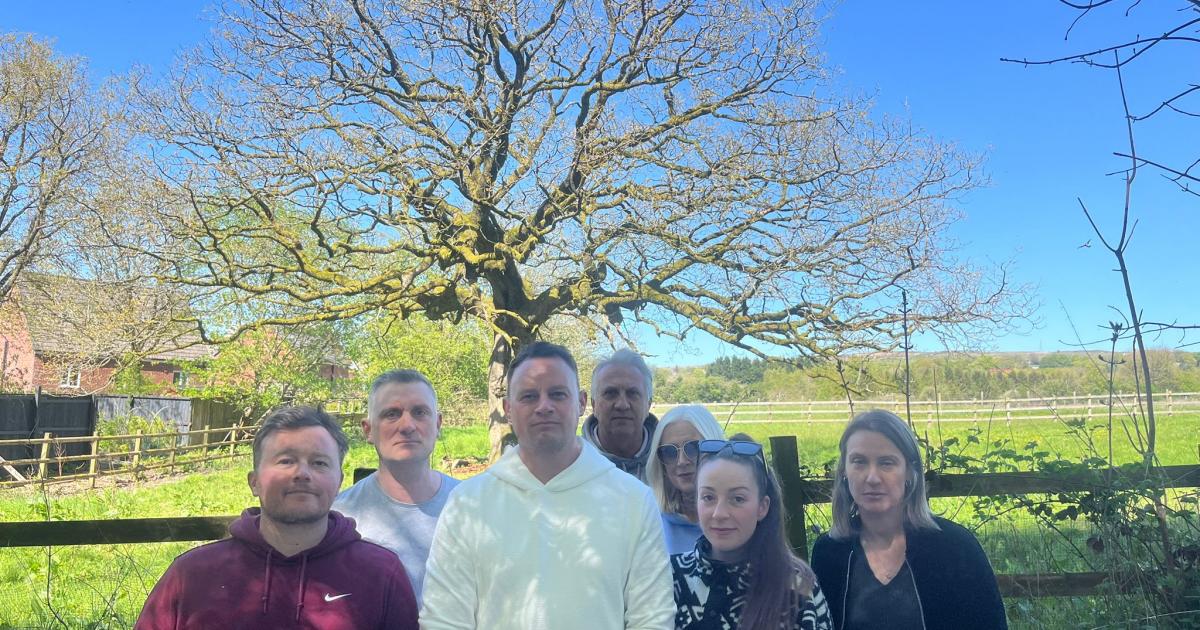
Charlotte Woodcock, who lives on Silver Birch Close, said the land is centred around a “veteran” oak tree believed to be hundreds of years old.

Advertisement

She said: “It’s irreplaceable.

“It’s a veteran tree which is minimum three hundred years old and it’s beautiful.

A veteran tree is one that is of exceptional age, size or ecological value, often supporting a wide range of wildlife.

She added: “The unique selling point of my house is that it has a view on to this beautiful tree and land that I was told can’t be built on because it is Green Belt land.

Advertisement

“That will be ruined.”

“I will tie myself to the tree if I have to.”

The application, lodged with Bolton Council on April 23, comes as the authority cannot currently demonstrate a five-year housing supply, something the applicant says creates a “demonstrable unmet need” for new homes.

However, residents fear approving the scheme could open the door to further development.

Advertisement

Louise Williams, who also live son Silver Birch Close, said: “For me it’s all around this grey belt, because if this gets approved. It will set a precedent and then where is the line drawn?”

The Green Belt land is adjacent to more which worries residents (Image: NQ)

Wildlife is another key concern, with residents reporting deer and protected bats using the land.

Mature trees and hedgerows are known to act as important habitats and corridors for species, say residents.

Ms Williams said: “These are protected species, which I’m sure love this land and the tree. It’s such a shame for the wildlife.”

Advertisement

The planning statement maintains the site is suitable for development, stating it lies within Flood Zone 1 and suggesting any surface water risk could be addressed through design.

But resident Paul Roberts said existing problems are already evident.

He said: “Flooding can happen quite often especially in winter, the drain that runs along the bottom of all our gardens is full to the brim of water.

“The tree roots help prevent flooding by soaking up the water, if this goes it could risk more flooding.”

Advertisement

The drains run along the bottom of the land to prevent flooding into neighbouring propeorties (Image: NQ)

Andy Dakin, who works in property insurance claims, warned building on the field could make matters worse.

“I work in property insurance claims and see everyday issues the last thing we want to see is the urbanising of this farmland which would significantly increase impermeable surfaces, intensify run-off and materially exacerbate flood risk.”

Access to the site is also being questioned.

High Rid Lane where the proposed access route will be, is described by residents as a narrow, single-track road in parts, with space for only one vehicle at a time

Advertisement

While the application suggests traffic from four homes would be limited, council highways engineers acknowledge the road is “sub-standard in width and forward visibility”, albeit with no objection in principle if improvements are made.

Silver Birch Close residents are ‘not happy’ (Image: NQ)

Residents say that does not reflect reality on the ground.

“I walk a pram down this lane every day and can see first-hand the issues cars face trying to get down a one-track road,” Ms Woodcock said.

“Allowing an access road just wouldn’t be viable.”

Advertisement

There is also frustration over how the plans came to light, with some residents saying they only became aware through Facebook despite claims of consultation.

Planning documents state neighbours were consulted on April 27, but residents say no letters, notices or posters were received or displayed in the area, with many only becoming aware through social media.

Ms Woodcock said “I only found out because of a community group n Facebook.

“If I didn’t go on this page, I would have never of known, and for those older generations that don’t use social media, they won’t have a clue.”

Advertisement

The applicant concludes the scheme represents sustainable development in a location close to shops and transport links.

For residents, however, the issue is more fundamental.

“It’s a whole ecosystem that should just be left,” Ms Woodcock said.

A decision has yet to be made by Bolton Council

Advertisement

MacMarshalls has been contacted for comment.

Source link

Advertisement
Continue Reading

NewsBeat

Sinn Fein says Bobby Sands statue ‘is going nowhere’ at anniversary event

Published

on

Belfast Live

People gathered at the Sands statue to mark 45 years since the republican’s death amid a row over it being erected without planning permission

crowds gather for an event to mark the 45th anniversary of Bobby Sands’ death

A Bobby Sands statue that was erected without planning permission “is going nowhere”, a Sinn Fein MLA has said.

The statue of the IRA hunger striker, who was 27 and an MP for Fermanagh and South Tyrone when he died in 1981, was unveiled last year at the Republican Memorial Garden in Twinbrook, west Belfast.

Advertisement

It then emerged that it had been erected without planning permission, although Belfast City Council had not previously taken any action.

A DUP motion before the council on Thursday calling for the matter to be “reconsidered” was passed, with support from other unionists and the Alliance Party.

A Sinn Fein amendment seeking a review of the “current enforcement status of all such structures” across the council area was unsuccessful.

SDLP councillors abstained from the vote, after which west Belfast councillor Paul Doherty resigned from the party, stating that the statue of the IRA hunger striker “holds real significance”.

On Sunday, people gathered at the Sands statue to mark 45 years since the republican’s death.

Sinn Fein MLA Danny Baker said the hunger strikers, 10 of whom died during the 1981 Maze Prison hunger strike, had inspired “many generations and many generations here to come”.

He told the crowd: “The spirit of the prisoners (and) our communities can never be broken.

“Our opponents were shook to their core last year and will continue to be because we are on a path, a path to Irish unity, based on equality and rights.

“There’s one very simple message I was asked to give today: the statue is going nowhere, not now and not ever.”

Advertisement

Sinn Fein MLA Pat Sheehan told the crowd the emergence of the IRA was “a direct response to the violent and repressive nature of the orange state, layered upon 800 years of British colonial occupation”.

“I say to unionists, save your lectures and your moralising for others,” he said.

“We will commemorate our patriot dead in our own way.”

Advertisement

He compared unionists voting for a reassessment of the Sands statue to efforts by British prime minister Margaret Thatcher in the 1980s to “criminalise” Sands.

“Forty-five years later, today in 2026, those in unionism will also fail,” he said.

“This statue of Bobby Sands has pride of place and will have pride of place here in Twinbrook, in Bobby’s home community for generations to come.

“When all of us here today are dead and gone, and largely forgotten about, Bobby Sands will still be remembered. He and his comrades will remain a beacon of light for freedom-loving people everywhere.”

Advertisement

For all the latest news, visit the Belfast Live homepage here and sign up to our What’s On newsletter

Source link

Continue Reading

NewsBeat

London local elections 2026: We’re very optimistic at regaining Westminster, Wandsworth and Barnet, says Kemi Badenoch

Published

on

London local elections 2026: We're very optimistic at regaining Westminster, Wandsworth and Barnet, says Kemi Badenoch

On tackling crime in London, she backed more stop-and-search, more live facial recognition in crime hot spots, “immediate justice” with on-the-spot fines for graffiti and anti-social behaviour to “take back our streets,” and 10,000 more police officers nationwide, including many in London.

Source link

Continue Reading

NewsBeat

Vet shares 9-point new puppy checklist every owner must follow from day one

Published

on

Wales Online

A vet has shared a 9-point new puppy checklist for dog owners to follow when bringing a puppy home for the first time, covering everything from vaccinations and vet registration to socialisation and training

A veterinary expert has identified nine essential steps that every pet owner should take straight away after welcoming their new puppy home.

Advertisement

Bringing a puppy into your household is both thrilling and often daunting, and according to Jen Wormleighton, Head of Veterinary Services at Animal Friends, the first few months of a puppy’s life constitute a vital period for shaping behaviour, establishing routines and ensuring lifelong wellbeing, , reports the Express.

What every new puppy owner should know…

According to Jen, concentrating on several key fundamentals can help owners in avoiding typical early pitfalls.

1. Know Your Puppy’s Stage Before They Arrive

By eight weeks old, the majority of puppies are weaned, inquisitive, and prepared to learn. It’s beneficial to confirm your puppy’s exact age with the breeder or rescue organisation so you’re aware of their needs upon arrival. This also allows you to arrange matters such as training, feeding schedules, and early routines with assurance.

Advertisement

2. Book Their Vaccinations, Flea and Worming Treatments Straight Away

If your puppy hasn’t had their first vaccinations, arrange them the instant they arrive at your home. Maintain their boosters every 2-4 weeks and keep on top of flea and worming treatments as well. These initial precautions help protect them as they develop and discover their new surroundings.

3. Register with a Vet Before your puppy arrives home

Register them with a vet so you’re fully prepared for routine care, advice and any emergencies. Make sure they are microchipped and update your contact details with the appropriate database, such as Pet Database, to ensure records remain up to date. If you’re adopting, your puppy should have already undergone a health check and received vaccinations, though it’s still worth familiarising yourself with the ongoing responsibilities so you feel ready for the road ahead.

4. Start Socialisation from Day One

Puppies between eight and twelve weeks old are remarkably receptive to new experiences. This is the ideal opportunity to gently introduce them to new people, sounds, objects and everyday handling. If they haven’t yet completed their vaccinations, carry them outside so they can safely take in the world around them. These small but significant early encounters help nurture a confident, well-adjusted dog.

5. Establish a Simple Toilet Routine

First thing in the morning, after naps, meals and playtime, and approximately every hour in between, take your puppy to their designated toilet spot. Choose the same location each time, such as a patch of grass, and reward them when they get it right. Frequent, consistent trips yield excellent results.

6. Begin Gentle Training on Day One

Basic commands can be introduced as soon as your puppy settles in. Brief sessions using treats and praise will help them learn to sit, come when called and take treats calmly. Keep things enjoyable, relaxed and always end on a positive note.

7. Offer Chews to Redirect Nipping

Teething occurs early in a puppy’s development, and those tiny teeth can be surprisingly sharp. Keep multiple safe chew toys within easy reach and offer them whenever your pup starts nibbling hands or clothes. This teaches them what’s acceptable to chew while providing relief for sore gums.

8. Restrict Walks Until Full Vaccination

After your puppy has completed their vaccination course, begin with short, gentle walks. Prior to this, limit outdoor exposure to carrying them outside for fresh air and new experiences without risking infection.

9. Create a Daily Routine From the Start

Mealtimes, toilet breaks, rest periods, play sessions and training work most effectively when they occur at approximately the same time each day. A consistent routine helps your puppy feel settled and makes the learning process easier for you both.

Source link

Advertisement
Continue Reading

NewsBeat

Uncomfortable Conversations That’ll Help Your Kids Become Well-Adjusted

Published

on

Uncomfortable Conversations That'll Help Your Kids Become Well-Adjusted

For generations, we took social skills for granted. Parents just assumed that, through regular interaction with adults and peers at school and at home, their children would learn how to interact and communicate with others, encompassing everything from empathy and active listening to conflict resolution.

But then came the digital age.

Now, parents and experts alike have noticed that technology may be affecting these critical interpersonal tools and behaviours, with Gen Z and Gen Alpha demonstrating fewer social skills than their predecessors.

mother image via Getty Images

Advertisement
Even adults might need reminders of these useful social skills. But you can give kids a head start by practicing early on.

“I absolutely see a drop-off in kids’ social skills, and phones and social media are a big part of it,” observed JJ Kelly, a licensed clinical psychologist known as the “Punk Rock Doc.”

The issue here is that technology acts as a barrier — instead of a gateway — to better communication. It’s all too tempting for kids (and adults! I’m just as guilty of this behaviour) to hide behind a screen and say (or not say) what they want because the screens serve as a shield from the real world.

Parenting and life coach Randi Crawford believes that phones and other digital devices “replaced the practice of living IRL.” There was a time when kids would figure things out in real time, she says, through awkward conversations, reading the room, making friends, making mistakes and making adjustments. But now, kids and adults alike can “curate everything behind a screen.”

The downside to this behaviour, according to Kelly, is that technology “has taken away infinite numbers of daily opportunities to practice bravery in real life.”

Advertisement

This includes basic skills like making eye contact, navigating awkward moments, resolving conflict or saying something vulnerable in person. Instead of embracing opportunities for healthy conflict resolution, kids online resort to passive aggression, ghosting and public shaming. Kelly calls this “normalised hiding,” in which, instead of working through discomfort, she says, kids are “retreating behind a screen.”

Kids aren’t getting worse. They’re just, very simply, getting fewer chances to practice being brave humans.

– JJ Kelly, licensed clinical psychologist known as the “Punk Rock Doc.”

But it’s in discomfort that important social growth happens. “Social skills are built in discomfort,” said Crawford. “It’s not fun, but that’s how we learn.” So while it may feel safer to talk via text or social media, face-to-face interactions are still essential for developing communication skills.

Advertisement

Rest assured that this problem is solvable. “Kids aren’t getting worse,” Kelly emphasised. “They’re just, very simply, getting fewer chances to practice being brave humans.”

In-person social skills may feel like a relic from the 20th century, but in the right context, they can empower our 21st-century children.

These slightly uncomfortable conversations can have long-term positive effects.

Once you’ve established digital device boundaries with your kids and have provided a welcoming, safe space for them, it’s time to get down to business.

Advertisement

Kelly Gonderman, a licensed clinical psychologist and the clinical director at We Conquer Together in Orange County, California, suggests having the following five conversations as a family. Not only will these talks teach kids fundamental social skills, but they’ll help them become more well-rounded, empathetic adults.

How To End A Conversation

Wait, who needs to learn how to end a conversation? Young people raised on texting and online chats, that’s who. “Screens have made this [skill] invisible,” observed Gonderman. “You just stop responding, and kids are bringing that habit into face-to-face interactions where it reads as rude or dismissive.”

Why is this skill important? “It’s one of the most underrated social skills because it signals to the other person that the interaction had a natural arc — a beginning, a middle and an end,” said Gonderman. “Without it, people are left wondering where they stand.”

Advertisement

How can learning this skill empower kids today? “Kids who can end conversations gracefully feel less socially anxious,” said Gonderman. “They’re not trapped in interactions they don’t want to be in and they’re not accidentally leaving people feeling dismissed or confused.”

How can parents approach this subject with their kids? By modelling how to end a conversation themselves. Something like, “‘It was really good to talk to you, I’m going to go check on something,’ suggested Gonderman. “The goal isn’t a perfect exit line, it’s just some kind of signal that the conversation is wrapping up.”

How can they practice these skills at home? Dinnertime chats are a good place to start. “At the end of a family conversation, have your kid practice closing it,” Gonderman said. “‘That was a great talk, I’m going to go do homework now.’ It sounds silly, but doing it in a low-stakes environment makes it automatic in a higher-stakes one.”

How To Disagree Without An Audience

Advertisement

Trolling. Flame wars. Call it what you will, but “social media rewards public callouts,” Gonderman said. It may sound weird to us olds, but do your kids even know how to disagree with someone without turning it into a public forum? “Real life requires the ability to tell someone directly that something bothered you, without performing it for anyone else,” said Gonderman.

Why is this skill important? Because, according to Gonderman, “social media has turned disagreement into a performance.” Unfortunately, “the real skill, telling someone directly that something bothered you, is being lost. That skill is what keeps relationships intact long term.”

How can learning this skill empower kids today?A kid who can say, ‘Hey, that hurt my feelings’ one on one, without needing a group to back them up, is going to have fundamentally healthier friendships and eventually healthier adult relationships,” Gonderman said.

How can parents approach this subject with their kids? Gonderman advised parents to model disagreement in front of their kids: “Let your kid see you address something with your partner or a friend directly instead of venting to someone else,” she said. “They’re watching everything.”

Advertisement

How can they practice these skills at home? Gonderman suggested engaging in role-play: “‘Pretend I said something that bothered you. What would you say to me?’ The more they practice saying it out loud in a safe context, the less terrifying it feels in real life.”

How To Be With Someone Who’s Upset – Without Fixing It

Not only is this a critical skill for kids to learn, but many adults could also benefit from this type of empathy lesson. “A lot of kids default to jokes or distraction when a friend is struggling because sitting with discomfort is a skill nobody taught them,” said Gonderman.

Why is this skill important? According to Gonderman, most conflict in adult relationships comes down to one person feeling unheard: “The ability to sit with someone in discomfort without immediately trying to solve it is one of the highest-value emotional skills a person can have. And almost nobody teaches it explicitly.”

Advertisement

How can learning this skill empower kids today?A kid who can just be present with a friend who’s upset is going to be the person everyone trusts,” said Gonderman. “That kind of friendship is rare, and kids who offer it are valued deeply.”

How can parents approach this subject with their kids? Demonstrating curiosity instead of assumption is the key here: Parents can ask their kids, “Do you want me to help you figure it out, or do you just want to vent?” Gonderman says, “That single question does more than almost anything else.” But then make sure to do what they ask; don’t offer help if they just want to vent.

How can they practice these skills at home? Snag a moment when emotions are small, advised Gonderman. “When your kid is mildly frustrated about something, resist the urge to fix it immediately. Just say, ‘That sounds really frustrating.’ Let it sit. You’re modelling that feelings don’t need to be solved, just acknowledged.”

Phones absolutely play a role in kids' underdeveloped social skills.
Phones absolutely play a role in kids’ underdeveloped social skills.

How To Be A Good Witness When Something’s Wrong

Whether it’s watching a peer being bullied or someone having problems at home, Gonderman confirms that “the bystander problem is real.” Kids may know what the right thing is, but they don’t know how to get involved without complicating the situation.

Advertisement

Why is this skill important? Learning how to be a good witness allows you to be a force for change. Bystanders aren’t bad people; they’re unprepared people,” Gonderman said. “Kids genuinely don’t know how to step in without making things worse, so they don’t step in at all. Teaching them what to actually do changes that.”

How can learning this skill empower kids today?A kid who knows how to be a good witness has more confidence, more self-respect and stronger relationships,” said Gonderman. “Acting in line with your values feels good. Watching something wrong happen and doing nothing does not.”

How can parents approach this subject with their kids? Gonderman recommended debriefing the actual scenarios that come up with your kids: “When your kid mentions something that happened at school, ask what they did, what they wish they’d done and what they might do next time. No judgment, just reflection.”

How can they practice these skills at home? As with the other conversations, Gonderman advised working through specific scenarios. That means not staying in the abstract: Instead of asking your kids what they would do if someone was being bullied, try this: “What would you say if you saw someone sitting alone at lunch being made fun of by the table next to them?” It’s the specificity that makes it real.

Advertisement

How To Lose Well

While there’s nothing inherently wrong with participation trophies, Gonderman has observed that kids aren’t learning necessary sportsmanship skills anymore: “Competition, disappointment, not getting what they wanted, these are things kids used to learn through constant low-stakes repetition,” she said. “Less of that is happening now.”

Why is this skill important? Losing well teaches emotional regulation and resilience, explained Gonderman. “A kid who falls apart every time they don’t win is going to struggle with disappointment their whole life, because life involves a lot of it.”

How can learning this skill empower kids today? Gonderman calls this skill a social asset, as much as an emotional one: Knowing how to lose gracefully makes a kid someone others actually want to play with, compete against, and eventually work with.”

Advertisement

How can parents approach this subject with their kids? “Don’t rush past the feeling,” said Gonderman. “Let them be disappointed for a minute. Then, when the heat is off, talk about what was hard about it and what they’d do differently. Skipping straight to ‘You’ll do better next time’ teaches them to skip the feeling too.”

How can they practice these skills at home? Gonderman suggested playing games at home where someone has to lose, like board games and card games, anything with a clear winner. “Make losing a regular, normal, low-stakes occurrence so it stops feeling catastrophic when it happens out in the world.”

Straight talk: Awkward conversations are worth the momentary discomfort.

As a mother myself, I appreciate that there are many things we can learn from our children. At the same time, that doesn’t mean we should completely abandon our roles as parents – even if it means voluntarily sitting in the discomfort with our kids.

Advertisement

Nobody likes this part of the parenting job, and I get why avoidance is so appealing, but Kelly also reminded readers that “courage very rarely backfires.”

Overcoming the awkward and leaning into these necessary conversations can set both you and your kids up for success for years to come.

StockPlanets via Getty Images

Overcoming the awkward and leaning into these necessary conversations can set both you and your kids up for success for years to come.

Lean into that fear, because it’s a signal that deep down, you know these conversations are the right thing:

“If there is anything you’re afraid to talk to your kid about,” advised Kelly, “it probably means you need to talk to your kid about it — even if they scoff or are awkward, they will remember the conversation and your ability to have it.”

Sometimes, kids need to put the devices away and have a good, old-fashioned chat with their cringe parents. They may not understand the purpose right away, but what’s more important than anything is that you start the discussion.

Advertisement

What can parents do to help get their kids’ social skills back on track?

Before sitting down to have these important — and occasionally uncomfortable — conversations with your kids about social skills, parents need to take two fundamental steps:

Reassess the role phones/devices play in your child’s universe.

“If you want your kids’ social skills to get back on track, you have to be willing to set real boundaries around technology,” said Kelly. That can mean putting off getting them their own phones for as long as possible, and introducing apps slowly, “like a privilege that’s earned over time, not a right.”

Advertisement

She also reiterated the importance of parental controls — not as a means of surveillance, but to keep your children safe.

Reassess how you respond when your child brings conflict home.

You can be a safe, empathetic space for your child when they’re dealing with something tough. “That’s where the gold is,” said Kelly. “They’re trusting you.” If your kids can trust you, that’s how they build courage.

She advises parents to start with validation, like, “That sounds really hard.” From there, ask your child whether they want you to listen or help problem-solve.

Advertisement

“When parents keep the conversation open, instead of dismissing it, kids learn to effectively navigate conflict, align with their personal values, and treat others the way they want to be treated,” said Kelly.

Source link

Advertisement
Continue Reading

NewsBeat

Celtic player ratings vs Hibs: Johnston soars but winger fails to deliver at Easter Road

Published

on

Belfast Live

Celtic came from behind to win at Easter Road, with Kelechi Iheanacho netting a late winner as Alistair Johnston impressed on his return but Sebastian Tounekti struggled before being hooked.

Martin O’Neill believes a draw between William Hill Premiership title rivals Hearts and Rangers would be the best result for Celtic after they kept themselves firmly in the three-horse race with a “very edgy” 2-1 victory away to 10-man Hibernian.

Substitute Kelechi Iheanacho scored the decisive goal in the 72nd minute after the Hibees – who had Jamie McGrath sent off in the 20th minute – cancelled out Daizen Maeda’s 41st minute opener when Joe Newell notched in first-half stoppage time.

The Hoops moved level on points with the table-topping Jambos – with an inferior goal difference – and four ahead of third-placed Gers. Those two teams play their game in hand against each other at Tynecastle on Monday evening – and both still have to visit Celtic Park.

Advertisement

Here is how the Bhoys rated at Hibs:

VILIJAMI SINISALO

Given freedom to operate as a sweeper keeper for most of the match in Leith but was found wanting for the leveller. He misjudged his attempt before Joe Newell’s controversial effort found the back of the net. The Finland international attempted to maintain tempo with the numerical advantage and found himself unexpectedly busy as Hibs mounted late pressure. 6

ALISTAIR JOHNSTON

Advertisement

A game-changing presence who elevates Celtic whenever he features. His willingness to vary his positioning by drifting wide before surging into central areas proved highly effective. Johnston’s assist for the opening goal capped a tireless display down the right flank. The Canada international deservedly got his rest and his current form is encouraging ahead of the run-in. 8

AUSTON TRUSTY

When the towering American is attempting efforts from distance, you know Celtic are in control. Owen Elding worked hard but found little joy against Trusty and his defensive colleagues. A menace at attacking set pieces, he would have shared the general frustration with the inconsistent quality of delivery on an afternoon when dead-ball situations were plentiful. 6

LIAM SCALES

Advertisement

He slumped to the turf with relief when the whistle blew and the Irish defender gave everything physically. Scales seemed deliberately quickening his distribution and that matched the away side’s early ambitions. He was required to defend resolutely in the dying moments. 6

KIERAN TIERNEY

While he didn’t match Johnston’s impact on the opposite flank, the Scotland international produced a solid performance without any significant mistakes. Sebastian Tounekti, despite his shortcomings, seems well-suited to playing alongside the 28-year-old on the left side, given his preference for cutting infield. Although Tierney remained relatively quiet for extended periods, apart from delivering a few tidy crosses, he sparked into life during the closing stages. 7

ARNE ENGELS

Advertisement

The Belgian midfielder’s distribution fell below his usual standards at Easter Road. With the opposition sitting deep with 10 men behind the ball, his energy couldn’t make an impact, and he failed to provide the goalscoring threat that Martin O’Neill believes he’s capable of. His passing was often wayward and his attempts at clever through balls didn’t come off, though he did finish strongly. 6

CALLUM McGREGOR

The captain elevated his performance at Easter Road. He was both composed in possession and aggressive when winning the ball back. McGregor also showed his willingness to make forward runs and get ahead of play, a characteristic that seems to complement Alistair Johnston’s return to the first team. 7

Advertisement

BENJAMIN NYGREN

While the Swede’s 20-goal haul is clearly impressive, this match offered opportunities to both increase his tally and dominate proceedings. He thrives in the half spaces, yet there were numerous occasions where he hesitated rather than being decisive in crucial moments. Anthony Ralston came on to replace him late in the game. 6

YANG

While not quite the ideal complement to Johnston in the manner Nicolas Kuhn proved to be, the South Korean showed plenty of willingness to exploit space behind a tiring Hibs defence. At 23, he brings natural equilibrium when deployed on the right flank and posed problems in the opening period. However, when that extra touch of class was required, he fell short. Yang continues to be a valuable asset as the season reaches its climax. 6

Advertisement

DAIZEN MAEDA

An absolute bundle of energy from first whistle to last. If his finishing matched his work rate, his valuation would be through the roof. But there’s little point dwelling on weaknesses – the 28-year-old has rediscovered his form and his presence in attacking areas poses a genuine danger to Premiership opponents. He looked electric playing centrally and virtually unstoppable after switching to the left flank. 8

SEBASTIAN TOUNEKTI

The Tunisia international wasn’t flawless upon his introduction but at least demonstrated ambition. The 23-year-old now seems lacking in self-belief as he opts for the cautious option repeatedly. He was withdrawn for James Forrest after 63 minutes, though his substitution could have arrived much earlier. The player who once seemed guilty of overcomplicating matters has been diminished to a peripheral figure. Concerning for both immediate and future prospects. 5

Advertisement

LUKE MCCOWAN (Johnston, 64)

The former Dundee man made his presence felt and his incisive distribution pushed Hibs deeper. The former Dundee man displayed composure in the dying moments to help see out the match. 4 JAMES FORREST: (Tounekti, 64): He came on for Tounekti, prompted Yang to switch flanks and offered a reliable outlet down the right during the closing stages. 4

KELECHI IHEANCHO: (Yang, 70)

His finish was ice cool and summed-up his perfect role in this team. A specialist made for the biggest moments. They call it a closer in baseball and that’s what the Nigeria international is. Potentially a season-defining goal. 7

Advertisement

ANTHONY RALSTON: (Nygren, 77)

Bar a hairy backpass for Sinisalo, the Celtic utility man didn’t put a foot wrong. 4

Click here to sign up to our sport newsletter, bringing you the latest sports news, headlines and top stories

Source link

Advertisement
Continue Reading

NewsBeat

How to watch Chelsea FC vs Nottingham Forest: TV channel and live stream for Premier League today

Published

on

How to watch Chelsea FC vs Nottingham Forest: TV channel and live stream for Premier League today

Calum McFarlane has replaced Liam Rosenior in the dugout and got the club back to winning ways as they knocked Leeds out of the FA Cup last weekend.

Source link

Advertisement
Continue Reading

NewsBeat

London Underground users only just realising what small sign next to track means

Published

on

Daily Mirror

The sign is seen commonly at both underground and overground stations, but its purpose and role on the railway network appears to have left many travellers baffled

The purpose of a small sign that appears prominently beside London Underground and overground railway tracks has seemingly left many puzzled for years. Each one displays a series of numbers and letters alongside a slider, which prompted one person to seek answers online.

Advertisement

“What’s this for?” they asked in the London Underground community on Reddit alongside a snap taken of one of the signs at a Tube station. The question received responses from several knowledgeable individuals, with one explaining: “Its a Datum Plate, believe they are used for measuring height and track alignment, so it can be checked during engineering works and safety inspections.”

A second person agreed: “This is right on the money. This is the same as the ones on the National Rail network.”

While a third provided additional detail: “Trackmen use it to ensure the track is at the right level to the platform. My understanding is the track and the slider need to be set to level and everything is okay.

“If it’s way off the would be concern the train could collide with platform. My father fitted these many years ago, I remember having a kitchen full of them one upon a time.”

Advertisement

Then a fourth Reddit user highlighted: “Track datum plate some have red sliders, some are green sliders.

“Red is the current installed position. Green is absolute so basically the designed position.”

On YouTube, railway enthusiast Railway Mayhem suggests datum plates hold the “secret” to keeping the railways running smoothly.

“The coloured block is the key – if they have a red block, it shows where the track was when the plate was first installed, ensuring the train stays at the correct distance from the platform edge,” they explained.

Advertisement

“But if it is a newer green block, that indicates that the ideal track position according to new modern standards.

“Taking into account the speed limit and the slope and incline of the track, engineers use the information from the plates along with precise surveying tools to make adjustments ensuring the track is perfectly aligned for safe and smooth train travel.”

Elsewhere, the Railway Shop, which sells such plates that are no longer in use, states on its website: “Datum plates are fixed to structures (bridges, platforms and overhead line masts, etc.) that are located near the track.

“The details on the plate specify the relative position of the track from said structure, which can then be monitored for movement.”

Advertisement

Source link

Continue Reading

Trending

Copyright © 2025