You may be familiar with the various memes detailing the fact that once you reach middle age, you’re automatically sorted, Harry Potter hat-style, into one of a handful of hobbies, such as sourdough bread making, gardening, or bird-watching. I can’t contradict this, since I’m a middle-aged person who got sorted into bird-watching. But I do know that enjoying birds and their various activities is fun for all ages. Birds are beautiful, interesting, and unpredictable, and it’s fascinating to keep a running life list of all the birds you’ve seen and hope to see in your lifetime.
Whether someone you know is in their bird-watching phase, preparing for this phase, or has been in it for decades, all of these unique gifts—for traveling bird-watchers and backyard bird enthusiasts alike—are things either I or another bird-loving Reviews team member tested, was gifted, or bought IRL and enjoyed.
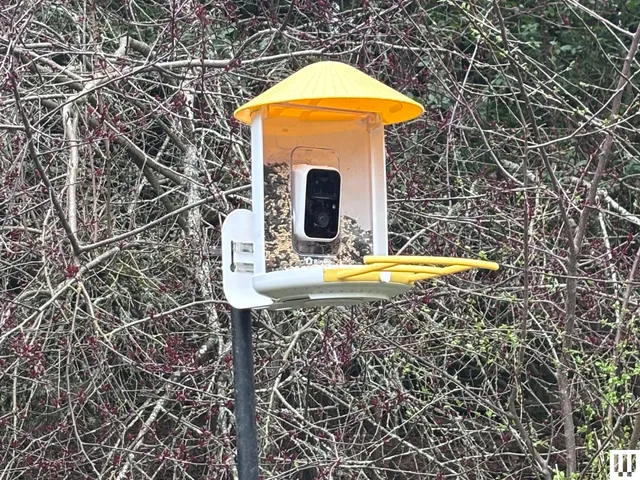
If you love birds, nothing beats seeing them up close and personal, conducting all their birdy activities. I have learned more about birds in the past two years of testing smart bird feeders than I have over my entire lifetime, such as the fact that cowbirds will lay their eggs in other birds’ nests (such as juncos) and the “host” birds will raise the cowbird chicks as their own, even if they look nothing alike. Or that jays and other corvids are scatter-hoarders and will spend an entire day picking nuts out of a feeder’s seed mix to hide caches around the yard. There are many smart seed feeders on the market, but Birdfy’s high-quality basic model (available with a blue or yellow roof) stands out for its balance of price, features, reliability, and usability without a subscription, making it a great gift option that I have personally given.
A Family Pick
Advertisement
My mom gifted this to my family about 10 years ago, and to this day, it is the single most-played and most-enjoyed game we have ever owned, in any genre. Shuffle the small cards and call them out; players place a blue cardstock square on their bingo card if they have that bird. My son loved it, his friends loved it, neighbors loved it, extended family loved it—it can be played by up to six people at a time, and is suitable for all ages. No reading or parsing of rules required. Best of all, neither my husband nor I minded playing it multiple times a day for years on end (a bonus feature important for any parent of young kids).
For Beginning Birders
Bushnell
Powerview 2 8×21 Binoculars
Experienced birders probably already have a decent set of binoculars, but for the birding-curious, kids, or someone just starting out, quality binoculars and a life list journal ($22) would make a great gift. WIRED contributing reviewer Caramel Quin declared these the Best Budget Binoculars. I bought a set for each member of my family for a cruise to Alaska last summer, and I’m glad I did. They’re lightweight (7.2 ounces) yet sturdy, with an aluminum casing instead of plastic, and small enough to slip into a pocket if you’ll be hiking and don’t want to deal with them around your neck.
A Customized Bird Seed Subscription
The Happy Birdwatcher Co.
HappySeed Box
Advertisement
The one thing a bird-watcher could always use more of is seed, and this service offers a fun spin on what would otherwise be a boring gift. You can choose either a subscription or a one-time purchase of three boxes: The Starter consists of one 10-pound bag of seed custom-blended to appeal to birds in your recipient’s zip code. The Simply Seeds (pictured above) adds a 5-pound bag of a specialty blend (I received a fruit and nut mix), and the Splendid tacks on suet and mealworms. The blend for my yard—black-oil sunflower seeds, peanut splits, safflower, and millet—was spot-on; birds loved it so much there was little to no mess. (Though you can also specifically opt for No Waste, Hot Pepper, and No Starling versions of your blend.) Each box comes with a personalized letter from founder Susan Vandergriff about which birds to look out for in your area. This latter part needs a bit of fine-tuning, as my letter featured blue jays and summer tanagers, neither of which exist in my region, but I found the whole package charming nonetheless.
A Bird Nerd Classic
David Allen Sibley
“What It’s Like to Be a Bird: From Flying to Nesting, Eating to Singing—What Birds Are Doing, and Why”
This 8- by 11-inch hardcover by famed ornithologist David Sibley (known for his Sibley field guides) may be too big and too heavy to fit in a backpack for field reading, but it remains the definitive source for interesting bird facts. Did you know mallard nestlings have only a 15 percent chance of fledging, and that once they hatch, fewer than half of ducklings survive? And that jays in the Northeastern US often eat paint chips in search of calcium, which doesn’t occur naturally in that region’s soil? Or that chickadees specifically seek out spiders to feed their young for the first week after they hatch, as spiders are high in taurine? Whether you want to or not, you will learn all these things and more if you give someone close to you this book.
Advertisement
A Different Kind of Bird Food
My husband and I received this feeder basket and some suet cakes as a gift about 10 years ago. The basket has fallen on the ground countless times; been chewed on and used as gymnastics equipment by squirrels; and survived windstorms, snow, and pretty much everything Pacific Northwest winters have to offer. Sure, looks-wise, it’s seen better days, but it still does the job.
Suet—beef fat, if we’re being explicit; the solid-form cousin to rendered tallow—attracts a different variety of birds than seeds, primarily insect-eaters like woodpeckers and bushtits. It tends to melt and go rancid in the heat, so I like the melt-free hot pepper variety, which can be used year-round and has been deemed unpalatable by our neighborhood squirrels.
Camera Lenses for Your Phone
Phone cameras keep getting better, but photos taken with that tiny lens aren’t going to win you any awards. If you want more detailed and dramatic photos from your birdwatching expeditions but don’t want to schlep a full camera setup around, try a professional-grade phone lens. WIRED reviewer Julian Chokkattu has tested several of these from Moment and recommends the 1.33X Anamorphic Lens for cinematic video, the 10X Macro Mobile Lens for close-ups, and the 14-mm Fisheye Mobile Lens for fun.
To use these lenses, you’ll need a Moment Phone Case (available for recent iPhones) and, if you have an iPhone, the $5 drop-in lens mount in order to screw the lenses into the case. You will also want to use Moment’s Pro Camera app, and Julian recommends this filter, which can help cut glare from bodies of water and shoot long exposures. Note that Julian doesn’t recommend buying these lenses if you have a Google Pixel or Samsung phone, as Moment seems to have stopped making cases for Android.
Advertisement
The Ultimate Bird Poster
Pop Chart Lab
Birds of North America Poster
If you’ve ever wondered how many birds live in North America, this poster displays all 740 of them in one chart, both native and non-native, arranged by size and order. It’s educational and a surefire conversation starter. In fact, I’ve had this chart framed in my home’s entryway for almost eight years, and I don’t think a single person has visited my house for the first time and not commented on it, regardless of their ornithological interest level. It’s really fascinating in person, and even if your giftee is already well-versed in birds, they’ll probably still learn something new.
For Birders Who Love Adventure
Advertisement
Jonathan C. Slaght
“Owls of the Eastern Ice: A Quest to Find and Save the World’s Largest Owl”
Until reading this book, I had never heard of Blakiston’s fish owl. And apparently neither had the author, bird-watcher and biologist Jonathan Slaght, until he caught sight of one—the world’s largest living owl. What followed was a five-year passion project to catalog the owl in a remote region of eastern Russia. Part travel adventure, part scientific study, part memoir, this much-lauded nonfiction book reads like a novel and will be a page-turner for anyone who enjoys birds, exploration, or the outdoors.
Make Your Existing Bird Feeder Smart
If your recipient has an existing bird feeder they like, or a seasonal nesting site somewhere around their home or property, they might love a stand-alone bird camera. This one is the best I’ve tested, compatible with both 2.4-GHz and 5-GHz Wi-Fi networks. The cute green owl face streams 4K HD video and pushes 1080p pics to the Hibird app. There’s access to AI identification (which I found to be just OK), livestreaming, and Hibird’s “Dr. Bird” ChatGPT-like help feature, which allows you to ask bird-related questions. (I didn’t find it to be particularly helpful, but YMMV.)
The auxiliary solar panel can be mounted separately, or you can just take the camera inside to charge when the battery runs out, as I did—the battery lasts at least several weeks. The camera comes with a bracket and bendable arm for precise positioning, or you can jury-rig a custom solution. No subscription is needed, though a Hibird rep says that may change in the future.
Advertisement
For Bird-Loving Gamers
Courtesy of Stonemaier Games
WIRED reviewer Simon Hill, our staff board game aficionado, says this award-winning card-driven game will appeal to anyone interested in birds, as it pairs strategy with plenty of educational information about different bird species. It can feel complex at first, so it’s probably best for families with kids older than 10, but once you get the hang of it, it can be addictive. (Up to five people can play, but you can also play solo.) Playing time is 40 to 70 minutes.
A Smart Birdhouse
Contrary to popular belief, birds don’t always sleep in birdhouses. Some cavity-nesting birds may use them for shelter during inclement weather, but where I live on the West Coast, birdhouses are primarily used for nesting, which happens during the spring. This is not my first go-round with a smart birdhouse; I tested the interestingly shaped Birdfy Polygon last year, which did not attract any birds then, and this year it kept going offline. As an alternative, I tried Birdfy’s newer Nest Duo, which has two 2-MP cameras, one facing the entrance and one tucked discreetly inside. This one worked perfectly, both connection-wise and in terms of bird interest—mine raised a family of black-capped chickadees, and seeing their activity on the Birdfy app each day has been the most fun bird-watching experience I have ever had.
Become a More Observant Naturalist
Advertisement
Photograph: Scott Gilbertson
John Muir Laws
The Laws Guide to Nature Drawing and Journaling
In his guide to Gifts for Hikers, Backpackers, and Outdoorsy People, WIRED reviewer Scott Gilbertson said he loved this book by John Muir Laws (no relation to the famed naturalist John Muir) so much that it changed the way both he and his kids looked at the world, allowing them to see a level of detail they’d never noticed before. You don’t even have to be an artist to appreciate this one, as it’s more about the art of observation. He recommends including these pens with the book, which I have also owned in the past and love.
A Perfect Puzzle
Nautilus Puzzles
The Parliament of Fowls Wooden Jigsaw Puzzle
Advertisement
If you’re a puzzle enthusiast and haven’t yet tried wooden jigsaw puzzles, you must. My go-to brand is Liberty Puzzles—the quality and designs are truly unmatched—but California-based Nautilus Puzzles is a close second. Especially appealing is Nautilus’ Parliament of Fowls, a visual interpretation of the 14th-century Chaucer poem. Though it’s only 511 pieces, they are all individually shaped, many with a bird theme, which makes this puzzle both beautiful and extremely challenging.
Control Resonant takes Remedy’s supernatural series into a semi-open-world Manhattan, with Dylan Faden replacing Jesse as protagonist. Reviewers like the reality-bending environments, art direction, story, and exploration, while reactions to the redesigned combat are more mixed.
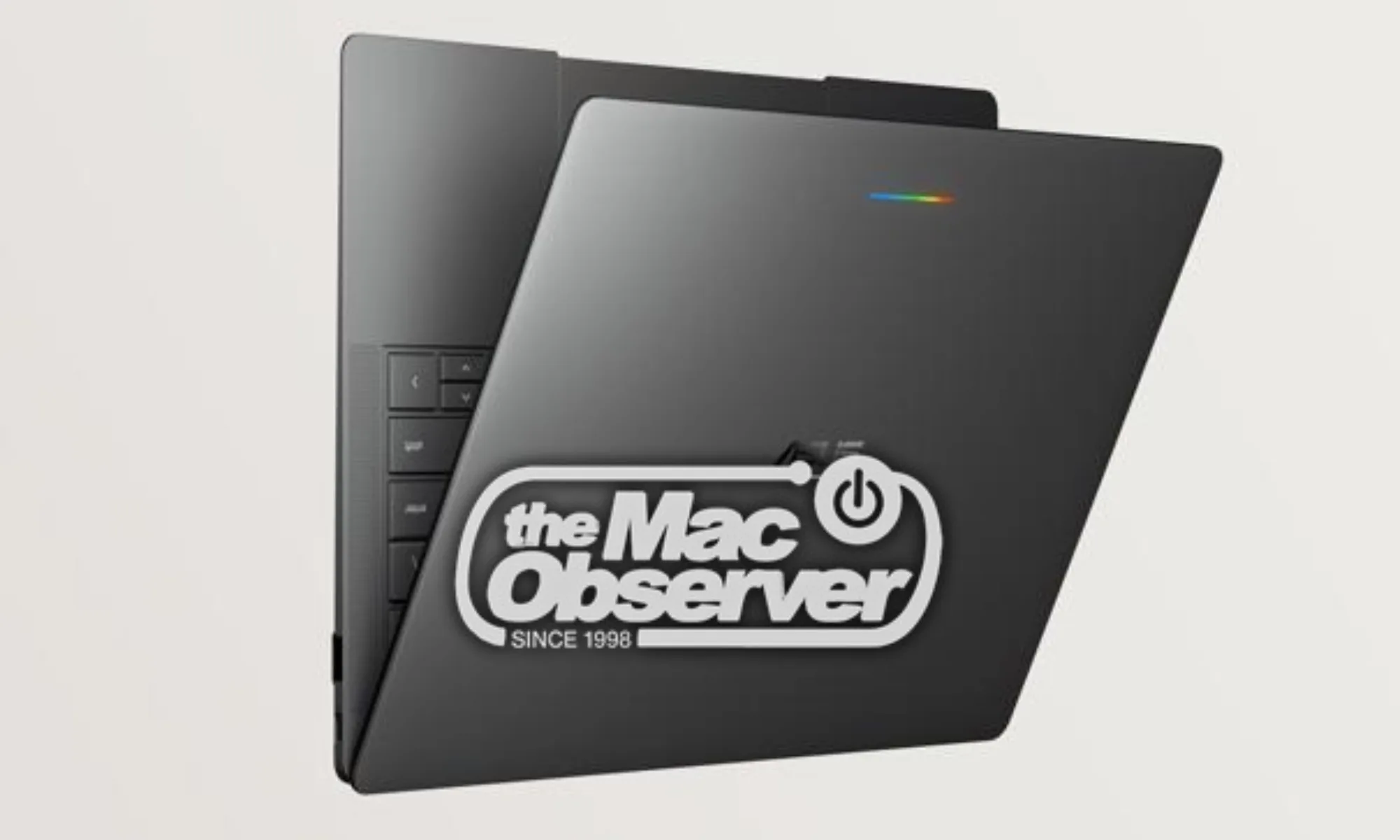
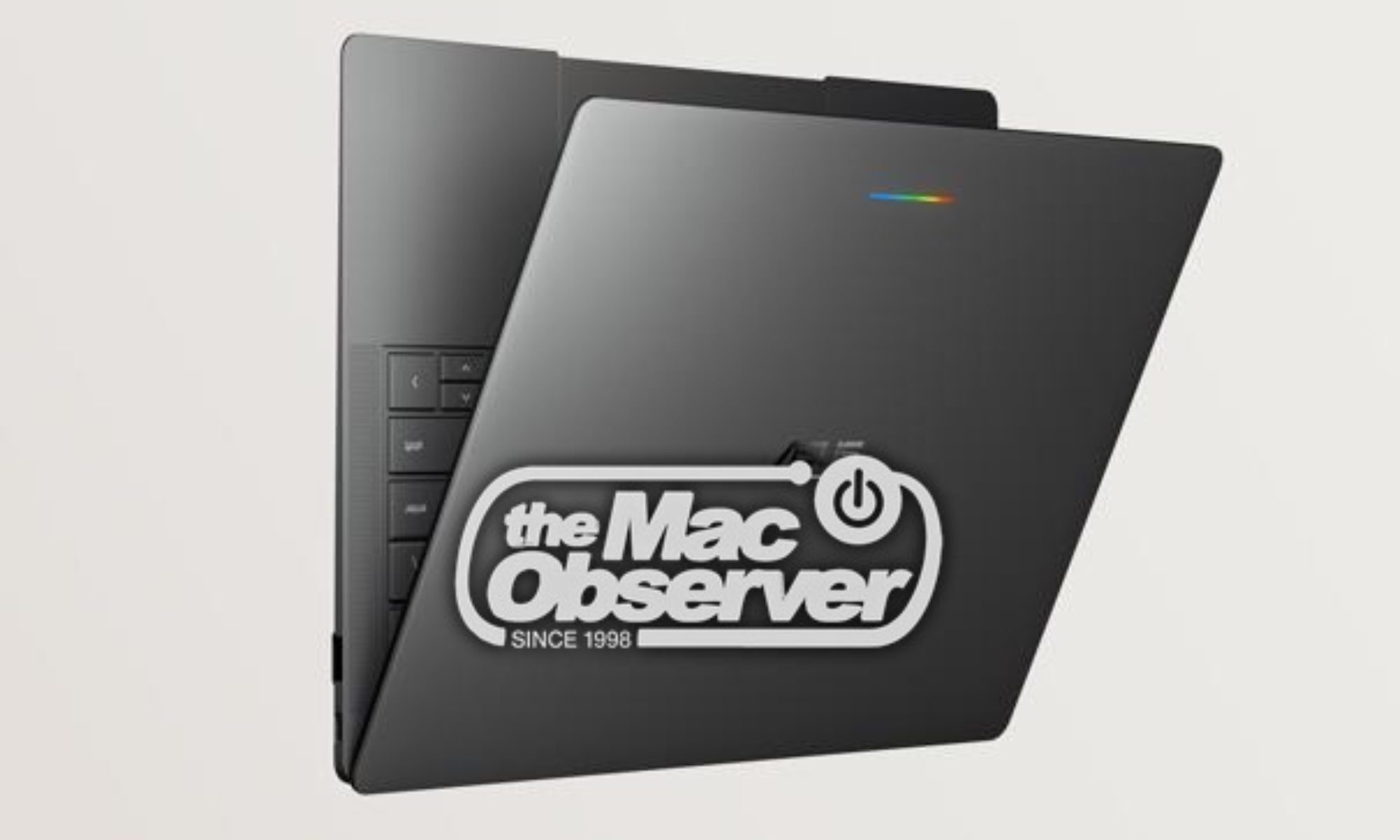
ASUS’ upcoming Googlebook has appeared in a new set of images, offering a closer look at the laptop’s design, keyboard and internal cooling system. The images, obtained exclusively by The Mac Observer, reveal a dark grey chassis, a large touchpad, a dedicated Google-branded G key, and a multicolour light bar on the lid.
The laptop is part of Google’s new premium Googlebook category, which aims to combine elements of ChromeOS and Android. However, ASUS has not yet confirmed the device’s final name, specifications, pricing or release date.
Glowing lid and dedicated Google key take centre stage
The leaked images show a conventional clamshell laptop with slim display bezels and a raised section around the webcam. The lid features an ASUS logo positioned beneath a narrow, multicolour light bar, which Google has previously referred to as the “glowbar.” The feature is expected to become a recognisable design element across the Googlebook family.
The Mac Observer
Inside, the laptop includes a wide rectangular touchpad, a keyboard without a number pad, and grilles on either side of the keyboard. A dedicated Google G key sits on the bottom row, immediately to the left of the Alt key. The images don’t show what the key does.
A full-size USB-A port is visible on the right edge, although the complete port selection and specifications remain unconfirmed.
Advertisement
The internal images also show a cooling fan beneath the right side of the keyboard, connected to a heat pipe extending towards the centre of the laptop. This suggests an actively cooled design, although the processor remains unknown.
Googlebook focuses on Gemini and Android integration
Google announced Googlebook in May as a new premium laptop category, with ASUS among its hardware partners alongside Acer, Dell, HP and Lenovo. The platform is designed around Gemini and includes features intended to connect laptops more closely with Android smartphones.
The Mac Observer
Google’s Magic Pointer allows users to select content on the screen and ask Gemini for assistance. Other features include Create My Widget, which generates custom widgets through prompts, and Cast My Apps, which lets users open Android phone apps on the laptop without reinstalling them. Quick Access also brings phone files into the laptop’s file browser. These smartphone features require Android 17 or later.
Google’s website says Googlebook preorders begin on September 21, but it remains unclear whether ASUS’ model will be available immediately. Details including its processor, memory, storage, display, battery capacity and price are still pending.
This week, I moderated a panel on world models at the All In conference (no relation to the podcast), and it gave me a chance to dig into one of the most mysterious corners of the AI world. The big players in the space are Yann LeCun’s AMI Labs and Fei-Fei Li’s World Labs — and while both have accumulated a lot of buzz and funding, they also rank pretty low on the trying-to-make-money scale.
At their core, world models are about automating spatial intelligence, so the field could head in lots of exciting and lucrative directions, from robotics to interactive video to more complex self-driving systems.
But when I started to press on where we would actually see the tech commercialized, things got foggy. The closest thing I found to an authority was Michael Rabbat, a co-founder of AMI Labs and the company’s VP of World Models, who joined me on the panel. But when I pressed him on exactly what the company was working on, he was cagey. “We’ll talk about it when we’re ready to talk about it.” Over email, he clarified, “We’re still in a research and building phase, so we’re not talking publicly about any product plans or timeline.”
To be fair, AMI is less than a year old, so it’s fair enough to keep quiet. But this sort of caginess extends to the whole world-modeling space. World Labs’ Marble is probably the most fully developed product in the space, and its demos range from straightforward media creation, building explorable environments for video games, or CGI effects. There are robotics use cases too, but the whole platform seems more designed to demonstrate capabilities.
Advertisement
That secrecy even extends to these companies’ suppliers. On the sidelines of the same conference, I spoke to Alex de Vigan, CEO of Physicl — a data supplier for the burgeoning world model business. He says he knows Physicl’s data has been useful for whatever they’re building, but he’s still in the dark about what exactly that is. “I wish they would tell us more. We could build more useful data if we knew what they were working on,” de Vigan told me.
Part of the mystery comes from how versatile world models are as an idea. The simplest version is a navigable map of the world, similar to the AI models that power self-driving cars. But the same modeling approach that helps a Waymo weave through traffic could also help a humanoid robot carry boxes, or turn a few minutes of video footage into an explorable environment. AMI has already dipped its toe in manufacturing, biomedicine, robotics, and even AI software for doctors through its Nabia partnership. Surely it won’t pursue all of those — but maybe one or two of them are standing out?
No one doubts that there are lots of viable businesses to be built on world model tech — and as long as it’s easy to fundraise, there’s no particular pressure to focus on one. In fact, there’s good reason not to. If AMI announced tomorrow that they had built a humanoid OpenClaw or a next-generation Hollywood rendering system, a lot of other labs would suddenly be very interested in the space. Soon, the lab would face potential competition from the other world model companies, the neolabs, and even OpenAI and Anthropic.
In some ways, it’s the flip side of all that easy fundraising. Your competitors can fundraise, too — and the same money that lets you build under the radar is also funding lots of potential rivals once the path to market becomes clear. But even if that competition is inevitable, it’s best if you delay it for as long as possible, which means keeping quiet about exactly what you’re building.
Advertisement
Cixin Liu fans will recognize this as a dark forest scenario: If you don’t know who else is in the woods, it’s best not to attract attention.
This post was first published on September 18, 2026.
When you purchase through links in our articles, we may earn a small commission. This doesn’t affect our editorial independence.
In context: Crusoe, the AI infrastructure company behind a major data-center campus in Abilene, Texas, has raised $3.9 billion and is expanding into smaller, factory-built facilities aimed at handling AI inference workloads. It is counting on those modular sites to add computing capacity more quickly than traditional projects, which can be held up by shortages of power, labor and construction resources. The move broadens Crusoe’s business beyond massive data-center campuses and gives it another way to serve AI customers.
The funding round values Crusoe at about $30.9 billion after the investment, Chief Executive Chase Lochmiller said. Atreides Management, Valor Equity Partners, and Mubadala Investment co-led the round. Other investors include Founders Fund, TPG, and several sovereign wealth funds, including the Qatar Investment Authority.
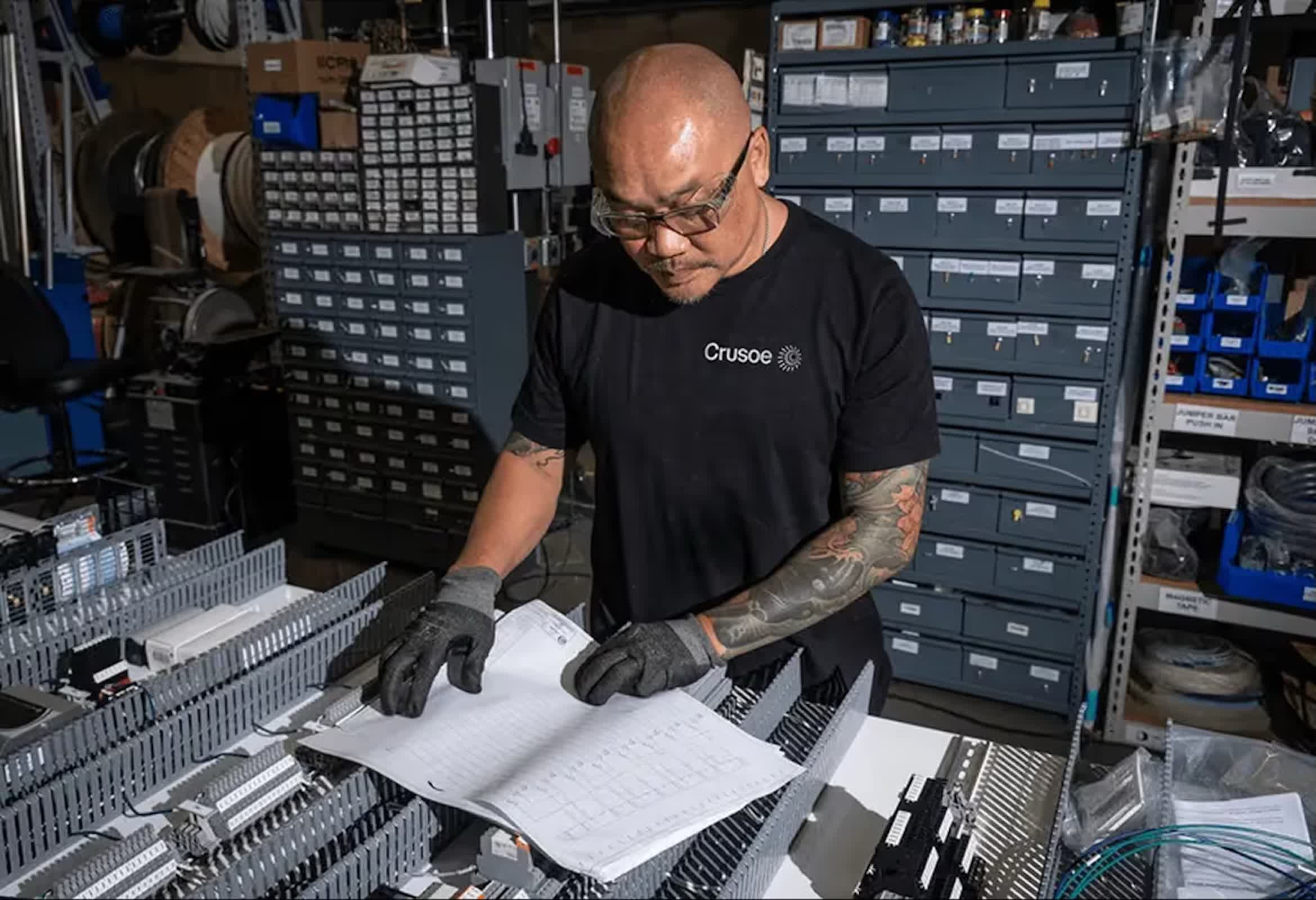
Crusoe is known for building large-scale AI computing infrastructure, including the Abilene campus developed for Oracle, which rents computing capacity to OpenAI. The company now sees an opportunity for smaller installations that it can produce in its own facilities, ship by truck, and set up in areas with available electricity.
The units, called Spark, are intended mainly for inference. Training leading models can require massive clusters with hundreds of thousands of chips. Inference does not always require that scale, Lochmiller said.
Advertisement
“You don’t actually need an Abilene to do that,” he told The Wall Street Journal. Running inference at that scale, he added, “can be a bit of overkill.”
The shift reflects a growing divide in AI infrastructure. Large campuses remain important for model training, where developers need vast numbers of Nvidia GPUs, high-bandwidth networking, and large power supplies. But inference can be spread across smaller facilities, particularly as companies look for ways to add computing capacity without waiting years for design, permitting, and construction.
Crusoe’s approach is to build Spark facilities in advance, then move them to places where power is available. That could reduce the need for large construction crews and shorten the time required to bring new AI capacity online. Access to electricity and labor has become a central issue for data-center developers nationwide.
Crusoe has a manufacturing facility outside Denver that Lochmiller said could eventually produce as much as one gigawatt of Spark capacity each year. The company already operates Spark units in Reno, Nevada, using power from solar panels and former electric-vehicle batteries.
Advertisement
“We’re going to put them everywhere,” Lochmiller said.
The company is also pursuing larger developments. Crusoe initially developed eight buildings in Abilene for Oracle. It had expected to expand the campus with Oracle and OpenAI, but those companies later signed deals with other developers. Crusoe instead leased additional Abilene buildings to Microsoft.
The campus has about 2.1 gigawatts of planned power capacity, according to Lochmiller. That includes a 900-megawatt gas plant planned to supply Microsoft’s portion of the development.
Crusoe is also working with Google on a project in Armstrong County, Texas, according to people familiar with the development. It has two other projects underway in Texas and one in Missouri. Lochmiller said the company has more than six gigawatts of data-center capacity under contract.
Advertisement
Founded in 2018, Crusoe began by placing computing equipment near oil and gas sites to use excess energy. It initially served cryptocurrency miners before shifting toward AI infrastructure as demand grew for computing powered by Nvidia GPUs.
The company differs from many newer AI cloud providers because it operates across several parts of the market. It develops and leases data centers, rents GPU capacity and runs models for customers through a managed-inference business.
“We sell data centers, GPUs and tokens,” Lochmiller said.
Lochmiller said the managed-inference business grew from almost no revenue at the start of 2026 to an annualized revenue run rate of more than $100 million by the summer. Perplexity is among Crusoe’s cloud customers, he said.
Advertisement
The strategy has prompted some debate within Crusoe’s board, according to people familiar with the discussions. Some directors have argued that the company should narrow its focus. Lochmiller has maintained that operating across the stack gives Crusoe a clearer view of customer demand and helps it build infrastructure for changing workloads.
The iPhone Duo is Apple’s first smartphone that starts at over $2,000, and the iPhone 18 Pro lineup commands a premium price as well. Give them the protection they need with ESR’s latest cases.
It’s time to order your next iPhone, Apple Watch, and set of AirPods, but don’t forget to get some accessories that’ll keep them safe. ESR has the accessories you’ll need — an iPhone Duo case that’ll arrive ahead of your pre-order, plus a new Apple Watch band and AirPods magnetic case.
For the latest lineup, Atelier Vegan Leather is what’s front and center. The material is soft, resistant to stains, and made from an organic silicone leather material.
Advertisement
Here’s what you can get from ESR for your new iPhone, Apple Watch, and AirPods.
ESR Atelier Vegan Leather Magnetic Case with Flex Stand
Whether you get the iPhone Duo, iPhone 18 Pro, or iPhone 18 Pro Max, ESR has an Atelier Vegan Leather Magnetic Case that’s perfect for your new device.
The iPhone Duo is Apple’s first foldable iPhone that needs a case that moves with it. The edge-to-edge protection, luxurious materials, and elegant design complement the high-end iPhone, while the high-end material looks and feels great.
ESR’s focus on the Atelier Vegan Leather Magnetic Case was on “beauty that lasts.” The premium iPhone case uses vegan leather that is easy to maintain and clean so it looks pristine even as it ages. Don’t worry about having to baby the leather material. Just use your device as you normally would, and the anti-stain coating will keep things looking pristine. Even the TPU material has a stain-resistant treatment.
Advertisement
ESR Atelier Vegan Leather Magnetic Case – Image source: ESR
The iPhone Duo version features a 180-degree rotating Flex Stand made from a zinc alloy that protects the camera plateau when not in use. It has a precision hinge structure that enables fluid opening and closing while locking at specific angles. Testing shows that the hinge can endure 3,000 open and close tests.
The rotating stand is designed in such a way that it can adapt to your every need. Use it as a grip for your finger, a stand in portrait or landscape, with the iPhone Duo open or closed.
The rotating Flex Stand is just as versatile as the iPhone Duo and works when you need it and snaps into place when you don’t. When not used as a grip, it is also a great stand that can keep your iPhone Duo standing in any orientation.
Advertisement
The case also covers the iPhone Duo hinge so it is protected from damage when dropped thanks to magnetic hinge protection. Whether opened or closed, your foldable iPhone will be safe from drops, scrapes, and spills.
ESR’s Atelier Vegan Leather Magnetic Case with Flex Stand for iPhone Duo has a MagSafe magnet to maintain compatibility with MagSafe accessories. It offers 1,400g of magnetic strength that provides plenty of grip to whatever you might attach, like a MagSafe wallet or battery pack.
Pick up your iPhone Duo Atelier Magnetic Case with Flex Stand today for just $59.99 from ESR. It is available in deep burgundy, misty blue, light gray, and black.
ESR’s iPhone 18 Pro and iPhone 18 Pro Max case fits in with any style. Image source: ESR
Advertisement
The ESR Atelier Vegan Leather Magnetic Case with Flex Stand for iPhone 18 Pro and iPhone 18 Pro Max also has a refined look. It’s built with the same stain-resistant vegan leather and has a built-in stand.
The included Flex Stand can open from 15 degrees to 69 degrees to keep your iPhone propped up when in use. When closed, the metal ring surrounds the camera plateau to protect the area.
Just like with iPhone Duo, the Atelier Vegan Leather Magnetic Case with Flex Stand is easy to grip and carry. That Flex Stand works well as a grip when holding the iPhone or as a stand in both portrait and landscape orientation.
The case surrounds the iPhone while still remaining compatible with MagSafe and has a Camera Control surface. It offers 3x military-grade protection that can survive drops of up to 12 feet.
Advertisement
The ESR Atelier Vegan Leather Magnetic Case with Flex Stand for iPhone 18 Pro or iPhone 18 Pro Max is $45.99 on ESR’s website or on sale for $41.39 on Amazon. It is also available in deep burgundy, misty blue, light gray, or black.
ESR UltraFit Armorite® Pro Screen Protector
Don’t stop protecting your iPhone at the case level, your display is important too. The ESR UltraFit Armorite® Pro Screen Protector can keep all of your iPhone displays safe.
ESR’s screen protectors offer 2x scratch resistance performance and up to 25% reduction in scratch visibility on any that do occur. They also achieve just 2.3% light reflection and 94% optical transmittance so the content is clear and bright without an annoying glare.
The screen protector is also rated to provide up to 10x the impact absorption versus without.
Advertisement
ESR UltraFit Armorite® Pro Screen Protector – Image source: ESR
Like with any ESR screen protector, they are easy to install with the included UltraFit tray. Just lay the iPhone flat and pull the tab and the screen protector installs with zero bubbles.
The iPhone Duo has two displays, and one of them folds in half, but that doesn’t stop ESR’s UltraFit Armorite® Pro screen protector. It’s an extra layer of protection for your very expensive purchase.
Get the ESR UltraFit Armorite® Pro Screen Protector for iPhone 18 Pro, iPhone 18 Pro Max, or iPhone Duo for $35.99 on ESR’s website in a pack of 3 or $29.99 for two. The screen protector for any of those three new iPhones can be found on Amazon for $29.99 for a pack of two.
Advertisement
ESR Cyber FlickLock™ Magnetic Case for AirPods
The ESR Cyber FlickLock™ Magnetic Case is secured twice over thanks to reverse-polarized magnets repelling each other to keep the case forced closed. When you press the button open, the magnets shift to a polarity that helps push the mechanism open.
If you’ve ever dropped an AirPods case of any kind, you know that your AirPods are about to go flying across the room. The ESR Cyber FlickLock™ case prevents that from happening while offering a mechanism that can be opened one-handed.
Beyond not letting the case slam open on impact, the Cyber FlickLock™ Magnetic Case protects your AirPods Charging Case. It is made from a durable combination of TPU and PC with extra protection from Air Guard corners.
ESR Cyber FlickLock Magnetic Case – Image source: ESR
Advertisement
The case is also MagSafe compatible with a 260g magnetic force that’s 136% stronger than the magnets in the AirPods case. Simply place the Cyber FlickLock™ Magnetic Case on a MagSafe charger and it will attach with ease and charge without worry.
Apple has revealed the new AirPods 5. Whether you’ve purchased a new set of those, or already have AirPods 4, AirPods Pro 3, AirPods Pro 2, or the original AirPods Pro, ESR has you covered.
The ESR Cyber FlickLock™ Magnetic Case for AirPods 5 or AirPods 4 are $21.99 on ESR’s website. The case can also be found on Amazon for $20.99. Available colors include deep burgundy, army green, black, blue, purple, and titanium.
ESR Equinox Apple Watch Band
ESR’s Equinox Apple Watch Band has a pin-and-fold lock that ensures an easy on-and-off experience. It is designed to be easily fastened or removed with one hand, which means it is even easier to remove for daily charging.
Advertisement
ESR’s Apple Watch band looks great whoever you wear it. Image source: ESR
The band is made from a skin-friendly HNBR material with ventilation cutouts. It’s an ultra-comfortable band that looks great and feels good whether you’re at the gym or in the office.
The all-day comfort ensures that even the Apple Watch Ultra doesn’t feel like a drag. The extra ventilation means you won’t be dealing with excess sweat or skin irritation during intense workouts.
Whether you’re picking up Apple Watch Series 12, Apple Watch Ultra 4, or have an older model, ESR’s Equinox Watch Band is a great addition to your band collection. It has a low-profile locking mechanism and is made from materials that ensure all-day comfort.
In a season dominated by Odysseus and a certain friendly neighborhood insect-guy, several films landed loud, only to promptly fade away, and for good reason. What’s especially disappointing is the extent to which some very talented people and celebrated franchises have apparently lost their way over the past few months. With their home entertainment releases now firmly in hand, let’s take a look back at what went wrong and determine whether their discs at least got it right.
Supergirl
While I’m not disagreeing with those who fault Supergirl for insufficiently adhering to the Tom King/Bilquis Evely Woman of Tomorrow limited comics series upon which it’s based, I will counter that any film adaptation needs to stand on its own, without requiring knowledge of or even familiarity with the source material. And this movie, well….
The first clue is right there on the front. (My copy even has a fancy prismatic slipcover.) As with last year’s Superman, Supergirl lacks the confidence to focus on its central hero, instead unnecessarily shoehorning in Jason Momoa as Lobo, who, by the way, did not appear in this comic book storyline. Such Hail Mary plays seldom work (remember when The Flash squeezed in two and a half Batmen… and Supergirl?) and also do a disservice to the star, in this case the talented young Milly Alcock. Even the wonderful director Craig Gillespie (I, Tonya) can only do so much under the increasingly heavy hand of DC Studios co-chairman and CEO James Gunn. (For the record, I still very much want Gunn to succeed.)
Perhaps its most unfortunate shortcoming is that it introduces a very different Kara Zor-El, who spends the bulk of the movie either drunk, wildly obnoxious, or both. I guess we’re supposed to feel sorry for her, or maybe think she’s cool and rebellious, but she’s mostly just annoying.
Advertisement
Bearing the obvious mark of James Gunn as Supergirl does, there’s a lot to look at, with elaborate sets and flashy action delivered crisply and with a precise, distinctive color palette. There’s likewise plenty to hear, with a bombastic combination of pop tunes and explosive 360-degree mayhem, punchy surrounds, and more than ample low end. The bonus content on the single disc is highlighted by one deleted scene, one extended scene, and a multipart “making of.” The many additional topic-specific featurettes come off as kind of sad when we see how so much work added up to so little.
Movie Details
STUDIO: Warner
FORMAT: Ultra HD 4K Blu-ray (September 8, 2026)
THEATRICAL RELEASE YEAR: 2026
ASPECT RATIO: 2.39:1
HDR FORMATS: Dolby Vision, HDR10
AUDIO FORMAT: Dolby Atmos with TrueHD 7.1 core
LENGTH: 108 mins.
MPAA RATING: PG-13
DIRECTOR: Craig Gillespie
STARRING: Milly Alcock, Eve Ridley, Matthias Schoenaerts, Jason Momoa, David Krumholtz, David Corenswet
Our Ratings
★★★★★★★★★★ Movie
★★★★★★★★★★ Picture
★★★★★★★★★★ Sound
★★★★★★★★★★ Extras
Advertisement
Where to Buy:
Star Wars: The Mandalorian and Grogu
The first thing my wife and I ever had in common was our deep fondness for Star Wars, back when it was three movies and nothing else. Time passed, Lucas sold to Disney, and we found ourselves eagerly watching every weekly episode of D+’s The Mandalorian, usually on the day it went live. That, of course, means we also witnessed the decline in the show’s quality, not technically, certainly, but in its increasingly obvious shortage of compelling plotlines.
Advertisement. Scroll to continue reading.
Which brings us to The Mandalorian and Grogu, wherein hunter Mando’s latest bounty leads the New Republic to the trail of one of its most wanted. The deal doesn’t go exactly as planned, yoda-yoda-yoda, Mando kicks ass, little Grogu does something cute, and then it’s over. While it looked enormously cinematic in the theater and sounded tremendously thrilling in all its powerfully immersive glory, movies have a weight and sense of urgency that are both lacking here.
Are the high production values of the TV show working against the movie? The big screen presentation is a clean, grain free digital affair, just like a typical episode. Colors are strong, the high dynamic range is well implemented, and the use of IMAX certified high resolution cameras for the major set pieces adds a bit of visual oomph to the proceedings. Both the 4K and included HD Blu-ray carry director commentary (say what you like, but Jon Favreau is a very serious and articulate filmmaker), while the Blu-ray adds a more substantial assortment of featurettes than I was expecting.
Movie Details
STUDIO: Disney/Sony
FORMAT: Ultra HD 4K Blu-ray (August 25, 2026)
THEATRICAL RELEASE YEAR: 2026
ASPECT RATIO: 2.39:1/1.78:1
HDR FORMATS: Dolby Vision, HDR10
AUDIO FORMAT: Dolby Atmos with TrueHD 7.1 core
LENGTH: 132 mins.
MPAA RATING: PG-13
DIRECTOR: Jon Favreau
STARRING: Pedro Pascal, Sigourney Weaver, Jeremy Allen White, Martin Scorsese, Brendan Wayne, Lateef Crowder
Our Ratings
★★★★★★★★★★ Movie
★★★★★★★★★★ Picture
Advertisement
★★★★★★★★★★ Sound
★★★★★★★★★★ Extras
Where to Buy:
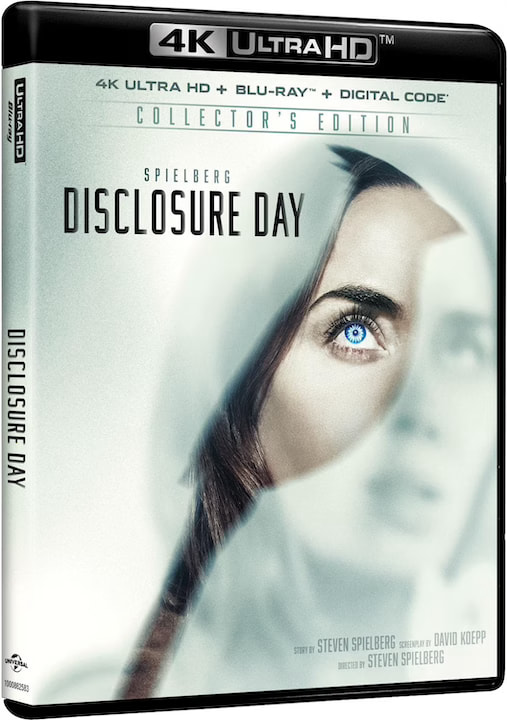
Disclosure Day
A spiritual sequel to Steven Spielberg’s earlier, far better films about mankind’s contact with extraterrestrials (Close Encounters of the Third Kind, E.T.), Disclosure Day treads little new ground and, in 2026, is actually quite corny. Another shadowy government conspiracy seeks to suppress the truth about aliens here on Earth, intrigue and chases ensue, but the agents on the case are ridiculously inept so that the movie can continue to movie. The characters run the gamut from merely uninteresting to laughably clichéd, although Emily Blunt, at least, is locked in and very watchable. Then, of course, there’s the disclosure of the title, with the truth being revealed to the entire world despite tedious debate about the ramifications. The movie runs almost two and a half talky hours, but there’s virtually no exploration of the consequences.
This is Spielberg, so it was shot primarily on film by Janusz Kamiński, and it is absolutely gorgeous and razor sharp, strikingly so when we see the bad guys’ giant surveillance screens packed with tiny text. The magical alien technology also affords ample opportunity for the filmmakers to flaunt their mastery of light. Gary Rydstrom delivers an aggressive Atmos mix with effortless extension into all channels and plenty of bass, making this one of the best sounding discs I’ve heard all year. We’re then given a competent hour-long documentary that explores the many facets of production, plus a separate four-minute segment about Spielberg’s creative reunion with out-of-retirement composer John Williams.
Movie Details
STUDIO: Universal Pictures Home Entertainment
FORMAT: Ultra HD 4K Blu-ray (August 25, 2026)
THEATRICAL RELEASE YEAR: 2026
ASPECT RATIO: 2.39:1
HDR FORMATS: Dolby Vision, HDR10
AUDIO FORMAT: Dolby Atmos with TrueHD 7.1 core
LENGTH: 146 mins.
MPAA RATING: PG-13
DIRECTOR: Steven Spielberg
STARRING: Emily Blunt, Josh O’Connor, Colin Firth, Eve Hewson, Colman Domingo, Wyatt Russell
Our Ratings
★★★★★★★★★★ Movie
★★★★★★★★★★ Picture
Advertisement
★★★★★★★★★★ Sound
★★★★★★★★★★ Extras
Advertisement. Scroll to continue reading.
Where to Buy:
The Breadwinner
Nate Bargatze is perennially laugh out loud funny, such that I’ve been known to pull up a quick clip (“I do my own laundry!”) when I’m having a bad day. But standup is its own animal, and there’s no guarantee that style of comedy will translate to a feature film. For some reason, Nate thought the world needed a thinly veiled remake of Mr. Mom. He becomes a stay at home parent when his wife hits it big on Shark Tank, but he’s playing a dad so utterly lacking in common sense that he would surely die from forgetting to breathe. This is not the stage persona we’ve come to know and love. Instead, we get a string of unfunny jokes, many of which were written by him. Ultimately, The Breadwinner aims low but mostly fires blanks.
Advertisement
This is a fairly mundane, mid budget production with just a bit of CGI, so I’ll simply report that there are no major issues with the 1080p presentation. Detail is respectable, and compression artifacting is negligible. Audio wise, most of the activity is up front and always legible, with the expected rear channel cues helping to fill in busier scenes. Director Eric Appel bravely sits for a commentary. It’s fine, but this was a missed opportunity for Nate to join him and riff, perhaps earning back some audience goodwill. The featurettes are skippable, although the bloopers, alternate gags, and half dozen brief deleted scenes might be good for a smirk.
Movie Details
STUDIO: Sony
FORMAT: Blu-ray (August 25, 2026)
THEATRICAL RELEASE YEAR: 2026
ASPECT RATIO: 2.39:1
HDR FORMATS: N/A
AUDIO FORMAT: DTS-HD Master Audio 5.1
LENGTH: 99 mins.
MPAA RATING: PG
DIRECTOR: Eric Appel
STARRING: Nate Bargatze, Mandy Moore, Colin Jost, Zach Cherry, Will Forte, Kumail Nanjiani
AI companies used vast troves of published text to train their large language models, and executives at those firms were aware that doing so constituted a theft of copyrighted materials, according to comments cited by news publishers in a court filing that was unredacted this week.
The brief was initially filed earlier this month in a court proceeding that brings together several related copyright infringement cases against ChatGPT maker OpenAI and its partner Microsoft, including lawsuits brought by The New York Times and by Ziff Davis, which owns CNET.
Microsoft’s director of applied science, Brent Hecht, called it “an astonishing theft of unprecedented proportions” and maybe the “largest theft of labor in human history,” according to the publishers’ filing. The full exhibits showing the context of the quotes in the filing remain under seal.
The comments cited by publishers appear to undercut the argument by AI companies that the use of copyrighted material was legally protected as fair use. Under this legal doctrine, use of copyrighted material is protected depending on how it’s used, the nature of the work, how much of it was used and the effect of the use on the market for that work.
Microsoft CEO Satya Nadella said under oath that conversations with chatbots gave information “right there on the website on the AI platform versus needing to go to the underlying source,” like the website of a publisher that reported the information, according to the filing. Similarly, an OpenAI executive wrote that publishers faced an “existential threat” from products like the company’s chatbot.
Advertisement
The publishers’ brief also describes steps AI developers took to evade paywalls, like that for The New York Times. It describes how an OpenAI employee told the company’s president, Greg Brockman, about “a hack to get around nytimes paywall,” to which Brockman replied, “ah nice.”
At the same time, the filing says Nadella testified that anything behind a paywall “should be licensed by anyone who wants to use it” for AI development and that if he had been aware OpenAI had trained on paywalled content, he would have required OpenAI to retrain its models.
In a statement provided to CNET, a Microsoft spokesperson said that Hecht’s comments “reflect one employee’s perspectives” and that the company’s position is in its court filings, which “explain why these transformative uses are consistent with copyright law and why Copilot is not a substitute for publishers’ journalism.”
Nadella’s comments addressed changes in how people consume information and are “perfectly consistent” with the company’s legal position, the spokesperson said. “Those observations should not be confused with conclusions about copyright questions before the Court, which Microsoft addresses in its filings.”
Advertisement
In its own brief in the case, Microsoft said the use of published content to train LLMs was significantly transformative. “Copyright law does not permit rightsholders to block transformative technologies like LLMs; it encourages such uses on the expectation that rightsholders will adapt and the public will be better off for it,” the company argued.
Representatives for OpenAI and Ziff Davis did not immediately respond to requests for comment.
LLMs are trained on as much published content as developers can get their hands on, and the litigation over copyright — including related cases from book authors — could have a significant impact on both AI companies and media outlets. Publishers argue AI companies should have to pay to license the content they use, while the tech companies say doing so is unnecessary and burdensome to the development of more capable AI. The Trump administration weighed in on the case earlier this month with a statement arguing a licensing requirement would impede American AI development in a race with China.
OpenAI and Microsoft employees were also aware that their chatbots’ ability to find, copy, summarize and sometimes regurgitate content from publishers was keeping readers from visiting the sites of news organizations, the publishers argue.
Advertisement
“Defendants’ own experts acknowledge that grounded LLMs exploit their sources rather than promote them like search uses that have been deemed fair use,” the publishers’ filing states.
Jon is a managing editor for CNET’s news and AI coverage. He previously led CNET’s home energy and utilities category, with a focus on energy-saving advice, thermostats, and heating and cooling. Jon has more than a decade of experience writing and reporting, including as a statehouse reporter in Columbus, Ohio, a crime reporter in Birmingham, Alabama, and as a mortgage and housing market editor for Time’s former personal finance brand, NextAdvisor. When he’s not asking people questions, he can usually be found half asleep trying to read a long history book while surrounded by multiple cats. You can reach him at joreed@cnet.com
See full bio
A short video teardown of the new iPhone 18 Pro reveals no great surprises, but does show how Apple managed to cool the processor and slim down the Dynamic Island.
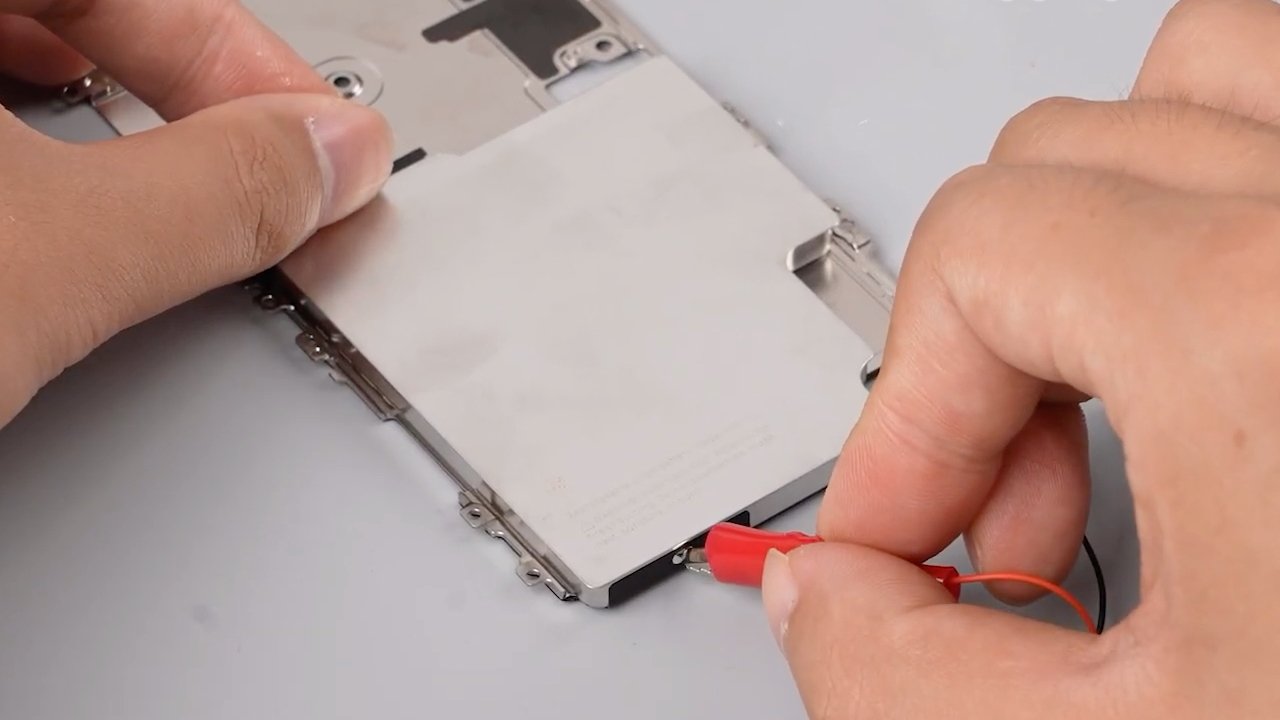
Back in September 2025, teardowns of the iPhone 17 Pro revealed Apple’s then-new vapor chamber cooling system. Now the REWA Technology YouTube channel has taken apart the new iPhone 18 Pro and shown just which components have changed.
There are details Apple hasn’t discussed, such as new materials and alterations to cables. More significant changes concern the A20 Pro processor and the vapor chamber.
The teardown shows what Apple’s Kaiann Drance, Vice President of iPhone Marketing has said about the new redesign. The A20 Pro processor has been moved so that it is in direct contact with the vapor cooling system, which itself is now larger.
Advertisement
Apple has also made claims about the iPhone 18 Pro’s. battery and, as Joanna Stern’s testing shows, it is true that there is a slight improvement. This new teardown of the model with a physical SIM card, says that the battery is around 1.7% larger than in the iPhone 17 Pro.
As seen in hands-on testing, the iPhone 18 Pro’s Dynamic Island has been reduced. “Apple really made an effort to narrow down the Dynamic Island,” says the new video. “The infrared camera cutout has been moved to the screen corner.”
Repairability
The teardown is focused on describing the steps required to do this, with just occasional notes about the differences in the design. It’s concerned chiefly with how those changes have affected the repairability of the phone.
Testing the battery – image credit: REWA Technology.
Advertisement
While there will doubtlessly be more detailed teardowns shortly, this one claims that there are immediate signs of it being harder to repair. Specifically, the move of the infrared camera is claimed to present “a new challenge for aftermarket display manufacturers.”
The first iPhone 18 Pro pre-orders are now arriving in buyers’ hands. It and the iPhone 18 Pro Max are also now available in Apple Stores.
Apple’s latest releases are already on sale, with markdowns on the new Apple Watch Series 12, AirPods 5, and incentives across the iPhone 18 Pro lineup.
Apple’s newest products are hitting store shelves, and we’ve rounded up the best deals on the new hardware.
AirPods 5 on sale now
You can pick up a pair of AirPods 5 for $124.99 at Amazon today, a $5 discount on the new earbuds.
While not a huge markdown, it does save you a few bucks if you’re planning on grabbing a pair for yourself or as a gift. Want to learn more about the latest release? Check out our hands-on AirPods 5 review and stay on top of price drops in our AirPods Price Guide.
Apple Watch Series 12 markdowns
The new Apple Watch Series 12 starts at $399, but Amazon is knocking up to $20 off select GPS + Cellular models.
TEMPEST attacks are often the most effective way to break air-gapped security: rather than directly accessing a computer, the attacker records the system’s unintended radio emissions and uses them to reconstruct its internal operations. This kind of attack was much more effective in the days of noisy, high-voltage CRT displays, and has gradually become less effective as electronics migrate to quieter, less powerful components. A group of researchers, however, has found that even modern electronics can become effective TEMPEST transmitters when irradiated with an RF signal.
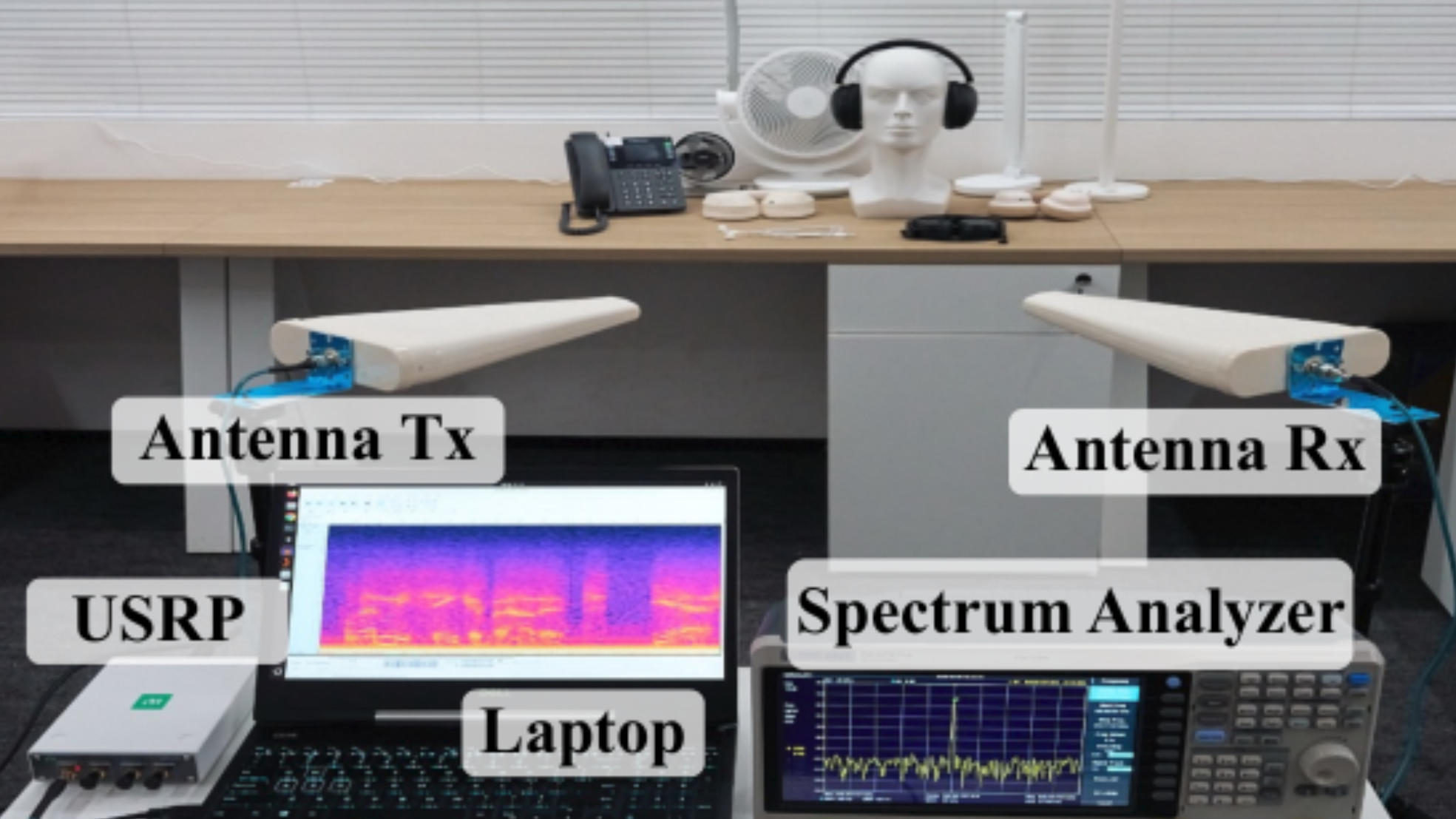
The RF a device emits depends on the unintentional antennas in its internal structure. These are difficult to eliminate, and it’s usually not worth the effort; they’re usually small enough that they only effectively radiate at much higher frequencies than the electronics carry. The researchers’ technique, called InjectEave, radiated these electronics with a radio frequency tuned to their internal antennas, injecting that frequency into the circuit. Nonlinear electronic components, such as amplifiers, then mix the injected frequency with the internal signal, creating RF sidebands. This mixed signal then radiates out of the device and can be picked up and demodulated to recover the device’s internal signal.
In principle, almost any semiconductor device will perform mixing to some extent; in testing, the researchers had success with an amplifier, analog-to-digital converter, power converter, and switching MOSFETs, but detected no significant emissions without an injected signal. For a portable setup, the researchers used a USRP B210 SDR for transmission and a spectrum analyzer to demodulate the received signal.
This was able to recover audio from wired headphones, wireless headphones, and a wireless landline, and detect the state of a smart lamp and a smart fan. All of this worked over short distances, even through walls, and with a power amplifier, the range increased to 30 meters. Even with multiple devices present, they could focus on one by tuning the injection frequency to resonate with its internal antennas. Perhaps most impressive (or concerning) was a demonstration with the VoIP phone: the researchers were able to listen in on the person speaking, clone that person’s voice, synthesize new speech in that voice, and remotely inject it onto the phone call, altering the call in real time.
Advertisement
If the history of these attacks is any guide, it won’t be too long before we see an open-source implementation of this technique; we’ve already seen a few approaches to traditional TEMPEST. This kind of unintended nonlinear mixing can also be used to find bugs or electronics.



-SOURCE-Caramel-Quin.jpg)


-SOURCE-Kat%2520Merck.png)


-SOURCE-Scott-Gilbertson.jpg)

























































You must be logged in to post a comment Login