Connect with us

NewsBeat

In a more devolved UK, should London still be in charge of broadcasting?

Published

on

In a more devolved UK, should London still be in charge of broadcasting?

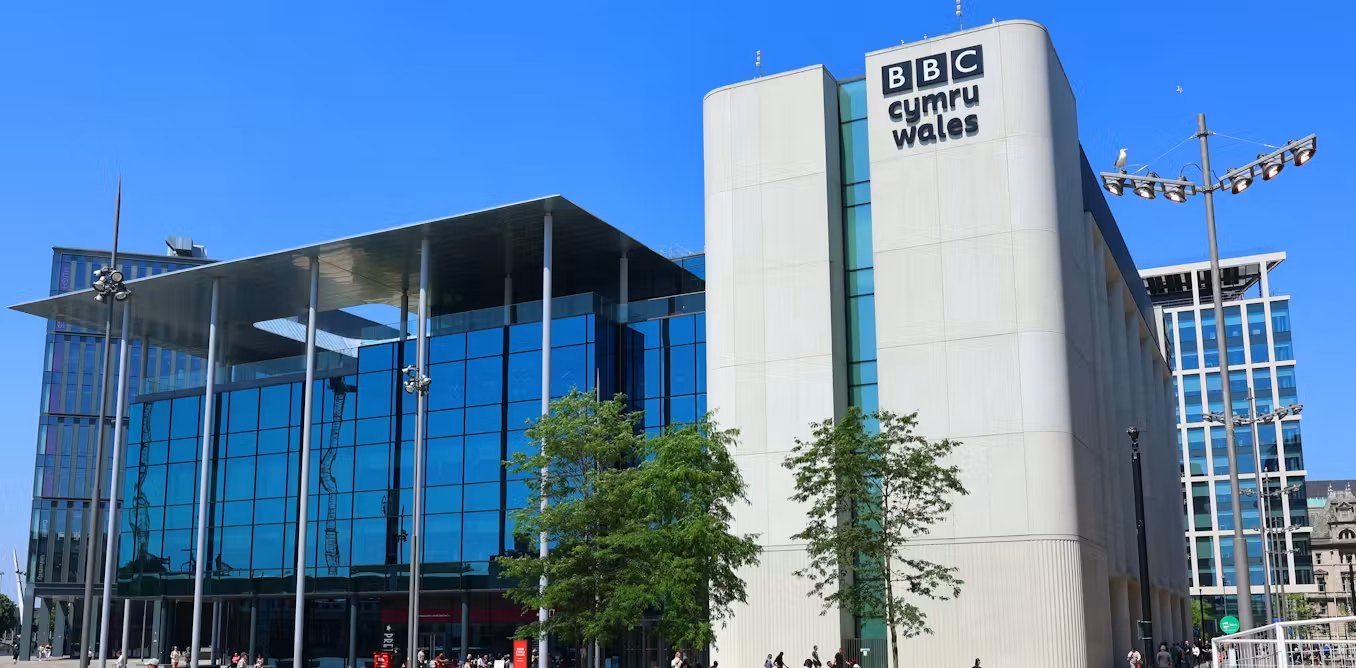
What we watch on television, hear on the radio and see on our screens is shaped by decisions that are still largely made in Westminster. That includes the rules governing broadcasters, how public service media are funded and regulated and how the UK’s nations and regions are represented.

In Wales, there is now a growing argument that those decisions shouldn’t be made without Wales having a much stronger say.

Following Plaid Cymru’s victory in May’s Senedd (Welsh parliament) election, the Welsh government has announced plans to establish a shadow broadcasting and communications authority for Wales, akin to the UK-wide regulatory body Ofcom.

It’s intended as the first step towards seeking the devolution of broadcasting powers. The authority would advise the Welsh government on matters relating to media and communication in Wales and would provide a focal point for public debate and engagement. It could also gather data and provide insight on media and communications in Wales, beyond what is currently offered by Ofcom.

Advertisement

The new UK government under Andy Burnham’s leadership has spoken positively about devolving power more generally. However, its initial response to the Welsh government’s announcement has given little indication that broadcasting is likely to be high on its list of constitutional reforms. As things stand, broadcasting and media policy won’t be leaving Whitehall any time soon.

But the Welsh government’s move comes at a time when Scotland also has a nationalist government. Devolving broadcasting powers was not part of the SNP’s 2026 election manifesto. But its 2024 document argued that it wanted “to develop a broadcasting strategy that better reflects and prioritises the specific needs and interests of Scottish audiences and our creative economy”.

Meanwhile, Sinn Féin remains the largest party in Northern Ireland, while Burnham has promised greater devolution within England.

Together, these developments raise certain constitutional questions: should decisions about broadcasting continue to be made almost exclusively in London? Or is it time for the UK’s nations to have a greater say?

Advertisement

Currently, Westminster decides the legislative framework of broadcasting while Ofcom regulates broadcasting across the UK. The BBC’s royal charter is negotiated with ministers in London. Although broadcasters produce programmes for audiences across the UK, the rules under which they operate remain largely centralised.

New prime minister Andy Burnham has promised to devolve power away from Westminster.
PA Images/Alamy

Whether that model still reflects the political reality of today’s UK is the question colleagues and I are exploring through an ongoing research project on broadcasting policy in a devolved UK. There are two main reasons why Wales, in particular, has argued for a stronger voice.

The first is broadcasting’s place in Welsh history and public life. Historian John Davies argued that broadcasting has played an unusually important role in shaping modern Welsh identity. For a nation with its own language and distinct cultural traditions, television and radio have never simply been about just entertainment. They have helped sustain national conversations, reflected Welsh life back to audiences and supported the Welsh language.

The second reason is concern about the future of public service broadcasting itself. Public service broadcasters such as the BBC and S4C have a responsibility to inform, educate and entertain. But they also provide trusted news and programmes that reflect the lives of people across the UK’s nations and regions.

Advertisement

Those responsibilities are becoming harder to fulfil in an increasingly crowded media landscape dominated by international technology companies and changing audience habits. For the Welsh government, this is about more than preserving the Welsh language, now spoken by around 800,000 people. It is also about ensuring that Welsh stories, communities and democratic institutions continue to be properly represented in both Welsh- and English-language broadcasting.

There are also serious concerns regarding the recent announcements from the BBC about job cuts and the likely effects of these on production in the regions and nations.

This concern is not new. In 2023, an independent expert panel recommended establishing a shadow broadcasting authority to strengthen Wales’s influence over broadcasting policy. The previous Labour-led Welsh government did not take the proposal forward, but the new Plaid Cymru administration has now revived it.

Potential reforms

Some reforms could be introduced relatively easily. The Senedd, for example, could play a greater role in appointments to bodies such as the S4C Authority, the independent body which oversees the management of the channel. This may give Wales a stronger voice over institutions that primarily serve Welsh audiences.

Advertisement

More ambitious changes would be more complicated. One possibility would be separate BBC charters for each nation of the UK. This could allow for greater accountability to audiences in Wales, Scotland, Northern Ireland and England while maintaining the BBC as a UK-wide institution. Other proposals would require a more fundamental rethink of where broadcasting powers should sit within the UK’s constitutional arrangements.

That is where the politics become much more difficult. Any meaningful transfer of broadcasting powers would require cooperation between Westminster and the devolved governments. The UK government has already said the Welsh government should “focus on better running the services they have”.


À lire aussi :
Plaid Cymru’s independence dilemma – from protest to power


This debate is unlikely to disappear. As political power becomes increasingly dispersed across the UK, questions about who controls broadcasting, how national identities are represented and who is accountable for public service media will only become more pressing.

Advertisement

Broadcasting has long been treated as something that should be governed from the centre. But in a UK where political authority is becoming steadily more devolved, that assumption looks less secure than it once did.

Source link

Advertisement
Continue Reading
Click to comment

You must be logged in to post a comment Login

Leave a Reply

NewsBeat

Syria court sentences Bashar al-Assad sentenced to death in absentia

Published

on

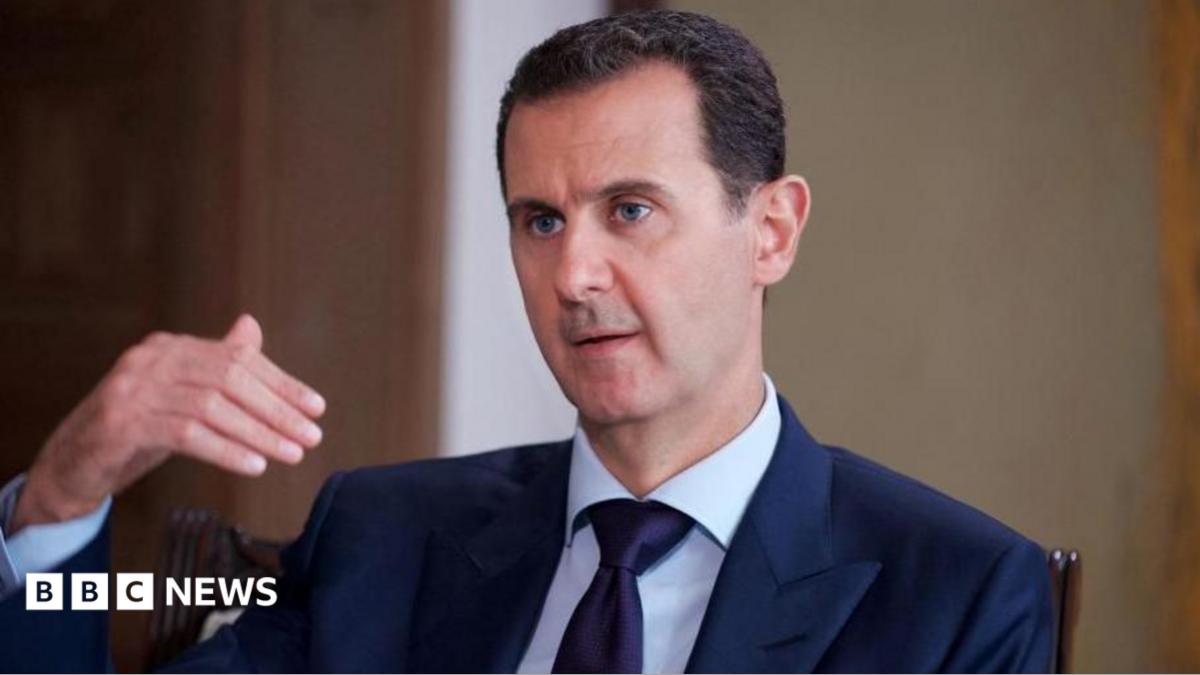
Bashar al-Assad pictured in 2016 speaking while gesturing with one hand. He is wearing a dark suit, white shirt and tie.

A Syrian court has sentenced ousted dictator Bashar al-Assad to death in absentia, after convicting him of committing war crimes and crimes against humanity during the country’s civil war.

It is the first conviction against Assad, who fled from Damascus to the Russian capital, Moscow, with his family after his regime was overthrown in December 2024, ending his family’s five-decade grip on power.

Assad’s cousin and the former head of political security in southern Syria’s Deraa province, Atef Najib, was also sentenced to death. He appeared wearing a striped prison uniform inside a cage in the courtroom as the judge read out his sentence.

Deraa is widely seen as the birthplace of the uprising against Assad’s rule.

Advertisement

In March 2011, the detention and alleged torture of a group of teenagers accused of writing anti-government graffiti sparked protests in the city, which were met with a violent crackdown by security forces.

That response helped ignite nationwide demonstrations that escalated into civil war in which hundreds of thousands of people were killed.

Syria’s interim government began trying officials associated with the Assad regime, which ruled the country for more than 50 years, earlier this year.

Najib is one of the highest-ranking officials to be put on trial.

Advertisement

He was convicted of crimes including murder, “the intentional killing of children under 15” and “torture leading to death”.

The court also sentenced six former military and security officials in absentia to death, including Bashar al-Assad’s younger brother, Maher. He ran the army’s elite Fourth Division and also fled to Moscow when the regime fell.

The others convicted include former defence minister Fahd al-Freij.

Source link

Advertisement
Continue Reading

NewsBeat

How to get early access to the Beauty Advent Calendar that’s sold out 3 years in a row

Published

on

Daily Mirror

The OK! Beauty Box has sold out for three years in a row and for 2026 they’re once again teaming up with make-up artist to the stars and royals, Hannah Martin

There’s plenty to get excited about when it comes to the festive season; Christmas markets, gift shopping, parties and, of course, that all-important beauty advent calendar.

In recent years, there’s one box that’s risen to get its own cult following. In fact, the OK! Beauty Box Advent Calendar has sold out for three years in a row, thanks to its coveted offering including full-size products and cult hero brands from Bobbi Brown to Rodial.

This year it’s set to be bigger, better and more glamorous than ever as the brand once again teams up with make-up artist to the stars Hannah Martin.

Advertisement

The Beauty Advent Calendar by Hannah Martin has become a firm favourite with beauty addicts – last year’s preorder sold out in under five hours!

Hannah has over 20 years of experience as a make-up artist, so it’s no surprise that her recommendations are such a hit. Every product in the calendar has been handpicked by Hannah, as she draws on the products she recommends, brands she loves, and expertise she’s built over her career.

“Creating this year’s calendar has been such a joy,” said Hannah. “As a make-up artist, I’m always discovering incredible products and brands, and I wanted this to feel like a personal gift from my dressing table to yours. Inside are gorgeous treats and a few insider secrets I’m so excited to share. I hope opening each day feels like a moment of indulgence just for you.”

Advertisement

What’s included?

The Beauty Advent Calendar by Hannah Martin features 25 products – 22 of which are full-size. It’s worth over £605 and pakced with make-up, skincare, fragrance, haircare, nail care, wellbeing, and beauty tools.

While Hannah is currently remaining tight-lipped about exactly what’s included, you can expect the likes of Bobbi Brown, bareMinerals, Kosas and Weleda, as well as everything from a travel brush set to a luxury eye cream worth over £145.

You can already sign up on the OK! Beauty Box website to be first in line for the Hannah Martin Beauty Advent Calendar when preorders open on Tuesday 1, September.

Not only will you get priority access, but there are plenty more perks exclusively for Priority List members including an exclusive £20 off, a £10 e-gift card, and exclusive early previews of what’s inside the advent calendar.

Advertisement

Join the Priority List today.

Source link

Continue Reading

NewsBeat

UK Heatwave: Why London Underground Always Feels So Warm

Published

on

UK Heatwave: Why London Underground Always Feels So Warm

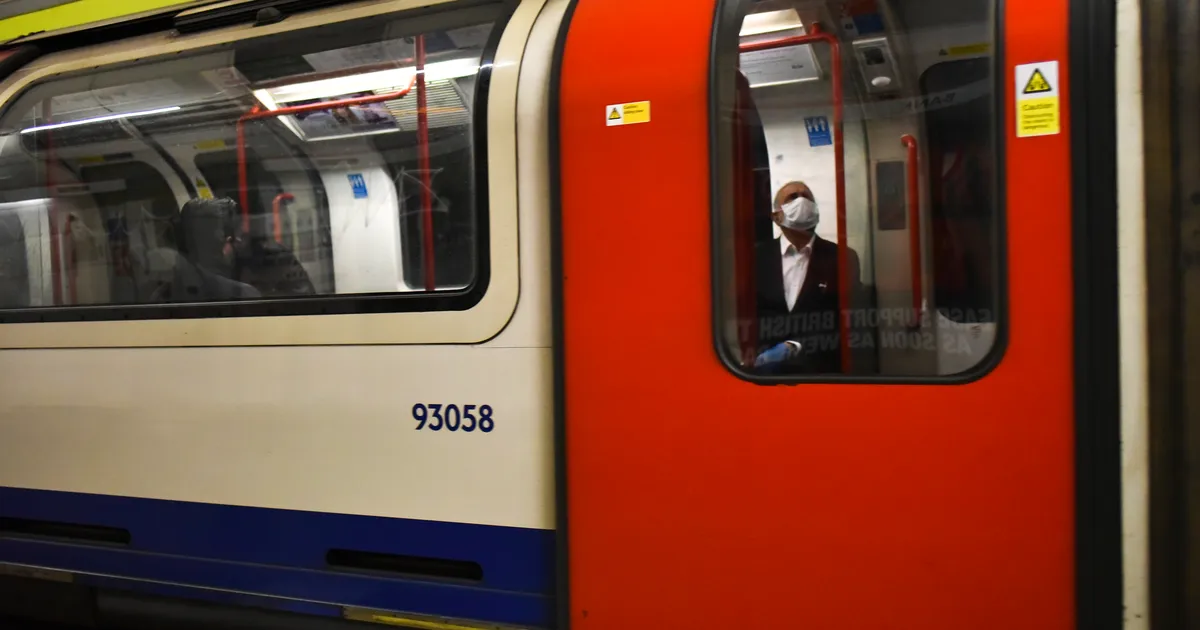
Temperatures on the London Underground reached almost 40C during the recent heatwave, making it the hottest June day on record.

That’s 10 degrees above the government’s upper limit for the safe transport of cattle.

According to Bloomberg UK, the network of underground trains can be 5°C hotter than the high temperature on the street.

To be honest, I hadn’t put much thought into why that might be. Hot day, little air con, and tonnes of people – a recipe for a sauna-level carriage, I reckoned.

Advertisement

But it turns out that a good chunk of that notorious heat comes from an unexpected source, which has nothing to do with either the air temperature or the mass of people.

Braking heats tube carriages up by more than you think

In 2007, a Rail Engineering report found that a lot of the heat comes from braking.

That’s because the friction created during the process is very intense, creating a lot of kinetic energy that gets converted into heat energy.

Advertisement

Forbes says braking is responsible for about half of the higher heat, while passengers account for 2% of the warmth. Rail magazine puts the combined effects of braking and train motion at 80% of heat input.

Then, there’s the ground into which the tube network was built.

It’s largely clay and chalk, both of which hold onto heat. This is particularly troublesome for deeper tube lines, which have less access to air.

This heat builds up – per Rail Magazine, the average tube temperature in 1900 was 14°C, compared to today’s 20-25°C.

Advertisement

Not all tube stations have adequate ventilation, either, meaning hot air has nowhere to escape. The heat simply builds and builds, and because extracted hot air often has nowhere to go, not even air conditioning will provide an adequate solution.

What can we do to make the tube cooler?

It’s no easy feat. London Underground’s Programme Director for Infrastructure, George McInulty, told Rail magazine: “We can increase the capacity of shafts, and we did this during the upgrade of the Victoria Line in 2011/12.

“But we were lucky that it was only built in the 1960s, with half an eye to improving ventilation at a later date and introducing a service of over 30 trains per hour. Elsewhere we’ve been less lucky, and have had to look at retrofitting stuff where we can.”

Advertisement

Air conditioning is simply not an option for tunnels that can’t let hot air out; it’ll simply heat some older, hotter lines up more.

Some solutions, like turning a lift in St Paul’s into a fan, have helped. In Victoria Station, water from a nearby river is circulated in pipes around the tunnels to keep them cool.

But these clever workarounds are not universally available.

McInulty said: “We can make gains from deceleration, and we are buying trains with regenerative braking, which produces electrical energy from braking rather than all that heat from friction.

Advertisement

“And there are other things that go unseen by the public that make a difference – we have put a thin film on the windows of Central Line trains, so they absorb less energy on the outside parts of the line which is then dumped underground. We’ve also made massive steps in using LED lights which give out less heat.”

Still, it’s hard to see how the tube will cool down significantly any time soon.

Source link

Advertisement
Continue Reading

NewsBeat

UK weather latest: Summer set to be the hottest since records began, say Met Office

Published

on

UK weather latest: Summer set to be the hottest since records began, say Met Office
Air ambulance captures dramatic ‘dust devil’ in Kent amid scorching heatwave

This summer is set to be the UK’s hottest since records began, the Met Office have said.

Only average conditions are needed for the remainder of August to surpass the record which was only set last year.

It follows news that July was the busiest month on record for wildfires, statistics have revealed, with firefighters attending to 458 incidents within the month.

In the first 10 days of August, crews have been called out to 185 wildfires, including a large blaze in the New Forest which has been ongoing for three days.

Advertisement

Meanwhile, a rare amber warning for extreme heat has been issued by the Met Office as a fifth heatwave looms with the risk of temperatures reaching 38C.

The forecaster warned there was a risk of travel delays, adverse health effects and potential power cuts. The warning covers large parts of England from 9am to midnight on Thursday.

Amber heat health alerts are already in place across large parts of England and Wales. Highs of 29C in Cardiff, 28C in Manchester and 25C in London are forecast for Tuesday.

Some 45 million people have been plunged into drought conditions as dry and hot weather continues. The National Drought Group has declared 71.3 per cent of England is now suffering a “flash” drought.

Advertisement

Summer 2026 on course to be UK’s hottest on record, says Met Office

The UK is on course to record its warmest summer on record, with only average conditions needed for the remainder of August to surpass the record set only last year.

Provisional Met Office statistics show that the UK’s mean temperature for meteorological summer so far (1 June to 10 August) currently stands at 16.48°C, which is 1.88°C above the 1991-2020 average.

To equal the current UK summer mean temperature record of 16.12°C set in 2025, the remainder of August would only need to average 0.21°C below the 1991-2020 long-term average.

Advertisement

Any warmer than this would establish a new UK record, with records starting in 1884.

Met Office senior scientist Mike Kendon said: “Another record-breaking summer now looks increasingly likely for the UK, following the second-warmest June, and second-warmest July on record and yet another heatwave imminent.

“We’ve seen temperatures hit 38°C in June, 35°C in early and late July, and this threshold is looking to be reached again in the next few days.

“It’s worth remembering we also reached 35°C in late May and easily exceeded both the May and June previous all-time temperature records this year. These statistics are a clear reminder – if one were needed – of the stark changes that we are seeing in the UK’s climate.”

Advertisement

Holly Evans11 August 2026 15:21

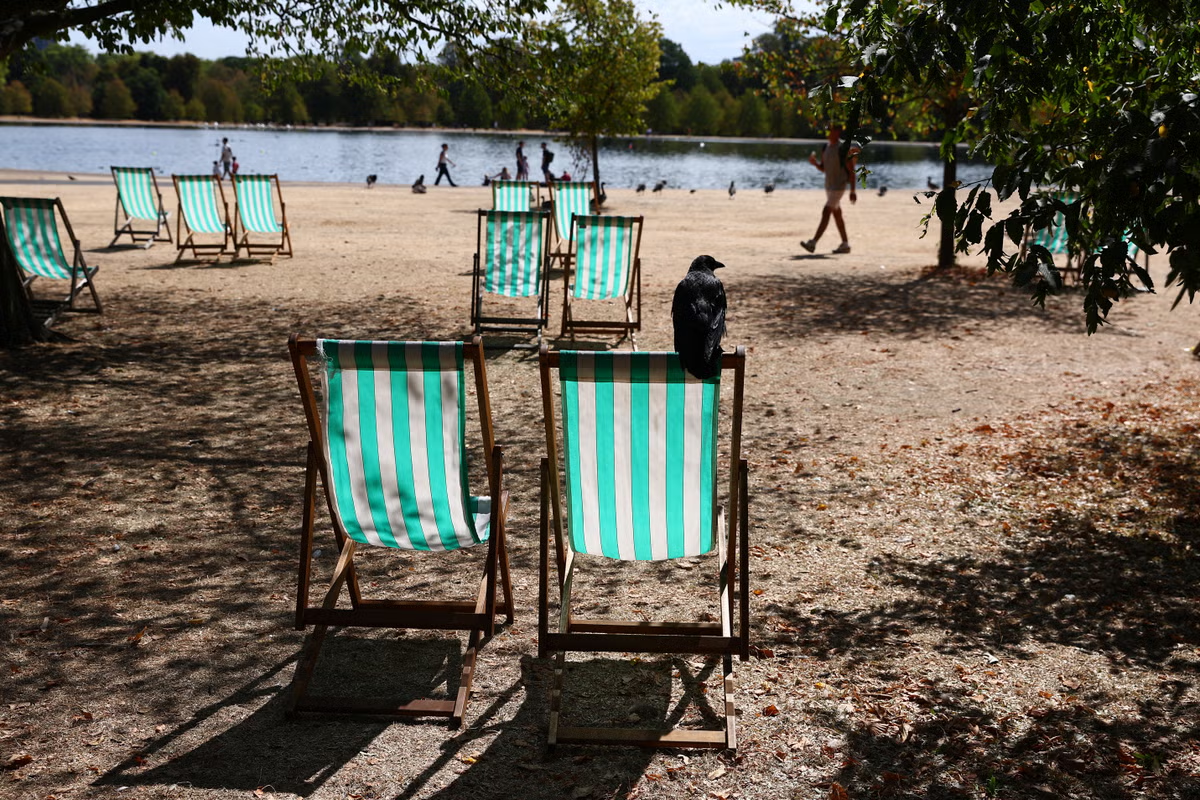
In pictures: Parks and fields turn brown due to drought

An aerial view shows swimmers using Parliament Hill Fields Lido in London
An aerial view shows swimmers using Parliament Hill Fields Lido in London (AFP/Getty)
Dry grass in Laindon Hills, Basildon, Essex.
Dry grass in Laindon Hills, Basildon, Essex. (PA)
People experiencing the exposed, cracked, and dried mud bed of Hollow Pond in south-east London
People experiencing the exposed, cracked, and dried mud bed of Hollow Pond in south-east London (PA)

Holly Evans11 August 2026 15:03

How to stay safe in the heat?

The Met Office has warned that the expected high temperatures will cause a likely increased demand on health and social services.

Advertisement

Elderly people are likely to be particularly vulnerable, with people warned to avoid the sun during the peak of day.

William Spencer, climate and first aid expert at the British Red Cross, said: “While periods of hot weather have become more familiar in recent years, they can still pose serious risks to health. In fact, after prolonged dry and warm conditions, it is more important than ever to follow heat safety advice.

“Simple steps such as wearing sunscreen, drinking plenty of fluids, seeking shade during the hottest parts of the day and taking regular breaks from the sun can help protect you and those around you.

“It’s also important to look out for the signs of heat exhaustion and heatstroke, particularly among people who may be more vulnerable to the effects of extreme heat.”

Advertisement
Heatstroke and heat exhaustion are common during heatwaves
Heatstroke and heat exhaustion are common during heatwaves (Getty/iStock)

Holly Evans11 August 2026 14:40

July busiest month on record for wildfires

July was the busiest month on record for wildfires, statistics have revealed as people living close to a blaze in the New Forest were told to limit their use of water amid fears there could be disruptions to supply.

The National Fire Chiefs Council said on Tuesday its services had responded to 966 wildfires this year, just shy of the 1,017 they attended during a record-breaking year in 2025.

In July alone, firefighters attended 458 wildfires, whilst in the first 10 days of August crews have been called out to 185 wildfires.

Advertisement

Phil Garrigan, chairman of the council, said: “The combination of drought conditions and another heatwave means the risk of fires remains high, and these incidents can place huge demands on firefighters and specialist resources.

“Many wildfires are preventable so we’re asking people to be vigilant and take extra care outdoors while these conditions continue.”

Mr Garrigan’s warning comes as people living close to a blaze, that at one point covered an area equivalent to 140 football pitches, were told to reduce their use of water to ensure there are not disruptions to supply.

Bournemouth Water, which supplies Ringwood and the New Forest, has asked residents to reduce water usage.

Advertisement

Holly Evans11 August 2026 14:05

In pictures: Blaze in the New Forest destroys heathland

The fire has now entered its third day
The fire has now entered its third day (Hampshire & Isle of Wight Fire & Rescue Service)
Firefighters are working ‘tirelessly’ to contain the blaze
Firefighters are working ‘tirelessly’ to contain the blaze (PA)

Holly Evans11 August 2026 13:57

Heatwaves set to drive prices higher, food producers warn

Soaring temperatures and droughts across the UK and Europe are set to drive prices higher, food and drink producers have warned.

Advertisement

The Food and Drink Federation (FDF) said “fruit, vegetable and grain supply” are being hit by recent heatwaves, with these crop shortages then set to feed into supermarket prices.

Economists from the trade group suggested that this will put upward pressure on food inflation going into 2027.

It is understood that the supply of a number of UK-grown fruit and vegetables has already come under pressure, such as broccoli and cherries.

Meanwhile, poor grain harvests are driving the cost of animal feed higher, with predictions that this could lead to more expensive meat as farmers are forced to reduce herd sizes.

Advertisement

It comes ahead of a fresh heatwave in the UK, with the Met Office warning that temperatures will soar to the mid-30s in some areas on Thursday.

Fruit, vegetable and grain supply are being hit by heatwaves
Fruit, vegetable and grain supply are being hit by heatwaves (Getty)

Holly Evans11 August 2026 13:34

Invest in climate defence rather than heed Trump on military spend – Polanski

The UK should be investing money in defending the country against the climate crisis rather than listening to Donald Trump on security spending, Zack Polanski has said.

The Green Party leader on Saturday reiterated his view that the climate crisis is “the biggest threat to our national security since the Second World War”.

Advertisement

Appearing at Iain Dale All Talk at the Edinburgh Fringe, he was asked by an audience member whether he and his party agree with increasing defence spending to 3% of GDP when there are “so many competing environmental needs.”

Mr Polanski said that if defence spending includes money for climate adaptation such as dealing with floods and wildfires then we “clearly need to up our spending”.

He suggested that was more important than listening to US President Donald Trump, who has called for Nato allies to shoulder more of the burden of European defence.

Mr Polanski said: “If we’re talking about spending 3.5 per cent of our GDP on military spending to please Donald Trump, then I think there’s an absolute incoherency in that.

Advertisement

“We’re already, I think, one of the fifth biggest spenders on military capacity, and actually, I think we need to look at defence as a much more holistic issue.

“I said this week, and I really believe, that the climate crisis is the biggest threat to our national security since the Second World War.

“It’s not some distant threat – it’s right here, right now. We’ve had wildfires not far away from here, where we’re talking in Edinburgh, and we know that what’s happening right now is not the new normal.

“This is the beginning of what will be the least extreme temperatures and least extreme weather in our lifetimes.

Advertisement

“It is going to get worse and worse and worse. And in many ways, it’s a grim message.

“We can’t stop some of that breakdown, what we can do, though, and it’s important that people hear this, is we can stop total breakdown, and that feels beyond important to do, and that’s where we should be investing right now, not on listening to what Donald Trump says or creating arbitrary numbers of GDP.”

Joe Middleton11 August 2026 12:45

Advertisement

Historic gardens, parks and cemeteries under threat from climate change

The UK’s treasured historic green spaces are under increasing threat from climate extremes, a report warns.

The National Lottery Heritage Fund and Historic England warn that historic parks, gardens and cemeteries across the country are vulnerable to damage from harsher, more widespread drought, intense rainfall, more severe storms and pests which can thrive in warmer conditions.

These impacts, driven by climate change – which is mostly caused by burning fossil fuels for power plants, cars, heating and industry – are affecting all aspects of these heritage landscapes, from trees and plant collections to paths, terraces and lakes.

The report says historic parks and gardens, including Chiswick House and Gardens, Kew and the Royal Parks, in London, and Princes Street Gardens in Edinburgh, employ more than 32,000 people and contribute £2.9 billion to the UK economy each year from international visitors alone.

Advertisement

But they are already being hit by increasingly extreme weather caused by climate change, with paths and drainage systems not fit for current conditions, trees lost to drought and high winds, and potential loss of entire groups of plants to diseases affecting box, ash, sweet chestnut and oak.

Joe Middleton11 August 2026 12:30

Pictured: Dry fields surrounding Jeremy Clarkson’s Diddly Squat farm

(PA)
(PA)

Joe Middleton11 August 2026 12:20

Advertisement

BREAKING: Huge fire breaks out next to M25 as section of motorway shut

A large fire has broken out next to the M25, forcing a section of the motorway to close as firefighters tackle the blaze.

Emergency services are at the scene in St Albans after the fire started at an industrial estate in Ventura Park.

Pictures on social media and released by National Highways show thick dark smoke rising above the carriageways, with road closures in place.

Joe Middleton11 August 2026 12:10

Advertisement

Source link

Continue Reading

NewsBeat

Can this electrolyte lolly actually ease a hangover? I tried it

Published

on

Can this electrolyte lolly actually ease a hangover? I tried it

In three flavours – watermelon berry, cola and peach iced tea – they are a pleasure to ingest but feel like they’re doing you good. Which they are.

Sugar-free and packed with sodium, potassium, magnesium, phosphorus, chloride, Vitamin C and Vitamin B12, they provide a hit of hydration without you having to do something as menial as mixing powder with water.

I felt instantly better after my watermelon berry lolly – fuzzy head banished.

Advertisement

Of course, reaching for an electrolyte lollipop is a sign of the ridiculous times we find ourselves in; if we’re too busy to walk to the kitchen tap, things have gone seriously awry. Appease your guilt by knowing that at least one per cent of all revenue goes to a nonprofit called Water to help fund projects across the world.

Of course, these aren’t just for hangovers; they’re great after a workout, or simply for an afternoon energy boost. I’ve become quite addicted.

Source link

Advertisement
Continue Reading

NewsBeat

Clapham shooting: Man, 25, shot dead outside south London pub as police launch murder probe

Published

on

Clapham shooting: Man, 25, shot dead outside south London pub as police launch murder probe

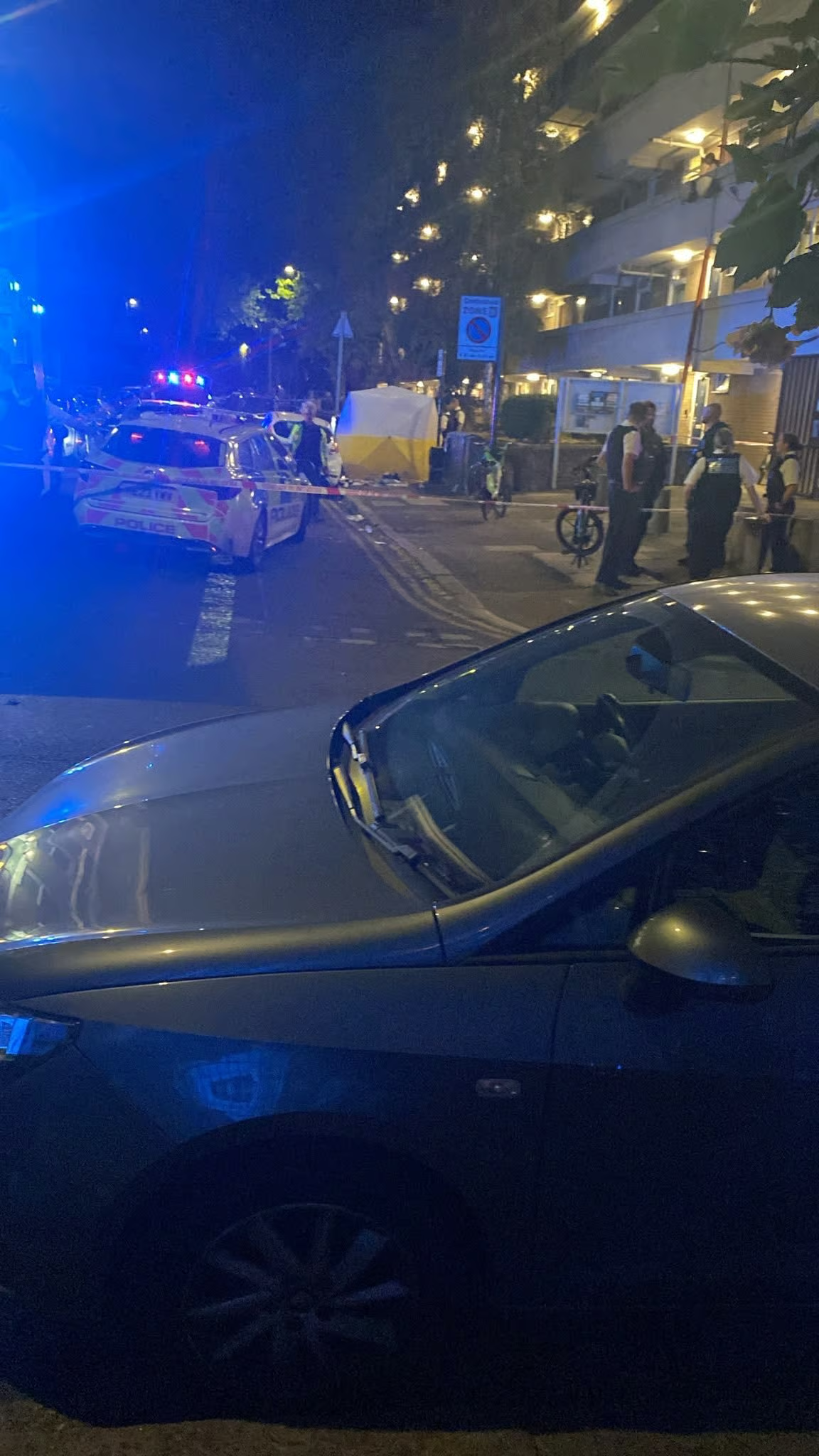
Detective Chief Superintendent Emma Bond, Central South Borough Commander said: “We understand that incident will cause concern within the local community and an increased police presence will remain in the area throughout the day as our enquiries continue. Our thoughts remain with the victim’s family for their tragic loss.

Source link

Continue Reading

NewsBeat

New wildfires flare up as firefighters continue battle across Wales- live

Published

on

Wales Online

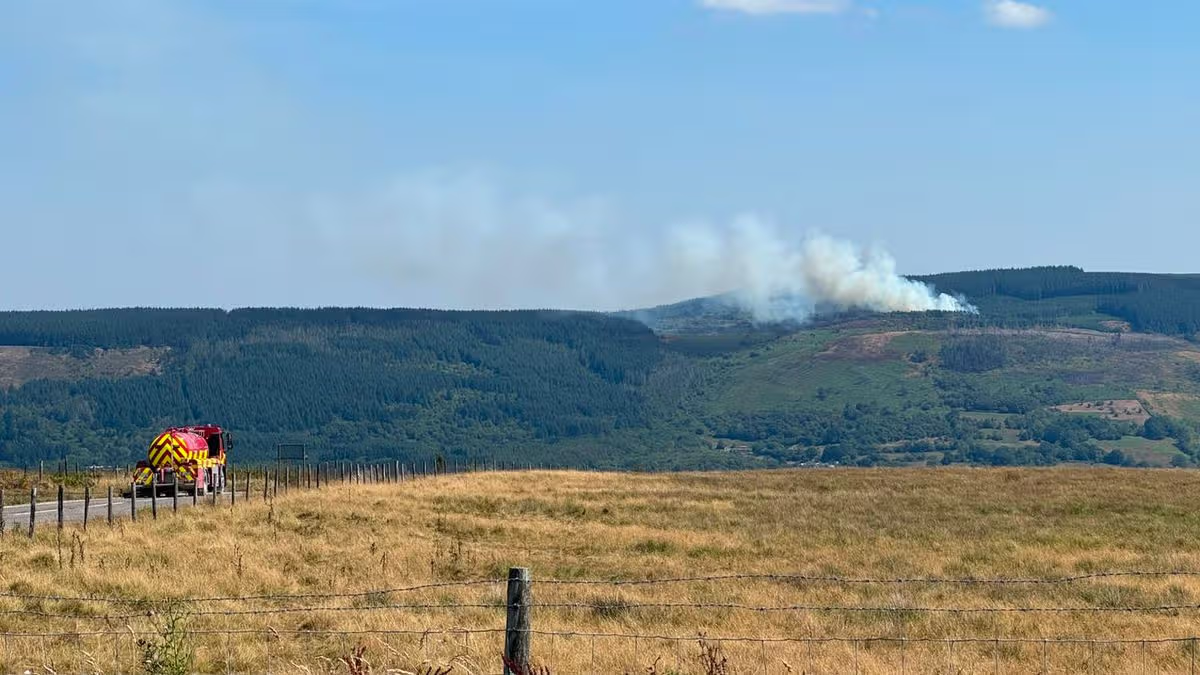
Fire crews are currently tackling two wildfires in Blaenavon.

This morning, South Wales Fire and Rescue Service urged residents in Blaenavon, Brynmawr, Cwmbran, Newport, and Pontypool to all keep their windows and doors closed due to smoke.

They said they were aware of the incident and had crews at the scene.

Smoke from a major wildfire in Blaenavon(Image: Robin Birt)

Advertisement

This afternoon, the fire service confirmed there was another wildfire in the area. They wrote: “There is another wildfire in Blaenavon, our crews are in attendance and working hard to bring the incident to a safe close.

“Please avoid the incident ground and do not fly personal drones as this may affect our operational activity.”

People are urged to only call 999 if they have a new emergency to report.

Source link

Advertisement
Continue Reading

NewsBeat

‘I ended up in A&E when had horror reaction to wedding eyelashes’

Published

on

Cambridgeshire Live

Polly Bibby, 26, from Cambs, said she had a patch test done and, as she suffered no reaction, went ahead with the procedure

A bride-to-be who wanted to be a ‘princess’ on her wedding day ended up ‘looking like Sloth from The Goonies’ after a horror allergic reaction to fake eyelashes. Polly Bibby decided to try classic eyelash extensions as she wanted to feel like a ‘princess’ on her big day compared to her usual minimal make-up look.

Advertisement

The 26-year-old said she had a patch test done and, as she suffered no reaction, went ahead with the procedure on July 5. After getting the £65 treatment done, the illustrator claims she was initially happy with her ‘dressier’ appearance.

Just a few hours after the appointment, Polly’s eyes became watery and sore but she shrugged it off as hay fever. But when her eyes started to sting and stick together with yellow discharge, Polly says alarm bells began to ring and she called 111 and was advised to go to A&E.

A shocking photo shows her eyes red raw and swollen closed, with Polly admitting she looked like Sloth from the Goonies. After being seen by a nurse on the eye unit at Hinchingbrooke Hospital in Hinchingbrooke, Cambridge, it was confirmed she’d suffered an allergic reaction to her eyelash extensions.

She was then given a course of antibiotics, strong antihistamines, and was told to wait three days for the swelling to go down before getting them removed.

Advertisement

Now, Polly is sharing her experience to warn other brides about getting new treatments so close to their big day. Polly, from Sawtry, Cambridgeshire, said: “I don’t wear that much make-up.

“Getting married is the biggest day of your life so I just wanted to test out different make-up and actually feel like a princess for the day.

“This was a trial for the wedding, I’d never had my eyelashes done before. When I first had them done, I really liked them.

“With having hay fever, I thought it was that at first. My eyes were watery and sore.

Advertisement

“About four or five hours after the appointment, my partner looked at my eyes and thought they were a little red.

“By that evening, they had gone red raw and were stinging.

“The only way I can describe [how I looked] is the man from The Goonies with the big puffy eyes called Sloth. I just didn’t look like myself, I looked like a different person.

“They were burning and it got to the point where I was losing my vision and I couldn’t see at all.

Advertisement

“Every time I blinked, my eyes were sticking together as I had discharge building up on my eyes.

“It was a sticky yellow discharge pretty similar to when babies have conjunctivitis.

“They were quite taken back and shocked by it in A&E, they said it was an allergic reaction to the eyelash extensions.”

Polly said she had a patch test and a lash lift done at the same salon in May before her Italian Lake Garda hen do and suffered no allergic reaction then either.

During the removal process of her false lashes, she claims it felt like acid was being poured onto her face.

Polly said: “I was in so much pain. It was like pouring acid [on my face]. I was screaming, crying and tensing up.

Advertisement

“My eyes are still red, scabby and very ‘rashy’. The eyelids themselves are really swollen and I’ve still got quite blurry vision.

“I’m terrified of putting anything on my eyes [on my wedding day]. I might have to go make-up-less on my wedding day.

“I fear it’s going to look quite red on my wedding day.

“I didn’t realise that when people joke around and say things are going to go wrong [on your wedding day], I didn’t realise it would happen to me.”

Advertisement

Polly is now sharing her story to warn others about the potential risks of getting make-up treatments done for the first time so close to their wedding day.

Polly said: “I won’t be getting eyelash extensions for the big day.

“Going through that pain was not worth it. If I knew in hindsight, I’d just use mascara.

“I’d hate anyone else to go through this.”

Advertisement

Source link

Continue Reading

NewsBeat

Why do some people feel life is so unfair? Understanding this may help explain conspiracy beliefs

Published

on

Why do some people feel life is so unfair? Understanding this may help explain conspiracy beliefs

Most people set out in life wanting to believe the world is fair. They expect people to wait their turn in queues, to be treated equally in their job, and to be rewarded for hard work. These expectations influence how they understand the world around them, and shape their responses to it.

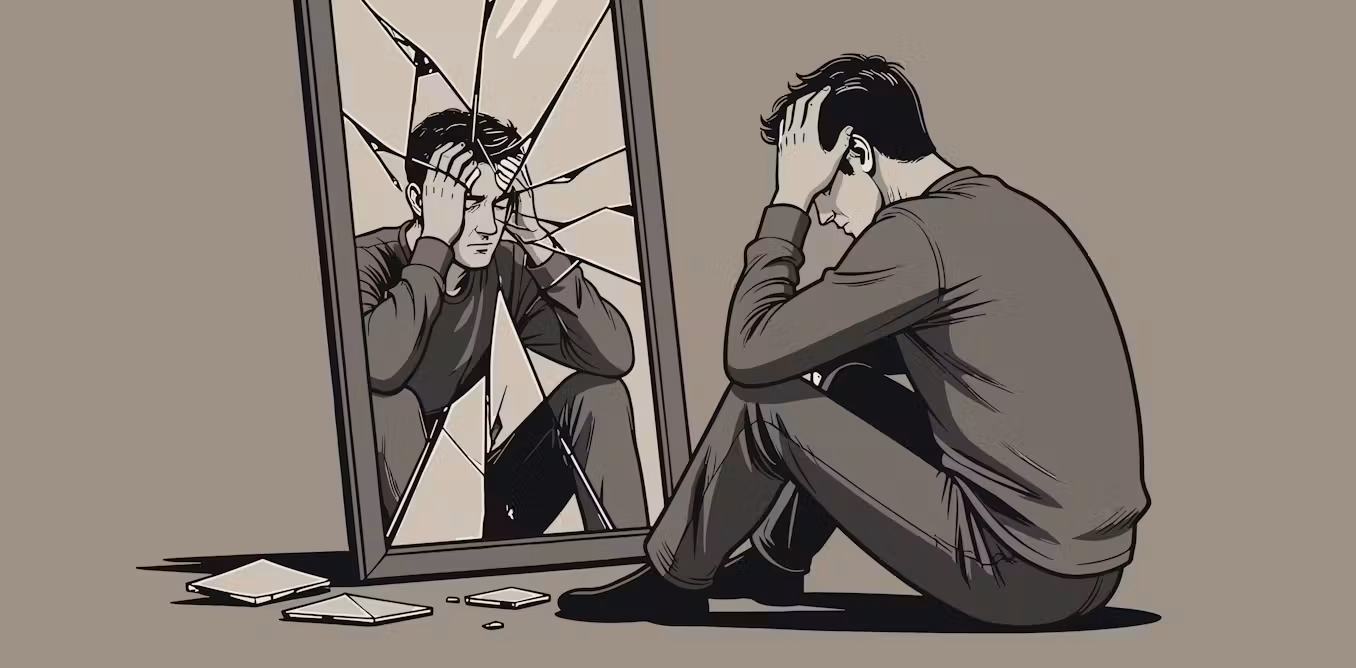
But what happens when life repeatedly challenges those assumptions? Psychologists have long been interested in this question. Our new research, published in the British Journal of Psychology, suggests adverse experiences shape both how fair people believe the world is, and how they view their place in society.

Over the course of a lifetime, personal setbacks – from illness and bereavement to being a victim of crime – may have a cumulative effect, leading to a growing sense that the world is unfair. We think this is important in the context of today’s increasingly polarised societies, in which trust in institutions has declined severely in the UK and many other countries.

Advertisement
Video: TEDxTalks.

Adversity and unfairness

Our research set out to answer two key questions: do experiences of adversity influence whether people see the world as fundamentally unfair – and if so, what are the societal consequences? We conducted three surveys involving more than 1,200 British participants with an equal gender split and average age of 39.

In one study, we found that people who reported experiencing more lifetime adversity – including illness, bereavement, financial hardship and violence – were more likely to believe the world was unfair.

In another, we compared people who had experienced violent victimisation with those who had not. After accounting for demographic factors, people who had experienced violent crime reported stronger perceptions of injustice.

Our final study found that greater lifetime adversity was associated with lower trust in institutions through perceptions of injustice. This is important because trust underpins many aspects of society, from confidence in public institutions to democratic participation.

Advertisement

Together, these findings suggest that people don’t simply interpret information based on the facts available to them. They also interpret it through the lens of their previous experiences.

Two people can read the same news story, watch the same political debate or hear the same public health advice, yet come away with very different conclusions that may not simply reflect differences in knowledge or politics. It may also reflect differences in how they have come to see the world as a result of the hardships they have faced.

Furthermore, if someone increasingly believes that the world is unfair, they may be more likely to notice fresh examples of perceived injustice, corruption or hidden motives – and interpret new events through that lens.

Belief in conspiracy theories

Previous research has shown that people who feel uncertain, powerless or threatened are often more likely to endorse conspiracy theories. Most of this work, however, has focused on their identities, traits and beliefs.

Advertisement

In our investigation of the impact of adverse life experiences on people, we found a remarkably consistent pattern. When these hardships are associated with stronger perceptions of injustice in the world, the same people more strongly endorse conspiracy beliefs.

Conspiracy theories rarely describe events as random. Instead, they tend to suggest that powerful individuals or organisations are secretly responsible for what happens. They offer explanations that identify intentional causes behind events that might otherwise seem confusing or unjust.

Research suggests that across societies, the level of belief in conspiracy theories is relatively stable over time. But once these beliefs become part of how someone understands the world, they can be difficult to shift.

This makes it all the more important to understand the experiences and psychological processes that may contribute to these worldviews developing in the first place. Our findings suggest that perceptions of injustice are one such pathway.

Advertisement

For someone who increasingly feels the world is unfair, conspiracy theories may become more psychologically appealing – providing a way of making sense of experiences that otherwise feel difficult to understand.

Our research does not suggest that adversity inevitably leads to conspiracy beliefs; nor that conspiracy theories are an inevitable consequence of trauma. Rather, it highlights a long-term psychological process that may help explain why some people become more receptive to these ideas.

In an increasingly polarised world, the media and political focus is often concentrated on what information people consume. But our research suggests we should pay more attention to the experiences that shape the lens through which people interpret information. This could help explain why people can look at the same events and reach very different conclusions.

Ultimately, people’s experiences don’t just affect them in the moment. They shape their worldview – which can influence how they interpret and respond to events and other people’s behaviour far into the future.

Advertisement

So, we believe any effort to reach greater consensus in society may require a deeper understanding of the hardships people have lived through over the course of their lives – and how these can affect their sense of injustice.

Source link

Advertisement
Continue Reading

NewsBeat

Asda announces major shake-up affecting 3,500 workers in UK

Published

on

Asda announces major shake-up affecting 3,500 workers in UK

This change will affect around 3,500 workers, who are set to transfer to one of two external companies.

The supermarket chain said there are no plans for redundancies as part of the move, which will see cleaning duties in northern England and Scotland go to Bidvest, while NIC Services will take on stores in southern England.

David Lepley, chief operating officer at Asda, said: “Our ambition is to deliver the cleanest stores in retail.

Advertisement

“We continue to review and invest in ways to enhance the customer experience, partnering with industry leaders to deliver the best solutions.

“This latest investment is another important step in our mission to raise the bar for customers.

“Having taken the time to learn from others, by partnering with Bidvest and NIC Services we have access to the very latest machinery and cleaning technology.”

Asda said customers will see improvements such as cleaner toilets, steam-cleaned trolleys and baskets, and greater use of robotic cleaning equipment.

Advertisement

The company notified staff of the proposals on Tuesday, August 11, and expects the transition to be completed by October 1.

All affected employees are expected to transfer to the new employers under TUPE regulations, which are designed to protect workers’ rights during changes of employer.

However, the GMB union has criticised the decision and called for the process to be paused.

Rachelle Wilkins, GMB organiser, said: “Outsourcing companies have a proven track record of slashing pay, terms, conditions and even jobs as soon as they have their feet under the table.

Advertisement

“Now loyal, hard-working cleaning staff will be worried sick about whether their job will still pay the bills or whether the axe will fall on them.

“Morale in stores is already at rock bottom.

“GMB calls on Asda to halt this process now – at least until the other consultations are finished – and consider what is best for its customers and staff.”

The union also said it asked Asda in April if more outsourcing was planned and was told there was not.

Advertisement

This latest announcement follows a similar move earlier this year, when Asda said it would outsource around 1,700 in-store security roles to Mitie.

Source link

Advertisement
Continue Reading

Trending

Copyright © 2025