MINNEAPOLIS (AP) — In some ways, 10-year-old Giancarlo is one of the lucky ones. He still goes to school.
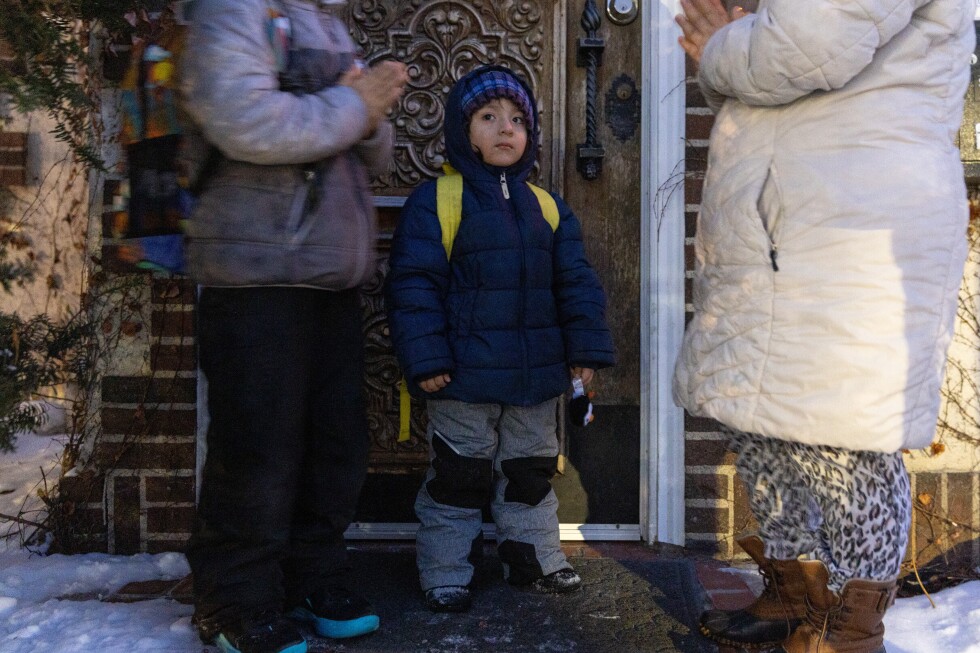
Each morning, he and his family bundle up and leave their Minneapolis apartment to wait for his bus. His little brother hefts on his backpack, even though he stopped going to day care weeks ago because his mom is too afraid to take him.
As they wait behind a wrought-iron fence, Giancarlo’s mother pulls the boys into the shadow of a tree to pray. It’s the only time she stops scanning the street for immigration agents.
“God, please protect my son when he’s not at home,” she says in Spanish. She spoke with The Associated Press on condition of partial anonymity for the family, because she fears being targeted by immigration authorities.
Advertisement
For many immigrant families in Minnesota, sending a child to school requires faith that federal immigration officers deployed around the state won’t detain them. Thousands of children are staying home, often for lack of door-to-door transportation — or simply trust.
Yair, 3, left, and Giancarlo, 10, get ready with the help of their mom Tuesday, Feb. 3, 2026, in Minneapolis. (AP Photo/Liam James Doyle)
Advertisement
Yair, 3, left, and Giancarlo, 10, get ready with the help of their mom Tuesday, Feb. 3, 2026, in Minneapolis. (AP Photo/Liam James Doyle)
Advertisement
Advertisement
Advertisement
Giancarlo, 10, is escorted by his mom to the curb for bus pickup Tuesday, Feb. 3, 2026, in Minneapolis. (AP Photo/Liam James Doyle)
Advertisement
Giancarlo, 10, is escorted by his mom to the curb for bus pickup Tuesday, Feb. 3, 2026, in Minneapolis. (AP Photo/Liam James Doyle)
Advertisement
Advertisement
Advertisement
Advertisement
The fear has turned into reality. Many parents and some children have been detained, including 5-year-old Liam Conejo Ramos, who with his father, originally from Ecuador, was taken into custody in the Minneapolis suburb of Columbia Heights as he was arriving home from school. They were sent to a detention facility in Texas but returned after a judge ordered their release.
Schools, parents and community groups have mobilized to help students get to class so they can learn, socialize and have steady access to meals. And for those who are still sending their children, the trip to and from school is one of the only risks they’re willing to take.
“I don’t feel safe with him going to school,” Giancarlo’s mother said, shaking her head. “But every day he wakes up and wants to go. He wants to be with his friends.”
School remains a haven in a time of tumult
Giancarlo’s Minneapolis elementary school is the best thing going for him these days. There’s soccer to play at recess. The recorder to learn. Giancarlo has set his eyes on learning the flute next year when fifth graders choose an instrument. He has “demasiado” — “too many” — best friends to name.
Advertisement
But his mother and brother’s home confinement weighs on him. He saves half the food he gets at school breakfast and lunch to share with them, and he’s lost four pounds this year. He takes extra care to bring pizza or hamburgers, treats the family used to eat in restaurants when his mom, an asylum-seeker from Latin America, was still working and they felt safe leaving the house. Giancarlo has also applied for asylum and his brother, Yair, has U.S. citizenship.
Sometimes only seven of Giancarlo’s classmates show up when there should be close to 30. “The teachers cry,” he said. “It’s sad.”
Advertisement
Yair, 3, right, waits for his mom to prepare breakfast while his brother Giancarlo, 10, washes his hands Tuesday, Feb. 3, 2026, in Minneapolis. (AP Photo/Liam James Doyle)
Yair, 3, right, waits for his mom to prepare breakfast while his brother Giancarlo, 10, washes his hands Tuesday, Feb. 3, 2026, in Minneapolis. (AP Photo/Liam James Doyle)
Advertisement
Advertisement
Advertisement
With as many as 3,000 federal officers roaming the state this year, some immigrant parents have made a bet that their children are safer riding or walking with white Minnesotans who were strangers just weeks ago — rather than in their own cars or while holding their hands.
One mother, an immigrant from Mexico, has given up her housecleaning job, and her husband stopped going to his construction job to minimize their chances of being detained. Her 10-year-old, U.S.-born daughter is the only one leaving the house, getting a ride with another student’s parents to her private Christian school in Minneapolis.
“It raises my blood pressure,” the mother said. She spoke on condition of anonymity out of fear of being targeted by immigration authorities.
Advertisement
Absenteeism has soared across schools in the Twin Cities area
Under longstanding guidance that was thrown out by the Trump administration, schools and other “sensitive places” such as hospitals and churches previously were considered off-limits for Immigration and Customs Enforcement agents and other immigration officials. Children, no matter their immigration status, have a constitutional right to attend public school.
This winter, school absenteeism and the demand for online learning have surged as immigration officers showed up in school parking lots.
In St. Paul, over 9,000 students were absent on Jan. 14, more than a quarter of the 33,000-student district, according to data obtained by the AP. In Fridley, a Minneapolis suburb, school attendance has dropped by nearly a third, according to a lawsuit the district filed this week trying to block immigration enforcement operations near schools.
Kids sent letters to St. Paul Superintendent Stacie Stanley begging her to offer online learning. Her voice shook as she read a letter from an elementary school student: “I don’t feel safe coming to school because of ICE.”
Advertisement
When the district introduced a temporary virtual learning option, over 3,500 students enrolled in the first 90 minutes. That number has since risen to more than 7,500 students.
Food donations fill the inside entrance of Valley View Elementary School, Tuesday, Feb. 3, 2026, in Columbia Heights, Minn. (AP Photo/Liam James Doyle)
Advertisement
Food donations fill the inside entrance of Valley View Elementary School, Tuesday, Feb. 3, 2026, in Columbia Heights, Minn. (AP Photo/Liam James Doyle)
Advertisement
Advertisement
Advertisement
Advertisement
An escort from school — and assurance for a small girl
After school on Wednesday, around 20 teachers and a retired principal packed into the front office at Valley View Elementary School — where Liam Conejo Ramos attends prekindergarten — for a briefing before walking home children who live nearby. School officials say several other students and over two dozen parents have been detained.
“We live in a place where ICE is everywhere,” said Rene Argueta, the school’s family liaison. Argueta, himself an immigrant from El Salvador, organized the teachers walking and driving students to and from their homes.
The day before, the group had run into federal officers in the neighborhood at dismissal time. Argueta felt it necessary to calm some of the teachers upset by the encounter.
“Your only goal is to bring the students home, no matter what you see,” he told the group. “We don’t approach ICE. We don’t take out our phones.”
Advertisement
After distributing walkie-talkies, Argueta and two other teachers met a group of 12 kids waiting for them in the hallway. Argueta took the hand of the youngest child, a boy in prekindergarten, and led the group outside.
Valley View Elementary School principal Jason Kuhlman delivers food donations to families from the school Tuesday, Feb. 3, 2026, in Columbia Heights, Minn. (AP Photo/Liam James Doyle)
Advertisement
Valley View Elementary School principal Jason Kuhlman delivers food donations to families from the school Tuesday, Feb. 3, 2026, in Columbia Heights, Minn. (AP Photo/Liam James Doyle)
Advertisement
Advertisement
Advertisement
Valley View Elementary School principal Jason Kuhlman delivers food donations to families from the school Tuesday, Feb. 3, 2026, in Columbia Heights, Minn. (AP Photo/Liam James Doyle)
Advertisement
Valley View Elementary School principal Jason Kuhlman delivers food donations to families from the school Tuesday, Feb. 3, 2026, in Columbia Heights, Minn. (AP Photo/Liam James Doyle)
Advertisement
Advertisement
Advertisement
Toward the back of the line, second grade teacher Jenna Scott chatted with a former student, now a third grader. She tried to keep the conversation light.
Advertisement
“I’m so excited to see your house,” Scott told her.
“Have you signed up for parent-teacher conference?”
“No, miss. ICE,” the girl said.
“I know. Tell your parents you can do it online this time.”
Advertisement
The third grader then ran to her home. Afterward, Scott said the 10-minute walk is a delicate dance. “You don’t want to scare the kids, but you also want them to walk quickly.”
The day before, Argueta said, they were walking the students home when they heard cars honking to warn that immigration agents were nearby. One little girl who was walking ahead started to panic and ran back toward Argueta.
“ICE viene,” or “ICE is coming,” she yelled.
He took her hand and kept walking. She asked if he was afraid.
Advertisement
No, he said.
She asked if he had papers, if he was in the country legally. Argueta has a green card and permission to work, but he lied. He told her he didn’t, so she wouldn’t feel alone.
Her hand relaxed in his. She smiled again.
He held her hand until they got to her doorstep and she went inside with her mother.
Advertisement
Signs reading “NO ICE ACCESS” taped to the front doors of Valley View Elementary School, Tuesday, Feb. 3, 2026, in Columbia Heights, Minn. (AP Photo/Liam James Doyle)
Advertisement
Signs reading “NO ICE ACCESS” taped to the front doors of Valley View Elementary School, Tuesday, Feb. 3, 2026, in Columbia Heights, Minn. (AP Photo/Liam James Doyle)
Advertisement
Advertisement
Advertisement
___
Advertisement
Associated Press data journalist Sharon Lurye in Philadelphia contributed to this report.
___
The Associated Press’ education coverage receives financial support from multiple private foundations. AP is solely responsible for all content. Find AP’s standards for working with philanthropies, a list of supporters and funded coverage areas at AP.org.
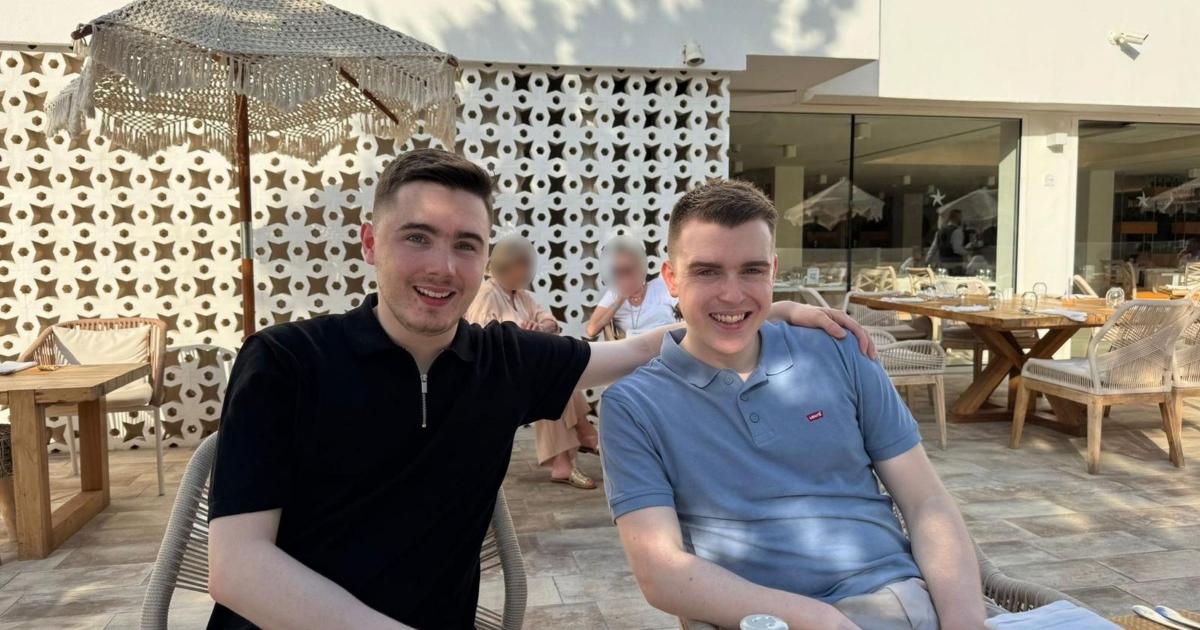
Gaynor Simpson faced every parents’ worst nightmare when her son Ross Simpson was left fighting for his life with sepsis and meningitis three years ago.
The 54-year-old received a phone call from Ross to say that he was feeling unwell, prompting him to come home from university the following day.
However, quick-thinking Gaynor recognised her son’s symptoms were similar to that of meningitis and rushed him to hospital.
(Image: KennedyNews/GaynorSimpson)
However, quick-thinking Gaynor recognised her son’s symptoms were similar to that of meningitis and rushed him to hospital.
Advertisement
The 21-year-old student, who also developed sepsis, spent the next 10 days in intensive care before his condition thankfully began to improve.
The killer bug has sparked widespread concern this week after 20 meningitis cases have been reported in Kent in what’s since been declared by the UK Health Security Agency (UKHSA) as a national incident.
The vast majority of young people are not protected against bacterial meningitis as the jab has only been offered to babies since 2015, but Gaynor believes the vaccine should be rolled out to young people too.
Gaynor, who lives in Glasgow, said: “Ross had phoned me on the Tuesday evening to say he wasn’t feeling particularly well. He felt a bit off colour and didn’t have an appetite.
Advertisement
“He’d been an absolutely fine. Then on the Wednesday evening he said he was awake a lot on the night and had a bit of a headache, which was gone now.
“I asked him if he wanted to come home and I could keep an eye on him, and we’re very thankful that he did.
“He took paracetamol and went for a sleep. Then it was about 7ish and Ross told me that he thinks he might need to go to the doctor.
“He was sat in his bed with his head in his hands and said he couldn’t stand the pain in his head.
Advertisement
“Then he was sick over the side of the bed. I asked him if he had a stiff neck and he said yes, then asked him why the light was off in his room and he said he couldn’t stand the light in his eyes.
“Then I said I think this is meningitis.”
Gaynor rushed Ross to the Queen Elizabeth University Hospital in Glasgow where he was taken to ICU after becoming unresponsive.
Later that night, Ross was placed on life-support and a lumbar puncture confirmed he had contracted meningitis and later sepsis.
Advertisement
Ross remained in intensive care for 10 days before his condition began to improve and he was discharged home.
Gaynor said: “The first three days were really uncertain. We were told it was very possible that he might not make it.
“He was incredibly ill. He was on life support for five days then he managed to turn a corner.
“It was a long road to recovery. We’re very lucky. It’s the worst thing that any parent can possibly go through. You’re not the same person again after that.
Advertisement
“It’s a cruel and very unforgiving disease. It’s terrifying how quickly it can move. It’s so important that people know the symptoms.
“Ross had been to a party about a week before and there was a girl at that party who also ended up in hospital.
“We only knew about this other case after Ross ended up in hospital. He probably did get it at the party, you just don’t know.
“It’s just unlucky they both ended up developing it and thankfully both survived.”
Advertisement
What is meningitis? The key symptoms to look out for
Gaynor believes many parents may not be aware that it is possible to pay for the MenB vaccine privately for young adults aged 16-24, known to be a ‘high risk’ age group.
Now, Gaynor is urging others to remain vigilant of meningitis symptoms after the recent outbreak reported in Kent.
Gaynor said: “It is infuriating and heartbreaking in equal measure that we almost lost our son who’s in a high-risk group and we didn’t know anything about this vaccine.
“This vaccine should be offered to that high-risk group. People have no idea there’s another vaccine out there.
Advertisement
“When the news broke about this outbreak, I was just utterly heartbroken because I know exactly how those parents feel.
“It brought it all back for me. You realise you were so close to a very different outcome.
“It’s just about being aware of the symptoms. We don’t want people to have health anxiety, but it’s really important that people have these symptoms in the back of their mind and get to hospital as quickly as they can.”
How to check your vaccination record on the NHS app
Go to The NHS App
Open the GP Health Record tab – read and click through the security warning
Open the Immunisations tab
Scroll down through your list of vaccines and related information
If you do not see a meningitis vaccination, that does not mean you have not already had one. There are a number of reasons why the NHS app may not have all your immunisations records, including:
Old records – vaccinations from many years ago may not be recorded on the app
Overseas jabs – vaccinations received abroad are not automatically added to the app
GP record gap – if your doctor has not updated their records, there will be a gap in the app
Access rights – you may need to ask your GP to enable your ‘detailed coded record’
Your GP or a pharmacist will be able to see your full NHS Summary Care Records (SCR), so if in doubt speak to one of them.
Meningitis symptoms
a high temperature
cold hands and feet
vomiting
confusion
breathing quickly
muscle and joint pain
pale, mottled or blotchy skin (this may be harder to see on brown or black skin)
spots or a rash (this may be harder to see on brown or black skin)
headache
a stiff neck
a dislike of bright lights
being very sleepy or difficult to wake
fits (seizures)
And in babies:
refuse feeds
be irritable
have a high-pitched cry
have a stiff body or be floppy or unresponsive
have a bulging soft spot on the top of their head
Different types of meningitis
Viral
Viral meningitis is the most common form. It is rarely life-threatening but can still cause serious illness. It tends to resolve on its own, though can leave infected feeling very unwell during recovery.
Mollaret’s meningitis is a rare and recurring form of the disease. Mollaret’s is a chronic condition, most often linked to infection with the Herpes Simplex virus type 2.
Bacterial
Bacterial meningitis is a serious and fast-moving condition that requires urgent hospital admission and prompt treatment with antibiotics to prevent life-threatening complications.
Meningococcal disease. This term covers two major illnesses, meningitis and septicaemia (blood poisoning), which can occur independently but more often together, making it especially dangerous.
Pneumococcal meningitis is a life-threatening infection that causes inflammation of the protective layers around the brain and spinal cord, it requires swift medical intervention.
TB meningitis is caused by the Mycobacterium tuberculosis bacteria. This form of the disease is linked to tuberculosis and can be difficult to diagnose due to its gradual onset.
Group B streptococcal (GBS) meningitis is the leading cause of meningitis in babies, and can cause septicaemia and pneumonia, making it a significant concern in newborns.
Neonatal meningitis affects newborns and is divided into “early onset” and “late onset”, depending on how soon after birth the condition develops.
E. coli meningitis is the second most common bacterial cause of meningitis in newborns. E. coli meningitis is a serious condition primarily affecting the very young.
Hib meningitis is like pneumococcal meningitis, and is a life-threatening disease causing inflammation around the brain and spinal cord – though it has become much less common due to vaccination.
Listeria meningitis is caused by Listeria bacteria found in certain foods like unpasteurised soft cheeses, pâté, and shellfish. This form can lead to potentially fatal complications.
Other
Fungal meningitis is a very rare form of the disease and shares similar symptoms but typically develops more gradually rather than suddenly.
Chemical meningitis is unlike most other forms because it is not caused by an infection. Instead, it is triggered by exposure to a particular substance or chemical that causes inflammation.
Parasitic meningitis is extremely rare and occurs when certain parasites infect and inflame the meninges, the protective membranes surrounding the brain and spinal cord.
Cryptococcal meningitis is caused by a fungus found in soil and bird droppings, and is most commonly seen in people with weakened immune systems.
Non-infectious meningitis. Not all meningitis is the result of an infection; this variety is triggered by non-infectious causes like certain medications or other medical conditions.
Malignant/carcinomatous meningitis is a serious condition when cancer cells spread to the meninges. It is associated with advanced cancer and presents significant treatment challenges.
The sleepwalk towards relegation continues for Tottenham.
It seemed they may have turned a corner after their 1-1 draw at Anfield and first victory under Igor Tudor in beating Atletico Madrid on Wednesday, and yet they are now back to square one and facing the drop with just seven games remaining.
Goals from Igor Jesus, Morgan Gibbs-White and Taiwo Awoniyi punished Spurs in their own back yard.
Brutal defeat stings for Spurs
Advertisement
Right from the moment around 10,000 Spurs fans lined up on the High Road to greet the team bus on a momentous day in the sunshine, it was unmistakably clear that this was a match where the result mattered far, far more than the performance.
How wrong it all went for Tottenham.
They were playing well and had been the better team when they fell behind to Igor Jesus’s header from an unmarked position from a corner as half-time approached. It knocked the stuffing out of a nervy Tottenham Hotspur Stadium where the anxiety was palpable but the atmosphere had been good.
Tottenham fans were out in force to welcome the team bus ahead of their defeat by Nottingham Forest
Getty Images
Advertisement
The second half was far worse. Spurs looked out of ideas and cripplingly short of a cutting edge. A Tottenham player taking too long to move the ball on would be met with groans — and that happened all too often.
When Awoniyi made it three on 87 minutes, queue the mass exodus as fans headed for the exits. In truth, though, that had begun before the 70th minute on an afternoon where Spurs needed to be front-footed but were instead one-paced, toothless, and leaky.
Half-time tactical switch backfires
It made plenty of sense to start with a back four and Richarlison and Dominic Solanke in a front two following the win over Atletico, and Spurs had been the better team at half-time despite trailing.
Advertisement
Why, then, Tudor felt he needed to switch things up at the interval is anyone’s guess. It didn’t work out at all.
Lucas Bergvall and Destiny Udogie came on for Micky van de Ven and Djed Spence but both were error-prone and guilty of looking off the pace.
Off the pace: Lucas Bergvall
Bradley Collyer/PA Wire
On one promising run forward by Cristian Romero, Bergvall got in his way. Udogie, meanwhile, looked rusty following injury and was miles off it.
Advertisement
Spurs lacked a midfield link and were too laboured in bringing the ball forward from defence into midfield and into attack. Forest defended resolutely and with sturdy organisation while also maintaining an offensive bite Spurs could only dream of. Tudor’s half-time changes backfired.
Mathys Tel had been the brightest player in white with the possible exception of Archie Gray. He had taken it upon himself to be the man Tottenham were relying on to progress the ball up the pitch, taking calculated risks and beating his man time and again down the left.
The sight of play being held up while he received treatment will therefore have been the last thing Tottenham fans wanted to see.
In a season where the Spurs have been ravaged by injuries, Tel was just about the last senior outfield player yet to have pulled up. No longer. Off he went after 67 minutes, moving gingerly and replaced by the ineffective Randal Kolo Muani, a rare livewire forced off.
Advertisement
Spurs fans will be hoping and praying Tel is fine. Seven crucial games await, and they need his attacking threat when so few others are pulling their weight.
LONDON (AP) — Years before the rise of Instagram, Banksy figured out that the key to real influence lay in not being famous, exactly, but in being anonymous.
The mystery of his identity has long been part of the value of his art, which for decades and across continents defied authority from public walls and self-shredded on the auction block. Now, Banksy’s apparent unmasking by the Reuters news agency has generated talk about whether the works themselves retain their cultural and financial value.
It also raises the question: Why pop the red balloon of his mystique in the first place? Many Banksy fans mourned the loss of the mystery and lashed out at the news outlet. One said it was like being told without warning that Santa Claus doesn’t exist.
“I feel like they are telling me how a magic trick is done,” said Thomas Evans, a Denver-based artist on Instagram. “Sometimes I just want to enjoy the magic trick.”
Advertisement
But some art experts say the murals and the message will survive Banksy’s naming because his appeal wasn’t driven solely by his anonymity. He and his works — mischievous and also dark — stand as witnesses to injustice, oppression and inequality around the world, from the artist’s native England to walled-off Bethlehem and war-ravaged Ukraine. Subtract his anonymity, they say, and the work still inspires reflection and discussion.
“People buy his works because they absolutely love it,” said Acoris Andipa, director of the Andipa gallery in London. “The main feedback that I get is that they really, frankly, don’t care if they know who he is.”
Naming the ghost — and the backlash — is engagement, too
Banksy, long thought to have been born Robin Gunningham around 1972, grew out of a tradition of street artists who viewed the undercover act of posting their art in public as a subversive form of expression. The postindustrial landscape of his native Bristol was his canvas and gallery. The walls of London, New York and elsewhere gave him a global stage just before the rise of social media.
Banksy’s apparent identity has been an open secret among protective fellow artists, and long been easy to find online for those who wanted to know. The Daily Mail reported in 2008 “compelling evidence suggesting” that was the artist’s birth name. It has been published by other news outlets, including by The Associated Press in 2016, as part of their coverage of the detective work.
Advertisement
Reuters reported last week that after The Daily Mail’s story, Banksy changed his legal name to David Jones — the second most-popular name in Britain. It’s also the given name of another rock star, the late David Bowie, whose Ziggy Stardust avatar inspired a 2012 Banksy painting of Queen Elizabeth II.
Bansky’s lawyer didn’t respond to a request for comment, and the artist’s spokeswoman declined to participate in this story.
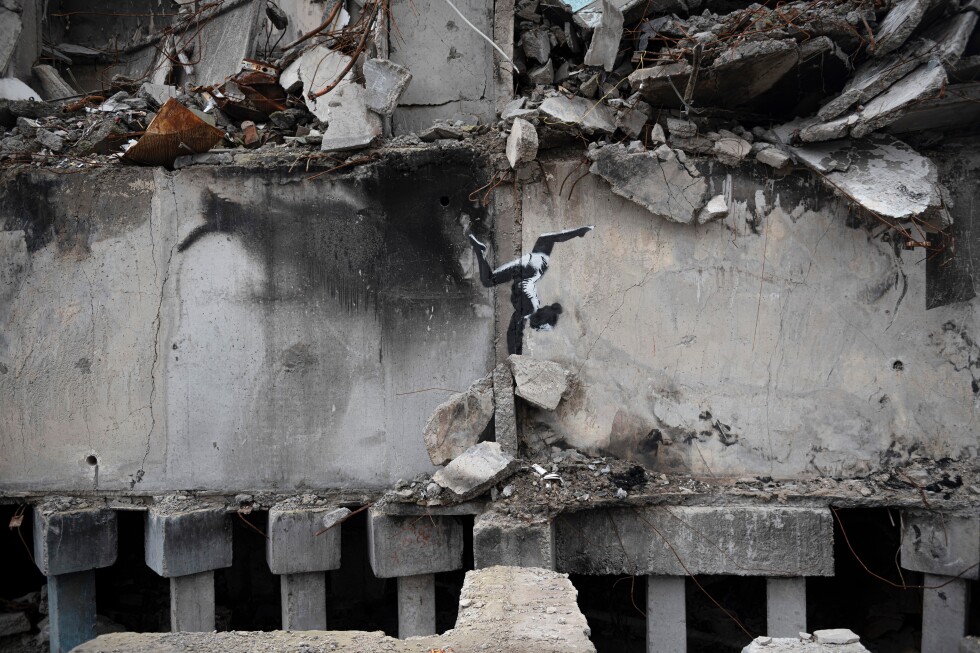
Reuters pieced together that a David Jones traveled to Ukraine with a well-known associate of Banksy’s in late 2022 — just before the artist’s work began appearing on buildings that had been bombed by Russia. Banksy later confirmed that he’d created seven murals in the war zone, including one of a child flipping over a grown man who is wearing a black belt. Russian President Vladimir Putin practices judo.
There’s evidence that even some in the establishment he was protesting have accepted Banksy. They didn’t arrest him, for example, after the Royal Courts of Justice removed a Banksy stencil depicting a judge in a traditional wig and gown beating an unarmed protester with a gavel. Some street artists groused that they might be arrested for creating such graffiti — but when it’s a Banksy, it’s art.
Advertisement
Robin Gunningham wasn’t always so elusive
On Sept. 17, 2000, a Robin Gunningham was arrested for defacing a Marc Jacobs billboard atop a building on Hudson Street in New York.
In a handwritten signed confession, he described the work on the night in question: “I had been out drinking at a nightclub with friends when I decided to make a humorous adjustment to a billboard on top of the property,” he wrote in court records unearthed by Reuters and confirmed by the AP. “I painted eyeshadow a new mouth and a speach(sic) bubble” on the photo of a male model. He was charged with a misdemeanor.
“Banksy woz ere,” he wrote with his animal murals at the London Zoo, which were removed in 2024.
Advertisement
Still, along with the sadness, there’s ample speculation in the art world and on social media that the artist himself orchestrated this round of naming. He didn’t deny the Reuters story.
That “would be very much in line with his practice of stunts and satire,” observed Madeleine White, the senior sales and acquisitions consultant at London’s Hang-Up Gallery, “As they say, ‘all publicity is good publicity.’”
She noted, however, that the backlash is directed at the media — not the artist, or the potency of his work. Reuters says it opted to publish some, but not all, of the information its reporters uncovered about Banksy’s identity, because he is a public figure, whatever his name — and he’s had an outsized influence on public events and discourse. What’s more, much of his work has been done on other people’s property.
Banksy’s star power is about far more than anonymity
Named or not, Banksy’s stardom lives, art experts say.
Advertisement
It endures in the wonder of his ability to erect new art under the noses of authorities well into the age of closed-circuit television and social media. It appeals because his spectacle and wit draw people in and the settings — the hulk of bombed buildings, for example, or Israel’s towering wall at the border of the West Bank — invite them to reflect. Now, fans are on the lookout for how and whether he’ll respond to the news of Robin Gunningham and David Jones.
Joe Syer, a Banksy expert and founder of MyArtBroker, said that the artist has always responded to world events. “And that’s where the real relevance, and value, sits.”
“If anything, Banksy’s anonymity has functioned less as a celebrity device and more as a way to keep the work universally accessible, detached from personality, ego, or biography,” he said in an email. “It allows the work to sit in public space, politically and culturally, without being anchored to an individual in the way the mainstream press often frames it.”
Christopher Banks, founder of the New York-based Objects of Affection Collection, reads Banksy’s naming “not as a biographical event, but as a structural stress test” of the artist’s system of managing his absence.
Advertisement
“Banksy’s best works carry their meaning without the author. He was there,” Banks wrote, citing the artist’s murals in Ukraine and his solidarity with the war’s victims.
“The name matters less than the presence. The presence was always what the work was about.”
___
Michael Sisak contributed to this report from New York.
Food prices could rise within weeks as a result of the conflict in the Middle East, the NFU has warned (Picture: Getty Images)
The conflict in the Middle East is likely to push up the cost of food in the UK within weeks, a union boss has warned.
Tom Bradshaw, president of the National Farmers’ Union (NFU), said the whole food supply chain could be affected by the war, with the cost of some crops rising within six weeks.
Rising costs in fuel and fertiliser are some of the effects of Iran’s blockade of the Strait of Hormuz, which handles around 20 per cent of the world’s natural gas.
Mr Bradshaw warned that a protracted conflict in the Middle East wouldhave a ‘dramatic impact’ and turn the world’s supply chain’s ‘upside down’.
Advertisement
He told BBC Radio 4 that the price of tomatoes, peppers cucumbers could increase next month, as those crops rely on greenhouse production.
The cost of other items such as milk and meat could rise within three to six months.
Farmers of wheat and barley would be better protected as they buy their fertiliser in advance.
Ministers are set to convene an emergency meeting to discuss the impact of the war on the cost-of-living.
Advertisement
The cost of greenhouse-produced crops such as peppers and tomatoes will likely be the first to increase (Picture: Getty Images)
The NFU chief added that the government needed to take the threat to food production ‘seriously’.
He said: ‘Amidst this volatile backdrop, it is more important than ever that government keeps other inflationary pressures within its control to a minimum to protect household.’
While retailers and farmers may bear some of the cost of rising fuel, some of the burden is likely to be passed on to consumers, the NFU warned.
The availability of some goods can also be hit by the disruption to shipping routes, the British Retail Consortium (BRC) said.
It added that retailers were working to mitigate the cost for consumers and are ‘adept’ at managing disruption to supply chains.
Advertisement
Angela Eagle, the farming minister, said she was monitoring the impact of the conflict on the industry.
There have also been concerns over the cost of red diesel, with the Competitions and Markets Authority having committed to monitoring its pricing.
An extended conflict could also threaten several other sectors, including travel.
Airline bosses have warned that fares could be hiked if the war is extended much further.
Advertisement
The ripple effects of Iran’s blockade of the Strait of Hormuz will be affected across multiple sectors in the UK (Picture: Reuters)
While most carriers have ‘hedged’ or locked in fuel costs for the summer months, passengers could feel the pinch beyond then if the Strait of Hormuz remains blockaded.
The UK is particularly vulnerable as it imports up to 90 per cent of its jet fuel.
EasyJet CEO Kenton Jarvis said while there were no ‘immediate issues’, airlines were reliant on Gulf refineries.
The budget airline would not introduce a fuel surcharge, but passengers were likely to notice a gradual increase linked to ‘supply and demand’.
He told the Independent’s Simon Calder: ‘My expectation is that prices will go up.
Advertisement
‘The industry has no choice. It’s a low-margin, highly competitive sector. We make about £7 per seat. If fuel goes up £10, you have to respond.’
The England international headed home again just four minutes later to leave Man City in dreamland and Arsenal stunned.
Advertisement
Arsenal, seeking their first major trophy since 2020, tried to get back into the game but were frustrated by Man City, who gave Pep Guardiola his fifth victory in this competition.
Neville slammed Arsenal goalkeeper Kepa Arrizabalaga not only for his mistake in the final but also his play leading up to the opening goal.
Arrizabalaga dawdled over the ball often in the second half after Arsenal were marginally the better side in the opening 45 minutes – at one point taking 36 seconds to release the ball.
Your football fix
Metro‘s Head of Sport James Goldman delivers punchy analysis, transfer talk and his take on the week’s biggest stories direct to your inbox every week.
Arsenal goalkeeper Kepa Arrizabalaga (Picture: Getty)
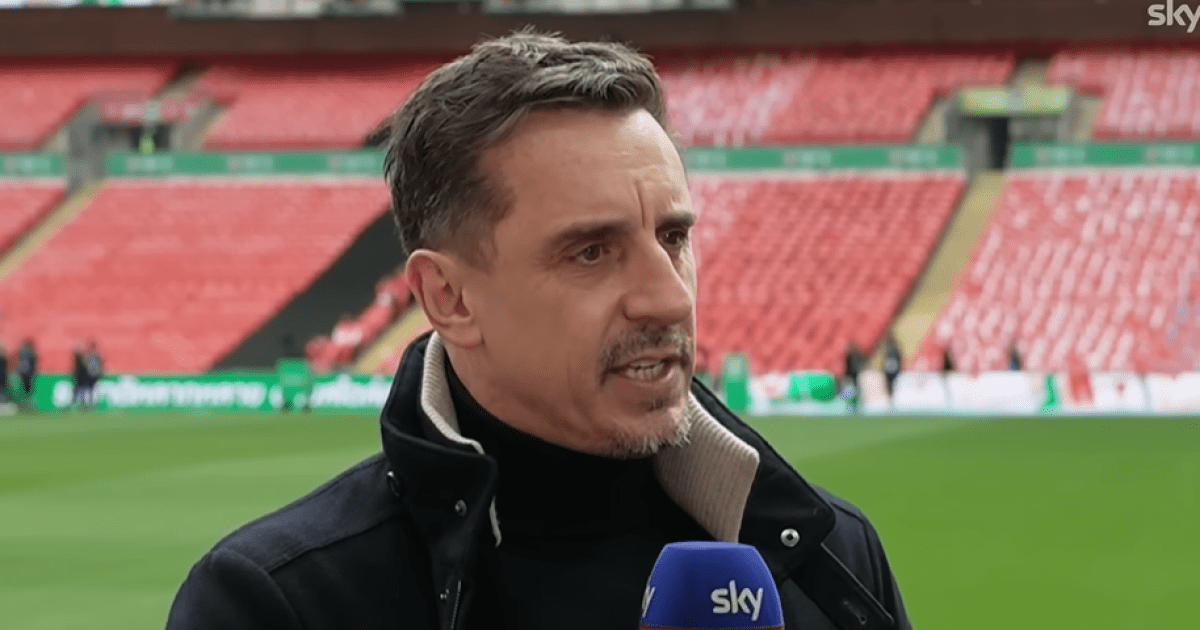
‘Kepa has got to get rid of the ball because it’s not helping them this,’ Neville said on Sky Sports. ‘All it’s doing is getting the crowd up.
‘It’s not helping Arsenal at all. He hasn’t helped himself, not just with that [his error], he was drawing Man City onto him, rolling his foot on the ball.
Advertisement
‘And then this, it’s a really bad one from the goalkeeper. Kepa, it’s a real howler in a massive moment.
Nico O’Reilly scored twice at Wembley (Picture: Getty)
‘Arsenal have shrunk in this game. What’s happened to them? Mikel Arteta’s team have gone missing, what’s happened to them in this second half?
‘Goalkeepers have got to stop doing that, they take the momentum out the game and you send a message to the opposition that you haven’t got any idea. It’s a nonsense.’
While Arsenal’s quadruple dream is over, they are still favourites to win the Premier League, boasting a nine-point lead over Man City.
‘They’ve landed a major blow, Manchester City,’ Neville said after the full-time whistle.
Advertisement
‘The impact that might have… Man City needed something to lift them and they’ve just got it.
‘Arsenal need to recover but Pep Guardiola will be so proud because his team have delivered. They’ve got time to recover, Arsenal, but Mikel has a big job on his hands now.’
Snooker icon Ronnie O’Sullivan was swiped aside in snooker’s World Open final by a stunning comeback from Thepchaiya Un-Nooh, who recorded a 147
Ronnie O’Sullivan refused to make excuses and admitted that he got a ‘good hiding’ in the World Open final, but is happy to be in a much better place than earlier in the month. Thepchaiya Un-Nooh, 40, produced a majestic performance to win just his second ranking title in a 10-7 victory over the Rocket.
Advertisement
O’Sullivan led the final in Yushan, China, 4-0 before Un-Nooh found his groove to play some bewildering snooker. The Thai snooker star recorded a 147 in the penultimate frame of the showpiece event as Un-Nooh won six consecutive frames to claim an impressive comeback.
Seven-time world champion O’Sullivan was in search of his first title win since January 2024 but could only watch on as his opponent clocked significant breaks at the decisive moment. The 50-year-old, who made history earlier in the tournament with the sport’s first 153 break, could not hide how impressed he was with Un-Nooh and his journey.
“I just want to say well done to Thepchaiya today – unbelievable snooker,” said O’Sullivan, “I watched him last night against Judd [Trump in the semi-finals], and I was like, ‘Wow.’ Judd’s obviously the No.1 in the world and he made him look second best. I was hoping that he didn’t play like that again today but he did.
“He gave me a good hiding really. I was sitting in that chair for quite a long time. But well done to Thepchaiya, brilliant, amazing talent.”
The tournament’s 41st seed was ‘far too good’ O’Sullivan claimed. Nevertheless, the Rocket believes reaching the final showed he was now in a much better place, though he is taking each day as it comes.
“I just want to say well done to Thepchaiya today – unbelievable snooker,” said O’Sullivan.
”I watched him last night against Judd [Trump in the semi-finals], and I was like, ‘Wow.’ Judd’s obviously the No.1 in the world and he made him look second best. I was hoping that he didn’t play like that again today but he did.
Advertisement
“He gave me a good hiding really. I was sitting in that chair for quite a long time. But well done to Thepchaiya, brilliant, amazing talent.”
He added: “Thepchaiya was flowing and had every shot in the book. I have to accept that is how it is.
“If I found that bit extra I could have made it tougher than him. I am in a much better place than I was even two weeks ago. I’m taking each day as it comes.”
Advertisement
Un-Nooh, who pocketed £175,000 for taking the victory, emphasised how much of an honour it was to beat a player of O’Sullivan’s calibre.
“It is like a double dream final now,” he said. “This has always been my dream, to lift the title against Ronnie O’Sullivan in the final. For the rest of my life this is something I’m not going to forget.
“I went to the practice room in the interval, spoke to myself and managed my emotions. After being sat on my chair watching Ronnie make three centuries, I told myself this is a great final and to enjoy it. I don’t know how what happened after the interval came true.
Advertisement
“I can’t believe it. I’m still stunned with my performance. How did I do that? Sometimes snooker is one-way traffic. To make a 147 in the final against Ronnie O’Sullivan in a final is a great honour. “
RIVERSIDE, Calif. (AP) — A California sheriff running for governor has seized more than half a million ballots cast in a November special election from county election officials, saying he’s investigating a ballot count discrepancy.
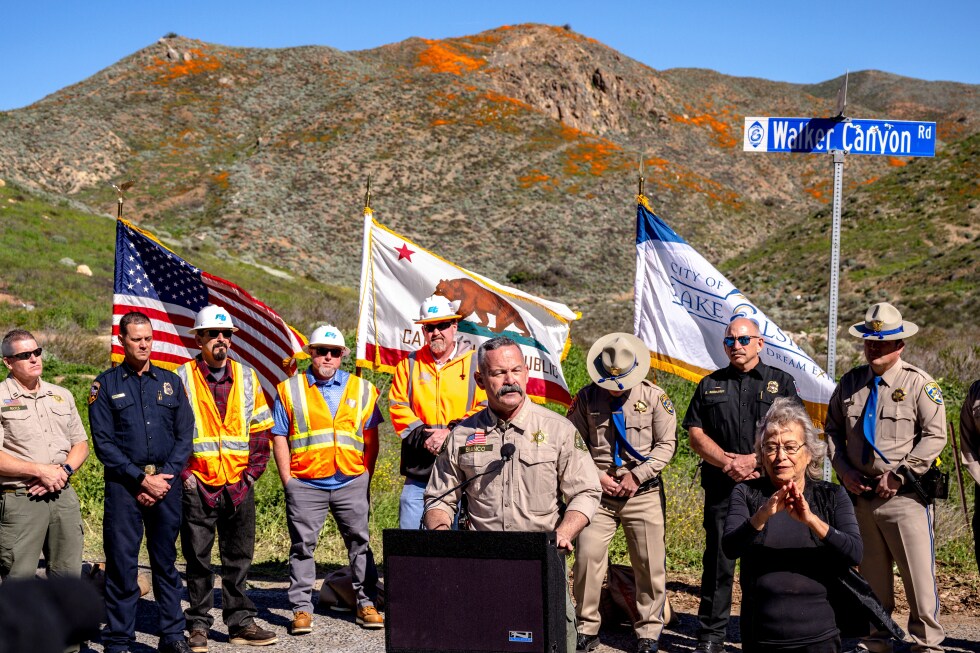
County elections officials have disputed the claims by Riverside County Sheriff Chad Bianco, a Republican. California Attorney General Rob Bonta, a Democrat, called Bianco’s move unprecedented and says it is designed to sow distrust in elections.
Bianco held a news conference Friday saying his office had launched the investigation after receiving a complaint from a local citizens group about the ballot count from a November 2025 special election on redistricting.
In the special election, voters approved a measure to redraw congressional district lines to favor Democrats in the upcoming midterm election. The measure passed in the county by a margin of more than 80,000 votes.
Advertisement
Bianco seized ballots in Riverside County, the inland California county of 2.5 million people where he has twice been elected sheriff. He called the effort “a fact-finding mission.”
“This investigation is simple: Physically count the ballots and compare that result with the total votes reported,” he said Friday.
Bianco is one of two prominent Republicans running for governor in a crowded June primary that includes more than half a dozen Democrats. California runs a top-two primary system that puts all candidates on the same ballot, regardless of party, and sends the two candidates who get the most voters onto the November general election.
Leading California Democrats are worried that their party has so many candidates, they risk splitting the vote and sending Bianco and Steve Hilton, another top Republican, onto the general election. That would be a stunning outcome in the heavily Democratic state.
Advertisement
Bianco said the investigation had “absolutely nothing to do” with his campaign for governor.
“I have a duty to investigate alleged crime in Riverside County,” he said.
The effort came as President Donald Trump has repeatedly disputed the results of the 2020 election, citing unsubstantiated instances of fraud. His administration recently seized ballots and other documents from an election office in Georgia. Some Republicans have mirrored Trump’s rhetoric on voting in their states.
Bonta has repeatedly sent letters to Bianco’s office over the last two months saying his staff is not qualified to conduct a recount. In one of the letters, Bonta wrote that the ballot seizure was “unacceptable” and “sets a dangerous precedent and will only sow distrust in our elections.”
Advertisement
The letters said Bianco seized nearly 1,000 boxes of ballots and elections materials from the county’s elections office with a warrant in February. At issue, Bianco said, is a discrepancy a citizen group reported between the handwritten ballot intake logs and the number of votes reported to the state.
Bianco said the alleged discrepancy amounted to about 45,800 votes — a difference elections officials have refuted at county meetings, saying the machine count and the final count submitted to the state differed by about 100 votes. They argue the handwritten rolls, which were not relied on to check the count, were being kept by temporary elections workers who had worked long days and may have made mistakes.
Bianco said Friday that the count had started and stopped, but would now resume under the supervision of a special master appointed by a judge.
British pensioner Billy Eastment, accused of drug smuggling, is ill in a prison in Chilean, with desperate legal efforts to free him stalling amid attempts to contact family
The British bowls-playing pensioner accused of acting as an international drug runner is fighting for his life behind bars in Chile as desperate legal efforts are launched to free him before it’s too late.
Advertisement
William ‘Billy Boy’ Eastment, who has been locked up since May, is said to be in rapidly deteriorating health after suffering repeated bouts of pneumonia while in custody. Sources close to the case say the 80-year-old has endured four separate episodes of the lung infection since his arrest, on top of a series of serious underlying health conditions.
One insider said: “His health isn’t good at all. He’s very vulnerable, and being in prison is making everything worse. There’s real concern about how much longer he can cope.” Now, his legal team is scrambling to strike a deal with prosecutors to avoid a full trial, in a process described as similar to a plea bargain.
“They are negotiating a shortened trial and process,” a source explained. “It’s essentially an attempt to resolve the case more quickly, given his condition.”
Eastment remains locked inside the notorious Santiago 1 Penitentiary in Chile, where he has been held since his arrest after authorities allegedly found £200,000 of methamphetamine concealed in his luggage. The Welsh-born bowls and fishing enthusiast was arrested after landing on a flight from Mexico, saying scammers tricked him into thinking he had won a prize.
But hopes of bringing the retired heavy goods vehicle and bus fitter home to Britain have been dashed. Extradition, which could have seen him returned to the UK, is not on the table, with officials warning it could take years to arrange.
“The ideal scenario would have been for the prison sentence to be replaced with expulsion from Chile,” the source added. “That does happen in some cases. But under Chilean law, that simply isn’t an option for drug offences.”
Advertisement
Instead, lawyers are now pursuing a last-ditch compromise that could see Eastment, whose detention stunned neighbours in the quiet cul-de-sac of Milborne Port, Somerset, released from jail but only under strict conditions.
Under the proposal, he would remain in the country under surveillance, likely subject to regular monitoring and required to report to authorities. “They are trying to negotiate his release under supervision,” a source said. “He wouldn’t be free to leave, but it would at least get him out of prison, where his health is deteriorating.”
However, even that plan is hanging by a thread. A major obstacle is Eastment’s medical situation. Because he entered Chile as a tourist, he is not eligible for the country’s national health system, leaving him exposed to mounting medical bills. To secure his release, officials require a financial guarantor to cover those costs.
“The problem is he needs a family member to step forward and act as guarantor for his healthcare bills,” the source revealed. “Without that, he cannot be released. The problem is that they are having trouble tracking down close family’. It’s not like it is that much money is needed to be his guarantor.”
Efforts are now underway to track down other relatives willing to take on that responsibility. “They are trying to contact anyone in his family,” the source added. “If no one comes forward, he will remain in prison.” The situation is made even more desperate by Eastment’s financial plight.
Before his arrest, his only income was his UK state pension. But after spending more than three months outside the country, payments have effectively been cut off.
“He’s no longer receiving his pension and has no way of accessing it from Chile,” a source said. “He doesn’t have any income at all.”
Advertisement
It leaves the pensioner trapped in a brutal Catch-22 – too ill to remain in prison, but unable to secure release without financial backing he does not have. It’s not looking good for him.”
They added: “Everything now depends on whether someone steps forward and whether the authorities agree to the deal. Without that, he’s stuck.”
Eastment has told prosecutors he had been receiving emails he thought were from International Monetary Fund bigwigs. He alleged that a woman called Carolina approached him during a layover in Mexico and said he was headed for Australia.
Eastment’s lawyer said: “In these emails, a person named Carolina, whose surname he does not remember, informed him that one of his relatives in New Zealand had died and that in order to access that person’s inheritance, he had to travel to Auckland, New Zealand, to sign certain documents at a public notary’s office.”
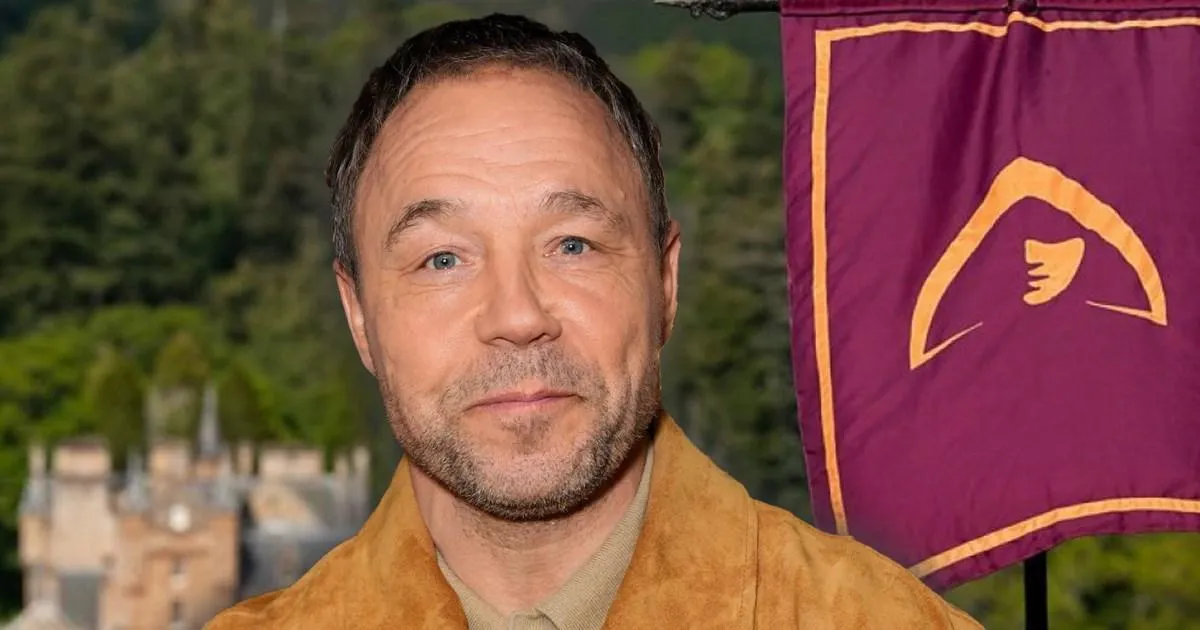
Could Stephen Graham be heading into the Scottish castle? (Picture: PA/BBC)
Months after a nail-biting finale in The Traitors series 4, speculation is rife as to who will take part in the second season of the celebrity edition.
However, the Traitors certainly didn’t make it easy, with Jonathan Ross, Cat Burns, and Alan Carr donning the iconic green cloaks and murdering their fellow stars in the dead of night, one by one.
In the end, the winning moment made for truly historic television, with Chatty Man’s Alan fooling his competitors right to the end, as the unlikely (often chaotic) Traitor stole the win and bagged a mega £87,500 sum.
Advertisement
So, as we turn our attention to series 2, which has already been green-lit after series 1’s storming success, who do you want to see in the castle?
The rumoured lineup is looking promising, with one legend of film and TV rumoured to be in the running alongside a rock icon, EastEnders actor and This Morning star.
Stephen Graham
Stephen Graham would be a force to reckon with (Picture: Shutterstock)
According to Daily Mail, the BBC are ‘absolutely desperate’ to score actor Stephen Graham for the show’s second celebrity outing.
Get even more Traitors gossip
Want to get all the latest news and predictions for the best and most dramatic show this new year?
Sign up to our TV Daily newsletter to get a personalised selection of the hottest takes, latest theories and big behind-the-scenes news every morning. Don’t to forget to select ‘The Traitors’ when you enter your email.
Advertisement
Or join our The Traitors WhatsApp channel for live episode coverage, juicy gossip and a place to recover from all the cliffhangers.
Simply click on this link, select ‘Join Chat’ and you’re in! Don’t forget to turn on notifications!
Advertisement
The publication’s insider continued: ‘He is one of the most formidable actors of our generation, and the nation adores him, but no one really knows what he’s like as a person, so there is a definite hunger among viewers to see what he is like in a more reality-based setting.’
The 53-year-old is riding high after creating and co-starring in last year’s Netflix hit Adolescence, which prompted nationwide debate about toxic masculinity and the dangers of the ‘manosphere.’
The show went on to win eight Emmy awards and nine Golden Globes.
Responding to a question from a fan on X who asked if he would ever go on The Traitors, Liam replied: ‘I’ve been asked.’
While the singer has not confirmed his involvement, fans have already been getting carried away online.
Responding beneath, Karen wrote: ‘Oh my god you’ve got to do it… You’d make a great traitor’, while Lexi exclaimed: ‘You’d bring so many viewers.’
As for Oasis fans, we can only hope that the show secures his brother Noel following their shock reunion last year after several years of estrangement.
Advertisement
Bob Mortimer
Would I Lie to You favourite Bob Mortimer was a fan favourite to appear in season 1 (Picture: Amazon Prime UK)
One name on everyone’s lips last year was comedian Bob Mortimer, who proved to be many fans’ ultimate pick to appear on Celebrity Traitors.
There’s still the chance that he could appear in Celebrity Traitors’ second series though, with executive producer Sarah Fay telling Metro: ‘If Bob wanted to do it next year, we would absolutely love it.’
Bob can currently be seen on the second season of Last One Laughing, defending his crown from the likes of David Mitchell, Romesh Ranganathan and Mel Gedroic.
Advertisement
Louis Theroux
Is that Claudia on the phone, Louis? (Picture: Getty)
Documentary filmmaker and podcaster Louis Theroux is used to weird weekends, but would he be a good fit in Claudia’s castle?
Well, according to the bookmaker Coral, he’s an early contender for season two. They’ve currently got him at 3-1 odds to be on the next season
“Louis Theroux is among the early favourites to be on the next series of Celebrity Traitors,’ said Coral spokesperson John Hill.
‘The popular documentary maker would make for a great faithful or traitor, so it would be no surprise if he is at the top end of the show’s wish list.’
Could Cheryl be using Celebrity Traitors to launch her comeback? (Picture: Karwai Tang/WireImage)
Girls Aloud icon Cheryl is reportedly considering a showbiz comeback, and surely The Celebrity Traitors is the perfect way to do it?
The pop star, 42, has kept a low profile since becoming a mum to son Bear, dipping out of public life completely in October 2024 following the death of his father and her ex-partner, Liam Payne.
Now, it’s been claimed that Cheryl is itching to get back to work, but there could be one thing holding her back from committing to a stint in the castle, as she doesn’t want to spend too much time away from her eight-year-old.
A source told The Sun: ‘Cheryl is taking baby steps about returning to the limelight. Bosses know she would be a huge draw.
‘They think she would be brilliant at playing the game. Especially as she is so straight-talking.
Advertisement
‘Of course, filming over several weeks would take her away from her son, which could be a reason she turns it down.
‘Bookers are keen for the best stars to take part and not reality-TV has-beens.’
Jamie Oliver
(Picture: Neil P. Mockford/Getty Images)
Celebrity chef Jamie Oliver is also on the menu if recent reports are to be believed.
The Sun reports that producers think the cheeky cook’s charisma alone makes him a perfect fit for the castle.
‘Jamie would be a brilliant choice,’ an insider told the paper. ‘He’s well liked by the public, with a natural charm that could bamboozle contestants.’
Advertisement
‘They wouldn’t be sure if he was a Faithful, or really a Traitor hiding behind his nice guy persona — much like the 2025 winner, Alan Carr.’
As exciting as this is for viewers, I think this might be a savvy move by the production team to improve catering in the castle.
Carol Kirkwood
Could Carol be swapping the red sofa for a red cloak?(Picture: BBC Breakfast/PA Wire)
Casino Beats has given the presenter 9/1 odds of appearing on the next series of Celebrity Traitors, with a spokesperson adding the Scottish presenter will ‘feel at home’ in the castle.
Steve Pemberton
Taskmaster star Steve Pemberton loves a challenge (Picture: WireImage)
Steve Pemberton, of League of Gentlemen and Inside No 9 fame, is also reportedly in the frame for season 2. The Lancashire-born funnyman is apparently a huge fan of the show and is keen to visit Claudia’s castle.
An insider told The Sun that the BBC is hoping the 58-year-old award-winning actor will be a Jonathan Ross-style ‘Big Dog’, as he’ll understand the game better than other celebs taking part.
Advertisement
‘As an award-winning actor who can transform himself from one character to another, Steve would be a similar figure [to Jonathan] and a formidable contestant for the players to contend with,’ the source said.
Here’s hoping he can convince Reece Shearsmith to come with him…
Amanda Holden
Where Alan goes, Amanda may follow (Picture: Lia Toby/Getty Images)
Alan Carr’s best mate, Amanda Holden, is also rumoured for a Celebrity Traitors stint. According to The Sun, BBC bosses think the Britain’s Got Talent judge will be ‘comedy gold’, and they’re keen to sign her up.
However, there’s a small wrinkle. The Celebrity Traitors is apparently filmed at the same time as the BGT semi-final,s which may make her appearance a bit of a juggling act for the producers.
Danny Dyer
Danny Dyer would surely make a ruthless Traitor (Picture: Jeff Spicer/Jeff Spicer/Getty Images)
Also throwing his hat in the ring is EastEnders star Danny Dyer – we can totally see him ripping into people at the roundtable and taking no prisoners.
It’s believed the BBC eyed up Danny for series 1, only for him to snub them. Now he’s singing a different tune.
Advertisement
A source told The Sun: ‘Danny was always top of The Celebrity Traitors wish list but had zero interest until seeing the fun and games last autumn.
‘As soon as his tune changed, it was all systems go.’
His change of heart came after he watched chat show Traitor Jonathan in action in the Scottish Highlands.
Speaking on his Live And Let Dyers podcast with daughter Dani Dyer, he declared: ‘I’m into it.’
Advertisement
‘They did sniff round me about it,’ Danny revealed. ‘It was a no from me because, for one, I hadn’t seen it, but now I’m into it.
‘If you’re going to do it, if you’re famous, it needs to be an indulgence project — you have to love the game.
‘It’s quite a simple game. I thought it was too complicated, but it’s actually just about people manipulating each other and a lot of lying.’
The soap actor said he was ‘enjoying’ the first celebrity series, predicting that it’s actually harder to be a Faithful as players risk ‘overacting’ and it ‘backfiring’.
Advertisement
Does that mean he would make a good Traitor? Something tells us Danny would have no qualms about taking on that role.
Alison Hammond
Alison Hammond has reportedly been approached by the BBC (Picture: Joe Maher/Getty Images for the NTAs)
Beloved broadcaster Alison Hammond is reportedly on the BBC’s ‘hit list’.
In fact, they’re hoping she could take the baton from Alan and continue providing us with iconic moments, which certainly isn’t impossible given Alison’s already colourful history with memes and viral videos.
A source added to The Sun that Alison herself is ‘keen’ to get involved.
‘The Beeb think she could be comedy gold, just like Alan Carr. Alison is naturally very funny, and they think she could end up being hugely successful,’ they said.
Advertisement
However, understandably, celebs are lining up in droves to play the game, with the insider teasing that ‘the pot of talent wanting to take part is overflowing’, meaning execs ‘have a lot to weigh up’ if they want to make the best telly.
‘The first series of The Celebrity Traitors was dynamite, so the second series needs to have the same weight.
‘Contracts won’t be signed until closer to the start of production, but the BBC are already keen to get Alison on board.’
Ruth Jones
We know her best as Nessa, but we could see Ruth Jones herself enter the Scottish castle (Picture: Toffee International Ltd/Tom Jackson/PA Wire)
While we’d give anything for Nessa herself to play The Traitors, we’ll accept that having actress Ruth Jones is the next best thing.
The Gavin and Stacey favourite has reportedly already been approached by bosses, who are eager to make the series 2 cast as ‘impressive’ as it can be.
Advertisement
‘Ruth would be an incredible addition to the cast if she can fit it into her schedule,’ added the insider.
However, the Welsh star has dampened rumours that she might join the cast, telling The Mirror: ‘I want to address this. I was asked about doing it. I do love the show and did think: “Wouldn’t it be great?”
‘But then I thought: “Oh, gosh, I’d have to swim in a lake, put on a wetsuit.” So I’d rather watch it. I’m not doing it.’
The Bafta winner has got plenty to keep her busy elsewhere, as it was recently revealed that she and Smithy actor James Corden have signed a big-money deal with AppleTV.
Advertisement
So, if she can find time to squeeze some cloak-and-dagger activity into her packed itinerary in the next year or so, we’d be majorly thankful.
Daisy May Cooper
Daisy May Cooper would bring the comedy (Picture: Fred Duval/SOPA Images/REX/Shutterstock)
If anyone is guaranteed to bring the laughs, it would be Daisy May Cooper.
It’s said that the This Country actress was due to take part in series 1; however, after the birth of her son, Benji, she dropped out to avoid being away from home.
Could it be second time lucky for casting execs?
‘Daisy is telly gold. She’s hilarious and would be perfect,’ teased a source.
Advertisement
‘Show bosses are pulling out all the stops to make this happen.’
Don’t miss a TV review! Add us as a Preferred Source
As a loyal Metro TV reader, we want to make sure you never miss our articles when searching for stories. Our TV experts are here to bring you all the latest reviews, streaming updates, videos, and exclusive interviews, with a vibrant community of highly engaged readers.
Click the button below and tick Metro.co.uk to ensure you see stories from us first in Google Search.
Tom Hiddleston has made it known he’s a big Traitors fan (Picture: Millie Turner/Invision/AP)
How these things tend to work is that show bosses will communicate with a celebrity’s team and basically entice them with various promises and fees, right?
Well, that hasn’t been the case with The Celebrity Traitors, as the A-listers themselves are begging to take part.
Enter Tom Hiddleston, who even sent a come-and-get-me plea to the BBC as he declared himself a ‘massive, massive fan’ of both The Traitors and Strictly Come Dancing.
Following his revelation on the campaign trail for the new series of The Night Manager, the rumour mill began swirling.
Advertisement
Saying he would ‘absolutely’ love to take part, insiders reckon a Celeb Traitors stint – which films for one month – is more likely than four months of Strictly training.
‘What an absolute gift to his BBC bosses to hear their leading man is up for both,’ they said.
The Traitors is available to stream on BBC iPlayer.
A version of this article was first published on January 17, 2026.
Advertisement
Got a story?
If you’ve got a celebrity story, video or pictures get in touch with the Metro.co.uk entertainment team by emailing us celebtips@metro.co.uk, calling 020 3615 2145 or by visiting our Submit Stuff page – we’d love to hear from you.
The annual Chocolate and Cheese festival will be welcomed once again to Ramsbottom Civic Hall around the urn and church gardens in celebration of two dairy-based delights.
The event will be held on Sunday, March 29, from 11am to 4pm with a selection of food traders offering a wide variety of chocolate and cheese.
Alongside them will be a selection of local makers with more savoury and sweet options.
Ramsbottom Chocolate and Cheese Festival (Image: Danny Crompton)
In addition, the day boasts a calendar jam-packed with entertainment such as live music within the Civic Hall and a roaming magician who will perform in and around the town centre.
Advertisement
Organisers say the festival aims to bring people into the town for a relaxed day out while supporting independent businesses such as chocolatiers and cheesemongers.
The event is expected to attract visitors from across Greater Manchester and further afield and adds to the town’s growing programme of community events.
A spokesperson for the event said: “It’s about creating something simple that brings people into Ramsbottom and supports local traders.
Ramsbottom Chocolate and Cheese Festival (Image: Danny Crompton)
“There’ll be a good mix of food and a bit of entertainment across the day, so people can come down, have a wander and enjoy the town.”
Advertisement
Entrance will cost £1 per adult.
Last year’s event, held in April, proved to be a sweet success and attracted crowds of hundreds to the town.
Visitors came from as far as Leeds and Sheffield for the occasion, eager to try new and quirky flavour combinations of salty and sweet.
The crowd-pulling event began in 2009 as solely a chocolate festival.
Advertisement
It then evolved to incorporate other foods before its current focus on chocolate and cheese.
The pandemic saw it being put on hold for a couple of years before a very welcome return in 2023.























































You must be logged in to post a comment Login