
Connect with us
DAPA Banner

NewsBeat

India vs Pakistan LIVE: T20 World Cup result, latest updates and reaction from grudge match

Published

on

India vs Pakistan LIVE: T20 World Cup result, latest updates and reaction from grudge match

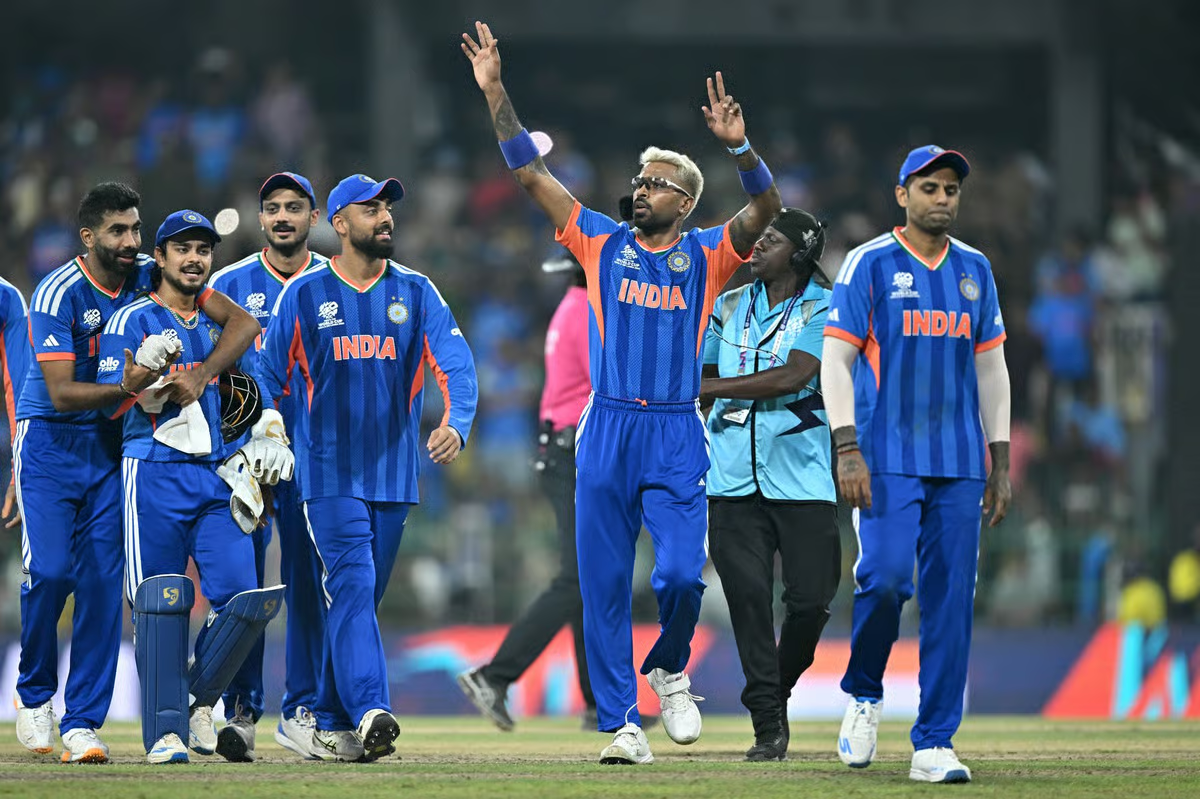
Skipper Suryakumar Yadav added 32 for India, who then ended Pakistan’s run chase before it ever really began as the early wickets tumbled. Pakistan were reduced to 13/3 and then 34/4 in dismal fashion, with Usman Khan’s spirited 44 off 34 balls not enough to spark any sort of sustained fightback. Pakistan were eventually bowled out for 114 in 18 overs, with the two teams failing to shake hands once again after a one-sided Group A contest. The captains also did not engage in a handshake after the toss.

Source link

Continue Reading
Click to comment

You must be logged in to post a comment Login

Leave a Reply

NewsBeat

Why Benjamin Netanyahu needs the Iran conflict to continue

Published

on

Why Benjamin Netanyahu needs the Iran conflict to continue

Before Donald Trump delivered his prime-time address to the American people on April 1, many commentators predicted he would claim victory and signal that the US air campaign against Iran would be wound down – even without a deal with Tehran to open the Strait of Hormuz. As it turned out, Trump said he would double down on the violence, promising to hit Iran “extremely hard” in coming weeks.

The White House simultaneously released a document headlined: President Trump’s Clear and Unchanging Objectives Drive Decisive Success Against Iranian Regime. “From day one,” it stated, “the objectives have been clear: obliterate Iran’s missiles and production, annihilate its navy, sever its support for terrorist proxies, and ensure it never acquires a nuclear weapon.” These objectives, Trump said, were nearly complete and he expected to finish the job “very fast”.

For the US president, the key marker of the success or otherwise of this foreign policy gambit will come in November’s midterm elections. So his strategic decisions are likely to be heavily influenced by the need to be able to claim victory, while also limiting any negative outcomes from the energy price shock engulfing the world. To do this, he must declare victory fairly soon.

But Trump’s partner in the war, Israel’s prime minister Benjamin Netanyahu, has a markedly different set of strategic priorities (although electoral politics will also play a big part in his thinking).

Advertisement

Launching Israel’s air campaign on February 28, Netanyahu said the goal was to “put an end to the threat from the Ayatollah regime in Iran”. He framed this as having been an existential threat to Israel for all of the 47 years that the Islamic Republic had been in existence, insisting that regime change was “not the objective, but … could certainly be the result”.

In the five weeks of the conflict, Israel’s strategic goals have both widened and lengthened. In Iran, while clearly working in partnership with the US, it wants to reserve the right, unilaterally, to “go back and hit Iran every time the nuclear and missile programmes are being rebuilt”.

Meanwhile, Israel has responded to attacks from Hezbollah forces in Lebanon by occupying the southern part of the country up to the Litani river. This area was designated by UN security council resolution 1701 in 2006 as a buffer zone in which only the Lebanese national army and UN peacekeepers were authorised to operate.

The Israeli defence minister, Israel Katz, has warned that Lebanese citizens who had fled would not be allowed to return “until the safety and security of northern Israeli residents is ensured”.

Advertisement

It appears that Israel plans a long-term occupation of the region. It already maintains a buffer zone in southern Syria, which it occupied after the fall of Bashar al-Assad’s regime in December 2024. This, it says, is also to deter Hezbollah attacks on northern Israel.

Netanyahu’s war aims

The focus of Netanyahu’s security policy has consistently been directed at Iran and its proxies. My research with Amnon Aran has demonstrated that in perpetuating an “Iran-as-evil” framing, the Israeli prime minister effectively precluded any possibility of engaging with the regime diplomatically.

Netanyahu’s political worldview has been enormously influenced by the founder of Revisionist Zionism, Ze’ev Jabotinsky. Under Jabotinsky’s “Iron Wall doctrine”, reinforcing the might of Israel is the only responsible response to the threat posed by Iran and its proxies. It is a strategy of strength first, diplomacy second.

In the past, Netanyahu has talked of defeating Israel’s enemies as his “supreme objective”. But more recently, analysts are describing what they refer to as the “Netanyahu doctrine”. According to this security stance, Israel must be prepared to launch “pre-emptive” attacks against any perceived threats, maintaining a permanent readiness for war.

Advertisement
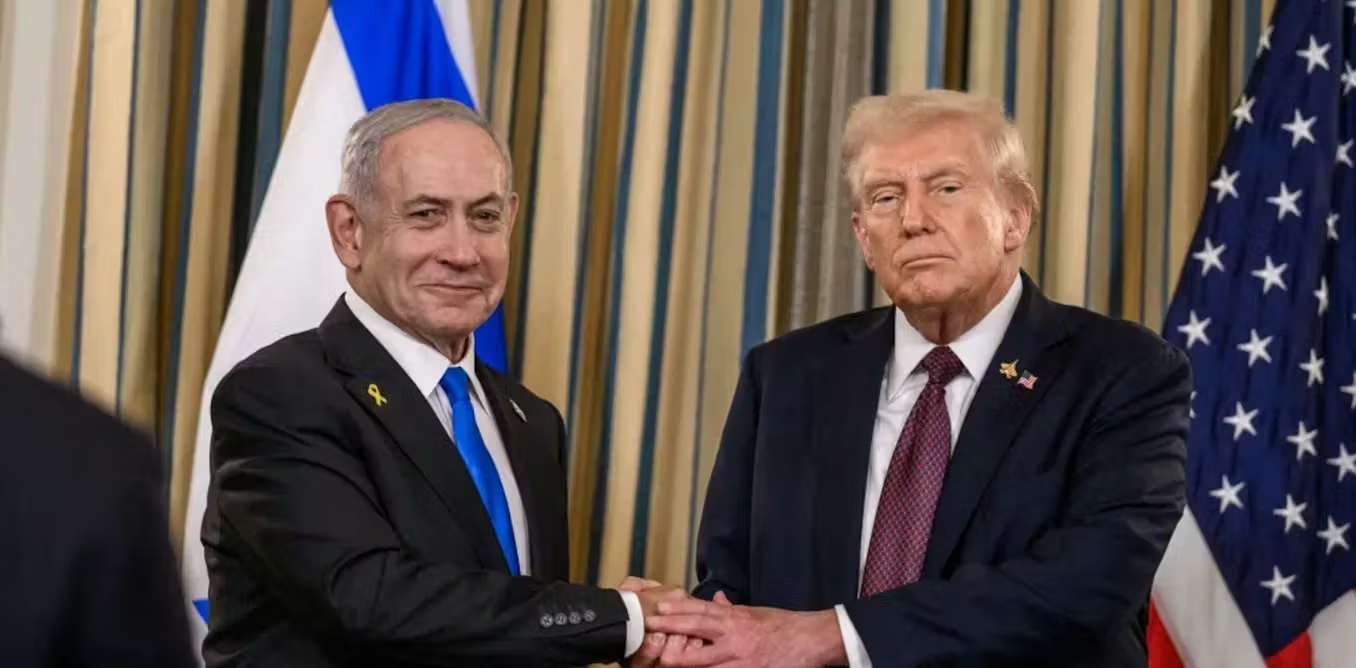
Benjamin Netanyahu in the Knesset: the Israeli prime minister faces an election in October 2026.
AP Photo/Ohad Zwigenberg

So regime change of the Islamic Republic is not a direct goal – even if, as noted, the Israeli prime minister believes it might result from the pressure he is putting on Tehran. He is aiming to “create conditions that will enable the brave Iranian people to cast off the yoke of this murderous regime”.

But there is another important dimension to this “permanent conflict”. Netanyahu must call a national election before October. Polls suggest Israeli public support for the war in Iran could give him a boost in time for the election. Unlike the war on Gaza, which polls showed a majority of Israeli citizens wanted to end, there has been overwhelming support in Israel for the war on Iran.

Even ministers in Netanyahu’s government recognise that domestic politics has formed a big part of his motivation for launching this conflict now, saying that – as far as Netanyahu is concerned – “the road to the polling stations runs through Washington and Tehran”.

So far, however, there is little evidence that support for the war is translating into electoral support for Netanyahu. A lot depends on how the conflict plays out. A long war with heavy casualties and significant damage to civilian areas in Israel has the potential to damage Netanyahu’s election chances.

Advertisement

A poll taken on March 19 found that while the prime minister’s Likud party would receive the most votes, he would find it difficult to form a ruling coalition. And if he loses power, there is the prospect of his corruption trials proceeding.

So, a lot hangs on the outcome of this conflict. An early and decisive victory might have given Netanyahu the confidence to call a snap election. But this now looks unlikely. And if Trump decides to bring an end to hostilities without achieving the far-reaching change Netanyahu has promised, things could go badly for Israel’s longest-serving leader.
Source link

Advertisement
Continue Reading

NewsBeat

Minister’s trip to Lebanon cancelled following Defence Forces concern

Published

on

Minister’s trip to Lebanon cancelled following Defence Forces concern

Last Friday, the Defence Forces confirmed it carried out an operation to transport key battalion personnel to UN Post 2-45 in Lebanon, known as Camp Shamrock, and to return communications specialists who had been performing critical maintenance to communication systems and infrastructure.

Source link

Continue Reading

NewsBeat

People aged 60+ warned to watch out for little-known symptom of ‘fatal’ disease

Published

on

Daily Mirror

Pancreatic cancer is one of the deadliest forms of cancer in the UK, with around 10,500 new cases diagnosed each year

People born before 1966 are being urged to remain vigilant for a potentially “serious” symptom that could indicate a deadly disease. Experts warn that one subtle yet significant sign – frequently overlooked – could be a sign of pancreatic cancer, which is more prevalent in people aged 60 and above.

Advertisement

The NHS says identifying symptoms early could prove life-saving, yet the condition is notoriously difficult to detect. That’s because early warning signs are often vague, meaning numerous cases are diagnosed at an advanced stage.

Dr Asiya Maula, a private GP at The Health Suite, said pancreatic cancer can easily remain undetected in its early stages: “Pancreatic cancer is often diagnosed at a late stage because symptoms can be vague or non-specific, which is why understanding the lifestyle factors linked to risk is so important.

“Small, consistent habits over time can have a significant impact,” Dr Maula added, highlighting risk factors including smoking, alcohol consumption and diet. One of the less recognised symptoms is yellowing of the skin or the whites of the eyes, known as jaundice – one of the most obvious early warning signs.

According to the NHS, jaundice is often easier to identify in the eyes, particularly in people with darker skin. It develops when a substance called bilirubin accumulates in the body, which can be triggered by serious conditions including liver disease, gallstones, or pancreatic cancer.

Pancreatic cancer is amongst the most lethal forms of cancer in the UK, with approximately 10,500 new cases diagnosed annually, according to Pancreatic Cancer UK. The charity states that over half of cases affect people aged 75 and above, highlighting the importance of vigilance among older adults.

Survival statistics remain sobering, with less than 10% of patients living five years or longer following diagnosis, according to Cancer Research UK. Delayed detection is a significant contributing factor, as symptoms including fatigue, weight loss and digestive complaints can be easily confused with less severe conditions.

The NHS advises watching for additional symptoms such as loss of appetite, unexplained weight loss, persistent tiredness and elevated temperature. Digestive disturbances including nausea, diarrhoea, constipation and indigestion may also present, alongside pain in the upper abdomen or back.

Medical professionals emphasise that while these symptoms are widespread and frequently associated with other conditions, changes that seem abnormal should never be dismissed. Individuals are urged to seek medical attention if symptoms continue, deteriorate or feel unusual for them.

Urgent guidance is unambiguous: anyone experiencing jaundice, prolonged vomiting or diarrhoea should contact their GP or NHS 111 immediately. Prompt medical checks could exclude serious illness – or guarantee swifter treatment if required.

Source link

Advertisement
Continue Reading

NewsBeat

What to know about the effort by Universities of Wisconsin regents to force out system president

Published

on

What to know about the effort by Universities of Wisconsin regents to force out system president

MADISON, Wis. (AP) — The president of the 165,000-student University of Wisconsin system is fighting attempts by the board of regents to force him to retire or face being fired.

The surprise effort to remove Jay Rothman from the post he has held since 2022 was detailed in letters Rothman sent to regents over the past week that were obtained Thursday by The Associated Press.

Here is what to know about the situation:

What’s the president’s job?

The president of the Universities of Wisconsin oversees the entire university system, which includes the flagship Madison campus, 12 other universities and several other branch campuses.

Advertisement

The president reports to the 18-member board of regents. Vice presidents and chancellors who run the campuses, including the main one in Madison, report to the president.

The president also oversees staffing at the system’s administrative offices and directs work done there.

Rothman is the eighth president of the UW System, which was created in 1971 by the state Legislature.

Why is this happening?

It came as a surprise that the board of regents wanted to remove Rothman.

Advertisement

Details emerged in two separate letters Rothman sent to regents he met with. No concerns had been aired publicly by regents about Rothman’s performance. According to Rothman, no regent has explained to him why they want him out.

“When I asked you to articulate reasons for the Board’s conclusion and apparent lack of confidence in me, you merely noted that each Regent has his or her own perspective on the matter,” Rothman wrote in a March 26 letter to the board president. “You did not provide any tangible reasons for the Board’s determination.”

The AP contacted all 18 board members on Thursday, and they either did not respond to emails or had no comment.

Can the board do this?

It is unclear whether the board can fire the president without cause. A spokesperson for the university was checking on what the law allows.

Advertisement

Rothman said in his letter to the board president that he had not been “provided any substantive reason or reasons for the Board’s finding of no confidence in my leadership.”

Because of that, Rothman said, “I am not prepared, as a matter of principle, to submit my resignation.”

It has all been done in secret, until now

The board of regents met behind closed doors on Wednesday to discuss personnel matters. But until Rothman’s letters were obtained by the AP on Thursday, there was no inkling that the meeting was about his future.

Rothman said in a letter sent Wednesday to two regents that they told him if he didn’t resign they were prepared to meet over the weekend to fire him.

Advertisement

Who is Jay Rothman?

Rothman spent his career as an attorney, rising to become chairman and CEO of the Milwaukee-based Foley & Lardner law firm before being hired as UW president. Foley & Lardner has 1,100 attorneys and 22 offices nationwide.

Regent Karen Walsh, who led the presidential search committee, in 2022 called him a “servant leader” who builds consensus. She declined to comment when contacted Thursday.

Rothman holds a bachelor’s degree from Marquette University in Milwaukee and a law degree from Harvard University.

What did he do as UW president?

Rothman’s tenure has been marked by his efforts to increase state funding amid federal cuts, debates over free speech on campus amid pro-Palestinian protests, and declining enrollment leading to eight branch campus closures.

Advertisement

Rothman raised the possibility of resigning in 2023 when the board of regents rejected a deal reached with the Republican-controlled Wisconsin Legislature over diversity, equity and inclusion efforts. The board later reversed its vote and approved the deal.

The fight over Rothman’s future comes as the university will need to replace the chancellor of the flagship Madison campus this year. Chancellor Jennifer Mnookin is leaving to take the job as president of Columbia University.

Advertisement

Source link

Continue Reading

NewsBeat

New police footage shows Tiger Woods ‘phoned Donald Trump moments after car crash’

Published

on

Daily Mirror

Tiger Woods was arrested on suspicion of DUI after flipping his car near his home in Florida, and the golf icon called President Donald Trump shortly after the incident

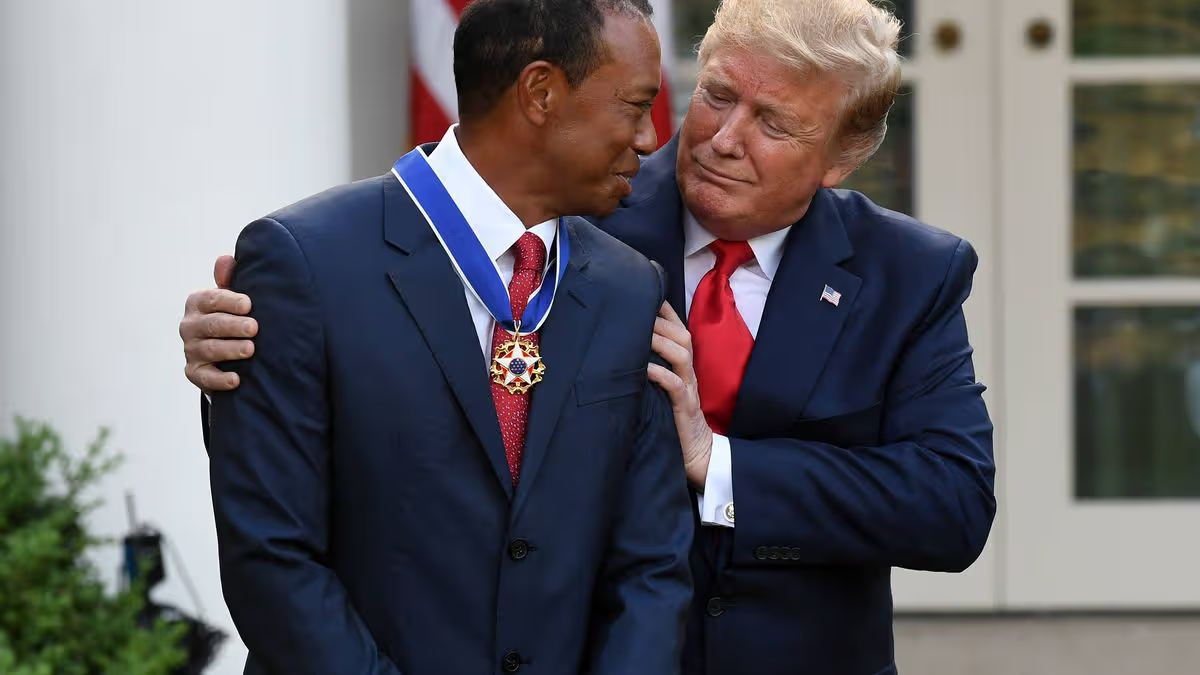
President Donald Trump reportedly received a phone call from Tiger Woods moments after he overturned his Land Rover near his Florida home, before being charged with a misdemeanour DUI with property damage, and refusal to submit to a lawful test.

Advertisement

Woods is facing a number of charges following the car incident, with local sheriff John Budensiek claiming he displayed signs of impairment, though not as a result of alcohol. Woods has since confirmed he will withdraw from golf and has been granted permission to leave the US to seek treatment abroad.

Bodycam footage of the arrest was released on Thursday, capturing Woods undertaking a field sobriety test before apparently falling asleep in the back of a police vehicle. Prior to the golf legend being arrested, he was spotted talking on the phone and informed an officer that he was speaking with President Trump.

READ MORE: Ryanair warns of cancellations this summer as impact of Iran war hits airline fuelREAD MORE: Ex-cage fighter and double murderer Thomas Haigh dies behind bars at Strangeways

Advertisement

Ensure our latest headlines always appear at the top of your Google Search by making us a Preferred Source. Click here to activate or add us as your Preferred Source in your Google search settings.

Following the crash, a significant police presence descended on the scene. An officer summoned Woods as he walked away to take a private phone call. As Woods made his way towards the officer, he was heard saying: “Thank you so much. All right. You got it. Bye.”

When the officer asked Woods to remain close by, the golfer responded: “Yeah, I was just talking with the President. Was just trying to get away”, reports the Mirror US.

Woods and Trump remain firm friends, with the golfer currently in a relationship with Vanessa Trump, the former wife of Donald Trump Jr. Woods has maintained a close friendship with Trump for several decades, with the US President a passionate golf enthusiast. Given their close friendship, Trump was quizzed about the situation shortly after Woods was arrested on suspicion of drink-driving. “I feel so bad. He’s got some difficulty — there was an accident, and that’s all I know,” Trump said.

Advertisement

“A very close friend of mine, he’s an amazing person, an amazing man. But some difficulty. I don’t want to talk about it.”

Woods crashed his vehicle after colliding with a lorry near his home on Jupiter Island, but passed a breathalyser test. Nevertheless, the sheriff maintained that he displayed signs of impairment, and Woods declined to provide a urine sample.

The golf legend is next due in court in May and has agreed to cooperate with all further court proceedings. However, Woods is set to temporarily leave the US after his solicitor, Douglas Duncan, submitted a request that a judge approved. Duncan applied for Woods to leave the US to “begin comprehensive inpatient treatment.”

Advertisement

The filing read: “Based upon the Defendant’s treating physician, the out-of-country treatment facility recommendation is based upon the Defendant’s complex clinical presentation and the urgent need for a level of care that cannot safely or effectively be done within the United States, as his privacy has been repeatedly compromised.”

Duncan argued that the high-profile nature of the case means Woods could find it difficult to complete his recovery in the United States. He also suggested that exposure to the public could even “result in setbacks and an inability to fully engage in treatment.” Since the accident, Woods has told the PGA of America that he no longer wants to be considered for the captaincy ahead of the 2027 Ryder Cup. Woods had also been planning a remarkable return at the Masters, but he has since stepped back from the sport entirely.

Source link

Advertisement
Continue Reading

NewsBeat

Premier League Darts 2026 results: Luke Littler and Gian van Veen clash as Gerwyn Price wins in Manchester

Published

on

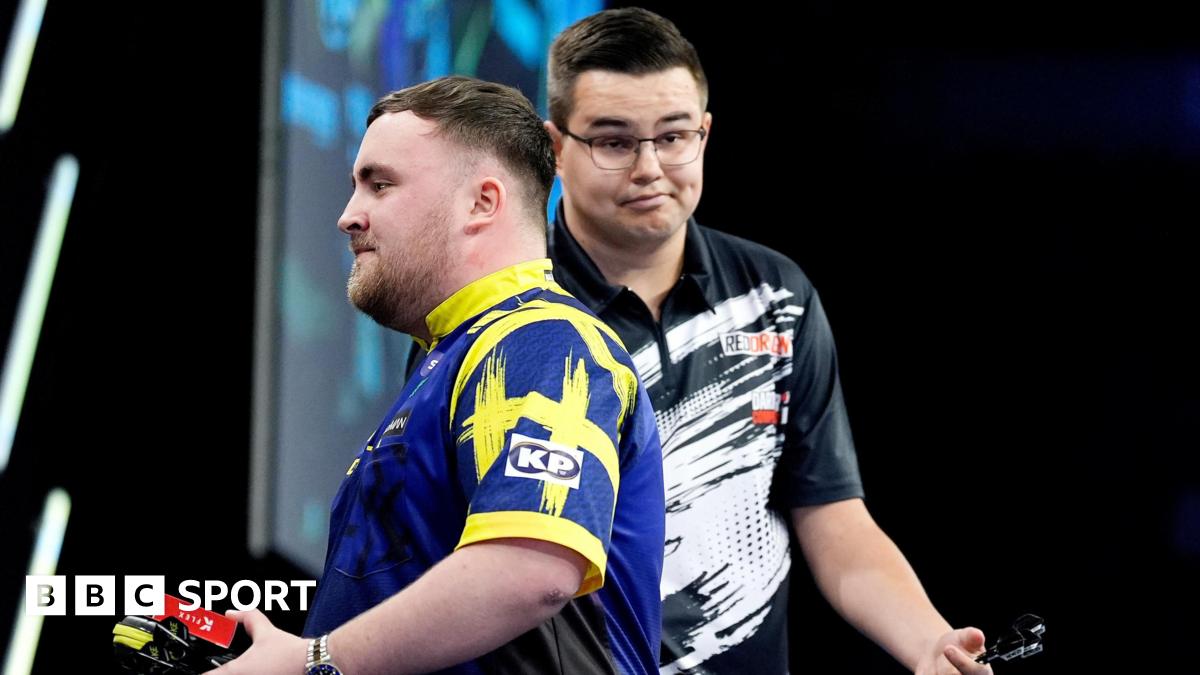
Luke Littler and Gian van Veen

Despite his early exit, Littler remains top of the table while Van Veen – still recovering after missing night seven in Dublin because he needed surgery to remove kidney stones – is up to fifth.

The match was a repeat of January’s World Championship final and the dramatic ending only adds to the feeling that there could be quite a rivalry between the exciting young pair over the next few years.

“Luke Littler was happy that Gian van Veen went inside the 15 and he kind of did the Simon Whitlock ‘well done’ and you shouldn’t do that,” former player Wayne Mardle said on Sky Sports.

“As he did it, Gian turned round and he kind of went ‘why did you do that?’

Advertisement

“You’ve got to say that Gian handled it better because Luke Littler fluffed his lines and went too aggressive at the double seven. Gian held it together really well.

“[Littler] didn’t expect to get caught. He got caught with his hand in the cookie jar and he won’t be doing that again.”

Three-time world champion John Part, speaking on Sky Sports, added: “I think don’t either player was too far into the wrong. The end of a match can get quite heated.

“Gian handled himself more appropriately in a lot of ways. Luke could have handled it slightly better.”

Advertisement

Source link

Continue Reading

NewsBeat

Nutritionist issues warning over common breakfast food high in cholesterol

Published

on

Daily Mirror

You may be surprised about how healthy certain foods are

A leading nutritionist has offered some guidance on maintaining a balanced diet. The health expert addressed some widespread misconceptions about snacking and making sensible food choices.

Advertisement

Abby Coleman works as a performance nutritionist at The Edge. The health group runs a human performance and nutrition lab in Leatherhead, Surrey, which serves elite athletes and professional sports stars.

She issued some guidance around certain foods that can be perceived as unhealthy, yet can actually be beneficial in moderation. One example she pointed to is eggs. Ms Coleman explained: “Egg yolks are high in cholesterol, but for most people, dietary cholesterol has minimal impact on blood cholesterol levels.

“Observational studies linking eggs to heart disease are inconclusive.” She outlined their nutritional benefits: “Eggs remain a nutrient-dense food, offering high-quality protein, essential vitamins (including D and B-complex), choline, and antioxidants that support satiety, overall nutrition, and health.”

State Pensioners to face major tax change

Healthy cholesterol boost

Another food that might come as a surprise for its health benefits is chocolate. Ms Coleman noted: “Chocolate itself should be eaten in moderation, but dark chocolate can be ‘good for you’.

Advertisement

“Try to stick to 70 per cent or more cocoa and you can benefit from it being rich in antioxidants, which protect our cells from damage, a ‘boost’ to HDL cholesterol levels (the ‘good’ cholesterol)”. She added that eating some dark chocolate may also improve your cognitive function.

Ms Coleman issued a warning regarding snacking. She said: “People can often underestimate how much they snack on foods like crisps, biscuits and pastries.

“They’re easy to eat because they’re high in sugar, salt and saturated fat so our taste buds love them, but these types of snacks are low in fibre and protein, and don’t keep you feeling full.” The real danger, she stressed, emerges when unhealthy snacking becomes habitual.

Weight gain risk

The specialist warned: “The danger comes from consistent overeating. This can lead to weight gain, increased cholesterol levels (from too much saturated fat), increased risk of Type 2 diabetes and elevated blood pressure.”

Advertisement

She emphasised that the problem isn’t snacking itself, but rather the potential for consuming too much. Ms Coleman said: “Choosing snacks which are low in nutrition and high in saturated fat, sugar, and/or salt and, and eating them mindlessly, can be a problem.

“Instead of avoiding snacking, choose options which align with your goals such as health, performance, and body composition.”

Source link

Advertisement
Continue Reading

NewsBeat

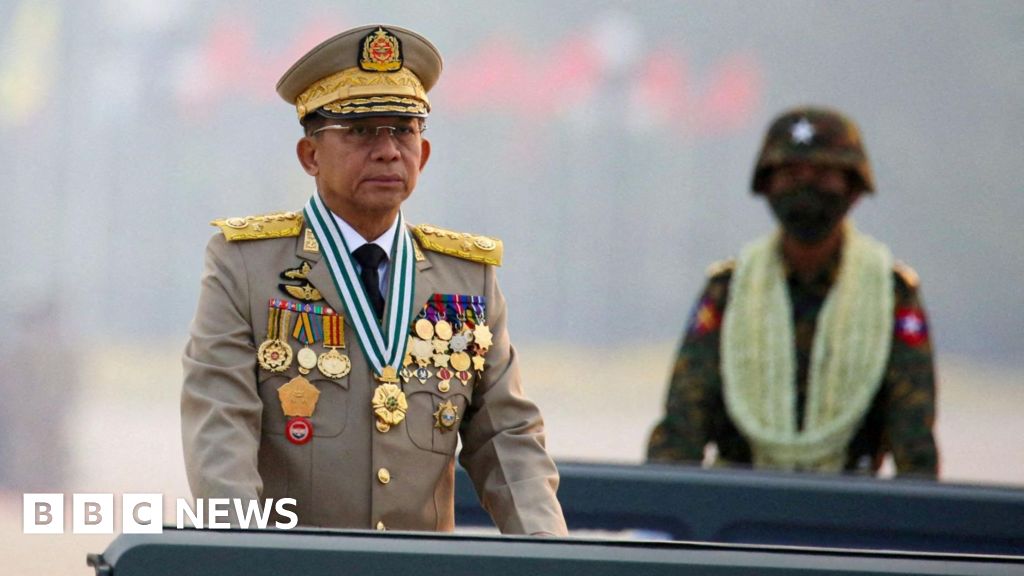
Myanmar’s coup leader set to become president

Published

on

Myanmar's coup leader set to become president

The parliament, sitting for the first time since the coup, is filled with his loyalists. With the armed forces guaranteed one quarter of the seats, and the military’s own party, the USDP, winning nearly 80% of the remaining seats in an election which was tilted heavily in its favour, this was a preordained outcome. More of a coronation, than an election.

Source link

Continue Reading

NewsBeat

Man and young girl die in A228 crash involving pony and trap as driver arrested

Published

on

Daily Mirror

A man in his 30s and young girl died after a collision involving a tipper truck and pony and trap on the A228 in East Peckham near Tonbridge

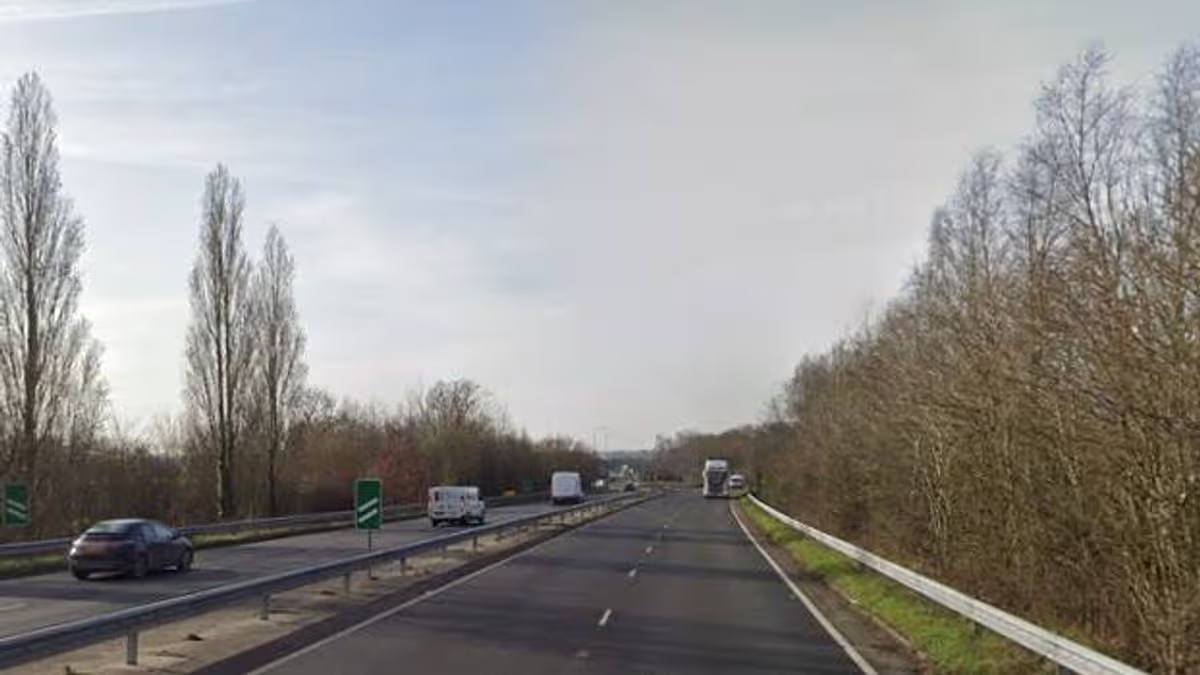
A young girl and a man in his 30s have died following a horrific crash involving a tipper truck and a pony on a busy road.

The devastating collision occurred in East Peckham near Tonbridge on Wednesday, 1 April, on the A228 Boyle Way, between the junctions of Branbridges Road and Hale Street.

Advertisement

According to police, a white DAF tipper truck was travelling along the southbound carriageway when it collided with a pony and trap moving in the same direction — the pony also died at the scene.

Officers, South East Coast Ambulance Service and Kent Fire and Rescue Service all attended the scene, where a man in his 30s, who had been riding in the trap, was pronounced dead.

A woman and a young girl who had also been travelling in the trap were rushed to hospital. The young girl was sadly pronounced dead upon arrival, while the woman remains in a critical condition.

The driver of the tipper truck, a 29 year old man from Kent, was arrested in connection with the incident and taken into custody.

Advertisement

Kent Police are now appealing for witnesses and any dashcam footage as investigators work to establish the full circumstances of the crash.

A spokesperson for Kent Police said: “An investigation into the circumstances is underway and witnesses or anyone who saw the truck or pony and trap prior to the collision, is urged to contact the appeal line.

“Call the Serious Collision Investigation Unit on 01622 798538, quoting reference BN/JG/027/26.” “Alternatively email sciu.td@kent.police.uk. Dashcam footage can be uploaded here. “

Source link

Advertisement
Continue Reading

NewsBeat

Will row over Iran conflict spell the end of Nato?

Published

on

Will row over Iran conflict spell the end of Nato?

This is the text from The Conversation UK’s World Affairs Briefing email. Sign up here to receive weekly analysis of the latest developments in international relations, direct to your inbox.


Anybody who tuned in to Donald Trump’s prime-time speech to the American people last night hoping to hear that he plans an end to the US attacks on Iran and will focus instead on reaching an agreement over opening up the Strait of Hormuz would have been bitterly disappointed. I know I was.

Instead of a strategy to restore the vital flow of oil and gas through the strait – something which would have immediately calmed the markets and started to bring down energy prices – the US president opted for a familiar mix of revisionism, self-aggrandisement and bloodcurdling threats.

So we heard that it was never his intention to force regime change in Iran (despite having said exactly that on day one of the special military operation). We had the miraculous achievements of his administration over the past year which had restored “a dead and crippled country after the last administration” to what is now “the hottest country anywhere in the world by far”.

Advertisement

And instead of seeking a deal with Iran over the Strait of Hormuz, Trump promised to “hit them extremely hard over the next two to three weeks. We’re going to bring them back to the Stone Ages, where they belong.”

Along the way, the US president took a potshot at America’s Nato allies who have been reluctant to get involved in this war, exhorting them to “build up some delayed courage. Should have done it before. Should have done it with us as we asked.”

Donald Trump addresses the American people, April 1 2026.

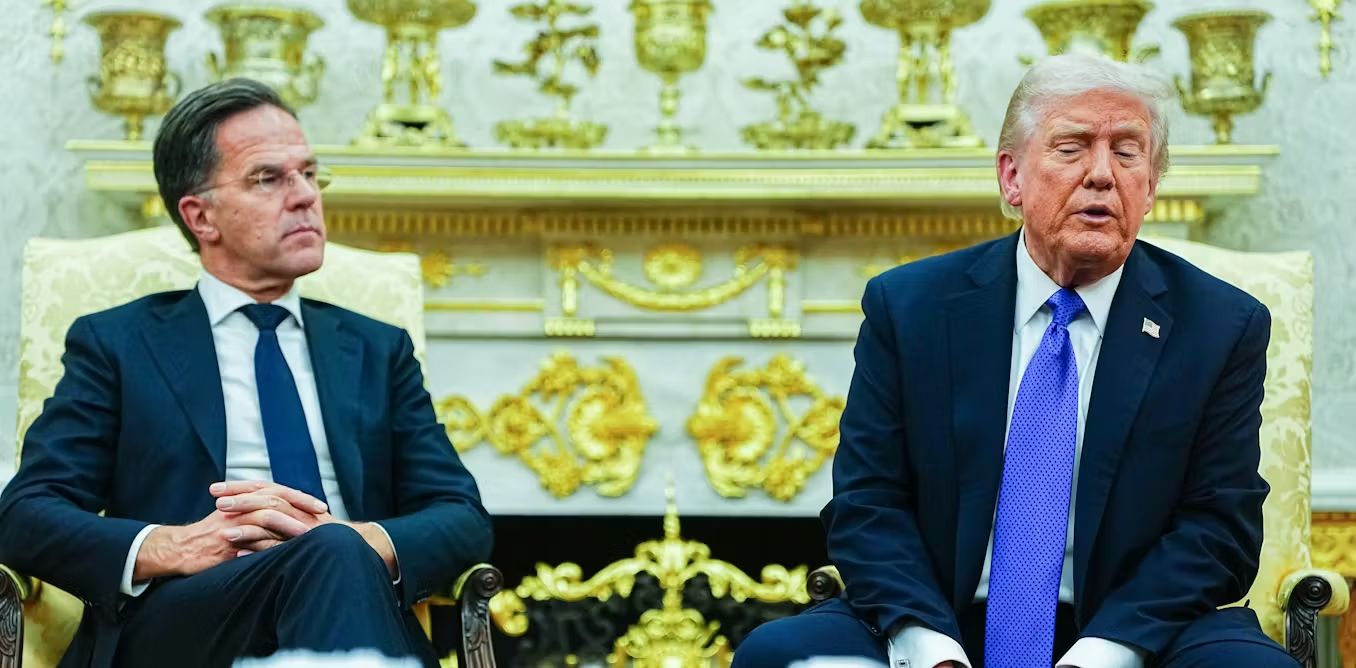
In the event, Nato secretary-general Mark Rutte and many of Nato’s European leaders will probably feel as if they have got off lightly. Trump and his secretary of state, Marco Rubio, have been outspoken in their criticism of Nato in recent days. Rubio told Fox News host Sean Hannity that the US would “reexamine the value of Nato”, while the president, when asked if the US was reconsidering its Nato membership, said the question was “beyond reconsideration”, adding that the alliance is a “paper tiger, and Putin knows that too, by the way.”

Advertisement

Trump is not the first US president to question the operation of Nato and worry about the outsized burden borne by the US. But none before has done so much to publicly undermine the alliance. But then, as Andrew Gawthorpe explains, Nato’s focus on European security has been a huge benefit to the US over the decades. Gawthorpe, an expert in American foreign policy at Leiden University, presents us with a cost-benefit analysis of US leadership of Nato, spelling out the many advantages which he says “generations of American strategists, military officers and diplomats have viewed as worthwhile”.

It’s not as if the US-Israeli military operation in Iran is a matter for Nato in any case, writes David Galbreath. Nato is a defensive alliance. Article 5 of its founding treaty holds “an armed attack against one NATO member shall be considered an attack against all members, and triggers an obligation for each member to come to its assistance”. This is clearly not the case in Iran.

To be sure, as Galbreath notes, Nato’s focus has shifted at times over the years. From aiming purely at collective defence – defined as coming to the aid of a fellow member whose territory is threatened by a third party – at times Nato has intervened in issues of regional security, most notably in the 1990s wars in the former Yugoslavia.

But an individual member’s foreign policy adventures have never mandated nato’s involvement: indeed the US actively opposed the UK and France during the Suez crisis in 1956 and in turn UK minister, Harold Wilson, resisted pressure from US president Lyndon Baines Johnson to get involved in the US war in Vietnam. It would, Galbreath concludes, be tragic if – having weathered these storms – Nato falls apart over this war of questionable legality.

Advertisement


À lire aussi :
Nato has survived some serious rifts but the Iran war shows how the US has soured on the transatlantic alliance


Israel’s forever war?

Not just questionable legality, either. After the US president’s speech last night the world is no wiser as to how long this might continue. But Trump’s enthusiasm for Operation Epic Fury will, to an extent, be calibrated by how he and his close advisers judge it might affect his party’s chances in the midterm elections in November. High gasoline prices and inflation (as well as continuing entanglement in a war – something he pledged not to do on the campaign trail in 2024) are likely to lose him votes.

For Israeli prime minister, Benjamin Netanyahu, the calculation will be different. He also faces an election in the autumn. But when Israelis cast their ballots on October 27, they’ll be voting on different issues. Netanyhu’s appeal to voters on security grounds is a potent one. There’s a clock in Tehran which counts down to 2040 by which time the late supreme leader Ayatollah Ali Khamenei swore Israel would no longer exist.

A leader who could neutralise that threat for good could use that accomplishment to good purposes on the campaign trail, whether or not his methods are deemed legal in international law.

Advertisement
Benjamin Netanyahu in the Knesset: the Israeli prime minister faces an election in October 2026.
AP Photo/Ohad Zwigenberg

Leonie Fleischmann, a scholar of Israeli politics at City St George’s, University of London, has researched Israeli security policy over decades, particularly when it comes to the way it has been enacted by Netanyahu. The current prime minister, she writes, is a disciple of the founder of Revisionist Zionism, Ze’ev Jabotinsky. For Jabotinsky, the watchword was “strength first, diplomacy second”.

But, Fleischmann notes, there is an important secondary concern for Netanyahu beyond the security of his people. That is that at present the polls suggest that while his party might be the most popular with voters, the support is not enough to enable him to form a coalition government. And if he loses, Netanyahu could face trial for bribery and corruption and a possible jail term. So arguably, his security is at stake, too.


À lire aussi :
Why Benjamin Netanyahu needs the Iran conflict to continue


On the Russian front

There’s a bizarre twist to the US-Israeli operation in Iran. In the initial years of Russia’s invasion of Ukraine, Moscow was relying heavily on Shahed drones supplied by Iran. Now Russia is returning the favour, supplying its drones to Iran and – as a bonus – providing data to help Iran identify and hit its targets.

Advertisement

Meanwhile Kyiv is understandably increasingly concerned that US involvement in the Middle East has inevitably meant that US munitions previously available for purchase by Ukraine’s allies are instead being used against Iran. If so – and it seems a reasonable assumption – it will seriously undermine Ukraine’s ability to defend itself.

ISW map showing the state of the war in Ukraine, April 1 2026

State of the war in Ukraine, April 1 2026.
Institute for the Study of War

Meanwhile, in an attempt to control rising oil prices, the US has removed some sanctions preventing Russia from selling its oil. So the war in Iran has the potential to be an utter disaster for Ukraine.

The one silver lining towards the end of last year was that Russia was losing far more men on the battlefield than Ukraine. But Charlie Walker and Bettina Renz have been following Russia’s recruitment and write that good salaries and lavish signing on bonuses continue to attract plenty of new soldiers.

Walker and Renz believe that Vladimir Putin has worked hard in recent years to repair and enhance conditions in the Russian military, prompting the in-house newspaper of the defence ministry to trumpet that “contract soldiers are becoming the country’s middle class”. Needless to say, the in-house defence ministry newspaper is bound to take a rosy view of conditions in the military, but the confidence with which this has been asserted suggests that anyone hoping for a collapse in Russian military morale in 2026 might be disappointed.

Advertisement


À lire aussi :
Despite massive casualties in Ukraine, Russia is unlikely to run out of soldiers anytime soon – here’s why


Sign up to receive our weekly World Affairs Briefing newsletter from The Conversation UK. Every Thursday we’ll bring you expert analysis of the big stories in international relations.


Source link

Advertisement
Continue Reading

Trending

Copyright © 2025