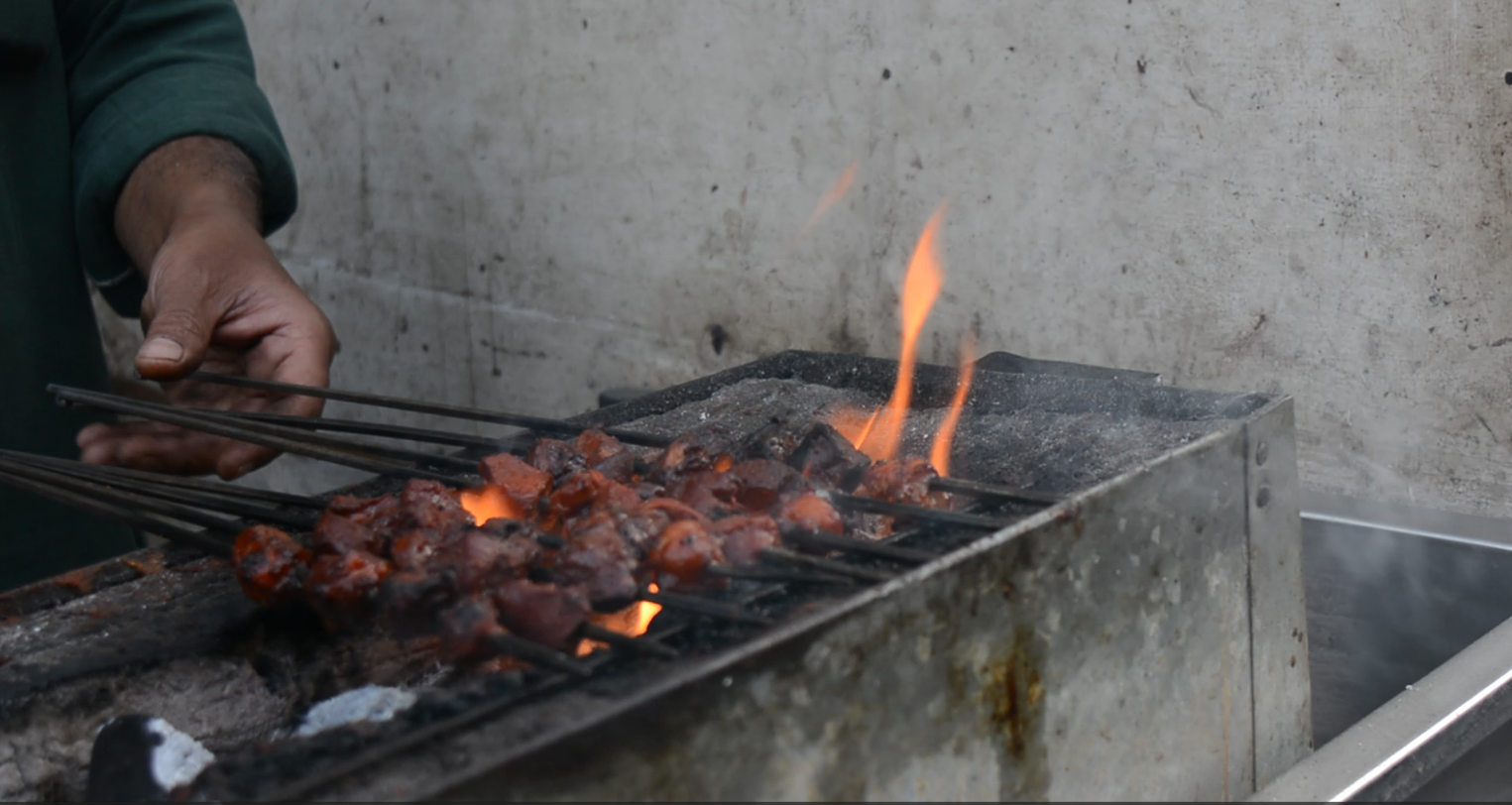
Mohammad Mustaqeen, a 54-year-old food vendor in Delhi, has stopped using cooking gas altogether. “Now that there is no gas, I am cooking with coal,” he says, describing a shift he never expected to make after years of relying on liquefied petroleum gas (LPG) cylinders.
The escalating war in the Middle East is forcing many countries into difficult energy trade-offs as they decide whether to curb consumption or bear rising costs amid tightening supplies.
India is particularly vulnerable as it depends heavily on LPG imports from the Persian Gulf region.
Its supplies have dwindled since Iran shut the Strait of Hormuz, the critical maritime route that carries almost a quarter of the world’s crude oil and a fifth of its gas shipments out of the Middle East.
Advertisement
India uses over 31 million tonnes of LPG every year and imports about 62 per cent of that demand, according to TheHindu.
Authorities are responding to the shortage by assessing available reserves, seeking alternative supply sources, encouraging conservation, and attempting to contain price rises. These measures, however, come with consequences. Attempts to cut energy use are affecting economic activity, while prioritising LPG for household cooking is putting commercial users like eateries and small businesses under operational strain.
For Mustaqeen, forced to shift from LPG to coal overnight, the change is not just about fuel but a sense of reversal.
“Instead of moving forward, we’re moving back in time,” he says. With no regular electricity supply and no access to a fixed shop, alternatives such as induction cooking are not viable.
Advertisement
Mohammad Mutaqeen cooks kebabs on coal in Old Delhi (Namita Singh/The Independent)
Across the Indian capital, particularly in areas without piped natural gas like in the central district of Old Delhi, residents and businesses describe similar disruptions.
The Independent visited multiple LPG distribution outlets across the city where lines lasted hours, shutters came down early, and many were left empty-handed.
Many residents visited an outlet of Indane – one of the largest packed-LPG brands in India – near Delhi Gate repeatedly over several days in the hope of securing a cylinder. Some waited for hours simply to obtain paperwork that might eventually yield a cylinder.
Advertisement
Anjum, a 31-year-old from the Daryaganj area, says she has been trying to secure a cylinder for weeks. “I booked my LPG cylinder back in February,” she says. “But I’ve been unable to get it delivered and my visits to Indane agency sites haven’t yielded any result either.”
Her attempts have involved making repeated trips during the Ramadan fasting hours. “I stand in long queues,” she says. “But by the time my turn comes, the shop shuts down.”
She blames the authorities for her troubles. “It is the government’s negligence,” he says. “Because of the government’s laxity, the common man is suffering.”
Advertisement
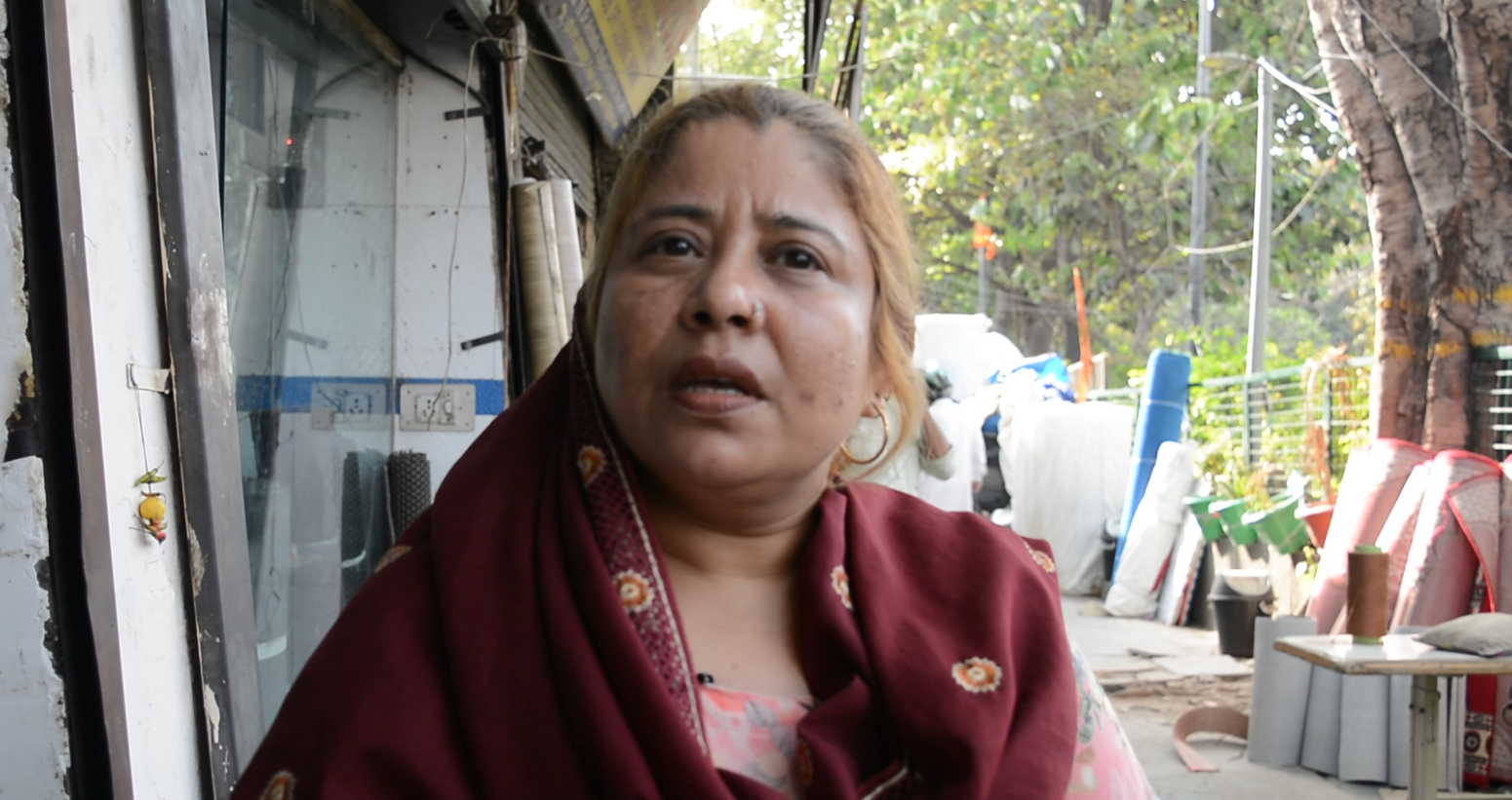
Anjum, 31, blames the government for the LPG shortage (Namita Singh/The Independent)
For Mohammad Naseer, 45, the shortage means a loss of his livelihood. He sells fried food but is unable to operate now.
“I have had to shut my business for lack of a cylinder,” he says. “I used to earn about Rs500 (£4) per day. The income has come down to zero.”
After days of waiting at a gas agency outlet, he obtained a paper slip that would allow him to purchase a cylinder elsewhere. “Now I have to go to Yamuna Bazaar where I have to stand in a line and then I will get a gas cylinder,” he says.
Deepak Kumar, a Chandni Chowk resident, says repeated visits to the local gas agency have yielded no success. “For the past 3-4 days, I have been coming daily for the booking,” he says. “I am only told to wait.”
Advertisement
With each passing day, the uncertainty is growing. “I am tense now, what will happen if I don’t get it?”
The impact extends beyond households into the capital’s dense network of small food businesses.
Surjit Singh Arora, 74, who has run Amar Jyoti Restaurant since 1965, says the shortage is affecting cooking methods as well as customer demand.
“It is difficult to find alternatives in the short term,” he says. While his experience has helped him adapt, the transition has not been smooth. “Cooking style is very deeply affected. My fried items have been affected. My tandoori items are compensating but the cooking process has slowed down.”
Advertisement
The slower pace of cooking has translated into financial losses. “A customer won’t wait if cooking is taking so long,” he says. “Sales are affected.” He estimates a drop in his income of about 25 per cent, rising to 30 per cent on weekends.
Some dishes have disappeared from the menu altogether. “Some of my dishes that are pan-fried I’m no longer able to serve,” he says. “South Indian food that needs steam to cook and momos are very popular, and they have gone off the menu.”
To cope, Arora has shifted part of his cooking to his home where piped natural gas is available. “Stuff like kidney beans, chickpeas that I can boil I get from home,” he says. “I now wake up early to prepare for the restaurant.”
Advertisement
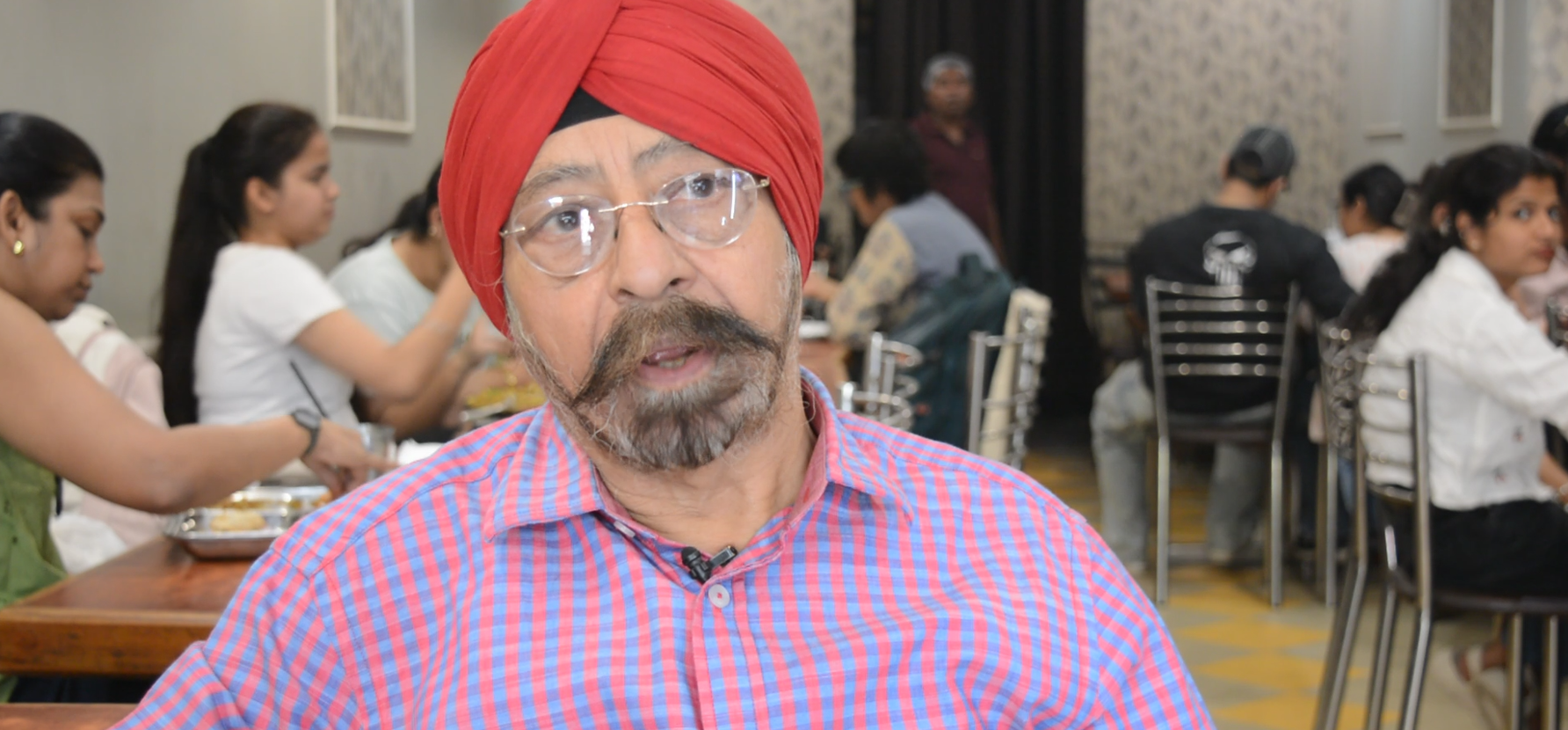
Surjit Singh Arora says business is down about 25 per cent due to the LPG shortage (Namita Singh/The Independent)
At LPG distribution centres, meanwhile, employees face mounting pressure from increasingly irate customers.
Meghraj Singh, a 26-year-old LPG agency worker, says tension is palpable. “Customers are worked up and tense. Some of them are even fighting with us.”
He describes long queues throughout the day. “From 9am to 3pm, the queues are really long. Some people are actually crying.”
The shortage has also triggered a political slugfest.
Advertisement
In parliament, opposition leader Mallikarjun Kharge said the shortage was affecting “the poor, middle class, restaurants, hostels and commercial users” and questioned the government’s preparedness.
Government representatives have disputed claims of a widespread shortage. Petroleum minister Hardeep Singh Puri said that there was no supply-side crisis, attributing the ongoing disruptions to panic booking and hoarding. Officials are urging consumers not to panic and claim measures are in place to ensure distribution.
Sujata Sharma, joint secretary in the petroleum ministry, said they were monitoring the situation and acting against irregularities. “In the present situation, when we are facing a somewhat difficult phase regarding LPG supply,” she added, “the role of state governments and local administrations becomes very important, particularly in preventing hoarding and black marketing.”
Inspections and raids have been carried out and consumers have been encouraged to rely on online booking systems.
Advertisement
The federal government has prioritised domestic LPG supply over commercial use and encouraged a shift to piped natural gas where available.
It has also set up a committee to assess commercial demand and allocate supplies accordingly.
Authorities emphasise that broader fuel supplies are stable, with refineries operating at full capacity, and there are no reported shortages of petrol or diesel.
Advertisement
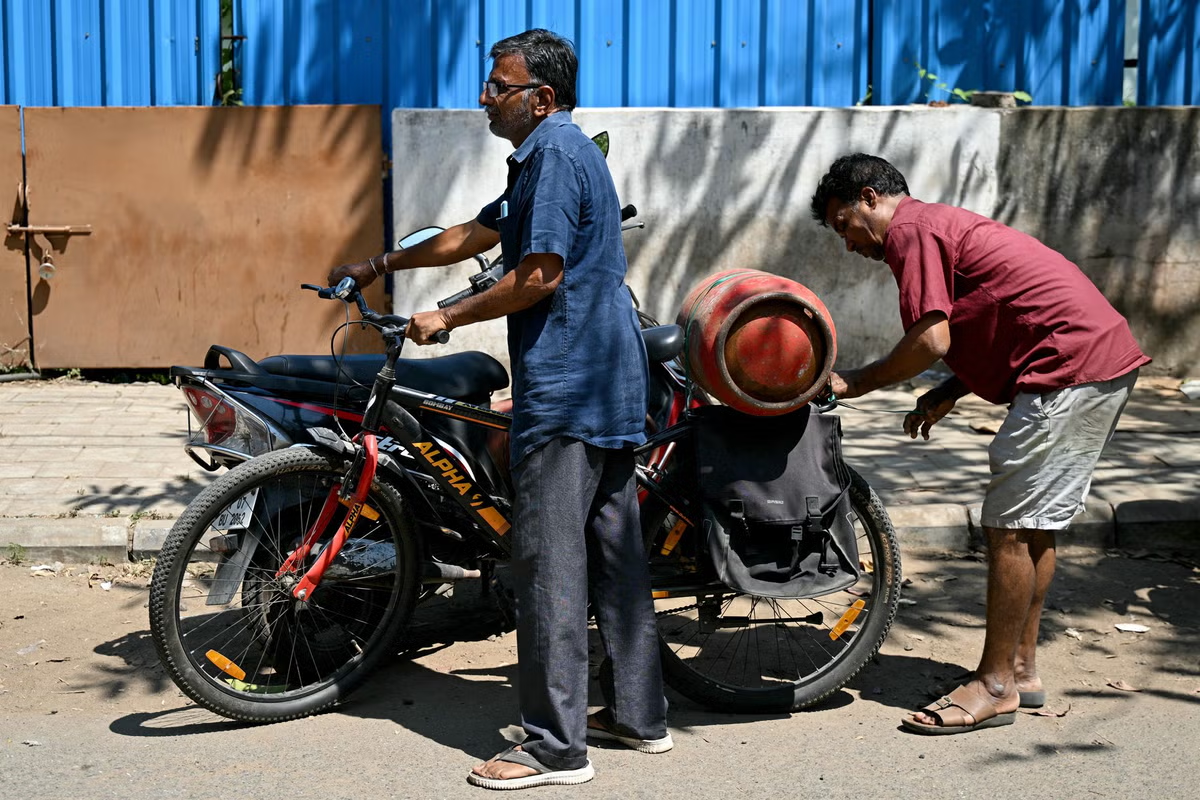
A man fastens a newly purchased LPG cylinder onto his cycle outside a gas agency in Chennai on 11 March 2026 (AFP via Getty)
Energy experts say the disruption underscores how hard it’s for Indian households to shift away from LPG, even where alternatives exist.
Sunil Mani, a policy advisor at the International Institute for Sustainable Development, says the challenge goes beyond simply introducing new technology.
“The shift to cleaner cooking in India is not just about technology, it’s about affordability, reliability, and how people cook,” he tells The Independent.
For many low-income households, he notes, subsidised LPG remains the only practical clean fuel as electric cooking requires upfront investment in appliances and depends on stable electricity supply, which is not universal.
Advertisement
As a result, alternatives, such as induction stoves, tend to supplement rather than replace LPG. This becomes more visible during supply disruptions when households and businesses attempt to switch fuels but face practical constraints.
At the same time, recent shortages affecting commercial users highlight broader pressures in India’s cooking fuel system. Mani says prioritising LPG for domestic consumption may offer short-term relief but it also exposes the risks of heavy reliance on imports and the need to diversify cooking energy sources.
On paper, he notes, electric cooking is already cost-competitive. Before the recent price increases, it was about 15 per cent cheaper than LPG. Now, the gap is nearly 20 per cent for many households. However, these savings aren’t evenly accessible, particularly where electricity supply is unreliable.
Encouraging urban households with dependable power to shift can ease pressure on the demand for LPG, Mani says, helping ensure supply for poorer families supported by subsidy schemes such as the Pradhan Mantri Ujjwala Yojana.
Advertisement
In the longer term, he says, scaling up electric cooking may significantly reduce the dependence on LPG imports.
“Over time, gradually scaling up electric cooking could cut LPG demand by up to 50 per cent by 2050, strengthening India’s clean cooking transition and overall energy security.”
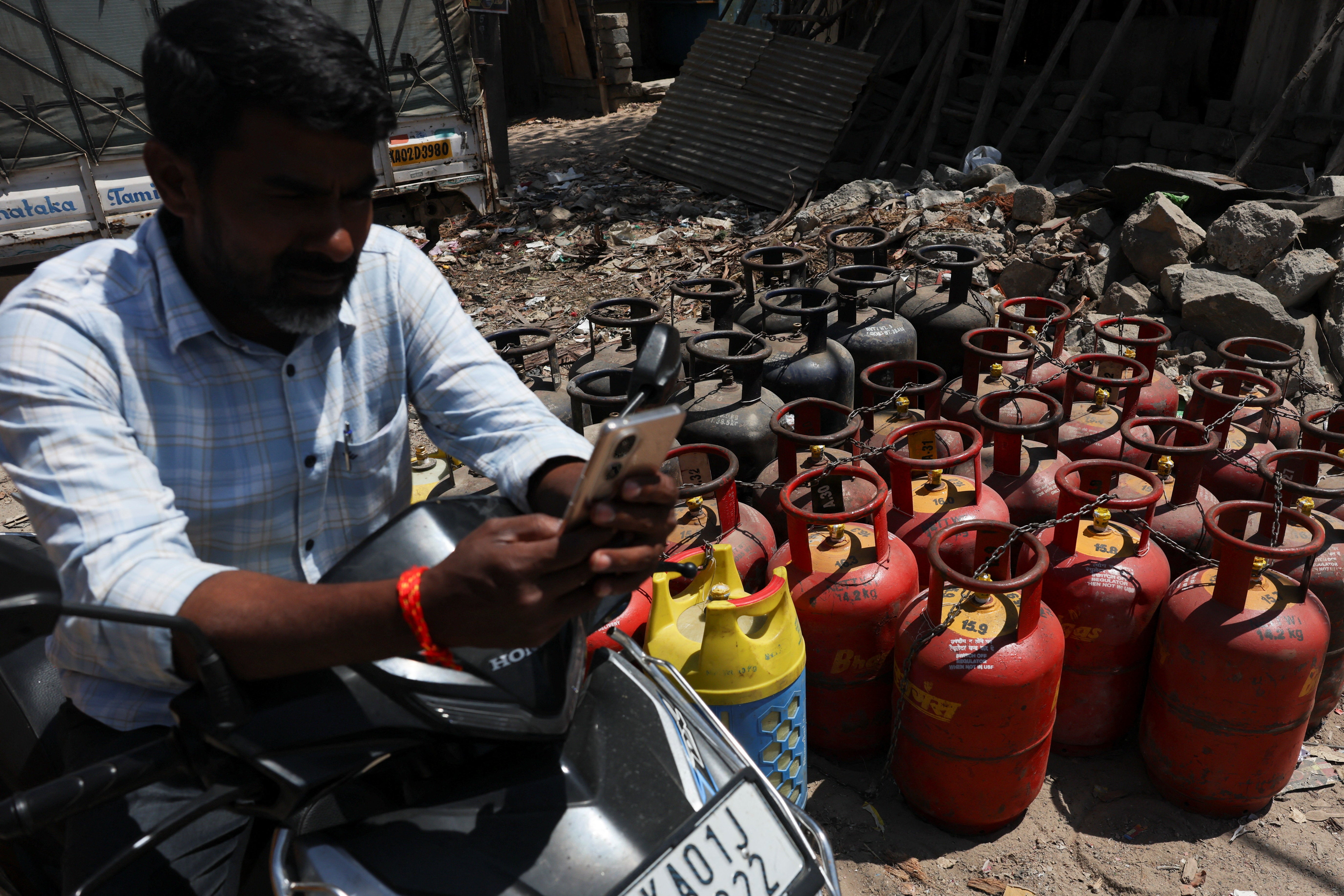
A man sits on a scooter next to LPG cylinders in Bengaluru (Reuters)
Analysts warn the strain on supplies is exposing long-standing structural gaps in how India stores and sources LPG.
Advertisement
Hemant Mallya, a fellow at the Council on Energy, Environment and Water, says the country does maintain some storage, but at a scale that falls far short of demand.
“We do have underground storage but the combined capacity, I think, is 140,000 metric tonnes, which is not sufficient,” he tells The Independent, noting that India consumes close to 33 million tonnes annually.
That mismatch is compounded by the nature of India’s refining system. “India imports a lot of medium grade crude oil and heavy grade crude oil and the amount of LPG inherent in crude is substantially lower,” he says, adding that domestic production remains limited.
The dependence on imports has shaped how infrastructure has evolved. “Because we produce very little LPG at refineries, the storage at refineries isn’t sufficient,” he points out, explaining the system is designed around continuous supply rather than large reserves.
Advertisement
Efforts to build larger stockpiles have been slow, in part due to cost and geography. “Officially, India does not have a strategic petroleum reserve policy,” Mallya says, “they have been increasing the LPG storage but clearly not at a pace that would bring contingency.”
“It’s almost like nobody envisioned that it would be this bad.”
Building reserves requires significant capital with limited immediate returns. “If you have to keep one day’s worth of reserve, that’s literally $250m,” he says.
“Imagine if you want to keep a month’s worth. That’s the amount of capital that will be locked in without any return.”
Advertisement
Geological constraints also play a role. Suitable underground sites must be stable and leak-proof, and unlike some countries, India cannot easily repurpose depleted oil and gas fields at scale.
Then there are technical constraints in buying LPG from alternative suppliers. “LPG is a combination of butane and propane,” Mallya notes. “In India, the proportion is 60 per cent butane and 40 per cent propane. That’s not necessarily the ratio in which the US would sell their LPG.”
Even as policymakers encourage alternatives such as piped natural gas, access remains uneven. “If you go further away from urban areas, the density is so low you’ll have to put much larger pipeline networks and therefore capital for much lower returns,” Mallya says, adding that gaps persist even within cities due to housing and documentation barriers.
Taken together, these constraints mean that while crude oil supplies may remain stable, LPG availability, despite being a by-product of crude oil, can tighten quickly under stress – leaving households and businesses exposed when imports are disrupted.
I tested these TVs in a home environment, examining every part of the experience. That starts with how easy the TV is to set up, from the stand or feet through to what the menus offer and how easy the remote control is to use.
I’m interested in the build and design, as well as the sound quality and whether the TV will need pairing with a soundbar. The connections are also tested, using games consoles and disc players.
But ultimately, it’s the picture performance that examining, watching a full range of content from broadcast TV and the latest streaming hits, through to tried and tested Ultra HD Blu-ray discs for the highest quality.
Advertisement
I test the screen in daylight and dark conditions and determine what tweaks it might need to get it to look its best. For some people, this is part of the fun, but others understandably just want a TV that looks great straight out of the box.`
Telegraph Recommended reviews are never shared with product manufacturers before publication, we don’t accept payment in exchange for positive reviews, nor do we allow brands to pay for placement in our articles. Visit our Who We Are page to learn more.
The popular hotspot near Inversnaid is facing the closure from the end of the month for vital safety and access changes ahead of the busy summer season.
A popular Stirlingshire beauty spot is set to close for up to three months ahead of the peak summer season for safety and access improvements.
Advertisement
The Falls of Falloch, north of Inversnaid, have become a regular stopping off point for visitors looking to enjoy a tranquil setting away from the hustle and bustle.
But an increase in visitor numbers at the site in recent years has led to an uptick in accidents and incidents at the falls, with officials from the Loch Lomond and the Trossachs National Park (LLTNP) swinging into action to alleviate the issues.
The authority says that rise in tourist numbers has created a need refreshed paths, safer parking arrangements and improved access to better care for the surrounding woodland, riverside and waterfall environments.
A temporary closure of between 10 and 12 weeks has been put into place from March 30 to help with the necessary installations for the long-term health of the spot.
Advertisement
Stuart Mearns, Director of Place, Loch Lomond & The Trossachs National Park Authority, said: “Falls of Falloch is a place many people care deeply about and want to visit.
“It’s popularity has, over time, created a need for improvements to protect the site’s environment and ensure a safe visitor experience.
“As part of our Place Programme, this project delivers long-term infrastructure investment that strengthens the site’s resilience, improves visitor safety and access, and supports the recovery of surrounding habitats.
“These works are about ensuring a much-loved location can continue to welcome visitors while safeguarding the natural features that make it such an iconic part of the National Park.”
Advertisement
The investment project will introduce redesigned parking bays, including a dedicated turning area to reduce hazardous roadside manoeuvres near the A82.
It will also implement clearer and more durable walking routes, new protective barriers, updated signage and nature interpretation, and measures to support woodland ecology and habitat recovery will be delivered as part of the upgrade.
When the works are completed, motorhomes, caravans and vehicles over six metres in length will no longer be permitted on site as part of moves to reduce congestion in the area at busy points and safeguard the nearby environment.
Advertisement
During the closure, visitors are encouraged not to visit the Falls either on foot or in a vehicle and instead explore alternative nearby locations with parking, including Tarbet, Inveruglas and the Dalrigh car park in Tyndrum.
Mr Mearns continued: “While works are underway, we’re asking visitors to avoid the site and not to stop or park on clearways along the A82 at any time.
“Keeping the road clear reduces risk on what can be a very busy route and allows construction to progress smoothly.
“When the site reopens, these improvements – including new restrictions on motorhomes, caravans and vehicles over six metres – will play a key role in managing visitor pressures and supporting a healthier, better-functioning site for years to come.”
Detective Chief Superintendent Donna Smith, of the Met’s Roads and Transport Policing Command, said: “It is tragic whenever anyone is killed or seriously injured on our roads, and speeding remains a major factor, which is why our officers are totally committed to reducing that risk.
WASHINGTON (AP) — Jay Allen is a fan of President Donald Trump, and voted for him on the belief that the Republican would cut taxes and trim regulations, helping his manufacturing business in northeast Arkansas.
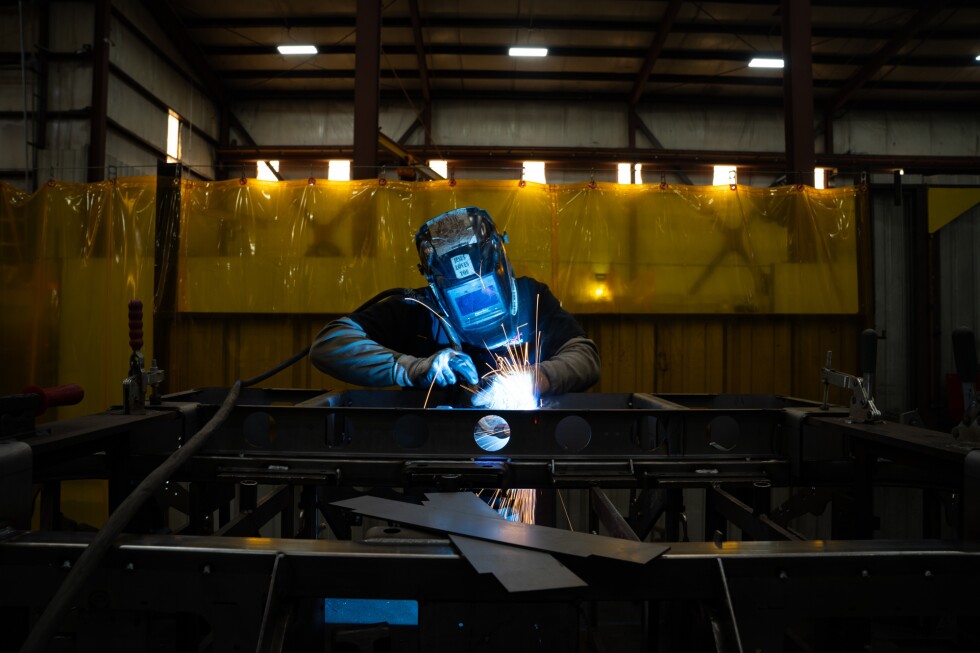
But the tariffs at the core of Trump’s economic agenda have wreaked havoc on his company, Allen Engineering Corp., which makes industrial equipment used to install, finish and pave concrete. The import taxes have raised the costs of engines, steel, gearboxes and clutches made abroad that Allen needs to build power trowels that can sell for up to $100,000 each.
Allen said he ran his company at a loss in 2025 because of tariffs. His payroll has fallen to 140 workers from a peak of 205. To get by this year, he has hiked prices by 8% to 10%, even though that might mean fewer sales.
Advertisement
“What’s really sad is the unintended consequences of his tariffs are hurting manufacturing in our country,” said Allen. “Unfortunately, the working-class people are getting squeezed.”
Manufacturing jobs have declined during Trump’s first year back
Factories continue to shed workers, with 98,000 manufacturing jobs lost during Trump’s first full 12 months back in the White House. American companies that foot the bill for tariffs are now suing the Trump administration for more than $130 billion in tariff refunds. Meanwhile, the federal deficit is projected to climb over the next decade.
The White House maintains that construction spending is high, more workers are being hired to build factories, new investments are being made and labor productivity in manufacturing is increasing — which could eventually fuel a factory revival.
Advertisement
“It takes time to get production online, and therefore it will be some more time before we fully materialize the benefits of the president’s policies,” Pierre Yared, the acting chairman of the White House Council of Economic Advisers, said in an email.
Construction is up — but that’s due to Biden’s bill
Some of the bright spots in construction cited by the White House appear to be the result of programs launched by then-President Joe Biden, a Democrat.
Factory construction spending began to accelerate in 2022 with the anticipation of government support from Biden’s CHIPS and Science Act, which included big subsidies for computer chip plants. The law was a primary contributor to a historic surge in the annualized rate of construction spending on manufacturing facilities, said Skanda Amarnath, executive director of the economic policy group Employ America.
Construction spending on factories has slipped during Trump’s presidency, but the pace remains relatively high largely because of continuing work on Biden-era projects in Arizona, Texas and Idaho, Amarnath said.
Advertisement
Amarnath has also gone through the interviews regional Federal Reserve banks have held with businesses. Those comments show some companies might expand by taking advantage of Trump’s tax breaks on investments in equipment and new buildings.
But while the pharmaceutical drug sector might be expanding, the comments show no overall uptick in manufacturing because of Trump’s tariffs.
“You don’t get the sense that there is this new manufacturing renaissance underway,” Amarnath said.
Uncertainty in tariffs has deterred investments
Based on orders, proclamations and other statements, Trump has taken more than 50 actions on tariffs so far — and that tally doesn’t include the tariff threats he regularly makes on social media or in conversations with reporters but hasn’t formally put in place.
Advertisement
The flurry of announcements, reversals, exemptions and legal challenges — as well as Trump’s decision to bypass Congress to impose tariffs — has made it difficult for smaller manufacturing companies to plan.
For example, Allen Engineering imports its 75-horsepower diesel engines from Germany. Building them in the United States would require a $20 million investment — a huge risk if the status of the tariffs is unclear.
Are engine-makers “going to spend that kind of money to move production from Germany to the U.S. when they don’t know what the landscape is going to be in three years?” Allen said. “I don’t know who is going to be in the White House, and what the stance is going to be on these tariffs.”
Joseph Steinberg, an economist at the University of Toronto, said research shows that under the best-case scenario “it would take a decade for manufacturing employment to rise above where it was before tariffs were enacted.”
Advertisement
But Steinberg said “the current situation is nothing like the ‘best case,’” since U.S. trade policy is unsettled and that leaves companies reluctant to expand.
Equipment makers have been hit hard by rising steel costs
About 98% of U.S. manufacturing establishments have fewer than 200 workers, according to Census Bureau data, and don’t have the kind of name-brand recognition or lobbying heft to minimize the damage from tariffs that big players like Apple, General Motors and Ford possess.
The Association of Equipment Manufacturers in February reported that America’s share of global manufacturing severely lags China’s. The group has urged tax credits to offset the expense of tariffs, and specifically called for tariff relief on raw materials, parts and components that cannot be acquired domestically at scale.
Steel tariffs have been a particular concern. Trump imposed them last March and hiked them to 50% in June. They were not affected by the Supreme Court decision.
Advertisement
Trump has credited the tariffs with restoring profits at American steel mills. But they have hurt companies that use that steel, like Calder Brothers in South Carolina, which makes equipment to pave asphalt.
“The steel tariffs were the first thing that got my attention,” said Glen Calder, the company’s president. “My steel pricing jumped 25% two weeks before the tariffs went into effect for domestic steel. The market price just jumped. It has stayed elevated.”
But the U.S. manufacturing trade imbalance rose last year under Trump instead of narrowing. Meanwhile, China’s trade surplus with the world climbed to a record $1.2 trillion.
Advertisement
This trend exposes one of the big problems with Trump’s tariff strategy, said Lori Wallach, director of the Rethink Trade program at American Economic Liberties Project. She noted that he largely bypassed Congress and failed to address gaps in the World Trade Organization’s rules for the trade frameworks that he negotiated with other countries.
Instead of working with partners to ensure there were penalties for foreign manufacturers with abusive labor practices and unfair subsidies, Trump chose against rallying partners to counter China as a unified group. American manufacturers are at a disadvantage, Wallach argued, because there is not a coalition of nations that can impose penalties for currency manipulation, subsidies and schemes to evade tariffs.
“The general revulsion of this administration to international cooperation means they’re trying to do it alone,” Wallach said.
Turner, the MP for East Hull, told HuffPost UK that he welcomed Rayner’s intervention.
Advertisement
He said: “It is refreshing to see a senior Labour politician come out and speak clearly to the situation we find ourselves in.”
Turner, a fierce critic of the government’s plans to scrap most jury trials, said there is “a great deal of discontent on the Labour benches”.
“This isn’t what whips would describe as ‘usual suspects’, this is loyal MPs pulling our hair out at the leadership of the party,” he said.
“We are incredibly frustrated both at the direction the party since July 2024, when we were given the chance to prove that we can govern the country in the best interests of the vast majority.
Advertisement
“We cannot continue with more of the same.”
Although Turner said he still supports Starmer’s leadership, he needs to urgently up his game as Labour continues to trail badly in the opinion polls.
And he said the elections for the Scottish Parliament, Welsh Senedd and English councils on May 7 were D-Day for his premiership.
He said: “The PM needs to listen hard to what his PLP are saying. We cannot be treated with contempt.
Advertisement
“We aren’t just voting fodder to get ludicrous, ill-thought policy through.
“There will be a revolt in the PLP and I am afraid that it’s a few weeks away. If we do badly in Scotland, Wales and up and down regions of England the PM will undoubtedly face a challenge.
“We need better leadership – hard working Labour MPs, councillors and other politicians deserve that.”
Turner added: “We have the ability to change people’s lives for the better.
Advertisement
“Sadly, the focus up to now has been far too timid. We can and must do better.”
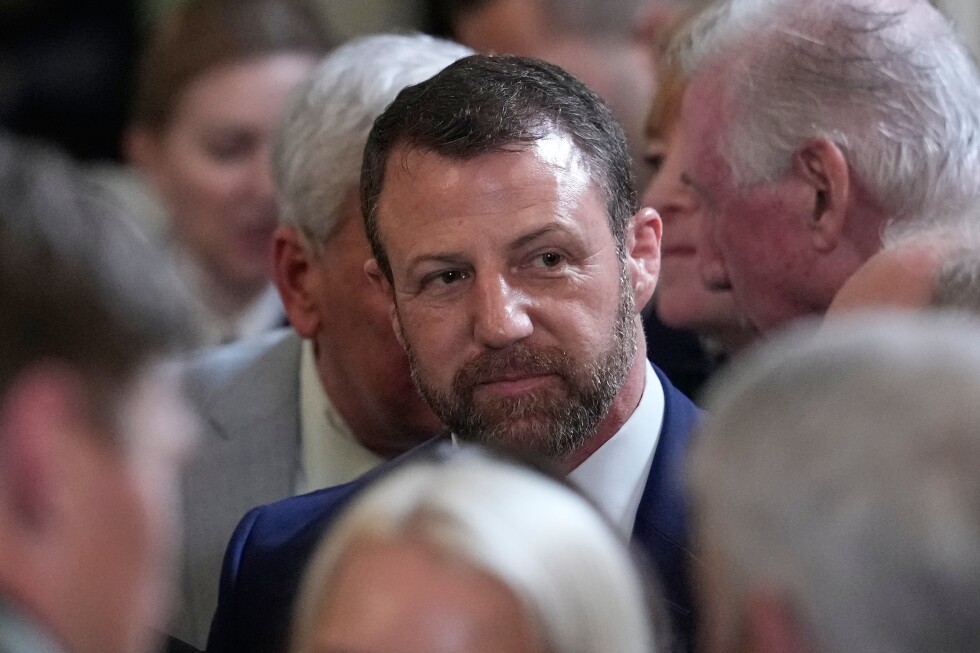
WASHINGTON (AP) — Markwayne Mullin, President Donald Trump’s pick for Homeland Security secretary, appears before senators on Wednesday for his confirmation hearing and will face questions over his vision for a department tasked with carrying out the Republican administration’s push for mass deportations.
Mullin, an Oklahoma senator, has spent 13 years in Congress and has emerged as a close ally of the president’s. If confirmed, he would replace outgoing Secretary Kristi Noem, who was fired earlier this month amid mounting criticism of her leadership of the Department of Homeland Security.
The hearing will be the first opportunity for lawmakers and the public to hear directly from Mullin about how he intends to run the third-largest department in the Cabinet. The sprawling department, with a workforce of roughly 260,000 employees, oversees a diverse mission set of responsibilities ranging from protecting the president from a bullet to helping states recover from disasters to deporting people in the country illegally.
Mullin is a former mixed martial arts fighter who ran a plumbing business in Oklahoma before running for Congress. He has in the past indicated support for immigration operations, and he’s expected to be a faithful ally for Trump’s agenda if he is confirmed for the top job at DHS.
Advertisement
“Whether it be protecting the homeland from bad actors, stopping dangerous drugs from flowing into American communities, or removing the worst-of-the-worst criminal illegal aliens, Senator Mullin will work tirelessly to implement the President’s agenda,” White House spokeswoman Abigail Jackson said in an emailed statement Tuesday.
The president’s immigration agenda and how Mullin intends to execute on it is expected to be a key line of questioning as Democrats drill down into Mullin’s views. The hearing comes as the president’s mass deportations agenda is at a crossroads, and Mullin will face pressure to reach the president’s lofty deportation goals when the public mood has soured over the aggressive way immigration enforcement operations have been carried out.
Anger over the Trump administration’s immigration enforcement tactics has prompted Democrats to refuse to fund DHS until it makes a series of changes to its officers’ conduct.
In an opening statement released ahead of the hearing, Democratic Sen. Gary Peters of Michigan, the ranking member on the Senate Homeland Security and Governmental Affairs Committee, said the Democrats were asking for “straightforward” reforms in line with rules police departments follow. Peters underlined the challenges that Homeland Security is facing from threats from Iran to criminal hackers and said the department needed someone with a “steady hand.” But Peters said he had “reservations” about whether Mullin was ready to assume such a significant role.
Advertisement
As the latest partial government shutdown drags on, there have been long security lines at a growing number of U.S airports as security screeners go into another month without pay. Republicans have repeatedly charged that Democrats are risking the nation’s national security by blocking funding to the department.
Under Noem, intense enforcement operations were launched in places including Los Angeles, Chicago and Minneapolis, where immigrants were rounded up in arrest sweeps and protesters clashed with federal officers.
Activists and politicians accused DHS officers of smashing car windows, roughing up bystanders who tried to record their activities and detaining immigrants in squalid conditions. The shooting deaths of two protesters — Renee Good and Alex Pretti in Minneapolis — contributed to swelling criticism of Trump’s immigration agenda.
Homeland Security has said that its officers are responding with force only when necessary and have blamed activists and politicians, who they say are dialing up the rhetoric against their officers.
Advertisement
Mullin also will likely face questions about the future of the Federal Emergency Management Agency, or FEMA, which is in the middle of a tumultuous reform process after Trump said he wanted to overhaul it, if not eliminate it.
Noem led a Trump-appointed FEMA Review Council that was set to recommend sweeping changes to how the federal government helps states, tribes and territories prepare for, respond to and recover from disasters. The reforms had the potential to drastically reduce federal support for disasters and put more responsibility on local jurisdictions.
Meanwhile, under Noem’s leadership, all contracts above $100,000 had to wait for her approval. That led to long delays for states desperate for reimbursements for money they’d already spent on things like storm debris removal.
Trump said he was making Noem a special envoy for a new security initiative that would focus on the Western Hemisphere. Noem thanked Trump for the appointment and touted her accomplishments as secretary, saying she made “historic accomplishments” at DHS to make America safe.
In its ruling to award Morocco the title, Caf also “partially upheld” an appeal against an incident involving ball boys in the final, and reduced the Moroccan FA’s fine for the incident.
In torrential rain, Senegal goalkeeper Edouard Mendy regularly dried his gloves, but the ball boys repeatedly tried to discard his towel.
At one point Senegal reserve goalkeeper Yehvann Diouf was tackled to the ground by three ball boys and dragged around on the floor when he tried to intervene.
A fine for fans shining lasers at players on the pitch was also reduced by Caf.
Advertisement
Caf’s former head of disciplinary, Raymond Hack, questioned the decisions made by African football’s governing body and suggested there is a perception of “political interference” as “the president of the Moroccan Football Association [Fouzi Lekjaa] is the first vice-president of Caf”.
“The circus continues,” Hack told BBC World Service.
“A lot will depend on the referee’s written report, but the fact that the referee allowed the game to continue and they went into extra time gives the impression that he was satisfied that the game will continue.
“He is the only person who can call an end to the game. Not the authorities, not the governing bodies, only the referee.
Advertisement
“Otherwise you’re going to have situation worldwide where every time someone disagrees with a decision, they’re going to go on appeal or take it to court or something ridiculous like that.
“The game should be won on the field of play not in a boardroom.”
Hack, a lawyer and a member of Fifa’s disciplinary committee, said the Morocco players should have informed the referee they were playing under protest if they intended to challenge the result.
He also said it could take six months for Cas to rule on Senegal’s appeal.
Advertisement
Moroccan journalist Jalal Bounar told Newsday that Caf’s decision had been welcomed “with great excitement and joy across the country”.
“Morocco appealed the decision to the confederation of African football because they believed that Senegal had broken the rules during the match, and that’s why Moroccans went out to celebrate,” he said.
“If they give it to Senegal, it won’t be the end of the world. We will accept because we are satisfied that we reached the final.”
However, north African journalist Maher Mezahi said such a sentiment is not matched across the continent.
Advertisement
“It does seem like the rest of Africa feels outraged by this because it seems like, once again, the Confederation of African Football has almost disgraced the sport,” he told BBC Radio 5 Live.
Mezahi cited Caf’s decision to ban Togo from two Africa Cup of Nations for quitting the 2010 competition following a gun attack on their team bus in Angola two days before the tournament.
Referring back to Caf’s decision on the 2025 final, he said: “They have, unfortunately, come up with a habit of releasing decisions like this – whether it’s the disciplinary committee or the appeals board – that eventually do get shot down at the Court of Arbitration for Sport, but it makes the entire thing look very amateurish.”
From now on daytime will be longer than night-time
Steffan Rhys Deputy Content Hub Director
12:04, 18 Mar 2026
Longer days have officially arrived. Depending on where you live in the UK, yesterday and today mark the Spring equilux, the precise moment when sunlight and darkness are evenly split at 12 hours apiece.
From this point onwards, daylight hours will exceed night-time hours, reports the Liverpool Echo, a much-anticipated development for millions following a prolonged and dreary winter. However, two significant calendar milestones in the coming days promise even brighter prospects. First, the Spring equinox arrives on Friday, March 20, signalling the beginning of astronomical spring. Then next Sunday (March 29), the clocks spring forward, delivering considerably longer and brighter evenings for everyone.
Advertisement
What is the Spring equilux?
Whilst most people are familiar with the Spring equinox, fewer understand the Spring equilux – arguably the occasion we ought to be marking. At the equinox, occurring this year on Friday, March 20, a measurement is recorded when the centre of the Sun aligns with Earth’s horizon and we experience 12 hours between sunrise and sunset, meaning day and night are equal lengths.
But the upper edge of the Sun actually becomes visible before that, initially at sunrise. And there remains illumination for a brief period even after the sun disappears from view, adding slightly more time to daylight hours. This means that the date when day and night are genuinely equal occurs prior to the equinox. For the northern half of the UK it was yesterday, March 17, while for the southern half it is today, March 18.
What is the Spring equinox?
The Spring equinox consistently falls between 19-21 March. This year, it’s set to occur on 20 March, precisely at 2.45pm. The event takes place simultaneously worldwide – however, in the northern hemisphere it signifies the commencement of Spring, whilst in the southern hemisphere it heralds the onset of Autumn.
This date is dictated by the Earth’s axial tilt as it orbits the Sun. During the equinox, the tilt is neither towards nor away from the Sun, resulting in equal sunlight reaching both the northern and southern hemispheres (the term “equinox” originates from Latin, where ‘equi’ means “equal” and ‘nox’ translates to “night”).
When is the first day of Spring?
Many of us are likely accustomed to considering 1 March as the inaugural day of Spring, with March, April and May constituting the Spring months. This is also the perspective adopted by weather forecasters. However, this year’s Spring equinox on 20 March additionally marks the advent of astronomical Spring.
When do the clocks go forward in 2026?
For those who relish extended evenings, increased daylight and the general arrival of Spring and Summer, the date when the clocks spring forward is a significant occasion. In 2026, the clocks will advance at 1am on 29 March.
Following a winter that has seemed particularly lengthy and damp, this will be a much-anticipated day for millions. This shift also denotes the conclusion of Greenwich Mean Time (GMT) and the start of British Summer Time (BST).
Whilst this will initially result in darker mornings for early risers, the trade-off will be evident later in the day as the evenings become noticeably brighter.
The group of Scouts from the region have been selected to head to the prestigious global event – and surprised climbers on a local slope with a special coffee spot..
Hillwalkers taking on a chilly early spring walk on a Stirling peak enjoyed a special treat on Sunday as a troop of local Scouts offered hot drinks at the summit.
Advertisement
The pop-up coffee shop is the first of several appearances being planned by the Scouts from Stirling and Dunblane over the coming months at Dumyat as part of their fundraising efforts to help with the costs of representing Stirlingshire at the World Scout Jamboree.
The Jamboree will see 50,000 Scouts from all over the world gather in the Polish city of Gdansk in July 2027, with the event representing the highlight of the calendar.
Fourteen Scouts from the region have come through the tough selection process to make the trip and a group of Scouts and helpers scaled the local peak to serve ramblers a selection of hot drinks, soft drinks, biscuits and cakes.
Seven further days are planned throughout the spring on various Sundays.
Advertisement
Paula Connar, unit leader for the central Scotland region said: “The World Jamboree is a fantastic experience in building confidence in young people and in building connections between Scotland and Scout groups all over the world so it will be a fantastic experience for these local young people.
“We do need your support to get there though, so please do look out for the group on future Sundays up Dumyat through the spring and treat yourself to a well-earned coffee and cake, and any donations to the GoFundMe will be hugely appreciated too.”
Thomas Pankhurst of Riverside, who is also doing ironing and odd jobs to support his fundraising, added: “I’m so excited to be representing Stirling and Trossachs at the World Jamboree.
“I’m most looking forward to meeting the other Scouts from all over the world, and swapping our Scottish neckies for ones from other countries.”
Advertisement
Anyone wanting to support the youngsters without scaling Dumyat can also donate to their GoFundMe atwsj2027.abct.net.
Wallace High student Oliver Taylor, who is also washing cars to support his fundraising, said: “I’m excited to meet new people, make new friends and to be part of something that doesn’t happen very often.
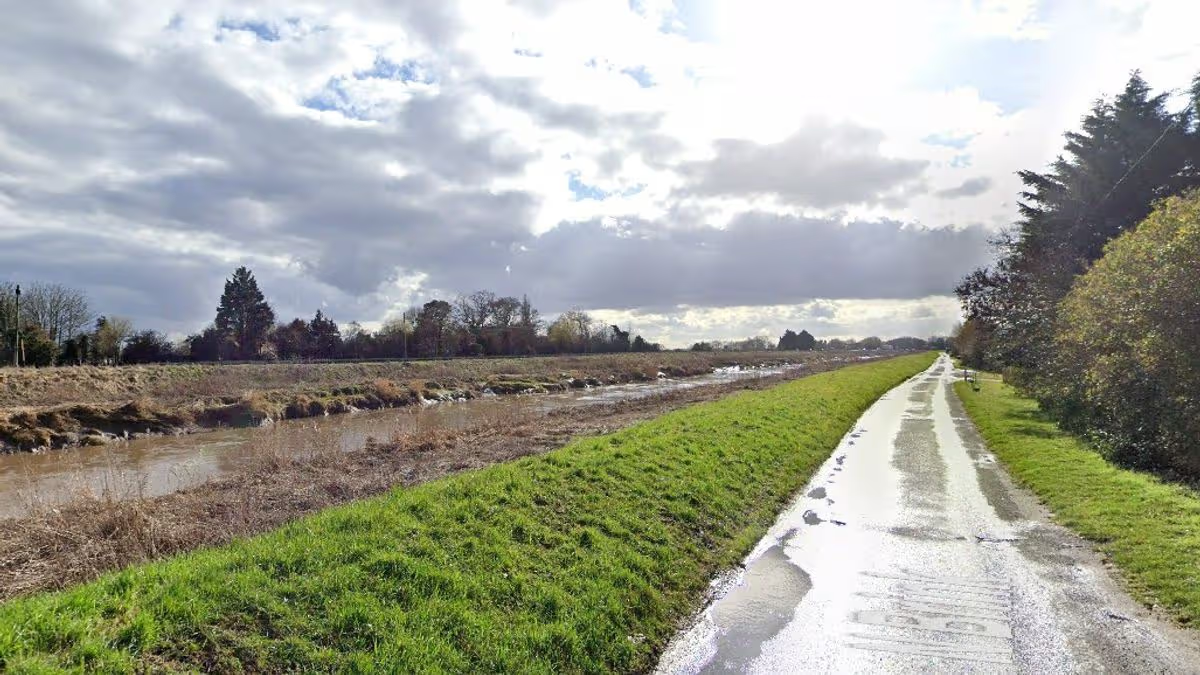
The car left North Brink and entered the River Nene
Cambridgeshire Police are searching for two people after a car left the road and entered the River Nene near Wisbech. The car was travelling southbound on North Brink, in Wisbech St Mary’s, at around 8.20pm on Tuesday, March 17, before it left the road.
Advertisement
The car contained five people aged between 16 and 18. Two were male and three were female.
Three people, two female and one male, are known to have got out of the vehicle. They have been taken to Queen Elizabeth Hospital in King’s Lynn with non-life threatening injuries.
A male and a female have not been accounted for and police are continuing to search for them. North Brink is likely to be closed for the remainder of the day.
Police are now appealing for witnesses and dashcam footage of the incident. Anyone with information about the incident should use the reference incident 515 of 17 March and report it through the Cambridgeshire Police website. Anyone without access to the internet should call 101.
Advertisement
To get more news and top stories delivered directly to your phone, join our new WhatsApp community.Click this linkto receive your daily dose of CambridgeshireLive content.
We also treat our community members to special offers, promotions, and adverts from us and our partners. If you don’t like our community, you can check out any time you like. If you’re curious, you can read ourPrivacy Notice.


-cylinder-onto-his-cycle-outside-a-gas.jpeg)














































You must be logged in to post a comment Login