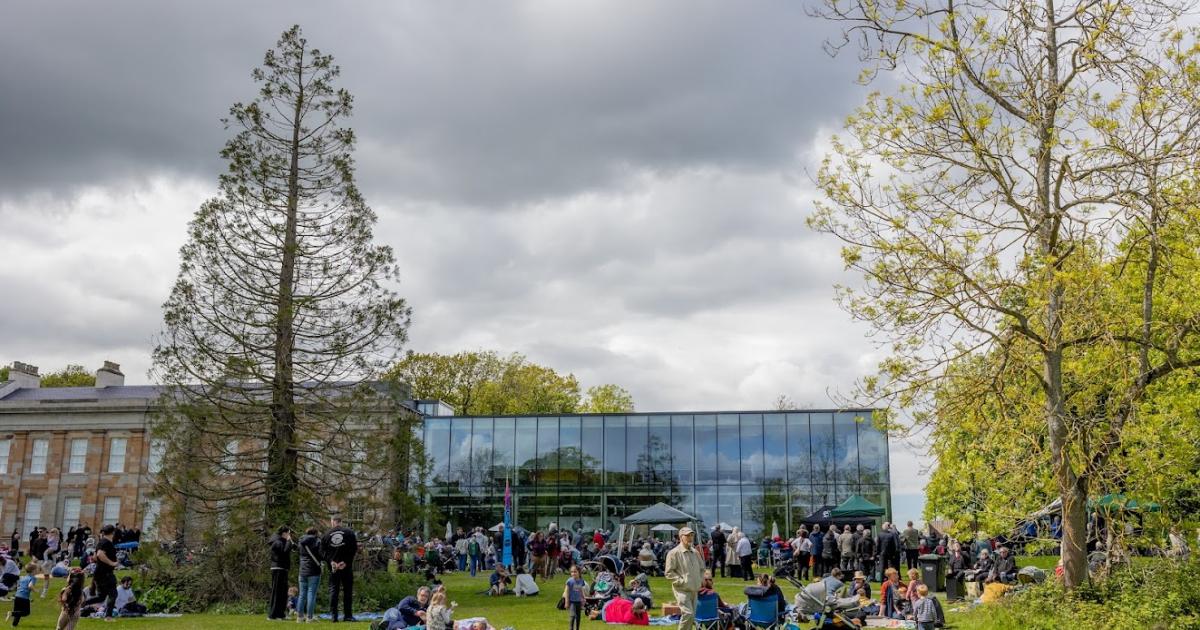
The Story hosted the Durham County Brass Band Association’s competition on Sunday (May 17), with music running throughout the day from 10am to 5pm.
The event marked the 80th year of the association’s contest and formed part of wider celebrations as the county prepares to mark 20 years of Durham BRASS Festival.
Durham brass Band competition at The Story, Durham (Image: SARAH CALDECOTT)
Durham brass Band competition at The Story, Durham (Image: SARAH CALDECOTT)
Durham brass Band competition at The Story, Durham (Image: SARAH CALDECOTT)
Durham brass Band competition at The Story, Durham (Image: SARAH CALDECOTT)
Durham brass Band competition at The Story, Durham (Image: SARAH CALDECOTT)
Durham brass Band competition at The Story, Durham (Image: SARAH CALDECOTT)
Durham brass Band competition at The Story, Durham (Image: SARAH CALDECOTT)
Durham brass Band competition at The Story, Durham (Image: SARAH CALDECOTT)
Durham brass Band competition at The Story, Durham (Image: SARAH CALDECOTT)
Durham brass Band competition at The Story, Durham (Image: SARAH CALDECOTT)
Durham brass Band competition at The Story, Durham (Image: SARAH CALDECOTT)
Durham brass Band competition at The Story, Durham (Image: SARAH CALDECOTT)
Durham brass Band competition at The Story, Durham (Image: SARAH CALDECOTT)
Durham brass Band competition at The Story, Durham (Image: SARAH CALDECOTT)
Durham brass Band competition at The Story, Durham (Image: SARAH CALDECOTT)
A total of 11 bands took part, with performances beginning at 10.30am.
Bands competing in this year’s contest were Bearpark and Esh, Billingham Silver, Craghead Colliery, Dunston Silver, EDMG Peterlee, Felling, Ferryhill Town, Spennymoor Town, Trimdon and Valley Brass.
Advertisement
Durham brass Band competition at The Story, Durham (Image: SARAH CALDECOTT)
Councillor Karen Allison, cabinet member for leisure, tourism, high street and regeneration, before the event said: “We’re delighted to bring families and friends together for the 80th year of the Durham County Brass Band Association’s competition.
“This year, as we prepare to mark 20 years of Durham BRASS Festival, it’s a great opportunity to celebrate a remarkable milestone of music and heritage at The Story.”
Durham brass Band competition at The Story, Durham (Image: SARAH CALDECOTT)
Julie Carmichael, chair of the Durham County Brass Band Association, also added: “This event will showcase brass at its best.
“Families can look forward to fantastic music at a beautiful venue this weekend, and we can’t wait to see audiences making the most of the day.”
Advertisement
Durham brass Band competition at The Story, Durham (Image: SARAH CALDECOTT)
Alongside the competition, families were able to take part in a range of activities.
Face painting was available, while children also took part in arts and crafts in the venue’s Search and Discover area, where they could design their own badge and banner.
Durham brass Band competition at The Story, Durham (Image: SARAH CALDECOTT)
Durham brass Band competition at The Story, Durham (Image: SARAH CALDECOTT)
Visitors were also able to use the on-site café and a number of street food vans throughout the day.
The event received £700 in councillor grant funding from Cllr Elizabeth Scott and Cllr Liz Brown.
Advertisement
Results have not yet been released but can be found here, when they have been processed.
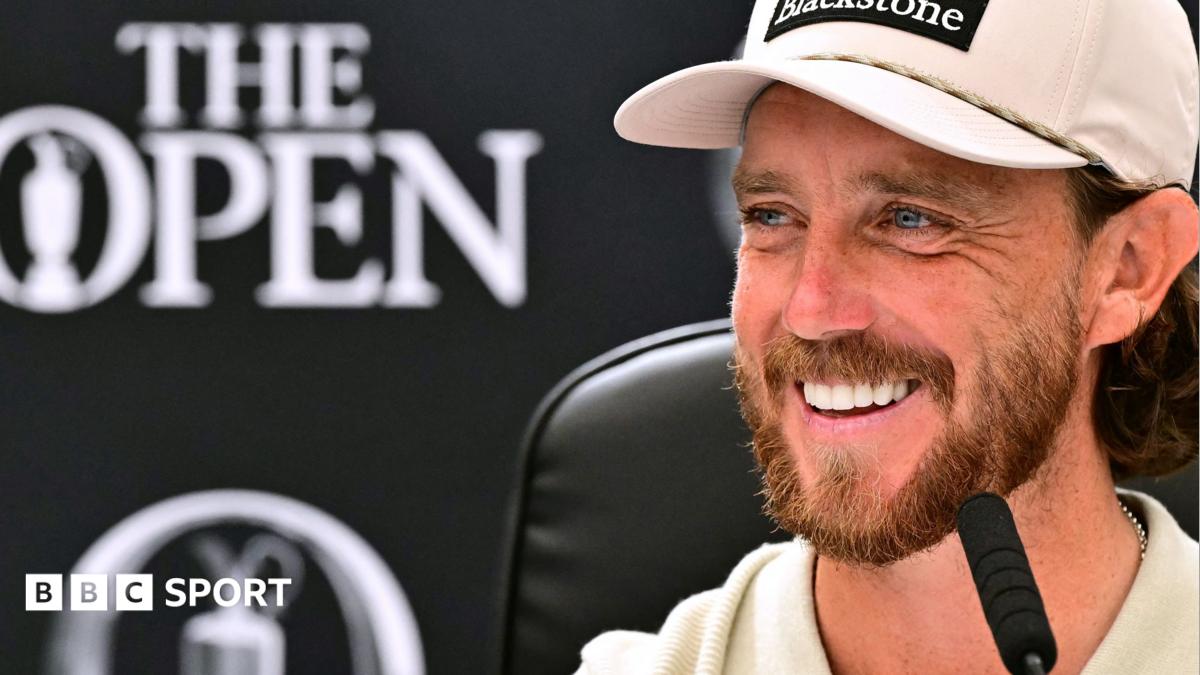
According to Data Golf, which measures performance across all tours, only three players are ranked higher than Fleetwood – defending champion Scottie Scheffler, McIlroy and world number three Fitzpatrick.
The 31-year-old has won three times on the PGA Tour this year and shared third place on the links turf of the Renaissance Club at last week’s Scottish Open.
“It’s another confidence booster to bring into this week,” Fitzpatrick told BBC Sport.
“It’s the final major of the year, so you’re going to give it a good push.”
Advertisement
The South Yorkshireman has used Birkdale on many occasions to hone links preparations for past Opens. But he admits to being unsure over what aspect of his game will be most vital this week.
“I’ve played the golf course a lot, but I can’t put my finger on what necessarily is needed,” said the 2022 US Open winner.
“I feel like the fairways this year look a little bit tighter than most links golf courses. And I think for me, that’s probably going to play the biggest part into it.
“I think if you can give yourself opportunities to hit the greens, that’s going to be the most important thing.”
Advertisement
English world number ones Lee Westwood and Luke Donald have come and gone from Opens without lifting golf’s most historic trophy. Rose is another to scale the top of the rankings but has not added a home major to his 2013 US Open victory.
The 45-year-old comes full circle this week to the scene of his fourth placed finish as a 17-year-old amateur in 1998, which was capped by a sensational hole out for birdie at the last.
Remarkably it then stood as his best Open performance for two decades before charging through the field to finish runner-up to Francesco Molinari at Carnoustie in 2018.
Rose shared runner-up honours again two years ago and continues to challenge for golf’s biggest titles. Could this be the year? What a story it would be were he to emerge victorious.
Advertisement
But what does it take to do that?
Faldo puts it bluntly. “Guess the bottom line is…I could keep my focus and nerve all four days to finish it off,” he messaged when I asked for the secret sauce.
Those were characteristics Rai showed in abundance only last May to become the first Englishman win the US PGA in more than a century at Aronimink.
Rai emulating Jim Barnes in 1919 proves Fleetwood correct, these longstanding records and anomalies can be broken.
Advertisement
Excitingly, among the biggest obstacles to English success are fellow UK players because the likes of McIlroy and Scotland’s Robert MacIntyre are also strong contenders.
Englishmen Tyrrell Hatton and Alex Fitzpatrick are also capable of mounting strong challenges.
So whisper it, while England’s semi-final reaching footballers are giving World Cup fans plenty to be excited about, here on Merseyside the country’s golfers might do something similar.
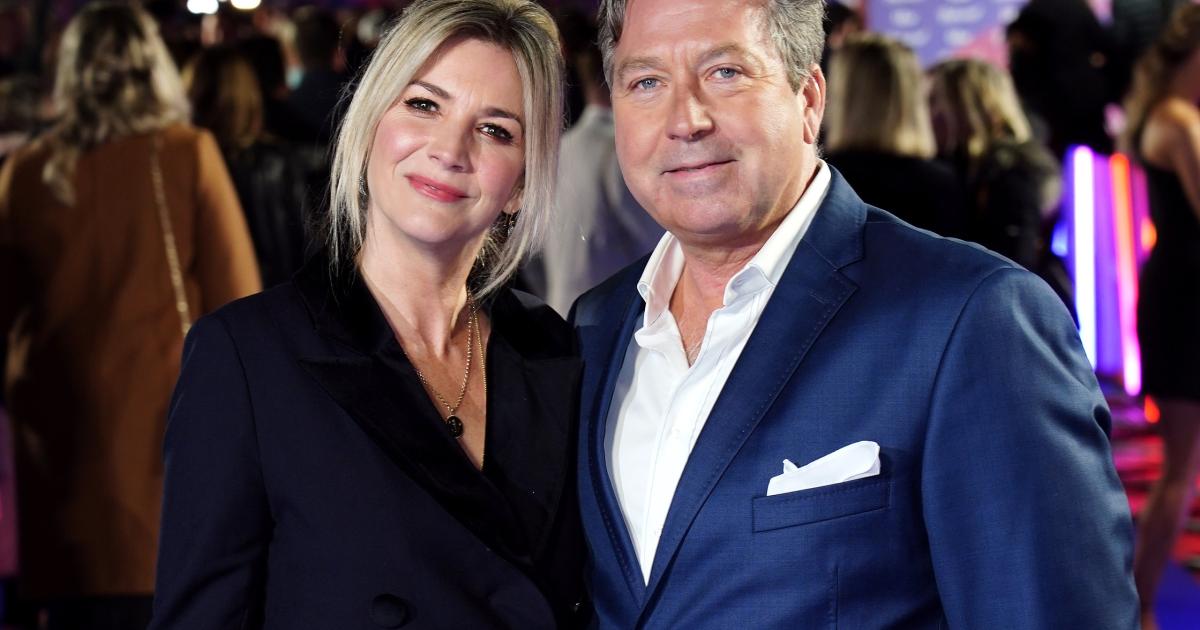
The TV star revealed earlier this month that she was recovering after surgery for breast cancer and told fans the operation had been successful.
Now, husband John has spoken about her progress during a recent appearance on ITV’s This Morning on Monday (July 13).
John Torode gives update on wife Lisa Faulkner’s cancer
Ben Shephard, who was presenting alongside Cat Deeley, asked John about Lisa during the show.
He said: “Quick question as well, lovely Lisa, how’s she doing?”
Advertisement
Mr Torode said: “She’s doing really well, actually, really well, and thanks so much for asking.
“She thanks everybody for all their wonderful comments and their best wishes, but she’s doing very well, thank you very much.”
Ms Faulkner, 54, is an actress, presenter, and home cook who has appeared in Holby City, Spooks, and Waterloo Road.
Following her cancer revelation, she said previously: “It’s all good, they’ve got everything out, so it’s all clear, and I just need some radiotherapy in a few weeks.”
Advertisement
She said she was diagnosed with breast cancer earlier this year and described it as “the very early stages of breast cancer.”
She told fans she had undergone “quite a big op” and still had “quite a bit of healing to do.
“But I’m good, I’m well, and feeling so much better.”
Lisa also urged others to attend regular screenings.
Advertisement
She said: “I’m so grateful that I went for my mammogram.
“Don’t put them off, go, because they found this – without this mammogram, it wouldn’t have been picked up.”
Fellow stars wished Lisa well after her video was posted.
Fellow TV star Ruth Langsford wrote: “So good to hear you’re healing now and thank you for sharing this and encouraging us all to go for our potentially life saving mammograms.
Advertisement
“Take care of yourself.
“Love to you and John.”
Recommended reading:
Ben Shepherd said: “Sending love and hugs Lisa.”
Advertisement
Lisa Snowdon added: “Sending you so much love and wrapping you in the biggest hug darling Lisa.”
Are you a fan of This Morning? Let us know in the comments.
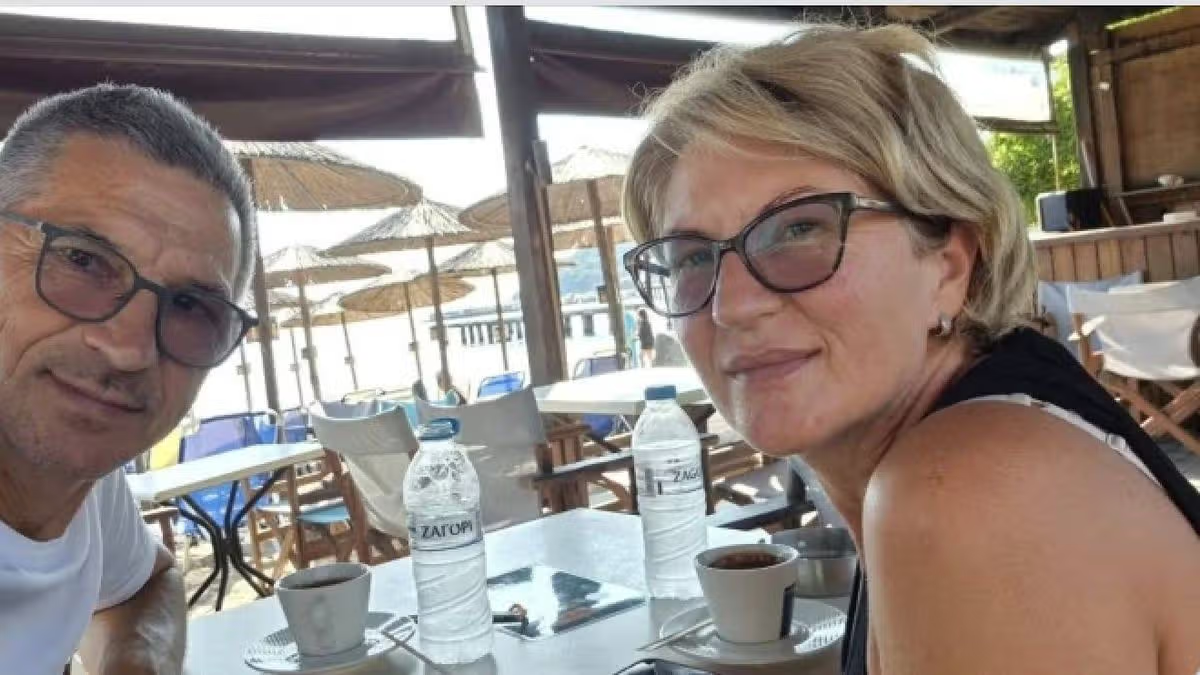
Ljubiša Karovi was travelling with his wife Svetlana Grkovi on a Ryanair flight on Friday, July 10, when disaster struck after the window next to his seat dislodged mid-air
The spouse of a passenger who was nearly dragged through a Ryanair aircraft window at 20,000ft has recounted her frantic efforts to rescue him during the harrowing mid-air emergency.
Advertisement
Ljubiša Karovi, from Serbia, was flying with his wife Svetlana Grkovi on a Ryanair service on Friday, July 10, when catastrophe unfolded.
The pair were heading home from a summer break in Greece when the aircraft encountered difficulties moments after departing Thessaloniki at 5.55am local time.
The pilot detected a problem with the engine while the plane was above North Macedonia and opted to return towards Thessaloniki.
During the descent, a section of the faulty engine detached and smashed into a cabin window beside where Mr Karovi was seated, reports the Express.
Advertisement
The collision resulted in the 61 year old being partly sucked out of the aircraft due to the cabin pressure.
His wife revealed she instantly seized hold of his legs as he dangled outside the plane.
Speaking to Nova, Ms Grkovi recalled: “It was as if a part of the engine broke off and hit the window next to which my husband Ljubiša was sitting.
Advertisement
“I reacted immediately and grabbed his legs. I thought: ‘If we die, we die together.’ It was horrible.”
Ms Grkovi expressed her desire to personally thank another passenger who assisted in saving her husband’s life throughout the ordeal.
Mr Karovi continues to receive hospital treatment following the incident and is understood to be unable to speak due to his injuries. His wife revealed he sustained friction burns, a severely damaged hand and multiple other burns, while also being left profoundly traumatised.
She explained he blacked out repeatedly throughout the ordeal and retains scant recollection of events.
Advertisement
A Ryanair spokesperson commented: “A Ryanair flight from Thessaloniki to Memmingen on Friday morning (10 July) returned to Thessaloniki shortly after take-off when a passenger window dislodged inflight.
“The aircraft landed normally and passengers returned to the terminal.
“One passenger requested and received medical assistance on the ground in Thessaloniki.
“In order to minimise any delay, a replacement aircraft was arranged to bring passengers to Memmingen which departed Thessaloniki at 9:53 local this morning.”
EastEnders star Jessie Wallace is taking a break from the BBC One soap.
The actress has played the role of Kat Slater in the show on and off since 2000. Kat and partner Alfie Moon (Shane Richie) currently run the Queen Vic, and their lives are always packed full of chaos.
A change looms for the family in the near future, as Jessie will be briefly saying goodbye to Kat’s iconic leopard print wardrobe and the drama in Walford.
The star, who is 54, will play the role of Captain Hook at the New Wimbledon Theatre’s panto production of Peter Pan.
Advertisement
The show will run between December and January, and will also star Aston Merrygold, Tom Read Wilson and Pete Firman.
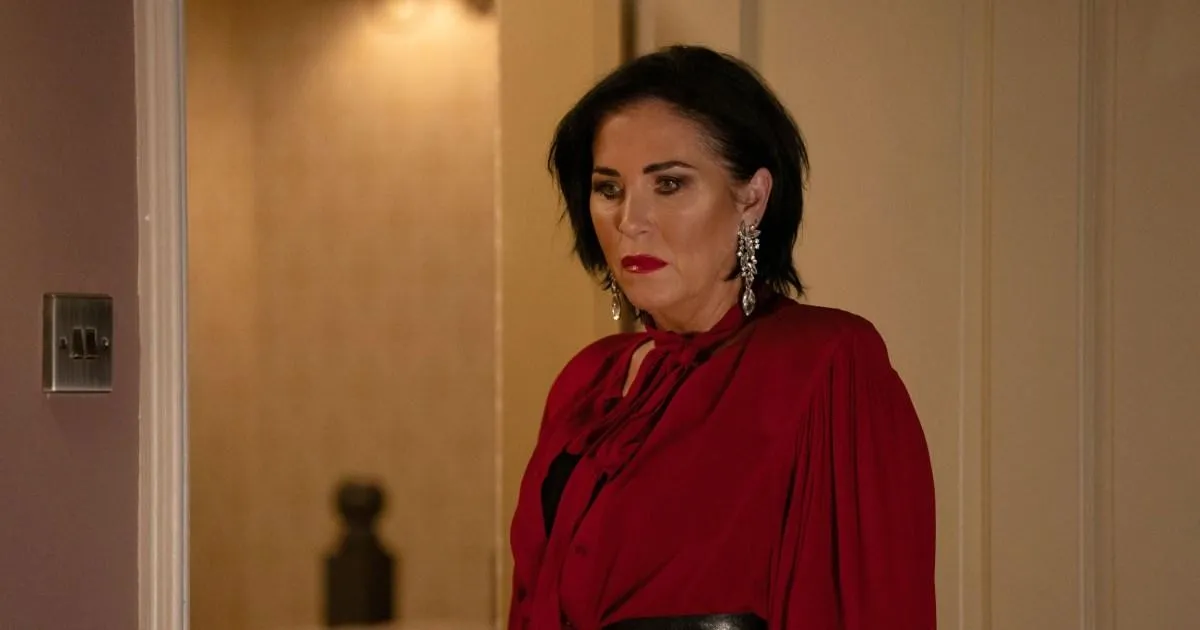
Jessie has played Kat Slater on and off since 2000 (Picture: BBC)
Jessie’s break from the show will only be temporary (Picture: Ian West/PA Wire)
Ask Metro
Use AI to go deeper into the stories you care about – powered by Metro and trusted publications.
A source told The Sun: ‘Jessie will be taking a short break from the soap to appear in panto. Bosses agreed to the short break because it’s over Christmas and won’t hugely affect filming.
Advertisement
‘It’s a huge bonus for Jessie. She’s one of the show’s biggest names and can command huge fees for panto appearances’.
Given the fact panto only runs across the festive period, it’s safe to assume Jessie’s break from the soap will only be temporary.
But now it’s been confirmed by the BBC that Michelle will be leaving, with reports that Zoe is set to meet a shocking end and be killed off, making her exit permanent.
Michelle originally appeared as Zoe from 2000 to 2005, before leaving for Hollywood after landing the lead role in the Bionic Woman remake.
The Sun alleges that Michelle requested time off from the soap earlier this year before quitting EastEnders, with writers then deciding her character would face tragedy when written out.
Michelle Ryan has reportedly been axed (Picture: David Fisher/Shutterstock)
A BBC spokesperson told Metro: ‘We can confirm Zoe Slater will be departing EastEnders later this year. We wish Michelle Ryan all the best for the future.
‘However, we never comment on future storylines as we don’t want to spoil it for the viewers.’
Advertisement
An insider has since revealed to Metro: ‘Michelle’s exit marks the end of a storyline that has been in the works for some time. With such an iconic character, Zoe’s exit is never going to be without drama, but bosses are keeping tight-lipped about how she leaves the Square, but as always with the Slaters, it’s not going to be quiet.’
The actress is thought to have filmed her final scenes in Walford last month, with her departure set to play out over the coming months.
Essex’s only children’s hospice, Little Havens has worked with the Disney Company to create a Moana-inspired garden to provide joy and comfort for the children spending time there
Little Havens, Essex’s only children’s hospice, has unveiled a breathtaking island garden inspired by Moana.
Advertisement
The space brings together elements based on the beloved film, in an immersive and multi-sensory space created with viral landscaping duo The Green Genie Brothers and The Walt Disney Company UK & Ireland.
Among the first to experience the garden was six-year-old Millie, who has been supported by Little Havens since 2021. On her first birthday, Millie was diagnosed with Congenital Myopathy, which is a muscle disorder affecting the muscles inside and outside of her body.
Advertisement
Jay Farr, Millie’s mum, said, “Millie is such a huge Disney fan, so watching her face when she saw the garden for the first time was pure joy. She loved driving round looking at the characters, and particularly liked Tamatoa and his treasure.
“The evening was wonderful, and you could tell that every single person involved truly cared about what they had created.
Millie was joined by Little Havens’ CEO Louise Bryan, Dan Radford, Vice President, Marketing at The Walt Disney Company, and The Green Genie Brothers to cut the ribbon and officially open the garden.
Jay continued, “Millie was made to feel like a star, and it’s a memory that we will never forget as a family. While we were there, they told Millie the meaning behind the shell and rock centrepiece — that it represents a community, a family — and she loved this.”
Advertisement
The Pacific oasis-inspired garden combines hard landscaping with a relaxed tropical atmosphere. Features – include a large bamboo entrance as you step onto the island, with handcrafted fale (houses), lush planting, natural stone features and a bespoke carving of Moana’s rooster friend Heihei crafted from a tree stump.
Part of the installation features a striking pebble manta ray set into the garden floor, paying tribute to one of the film’s most beloved motifs. A dynamic water feature brings movement and life, while carefully designed lighting creates a fully-immersive, sensory experience.
Vital to the families supported by Little Havens, the garden has been built with accessibility in mind, ensuring every child — whatever their needs — can enjoy it to the fullest.
Advertisement
“Millie, and other families like ours, go through so much, so when we sit in the garden, we will be reminded that we are not alone, and that is just beautiful. Millie’s still got a huge smile on her face.”
The garden’s design and build were led by The Green Genie Brothers — Jake and Ethan Thorne — Bristol-based luxury landscape gardening duo known for their outdoor transformations. Jake and Ethan brought their trademark precision and flair to a project unlike any other in their portfolio for a cause close to their hearts.
Jake Thorne, one half of The Green Genie Brothers, said, “We’ve built some incredible spaces over the years, but nothing has meant more to us than this. Knowing that every stone, every light and every sound in this garden is going to bring something special for families to enjoy, that’s a legacy we’re incredibly proud of.”
“Working with Disney to bring Moana’s world to life for the children at Little Havens has been a huge privilege. We wouldn’t have been able to do it without the suppliers and contractors who have helped along the way — we’ve had people travel from all over the country to be part of this and enable us to pull this project off in such a short time. It’s been a huge honour.”
“So often our families miss out on things, whether that’s from having to spend time in hospital or facing accessibility challenges that make everyday experiences harder to reach. To have something so special and unique, designed just for them, is incredible.”
This is the latest project as part of Disney’s long-standing collaboration with Together for Short Lives, the national charity supporting children’s hospices across the UK.
Since 2017, The Walt Disney Company UK & Ireland has worked with the charity to bring joy to seriously ill children and create moments that matter for the whole family. This is part of Disney’s mission to deliver over one million magical moments of comfort and togetherness for children across EMEA by 2030.
Dan Radford, Vice President, Marketing, The Walt Disney Company added: “Creating moments of joy for children and families facing serious illness is at the heart of Disney’s social impact work. This garden is a wonderful reminder of how stories like Moana can be brought to life and provide a sense of escape, comfort, and togetherness for families when it’s needed most.”
The Moana-inspired garden is now open and available for children and families at Little Havens Hospice to enjoy during their visits and stays.
A former flight attendant has spoken about the best etiquette for when you find yourself on a flight and feel like reclining your seat or putting a bag in an overhead locker
A former flight attendant has provided some guidance on if and how passengers should recline their seats on an aircraft. As thousands of Brits jet off around the world this summer, it may be tempting for some to recline their seat a little when they take off.
Advertisement
However, former flight attendant Elaine Swann suggested that if they are to do this, then they should be mindful of the person behind them.
She told the Guardian: “Yes, but recline it slowly, so that if someone has laptop or a beverage, they can see you’re starting to come back. Think of the inches above your knees as being shared space with the person sitting in front.”
Elaine also added that it was acceptable to move around people’s things in the overhead locker, but that you should probably ask nearby people first.
She said: “Typically, you’ll find that it is someone within close range, so ask whose bag it is, and then say: ‘I’m just going to scoot it to the side a little bit’.”
Advertisement
While Elaine has been talking about the etiquette behind a common occurrence, another former flight attendant has spoken about something far less common, people who give birth on planes.
Although unusual, it does sometimes happen that a baby may be born mid-flight, posing a major challenge to those onboard.
Speaking to the Independent, former flight attendant Marika Mikusova said it was something they received training for, but that it wasn’t something they were tested on every year.
Advertisement
She told the publication: “Although we do receive training for childbirth on board, it’s not something we’re tested on annually.
“So, if a childbirth were to happen during a flight, our first step would be to immediately ask if there is a doctor on board and contact ground medical support for guidance on how to proceed, to make sure we are doing everything we can.
“If circumstances allow, the delivery would ideally take place near the bulkhead seats. As stated in the manual, we would place the passenger in a comfortable position, preferably upright with knees parted and drawn back against the bulkhead.”
Advertisement
However, if the bulkhead isn’t available, they might move the person to the galley because of the space it has. Whilst they wouldn’t have time to clean the floor before the passenger sat down, Marika explained that a clean blanket would be placed on the floor before the delivery.
She also revealed that aircraft are equipped with an onboard delivery kit for if the situation arises and that the crew would be guided through the delivery from a medical team on the ground. On whether a plane might divert or continue onwards to its destination, Marika said it was dependent on the situation of the birth at the time.
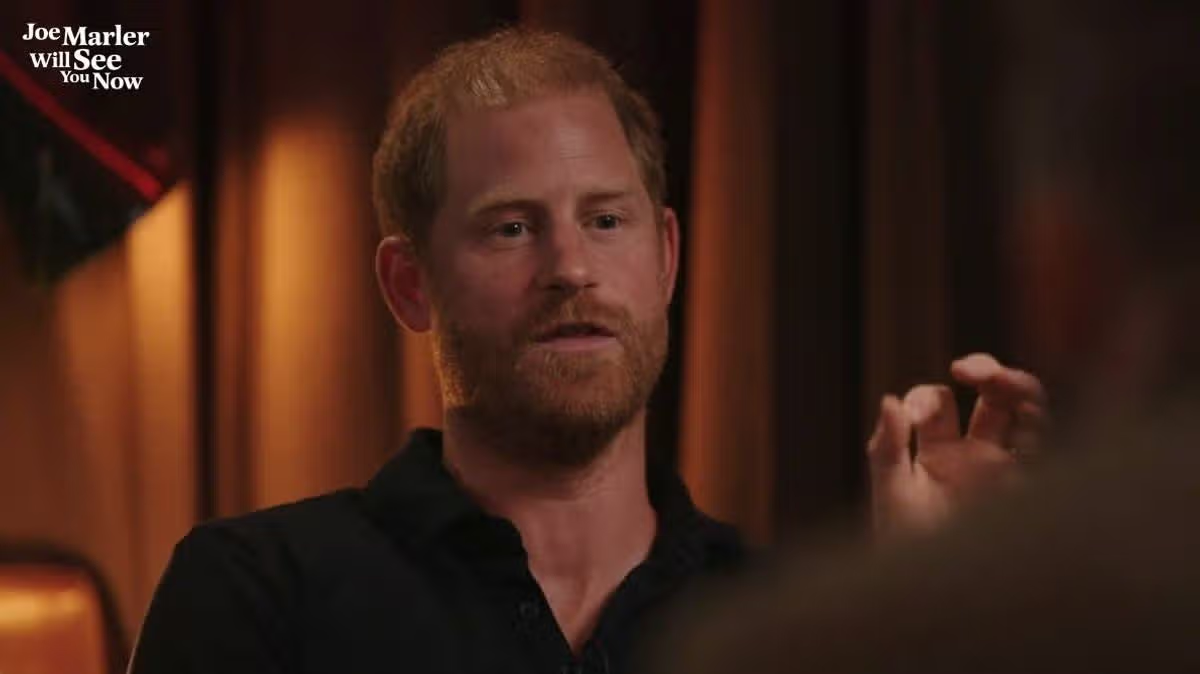
The Duke of Sussex, 41, revealed he was constantly mocked over his hair colour while at school and even earned the nickname “carrot top” from fellow pupils.
When former England rugby international Joe Marler seemed taken aback, Harry joked: “People think I’m ginger, but I’m more sort of like, um, sunset auburn.”
Advertisement
He went on to recall the teasing he endured at school, stating: “Unless you want to call me ginge. You know? I got bullied a lot at school, called carrot top.”
Marler remarked it was “not funny”, prompting Harry to quip: “I’m going to need therapy after this.”
Harry was educated at Wetherby School in London before transferring to Ludgrove School in Berkshire and subsequently Eton College. His attendance at Eton marked a departure from royal custom, as earlier generations had been sent to Gordonstoun in Scotland, though his elder brother, Prince William, was also schooled at Eton.
Advertisement
Later in the podcast, Harry was posed the question of whether he’d swap lives for a day with Harry Styles, Harry Kane or Harry Potter. He opted for England captain Harry Kane, but only “on a winning day”.
“You don’t want to be Kane on a losing day, do you?” he said, adding that he reckoned England would go on to lift the World Cup. The Duke also opened up about maintaining his mental health, revealing that keeping physically active is crucial to his overall wellness.
“Going to the gym is an absolute… any form of exercise is great, especially when you’re depressed,” he said.
Advertisement
When quizzed about his profession, Harry responded: “Full-time dad, British Army veteran, Prince of England, Duke.”
The podcast was captured during Harry’s latest trip to the UK in the run-up to next year’s Invictus Games.
Throughout the visit, Harry, alongside his wife Meghan, Duchess of Sussex, and their youngsters, Prince Archie and Princess Lilibet, reunited with King Charles III and Queen Camilla for the first time in four years at the King’s Highgrove estate in Gloucestershire.
Advertisement
It marked the King’s first confirmed encounter with Archie and Lilibet since the family’s appearance at Queen Elizabeth II’s Platinum Jubilee festivities in 2022. No additional information about the reunion has been disclosed.
Ensure our latest stories always appear at the top of your Google Search by making us a Preferred Source. Click here to activate or add us as your Preferred Source in your Google search settings.
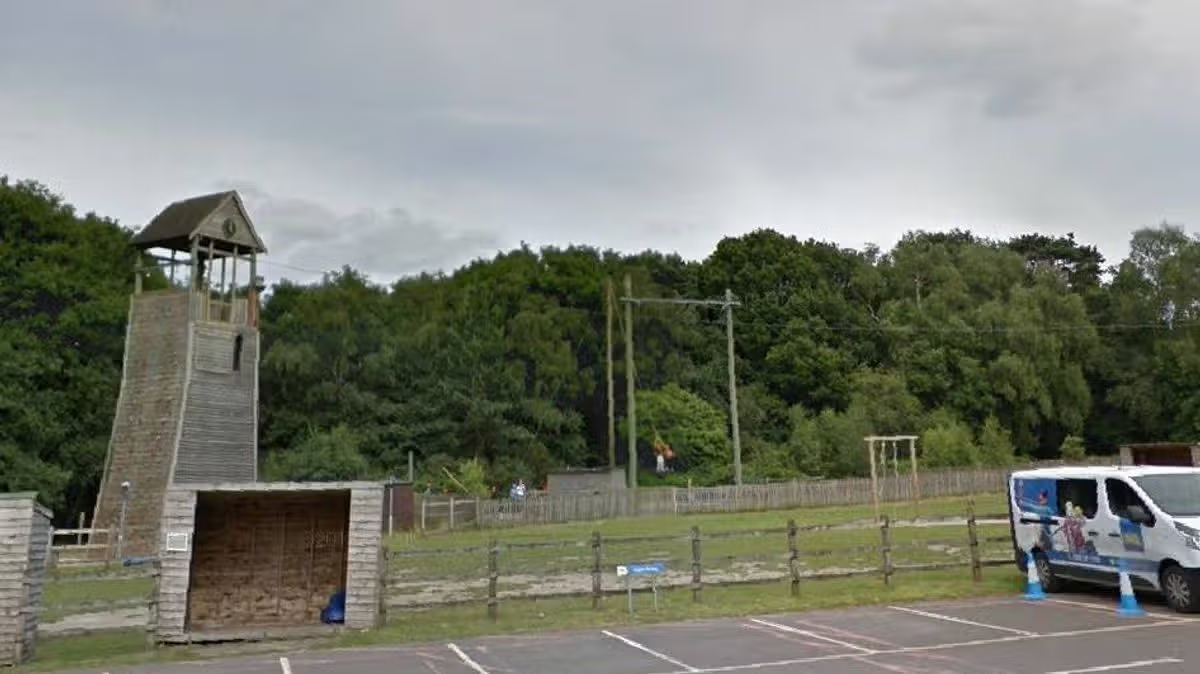
Emergency services rushed to PGL’s Hindhead outdoor centre after a tree fell, injuring several children, with one airlifted to hospital with a serious leg injury
A further eleven individuals were assessed and treated at the scene before being discharged.
South Central Ambulance Service confirmed that multiple ambulance crews attended, alongside police and fire services, including crews from Hampshire and Isle of Wight Air Ambulance, reports Surrey Live.
The outdoor education provider stated that the safety of children, teachers and staff remained its top priority after confirming an ‘incident’ at the site.
Advertisement
A spokesperson said: “A number of children were injured and are receiving medical treatment as required.
“Our thoughts are with everyone affected. The safety and wellbeing of the children, their teachers and our colleagues is our absolute priority.
“We are working closely with the schools involved and emergency services to support those affected and to ensure families receive timely information through their schools.”
The statement added that PGL are “committed to supporting everyone affected”.
Advertisement
Farnham and Bordon MP Gregory Stafford confirmed he was aware of the “serious accident” involving several children. He said there were a “number of injuries” but no fatalities had been reported.
Stafford noted that Surrey Police and Surrey Fire and Rescue Service were working in close collaboration with PGL.
The MP stated: “My thoughts are with the children involved, their families, and all those affected.
“I am grateful for the swift and professional response of our emergency services.”
Advertisement
The activity centre offers climbing, zip-lining, and canoeing, making it a favourite choice for school trips.
Back in 2023, the Marchants Hill outdoor centre faced a £1 million fine after two youngsters were left ‘traumatised’ when their fingers became trapped between doors.
The company was ordered to pay the penalty after the children sustained “significant injuries” while staying at the Surrey adventure centre.
Waverley Borough Council brought the case against outdoor education provider PGL Travel Limited.
Advertisement
Ensure our latest stories always appear at the top of your Google Search by making us a Preferred Source. Click here to activate or add us as your Preferred Source in your Google search settings.
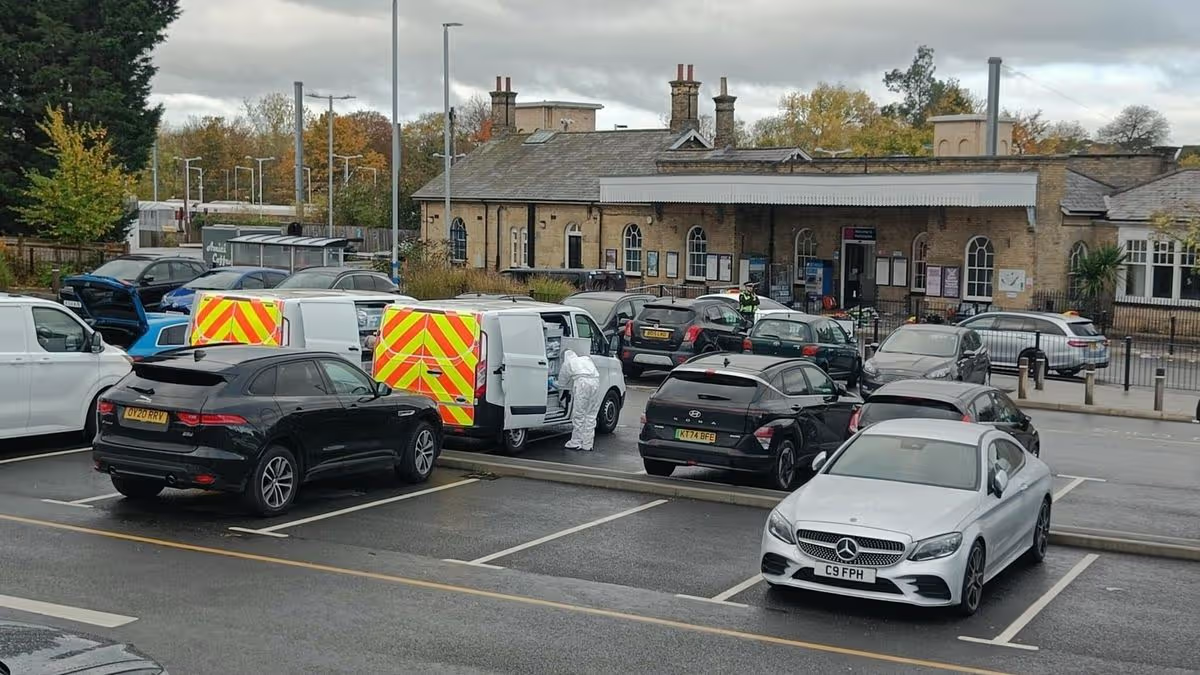
The Home Secretary says the murder suspect was not known to the anti-terrorism Prevent programme
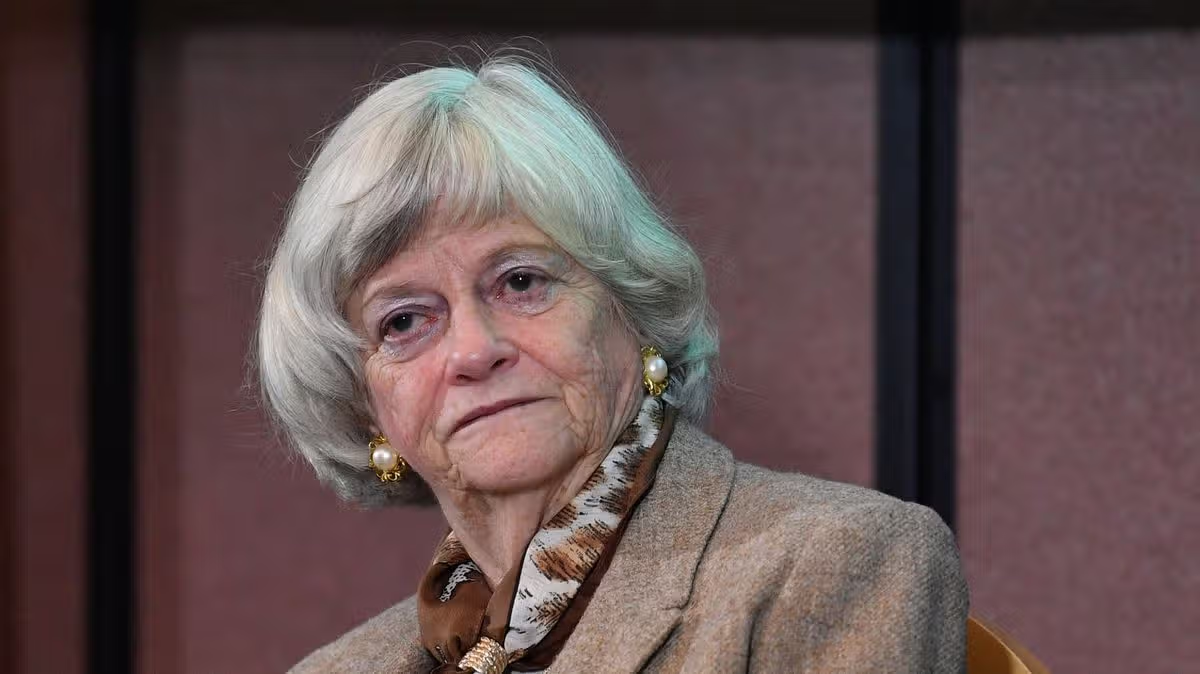
Police are continuing to question the suspect being held on suspicion of murdering Ann Widdecombe as the Home Secretary says the man was not known to the anti-terrorism Prevent programme.
Advertisement
It comes as counter-terrorism police are now leading the investigation into the former Conservative minister’s death after new evidence came to light.
Click here to get the biggest stories straight to your inbox in our Daily Newsletter
A 28-year-old white British man who was arrested on suspicion of her murder on Saturday has since been rearrested on suspicion of the commission, preparation or instigation of acts of terrorism.
Advertisement
Police could be allowed to hold him for up to 14 days for questioning under terrorism legislation if needed. Home Secretary Shabana Mahmood told the House of Commons on Monday the suspect was not known to the Government anti-extremism scheme Prevent.
She said Miss Widdecombe was “one of those rare politicians who was bigger than politics”, and that the circumstances of the former Maidstone MP’s death were “extremely distressing”.
“She was a unique figure in our politics, a distinctive and devoted public servant, the likes of whom we will rarely, if ever, see again,” she added. “Ann had a profound faith. Her journey in this life has ended too soon.”
Nigel Farage has been offered a meeting with the head of a parliamentary body responsible for politicians’ security amid the party’s concerns about the safety of Reform UK MPs, Ms Mahmood said.
Advertisement
She will also look at security advice for former members of parliament and members of parties that do not have MPs. Earlier, it had been announced that counter-terrorism policing were taking over the investigation from the Devon and Cornwall force.
Laurence Taylor, head of UK counter-terrorism policing, said: “Building on the progress made by our colleagues in Devon and Cornwall Police, we now have new information and evidence that means Counter Terrorism Policing is now leading the investigation.
“We are pursuing multiple lines of inquiry to establish the motivation for this attack. Our priority is progressing this investigation quickly, with all the capabilities we have available to us. If anyone has any information, please share it with the police.
“We would like to thank local communities, the wider public and the media for their ongoing support and patience, and would ask them to continue to support us in the next stage of the investigation.”
Advertisement
Footage was shared with media outlets, including the Sun newspaper and Sky News, showing a man with no top on being arrested and led away from a house in Rotherham, South Yorkshire, on Saturday.
In cases of this kind, investigators will look through devices owned by the suspect to see if there is any terrorist material, and consider other issues such as their mental health.
If a range of different extremist material has been accessed it can be challenging to decipher one ideology – more than half the referrals to Prevent in the year to the end of March 2025 were for no fixed ideology.
Police believe Miss Widdecombe was attacked on Wednesday at about 12.30pm, shortly before she had been due on Channel 5’s Matt Allwright show.
Advertisement
ITV News later published a series of WhatsApp images that appear to show that Miss Widdecombe stopped responding to messages from a TV producer after the approximate time police believe the attack took place that day.
Meanwhile, Downing Street stressed the importance of protecting the “integrity” of the investigation. Mr Farage faced calls for restraint at the weekend after giving his thoughts about the case.
Reform UK’s deputy leader Richard Tice and board member Gawain Towler both spoke out after Devon and Cornwall Police initially said the murder was not being treated as terrorism and there was nothing to suggest it was politically motivated.
Mr Towler said: “In a time when trust in the police is at an all time low, this just plays into that they are trying to massage public opinion rather than do the job of investigating a brutal murder.
Advertisement
“We saw it with Henry Nowak, we saw it with Southport. By appearing to rule something out and then a few days later bringing it back in, they look manipulative and that’s a shame.”
Mr Tice said it would be “wise, when considering motivation” for police to keep an open mind “as opposed to ruling things out too quickly that may then end up being ruled back in”.
Miss Widdecombe was first elected a Conservative MP in Kent in 1987, and went on to become an MEP for the Brexit Party and then a spokeswoman for Reform UK.
She also found fame outside politics after starring in Strictly Come Dancing and Celebrity Big Brother.







































You must be logged in to post a comment Login