


Connect with us
DAPA Banner

NewsBeat

Inside the geopolitical drama threatening to overshadow T20 Cricket World Cup

Published

on

Inside the geopolitical drama threatening to overshadow T20 Cricket World Cup

Cricket’s most profitable tournament is set to start this weekend in a significantly diminished form, bereft of both a major qualifying nation and the single biggest fixture in terms of the potential viewership it can attract.

A complicated mesh of diplomatic disputes among the South Asian nations involved, including co-hosts India, mean the T20 Cricket World Cup begins on Saturday under a shadow of geopolitical turmoil.

It all began with Bangladesh’s withdrawal from the tournament, kicked out by the International Cricket Council (ICC) and replaced by the next-closest team to qualifying in Scotland. Bangladesh had refused to play any of their scheduled fixtures in India and demanded they be moved to co-hosts Sri Lanka, a request that was rejected.

Then, Pakistan announced that they would not play their group-stage match against arch-rivals India, due to take place in Sri Lanka’s capital Colombo on 15 February. No reason was initially given, but Pakistan’s prime minister has since confirmed this was in solidarity with Bangladesh.

Advertisement

These developments have put the Board of Control for Cricket in India (BCCI) at the centre of a dispute blending geopolitics, commercial power, and long-running grievances about how world cricket is run.

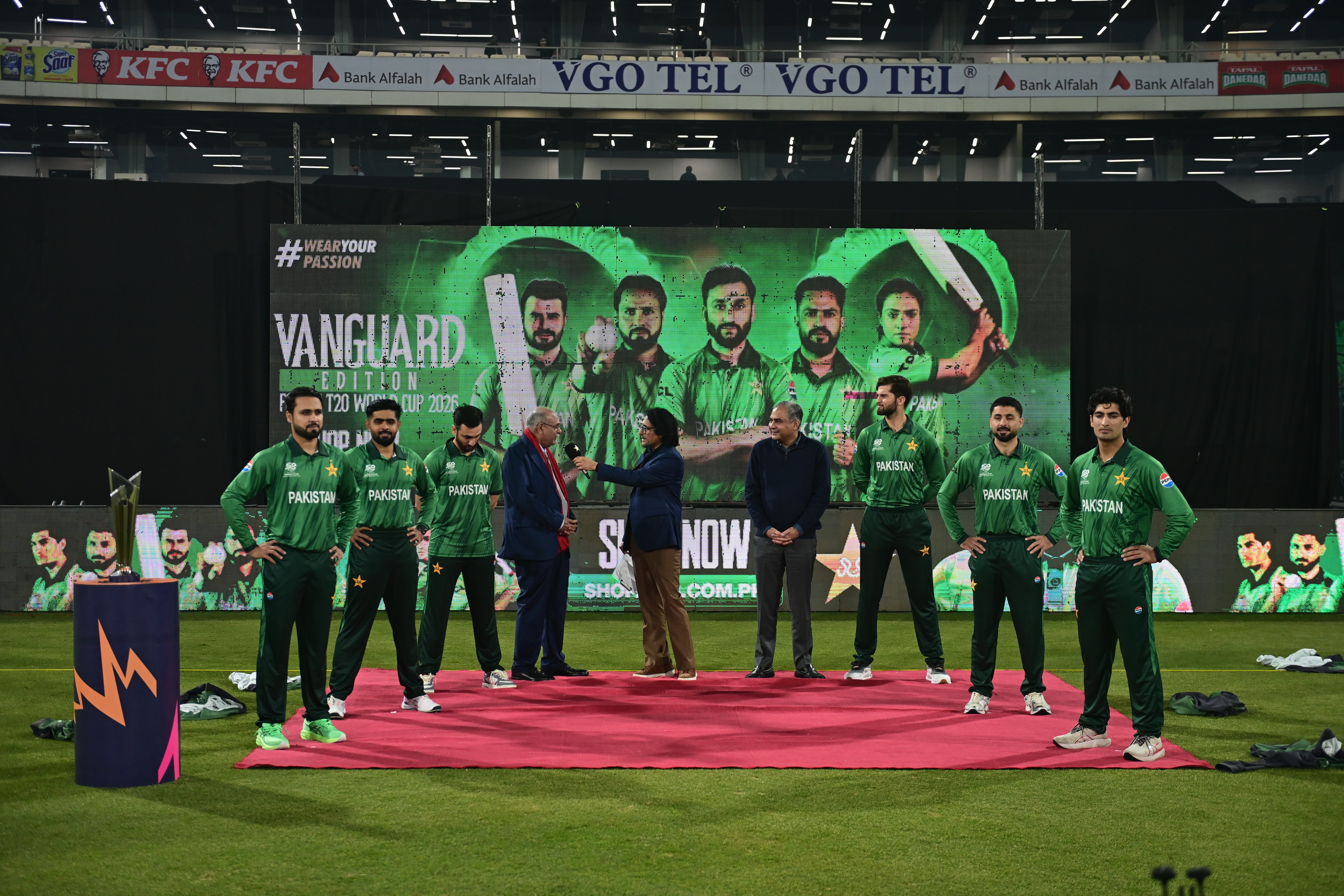
Pakistan’s players unveil ICC T20 World Cup 2026 jersey after their match against Australia at Gaddafi Stadium in Lahore on 1 February 2026

Pakistan’s players unveil ICC T20 World Cup 2026 jersey after their match against Australia at Gaddafi Stadium in Lahore on 1 February 2026 (Getty)

Bangladesh’s withdrawal followed a formal request to move its scheduled matches to Sri Lanka, with the Bangladesh Cricket Board (BCB) citing security concerns for its team and fans amid escalating political tensions between it and India.

Relations have dramatically deteriorated in the past 18 months since street protests brought down the Sheikh Hasina regime in 2024 and compelled the former prime minister, an ally of India, to flee to Delhi. India has ignored Dhaka’s requests for Hasina’s extradition to Bangladesh, where she has been found guilty of crimes against humanity.

Advertisement

Since Hasina’s government collapsed, India and India-based rights groups have repeatedly raised concerns over the safety of members of the Hindu minority in Bangladesh. In December, a Hindu man accused of blasphemy was beaten to death by a mob, triggering protests by Hindu nationalist groups in India.

Against this political backdrop, the Indian Premier League franchise Kolkata Knight Riders released Bangladeshi fast bowler Mustafizur Rahman in January after being instructed to do so by the BCCI.

Bangladeshi authorities responded by banning broadcasts of the IPL in their country.

The BCB then renewed its request for their team’s matches to be shifted out of India.

Advertisement
Bangladesh's Mustafizur Rahman during the T20 World Cup match between Bangladesh and Sri Lanka in Grand Prairie, Texas, on 7 June 2024

Bangladesh’s Mustafizur Rahman during the T20 World Cup match between Bangladesh and Sri Lanka in Grand Prairie, Texas, on 7 June 2024 (AP)

The ICC rejected the request on the grounds of an “absence of any credible security threat”, and gave Bangladesh 24 hours to confirm its participation.

The Independent understands that no efforts were made to provide proof of the security threat faced by Bangladesh’s team, and when the deadline passed, Scotland were invited to take the vacant place. The governing body said it was keen not to establish “precedents that could undermine the neutrality and fairness of ICC events”.

Pakistan initially indicated they might withdraw entirely in response to Bangladesh’s removal. They later confirmed participation but said their team would not play India. Pakistan’s government said it had granted “approval” for the team to compete in the tournament but that players “shall not take to the field” against their arch-rivals.

Advertisement

The India-Pakistan fixture has historically been the most-watched and commercially valuable match in global cricket. More than 600 million people watched on the Indian streaming platform JioHotstar when the teams met in last year’s Champions Trophy.

Cricketing ties between the two neighbours have been shaped by decades of conflict. They have not played a bilateral series since 2013, and India have not toured Pakistan since 2008.

Pakistan did not host any touring nations between 2009 and 2019 following an attack on Sri Lanka’s team bus in Lahore that killed six policemen and two civilians.

Pakistani players have been barred from the IPL since the 2009 Mumbai attacks, which left 174 people dead.

Advertisement

Last year, India refused to travel to Pakistan for the Champions Trophy, eventually playing their matches in the UAE.

That led to an agreement stating that when either country hosted an ICC event, matches between them would be held at neutral venues.

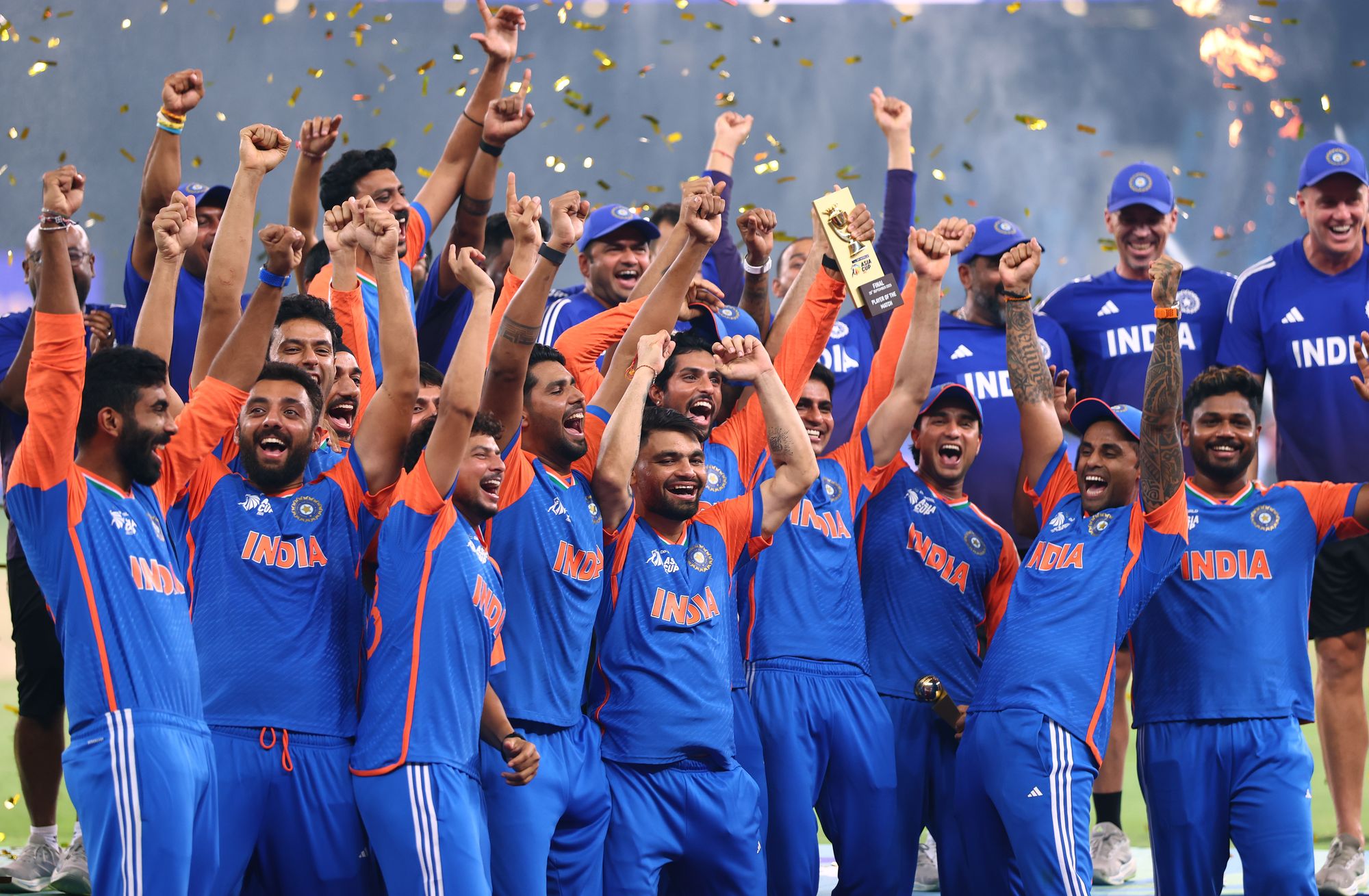
India celebrate their Asia Cup Final victory against Pakistan in Dubai on 28 September 2025

India celebrate their Asia Cup Final victory against Pakistan in Dubai on 28 September 2025 (Getty)

Tensions between the neighbours escalated in the wake of a four-day military conflict last April, sparked by a militant attack on tourists in the Indian-administered part of Kashmir.

Advertisement

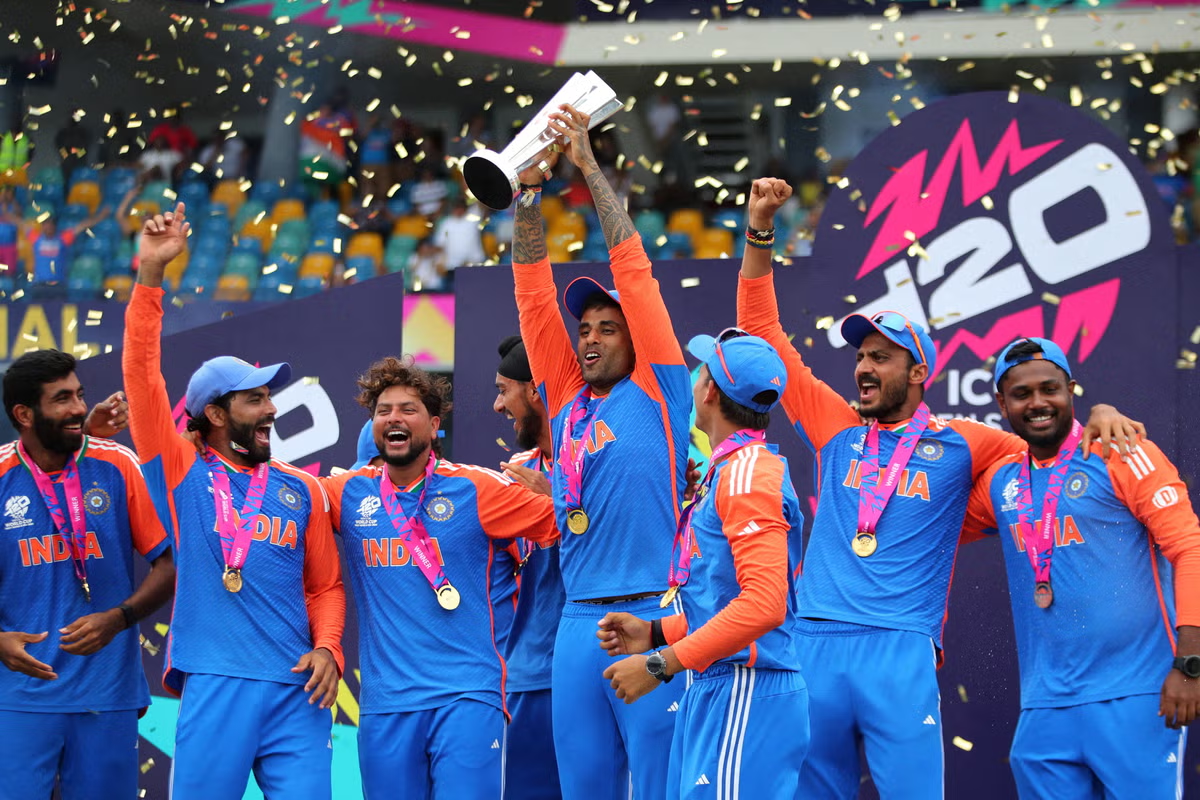
At the Asia Cup in September, Indian captain Suryakumar Yadav declared that his team’s victory in the final was a “perfect reply” to Pakistan.

His team skipped post-match handshakes, later saying: “A few things in life are above sportsman’s spirit.”

Match officials later confirmed the captains had been asked to skip handshakes, prompting protests from Pakistani officials and criticism from Asian Cricket Council chairman Mohsin Naqvi, who called the episode “utterly disappointing”.

India refused to accept the Asia Cup trophy from Naqvi, who is also chief of the Pakistan Cricket Board (PCB) as well as the country’s interior minister. It ended with Naqvi walking away with the trophy.

Advertisement

Former PCB chairman Ehsan Mani, who also served as the ICC chief between 2003 and 2006, told the Hindustan Times the latest row about matches between India and Pakistan was likely a fallout from the Asia Cup.

“You’ve got to look at the background to this,” he said. “I don’t think the PCB chairman was happy with the Indian players’ refusal to shake hands with the Pakistani players at the Asia Cup, then their refusal to take their trophy from him. You’ve really got to look at the whole picture; it’s not a good relationship between the countries, which is sad, because we always worked very closely with the BCCI, and their attitudes have changed significantly.”

He urged the ICC chairman Jay Shah, who is the son of India’s home minister Amit Shah, to engage with the PCB and the Pakistan government over their stance.

“The PCB is simply going to say that it is following government instructions, the same as India did for refusing to come to Pakistan in the last ICC event,” he said. “And this is all very unfortunate. I do hope that the chairman of ICC, after all, he represents all the countries, including Pakistan, is talking to Pakistan to see how they can overcome Pakistan’s position. In fact, he should be engaging not only with PCB but also with the government of Pakistan.”

Advertisement
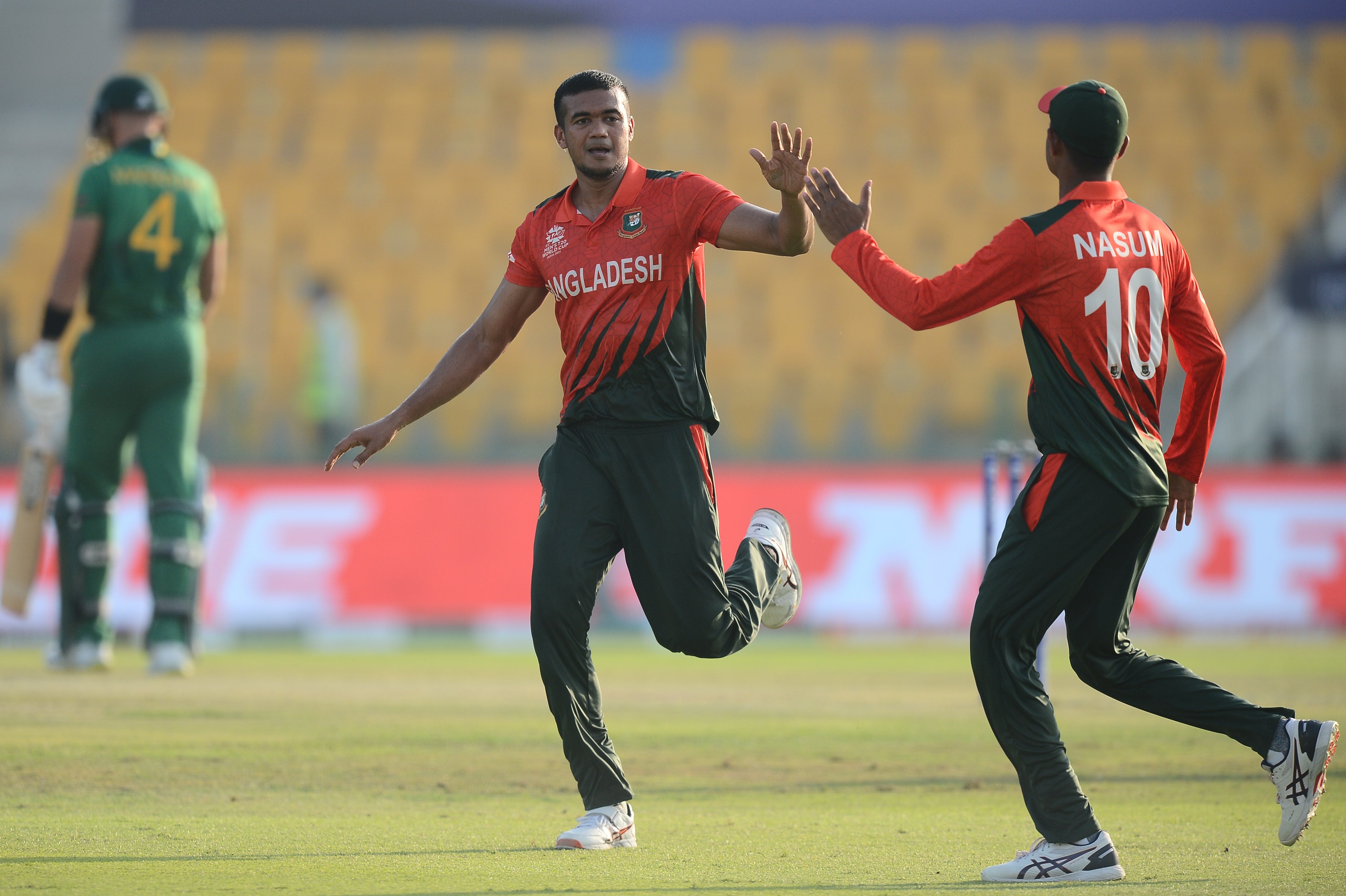
Taskin Ahmed of Bangladesh celebrates the wicket of Aiden Markram of South Africa during their 2021 ICC T20 World Cup match in Abu Dhabi

Taskin Ahmed of Bangladesh celebrates the wicket of Aiden Markram of South Africa during their 2021 ICC T20 World Cup match in Abu Dhabi (Getty)

The ICC responded to Pakistan’s position by calling it “difficult to reconcile” with the premise of global competition.

“Selective participation undermines the spirit and sanctity of the competitions,” it said in a statement and warned of “significant and long-term implications for cricket in its own country”.

While acknowledging the role of governments in national policy, it said Pakistan’s decision wasn’t in the interest of the game or fans worldwide, including millions in Pakistan.

Advertisement

The Independent has reached out to the ICC, BCCI, BCB, and PCB for comment.

Former Pakistan captain Shahid Afridi accused the ICC of mishandling the situation. “It’s regrettable that Pakistan won’t play India, but I stand behind my government’s decision,” he wrote on X.

“This is the moment for the ICC to lead and prove through decisions, not statements, that it’s impartial, independent and fair to every member.”

Former PCB chairman Najam Sethi said the standoff reflected long-standing resentment over how power and revenue were distributed in world cricket. He accused the BCCI, the sport’s wealthiest board, of using its influence to dominate decision-making.

Advertisement

“I’m not a spokesman for the PCB, I’m giving you my view. The PCB consulted the government and they made this decision. There are 10-15 days to go before that match. My sense is that there are negotiations that are taking place, and my hope is that those negotiations will bear fruit,” he said.

Sethi linked Pakistan’s position to wider opposition to the so-called Big Three arrangement, under which India, Australia and England receive the majority of ICC revenue.

“It’s the attitude of the BCCI, that’s the problem. At every stage, they’ve been bullying people,” he said, recalling negotiations during the tenure of former BCCI chairman N Srinivasan.

“Nine members signed on and Mr Srinivasan came to me and said, ‘Why do you want to be left alone, blah blah blah, you will be isolated’, and the rest of it,” Sethi said. He described agreeing to revised revenue terms and an India-Pakistan series that later collapsed. “The contract was fine, but a year later, on the eve of the series, the BCCI, without a word, pulls out,” he recalled. “Can you think of a bigger insult?”

Advertisement

Sethi argued that Bangladesh’s removal had created the conditions for a broader challenge. “They have been treating us very badly. Now that Bangladesh have been snubbed in a sense, we feel there are 400 million people on one side. We can all stand up,” he said. “There may be temporary losses, but at the end of the day, we will get a better, reformed ICC.”

Players have largely deferred to governments and administrators. Pakistan captain Salman Ali Agha said the boycott was beyond the team’s control.

“Well, they are our brothers. I thank them for supporting us,” he said of Bangladesh. “And it’s really sad to see that they are not playing the World Cup.”

The India match, he said, was not in their control. “It was the government’s decision.”

Advertisement

Yadav said India would travel to Colombo as scheduled. “We have not refused to play, they have. We’ve booked our flight and we are going,” he said.

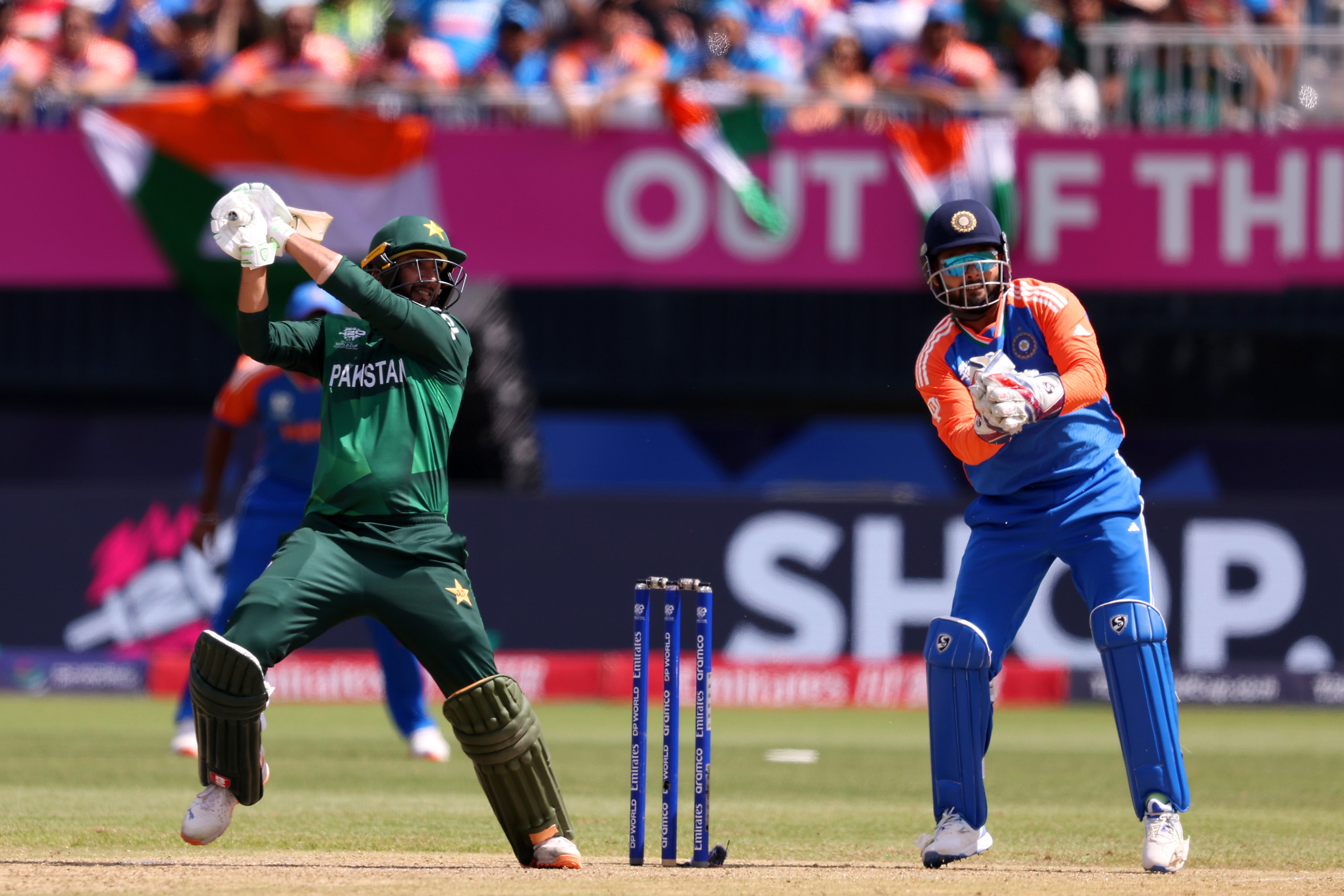
Imad Wasim of Pakistan bats during a Men's T20 Cricket World Cup match against India at the Nassau County International Cricket Stadium on 9 June 2024

Imad Wasim of Pakistan bats during a Men’s T20 Cricket World Cup match against India at the Nassau County International Cricket Stadium on 9 June 2024 (Getty)

While the ICC continues to hope that Pakistan will backtrack – especially with the governing body having warned of possible sanctions – former BCCI chief selector Chetan Sharma has predicted the PCB will reverse its stance after the 12 February election in Bangladesh, arguing the decision is politically driven.

“What was Bangladesh players’ fault? None. This is politics. Bangladesh has elections on the 12th. After that, you will see a U-turn. There will be a statement saying, ‘Considering public sentiment, cricket shouldn’t suffer, Pakistan will play against India.’ This stance is still about the Bangladesh election only,” he told India Today.

Advertisement

“I’ve been a politician, I’ve contested elections. After the elections, maybe even the military chief will say sport should be kept free of politics and the match should go ahead.”

Former England captain Nasser Hussain questioned whether the ICC had applied its rules consistently.

“If India, a month before a tournament, said ‘our government does not want us to play in a country for a World Cup’, would the ICC have been so firm and said, ‘You know the rules, bad luck, we’re knocking you out?’” he asked on the Sky Sports Cricket Podcast.

Scotland, promoted into the tournament, said preparations had been unusual. “It’s been unique circumstances for us. Preparations have been different than other teams. Every opportunity, we want to make most of,” captain Richie Berrington said.

Advertisement

If Pakistan do boycott the match versus India, their opponent will receive two points. They face the Netherlands, USA, and Namibia in their remaining group games. Only the top two teams from each group progress, leaving little margin for error. It’s unclear what would happen if India and Pakistan were drawn to meet in the final.

There’s precedent for teams refusing to play. Australia and the West Indies declined to travel to Sri Lanka during the 1996 World Cup, while England refused to play Zimbabwe in 2003, citing security concerns. Those teams forfeited the matches but were not fined.

The ICC constitution, however, allows for sanctions where governments interfere in cricket administration and requires boards to operate autonomously.

Zimbabwe were suspended in 2019 on account of government intervention and Sri Lanka lost hosting rights for an Under-19 World Cup four years later following the dismissal of its board.

Advertisement

Cricket analysts say the financial implications of an India-Pakistan no-show will be severe. Former ICC media head Sami Ul Hasan said: “The biggest hit, if the biggest game of the tournament doesn’t take place, will come from media rights.”

The losses will be felt by member boards.

Hasan pointed to the origin of the crisis in the removal of Mustafizur Rahman from the IPL.

“We must remember that this situation arose due to one player’s removal and one administrator’s statement,” he said, referring to comments by BCCI secretary Devajit Saikia, who at the time blamed “recent developments that are going on all across” – a comment widely understood to refer to the protests by Hindu nationalist groups.

Advertisement

.As the T20 World Cup gets started, the ICC says its priority is the delivery of the tournament. It is calling on all members to protect its integrity.

The World Cup is due to begin on 7 February and will conclude on 8 March. Viewers in the UK can watch every game live on Sky Sports. A live stream will be available via Sky Go and NOW.

Source link

Advertisement
Continue Reading
Click to comment

You must be logged in to post a comment Login

Leave a Reply

NewsBeat

Trump says he has ‘no problem’ with Russian oil tanker bringing relief to Cuba

Published

on

Trump says he has 'no problem' with Russian oil tanker bringing relief to Cuba

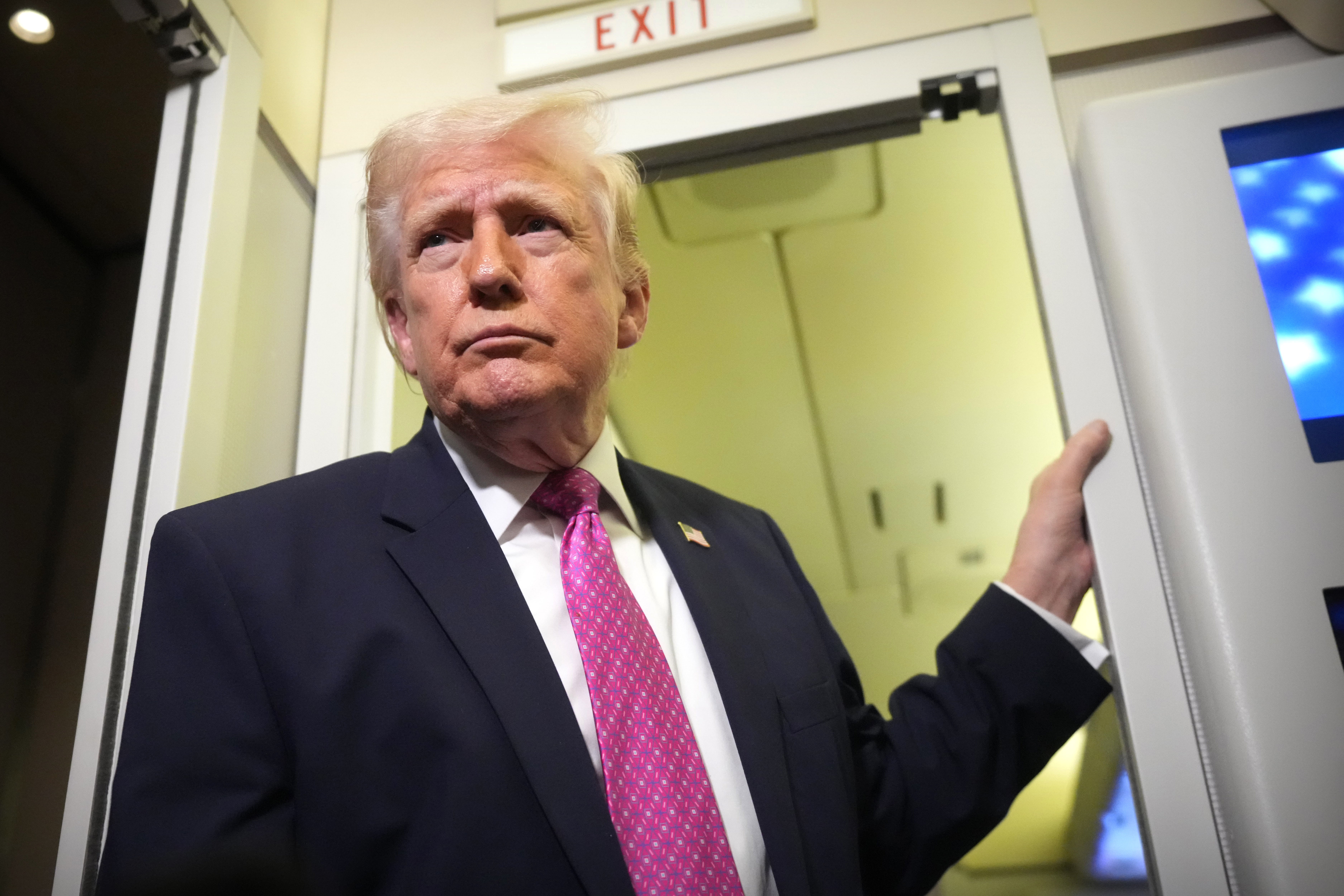
ABOARD AIRFORCE ONE (AP) — President Donald Trump on Sunday night said he has “no problem” with a Russian oil tanker off the coast of Cuba delivering relief to the island, which has been brought to its knees by a U.S. oil blockade.

“We have a tanker out there. We don’t mind having somebody get a boatload because they need… they have to survive,” Trump told reporters as he flew back to Washington.

When asked if a New York Times report that the tanker would be allowed to reach Cuba was true, Trump said: “I told them, if a country wants to send some oil into Cuba right now, I have no problem whether it’s Russia or not.”

On Monday, Russia’s Transport Ministry said the oil tanker Anatoly Kolodkin arrived at the Cuban port of Matanzas carrying “humanitarian supplies” of about 730,000 barrels of oil.

Advertisement

The vessel is sanctioned by the United States, the European Union and the United Kingdom following the war in Ukraine.

Trump, whose government has come at its Caribbean adversary more aggressively than any U.S. government in recent history, has effectively cut Cuba off from key oil shipments in an effort to force regime change. The blockade has had devastating effects on the civilians Trump and Secretary of State Marco Rubio say they want to help, leaving many desperate.

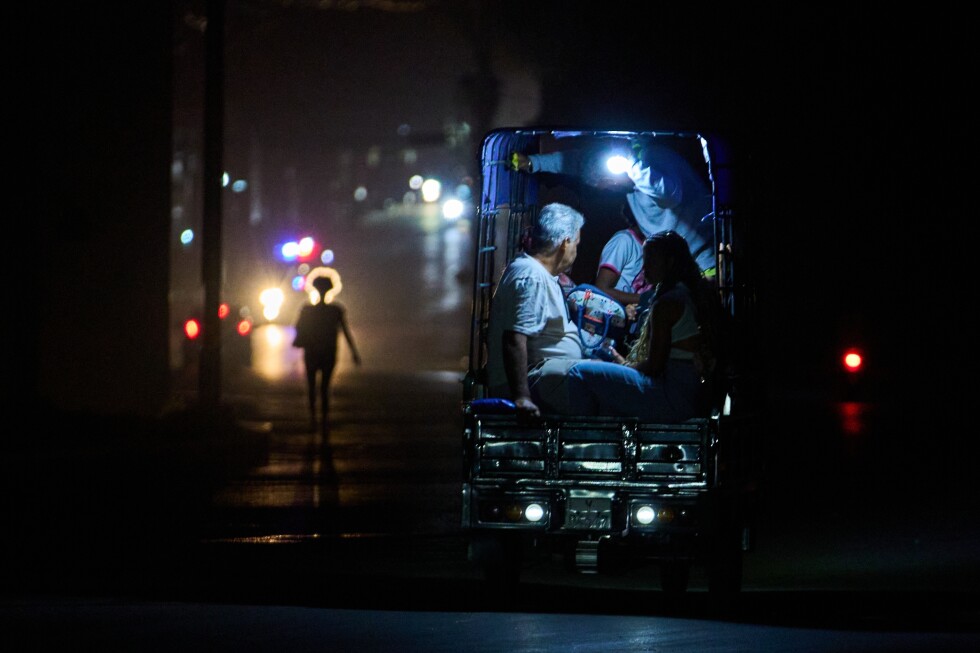
Island-wide blackouts have roiled Cubans already grappling with years of crisis, and lack of gasoline and basic resources has crippled hospital and slashed public transport.

Experts say the anticipated shipment could produce about 180,000 barrels of diesel, enough to feed Cuba’s daily demand for nine or 10 days.

Advertisement

Island-wide blackouts have roiled Cubans already grappling with years of crisis, and lack of gasoline and basic resources has crippled hospital and slashed public transport.

Cuba has long been at the heart of geopolitical tug-of-war between the U.S. and Russia, dating back decades. Trump on Sunday dismissed the idea that allowing the boat to reach Cuba would help Russian President Vladimir Putin.

“It doesn’t help him. He loses one boatload of oil, that’s all it is. If he wants to do that, and if other countries want to do it, it doesn’t bother me much,” Trump said. “It’s not going to have an impact. Cuba’s finished. They have a bad regime. They have very bad and corrupt leadership and whether or not they get a boat of oil, it’s not going to matter.”

He added: “I’d prefer letting it in, whether it’s Russia or anybody else because the people need heat and cooling and all of the other things.”

___

Advertisement

Associated Press reporters Megan Janetsky contributed to this report from Mexico City and Andrea Rodríguez contributed from Havana.

Source link

Advertisement
Continue Reading

NewsBeat

The natural birth movement empowers many women but pressure can also work the other way

Published

on

The natural birth movement empowers many women but pressure can also work the other way

Childbirth is often framed as a choice between two extremes: “natural” birth or medical intervention. The real challenge is making sure women can decide how they give birth, without pressure in either direction.

Debates about childbirth often focus on pressure to accept medical interventions in hospital, such as caesareans or forceps delivery. But recent NHS maternity inquiries suggest some women feel pressure in the opposite direction. They describe being discouraged from medical assistance even when they believed it would be safer, or better for them.

One healthcare professional giving evidence in the 2022 Ockenden Review, which examined preventable deaths and injuries affecting mothers and babies between 2000 and 2019, described a culture in which avoiding caesarean sections had become a source of institutional pride:

They were always very proud of their low caesarean rates … I personally found all the failed or attempted instrumental deliveries very difficult to deal with. I had never seen so many injuries … or resuscitations … Nothing to be proud of.

Evidence presented to a House of Commons inquiry into the safety of maternity services similarly found that “hundreds of women felt pressure to have a normal birth”, without medical assistance.

Advertisement

During my doctoral research examining childbirth narratives across several major UK maternity inquiries, I analysed thousands of women’s birth stories submitted to public investigations. Some accounts describe women who felt discouraged from receiving medical assistance even when they would have preferred it.

The natural birth movement – which emerged in the mid-20th century as a reaction against the increasing medicalisation of childbirth – advocates for minimal pain medication, midwife-led care, and avoiding caesarean sections and instrumental deliveries where possible. It was designed to encourage women to reclaim control of their bodies from a medical establishment that had, in many cases, taken that control away.

While the movement acted as an important counterweight against routinised, unnecessary interventions, that same cultural force has, in some settings, created its own pressure – one where accepting medical help feels like a failure.

When legal rights meet clinical reality

One of the most influential cases in modern medical law addressed this issue of informed choice during childbirth. In Montgomery v Lanarkshire Health NHS Trust (2015), the doctor did not warn the patient about the risks of vaginal delivery because they believed “it was not in the maternal interests for women to have caesarean sections”.

Advertisement

The Supreme Court rejected this reasoning. Instead, it emphasised that patients must receive clear information about risks and alternatives so they can make their own decisions about treatment.

Current Nice guidelines reinforce this principle. They stress that maternity care should support women’s choices during birth and caution against allowing personal opinions to influence the interventions that are offered.

The UK government also recently abandoned the World Health Organization recommendation that caesarean births should not exceed 20% nationally, after concerns that rigid targets were pressuring NHS Trusts to prioritise statistics over safety.

Despite these safeguards, institutional practices can still shape the choices that women feel able to make.

Advertisement

How pressure can shape birth decisions

Some women say these pressures reflect wider cultural narratives about childbirth. In recent years, messages celebrating “natural”, “empowered” or “positive” birth have become increasingly visible in antenatal classes, books and online communities. While these approaches are often intended to build confidence and support informed choice, some women say they can also create an environment in which accepting medical help feels like a failure, or where women worry they may be judged for being “too posh to push”.

These narratives don’t just circulate in parenting spaces or social media. They are also seen in how hospitals – intentionally or unintentionally – present different birth options to expectant parents.

This can feel particularly significant because it comes from institutions that women expect to trust. It shows how legal protections don’t always translate into everyday clinical practice.


À lire aussi :
Why labour decision-making shouldn’t start in the delivery room

Advertisement

In some cases this influence appears in the language hospitals use to describe different birth options. Recently archived material from one hospital promoted non-medicated birth approaches by stating that “treatments are usually non-invasive and rarely cause the unpleasant or long-lasting side effects that can be associated with medication”.

Language like this is often intended to reassure patients. But it can also shape how different options are perceived, particularly when the potential drawbacks of medical interventions are emphasised more strongly than their benefits.

In other cases, the pressures are structural. Some maternity units are organised in ways that make it difficult to move quickly between midwife-led and obstetric wards. Women have described having to walk between departments while in pain and sometimes partially undressed. Situations like this illustrate how problems can arise not from individual professionals, but from how hospital systems are designed.

Finally, recent research by Birthrights, a UK charity that campaigns to protect women’s rights during pregnancy and childbirth, highlights institutional barriers to maternal request for caesarean sections. The organisation found that 113 NHS Trusts do not fully align with Nice guidance. Some policies delayed decisions until 36 weeks of pregnancy, creating uncertainty for expectant mothers.

Advertisement

Pressure to avoid medical intervention should be taken as seriously as pressure to undergo it. Although more than half of first-time mothers experience some form of obstetric intervention, many report feeling ashamed when this occurs.

This matters because some research has linked birth-related shame with an increased risk of suicidal thoughts among mothers, associated with an expressed sense of failure to birth “normally”. When hospital policies create additional barriers to accessing care, they may reinforce these feelings.


À lire aussi :
Maternal death rates in the UK have increased to levels not seen for almost 20 years – experts explain why


Why the term ‘obstetric violence’ matters

Around the world there is growing recognition of the concept of “obstetric violence”, a term used to describe systemic harms that women may experience during childbirth. The concept highlights how these harms often arise not from malicious individuals but from institutional cultures, clinical norms and wider social expectations about motherhood.

Advertisement

Much of the global discussion about obstetric violence has focused on the dangers of overmedicalisation. However, similar pressures can arise when women feel discouraged from accepting medical interventions. In both situations, expectations about the “ideal” self-sacrificing mother can shape how decisions about birth are framed.

In the UK, the term “obstetric violence” is rarely used in policy or public discussion. This reluctance matters. Without language that clearly names systemic harm, it becomes harder to recognise patterns, challenge institutional norms and push for meaningful change.

Many women have positive experiences of both natural and medically assisted birth, and most maternity professionals work hard to support women’s choices. What matters most is that decisions about birth are based on balanced discussions of risks and benefits.

Recognising how pressure can operate in both directions is essential if maternity care is to genuinely support women’s autonomy during childbirth.

Advertisement

Source link

Continue Reading

NewsBeat

Essano takeaway improves hygiene rating to three

Published

on

Essano takeaway improves hygiene rating to three

Essano, situated on Manchester Road, was rated zero following an inspection on October 14 last year.

However, after a more recent visit in March, the business has raised its score to a three.

The takeaway offers a range of fast food, including burgers, pizzas, kebabs, and fried chicken, which it describes as “freshly made, expertly packed, and ready for pickup or fast delivery.”

Advertisement

Food hygiene ratings are designed to reflect the standards found at the time of inspection.

They assess several key areas, including how food is handled, stored, and prepared, the cleanliness and condition of facilities, and how food safety is managed overall.

During inspections, officers evaluate how hygienically food is handled, the physical state of the premises, and whether appropriate food safety systems are in place.

Where serious risks are identified, authorities have the power to partially or fully close a business until improvements are made.

Advertisement

A rating of three indicates that a business is generally satisfactory and meets the minimum legal requirements for food safety and hygiene.

The latest rating shows a significant improvement for the Manchester Road takeaway since its previous inspection.

Source link

Advertisement
Continue Reading

NewsBeat

GMB viewers ‘turn off’ as hosts slammed over ‘appalling’ interview with Labour MP

Published

on

Daily Mirror

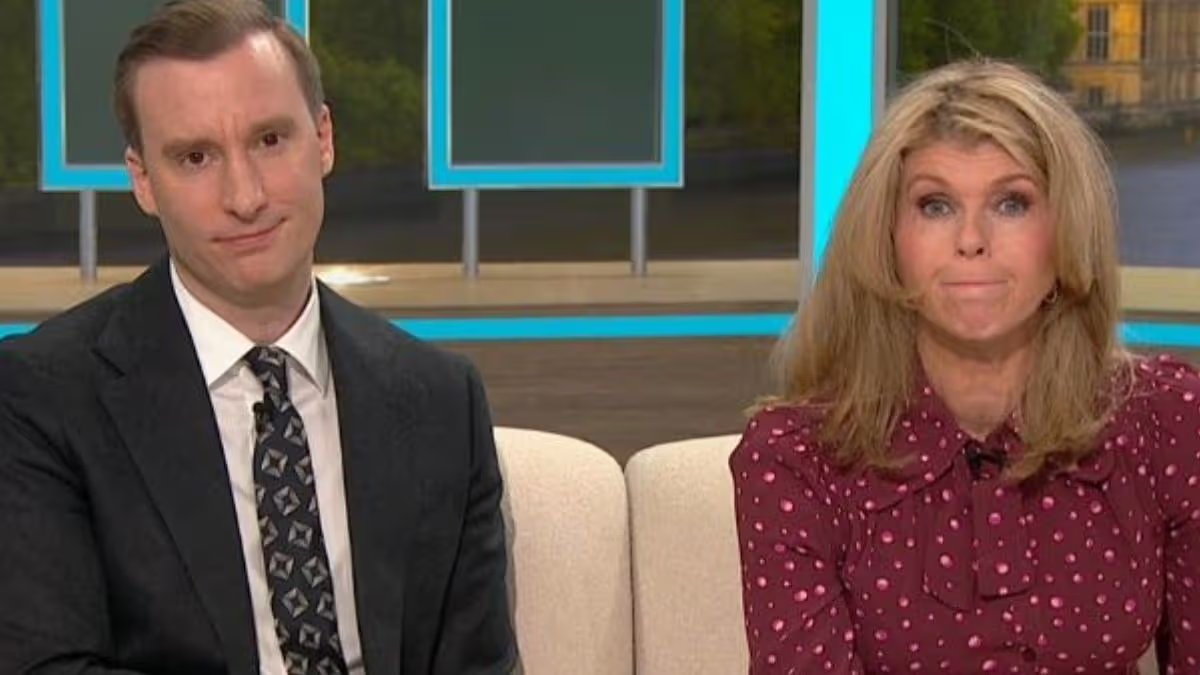
Good Morning Britain presenters Kate Garraway and Paul Brand spoke to the Minister for the Environment, Emma Reynolds, on Monday’s show.

Good Morning Britain viewers were left less than impressed with Kate Garraway and Paul Brand during Monday’s show.

Advertisement

The duo sparked backlash after challenging the Minister for the Environment, Emma Reynolds, about fuel supply concerns.

Kate, stepping in for ITV’s Susanna Reid while she’s on break, challenged the minister and was often seen interrupting and speaking over her, a move she also acknowledged.

At one point during the interview, Kate noted that Slovenia has become the first country in Europe to ration fuel.

She remarked, “Newsreaders now wearing jackets because they didn’t want to have the air conditioning on, it feels like it’s coming. What’s the government really, practically doing or can do?”

Advertisement

Emma remarked: “Some parts of the world are more exposed to the supply issues from the Middle East-” However, Kate could be heard shouting over her, adding: “But, why is Slovenia more exposed than we are?”

While the minister tried to continue speaking, the ITV host was heard cutting in once again mid-sentence.

Kate commented: “Sorry to keep interrupting you, but I just want to press you on this. It’s one thing to say they shouldn’t feel that, but none of us wants to feel that on our Easter holidays, but is it coming? Will they have to?”

Advertisement

At another point, Paul also apologised to the minister for interrupting her as she spoke about concerns about fuel demand.

It wasn’t long before people watching commented on their discussion, with some turning off due to how Kate and Paul spoke to the minister. One person said, “What a terrible interview. If I were a minister, I would refuse to come on the show.”

Someone else added: “She’d get to the point if you didn’t keep interrupting all the bl**dy time, so annoying.” Another viewer replied: “It was an appalling interview, wasn’t it? Made me turn off.”

One person shared: “Does Kate let anyone else speak? What’s the point in asking a question and not letting the person answer it?”

Another added: “Dreadful interview, appalling.” While someone else shared: “They are being rude to her.”

Good Morning Britain is available to watch on ITV weekdays from 6am.

Advertisement

Source link

Continue Reading

NewsBeat

Why Malta is one of Europe’s greatest open-air history museums

Published

on

Why Malta is one of Europe’s greatest open-air history museums

To say that Malta has a rich history is an understatement.

Walk the streets and clifftops of this Mediterranean archipelago and you’ll discover layers of history that go back hundreds and even thousands of years.

Below, we peel back the centuries and unveil some of the islands’ most spellbinding historic treasures.

One is the capital city, the entirety of which has been declared a Unesco World Heritage Site. Within is one of the most opulently decorated cathedrals you’ll ever set eyes on, picture-postcard townhouses and the former headquarters of the order that built the city in the 16th century — the Knights of St John.

Advertisement

The island’s old capital, Mdina, is similarly hypnotic, but far more tranquil – a car-free, walled city infused with thousands of years of history.

For a sense of Malta’s military struggles there are epic forts to wander, vast displays of armour to gaze at, and a citadel to visit that was a place of refuge for locals against raiding parties for hundreds of years.

Delve even deeper into the past with a visit to Malta’s ancient subterranean cemetery and megalithic temples, Unesco-listed sites predating the Pyramids that reveal how the island was once home to a remarkably advanced prehistoric society.

Valletta — the Baroque capital built by the Knights

Advertisement
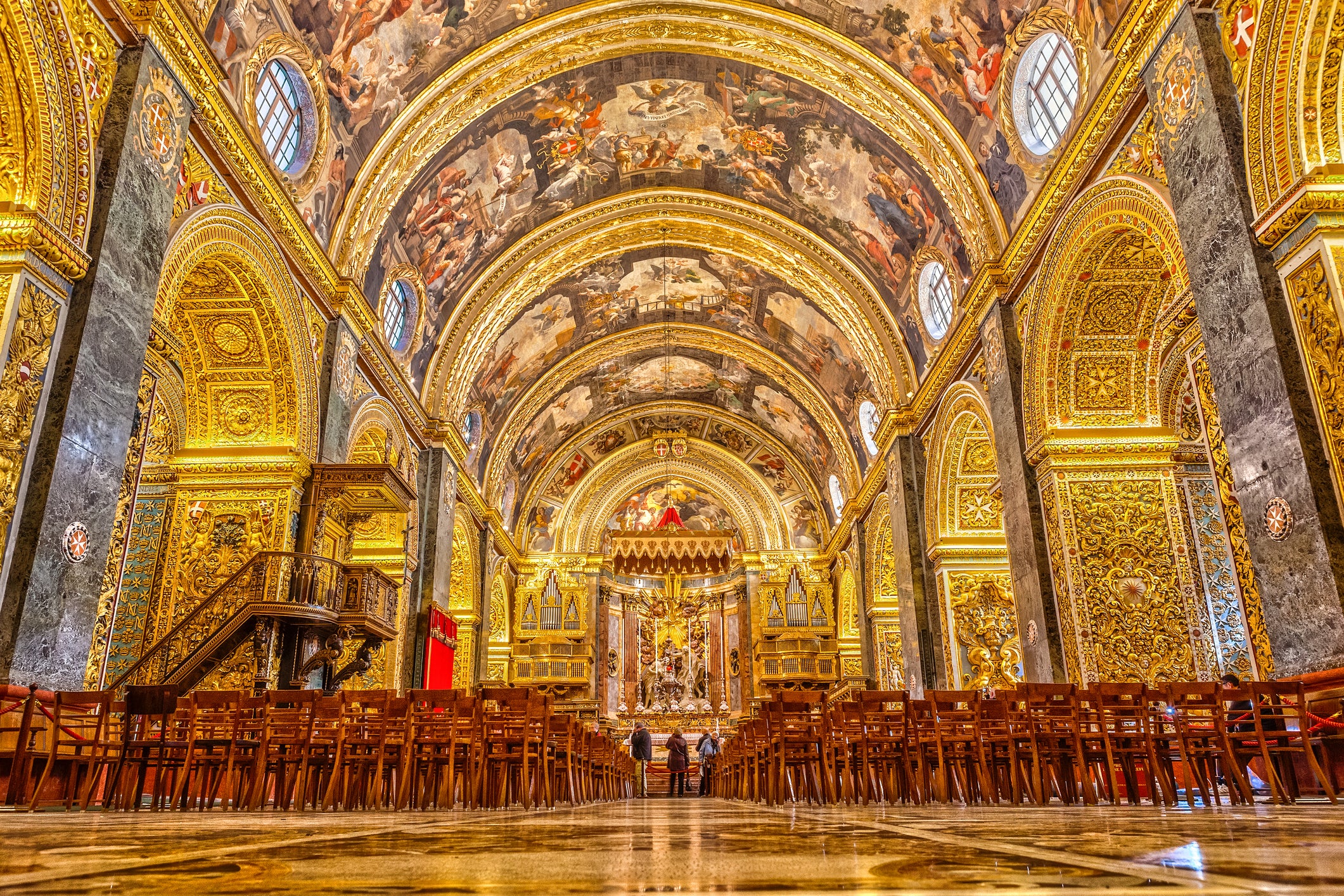
St John’s Co-Cathedral, which dates to the 1570s, is lavishly decorated. It's one of several must-visit historical landmarks in Valletta
St John’s Co-Cathedral, which dates to the 1570s, is lavishly decorated. It’s one of several must-visit historical landmarks in Valletta (Getty Images)

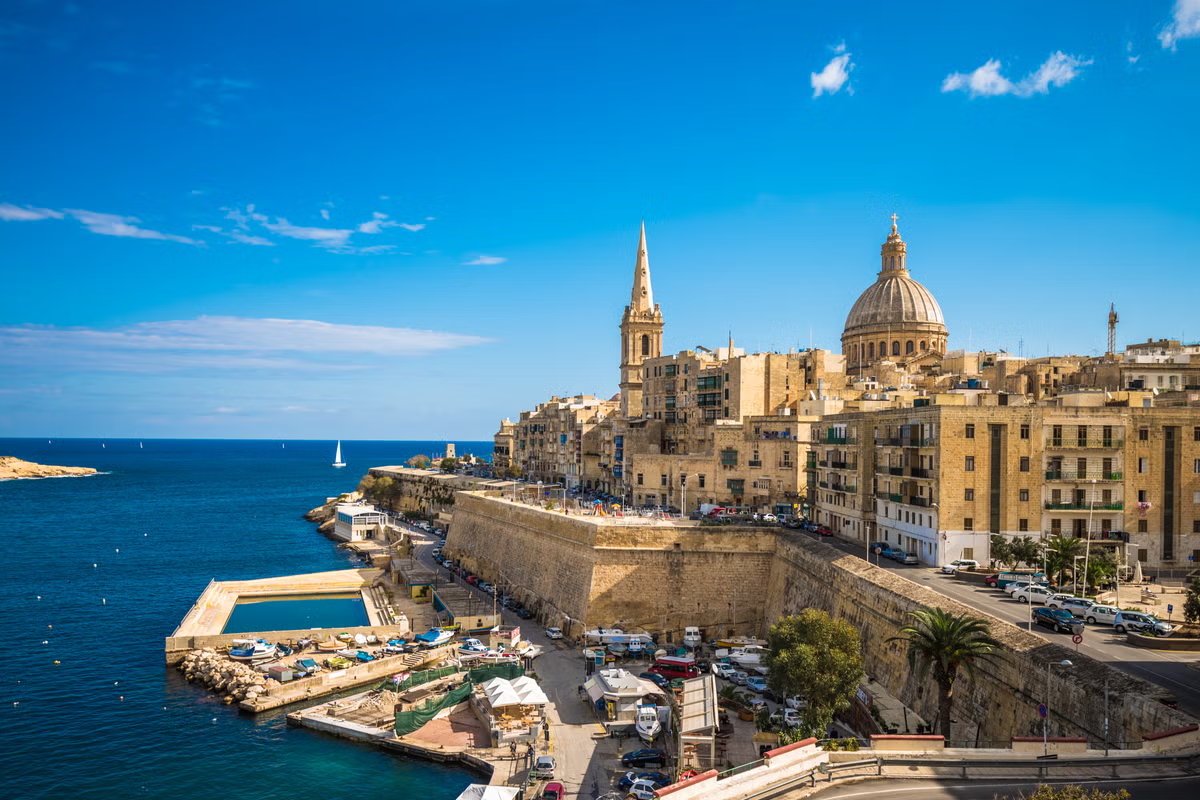
Perched on a rocky peninsula between two natural harbors, capital-city Valletta is tiny, covering just 60 hectares, or about one-fifth the size of Central Park.

But it packs a historical punch.

Built in 1566 by the Knights of St John — who came from noble families around Europe and ruled Malta from 1530 to 1798 — the honey-colored city is laced with stunning 16th and 17th-century townhouses, many of which now house atmospheric restaurants and bars, and jammed with around 320 monuments.

One of the most important landmarks to visit is St John’s Co-Cathedral, which was built by the Knights in the 1570s.

On the outside, it’s unprepossessing, but step inside and you’ll be greeted by a riot of lavish decorations that unambiguously signal power and wealth. There are carved stone walls, floors covered with marble tombs and a beautiful, painted vaulted ceiling. The eye will also be drawn to Caravaggio’s oil-painting masterpiece, The Beheading of Saint John the Baptist.

Advertisement

The Grand Master’s Palace, in the heart of Valletta, is another can’t-miss landmark. This former Knights nerve-center is home to one of the world’s greatest collections of arms and armor — underscoring the order’s military prowess — and rare French tapestries.

One of the best vantage points from which to drink in the city’s splendor is the 16th-century Upper Barrakka Gardens, originally a place of repose for the Italian Knights of St John.

Great place to stay: The Barrister (rooms from $245) sits right in Valletta’s historic core and features a bijou rooftop terrace with skyline views.

Read more: Malta’s coastline is one of the Mediterranean’s most spectacular — here’s why

Advertisement

Mdina — Malta’s ancient ‘Silent City’

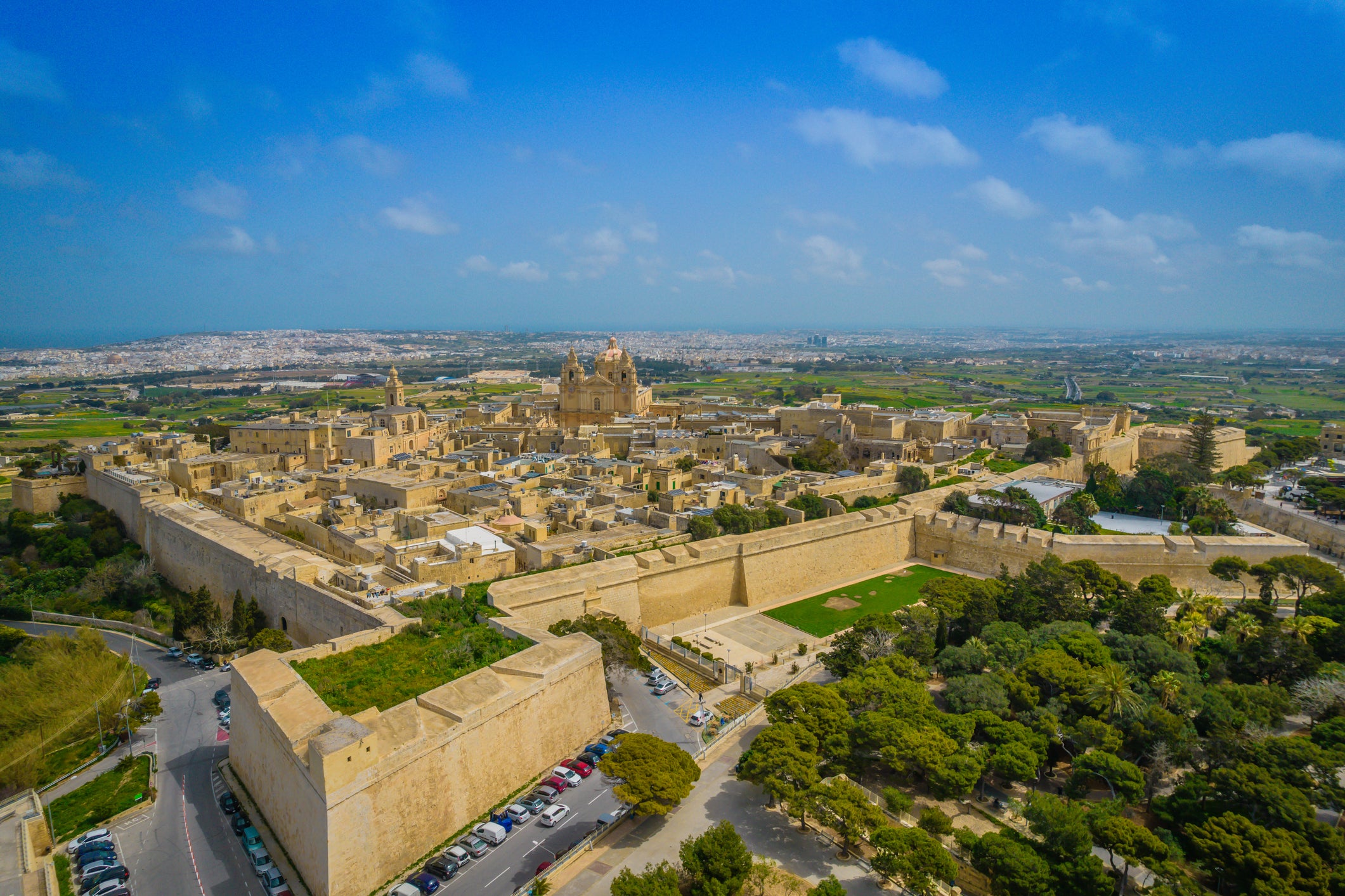
Car-free Mdina is famously quiet, and a time capsule of Maltese history
Car-free Mdina is famously quiet, and a time capsule of Maltese history (Getty Images/iStockphoto)

Mdina is a spellbinding journey through thousands of years of Maltese history, and a truly tranquil experience.

This incredible walled city — Malta’s old capital — dates back to the Bronze Age, after which it was ruled by the Phoenicians, Romans, Arabs, Normans, and eventually the Knights of St John.

Wander its labyrinthine streets and you’ll feel the depth of that history with every step — and you’ll hear every step. Mdina, car-free and with a population of just a few hundred people, is so quiet that it’s been dubbed Malta’s “Silent City.”

One of the key photo opportunities is the city gate, which you may recognize from Game of Thrones — it was used as the entrance to King’s Landing in the hit HBO series. The stone portal was built in 1724, and with its intricate carvings, makes for a suitably theatrical entrance to the city.

Advertisement

St Paul’s Cathedral also delivers drama, with an elegant dome that dominates the skyline and stunning painted ceilings inside.

Don’t leave without walking the perimeter walls, which offer impressive views of the maze-like city interior and out across the surrounding patchwork fields to the Mediterranean beyond.

Great place to stay: The Xara Palace Relais & Châteaux (rooms from $320) is one of the few hotels set inside Mdina’s walls, and the converted 17th-century palazzo delivers a lost-in-time-and-space atmosphere, with antique-festooned rooms.

Read more: 10 best hotels in Malta, from Valletta to St Julian’s

Advertisement

Vittoriosa (Birgu) — where Malta held the line

Vittoriosa (Birgu) is bursting with history and its well-preserved streets are a joy to wander
Vittoriosa (Birgu) is bursting with history and its well-preserved streets are a joy to wander (Getty Images)

Vittoriosa — also known as Birgu — offers further, fascinating immersion into the world of the Knights of St John, for this Lilliputian city — which sits directly across the Grand Harbour from Valletta, forming part of the so-called “Three Cities” (Birgu, Senglea and Cospicua) — was the Knights’ headquarters before Valletta existed, and helped ensure victory in the Great Siege of 1565.

The part of the city that bore the brunt of the onslaught from Ottoman forces was the formidable Fort St Angelo, which served as the nucleus of the Knights’ defense.

The fort was opened to the public in 2015, and stepping inside is an eye-opening glimpse into Malta’s military past. Interactive exhibits tell the story of the siege, and you can explore the former residence of the fort commander and see the Guva, the 16th-century oubliette accessible only by a trapdoor in the ceiling where the artist Caravaggio was held in 1608.

Stroll the ramparts for mesmerizing harbor views.

Advertisement

Earmark time, too, for a look around the Inquisitor’s Palace, a complex that had a dual role from the 16th to the 18th centuries as both a grand residence for Holy Roman inquisitors enforcing religious orthodoxy and a prison for accused heretics.

The streets of the city will hold you spellbound — they’re beautifully preserved and intimate.

Great place to stay: Casa Birmula Boutique Hotel (rooms from $230) is set in a restored townhouse and offers superb skyline views from its rooftop terrace and pool.

Read more: Exploring Gozo, Malta’s wilder, quieter island

Advertisement

Malta’s deepest history — structures that predate the pyramids

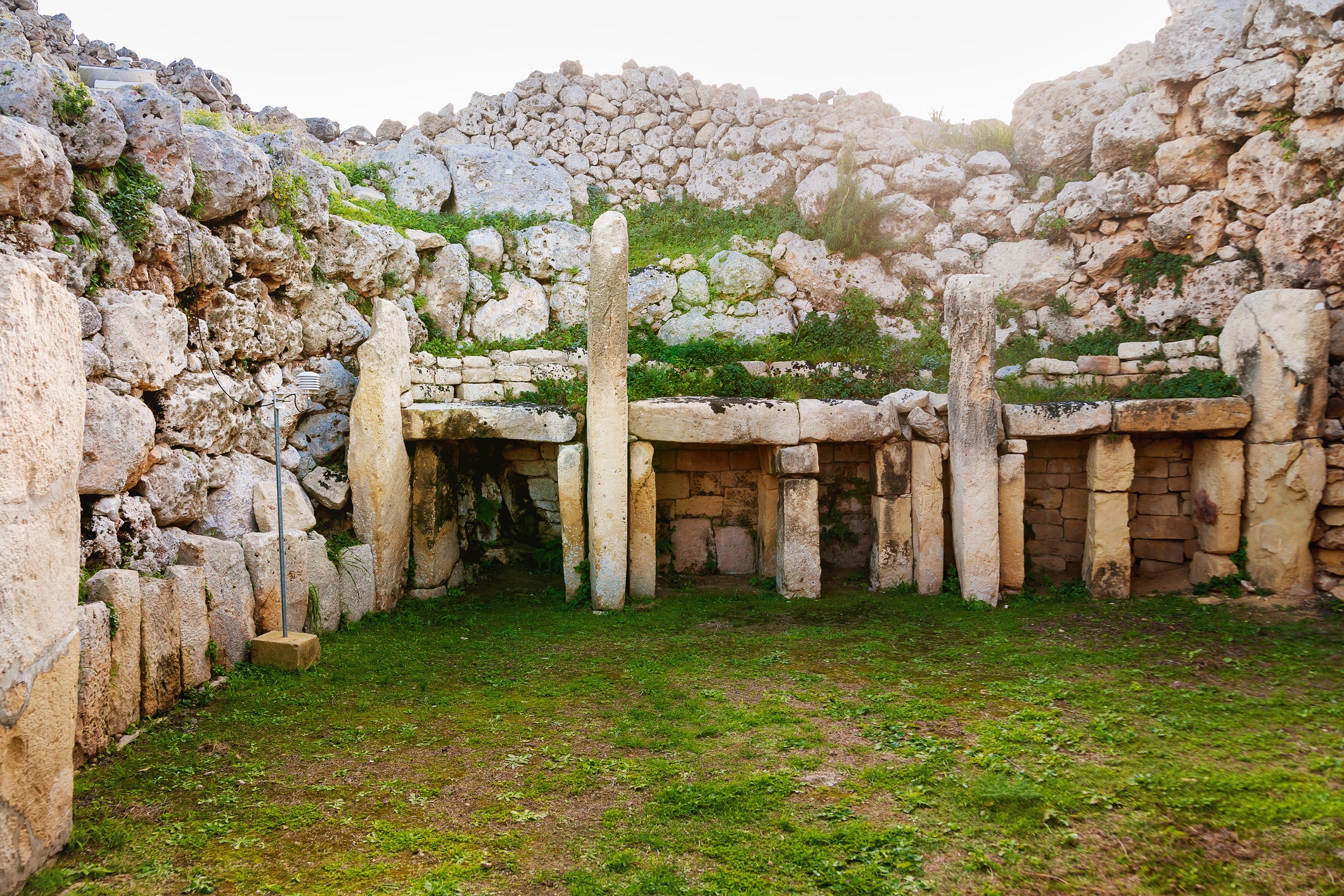
The megalith temple complex of Ggantija is evidence that an advanced prehistoric society flourished on Malta
The megalith temple complex of Ggantija is evidence that an advanced prehistoric society flourished on Malta (Getty Images)

The archipelago’s history runs astonishingly deep. In fact, it’s home to seven Unesco-listed megalithic temples and an underground cemetery that are among the oldest surviving human-built structures on the planet, some of which predate the Pyramids and Stonehenge.

The society behind them was one that flourished, then suddenly collapsed. The reason why isn’t clear — some researchers believe farming and deforestation led to catastrophic soil degradation — but one thing is certain: these architectural masterpieces, built with extremely limited resources, indicate that Malta was home to an advanced prehistoric society capable of remarkable feats of engineering.

One of the most impressive monuments is Ggantija, a temple on the island of Gozo dating back to 3600-3200BC created from limestone blocks and built to a striking scale.

On Malta’s southern coast, around 1,600 feet apart on the crest of a ridge, are the similarly ancient and eye-opening temples of Hagar Qim and Mnajdra. Key areas of Mnajdra are illuminated by the sun during the equinoxes and solstices, indicating symbolic and astronomical understanding.

Advertisement

The subterranean Unesco-listed necropolis of Hal Saflieni Hypogeum — on a hill in the suburb of Paola, not far from the Grand Harbour — is an even more prized sight: because exhaled carbon dioxide damages the delicate limestone walls, only around 10 people at a time are allowed inside.

Book far in advance, up to two months if possible, to view halls, chambers and passages dug in three levels that were in use between 4000 and 1500BC.

Great place to stay: Kempinski Hotel San Lawrenz (rooms from $200) on Gozo has gardens and multiple pools, and is within easy reach of Ggantija.

Read more: 11 of the best things to do in Valletta, Malta

Advertisement

Gozo Citadel — the island’s defensive heart for centuries

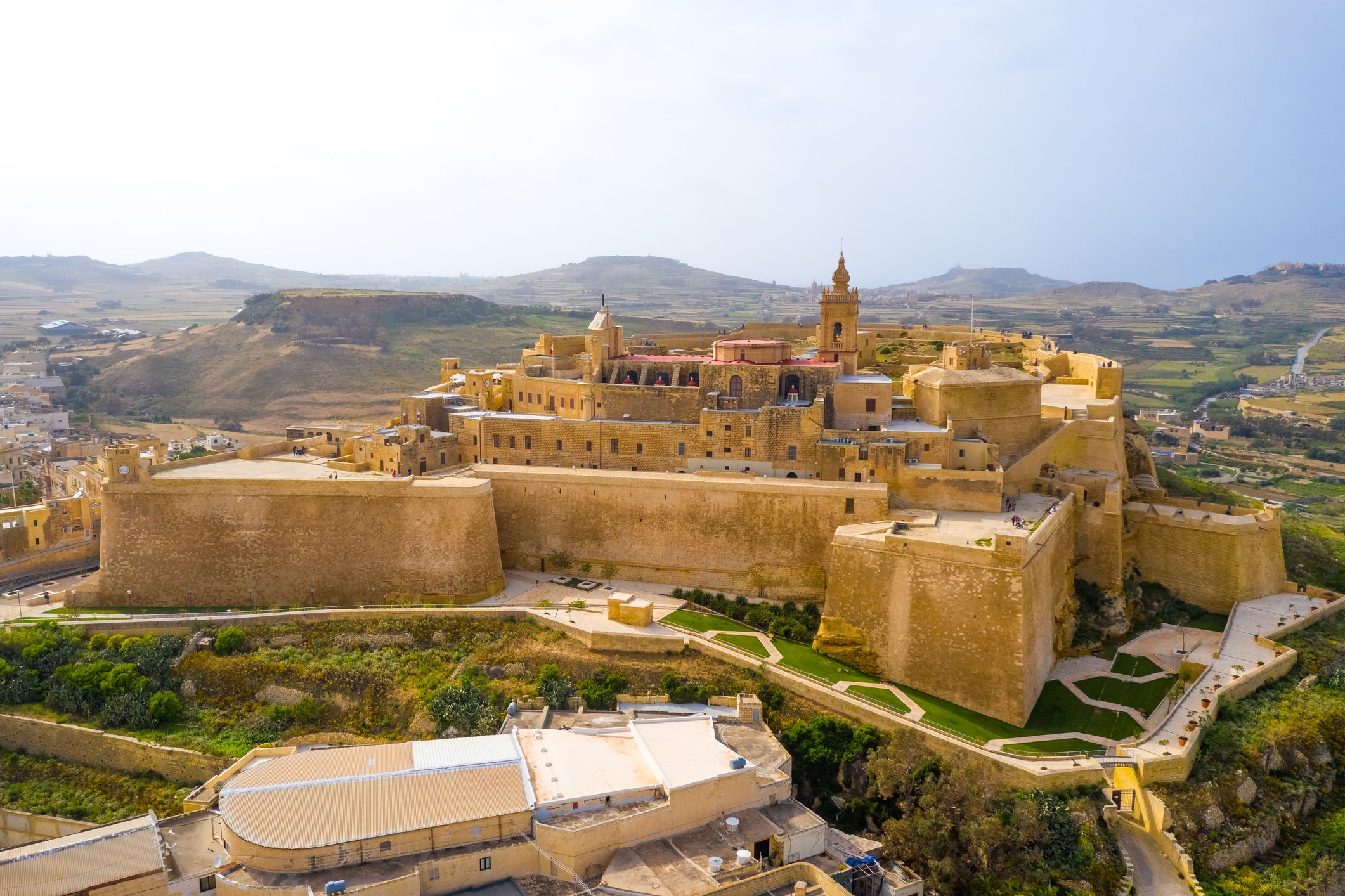
Gozo Citadel occupies a site that’s been fortified since the Bronze Age
Gozo Citadel occupies a site that’s been fortified since the Bronze Age (Getty Images/iStockphoto)

Gozo’s fairytale walled Citadel (known locally as Il-Kastell) crowns the island’s main town, Victoria (also known as Rabat), and occupies a site that’s been fortified in some way since the Bronze Age.

While today it’s largely a historic attraction (though there are a handful of residents), in the past it was a vital refuge for locals.

In fact, from the late Middle Ages until the early 17th century rural families would shelter nightly in the citadel as protection against pirate and Ottoman raids.

Take to the ramparts and it becomes clear why the citadel was so vital for defense — you can see almost the entire island.

Advertisement

Ground-level explorations unveil a world within a world, a maze of hushed, narrow lanes, tranquil squares and small museums, including the Gozo Museum of Archaeology, Folklore Museum, and Nature Museum.

The early 18th-century Cathedral of the Assumption is the flagship attraction, featuring a hypnotic ceiling painting that creates the illusion of a dome.

Great place to stay: Hotel Ta’ Cenc & Spa, Gozo (rooms from $260), a short drive from the citadel, is an oasis: there are gardens, pools and countryside views. And noise pollution is non-existent.

Read more: Seven Unesco sites in Europe that are worth the hype

Advertisement

Source link

Continue Reading

NewsBeat

Trump ‘planning high-risk operation to seize Iran’s uranium using US troops’

Published

on

Trump ‘planning high-risk operation to seize Iran’s uranium using US troops’

President Donald Trump is considering whether to launch a risky military operation to seize uranium from deep inside Iran, according to US officials, in what would represent a major escalation in the war.

The American president is yet to make a final decision on the plan as the conflict in the Middle East enters its fifth week, but he is said to be open to the idea and weighing up the danger to US troops, according to the Wall Street Journal.

On Sunday, Trump told reporters that Iran must give up its highly enriched uranium for the ongoing war to end.

“They are decimated right now. They’re going to give up nuclear weapons. They’re going to give us the nuclear dust,” he said referring to the uranium.

Advertisement

“They’re going to do everything that we want to do. If they don’t do that, they’re not going to have a country.”

Seizing Iran’s uranium would entail a complex operation involving American troops flying to nuclear sites while under fire from Iranian forces.

Trump said Iran must give up the ‘nuclear dust’ referring to enriched uranium
Trump said Iran must give up the ‘nuclear dust’ referring to enriched uranium (AP)

Combat troops would need to secure the perimeters of the sites, supported by highly-skilled technical staff and engineers on board to extract the radioactive material. This would need to be carried in around 40 to 50 special cylinders to be transported out of the country without incident.

They would also need to assess the territory for mines and other explosive devices designed to ward off security breaches.

“It’s the job of the Pentagon to make preparations in order to give the commander-in-chief maximum optionality. It does not mean the president has made a decision,” White House press secretary Karoline Leavitt said in a statement.

Advertisement

The Pentagon have not commented on the reports and a spokesman for US Central Command declined to comment when approached by the WSJ.

This satellite image from Planet Labs PBC shows Iran's Isfahan Nuclear Technology Center outside of Isfahan
This satellite image from Planet Labs PBC shows Iran’s Isfahan Nuclear Technology Center outside of Isfahan (Planet Labs PBC)

Last year, the International Atomic Energy Agency concluded that Iran has 1,000 pounds (400 kilograms) of uranium enriched at 60 per cent. Iran is also reported to have nearly 200 kilograms of 20 per cent fissile material, which can be easily converted to 90 per cent weapons-grade.

Experts say that levels that high are not required for nuclear reactors or medical reasons and could likely be for weapons.

Nuclear weapons require 90 per cent enrichment, while the bomb dropped on Hiroshima in 1945 included material that was 80 per cent enriched. A nuclear bomb could still be developed at 60 per cent but wouldn’t be deliverable by missiles.

In June 2025, Israel and the US said they had “obliterated” Iran’s nuclear facilities, but it is unclear whether the Iranian establishment transferred the material prior to the bombing or if it remains underground.

Advertisement

IAEA director General Rafael Grossi previously said he believes the uranium is at two of the three sites that were attacked last year including an underground tunnel at a nuclear complex in Isfahan and a cache at Natanz.

Iran is not currently enriching uranium, according to expert assessments, and had previously agreed to give up stockpiling enriched uranium as part of nuclear talks in February, according to Oman’s foreign minister.

Tehran has warned against a ground invasion and said Trump is leading US troops into “the swamp of death”.

Source link

Advertisement
Continue Reading

NewsBeat

Psycho Path in Burnopfield adds passenger plane scare

Published

on

Psycho Path in Burnopfield adds passenger plane scare

Psycho Path at Lintz Hall Farm in Burnopfield has announced that an Airbus A330 will be the latest twist to the annual event, set to kick off on September 26.

While details about how the plane – which normally seats around 300 – will be used, the spectacle will sit alongside Psycho Path’s 11 other terror mazes.

This includes Dolls House, Crawl Space, IScream, Cutthroat Island, The Hunt, Psycho City, The Darkness and Psychotorium, which was added to the list last year.

Since it was launched in 2018, the event has grown year on year, creating more ambitious and terrifying scare attractions.  

Advertisement

null (Image: DANIEL HORDON)

“This is something that I have had at the back of my mind for some time and now we have managed to purchase a plane, we will be creating something that not only has never been seen in the UK before but we believe will be a world first,” director Christiano Crawford said.

Psycho Path is working with a leading company in the USA to bring the idea to life.  

Phase one tickets are already sold out, with phase two now on sale at psycho-path.co.uk 

Christiano believes that once the full details of the new attraction are known, the event will be even more in demand.  

Advertisement

Every year we sell out and have to add extra dates,” he said.  “This time round we’re introducing a very different kind of scare – and it will be one that nobody will want to miss.”

Psycho Path is scheduled to run until November 1 this year.

Source link

Advertisement
Continue Reading

NewsBeat

Trump mulls seizing Iran’s Kharg Island oil terminal even as talks show progress

Published

on

Trump mulls seizing Iran's Kharg Island oil terminal even as talks show progress

DUBAI, United Arab Emirates (AP) — U.S. President Donald Trump openly mused about seizing Iran’s Kharg Island oil terminal in the Persian Gulf and the United States and Israel kept up their attacks Monday on the Islamic Republic, even as there were signs of progress in nascent ceasefire talks. Tehran, meanwhile, struck a key water and electrical plant in hard-hit Kuwait, part of its campaign targeting the Gulf Arab states.

As a diplomatic effort being facilitated by Pakistan toward ending the war moved ahead, Trump said Iran had agreed to allow 20 oil tankers through the Strait of Hormuz starting Monday as “a sign of respect.” At the same time, with 2,500 U.S. Marines now in the region and a similar sized contingent on its way, he raised the idea of taking Iran’s Kharg Island.

“Maybe we take Kharg Island, maybe we don’t,” he told the Financial Times in an interview published early Monday. “We have a lot of options.”

Iran launches attacks on Israel and hits more infrastructure targets in Gulf states

Sirens sounded at dawn near Israel’s main nuclear research center, a part of the country that has been targeted repeatedly in recent days. Israel’s military also said it had taken out two drones launched from Yemen, where the Iranian-backed Houthi rebels entered the war on Saturday with their first missile attack.

Advertisement

Iran kept up the pressure on its Gulf Arab neighbors, as Saudi Arabia intercepted five missiles targeting its oil-rich Eastern province, Bahrain sounded a missile alert, and a fireball erupted over Dubai as an incoming missile was taken out by defenses.

In Kuwait, an Iranian attack hit a power and desalination plant, killing one worker and injuring 10 soldiers, the state-run KUNA news agency reported.

Desalination plants are crucial to water supplies in the Gulf Arab states, and an Iranian attack previously damaged a desalination plant in Bahrain during the war. The facilities are typically paired with power plants, because of the large amount of energy required to remove salt from the water to make it drinkable.

Israel’s military launched a new wave of attacks on Iran, saying it was striking “military infrastructure” across Tehran, and explosions were heard in the Iranian capital. Iranian state media reported a petrochemicals plant in Tabriz, in the north, sustained damage after an airstrike and firefighters had to put out a blaze.

Advertisement

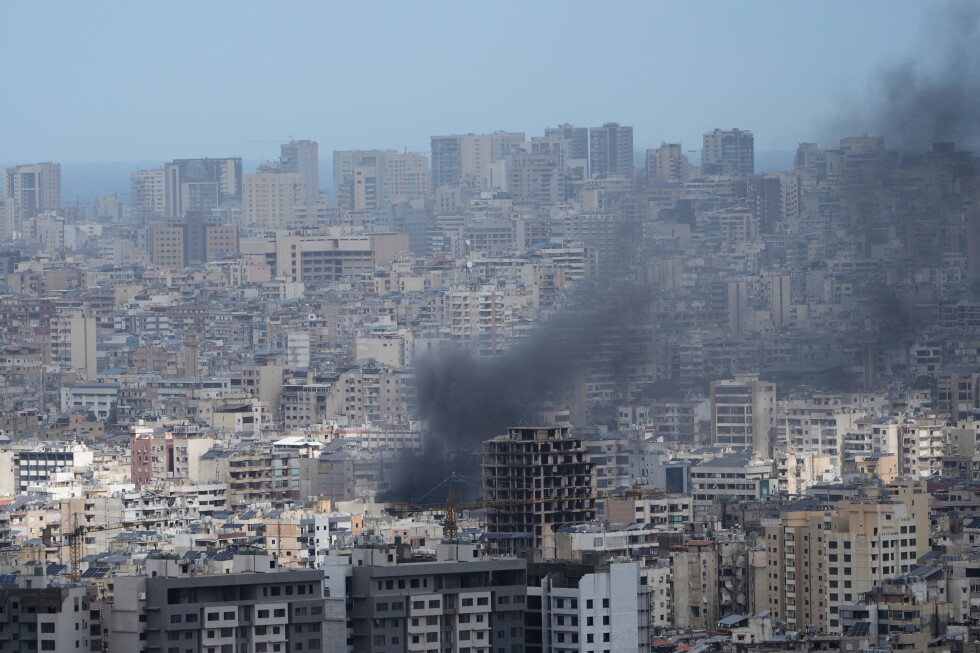
In Lebanon, which Israel has invaded by ground, an Indonesian peacekeeper was killed and three others were wounded when a projectile exploded near a village in the south.

Over the weekend, Israeli Prime Minister Benjamin Netanyahu said the military will widen its invasion, expanding the “existing security strip” in that country’s south as it targets the Iran-linked Hezbollah militant group.

Oil prices rise again as concerns of global energy crisis grow

Iran’s attacks on the energy infrastructure of the region and its stranglehold on the Strait of Hormuz, through which a fifth of the world’s oil is shipped in peacetime, has sent oil prices skyrocketing and given rise to growing concerns about a global energy crisis.

In early trading, the spot price of Brent crude oil, the international standard, was around $115, up nearly 60% from when the U.S. and Israel started the war with attacks on Iran on Feb. 28.

Advertisement

As pressure has grown on Trump to bring an end to the conflict, the U.S. has presented Iran a 15-point plan that includes it agreeing to open the Strait of Hormuz to shipping. Iran, meantime, has produced a five-point plan with its own terms, including maintaining its sovereignty over the key waterway.

Pakistan announced Sunday that it would soon host talks between the U.S. and Iran, though there was no immediate word from Washington or Tehran, and it was unclear whether discussions on the monthlong war would be direct or indirect.

Pakistan’s Foreign Minister Ishaq Dar the talks would be held “in the coming days.”

Trump says diplomatic approach going well but suggests military expansion is possible

Trump told reporters aboard Air Force One late Sunday that the U.S. was negotiating “directly and indirectly” with Iran, though Iran has insisted that it has not been in any talks with Washington.

Advertisement

“We’re doing extremely well in that negotiation but you never know with Iran because we negotiate with them and then we always have to blow them up,” Trump said.

Earlier, Iran’s parliament speaker, Mohammad Bagher Qalibaf, dismissed the talks in Pakistan as a cover to get more U.S. troops into the area. He said Iranian forces were “waiting for the arrival of American troops on the ground to set them on fire and punish their regional partners forever,” according to state media.

In the interview with the Financial Times, Trump suggested it could mean a longer-term commitment if the U.S. decided to try and take Kharg Island, saying “it would mean we had to be there for a while.”

“I don’t think they have any defense,” he added. “We could take it very easily.”

Advertisement

The U.S. already launched airstrikes once that targeted military positions on the island. Iran has threatened to launch its own ground invasion of Gulf Arab countries and mine the Persian Gulf if U.S. troops land on its territory.

To get an amphibious invasion force to Kharg would mean transiting the Strait of Hormuz and most of the Persian Gulf. Experts say that holding the island would also be a challenge, because in addition to its missiles and drones, it would be well within artillery range from the Iranian mainland.

Iran on Monday confirmed that the head of the Revolutionary Guard’s navy, Rear Adm. Alireza Tangsiri, had been killed in an Israeli airstrike, as Israel claimed last week. The Republican Guard praised the admiral’s efforts in statement, particularly in helping Iran keep its grip on the Strait of Hormuz.

“Every fighter is a Tangsiri, and we will see what surprises they will bring in the days and months ahead,” it said.

Advertisement

Death toll climbs

In Lebanon, officials said more than 1,200 people have been killed and more than 1 million have been displaced. Five Israeli soldiers have also lost their lives.

In Iran, authorities say more than 1,900 people have been killed, while 19 have been reported dead in Israel.

In Iraq, where Iranian-supported militia groups have entered the conflict, 80 members of the security forces have died.

In Gulf states, 20 people have been killed. Four have been killed in the occupied West Bank.

Advertisement

Thirteen U.S. service members have been killed in the war.

___

Rising reported from Bangkok. Associated Press writers Darlene Superville aboard Air Force One, Giovanna Dell’Orto in Miami, Florida and Munir Ahmed in Islamabad contributed to this story.

Advertisement

Source link

Continue Reading

NewsBeat

Beyond Paradise’s Kris Marshall opens up on son ‘drifting away’ from watching him on TV

Published

on

Wales Online

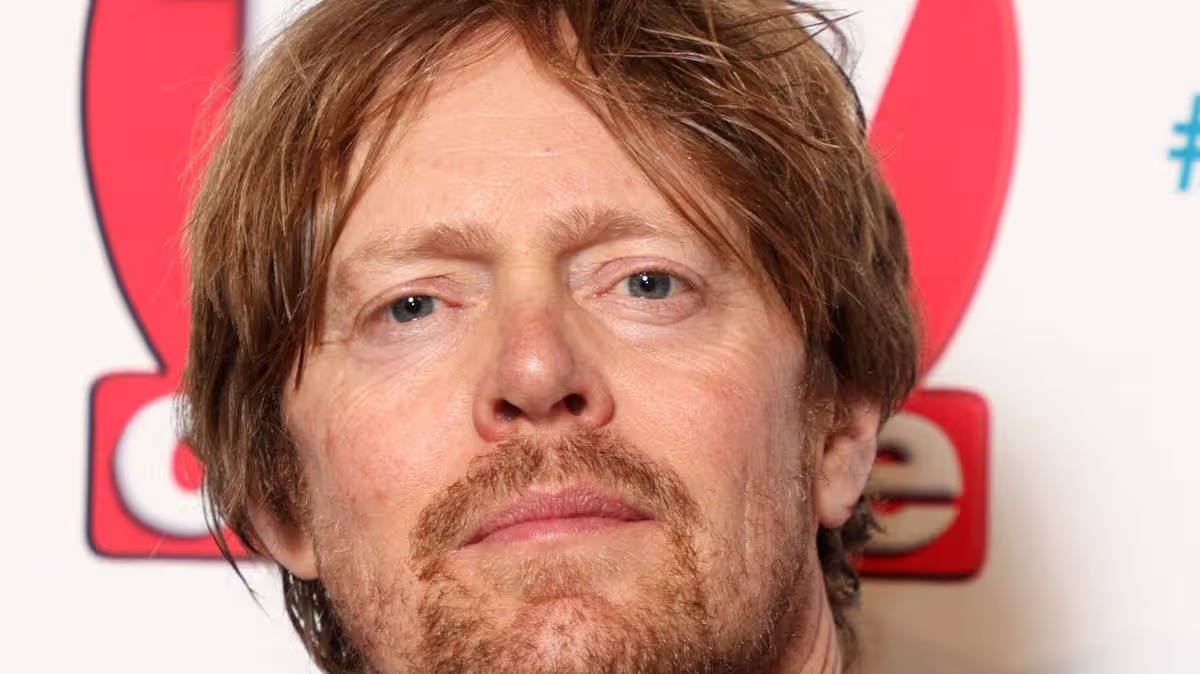
Beyond Paradise star Kris Marshall has opened up about his family life as the BBC drama returns for series 4.

Beyond Paradise star Kris Marshall has shared his family’s response to the BBC show, which is returning for its fourth series, revealing his son’s “heartbreaking” viewing habit.

The former Death in Paradise lead continues his portrayal of DI Humphrey Goodman in the spin-off, which resumes following his character’s marriage to Martha Lloyd (played by Sally Bretton).

As they adjust to married life, the new series presents Humphrey with an “impossible decision” and a fresh set of cases to solve.

Advertisement

Ahead of the new series, Kris, who shares two children, Thomas and Elsie, with his wife Hannah Dodkin, confessed that he’s “losing” his son’s interest in the BBC crime drama.

READ MORE: Good Morning Britain’s Kate Garraway steps in as Susanna Reid addresses absenceREAD MORE: Rich House, Poor House single mum emotional as she receives ‘life-changing’ gift

Speaking to Hello! Magazine, he disclosed: “My son, who is the eldest, is now a teenager, and he’s starting to drift away, towards things like Stranger Things,” reports the Express.

Advertisement

“I’m sort of losing him to the darker side of things, but he watches [Beyond Paradise] a lot when I’m away, which is kind of heartbreaking, but also I love it.”

Kris has previously discussed juggling his demanding filming schedule with family life, after relocating from Guadeloupe in the Caribbean, where Death in Paradise was shot, to Bath in 2017, so his children could attend school in the UK.

The family initially made Bath, Somerset, their home before relocating to the New Forest. Kris later explained: “My wife and I moved back to Bath when we had kids, but we relocated to the New Forest last year, basically as a lifestyle choice.

Advertisement

“When I’m not working, I’m all about just enjoying myself as much as possible – I’m big into sailing, surfing and skiing… oh, and Scrabble! All the S-words, really. As much as I love Bath, there’s not much in the way of coast there! So now we’re a 10-minute drive from the beach and a five-minute drive from the forest, and I love it.”

His work now requires him to spend considerable periods away from his family while filming in Devon and Cornwall. Speaking recently to The Daily Mail, he revealed that following 14-hour days across five days weekly, he doesn’t return home every weekend – a four-hour journey.

Kris reflected: “My kids are growing up. They’ve got their own lives.”

Advertisement

He continued by saying he “loves” the arrangement, appreciating the “beauty” of reuniting with his family fortnightly while also valuing the “solitude” of personal time following demanding filming schedules.

Discussing the challenge of readjusting to domestic life, he noted: “You have to relearn each other’s ways. It’s difficult. Let’s not beat around the bush. It’s an extremely blessed job when you’ve got your own show, you’re looked after and solitude is something you turn to.

“Time on your own, not having to do school drop-offs and all the things that come with family life. But you always have to remember how to be a parent when you come back, which is difficult because to me it is all about a light touch on the tiller.”

Advertisement

The synopsis for the new series of Beyond Paradise teases: “Fact and folklore blur as they investigate the death of a novelist who predicted their demise, a magical night of Dark Morris that soon turns sour, a stolen treasure map that suddenly reappears, and the alleged sighting of a vengeful mermaid lurking out at sea.

“Humphrey (Kris Marshall) and Martha (Sally Bretton) launch into married life as they search for a new home, whilst Humphrey wrestles with an impossible decision that may change the lives of everyone at the station forever.”

Beyond Paradise continues on Friday at 8pm on BBC One and iPlayer.

Source link

Advertisement
Continue Reading

NewsBeat

Yorkshire Craft Festival on Parliament Street York in April

Published

on

Yorkshire Craft Festival on Parliament Street York in April

The Yorkshire Craft Festival, organised by Made in Yorkshire, will take place on Parliament Street in York from April 7 to 12.

The six-day event will feature a large marquee filled with handmade goods from makers across the region, including art, homeware, gifts and traditional crafts, alongside live demonstrations and interactive workshops.


RECOMMENDED READING:


Tracie Jarvis-Post of Made in Yorkshire said: “Yorkshire has an incredible community of skilled makers, artists and craftspeople.

Advertisement

“The Yorkshire Craft Festival is all about bringing those makers together in one place, giving visitors the chance to discover locally made products, learn new skills and enjoy a creative day out in the heart of York.”

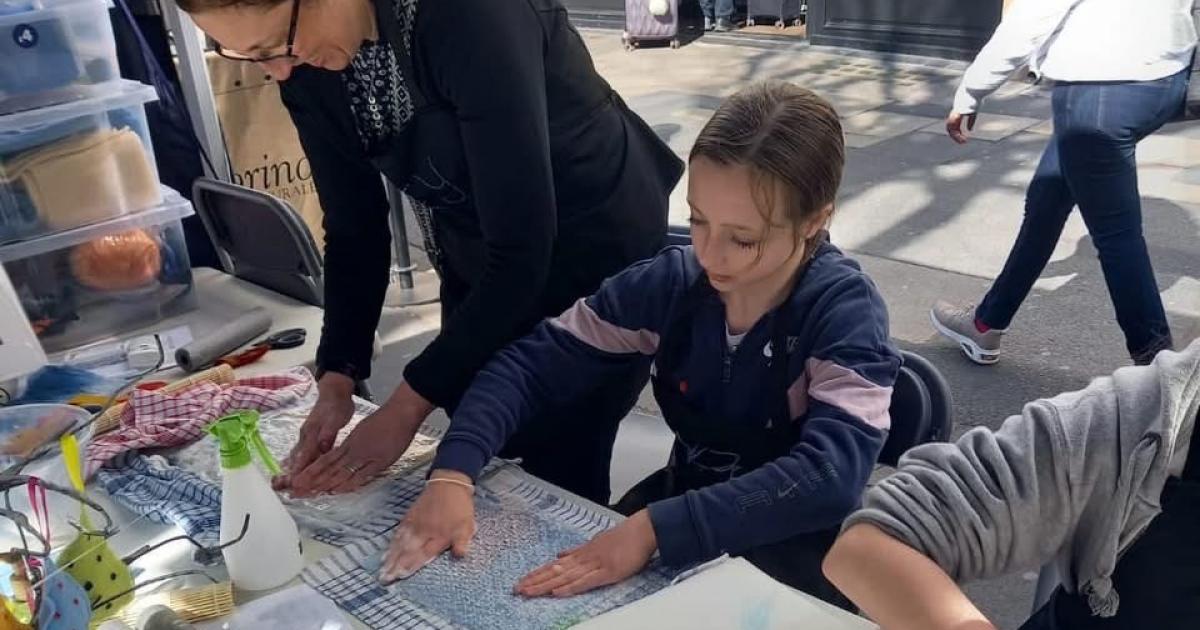
The tent at previous festivals (Image: Provided)

The workshops throughout the week will let visitors try their hand at stained glass making, blacksmithing, felt making, willow weaving and paper craft.

Families can enjoy dedicated children’s activities such as pot painting and paper crafts, while adults can participate in pot throwing and other hands-on sessions led by experienced artisans.

Artists at a previous event (Image: Provided)

The event aims to highlight the skill and creativity of Yorkshire’s independent craft community.

Advertisement

Entry is free and open to all with more information and workshop bookings available at https://madeinyorkshire.org.uk/events/yorkshire-craft-festival-spring-26 

Source link

Advertisement
Continue Reading

Trending

Copyright © 2025