Connect with us

NewsBeat

Inside the mysterious rise of ‘milk duct’ cancer in women in their 40s… and the alarming link to IVF, alcohol and the Pill

Published

on

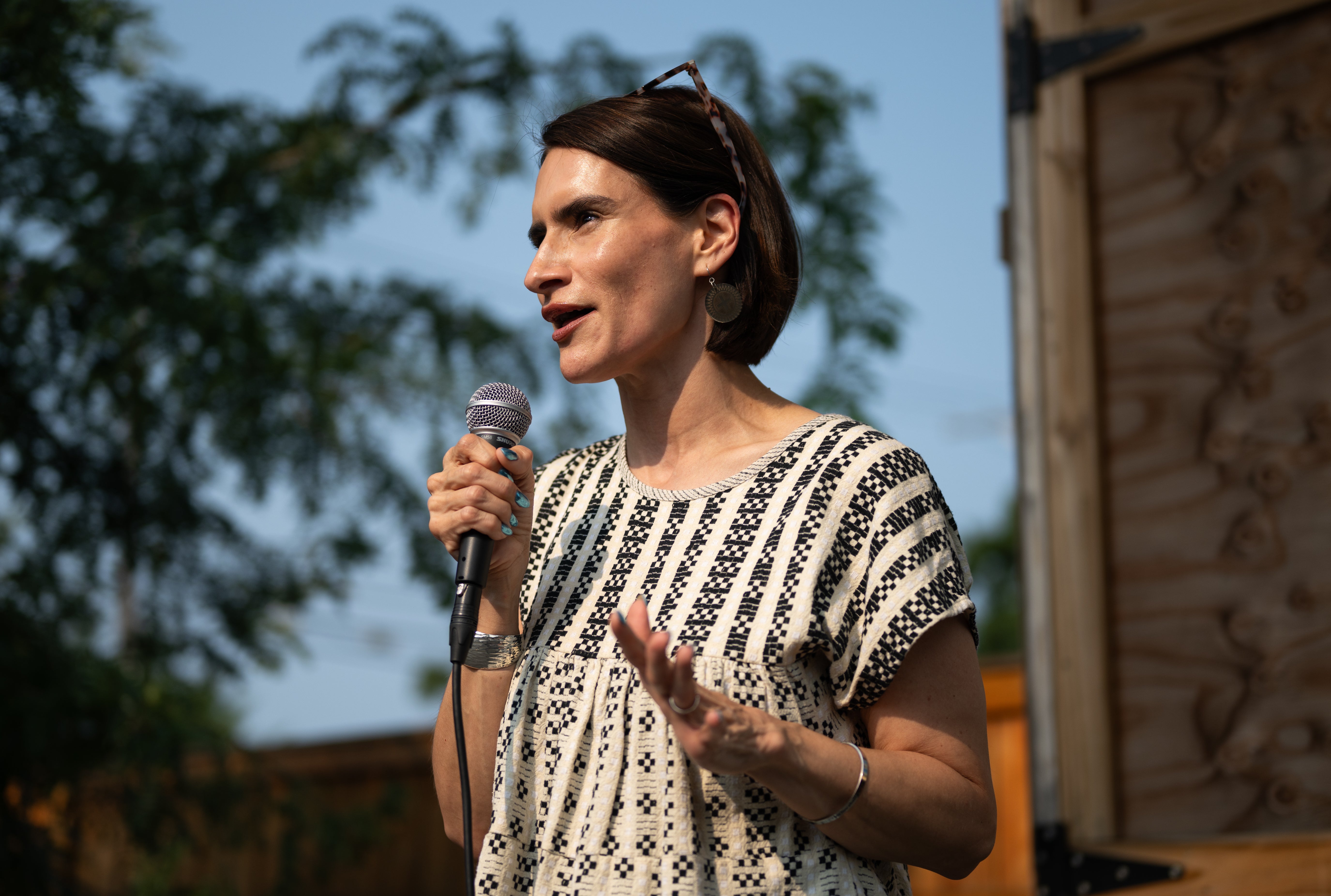
Sarah Stirk learned she had abnormal cells after a breast screening, and was later diagnosed with an early-stage breast cancer in the milk ducts

Just one hour after a mammogram that changed her life, Sarah Stirk arrived for her TV presenting job at Sky Sports and fought to put on a brave face.

The breast screening had revealed abnormal cells in her milk ducts, the tiny tubes that carry milk to the nipple, and while not always cancerous, Sarah had a gut feeling something wasn’t right.

‘I saw the doctor’s face and could tell straight away it wasn’t good news,’ recalls Sarah, 47, a golf presenter and mother of one from York.

‘I asked if there was a lump and she said: “no, but there are abnormal cells…”. Afterwards, I went straight to work. I was a bit of a mess. I didn’t know for sure but no part of me expected good news.’

Advertisement

And she was right. Sarah was later diagnosed with ductal carcinoma in situ (DCIS) in her left breast, an early-stage breast cancer within the milk ducts.

Sometimes known as a ‘stage zero’ cancer (as it hasn’t spread), DCIS is on the rise, particularly among women in their 40s. Until recently, it was usually only seen in women over 50.

Aged 47, three years before the NHS invites women for routine screening, Sarah only went for the mammogram as the private specialist she’d seen for perimenopause symptoms including hot flushes advised her to have the scan before starting HRT.

Advertisement

Sarah Stirk learned she had abnormal cells after a breast screening, and was later diagnosed with an early-stage breast cancer in the milk ducts

‘I had a feeling something wasn’t right so wanted to go for the appointment,’ says Sarah. ‘I’ve always had a fear of breast cancer. The fear was maybe irrational as size has nothing to do with cancer risk, but my breasts are quite large.’

The radiographers spotted a large area of calcifications, small white calcium deposits that sometimes indicate cancer – calcium deposits can occur with age but they can also form as a result of breast cells being replaced faster than usual, which can indicate pre-cancerous changes.

Sarah was referred to the NHS for a further mammogram and biopsy, which was carried out last December.

Advertisement

This time doctors said it was ‘50/50’ as to whether it was cancer. Two weeks later – just days before Christmas – Sarah had her hair cut and was standing outside the hairdresser’s when a consultant phoned and delivered the bad news.

She recalls: ‘I can’t remember exactly what was said but I remember hearing the word mastectomy. I was devastated.

‘My worst fears were realised. I was in tears and had to walk back through town to my car, crying. I knew I had a gruelling journey ahead of me.’

Professor James Harvey, a consultant oncoplastic breast surgeon at the private The Alexandra Hospital in Manchester, says DCIS is only picked up during screening as typically it’s symptomless.

Advertisement

‘The breast is full of milk ducts and inside each of those ducts is a lining of cells,’ he says.

‘DCIS is a cancerous overgrowth of those cells. They haven’t yet developed the ability to grow or spread. But if you leave them long enough, one of them will turn into invasive cancer, bursting out of the duct. It might create a lump and spread.’

A lumpectomy or radiotherapy are usually first-line treatments. But a mastectomy may be required if a large area is affected.

It is increasingly common – ‘we are seeing more younger women with DCIS, particularly in the last two or three years,’ explains Professor Harvey, who also works at the NHS Nightingale and Prevent Breast Cancer Centre in Manchester. The number of diagnoses has tripled in the UK since the early 1990s. Rates have increased by 29 per cent since 2019.

Advertisement
There is strong evidence in favour of doing mammography screening younger, Sarah says. She has signed a petition to lower the screening age to 40

There is strong evidence in favour of doing mammography screening younger, Sarah says. She has signed a petition to lower the screening age to 40

‘Research groups are being set up internationally to try to get to the bottom of why this is happening,’ says Professor Harvey.

‘It’s likely to be a combination of factors. Something to do with how our lifestyles have changed. No one knows for sure.’

Possible factors include women having children later as this changes exposure to oestrogen and other hormones, use of the contraceptive pill, alcohol and sedentary lifestyles.

Advertisement

Obesity is another factor, likely due to how it encourages inflammation in the body.

Sarah had IVF to have her son Milo, now four, and she believes the hormones she was given as part of the treatment might have had an impact.

Most studies suggest fertility drugs do not increase the risk of cancer, but evidence is limited and experts believe more research is needed.

Whatever the cause, Sarah’s cancer might have spread if she’d waited until 50 for a mammogram on the NHS.

Advertisement

‘I think there is good evidence that there is benefit of doing mammography screening younger, certainly from the age of 45,’ Professor Harvey explains.

‘It comes down to the resources available and whether we can afford that as a society.’

Sarah needed a mastectomy to remove all her cancer and choosing the right surgeon caused her ‘emotional turmoil’.

Sarah had IVF to have her son, Milo, and believes the hormones she was given as part of that treatment might have had an impact

Sarah had IVF to have her son, Milo, and believes the hormones she was given as part of that treatment might have had an impact

Advertisement

‘I’ve always had body confidence and liked my boobs,’ she says. ‘The decision I made was going to affect what I looked like for the rest of my life and it was very overwhelming.’

Using her private health insurance, she chose to have a mastectomy with a synthetic implant with Professor Harvey at The Alexandra Hospital. The procedure included a mastopexy, a breast lift and skin tightening on the right side to help her breasts look symmetrical.

‘On the day, I had a bit of a cold,’ recalls Sarah.

‘I was half hoping they’d say I was too unwell and to come back another day. The anxiety was horrific. I was worried that losing a breast would make me less of a woman somehow, less feminine.

Advertisement

‘I vividly remember walking to the anaesthetic table. I nearly said “I can’t do this”.

‘It was fear. I didn’t feel unwell and yet I was going into surgery and I knew I’d come out with a different body and have weeks of recovery ahead of me.’

Sarah’s four-hour surgery was a success and though she says ‘it was three months before I was able to look at myself in the mirror’, six months later she remains ‘sore and tired’ – but she is ‘delighted’ with the results. She has gone from a 35F to a 34DD.

‘After breastfeeding, my breasts had become heavy and saggy and were too big for my frame,’ she says. ‘But I didn’t want small boobs. Appearance matters to me, especially with the job I do.’

Advertisement

Sarah attends six-monthly scans and takes tamoxifen to cut the risk of her cancer returning.

She is now on a mission to raise awareness of DCIS and has signed a petition, organised by a chemotherapy nurse, to lower the screening age to 40. The petition, now closed, gathered more than 106,000 signatures.

‘DCIS is a silent killer,’ says Sarah. ‘The only way you catch this is with screening. If I’d waited until I was 50, my cancer might have been stage three or four. It might have been too late.’

She adds: ‘All the nurses told me they are seeing more younger women with DCIS. Lowering the screening age would save lives.’ Professor Harvey says if the screening age was lowered, the majority of women diagnosed would be offered radiotherapy and a lumpectomy and could keep their breasts.

Advertisement

This wasn’t an option for Sarah as the abnormal cells had spread to a larger area.

Some experts argue that as younger women have denser breast tissue, which can make mammograms less accurate, reducing the screening age may lead to overdiagnosis and unnecessary treatment.

Caught at its earliest stage, the cure rate for non-invasive DCIS is 99 per cent.

Jennifer Rusby, a consultant oncoplastic breast surgeon at The Royal Marsden NHS Foundation Trust in London, says if more women attended screenings when invited it would help catch breast cancer at this early stage and save more lives.

Advertisement

‘Breast screening is offered every three years to all women between the ages of 50 and 70. But, currently, only 60 to 70 per cent of women attend screening appointments when invited.’

The AgeX trial, run by the University of Oxford, has been looking at whether breast cancer outcomes could be improved if the screening age was lowered to 47 and raised to 73. Initial results are expected in December.

Treatment would be much less radical and invasive if caught early, says Ms Rusby.

Sarah returned to work in April: ‘I love my job and it’s great to get back to work and keeping busy,’ she says. ‘The team at Sky are like a little family and they have all been incredibly supportive.

Advertisement

‘But the diagnosis has changed me. I really embrace the small things in life and I’m incredibly grateful for everything I have and for catching it early.’


Source link

Continue Reading
Click to comment

You must be logged in to post a comment Login

Leave a Reply

NewsBeat

How polarised is European politics? Here’s how your generation, gender and where you live affect what you believe

Published

on

How polarised is European politics? Here’s how your generation, gender and where you live affect what you believe

Across Europe, the political debate has rarely looked more polarised. Media narratives frequently describe societies as becoming sharply divided between younger progressive and older conservative generations.

A growing body of research also suggests that political attitudes are becoming more divided by gender, particularly among younger cohorts. Young women seem to be adopting more liberal positions than young men on issues such as climate change and immigration.

Using data from the European Social Survey, which I have led since 2013, my team has examined the truth of these claims. We’ve done this by looking at long-term trends across eastern, western and northern Europe between 2002 and 2023 in relation to political orientation, climate change fears and attitudes towards immigration.

Political orientation over time by age and gender

Advertisement

Younger respondents consistently place themselves further to the left on the political orientation scale than older respondents across all country groups.
European Social Survey, CC BY-NC-ND

Across all country groups, younger respondents consistently place themselves further to the left on the political orientation scale than older respondents.

Yet while older respondents’ political views have been relatively stable in northern and western Europe, in eastern Europe we’ve seen more fluctuation and a clearer shift towards the right in recent survey rounds.

Younger respondents in eastern Europe are shifting in the opposite direction. This suggests an emerging generational divide in political orientation within the region.

Advertisement

Gender patterns in political orientation also vary considerably across age groups in Europe as a whole. Among older respondents, men and women generally mirror one another in their ideological positioning over time. Among younger cohorts, however, gender gaps are substantially wider.

The divide is most pronounced in northern Europe. Young women there consistently position themselves further to the left than young men. By contrast, young men and women in eastern Europe appear to be becoming somewhat more ideologically aligned over time – though young women there are still more leftward aligned.

The political views of young women, particularly in western Europe, also fluctuate more across survey rounds. These shifts have coincided with major political and economic events, including a modest movement towards the right around the period of the global financial crisis in 2008 and a shift leftwards during the COVID-19 pandemic in 2020.

Worry about climate change over time by age and gender

Advertisement
A series of line graphs showing how worry about climate change has changed over time across Europe.

Worry about climate change is less strongly divided along generational lines.
European Social Survey, CC BY-NC-ND

Across all regions, survey rounds and age groups, women have consistently expressed greater worry about climate change than men. The size of this gap differs between regions and by age.

Between the generations, we see moderate differences in climate concern. But our findings do not consistently follow the common expectation that younger people are more worried than older generations. In eastern and western Europe, older respondents have often reported levels of worry equal to, or marginally exceeding, younger groups.

Overall, however, worry about climate change appears either stable or gradually declining across most demographic groups. But while gender gaps among older cohorts remain relatively small, they are substantially wider among younger respondents – particularly in northern Europe.

Young women in this region are the only group for whom worry about climate change shows a modest upward trend over time. This reflects a growing divide between young men and young women in this region. Climate concern among young men has declined while concern among young women has remained stable or increased slightly.

Advertisement

Levels of worry in eastern and western Europe display greater similarity across age and gender groups, with men and women showing declining levels of climate concern in recent years.

Taken together, these findings suggest that worry about climate change is not strongly divided along generational lines. Instead, it is structured through gender differences within younger cohorts, particularly in northern Europe.

Immigration tolerance over time by age and gender

Advertisement
A series of line graphs showing changes in immigration tolerance across Europe over time.

Attitudes towards immigration differ substantially by region.
European Social Survey, CC BY-NC-ND

Attitudes towards immigration differ more by region than by gender and generation alone. In eastern Europe, attitudes towards migrants have shifted more substantially than other regions over time.

Tolerance of immigration in eastern Europe dropped around the period of the 2015-16 migrant crisis. A notable but relatively short-lived increase in tolerance is then visible around 2020.

This fluctuating pattern may reflect changing political and social contexts, including the COVID pandemic and subsequent displacement of Ukrainians following the start of the war there in 2022. It may also reflect what we call mode effects, which refers to differing opinions as a result of there being an interviewer or not.

Attitudes towards immigration in northern and western Europe have remained comparatively stable and, perhaps surprisingly given the anti-immigrant rhetoric of the media and politicians in some of these regions, are generally becoming more positive over time.

Gender differences over immigration are relatively small among older respondents across all regions, with older men and women tending to follow very similar trends. However, gender differences remain evident among younger cohorts.

Advertisement

Young women in northern Europe consistently express substantially higher levels of tolerance towards migrants than their male counterparts, reinforcing the broader pattern of a growing gender divide in views among younger people there.

Overall, our findings show that Europe’s political polarisation is indeed generational. But rather than being shaped by generation alone, political attitudes in Europe seem to be increasingly shaped by an interacting combination of generation, gender and regional differences.

Source link

Advertisement
Continue Reading

NewsBeat

The under the radar Manchester United teenager tipped for the top – ‘magnificent’

Published

on

Manchester Evening News

Manchester United’s squad are in Dublin, Ireland ahead of their penultimate pre-season fixture against Leeds at Croke Park

Manchester United centre-back Harry Maguire has praised academy defender Dan Armer for his performances during this summer’s pre-season. Due to the World Cup, United have relied upon a number of teenagers from the academy to fill gaps in the first-team squad – some of whom arrived as unknowns to supporters.

Advertisement

As pre-season has progressed, a number of academy players have dropped out of the travelling squads. The likes of Chido Obi, Jacob Devaney, Toby Collyer and Dan Gore have not featured since the win over Rosenborg while JJ Gabriel did not travel to Gothenburg to face Paris Saint-Germain on Saturday. However, one constant has been Armer.

He was an unused substitute against the Champions League holders but did have a brief cameo against Atletico Madrid, the week before. Speaking to United’s website, Maguire praised the teenager who has yet to make a senior, competitive appearance for the club. “I think Dan’s been brilliant,” the experienced centre-back said.

“18 years old, playing in tough games and playing for this club for the first time. He’s been magnificent at centre-back and, hopefully, he can continue to progress, keep enjoying working with us. There have been so many good performances from the younger boys.”

“The one thing in pre-season is that, if you’re a young lad, you get given opportunities,” Maguire added. “And I must say, the young boys came back really, really fit, all looking really sharp, every one of them.

“The running tests on the first day, they all blew everyone away. They were really in great condition, all of them, so great credit to them.”

Next up for United is a clash with Leeds at Croke Park. “We’ve got a great game on Wednesday against Leeds, which we always know is a big game, whether it’s a friendly or not,” he concluded. “So that’s one we’re looking forward to.

“Our Irish fans, they’re unbelievable, so it’s great to see them. We know that they’re going to be in full support in the stadium against Leeds.”

Advertisement

After Leeds, the Reds will play one final pre-season fixture against AC Milan in Wroclaw, Poland on Saturday. United then begin their Premier League campaign away at Hull City the following week on August 22.

Source link

Continue Reading

NewsBeat

Man, 22, is arrested after man, 25, shot dead outside Clapham pub in suspected gang attack

Published

on

Police and paramedics outside the Landor pub in Clapham on Monday night

Advertisement

A murder investigation has been launched after a 25-year-old man was shot dead in a suspected gang attack outside a London pub last night.

Emergency services raced to The Landor pub in Clapham at around 10pm, where a man was found outside suffering from gunshot wounds.

Despite paramedics arriving within three minutes, he was pronounced dead at the scene. 

Another man, 22, self-referred to hospital with a gunshot wound shortly after the attack. 

Advertisement

He was subsequently arrested on suspicion of attempted murder and remains in hospital.

The victim’s family is being supported by specialist officers. 

Witnesses describe hearing three gunshots outside the pub while terrified residents said they heard loud ‘bangs’.

One resident told London Now: ‘It was shortly after 10pm and I heard lots of sirens, and I heard bangs – I think it was five or something.

Advertisement

‘And then I said “do you think they were gunshots?”‘

Another resident said she now wants to move out of London, fearing for the safety of  her two-year-old grandson growing up in the city.

She said the sirens eventually quietened down but was ‘horrified’ by what she had heard. 

Willington Road has been closed and cordoned off while forensics teams investigate this morning. 

Advertisement

Police and paramedics outside the Landor pub in Clapham on Monday night

An area outside the Landor pub in Clapham has been cordoned off while forensics teams investigate

An area outside the Landor pub in Clapham has been cordoned off while forensics teams investigate

Detective Chief Superintendent Emma Bond, Central South Borough Commander, said: ‘We understand that incident will cause concern within the local community and an increased police presence will remain in the area throughout the day as our enquiries continue. Our thoughts remain with the victim’s family for their tragic loss.

Advertisement

‘Officers have arrested a man on suspicion of murder, and we are working tirelessly to establish what happened.

‘We are asking anyone with information or anyone who may have witnessed the shooting to please contact us as soon as possible and support the ongoing investigation.’

A London Ambulance Service spokesperson said: ‘We were called at 9.59pm on Monday 10 August to reports of a shooting on Landor Road.

‘We sent resources to the scene including an ambulance crew, an incident response officer and paramedics in fast response cars. We also dispatched a trauma team in a car from London’s Air Ambulance.

Advertisement

‘Our first paramedics arrived in three minutes.

‘Sadly, despite the best efforts of our crews, a man was pronounced dead at the scene.’

Clapham, an affluent south-west London suburb which is home to wealthy residents and young professionals, has been rocked by violence in recent years. 

Last month, one man was killed and four more were injured in a stabbing in Clapham.

Advertisement

Police were called to the nearby Tremadoc Road in the early hours of July 25. Six men were arrested on suspicion of murder.

Last year, a 27-year-old man was shot dead on New Park Road in Clapham.

Kyrone Moodie was one of two men shot in the attack on Monday, September 8, 2025.

A 20-year-old man was injured and taken to hospital.

Advertisement

The Metropolitan Police and London Ambulance Service have been contacted for comment. 

Advertisement

Source link

Advertisement
Continue Reading

NewsBeat

Man killed in shooting outside London pub

Published

on

Man killed in shooting outside London pub

Police have launched a murder investigation after a 25-year-old man was killed in a shooting outside a pub in London.

Emergency services were called to the scene following reports of gunshots being fired on Willington Road in Clapham just before 10pm on Monday evening, the Metropolitan Police said.

Paramedics arrived within three minutes, but the man was later pronounced dead at the scene, according to London Ambulance Service.

One man was pronounced dead at the scene
One man was pronounced dead at the scene (PA Archive)

A 22-year-old man later presented at hospital with a gunshot wound and has been arrested on suspicion of murder, police said. He remains in hospital.

Pictures show a visible police presence outside the pub on Tuesday morning, with a white forensics tent in place.

Advertisement

The exact circumstances surrounding the incident are not yet clear.

Detective Chief Superintendent Emma Bond, central south borough commander said: “We understand that incident will cause concern within the local community and an increased police presence will remain in the area throughout the day as our enquiries continue. Our thoughts remain with the victim’s family for their tragic loss.

“Officers have arrested a man on suspicion of murder, and we are working tirelessly to establish what happened.

“We are asking anyone with information or anyone who may have witnessed the shooting to please contact us as soon as possible and support the ongoing investigation.”

Advertisement

A London Ambulance Service spokesperson said: “We were called at 9:59pm on Monday 10 August to reports of a shooting on Landor Road, SW9.

“We sent resources to the scene including an ambulance crew, an incident response officer and paramedics in fast response cars. We also dispatched a trauma team in a car from London’s Air Ambulance.

“Our first paramedics arrived in three minutes. Sadly, despite the best efforts of our crews, a man was pronounced dead at the scene.”

Source link

Advertisement
Continue Reading

NewsBeat

Taiwan court sentences woman to 7 years for ties with Chinese officials

Published

on

Shootings at school and home in northeastern British Columbia leave 10 dead, including shooter

BANGKOK (AP) — A Taiwanese court on Tuesday sentenced a woman who advocated for spouses born in mainland China to seven years in prison, after finding her guilty of conspiring with Chinese government officials and proxies to influence Taiwanese politics.

The court in New Taipei city ruled that Hsu Chun-ying, who was herself born in China, violated the Anti-Infiltration Act for contact with Chinese officials and the Banking Act by transferring 24.5 million New Taiwan Dollars ($760,000) outside of proper banking channels from China.

The case has garnered intense media attention, partly because of Hsu’s identity as a so-called mainland spouse — those born in China who immigrated to Taiwan after marriage. The community has been viewed with suspicion amid rising tensions between China and Taiwan.

Taiwan and China split after a civil war in 1949. China claims the self-governing island as part of its territory, and has sent fighter jets and navy ships to the island on a daily basis as part of military exercises. Taiwan, in response, has focused on strengthening its defense and ramping up its arms purchases.

Advertisement

Taiwan’s government said Hsu’s case involved gaining intelligence for mainland China and influencing Taiwanese politics.

Prosecutors had publicized exchanges between Hsu and a director from the Ministry of Civil Affairs of China, which showed discussions about which political party to support in order to get lawmaker positions for mainland spouses in both the Taipei mayoral election and later the 2024 presidential election.

Hsu moved to Taiwan after getting married and has Taiwanese citizenship. She was briefly considered to be a Taiwan People’s Party legislator candidate, but had backed out owing to questions about her loyalty and affiliation with China.

“I had just wanted to serve New Residents,” she said in 2024, referring to the Taiwanese government’s term for immigrants to the island.

Advertisement

Hsu most recently served as the head of the Cross Straits Marriage and Family Services alliance. The organization was disbanded by Taiwan’s Interior Ministry in May for not holding elections for their directors in time.

Hsu could not be reached for comment.

According to prosecutors, Hsu met often with Yang Wentao, director of the service center for cross-strait marriages and families at the Chinese Ministry of Civil Affairs and Sun Xian, deputy head of the Revolutionary Committee of the Chinese Kuomintang in Shanghai.

Prosecutors said that Hsu and Yang coordinated to support Huang Shan-shan, an independent candidate for Taipei mayor, who later joined the TPP. Later, Hsu also campaigned for Ko Wen-je, a presidential candidate and TPP founder, at their instructions, prosecutors said.

Critics said the judgment was problematic because the wording of the charges was vague.

“The DPP government is deliberately avoiding drawing clear red lines, to ensure that it can arbitrarily weaponize this charge,” said Shangguanluan, a writer and activist who has advocated on behalf of mainland spouses in Taiwan.

Advertisement

In 2025, Taiwan deported three Chinese spouses for advocating for reunification with China using military force. Taiwanese immigration authorities issued an order to 12,000 mainland spouses who already had Taiwanese citizenship to submit records showing that they had canceled their Chinese household registrations.

Worries over espionage and tech smuggling to China have grown as authorities continue to prosecute cases.

Taiwanese authorities in March investigated three men for trying to smuggle Super Micro computer servers containing advanced Nvidia chips to China. Last year, a Taiwanese court sentenced four soldiers, including three members of Taiwan President Lai Ching-te’s security team, to seven years in prison for giving sensitive information to China.

Advertisement

Source link

Continue Reading

NewsBeat

Inside UK’s driest village in Cambridgeshire where locals are showing worrying symptoms

Published

on

Cambridgeshire Live

Histon, just north of Cambridge, has been named the driest location in the UK this year, with residents saying the prolonged dry spell is causing dust-related breathing difficulties and leaving gardens scorched

Life in Britain’s driest village has been turned upside down by weeks of scorching temperatures and barely any rain, with residents describing the growing impact of the extreme conditions.

Histon, just north of Cambridge, has seen gardens turn brown, ponds shrink and sports grounds become increasingly difficult to maintain as the dry spell continues.

Advertisement

The village recorded 203.6mm of rainfall between January 1 and July 19, according to the Cambridgeshire weather station. That was less than the totals recorded in Shoeburyness, Essex, at 216.2mm, and Weybourne, Norfolk, at 219.2mm.

Cambridgeshire was among seven regions declared to be in drought by the Environment Agency last week, while a hosepipe ban has been in place across the Cambridge Water region since July 9.

And it is not just plants and playing fields feeling the effects.

Residents have described how the heat is affecting older people in particular, with some community activities having to be cancelled and others choosing to stay indoors.

Advertisement

Sally Smith, who manages the Older People’s Team for local charity HI Friends, told The i that the people they support include residents in their eighties and nineties, as well as some who are 100.

“We have people who are mostly in their eighties and nineties and a few who are 100, and they are very at risk from extreme heat. But the knock-on effect of us cancelling activities like lunch club is that their isolation increases and they really miss their activities and their friends.”

The charity runs activities including fitness classes, lunch clubs and shopping trips, but the unpredictable temperatures have made organising them more difficult.

Advertisement

Neil Davies, a parish councillor and charity manager for HI Friends, said: “It’s affected all aspects of the community,” adding that there had been “a real reluctance and a concern from our older residents not to go out of the comfort of their homes.”

The village’s recreation ground has also been forced to adapt to the conditions, with cracks appearing around the cricket wicket strip and tennis courts.

A staff representative from Histon and Impington Parish Council said: “The recreation ground has had to adapt for its sporting fixtures – we are only watering the areas that would cause a health and safety issue.”

Advertisement

There are now fears about whether the football pitch will be fit for the new season without substantial rainfall.

“We are concerned about the football season, unless we get some persistent rain soon, as the ground as it is would not be safe to play on.”

However, residents are also reporting a more personal consequence of the parched conditions.

Julie, a hairdresser in her fifties, told The i that the increase in dust has left people coughing more.

Advertisement

“All the mud has turned to dust and the lawns to straw. All of us are noticing that we’re coughing quite a lot. A lot of people who have got asthma are struggling more.”

The UK Health Security Agency has warned that drought can increase the amount of dust in the environment, which can potentially affect people with existing respiratory conditions. It advises people who use inhalers to carry them during hot and dry periods.

Julie has also been forced to rethink how she looks after her own garden.

Advertisement

“It’s been quite difficult having a large garden and trying to keep it alive.

“Obviously all the lawns are just straw and I’d never water them, but the pots and expensive plants have got to be kept alive, which we’re having to do with water butts.”

She has even been organising “watering parties”, with friends visiting to drink wine and help water her plants.

The extreme heat has also had a knock-on effect on her work. When temperatures reached 35C, seven clients cancelled their hair appointments in a single day.

Advertisement

Elsewhere in Histon, Julie Dunn, 62, said the dry conditions had dramatically changed the appearance of the village.

She said its duck pond was at the “lowest level” she had ever seen.

“It’s a very beautiful area, and it’s very pretty, but it doesn’t look at it’s best – it’s just brown and burnt,” she said.

Julie has been saving water from around her home so she can use it in the garden.

Advertisement

“The dry weather means I’m having to water and be very careful – we have a bucket in the shower, and we save all our grey water, and we use that for the garden. We always put a bucket in when we have a shower to get the excess – washing up water, we always put in the water butt to try and avoid filling our watering cans from the hose.”

The lack of rain is also producing unusual scenes elsewhere in the country.

Footage captured in Greenwich Park showed a dust devil swirling across the grass, picking up dust and hay as it travelled through the park.

Advertisement

Jimmy O’Keeffe, who filmed the phenomenon, said he was “shocked and in total disbelief” when it disturbed his picnic.

He said it lasted several minutes, with some people moving away as it passed and others heard screaming.

Another dust devil was spotted near Leeds Castle in Kent.

Advertisement

The small whirlwinds can form on hot, sunny days when rising air begins rotating and picks up loose material from the ground.

Meanwhile, the Environment Agency has warned that prolonged dry weather is putting pressure on water resources across England, with Cambridgeshire among the areas affected by drought.

Source link

Advertisement
Continue Reading

NewsBeat

Interview: Morgan Freeman’s blues album shows genre’s evolution

Published

on

Interview: Morgan Freeman's blues album shows genre's evolution

NEW YORK (AP) — It happened out of necessity. Academy Award-winner Morgan Freeman was in Clarksdale, Mississippi, 25 years ago when some out-of-towners asked where they could hear blues music. Musicians were abundant; venues were not.

“There was no place where we could guarantee that you could go in and hear it,” he told The Associated Press. “So, we had to establish that.”

Freeman and his business partners, then-Mayor Bill Luckett and Howard Stovall, were inspired to open a juke joint in Clarksdale called Ground Zero Blues Club. Then, much more recently, they created “Morgan Freeman’s Symphonic Blues Experience,” a touring ensemble of blues musicians who marry the beloved Southern genre with classical, symphonic compositions. On Friday, they’ll release an album under the same name.

The legendary actor is a producer and narrator on the release, not a performer. That’s left up to the professionals: all-star acts like Taj Mahal, Keb’ Mo’, Shemekia Copeland, Tiernii Jackson, the Stax Music Academy Choir, the Chineke! Orchestra out of London, and many more.

Advertisement

“I like the blues. I like music. I cannot claim to be an aficionado. That’s not my place,” says Freeman. “I’m an enthusiast, but that’s a necessity.”

From live performances to a full-length record

Before the album, the “Morgan Freeman’s Symphonic Blues Experience” traveling performances were born out of a simple idea: How could Freeman and his team bring this music to the world?

“Blues is an important American story birthed in the Mississippi Delta out of hardship but obviously resonates with people and cultures on a global basis, both for how good it sounds, but also the message underneath it,” said Eric Meier, Freeman’s partner and co-producer on the project who joined the actor’s blues club in 2018. “We conceived of this concept to really take this music to new geographies and new audiences.”

Turning the live performance into an album meant cutting down a nearly two-hour show to around 45 minutes across 12 tracks, while still honoring the format. It includes video vignettes as well as “cinematic narration,” courtesy of Freeman, recorded at the club in Clarksdale.

Advertisement

“We offer a musical story, a 100-year arc from the 1930s to modern day, so the evolution of blues music,” says Meier.

Freeman’s idiosyncratic voice opens the record, describing the genre with a real poetry, delivered atop a haunting rendition of Blind Willie Johnson’s 1927 gospel blues classic, “Dark Was the Night, Cold Was the Ground.”

“This is music that gave voice to a people, to their pain, their hope and their resilience,” Freeman recites. “Music isn’t just melody, you know. It’s memory, it’s history wrapped in ribbon, the echoes of lives lived and lost, heartache and hope all tangled together. And nowhere is that truer than in the blues.”

Freeman wants to keep the blues alive

The last song on “Morgan Freeman’s Symphonic Blues Experience” sees singer-songwriter Muddy Waters’ great-nephew Keith Johnson covering Raphael Saadiq and Ludwig Göransson’s “I Lied to You” from the Oscar-winning 2025 film “Sinners.” It brings the 100-year story of blues to its coda, but it also serves as a reminder of the film’s ability to bring the genre into mainstream conversation.

Advertisement

That’s something Freeman hopes to accomplish, too. He wants to make sure blues is not forgotten.

“It is a responsibility that we’ve taken on. And the hope is that it, like everything else that catches on, takes root, as it were. You know, the blues is actually America’s music,” he says. “So, it’s incumbent upon us to water it, nurture it, keep it alive, keep it going.”

Meier adds that their album project predates “Sinners” — he says director Ryan Coogler told him the film’s juke joint was partially inspired by Ground Zero Blues Club; the film is set in Clarksdale after all — but it has been “a wonderful coincidence” that both works have the power to bring the blues to the masses.

And maybe one day, “Morgan Freeman’s Symphonic Blues Experience” will receive the same kind of critical praise given to “Sinners.” The album is eligible for the 2027 Grammy Awards.

Advertisement

“We will be submitting in multiple categories,” says Meier. “You got room on your trophy shelf, Morgan?”

“Yeah, yeah. I want it,” Freeman smiles.

Adding Grammy Award-winner to his Academy Award-winner title? “Sounds pretty good to me.”

Advertisement

Source link

Continue Reading

NewsBeat

Family’s narrow escape before earthquake shakes home

Published

on

A topless man stands in the street while an earthquake damages buildings around him

A family captured video of the moment they fled their home during an earthquake in Colombia.

Liliana Pérez Ocampo and her family escaped moments before their home was rocked by a 7.4 magnitude quake on Monday.

“At first, we thought it was just a mild tremor like the ones that usually happen in Colombia, but when more than 30 seconds passed and everything was shaking harder, we realised it was an earthquake,” the mother-of-four told the BBC World Service.

Her family, including two young children at school, are safe.

Advertisement

“In the end, material things can be replaced,” she said. “The most important thing is life, and we have that.”

With at least 132 people killed, this has been the strongest earthquake to hit Colombia in the 21st Century, according to the country’s Geological Service.

More on this story.

Source link

Advertisement
Continue Reading

NewsBeat

Tuesday’s primaries will give Democrats a big idea on how much the far left has taken hold of the party

Published

on

Tuesday’s primaries will give Democrats a big idea on how much the far left has taken hold of the party

Michigan’s primary is over, but another pair of tests loom for the progressive left.

On Tuesday, voters in two midwestern states will decide a pair of races that have become the latest battlegrounds of the Democratic Party’s ongoing civil war. In Wisconsin, progressive candidate Francesca Hong is leading in all available polling in the Democratic primary for governor.

In Minnesota, a much tighter race is depicted in polling between Lt. Gov. Peggy Flanagan and Rep. Angie Craig in another highly-watched Senate race, which comes just a week after the victory of progressive populist Abdul El-Sayed in Michigan.

Craig, like El-Sayed’s opponent Haley Stevens, is backed by centrist Democratic Party leadership figures such as Hakeem Jeffries, Nancy Pelosi and Elissa Slotkin. Senate Majority Leader Chuck Schumer hasn’t publicly put a thumb on the scale, and Democratic senators are urging him and the party’s campaign arm to stay out of it — largely due to their toxic brand. Flanagan, backed by Bernie Sanders and Elizabeth Warren as well as the retiring incumbent, Tina Smith, narrowly trailed Craig in a recent SurveyUSA poll that showed nearly one in five voters still undecided.

Advertisement

Hong, a true political outsider, lacks the kind of national support as Flanagan but is backed by the Democratic Socialists of America, the far-left group which continues to grow bolder with the successive primary victories of left-leaning candidates this cycle. Members of the group formed part of the volunteer army that helped El-Sayed push past a mountain of outside PAC spending to victory in the Michigan primary, though El-Sayed himself is not a member. As a former chef, Hong has leaned on her working class background as she runs an insurgent campaign defying the party’s elites.

A victory in one or both races tomorrow will be another rallying cry for the left.

Francesca Hong is poised for a dominating victory in the Wisconsin Democratic primary for governor on Tuesday, according to most polling
Francesca Hong is poised for a dominating victory in the Wisconsin Democratic primary for governor on Tuesday, according to most polling (Getty)

Hong’s momentum is due in large part to her early, energetic campaign style and breakout messaging that established her as a frontrunner early and fractured her opposition.

Her opponents and the party’s centrist wing remained divided, unwilling to fully coalesce behind her closest rival, Mandela Barnes, for months. Barnes then withdrew, leaving Milwaukee County executive David Crowley on deck to jump in and try to stop Hong’s momentum.

Should she win a commanding victory Tuesday, many on the left will quickly wipe the bad taste from their mouth that lingered after El-Sayed’s margin of victory in Michigan was far, far closer than expected.

Advertisement

If Craig also loses, it will be a sign of not just the organization of the far left, which remains a powerful theme of the 2026 cycle. It will also signal a deep anger that seems to exist among the Democratic Party’s electorate nationwide, not just in far-left neighborhoods of New York City where party leaders initially hoped to contain the DSA and the anti-establishment fury.

The 2024 defeat of Kamala Harris left many Democrats nationwide feeling angry and hopeless, and furious at a party elite that denied voters a primary, then selected a nominee after it was clear that the president, Joe Biden, could no longer run.

In Minnesota, Rep. Angie Craig has the backing of House Democratic leaders while Chuck Schumer has publicly stayed out of the race
In Minnesota, Rep. Angie Craig has the backing of House Democratic leaders while Chuck Schumer has publicly stayed out of the race (Getty)
Peggy Flanagan trailed Craig by a thin margin in a recent poll, but could pull off an upset victory for the left flank on Tuesday
Peggy Flanagan trailed Craig by a thin margin in a recent poll, but could pull off an upset victory for the left flank on Tuesday (Getty)

Percieved inaction in 2025 only poured gasoline on that fire as repeated calls for Democrats to withhold votes on key legislation and prevent the Trump administration from operating in a business-as-usual atmosphere seemed to fall on deaf ears at times, even as Elon Musk’s DOGE staffers began taking a hammer to the federal government.

On the other hand, a victory by Craig would be a significant message to party leadership, too. The congresswoman is one of her party’s true moderates, having voted for the Laken Riley Act last year and being known for working across the aisle with Republicans on other issues. She, like Stevens in Michigan, has also been supported by the American Israel Public Affairs Committee in the past — though the race differs significantly from Michigan in that the pro-Israel lobby has not spent tens of millions of dollars to protect one candidate.

Flanagan, while not aligned with DSA, is much closer in attitude to the far-left group: “Whatever word you want to use, [ICE] can’t exist like this anymore,” she told the New York Times of her own views of immigration enforcement. “We have to rip ICE apart and start over.”

Advertisement

Should Craig manage to pull it off a win on Tuesday, her victory would symbolize the enduring appetite of Democratic voters for a stricter law enforcement attitude, even as most find the mass deportation strategy deplorable and opposed the “surge” of enforcement in Minneapolis that ended with federal agents withdrawing partially after the deaths of two protesters in confrontations with ICE and immigration enforcement authorities.

Democrats could wake up Wednesday morning to the creation of a powerful midwestern bloc of progressive candidates having sprung up before their eyes. Counting El-Sayed and Will Lawrence in Michigan (who won his primary despite AIPAC-related groups highlighting his old criticism of Black political leaders), four victories by progressives in high-profile races within two weeks will leave many in the Beltway feeling anxious about the scope of the transformation the party is currently undergoing.

Source link

Advertisement
Continue Reading

NewsBeat

Man, 29, arrested in police raid over racist traffic-cone attack in Glasgow

Published

on

A man is escorted into the back of a blue, white and yellow Police Scotland van by two plain-clothes police officers on a residential street. Cars are parked nearby.

Ch Supt Emma Croft, the divisional commander for Glasgow, is overseeing the police investigation into the recent disorder.

“Members of the public might consider that it’s one arrest following something that happened two weeks ago,” she said.

“But please be assured that the methodical nature of the inquiry takes time and we’d rather have a clear case for prosecution.”

She told BBC Scotland News that officers had trawled through a “significant amount of footage” which identified people they wanted to speak to.

Advertisement

She said the nature of the other alleged offences was “similar” to the traffic-cone attack, adding: “Unfortunately a lot of it had a racial tendency to it which is obviously of great concern to us.”

Ch Supt Croft said that since June, police had arrested 56 people across Scotland for being involved in “incidents in and around protest that have amounted to criminality”.

She warned that more arrests were expected.

“I think we’re all feeling pretty disgruntled with the levels of division within our communities,” she said.

Advertisement

“So it’s absolutely key the public see the level of priority and commitment we’re putting to these types of inquiries.

“Only when we can get these individuals rooted out and identified to the court will our public feel like they are at rest with all of this.”

Source link

Advertisement
Continue Reading

Trending

Copyright © 2025