

A major factor behind the rise is the soaring number of people claiming PIP for disabling psychiatric disorders – such as depression, anxiety, and PTSD
Almost 230,000 people in Northern Ireland were claiming personal independence payments (PIP), the main disability benefit, as of February 2026, marking a massive 49% rise in the last five years.
A major factor behind the rise is the soaring number of people claiming PIP for disabling psychiatric disorders – such as depression, anxiety, and PTSD. Mental illnesses now account for nearly half of all PIP claims (46%).
Musculoskeletal conditions – including chronic pain syndromes like fibromyalgia and degenerative diseases like arthritis – represent the second-largest category, followed by neurological conditions such as Multiple Sclerosis and Parkinson’s.
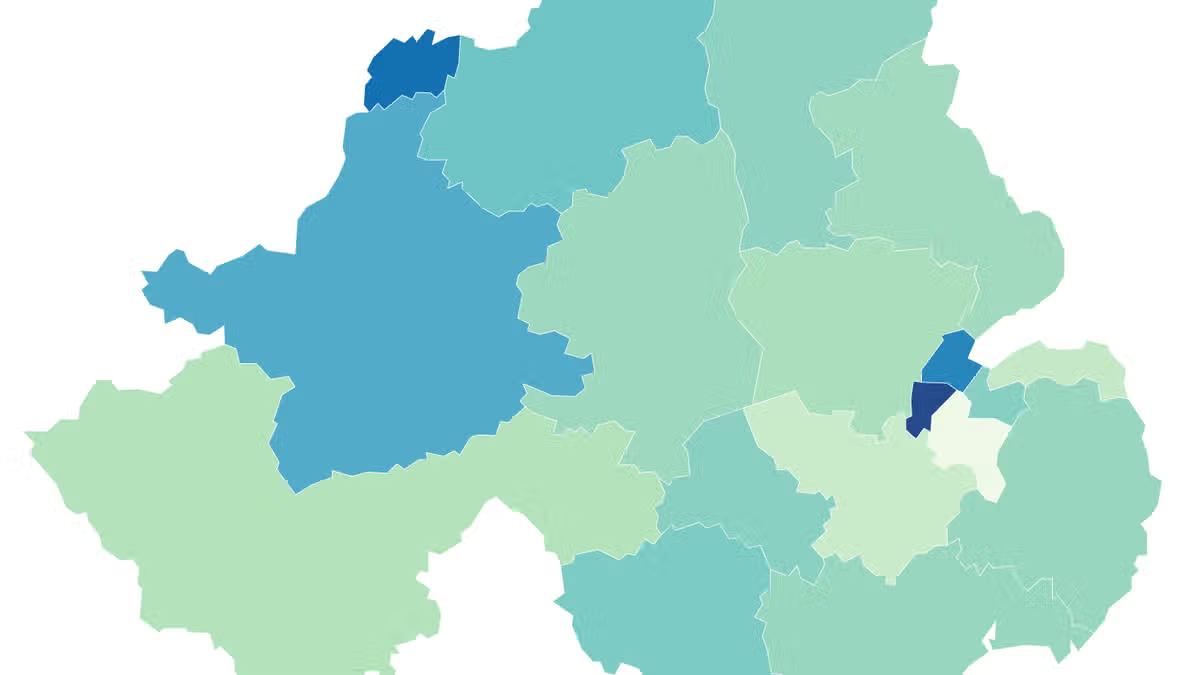
Belfast West has the highest proportion of PIP claimants in Northern Ireland. As of February, 21,650 people were claiming PIP in Belfast West.
That’s more than one in five people who live in Belfast West (21.0%) according to recent population figures published by the House of Commons Library.
Foyle has the second-highest PIP claimant rate in Northern Ireland, with just under one in five people receiving benefits (18.3%), followed by Belfast North with one in six (16.7%).
Nationally, one in nine people claim PIP (11.9%), which shows people in Northern Ireland are far more likely to claim the main disability benefit than in Great Britain.
The local figures come as welfare spending dominates national policy debates across the UK.
Broadcaster Jeremy Clarkson recently sparked outcry after claiming young people could receive up to £194 a week “if they’ve got ants in their pants, or ADHD as it is now called, or some other head-based issue with an acronym”. He suggested claimants should send a weekly “thank you” email to taxpayers.
However, disability advocates point out that PIP is a non-means-tested extra-cost benefit rather than an income replacement. In many instances, it covers essential expenses – such as adapted transport and personal care – enabling disabled individuals to remain in work.
Despite this, an independent review of disability benefits recently concluded the current system is “no longer fit for purpose”.
Meanwhile, the independent Timms Review, led by disability minister Sir Stephen Timms, concluded that the PIP application process causes severe distress, describing a system that often “breaks” applicants. A final report on potential system reforms is expected next year.
Addressing wider social care and welfare across the UK, Prime Minister Andy Burnham stated he plans to bring “substantial change”.
While committing to lowering the national welfare bill, Mr Burnham told the BBC he would not “go straight to blaming those people” who rely on support, advocating instead for better in-work mental health support and guaranteed opportunities for young people.
Because Northern Ireland operates under a policy of parity for social security, any major structural reforms enacted at Westminster directly impact funding and delivery overseen by Stormont’s Department for Communities.
For all the latest news, visit the Belfast Live homepage here and sign up to our daily newsletter here.




















































You must be logged in to post a comment Login