






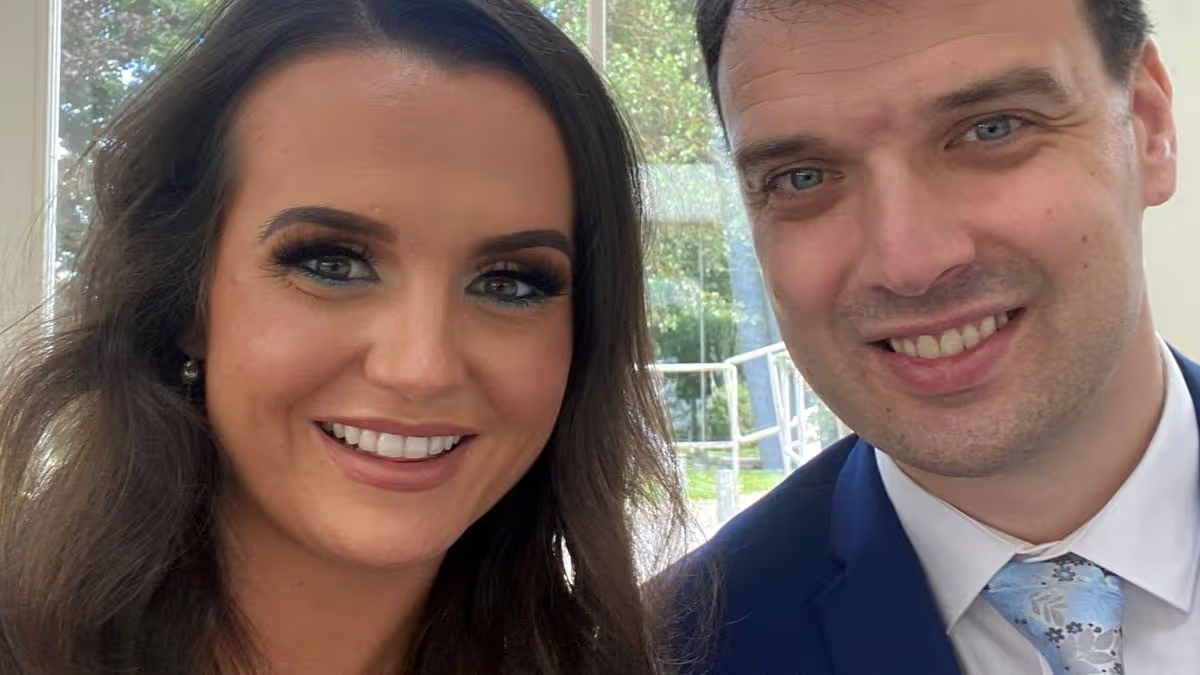
Lisa Marshall, 34, was left devastated, when her husband Alan went to work one day, and never came home.
A mum who missed her husband’s last call before he took his own life age 37 was left unable to work and forced to go on Universal Credit.
Lisa Marshall, 34, was left devastated, when her husband Alan went to work one day, and never came home. The dentist, from Glasgow, had tried to call her but she had missed it as her son was using her phone to play Roblox.
He had no history of mental illness, and left her with no note. Lisa, who is also a dentist, but hasn’t been able to work since Alan’s death after being diagnosed with Complex PTSD, struggled with raising three small children, Henry, nine, Matthew, seven, and Sofia, four, whilst coping with her grief.
The family were even left on Universal Credit for three months – after Alan’s accounts were frozen. She said she is worried her children will think they weren’t good enough for him to stay, and is raising awareness of the fact, that suicide can affect anyone.
She said: “Alan had no mental health issues, he’d never been to the doctors, or spoken to me about any struggles. We were just a normal family; there were no warning signs at all.
“It could happen to anybody. I missed a call from him an hour before it happened, but I hadn’t thought much of it at the time. “Nothing can prepare you for it. When the police came to my door, I was trying to put the kids to bed and they were all clinging to me. “It was horrendous, I don’t think you ever get over that.
“The police asked lots of questions about our marriage, they said usually these things happen because of debt, or a breakup, or not getting access to kids, but there was nothing like that. There wasn’t even a note.
“I felt like my life was over, but I still had three kids to look after, they gave me strength every day. My children keep asking me why he did it, I don’t want them to think they weren’t good enough for him to stay.”
Lisa and Alan met in a nightclub in Glasgow in 2011, before falling in love and getting married in 2016. They welcomed three children together, and were a happy loving family, leading normal, busy lives.
Alan had no mental health issues, that Lisa was aware of, and had never opened up to her, about any sort of struggle, during their relationship.
“He had a huge passion for Glasgow Rangers, and we spent lots of time going to see them all over the world”, she said. One morning in March 2023, Alan went to his job as a dentist as normal, and Lisa chatted to him throughout the day over text.
“I had a chest infection at the time, and I often wonder, if I’d been 100% myself, would I have noticed something was up?”, she said. “I’d felt anxious a few days before, and I wonder if it was my body telling me something bad was going to happen.”
During the evening, Lisa got a call from Alan, but she missed it as her son was using the phone to play Roblox. An hour later, there was a knock at the door, but as it was the time Alan usually came home from work, she assumed it was him.
However, when she opened the door, two police officers were standing outside, and informed her that they had found Alan’s car, a body, and his wallet. Devastated, Lisa told her children that their dad had had an accident, and the next morning, did the school run as normal.
“Parents were absolutely shocked to see me out and about as normal”, she said. The police launched an investigation, and asked Alan had any issues such as debt, but Lisa could think of nothing.
As the children were settled in school, she chose to stay in the local area, meaning she has to walk past the location where her husband ended his life, every day. Following her husband’s death, Lisa struggled with grieving whilst still having to take care of her three kids but said the routine of having to take them to school every day, helped her to be able to get through each day.
“They were the only reason I got up and brushed my teeth every day, without them I would have just stayed in bed”, she said. “They were so anxious, I didn’t want this to damage their childhood.”
Two years after Alan’s death, Lisa decided to tell her oldest two children, that he had taken his own life. “I felt that at eight and six, they would be able to understand it a bit, and I felt so much better for telling them the truth“, she said.
After revealing the truth to her sons, Lisa said it was like they were going through the loss again, and they kept questioning why he had done it. Following Alan’s death, Lisa was diagnosed with complex PTSD, leaving her unable to go back to work, and as her husband’s bank accounts were frozen after he passed away, she had to go on Universal Credit.
“I never thought I’d be on benefits, but they really helped me for the first few months after he died,” she said. She also had to get close family members to help pay her mortgage, and although she now receives Alan’s pension, and had a life insurance payout, finances are a huge worry for herself and many widows.
She said: “The life insurance payout took over a year, but I know for some widows, it can take three or four years, or they don’t get anything at all. I get messages from widows everyday, who have had to sell their house, or move back in with their parents. “
Lisa is urging people to make sure they have policies such as life insurance and Death in Service in place, to help with the financial burden, should anything happen to their spouse. “Make sure you have financial security, because the financial burden of being widowed adds a whole other layer of stress”, she said.
Lisa is currently campaigning to have the government’s bereavement support payment extended beyond 18 months. You can sign her petition here: https://petition.parliament.uk/petitions/752501 She is now preparing to return to work, to show that it is possible to get back on your feet again.
Get more Daily Record exclusives by signing up for free to Google’s preferred sources. Click HERE.














































You must be logged in to post a comment Login