Connect with us

NewsBeat

John George murder suspect shot dead in Spain

Published

on

Belfast Live

One of the two men being investigated over the murder of a Belfast dad-of-one in a Spanish holiday resort has been shot dead on the Costa Blanca.

Michael Maly, arrested in January last year as the suspected accomplice of John George’s Northern Ireland-born alleged killer Johnny Smyth, was gunned down in the early hours of Sunday morning in Torrevieja south of Alicante.

Czech Republic national Maly was arrested on suspicion of homicide shortly after the January 7, 2025 discovery of Mr George’s body in an orchard in Rojales near Torrevieja.

An investigating judge released the 33-year-old on bail after telling him he would continue to probe him as a suspected abettor to the murder.

Advertisement

Mr George’s suspected killer, Smyth, married to a 21-year-old OnlyFans model, spent most of last year in prison after being arrested at an Airbnb in northern Portugal and extradited to Spain.

He was told he could leave his Costa remand cell last December after paying £87,000 bail. Neither Smyth nor Maly had been formally charged, as is normal in Spain, where prosecution indictments are only submitted shortly before trial.

Former soldier Maly was shot dead on a street close to the sea on a residential estate called Rocio del Mar, just above Punta Prima Beach, a short drive south of Torrevieja town centre.

A local raised the alarm around 1.30 am on Sunday after finding the victim lying on the ground with head wounds.

Advertisement

Paramedics raced to the scene but were unable to do anything to save his life.

No arrests are yet thought to have been made and police are said to be keeping an open mind about the possible motive.

The Civil Guard, the force leading the murder probe, has made no official comment so far.

Maly’s murder is the latest of a series of violent crimes which have rocked the southern part of the Costa Blanca, a Spanish holiday hotspot which has become the epicentre of drug-fuelled wars between rival gangs with heavy British and Irish involvement.

On December 21 last year a 29-year-old British man’s bullet-riddled body was found at a residential property in an area known as Campoamor in Orihuela Costa just north of Torrevieja.

The Civil Guard didn’t confirm the grim discovery until December 29, saying officers had been alerted about a body at the place where they found the dead man and the investigation had been put in the hands of a homicide unit.

Advertisement

An arrest has been made and the man held was remanded to jail last month but police, believed to be looking at making more detentions, have yet to make any official comment.

News of the December killing emerged less than three weeks after a British man cheated death after being shot at least three times in an underground car park in the same area.

In May last year, an Irishman was critically injured after being shot in the head close to a shopping centre near Torrevieja called La Zenia Boulevard. Two suspects were arrested a fortnight later on suspicion of the attempted murder.

Last June, a second 29-year-old Irishman was stabbed in the neck from behind as he was having a pee near the same shopping centre and left needing an emergency life-saving operation.

Advertisement

A 58-year-old Irishman was arrested over the knife attack the following month.

Belfast man Mr George’s body was found after anguished appeals by his family following his disappearance in December 2024.

Maly is understood to have led detectives to his body.

Johnny Smyth’s new OnlyFans wife, Madison, who he married in Gibraltar in secret after they fled Spain following John George’s murder, has had several brushes with the law herself in recent months.

Advertisement

She spent ten days behind bars herself in September following a first arrest after cops pulled over her Audi A5 Cabrio and discovered nearly a kilo of crystal meth and 30 grams of cannabis resin inside, before she was released from custody.

Her second arrest occurred after two loaded pistols were found in a car she was driving following a police stop. Three other men were in the vehicle with her but only two were arrested, a British national and an Irish national, because one fled.

Madison and the other two men remain under investigation by a judge on suspicion of unlawful weapons possession.

A local newspaper reported in January police were investigating a possible link between the gun find and the December 21 murder of the British man whose identity has not been made public.

Advertisement

There has not yet been any official confirmation cops are probing whether the two could be connected.

Since her second arrest Madison Smyth has been involved in a third incident which led to police being called and a court probe launched.

She was allegedly at the wheel of a car that crashed into another vehicle with four British nationals inside on January 16 in El Campello near Alicante. One of the four occupants, a 54-year-old man, died.

Madison was read her rights at the scene of the crash but not formally arrested. She was later told she was being investigated on suspicion of a crime of negligence resulting in death.

Advertisement

In January, the Liverpool Echo reported that investigators in Spain and the UK were probing the disappearance of a Merseyside man.

To ensure you don’t miss out on all the latest from Belfast Live, be sure to make us your preferred source on Google.


Source link

Advertisement
Continue Reading
Click to comment

Leave a Reply

Your email address will not be published. Required fields are marked *

NewsBeat

Why science GCSEs matter more than we think in a post-truth age

Published

on

Why science GCSEs matter more than we think in a post-truth age

Concerns about living in a “post-truth” society – where evidence struggles to compete with misinformation, ideology and emotion – are now familiar. From vaccine hesitancy to climate change denial, public debates increasingly hinge not on a lack of information, but on how people judge evidence, expertise and uncertainty.

These concerns are often framed as a problem of facts. But a deeper issue may be at play – whether people have the skills to weigh competing claims, understand uncertainty and decide what counts as good evidence. Our new research suggests that science education could play a far bigger role in shaping those skills than is usually recognised.

Many philosophers and educationalists have argued that education plays a central role in preparing citizens to navigate an uncertain world. Today, organisations such as Unesco, the UN body for education, science and culture, are grappling with how schools and universities can respond to rising misinformation and declining trust in expertise. Higher education institutions and academics are attempting to find practical solutions to this challenge. Public concern often focuses on people rejecting scientific conclusions outright.

But the deeper challenge is epistemic: difficulty judging what counts as good evidence, how confident we should be in claims and when disagreement is legitimate rather than conspiratorial.

Advertisement

Our findings suggest science education – even for students who go on to study non-science subjects – may be crucial in shaping these abilities.

Using linked administrative data from more than 8,000 pupils in the UK, we examined achievement in GCSE science at age 15. We then looked at how this related to outcomes in the six most popular post-16 subjects: maths, biology, history, chemistry, English literature and physics.

Some results were expected. Students who achieved the equivalent of an A or A* in GCSE science were significantly more likely to go on to gain strong grades in science A-levels. But what surprised us was how far this effect extended beyond science.


À lire aussi :
Post-truth politics and why the antidote isn’t simply ‘fact-checking’ and truth

Advertisement

High-achieving GCSE science students were more likely to achieve higher grades in every one of the six subjects we studied, including humanities. Even more strikingly, GCSE science turned out to be a stronger predictor of later success in history and English literature than GCSE maths. It was also a stronger predictor of success in history than GCSE English language (or Welsh language in Wales).

That matters because GCSE English language and maths are routinely used as determinants for post-16 education. Science rarely is. For decades, maths and English have been treated as the foundations of academic progress and employability. Science, by contrast, has often been justified mainly in economic terms – as a way to produce future scientists and fuel innovation.

Our findings suggest something broader is going on.

What is science education really doing?

Science education appears to be doing more than teaching just subject knowledge. It seems to help develop transferable ways of thinking that support learning across disciplines.

Advertisement

Educational researchers have long argued that science classrooms cultivate skills such as evaluating evidence, reasoning about cause and effect, handling uncertainty and distinguishing claims from data. In a world shaped by science and technology, these abilities increasingly matter in almost every career, and in everyday civic life.

Success in science at age 15 seems to signal – or help build – forms of reasoning that support later achievement. These skills matter in subjects like history and English, where students must weigh sources, construct arguments and interpret complex information.

This fits with wider research showing that scientific reasoning is linked to better judgement of misinformation. It is also associated with a stronger grasp of risk and probability, and a more nuanced engagement with expert disagreement. In a post-truth context, these skills may be just as important as subject-specific knowledge.

Research suggests science’s influence extends to many other topics, including humanities.
Copyright Lawrey/Shutterstock

Implications for a post-truth society

This has implications for how science is taught and defended. If science education really does foster transferable ways of reasoning, curricula that prioritise experimentation, argumentation and uncertainty may matter more.

Advertisement

So too does teaching the nature of scientific knowledge, rather than relying on rote learning. Reducing science to memorisation risks stripping away precisely the features that seem to deliver long-term benefits.

Our findings also raise broader questions. How explicitly are these forms of reasoning made visible to students? Are assessments capturing them? And could non-science subjects draw more directly on the epistemic practices that science helps to cultivate?

Science education may need to do more to articulate its connections to other disciplines. History, English and other subjects may benefit from making shared ways of thinking more explicit.

In an increasingly polarised, misinformation-rich public sphere, the value of science education should not be judged solely by how many future scientists it produces. Our research suggests its influence is wider and longer-lasting: helping young people develop tools for thinking that support learning and judgement across many areas of life.

Advertisement

If we are serious about addressing the challenges of a post-truth society, science classrooms may be one of our most important – and underappreciated – starting points.

Source link

Advertisement
Continue Reading

NewsBeat

How old is Hyacinth in Bridgerton season 4?

Published

on

Manchester Evening News

Bridgerton season 4 saw Hyacinth Bridgerton (Florence Hunt) come to the fore as she prepared to make her debut in society

Bridgerton: Everything we now about season five

Bridgerton season four is now available on Netflix and whilst the season featured Benedict Bridgerton (played by Luke Thompson) and Sophie Baek (Yerin Ha) in the limelight, it did devote particular attention to the other Bridgerton siblings. From Francesca’s (Hannah Dodd) distressing storyline to Eloise’s (Claudia Jessie) opposing views on marriage, the latest instalment delivered a number of revelations and sparked plenty of questions about the characters’ future romantic narratives.

Advertisement

One of the younger siblings, Hyacinth (Florence Hunt), also captured the spotlight this season as she conveyed her excitement to enter the marriage mart. She was seen eagerly planning events and attending recitals in an attempt to make a good first impression.

Netflix has confirmed all of the Bridgerton siblings will have their love stories from Julia Quinn’s novels adapted for the screen. With this in mind, fans will see young Hyacinth getting married in a few years’ time. Hyacinth’s love story is told in the novel It’s In His Kiss, and fans have been pondering how old the character is supposed to be in the latest season.

How old is Hyacinth in Bridgerton season 4?

In the latest Bridgerton episodes, Hyacinth underwent some considerable changes which signified her maturing into a young woman. Not only were her hems lowered on her dresses, she also displayed enthusiasm to debut in the near future. Whilst she is beginning to prepare for her marriage mart debut, she remains full of youth, innocence and naivety, leaving fans wondering about her age.

Hyacinth is understood to be 13 years old during season four, as Ok_Help_9587 explained on Reddit: “In the script for the first episode of season one it says that Gregory is 12 and Hyacinth is 10. If this stayed true, that makes them 15 and 13 in season four.”

Ok-Culture3841 added: “Gregory is 15 and Hyacinth is 13. Gregory could have an early birthday making him one of the ‘older’ kids at Eton. Hyacinth having her gowns altered also makes sense now that she’s a teenager. Whilst most girls did when they came out in society it wasn’t uncommon for them to do so as early as 12-13. Particularly if they had a large growth spurt.”

How old is Hyacinth Bridgerton actress Florence Hunt?

In real life, Hyacinth actress Florence Hunt is 19 years old, meaning there is a six-year age difference between herself and her character. Hunt is roughly the same age as the character Francesca Bridgerton is in season four, which may come as a surprise to some viewers.

The English actress was born in February 2007 and she attended acting classes at the Television Workshop in Nottingham. She made her television debut in 2020 in the Netflix Arthurian fantasy series Cursed.

She would have been approximately 13 years old when Bridgerton first premiered on Netflix and she has since undertaken other roles in Mix Tape and Queen at Sea. Fans have been speculating whether Hunt would be recast in future series of Bridgerton as they felt she appeared too young to partake in sex scenes.

However, showrunner Jess Brownell stated she hadn’t contemplated recasting that deeply, telling The Wrap: “We’re obviously several years away, if not more… from Hyacinth and Gregory’s seasons.

Advertisement

“It takes a few years to film, so by the time we get to Hyacinth and Gregory, the actors are going to be well into their 20s,” author Julia Quinn added in an interview with Us Magazine. “I think it’ll probably be OK. Will it be weird that we knew them when they were 12? We see child stars grow up all the time.”

It will be a long time before fans witness Hyacinth’s love story play out on-screen.

Bridgerton season 4 is on Netflix

Source link

Advertisement
Continue Reading

NewsBeat

International Womens’ Week event at Patch York on Saturday

Published

on

International Womens' Week event at Patch York on Saturday

Organised jointly with Terra Sarda Wines, a local sustainable wines startup, co-founded by Sue Scott, it will feature a roster of business ladies sharing their experience and insight – with compassion for those juggling and struggling!

Drop-in sessions include a spotlight on ‘What do investors really want?’ from founders looking to raise cash, which is particularly relevant given that successful pitches for investment by all-female-led teams are consistently in the low single digits, compared to an 80% success rate among men.

‘Growing a Business Without Burn-out’ will look at the competing demands of a business and family life.

RECOMMENDED READING:

Advertisement

An interactive mini workshop, ‘Challenging Limiting Beliefs’, is designed to demonstrate how listening and understanding the inner voice in business can lead to breakthroughs, and York entrepreneur Emma Lindsay will lead a fireside chat on ‘One year on…’ with contributions from those who’ve survived their first 12 months at the helm.

Claire Turner Leads Building A Business Without Burnout (Image: Pic supplied)

To round off the event, Terra Sarda Wines and Marion Owens will lead ‘Boss the Bottles’ for women who enjoy wine, but feel they just don’t know enough about it to choose with confidence.

A special collaborative project that weaves women’s stories into a large fabric art piece will run throughout to mark the event.

Wendy O’Brien Leads You Got This! Challenging Limiting Beliefs (Image: Pic supplied)

Organiser Sue Scott said: “Whatever stage they are at on their business journey – established leader, aspiring self-starter, or currently bootstrapping – this is an opportunity for everyone to share, support, chill and chat as we mark this year’s International Women’s Week.

Advertisement

Marion Owens leads Boss The Bottles (Image: Pic supplied)

“If you want to be supported, curious, entertained and challenged, this is for you!”

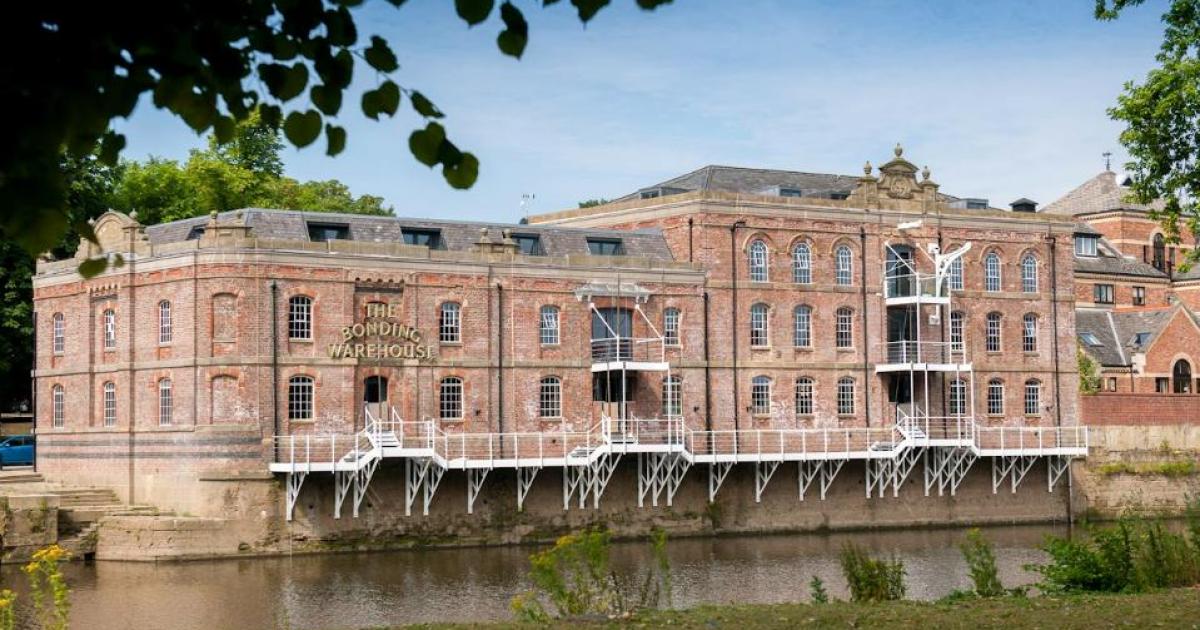
Celebrate Collaborate Connect runs from 12noon – 6pm at Patch York, The Bonding House, Terry Avenue, York, on Saturday March 7. All-day tickets, including food and wine/soft drink are £15 (two for one offer available). Go to https://CelebrateCollaborateConnect.eventbrite.co.uk

Source link

Advertisement
Continue Reading

NewsBeat

Inside France’s first LGBTQIA+ senior living residence

Published

on

Inside France’s first LGBTQIA+ senior living residence

France’s first social housing project designed for LGBTQIA+ seniors has opened in Lyon. For many residents, it’s not just a roof over their heads – it’s the start of a new chapter of safety, solidarity and love

Much of the building may still be devoid of furniture, and the garden little more than wood chippings, but there’s colour everywhere – on rainbow doormats, the rainbow tape cordoning off the veg patch-to-be, and kaleidoscopic posters emblazoned with wordplays like pépé, pédé et pro du potager (grandpa, faggot and gardening pro).

The residents at La Maison de la Diversité have heard such insults time and again, but now they’re reclaiming them. It’s moving-in day at France’s first senior living residence for the LGBTQIA+ community and allies, and it’s a hive of activity.

Advertisement

“I cried when they told me I had a place,” says Alice*, 58. After living most of her adult life as gay, she came out as trans five years ago. Having been attacked three times in just five years in Mâcon – a city in Bourgogne, north of Lyon, which she describes as having a “small-town mentality” – moving into La Maison de la Diversité means safety and security.

Solutions every Saturday
Uplift your inbox with our weekly newsletter. Positive News editors select the week’s top stories of progress, bringing you the essential briefing about what’s going right.
Sign up

This is the first co-living project from Les Audacieuses & Les Audacieux, an organisation fighting isolation and promoting social inclusion within the LGBTQIA+ community and its allies.

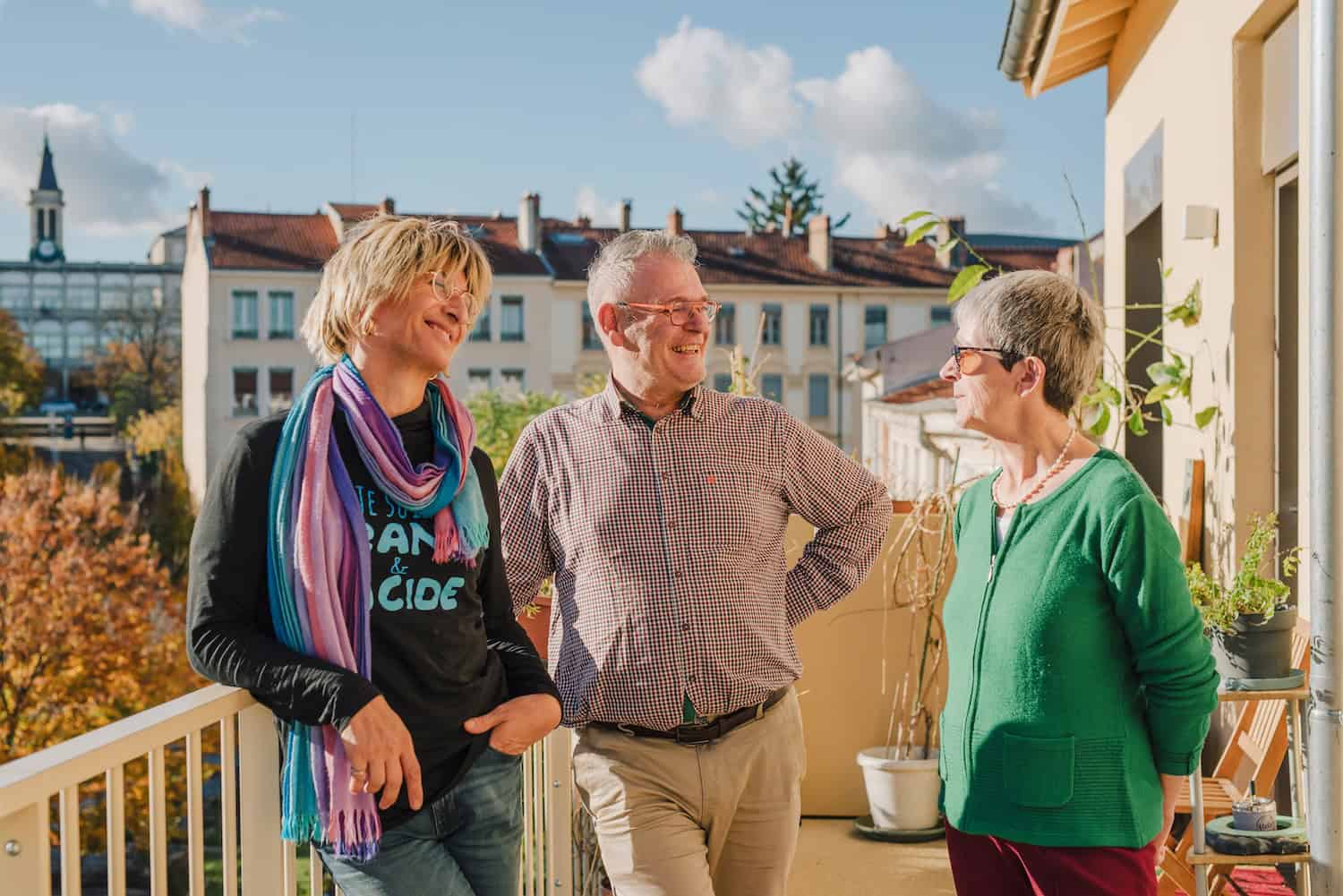
The team behind La Maison de la Diversité– Stéphane Sauvé, Christophe Dercamp and Marie Gaffet – took inspiration from a similar multigenerational living project, Lebensort Vielfalt, which opened in Berlin in 2012. But as it was a completely new concept in France, it took years to get off the ground. Originally planned for Paris, they finally opened a 16-apartment residence in Lyon in October 2025, with 14 flats for over-55s, one for a young person aged 18-30, and another for guests.

Advertisement

Loneliness and depression are chronic problems among the elderly in much of the western world, but they’re even more pronounced in the LGBTQIA+ community. Of the 17.8m over-60s in France, 28% of 65 to 79-year-olds and 49% of those over 80 live alone. Among LGBTQIA+ seniors – estimated at more than a million people – that figure rises to 65%, and suicide rates are between two and seven times higher than among their heterosexual and cisgender peers.

Gisèle*, 63, experienced profound isolation and suicidal thoughts before moving to La Maison de la Diversité. Having grown up in a rural area of the Loire department, she first fell in love with a woman as a teenager but never acted on her feelings. “Having a relationship or a life with a woman wasn’t something I could imagine,” she says. “I was in love with girls when I was just 15 – Florence, Christine – I can still remember their faces. But my world was traditional and conventional.”

Instead, she married a man, moved to Beaujolais’s Villefranche-sur-Saône, and had children. Her husband was reclusive, and they lived isolated lives. In 2016, Gisèle divorced her husband and came out as gay. But after 30 years without being part of a community, she was profoundly lonely.

Advertisement

“I felt either I’d end up turning to drink or throwing myself in front of a train,” she says. “I’ve arrived here in a vulnerable state – I’m terrified of rejection – but a voice inside me tells me that this is the right decision for me, at the right time.”

Similar projects exist elsewhere in the world. There are retirement communities in San Francisco, Palm Springs and other US towns that cater specifically to LGBTQIA+ residents and allies. The first in the UK, Tonic@Bankhouse, opened in 2024 in London’s Lambeth. What makes La Maison de la Diversité different is its fusion of LGBTQIA+ housing with multigenerational living.

I’ve always hidden who I was to protect myself from others. There’s a certain freedom that comes with being here

“Being part of the queer community unites us and makes our age differences seem much less significant,” says E*, 25, who has moved into the youth flat. “We all signed a solidarity contract when we moved in, essentially pledging that we’d help out.”

The youngest resident by more than 30 years, E pays a reduced rent. While there’s no obligation to help with additional chores, they see the residence as operating like a flatshare – only better. “My mum and I used to tour festivals in our van, so I know what it’s like to live in a community,” says E. “I couldn’t live in a flatshare, but I’m delighted to be in co-housing.”

Advertisement

Each apartment has modest cooking facilities and ensuite bathrooms, and ranges in size from 24 to 42 square metres. There’s also a large shared kitchen and living area, a bike shed and a communal garden. Most residents lived alone before moving here, including Thierry*, 73, who relocated from just three miles away.

“I’ve always hidden who I was to protect myself from others,” says Thierry. “I’ve been arrested just for being gay, just because I was going to a club. We were stigmatised. There’s definitely a certain freedom that comes with being here, but outside these walls it’s still complicated.”

Security and a sense of community are the main reasons most residents have chosen La Maison de la Diversité. But the chance to live as their most authentic selves opens up another possibility – a fresh chance at love. As I chat to them, there’s a resounding sense of optimism that the best is yet to come.

“Being over-50 and trans is like having a double expiry date,” says Alice, “but there’ll be so much more scope for dating here than there was in Mâcon. Now I can be myself all the time, and no one is going to judge, laugh or comment.”

“The cherry on the cake would be finding what I’ve never experienced – a loving, intimate relationship,” says Gisèle.

Advertisement

*Guests have asked that only their first names be published.

Photography by Juliette Treillet

Be part of the solution

At Positive News, we’re not chasing clicks or profits for media moguls – we’re here to serve you and have a positive social impact. We can’t do this unless enough people like you choose to support our journalism.

Advertisement

Give once from just £1, or join 1,800+ others who contribute an average of £3 or more per month. Together, we can build a healthier form of media – one that focuses on solutions, progress and possibilities, and empowers people to create positive change.

Support Positive News

Source link

Advertisement
Continue Reading

NewsBeat

Planet Of Lana 2 review – the prettiest landscapes in gaming

Published

on

Planet Of Lana 2 review - the prettiest landscapes in gaming
Planet Of Lana 2 – being pretty isn’t everything (Thunderful)

One of the most beautiful indie games of recent years gets a sequel that’s even more stunning to look at, as it tries to follow in the footsteps of Inside and Limbo.

Considering the state of the world, it’s odd how many games choose to focus on freshly synthesised horror. Even puzzle games do it. Classics like Limbo and Inside, both of which used a deliberately dark aesthetic, their protagonists mere shadows against a desolate backdrop, have been joined more recently by the Little Nightmares franchise and Reanimal, all building worlds you would never want to visit in real life.

They also feature children as their main characters, whose small size and vulnerability lends additional poignancy to the grotesque dangers they encounter. It wasn’t always like this. In the early days of video games a great many titles framed their gameplay with brightly optimistic ‘Sega blue skies’ and a cheerful primary colour palette. Perhaps today’s lurch into squalid ruination is a reaction against all that, but games like Planet Of Lana remind you that there is another way.

Released three years ago, it was a charming if mildly insipid puzzle game set in pastoral, 2D scrolling landscapes. It also had child protagonists and, like ICO before it, gave them an invented language you couldn’t understand, and then didn’t provide subtitles, letting you weave your own meaning out of its characters’ situations and tone of voice. While very little lives up to Sony’s early masterpiece, Planet Of Lana certainly delivered in terms of atmosphere.

Advertisement

This sequel is in almost every respect the equal of the original. There’s much to like about that, from its beautiful, painterly landscapes with towering cloud formations in the background, to its multiple layers of parallax scrolling that bring its lush green forests to life. Ethereal music and judiciously light sound effects infuse its world with bird song and deep, gloopy sub-aquatic sound effects when you’re underwater.

The set design and animation is similarly delightful, from the motion capture of its young hero, to the way your pet, Mui, moves and interacts with the world. Mui is fundamentally cat-like, in that it purrs when you pet it, has pointed ears, and hates water, but distinctly un-cat-like in that it responds accurately and consistently to your commands. For some reason it can also now release an electromagnetic pulse, juicing nearby doors or machinery with electricity.

Expert, exclusive gaming analysis

Sign up to the GameCentral newsletter for a unique take on the week in gaming, alongside the latest reviews and more. Delivered to your inbox every Saturday morning.

Advertisement

To add to the sense of being an organic Swiss Army knife, you later discover Mui can suppress the radiation that comes from chunks of waste product, mined by the game’s new baddies. In the original your village’s bucolic idyll was interrupted by robotic alien invaders. By the end you’d already seen them off, their spidery metal carcasses used for riding, farming or housing.

Unfortunately, fellow humans are now harnessing the extraterrestrial technology to mine polluting poisons from the Earth, and when a little girl falls ill because of it, you set off looking for the ingredients for a cure, which naturally reside in four contrasting biomes. To find them you’ll need to solve the game’s undemanding 2D puzzles, quite a number of which are recycled from the previous game.

Advertisement

The first Planet Of Lana was criticised for its simplicity, with puzzles that never quite felt taxing enough, even though some took a while to work your way through because of fiddly controls. That was partly thanks to a perceptible lag between control inputs and your character’s motion, a bit like the original 1980s Prince Of Persia, whose pre-canned rotoscoped animation meant every action he undertook had to complete before he could do anything else.

Planet Of Lana 2’s hero is similarly afflicted. The game also shares a tendency to repeat puzzle mechanics without layering them or adding complexity. For example, in one of its underwater sections featuring an elegantly designed mini-submarine, you need to nudge open a heavy metal door by barging into it. That exact same interaction is needed four more times in the ensuing minutes, none of which adds a twist, disguises itself, or does anything differently.

There are other parts of the game that play almost like a 2D walking simulator, leaving you to gambol through the gloriously realised landscapes without the need to stop, think, or fool around with the controls. The problem is that when even the puzzles don’t detain you for long, everything can start to feel a little too insubstantial, your enjoyment marred not by distractions, but by the lack of them.

Unlike films, games often improve radically in their sequels. That’s to be expected in a more nascent medium, and one underpinned by the steady march of technology, but it’s also more noticeable when it’s absent. If you loved Planet Of Lana, its follow up offers precisely the same mix of hand-drawn charm and lacklustre puzzle design. But it’s a great shame that it doesn’t offer anything at all new or different.

Advertisement

Planet Of Lana 2 review summary

In Short: A beautiful looking 2D side-scrolling puzzle game whose lack of challenge and regularly recycled mechanics prove disappointingly bland, with no significant improvements over the original.

Pros: The uplifting art style looks stunning throughout and the excellent sound design really maximises an already impressive atmosphere. Characters’ motion capture makes them look like real people.

Cons: Puzzles are too easy and their concepts often repeated. Slightly clumsy controls. Little sense of progression in the years since the original game came out.

Score: 6/10

Advertisement

Formats: PlayStation 5 (reviewed), PlayStation 4, Nintendo Switch, Xbox Series X/S, Nintendo Switch 2, and PC
Price: £16.99
Publisher: Thunderful
Developer: Wishfully
Release Date: 5th March 2026
Age Rating: 12

Planet Of Lana 2 screenshot of hiding in a forest
We’ve seen all this before (Thunderful)

Email gamecentral@metro.co.uk, leave a comment below, follow us on Twitter.

To submit Inbox letters and Reader’s Features more easily, without the need to send an email, just use our Submit Stuff page here.

Advertisement

For more stories like this, check our Gaming page.

Source link

Advertisement
Continue Reading

NewsBeat

US submarine sinks Iranian warship using torpedo in Indian Ocean

Published

on

Manchester Evening News

Pete Hegseth said the strike is ‘the first sinking of an enemy ship by a torpedo since World War Two

An Iranian warship has been sunk by a US submarine in the Indian Ocean, Pete Hegseth has confirmed.

The US Secretary of Defence said the strike is ‘the first sinking of an enemy ship by a torpedo since World War Two’. It comes after Sri Lanka’s navy and air force on Wednesday launched a joint rescue operation after the Iris Dena, ran aground off the southern coast of the island nation near the city of Galle.

More than 140 people are thought to be missing, with 32 so far rescued, Sri Lanka said.

Advertisement

The sinking was confirmed by Mr Hegseth during a press conference on Wednesday afternoon, UK time. Speaking to reporters at The Pentagon, he said: “An American submarine sunk an Iranian warship that thought it was safe in international waters.

“Instead, it was sunk by a torpedo.”

The Iris Dena is a Moudge-class frigate serving in the Southern Fleet of the Iranian Navy. It is thought to be one of Iran’s newest warships.

The US military said previously it had already destroyed 17 Iranian vessels, and that its goal was sinking “the entire navy”.

Advertisement

It comes after US and Israeli strikes on Iran continued on Wednesday. Retaliatory missile and drone attacks from Iran are also being launched at countries across the Middle East – with Dubai, Oman and Kuwait among those targeted.

During Prime Minister’s Questions on Wednesday lunchtime, Sir Keir Starmer said the crisis in the Middle East required a “cool head” as he defended his response to the situation.

He had come under fire from US President Donald Trump over his initial refusal to allow British bases to be used in the attack on Iran, while the Government has been criticised for failing to protect RAF Akrotiri from a drone attack.

Advertisement

At PMQs, Sir Keir insisted he was focused on protecting British lives and helping to get people stranded in the Middle East back home.

And he said a range of military assets including F-35 jets were already in the region.

Sir Keir said: “This Government will be resolute in our focus, protecting British lives, bringing our people home, and safeguarding our national interest.”

He told MPs “the whole country is worried about the potential for escalation” in the Middle East, and “we need to act, therefore, with clarity, with purpose, and with a cool head”.

Advertisement

The UK’s airbases, including Diego Garcia in the Indian Ocean and RAF Fairford in Gloucestershire, were initially denied to the US for their strikes against the Iranian regime.

Source link

Continue Reading

NewsBeat

National People’s Congress to set China’s economic goals for coming years

Published

on

National People's Congress to set China's economic goals for coming years

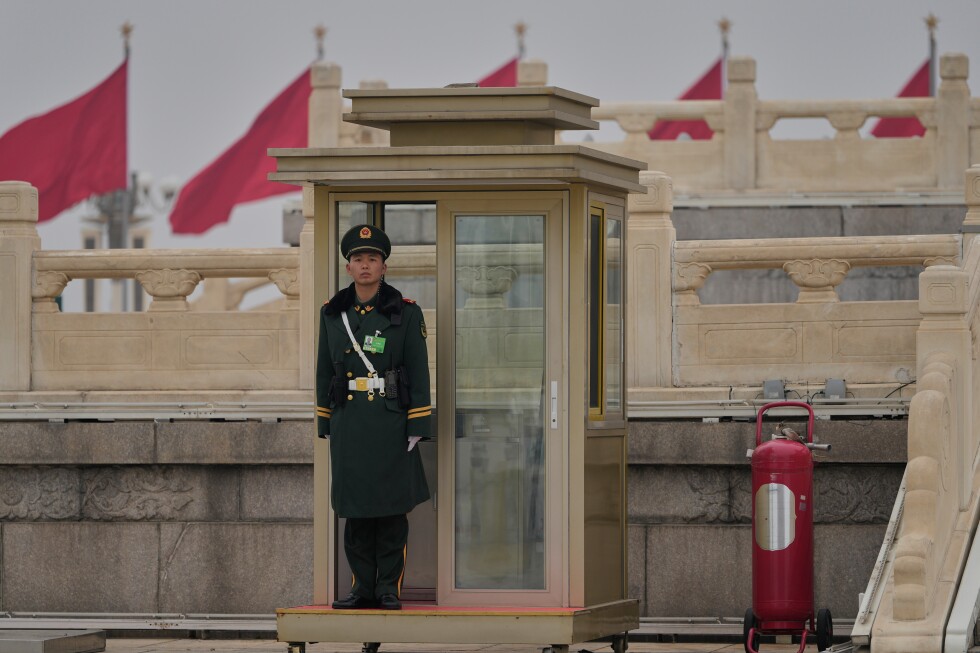
BEIJING (AP) — China’s ceremonial legislature is set to meet Thursday, where it will unveil the country’s policy direction and economic goals for the coming years.

The meeting is held in Beijing, where the National People’s Congress and its advisory body gather. The National People’s Congress will ratify new laws decided by China’s Communist Party leadership. While the near-3,000-member body technically votes, the vote is always almost unanimous.

Also meeting is the Chinese People’s Political Consultative Conference, an advisory body composed of elite members of Chinese society, from business people to athletes. They also include representatives from China’s minority groups, but the body has little power on issues of public policy.

The gathering is called the Two Sessions. The political meetings have changed under President Xi Jinping, with tighter scripts and less scope for debate.

Advertisement

“A long, long time ago, it was a venue for policy deliberation,” and even controversial things, said Alfred Wu, a professor of public policy at the National University of Singapore. “Now it’s very much become a showcase, propaganda.”

Economy is front and center

The National People’s Congress is when the Chinese premier announces the country’s GDP target and other economic targets for the year.

This year, observers are also waiting for details for the 15th five-year plan, of which the government had revealed a draft in October. It is expected to be focused on building tech prowess and self-sufficiency.

China issues five-year plans to direct its economy, a legacy of its historical approach when it had a planned economy.

Advertisement

The Chinese economy remains sluggish, with high youth unemployment, weak housing prices and sagging domestic consumption. It also faces a trade war with the U.S., which has leveraged tariffs on all Chinese goods.

Lou Qinjian, the spokesperson for this year’s National People’s Congress, said Wednesday that the government would maintain its efforts to improve living standards and boost consumption. Those would include raising incomes and improving the education, child care, elderly care and health care systems so “consumers will feel freer to spend,” he said at press conference.

Experts have said China will have to strike a tough balance between its goals of boosting its tech manufacturing, such as in robotics, renewable energy and AI, and boosting domestic consumption as many ordinary people are feeling the pinch. Tech supply chains are narrow and the trickle-down effect is less pronounced.

China is likely to drop its headline growth target to a record low, predicted Neil Thomas and Lobsang Tsering, policy experts at the Asia Society. It will be significant as a step in a “shift from high-speed to high-quality growth,” they wrote.

Advertisement

A push for ethnic assimilation

The National People’s Congress is also expected to ratify a new law governing China’s ethnic minorities. While a final draft has not been released, experts say the latest public draft focused on assimilation, reducing autonomy for the country’s minority groups.

Lou said the legislation fosters “a stronger sense of community among all ethnic groups in the Chinese nation” and outlines steps to promote interaction, exchange and integration.

“Once enacted, we will work to implement it thoroughly and advance Chinese-style modernization through the great unity of the Chinese nation,” he said.

Lou highlighted the Communist Party’s push for unity several times during the press conference and credited past five-year plans with delivering not only rapid economic growth but also long-term stability, a major concern of party leaders.

Advertisement

Personnel movements are not expected

China’s legislature dismissed 19 members last week, after a highly publicized removal of two of the country’s most senior generals in January.

Now, only one member remains of the powerful Central Military Commission, which controls the military, but policy experts say they do not expect any personnel announcements in the upcoming Two Sessions. Observers like to closely watch attendance for any signs of possible purges, however.

Xi Jinping has removed possibly up to 100 senior officials in the People’s Liberation Army in the past four years, according to the Center for Strategic Studies, with the most prominent being General Zhang Youxia in January.

Yet, there is likely no great rush from the leadership to find a replacement.

Advertisement

“I don’t think they’re particularly worried about this,” said Wu of National University Singapore. For example, he said, Wang Yi became foreign minister again after stepping down from the job initially because of the high-profile removal of Qin Gang, previously his replacement.

___

Associated Press writer Ken Moritsugu contributed to this report.

Advertisement

Source link

Continue Reading

NewsBeat

Planned mortgage rate cuts put on hold because of Iran conflict

Published

on

Wales Online

Some lenders have already reconsidered planned rate reductions

Some lenders have pushed pause on planned mortgage rate cuts, according to a financial information website, amid wider economic and global uncertainties as the conflict in the Middle East unfolds. Moneyfacts said swap rates, which are used by lenders to price mortgages, have been rising in recent days.

Advertisement

The website said it was aware that some lenders, which it did not name, had already reconsidered planned rate reductions. Despite some lenders pausing plans to reduce rates further, figures from Moneyfacts indicated some mortgage rates were still heading in a general downward direction on Wednesday.

The average two-year fixed-rate homeowner mortgage rate on the market on Wednesday morning was 4.82%, down from 4.83% on Tuesday. The average five-year fixed-rate homeowner mortgage rate on the market on Wednesday morning was 4.94%, falling slightly from 4.95% on Tuesday.

In the buy-to-let mortgage market, some average rates edged up. The average two-year buy-to-let residential mortgage rate on Wednesday was 4.65%, up from 4.64% on Tuesday.

The average five-year buy-to-let residential mortgage rate on Wednesday was 5.05%, up from 5.04% on Tuesday. Adam French, head of consumer finance at Moneyfacts, said: “Swap rates have been rising sharply as conflict with Iran spreads across the Middle East, driving oil and gas prices higher and reigniting inflation concerns.

Advertisement

“The immediate consequence has been higher gilt yields and a rapid shift in interest rate expectations, with the prospect of a Bank of England base rate cut later this month now looking far less certain. For the mortgage market, the impact is almost instantaneous. Some lenders have already paused or reconsidered planned rate reductions.

“Because fixed mortgage pricing is closely linked to swap rates, this sudden market movement risks halting the recent momentum towards lower mortgage rates just as borrower confidence had begun to build ahead of an anticipated rate cut. It serves as a stark reminder that mortgage costs are not driven solely by domestic policy decisions.

“Global geopolitical events move markets, markets move swap rates, and swap rates ultimately shape the deals available to borrowers – all while the world watches deeply troubling events unfold.”

Martin Temple, an economist at Leeds Building Society, said financial markets “have significantly reassessed” the likelihood of a quarter point cut to the Bank of England’s base rate at its next meeting. He said the upward movement in swap rates “suggests that rates for customers either re-mortgaging or purchasing a new home are likely to increase in the near-term”.

Advertisement

Mr Temple added: “For savers, however, the current environment may present opportunities, with the potential for more attractive rates as we approach the start of Isa season.”

Jinesh Vohra, chief executive of the app Sprive, said: “Markets have been expecting the Bank of England to cut rates further this year, but renewed geopolitical instability risks may make that path less straightforward. If disruption to energy supplies or global supply chains feeds into higher inflation, policymakers may have to be more cautious about how quickly and how far interest rates come down.

“That matters for homeowners, because expectations of falling rates have already been helping mortgage pricing improve. Anything that pushes inflation higher could slow that progress, meaning rates may not fall as much – or as quickly – as borrowers hope.

“For homeowners who feel like they’re financially able, this uncertainty reinforces that making small, optional overpayments when you can is one of the few levers you can control, helping reduce the balance and the impact of future rate moves.”

Advertisement

Source link

Continue Reading

NewsBeat

North Yorkshire man Ryan Rudd missing from Catterick Garrison barracks

Published

on

North Yorkshire man Ryan Rudd missing from Catterick Garrison barracks

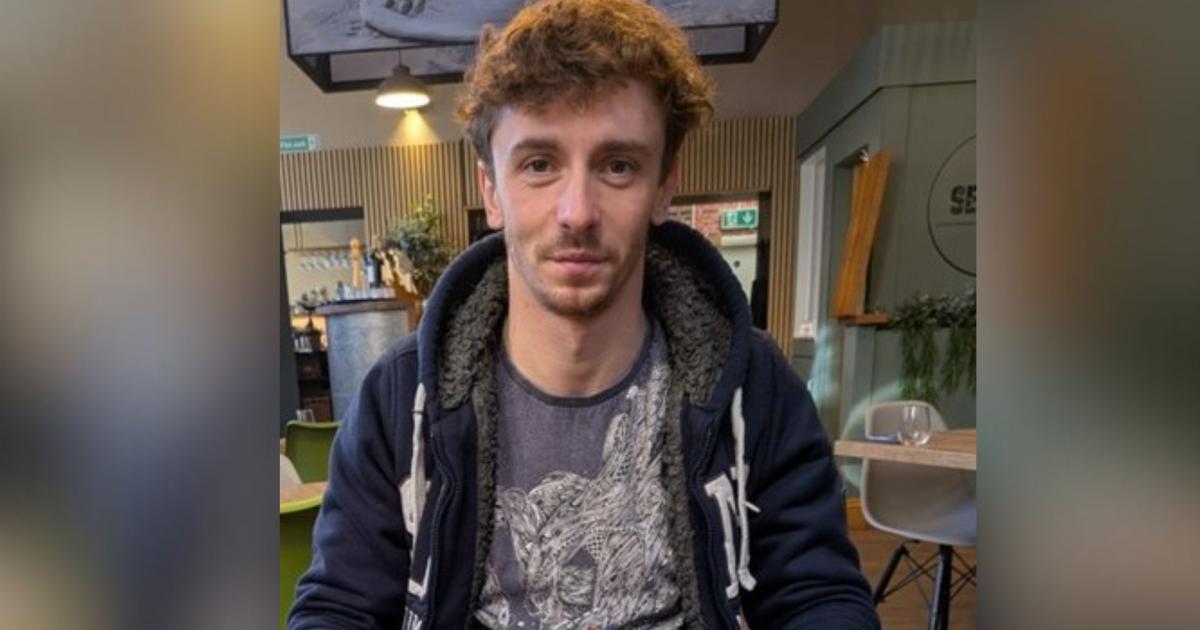
Ryan Rudd, 28, failed to return home or to his barracks in Catterick Garrison when expected.

He was last seen at the New Inn in Selby in the early hours of Sunday, February 15, after going on a night out with two friends on Valentine’s night.

Since then, he has been out of contact with family, friends and colleagues, who are “very concerned” for his safety.

Ryan is described as white, around 5ft 8in tall, of slim build with dark brown hair.

Advertisement

Ryan Rudd (Image: NORTH YORKSHIRE POLICE)

Ryan Rudd (Image: NORTH YORKSHIRE POLICE)

When he was last seen, he was wearing a black t-shirt, a blue hooded top and black trousers.

Ryan Rudd (Image: NORTH YORKSHIRE POLICE)

Ryan Rudd (Image: NORTH YORKSHIRE POLICE)

A spokesperson from North Yorkshire Police said: “We are appealing to anyone who may have seen him in Selby on February 14/15, or has seen him since then, to contact us as a matter of urgency.

“Thank you to everyone who has shared our appeal so far. 

“Extensive enquiries are ongoing to find Ryan, if you have any information that could help, please call us on 101.  

Advertisement

“If you have seen Ryan or know where he is now, please call us on 999.”

Source link

Advertisement
Continue Reading

NewsBeat

Men from Wales arrested on suspicion of spying for China

Published

on

Wales Online

The Metropolitan Police said the suspects – aged 39, 43 and 68 – were arrested by counter-terrorism officers

Three men including two from Wales have been arrested on suspicion of spying for China. The Metropolitan Police said the suspects – aged 39, 43 and 68 – were arrested by counter-terrorism officers in Wales and London after being accused of assisting a foreign intelligence service.

The force said the 43-year-old man was arrested in Pontyclun and the 68-year-old was arrested in Powys while the 39-year-old suspect was arrested in London.

All three remain in custody and searches have been carried out at the addresses where they were arrested, the force added. They are being detained under the Police and Criminal Evidence Act, Commander Helen Flanagan, head of Counter Terrorism Policing London, said on Wednesday.

Advertisement

She said: “Today’s arrests are part of a proactive investigation and while these are serious matters we do not believe there to be any imminent or direct threat to the public relating to this. Our investigation continues and we thank the public for their ongoing support.

“We have seen a significant increase in our casework relating to national security in recent years and we continue to work extremely closely with our partners to help keep the country safe and take action to disrupt malign activity where we suspect it.”

In addition to the addresses where the suspects were arrested, the Met said three other properties in London, east Kilbride in Scotland, and Cardiff have also been searched.

Source link

Advertisement
Continue Reading

Trending

Copyright © 2025