

Connect with us
DAPA Banner

NewsBeat

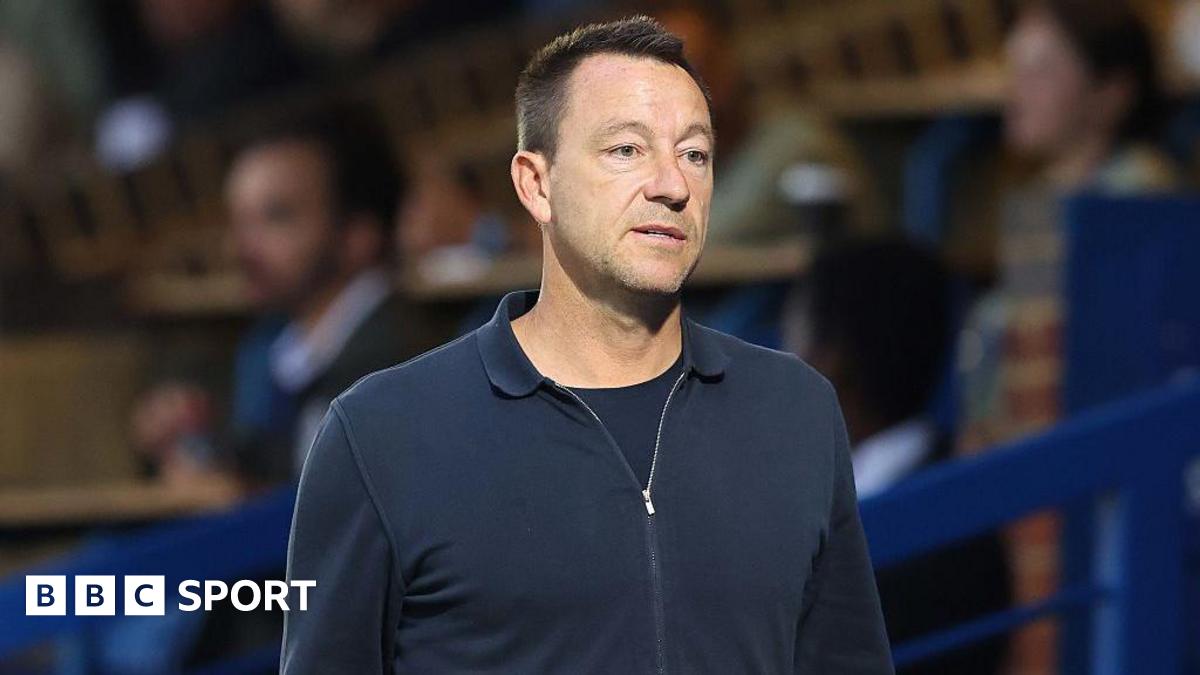
John Terry Colchester takeover: What’s in it for him?

Published

on

Former Chelsea player John Terry walks along the touchline at Stamford Bridge ahead of a Premier League 2 youth match in 2025

Some of the most high-profile players of the 21st century have opted to purchase stakes in clubs rather than committing to full-time coaching, a marked difference from previous generations.

Perhaps Terry would aim to follow in the footsteps of another former team-mate, Cesc Fabregas, by taking on a dual role.

The Spaniard bought shares in Serie A side Como in 2022, before being made manager in 2023.

Terry’s former England team-mate David Beckham is a co-owner of MLS side Inter Miami, having negotiated the rights to founding a club as part of the contract he signed when he joined Los Angeles Galaxy in 2007.

Advertisement

Beckham is also a part owner of Colchester’s League Two rivals Salford City, alongside Gary and Phil, Neville, Nicky Butt, Ryan Giggs, and Paul Scholes.

Others including Ronaldo (Real Valladolid), Kylian Mbappe (SM Caen), and Gerard Pique (FC Andorra), all of whom are majority shareholders in clubs based in countries where they spent significant portions of their careers.

The likes of Luka Modric (Swansea), Thierry Henry (Como), Zlatan Ibrahimovic (Hammarby), and Cristiano Ronaldo (Almeria) have also become part owners of clubs outside the European elite in recent years.

When former players invest in clubs, they are often buying a much smaller amount of shares and stumping up far less than their business partners.

Advertisement

Adding a household name from within the game to a group of investors can lend star power and authenticity to a takeover.

“The opportunity has been created for ex-pros to stay in the game in a way that wasn’t possible before, because of the way football has evolved on a commercial level,” says Dan Plumley, professor of sports finance at Sheffield Hallam University.

“There are clear positives to combining business acumen with people who have lived and breathed football – it gives you a diverse range of opinions.

“Being part of a consortium also spreads the financial risk across the group of investors, rather than it all being on one owner.

Advertisement

“History tells us you don’t make money out of owning football clubs, so there can be wider leverage for the former pro too – it can be a way for them to take on different roles in football, learn from them, and make professional progress.

“If you invest lower down the pyramid and build am project that you’re a part of. That can return some gain depending on how far up the football ecosystem you can take it.”

The excitement when a former star joins forces with a lower league club can pay almost immediate dividends.

“This takeover hasn’t even been confirmed yet but you can see the story is all across the media and there is extra attention on the club already.

Advertisement

“As the game continues to move forward at pace in a business sense, we can expect to see more of this kind of model in the future.”

Source link

Continue Reading
Click to comment

You must be logged in to post a comment Login

Leave a Reply

NewsBeat

York Christmas Market- rest day plan on hold amid concerns

Published

on

York Christmas Market- rest day plan on hold amid concerns

York Council’s Executive voted to defer a decision on closing the market on Tuesdays following new counter-terrorism advice from North Yorkshire Police.

Cllr Pete Kilbane, the council’s Labour deputy leader, said the proposals would be reconsidered before the executive’s next scheduled meeting in a month’s time to help businesses plan accordingly.

Market traders and businesses near its pitches in Parliament street told councillors they feared the effect closing the market for a day would have on their earnings and staff.

The decision at the meeting on Tuesday, April 13 comes after plans for the rest day were drawn up to ease the impact of the event on Blue Badge holders.

Advertisement

RECOMMENDED READING:


Blue Badge holders were among those banned from driving into York city centre during the market’s opening hours in line with traffic restrictions imposed during the event.

The council approved North Yorkshire Police’s request for an Anti-Terror Traffic Regulation Order (ATTRO) barring vehicles from pedestrianised streets to deter potential attacks which have targeted mass gatherings elsewhere.

The restrictions have since been made permanent and would be activated during future markets and other events on a case-by-case basis in consultation with the council and other emergency services.

Advertisement

Disabled people said last year the measures would restrict their access to the city centre in the run up to Christmas.

Plans for a rest day on Tuesday are among the measures the council has proposed to ease the impact of restrictions during future markets.

A council report stated opening the market one day less a week would improve accessibility in the city centre.

It added Tuesday was chosen as the rest day because it was one of the quietest in terms of footfall but was not as closely linked to weekend visits as Mondays or Thursdays.

Advertisement

A rest day would be trialled during this year’s market and the impact would be analysed early next year.

Christmas Market traders have voiced fears about plans to close future events one day a week (Image: Newsquest)

York’s Business Improvement District (BID), Hospitality Association (HAY), hotels and others lodged concerns with the council over the proposals ahead of Tuesday’s decision.

Traders speaking at Tuesday’s meeting said closing the market could see them lose up to 10 per cent of their revenues.

Simon Long, of Shambles Kitchen, said earnings from the market paid the wages of his 30 permanent staff in January.

Advertisement

The trader said: “I can’t afford to lose any days because of the January payroll.

“What would happen to the price of rent for pitches and would we be expected to make up the losses?

“We’re already facing significant price pressures at the moment, a 10 per cent drop in sales from losing Tuesdays would heighten the pressure massively.”

Louise Harris-Collins, who also trades at the market, said she could have to employ up to 11 fewer people if the plans go ahead.

Advertisement

She said: “Our margins have become thinner, the prospect of losing a day is truly terrifying.

“The market’s a huge asset to the city, people love it and we need more people to get behind it, not strangle it.”

Speaking following the meeting, disability right activist Flick Williams said she never thought the rest day would happen after saying it was better than nothing.

The executive heard the new police advice was a different interpretation of that previously given and related to additional liabilities and risks.

Advertisement

Council Deputy Leader Cllr Kilbane said traders’ views would be taken into account ahead of the decision on the rest day.

The deputy leader said: “The time scales are against us, businesses need to know what’s happening.”

Source link

Advertisement
Continue Reading

NewsBeat

From ‘market value’ to levelling up, the manosphere is shaped by a financial mindset

Published

on

From ‘market value’ to levelling up, the manosphere is shaped by a financial mindset

Louis Theroux’s recent Netflix documentary Inside the Manosphere shines a spotlight on masculinity influencers and the dangers of online misogyny, conspiracy theories and anti-feminist ideologies. Responses to the documentary have ranged from outrage to disbelief, criticising how the manfluencers treat the women in their lives and discussing the importance of role models in countering manosphere influences.

But what has been less talked about is how it reveals the relentless pursuit of financial gain driving these “manfluencers” and the language they use to normalise their views.

Amid a cost of living crisis and a declining job market, Theroux shows why “manfluencers” resonate so strongly with their target audience of boys and young men. Theroux meets four key figures in the manosphere, all of whom sell a carefully curated lifestyle based on conspicuous consumption, hypersexuality and an “alpha masculinity” mindset to their millions of followers.

Although this may seem like a tempting lifestyle to some, the main effect is to reinforce a sense of inadequacy and failure among their audiences. Do this enough times, then you can sell the solution to become a “real man”.

Advertisement


À lire aussi :
How boys get sucked into the manosphere


In Theroux’s documentary, two fans of a manosphere influencer suggest that “life as a man, you’re born without value. We have to build that value. You have to work for every penny”.

The language used in the manosphere is the language of financial markets, with discussion of optimisation, levelling up and marginal gains. Phrases like “sexual market value”, “high/low value man” and “maxxing” convert intimacy into a market and the body into an asset class. Manosphere guidance encourages young men to inspect themselves from the outside, as if conducting a performance review. Men’s bodies are seen as measurable assets and an index of “masculinity”.


À lire aussi :
The pseudoscientific attractiveness scale that grew out of incel forums and is now making money for looksmaxxing influencers

Advertisement

Glow-ups, routines, hacks, looksmaxxing, courses, tips and videos on “ways to increase your value” are deployed as strategies to help fans unlock the secret of being a “real man”. In these spaces, the broader system that turns masculinity and relationships into metrics is never the problem. Instead, men are told that failure lies in their inability to increase their own “market value”. These discourses of “self-improvement” are, in reality, damaging forms of self-surveillance.

Manosphere adherents end up caught in a loop of aspiration and self-loathing: improve, compare, fail, repeat. In this context, the language of “levelling up” becomes especially insidious. Although it sounds playful and empowering, this mindset traps fans in a permanently unwinnable game. There is always another goal to strive for, another skill to master, another level to unlock.

‘Manosphere’ influencers place high value on physical fitness and attractiveness in both men and women.
MDV Edwards/Shutterstock

The dating market

The consequences of this mindset for both men and women is most evident in the language around dating and the idea of the “sexual market”. Attraction is viewed as quantifiable (“high/low value”), competitive (“winners/losers”) and impersonal (“it’s just sex”). Women and men are both consumers and products competing for scarce demand. Rejection is “market feedback”.

These metaphors reduce a deeply social and emotional sphere of life down to a superficial economic reality. By treating people and relationships as metrics, it becomes easier to view them only in instrumental terms. Framing relationships as one-dimensional, transactional and based on hierarchy has negative effects for both men and women.

Advertisement

In Inside the Manosphere, one influencer reveals that he filmed a woman performing a sex act on him for “clout”. Theroux shows a clip from one influencer’s social media arguing that women are “subordinate” to men and should always make themselves sexually available. In one of the most discussed scenes from the documentary, one man advocates for “one-sided monogamy”, where he sleeps with other women while his wife stays at home as the main caregiver.

This man reduces women to an “attractiveness score”, saying that if a man isn’t tall but is physically fit, muscular and makes money, “Maybe [he doesn’t] come to Miami and pull Miami 10s, but I’ll be damned if [he] can’t pull a couple of 8s or 9s in a small town in America”.

Some of this corporate language is used to make misogynistic ideas sound neutral, data-driven and common sense. While recording a podcast, one man uses his “female delusion calculator” to draw attention to the unrealistic expectations a female guest has of a prospective partner. Although presented as a mathematical model based on demographic data, its primary function is to highlight what he claims is the “irrational” nature of women in the contemporary dating scene, and conclude that women “overinflate [their] own sense of self-worth”.

By framing this commentary as a form of objective analysis, it makes hierarchy seem an everyday and commonplace part of life and hides its misogynistic underpinnings.

Advertisement

Influencers in the manosphere often pronounce that they are seeking to elevate the position of men through the language of empowerment. The self-improvement narratives are compelling, but they don’t stand up against the evidence that these men are very much in it for themselves.

The documentary highlights how the manfluencers’ central goal is ultimately self-enrichment, often at the expense of their followers. Theroux “invests” £500 into an interviewee’s trading platform, only to see it whittled away over the course of a few weeks, with the influencer taking his cut. Fans of one influencer pay to have their comments read out live on air. Another influencer courts conspiracy theories to create viral content, describing those in the manosphere as “trying to make a buck” by selling ideologies.

There is a sense that compromising the social contract doesn’t matter, so long as you have a Rolex on your wrist, a Lamborghini to drive and a fancy apartment to hide away in. The ideologies promoted by the manfluencers in the documentary are rooted in misogyny, sexism, violence and exploitation – and there is clearly a market ready and willing to buy them.

Advertisement

Source link

Continue Reading

NewsBeat

Sir Keir ‘personally committed’ to bringing in Hillsborough Law

Published

on

Sir Keir ‘personally committed’ to bringing in Hillsborough Law

Addressing Sir Keir, he said: “As parliamentary lead to the Hillsborough Law, I stand here with a huge sense of obligation to the 97, all the families, including my constituent, Debbie Matthews, every survivor and every victim of a state cover-up who were all part of this collective campaign.

Source link

Continue Reading

NewsBeat

Cambridge church holds Doctor Who service featuring Tardis and sci-fi icon

Published

on

Cambridgeshire Live

Zion Baptist Church in Cambridge hosted a Doctor Who service with a Tardis replica and Blue Peter star Peter Purves

A Doctor Who-loving vicar has conducted a church service featuring a Tardis – with an iconic sci-fi legend in attendance.

Advertisement

Zion Baptist Church, in Cambridge, received the replica police box modelled on the one from the BBC programme, with actor Peter Purves performing the ribbon-cutting ceremony. The 87-year-old is renowned for portraying Steven Taylor, a companion of the First Doctor played by William Hartnell, before later becoming a Blue Peter presenter.

Devoted fan Reverend Jason de-Vaux said there weren’t many churches that could claim to house the legendary box.

Rev de-Vaux, 57, said: “It is amazing to be able to pick on your favourite sci-fi show and bring it within your own faith context. There are interesting parallels with the Christian faith and the show. Jesus died and he rose again. When Jesus rises again, his followers did not recognise him. Doctor Who regenerates and his companions don’t recognise him.

“The world needs a saviour in Jesus Christ and Doctor Who is looked upon as a saviour of the planet.”

Advertisement

Rev de-Vaux had originally given some advice to the owner of the then run-down Tardis who wished to restore the replica. However, the previous owner offered de-Vaux the Tardis free of charge from its location in Suffolk. It was transported to Zion Baptist Church, constructed in 1837, where it underwent restoration.

The reverend, who has served at Zion Baptist Church for four years, said: “When it was being placed over the wall into the courtyard, we must have had 100 students from the university shouting, ‘It’s the Tardis!’

“It was like Beatlemania. Everyone was stopping to take pictures. They thought we were filming for a Christmas special.”

Advertisement

Reverend de-Vaux has followed the programme since Jon Pertwee’s era in the 1970s, when he was four years old.

He said: “I remember watching the last series of Pertwee in black and white. Then he regenerated and my grandparents had a colour TV. He was a different person – because it was then Tom Baker. Four-year-old me was really upset.”

Zion Baptist Church hosted their own Doctor Who service on Sunday (April 12), attended by Peter Purves and numerous devotees of the programme, with some dressed as their favourite Doctors.

Advertisement

Rev de-Vaux said: “We can use the cultural phenomenon of Doctor Who with the Christian faith. We had good proof of that when we had 75 people sitting in our church for the service. It’s a parallel that can be used to bring hope into the world we currently live in.”

The reverend noted that Peter Purves was “very gracious” at the occasion, which featured cake cutting and a Dalek.

He added: “We’ve been asked to do some filming throughout the summer with the Tardis and we’re open to anyone who wants to throw a Doctor Who Party.

“The local bookies had me down for 1000/1 to be the new Doctor. I wouldn’t turn the part down but we all look forward to who it’s going to be.”

Advertisement

Source link

Continue Reading

NewsBeat

Ben Stokes: England captain ‘might not be here’ after being hit in face by ball

Published

on

Ben Stokes during Durham training

Some of the Ashes criticism centered around the squad’s relationship with alcohol after their mid-series trip to Noosa.

It also emerged after the Ashes that white-ball captain Harry Brook had an altercation with a nightclub bouncer during a trip to New Zealand last year.

Stokes said some criticism was “harsh and unneeded”, but “a lot of it was warranted”.

“A lot of it was almost put forward in a way that was a bit extreme, but when you look at it deep deep deep you agree with some of it,” he said.

Advertisement

“We have got ourselves to blame for a lot of it.

“If you can’t take that and aren’t willing to understand that and listen to a little bit of it, then we wouldn’t see any progression.”

Stokes, McCullum and managing director Rob Key kept their jobs following an ECB review into the Ashes.

Stokes, who turns 35 on the opening day of the first Test against New Zealand on 4 June, said he did not consider standing down or retiring.

Advertisement

“I actually went the other way,” he said.

“It completely and utterly consumed me. I feel like I would be able to switch off for half an hour and then would get my iPad out and start making notes.

“If I got back and shut myself away, didn’t pay any interest and say ‘we will see what happens – I will let other people make decisions’, I think that is me subconsciously saying I don’t want this.

“How I was proved I am proper in this still.”

Advertisement

Source link

Continue Reading

NewsBeat

Not just for her: Why Slimming World works for everyone

Published

on

Not just for her: Why Slimming World works for everyone

When Trevor first walked through the doors of Slimming World, it wasn’t just for himself it was for family. Wanting to support his niece on her own weight loss journey, Trevor decided to take that first step alongside her. Of course, he also hoped to shed a few pounds and improve his health, but what followed was far more life-changing than he ever imagined.

Source link

Continue Reading

NewsBeat

Mittel River Terrace bar approved by City of York Council

Published

on

Mittel River Terrace bar approved by City of York Council

York councillors approved an application from Pivovar to open its new Mittel River Terrace in the empty Guildhall Restaurant unit, off Lendal.

Jamie Hawksworth, Pivovar’s director, told councillors they wanted to foster a continental atmosphere with customers sitting for drinks and food, not standing shoulder-to-shoulder.

Representatives of three neighbouring businesses said they were worried about noise from the venue’s outdoor terrace, with one saying they had taken a shorter lease as a result.

The application, which Pivovar made through Leeds Tap Ltd, was approved following a City of York Council licensing hearing on Monday, April 13.

Advertisement

RECOMMENDED READING:


Pivovar runs the Elvington Brewery where it produces its Mittel pilsner and lager and it also operates 14 bars and restaurants nationally, including four in York.

It is set to see the empty two-storey building completed in 2022 as part of the £20 million Guildhall refurbishment brought into use for the first time in four years.

Pivovar’s plans include installing a copper brewhouse specially-made in the Czech Republic which will produce a range of lagers that will be served there.

Advertisement

There are also plans to serve food including oysters, rotisserie chicken and pork sourced from local suppliers.

Monday’s meeting heard emphasis would be placed on the venue’s food offer with around £250,000 spent on its kitchen alone, but people would be able to come only for drinks.

The outside of the Guildhall Restaurant, off Lendal, in York (Image: LDRS)

A minimum of 60 people will be seated on the lower floor of the building with 20 on the upper floor.

The lower terrace would have seating for at least 20 people with 40 seated on the outdoor area above when weather permits and standing drinking is not permitted.

Advertisement

No speakers or TVs will be allowed outside.

The venue will operate from 8am to midnight daily, with drinks served from 10am to 11.30pm daily.

But five comments were lodged raising concerns about the plans, including four from neighbouring businesses who work in offices in the Guildhall complex.

Claire Bennett, of the York Science Park, said they always understood that a restaurant would move into the unit but uncertainty remained over how it would affect them.

Advertisement

Julian Richards, of Archaeology Data Services, said his firm was set to move into offices at the Guildhall in June but they had taken a shorter one-year lease because of the venue.

Mr Richards, whose firm’s offices would face onto the terrace, said: “The nightmare scenario is stag and hen dos leaning against our office window and making our business untenable.”

Monday’s meeting heard most customers were expected to come outside of working hours.

Mr Hawksworth told the meeting: “We want to create an atmosphere, we don’t operate shoulder-to-shoulder.

Advertisement

“Out customers are attracted more to seating and we want to take a continental approach, people will want to stay if they’re comfortable.

“The reality is that there’s 52 weeks in a year and only a few of them are sunny, so while it’s nice to offer the outdoor terraces we’ll only be doing that when we can.”

Source link

Advertisement
Continue Reading

NewsBeat

Emily Atack’s ex-boyfriend Charlie Edwards was ‘found dead in tattoo studio’

Published

on

Daily Mirror

Emily Atack’s model and tattoo artist ex-boyfriend, Charlie Edwards, was found dead in his tattoo studio in March, an inquest into his death has uncovered.

Emily Atack‘s ex boyfriend Charlie Edwards was found dead in a tattoo studio on March 24, an inquest has heard.

The former partner of the Rivals actress was found at the shop on Wilton Road, Humberston. An inquest into his death was formally opened at Grimsby Town Hall today. Jane Eatock, the Assistant Coroner for Greater Lincolnshire, said the self-employed tattoo artist was discovered at a studio but the cause of death was ‘yet to be determined’. She opened and adjourned the inquest to a date in September later this year.

Emily previously paid tribute to Charlie in March with a heartfelt post on social media in which she described him as “funny, smart, talented and caring.” Alongside an image of the star with her ex, Emily shared: “This is devastating to write. Charlie you were my friend. You were always there for me. You dropped everything so many times to come and be with me.

“We talked for hours on end on the phone about absolutely everything. We helped each other. You were funny, so smart, so talented and caring. I can only hope and pray that you have found some peace.”

She added that she had a beautiful soul as she paid her respects to his family: “My heart breaks for your family who will forever be so proud of you. Beautiful boy, beautiful soul. I’m so so sorry. Rest in peace Charlie.”

Emily and Charlie are said to have dated for three months in 2021, and were snapped kissing by paps during this period. Their relationship was reported to have ended due to her busy schedule.

Advertisement

At the time, a source told The Sun: “She was really into Charlie, who is obviously very handsome, and there was a good spark there, but it’s definitely over.”

The comic actress went on to begin a relationship with Alistair Garner, and the pair now share a son named Barney who was born in 2024. The couple announced their engagement in 2025, and are expected to tie the knot in Spain this summer.

Advertisement

Announcing the news on social media, Emily shared a picture of herself wearing the sparkling ring with a lyric by The Cure as the caption, she wrote: “It’s Friday, I’m in love,” with three diamond ring emojis.

This summer, Emily is set top appear in the popular Disney TV series, Rivals season two as Sarah Stratton, a mistress turned newly-wed and host of a 1980s daytime TV show.

Advertisement

The star initially came to fame in 2008 after starring in the comedy show, The Inbetweeners, as popular school girl Charlotte Hinchcliffe. She went on to become a series regular on Celebrity Juice, and appeared on Dancing on Ice in 2010 and I’m A Celebrity Get Me Out of Here in 2018.

Source link

Continue Reading

NewsBeat

This is what the historic Israel-Lebanon talks in the US actually achieved

Published

on

This is what the historic Israel-Lebanon talks in the US actually achieved

That Lebanon and Israel held their first direct diplomatic talks in more than three decades sounded like a chink of light the world has been hoping for, ever since Donald Trump threw a grenade into one of the most volatile regions in the world.

A lot was riding on the meeting.

Iran has made it clear that if Israel continues bombing Lebanon, including its chief ally, the Lebanese militant group Hezbollah, it will not reopen the strategic Strait of Hormuz or adhere to a truce with the US brokered by Pakistan.

Israel, which has vowed to occupy swathes of Lebanese sovereign territory, has said it will not stop pounding Lebanon until it has destroyed and disarmed Hezbollah.

Advertisement

Meanwhile, Donald Trump has waded in on Iran’s ongoing blockade of the Strait – vowing that Iranian ships, and those leaving Iranian ports, would be “eliminated”, piling on even more pressure.

And so this week’s talks between the Lebanese and Israeli ambassadors to Washington, hosted by US secretary of state Marco Rubio, were supposed to be key to breaking the deadlock. And the key to halting the complete derailment of a peace process that collapsed last weekend without consensus.

But these Washington talks appear little more than lip service to the idea of Lebanon’s inclusion in a broader peace deal, to fudge a way to the next round of Iran talks.

The fear is that a devastating war between Israel and Lebanon is inevitable, and the impact of that will push the world back to the brink.

Advertisement
Rescue workers check a destroyed building hit by an Israeli airstrike in Nabatiyeh town, south Lebanon, last month
Rescue workers check a destroyed building hit by an Israeli airstrike in Nabatiyeh town, south Lebanon, last month (PA)

For six weeks, since the US and Israel began bombing Iran, and Iran retaliated, the world has been staring down the barrel of destruction.

In the ensuing, metastasising conflict, a dozen countries have been drawn into its theatre. More than 5,000 people have been killed and over a million displaced. Iran’s closure of one of the world’s most significant waterways, the Strait of Hormuz, has caused the worst disruptions to global energy supplies in history, triggering a cascade of consequences, including a burgeoning global food crisis.

And so a last-ditch hope to salvage the Pakistan brokered truce was invested in direct talks between Israeli and Lebanese representatives in Washington.

But despite the US State Department’s vague statement that the two sides had held “productive discussions”, there is no indication that anything concrete has been achieved.

And how could there be, with all the key actors locked in a zero sum game?

Advertisement

Every way you try to force the pieces of this apocalyptic puzzle together, they do not fit.

Benjamin Netanyahu, who has conducted personal tours around Israeli-occupied southern Lebanon, has made it clear that unless Hezbollah is disarmed, Israel will not halt its strikes.

Israeli PM Benjamin Netanyahu visits Israeli troops in occupied southern Lebanon
Israeli PM Benjamin Netanyahu visits Israeli troops in occupied southern Lebanon (GPO/Kobi Gideon)

These daily bombardments have targeted Hezbollah positions but have also pounded densely populated civilian areas. That has killed more than 2000 people, among them children, medics and journalists.

Israel has vowed to hold territory up to the Litani River in the south, amounting to around 10 per cent of Lebanon’s landmass.

Given Israel’s expanding “buffer zones” in the region, including razing and occupying areas of Gaza, fears of formal annexation in the occupied West Bank, and an ongoing presence in southern Syria, there are growing concerns that Netanyahu’s true objective is the expansion of Israel’s borders.

Advertisement

The Israeli prime minister is also facing a difficult re-election campaign in the coming months. More war in Lebanon remains popular in Israel: a poll by the Hebrew University of Jerusalem this week suggested that two thirds of the population oppose a ceasefire with Iran and do not believe Lebanon should be included in it regardless.

Hezbollah, for its part, has made clear it will not adhere to any ceasefire with Israel until Israeli forces withdraw, regardless of what representatives of the Lebanese government may agree. It continues to pound areas of Israel back.

And so the nightmare deepens.

A Hezbollah flag flies over the ruins of an Israeli airstrike in the southern Beirut suburb of Dahiye al-Salam on 13 April
A Hezbollah flag flies over the ruins of an Israeli airstrike in the southern Beirut suburb of Dahiye al-Salam on 13 April (AFP/Getty)

Before Hezbollah entered this war in March – rocketing Israel in retaliation for the killing of Iran’s supreme leader – there had been a ceasefire agreement following the last conflict with its neighbour in 2024. That included efforts to gradually disarm the group under the supervision of the Lebanese government.

The Lebanese government, which includes members affiliated with Hezbollah’s political wing and the country’s military, have little control over Hezbollah’s armed faction. Hezbollah, a Shia movement designated by many countries including the UK, is considered one of the most heavily armed non-state actors in the world, with tens of thousands of battle-hardened fighters and an arsenal of rockets and missiles that rivals some countries.

Advertisement

Despite this, the Lebanese government had been gaining momentum. Lebanon has been battered by prolonged internal and external conflict, as well as an unprecedented financial collapse in recent years. But its new technocratic government had, until early 2026, been gradually rebuilding domestic and international credibility, says Paul Salem, former head of the Middle East Institute.

“The Army had deployed south of the Litani, and disarmed maybe 75 to 80 per cent of Hezbollah in the south,” he told Chatham House.

That progress has now been undone, he added.

Hezbollah is now once again fully engaged in conflict and is again positioning itself as Lebanon’s sole resistance against the existential threat from Israel.

Advertisement

The pressure from Israel’s bombardment of Lebanon has even raised spectre of civil war in Lebanon. There are many that are furious Hezbollah unilaterally re-entered their country into this devastating conflict with Israel, over the killing of a foreign leader.

And this is only a small part of a much wider theatre of war, which has already destroyed so many lives.

There remain impossibly hard divisions between Iran’s vision of the future and Donald Trump’s, including who will control the Strait of Hormuz and the future of Iran’s nuclear programme.

How to bridge these fundamentally different visions of the future is a Herculean task.

Advertisement

And so much is at stake for all of us.

Source link

Continue Reading

NewsBeat

Harome – how to pronounce this North Yorkshire village

Published

on

Harome - how to pronounce this North Yorkshire village

Harome – two miles from Helmsley on the edge of the North York Moors and about 24 miles north-east of York – is home to little more than 260 people unlike the 439-strong population numbered in the 1881 census.

Despite its modest size, Harome was ranked as one of the ‘poshest’ villages in the UK by The Times, alongside the likes of Castle Combe and Alderley Edge, and much of its modern-day fame can be traced to the village’s thatched Grade II-listed fine-dining restaurant, The Star Inn, which pulls in diners from far and wide.

The Star at Harome. supplied

But for all its charm, attractive stone cottages, rare thatched roofs and a duck pond, one thing continues to trip visitors up: how on earth do you pronounce it?

So how do you say Harome?

Advertisement

At first glance, Harome looks like it should rhyme with “home” which is how many first-timers attempt it. Others try variations such as “Ha-rome-y”.

Locals, guides and tourism businesses, however, tend to agree on something closer to “HAR-um” or “HAIR-um”, softening the “o” and almost swallowing the “e” . Even online pronunciation sites offer a confusing range of options and no firm consensus, perhaps reflecting that the village name has shifted over the centuries.

Snow in Harome by Sharon Strickland (Harome).Harome under a blanket of snow, captured by Sharon Strickland. (Image: Sharon Strickland)


Its spelling has certainly wandered. Until the nineteenth century the village was known as Harum, later Harom, before settling on today’s Harome.


Recommended reads:

Advertisement

Sleights – how to pronounce North Yorkshire village name | York Press

Why York and North Yorkshire will be one of the top places for music this summer

Why dozens of vintage tractors rolled through North Yorkshire


What is Harome known for?

Advertisement

Harome has a long history stretching back to a mention in the Domesday Book of 1086, and its name is thought to derive from Old English, meaning a pile or heap of stones.

Unlike many villages reshaped by commuting, Harome has long been rooted in farmland, with agriculture and related trades providing employment for generations.

For centuries it was part of the parish of Helmsley, and its landscape has changed shape over the centuries as farms grew larger – though some 17th century timber properties survived and are listed..

Chief among them is The Star Inn – a thatched, low-beamed building is thought to have been the first dwelling in “Harum”, and has put Harome on the modern map with its pull as a destination restaurant with rooms.

Advertisement

Owned by chef Andrew Pern since 1996, The Star Inn has earned national acclaim for its seasonal, produce‑led menus and boasts an impressive list of accolades – including a coveted Michelin star.

The Star Inn at Harome after the fire. Image: StaffThe Star Inn at Harome after the fire. Image: Staff

In November 2021, the village watched in shock as the pub was devastated by a £2 million fire after its thatched roof caught alight. The blaze forced The Star Inn to close for a year, before it reopened in November 2022.

Completing Harome’s storybook setting is the Grade II-listed parish church of St Saviour, dating from 1862. Built under the patronage of the Feversham Estate, the church’s architect was Charles Barry Jr, whose father designed the Houses of Parliament.

Small it may be, but Harome’s name, heritage and resilience ensure it leaves a lasting impression – however you choose to pronounce it.

Advertisement

Source link

Continue Reading

Trending

Copyright © 2025