Connect with us

NewsBeat

Journeying through Syria’s shattered cities as they move from war to peace

Published

on

Journeying through Syria’s shattered cities as they move from war to peace

It was around seven o’clock in the evening when we arrived at a church in the city of Hama, Syria, to attend the wedding of a friend. As guests gradually filled the courtyard, music began to echo through the building. One by one, the bride, groom, and their relatives entered the church accompanied by songs, applause and cheers.

After the religious ceremony concluded, groups of young men and women began performing Ewiha, a traditional wedding chant in Syria and the Levant. Their voices rose and fell in a rhythmic dialogue as verses praising the bride and groom were answered by equally poetic responses from across the room.

Each verse concluded with a joyful zalghouta – the high-pitched ululation that has accompanied celebrations across the Arab world for generations.

Inside the church in Hama for the wedding.
Osman Bahadir Dincer

At first glance, there was nothing extraordinary about the wedding. Yet after more than a decade of war, the celebration felt like something more than a family gathering. It offered a powerful reminder that cultural traditions, social bonds, and everyday celebrations continue to endure, and that Syrians are trying to rebuild ordinary lives amid an uncertain transition.

Advertisement

But we were not in Syria to attend a wedding. As peace and conflict researchers, the three of us have long worked on questions of displacement, refugee return and post-conflict recovery; combining research on Syria with broader comparative perspective.

For this particular field trip, two of us, Bahadir and Zeynep, had spent the previous week travelling across Damascus, Rural Damascus, Aleppo and Raqqa observing firsthand how Syrians are navigating the country’s transition.

The journey, from June 1 to June 7, 2026, was part of a broader research programme that has involved more than 200 interviews over the past two years with Syrian returnees, internally displaced people, local officials, humanitarian workers and civil society representatives. These conversations, together with our wider research, have informed a series of peer-reviewed publications and policy reports on refugee return and reconstruction.


The Insights section is committed to high-quality longform journalism. Our editors work with academics from many different backgrounds who are tackling a wide range of societal and scientific challenges.

Advertisement

For years, researchers had studied Syria from afar, unable to conduct fieldwork across government-controlled areas during the Assad era. Although we made several short visits to Damascus after the regime’s collapse, this was our first opportunity to travel across the country and observe firsthand how people were rebuilding their lives – and how Syria’s transition was unfolding beyond the headlines.

We encountered destroyed neighbourhoods standing alongside reopened shops. Abandoned industrial sites and damaged infrastructure coexisted with busy cafes and crowded restaurants. Communities continued to struggle with unemployment, rising prices and unreliable electricity while many people nevertheless spoke cautiously of hope and new beginnings.


À lire aussi :
‘My home city was destroyed by war but I will not lose hope’ – how modern warfare turns neighbourhoods into battlefields


The contrast captured something important about Syria today: hope and hardship coexist. So do recovery and destruction.

Advertisement

Between recovery and ruin

The scale of the challenge remains immense. More than 90% of Syrians live below the poverty line, and nearly 16.5 million people in Syria need humanitarian aid, alongside 2.5 million returnees.

Almost a quarter of the country’s housing stock has been damaged or destroyed, and reconstruction costs are estimated by the World Bank to exceed US$200 billion (around £150bn). Yet international support remains far below what is needed: as of mid-2025, the UN’s humanitarian response plan had received only a small fraction (14 %) of its required funding.
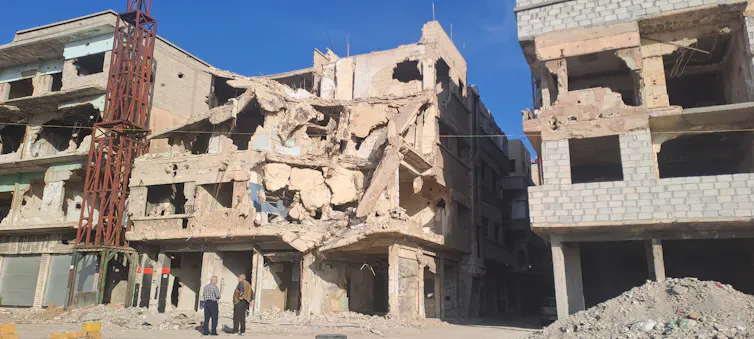
Men talking amid city ruins
Two men talk in a devastated part of Yarmouk.
Osman Bahadir Dincer

Food insecurity affects millions of people, while years of conflict have severely weakened the country’s productive capacity.

These figures help explain the scale of Syria’s crisis, but they reveal little about how it is experienced in everyday life. That became much clearer during our journey: in conversations over tea, on long drives between cities, while walking through damaged neighbourhoods, and in discussions with residents, civil society representatives, local officials and business owners. Across these encounters, one impression emerged again and again.

Many Syrians welcomed the political changes, but few believed that political change alone would improve their lives. Economic concerns dominated almost every conversation.

Advertisement

Basic infrastructure remains under severe strain, with large parts of the country’s electricity, water and sanitation networks still non-functional. More than two million children remain out of school, while a shortage of teachers continues to undermine the education system.

Yet the challenges facing Syria are not distributed evenly.

What struck us most was how fragmented people’s experiences of the war had become. The contrast between affluent neighbourhoods such as Abu Rummaneh and heavily damaged areas like Jobar in Damascus could hardly be greater. The availability of basic services and living standards vary dramatically across regions, cities and even neighbourhoods. In Abu Rummaneh, restaurants are full, cafés are crowded and daily life appears relatively stable. Nevertheless, as one local resident told us:

“We sit on the ashes, and everything remains extremely fragile.”

Elsewhere in Damascus, entire districts still bear the scars of war. We were struck by how many residents had not visited Jobar since the fall of the Assad regime, despite living only a few kilometres away.

Advertisement

For many, the district remained a place known through photographs rather than personal experience. We were equally surprised to find that many humanitarian workers, NGO staff and policy professionals based in Damascus rarely ventured beyond the city’s central neighbourhoods. In many ways, Jobar felt as distant to them as it did to visitors from abroad.

These uneven realities are further complicated by the ongoing return of displaced Syrians. During a brief break between meetings, the Syria country director of one of the largest humanitarian organisations operating across the country welcomed us into her office.

As we cooled down with glasses of water and cups of coffee, after walking through the summer heat of Damascus, our conversation turned to the growing pressures facing Syria’s cities. “Returns to cities lead to rising prices, higher utility costs, more expensive housing and additional pressure on already scarce services”, she explained. For many returnees, settling in the capital is currently more feasible than returning to their original communities.
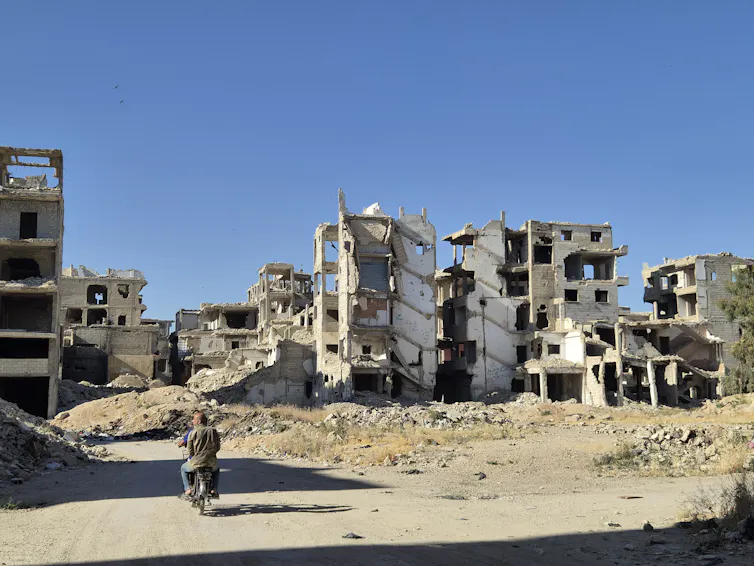
Man on a bike riding through broken city
Travelling through Jobar, Damascus.
Osman Bahadir Dincer

The individual stories reveal what return looks like in practice. For example, Ahmad, our local research assistant, returned from Turkey to Damascus immediately after the fall of the Assad regime, even though his hometown is Raqqa. Unable to find suitable employment there, he now works as a sports trainer at a youth centre in Damascus. Despite earning an income, he cannot afford to rent an apartment and instead lives in a room within the sports complex.

We heard a similar story from a taxi driver in Damascus who had returned from Turkey five years earlier after years of displacement. Originally from Idlib, he picked us up outside our hotel and, as we crawled through Damascus traffic, told us that despite holding a university degree, driving his ageing taxi was the only steady work he had been able to find.

Advertisement

“This taxi is my only reliable source of income,” he said, tapping the dashboard. “It constantly needs repairs, but without it, I wouldn’t be able to support myself.”

By the time he dropped us off in Bab Touma, our short journey had become another reminder that returning home is only the first step toward rebuilding a life.

On the road across Syria

Our journey towards Rural Damascus, Aleppo, Raqqa and Hama began at 7:30 on a warm Damascus morning, when Ahmed – our driver, research assistant and guide for the days ahead – picked us up from our hotel. Although the city was only beginning to wake up, the summer heat was already building. Before continuing towards rural Damascus, we asked Ahmed to take a short detour through Jobar and Yarmouk.

Jobar, once one of the fiercest frontlines between government forces and rebel factions from 2013 to 2018, remains perhaps the most heavily damaged district of the capital. Entire blocks have been reduced to rubble.

Advertisement

As we walked through the shattered streets, Mohammed, a young activist who had recently returned to Syria and now worked in a local government office, reflected on what the neighbourhood had endured.

“Even though Jobar has always been part of Damascus, it was forgotten during the war and remained forgotten afterwards,” he told us. Gesturing towards the collapsed buildings around us, he continued:

“Since the fall of the regime, most of what you see has been done by people who have returned. They are clearing the rubble, repairing what they can and trying to rebuild their lives. But many Damascenes still haven’t set foot here. Jobar cannot truly recover unless the rest of Damascus comes back too – not only to rebuild it, but to see it, remember it and make it part of the city again.”

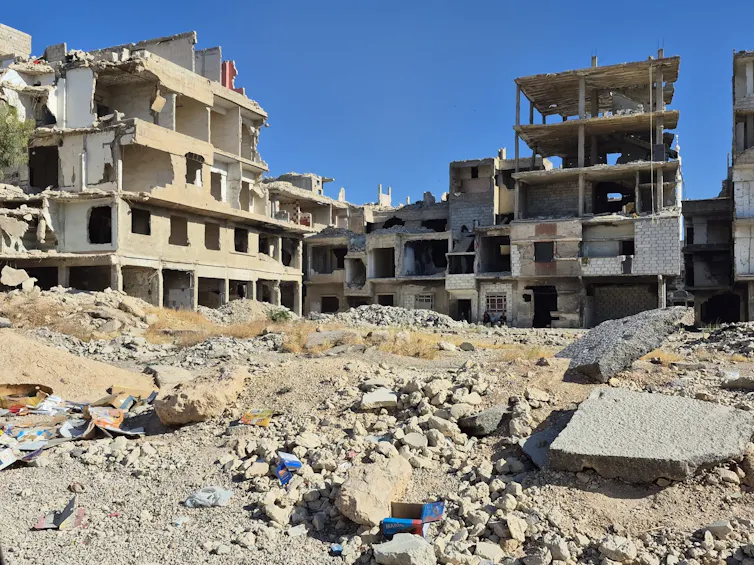
Yarmouk, once the largest Palestinian refugee camp in Syria, presents a similarly sobering picture. While a small number of homes have been partially repaired, much of the neighbourhood remains scarred by destruction.

As we walked through the area, we noticed an elderly couple sitting quietly on plastic chairs outside one of the few inhabited houses, surrounded by rubble and the remnants of damaged buildings. They appeared to be watching the street – or what remained of it.
Advertisement
People living in ruins
Two Yarmouk residents sitting on chairs maid ruins.
Zeynep Sahin-Mencütek

The scene captured the contradictions of post-war Syria: life has returned, but often under conditions that would be difficult to imagine from a distance. For many residents, rebuilding has meant learning to live alongside the ruins rather than beyond them.

Travelling further into Eastern Ghouta and Harasta offers another stark reminder of the scale of destruction that still shapes much of the country.
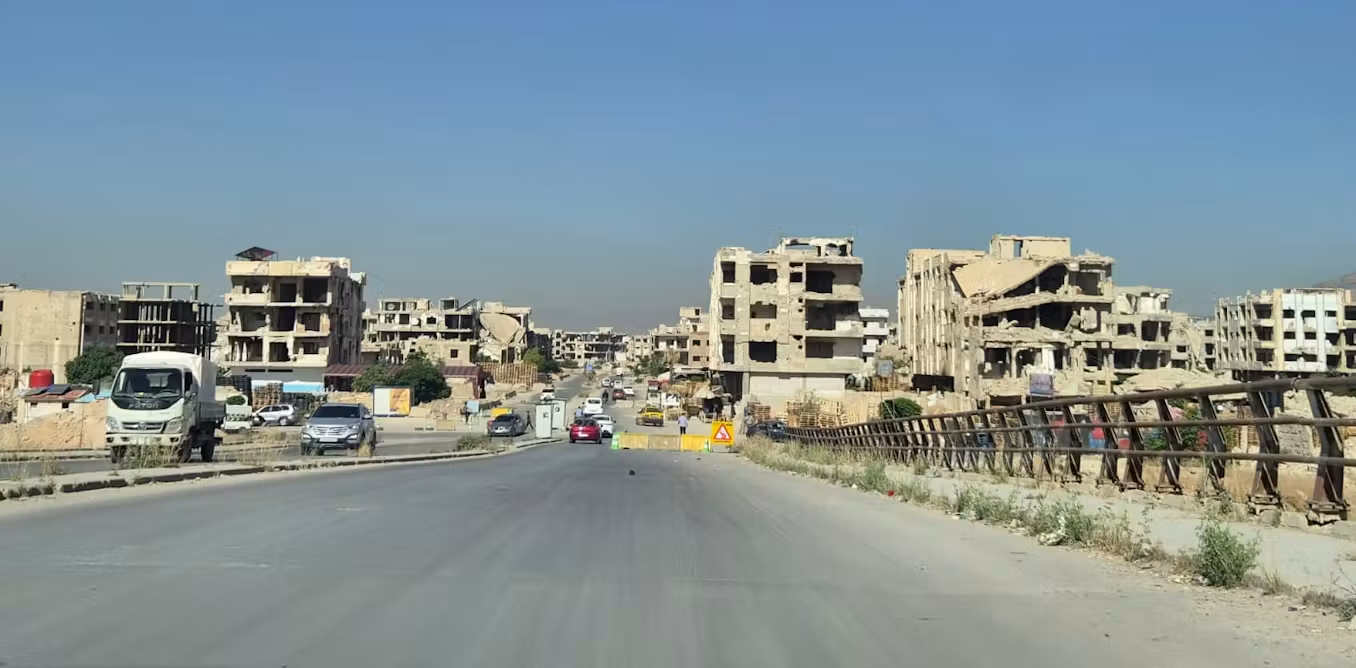
The road into a Syrian city.
Entering Ghouta.
Osman Bahadir Dincer

Yet what is striking is not only the destruction, but the coexistence of destruction and recovery.

Beside a ruined apartment block, a small shop may have reopened to sell bread or construction materials. On streets where fighting once took place, children play or collect scrap to sell, while a father, mother and children ride together on a single motorcycle. Life is returning, often much faster than reconstruction. Small shops and derelict children’s playgrounds can be seen amid the war-damaged buildings.
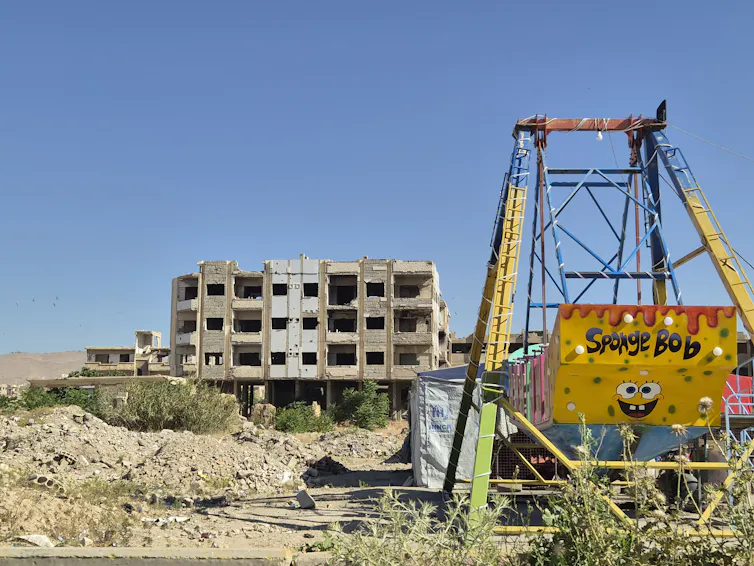
Broken down playground amid city ruins.
A derelict playground.
Osman Bahadir Dincer

After this brief but sobering visit to Rural Damascus, we set off for Aleppo. The journey itself proved almost as revealing as the cities themselves. Along the M5 highway, abandoned buildings, depopulated settlements and damaged industrial facilities stand as reminders of the conflict’s enduring legacy.

Yet signs of recovery appeared just as frequently: roadside fruit vendors selling seasonal produce, families stopping at newly reopened shops and a steady stream of traffic where ageing vehicles now shared the road with new cars. Ahmed smiled as he pointed to several recently imported SUVs passing us. “Before 2025,” he said, “you almost never saw new cars on Syrian roads. They’ve only started appearing recently.”

Near Hama, we stopped at a large roadside supermarket. Workers stocked shelves while families shopped for groceries. Ahmed insisted that we try a local milk-based dessert, a small gesture of hospitality that would be repeated throughout our journey. Such moments served as reminders that alongside destruction and hardship, everyday life and customs continue.

Advertisement

Aleppo: a broken city

The last time we had travelled through Aleppo countryside was in 2013. More than a decade later, we found ourselves approaching the city with a mixture of curiosity, anticipation and unease. We did not know what awaited us.

For years, Aleppo had existed for us through news reports, and the testimonies of those who had fled. The prospect of finally seeing, with our own eyes, a city that had occupied so much of our research and conversations over the years was both exciting and deeply humbling.

The city that greeted us reflected both its long history and the profound transformations brought about by the conflict. After checking into our hotel in the Aziziyeh district, we wasted little time before heading straight to the Old City. For years, we had heard about the devastation that had befallen Aleppo’s historic heart.

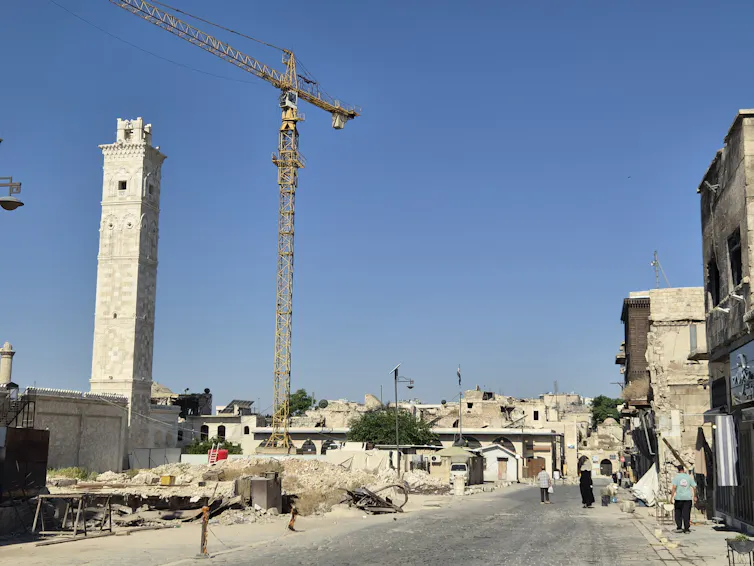
Walking through its narrow streets, it was difficult not to imagine the vibrant markets, workshops and cafés that had once animated these neighbourhoods. Although restoration has brought parts of the old souq and several historic landmarks back to life, large sections of the Old City remain scarred by war, making it impossible to ignore the scale of what Aleppo has lost.
Advertisement
Work in the Old City of Aleppo
A part of the Old City in Aleppo.
Osman Bahadir Dincer

Together with Amr, an Aleppo native who guided us through the city, we spent hours walking through some of the hardest-hit districts, including parts of the Old City, Shaar, Hanano, Karm al-Jabal and Qadi Askar.

The scenes were overwhelming. Destroyed apartment blocks, mountains of rubble and damaged infrastructure remain an integral part of the urban landscape. Walking through the crowded streets with Amr, he pointed to a recently cleared road. “Many of the people returning to Syria are coming back to Aleppo,” he told us. “Many of these streets were blocked by rubble. People cleared them themselves. Otherwise, they couldn’t even get to their homes.”

We also visited Sheikh Maqsoud and Ashrafiyah following the political and military changes that took place earlier this year. Aleppo felt neither fully recovered nor frozen in the past.

As evening fell, the streets filled with families, cafés buzzed with conversation, and restaurants were packed with people enjoying the cooler hours after the summer heat. All this was in stark contrast with the destruction we had witnessed only hours earlier.
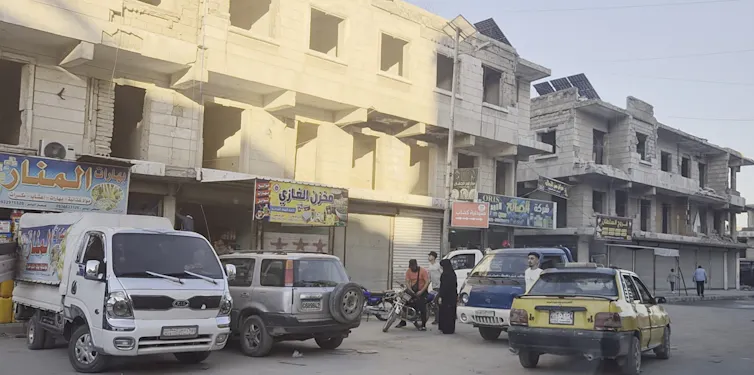
Cars parked in a busier part of Aleppo
The buzz of Eastern Aleppo.
Osman Bahadir Dincer

Raqqa and the weight of multiple conflicts

Early the next morning, after a simple breakfast of falafel and tea, we began the long drive east towards Raqqa with Ahmed.

Now in his late-thirties, Ahmed had grown up in Raqqa as one of 11 siblings before moving to Damascus for university. Like many Syrians of his generation, the war had disrupted much of what might otherwise have been an ordinary life. Years of displacement, uncertainty and constant upheaval had postponed plans that many of his peers elsewhere might have taken for granted – including getting married, something he now hoped to do in the near future.

Advertisement

Ahmed had not travelled this route, from Aleppo to Raqqa, for more than 15 years. Throughout the conflict, the route had been effectively closed to ordinary civilians as frontlines shifted and different armed groups controlled different stretches of the highway. As we drove further east, the journey became as much about his personal memories as about Syria’s recent history.

Every so often, he slowed the car to take a photograph. When we asked what had caught his attention, his answer was rarely political. “It just reminds me of my childhood,” he said with a smile. A weathered wall by the roadside, an abandoned building, or a familiar landmark would suddenly unlock another memory from a life interrupted by war.

As we passed an abandoned cement factory on the outskirts of Aleppo, he eased off the accelerator and looked towards the empty building: “Whenever we saw that factory, we knew we had arrived in Aleppo”, he recalled. After a brief pause, he looked at the complex and quietly added “now it is no longer working.”

A little later, he slowed down again, this time pointing towards an old roadside wall. Smiling, he said: “My brothers and I used to play games here whenever we travelled to Aleppo.” It was a simple memory, yet one that revealed how Syria’s roads hold far more than the traces of war.
Advertisement
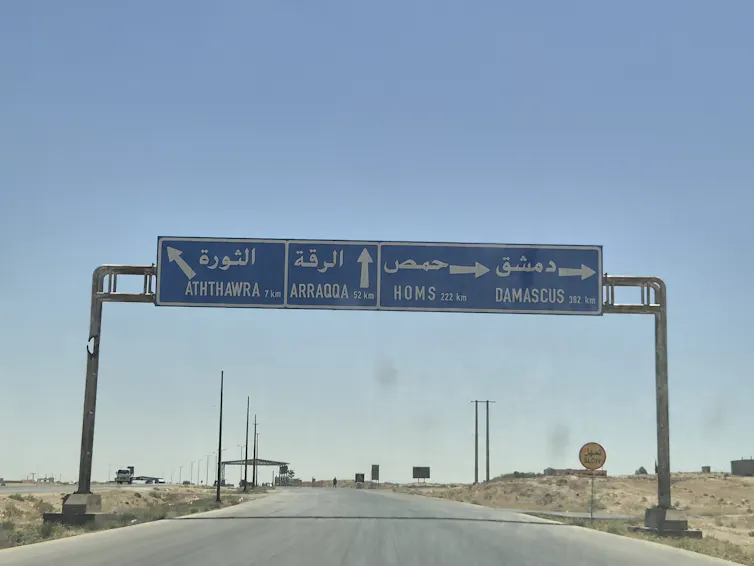
Image of a road and road sign.
The road from Aleppo to Raqqa.
Osman Bahadir Dincer

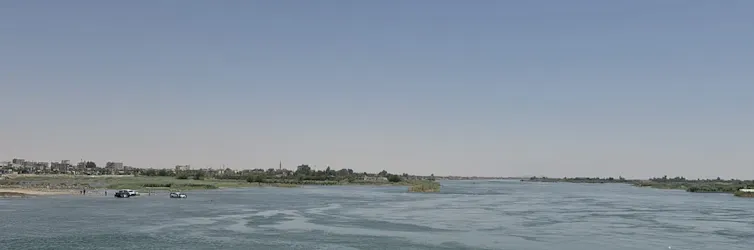
As we approached Raqqa, the scenery began to change. The dry, dusty landscape gave way to greener fields nourished by the waters of the Euphrates. After hours on a highway that alternated between smooth stretches and cratered sections – forcing Ahmed to brake, accelerate and swerve repeatedly to avoid potholes – the sight of the river valley was refreshing.

Crossing the Euphrates over bridges hastily repaired, we entered what Syrians often refer to simply as east of the river – a vast region encompassing Raqqa, Deir al-Zor and Hasaka.

Only a few months earlier, reaching Raqqa had been significantly more complicated. Until recently, the city was controlled by the Syrian Democratic Forces (SDF), a Kurdish-led coalition that governed much of north-eastern Syria separately from the authorities in Damascus. Now, following the SDF’s withdrawal from the city in early January, we were able to enter Raqqa freely.

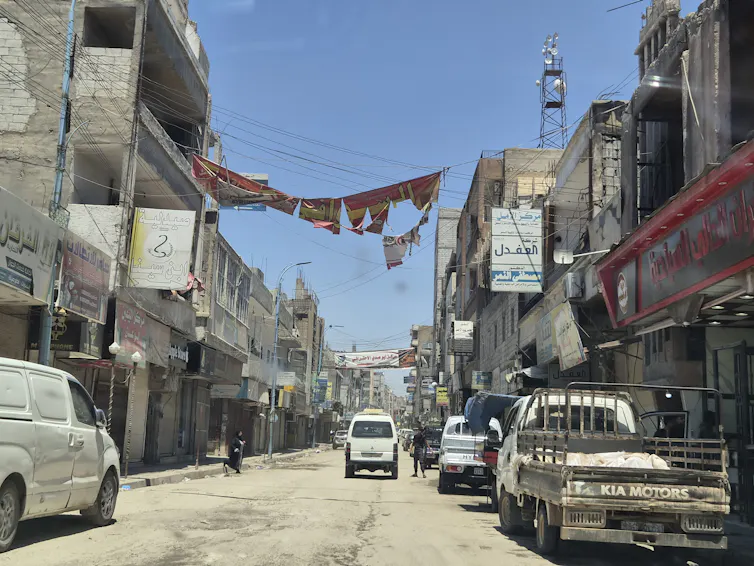
Raqqa feels different from Damascus or Aleppo. It is not necessarily the most physically destroyed city, but it may be one of the most exhausted. Long before the war, Raqqa was among Syria’s least developed and a neglected province. It later became a centre of anti-regime mobilisation, endured years of conflict, served as the de facto capital of Islamic State (IS) and subsequently came under SDF administration.

The cumulative weight of these experiences is visible everywhere. Not only the people seem tired; the roads, buildings and public spaces carry a similar sense of exhaustion. Even the remains of the summer palace associated with Harun al-Rashid, the eighth-century Abbasid caliph, who ruled one of the most powerful empires of the medieval Middle East, appear worn by history.
Advertisement
A city street
Raqqa City.
Osman Bahadir Dincer

Our visit to Raqqa coincided with Friday prayer, so we briefly went our separate ways. Bahadir joined our local host at one of Raqqa’s largest mosques, while Zeynep spent the time with a local family in their home.

The mosque was packed. One detail stood out immediately: the large number of visibly disabled worshippers, a quiet reminder of the human costs of years of war. Yet what left an even stronger impression came at the end of the sermon. The imam announced that donations would be collected after prayers for communities affected by recent flooding in Deir ez-Zor. Similar collections, he explained, were taking place in mosques across the country. The moment may seem unremarkable elsewhere, but in a country fragmented for years by conflict, competing authorities and shifting frontlines, the idea that communities across Syria were contributing to a common cause felt significant.

Meanwhile, Zeynep was sitting in the guest room of a modest apartment on the third floor of a six-story building, listening to the stories of two sisters who had returned to Raqqa.

Among two brothers and eight sisters, almost every major migration trajectory was represented. One sister, a middle-aged schoolteacher, had spent four years in Turkey before returning to reclaim her teaching position in Raqqa. Another had sought refuge in Jordan, she returned only a few months earlier, while her husband and son remained behind, hoping to join her later. Other siblings and relatives were scattered across Turkey, Germany and different parts of Syria. Yet despite the distance separating them, the family remained closely connected, constantly exchanging news, coordinating plans and talking about when they might be together again.

Looking around the room, one of the sisters smiled sadly. “Before the war,” she said, “this room was always full. There was hardly any space because our whole family gathered here. Now it’s just the two of us. The others have scattered like leaves in the wind. But, God willing, our mother will return soon. Then perhaps our brother, and one day our children and grandchildren too.”

Advertisement

For many Syrian families, displacement has become a long-term condition that generates complex patterns of mobility, transnational connection, return, separation, and reunion, continuing to shape everyday life long after the guns have fallen silent.

Once the visit to the mosque was over, we reunited to the sisters’ apartment, where Arabic coffee and homemade cake were waiting for us. After one last conversation and our farewells, we set off for Hama, where we had been invited to a wedding, before continuing to Damascus later that evening.

The road from Raqqa back toward western Syria revealed both change and continuity. Burnt-out military vehicles still lined parts of the route, while former checkpoints stood abandoned, reduced to empty plots of land and crumbling structures. Yet another feature caught our attention: long queues of ageing trucks moving slowly along the highway, a reminder that commerce and mobility are gradually returning.
Old trucks lining the road
Long queues of ageing trucks.
Osman Bahadir Dincer

These signs of renewed movement, however, should not be mistaken for a broader economic recovery. Along much of the route, we saw little evidence that major industrial facilities, food-processing plants, or energy infrastructure were being restored at the scale required to revive local economies. This was particularly striking given the importance of agriculture and energy for Syria’s future recovery.

By midday, the heat had become almost unbearable, and we pulled over at a small roadside shop to buy water. The makeshift building stood alone beside the highway, surrounded by an otherwise empty landscape. Inside, most of the large room was bare. In one corner, a few tables displayed biscuits and wafers, while an old refrigerator held a handful of cold drinks.

Advertisement

A young shopkeeper, probably in his early twenties, came over to greet us. He first asked in Arabic where we were from. When we replied that we lived in Germany but were originally from Turkey, he immediately switched to fluent Turkish. Having recently returned after several years there, he was eager to share how much had changed since coming home. “Five months ago,” he said as he handed us bottles of water, “I would have been stopped at ten checkpoints to get here. Sometimes I would wait for hours. Economically, life may have been easier then. But we had no freedom of movement. Now I can travel without anyone stopping me.”

In fact, despite being foreigners, we experienced something of that change ourselves. Travelling with a Syrian colleague, and perhaps also because one of us was a woman, we passed checkpoint after checkpoint without ever being asked to stop. Each time, Ahmed simply slowed the car, exchanged a brief greeting with the soldiers and continued on our way.

One of the changes people mentioned most often was the simple ability to travel freely. Whether moving between cities or crossing from one neighbourhood to another, no longer being stopped, questioned, or delayed represented a profound shift after years in which movement had been shaped by checkpoints, frontlines and competing authorities. As one Syrian after another told us, “the road has become a road again.”

Freedom amid ruins

Many Syrians describe the post-Assad period as a “liberation”. Across different regions and social backgrounds, people repeatedly spoke about the end of fear, the ability to express opinions more openly and the possibility of imagining a different future. While political views remain diverse and uncertainties abound, there is nevertheless a widespread sense that a new chapter has begun.

Advertisement

What struck us was that people rarely explained this through abstract political language. Instead, they pointed to small changes in everyday life. In Damascus and Aleppo, many drew our attention to functioning traffic lights and police officers managing busy intersections. “Look around you,” they would say. “The traffic lights are working again. The police are back on the streets. These are small things, but they make people feel that life is becoming normal again.”

Around Raqqa, following the withdrawal of the SDF from parts of the region, residents expressed a similar sentiment. “For the first time in years,” one resident told us, “we feel free.” For many, this was not primarily a political statement but a reflection of how they experienced everyday life.

Hope was visible not only in what people told us, but also in what they were doing. In Aleppo, we visited a community centre where we met Esma, Mustafa and several other staff members working to support women, children and returning families through educational and rehabilitation programmes.

The building itself reflected Syria’s changing realities. Once the Baath Party’s youth centre, where generations of young Syrians were exposed to state ideology, it has recently been transformed into a place for learning, vocational training and community support.

Advertisement

Esma, who returned from Turkey despite holding Turkish citizenship, now teaches Turkish/Arabic at the centre. Mustafa, who returned from Germany, serves as its director, coordinating its educational and rehabilitation programmes. As we walked through the building together, moving from one classroom to another, we asked Esma why she had chosen to return despite having opportunities to remain abroad. Her answer came without hesitation: “My country is trying to stand up again. People here need us. If not now, then when we will contribute?” Standing beside her, Mustafa nodded quietly, a smile spreading across his face as she spoke. He did not add anything; he didn’t need to. His expression said he fully agreed.

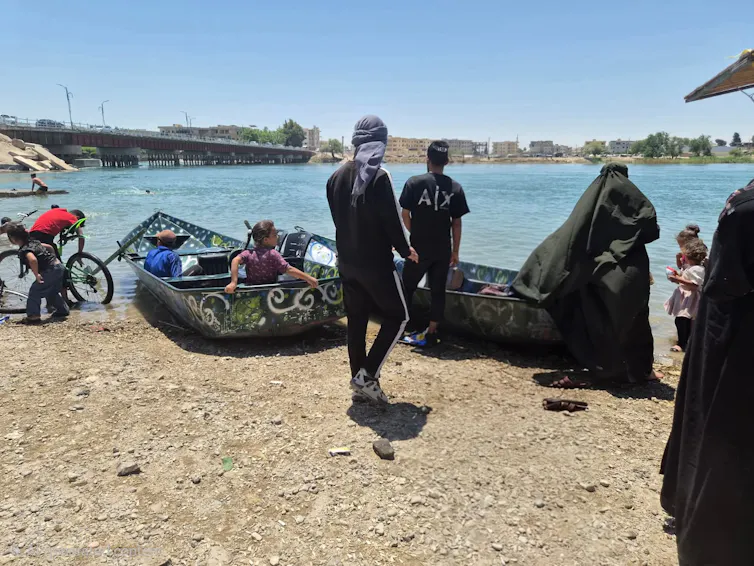
We encountered similar positive scenes in Raqqa. Along the banks of the Euphrates, families gathered for picnics while young boys plunged into the fast-moving current without hesitation. Nearby, young men ferried visitors along the river in small boats fitted with rows of plastic chairs, offering short sightseeing trips. Vendors moved between the groups selling tea and coffee, while others washed their cars along the riverbank. Much of this everyday activity unfolded beneath the partially repaired bridge connecting the eastern and western sides of the city.

At first glance, it looked like an ordinary summer afternoon by the river. Yet there was something profoundly symbolic about people reclaiming a space that had once been synonymous with war.
People and boats by the river
Everyday life along the river.
Osman Bahadir Dincer

Reconstruction projects in Syria often carry a significance that extends far beyond their practical purpose.

Driving back from Hama to Damascus late one evening, we found ourselves unexpectedly caught in a celebration. Earlier that day, President Ahmed al-Sharaa had officially reopened the Rastan Bridge, a strategic crossing that had remained closed for years. Only a few days earlier, we ourselves had been forced to bypass the bridge and drive through Rastan because the crossing was still inaccessible.

Advertisement

Now the atmosphere was entirely different. Families strolled together, young men waved Syrian flags, children ran between the crowds and motorcycles carrying two or three passengers moved slowly back and forth as people stopped to take photographs and celebrate on the bridge.

Yet the optimism we encountered during our travels was almost always accompanied by reminders of the challenges that remain. Across much of the country, the physical, economic and social consequences of war continue to shape everyday life.

Economic difficulties are only one dimension of the challenges Syrians continue to face. Another lies beneath the ground itself. As we were leaving Raqqa, Ahmed pointed towards the open fields stretching alongside the road. They looked calm and ready for cultivation, yet he shook his head. “Hardly a week passes without reports of new casualties,” he said quietly. “People still lose their lives because of mines.”

His remark immediately brought us back to a meeting a few days earlier at the United Nations Development Programme office in Aleppo. Standing in front of a large wall map of the city, one UNDP official traced neighbourhood after neighbourhood with his finger as he explained the scale of destruction and contamination. Large areas of farmland, villages and former frontlines, he told us, remain littered with landmines and unexploded ordnance, preventing people from farming, rebuilding, or even returning safely.

Advertisement

We heard the same concern echoed by government officials. During a meeting in Damascus, one ministry representative described mine clearance as one of the country’s most urgent priorities. “We need to clear the mines,” she told us. “They are everywhere in Syria.”

Returning to Syria is difficult

Our journey across Syria reinforced a finding that has emerged repeatedly from our research on refugee return: crossing the border is only the beginning. Experiences from Bosnia and Herzegovina, Kosovo, Iraq and other post-conflict settings show that return often remains partial, temporary, or circular when employment opportunities, public services, social trust and functioning institutions are absent.

Across these cases, return has proven to be a long-term process of reintegration. As one adviser involved in Syria’s return and recovery policies, told us: “We aim to bring 80 percent of Syrian refugees from Germany, as the German Chancellor requested. However, this requires the creation of 200,000 jobs and housing beforehand. Refugee returns should be conducted in a dignified manner to ensure they go back to safe areas, both psychologically and politically. For example, returning refugees should have access to a roof and non-mined environments.”
The river outside Raqqa
The dry, dusty landscape gave way to Raqqa’s greener fields nourished by the Euphrates.
Osman Bahadir Dincer

The real question is no longer whether Syrians want to return, but whether the conditions exist for them to remain. With widespread housing shortages, limited employment, fragile public services and millions of people still relying on remittances from relatives abroad, many returnees risk exchanging one form of uncertainty for another. Without meaningful reconstruction and economic recovery, return is unlikely to mark the end of displacement – it may simply become another stage of it.

Across Europe, discussions about Syria increasingly focus on whether the conditions for refugee return are finally emerging. Yet our journey across the country suggests that these debates often overlook Syria’s current realities. Even government officials acknowledged that rebuilding homes, restoring infrastructure, reviving the economy and supporting displaced communities are already stretching the country’s limited resources.

Advertisement

Under these circumstances, a rapid increase in refugee returns could place additional pressure on communities that are themselves still struggling to recover. As one resident in Damascus put it “returnees will drown Syria” – not because their return is unwelcome, but because the country’s economy and institutions are simply yet not able to absorb large numbers of people.

Our journey ended shortly after 1am, when Ahmed dropped us off at our hotel in Damascus. In just a few hours, we would be boarding our flight back to Germany. Yet as we said our goodbyes, our thoughts returned once again to the wedding in Hama.

For a few hours, conversations shifted away from war, displacement, politics and economic hardship. Families gathered, children played, music filled the courtyard and guests celebrated the beginning of a new chapter in the lives of the bride and groom. It was not that people had forgotten Syria’s challenges.

Everyone present was fully aware of them. Rather, it was the determination to celebrate despite them.

Advertisement

For you: more from our Insights series:

To hear about new Insights articles, join the hundreds of thousands of people who value The Conversation’s evidence-based news. Subscribe to our newsletter.

Source link

Advertisement
Continue Reading
Click to comment

You must be logged in to post a comment Login

Leave a Reply

NewsBeat

Boy, 2, killed in horror hit-and-run just started pre-school days before he died

Published

on

Belfast Live

Tributes have since poured in for little Peter. One said: “This world can be so cruel at times.”

A two-year-old boy killed in a horror hit-and-run had just started pre-school, it has emerged.

Tragic tot Peter Mulcaire, who is understood to be from Rathkeale in Limerick, was initially rushed to University Hospital Limerick by a family member but was pronounced dead a short time later.

He was struck by a Jeep on Abbey Court in Rathkeale in Limerick, shortly after 3:50 pm.

Advertisement

The Jeep fled the area. Gardai later arrested a man, who is in his 30s, at another location on suspicion of driving under the influence of an intoxicant.

He was taken to a Garda Station in Limerick and provided an evidential sample. He has since been released pending an analysis.

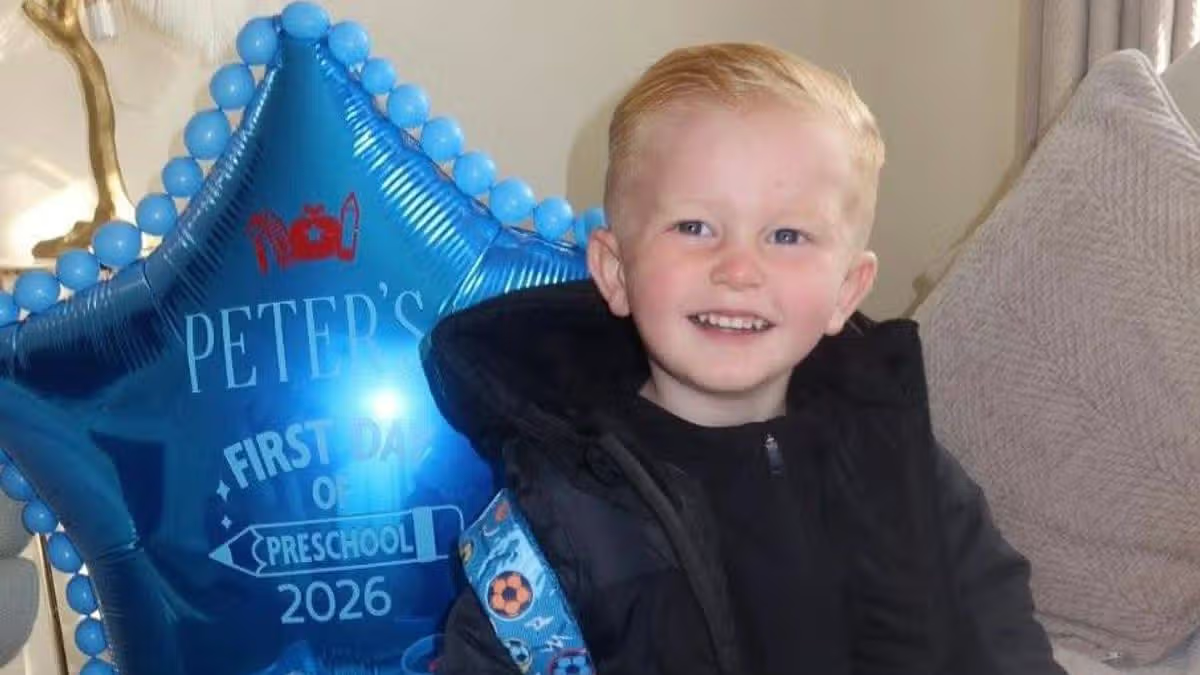
Last week, the tragic tot’s mum, Kerrie, took to social media and shared several snaps of Peter ahead of his first day of pre-school. He is pictured smiling in front of a balloon which says “Peter’s first day of pre-school”.

Tributes have since poured in for little Peter. One said: “This world can be so cruel at times.”

While another said: “Rest in perfect peace to this beautiful boy”.

In a statement, Gardai said: “A Family Liaison Officer (FLO) was been appointed to support the family of the deceased.

“The vehicle involved in the collision did not remain at the scene. A male driver of the vehicle (aged in his 30s) was subsequently arrested at a different location by Gardaí on suspicion of driving under the influence of an intoxicant.

Advertisement

“The male was conveyed to a Garda Station in Co. Limerick for the purposes of providing a blood/urine evidential sample. He has since been released pending analysis of the evidential sample. The investigation is ongoing.

“The road was closed for a technical examination by Garda Forensic Collision Investigators.

“Gardaí are appealing to anyone who may have witnessed this collision to come forward.

“Road users who were travelling in the vicinity of Abbey Court, Rathkeale, Co. Limerick between 3:20pm and 4:00pm on Saturday 5th September 2026 and who may have camera footage (including dash-cam) are asked to make it available to investigating Gardaí.

Advertisement

“Anyone with information is asked to contact Newcastle West Garda Station on (069) 20650, the Garda Confidential Line on 1800 666 111, or any Garda station.”

For all the latest news, visit the Belfast Live homepage here and sign up to our daily newsletter .

Source link

Advertisement
Continue Reading

NewsBeat

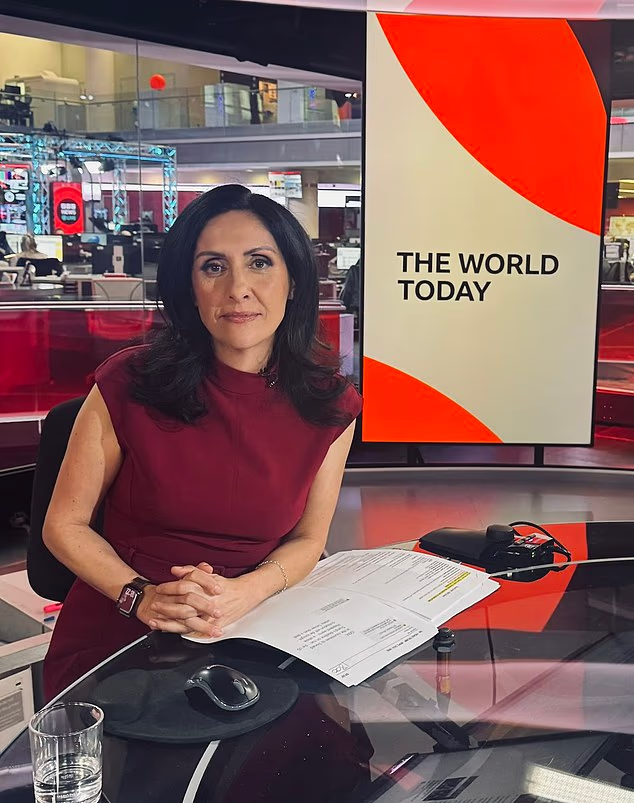
BBC news presenter Maryam Moshiri reveals she has an incurable blood cancer – and has been undergoing brutal treatment while juggling being on air

Published

on

Maryam Moshiri was diagnosed nearly two years ago with with Polycythaemia vera, a rare condition that causes bone marrow to continuously create red blood cells

BBC news presenter Maryam Moshiri has revealed that she has incurable blood cancer.

The 49-year-old was diagnosed nearly two years ago with Polycythaemia vera (PV), a rare condition that causes bone marrow to continuously create red blood cells which makes the blood become thick like honey.

The cancer cannot be cured, and can cause blood clots, heart attacks and strokes if untreated, but is typically managed like a chronic condition.

Ms Moshiri told The Times the gruelling treatment ‘is better than dying, obviously, of a horrible cancer. But it’s something that you have to get your head around,’ adding that it takes its toll after many years.

Advertisement

The presenter, who has become infamous for various on-air antics including accidentally showing the middle finger while broadcasting, initially learned of her condition from a menopause-related blood test.

Following the discovery of the cancer, she would have more than a pint of blood drawn from her body every month to dilute the red blood cell concentration, which left her feeling sick and exhausted.

Not long after, she was flown to Rome to cover the Pope’s death and ensuing conclave.

‘I was working 14-hour days, constantly on air, constantly having to think on my feet, and holding it together, despite the fact that I had this chronic tiredness and fatigue,’ she said.

Advertisement

Maryam Moshiri was diagnosed nearly two years ago with with Polycythaemia vera, a rare condition that causes bone marrow to continuously create red blood cells

Ms Moshiri said the gruelling treatment 'is better than dying, obviously, of a horrible cancer. But it's something that you have to get your head around'

Ms Moshiri said the gruelling treatment ‘is better than dying, obviously, of a horrible cancer. But it’s something that you have to get your head around’

But she clarified she does not want her diagnosis to get in the way of her work, adding that ‘a big part of this disease is having to get on with life’.

Advertisement

On her return, she began an immunotherapy treatment at Guy’s and St Thomas’ NHS trust in London called interferon, which reduced the amount of blood that needed to be drawn.

However, she said she suffered debilitating side effects, like insomnia, headaches and such intense itching she would draw blood from her scratching.

‘During my worst times when I was going through really quite gruelling treatment, I wasn’t there for my kids. I’d be lying on the sofa, and my son would say, “mummy, can you come play football with me in the garden?” And you just can’t. You’re too tired,’ she said.

She added that the first question her children, Iris, 13, Vivienne, 11, and Caspian, 9, that she shares with LatinNews editor-in-chief Jonathan Farmer, asked when she told them of her condition was whether she was going to die. 

Advertisement

Some months later, she switched to a different drug which had more manageable side effects but admitted to having to adjust to a different lifestyle that will be occupied by hospital appointments and medication.

Ms Moshiri is now supporting a new campaign Here for This, by Blood Cancer UK, which highlights the moments sufferers can miss due to the condition.

Helen Rowntree, chief executive of the charity, told The Times: ‘We’re so grateful to Maryam for bravely sharing her story. When public figures speak openly about their diagnosis, it cuts through the silence that so often surrounds blood cancer – the UK’s fifth most common cancer and third biggest cancer killer.

‘We urgently need continued public and government support to fund the next generation of kinder, more effective treatments with fewer side effects so that more people with blood cancer can live well, spend less time dealing with the impact of treatment and be there for the moments that matter.’

Advertisement

Ms Moshiri first caused shock waves in December 2023 when she gestured her middle finger at the camera before reading out the top of the hour headlines.

In an extended video released after the slip up, Ms Moshiri was seen making a series of exaggerated gestures with her hands before reaching ‘one’ and appearing to ‘flip off’ the camera.

The veteran presenter said the gaffe was a ‘private joke’ with crew and issued an apology after the end of the clip was broadcast live.

Since then, she has suffered several other on-air gaffes, like imitating a seagull against her producer’s advice, bending a spoon in relation to a man crushing a frying pan, and jogging on the spot while presenting a segment on daily step-count.

Advertisement

Source link

Continue Reading

NewsBeat

Tyson Fury claims Anthony Joshua fight is OFF and names his next opponent

Published

on

Daily Mirror

Tyson Fury is set to finally settle a career-long grudge with Anthony Joshua in the squared-circle later this year, but the Gypsy King has now claimed that their boxing bout is off

Tyson Fury has claimed that his proposed boxing match with Anthony Joshua is off, as he eyes a THIRD bout with Oleksandr Usyk. AJ and the Gypsy King have been on a collision course for the entirety of their respective careers, with a long-awaited fight between the pair of English heavyweights eyeing a dance under the bright lights for November, according to reports.

However, that clash has now had water poured all over it, with Fury claiming that Joshua has bottled the bout. Taking to social media on Sunday, the 38-year-old said: “So, it looks like AJ has s*** his pants yet again. After 11 years, he’s finally s*** his pants yet again.”

In the very next breath, Fury then called out long-time rival, Usyk – despite going 0-2 against the undefeated Ukrainian in back-to-back fights in 2024. He added: “So this would only lead me to a fight with Oleksandr Usyk.

Advertisement

“Oleksandr, you’re his trainer, and his sensei, and you know he’s a weak-minded piece of s***, and that he’d never fight the Gypsy King – which you’ve had the guts to do twice…twice. And you know how difficult it is in there.

“Listen, you got the decisions last time, fair play to you, good luck to you. But let’s do it again.

“Let’s run it back in November. The ball is now in your court, Oleksandr. Do you want to fight me this year, in 2026? Or are you calling it quits? Let me know, because I’m now looking for a new opponent.”

Joshua is yet to respond to Fury’s claims. It comes as boxing fans may not want to see a trilogy bout between Fury and Usyk, given the dominant fashion in which the Cat defeated Fury just two years ago.

Advertisement

Watch Katie Taylor vs Flora Pili live on DAZN

This article contains affiliate links, we will receive a commission on any sales we generate from it. Learn more
Content Image

from £15.99

DAZN

Get DAZN here

Katie Taylor vs Flora Pili is included with a DAZN subscription from £15.99 monthly or £119.99 annually. This also provides more than 185 fights per year from the world’s biggest promoters, plus MMA, BKFC and Misfits crossover boxing.

JOIN US ON FACEBOOK! All the best sports news and much more on our dedicated Facebook page

Advertisement

There will be more to follow on this breaking news story and Mirror Sport will bring you the very latest updates, pictures and video as soon as possible.

Please check back regularly for updates on this developing story.

Follow us on Google News, Flipboard, Apple News, Twitter, Facebook or visit The Mirror homepage.

Advertisement

Source link

Continue Reading

NewsBeat

Amazon plane skids off runway and crashes through roadway in Miami

Published

on

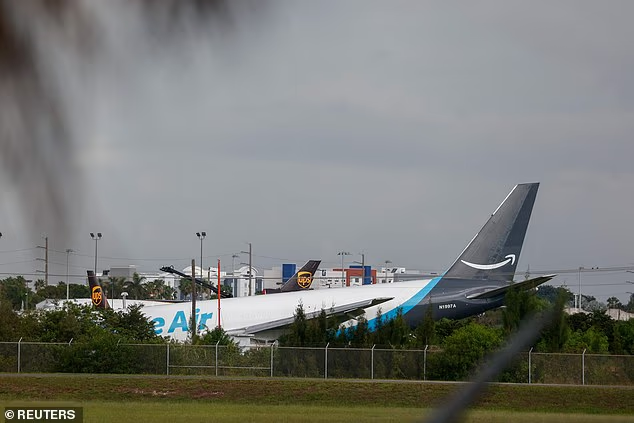
Multiple people are injured after an Amazon cargo plane crashed after overrunning the runway at the Miami International Airport on Sunday

Advertisement

A Boeing plane flying for Amazon crashed in Miami on Sunday after overshooting the the runway and ending up on a busy roadway. 

Images from the scene shared by NBC Miami show the plane, with Amazon branding, precariously close to a building. Smoke can be seen billowing from the aircraft.

The cargo plane was landing at the Miami International Airport when it overran the runway and ‘struck multiple vehicles’ on Northwest 42nd Avenue, Miami-Dade Fire Rescue told the Daily Mail. 

There are ‘multiple patients’ injured, the fire department told the Daily Mail. Their conditions are currently unknown. 

Advertisement

More than 60 firefighters are on the scene. When authorities arrived, the plane was on fire, with heavy flames and smoke, Miami-Dade Fire Rescue told the Daily Mail. The plane caught fire as a result of the crash.

Miami International Airport has reopened one runway, but flights are still being impacted. The plane departed from San Juan, Puerto Rico.

The FAA said Flight 7598 overran the runway after landing around 2pm. The crash is still being investigated. 

Amazon said in a statement that it is still gathering information during this ‘fast-moving situation.’ 

Advertisement

Multiple people are injured after an Amazon cargo plane crashed after overrunning the runway at the Miami International Airport on Sunday 

The plane caught on fire as a result of the crash. It is unclear if there are any fatalities

The plane caught on fire as a result of the crash. It is unclear if there are any fatalities 

‘We’re working closely with local authorities and officials to understand exactly what happened,’ it said. 

Advertisement

‘Right now, our absolute priority is the safety, well-being, and care of everyone involved. We’re doing everything we can to support those affected.’ 

It is unclear how many people were onboard the flight from Puerto Rico.  

A spokesperson for the airport told the Daily Mail that the plane ‘overran Miami International Airport’s diagonal runway and is disabled at the northwest end of the airport.’ 

Mayor Daniella Levine Cava said her office is aware of the crash and are ‘closely monitoring.’ 

Advertisement
An Amazon plane crashed in Miami Sunday

An Amazon plane crashed in Miami Sunday

‘Right now, our focus is on everyone involved and making sure our first responders have what they need,’ she said.  

The Daily Mail has reached out to Amazon and Miami police for comment. 

This is a breaking story, please check back for updates.  

Advertisement

Advertisement

Source link

Continue Reading

NewsBeat

Spectacular walk to remote spot at Riggs Moor in Dales

Published

on

Spectacular walk to remote spot at Riggs Moor in Dales

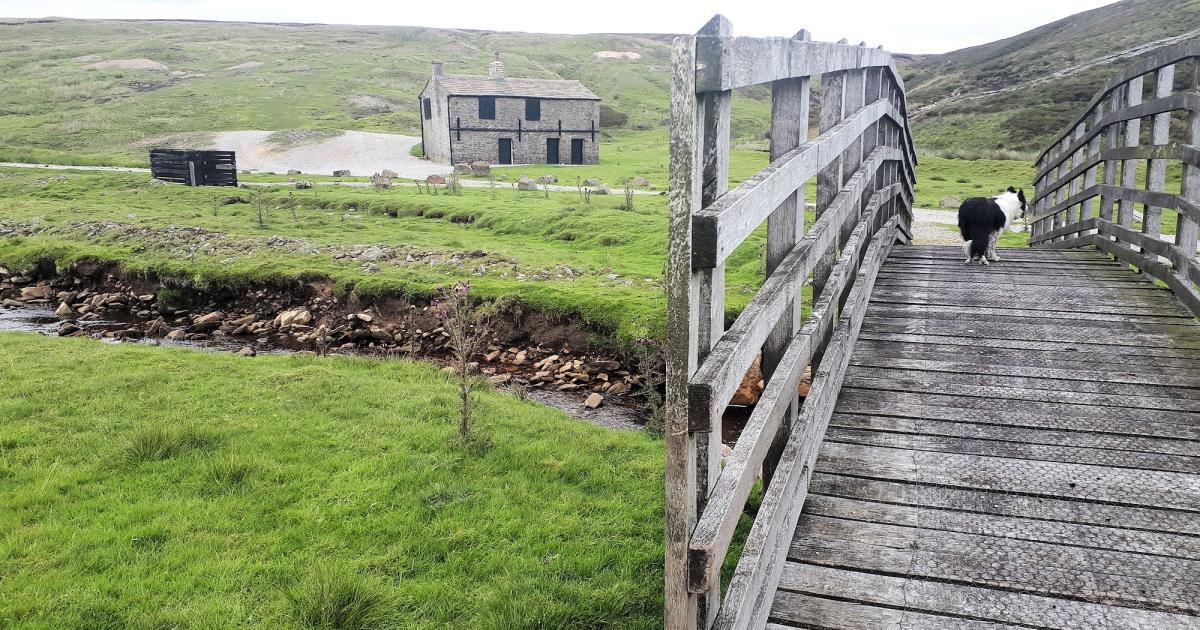
RIGGS Moor on the National Park/Nidderdale border is a remote spot, possibly the most remote in England.

However the tracks in are excellent, full of interest (both historical and geographical) and once there you do feel that you are somewhere special.

I parked next to the bridge over the River Wharfe at Conistone, a lovely hamlet. Start by taking a walk up the Conistone Dib, found by walking through a small, attractive green east of the stables. The dib is a fine example of a dry limestone valley.

Starting off through some awkward rocky steps the dib opens up at Gurling Trough in to easy walking on a grassy path before a steep scramble on an eroded path completes the valley. The dib is an atmospheric place.

Advertisement

On emerging from the dib join the Dalesway, walk for a few metres to your left through two gates to a cross roads of paths. Turn right and head east on a major track. Almost immediately on your left is one of the finest examples of limestone pavements in the Dales. Don’t be distracted for long because this is where the distance walking start. For the next two-and-a-half miles follow ‘Bycliffe Road’ ( a bridlepath) initially uphill and east but then entering the vast wetland basin of Bycliffe. The track heads north east past the caves of Mossdale Scar. Mossdale Caves was the scene of a tragedy in 1967 when six cavers became trapped and died.

The track runs on to the shooting house at Mossdale. It’s a wonderful place for a picnic.

The easy walking so far is now replaced by rougher and largely trackless ground. I varied this part of the walk by heading south east uphill past some shooting butts to a fence on the ridge top, half a mile distant. Due to the existence of the butts there is a rough path leading up which helps!

G Moor Mossdale

Don’t be fooled in to thinking that there is a tarn here (the O/S map shows a large tarn, Priests) but this barely exists even after rain. It can only be a consequence of some of the local land management practices. On meeting the fence turn left and climb for half a mile to a fence junction, turn left again towards the bulk of Great Whernside, and continue a long wild moorland for a further three quarters of a mile along the fence to a boggy area where the direct bridlepath (your return route) meets Sandy Gate (a stile!).

Advertisement

Do not cross the stile (which heads towards Upper Nidderdale) but continue north alongside the fence (on your right), climbing slightly. After 150 m a boundary stone appears on the east (other) side of the fence and another 150 m a small pile of stones appears, set proudly on a peat hag. Surely this is it! Looking at the distance to the nearest point of access it may be a few metres north and east of here but it was good enough for me; the remotest spot in England. It is right on the border of the Yorkshire Dales National Park and Nidderdale.


More walks:


From here return to Sandy Gate and join the bridleway heading back to the shooting house. The path is difficult to follow in places but helped by a few blue painted poles. Losing the path is not a disaster though, just drop down to the river bank and turn left. The return from here is via the same two-and-half mile track before arriving at the Dalesway.

Enjoy the birds on the wetlands including the bark of curlews, very satisfying. Rather than head down the rocky dib to Conistone stick to the main track to the north, it’s easier after such a long walk.

Advertisement

Fact file:

Mossdale map

Distance: Roughly 11.5 miles

Height to Climb: 480m (1,580 feet)

Start: SD 978675. There is parking on the bridge leading to Conistone.

Advertisement

Difficulty: Hard and long. The walk to Mossdale is on a good track but the moorland above is remote and awkward.

Refreshments: Either the Kilnsey Trout Farm café or the Tenants Arms hotel.

Be Prepared: The route description and sketch map only provide a guide to the walk. You must take out and be able to read a map (OL2) and in cloudy/misty conditions a compass. You must also wear the correct clothing and footwear for the outdoors.

Advertisement

Source link

Continue Reading

NewsBeat

Two cyclists are dead after car ploughed into group near Gravesend: Three people arrested

Published

on

Emergency services rushed to Sole Street (pictured) in Cobham, Kent, this morning after three cyclists were hit by a Ford Focus

Advertisement

Two cyclists have died after being hit by a vehicle near Gravesend – with a third in hospital. 

Emergency services rushed to the scene on Sole Street in Cobham, Kent, after a Ford Focus ploughed into the group of bike-riders shortly before 8am on Sunday.

A man in his 60s and a woman in her 50s both died at the scene, Kent Police confirmed this evening.

Another cyclist was taken to a local hospital for treatment on injuries described as minor. 

Advertisement

Two men, one aged 20 and the other 21, have since been arrested on suspicion of causing death by dangerous driving. 

Another suspect – a 19-year-old woman – was arrested on suspicion of assisting an offender. 

The force is appealing for anyone who may have witnessed the incident or seen the car or cyclists this morning to contact them. 

A statement released by Kent Police read: ‘Witnesses are sought following a double fatal collision in Cobham near Gravesend.

Advertisement

Emergency services rushed to Sole Street (pictured) in Cobham, Kent, this morning after three cyclists were hit by a Ford Focus

‘At 7.47am on Sunday 6 September 2026, a white Ford Focus was travelling in a south westerly direction along Sole Street towards Meopham, when it was involved in a collision with three cyclists.

‘Emergency services attended the scene near the junction with Round Street where two of the riders, a man in his 60s and a woman in her 50s, were confirmed to be deceased. Their next of kin have been informed.

Advertisement

‘The third cyclist was taken to a local hospital for treatment to injuries described as minor.

‘Two men aged 20 and 21 were arrested on suspicion of causing death by dangerous driving. A 19-year-old woman was also detained on suspicion of assisting an offender.’

Advertisement

Source link

Advertisement
Continue Reading

NewsBeat

When Celebrity Traitors series 2 is due to start and full UK cast line-up

Published

on

Wales Online

The BBC has confirmed the full line-up for Celebrity Traitors Series 2, with 21 famous faces set to return to the Scottish Highlands castle this autumn

Celebrity Traitors will make its return to the BBC this autumn with a new group of participants. The celebrity version sees 21 well-known personalities compete in the ultimate game of deception, betrayal and lies, filmed in the magnificent surroundings of a Scottish Highland castle.

Performers, comics, artists and broadcasters will compete against one another in pursuit of victory.

The famous contestants hail from various fields and will be designated either a Traitor or a Faithful by presenter Claudia Winkelman. The second series of the programme follows an exceptionally successful debut last year.

Advertisement

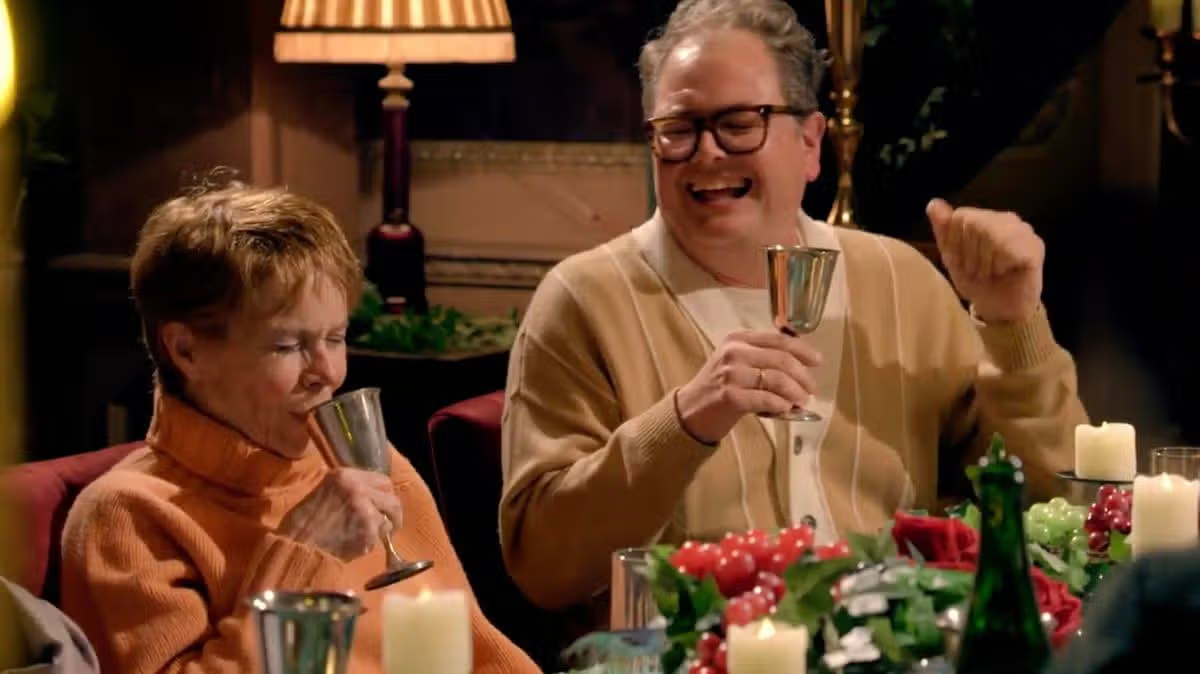
From Celia Imrie discovering an unexpectedly amusing method to relieve tension during one of the show’s supposedly eerie challenges, to the delightful pandemonium created by Alan Carr – an individual entirely unacquainted with the notion of a “poker face” – Celebrity Traitors proved to be amongst last year’s television standouts.

15.4m viewers watched Alan Carr collapse in tears as he emerged victorious against Nick Mohammed and David Olusoga in a nail-biting final episode, reports the Liverpool Echo. For the latest TV and showbiz gossip sign up to our newsletter

This year, 21 famous faces will arrive at the Scottish castle as the series makes its comeback to BBC One and iPlayer this autumn. The victorious celebrity will claim a cash prize of up to £100,000 for a charity of their choosing.

Advertisement

When does Celebrity Traitors 2026 start?

The Celebrity Traitors official premiere date has yet to be confirmed by the BBC but in 2025 series one debuted on Wednesday, October 8.

The new series will comprise ten hour-long episodes. The BBC recently unveiled a teaser trailer, featuring Claudia Winkelman standing inside a church before floral lettering that spelled out “RIP VIP”.

She addressed the fresh roster of contestants: “A moment of silence for the celebrities gathered today. Thoughts and prayers.”

However, TV presenter and podcaster, Richard Osman seemed to confirm it might begin earlier this year. The Guardian reports that during a live edition of The Rest Is Entertainment podcast at London’s Southbank Centre on Saturday, the 55-year-old said the new series of the BBC reality gameshow would begin on September 23.

Advertisement

Osman and co-host, journalist Marina Hyde, were joined by former Celebrity Traitors finalist Joe Marler, who when speaking about the advice he would give new contestants, said: “What is it, September 23, the next series?”

Osman responded: “By the way, to point out, it’s absolutely embargoed that it starts on September 23 … let’s talk about what we call the events of September 23 this year … the cat’s out of the bag isn’t it? Not to repeat it.”

If you’ve listened to the podcast and are familiar with Joe Marler’s impish nature, you could take the conversation as very tongue-in-cheek.

We’ve not got long to find out, though.

Advertisement

Celebrity Traitors series two full line-up

  • Journalist and broadcaster Amol Rajan.
  • Actress Bella Ramsey.
  • Comedian James Acaster.
  • Singer James Blunt.
  • Model and actress Jerry Hall.
  • Comedian Joanne McNally.
  • Comedian Joe Lycett.
  • Actress Julie Hesmondhalgh.
  • Former Little Mix singer Leigh-Anne Pinnock.
  • Love Island presenter Maya Jama.
  • YouTuber King Kenny.
  • Actor Michael Sheen.
  • Comedian Miranda Hart.
  • Actor Myha’la.
  • Mathematician Hannah Fry.
  • Actor Richard E. Grant.
  • Comedian Rob Beckett.
  • Comedian Romesh Ranganathan.
  • Actor Ross Kempt.
  • Actor Sebastian Croft.
  • Actor Sharon Rooney.

Source link

Continue Reading

NewsBeat

Joe Cole slams Chelsea for selling ‘world-class’ player to Arsenal | Football

Published

on

Joe Cole slams Chelsea for selling 'world-class' player to Arsenal | Football
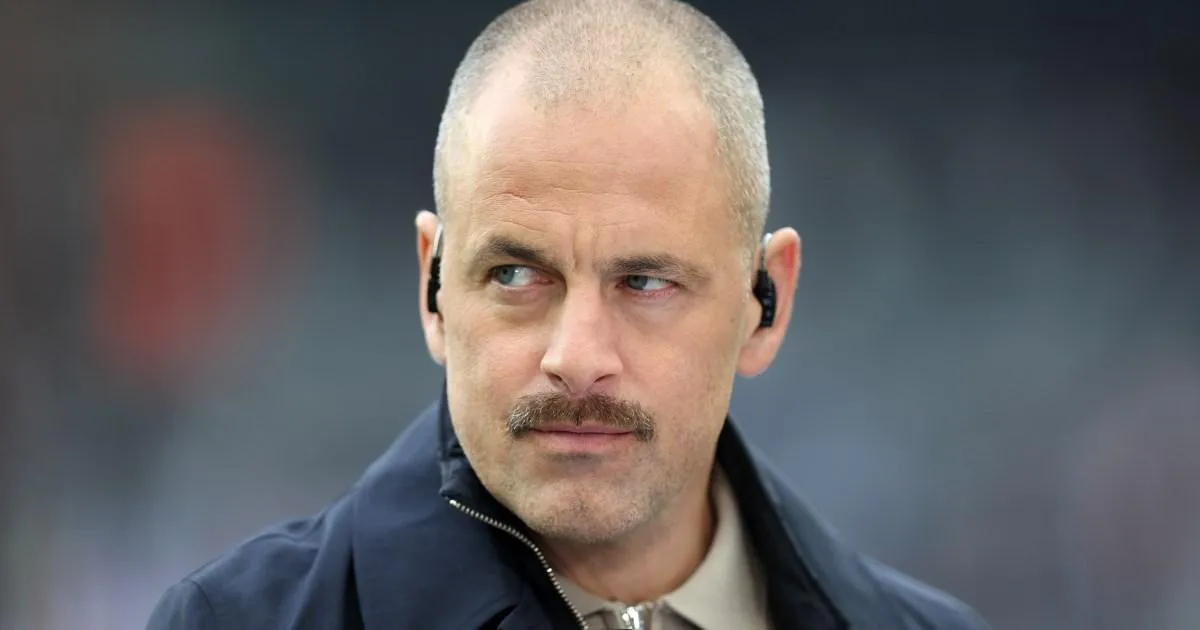
Chelsea hero Joe Cole (Picture: Getty)

Joe Cole slammed Chelsea for selling ‘world-class’ Kai Havertz to Arsenal after Xabi Alonso’s side were beaten by the Premier League champions.

Havertz helped Arsenal maintain their perfect start to the new season by scoring the equaliser in a 2-1 win at the Emirates Stadium.

Chelsea summer signing and ex-Arsenal transfer target Morgan Rogers gave the visitors the lead inside two minutes but Havertz equalised midway through the first half.

In-form Martin Odegaard put Arsenal ahead just after half-time and the captain’s goal proved to be the winner as Chelsea failed to score an equaliser of their own.

Advertisement

Exclusive Premier League previews

Get ahead of the start of the season with our weekly football newsletter. Sign up now for free.

The result means only Arsenal and Manchester City have taken a maximum nine points from their first three games, while Chelsea stay fourth with six.

Advertisement

Arsenal’s £65m move for Havertz in 2023 raised eyebrows given the German’s three mixed seasons at Stamford Bridge.

But Havertz is now Arsenal’s first-choice striker – ahead of £64m signing Viktor Gyokeres – and produced another influential performance in Sunday’s win over Chelsea.

Chelsea sold Kai Havertz to Arsenal in 2023 (Picture: Getty)

‘I think if you’ve got Kai Havertz at your club you’re watching him every day, week in, week out,’ Cole said on Premier League Productions.

‘Coaches and managers come and go, but the Directors of Football? Look at the amount of money on centre-forwards the club has spent since they him go out the door.

Ask Metro


Advertisement

Use AI to go deeper into the stories you care about – powered by Metro and trusted publications.

‘It’s just not good enough; I think it’s got to stop happening. It happened with Kevin De Bruyne [leaving]; it happened with Kai Havertz.

Arsenal beat London rivals Chelsea (Picture: Getty)

‘Those kind of deals never happened at Manchester United with Sir Alex Ferguson, or with Arsene Wenger at Arsenal.

‘When did you hear of them letting go of a player who went on to become world class at one of your rivals?’

Advertisement

Odegaard heaped praise on Havertz, who also played a role in Arsenal’s winner, after the 2-1 win over Chelsea.

‘He’s a really smart player,’ the Arsenal skipper said. ‘He moves so well and takes a lot of attention from the defenders and it was a brilliant goal.’

Gunners boss Mikel Arteta, meanwhile, said of Havertz: ‘He looks happy. He looks settled, happy, and some great things have happened in his personal life as well.

‘He feels fit, he’s training every day and has this routine right now. He’s scoring goals, but not only that – he’s also doing amazing work for the team.’

Advertisement

Arsenal face Napoli on Wednesday night in their first Champions League game of the season while Chelsea take on Leeds United in midweek in the Carabao Cup.

Speaking after Arsenal beat his former club Chelsea, Havertz said: ‘It’s always nice to win at home against a London rival. It was a tough game but over the 90 minutes, we deserved to win that game.

‘They have strong players. They have an amazing squad but so do we. We knew it was going to be tough and it’s going to be a tight game.

‘They scored early, so it’s not easy for us but we believed in ourselves and changed the game around.’

Advertisement

For more stories like this, check our sport page.

Follow Metro Sport for the latest news on
FacebookTwitter and Instagram
.

Advertisement

Source link

Advertisement
Continue Reading

NewsBeat

Luminescence winter light trail returns to Swinton Estate

Published

on

Luminescence winter light trail returns to Swinton Estate

Swinton Park Hotel, near Ripon, will host the Luminescence winter light trail for a second year, transforming its 200-acre grounds into a glowing night-time experience.

The immersive event features illuminated displays, elemental landscapes, and magical realms designed to captivate visitors of all ages.

Felicity Cunliffe-Lister, the co-owner of Swinton Estate and the architect behind the Luminesce Trail, said: “We welcomed over 8000 guests last year during our first season and this year promises even more than before for guests staying on the Estate or visiting for the day. This brings the dark winters evenings to life – we’re really looking forward to it.”

RECOMMENDED READING:

Advertisement

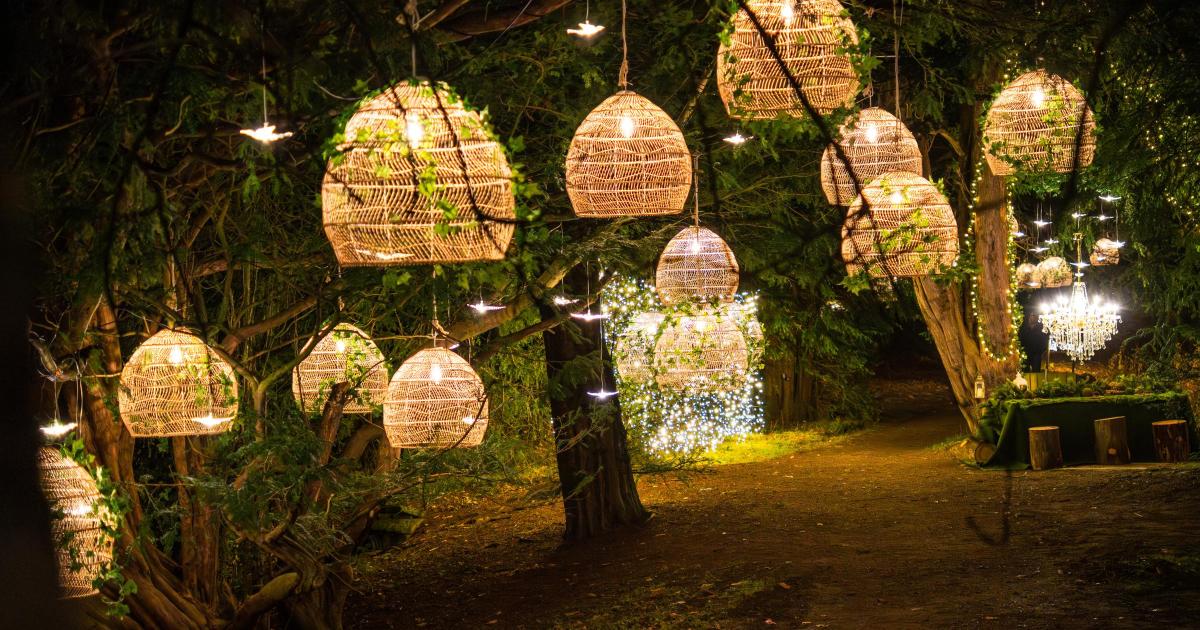
This is the second year for the event. (Image: Pic supplied)

The trail will run from October 31, 2026, to February 21, 2027, and will be open every Saturday and Sunday, as well as daily during the Christmas and February school holidays.

Additional dates in December will also be available to meet demand.

Luminescence has expanded this year to include 11 new attractions, and the lakeside firepit seating area has doubled in size.

The first such event was last year. (Image: Pic supplied)

Visitors can explore scenes such as the Birdcage Walk, featuring 100 illuminated birdcages accompanied by birdsong, and A Night at the Oscars, complete with chandeliers and a touch of Hollywood glamour.

Advertisement

The experience is designed for families and includes playful, interactive elements such as a glowing wishing tree and an installation called the End of the Rainbow.

Guests can toast marshmallows by the fire and enjoy hot chocolate, with mulled wine available for adults.

Swinton Park Hotel is offering extended experiences, including cream tea, lunch, dinner, or drinks either in the castle or at The Terrace in the Swinton Country Club.

There will be a mile long trail of light installations. (Image: Pic supplied)

Tickets are priced at £19 for adults and £11 for children during peak periods, with off-peak tickets costing £17 for adults and £7.50 for children.

Advertisement

Admission is free for children under five.

Dogs are welcome on the trail but must be kept on leads.

Swinton Estate has partnered with Access the Dales to offer two tramper wheelchairs for disabled visitors.

These need to be booked in advance, via their website, to ensure availability alongside an accessible ticket to the trail, and are provided free of charge.

Advertisement

Something to look forward to on the darker nights. (Image: Pic supplied)

Parking is complimentary for all guests.

All tickets must be purchased online at www.swintonestate.com.

Swinton Estate, located in Masham near Ripon, is one of the UK’s largest privately owned estates.

A colourful spectacle is promised at Swinton Estate. (Image: Pic supplied)

It offers a range of accommodations including a hotel, self-catering cottages, and a glamping site.

Advertisement

8,000 guests saw the light show last year (Image: Pic supplied)

The estate features heritage parkland, woodland, lakes, and a resident fallow deer herd.

Outdoor activities available on the estate include wild swimming, clay pigeon shooting, birds of prey experiences, fly-fishing, cycling, and walking.

Have you been to Swinton Estate? What did you think? Did you also see the lights last year? Please share your thoughts in the comments below.

Advertisement

Source link

Continue Reading

NewsBeat

What archaeologists found buried at A1(M) Scotch Corner

Published

on

What archaeologists found buried at A1(M) Scotch Corner

The remarkable discoveries were made during work to upgrade the A1 between Leeming Bar and Barton, which eventually transformed the road into the A1(M).

As construction work progressed, teams of archaeologists were given an opportunity to investigate land surrounding the route between North Yorkshire and County Durham.

What they found at Scotch Corner changed understanding of the Roman occupation of northern England.

Archaeologists discovered the remains of a major settlement which Historic England says pre-dated Roman settlements at York and Carlisle by around ten years.

Advertisement

The settlement was also enormous by the standards of Roman northern England.

It stretched for around 1.4km from north to south – roughly equivalent to placing 13 football pitches end-to-end.

Evidence suggests it was occupied for a relatively short period, perhaps only 20 to 30 years, before activity shifted further south towards Catterick.

NEW TREASURES: A Samian cup and decorated bowl found at the Scotch Corner Roman site during the roadworks. Picture courtesy of Northern Archaeological Associates

But during that time, the people living at Scotch Corner appear to have had access to remarkable wealth and goods arriving from across the Roman world.

Advertisement

Among the most extraordinary finds was a small figure of a toga-clad actor carved from amber.

The object is believed to have been made in Italy during the first century AD and Historic England said nothing like it had previously been found in Britain.

A similar example had been discovered at Pompeii.

Its presence in North Yorkshire suggested the settlement’s inhabitants had connections stretching hundreds of miles across the Roman Empire.

Advertisement

It was far from the only unusual discovery.

Roadworks on the A1(M) at Scotch Corner

Archaeologists also found evidence of workshops where gold, silver and copper coins were being produced.

Historic England described the workshops as the most northerly example of coin production then known anywhere in Europe.

Brooches, gaming counters and other high-status objects were among the thousands of finds recovered during archaeological work associated with the road scheme.

Advertisement

The discoveries indicated Scotch Corner was not simply a collection of homes beside an ancient road.

Instead, it appears to have been an important industrial and trading settlement sitting at a strategically significant junction.

An old road sign for Scotch Corner

That should perhaps sound familiar to modern motorists.

Scotch Corner remains one of the North’s most important crossroads today.

Advertisement

The A1(M) carries drivers north towards County Durham, Newcastle and Scotland or south towards Yorkshire, while the A66 heads west across the Pennines towards Cumbria and the M6.

Nearly 2,000 years ago, major routes were already converging in the same area.

Dere Street, one of the principal Roman roads running north through Britain, passed nearby, while another route headed west towards Bowes, Brough and eventually Carlisle.

The modern road scheme which uncovered the remains was the £380m upgrade of the A1 between Leeming and Barton.

Advertisement

Excavations began in 2014, with around 60 archaeologists involved in investigating sites along the route.

FIRST PUB: The Three Tuns at Scotch Corner, complete with stone mounting steps, which was demolished in 1939 so that the Roman road could be widened

The wider project uncovered thousands of objects from several periods of history, including well-preserved Roman shoes and keys around Catterick.

Archaeological evidence around Catterick has long shown it developed into an important Roman centre known as Cataractonium, with a fort guarding the River Swale crossing and a substantial civilian settlement alongside Dere Street.

But the discoveries at Scotch Corner suggested an important centre had existed further north even earlier.

Advertisement

Historic England said its existence meant Roman expansion into northern England may have happened around a decade earlier than previously believed.

The settlement appears eventually to have declined as Roman activity moved northwards and Catterick grew into a major administrative and economic centre.

Dr Jonathan Shipley, who worked on the archaeological programme, later said the discoveries showed that Scotch Corner had been the site of a much older junction long before the modern road network appeared.

Evidence from the area also included activity dating to the Iron Age and indications of interaction between local communities and the arriving Roman world.

Advertisement

Today there is little from the motorway itself to suggest just how much history was discovered beneath and alongside it.

Drivers still approach Scotch Corner to decide whether to continue north or turn west.

But archaeological work has shown people were travelling, trading and meeting at almost the same strategic location around two millennia before the A1(M) existed.

Advertisement

Source link

Continue Reading

Trending

Copyright © 2025