OLED has already conquered the premium gaming-monitor market. Now Alienware wants to take it somewhere it has historically struggled to crack: competitive esports. I got hands-on with the new Alienware AW2527HX at IFA 2026, and with a 560Hz fifth-generation Penta Tandem QD-OLED panel, a design shaped around professional players, and some wonderfully obsessive esports-focused features, Dell is making a pretty convincing case that OLED’s next battlefield is competitive gaming.
This is an esports monitor first, OLED monitor second
The timing couldn’t be more interesting. ASUS has just made its ROG Swift OLED PG259QWS Ace the official monitor for the upcoming PGL CS2 Major Singapore 2026. That monitor pushes 1080p OLED all the way to 720Hz on a glossy Tandem WOLED panel. Alienware, meanwhile, is taking a slightly different route with 560Hz QD-OLED. Either way, the message is pretty clear: OLED is starting to knock on the door of professional esports.
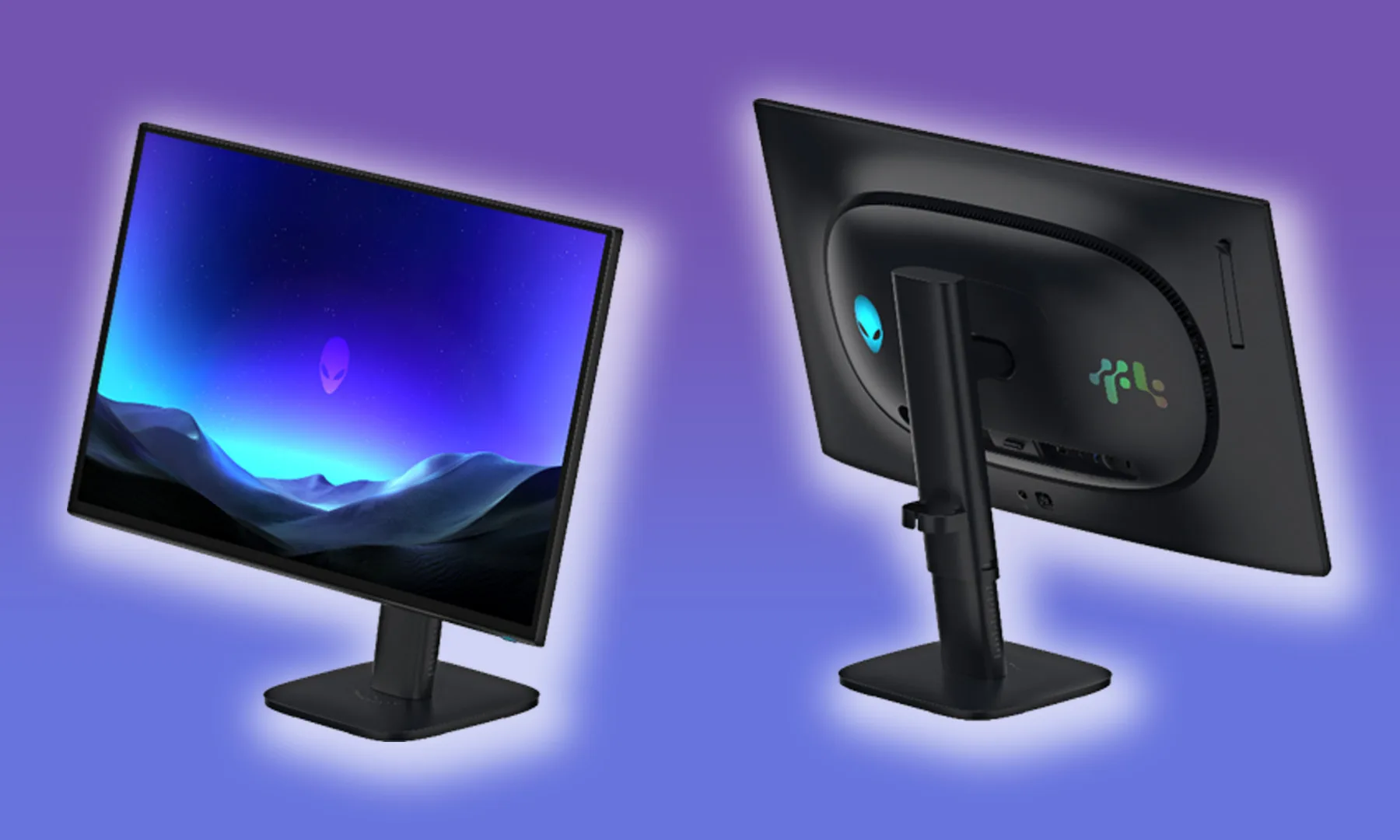
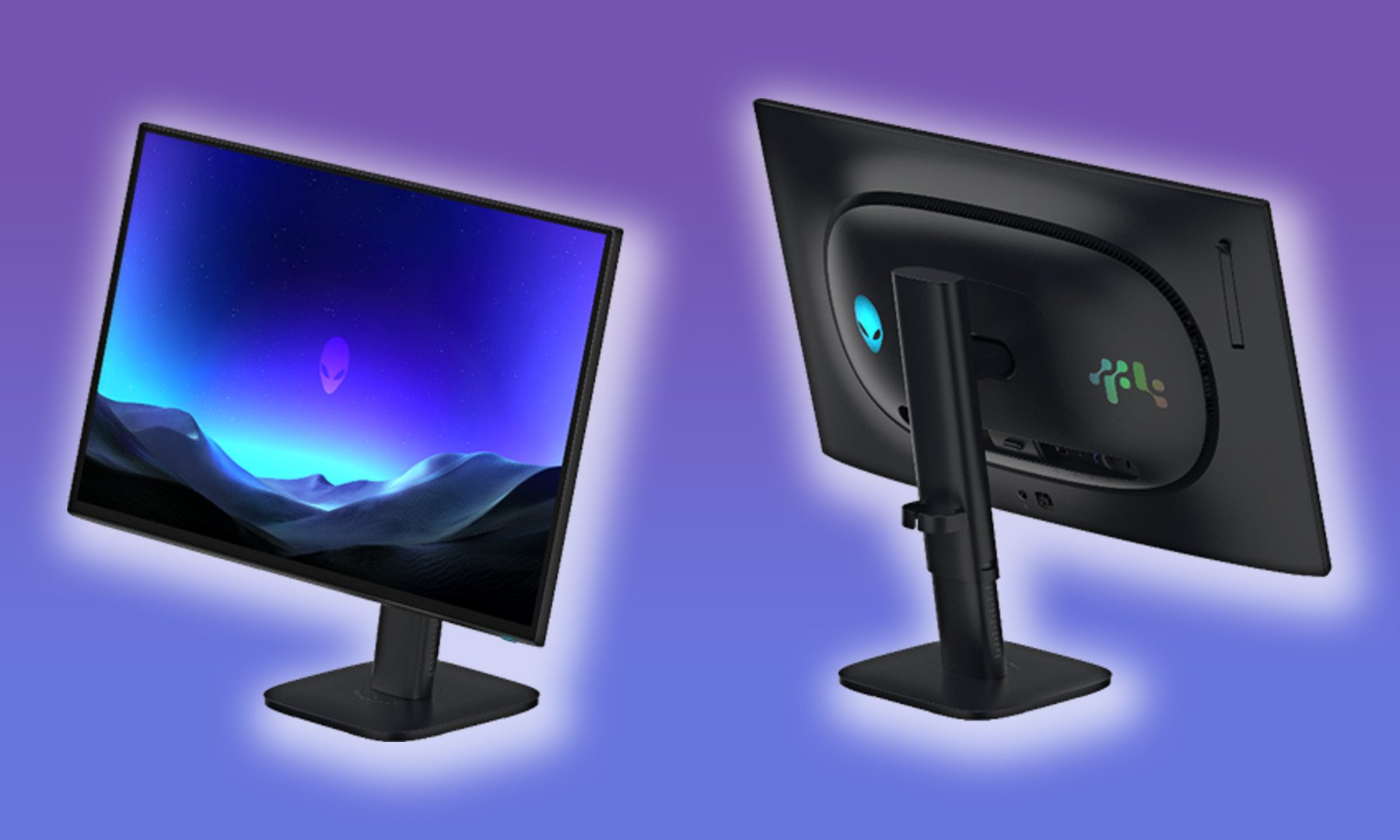
Dell / Alienware
And this isn’t some budget 1080p monitor that happens to have OLED slapped onto it. Alienware is targeting serious competitive gamers, whether they’re already professionals or aspiring to become them. The AW2527HX is a 24.5-inch Full HD panel running at 560Hz, with a claimed 0.03ms gray-to-gray response time. Underneath that is a Penta Tandem QD-OLED panel with an RGB-stripe layout, bringing OLED’s infinite contrast and true blacks to a category that has traditionally been dominated by TN displays. Alienware also claims up to 1,500 nits of peak brightness, while the matte anti-glare low-reflectance (AGLR) coating is designed to keep the image clear even under bright tournament lighting.
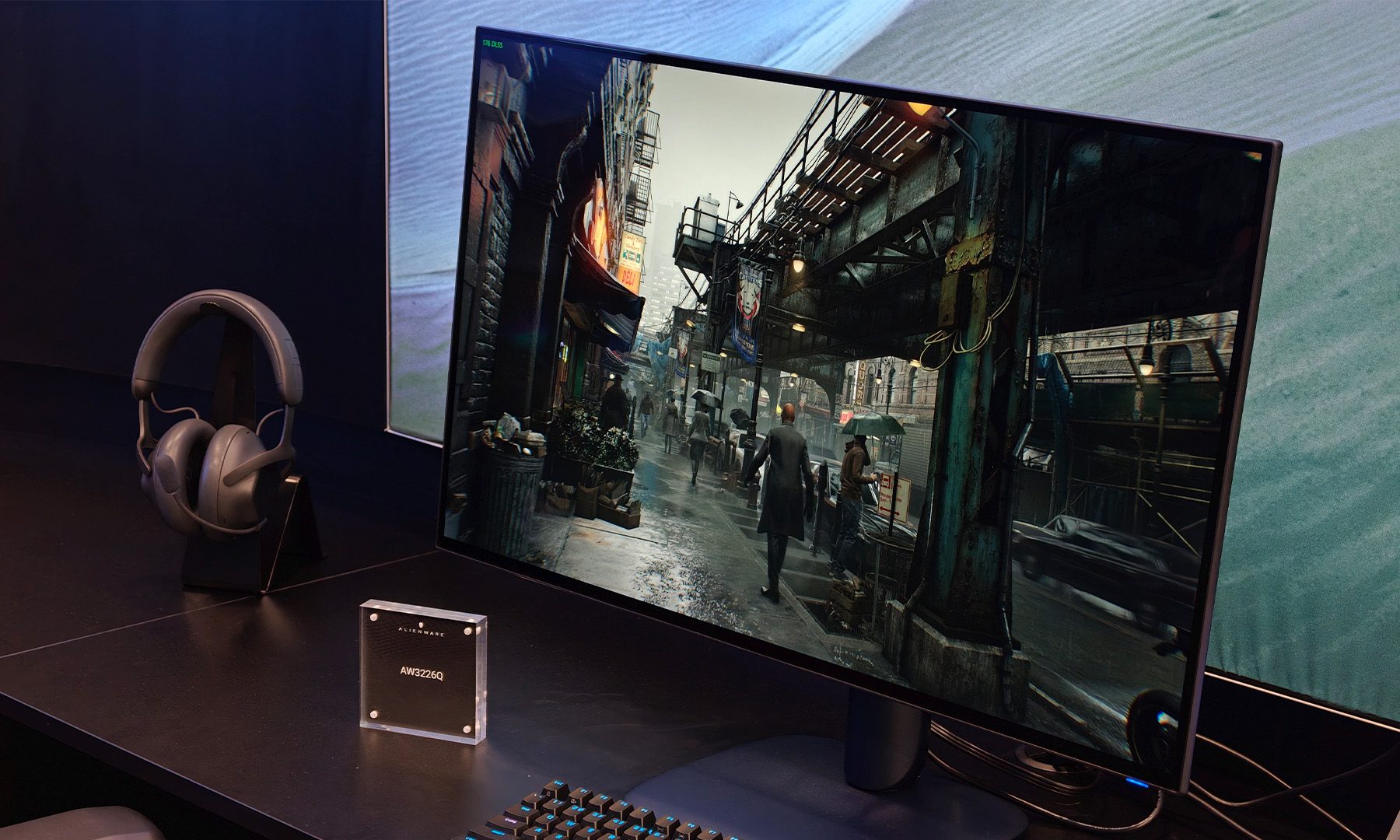
At 25 inches, Full HD is still surprisingly crisp, too. And once you actually start playing, that 560Hz refresh rate makes everything feel ridiculously smooth. I tested PUBG: Battlegrounds during my demo and, despite being more of a Valorant player myself, I came away pretty impressed. OLED has long deserved a place in competitive gaming, and this monitor is one of the better arguments I’ve seen for it.
Dell Alienware AW3226Q, also launched at IFA 2026, is priced at $699.Varun Mirchandani / Digital Trends
The only catch? Don’t expect it to be cheap just because it says 1080p on the box. I was told to expect pricing similar to its 32-inch OLED monitors, which puts it firmly into premium-monitor territory. Dell hasn’t officially announced the final MSRP yet, but that price alone tells you who this monitor is really for.
The stand gets weirdly serious
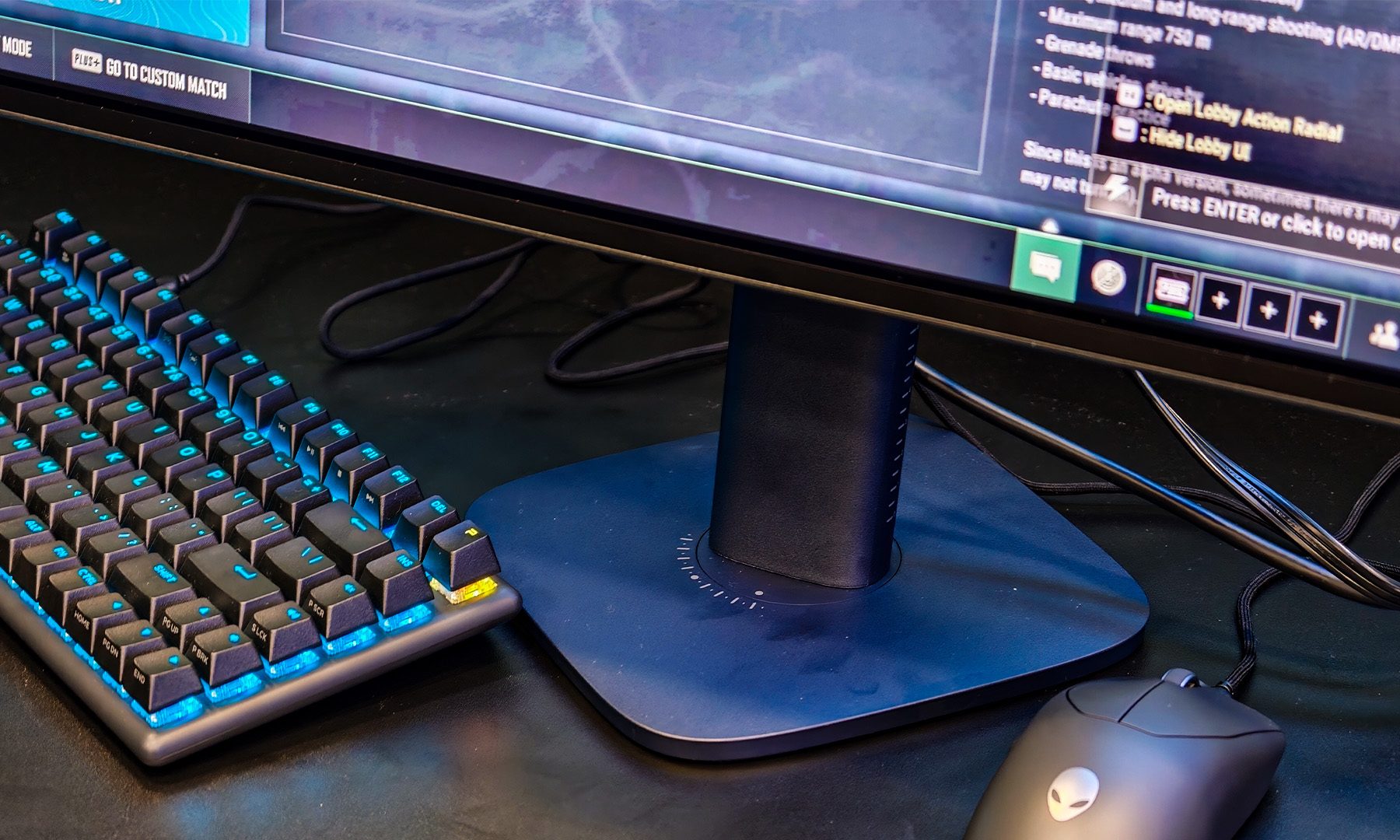
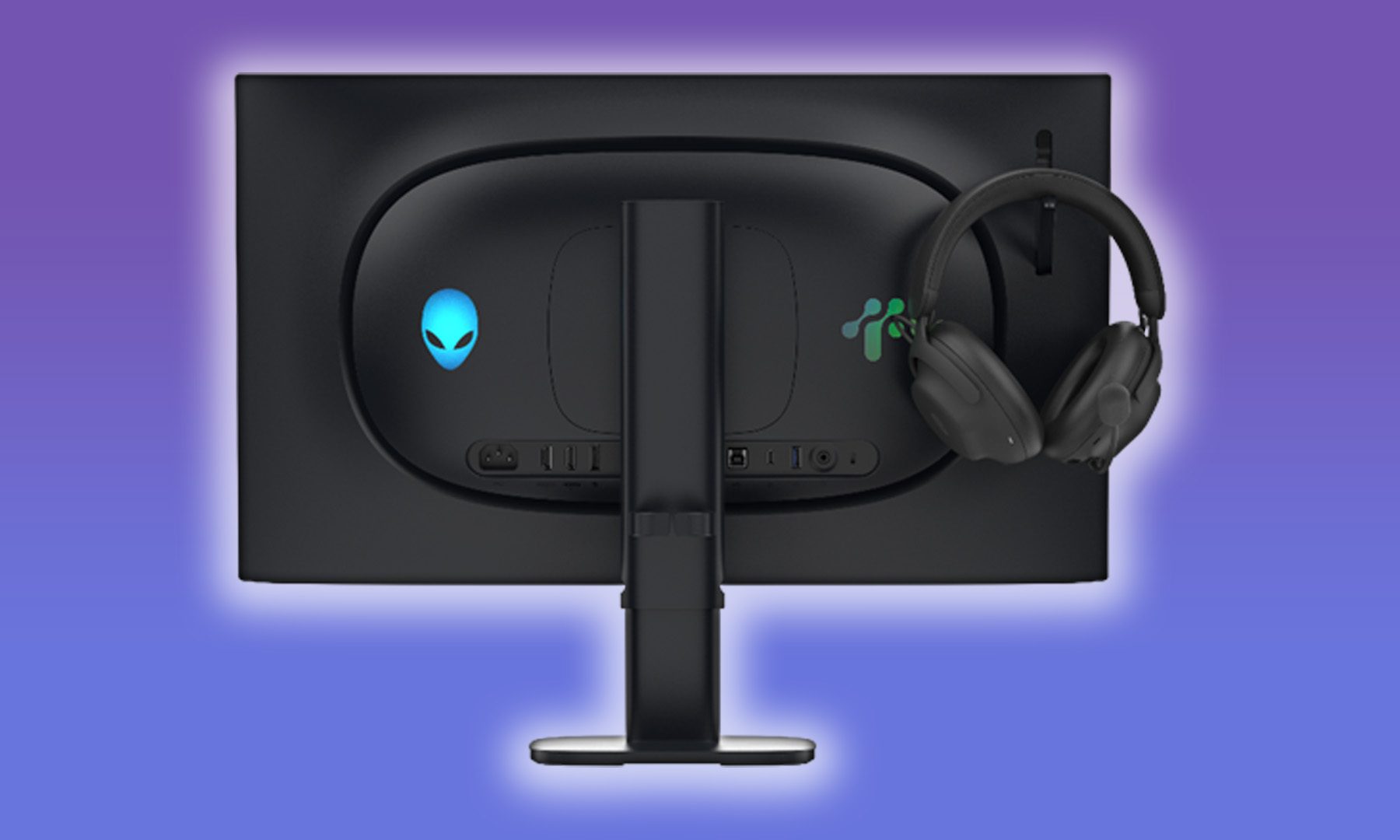
Alienware has made some very thoughtful decisions around the physical design, too. The base rotates smoothly and includes markings showing exactly what angle you’re using. That’s a tiny detail, but when your entire gaming setup is built around replicating a very specific competitive posture, tiny details suddenly matter a lot.
Advertisement
The arm itself is even more interesting. It’s essentially an inclined telescopic stand, allowing you to push the monitor all the way down and then tilt it backwards into that aggressively angled position many esports players prefer. Think of it like a tablet lying almost flat on your desk, except tilted upwards towards your face. That leaves plenty of space underneath for your keyboard and mouse.
Varun Mirchandani / Digital Trends
You can obviously achieve something similar with other monitors, but usually that means buying a separate monitor arm and fiddling around with your setup. Alienware has simply built the functionality into the bundled stand. The monitor also gets a 155mm height adjustment range and up to 45 degrees of backward tilt.
And then there’s the front. Or rather, the complete lack of anything on it. There’s no giant Alienware logo staring back at you, no distracting gamer aesthetic, and no unnecessary visual nonsense. Dell told us that its work with Team Liquid directly influenced this decision: professional players didn’t want branding or anything else distracting them from the game. So all you really see is the screen.
True Stretch feels almost like cheating
My favourite feature, however, might be the one that sounds the least impressive on a spec sheet. There’s a dedicated eSports button on the back that lets you instantly switch to the monitor’s True Stretch resolution. During my demo, that meant jumping straight to 1280 x 960 without having to dive into Windows settings, GPU control panels, or configuration files.
On the Alienware, you just press a button, and you’re there!
If you’re into competitive shooters, you’ll know why that’s useful. Stretched resolution doesn’t actually change hitboxes, but it does make player models, and especially heads, appear wider on screen, which can make targets feel easier to track and hit. That’s a big reason why so many competitive players swear by 4:3 or 3:2 stretched setups. On the Alienware, you just press a button, and you’re there. It almost feels like cheating. And honestly, the fact that the whole thing worked flawlessly during my demo might be my favourite part.
Advertisement
Why does my OLED suddenly look like a TN?
Alienware also throws in dedicated presets for Counter-Strike, Valorant, and Apex Legends, with more customization available through the Alienware Command Center. But then there’s TN Mode, which had me doing a double take. Why on Earth would I buy an OLED monitor and then make it look like a TN panel?
The TN mode looks pretty shitty. But that’s precisely the point!
The answer, surprisingly, makes sense. Turn TN Mode on, and the colours become noticeably duller. You see, competitive players have spent years using TN displays because of their speed, and jumping straight from that familiar, washed-out look to OLED can be a bigger adjustment than you’d expect. TN Mode essentially acts as a bridge. You can get comfortable with the new monitor, keep the visual character you’re used to, and gradually make the leap to proper OLED. It’s a weird feature, but one that shows Alienware has actually thought about the people it’s trying to win over.
Dell / Alienware
There’s also DisplayPort 2.1 UHBR13.5, which provides enough bandwidth to run the AW2527HX at its native 1080p and 560Hz without Display Stream Compression. For most people, that’s just another acronym to scroll past. For the sort of competitive gamer who counts every millisecond and probably has opinions about which direction their Ethernet cable should face, it’s exactly the kind of detail that matters.
OLED has entered the arena
That’s what ultimately impressed me about the AW2527HX. Alienware isn’t just throwing a 560Hz refresh rate at an OLED panel and calling it a day; it’s clearly built around how competitive players actually play, right down to the ridiculous stand and that wonderfully convenient True Stretch button. It’s specific, obsessive, and very much unapologetic about who it’s for.
And after my first hands-on, I’m starting to think Alienware might be onto something. OLED has finally earned a seat at the esports table, and the AW2527HX makes a surprisingly strong case for it. Now I just want to see what happens when I get to really put those 560Hz pixels through their paces.
TiVo is notifying customers about changes to “one of its longest-standing and most popular DVR features,” reports the blog Cord Cutter News:
Starting November 2, 2026, the current version of SkipMode that allows users to jump over commercial breaks with a single button press on the remote will no longer be available. The company is instead preparing to test a new paid add-on called Premium Auto Commercial Skip.
SkipMode has been a core part of the TiVo experience for years. After a supported show finished recording, the service added markers that let viewers leap from the end of one program segment directly to the start of the next, bypassing the ads in between. On newer TiVo Experience 4 devices, users could even set the feature to automatic so commercials were skipped without any remote interaction. The feature was limited to popular prime-time programming on major networks, typically appearing a short time after a show aired.
Under the new plan, that one-button and automatic functionality will disappear from the standard service. Viewers will still be able to skip commercials the traditional way by using the 30-second skip button or the fast-forward control on their remotes. Those manual methods have existed on TiVo boxes for more than two decades and do not rely on the company’s commercial-detection data.
In November, TiVo will offer a 30-day free trial of the new Premium Auto Commercial Skip service. After the trial ends, customers who want to keep the automatic or one-button skip capability will need to add it to their accounts for an extra monthly fee.
Advertisement
The company has not yet published the price.
Thanks to long-time Slashdot reader AmiMoJo for sharing the article.
Disclaimer: Unless otherwise stated, any opinions expressed below belong solely to the author. Data sourced from the Ministry of Manpower.
Singapore’s Ministry of Manpower has just updated its probably most accurate statistical list of salaries in Singapore, which is used to benchmark foreigners applying for local Employment Pass.
These tables are based on salaries drawn by local PMETs, which are used to gauge how many points on the COMPASS scale foreign EP applicants can be granted.
As a result, we are provided with a very detailed breakdown of how much Singaporeans earn by age and industry.
Advertisement
I have extracted the incomes of the Top 10% of workers in each of them, to show you how much you could potentially earn if you’re among the elite in your particular business.
Salaries at the 90th percentile (top 10% of workers) among local PMETs
(Professionals, Managers, Executives, and Technicians)
Industry
25 years
30 years
35 years
40 years
45 years & over
Accommodation
S$6,298
S$7,860
S$9,422
S$10,984
S$12,546
Administrative & Support
S$9,322
S$11,349
S$13,376
S$15,403
S$17,429
Air & Sea Transport
S$10,727
S$13,786
S$16,845
S$19,904
S$22,963
Arts, Entertainment & Recreation
S$7,690
S$9,984
S$12,278
S$14,572
S$16,865
Banking & Other Financial Services
S$12,819
S$17,473
S$22,128
S$26,783
S$31,437
Construction
S$7,386
S$8,724
S$10,061
S$11,399
S$12,736
Education
S$7,582
S$9,382
S$11,181
S$12,981
S$14,780
Food & Beverage Services
S$6,280
S$7,483
S$8,687
S$9,890
S$11,094
Fund Management Activities & Other
S$15,635
S$22,151
S$28,667
S$35,183
S$41,699
Health & Social Services
S$8,480
S$10,620
S$12,761
S$14,901
S$17,041
Info-communication Technology
S$11,178
S$14,204
S$17,231
S$20,257
S$23,283
Insurance, Reinsurance, Provident & Pension
S$10,610
S$14,685
S$18,760
S$22,835
S$26,909
Land Transport & Logistics
S$7,666
S$9,498
S$11,331
S$13,163
S$14,996
Manufacturing
S$8,703
S$10,916
S$13,129
S$15,342
S$17,556
Media
S$8,467
S$11,020
S$13,574
S$16,127
S$18,680
Other Community Social & Personal Services
S$8,020
S$9,771
S$11,522
S$13,273
S$15,024
Professional Services
S$11,014
S$14,316
S$17,618
S$20,920
S$24,223
Public Administration & Defence
S$10,153
S$12,600
S$15,047
S$17,494
S$19,940
Real Estate Services
S$10,899
S$13,010
S$15,120
S$17,230
S$19,341
Retail Trade
S$7,288
S$8,431
S$9,574
S$10,717
S$11,860
Utilities & Other Goods Producing Industries
S$9,947
S$12,194
S$14,440
S$16,687
S$18,933
Wholesale Trade
S$9,686
S$12,575
S$15,465
S$18,354
S$21,244
Source: Singapore Ministry of Manpower
At the bottom end, the best young PMETs in Accommodation can still earn nearly S$6,300 per month, which is above the national median of S$5,775.
The top end is set by 45+ year olds working in specialised Fund Management Services, within the financial sector, where they make over S$500,000 per year.
Advertisement
Interestingly, 1 in 10 of the 25-year-olds in that industry is already paid over S$15,000 per month. That said, Fund Management is a bit of an outlier, so let’s look at other industries.
Six-figure annual incomes are possible everywhere in your mid-30s, within a decade or so after graduation. If you’re really good, your financial situation should be quite comfortable by then.
At 40 years old, every single one of them pays S$10,000 per month or more (Food & Beverage Services come in at S$9,890, close enough to qualify). In Finance, Insurance, IT, Professional Services and Air & Sea Transport, you can aim for S$20,000 and above. In Wholesale Trade, you can get there by age 45.
The most revealing finding here is that there is decent money to be made in every sector of Singapore’s economy. None of them is significantly lagging behind the rest, although, of course, the most money is offered to those working in skyscrapers down in the CBD.
Advertisement
But you don’t have to be a banker to bring home more than S$100,000 each year. There’s potential for that everywhere (as a PMET), and you don’t have to slave away into your 50s to get there.
You just have to be in the Top 10% in your industry.
Read other articles we’ve written on Singaporean businesses here.
No restoration time for platform used by more than 30,000 UK organizations, including NHS trusts and medical practices
UPDATED Docmail, a service used by more than 30,000 UK businesses and public sector organizations, has been offline for several days, prompting concern among users.
Advertisement
Operated by CFH Docmail Ltd, the cloud-based hybrid mail service allows users to send physical letters without running their own print rooms or making trips to the post office. In other words, it handles the printing and postage of business communications.
However, Docmail has been unavailable since the start of business on September 2, according to its status page. It initially warned that the service was “experiencing slower than usual processing times,” before saying soon afterward:
“Docmail is currently unavailable while we carry out essential maintenance. Our technical team is working to complete the maintenance and restore full service as quickly as possible. We apologise for any inconvenience caused and will provide a further update once the system is available again.”
Throughout the rest of the day, techies continued to deploy “required updates,” and the service remained unavailable as work took place to “ensure the service can be brought back online safely and reliably.”
Advertisement
A further update on September 3 said Docmail was still “temporarily unavailable while our teams continue to work to restore the service.” The company thanked customers for their patience and apologized for the “disruption.” At the end of the day, it admitted: “We do not yet have a confirmed restoration time. Work remains ongoing as a priority.”
By Friday – day three of disruption – the service remained unavailable, with techies still toiling to restore it and promising further updates when more information became available.
Our attention was drawn to the Docmail debacle by Reg readers concerned about the length of the outage and the lack of a restoration time.
We contacted CFH Docmail for details of the disruption’s cause and when it expects the service to be restored.
Advertisement
CFH says many of its more than 30,000 business and public sector customers operate in UK healthcare. It claims that more than 75 percent of medical practices use Docmail for bulk mail and individual patient mailings, such as appointment reminders.
Customers also include NHS Trusts such as Croydon Health Services, while dental practices, pharmacies, opticians, and medical research networks also rely on the service, as do some local authorities and businesses.
While the service remains offline, important communications such as health appointment reminders and letters from local councils may go unsent. ®
Updated at 12.59 UTC on September 4, 2026, to add:
Advertisement
Following publication of this article, a spokesperson at CFH Docmail Ltd, told us:
“We have been made aware of an issue impacting an isolated server, used by only one client. Out of an abundance of caution and in line with our security protocols we took the decision to take Docmail offline. This proactive step is why the system has been temporarily unavailable.
“Our internal team has been working closely to investigate what happened and to ensure that when all systems are switched back on, it will be entirely safe to do so.
“This process does take time, and we are acting on the advice of external consultants to ensure we are taking the right precautions. While Docmail is ready to be reinstated, we are waiting completion of the external review before doing so. We apologise for the disruption this has caused to our customers and are working to restore service in the quickest but safest way possible.”
Apple could be preparing changes to the App Store as the company looks for ways to increase revenue and improve margins from its services business, according to Bloomberg’s Mark Gurman via the latest edition of his Power On newsletter. The exact changes remain unclear, but the reported effort is being driven largely by new Apple CEO John Ternus and services chief Eddy Cue.
The report also links the discussions to the recent departure of longtime Apple executive Phil Schiller. After stepping down as Apple’s marketing SVP in 2020, Schiller became an Apple Fellow and took responsibility for running the App Store. According to the report, Schiller was opposed to the proposed direction because he believed such moves could further frustrate developers and governments.
Apple could look at several ways to squeeze more from the App Store
There is currently no clear indication of exactly what Apple intends to change. However, the report outlines several possible approaches that could increase the App Store’s margins or recurring revenue.
One possibility would be changing the way Apple reviews apps. The company could potentially reduce or eliminate parts of its manual review process, which could lower costs. The report notes, however, that further automation could be unpopular with users, particularly if it affects how effectively apps are reviewed.
Advertisement
Unsplash
Another option could involve Apple increasing its developer membership fee, currently listed at $99 per year. The report also suggests Apple could potentially introduce subscription fees for large developers based on traffic, effectively shifting some infrastructure costs to companies operating high-traffic apps.
For developers, those possibilities could have a much bigger impact than they initially appear to. Higher costs or new fees could make running apps on Apple’s platform more expensive, particularly for smaller developers. At the same time, changes to App Store economics could eventually influence how developers price subscriptions or services.
Developers and users will have to wait for Apple’s next move
For Apple, the reported push reflects the enormous financial importance of the App Store and its wider services business. But the company could face a delicate balancing act: increasing revenue without making the platform less attractive to developers or drawing additional scrutiny from regulators.
Unsplash
For now, the plans remain unconfirmed and the report does not provide a specific timeline for any App Store changes. The next step will be watching for concrete details from Apple about whether it intends to alter developer fees, app review or other aspects of the platform.
In other words, there is no App Store price hike or policy change to act on yet. But if Apple does move ahead, developers are likely to feel the effects before ordinary users do.
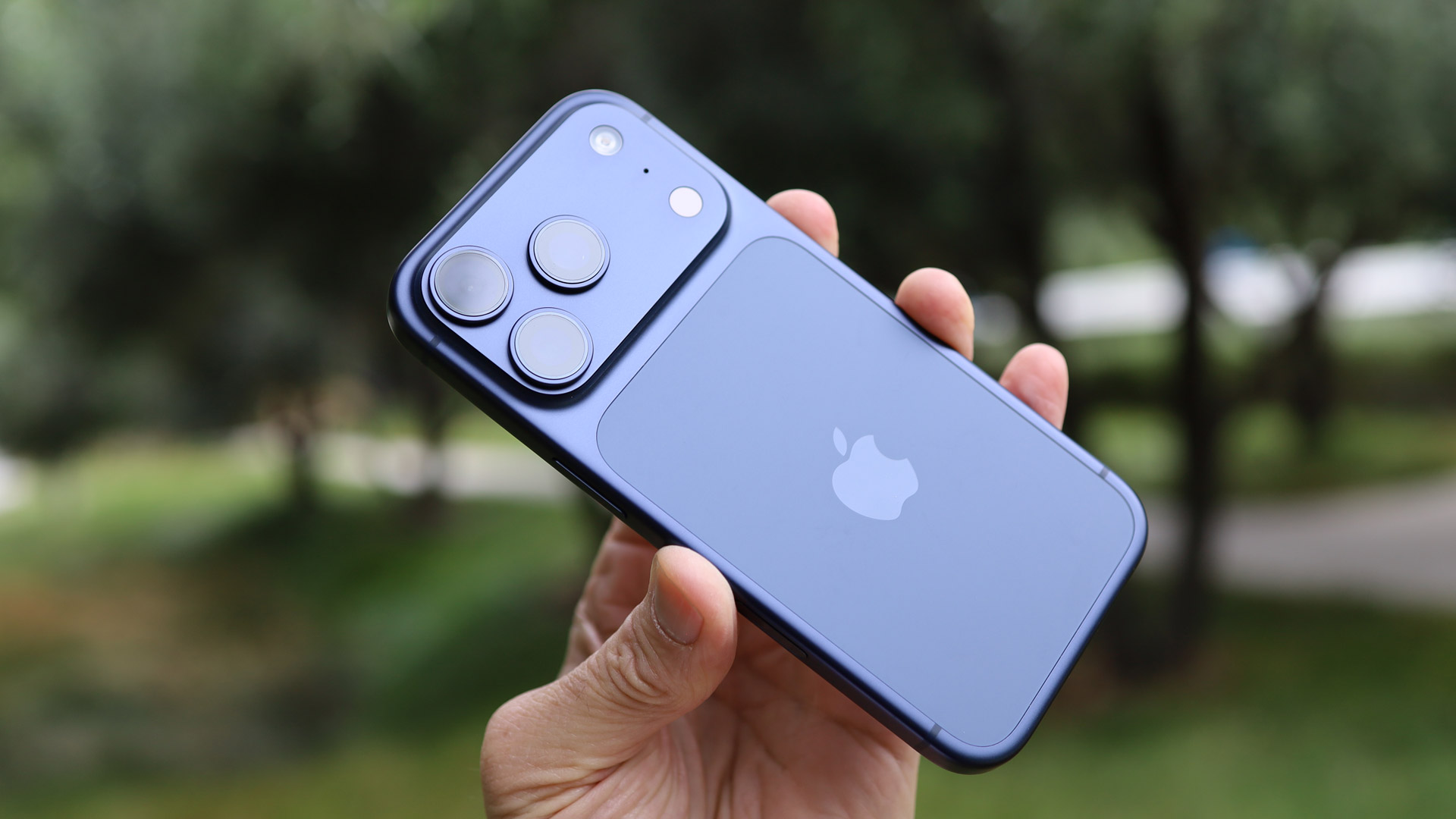
Generally, the launch of a new iPhone means a drop in price for the old one, but this isn’t a typical year for iPhones — not only is Apple expected to finally launch its long-rumored foldable phone, but thanks to out-of-control memory prices, it’s costing more for companies to build handsets.
On top of that, we’re actually not expecting to see a base iPhone 18 model this year, with that device reportedly landing in March or April instead. So at Apple’s September 9 launch you might only be able to choose from an iPhone 18 Pro, iPhone 18 Pro Max, or iPhone 18 Ultra.
Typically, it’s only the standard model that gets a price drop — so when the iPhone 18 finally does launch (likely next year), the iPhone 17 may well drop in price. But I’d guess the launch of the Pro series this month probably won’t trigger a price drop, since the iPhone 17 will probably remain the latest standard model for a while longer.
Advertisement
Latest Videos FromTechRadar
In fact, the rising price of memory could mean Apple won’t drop the price of the iPhone 17 even when the iPhone 18 does finally launch. Instead, it might decide to sell the iPhone 18 at a new, higher price and keep the iPhone 17 at its current one.
But I doubt that. If the iPhone 18 doesn’t land until early 2027, then the iPhone 17 will be well over a year old by that point and definitely due a price drop — though, at that point, Apple might instead choose to discontinue it altogether, especially as the cheaper iPhone 18e might land then too.
Regardless, this could be a rare year where there are no price drops, as my prediction is that, as usual, Apple will discontinue the iPhone 17 Pro and iPhone 17 Pro Max when the iPhone 18 Pro series lands, rather than dropping their prices.
As noted above, the iPhone 17 may get a price reduction when the iPhone 18 lands, but that feels up in the air at the moment, and probably won’t happen this year. If it does happen, Apple typically knocks $100 / £100/ AU$150 off the price, which would take the starting price of the iPhone 17 from $799 / £799 / AU$1,399 to $699 / £699 / AU$1,249. But I’d think you’ll be waiting until next year for that reduction, if it happens at all.
Sign up for breaking news, reviews, opinion, top tech deals, and more.
Advertisement
Limited options
Apple will probably discontinue the iPhone 17 Pro (Image credit: Lance Ulanoff / Future)
So your options after the September 9 launch are likely to be either one of the new models at a (probably) higher price than existing iPhones, or an iPhone 17, iPhone 17e, or iPhone Air at their current prices.
It’s not impossible that Apple will drop some of these prices, or even keep the iPhone 17 Pro series around, but I doubt it.
If you’re desperate for a cheaper phone, though, you might not be totally out of luck, as while I’m not expecting Apple to drop any prices this year, third-party sellers might drop the prices of discontinued models to make way for the new ones.
So in other words, if Apple discontinues the iPhone 17 Pro and iPhone 17 Pro Max — like it usually does when new Pro models land — the likes of Amazon and Best Buy might drop the sticker price on them until they sell out.
As such, if you’re in the market for an iPhone upgrade but don’t want any of the upcoming models, I’d still recommend waiting until they’re announced before buying anything, even though there probably won’t be any official price drops this year. Just don’t wait too long after September 9 to buy, or stores might run out of new units.
The age of sharing grainy, low-res photos is long behind us.
Vadym Plysiuk/Getty Images
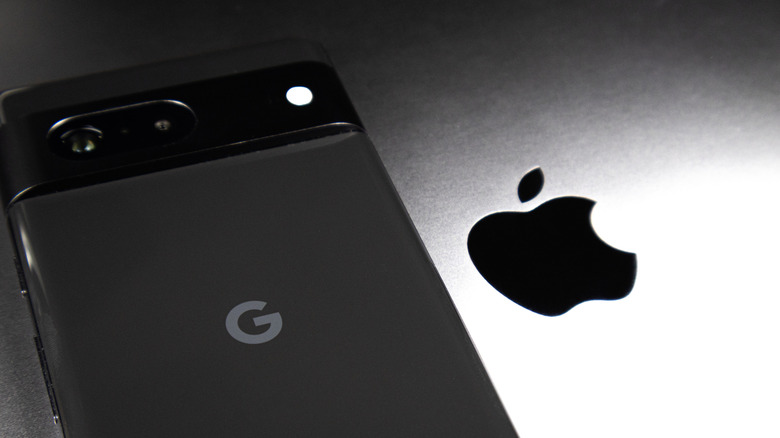
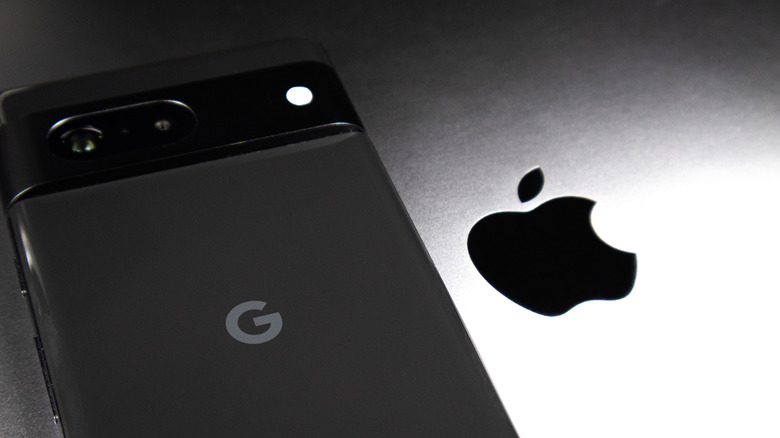
Having friends or family with different phone brands than your own can lead to all manner of everyday nuisances, from attempts to help navigate unfamiliar settings to coming up short when you need a compatible charger. One such problem can arise when sharing photos and videos across these devices, especially between Android and Apple phones. While sharing media across brands has always been relatively intuitive, preserving quality hasn’t always been so clear-cut.
For the longest time, sending a photo from an Android device to an iPhone typically took the quality down a few notches. This came down to the different messaging systems — with Apple using Short Message Service (SMS) texting and Android using Rich Communication Services (RCS). Fortunately, alongside embracing Apple Intelligence and deeper customization, iOS 18 ushered in RCS support on iPhone, which not only solved the discrepancy but also allowed iPhone users to access the higher image quality available via RCS.
Advertisement
How to use RCS to send images from Android to iPhone
Mixetto/Getty Images
Naturally, if you’re an iPhone user and you want to preserve image quality across the board, you’ll want to make sure RCS is enabled. Fortunately, iOS 18 has RCS turned on by default, and you can easily check if it’s enabled if you want to be sure. Simply go to Settings > Apps > Messages on your iPhone, scroll down to RCS Messaging, and check that it’s toggled green.
Of course, there’s more that can be done to guarantee quality. If you’re on the Android side of things, Google Messages will still send photos in a compressed form by default; to maintain quality, you’ll want to press the HD or HD+ button before sending. Here, simply make sure your media is set to “HD+ Original Quality” rather than “HD Optimized for Chat” to avoid compression and maintain the original file’s quality.
Advertisement
Sending videos and larger images between Android and iPhone devices
Aleksey H/Shutterstock
There’s still the question of higher file sizes and videos, both of which can still fall victim to compression, not to mention the RCS attachment size limit of 100MB. There are a couple of options to make use of here, such as email or alternative messaging services, but Google Photos stands out as a simple option if sharing to an iPhone with Google Photos. Users with the Google Photos app, when sharing an image, can select “Send in Google Photos” and share with another user of the app. In that same respect, Google Drive is also a solid option for sharing large files between different brands.
It’s also worth noting that Android Quick Share now supports AirDrop. This feature is available on Pixel phones from 8a and beyond, as well as a number of Samsung phones (including much of the Galaxy S family). If your Android phone isn’t compatible with AirDrop, though, you can instead tap the “Use QR Code” option in Quick Share (accessible through the same “Share” option when you select the content you wish to share) and have an iPhone user scan that code. While this is more range-limited, it does at least serve as a solid last resort.
WTF?! The very long history of Grand Theft Auto has been defined by protagonists who break the law, kill police officers, and act in a generally less-than-moral manner. So, it comes as little surprise to see Miami-Dade’s sheriff slamming plans to turn the city into a real-life version of GTA 6’s Vice City to promote the game.
A public records request last week revealed that Miami-Dade Mayor Daniella Levine Cava put forward the idea of a “GTA VI × MDC” marketing collaboration to Rockstar Games in June.
The plan, which was revealed by The Miamian, included transforming areas of Miami International Airport, PortMiami, Metrorail stations, Tropical Park and other county-owned buildings and public rights-of-ways using approved GTA VI characters or visual references.
Some of the ideas do sound pretty good, like the Vice City Motor Fest event, which would combine classic cars, customized vehicles, lowriders, motorcycles, tropical graphics, and local entertainment within a controlled, family-appropriate setting – so no stealing or blowing up anything.
Advertisement
Elsewhere, the airport’s centerpiece would be a display aircraft wrapped in Vice City logos, alongside a GTA 6-inspired baggage claim, customized baggage carousels or column wraps, themed luggage carts, limited-edition luggage tags, or coordinated airport signage. Arriving passengers would see “Welcome to Vice City” messages when disembarking their planes.
One proposal mentioned a dockyard visual installation, inspired by GTA 6’s Port Gellhorn, that would encompass cargo containers, cranes, and cruise ships.
There’s also “Vice City Radio Lab.” It would offer the community access to recording, editing, and digital media equipment, in a space that supports music production, podcasting, oral histories, neighborhood storytelling, sound engineering, video-game development, and other creative programming, while reflecting the central role that music and radio play in the GTA experience, according to the proposal.
Other ideas for the city included Metromover cars wrapped in Vice City colors and logos, signage at key locations, and custom sewer or stormwater manhole covers.
Advertisement
While the marketing deal has yet to be formally agreed, Miami-Dade Sheriff Rosie Cordero-Stutz has spoken out against the idea.
“Grand Theft Auto is a video game franchise built around criminal activity,” Cordero-Stutz said in a statement (via the Miami Herald). “Its fictional world includes murder, robbery, drug trafficking, carjacking, violence against law enforcement, and other conduct that the men and women of the Miami-Dade Sheriff’s Office work every single day to prevent.”
The publication writes that the comments were part of a news release issued by Miami-Dade Commissioner Juan Carlos Bermudez, a Republican considered a potential candidate to succeed Democrat Cava as mayor in 2028. Cordero-Stutz and Cava are currently “courting votes on the County Commission for competing funding proposals for the Sheriff’s Office in Miami-Dade’s 2027 budget.”
Cava has also been asked by the county’s judicial system to leave the courts out of any GTA 6 promotional crossovers.
Advertisement
“We do not believe our courthouses should be incorporated into a promotional campaign for a video game whose central themes include criminal activity, violence, law enforcement pursuits and other fictionalized depictions of crime,” wrote Chief Judge Ariana Fajardo and Clerk Juan Fernandez-Barquin in a letter to the mayor.
The letter did acknowledge, however, that a deal would offer “significant” economic opportunities that could financially benefit Miami-Dade County.
Thursday 404 Media reported that Flock taught America’s cops “how they could surveil the No Kings protests” against President Trump (as well as “small parades”) in a webinar last year that described “using a mix of Flock’s technology and law enforcement’s own databases.”
In the webinar, Flock’s director of market management Caity Peak explains how real time crime centers — which are police surveillance centers that utilize Flock cameras and other surveillance cameras — can be used for emergency response, but can also be used to surveil “established events” like 4th of July fireworks displays, parades, bike races, Mardi Gras, and protests. The webinar shows just how routine the idea of always-on surveillance has become, and how casually it is used during extremely innocuous events. Peak explains that police can use FlockOS, a software platform that combines Flock’s automatic license plate readers (ALPR), drones, gunshot detectors, 911 data, and other surveillance cameras (including ones Flock does not own) into a “single pane of glass” or single piece of software to look at various types of surveillance in one place during both emergencies and relatively mundane events in a city or town.
“Imagine that you’re an incident commander, and you’re working this No Kings Protest,” Peak explains while a dashboard shows a series of surveillance tools overlaying the city of Denver. “If I’m somebody assigned a traffic post that’s working this No Kings Protest, I really don’t have time to go in […] and look at all these places [for different intelligence]. This is an example of viewing all of that in one place….” The dashboard Peak shows includes traffic information, a “response plan” for the protest, the floor plans of nearby buildings, as well as a series of video feeds of both outdoor-mounted cameras and cameras inside businesses and government buildings.
404 Media and the Electronic Frontier Foundation previously showed that police have specifically used Flock cameras to monitor the No Kings protests and other First Amendment-protected activity… This webinar shows this type of surveillance is not anomalous, and is specifically taught by Flock. The webinar also shows that Flock’s latest public stance — that its ALPR cameras are noninvasive technology, that they take only static images at a single place and time, and that they are primarily used to solve the worst crimes — is wildly misleading. Flock has time and time again pitched itself to police as a sort of operating system to solve crime and do real-time surveillance and predictive policing. ALPRs are just one part of this broader surveillance apparatus that Flock has created, markets to police, and teaches them how to use.
Three hikers were rescued from California’s Mount Shasta this week after using Google’s AI chatbot Gemini to plan their expedition, according to the Chicago Tribune.
A report from the Siskiyou County sheriff’s office said that three young men set off on their hike at 3am and — although hikers are told to turn around if they haven’t reached the summit by noon — they made it to the top at 7pm.
The trio then tried to descend in the dark, called the sheriff’s office to ask for directions, and spent the night in Mud Creek Canyon before being rescued the next morning by Forest Service rangers and volunteers.
While it’s not clear whether Gemini can take all the blame for these bad decisions, the sheriff’s office said the hikers “were advised by Gemini to bring far less food and water than their group required, especially when their planned 8-hour ascent became a multiday ordeal.”
Advertisement
“It is always advisable to call the local USFS Mount Shasta ranger station ahead of your trip to ensure you have the most accurate information, and to never rely solely on AI for your trip planning,” the sheriff’s office said.
Back in March, eCoustics asked whether wired IEMs were having a moment after we counted roughly three dozen IEM brands showing new models at CanJam NYC 2026. CanJam SoCal did nothing to slow that momentum. Wireless earbuds may dominate everyday listening, but the wired side of personal audio keeps getting busier, more technically adventurous, and considerably more expensive at the top end.
We have followed that surge closely, building an extensive IEM archive of reviews, new product coverage, and show reports. The category now stretches from affordable single-driver models to increasingly elaborate combinations of dynamic, balanced-armature, planar, electrostatic, MEMS, and bone-conduction drivers.
For CanJam SoCal 2026, I listened to 35 IEMs across that entire spectrum. Rather than grouping them by booth, we’ve organized this roundup by current U.S. price so readers can more easily compare products occupying similar territory. Prices shown are current U.S. list or retail prices where they could be confirmed; unreleased models and prototypes without verified U.S. pricing are grouped at the end.
Keep in mind that these are initial show impressions, not full reviews, and they may not represent how each product performs in a more controlled environment or after I’ve had enough time to properly experiment with fit and eartips.
Advertisement
The CanJam SoCal venue has awful lighting. I’ve done my best with editing, but these beautiful products deserve proper photos in decent lighting.
IEMs Under $250
I didn’t get a chance to listen to the PRS5, but I did catch a few other models. I listened to the rest of the DUNU lineup in previous years of CanJam SoCal (2025), so you can check out those impressions for more info. For many of those models, I’ve also released full reviews.
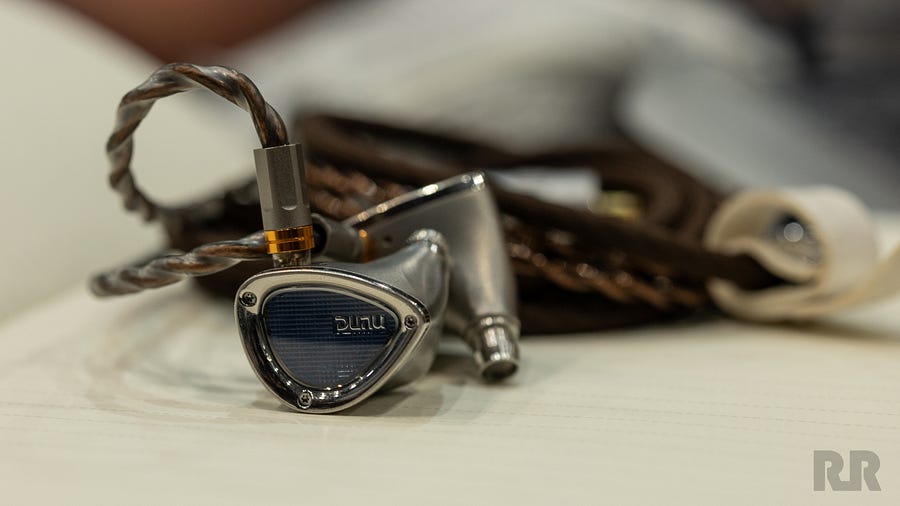
DUNU PRS6 — $249
The PRS6’s mids are the star of the show, and they’re tuned extremely well. The PRS6’s bass is tight and punchy, but doesn’t command too much emphasis. It blends into a nice, warm lower-midrange before picking up steam in the upper-mids, ultimately tapering down into a linear but extended treble. DUNU’s signature energetic upper register is here, but not in as dramatic a fashion as IEMs like the DN142/DN242. In all, a pretty compelling IEM.
This brand kind of came out of nowhere for me. I’m sure I’ve seen “EPZ” in passing before, but I didn’t really have a grasp on what their lineup looked like. I’m glad they came to this year’s CanJam SoCal, as I really enjoyed what I heard.
EPZ P40 — $159
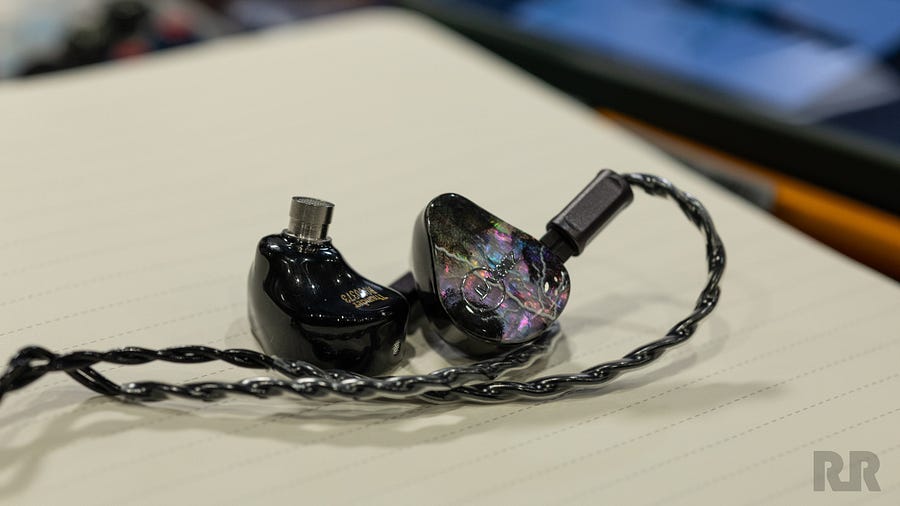
This is a sub-$200 IEM from EPZ featuring 2 dynamic drivers + 1 micro-planar driver + 1 PZT driver per side. It has resin shells and metal nozzles with a pretty decent stock cable. The L-shaped modular termination is something you don’t see every day, though I wish it used a proper locking mechanism rather than relying on friction to keep the parts together. Sound-wise, the P40 is classically V-shaped with a moderate brightness in the upper treble, mild lift in the lower treble, and a smooth, clean midrange. The P40 is slightly tilted towards cool midrange tone, but isn’t lacking in depth thanks to its prominent and well-extended bass. The P40’s bass is dynamic and energetic, rendering mid-bass and sub-bass textures nicely. I found the P40 to be one of the easiest, least-picky listening experiences at the show, which is precisely what I want from a lower-cost IEM. This is another one of the rare few IEMs that fits my wife’s tiny ears, so ergonomics are solid, to say the least.
I’ve written extensively about Linsoul’s IEMs over the years, so if there’s something missing from here, I encourage you to browse through my reviews for more info or to take a read through my CJ SoCal 2024 and CJ SoCal 2025 impressions.
Advertisement
Kiwi Ears Stardust — From $76.99
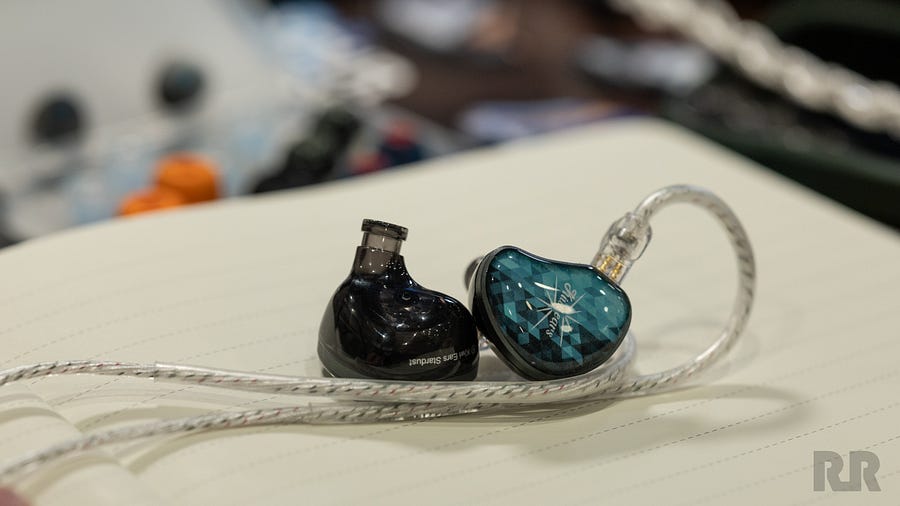
Among all the new Linsoul releases, the one I may be the most excited for is the Stardust. This $76.99 hybrid so competently balances performance, tone, and ergonomics that I think it will be a breakout IEM in the sub-$100 range. Like the KE4 Mk II, the Stardust has a relaxed, chill tuning. The Stardust is actually a little reminiscent of the KBear SR-08, just with a tighter bass response and a bit more treble energy. The Stardust sounds broadly V-shaped, but doesn’t lean too heavily on either extreme, instead relying on subtlety to make its points. Overall cohesion and timbre are excellent, rendering ranges of instrumentation consistently. I particularly enjoy the balance between precision and tone struck by the Stardust’s treble, as I found that it kept up with most complex/congested tracks while never sounding sharp or artificially boosted.
Advertisement. Scroll to continue reading.
Oh yeah, and did I mention that it is small enough for my wife to wear comfortably with her tiny ears? That’s good stuff.
ZiiGaat Thunder — Reported Price: $150
Is the Kiwi Ears Punch a basshead IEM? What about the Punch Audio Martilo? I’ve seen the debates and arguments, and there’s no real consensus. But that won’t be the case for the Thunder, as anyone without reverse-slope hearing loss will hear the obviously massive mid and sub-bass emphasis on this V-shaped IEM. I mean, I consider myself a basshead, but this actually may be a bit too much bass for me. It’s powerful, punchy, and capable of impressive degrees of rumble—FatFreq levels of rumble. Its midrange is cool and a bit recessed, and the treble has a little grain to it, which I imagine is a price many bassheads are willing to pay for this level of intensity. I’ll have to experiment a bit more with tip selection, and I’m interested to see how the community feels about this one.
IEMs From $250 to $499
How have I not tried FlipEars’ IEMs before? Their lineup is solid, with a number of evocative models stretching from “affordable” all the way to “ultra flagship.”
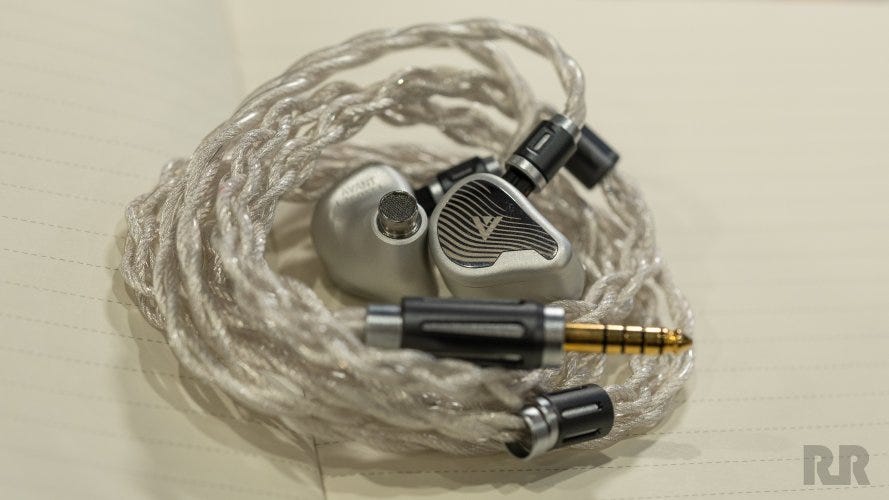
Linsoul Avant — $369
The Avant is the very first IEM sold under the actual “Linsoul” brand, and it appears that the folks in R&D wanted to make sure they came out swinging. This aluminum-shelled 2DD + 3BA + 1MEMS tribrid feels weighty and premium in the hand, more so than many far pricier IEMs in the Summit-Fi segment. I love the cable, and it looks to have borrowed bits from the Orchestra II and THIEAUDIO lineup. As you’ve likely noticed thus far, I’m a bit treble-sensitive, so the new wave of MEMS and EST IEMs has been tough on me, and the Avant falls into the same general camp of “pretty bright.” Its upper register sounds a bit crowded and dense, though it renders transients with precision and speed. Treble and vocals are just about the center of attention with the Avant, and its lower register is relaxed, though extended. There’s a small bass shelf that holds from the mid-bass down to the 20 Hz region, save for a very subtle bump in the 100 Hz region. While my initial impressions were that it was too bright, I didn’t get much of a chance to experiment with tips or insertion depth, so I’ll have to circle back around once units start shipping.
Hercules Audio Noah — $379
Noah, Noah, Noah. Lightning in a bottle, and a sub-$400 IEM that caught Head-Fi massively off guard. It isn’t getting much airtime these days, and that’s a darn shame as it still presents one of the most compelling “Mid-Fi” experiences to date. Beautiful build quality and a refined take on warmth that rivals the best Meze has released, there’s a lot worth appreciating. The Noah’s gentle, refined V-shaped tuning is flexible and broadly appealing, working well on dryly mastered tracks as well as warmer, more modern ones. The Noah’s sub-bass is well-extended and excellently controlled, possessing plentiful texture even at very low frequencies. And texture really is what the Noah has to offer, and at nearly every point in the sonic spectrum. The Noah also possesses some of the best comfort of any IEM I’ve tested at CanJam, though that is pretty dependent on my particular ear shape.
I’ve listened to some of the previous Ice Lab models at other CanJams, but I don’t think I’ve ever had a quiet space to do so, nor did I ever get a proper seal. This year I came prepared, loaded with a suite of pre-tested eartips to get the full, proper experience from the Prismatica in particular.
Advertisement
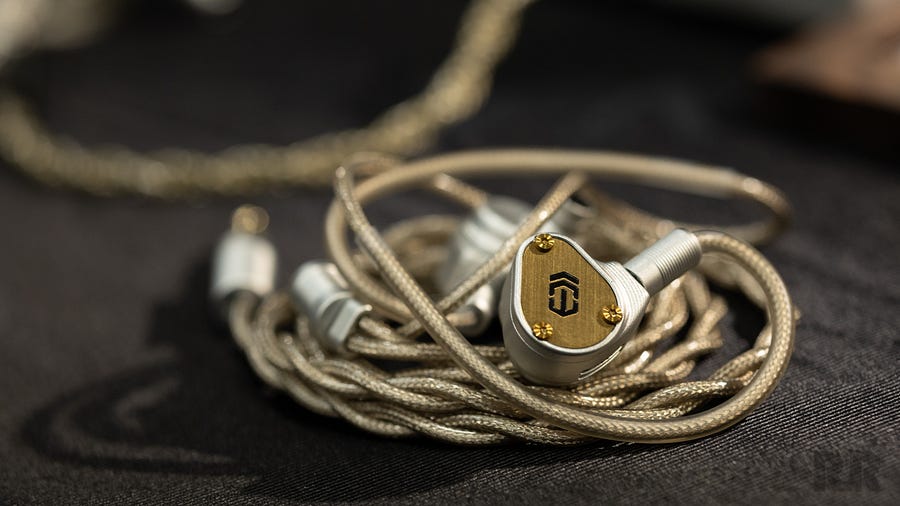
Ice Lab Lumira — $399
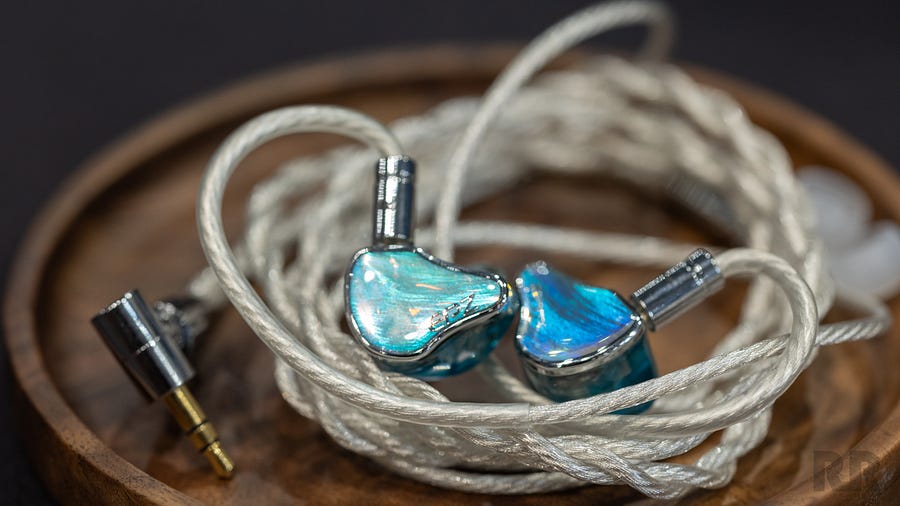
The Lumira is a new IEM from Ice Lab, featuring the brand’s signature quality metalwork. I took notice of the Lumira’s bespoke, matching cable, as the attention to detail here is top-notch. Sonically, the Lumira is gently V-shaped, capturing an excellent sense of balance. The Lumira toes the line between warmth and air excellently. Bass-wise, I think Ice Lab nailed it: nice weightiness in the Lumira’s mid-bass and plenty of extension in the sub-bass. Big bass drops render with substance and size, and the bass is sufficiently well controlled to get out of the way in tracks that aren’t as boisterous. The Lumira’s technical abilities are nothing to scoff at, and it offers full-spectrum texture and resolution, even during congested song passages. This is another IEM I’m keenly tracking, and I’d like to see how the greater community receives it once they have time to properly compare it.
FlipEars Aegis — $479
The Aegis is FlipEars’ entry-level IEM, coming in at $479. It features a single dynamic and a single bone-conduction driver per side. It has a thick, weighty bass region that renders deep-set sonic elements with body and presence. Its mids are warm and rich, lending vocals richness and substance. That said, it can sometimes come off as a bit too warm, rendering dense guitar passages without the requisite air. The Aegis’s treble is well-extended and delivers smooth, refined upper-register elements with a surprising level of competence. In all, an intriguing IEM, though one I’m not certain outdoes Mid-Fi staples like the Tea Pro SE .
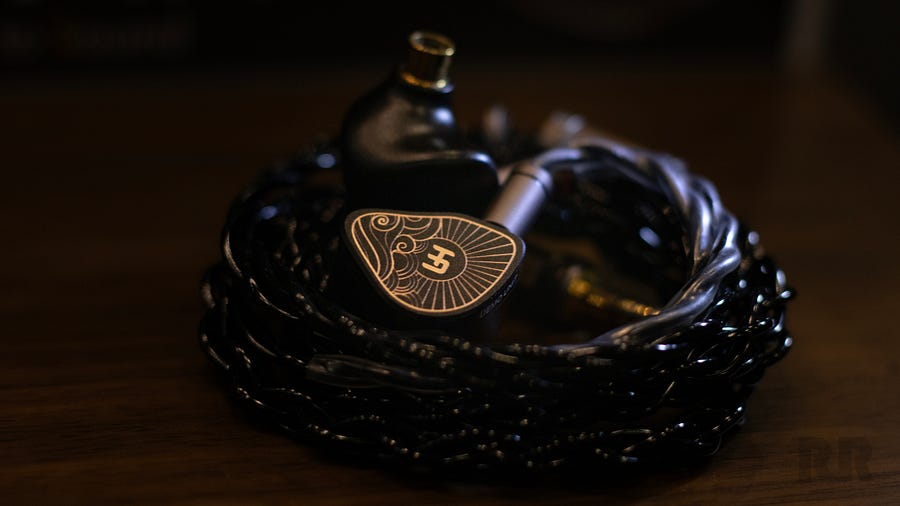
I listened to the HA lineup at previous CanJams, but I still feel they’re good enough to revisit in 2026.
IEMs From $500 to $999
There might be too many IEMs in the Bloom Audio room. I could spend hours in there, but given how crowded it was this year, I opted to relinquish my seat after about 30 minutes. I listened to a few interesting IEMs in that time, which you can find below.
Effect Audio Perseus — $999 (Best in Show)
Effect Audio had their own booth (staffed by volunteers) this year with the Perseus, but I wanted a quieter listening environment, so I went to demo it at the Bloom Room. In short, why has this IEM not gotten more attention? I’ve seen a few grumblings here and there about it being “decent,” but lord, there are few IEMs out there that so quickly outdo staples in my collection like the Campfire Audio Alien Brain—an IEM I consider to be a penultimate example of what high-end audio should sound like.
The Perseus features beautiful, solid metal shells and a comfortable braided cable. Its sound signature is properly V-shaped with a nice, forward treble and full bass response. Its midrange is very slightly tilted towards the warm side of neutral and gifts vocals a wonderfully organic timbre. “Effortless” is a good word to use here, and the Perseus cruises through pretty much everything I throw at it. I’m particularly satisfied with its bass response, given its tight, punchy disposition. Electronic genres are well-served by the Perseus’s excellent sub-bass extension and control, and I found that even challenging tracks were nicely rendered. That said, some mastering styles with lighter bass levels can sound a bit dry, owing to the Perseus’s fairly linear intra-bass tuning.
Advertisement
Advertisement. Scroll to continue reading.
Normally I’d say, “I hope I can spend more time with the Perseus,” but I’m actually going to make a concerted effort to get it in for a proper full-length review. It’s gonna happen, just you wait.
EPZ 550 — $519
The 550 is an all-BA 5-driver metal IEM. It’s pricey, coming in at $519. It feels pretty nice in the hand, and aside from its bold color choices, is much less visually dramatic than many of the ornate designs coming out these days. The 550 was really comfortable for me, and I got an excellent passive seal. The 550 is an entirely different beast compared to the P40, owing to its all-BA driver setup and flagship-level aspirations. It sounds like a reference IEM with a subtle, linear bass shelf. It is extended nicely below 50 Hz, rolling off gently into the 10 Hz region. Its bass is forward but not dominant, and the 550 has no issue filling out electronic tracks at slightly elevated volumes. The 550’s mids are warm-ish and forward, placing vocals pretty forward. The 550’s treble is bright, but not dominant, generating a great sense of air without devolving into sharpness or sibilance. In all, a solid all-BA IEM, and one I can see myself listening to when craving a ref-style listening session.
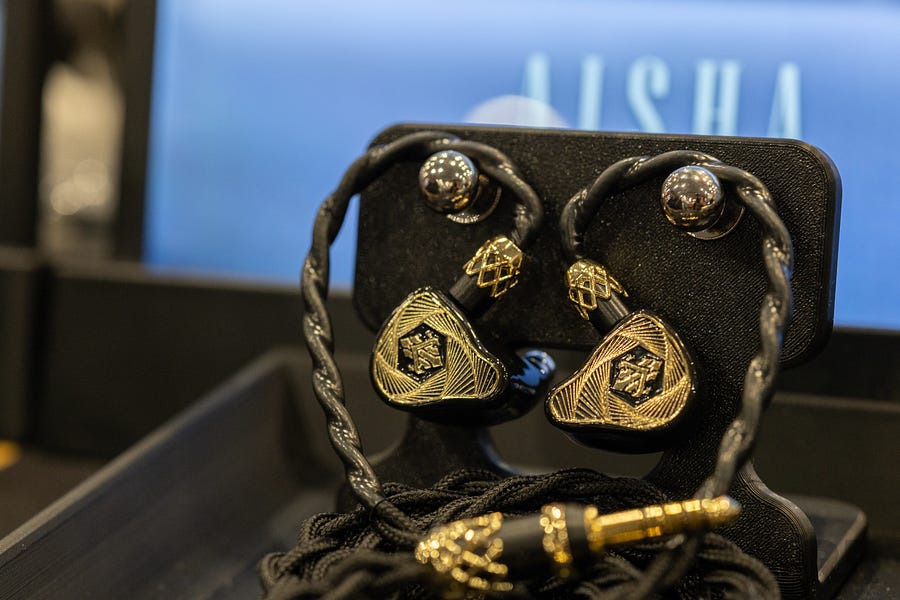
FlipEars Aisha Electri — $699 (Best in Show)
I sought out the Electri at the suggestion of a few friends on Head-Fi, and boy, they were on to something. The Electri has a beautiful V-shaped sound signature with clear, cohesive treble, a natural midrange, and a meaty bass region. It is free from sharpness or inorganic timbre, leaving you with a technical, engaging, and refined experience. I was particularly impressed by the Electri’s bass region: it is tight, deep, and authoritative without a hint of bloom or blur. This places it in a great spot when rendering a wide variety of genres, and I had a blast listening to rock, alternative, and EDM on the Electri. It has a lot of competition in the sub-$700 segment, but man, I think that it competes extremely well. FlipEars’s suite of proprietary drivers really shines in the Electri, and I hope I get to spend more time with it in the future.
FlipEars Legion — $849
The Legion is an $849 tribrid IEM with a broad, weighty V-shaped sound signature. Its treble is fairly neutral in terms of emphasis, but remains very expressive and robust. It has a thicker, firmer bass region than the Electri, taking up more space on the soundstage. It is pretty warm, though, and this can weigh down vocals a bit. With a bit of brain burn-in and tip-rolling, the Legion seems like an excellent daily driver, especially for those partial to emphasized lower registers.
Hisenior Mega5-EST Bass+ — $589
A veteran of the audiophile IEM market, the Mega5-EST Bass+ is an intriguing IEM that blends signature reference-grade mids with an irresponsibly fun dose of engaging bass. The Mega5-EST Bass+ captures the essence of neutrality while adding plentiful punch and rumble to the bottom end, giving you a unique mix of critical listening and casual engagement you’ll not find elsewhere. I tried to EQ my Mega7 to reproduce this type of tonal balance, but my efforts are thus far in vain.
I recently published my Artemis review and have a review for the Vanguard on the way, so those models aren’t covered here.
Noble Audio Iris — $699
To be frank, I’m not sure if I understand the Iris. It’s pretty expensive, coming in at $699, but only offers a pretty pedestrian experience you can find in other 1x DD IEMs at much cheaper prices. It’s beautiful, don’t get me wrong, but I can think of a number of less costly IEMs I’d rather listen to, including Noble’s own Vanguard. I’m happy to give it a proper listen in a quiet environment and re-assess it — and who knows, maybe I’ll have to eat my words.
THIEAUDIO x Elise Audio Vera — $619
This 1 DD + 2 BA + 2 EST IEM is intriguing, not just because of its surprisingly “Mid-Fi” price point but also because it’s a rare THIEAUDIO collab IEM. THIE tuned this to be a very “Hi-Fi-esque” IEM, with a forward, breathy upper register that renders bright elements front and center. If you’ve heard the THIEAUDIO Hype 4 Mk II, that’s a good analog. The Vera’s mids are cool and clean, blending gently into a slightly lifted mid-bass. The Vera’s sub-bass is polite and unemphasized but extends very well below 50 Hz. Liquid-silicone eartips are a no-go for me on the Vera, as they amplify the already-aggressive EST-based treble, but Symbio foam eartips helped bring things back in line. Technical abilities are stellar, as one might imagine, and I have a great deal of respect for just how much resolution you can get from a fairly compact and ergonomic IEM these days. Of the high-end IEMs I tested at CanJam this year, the Vera is easily top 3 in terms of comfort.
IEMs From $1,000 to $1,999
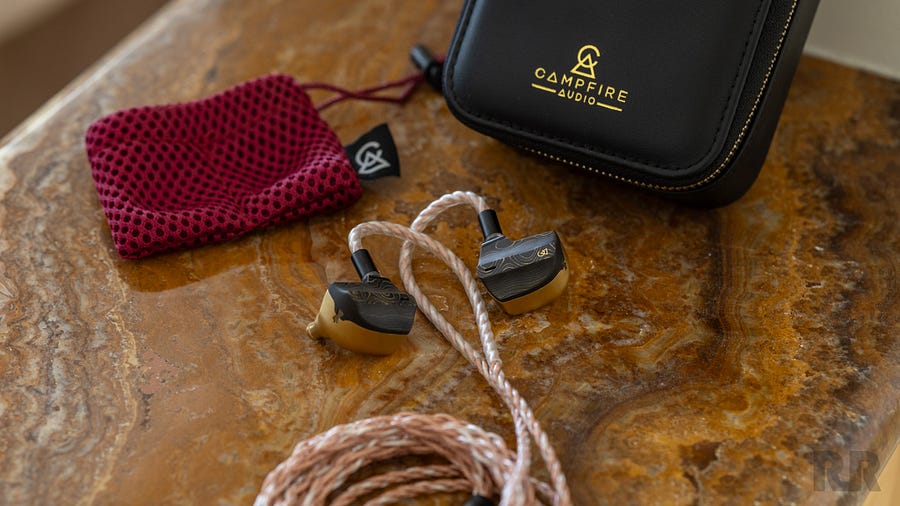
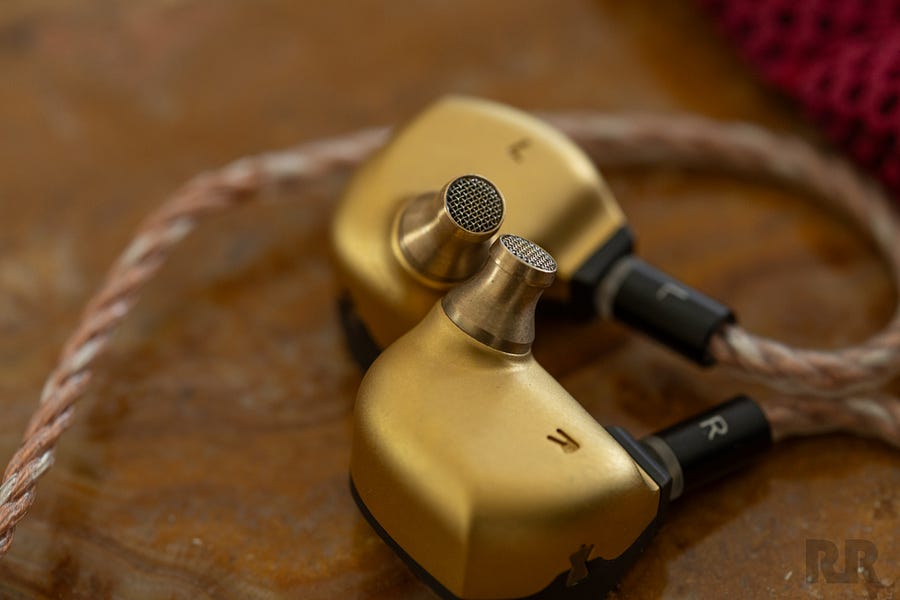
Campfire Audio is a familiar name in my content, and I’ve spent a lot of time writing about their IEMs over the years. I’ve reviewed most of the 2024-2026 models they released, except the Axion and Chimera. Most of those impressions can be found in my previous CFA impressions posts, and my Chimera impressions can be found below.
Advertisement
Campfire Audio Clara — $1,999 (Best in Show)
When I first heard the Clara at CanJam SoCal 2024, I referred to it as my “hype IEM.” Since then, I’ve had many opportunities to listen to it and have come away equally impressed each time. Campfire Audio collaborated with renowned musician Alessandro Cortini, a member of Nine Inch Nails, to tune it and, wow, this IEM remains one of the classiest and most refined options in the TOTL segment. It contains 1 dynamic driver + 3 balanced-armature drivers and leverages each one to great effect. It is optimized for Alessandro’s favorite genres (which are all electronic), but it performs well across a ton of other genres. I played all manner of rock, alternative, punk, and electronic tracks through it and the Clara responded beautifully.
The Clara’s gentle V-shaped sound signature features a comfortable but well-extended treble. Its bass is, well, fantastic. It is cohesive, punchy, and often feels voluminous. The Clara is not the bassiest IEM in the Campfire lineup, but its bass is extremely textured and expressive, more so than the Cascara, Grand Luna, Iris, and perhaps even the Astrolith.
Ice Lab Spectrumica — $1,999
An 8-driver quadbrid (1 DD + 1 BCD + 4 BA + 2 EST) with large metal shells, the Spectrumica is a complex, imposing IEM. Those with small ears are totally out of luck, as you’re gonna need real estate to comfortably settle these into place. At $1,999, the Spectrumica also imposes on the wallet, placing itself in direct competition with a swathe of incredibly capable competitors.
Advertisement. Scroll to continue reading.
Sonically, the Spectrumica has a warm, boisterous V-shaped sound signature with a nice and clean EST implementation. The overall presentation is fast, cohesive, and rich, with the Spectrumica rendering harmonically complex elements with depth and precision. Vocal timbre is on the heavier side, but it doesn’t sound claustrophobic or dense. The Spectrumica’s emphasis in the lower register allows it to communicate a sense of immense substance, but at the cost of vocal placement. Perhaps with some additional time I could address this with brain burn-in or tip-rolling, but that will have to wait for another day.
Advertisement
Noble Audio Agis II — $1,799
This is an IEM I’ve heard many good things about, and it replaces the Spartacus — an IEM I really liked at CanJam SoCal 2024. The Agis II is an 8-driver hybrid, combining a suite of balanced-armature and bone-conduction drivers, costing $1,799. BCD-based IEMs can be fickle, as their final perceived sound signature varies based on skin contact, so tip selection and positioning matter quite a bit. It’s possible that my impressions here are colored by that reality, so keep it in mind.
The Agis II is V-shaped, but has a few quirks that I don’t recall on the Spartacus. Its treble is peaky, especially above 8 kHz. The Agis II’s vocals are pretty well rendered, though, and they’re intelligible, clear, and nuanced even during busy passages. That said, something about the Agis II’s bass felt off to me. Odd tonality, combined with an unusual decay pattern, was distracting, and the Agis II’s bass didn’t have enough emphasis to fully stage big bass elements in EDM. Between the lack of overall contrast in the sound signature and the spicy, overheated treble, I found myself wishing for the Spartacus to make a comeback.
IEMs $2,000 and Up
I’m a big fan of 64 Audio’s lineup. These guys are legendary for a reason, with fans spanning from Beyoncé to average Joes listening to IEMs in the living room. Models like the Aspire 3 and Volur have long since caught my attention, and the new 64 Audio flagship, Ocean, was therefore a near must-listen for me.
64 Audio Ocean — $3,999
The Ocean has been hyped by 64 Audio as a true evolution of their flagship IEM, promising a new era of sophistication and refinement. As someone who has been chronically impressed with 64 Audio’s high-end models for a while now, I was skeptical of how much better things could realistically get, especially once you factor in the infinitely subjective and fickle reality of human perception. I got a chance to listen to the Ocean in a quiet room and take my time experimenting with the different tuning filters, but I’ll start with how it sounds “stock.”
Without any tweaks applied, the Ocean is a proper “reference-style” IEM. It has a neutral, uncolored midrange and forward treble region. The Ocean’s lower register is rich and complete, competently balancing warmth and transparency. The Ocean is clearly intended for those who prefer a more “pro” style of tuning.
Advertisement
After installing the “Bass+” rear-vent filter, the Ocean added some heft to its mid-bass and lower-midrange, warming up a bit and generating more substance when punching. This filter pulls vocals a bit more towards the middle of the mix but adds a little dynamism overall.
The Ocean can be further tweaked by installing apex modules, which change isolation and bass response. There’s also a set of interchangeable tia screens that adjust high-frequency damping, though I was not too interested in pulling out any top-end energy from the Ocean’s already-subtle presentation.
64 Audio Ocean (left) and Volur (right) IEMs at CanJam SoCal 2026
My favorite 64 Audio IEM is the Volur, so it was imperative for me to A/B it against the Ocean. The Volur is a bit smaller and slimmer, and I prefer it aesthetically over the Ocean. Sonically, the Volur has a tighter, more forward mid-bass region (compared to the Ocean with its Bass+ rear-vent filter installed), cooler and cleaner lower mids, and a more forward upper treble. The Ocean renders vocals with a slightly more organic timbre. The Ocean also produces a more convincing body for bass guitars, though it lacks the convincing substantive heft in drum slams that the Volur seems to nail effortlessly.
Between the two IEMs, I still find myself drawn to the Volur. The Ocean, while impressively technical and tunable, lacks the engagement and charisma of the Volur. The Volur also costs a good bit less than the Ocean which, to me, is the cherry on top.
Advertisement
Campfire Audio Chimera — $7,500
The Chimera is an evocative IEM; from its ornate faceplate design to its substantial price tag, there’s nothing generic about the Chimera. I was able to spend a good bit of time with it in a quiet space, thanks to the kind team at CFA allowing me to borrow it during off-hours.
Firstly, I’d like to talk about build quality. Campfire Audio has a history of building wild IEMs, from the Solaris variants to the titanium edition of the Clara, but the Chimera really ups the ante. I won’t dive too deep into the details, but needless to say, it feels as luxurious in the hand as it looks.
Advertisement. Scroll to continue reading.
Sonically, the Chimera is enigmatic. For starters, it is shockingly tip-dependent, surfacing subtle, though very real, changes in tone and behavior depending on insertion depth and tip material. I tested Symbio foam tips, Campfire foam tips, and Campfire liquid-silicone eartips, though with more time I’d have experimented far more. I found the “best” eartip to be the Symbio foams, so that’s what my impressions use.
The very first thing I noticed about the Chimera was how… massive it feels. Not massive in the frequency response sense, or the physical sense, but just how truly spatial everything felt. In a way, it shifted my perspective on the entire concept of spatial rendering, and I’d have liked to see what it does in a truly 3D sound space in something like a video game. Alas, I was limited to music, but the effect remained — wide, deep, and dimensional. In terms of tone, the Chimera is very much a refined gentleman, keeping bass and treble in check.
Advertisement
Occasionally, the Chimera will exhibit subtle signs of treble bite, but nothing even close to the likes of the Astrolith or Iris. I mentioned in an earlier impression about how impressed I was with the Hercules Audio Moses’s EST implementation, but I have to say that the Chimera is just as good if not a bit better. It is integrated into the frequency response with such cohesion that you wouldn’t guess it was there without a spec sheet. Transparency is excellent, and I found myself simply forgetting about the Chimera and diving headfirst into my music, which is ultimately the best possible outcome for my personal pursuit of musical enjoyment.
That said, the Chimera is still a relaxed, subtle IEM. My desire for engagement remains, and the Chimera’s subdued bass response doesn’t fulfill it. EDM and bass-heavy genres lack some dynamism, simply because the Chimera is too dignified to punch, let alone rumble. As such, I’d label the Chimera squarely as a refined critical-listening IEM — unsuitable for bass-craving knaves like myself.
FlipEars Arion — $2,499
The Arion is a pricey quadbrid IEM, using a mix of DD, BCD, BA, and electret drivers. At $2,499, the Arion has many incredible peers, including greats like the CFA Clara, Vision Ears VE10, and 64 Audio Volur. That said, the Arion holds its own, presenting a balanced, easy-to-listen mild V frequency response to the listener. Texture and micro-detailing abound, with the Arion capturing tons of air and spatial nuance. Its BCD implementation is excellent, with the driver adding subtle hints of rumble to perfectly fill out even subtle bass-centered elements. While I’m usually more interested in IEMs with more forward bass regions, the Arion clearly has what it takes to stand in the TOTL segment.
Hercules Audio Moses — $3,799 (Best in Show)
Ah, Moses, an IEM with biblical levels of balance. Between its beautiful shells and refined U-shaped sound, there’s very little you can complain about—and deservedly so, as the Moses carries a $4,200 MSRP and is currently listed at $3,799 in the U.S. Gentle, warm, and rich, the Moses’s tuning is decidedly TOTL-worthy, rendering diverse suites of instrumentation with precision and sophistication. This is one of the best EST implementations I’ve heard, taking full advantage of EST’s signature smoothness while sidestepping the sharp, overwound timbre many competitors suffer from. From smooth, atmospheric tracks to raw and emotional ones, I failed to find a single track that the Moses did not properly present. I could go on, but rambling any more than this would be more fitting for a proper review.
Hercules Audio Moses Legend — $8,000
Hercules Audio Moses Legend, sans faceplate. Final design will feature a proper face design.
The Moses Legend is a so-called “ultra flagship,” with expected pricing around $8,000. If you think that price is crazy, you’re not alone. At the very least, Hercules Audio tries to justify this doubling in cost with truly exotic materials and experiences. The case that ML comes in alone is befitting of a $10,000 watch, so it appears that Hercules Audio really wants to drive home that this is intended to be a special experience.
Advertisement
Sonically, I have to say that the Moses Legend deviates pretty strongly from what I’ve grown to expect from HA — it replaces the original Moses’s subtlety and nuance with sheer energy and drama, running a much deeper V-shaped frequency response. The Moses Legend’s broader, warmer lower register is certainly punchier and juicier, but can sometimes distract from finer details in the mix. The same can be said for its more forward and brighter treble. My favorite part of Moses’s tuning has always been its refined and restrained use of its EST drivers, but it appears that the Moses Legend is more interested in flashiness than subtlety.
Noble Audio Kronos — $4,500
Kronos is an IEM I first heard at E-Earphone in Akihabara, and I fell in love with it. From its shells to its cable to its sonic performance, there’s not much you could even nitpick with it. The Kronos embodies the “we know what we are doing” vibe, projecting a wildly refined V-shaped sound with confidence and precision. Its treble is bright and breathy but only rarely steps over the line of comfort. Texture and transparency are fantastic on the Kronos’s upper register, and there are few IEMs that give you this much energy while retaining tonal cohesion. The Kronos’s mids are on the cool side, but they’re backed up by incredible resolution and a healthy bass response, lending it much-needed contrast. The Kronos cleanly earns a spot in my “TOTL hall of greatness” alongside other heavy-hitters like the VE10, Volur, and Moses.
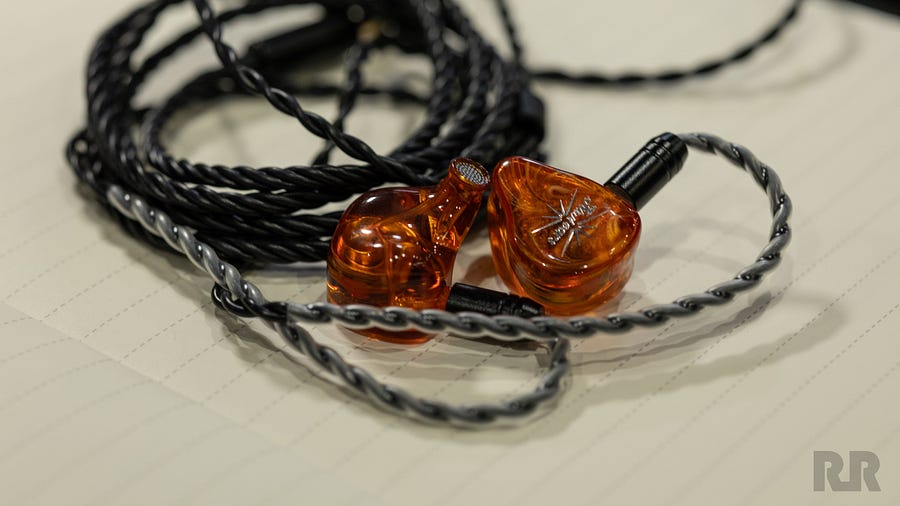
Vision Ears PHöNIX Final Edition — $4,899
I’ve raved about the VE10 on multiple occasions. I still consider it to be one of the most engaging V-shaped IEMs I’ve heard to date, despite it recently being killed off. Vision Ears has shifted its focus to the PHöNIX Final Edition, putting the final garnish on a long and storied series of flagship IEMs. I didn’t much care for the previous iterations of the VE PHöNIX, owing to their sharp treble presentations, but the wicked-looking material Vision Ears used for the Final Edition’s shells convinced me to at least give it a listen. And yes, the PHöNIX Final Edition is an impressive IEM: big, broad V-shaped sound backed by incredible precision and technical acumen. But my issue, sharp treble, remains. That’s a deal-killer, as I cannot listen comfortably at reasonable volumes, defeating the purpose of listening at all. Maybe there’s some secret trick I can use to address this issue, but I’ve yet to discover it. Until then, my focus will lie elsewhere.
IEMs With Pricing Not Yet Announced
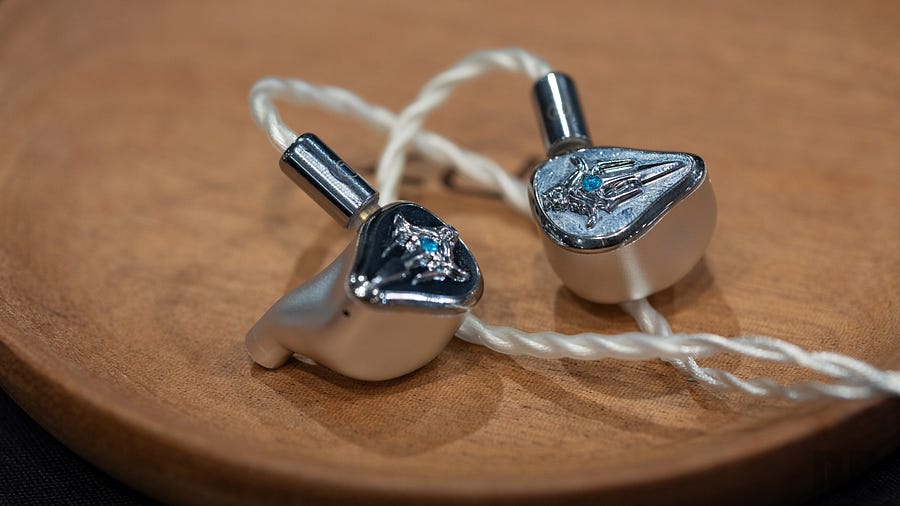
DUNU Noctua (Best in Show)
I’ve written about the Glacier twice now, and while I think it’s a pretty interesting IEM, I find its particular brand of V-shaped tuning to be on the tiring side. The Noctua feels much more up my alley, delivering a true “flagship” reference-inspired tuning. This is a very different style compared to the PRS6, as it feels much more mid-forward. The Noctua’s V-shaped, perhaps W-shaped, frequency response is addictive and gets better the longer you listen. Its bass is slightly lifted, delivering highly textured bass notes without being commandeering. Traditional V-shaped tuning has much more bass, but this tamer approach works well nonetheless. Everything from the top of the upper treble to the depths of the sub-bass is high-res on the Noctua, and it truly feels like you’re getting a special rendition of each track. This is one of the TOTL IEMs on my radar for the end of 2026, and I’m keenly watching DUNU’s social media for more launch details.
Advertisement. Scroll to continue reading.
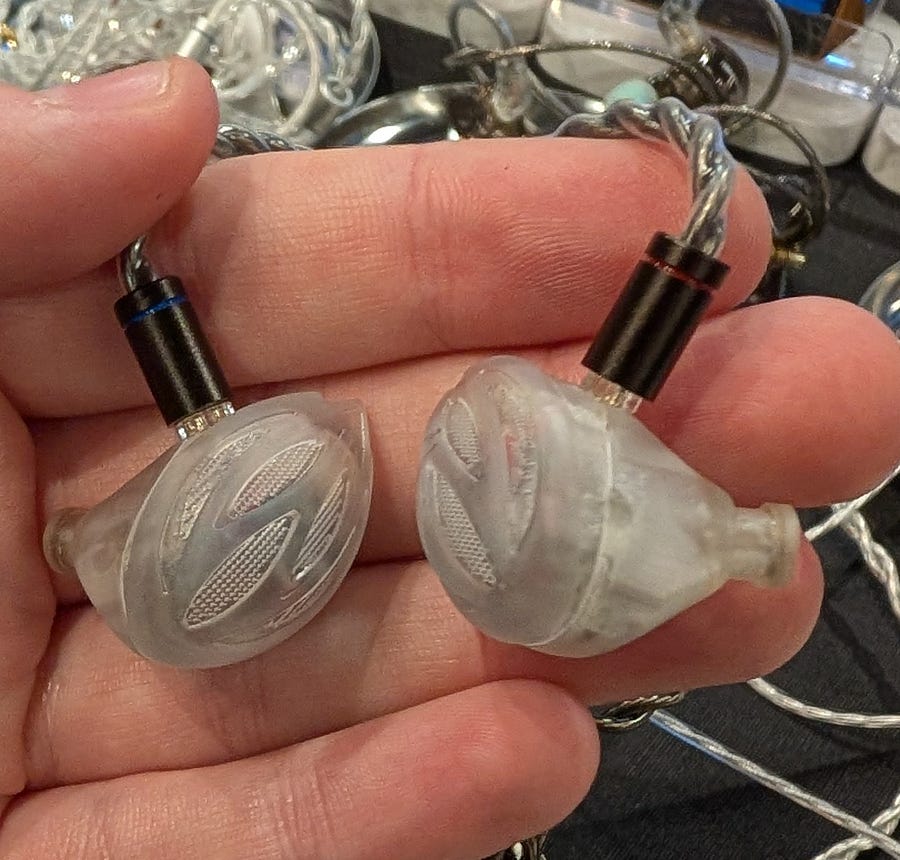
EPZ EST Prototype
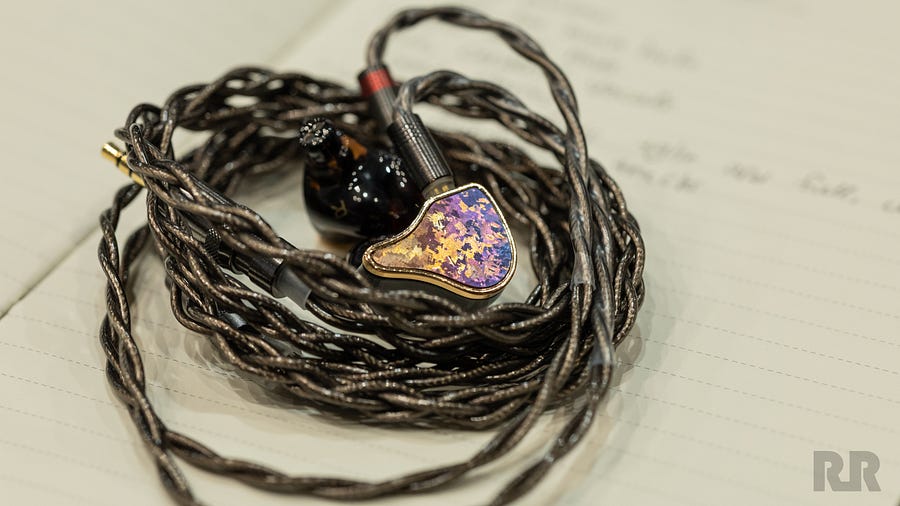
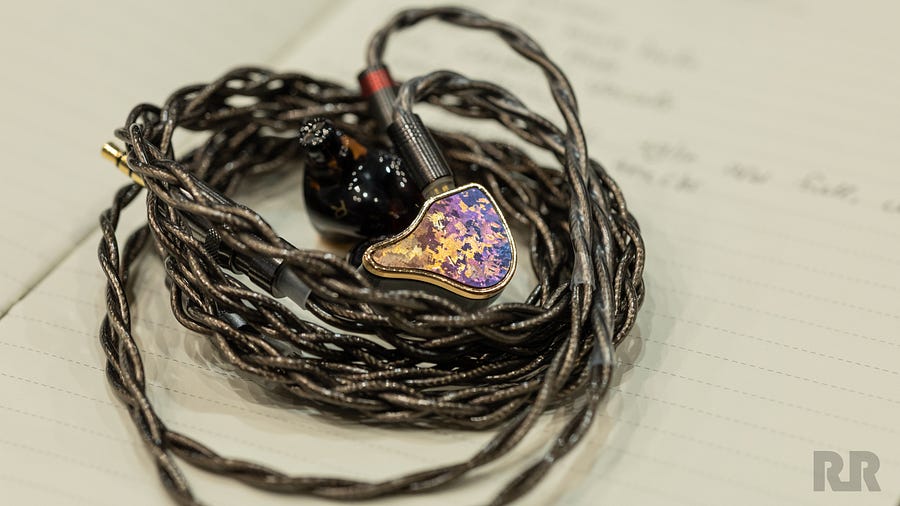
I don’t recall the name of this prototype, but its shells are sweet. Solid, unadorned aluminum with polished faceplates, this was the most comfortable IEM I tested at the EPZ table. I didn’t catch the full driver setup for it, but I did hear that it has an EST in it. Its sound signature is gently V-shaped, with plenty of lower treble emphasis and an inoffensive, careful upper treble lift. There’s zero sharpness or sibilance in this IEM’s upper register, which is a major plus for more-sensitive ears like mine. Treble resolution is crazy, and this IEM pulls details into the mix that I often only hear on very high-end IEMs. The mids are on the cooler side, and the bass region is pretty tame, but with a bit of EQ in the 10–150 Hz region, the drivers wake up. I added a pretty significant 3 dB in my music app’s 10-band EQ and it transformed the IEM’s presentation. Big, bold punches and tightly controlled rumble became the norm rather than the exception in EDM, and there was no hint of blur or messiness. This tells me that whatever drivers are in here have tons of available headroom, and that’s pretty exciting to say the least.
FlipEars Astra
The Astra is an interesting IEM, but one that doesn’t agree with me. It features a U-shaped frequency response that pushes treble elements too far forward, ultimately sounding tinny and overwound. Its mids are quite cool and sound somewhat unnatural, especially when listening to harmonically complex instrumentation. If you’re a fan of meta IEMs, you may like the Astra, but to me it seems like a much more expensive Kiwi Ears Astral, which isn’t something I’m too interested in.
Hidizs always has a bunch of stuff to show off, and this year is no exception. I recently covered the MP145 Pro, MyLin, AP80 Pro Max, and AP30, so take a look at those reviews for my thoughts on them.
Advertisement
Hidizs MK11
This is a pretty standard 1x DD IEM. It is cohesive, warm, expressive, and smooth. There’s a surprising amount of resolution in its treble, despite its upper register sounding fairly relaxed. That said, this is still ultimately a budget-friendly single DD IEM and it comes with the common performance constraints you’d imagine. Complex tracks can overwhelm the MK11, and it often smudges finer textures.
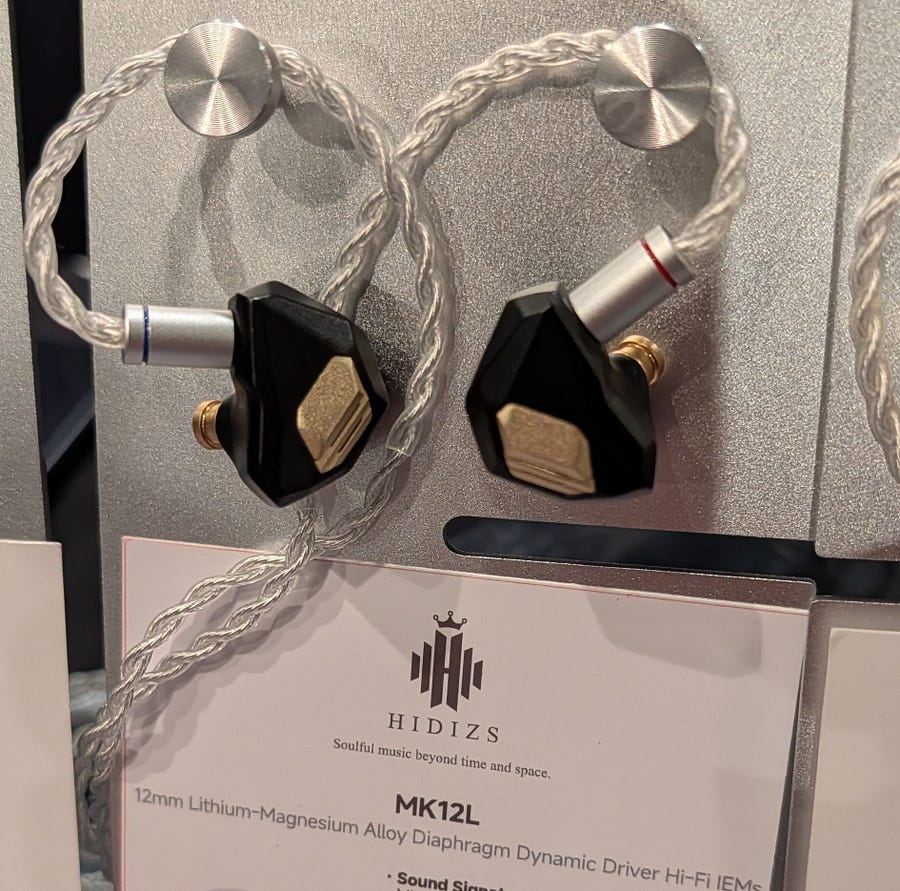
Hidizs MK12L
The MK12L is the final new 1x DD IEM from Hidizs, and is my least favorite of the bunch. It does feature metal shells, but isn’t particularly tuned to my preferences. It has a mild U-shaped frequency response, but features grain in the upper register and subtle bloom in the lower. The MK12L’s treble can also sound a bit stiff and overwound, giving it an artificial timbre. Not my favorite IEM, and in a market with lots of great 1x DD options, I’m not sure where the MK12L stands.
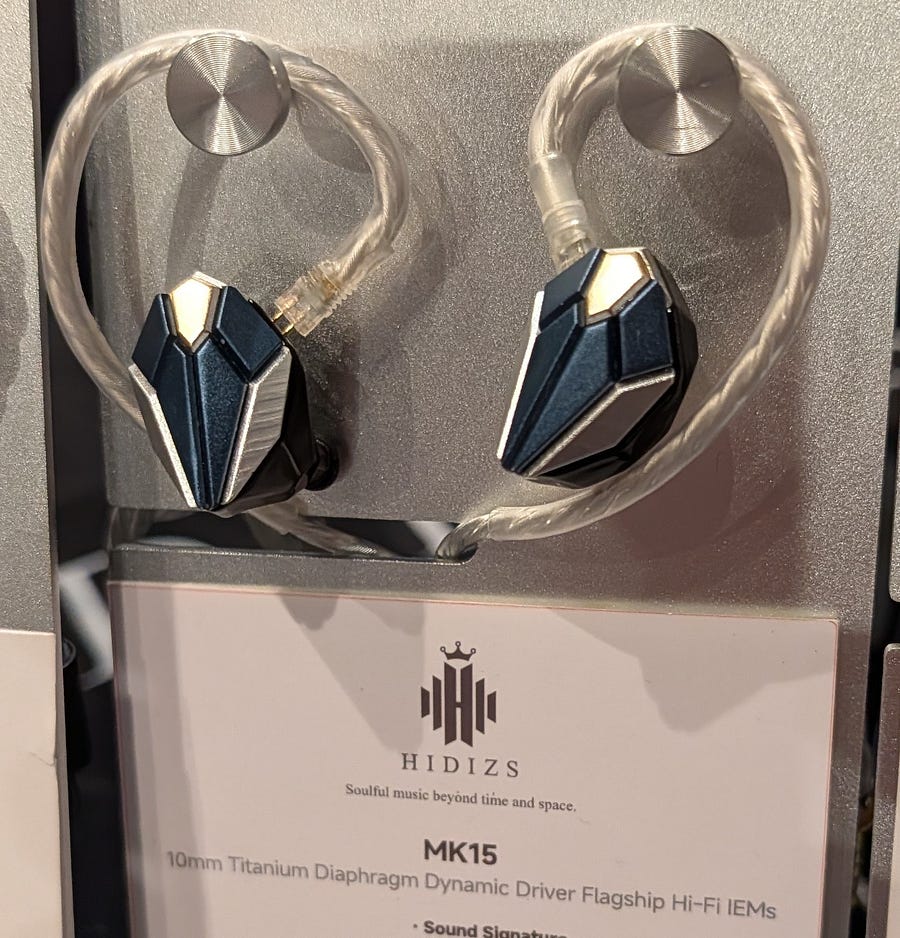
Hidizs MK15
Like the MK11, the MK15 is a single DD IEM. It has an interesting metal faceplate, but has cheap-feeling plastic shells and nozzles. It follows a traditional V-shaped tuning. Forward bass, a recessed and cool midrange, and bright treble. The MK15’s upper treble has a subtle grain to it, but it still renders hi-hats and cymbals well. While I’m not thrilled with the MK15’s build, I’m sure its tuning will have a degree of broad appeal.
Hidizs MS10 Pro
I was able to get a much better seal with the MS10 Pro. It features more drivers and a wider selection of driver types compared to the MS4 Pro but feels a little smaller in the hand. Sonically, the MS10 Pro is much more relaxed than the MS4 Pro, possessing a much greater degree of balance and tonal nuance. The MS10 Pro’s treble is lifted a little beyond its reference-style mids, giving it air, transparency, and excellent transients. The MS10 Pro feels like a true flagship, which Hidizs has historically lacked. If you’re looking for a point of reference for what might sound like the MS10 Pro, think NiceHCK Rockies with a moderate increase in bass emphasis.
Hidizs MS4 Pro
As a disclaimer, I struggled to get a good fit with these plastic test shells, and I ended up resorting to using undersized foam eartips to get some semblance of a seal. This almost certainly affected my perception of the sound, so take that into account.
The MS4 Pro is a tribrid IEM from Hidizs featuring a meaty, broad sound signature. It has smooth, lively vocals with moderate overall vocal clarity and rich timbre. It features an EST-based upper register that renders treble elements with precision and air, but it feels just a bit disjointed. The MS4 Pro’s bottom end is warm and forward but exhibits a small degree of bloom.
Kiwi Ears Ember
The Ember is V-shaped with a bright, though well-behaved, treble. It has a relaxed midrange and renders vocals more towards the middle of the mix. The Ember’s bass is likewise relaxed and unimposing. In all, I feel that the Ember lacks engagement, ultimately feeling like a cut-down KE4 Mk II rather than a proper “new” IEM. I’ll probably skip this one, as it doesn’t do anything particularly interesting.
Kiwi Ears KE4 Mk II
I’ve always liked the original KE4’s take on reference-style tuning, and the KE4 Mk II iterates on it nicely. While I’m not certain if this is the final shell design (and cable) for the KE4 Mk II, I was told that voicing is complete, and honestly, I think they did an outstanding job. A smooth, tonally neutral presentation with an emphasis on comfort and long-term listening, the KE4 Mk II is just engaging enough to keep me listening without fatigue. In a show filled with aggressive EST and MEMS tweeters, the KE4 Mk II’s more reasonable upper register was a nice refuge for my tired, sensitive eardrums. In short, the KE4 Mk II is resolving, organic, and cohesive without resorting to cheap tuning tricks or dramatic peaks. I’m a fan.
The Bottom Line
If there was one major takeaway from CanJam SoCal 2026, it’s that the wired IEM market has absolutely no intention of slowing down. The sheer variety of driver technologies, tuning philosophies, and prices on display was almost absurd, and the performance gap between affordable models and the established high-end continues to shrink.
Advertisement. Scroll to continue reading.
Advertisement
Some of the biggest surprises were not the most expensive IEMs in the room. The Effect Audio Perseus was one of my favorite discoveries of the show, while the FlipEars Aisha Electri and Ice Lab Lumira delivered compelling performance without wandering into four-figure territory. DUNU’s Noctua was another standout and one of the high-end models I most want to hear again once the production version and final pricing are announced.
At the other end of the spectrum, spending several thousand dollars no longer guarantees that an IEM will be more engaging or even more convincing. The Hercules Audio Moses and Campfire Audio Clara remain examples of what can happen when expensive driver arrays and sophisticated tuning actually come together, while the Noble Audio Kronos also reinforced why it belongs among the better flagships I’ve heard. But there were disappointments. The Noble Iris did little for me at its price, the Agis II left me missing the Spartacus, and the Vision Ears PHöNIX Final Edition still has more treble energy than I can comfortably tolerate. The technically impressive 64 Audio Ocean also failed to displace the less expensive Volur as my favorite from the company.
That may be the most interesting thing happening in high-end wired IEMs right now. Manufacturers have access to increasingly exotic combinations of dynamic, balanced-armature, electrostatic, planar, MEMS, and bone-conduction drivers, but throwing more technology inside a shell does not automatically produce better sonic performance. Integration and tuning remain considerably more important than the number of drivers on the spec sheet.
And that is probably good news for everyone who doesn’t have $4,000 to $8,000 burning a hole in their pocket. The very top of the IEM market has become increasingly extravagant, but some of the most interesting products at CanJam SoCal 2026 were considerably more affordable. High-end wired IEMs have never offered more choices, but they have also never made it clearer that price and enjoyment are not the same thing.































































You must be logged in to post a comment Login