
Connect with us
DAPA Banner
DAPA Coin
DAPA
COIN PAYMENT ASSET
PRIVACY · BLOCKDAG · HOMOMORPHIC ENCRYPTION · RUST
ElGamal Encrypted MINE DAPA
🚫 GENESIS SOLD OUT
DAPAPAY COMING

NewsBeat

Jury rules against Elon Musk in his feud with OpenAI

Published

on

Jury rules against Elon Musk in his feud with OpenAI

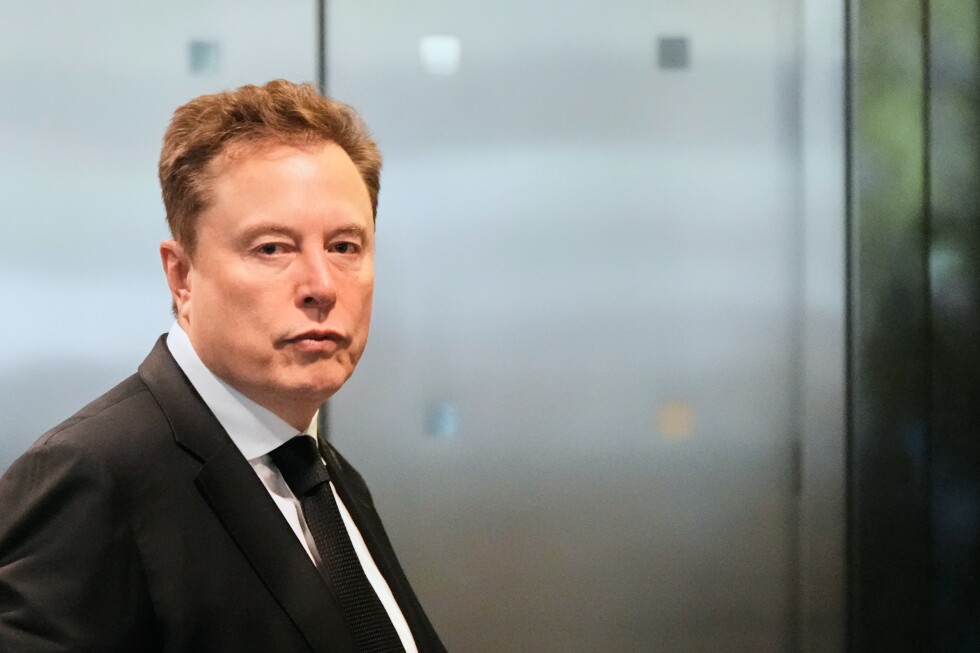
OAKLAND, Calif. (AP) — A federal court on Monday dismissed claims filed against OpenAI and its top executives by Elon Musk, who accused them of betraying a shared vision for it to guide artificial intelligence’s development as a nonprofit dedicated to humanity’s benefit.

Musk, the world’s richest man, was a co-founder of OpenAI, the company that launched in 2015 and went on to create ChatGPT. After investing $38 million in its first years, Musk accused OpenAI CEO Sam Altman and his top deputy of shifting into a moneymaking mode behind his back.

The nine-person jury found that Musk waited too long to file his lawsuit and missed the deadline for the statute of limitations.

The jury served in an advisory role, but Judge Yvonne Gonzalez Rogers accepted the verdict Monday as the court’s own and dismissed Musk’s claims. The jury deliberated only two hours before returning its verdict.

Advertisement

The trial that began April 27 in Oakland, California shed light on the bitter falling-out between the two Silicon Valley titans and the beginnings of OpenAI, now a company valued at $852 billion and moving toward potentially one of the largest initial public offerings in history.

Altman and OpenAI claimed there was never a promise to keep OpenAI a nonprofit forever. In fact, they argued, Musk knew this and filed his lawsuit because he couldn’t have unilateral control over the fast-growing AI developer.

Musk was seeking damages to be paid to the altruistic efforts of OpenAI’s charitable arm as well as Altman’s ouster from OpenAI’s board. Musk’s decision to stop funding the company contributed to a bitter rift between the former allies. Musk says he was responding to deceptive conduct that OpenAI’s board picked up on when it fired Altman as CEO in 2023 before he got his job back days later.

The three-week trial saw testimony from Musk, Altman and his top lieutenant Greg Brockman, along with Microsoft CEO Satya Nadella and a slew of others in the tech titans’ orbit. Musk told jurors on his first of three days on the stand that, fundamentally, “I think they’re going to try to make this lawsuit … very complicated, but it’s actually very simple,” Musk said. “Which is that it’s not OK to steal a charity.”

Advertisement

Musk’s lawsuit claimed that, in addition to “breach of charitable trust,” Altman and Brockman unjustly enriched themselves from the windfall as the ChatGPT maker soared in valuation. Brockman revealed during the trial that his stake in OpenAI is worth about $30 billion.

OpenAI has brushed off Musk’s allegations as an unfounded case of sour grapes aimed at undercutting its rapid growth and bolstering Musk’s own xAI, which he launched in 2023 as a competitor. During cross-examination, Musk was sometimes combative with OpenAI lawyer William Savitt.

“Your questions are not simple,” Musk said at one point. “They are designed to trick me essentially.”

Jurors also heard from witnesses including OpenAI ex-board members Helen Toner and Tasha McCauley, who spoke about the decision to fire Altman in 2023. They were ousted from the board themselves when Altman returned to his role a few days later.

Advertisement

Altman and Musk both vied to be OpenAI’s CEO in its early years. In his testimony, Altman said he had concerns about Musk’s attempts to gain more control over OpenAI, which was aiming to safely build a better-than-human form of AI called artificial general intelligence.

“Part of the reason we started OpenAI is we didn’t think AGI could be under the control of any one person, no matter how good their intents are,” Altman said.

Near the end of his testimony, Altman said that before things turned sour, he had thought very highly of Musk.

“I felt like he had abandoned us, not come through on his promises, put the company in a very difficult place, jeopardized the mission, didn’t really care about the things I thought he cared about,” Altman said. “It’s been an extremely painful thing for me … to have someone that I respected so much not acknowledge that and continue to publicly attack us.”

Advertisement

Source link

Advertisement
Continue Reading
Click to comment

You must be logged in to post a comment Login

Leave a Reply

NewsBeat

What makes the ideal digital icon? A psychologist explains

Published

on

What makes the ideal digital icon? A psychologist explains

Digital icons are everywhere – and usually, we interpret these visual symbols in the blink of an eye. Who today doesn’t know that a wastebasket means “delete” and a magnifying glass means “search”?

Yet icons’ meanings can be deeply shaped by culture, experience and technological history. So what seems obvious to one person may be confusing to another.

They were originally designed to make computers look friendlier and less intimidating to the few people who had access to them. For example, the icons below first appeared in 1975 in the Pygmalion visual programming system.

Years later, they attained much wider visibility thanks to the Xerox Star 8010, a pioneering office computer that introduced many graphic interface concepts that are still used today.

Advertisement

The Xerox 8010 Star’s icons.
stardock.com

Research my colleagues and I conducted examines how people perceive, understand and evaluate digital icons – including which visual characteristics make icons easier to learn and use. Pygmalion’s pioneering icons worked because they relied on existing knowledge of the office world.

This meant they reduced cognitive effort by relying on recognition rather than recall. The icons looked like the physical objects they were representing – and critically, objects the computer’s users were already familiar with.

Five secrets of a good icon

The designer Susan Kare, creator of many of the original Macintosh icons, said a good icon should either be instantly recognisable or so easy to remember that a user only needs to learn it once.

Advertisement

To Kare, designing icons was about solving “the little puzzle of making an image fit a metaphor”. More than 40 years later, that challenge remains.

Research, including work by my colleagues and me, suggests the most successful icons tend to share key characteristics that guide us from seeing to understanding almost instantaneously. Here are five of them.

1. They depict things we already know

Early computer icons worked because they borrowed from the office world that people already knew: folders, bins, documents, calculators, floppy disks. Psychologists refer to those as “concrete” icons because people to use their knowledge of the everyday world to interpret them.

Advertisement

However, only a limited number of functions can be represented as identifiable objects, and getting a close fit between pictures and functions is not always easy. The more complex the meaning becomes, the harder it is to design concrete icons.

To test this, can you guess the meaning of these four icons? (Answers at the end of the article.)

Alt text

Icon credits:
Freepik/Flaticon; Kartini 1/The Noun Project; Elzicon/Flaticon; IconPai/The Noun Project.

2. They mean what we think they mean

Psychologists talk about “semantic distance” – how closely an image matches its intended meaning. An abstract symbol for “privacy settings” or “cloud syncing” has a much larger semantic distance than using a bin to mean “delete”.

Advertisement

As digital functions become more complex, designing icons that communicate their meaning quickly becomes increasingly difficult.

3. They feel familiar

Another important feature of successful icons is consistency of use over time – which leads to familiarity. The icons shown below are widely used even though the objects depicted are no longer so widely in use. This highlights the point that icons are partly informative signs and partly shared learned conventions, whose success is based on collective familiarity.

Take the floppy disk “save” icon (below left). Younger users recognise the meaning without ever having seen the physical object that the icon originally represented. The same is true of traditional telephone handsets and perhaps even envelopes (now widely used to denote “email”). While the objects have been superseded, the icons remain.

Advertisement
Alt text


Icon credits: Yogi Aprelliyanto/Flaticon

4. They look good

A well-designed object can have a positive effect on our behaviour – and the digital world is no different. Well-designed icons are more likely to attract downloads, help us perform tasks more efficiently, and learn better and faster. They even make digital environments feel more pleasant to use.

Think of the difference between an app icon that feels cluttered and amateurish and one that looks clean, balanced and professional. Even before we know what the app does, the icon’s design can influence expectations of how well the app will work.

5. They are tested with real users

Advertisement

Although icons and symbols are on the rise as a global visual language, it’s important not simply to assume that icons work globally – and to understand what makes a good digital icon across languages, cultures, ages and digital experiences.

This is why the International Standards Organisation (ISO 9186) demands comprehensibility testing – because symbols should be understood without explanatory text whenever possible.

A bridge between perception and meaning

As we spend more of our lives in digitally mediated environments, icons do two jobs simultaneously. They help us interact with technology more efficiently, and shape how we feel about the experience.

A digital icon is not simply a small picture. It is a bridge between perception and meaning. The best icons make interfaces feel less intimidating, more intuitive and more approachable – creating a global visual language that crosses barriers of language and culture.

Advertisement

In other words, good icons do more than help us find our way around a digital world. They help make that world feel understandable, welcoming and human.

Icon quiz answers: 1. cloud syncing; 2. privacy settings; 3. algorithmic recommendations; 4. generative AI.

Source link

Advertisement
Continue Reading

NewsBeat

Bid for ‘permission in Principle’ for Blackrod houses vote

Published

on

Bid for 'permission in Principle' for Blackrod houses vote

The proposal is seeking permission in principle to build the two new houses on land off Little Scotland in Blackrod.

According to a Bolton Council planning report, the land is on the green belt, but meets the definition of “grey belt”, meaning previously developed land.

The report said: “The Green Belt assessment states that the Green Belt parcel in which the application site is located makes a strong contribution to this purpose, as the parcel plays an essential role in preventing the merging or erosion of the visual and physical gap between settlements of Blackrod and Horwich in particular as well as Aspull and Westhoughton.

“The parcel also plays a role in preventing the merger of Blackrod and Adlington to the north.”

Advertisement

The bid is seeking permission in principle to build two houses (Image: Bolton Council)

But the report said that the site represented only a small gap between Blackrod and Aspull.

As many as 35 letters of objection from 30 households were received about the plans raising concerns about biodiversity, ecology, infrastructure and the loss of green belt land.

They also said they were concerned the new houses, if they came to be built, would be out of keeping with the character of the area.

Cllr Peter Wright, of Horwich South and Blackrod, asked that the bid be heard by Bolton Council’s planning committee raising concerns about the use of green belt land.

Advertisement

He also said there could be traffic issues on a narrow road.

Blackrod Town Council also objected to the plan saying that the land has previously been used for grazing horses.

But the report put before Bolton Council recommended that permission in principle be approved.

It said: “Inappropriate development is, by definition, harmful to the green belt and should not be approved except in very special circumstances.

Advertisement

“‘Very special circumstances’ will not exist unless the potential harm to the green belt by reason of inappropriateness, and any other harm resulting from the proposal, is clearly outweighed by other considerations.”

Bolton Council’s planning committee is expected to meet to consider the plans at town hall on Thursday June 18.

Source link

Advertisement
Continue Reading

NewsBeat

Drug smuggler jailed after collecting drugs from airport

Published

on

Drug smuggler jailed after collecting drugs from airport

Dale Hosker, 50, from Bury, appeared before Bolton Crown Court following an investigation by the National Crime Agency into two organised crime groups collecting the drugs.

The dog breeder is the last offender from the group to be jailed.

Last month, his partner, from Walkden, Dale Creen, 35, was jailed for 11 years along with two men from a different organised crime group – Albanians Elton Hallaci and Artur Iseberi, who were respectively sentenced to 21 years and seven months and 18 years.

Advertisement

Last year, seven US citizens who acted as the couriers were jailed for collecting the cocaine at Manchester Airport and transferring it to Hallaci, 32, and Iseberi, 27, of Liverpool, and Hosker and Creen.

The Americans flew into Manchester from the United States on 11 May 2024 without any luggage and waited until bags containing cocaine arrived from Cancun, Mexico.

Eight suitcases arrived at the airport and the couriers followed text message instructions from a US offender called ‘Nate’ to collect specific suitcases containing hundreds of kilograms of the Class A drug before transferring it to the four men who were waiting at nearby locations.

After collecting the suitcases from the carousels, they were wheeled outside and caught taxis to a nearby hotel, where they passed two to Hosker and five to Hallaci and Iseberi.

Advertisement

However, one of the couriers left a case behind, which Border Force officers opened and discovered 20 one-kilogram blocks of cocaine.

The NCA investigation showed that on that day, Hosker collected 40kg of cocaine and the Albanians collected 100kg.

A few weeks later, on May 31, 266kg of high-purity cocaine with a street value of around £24m was smuggled into the airport.

Despite seven couriers being sent to collect them, the drugs were seized, and only one courier was successful and directed to a Bury address to hand over the 20 kg to Creen.

Advertisement

The other suitcases were seized, each contained between 22 and 24 blocks of cocaine and a tracking device.

Hallaci, Iseberi, Hosker and Creen were arrested on 17 June 2025 by NCA officers.

Jon Hughes, NCA Branch Commander, said: “The Class A drugs trade is inextricably bound up with extreme violence which can have devastating consequences, we have seen entirely innocent victims caught in the cross-fire of feuding drugs gangs.

“But offenders like Hosker are driven by greed and don’t care about the trail of misery and harm from source countries in South America to the streets of our towns and cities.

Advertisement

“The NCA works with partners at home and abroad to protect the public from the threat of Class A drugs.”

Evidence against them was damning.

The offenders were captured on CCTV at Manchester Airport on the days of the importations. And one courier took a photograph of Hosker loading cocaine-filled suitcases into his car following the 11 May handover.

Inside Hallaci’s home, officers found keys to a Jaguar car parked outside.

Advertisement

It had a professionally fitted hidden compartment between the rear seats and the boot used for smuggling drugs.

Officers also discovered a treasure trove of notepads with detailed ledgers of cocaine importations. They featured references to handovers that both Hallaci and Iseberi were involved in on 11 May.

The notebooks, which were written in Albanian and contained the fingerprints of Hallaci and Iseberi, indicated how the drugs would be divvied up, with 30kg going to Bradford, 35kg going to London, 8kg to Birmingham.

As part of the investigation, NCA investigators also seized two other Jaguar cars belonging to the Albanian OCG, which were fitted with after-market hides.

Advertisement

On the day the offenders were arrested, Iseberi tried to escape along the roof of his home, and an axe, a knife and a machete were uncovered in Creen’s bedroom.

Hallaci, Iseberi and Hosker pleaded guilty to smuggling cocaine and possession of cocaine with intent to supply.

Creen was convicted by a jury of possession of cocaine with intent to supply but acquitted of smuggling cocaine.

Advertisement

Source link

Continue Reading

NewsBeat

Which shows are getting scrapped as part of the BBC’s cuts?

Published

on

Daily Mirror

Need to know

A number of high profile shows have been affected after the new director-general announced cuts

The BBC announced new cuts(Image: Mike Kemp/In Pictures via Getty Images)

Everything you need to know about the BBC’s £80 million cuts including Breakfast shake-up

  • The new director-general of the BBC, Matt Brittin, has announced plans to cut £80 million from programming on TV, radio and news, as part of huge cuts across the corporation. That’s not all, as Licence Fee payers will also notice a reduction in services and choices as part of the £40 million-a-year cuts.
  • The former Google executive unveiled his plans in a staff email on Wednesday (June 17), where he said that the BBC must be “simpler and faster” going forward and must try to avoid duplication.
  • Amongst the confirmed changes announced, BBC Breakfast will no longer air on Sunday mornings from September, whilst the production teams making Sunday with Laura Kuenssberg and Newsnight will merge. Radio 4’s The World Tonight will also end from September, and the number of permanent presenters on Today will be cut from five to four, with a single anchor on the show on Saturdays, and World Tonight is being replaced by Newshour.
  • Several other Radio 4 programmes will also end during the next year, including the Midnight News, Money Box Live, AntiSocial, The Law Show, Crossing Continents, On the World Service, The Inquiry, The Conversation and The Fifth Floor.
  • Between 1,800 and 2,000 roles are expected to go across the British broadcaster in the coming months, including 550 jobs in the BBC’s news and nations divisions.
  • In the email to staff, Brittin explained that there could also be a reduction in dramas going forward, as they are “expensive” for the BBC to make.

READ THE FULL STORY: BBC Breakfast shake-up and shows scrapped as part of £80m cuts

Source link

Continue Reading

NewsBeat

‘Complex’ Wisbech investigation explored in Channel 4’s ‘best ever’ documentary

Published

on

Cambridgeshire Live

24 Hours in Police Custody is back on Channel 4 tonight with a gripping episode following Cambridgeshire Police

A groundbreaking Channel 4 documentary series is returning to television screens with another gripping instalment – and audiences won’t have to wait much longer.

24 Hours in Police Custody has established itself as a viewer favourite throughout the years, immersing audiences in authentic investigations within a local constabulary. Since launching in 2014, devotees of the programme keenly anticipate fresh episodes as they track Bedfordshire and Cambridge Police force working against time.

Advertisement

Chronicling cases from the moment a distressing 999 call is received, through to a possible court appearance, officers are shown uncovering shocking and harrowing truths while examining serious and major offences that shake a community.

From homicide and sexual violence to drug networks, the award-winning series doesn’t hold back from the intense realities confronting detectives. Another hard-hitting episode is scheduled to broadcast this evening (June 18) at 9pm on Channel 4, which audiences won’t want to miss.

Entitled The No Body Murder, this evening’s episode is a repeat that draws viewers into a complicated investigation when one man vanished, reports Wales Online.

Advertisement

A synopsis reads: “Cambridgeshire Police have a big problem: a murder hunt without a body. A complex search for clues takes them into the woods and across Europe, and features a mysterious post on Facebook.”

Writing on Facebook this week, the Policing Fenland page stated: “When a Wisbech man went missing in 2015 a murder investigation was launched – but it was far from straightforward.

“On Thursday (18 June) at 9pm Channel 4 will show a repeat of 24 Hours in Police Custody ‘the no body murder’.

“The investigation involved some unbelievable revelations along the way and uncovered suspected exploitation and modern slavery. We’re working hard to tackle modern slavery, but we need your help. Please know the signs to look out for and report any concerns.”

Advertisement

One commenter responded: “Seen this programme, truly a staggering case with an ending nobody could have predicted. If you haven’t seen it dont Google what happened, its mind blowing.”

24 Hours in Police Custody continues to attract glowing reviews, with viewers declaring it the “best” programme of its type on television.

On IMDb, one viewer previously commented: “This is a rare reality show that makes all others look like bad tv.”

Advertisement

Another noted: “It’s true crime, at its most honest and also most horrific; I like to believe in the basic good of human nature, but these episodes tell some pretty grim stories, and also show quite how hard it can be to secure a conviction.”

A third remarked: “Gripping, unpredictable, shocking. A fantastic insight into the Police in Beds/Cambs. Unmissable TV.”

Earlier instalments of the programme have left audiences appalled, with episodes also available to watch via Channel 4’s streaming platform. One viewer took to social media to write: “I saw both parts of this investigation and was sickened beyond belief.”

24 Hours in Police Custody returns to Channel 4 tonight at 9pm

Advertisement

Source link

Continue Reading

NewsBeat

Channel 4’s 24 Hours in Police Custody returns with chilling episode tonight

Published

on

Wales Online

The landmark documentary will return to television screens tonight with a chilling instalment

A landmark Channel 4 documentary will return to screens with yet another chilling episode – and viewers don’t have long to wait.

Advertisement

24 Hours in Police Custody has become a firm favourite over the years, plunging viewers into real life investigations within a local police force. Since its release in 2014, fans of the show eagerly await new instalments as they follow Bedfordshire and Cambridge Police force in a race against the clock.

Following a case from the minute a harrowing 999 call is made, right through to a potential court visit, detectives are seen uncovering horrific and brutal truths as they investigate serious and major crimes that rock a community.

From murder and sexual assault to drug gangs, the award winning programme does not shy away from the tense realities faced by detectives. Another brutal episode is set to air tonight (June 18) at 9pm on Channel 4, which viewers will not want to miss.

Advertisement

Titled The No Body Murder, tonight’s instalment is a repeat episode that takes viewers into a complex investigation when one man disappeared from his home.

Ricardas Puisys vanished from his home back in 2015, but a murder investigation was launched after police suspected foul play. But with no body, detectives were stunned to uncover unbelievable revelations.

A synopsis reads: “Cambridgeshire Police have a big problem: a murder hunt without a body. A complex search for clues takes them into the woods and across Europe, and features a mysterious post on Facebook.”

Taking to Facebook this week, the Policing Fenland page wrote: “When a Wisbech man went missing in 2015 a murder investigation was launched – but it was far from straightforward.

Advertisement

“On Thursday (18 June) at 9pm Channel 4 will show a repeat of 24 Hours in Police Custody ‘the no body murder’.

“The investigation involved some unbelievable revelations along the way and uncovered suspected exploitation and modern slavery. We’re working hard to tackle modern slavery, but we need your help. Please know the signs to look out for and report any concerns.”

One person replied: “Seen this programme, truly a staggering case with an ending nobody could have predicted. If you haven’t seen it dont Google what happened, its mind blowing.”

Advertisement

24 Hours in Police Custody continues to bring in rave reviews, with fans saying it is the “best” show of its kind on TV.

Over on IMD, one person previously said: “This is a rare reality show that makes all others look like bad tv.”

Another added: “It’s true crime, at its most honest and also most horrific; I like to believe in the basic good of human nature, but these episodes tell some pretty grim stories, and also show quite how hard it can be to secure a conviction.”

A third echoed: “Gripping, unpredictable, shocking. A fantastic insight into the Police in Beds/Cambs. Unmissable TV.”

Advertisement

Previous episodes of the show have left viewers disgusted, as they are also available to stream on Channel 4 online. One viewer wrote on social media: “I saw both parts of this investigation and was sickened beyond belief.”

Another penned: “That was GRIM #24hoursinpolicecustody.”

24 Hours in Police Custody returns to Channel 4 tonight at 9pm

Source link

Advertisement
Continue Reading

NewsBeat

Clarkson’s Farm’s Kaleb Cooper speaks out on Jeremy Clarkson cancer diagnosis shock

Published

on

Manchester Evening News

The TV star revealed that he’s battling an aggressive form of the disease during the final episodes of his Prime Video series

Jeremy Clarkson is said to be in “spirits are high” despite his cancer diagnosis. The 66-year-old revealed that he’s battling an aggressive form of the disease during the final episodes of his Prime Video series, Clarkson’s Farm.

Advertisement

In the scenes, Jeremy was heard telling farm manager Kaleb Cooper and farmhand Charlie Ireland that he had been diagnosed with cancer in May during discussions about harvest planning. The TV presenter said he expected to be “fine” but would be out of action “for a while”.

A stunned Kaleb replies: “No, you haven’t. Where?” Jeremy replied: “Where it is is of no concern of anybody. I’ve known since May. I had a medical, you remember back in May.

Click here to get the biggest stories straight to your inbox in our Daily Newsletter

“I disappeared off the other week and I had a biopsy and it is cancer and it’s aggressive, but it’s really early so the treatment will be, you know. I was praying we could get the harvest done and then I could go and get some treatment but it’s going to be slap bang in the middle.”

Advertisement

He later reveals that the cancer was in his prostate and that he had undergone a procedure to remove part of it. “The prostate, 10 per cent of it’s dead,” he said. “The 10 per cent where the cancer is.”

Speaking from a hospital bed at the end of the season finale, the former Top Gear host revealed he had experienced complications during treatment. “We started season five with me in a hospital bed, and here we are at the end of season five, and I’m back in a hospital bed,” he said.

Jeremy was referring to being rushed to the hospital in 2024 after suffering chest pains. At the time, doctors found that one of his arteries was “completely blocked”. It’s said Jeremy had been “days from death”.

Advertisement

Despite the shock of the news, Kaleb, his Clarkson’s Farm co-star, has revealed that Jeremy is “good” amid his health struggles. Speaking to the Daily Mail, Jeremy shared: “He is good. The spirits are high, which is good.

“If anything like this happens to any of your friends and you just said to my best mate, you’ve gotta be supported through that whole journey. And that’s where I’ve been, I’ve been right by his side and his spirits are really good, so thank you.”

Kaleb went on to praise Jeremy for the determination he’s shown since receiving his diagnosis. The TV star and farmer said: “He’s strong-minded, he’s got a strong mind on him, which is good. And the message about catching anything early is quite important.

Advertisement

“That’s the main thing, but you’ve gotta keep checking, you know what I mean, it’s all these things, you know, people can sit there and say I’m busy, busy, busy. But actually, sometimes you’ve gotta go I’m gonna just have to check and see if I’m OK.”

Source link

Continue Reading

NewsBeat

Makerfield by-election LIVE as Andy Burnham issues message after polls open in Wigan

Published

on

Manchester Evening News

For weeks, Restore has sparked curiosity. The party has attempted to establish itself as a challenger to Reform UK in one of the most closely watched by-elections of the year.

In Makerfield, Rupert Lowe’s party is polling third at around five per cent. Quite remarkable for a party that only established itself in June 2025 and officially registered as a national political party on March 20 this year.

Despite the growing attention on Restore, the party’s candidate has – it seemed – remained largely out of sight.

Advertisement

The Manchester Evening News first contacted Restore on May 19, a day after local businesswoman Rebecca Shepherd was announced as the party’s candidate, inviting her to take part in a hustings event and requesting an interview.

Since then, there has been a lot of back and forth.

The M.E.N was unable to attend a Restore campaign event at Bryn Community Centre on May 21, but contacted the party several times to say the paper was still interested in future events and interviews.

Until today – Wednesday, June 17 – we have continued to seek an interview with candidate Ms Shepherd.

Advertisement

Earlier this week, many voters said they hadn’t seen her. Other media organisations are understood to have struggled to speak to Ms Shepherd.

Read our full story on the search for Restore’s candidate HERE.

Source link

Advertisement
Continue Reading

NewsBeat

Major Peterborough road closed after crash as police say ‘choose alternative route’

Published

on

Cambridgeshire Live

The crash reportedly involved a lorry and a car

A major city road is closed after a crash on Thursday morning (June 18). The A1139 in Peterborough has been closed since around 3am after a crash.

Traffic monitoring site Inrix said: “A1139 Fletton Parkway Eastbound closed, queueing traffic due to emergency repairs and earlier accident, a lorry and a car involved at Goldhay Way. Congestion to Orton Parkway.”

A Cambridgeshire Police spokesperson said: “Please be aware that the Fletton Parkway Eastbound at Orton Goldhay is currently closed due to a collision. Please choose an alternative route.”

Advertisement

A diversion via the roundabout is in place. Emergency services have been contacted for more information.

Source link

Continue Reading

NewsBeat

measurable effects, uncertain wellbeing benefits

Published

on

measurable effects, uncertain wellbeing benefits

Kombucha has become part of the wider boom in gut-friendly foods and drinks. But a major heart-health charity is urging consumers to look more carefully at what these products actually contain.

The British Heart Foundation has warned that some popular gut-friendly products can come with drawbacks. Commercial kombucha may be a healthier alternative to some sugary fizzy drinks, but shop-bought versions can contain added sugar. Other fermented foods, such as kimchi and sauerkraut, can be high in salt.

The warning points to a wider problem. Foods and drinks sold with a health halo are not always straightforwardly healthy. The fact that a product contains potentially active compounds does not prove it will produce a meaningful benefit.

Kombucha is often sold as more than a fizzy drink. Because it is fermented, it is commonly linked with gut health, wellbeing and even stress resilience.

Advertisement

But in our controlled human study, the results were more complicated. Drinking kombucha each day changed some metabolic markers in the body, but did not clearly change how healthy adults responded to acute laboratory stress.

That may sound disappointing to consumers, and to researchers hoping to see a clear effect. But it tells us something important: biological activity does not automatically mean a meaningful health benefit.

The metabolic findings from the study have been published in a peer-reviewed journal. The findings on stress responses are currently under review and should be treated as emerging evidence.

Kombucha is made by fermenting tea and sugar with a mixed culture of bacteria and yeasts, often called a scoby.

Advertisement
A scoby is a symbiotic culture of bacteria and yeast. This rubbery mat is used to ferment sweet tea into kombucha.
olga_sova/Shutterstock

The final drink can contain organic acids, tea polyphenols, microbial metabolites and other compounds produced during fermentation. These features make it scientifically interesting and attractive to food and drink companies.

But kombucha is not a single, standardised product. Drinks vary depending on the tea used, the fermentation process, whether they are pasteurised or filtered, and how they are stored. Findings from one kombucha product should not automatically be applied to every bottle or can on the market.

Testing stress in the lab

Because kombucha products vary so widely, our study used a controlled version of the drink and compared it with a placebo. That allowed us to test the effect of this specific kombucha product, rather than making broad claims about every kombucha on the market.

Healthy adults drank either 330ml of kombucha each day or a flavour-matched placebo drink for eight weeks. The kombucha was a prototype product made using organic green and black teas and a controlled four-week fermentation process. The placebo allowed us to ask whether any changes were due to the kombucha itself, rather than simply taking part in a study or expecting a benefit.

Advertisement

Participants completed a laboratory stress test before and after the eight-week intervention. The task, called the Maastricht acute stress test, combines cold-water hand immersion with timed mental arithmetic under observation.

Participants moved between placing a hand in cold water and completing arithmetic under pressure. This allowed researchers to examine physical and psychological stress responses in the same procedure, rather than relying only on how stressed someone said they felt.

They measured salivary cortisol, a hormone involved in the body’s stress response. They also recorded changes in sweating linked to physical arousal, and heart rate variability: small changes in the time between heartbeats that can offer clues about how the body responds to stress. Participants completed questionnaires about stress, mood and emotional state.

What the study found

The stress task worked. Participants showed measurable physical changes during the cold-water and arithmetic tasks, and during recovery. This gave us confidence that the procedure was producing the expected stress response.

Advertisement

But kombucha did not produce a clear change in stress responses compared with the placebo drink. We did not observe clear differences in cortisol recovery, sweating, heart rate variability or self-reported stress that could confidently be attributed to kombucha.

The largest changes appeared to be driven by adaptation to the stress test itself. By their second visit, participants showed some degree of habituation. This is common in repeated laboratory studies: once people know what is coming, their bodies may respond differently.

The data do not support the idea that eight weeks of kombucha clearly improves acute stress responses or recovery in healthy adults.

There is, however, another part of the story.

Advertisement

In related research using the same participant sample, our team reported that daily kombucha consumption influenced patterns of small molecules detected in urine and blood.

Some of these changes were consistent with the idea that fermented tea products can affect measurable aspects of human metabolism. But biochemical changes alone are not evidence of an improvement in mood, stress resilience or mental health.

Together, the findings suggest that kombucha was doing something biologically measurable. Demonstrating a meaningful wellbeing benefit requires further evidence.

For consumers, the findings suggest caution. Kombucha is often discussed in the context of the gut-brain axis, the two-way communication system linking the digestive system and the brain. But showing changes in metabolism is easier than showing meaningful changes in mood or stress resilience.

Advertisement

For companies, health claims need careful evidence. The presence of bioactive compounds, and the fact that a product is fermented, do not establish that it will produce a measurable benefit in people.

For researchers, the findings show where future studies may need to improve. Larger samples and longer interventions could help. Researchers may also need more detailed analysis of the gut microbiome, the community of microorganisms living in the digestive system, and more precise measurements of heart rate variability using an electrocardiogram, or ECG.

It may also be useful to study people with higher baseline stress. Healthy adults may simply have had too little room for improvement.

Kombucha may be biologically interesting, and this study suggests it can alter aspects of metabolism. But the stress-response data do not support selling it as a simple way to become more resilient.

Advertisement

Fermented foods are worth studying properly. Consumers also deserve clear evidence, especially when the marketing is already several steps ahead of the science.

Source link

Advertisement
Continue Reading

Trending

Copyright © 2025