Connect with us
DAPA Banner

NewsBeat

Justin Rose six clear at Farmers Insurance Open and as he chases 13th PGA win

Published

on

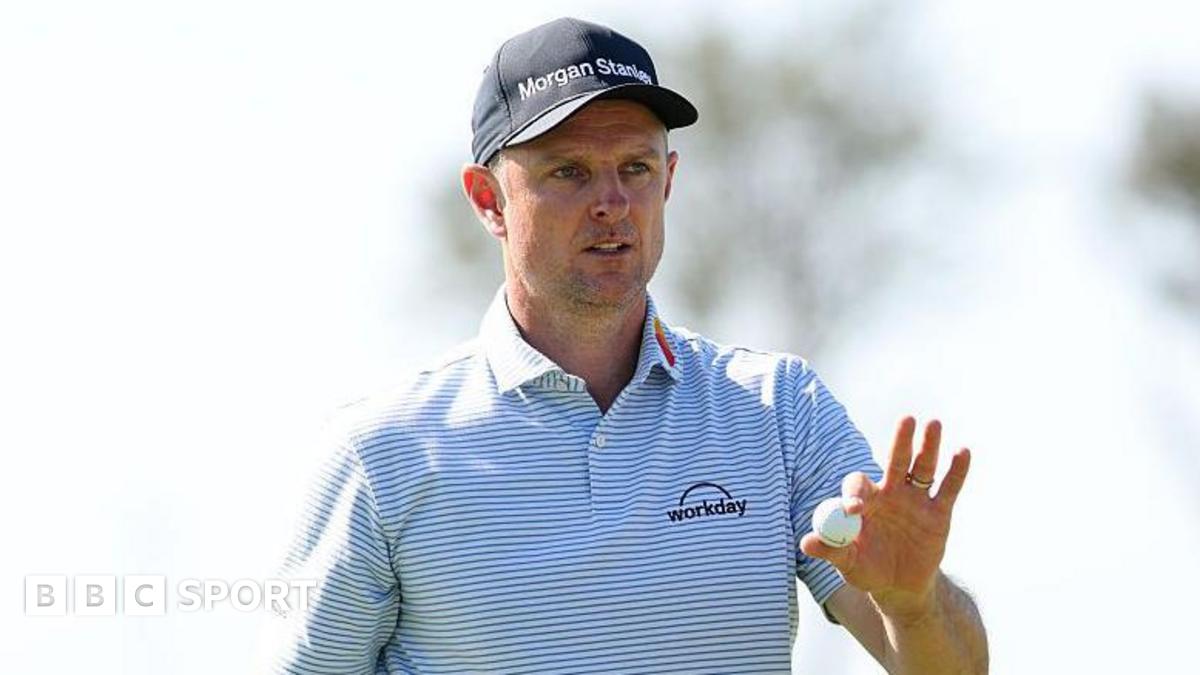
Justin Rose holds a golf ball up

England’s Justin Rose is in a strong position to secure a 13th PGA Tour win after extending his lead to six shots at the Farmers Insurance Open on Saturday.

The 45-year-old, who led by four shots after the second round, recorded seven birdies in an impressive four-under-par 68 on Torrey Pines’ formidable South Course to lie 21-under for the tournament.

American Joel Dahmen, who had five birdies and a bogey in a round of 68, is two shots clear in second.

Rose has led from the first round and has the largest 54-hole lead at the tournament since Tiger Woods led by eight in 2008.

Advertisement

The best winning score in the tournament’s history is 22 under – by Woods in 1999 and George Burns in 1987.

“My only hope is if he doesn’t set his alarm or he somehow starts hitting in the rough on the back nine maybe,” Dahmen told PGA Golf.

“The way he’s playing and what he’s doing, I would be pleased with second place.”

Rose, who was runner-up in the 2025 Masters, claimed his last PGA Tour win in August, winning the FedEx St Jude Championship.

Advertisement

Having shot rounds of 62 and 65, Rose was in total control until bogeys on the 11th, 12th and 16th trimmed what had been an eight-shot lead.

“It’s another great round in good weather on an awesome golf course,” Rose told PGA Golf.

“There’s never going to be any complacency.

“I think there’s always enough respect for the game of golf in the back of your mind that you’ve got to do everything right tomorrow. You’re going to come out, have to be focused, have to play well.”

Advertisement

Five-time major winner Brooks Koepka, in his first tournament back on the PGA Tour since leaving LIV Golf, shot a one-over-par 73 to head into the final round in a tie for 61st.

Ireland’s Seamus Power, who was four shots back after his second round, is now 10 back after a disappointing third-round 74.

Source link

Advertisement
Continue Reading
Click to comment

You must be logged in to post a comment Login

Leave a Reply

NewsBeat

Rachel Reeves slashes bills for thousands of businesses as Iran war sparks rising costs

Published

on

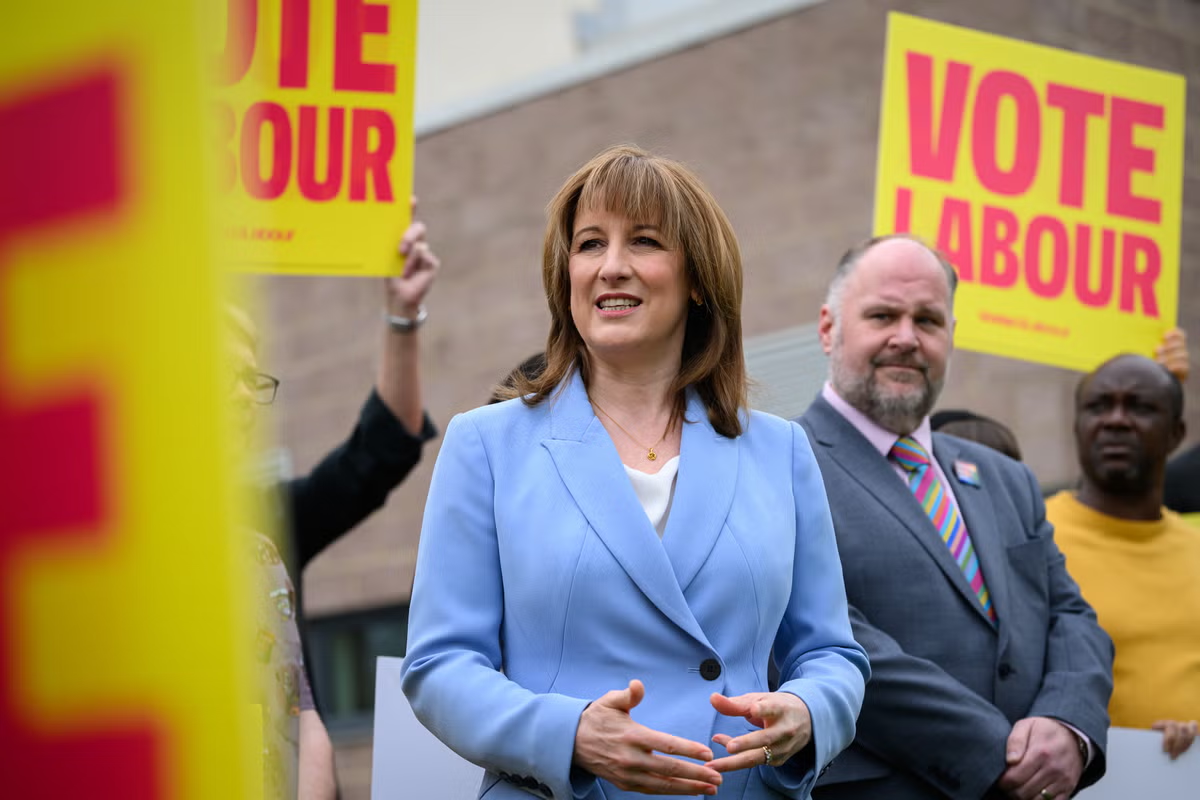
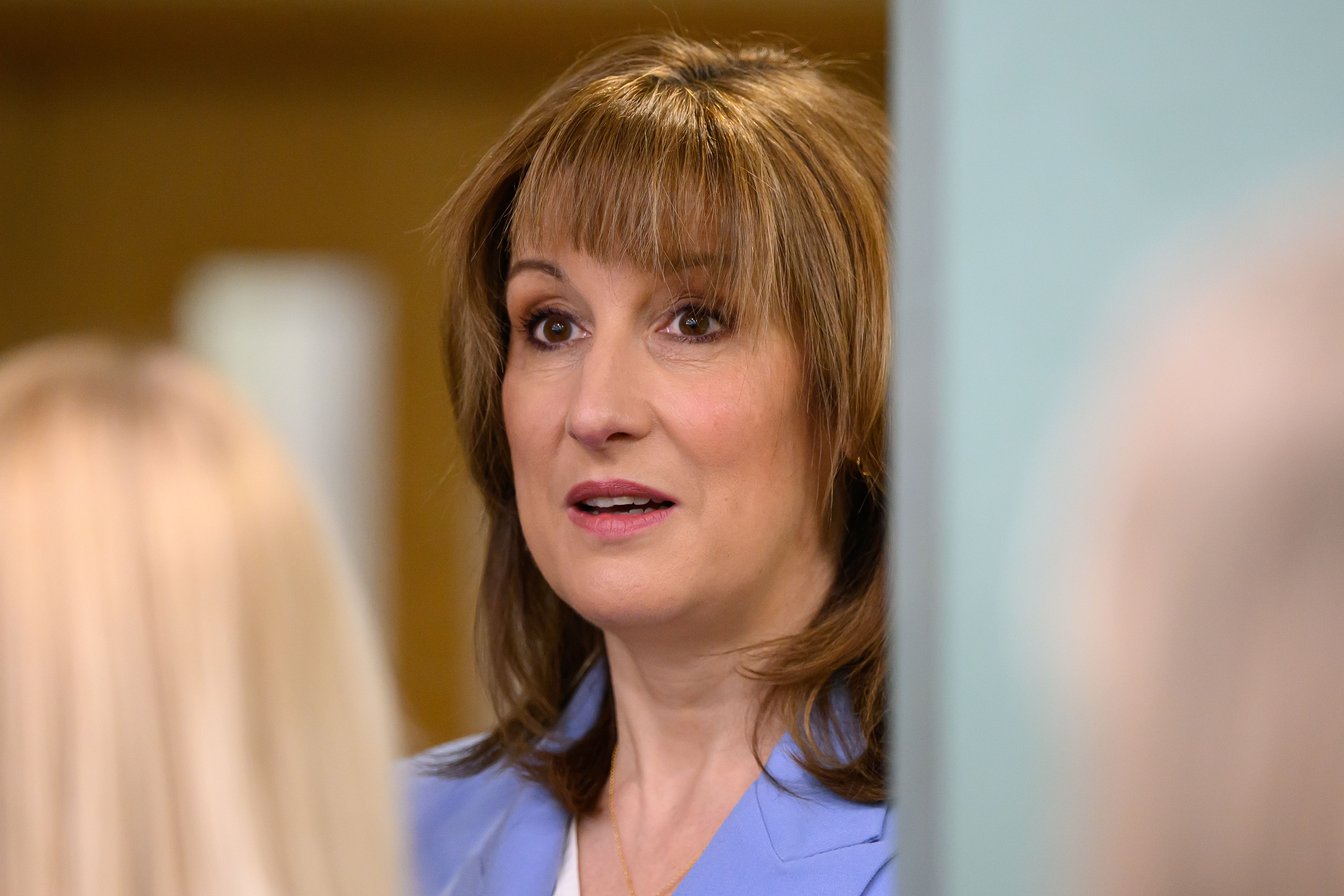
Rachel Reeves slashes bills for thousands of businesses as Iran war sparks rising costs

Rachel Reeves has announced an expansion of plans to reduce electricity bills for thousands of UK manufacturing firms, as she continues high-level talks in Washington focused on the economic fallout from the Iran conflict.

Ms Reeves, who is in Washington for the International Monetary Fund (IMF) spring meetings, stated the plan would help UK businesses compete and create jobs despite the uncertain economic backdrop.

During her trip, she intensified her criticism of US-Israeli military actions in Iran, saying war was a “mistake” and had not made the world a safer place.

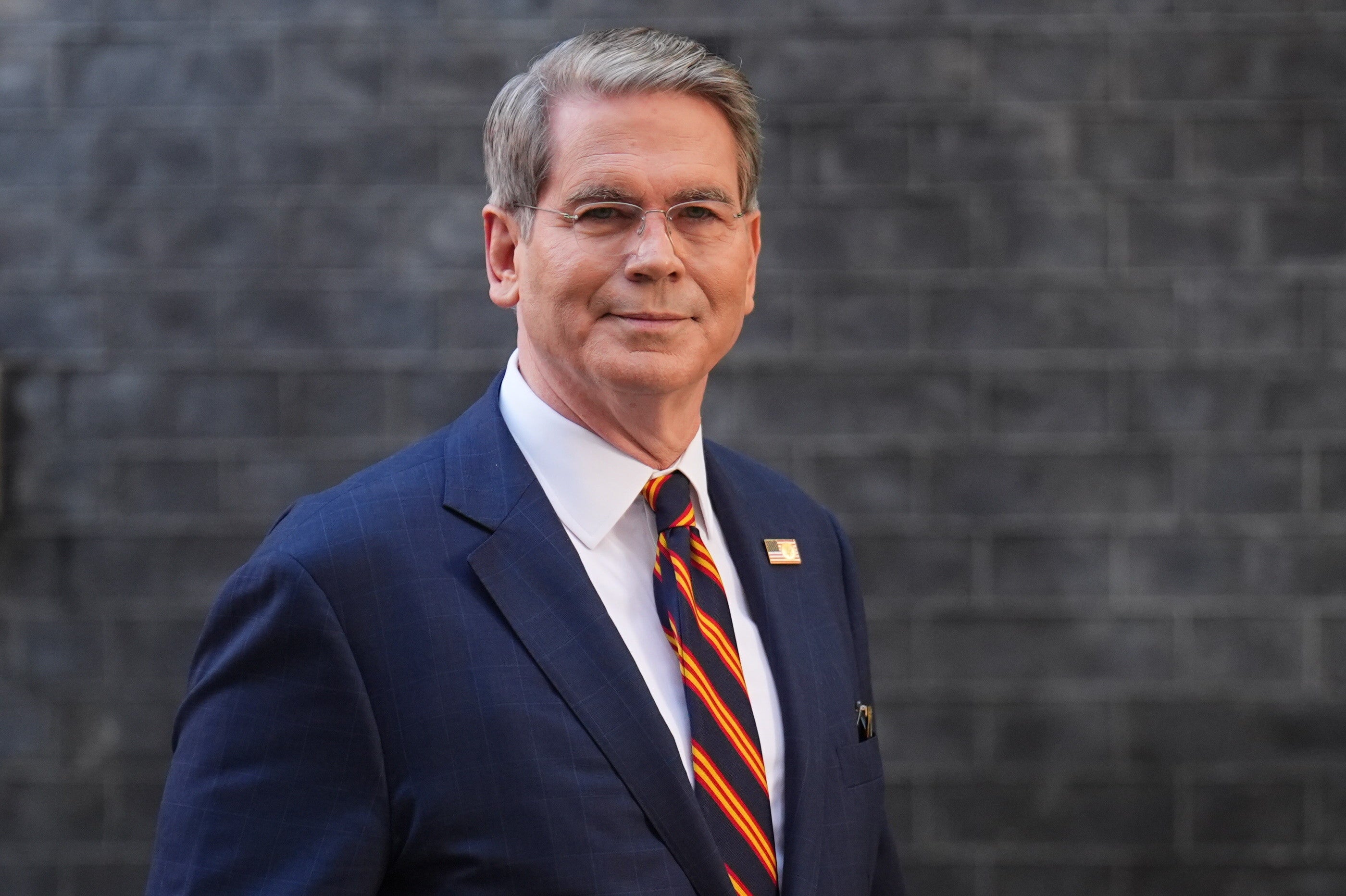
Her comments came as she was due to meet US Treasury Secretary Scott Bessent, who has referred to the impact of the war as “short-term volatility for long-term gain,” which he said would prevent Tehran developing a nuclear weapon.

Advertisement

Ms Reeves also cautioned against “knee-jerk responses” to the cost-of-living crisis triggered by the war in a joint statement with international counterparts at the IMF.

In a bid to help businesses hit by rising costs, the British Industrial Competitiveness Scheme (BICS), a plan announced last summer to cut electricity bills by up to 25 per cent for more than 7,000 UK businesses, will now be expanded to cover 10,000 firms.

From 2027, BICS will cut costs by up to £40 per megawatt-hour by exempting businesses from certain extra charges that currently support green energy and back-up power supply systems.

Rachel Reeves is due to meet US Treasury Secretary Scott Bessent, who has referred to the impact of the war as ‘short-term volatility for long-term gain’ which he said would prevent Tehran developing a nuclear weapon.

An additional one-off payment in 2027 will be given to an extra 3,000 businesses, including companies in the automotive, aerospace, steel and pharmaceuticals sectors.

The Government said it will also cover the support firms would have received if the BICS had been in place from this month.

Advertisement

The scheme is expected to be worth up to £600 million per year from next April.

Ms Reeves said: “This Government has the right plan for the economy: backing British industry, cutting electricity costs and building a stronger, more resilient future.

“Today’s announcement will cut energy bills for over 10,000 manufacturers, helping businesses to compete, win and create good jobs across the country, and to deliver our modern industrial strategy.”

Business Secretary Peter Kyle said: “We are a Government of action, and when global instability puts businesses under pressure we’ll always do what’s needed to support them and ensure Britain’s resilience.

Advertisement
Rachel Reeves also cautioned against
Rachel Reeves also cautioned against “knee-jerk responses” to the cost-of-living crisis triggered by the war in a joint statement with international counterparts at the IMF (PA Wire)

“By extending the reach of BICS by 40%, we’re acting decisively to tackle the number one issue that businesses face head-on.”

Household energy bills are forecast to increase this year because of the conflict pushing up global oil and gas prices, while motorists are already feeling the impact of higher costs at the pump.

Ms Reeves has signalled that any energy bill help this year will be targeted at the poorest households, rather than a universal bailout of the type offered by Liz Truss when she was prime minister after the Russian invasion of Ukraine.

The White House has said talks are ongoing about holding fresh face-to-face negotiations between the US and Iran and that Washington had not yet formally requested an extension of the ceasefire due to expire next Tuesday.

Source link

Advertisement
Continue Reading

NewsBeat

World Snooker Championship draw hands Ronnie O’Sullivan a debutant

Published

on

World Snooker Championship draw hands Ronnie O'Sullivan a debutant

Zhao Xintong (1) vs Liam Highfield

Ding Junhui (16) vs Dave Gilbert

Xiao Guodong (9) vs Zhou Yuelong

Shaun Murphy (8) vs Fan Zhengyi

Advertisement

John Higgins (5) vs Ali Carter

Ronnie O’Sullivan (12) vs He Guoqiang

Chris Wakelin (13) vs Liam Pullen

Neil Robertson (4) vs Pang Junxu

Advertisement
Masters champion Kyren Wilson is third seed at the Crucible (Picture: PA Wire)

Kyren Wilson (3) vs Stan Moody

Mark Allen (14) vs Zhang Anda

Barry Hawkins (11) vs Matthew Stevens

Advertisement

Mark Williams (6) vs Antoni Kowalski

Mark Selby (7) vs Jak Jones

Wu Yize (10) vs Lei Peifan

Si Jiahui (15) vs Hossein Vafaei

Advertisement

Judd Trump (2) vs Gary Wilson

Source link

Advertisement
Continue Reading

NewsBeat

France ‘preparing for terror attack on London’ as tensions high over Trump’s Iran war

Published

on

Daily Mirror

French diplomats in London have reportedly carried out a ‘crisis management’ operation where they have practised how they would react to a terror attack as tensions rise globally amid the Middle East crisis

France has reportedly carried out a “crisis” exercise as it prepares for a terror strike on London.

With tensions soaring around the world following the US-Israel strikes on Iran and the retaliatory drone attacks in the Middle East, there are fears that the violence could spread to other regions.

French diplomats in London are understood to have carried out a “crisis management” operation where they have practised how they would react to a major incident.

Advertisement

The number of national security cases involving activity by hostile states including Iran has increased 50% in six months, the head of UK counter-terrorism policing said last month.

And the French plan is reportedly aimed to cover all types of crises including a terror attack on the UK capital where diplomats at France’s Embassy in Knightsbridge could be flown back to France under the direction of the Centre de Crise et Soutien (CDCS – Crisis and Support Centre) based in Paris.

There is already close co-operation between France and the UK over security measures where police can be seconded to protect ministries the other country.

As preparation for a “crisis” plans are understood to have also been put in place where French consular staff would support citizens in trouble which could include the emergency issuing of passports and repatriation flights, reports the Standard.

Advertisement

This is a Breaking News story. You’ll be more likely to see our stories when any big news breaks in future by simply by clicking this link . You can also join The Mirror’s WhatsApp Community or follow us on Google News , Flipboard , Apple News , TikTok , Snapchat , Instagram , Twitter , Facebook , YouTube and Threads – or visit The Mirror homepage .

Source link

Advertisement
Continue Reading

NewsBeat

BBC unveils first look Ludwig images as ‘best show on TV’ set to return

Published

on

Wales Online

Fans said they ‘can’t wait’ after the BBC shared first look images from Ludwig series two

Ludwig fans were excited as the BBC released a first glimpse of its forthcoming series.

Advertisement

The detective comedy, fronted by David Mitchell and Anna Maxwell Martin, proved a resounding success when it debuted in 2024, with audiences hailing it as “perfect” and calling it “the best show on TV”. The show is due to return for a second series this year, with reports suggesting a third run may already be in the works, reports the Mirror.

Posting images from the new episodes on Instagram, the broadcaster teased: “Ready for Ludwig Series 2? Here’s your first look at David Mitchell, Anna Maxwell Martin and the crew. Mark Bonnar and Sian Clifford are among the new faces joining the cast for the second series, coming to #iPlayer.”

In the opening series, Mitchell portrayed reclusive puzzle creator John Taylor, who assumes the identity of his twin brother James – a accomplished detective chief inspector in Cambridge – following James’s sudden disappearance. John infiltrates the police station to investigate his brother’s whereabouts, only to find himself entangled in a succession of other cases.

READ MORE: BBC viewers slam ‘annoying’ Ludwig feature in new David Mitchell comedy showREAD MORE: Inside Ludwig star Ralph Ineson’s life from marriage to love of football

According to an official synopsis, the second series follows John in his new role as Crime Scene Consultant, collaborating with DCI Russell Carter (Dipo Ola) on “impossible” crimes for the Cambridge Police Authority.

With James still unaccounted for, John – now an official member of staff – is prohibited from using police resources to search for his brother or uncover the nature of his investigations.

“Of course, John won’t stop and neither will Lucy (Anna Maxwell Martin), John’s sister-in-law and wife of his missing brother James – a puzzle needs solving and a husband and father needs bringing home,” the synopsis continued. “One masquerade may have ended, but a new one has just begun.”

Advertisement

Fans of the programme were delighted by the announcement, with one proclaiming on Instagram: “Hells yes.”

“Amazing news,” enthused another, while a third posted: “Loved the first series. So good. Can’t wait to see what the new series will bring.”

“Fantastic show so glad it’s back,” wrote another, as one follower commented: “Dreamy teamy.”

Advertisement

“Someone else remarked: “Oh so so so SO good.” “Can’t wait for this,” added another fan.”

Several viewers also noted the “impressive” cast, which features new additions Mark Bonnar as newspaper editor Gareth Fisher, and Sian Clifford as local MP Joanne Kemper.

“The STAR POWER of it all,” exclaimed one, while another chimed in: “Cannot wait for this!! Great line up.”

Ludwig will air later this year on BBC iPlayer and BBC One.

Advertisement

Source link

Continue Reading

NewsBeat

‘It’s no wonder kids are obese – these are the reasons’

Published

on

'It's no wonder kids are obese - these are the reasons'

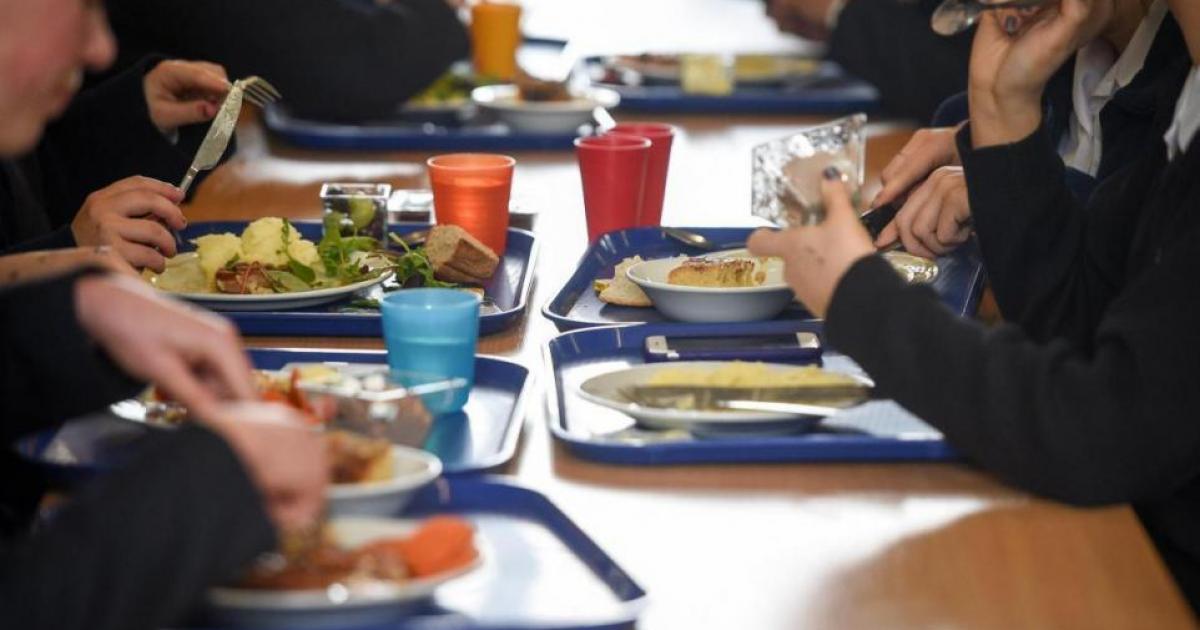
SO schools are now dropping frying of any type from their dinner menus and introducing healthier options in the hope for healthier children and less obesity.

Growing up in the 1950s our diet was more bland and very much reliant on seasonal vegetables and fruits.

The access to exotic foods (to us then) from all around the world was rare but now common.

Advertisement

When growing up, curries, Chinese fare, pizzas, kebabs, spaghetti bolognese, burritos and the like were alien to us.

The vegetables were own grown – fork to plate in 30 minutes.

The meat and bread came from the local butcher and baker.

I thoroughly enjoyed the school meals – in particular the puddings: jam roll-poly, chocolate, and spotted dick puddings were beautiful.

Advertisement

But with no TV or mobile phones, we played outside, went cycling and swimming, digging and maintained the garden and walked everywhere.

We were active and healthy.

Now with ready meals, mobile phones, computers, being run around in vehicles, and the inactivity for most children it is no wonder kids are obese.

D M Deamer,

Advertisement

Penleys Grove Street,

Monkgate,

York

Advertisement

Tories to blame for run down armed services

TJ Ryder is very critical of Prime Minster Starmer for the problems of a ship in the Royal Navy sent to Cyprus (Letters, April 14).

The ship’s departure was delayed by three weeks by problems on board, and needed further attention on reaching Cyprus.

It is not Starmer who should be blamed for this.

Advertisement

After the Soviet Union collapsed in 1991, the Western powers reduced spending on defence, taking advantage of the peace dividend.

In the past 20 years or so, the British armed forces have been hollowed out to save money. Both Labour and Conservative governments have been guilty of this. But I blame the Conservatives more because they have been in power for most of this time.

By tradition, the Conservatives are stronger on defence than Labour. But not recent Conservative administrations.

I believe that Starmer is aware of the problem, but has yet to persuade his MPs to spend more money on defence, and less on social care.

Advertisement

And the ship? Ships are large and complex, and need large and complex facilities for their maintenance. Perhaps TJ Ryder would be willing to pay higher taxes to this end.

David Martin,

Rosedale Avenue,

Acomb,

Advertisement

York

Time to re-nationalise the Royal Mail

IN a recent letter to The Press Mr Rickaby quite understandably commented about the rising cost/slower delivery time of our mail.

Advertisement

In the next paragraph of that letter he once again complained stridently about our “ultra-left socialist” government and seemed to imply that it is the fault of the Government that the price of stamps is so high.

I ask him to consider that however appallingly terrible things have become in the USA, the US Postal Service is just that – a government-run service.

This is surprising in a country many of whose citizens equate “socialism” with “communism”, but nevertheless the cost of postage is far less than that charged by our privatised Royal Mail.

It is way past time the Royal Mail was re-nationalised. Sending letters and greetings cards should not have become a luxury to be enjoyed only by the well-off.

Advertisement

M Hardy,

Heworth,

York


What do you think?

Advertisement

Feel strongly about an issue? Write us a letter. Please write no more than 250 words and you must provide your full name, address and mobile number. Send your views by email to: letters@thepress.co.uk


Write a comment

Join the debate and leave a comment in our comments section below this article – we may use your comments for a follow up article.

Advertisement

Source link

Continue Reading

NewsBeat

Passengers fell off seats as train driver sped through Cambridge junction

Published

on

Cambridgeshire Live

The driver was speeding by 31mph, which caused the train to ‘lurch sideways’, investigators found

Passengers on a Great Northern train fell from their seats after a train driver sped through Cambridge Junction. The London King’s Cross to Ely train travelled at 56mph through a junction with a speed restriction of 25mph on December 11, 2025.

Advertisement

The incident happened at 10.39am when the 10.12am Great Northern service travelled at too high a speed across Cambridge Junction, north of Hitchin station in Hertfordshire, according to the Rail Accident Investigation Branch (RAIB).

The excessive speed caused the train to “lurch sideways” with “several passengers falling from their seats onto the floor”, according to RAIB. No injuries or damage were reported.

RAIB concluded that this incident occurred because the newly-qualified driver who had been approved to drive unaccompanied 11 days earlier, expected the train to go via the higher speed route over the flyover towards Cambridge. The RAIB said the information provided by the signalling system did not change that expectation.

A spokesperson for Great Northern said: “Nothing is more important to us than the safety of our services and passengers, and we welcome the findings published by the RAIB. While there were no injuries as a result of this incident, we take it extremely seriously.

Advertisement

“We are working closely with RAIB, Network Rail and the Office of Rail and Road to fully understand the learnings and to ensure any appropriate actions are identified and implemented.”

The spokesperson continued: “We will continue to review our own processes, including driver training and route risk management, and we will play an active role in the wider industry work already under way to reduce the risk of over speeding at complex junctions.”

Source link

Advertisement
Continue Reading

NewsBeat

Man breached restraining roder against ex he assaulted

Published

on

Man breached restraining roder against ex he assaulted

Blackburn Magistrates’ Court heard the victim had invited Ryan Richards to her home despite the restraining order being made after he was convicted of assaulting her.

Richards, 35, of Rigby Avenue, Blackrod, Bolton, pleaded guilty to breach of a restraining order.

He was sentenced to eight weeks in prison and ordered to pay a £154 victim surcharge on release.

Advertisement

Graeme Tindall, prosecuting, said the restraining order had been imposed in January when Richards had been jailed for an assault on his partner.

He was released from prison on March 17.

Mr Tindall said officers were in Henry Street, Blackburn, when they saw Richards with his ex-partner.

They made some checks and then went to her address in Hope Street. She said it had not been Richards she was with, but officers found him in the house.

Advertisement

“He will say he was invited there and I can’t dispute that,” said Mr Tindall.

“However, it is still a breach of an order made against him.”

Arslan Younis, mitigating, said Richards had the offer of a job as a mechanic and was looking to turn his life around.

“It was his ex-partner who invited him round, but he understands it is he who has breached the order,” said Mr Younis.

Advertisement

Source link

Continue Reading

NewsBeat

How a volunteer unit became Ukraine’s 40,000-strong corps

Published

on

How a volunteer unit became Ukraine's 40,000-strong corps

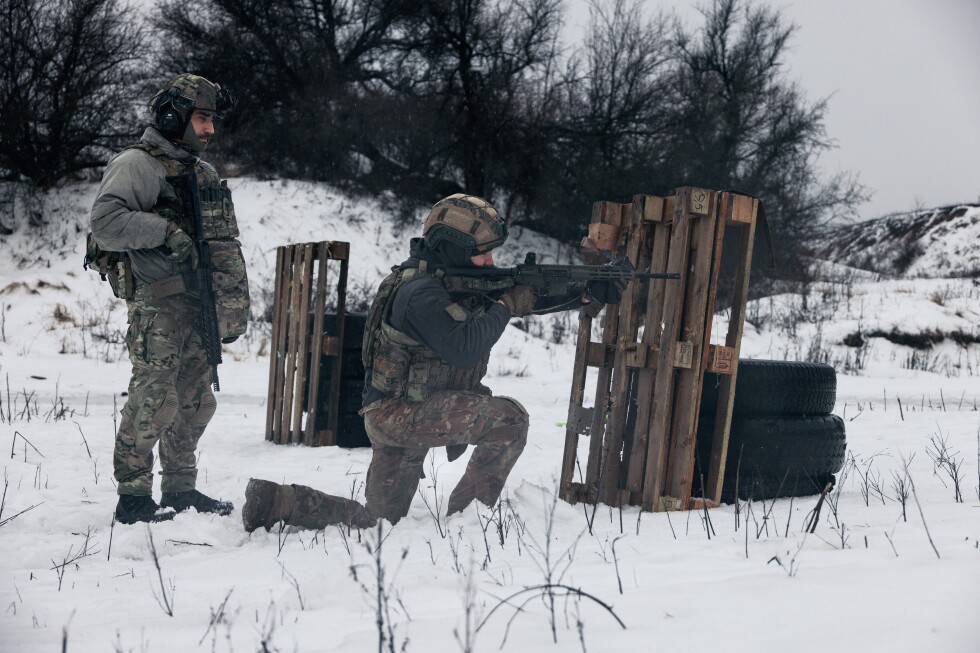
KHARKIV, Ukraine (AP) — When a Ukrainian agricultural tycoon founded a volunteer unit of 30 people in the early days of Russia’s invasion, he had no certainty he would live to see what came next — but he did, and so did the force he created.

The group is now a 40,000-strong corps widely seen as one of Ukraine’s most effective fighting formations within official defense forces.

“Ukraine needs to have an effective modern army. And this is our number one guarantee of the country’s security,” said Vsevolod Kozhemyako, owner of a large agricultural conglomerate and now an adviser to the Commander of the Khartiia Corps.

Its rapid expansion reflects a broader transformation of Ukraine’s military, part of a new wave of formations, alongside the Third Army and Azov Corps, breaking with Soviet-era practices long criticized by soldiers.

Advertisement

As talks on a potential peace settlement stall and global attention shifts to the Middle East, Ukraine continues to seek firm security guarantees from its allies, particularly the United States.

But for many in Ukraine, the war has reinforced a different conclusion: the country’s strongest guarantee may ultimately be its own army.

“We have kids, we have grandkids, and we will stay on this territory,” Kozhemyako said. “The future of this country depends on us.”

Soviet legacy vs. new model

After the Soviet Union collapsed, Ukraine inherited a large military and arsenal. But by 2014, Russia’s annexation of Crimea and armed conflict in eastern Ukraine exposed weaknesses from underinvestment, corruption and a lack of clear strategy, prompting an influx of volunteers and long-overdue military reforms.

Advertisement

Those changes helped Ukraine withstand the 2022 invasion, but as the war dragged on, some of its deepest problems — rigid top-down leadership, excessive bureaucracy and a culture where bad news is often hidden out of fear of punishment — began to reassert themselves, with consequences on the battlefield.

From the outset, Kozhemyako said his unit would have to take a different path. He said he understood the shortcomings of the regular army as an active military member since 2014 who was surrounded by veterans.

“They didn’t want to join the post-Soviet army, but they wanted to fight,” Kozhemyako recalled.

Many of them were civilians with a background in business, he said. They brought their own leadership mindset and sought to build a structure that valued initiative.

Advertisement

It began with studying and applying U.S. Army planning methods, combining them with battlefield experience and adapting as the war evolved. The unit introduced Western protocols such as Troop Leading Procedures (TLP) and After Action Reviews (AAR), relying on in-house experts to refine them.

TLP allow lower-level units to plan operations faster, which is critical for exploiting narrow windows of opportunity on the battlefield. AAR push soldiers to identify what happened, why and how to improve, a process the corps has applied with particular rigor to its fast-evolving use of technology.

Advertisement

Trust and technology are the new tactics

The Khartiia’s focus on rapidly evolving technologies has drawn attention beyond Ukraine’s borders. In an article published in Military Review, the U.S. Army’s professional journal, Maj. Gen. Curtis Taylor pointed to Khartiia’s December 2024 drone assault near Kharkiv as a landmark moment — the first all-robot attack on Russian positions. For the U.S. Army, he argued, it was a call to rethink how its own armored formations must adapt to survive on the modern battlefield.

That technology is now part of daily operations. When a 23-year-old platoon commander was transferred to Khartiia from a regular unit, he was put in charge of ground robotic systems used routinely for supply delivery and evacuation.

He and other soldiers quoted in this story spoke on condition of anonymity, in keeping with Ukrainian military protocol, although higher ranking officials can speak on the record.

The soldier said he was struck by how little emphasis was placed on rigid formalities that had defined his previous unit — from strict dress codes to repetitive routines unrelated to combat.

Advertisement

“People understand why we are here, and they don’t overload us with unnecessary tasks,” he said, having paced the military position just moments earlier in a pair of blue plush house slippers.

He also pointed to a different relationship with commanders, contrasting it with a rigid hierarchy he had experienced before, where fear of punishment often discouraged honest communication.

“When officers look at you from above, like in rear units, they become almost like enemies to you,” he said. “In Khartiia, relationships are different. When you go on a mission, you trust the people giving you orders.”

Business tools for battlefield results

The results have been tangible on the battlefield. In December 2025, the Khartiia Corps led a counterattack in the Kupiansk direction, liberating several villages north of the city and pushing to the Oskil River. The Institute for the Study of War said that seizing Kupiansk had been a Russian priority since mid-2025, but despite months of effort, Russian forces were unable to make significant gains in that area.

Advertisement

The Khartiia Corps has had no major setbacks, and did not share the number of troops wounded or killed, as is customary for both sides of the war.

The Washington-based think tank assessed in December that the operation demonstrated Ukrainian forces remain capable of “conducting successful counterattacks and making tactically significant gains, particularly when Russian forces are overstretched.”

Relying largely on its own recruitment and fundraising, the corps has built a professional HR system and a strong brand, actively using YouTube and social media, partnering with public figures and making it easy to donate online.

A Ukrainian military officer involved in the public outreach for one of the Ground Forces’ units said the Third Army Corps, and then Khartiia, became trendsetters in this space whose campaigns others actively study when building their own. The two corps were among the first to build their own brands, something that now plays a critical role for the army as it faces a constant need to recruit.

Advertisement

“The approaches that work in the commercial sphere translate perfectly here — only you are competing not for profit, but for people, equipment and attention of the volunteers,” he said.

Spreading the model

Stepping into one of Khartiia’s underground command posts, it feels more like a gaming room than a military hub. But instead of video games, large screens stacked wall-to-wall glow with real-time reconnaissance footage from the front line in Ukraine’s Kharkiv region. Overseeing it all is a former bodybuilding coach who rose through the ranks from soldier to senior officer, dressed in a Khartiia hoodie with an energy drink by his keyboard.

“One of our secrets is that we don’t spare people during training — we train them constantly,” he said. “But during combat, it’s the opposite. People come first. We don’t save drones or equipment at the expense of our people.”

It is a philosophy that Khartiia is now trying to spread by forging direct alliances with formations that share the same approach.

Advertisement

The Khartiia and the 3rd Army Corps recently launched a joint training initiative, sharing resources and expertise to build a common way of fighting.

For the commanders, who are also neighbors on the front lines, the motivation is practical: after months of exchanging tactics, both units identified the same critical vulnerability in the broader army — a desperate need to overhaul basic combat training for soldiers, sergeants and junior officers.

Ihor Obolienskyi, commander of the Khartiia Corps, estimated that about 300,000 troops are currently deployed along the front line, with the two corps accounting for roughly 80,000 — enough, he said, to drive meaningful change within the military, even as reform remains difficult in what he described as an inherently inert system.

Commanders from other units have already approached the corps to learn from their model, suggesting a growing demand within the army for change.

Advertisement

Yet it is unclear if senior command is ready to abandon its Soviet legacy.

“We want to give a tool to the General Staff,” said Andrii Biletskyi, the commander of 3rd Army Corps, during a joint briefing. “Whether they accept it or not — that is their decision.”

——

AP reporter Volodymyr Yurchuk contributed to this report.

Advertisement

Source link

Advertisement
Continue Reading

NewsBeat

Finn Russell lined up for major off-field move and Welsh star dealt cruel injury blow

Published

on

Wales Online

Here are your rugby morning headlines for Thursday, April 16.

Finn Russell in talks over major off-field move after London meetings

Finn Russell could be set for a major move away from the pitch after holding talks with Eddie Hearn’s Matchroom talent agency, according to a report by City AM.

The Scotland fly-half is said to have met with Matchroom representatives in London last weekend as discussions continue over the possibility of joining the agency’s rapidly expanding roster, which already includes England star Henry Pollock.

Advertisement

It would be another eye-catching step for Hearn’s new talent arm, which has wasted little time making inroads into rugby after launching last month.

Pollock became Matchroom’s first rugby signing just two weeks ago, with Hearn hailing the Northampton Saints back-row as a player who could “ignite” the sport.

Now Russell appears to be the next major target.

The Bath playmaker is already one of the most recognisable personalities in European rugby, with his talent and flair making him a natural fit for the sort of crossover commercial opportunities Matchroom specialises in.

Advertisement

Hearn himself has previously spoken glowingly about the Scot, saying earlier this month: “There’s nothing signed or agreed with Finn Russell, but I’m also aware he’s one of the greatest players in the world, and he’s a fantastic ambassador and a great personality.”

JOIN OUR WALES RUGBY FACEBOOK PAGE Latest news, analysis and much more

Wales wing dealt cruel injury blow

Wales have been dealt an early Six Nations blow with wing Lisa Neumann ruled out of the remainder of the tournament through injury.

The WRU has confirmed the experienced Harlequins back suffered a hamstring problem in the opening-round defeat to Scotland and will play no further part in the championship.

Advertisement

Neumann, 32, had started the 24-19 loss and was one of Wales’ brighter performers before being forced off during the second half at the Principality Stadium.

Her absence is a significant setback for Sean Lynn heading into a daunting second-round clash with France at Cardiff Arms Park on Saturday.

The winger’s replacement in the squad is yet to be confirmed, with the WRU expected to announce that in due course.

It leaves Lynn weighing up a number of options out wide.

Advertisement

Jasmine Joyce is the most obvious ready-made solution after being left out of the matchday squad for the Scotland game, while Catherine Richards and uncapped Nikita Prothero are also in the wider mix.

Centres Carys Cox and Courtney Keight can both shift to the wing if Wales opt for a reshuffle in the backline.

Speaking after the injury setback, Lynn admitted Neumann will be a “big loss” for his side, particularly given the form she had shown recently.

“I thought she played really well, she’s been playing well with Brython Thunder in the Celtic Challenge,” he said.

Advertisement

“Her physicality, the defence and the attack side of it, but we’ve got a competitive squad and I really trust the next individual coming in.”

English talent targeted by France over allegiance switch

France are reportedly monitoring England Under-20 World Cup winner Junior Kpoku as the highly-rated forward’s future takes another intriguing twist.

According to the Daily Mail, the towering 20-year-old has emerged on the radar of Les Bleus selectors after a series of eye-catching performances in the Top 14 and Europe.

Kpoku, who stands at a colossal 6ft 8in, was deployed at flanker for Toulon in their Investec Champions Cup victory over Glasgow at the weekend, underlining both his athleticism and growing reputation in French rugby.

Advertisement

The youngster is currently on loan at Toulon from Racing 92, but the Mail reports the Mediterranean club are keen to secure him on a permanent basis by buying him out of the final year of his Racing deal.

That interest is only heightened by the fact Kpoku will become JIFF-qualified this summer, meaning he will no longer count as an overseas player under French club quota rules after completing three years in the country since leaving Exeter Chiefs.

It is a significant development because that status also edges him closer to potential international eligibility for France further down the line.

The report claims French selectors are keeping a close eye on his progress, with Kpoku set to become eligible for Les Bleus midway through the next World Cup cycle if he remains in the country.

Advertisement

Dragons told to ‘park Europe’ as Tiatia sends clear message

Filo Tiatia has warned his Dragons side to put their European heroics to one side and immediately refocus on the United Rugby Championship as the Vodacom Bulls head to Rodney Parade on Friday night.

The Men of Gwent return to league action buoyed by a stirring run in the EPCR Challenge Cup, having claimed back-to-back away wins over Stade Francais and Zebre Parma to book a semi-final in early May.

But Tiatia’s message ahead of the visit of the South African heavyweights was crystal clear: Europe can wait.

“We must park Europe now – that is the message,” the Dragons head coach said.

Advertisement

The Gwent region have generated real momentum in recent weeks, with their famous win in Paris followed by another impressive road success in Italy, but Tiatia is determined there is no emotional drop-off against one of the URC’s most physical sides.

“We celebrated what we did in Europe, but now we are back on the horse in the URC and we have a good Bulls side coming,” he added.

The Bulls arrive in Newport still firmly chasing a play-off place and Tiatia expects a huge challenge from a side who have remained in the UK since their recent defeat to Glasgow.

“They have been over here for a while and have been together for several weeks and are a good group,” he said. “We’re excited to see them on Friday.”

Advertisement

Despite the upbeat mood around the region, Tiatia admitted there were still lessons to take from the closing stages of the win over Zebre, where Dragons had to dig deep late on.

“We’ve reviewed the game and the last 10 minutes there are definitely areas to tidy up, both sides of the ball,” he said.

The head coach also revealed selection remains fiercely competitive, with Dragons’ recent results creating genuine pressure for places across the squad.

“Every week around selection, players are putting their hands up and playing well, so we’ve had some selection debates,” he said.

Advertisement

That growing internal battle, combined with the buzz created by their European run, has helped raise standards in Newport — and Tiatia wants whoever gets the shirt on Friday to prove they deserve to keep it.

“The mantra hasn’t changed – the guys that get the opportunity to wear it, they have got to play well in it,” he added.

Follow all of our channels to ensure you stay up to date with the latest Welsh rugby news. Sign up to our free daily newsletter here and our WhatsApp channel here for all the breaking news.

Source link

Advertisement
Continue Reading

NewsBeat

Pakistani army chief visits Tehran in bid to broker renewed talks between US and Iran

Published

on

Pakistani army chief visits Tehran in bid to broker renewed talks between US and Iran

CAIRO (AP) — Pakistan’s army chief is set to meet with Iranian officials in Tehran on Thursday in a bid to ease tensions in the Middle East and arrange a second round of negotiations between the United States and Iran after almost seven weeks of war.

The White House said any further talks would likely take place in the Pakistani capital of Islamabad, though no decision had been made on whether to resume negotiations.

The U.S. naval blockade of Iranian ports continued as U.S. Treasury Secretary Scott Bessent said the Trump administration would ramp up economic pain on Iran with new economic sanctions on countries doing business with it, calling the move the “financial equivalent” of a bombing campaign.

Pakistan has emerged as a key mediator after it hosted direct talks between the U.S. and Iran in Islamabad that authorities said helped narrow differences between the two sides. Mediators are seeking a new round before the ceasefire expires next week.

Advertisement

Meanwhile, Trump wrote late Wednesday on Truth Social that leaders from Israel and Lebanon would speak the next day in a renewed effort to broker a ceasefire after the countries’ first direct talks in decades ended the previous day in Washington without a deal. It was not clear what leaders Trump was referring to. The Israeli prime minister’s office did not immediately respond for comment, which was posted before dawn in Israel and Lebanon.

The war has jolted markets and rattled the global economy as shipping has been cut off and airstrikes have torn through military and civilian infrastructure across the region. Oil prices have fallen amid hopes for an end to fighting, and U.S. stocks on Wednesday surpassed records set in January.

Officials say US and Iran are making progress

Even as the U.S. blockade on Iranian ports and renewed Iranian threats strained the ceasefire agreement, regional officials reported progress, telling The Associated Press the United States and Iran had an “in principle agreement” to extend it to allow for more diplomacy. They spoke on condition of anonymity to discuss sensitive negotiations.

Iran’s foreign minister, Abbas Araghchi, took part in a preliminary meeting Wednesday with Asim Munir, Pakistan’s army chief of staff, Iranian state media reported.

Advertisement

But even as mediators worked for peace, tensions simmered.

The commander of Iran’s joint military command, Ali Abdollahi, threatened to halt trade in the region if the U.S. does not lift its naval blockade, and a newly-appointed military adviser to Iranian Supreme Leader Mojtaba Khamenei said he doesn’t support extending the ceasefire.

Mediators seek compromise on sticking points

Mediators are pushing for a compromise on three main sticking points that derailed direct talks last weekend — Iran’s nuclear program, the Strait of Hormuz and compensation for wartime damages, according to a regional official involved in the mediation efforts.

Iranian Foreign Ministry spokesman Esmail Baghaei said Iran is open to discussing the type and level of its uranium enrichment, but his country “based on its needs, must be able to continue enrichment,” Iranian state media reported.

Advertisement

The fighting has killed at least 3,000 people in Iran, more than 2,100 in Lebanon, 23 in Israel and more than a dozen in Gulf Arab states. Thirteen U.S. service members have also been killed.

China calls for Strait of Hormuz to reopen

Chinese Foreign Minister Wang Yi said the window of peace was opening during a phone call with his Iranian counterpart, who briefed him on the latest developments in Iran-U.S. negotiations and Tehran’s considerations on the next step, according to a statement from China’s foreign ministry late Wednesday.

Wang told Araghchi that the situation has reached a critical juncture between war and peace, and said Iran’s sovereignty, security, and legitimate rights should be respected as a littoral state of the Strait of Hormuz, while freedom of navigation and safety through the strait should be ensured.

Since the war began, Iran has curtailed maritime traffic through the Strait of Hormuz, which a fifth of global oil transited through in peacetime. Tehran’s effective closure of the strait sent oil prices skyrocketing, raising the cost of fuel, food and other basic goods far beyond the Middle East, and the U.S. has responded with a blockade on Iranian shipping.

Advertisement

U.S. Central Command said Wednesday that no ships had made it past the blockade since it was imposed two days earlier, while 10 merchant vessels complied with direction from U.S. forces to turn around and reenter Iranian waters.

The blockade is intended to pressure Iran, which has exported millions of barrels of oil, mostly to Asia, since the war began Feb. 28. Much of it has likely been carried by so-called dark transits that evade sanctions and oversight, providing cash that’s been vital to keeping Iran running.

Strikes continue in Lebanon after Washington talks

Meanwhile, Israel pressed ahead with its aerial and ground war in Lebanon. The country’s National News Agency reported airstrikes and artillery shelling throughout southern Lebanon on Wednesday, including near Bint Jbeil, where Israeli forces have encircled Hezbollah fighters.

Israeli Prime Minister Benjamin Netanyahu said Israeli troops were about to “eliminate this great stronghold of Hezbollah” and would continue expanding control of areas in southern Lebanon.

Advertisement

Netanyahu said negotiations are continuing, with disarming Hezbollah a key goal.

The Lebanese Health Ministry said Israel struck three teams of paramedics Wednesday in southern Lebanon, first hitting one team and then two more that rushed to help. The attacks killed three paramedics and wounded six others, the ministry said.

The Israeli military did not immediately respond to a request for comment.

Israel and Lebanon have technically been at war since Israel was established in 1948, and Lebanon remains deeply divided over diplomatic engagement with Israel.

Advertisement

___

Metz reported from Ramallah, West Bank, Ahmed from Islamabad and Corder from The Hague, Netherlands. Associated Press writers Darlene Superville, Aamer Madhani and Joshua Boak in Washington; Julia Frankel in New York and Russ Bynum in Savannah, Georgia, contributed to this report.

Advertisement

Source link

Continue Reading

Trending

Copyright © 2025