Key points after 11th week of Noah Donohoe inquest | Belfast Live
Need to know
The inquest into the death of the Belfast schoolboy resumed this week following the Easter break
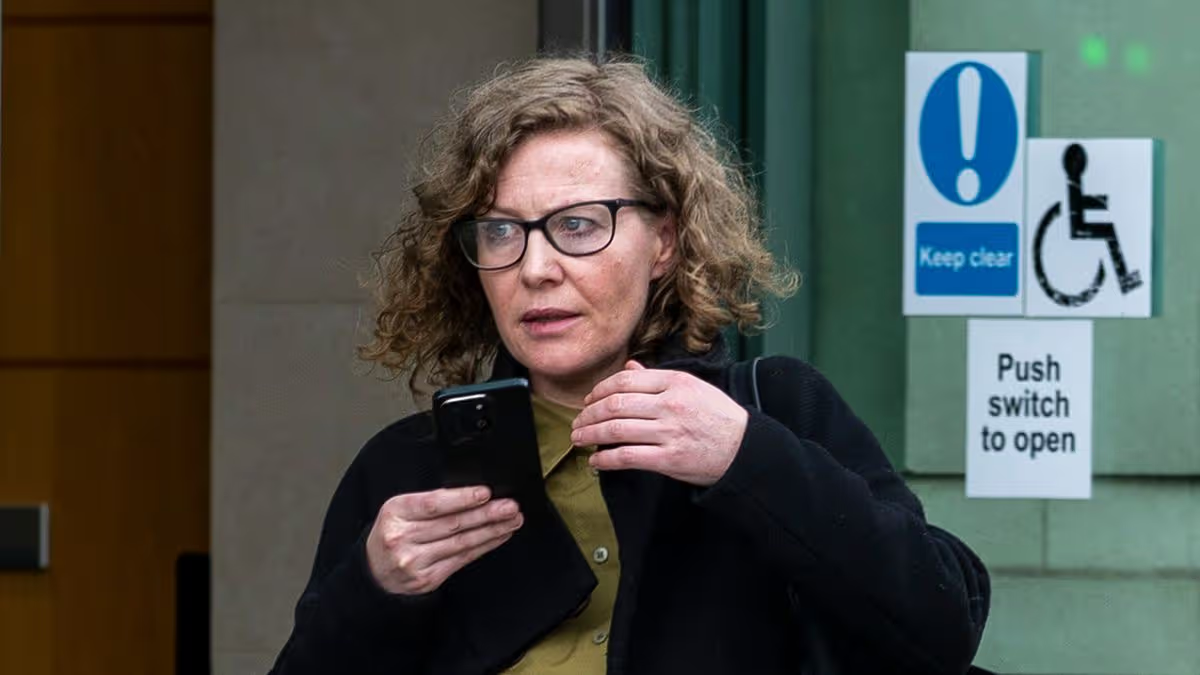
Fiona Donohoe, the mother of 14-year-old Noah Donohoe, leaving Belfast Coroner’s Court on Thursday after sitting in the inquest(Image: Mark Marlow/PA Wire)
The inquest into the death of Belfast schoolboy Noah Donohoe, which is being heard with a jury, resumed for its 11th week following the Easter break on Monday.
It is likely that Noah was alive when he entered a storm drain in north Belfast where he was later found dead, an expert witness told the inquest on Monday. The storm drain tunnel led under the M2 motorway, train tracks and Seaview stadium to Belfast Lough.
The proceedings at Belfast Coroner’s Court heard a report by Professor Carolyn Roberts, who had been commissioned by the Coroner’s Service, and had visited the site as well as considering “extensive material”.
In her report, which was read to the inquest, Prof Roberts found that Noah was likely to have climbed through the bars into the storm drain before drowning.
“The bars of the grille are sufficiently widely spaced that a large child or even a small man could deliberately climb through without undue effort,” her report found. “In my opinion it is hence likely that the boy climbed into (the) culvert entrance alive, slipping between the vertical metal bars of the metal grille.”
Thursday’s hearing was told that there were “insufficient numbers” of police to clear the public from areas being searched for Noah. A retired PSNI officer said “conspiracy theories” on social media encouraged people to gather in north Belfast, and sections of the crowd were “antagonistic” to police.
Retired Inspector Menary, who managed the PSNI hazardous environment search (HES) team, told jurors the unit was sent to the scene on June 23 to examine the area surrounding the storm drain. Mr Menary said his team was not deployed to search the culvert until the morning of June 24 because only two personnel were available, clarifying that this was a search and not a rescue team. He entered the culvert for around 40 minutes, which he described as a “very hostile environment”.
Top chef Angela Hartnett revealed how she takes her favourite pasta dish to the next level
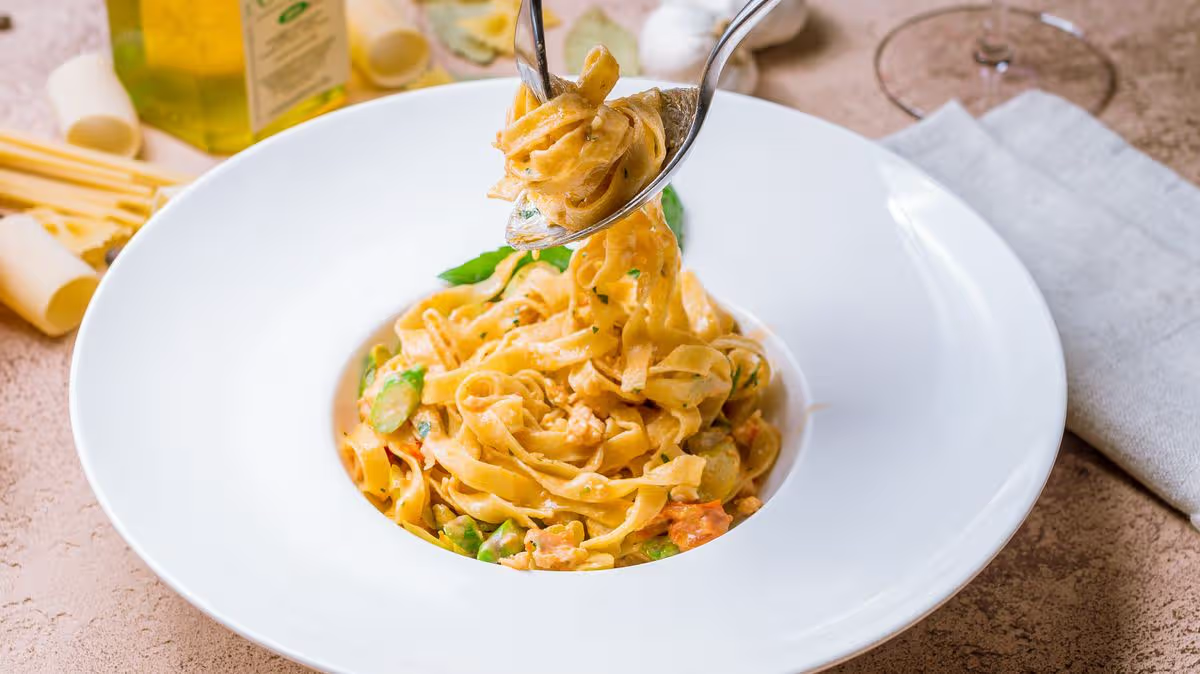
Pasta is a go-to choice for many households when they’re in need of something comforting and quick and easy to prepare. Michelin-starred chef Angela Hartnett recently shared her knack for elevating the simplest of pastarecipes.
Advertisement
In a recent episode of the Dish from Waitrose podcast, Angela whipped up one of her favourite pasta dishes for actress Gemma Arterton. She paired linguine with flavours of the coast, using crab and fennel as the heart of the dish.
What’s even better is that it takes just ten minutes to prepare and 15 minutes to cook, so it works perfectly for a speedy midweek dinner, too. In a clip shared to TikTok, the chef revealed how she takes a simple pasta dish to the next level.
The real secret to any good pasta dish, which Angela swears by, is using pasta water. When adding all of the ingredients to the pan, you want to make sure that you’re adding a splash of the reserved pasta water.
Advertisement
Angela said: “The key to all of this is your reserved pasta water.”
Pour around a cup of the pasta water and then toss all of the ingredients together to coat the pasta. Adding pasta water to sauce acts as a binder that helps to emulsify fats, thickens the texture with starch, and helps the sauce cling to the pasta.
The starchy, salty water prevents watery sauces, binds oil and/or cheese, and allows the sauce to coat each noodle evenly. To add some extra colour and flavour to the dish, you can add a handful of wild rocket leaves to the pasta after everything is stirred together.
Content cannot be displayed without consent
Angela continued: “Mmm, that is lovely. I hope Gemma likes it.”
Advertisement
Gemma described the dish as “beautiful”.
The video has already been viewed over 18,400 times, receiving 972 likes and seven comments, at the time of writing. AA simply commented: “Delicious.”
Another agreed: “God Angela is GORG.”
Here’s how you can recreate Angela’s favourite pasta at home for a true taste of Italy.
Advertisement
Angela Hartnett’s crab, caramelised fennel and red chilli linguine
Ingredients
Two tbsp olive oil
One bulb/s fennel, halved, core removed, then finely sliced
One shallot, finely sliced
150g linguine (or and pasta shape of your choice)
One mild red chilli, deseeded and finely sliced
One unwaxed lemon, zest of half and juice of whole
15 basil leaves, shredded
100g white crab meat
Method
Heat one tbsp oil in a large frying pan over a medium heat, add the fennel and shallot and season. Cover with a lid and sweat gently for five minutes until soft, then uncover and fry for another five minutes, stirring regularly until starting to caramelise.
Meanwhile, bring a large pan of water to the boil and add the pasta. Simmer for one minute less than stated on the pack instructions.
Just before draining, scoop out a mugful of the cooking water and set aside.
Advertisement
Add the chilli and finely grated zest from half the lemon to the fennel, then tip in the drained pasta and six tbsp of the reserved cooking water and toss together. Toss through the juice of the whole lemon and most of the basil and crab meat, then divide between plates and drizzle with the remaining one tbsp oil.
Grind over some black pepper and scatter over the remaining basil to serve.
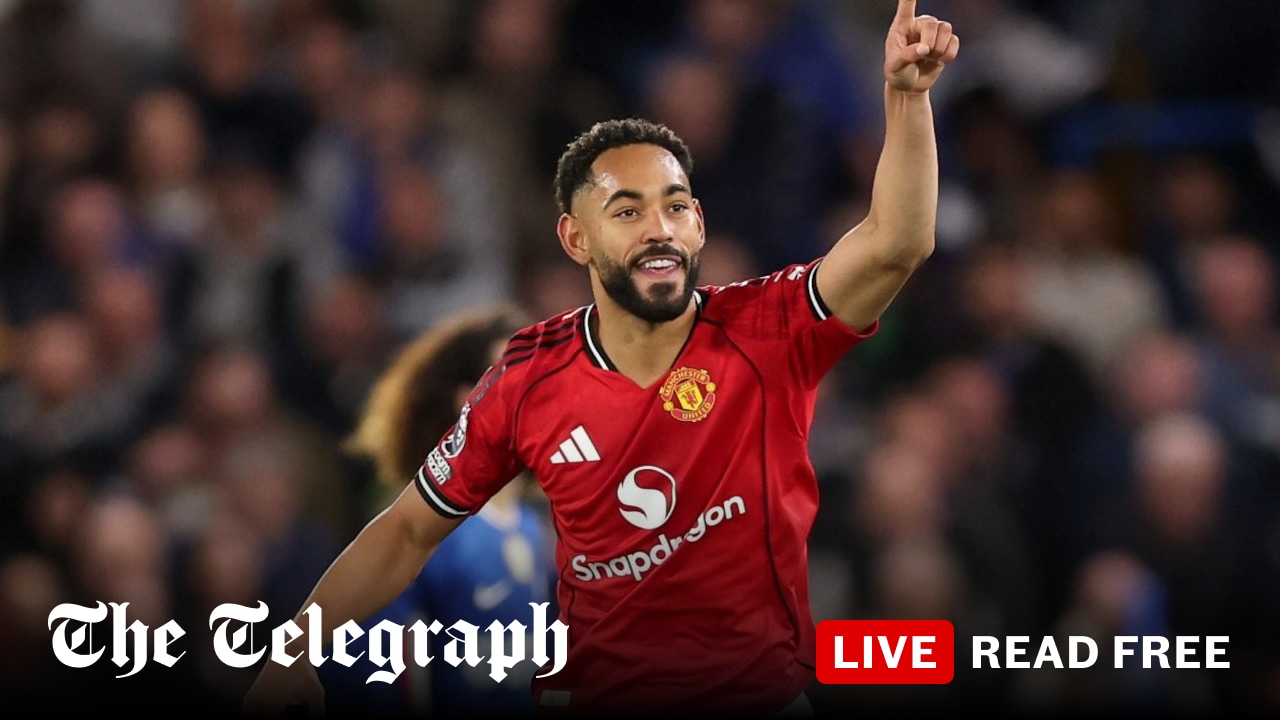
It is sixth versus third at Stamford Bridge as Chelsea host Manchester United, with the race for the Champions League places hotting up. Manchester United won the reverse fixture 2-1 at Old Trafford back in September, with Chelsea spending most of the game down to 10 men after Robert Sanchez’s fifth-minute red card. If Manchester United were to win tonight, they would complete a league double over Chelsea for just the second time after the 2019/20 campaign. Chelsea have lost just one of their last 12 home league meetings with Manchester United.
Chelsea lost 3-0 at home against Manchester City last weekend. Chelsea have just one Premier league win in their last seven games and go into tonight’s game four points behind Liverpool, who occupy the final Champions League place in fifth.
“That is the great thing about the quality we have in this team,” Liam Rosenior said. “We are capable of a run, but capability is one thing and producing it is another. Time is running out, so we need to be as close to perfect as possible in every aspect of the game. If we do that, we have the potential to win every game for the rest of the season.
Advertisement
“When the team was its best with players like John [Terry], Frank [Lampard], Didier [Drogba], it was a team of big personalities fighting for the shirt, not a team of egos. I feel we have those kinds of characters in our squad, and that is what we need to show in this moment.”
Enzo Fernandez has been suspended for their last two games but is back available for selection tonight, although it remains to be seen in what capacity.
Manchester United lost 2-1 at home to Leeds last Monday but remain in third, level on points with Aston Villa, three points ahead of Liverpool and seven ahead of Chelsea.
“It is an important game,” Michael Carrick said. “We are in a good position in the league and we want to keep building on that. It is a tough place to go, always has been. We have had some tough games down there. Most of the time they have been good games in terms of what it brings. It has the feelings of a real, proper game so we will be ready for that. We have prepared well and take the confidence from what we have built. We did not get the result we wanted against Leeds but the character that we showed we have to take into this game with an extra player and make the most of it.”
Advertisement
Manchester United will be without centre-backs Harry Maguire and Lisandro Martinez for the trip to Stamford Bridge due to suspension. Maguire was given an extra game ban for improper conduct following his red card against Bournemouth whilst Martinez was sent off against Leeds. They could have a real centre-back problem tonight with Matthijs de Ligt still out injured and Leny Yoro set to miss out. Kobbie Mainoo though could be fit to return having missed the loss to Leeds.
Iranian officials are still yet to bury the remains of the assassinated Supreme Leader months on from his death, with one security expert claiming the regime is too scared to hold a ceremony
Peter Hennessy UK & World News Editor
00:41, 19 Apr 2026
Reports suggest that Iranian officials are ‘afraid to bury’ the slain Supreme Leader, months after his death.
Now, one security expert claims the delay is down to Tehran being too fearful to carry out the process.
The last state funeral for his predecessor, Ayatollah Ruhollah Khomeini, in 1989 saw millions of Iranians flooding the streets of Tehran in mourning – but similar displays for Khamenei were largely absent during weeks of airstrikes across Iran that claimed many of the regime’s top leaders.
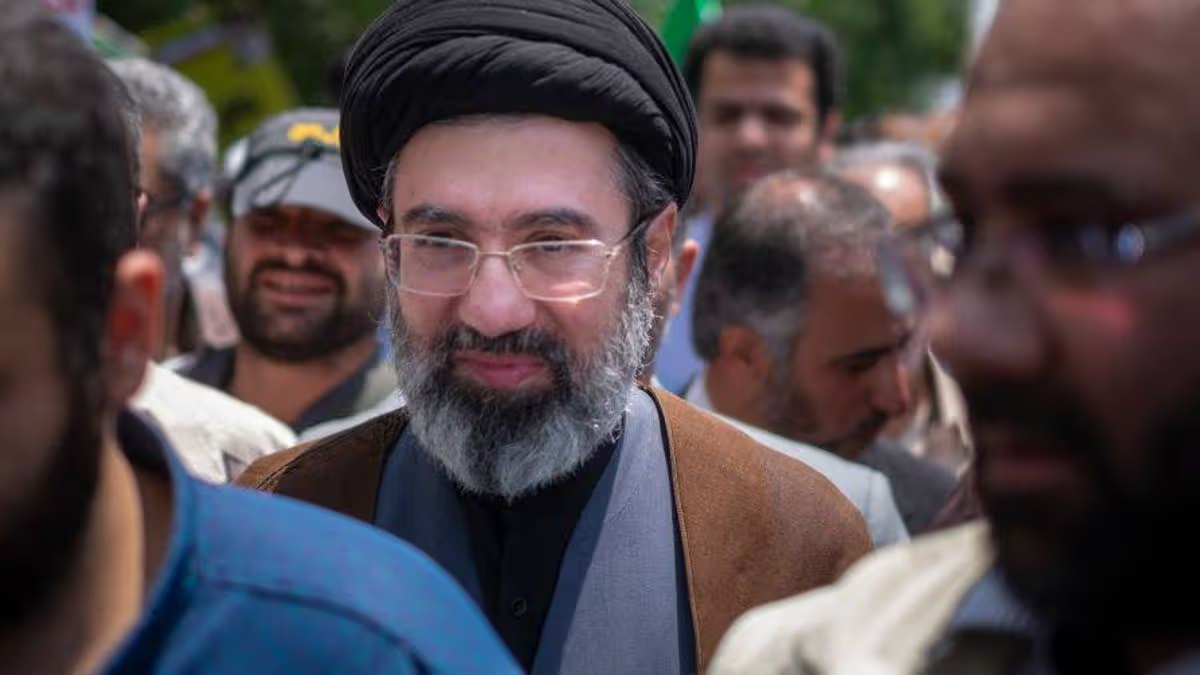
According to reports, a ceremony would risk potential Israeli airstrikes, nationalist counter-rallies similar to the nationwide uprisings earlier this year, and the regime’s need to explain the absence of Mojtaba Khamenei, Khamenei’s son and the new supreme leader, who has not been seen in public since his appointment.
Advertisement
“It speaks volumes that the turnout for the funeral of the regime’s founding father in 1989 was such a massive affair, and yet one generation later his successor is still not able to have a funeral well over a month after his passing,” Taleblu continued.
“The Islamic Republic likes to talk a big game about owning the streets, but a 50-day internet blackout tells you all you need to know. The regime fears the consequences of the truth getting out.”
Iranian officials are now understood to be weighing up the remote northeastern city of Mashhad as a potential resting place for the Supreme Leader, according to state media outlet Fars, as reported by The Australian.
Advertisement
Mashhad, which borders Turkmenistan and lies far from Israel, is Khamenei’s birthplace and holds both practical and symbolic significance.
Among the proposals being considered is a burial site close to a shrine that benefits from a substantial security presence, which would afford protection to the long-serving leader’s grave, according to reports.
The Islamic Republic had initially planned a three-day state funeral commencing on 4th March, but those plans never came to fruition after the country was shaken by large-scale Israeli and US bombing campaigns, according to state news agency Irna.
No dates have yet been confirmed for Khamenei’s burial ceremony.
Advertisement
The US and Iran reached a temporary truce on 8th April, which is due to expire on Wednesday.
Grant McKinnon, 30, was described by police as ‘dangerous’ after disappearing around 4am on Saturday from the Cardowan Road area of Glasgow – police have now launched an appeal
01:30, 19 Apr 2026Updated 01:30, 19 Apr 2026
Police have launched a manhunt for a missing man who has been deemed “dangerous”.
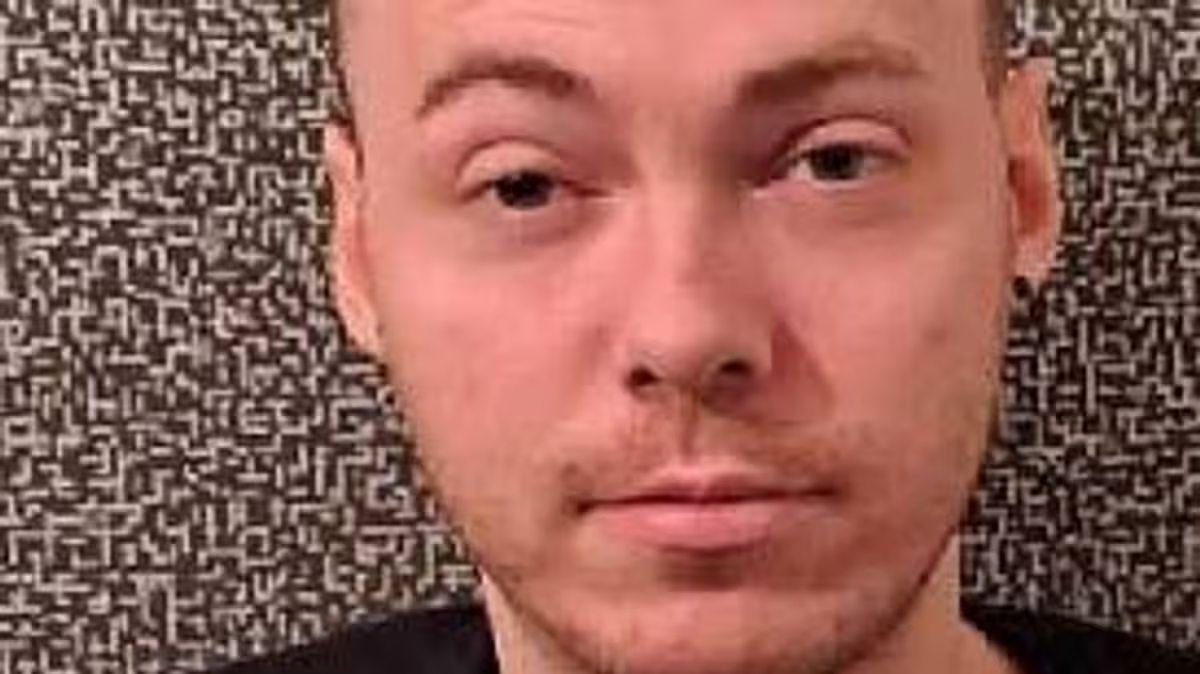
Grant McKinnon vanished at around 4am on Saturday, 18 April. The 30 year old was last spotted in the Cardowan Road area of Glasgow.
He was last seen wearing a black jacket with a red hood, or red hood lining, and blue jeans. Mr McKinnon has been described as white, 6ft tall, of slim build and with a shaved head, reports the Daily Record.
Advertisement
Police Scotland issued a public appeal to locate the man this evening, with officers branding him “dangerous”. The force has urged members of the public not to approach him and to contact police straight away.
Detective Superintendent Gary Ferguson said: “Grant is considered to be dangerous and I’m appealing for information from the public to help us trace him as soon as possible.”
“If anyone sees Grant, they should not approach him but contact police immediately.”
A Police Scotland spokesperson added: “We are appealing for information to trace 30-year-old Grant McKinnon. He was last seen in the Cardowan Road area of Glasgow around 4am on Saturday, 18 April, 2026.
Advertisement
“Grant is described as white, 6ft tall, of slim build, with a shaved head. When he was last seen he was wearing a black jacket with a red hood, or red hood lining, and blue jeans.
“Anyone with information on where he may be, or anyone who thinks they’ve seen him since the early hours of Saturday morning, should call 999 urgently quoting reference 0523 of 18 April. Information can also be given anonymously to Crimestoppers on 0800 555 111.”
It is “inconceivable” that Sir Keir Starmer and David Lammy were not told about Peter Mandelson failing the security vetting process for the role of US ambassador, a former foreign secretary has claimed, amid growing accusations that the prime minister scapegoated the head of the Foreign Office in order to save himself.
Describing his own recent experience, Sir James Cleverly, who was foreign secretary from 2022 to 2023, said: “I cannot envisage a universe where someone senior in the Foreign Office wouldn’t have sat down with the foreign secretary and said something to warn about this.”
It comes as former civil servants claim that the sacked permanent secretary to the Foreign Office, Sir Olly Robbins, was “thrown under a bus”.
Sir Keir has claimed he only discovered last week that Lord Mandelson had failed vetting, despite The Independent telling Downing Street and running a story on the revelation in September last year.
Advertisement
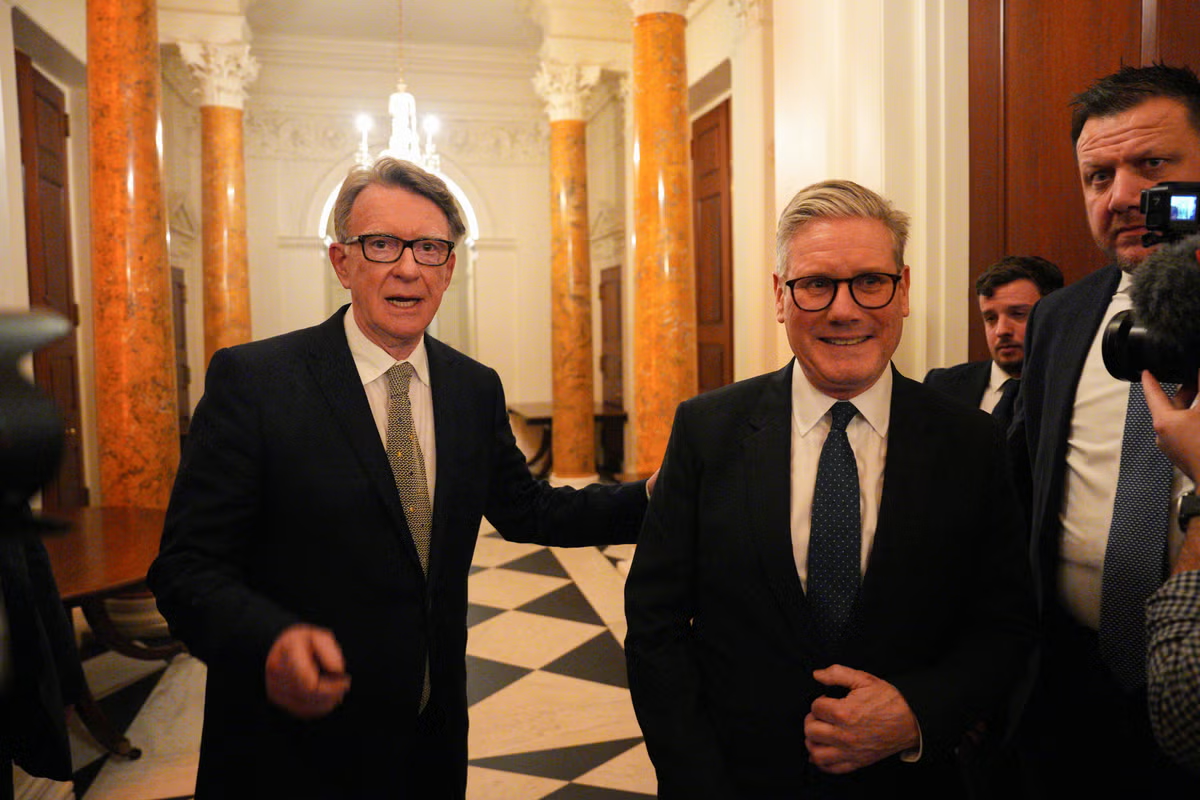
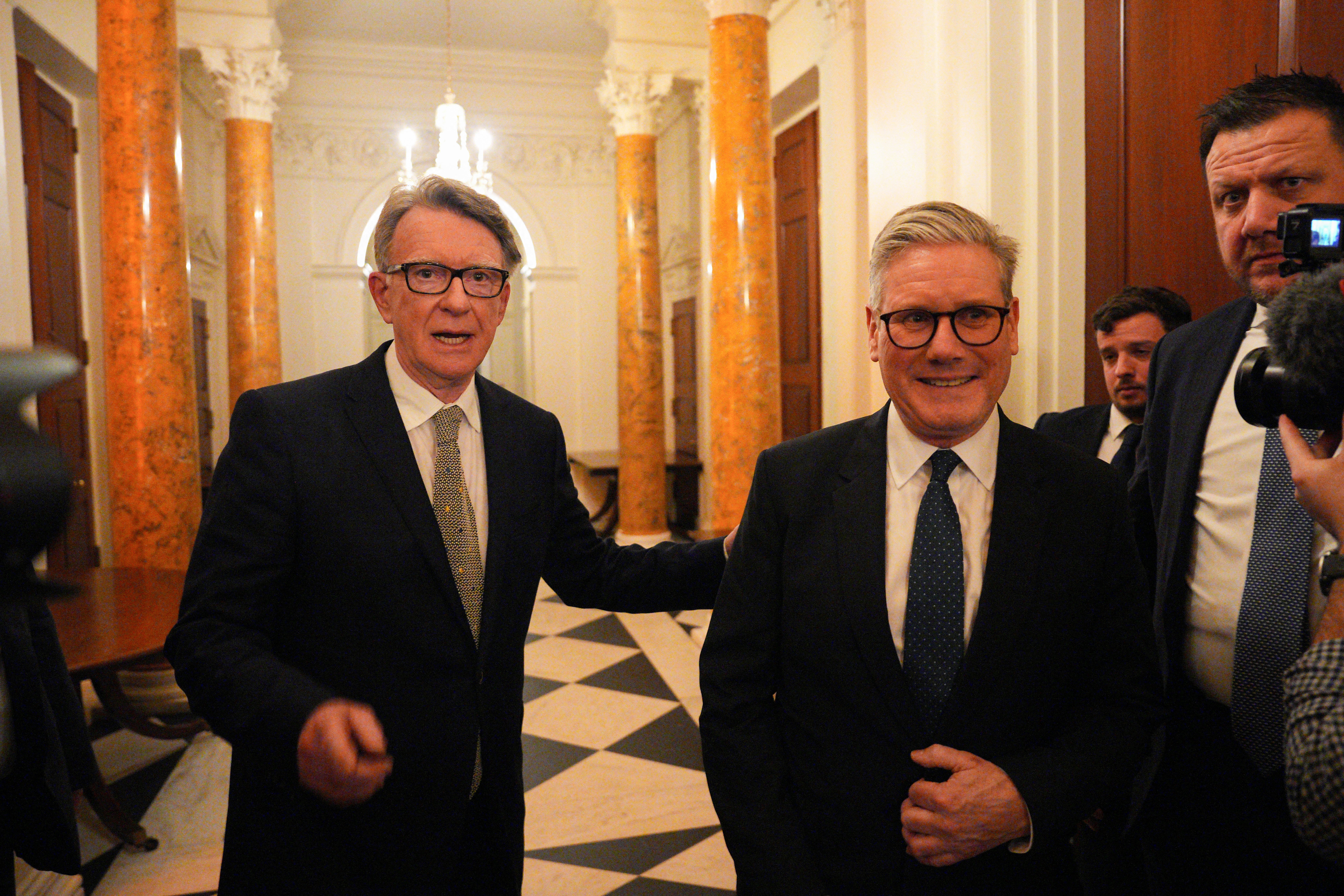
Prime minister Keir Starmer with Britain’s ambassador to the United States Peter Mandelson during a welcome reception at the ambassador’s residence in Washington in February last year (AFP/Getty)
The prime minister said it was “staggering” and “unforgiveable” that he had not been told earlier, adding that he was “furious”. He claimed that Downing Street and all his ministers had been kept in the dark.
In an interview with The Guardian, Mr Lammy said he had no knowledge of Mr Mandelson’s vetting process and that the prime minister would “absolutely no doubt at all” have blocked the Labour grandee from serving as the UK’s ambassador to Washington if had he known he failed security checks.
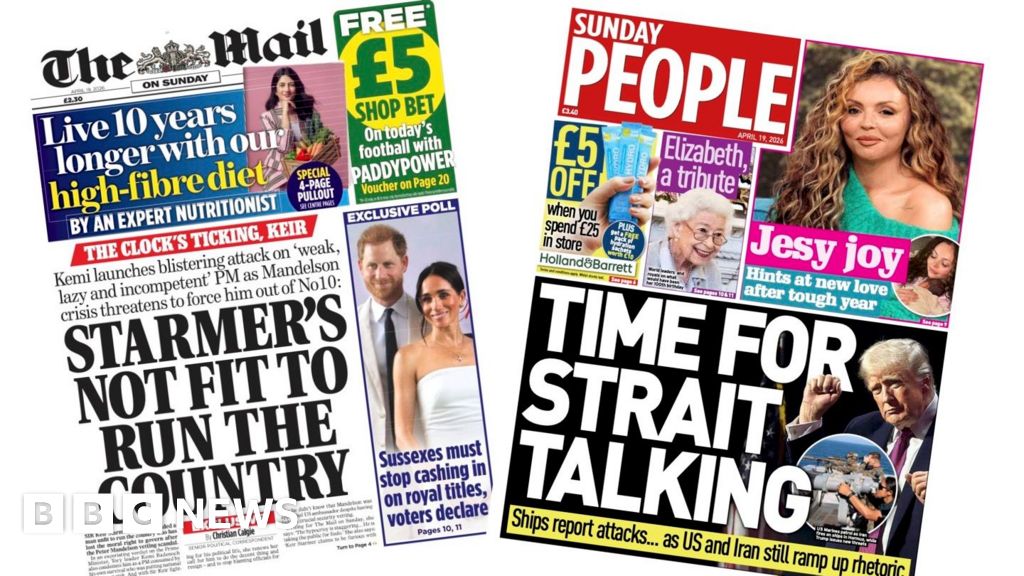
Reform UK leader Nigel Farage called for the prime minister to resign over the furore and Tory leader Kemi Badenoch wrote in the Mail on Sunday that Sir Keir was “unfit to govern”.
Sir Olly is widely expected to mount a staunch defence of his decision to approve Lord Mandelson’s appointment at a hearing of the Foreign Affairs Select Committee on Tuesday – which has been described as “judgement day” for Sir Keir – with former colleagues expecting the former civil servant to emphasise that the appointment was a ministerial decision pushed through by Downing Street.
As outrage grows at the scandal around Lord Mandelson’s appointment, and the prime minister’s claims that he wasn’t aware of the problems surrounding it, fresh doubts are being cast on Sir Keir’s version of events.
Advertisement
Questions have been raised about his claim, made in the Commons in February, that Downing Street was not aware that Lord Mandelson had failed security vetting.
Simon McDonald, a former permanent secretary in the Foreign Office, told Radio 4’s Today programme that Sir Olly had been “thrown under a bus”, and described him as a “scalp” who had been sacked in an effort to save the prime minister.
“I think this is the biggest crisis in the diplomatic service since I joined it in 1982,” said Lord McDonald.
Speaking on The Independent’s political podcast In the Room, former deputy cabinet secretary Helen MacNamara criticised the prime minister for axing Sir Olly, calling the decision “reactive” and echoing the metaphor about throwing him under a bus.
Advertisement
Other senior former colleagues of Sir Olly have suggested that what he is accused of is “completely out of character”.
With recent experience of making highly sensitive diplomatic appointments as foreign secretary, Sir James said it was “just not credible” that neither Sir Keir nor the then foreign secretary Mr Lammy – now deputy prime minister – did not know.
He said: “It is just inconceivable that Olly Robbins would have sat on this information knowing that it would eventually blow up.
“We are being asked to believe that Olly Robbins was sitting there thinking, ‘I actually know Mandelson didn’t get through vetting… I probably should tell the prime minister that before he embarrasses himself further.’”
Advertisement
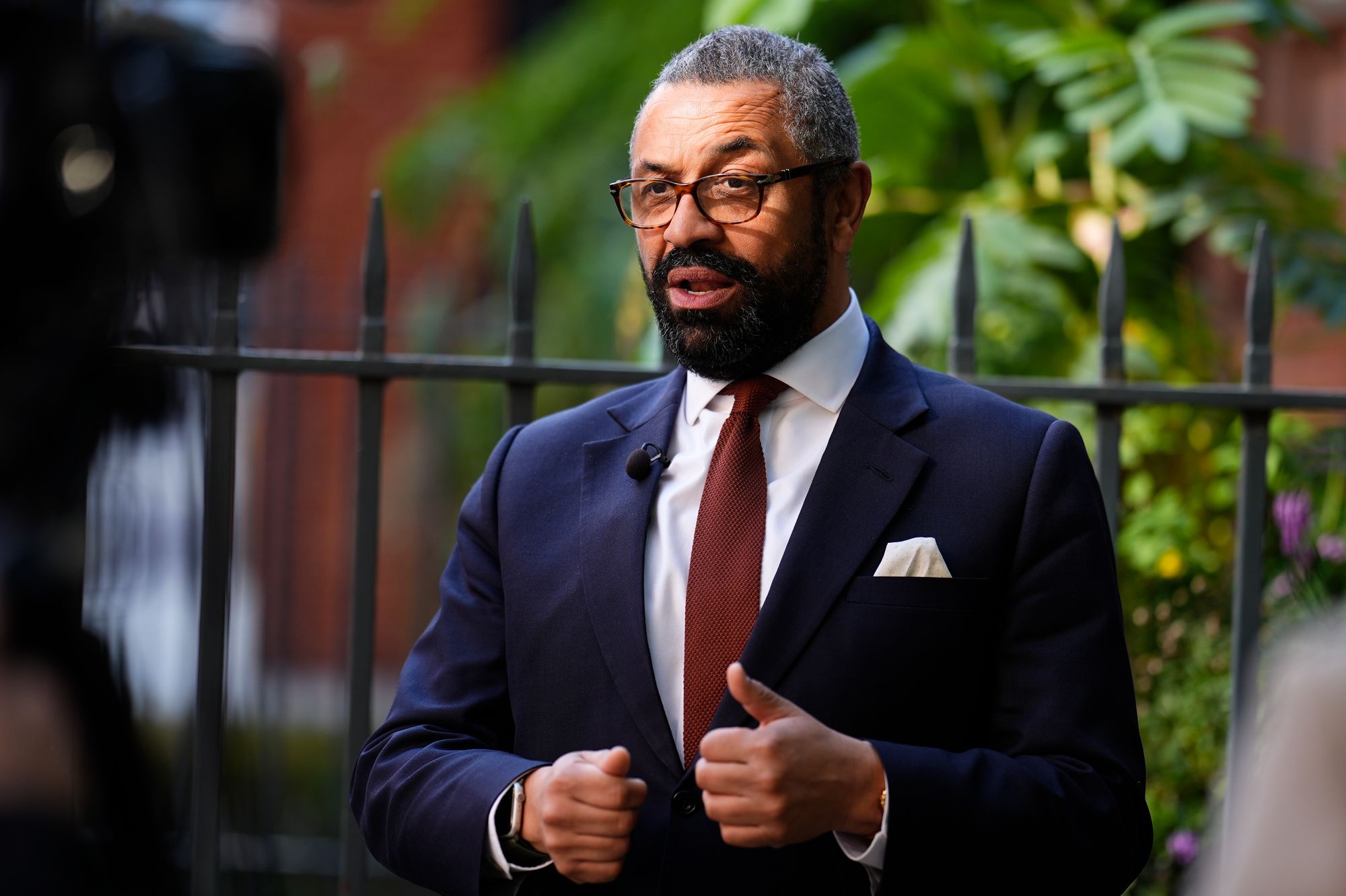
James Cleverly was foreign secretary from 2022 to 2023 (PA)
He went on: “That is just not credible – the idea that absolutely nobody read The Independent’s piece in September; that seems at odds with what Olly Robbins has already told us.
“The only thing I can think is that Olly doesn’t have anything in writing to show he told anyone.”
Pointing to a letter sent by Sir Olly in July last year to shadow Tory minister Richard Holden, in which he stated that Lord Mandelson “was directly appointed by ministers”, Sir James suggested that the sacked senior mandarin “has left a trail of crumbs back to who was really responsible”.
He said that normally, diplomatic roles are given to career diplomats who have already been vetted, but with political appointments, “the foreign secretary is told firmly that is on him, and is warned of the risks”.
Sir James said: “I had this with two political appointments I tried to make which were much more minor than the ambassador to the United States. They make it very, very clear that you, personally, are importing a whole load of risk.”
Advertisement
He added: “This is why I think David Lammy may have even more problems than Keir Starmer.”
On the matter of any problems that might arise, Sir James said: “Of course I would relay that to the prime minister, especially in a case like this, where the appointment was being driven by Downing Street.”
Simon McDonald, a former Foreign Office minister, described the Mandelson affair as ‘the biggest crisis in the diplomatic service since I joined it in 1982’ (PA)
However, speaking to The Guardian, Mr Lammy said he had not been told about Mr Mandelson’s vetting process and that the PM would not have hired the former him if he’d known.
He added: said: “I have absolutely no doubt at all, knowing the PM as I do, that had he known that Peter Mandelson had not passed the vetting, he would never, ever have appointed him ambassador.
“The prime minister was not particularly close to Peter Mandelson. He hadn’t worked with him in the past, as some of us had. He was weighing a decision, but I’m quite sure had he known that, he would not have become ambassador. Therefore this is inexplicable.”
Advertisement
It is known from papers already released that Sir Philip Barton expressed concerns about the appointment before he quit early as permanent secretary at the Foreign Office in February 2025.
Other former top cabinet ministers and civil servants have also privately agreed with Sir James’s assessment, noting that such briefings to the prime minister and other senior cabinet ministers take place in STRAP rooms (secure and secret).
One former senior civil servant also pointed to a post on X by Dominic Cummings, in which Mr Cummings attacked claims that the prime minister hadn’t been briefed.
Mr Cummings, who served as Boris Johnson’s chief of staff, wrote: “The PM is often told by officials details from vetting, leak inquiries, investigations by intel agencies etc. This is because the PM in our constitution is often the only constitutional authority deemed able to make a political judgement about things including risk assessments of appointments.”
Advertisement
The former civil servant described the post as “completely accurate”.
Sir James’s doubts coincide with revelations that others in Whitehall – including new cabinet secretary Dame Antonia Romeo, the permanent secretary to the Cabinet Office, Cat Little, and government lawyers – were all aware of the problem as of March this year.
A source close to the deputy prime minister said: “The deputy prime minister has made it clear that he had no knowledge that the FCDO had overruled Peter Mandelson’s vetting outcome until Thursday afternoon.”
The Independent has approached Downing Street and Mr Lammy’s office for comment.
There’s more criticism levelled at the prime minister, with the Sunday Express saying Sir Keir is being accused of “betraying” Northern Ireland veterans over Labour’s plans to repeal the Legacy Act. The controversial clause, which protects former servicemen from prosecution for Troubles-era crimes, had already been found to be unlawful and was opposed by Northern Ireland parties and victims’ groups. The paper quotes a former SAS colonel who says veterans are being “pushed to the brink” while the PM “cuddles up to Europe”.
Cherry claimed the mood was “jovial, even celebratory”.
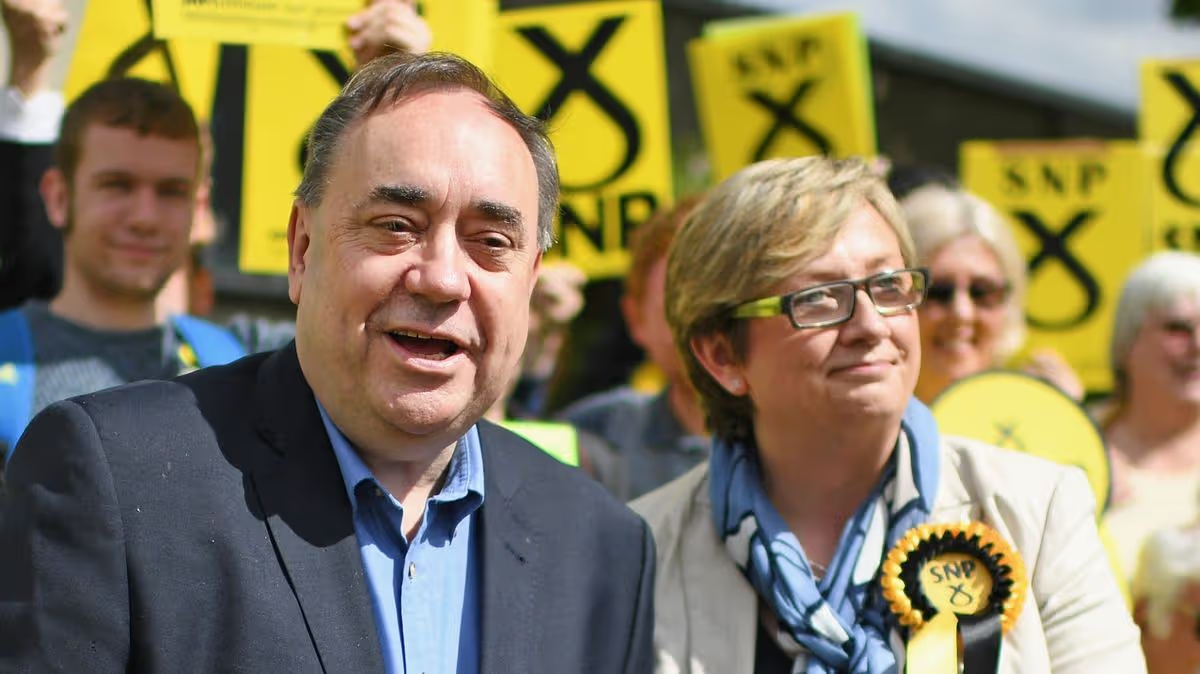
Joanna Cherry has dropped bombshell claims that SNP insiders were “jovial” over Alex Salmond being probed over sex attacks claims at Bute House.
Advertisement
The former MP has gave the jaw-dropping account in her new book, ‘Keeping The Dream Alive’, claiming that the party machine allegedly revelled in its former leader’s downfall, in excerpts published by the Times. Cherry claims that senior figures gathered at the plush Western House Hotel after the news dropped, but instead of showing sympathy or being in shock, the mood was “jovial, even celebratory”.
Cherry then goes on to say she believed there was a “witch hunt against Alex”.
Allegations of sexual misconduct against Salmond were first published by the Daily Record in 2018. Following a trial in 2020 he was acquitted on all charges.
In another explosive claim, Cherry says she became the target of vicious name-calling within Nicola Sturgeon’s inner circle. She alleges she was branded with the label ‘The B**ch’.
The former MP recounts being subjected to a barrage of abuse by colleagues over her decision to attend an LGB Alliance conference, with senior figures joining in the criticism.
Cherry also told the Times that while writing her autobiography she had become “absolutely disgusted by the SNP, and ashamed of being a member”.
Ms Cherry revealed she had left the party as she claimed its Holyrood election manifesto – unveiled on Thursday – had made clear the SNP “intend to continue ignoring the law” on biological sex. She also alleged the First Minister is “too afraid” to stand up to his party on the issue.
Advertisement
John Swinney has responded saying he is “satisfied” his Government has complied with a landmark Supreme Court ruling on sex and gender – despite claims from Cherry claiming that he is a “coward” who has failed to implement it.
Mr Swinney insisted he was “satisfied the Scottish Government has taken the necessary steps to implement the Supreme Court ruling”. The SNP leader spoke to journalists in Dundee as he unveiled the battle bus that will take him around Scotland campaigning in the run-up to the May 7 election.
Asked about Ms Cherry’s comments, the First Minister said: “An awful lot of this stuff is in the past, and I’m looking to the future.”
Advertisement
Pressed on her decision to leave the party she represented at Westminster, Mr Swinney added: “People make their own decisions about their politics.”
He continued: “So much of what is being talked about here is in the past and I am looking to the future.”
The First Minister also stressed: “I’m satisfied the Scottish Government has taken the necessary steps to implement the Supreme Court ruling.”
That ruling, from April 2025, made clear that the the terms “woman” and “sex” in the 2010 Equality Act “refer to a biological woman and biological sex”.
The Scottish Government is still facing a second legal challenge from the group that won that case, For Women Scotland, over the placement of transgender prisoners in women’s jails.
Advertisement
Mr Swinney told the Press Association: “There’s obviously still some parts of that that are still the subject of legal challenge in Scotland that I can’t comment on, it is for the courts to look at.
“But I am satisfied we have taken the steps to implement the Supreme Court ruling, which is in accordance with my view, that I have always asserted, that the Scottish Government must act within the law.”
Keeping the Dream Alive by Joanna Cheery is £20 and available from Icon books.
Get more Daily Record exclusives by signing up for free to Google’s preferred sources. Click HERE
In her 1998 essay What’s a Good Gay Film?, film critic B. Ruby Rich considered what queer audiences were looking for.
She wrote that queer cinema-goers were seeking “films of validation and a culture of affirmation: work that can reinforce identity, visualise respectability, combat injustice and bolster social status”. They were tired, she argued, of stereotypes of queer suffering and trauma. Instead, they required “nothing downbeat or too revelatory; and happy endings, of course”.
But if a straightforward happy ending is what you are after, Departures is not the film for you. This miraculously self-financed and stylish debut feature is not purely affirmative. At times, the screen shimmers with sadness. And yet, wryly and playfully, the film also resists becoming gloomy. Tonally sophisticated, it combines the bleak with the whimsical, ultimately sidestepping the crude dichotomy of happy or unhappy endings altogether.
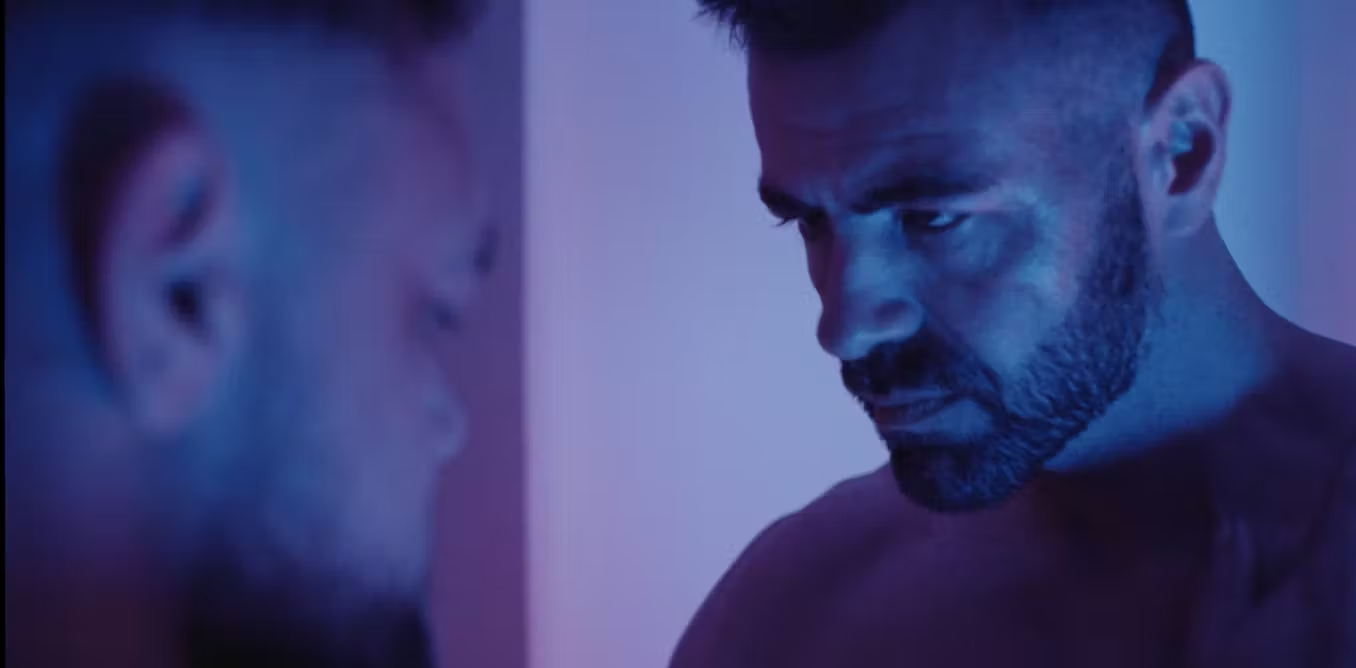
The film opens with a love-scarred Benji (played by the film’s writer and co-director Lloyd Eyre-Morgan) recalling a recent relationship. In flashback, he remembers meeting handsome Jake (David Tag) in the airport as they both wait for a flight to Amsterdam. Jake bewilders Benji: his flirtation is suggestive but always deniable, never quite declaring itself. Charismatic and assertive, Jake engineers it so that they sit together on the flight, telling the air steward that he is Benji’s carer – a description which quickly becomes grimly ironic.
Advertisement
The trailer for Departures.
Later, Jake rejects the suggestion that he is gay but demands that Benji give him a blowjob regardless. Monthly trips to Amsterdam follow and the two men develop a form of intimacy, but one which affords the softer, more pliable Benji little power.
In such a brief synopsis, the scenario risks sounding cliched. Familiar narrative devices pile up: the physically asymmetrical gay relationship in which the self-consciousness of one man makes them susceptible to the coercive manipulations of the more assured partner in a whirlwind of sex and drugs and emotional control. A comparable dynamic played out in another recent queer film, Pillion.
Benji, longing for this to be more than a once-monthly dose of overseas sex, withstands put-downs and disappointments. His quiet, emotional expressions of desire (played movingly by Eyre-Morgan) contrast with Jake’s struggle to accept his attraction to men. Tag is excellent and his portrayal of Jake is sometimes harsh and defensive, but also shows vulnerability, which prevents him from becoming a one-dimensional monster. Because of these tensions, the relationship’s unhappy ending feels like a dead cert.
Advertisement
Lessons from Heartstopper
Departures takes familiar cliches and gives them new life, turning them into something unexpectedly revealing. Its understated story recalls many films about gay suffering – from A Single Man to All of Us Strangers – but it refuses to stay within that familiar emotional frame.
Instead, the film disrupts expectations through bold, stylised touches that feel borrowed, perhaps improbably, from the Heartstopper playbook. The result is a work that plays with recognisable influences while twisting them into something more strange, lively and original.
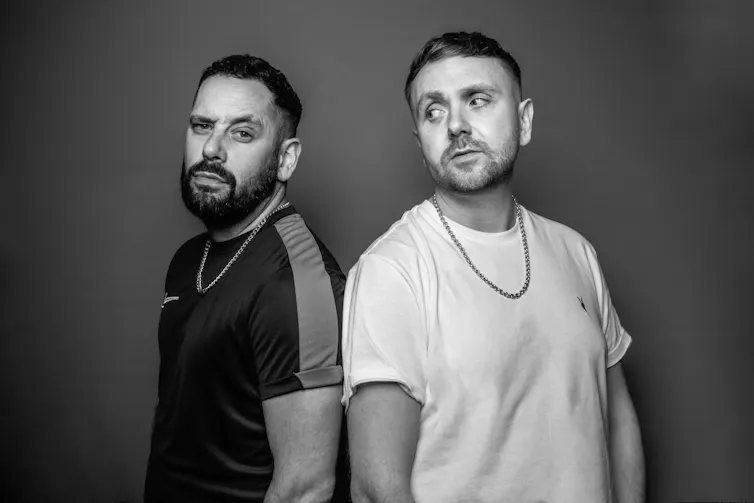
Benji and Jake, played by Lloyd Eyre-Morgan and David Tag. Peccadillo Pictures
Heartstopper, the popular Netflix queer teen drama, deliberately avoids the more difficult or painful stories often told about queer life. Instead, it offers the kind of wish-fulfilling, happy endings that Rich suggested many queer viewers have long desired. Every glance, touch and kiss between its characters is punctuated with playful on-screen doodles — bursts of electricity, fluttering butterflies and swirling text that insist we are watching Love with a capital L.
Departures borrows these same twee, saccharine stylistic gestures, but uses them in a very different context. Applied to a darker, sometimes even sordid story about control and sadness, they take on a mischievous, unsettling edge.
As Benji’s voiceover details his suffering, scratchy lettering and illustrations dance around the screen. When he first sees Jake and his weary voiceover acknowledges the pain to come, doodled hearts burst around the handsome stranger to the music of Gershwin’s Rhapsody in Blue. As Benji submissively performs oral sex for Jake, the Hallelujah Chorus plays and animated fireworks fill the screen. And as Jake prepares to get into a fight with Benji’s friends, the needle of a Toxic Masculinity Meter shoots up to maximum. Here is a version of Heartstopper for an audience which knows that happy endings are often only the stuff of comic books.
In Departures, the collision of the sombre, unsettling narrative with the comic stylings of those twitching onscreen graphics suggests a more complex emotional situation in which neither cynicism nor romanticism is left unchecked. Instead, they synthesise in a complex portrait of Benji, who can neither maintain nor give up his romantic belief that Jake might love him.
Colliding styles
One of the film’s most striking ways of expressing this tension comes in a series of non-narrative sequences. Here, the characters dance – or perhaps merely convulse – under harsh strobe lights, their bodies flickering in and out of view, shifting into new poses and even seeming to become different selves between flashes.
Advertisement
It’s a simple but powerful device, inspired by the club scenes the men encounter on their trips to Amsterdam. Yet it opens up something more unsettling: brief glimpses of gay men caught between pleasure and pain, ecstasy and distress, moving to the uncertain rhythm of a contemporary queer world where nothing quite feels stable or fixed.
The film’s directors Neil Ely and Lloyd Eyre Morgan. Peccadillo Pictures
In the 1990s, Rich rejected the idea of easy affirmation, describing herself instead as an “old-time outlaw girl” who craved films “that push the edge, upset convention, defy expectation, speak the unspeakable, grab me by the throat and surprise me with something I’ve never seen before”.
Departures may work with familiar characters and a recognisable story, but its force lies in how it collides styles and tones in unexpected ways. It’s the kind of film that, in Rich’s terms, grabs you by the throat. What stays with me most is its sardonic yet romantic energy and the strangely undefeated presence of Benji at its centre.
This film deserves to find an audience who want more than easy viewing. It deserves viewers who will dance along to its tonal shifts and cherish the funny, sad, ironic almost-happy ending it serves up in its closing credits.
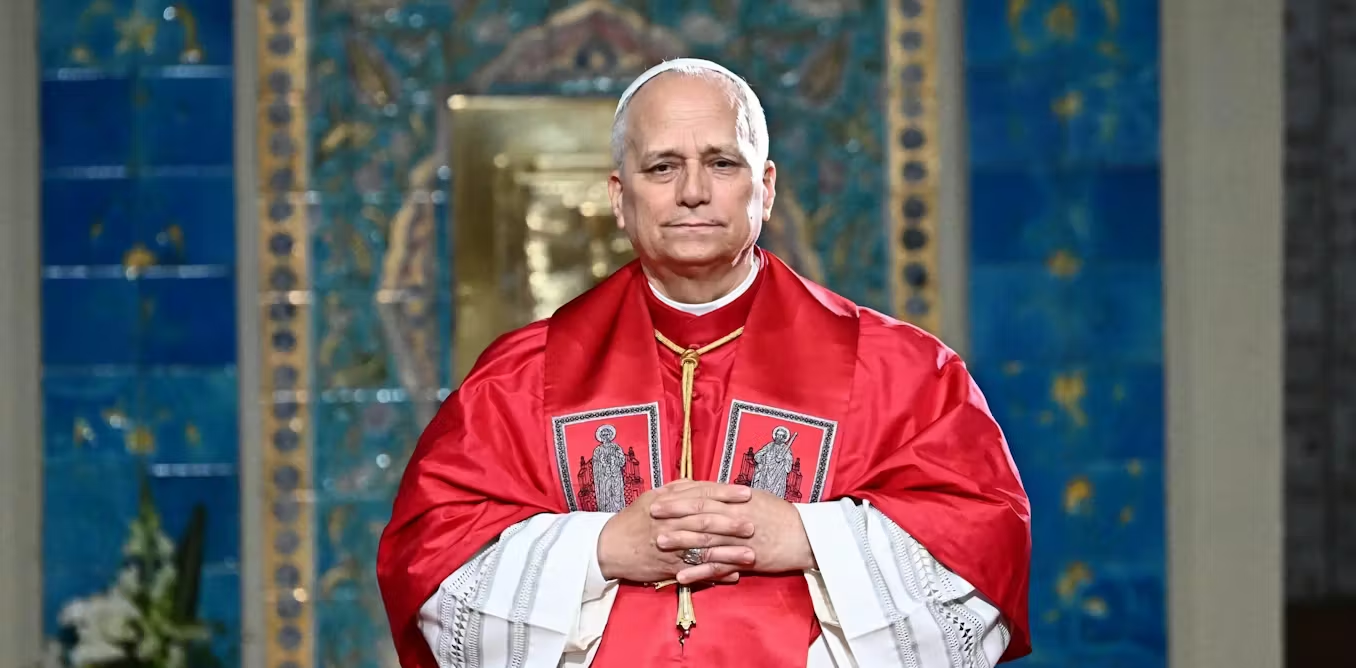
“I am not a politician; I speak of the Gospel.” Pope Leo XIV’s recent remarks, made during his apostolic journey to Africa, immediately suggest that his clash with Donald Trump operates on a different level to the US president’s usual political spats.
This is not the classic kind of confrontation that Trump has often had with foreign heads of state and government in the past, such as in recent months with the UK prime minister, Keir Starmer, whose refusal to fully back the US and Israel in their war against Iran attracted Trump’s ire. Rather, it is a clash rooted in fundamentally different moral and political visions: between a president who treats power in transactional terms and a pope who frames war, migration and human dignity as matters of moral principle.
When Cardinal Robert Prevost was named as Pope Leo in May 2025, Trump and his administration initially appeared to welcome the new pontiff warmly. In fact, in a post to his Truth Social platform the US president appeared to take credit for his election as pope, writing that Prevost “was only put there by the Church because he was an American, and they thought that would be the best way to deal with President Donald J. Trump”.
But the war in the Middle East launched by the US and Israel has made the differences between their positions clearer – further heightening tensions between them. On Palm Sunday, the week before Easter, it became clear that Leo had decided to take a firm line against the war in Iran, saying that Jesus “does not listen to the prayers of those who wage war, but rejects them, saying: ‘Even though you make many prayers, I will not listen: your hands are full of blood’”.
Advertisement
His Easter message was equally clear: “Let those who have weapons lay them down! Let those who have the power to unleash wars choose peace! Not a peace imposed by force, but through dialogue! Not with the desire to dominate others, but to encounter them.”
Day’s later the pope denounced the US president’s apparent threat to destroy the whole of the Iranian civilisation as “truly unacceptable” in comments which roundly criticised the war and called for a “return to dialogue, negotiations”.
Trump responded in harsh terms, describing the pope in a Truth Social post as “weak on crime” and “terrible for foreign policy”. He went on to say that he did not want a pope “who thinks it is OK for Iran to have nuclear weapons”, adding that “Leo should use common sense, stop doing the bidding of the radical left, and focus on being a great pope rather than a politician”.
Returning to Washington from Florida, Trump also told reporters: “I don’t think he’s doing a good job. I’m not a fan of Pope Leo.” The pope replied on Monday by saying that he was not afraid of the Trump administration and would continue to speak out against war.
Advertisement
Trump did not stop there. He went so far as to publish an image portraying himself as Jesus Christ, a move that appeared to go too far even for many of his conservative supporters. The reaction was strong enough to force him to delete the post and backtrack.
This could hurt the US president
Trump has clashed with the Vatican before, but this confrontation unfolds in a very different setting. Pope Francis, the first Argentine pope and the first pontiff from the global south, was often openly critical of Trump, particularly on migration. In 2016, he famously suggested that a leader who thinks only of building walls rather than bridges is “not Christian”, crystallising the tension between them.
Pope Leo XiV calls for an end to war, March 29 2026.
The key difference was that Francis was also a divisive figure within sections of the American Catholic Church. He was frequently targeted by conservative Catholic commentators and church networks in the US, and in 2019 he remarked that “it’s an honour that the Americans attack me”.
Advertisement
Leo, by contrast, is the first US pope – and that changes the political equation. His voice is likely to carry different authority among Catholic voters, who are an important part of Trump’s electoral base.
In the last presidential election, 55% of Catholic voters supported Trump, including 62% of white Catholics. Senior Catholics also occupy prominent positions in his administration, including Vance and Trump’s secretary of state Marco Rubio.
That is why Leo’s criticism may prove more politically consequential. It does not come from an external moral voice alone, as was often the case with Francis, but from an American pontiff speaking into a church and an electorate that Trump cannot afford to ignore.
Early reactions suggest that many Catholic voices in the US have rallied behind Leo, making this not only a diplomatic clash, but a potentially significant domestic one too. (This could also really hurt J.D. Vance. As the likely contender to succeed Trump on the Repulican ticket, he is deeply invested in his Catholic faith and is about to publish a book devoted to his conversion.)
Advertisement
From an international perspective, the break with the pope has also had visible repercussions. Giorgia Meloni, the Italian prime minister, long regarded as Trump’s closest ally in Europe, went publicly in defence of Pope Leo, the bishop of Rome, drawing criticism from Trump himself, who defined the Italian prime minister’s behaviour as “unacceptable”.
To conclude, this is not a political confrontation like the many others the world has become used to with this US president. The stakes are higher at home and on the world stage. At home, it risks alienating many Catholic voters whose support will matter not only in the midterm elections but also in the next presidential race. Internationally, it may complicate Trump’s relationship with European conservative parties, many of which have long sought close association with the Vatican.
The pope, as the leader of a vast global community, cannot be treated as though he were just another political opponent.
A newly-announced shake-up is set to see households given about two months to settle bills rather than having to pay an entire year’s demand in two weeks.
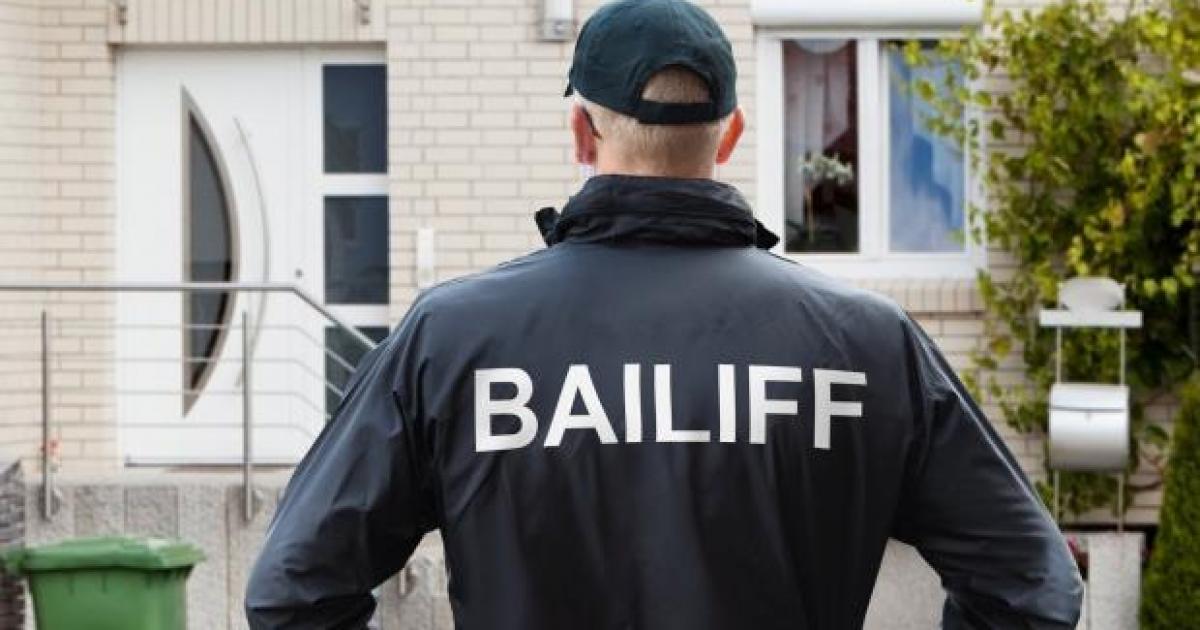
Local Government Secretary Steve Reed said the current system had left families terrified of bailiffs knocking on their door because of month’s council tax bill was missed.
Cllr Katie Lomas, City of York Council’s Labour financial spokesperson, said the changes would support the authority’s ongoing work to help people pay their bills.
Martin Lewis, of the Money Saving Expert personal finance website, said the current system was the most vicious and damaging form of legal debt collection.
Advertisement
It comes after shake-up was unveiled by the Government on Wednesday, April 15.
RECOMMENDED READING:
The announcement follows a campaign from Money Saving Expert’s Money and Mental Health Policy Institute to reform the system which has remained unchanged since council tax was introduced in 1993.
Changes are set to see people given 63 days to settle outstanding bills and councils will be required to work with them on agreeing repayment plans.
Advertisement
Billing for council tax will be shifted to 12-month payments by default, rather than the current 10 months schedule which is the norm for many local authorities.
Charges for costs councils incur by recovering outstanding payments through liability orders will be capped at £100.
Payment schedule changes are set to come into effect from next April with the rest of the changes due to be introduced a year later in 2028.
The name and definition of the Severely Mentally Impaired council tax discount is also set to be changed when parliamentary time allows.
Advertisement
Those changes aim to remove stigma which puts people off applying for support.
The Government said it would put an end to the current system which left families who fell behind on payments facing financial ruin.
Money Saving Expert’s Mr Lewis said the current system had caused counter-productive misery for millions.
Martin Lewis has campaigned for the changes (Image: Agency)
The financial advisor said: “Council Tax debt collection is so aggressive it’d make banks blush.
Advertisement
“How people who can’t find a month’s money are expected to find a year’s I don’t know.
“Yet if they can’t pay, within just three more weeks, they are often taken to court, have ‘admin costs’ added, and soon see bailiffs sent in.
“For councils too, it is worth remembering that this grotesque system is often catastrophic for people’s finances and wellbeing, leaving many needing more help and support, and ultimately the same council having to pick up the pieces.”
Local Government Secretary Mr Reed said the changes would make the system fairer and support families who have been left behind.
Advertisement
The Labour secretary of state said: “Too many families are facing aggressive enforcement action, with people left terrified of bailiffs knocking on the door because one month’s council tax bill was missed.”
York Council’s Labour Finance Executive Member Cllr Lomas said the work local officials already did helped people to get benefits and support they were entitled to.
Cllr Lomas said: “We’ve been providing the payment option of 12-monthly instalments for several years, encouraging the use of direct debit and keeping liability order costs 80 per cent below the Government’s £100 cap, for residents receiving council tax support.
“We provide council tax information with all bills as well as on our website and all residents can now register for e‑billing and we would encourage them to do so.
Advertisement
“We will also continue to send physical copies to all residents who want them or have no digital access.”






































You must be logged in to post a comment Login