
Tech
DOJ refuses to help French authorities in criminal probe of X


The US Department of Justice is siding with X, as the social media platform owned by Elon Musk navigates a criminal investigation unfolding in France. As first reported by The Wall Street Journal, the Justice Department characterized the French probe as “an effort to entangle the United States in a politically charged criminal proceeding aimed at wrongfully regulating through prosecution the business activities of a social media platform.”
France launched its investigation into X in July, accusing the platform of manipulating its algorithm and “fraudulent data extraction.” Months later, French authorities raided X’s office in Paris and issued summonses to Musk and Linda Yaccarino, the former CEO of X, to appear for interviews on April 20 as part of the probe. According to WSJ, French officials are also investigating X for other charges, including disseminating CSAM and Holocaust denial. However, France’s latest move to ask the Department of Justice for assistance has been stonewalled.
“This investigation seeks to use the criminal legal system in France to regulate a public square for the free expression of ideas and opinions in a manner contrary to the First Amendment of the United States Constitution,” the DOJ wrote in letter, as seen by WSJ.
An xAI official told WSJ that it’s “grateful to the Justice Department for rejecting this effort by a prosecutor in Paris to compel our CEO and several employees to sit for interviews.” The company spokesperson also said there was “no wrongdoing” and that it was a “baseless investigation.”

from the good-deals-on-cool-stuff dept
The Python Crash Course is a guide on how to get started in Python, why you should learn it, and how you can learn it. The syntax of the language is clean and the length of the code is relatively short. In this comprehensive course, you will get in-depth knowledge in data types, loops, python command lines, docstrings, and much more. It’s fun to work in Python because it allows you to think about the problem rather than focusing on the syntax. If all this excites you, then join this python coding course today! It’s on sale for $11.

Note: The Techdirt Deals Store is powered and curated by StackCommerce. A portion of all sales from Techdirt Deals helps support Techdirt. The products featured do not reflect endorsements by our editorial team.
Filed Under: daily deal
from the gaming-like-it’s-1930 dept
We’re past the halfway point in our series of spotlight posts looking at the winners of our eighth annual public domain game jam, Gaming Like It’s 1930! We’ve already covered the Best Adaptation, Best Deep Cut, and Best Visuals winners, and this week we’re looking at the winner of Best Remix: Lilac Song by Autumn Chen.
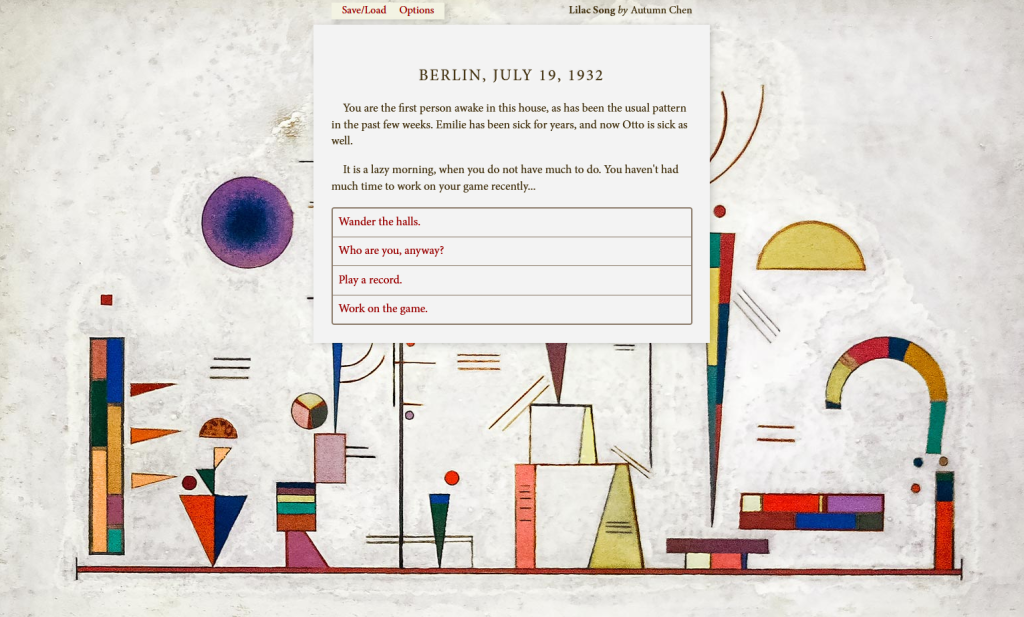
There were fewer interactive fiction submissions in this year’s jam than there often have been in past editions, but even if the field had been more crowded, Lilac Song would have undoubtedly stood out. It’s a somber, thoughtful story that casts the player as a servant to Prussian Minister-President Otto Braun during the last few years of the Weimar Republic. It revolves around and intriguing and fitting premise: the servant has been designing a simulation game about power and politics in Germany, from which she aims to draw insights that could preserve democracy and prevent the rise of Hitler and the Nazi Party.

The story is far more than a cursory look at these events: it’s clearly rooted in robust historical knowledge about this critical time and place, with myriad details about the specifics of the political situation as well as an additional exploration of gender politics and transgenderism in the era. But what’s especially notable for this jam is the way it weaves in a wide variety of artistic and musical works from 1930, which form the backdrop of its setting and the game itself. Amidst the story unfolding (and careening towards its inevitable ending) the player wanders the halls of Braun’s house and chooses paintings to admire and music to listen to. These works (by Paul Klee, Wassily Kandinsky, Felix Mendelssohn, and more) become the wallpaper and soundtrack of the game.

Though the story takes center stage, the careful selection and use of these public domain works lend verisimilitude to the story and polish to the game design, resulting in more immersion than the text alone could achieve. For employing a curated combination of newly-public-domain works that elevates the interactive fiction without overtaking it, Lilac Song is this year’s Best Remix.
Congratulations to Autumn Chen for the win! You can play Lilac Song in your browser on Itch. We’ll be back next week with another winner spotlight, and don’t forget to check out the many great entries that didn’t quite make the cut. And stay tuned for next year, when we’ll be back for Gaming Like It’s 1931!
Filed Under: copyright, game jam, games, gaming, gaming like it’s 1930, public domain, winner spotlight
Tech
Auto Enthusiast Scores Running Tesla Model 3 for Two Grand and Turns It Into Bare-Bones Go-Kart


Remmy Evans learned via a friend that a Tesla Model 3 was sitting in some guy’s driveway in Idaho. The owner had bought it cheaply with the intention of removing the drivetrain and installing it in an old car from the 1970s, but he abandoned the plan after realizing how much time the body work would take. Evans was able to negotiate a price of exactly $2k and walk away with a rolling chassis that was still capable of moving on its own.
The seats and steering wheel remained in place, as did the motors, battery pack, and center screen. Everything else had been stripped out. There were no body panels remaining, including the windshield. The tires were so worn down that you could see the wires through the rubber in a couple locations, and this car had been lying unregistered for at least two years. Nonetheless, the electric motors started immediately away, and the readout displayed a full battery charge.
Sale

Segway Ninebot S2 Electric Self-Balancing Scooter – Master Your Commute w/t 11.2 mph Max. Speed, 21.7 Mi…
- Speed & Range: Experience exhilarating rides with the Ninebot S2’s impressive top speed of 11.2 mph and range of 21.7 miles.
- Beginner-Friendly: Perfect for riders aged 16-50, the Segway S2 features a user-friendly learning mode, providing a smooth and gradual introduction.
- Adjustable & Supportive: Enjoy a customized fit tailored to your needs, as the Segway S2 accommodates heights ranging from 4’3″ to 6’6″ and supports…

Evans fitted it with bright red wheels and new tires so that it could really grip the road rather than destroying the tires every time he turned the wheel. As a safety measure, he looped a heavy-duty ratchet strap across his lap, similar to a makeshift harness. He also disabled the car’s road-sensing safety measures, allowing it to run freely in track mode.

However, charging was a potential disaster. The first attempt at a fast charger was unsuccessful since the adapter just would not fit the port. Evans went to a hardware store, got a cutting tool, and fixed the problem by cutting the top of the adaptor on the spot so it could slide in. Once connected, the battery charged to full capacity and the LCD displayed 212 miles of range remaining. Home charging took roughly 7 or 8 hours on a Level 2 unit, or closer to 14 hours on a standard wall plug.

So, with the car all fixed up, Evans took it for a test drive, and unexpectedly, it passed the test without drawing any unwelcome notice from the cops. Later practices included donuts in a parking lot, burnouts, and a few of open-road runs that exceeded 60 mph. Because there was no top, the wind blew directly into the automobile, but it handled perfectly. At a friend’s home, the stripped-down Tesla ripped over dirt berms, jumped off a tabletop jump, and just kept going. One of his buddies rode along and claimed it was similar to the three-wheeled roadster that some people enjoy, but more faster.
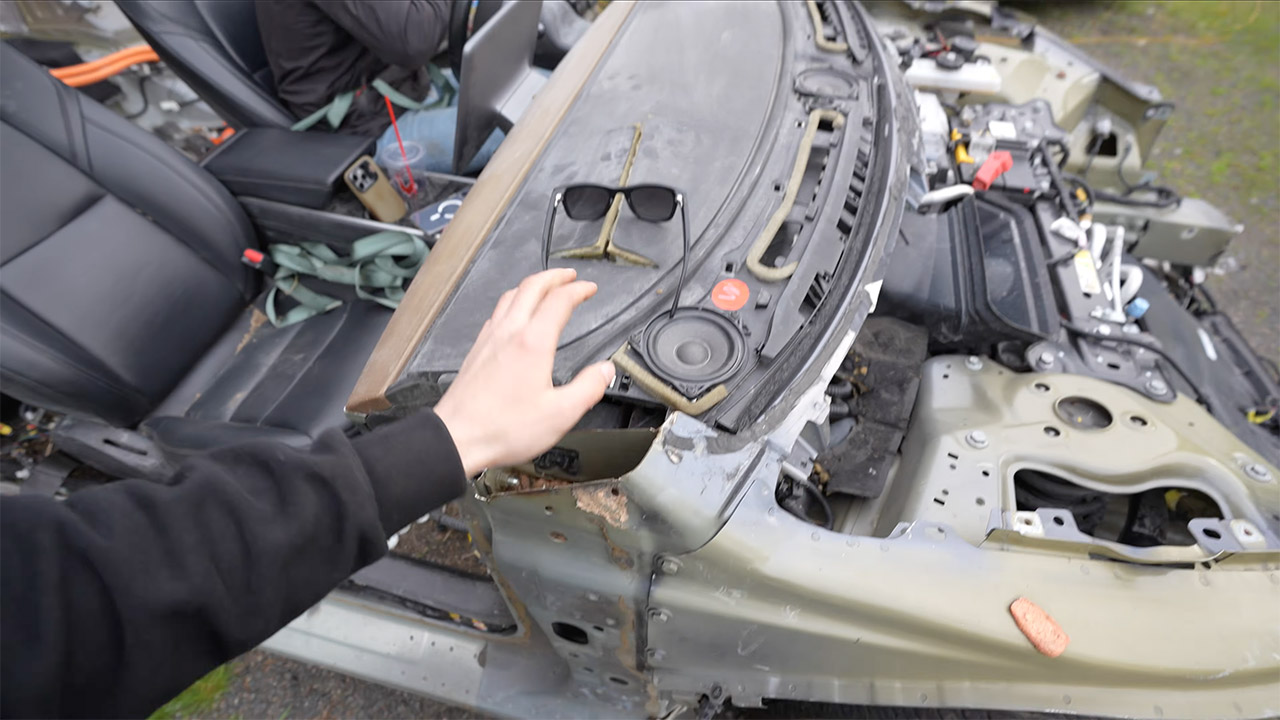
Heavy drifting around the lot had a toll on the battery, which depleted far faster than it would on a regular drive. After a long afternoon of zooming around, the range had dropped to just 18 miles remaining, yet the car still made it home with a mile to spare. There was only one evident drawback: the onboard computer was logging an alarming 78 error codes because all of the cameras and sensors were missing.
[Source]
AI is already changing how the world works, but it’s also quietly making one of our biggest environmental problems even worse. And no, this isn’t about energy consumption this time. It’s about the hardware. Because every smarter AI model comes with a physical cost.
AI is about to supercharge the e-waste problem
According to a study published in Nature Computational Science (via Rest of World), the rapid rise of AI could add between 1.2 to 5 million metric tons of e-waste by 2030. The reason is pretty simple. AI relies on high-performance hardware like GPUs and specialized servers, and these don’t last very long. Most of this equipment gets replaced every 2 to 5 years, which means older hardware is quickly discarded as newer, faster systems take over.

And this is happening at scale. As companies race to build bigger data centers and train more powerful models, the demand for hardware keeps rising, along with the pile of obsolete machines left behind.
This isn’t just a tech problem but a global one
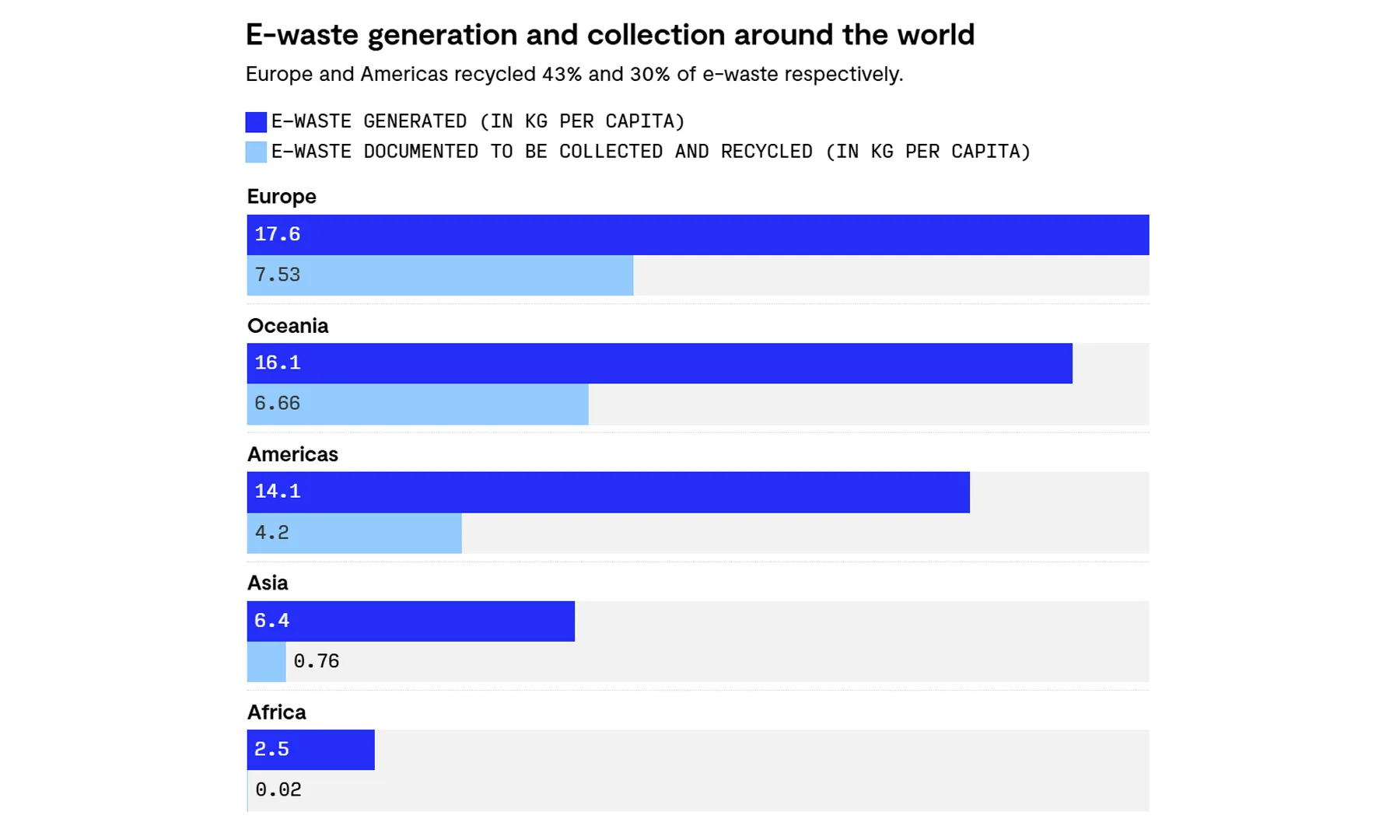
E-waste is already one of the fastest-growing waste streams in the world, with tens of millions of tonnes generated every year. And the worst part? A large chunk of it isn’t properly recycled. Improper handling can release toxic materials like lead and mercury into the environment, posing serious risks to both ecosystems and human health. And here’s the uncomfortable truth: most of this waste ends up in lower-income countries, where recycling often happens under unsafe conditions. That means that while the benefits of AI are global, the environmental cost is not equally shared.

At the end of the day, AI might feel like a purely digital revolution. But behind the scenes, it’s building a very real, very physical footprint. And if things don’t change, that footprint is only going to keep growing.
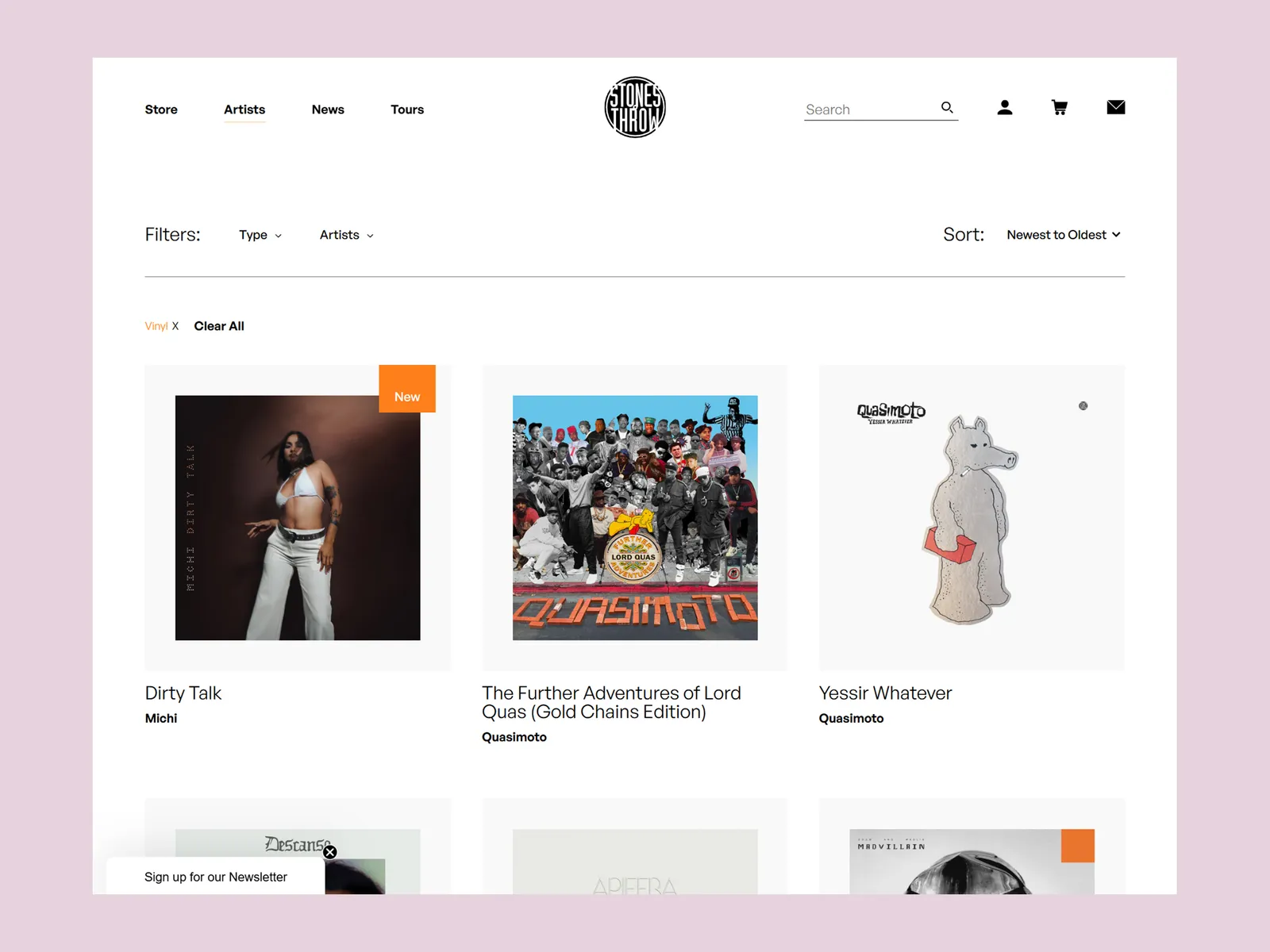
For smaller releases, including LPs from midsize indie labels (Drag City, Kranky, Superior Viaduct), check out Midheaven Mailorder. This site is run by the San Francisco distributor Revolver USA, which sells to record stores around the US but also sells direct to consumers. Here you’ll find a ton of independent music, including choice reissues from bigger names like Devo, Sonic Youth, and The Fall.
Another great independent record store is Amoeba Music, made famous for its amazing selection at numerous California stores, and its What’s in Your Bag YouTube series. If you want to support a good brick-and-mortar record store and know what you want, we always recommend buying from Amoeba instead of Amazon.
Independent Labels
-SOURCE-Parker-Hall.jpg)
Screenshot courtesy of Parker Hall
Record labels like Stones Throw, Sub Pop, Secretly Group, Fat Possum, Rough Trade, Daptone, Blue Note, International Anthem, and hundreds more all have websites and sell records directly. If you notice that there is an artist you like signed to a given smaller label, there is a good chance that other artists on the label have a similar vibe.
Start by checking out the liner notes on the back of all your albums to see who made them, then chase down those labels on the web. You’ll likely find some cool new tunes on vinyl along the way.
Directly From the Artists
We’ve saved the best for last. Pay the artists for their work by putting cash—or a Venmo transaction—directly in their hands. Buying a record at the merch table when an artist plays in your town is not only convenient for you (there’s no shipping, and you typically won’t be charged tax), but it’s one of the biggest income streams for bands that tour. You can often find special editions, special colored vinyl variants, and even records that haven’t yet been released just by stopping at the merch table. And if you’re lucky enough to meet the artist at the venue, they will usually sign the record jacket for you.
If you don’t get out much (we know, concerts are expensive), just find their website, social media page, or record label and place an order. I have at least a few records with personal thank-yous and signatures from small artists, which feels really special every time I listen to them!
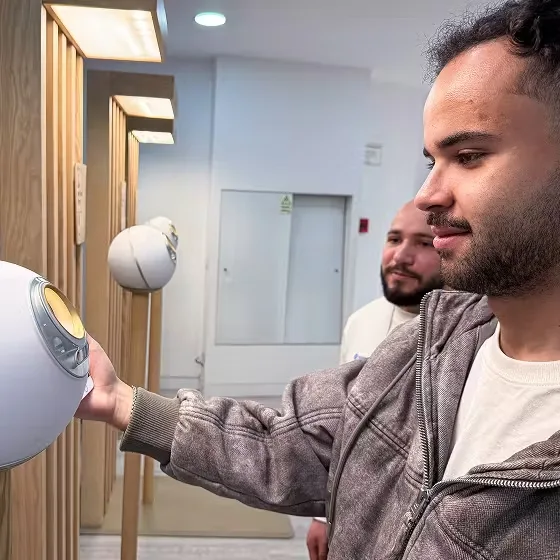
Online dating is already a trust minefield, and now Tinder wants to add an eyeball scan to the mix. The popular dating app has announced a global partnership with World, the biometric identity company founded by OpenAI’s Sam Altman. To prove you are a real human on Tinder, you will soon have the option to get your eyes scanned by a physical orb device.
What is World ID and how does Tinder’s human verification work?

World is a company built around the idea that proving your humanity online will become increasingly important as AI bots multiply and outnumber real people on the internet. Its solution is a proprietary scanning device called the Orb, which scans your irises at its physical outlets to verify that you are a real person.
Once verified, you receive a World ID linked to that scan. World already ran a pilot of this verification process with Tinder in Japan earlier this year, and that trial was apparently successful enough to warrant a worldwide rollout.

On Tinder, users who go through the World ID verification process will receive a badge on their profile indicating they are a verified human. To sweeten the deal, Tinder is also offering five free Boosts to anyone who completes the verification. The company hopes that this incentive is meaningful enough for people to hand over their biometric data.
Is this just about dating apps, or is the World orb coming for everything?

Tinder is just the beginning. Zoom is now integrating World ID so that meeting hosts can verify participants’ identity before joining a call. DocuSign is also adopting the technology, letting users require World verification on contracts. Meanwhile, Reddit might adopt World ID as a bot detection tool.
On top of that, World has launched Concert Kit, a tool that lets artists reserve concert tickets for verified humans only, taking direct aim at scalper bots. Concert Kit will soon be tested at a Bruno Mars World Tour show in San Francisco.
Even though World is pushing hard for mainstream adoption, governments in Brazil and several other countries have banned it over privacy concerns. Whether handing your biometric data to a third party becomes the new normal is a question that is only going to get louder from here.
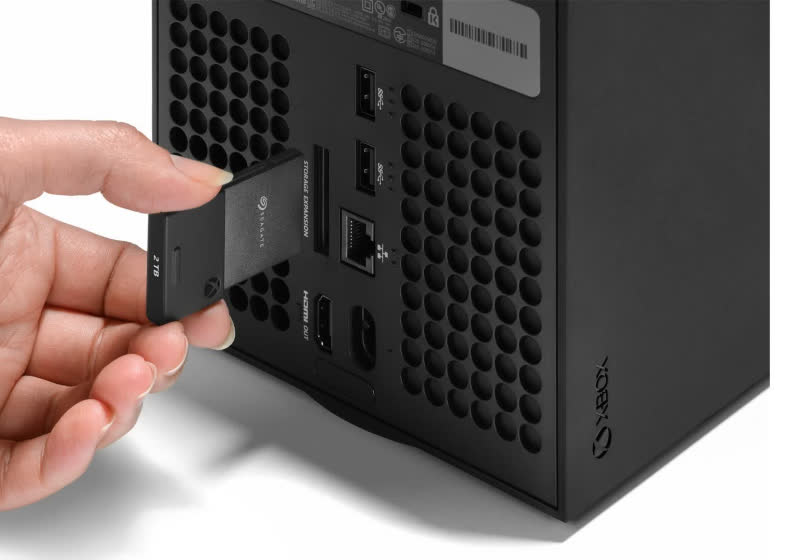
The storage pricing situation is so bad right now that in some cases using an older expansion card designed for a gaming console can be a better option than purchasing a new SSD. A Reddit user recently shared an experiment with Xbox expansion cards, adapting the seemingly proprietary format for…
Read Entire Article
Source link
Brand recognition is vital in the appliance market, communicating trust and quality to the buyer. You’re much more likely to purchase an appliance from a company you recognize and have had a good experience with before. According to market research company YouGov, the most popular appliance brands in the U.S. are KitchenAid, Whirlpool, and GE Appliances.
We’ve all heard of mainstream appliance companies like Whirlpool and GE. Many of us might even have one of their dishwashers or tumble dryers in our homes. Most consumers consider factors like durability before they purchase a new appliance as well as other factors like user ratings, cost, how the appliance performs and meets our unique needs, and, of course, brand.
But what if we told you there’s a whole world of luxury appliance brands out there that you’ve never heard of? If you’re looking for top-notch performance, great reliability, and premium materials, brands like KitchenAid and GE may not cut it. Here are five luxury appliance brands that you might not have even realized are out there — something to consider if you’re looking to kit out a bespoke kitchen or high-end utility room.
Miele
You may not have heard of German appliance company Miele, but it’s been in business for more than 125 years. Created in 1899 by engineer Carl Miele and his business partner Reinhard Zinkann, Miele originally manufactured cream separators. Today, it’s still guided by its original slogan, “Immer Besser,” which means “Forever Better.”
Miele’s U.S. headquarters is located in Princeton, New Jersey, and there are several “experience centers” scattered across the U.S. These showrooms allow interested buyers to view Miele products and consult with experts about your needs. If you’re invested in purchasing only products made in the U.S., Miele also has a production plant in Alabama, marking its first manufacturing venture in America. It makes kitchen appliances there that are exclusively for the North American market.
If you don’t live near any of the experience centers, Miele appliances are sold online, through independent dealers, and at big box stores like Best Buy and Lowe’s. Wirecutter has recommended its canister vacuums for years, and reviewers consistently insist that the brand is worth the price. SlashGear has even highlighted how Miele figures high in customer satisfaction in the past. The company’s vacuum cleaners sold at Lowe’s range in price from $399 to $999, while the brand’s dishwashers and refrigerators at Best Buy are several thousand dollars or more.
Signature Kitchen Suite (SKS)
Signature Kitchen Suite (SKS) is a subsidiary of LG Electronics and is known for its pioneering, state-of-the-art technology. As its name implies, the company is focused only on kitchen appliances, from standard ranges and cooktops to wine refrigerators and ventilation hoods. SKS should be on your list if you’re looking for sleek, ultra-modern appliances with understated styling that are designed to blend in rather than stand out.
Appliances from SKS offer much more than your standard Lowe’s or Home Depot options. Buyers can expect touchscreen controls, wi-fi enabled smart appliances, and whisper-quiet performance. Some SKS ranges actually have a built-in sous vide module for anyone looking to get into some unorthodox cooking techniques that are usually reserved for fancy Michelin-star restaurants in major metropolitan areas. These luxury appliances have luxury price tags — the SKS 48-inch Dual-Fuel Pro Range with sous vide costs more than $17,000!
Many products connect via LG’s ThinQ app, which allows users to turn on appliances, check cycles, and even monitor the health of the appliance. You can even set a custom melody for your refrigerator’s door alarm or your dishwasher’s cycle alert. You’re unlikely to find one of these appliances for sale at a big box store like Best Buy or Lowe’s; instead, check the SKS website to find a dealer near you.
Viking
If $17,000 for a range is a bit out of budget but you still want to explore luxury options, try Viking. While it does offer plenty of appliances in the five-figure range, buyers can also get a rangetop for under $6,000 or a refrigerator for just over $4,200. Viking is also a great choice if you’re looking for commercial-grade appliances for your home — just be prepared to shell out the big bucks.
Arguably an appliance manufacturer that’s a bit more well-known compared to others on this list, Viking introduced its first commercial-style range intended for home use in 1987. The company slowly expanded its product line to include refrigerators, cooktops, and even dishwashers. Their rangetops, however, continue to be the talk of the town and are renowned for their high output burners, with some hitting 23,000 BTUs for high-heat searing and boiling. The low-heat simmering burners are also celebrated for their precise heat control. Viking sells both gas and electric ranges in various sizes.
If you want to add a bit of color to your kitchen, some Viking appliances are available in a variety of colors, from traditional stainless steel and classic black to vibrant turquoise or pink. Its panel-ready dishwashers can match any style and color cabinet. Viking appliances are also made in America, manufactured in one of the company’s three Mississippi plants.
Wolf, Cove, and Sub-Zero
Owned by Sub-Zero Corp, which also markets other appliances, Wolf focuses on cooktops and ovens. Cove, meanwhile, is the name of the company’s dishwashers, while the eponymous Sub-Zero line, as you may have guessed, specializes in refrigeration.
Wolf ranges are known not just for their iconic red knobs (which are also available in standard, albeit more boring, colors) but also for their professional-grade performance. They are built to last not just for years, but decades according to Wolf, as each one is built by hand and individually tested. The company’s dual-fuel range uses natural gas or liquid propane for the cooktop along with electric power for the oven. The 30″ model with four burners starts at $9,180.
Cove offers only dishwashers, but its 24-inch panel-ready model is modestly priced (for the luxury sector) at $2,935. Buyers can customize the dishwasher to match their kitchen cabinetry for a modern, seamless look. This model is also available as an ADA-compliant option, with a lower height for easier loading and unloading. Sub-Zero offers three series of refrigerators, along with a line of wine fridges. The Classic Series is known for its iconic top-mounted grille, while the Designer series features integrated panels for a seamless look. The Pro Series is a line of stainless steel, commercial-style refrigerators. Buyers should expect to pay well over $10,000 for a Sub-Zero refrigerator.
JennAir
JennAir was the first company to debut downdraft ventilation in 1965, removing the need for overhead ventilation hoods for those that can afford it. Today, the company offers a wide range of kitchen appliances manufactured by Whirlpool Corporation, including modular, customizable column refrigeration. These types of fridges offer high levels of freedom in choosing your layout, and JennAir’s options combine high performance (and high prices) with a sleek, modern look.
JennAir offers refrigerator and freezer column options in various sizes, from 18 inches to 36 inches, and in various panel styles. Buyers can opt for one column, two separated or joined columns, three separated or joined columns, and more. Prices start at about $8,000 for one column. Whirlpool refrigerators, including JennAir, typically rank well compared to competitors.
Shoppers will also appreciate JennAir’s professional ranges, custom cooktops, ventilation options, and dishwashers and compactors. Its dishwashers are offered in two distinct styles: Rise and Noir. Rise offers a minimalist, stainless steel design, while Noir has a more dramatic, modern design with a laser-etched lace texture pattern inscribed behind the handle. Good Housekeeping tested a JennAir dishwasher and noted its high-end feel and quiet performance, naming it one of the best dishwashers on the market. Rise dishwashers are available for $1,699, while Noir models start at $1,499.
Tech
OpenAI debuts GPT-Rosalind, a new limited access model for life sciences, and broader Codex plugin on Github


The journey from a laboratory hypothesis to a pharmacy shelf is one of the most grueling marathons in modern industry, typically spanning 10 to 15 years and billions of dollars in investment.
Progress is often stymied not just by the inherent mysteries of biology, but by the “fragmented and difficult to scale” workflows that force researchers to manually pivot between the actual experimental design equipment, software, and databases.
But OpenAI is releasing a new specialized model GPT-Rosalind specifically to speed up this process and make it more efficient, easier, and ideally, more productive. Named after the pioneering chemist Rosalind Franklin, whose work was vital to the discovery of DNA’s structure (and was often overlooked for her male colleagues James Watson and Francis Crick), this new frontier reasoning model is purpose-built to act as a specialized intelligence layer for life sciences research.
By shifting AI’s role from a general-purpose assistant to a domain-specific “reasoning” partner, OpenAI is signaling a long-term commitment to biological and chemical discovery.
What GPT-Rosalind offers
GPT-Rosalind isn’t just about faster text generation; it is designed to synthesize evidence, generate biological hypotheses, and plan experiments—tasks that have traditionally required years of expert human synthesis.
At its core, GPT-Rosalind is the first in a new series of models optimized for scientific workflows. While previous iterations of GPT excelled at general language tasks, this model is fine-tuned for deeper understanding across genomics, protein engineering, and chemistry.
To validate its capabilities, OpenAI tested the model against several industry benchmarks. On BixBench, a metric for real-world bioinformatics and data analysis, GPT-Rosalind achieved leading performance among models with published scores.
In more granular testing via LABBench2, the model outperformed GPT-5.4 on six out of eleven tasks, with the most significant gains appearing in CloningQA—a task requiring the end-to-end design of reagents for molecular cloning protocols.
The model’s most striking performance signal came from a partnership with Dyno Therapeutics. In an evaluation using unpublished, “uncontaminated” RNA sequences, GPT-Rosalind was tasked with sequence-to-function prediction and generation.
When evaluated directly in the Codex environment, the model’s submissions ranked above the 95th percentile of human experts on prediction tasks and reached the 84th percentile for sequence generation.
This level of expertise suggests the model can serve as a high-level collaborator capable of identifying “expert-relevant patterns” that generalist models often overlook.
The new lab workflow
OpenAI is not just releasing a model; it is launching an ecosystem designed to integrate with the tools scientists already use. Central to this is a new Life Sciences research plugin for Codex, available on GitHub.
Scientific research is famously siloed. A single project might require a researcher to consult a protein structure database, search through 20 years of clinical literature, and then use a separate tool for sequence manipulation. The new plugin acts as an “orchestration layer,” providing a unified starting point for these multi-step questions.
-
Skill Set: The package includes modular skills for biochemistry, human genetics, functional genomics, and clinical evidence.
-
Connectivity: It connects models to over 50 public multi-omics databases and literature sources.
-
Efficiency: This approach targets “long-horizon, tool-heavy scientific workflows,” allowing researchers to automate repeatable tasks like protein structure lookups and sequence searches.
Limited and gated access
Given the potential power of a model capable of redesigning biological structures, OpenAI is eschewing a broad “open-source” or general public release in favor of a Trusted Access program.
The model is launching as a research preview specifically for qualified Enterprise customers in the United States. This restricted deployment is built on three core principles: beneficial use, strong governance, and controlled access.
Organizations requesting access must undergo a qualification and safety review to ensure they are conducting legitimate research with a clear public benefit.
Unlike general-use models, GPT-Rosalind was developed with heightened enterprise-grade security controls. For the end-user, this means:
-
Restricted Access: Usage is limited to approved users within secure, well-managed environments.
-
Governance: Participating organizations must maintain strict misuse-prevention controls and agree to specific life sciences research preview terms.
-
Cost: During the preview phase, the model will not consume existing credits or tokens, allowing researchers to experiment without immediate budgetary constraints (subject to abuse guardrails).
Warm reception from initial industry partners
The announcement garnered significant buy-in from OpenAI parnters across the pharmaceutical and technology sectors.
Sean Bruich, SVP of AI and Data at Amgen, noted that the collaboration allows the company to apply advanced tools in ways that could “accelerate how we deliver medicines to patients”.The impact is also being felt in the specialized tech infrastructure that supports labs:
-
NVIDIA: Kimberly Powell, VP of Healthcare and Life Sciences, described the convergence of domain reasoning and accelerated computing as a way to “compress years of traditional R&D into immediate, actionable scientific insights”.
-
Moderna: CEO Stéphane Bancel highlighted the model’s ability to “reason across complex biological evidence” to help teams translate insights into experimental workflows.
-
The Allen Institute: CTO Andy Hickl emphasized that GPT-Rosalind stands out for making manual steps—like finding and aligning data—more “consistent and repeatable in an agentic workflow”.
This builds on tangible results OpenAI has already seen in the field, such as its collaboration with Ginkgo Bioworks, where AI models helped achieve a 40% reduction in protein production costs.
What’s next for Rosalind and OpenAI in life sciences?
OpenAI’s mission with GPT-Rosalind is to narrow the gap between a “promising scientific idea” and the actual “evidence, experiments, and decisions” required for medical progress.
By partnering with institutions like Los Alamos National Laboratory to explore AI-guided catalyst design and biological structure modification, the company is positioning GPT-Rosalind as more than a tool—it is meant to be a “capable partner in discovery”.
As the life sciences field becomes increasingly data-dense, the move toward specialized “reasoning” models like Rosalind may become the standard for navigating the “vast search spaces” of biology and chemistry.
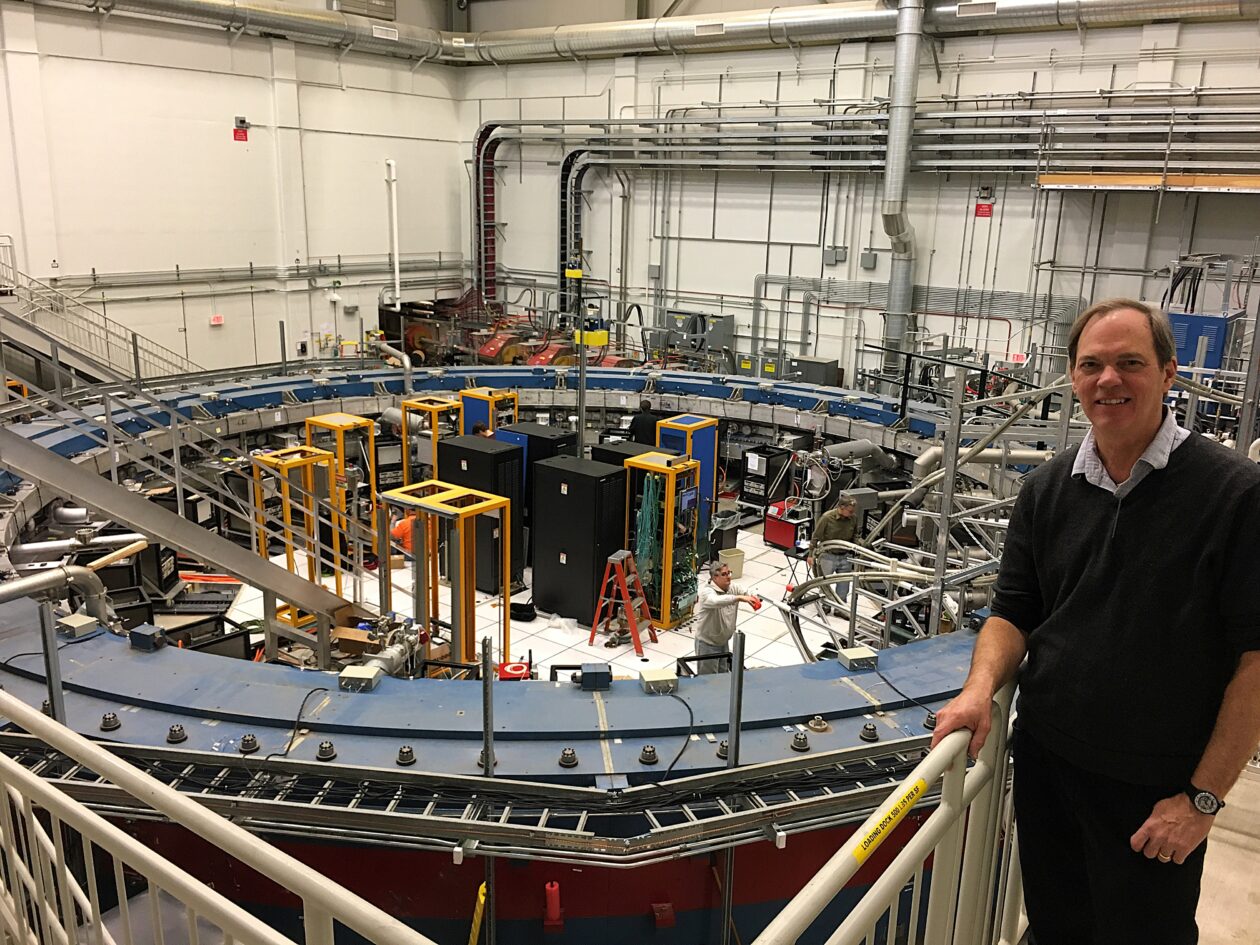

University of Washington physicist David Hertzog can’t wait to find out how hundreds of researchers who worked on a geeky project known as the Muon g-2 Collaboration will react when they hear they’ve each won thousands of dollars for that work.
The money is coming from this year’s $3 million Breakthrough Prize for fundamental physics, which was awarded tonight during a gala ceremony in Los Angeles. Hertzog and his colleagues decided that the prize should be divided equally among everyone who was an author on research papers relating to the decades-long series of muon experiments.
“There are students who were in and out of this thing — two years or less,” Hertzog said. “They’re going to be shocked out of their lives about something they did a long time ago that they don’t remember doing. They’re going to get a phone call or email from the Breakthrough people, and they’re going to go, ‘What!?’ That’s kind of fun.”
Hertzog said the money will be shared by about 400 researchers who were involved in the Muon g-2 experiments at Fermilab in Illinois and at the Brookhaven National Laboratory in New York. The prize also honors the role played by Europe’s CERN research center, going as far back as 1959. “There was one very, very old man who was still alive from the 1970s experiment, but I think he has died,” Hertzog said.
Although the precise math hasn’t yet been worked out, dividing $3 million among 400 people would give each recipient $7,500. “That’s nothing to throw around if you’re a student or a young postdoc,” Hertzog said.
A big moment for the muon
Russian-born tech investor Yuri Milner and his wife, Julia Milner, established the Breakthrough Prize in 2012 to recognize achievements in fundamental physics, mathematics and the life sciences. They also wanted to add some Hollywood-style pizazz to the public perception of scientists, going so far as to spread out a red carpet for celebrities at the “Oscars of Science.” The host for this year’s ceremony was James Corden, and the guest list included Robert Downey Jr., Eileen Gu, Anne Hathaway, Paris Hilton, Salma Hayek Pinault and Michelle Yeoh.
The $3 million Breakthrough Prize is the world’s richest scientific award, outdoing the roughly $1.2 million prize given to Nobel laureates. More than $344 million has been handed out since the creation of the prize program. Past winners from the University of Washington include physicists Eric Adelberger, Lukasz Fidkowski, Jens Gundlach and Blayne Heckel, plus biochemist David Baker.
This year’s prize in fundamental physics touches on a long-running effort to reconcile experimental findings with one of history’s most successful scientific theories: the Standard Model of particle physics. The theory lays out a framework for classifying and understanding a menagerie of subatomic particles — including the muon, which is similar to the electron but 207 times heavier.
The Standard Model predicts the various properties of the muon. One such property is the strength and orientation of the muon’s magnetic field, known as its magnetic moment. The theory’s simplest formulation calls for the value of the muon’s magnetic moment, represented in equations by the letter g, to be equal to 2.
Few things in particle physics are that simple, however. Experimental tests measured the g-factor to be slightly more than 2, and that discrepancy became the focus of the Muon g-2 (pronounced “mew-on gee-minus-two”) experiments.
If there was a confirmed mismatch between the Standard Model and experimental results, that could open the door to new physics. For example, perhaps whole new sets of subatomic particles not predicted by theory had somehow eluded direct observation. So, physicists across the globe marshaled their forces to determine the value of g, either to fill in the gap between experiment and theory or to zero in on a new frontier in physics.
Over the years, physicists have been conducting increasingly fine-tuned experimental runs using powerful magnets at CERN, Brookhaven and Fermilab. Hertzog has been in on the quest since Brookhaven joined in, about 30 years ago, and he was part of the team in 2013 when the experiment’s massive main magnet was moved from Brookhaven to Fermilab.
Each run narrowed the uncertainty surrounding the precise value of g. The crowning achievement came from Fermilab’s version of the experiment in 2025.
“We set the goal at 140 parts per billion, and we got 127 parts per billion,” Hertzog said. “When we wrote the proposal, we were ambitious as we could get in our minds, because we wanted to get people to take us on. Then we just blew away all the systematic errors, better than we expected. And then new ones came along, which caused us to have a little bit of a struggle.”

At the same time, other physicists were wrestling with theoretical models. They factored in the ever-so-subtle effects of particles popping in and out of the quantum foam that’s thought to make up the fabric of spacetime at its smallest scale. Last year, one of the models came up with a range of theoretical values for g that overlapped with the Muon g-2 Collaboration’s range of experimental values.
That led some to claim that there was no discrepancy after all. “A famous particle physics experiment has ended not with a bang, but a whimper,” Science magazine reported. But once again, few things in particle physics are that simple. Hertzog insisted that reports of the muon mystery’s death have been greatly exaggerated.
“I just throw up my hands, because after 30-some years of working on this, it’s a little disappointing that it’s not clear,” he said. “Not only has the number that they recommended shifted, but the certainty of their number got way wider. The uncertainty on the theory recommendation is actually pretty big. It’s shifted, but it’s also pretty large.”
Hertzog said the Breakthrough Prize recognizes a scientific quest that’s still in progress. “This story is not finished,” he said. “The story is really about the extraordinary achievement of the precision of this delicate measurement which probes nature to such a deep, deep level.”
Will there ever be a definitive answer to the muon mystery?
“We don’t know it yet, but it’s knowable, as opposed to walking out into a vast cloud of ambiguity,” Hertzog said. “So, I think we will find out in a couple of years where that finally lands. … Who knows whether that’ll lead us to another chapter in this business. But I’m confident that we’ll know it.”
A big night for breakthroughs
The Muon g-2 Collaboration’s Breakthrough Prize was awarded to hundreds of researchers from 31 institutions in seven countries, but just four team members were selected to take the stage for tonight’s award ceremony. Hertzog was joined by Chris Polly from Fermilab, William Morse from Brookhaven, and Lee Roberts from Brookhaven and Boston University.
A special lifetime prize for fundamental physics went to David Gross, a theorist at the Kavli Institute of Theoretical Physics at the University of California at Santa Barbara. Gross won a share of the 2004 Nobel Prize in Physics for filling gaps in the Standard Model relating to the strong nuclear force. More recently, he helped write a landmark 40-year national plan for particle physics.
Three prizes were given in the life sciences:
- Jean Bennett, Katherine High and Albert Maguire of the University of Pennsylvania were recognized for developing a therapy for inherited retinal degeneration that became the first gene therapy approved by the Food and Drug Administration for a genetic disease.
- Another prize went to Stuart Orkin, a physician at Harvard Medical School and Boston Children’s Hospital; and to Swee Lay Thein at the National Heart, Lung and Blood Institute for elucidating the mechanism driving the switch from fetal to adult hemoglobin and validating it as a therapeutic target for sickle-cell disease and beta-thalassemia.
- Rosa Rademakers of the Mayo Clinic and Bryan Traynor of the National Institute on Aging won the third prize in the life sciences for discovering the most common genetic cause of ALS and frontotemporal dementia.
Frank Merle of the Institut des Hautes Études Scientifiques in Paris was awarded this year’s prize in mathematics for achieving breakthroughs in nonlinear evolution equations. His work could have implications from aeronautical engineering and safety to astrophysics.
For his part, Hertzog doesn’t intend to rest on his laurels. Even as the Muon g-2 Collaboration is winding down, he has joined the team for another particle physics experiment called PIONEER. That experiment will probe inconsistencies between the Standard Model and observations of pion decay. As was the case with the Muon g-2 experiments, there’s a chance that PIONEER could point the way to physics beyond the Standard Model.
“This is a stock market golden opportunity,” Hertzog said. “That’s how I look at it.”
The Breakthrough Prize website has the full list of this year’s honorees, including the winners of New Horizons Prizes for early-career physicists and mathematicians, Maryam Mirzakhani New Frontiers Prizes for women mathematicians and the inaugural Vera Rubin New Frontiers Prize for women physicists. The recorded awards show is due to air at noon PT on April 26 via YouTube.
Hertzog and University of Bern physicist Martin Hoferichter review the results of the Muon g-2 experiments in a preprint paper titled “The Anomalous Magnetic Moment of the Muon: Status and Perspectives.”

Daily Deal: Python Crash Course

Good work-life balance tops wish-list when looking for new job, survey suggests

Eddie Hearn makes honest Conor Benn vs Ryan Garcia prediction


-
 NewsBeat6 days ago
Pep Guardiola and Gary Neville agree over Arsenal title problem that benefits Man City
-

 Crypto World5 days ago
The SEC Conditionalises DeFi Platforms to Be Avoided for Broker Registration
-

 Politics6 days ago
World Cup exit makes Italy enter crisis mode
-

 Fashion1 day ago
Weekend Open Thread: Theodora Dress
-

 Crypto World5 days ago
SEC Signals Exemption for Crypto Interfaces From Broker Registration
-

 News Videos4 days ago
Secure crypto trading starts with an FIU-registered
-

 Sports2 days ago
NWFL Suspends Two Players Over Post-Match Clash in Ado-Ekiti
-

 Crypto World5 days ago
SEC Proposes Certain Crypto Interfaces Don’t Need to Register as Brokers
-

 NewsBeat5 days ago
Trump and Pope Leo: Behind their disagreement over Iran war
-
 NewsBeat7 days ago
JD Vance announces ‘no agreement’ with Iran over nuclear weapons fear
-

 Politics1 day ago
Palestine barred from entering Canada for FIFA Congress
-

 Crypto World1 day ago
Russia Pushes Bill to Criminalize Unregistered Crypto Services
-

 Sports6 days ago
NWFL opens Pathway for new Clubs ahead of 2026 Season
-
 Business2 days ago
Creo Medical agree sale of its manufacturing operation
-
Sports7 days ago
Dexter Lawrence, Stefon Diggs, Trading for De’Von Achane
-
Business6 days ago
Kering slides after Morgan Stanley downgrade, Gucci woes loom
-

 Crypto World6 days ago
Trump whales load up ahead of Mar-a-Lago luncheon.
-
 Crypto World6 days ago
Sei Network Enters Quiet Reset Phase as On-Chain Metrics Signal a Slowdown in 2026
-

 Tech6 days ago
Google adds E2E encryption to Gmail for iOS and Android enterprise users
-

 Tech6 days ago
Apple glasses won’t go brand shopping like Meta did with Ray-Ban and Oakley
You must be logged in to post a comment Login