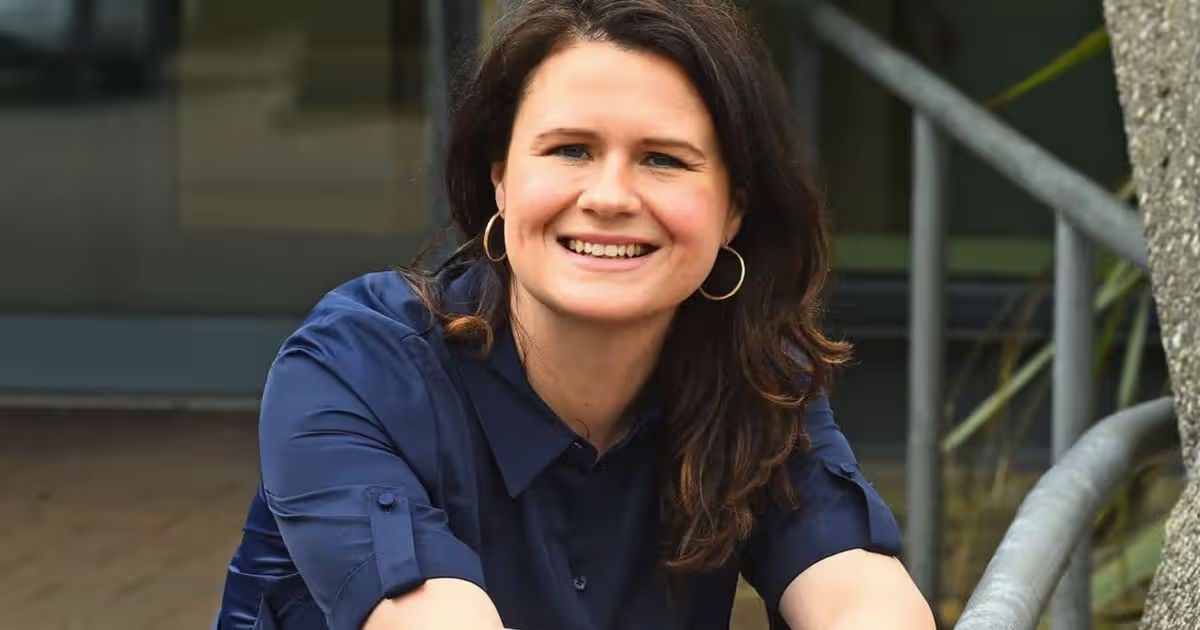
David Taylor has been bailed along with two other men arrested in Pontyclun and Powys on Wednesday. His wife Joani Reid read a statement in the Commons on Wednesday in which she said she denied any wrongdoing
Paul Hutcheon and Chris McCall
13:51, 05 Mar 2026Updated 13:55, 05 Mar 2026
The leader of Scottish Labour has said the party has “judgements to make” on an MP whose husband is suspected of spying for China.
The Scottish Labour leader Anas Sarwar said on Thursday Labour has “judgements” to make on MP Joani Reid, who is an MP for East Kilbride and Strathaven and whose husband David Taylor, from Ruthin, was arrested on Wednesday as part of an ongoing investigation into alleged spying.
Advertisement
Mr Sarwar made the remarks amid speculation the UK Labour Party could suspend Ms Reid. On Wednesday the Metropolitan Police said three men – aged 39, 43 and 68 – were arrested by counter-terrorism officers in London and Wales on suspicion of assisting a foreign intelligence service.
The men were detained under the Police and Criminal Evidence Act, according to Commander Helen Flanagan, head of counter terrorism policing London.
Taylor has been bailed along with two other men arrested in Pontyclun and Powys on Wednesday. Ms Reid read a statement in the Commons on Wednesday in which she said she denied any wrongdoing.
On Thursday Mr Sarwar said of Ms Reid: “We are considering all these matters because they are serious questions that you are putting to me. As you know, we have an independent Governance and Legal Unit that’s considering many of these matters and we will have judgements to make today.”
Advertisement
Asked if Ms Reid should be suspended, Mr Sarwar said: “This is rightly an independent Governance and Legal Unit process. We are looking at all the questions that arise from this and we will be making judgements on this.”
Mr Sarwar said he last came into contact with Taylor “probably at some point last year”. “He is not someone who is well known to me,” he said.
A Labour source said suspension and an internal investigation would allow Reid to show she has done nothing wrong, the Daily Record reports.
Advertisement
In a statement on Wednesday Ms Reid strongly rejected any claims of wrongdoing. She said: “I have never been to China. I have never spoken on China or China-related matters in the Commons. I have never asked a question on China-related matters.
“As far as I am aware, I have never met any Chinese businesses whilst I have been an MP, any Chinese diplomats or government employees, nor raised any concern with ministers or anyone else on behalf of, even coincidentally, Chinese interests.”
Taylor was special adviser to Peter Hain when he was Welsh secretary and also previously worked for Senedd member Leighton Andrews when he was a backbencher. He was also selected as Labour’s candidate as police and crime commissioner in north Wales in 2016.
He is listed on the MP’s register of interests as a director of Earthcott Limited, a lobbying firm. He previously founded a cyber security company and his LinkedIn profile states he is director of policy and programmes for an organisation named Asia House.
Advertisement
His profile states: “At Asia House I lead our policy and research teams in delivering programmes and projects for clients across Asia, the Middle East, and Europe. I oversee the development and execution of strategic initiatives that connect senior government officials, business leaders, and thought leaders on critical regional and global issues.”
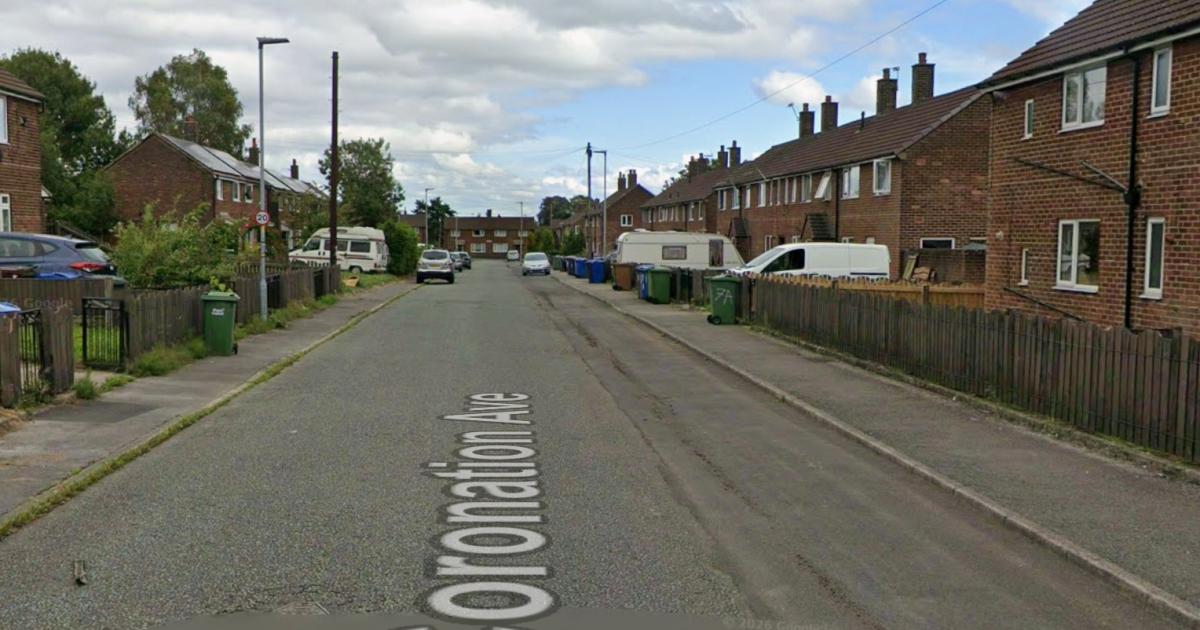
They were called to reports of the incident at a quarter past 12pm and three fire engines arrived to the scene – one from Atherton, one from Bolton and one from Leigh.
Force manager Steve Green, from Atherton Fire Station, said they remained there for around two hours and “carried out normal operations”.
He said the kitchen on the upstairs flat on Coronation Avenue in Atherton had filled with smoke and the occupant was asleep.
Advertisement
Fire crews managed to escort the man from the flat, and Mr Green said there “wasn’t a lot of damage” as the smoke had come from the microwave.
North West Ambulance Service and Greater Manchester Police were also present to assist at the scene.
One of the most bothersome things about being sick or having seasonal allergies is that it makes your nose stuffy and blocked. This makes breathing in through your nostrils frustrating – if not altogether impossible.
But even when you aren’t sick, perhaps you’ve noticed that when you take a deep breath, only one of your nostrils seems to be allowing the air in. Before you panic and wonder if you’re coming down with something, what you’re experiencing is actually a normal bodily process.
Multiple times a day, without us even noticing, the nostrils naturally switch between a dominant nostril for airflow. This process is called the nasal cycle and it plays an important role in the health of our nose.
The body actually switches the dominant nostril as frequently as every two hours while we’re awake. This switch is less frequent when we’re sleeping as our breathing rate slows and the volume of air entering and leaving the body lowers.
Advertisement
There are two key aspects to the nasal cycle: congestion and decongestion.
During the congestion phase, one nostril will experience reduced airflow, while the opposite nostril will be open, or decongested – allowing for more air to pass through it. The decongested phase actually fatigues the open nostril, as air dries it out and brings pathogens into contact with it. This is why it’s important for the dominant nostril to swap.
This alternating cycle is automatic, regulated subconsciously by the hypothalamus in the brain. However, some people have no nasal cycle (such as those who have a hypothalamic disorder). There’s also evidence that the left nostril may be more dominant – particularly in right handed people.
Studies looking at nasal breathing even suggest that when the right nostril is dominant, the body is in a more alert or stressed state. But when the left nostril takes over, the body is in a more relaxed state.
Advertisement
The nasal cycle is important for a number of reasons.
First, it protects the lining of the nose and respiratory system. At least 12,000 litres of air pass through it each day, making it a key front-line defence from pathogens. Having the dominant nostril alternate reduces the risk of damage and also makes it easier for the nasal passage to protect against pathogens.
The nose also has to rest and repair. Air exposure dries it out – so without time to recuperate, this could make it easier for pathogens and inflammation to cause damage.
Colds can affect our nasal cycle. Doucefleur/ Shutterstock
Part of the congestion process also sees increased blood flow to the nose’s vessels. This ensures the nostrils are moistened properly for both the repair and recovery processes, and so that air is warmed and moistened as it passes through the nostril.
Advertisement
Nasal cycle function
A number of things can affect the nasal cycle’s normal function. Respiratory conditions such as colds and flu result in an increase in mucous production. This restricts how easily the nasal passages are able to alternate.
Allergens such as pollen or dust mites can cause severe inflammation of the nasal tissues – again impeding proper function of the nasal cycle.
Certain medications, such as those for high blood pressure, can cause irritation of the nasal lining, too. This is because these drugs effect the blood vessels throughout the body – including those in the nose.
Overuse of nasal decongestants (for more than five days at a time) can cause rhinitis medicamentosa – a form of congestion that occurs when you overuse these drugs. The sudden swelling of the nostril tissues affects the nasal cycle.
Advertisement
For others, structural issues interfere with their nasal cycle. Nasal polyps, which are found in up to 4% of people, are an outgrowth of the nasal lining that usually occurs in both nostrils. These limit how easily air can pass through the nostrils, making the nasal cycle ineffective and leaving both nostrils constantly feeling blocked.
A deviated nasal septum – where the cartilage and bone plate between the nostrils is off-centre – can also make the nostrils feel constantly congested or blocked. This often requires surgery to improve breathing and sleep quality.
Even factors as simple as lying in bed or slouching over can affect the nasal cycle. When you lay down, blood pools in the tissues of the nose. Gravity also causes the contents of the sinuses to move into the nostril closest to the pillow. This can block one of the nostrils, making it harder to breathe and preventing the nasal cycle from working as normal.
If you’re struggling with blocked nostrils, infections such as colds and the flu are usually the most common culprit. It can take up to two weeks to clear the congestion. Sinusitis, where the sinuses become infected, can last for four weeks.
Advertisement
Pollen allergies can also be a common culprit of a abnormal nasal cycle. This symptom can last for weeks depending on the specific allergen you’re allergic to. Regularly taking antihistamines during hay fever season may help to reduce symptoms and clear any congestion.
But if you find one nostril is persistently blocked for more than two weeks, it’s usually a good idea to get it checked out – particularly if there’s mucus coming from your nose, or a discharge that doesn’t look normal for you.
This article was first published in The Conversation UK’s World Affairs Briefing email. Sign up to receive weekly analysis of the latest developments in international relations, direct to your inbox.
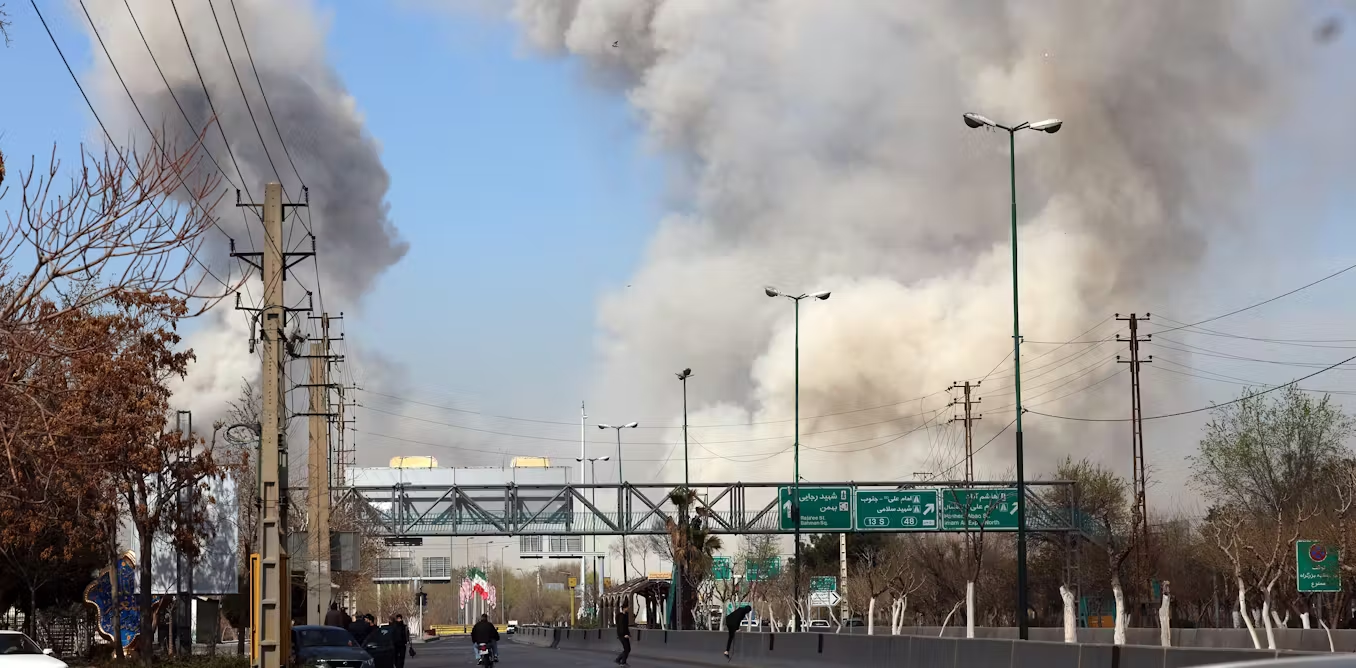
Before the first airstrike hit Iran on Saturday morning, analysts were warning that a war against Tehran would be a highly risky business. The regime has been in place for nearly 50 years, has a huge, well-trained and loyal military, proxies throughout the region and a huge stockpile of ballistic missiles and drones – plenty to wreak havoc across the region and beyond.
And so it has proved. While Israeli and American forces have been pounding targets across the country, Iran has responded by attacking Israel as well as US military targets in neighbouring Gulf states, including the United Arab Emirates, Bahrain, Saudi Arabia and Kuwait. Attacks have also been reported from Cyprus, Iraq and Jordan.
There is a fresh round of fighting in southern Lebanon after Hezbollah joined Iran in targeting Israel. Beirut is being bombarded.
Advertisement
The economic damage to the region has been enormous. Oil refineries have been shut down, the vital strait of Hormuz – through which 20% of the world’s oil cargo passes – is effectively closed, evacuation flights are leaving the Gulf states around the clock and people are cancelling their travel plans in droves.
And within days of the assassination of Iran’s supreme leader, Ali Khamenei, in a targeted airstrike that also killed a number of his top advisers, a new leader is set to be picked. The smart money appears to be on his son, Mojtaba, known to be cut from very much the same authoritarian clerical cloth as his father. So the notion that with Iran you kill the figurehead and the regime collapses appears to be flawed, to say the least.
Just one week ago, American and Iranian negotiators were engaged in talks in Geneva, which were reported to be making “significant progress”. Now there’s no knowing how this conflict could escalate. On Wednesday, the downing of an Iranian missile over Turkish airspace prompted speculation that Nato would be pulled into a war it clearly doesn’t want. A US submarine sank an Iranian warship in international waters off the coast of Sri Lanka.
There are so many moving parts to this conflict that the sense of jeopardy is at times overwhelming. My email inbox this morning contained a message from Robert Reich, who was Bill Clinton’s secretary of labour between 1993 and 1997 and is a trenchant and energetic critic of the US president, headed: “World War III?
Trump’s and Netanyahu’s illegal war turns global”.
Advertisement
Let’s not second-guess Armageddon just yet. But there’s no denying how dangerous the situation is becoming as the conflict continues to spread. Scott Lucas, an expert in US and Middle East politics at the Clinton Institute, University College Dublin, answers some of the key questions about this fast-developing situation.
This has gone beyond what the US president, Donald Trump, referred to as “major combat operations in Iran”. What it might become is anyone’s guess.
What we don’t have to guess is whether Trump is managing to take the American people with him on his foreign adventure. A poll taken on March 2 and published by YouGov/Economist found that US respondents oppose the war by a margin of 45% against to 32% in favour. Predictably, there’s a hugely partisan divide: most Republicans back their president, while Democrats are overwhelmingly anti war.
Advertisement
How Americans view the war in Iran. YouGov/Economist poll, Author provided (no reuse)
Significantly, writes Paul Whiteley of the University of Essex, an expert pollster with an interest in UK and US politics, Independents are also against the war by a significant margin. Looking ahead to November’s mid-term elections, as the US president’s advisers undoubtedly are, things do not look good for Republicans’ chances of holding either the House or the Senate.
And the war looks as if it will not end anytime soon. NBC News was reporting this afternoon that the Trump administration may invoke the Defense Production Act to accelerate the production of munitions, which would effectively move the US economy further on to a war footing.
Advertisement
This would seem to hint at something that analysts have speculated about, namely that a lengthy conflict could exhaust America’s stockpile of munitions. The US and its allies — including Israel and the Gulf states — are most acutely exposed to this shortage of defensive interceptors. It’s only been ten months since the US and Israel waged the 12-day war against Iran and that depleted an enormous number of both countries’ defensive missiles, according to Andrew Gawthorpe, an expert in modern American history at Leiden University.
This inevitably means that Washington will have to pull munitions away from other theatres, including those earmarked for South Korea. It’s also fair to say there will be fewer available for Kyiv’s European allies to purchase for the defence of Ukraine, which will please Vladimir Putin no end.
And whether an air campaign will be enough to achieve regime change – if that is indeed the purpose of this conflict – is debatable, writes Matthew Powell, an expert in air power at the University of Portsmouth. Air campaigns rarely work as intended – they often make matters worse, as the world saw after the Nato air campaign that led to the toppling of the country’s ruler, Muammar Gaddafi. With no coherent ground strategy to follow, things fell apart rapidly, with the terrible results that are with us to this day.
Keir Starmer certainly doesn’t believe in regime change “from the skies”, or so he told the House of Commons this week when fending off criticism of the UK government’s position on whether and how the UK should be involved in this conflict. As the US-Israeli attacks began, Starmer said that the UK would have none of it (due, in large part apparently, to his assessment of a lack of lawful basis for the campaign) and he was not prepared to allow America to use the UK’s bases in any capacity either.
He has since softened his stance, allowing the US to use some British bases, but purely for defensive purposes, to target Iranian ballistic launch sites that could threaten British interests in the region.
Advertisement
‘No Winston Churchill’.
But Donald Trump remains unimpressed and there’s no doubt that this episode has put severe pressure on the so-called “special relationship” between Britain and America. Matt Bar, of Nottingham Trent University, walks us through some of the ups and downs of this relationship over the decades and concludes that it has survived worse setbacks in its time.
If this all wasn’t so serious, the US president’s reaction to not immediately getting his way from Starmer would be amusing. In fact it drew an involuntary bark of laughter when I read that, in a press session after a meeting with the German chancellor, Friedrich Merz, on March 3, the US president threw a few barbs Starmer’s way, concluding that: “This is not Winston Churchill that we’re dealing with.”
As you’d expect, Beijing was quick to condemn the strikes. China has been heavily dependent on its imports of oil from Iran, and regime change there would threaten this and force it to look elsewhere.
China is linked to Iran in a number of ways, including – significantly – via Tehran’s use of China’s satellite navigation system, BeiDou , which Beijing is touting as a possible replacement for the western Global Positioning System (GPS).
China-watcher Tom Harper, of the University of East London, assesses how this conflict will affect China and concludes that while it will cause turmoil in the short-term, a protracted conflict will play to its benefit in the long term.
The assassination hit a raw nerve in Moscow. Putin, whose fear of assassination borders on the pathological, watched the killing of a fellow autocrat with undisguised alarm.
Iran is a close ally of Russia. Tehran provided huge numbers of its Shahed drones to Putin to help him wage his illegal war in Ukraine, and Iran has also helped Moscow circumvent the west’s sanctions regime.
Stefan Wolff, an expert in international security at the University of Birmingham, believes that the conflict will play to Moscow’s advantage in the short term at least, as the US diverts munitions earmarked for purchase by Kyiv’s European allies. But he thinks the war is “unlikely to shift the dial significantly towards Russian victory in the long term”.
Sign up to receive our weekly World Affairs Briefing newsletter from The Conversation UK. Every Thursday we’ll bring you expert analysis of the big stories in international relations.
Rising Country music star Ty Myers will be a long way from home after swapping cattle ranches for the big stadium stages in a huge breakthrough year for the teen
As the Country music bug continues to sweep the UK, one rising star has promised a show to remember during his debut set in Europe. Ty Myers might only be 18, but the musician’s meteoric rise sees him head to Blighty for the Country 2 Country festival this month labelled as the artist to watch by Grammy and Spotify.
Advertisement
He’ll quickly follow up his festival feature with a return to these shores to support the legendary Luke Combs. It’s all a far cry from his early years when the Ends of the Earth singer spent his childhood on a cattle ranch.
But it’s this upbringing that Ty says is helping to mould him into the next big thing in the genre. Speaking exclusively to the Mirror, the teen said: “I mean, there are many lessons you learn growing up. Everybody you see around you, in this, and in that industry, is hard working.
“You just put your head down and do it. And that’s just a great way to live life. And really, I take that over into the music industry and the music business, and it’s been a great, great help to me, for sure.”
Ensure our latest headlines always appear at the top of your Google Search by making us a Preferred Source. Click here to activate or add us as your Preferred Source in your Google search settings.
Known for his ability to blend traditional country storytelling with blues, soul and rock influences, Ty believes his success comes from being able to relate to the younger audience. “I feel like the most logical reasoning [as to why he is already so successful] is I’m writing all my own songs.
Advertisement
“I’m writing to my generation from where I get it, you know? We all think the same. We’re all very emotional. We’re all trying to figure it out, and it’s such a strange world to navigate right now, especially at our age.
“And I feel I maybe connecting because of that, because I get them, because I deal with the same problems as them.”
Following his shows in London, Glasgow and Belfast as part of the C2C: Country to Country festival ensemble, Ty will join Luke on his massive My Kinda Saturday Night Tour.
After playing in stadiums in the US, he will returning to the UK and Ireland with the hitmaker later in the year where he will perform at Slane Castle in Dublin, Murrayfield Stadium in Edinburgh, and Wembley Stadium in London.
Advertisement
And he’s told his fans to expect a show that is “all about the music”. Admitting there’s “not a whole lot of pyrotechnics or flaming rings and jumping bicycles,” Ty said he lives for making music on stage.
And in a message to his UK and Irish fans, Ty said: “I’ve heard nothing but amazing things about European crowds. So I’m, I’m, I’m expecting a lot of energy and a lot of love for music, because that’s all I’ve heard. So I have big expectations.”
Having started the season with Nuno Espirito Santo in charge, Forest’s players are working under their fourth manager of the season in Vitor Pereira.
Nuno was sacked largely because of a breakdown in relations with Edu, with Ange Postecoglou and Sean Dyche suffering the same fate.
Pereira has been tasked with guiding Forest to top-flight survival but has yet to win a Premier League game since his appointment last month.
In terms of player recruitment, Forest have spent close to £200m on new players since the summer, a strategy that Edu – given his remit – has been central to.
Advertisement
Given their poor league position, there are understood to be misgivings internally with regards to Edu’s performance.
Sources have indicated to BBC Sport in recent days that Edu is likely to leave the City Ground before next season – but the club insist that is not true.
Nevertheless, Edu’s role remains under major scrutiny heading into the final weeks of the season.
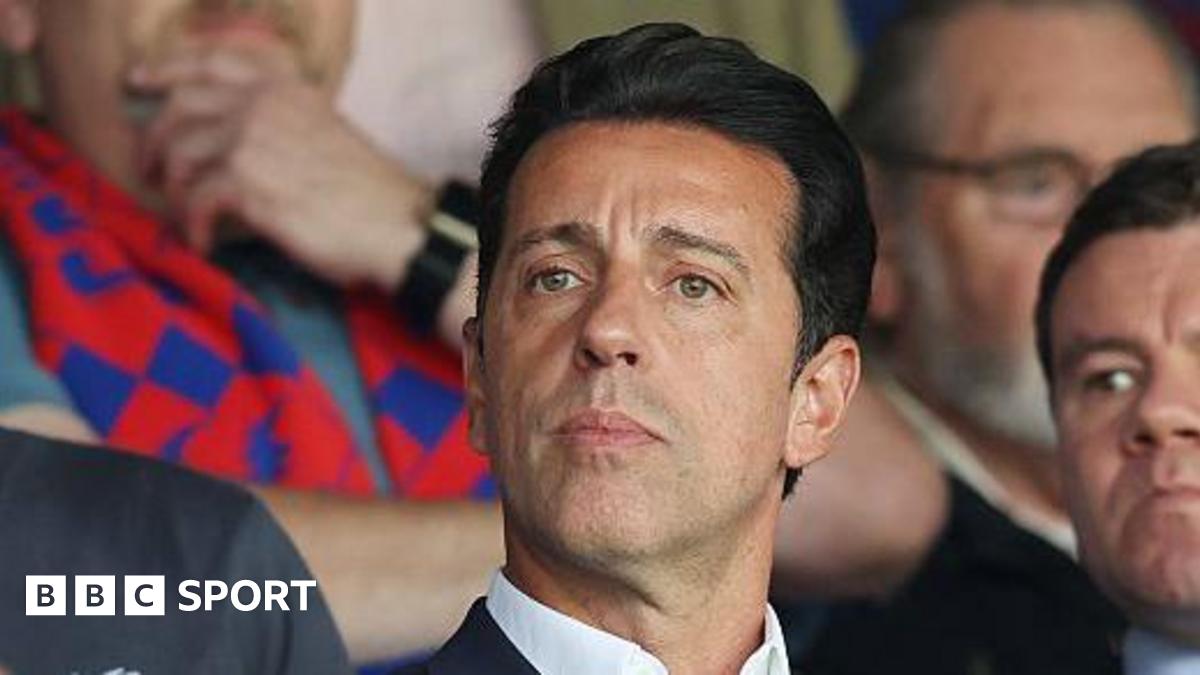
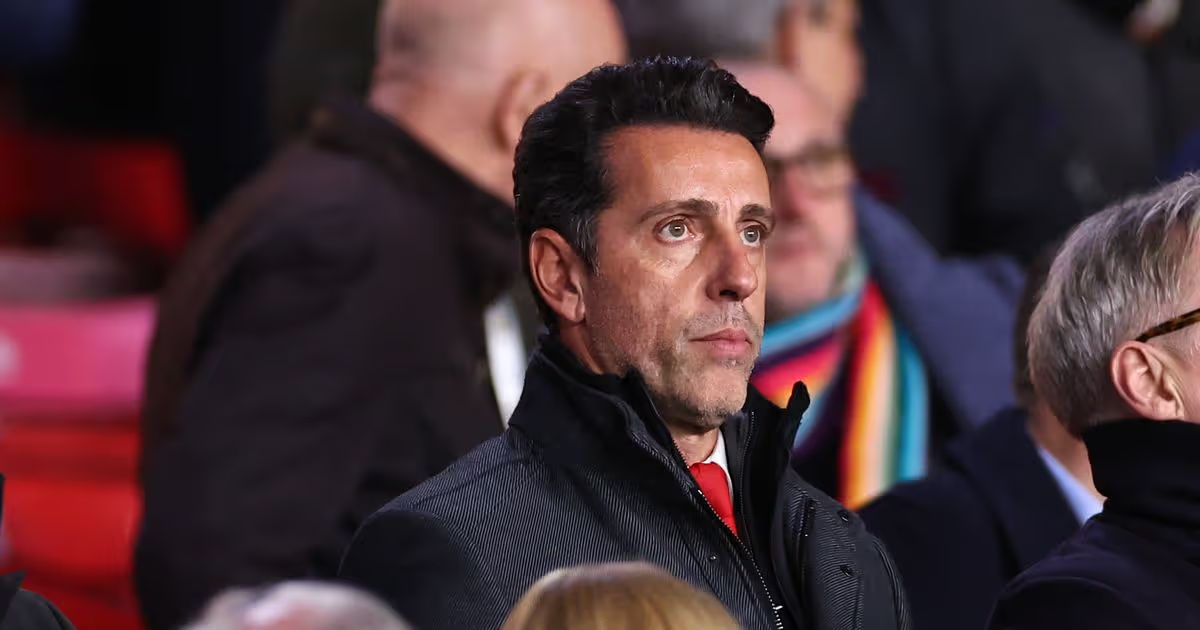
Edu and Nottingham Forest are likely to part company less than a year after the club appointed the former Arsenal sporting director as their head of global football
Nottingham Forest look likely to part ways with their head of global football, Edu, after telling the former Arsenal sporting director to stay away from the club’s training ground.
Advertisement
Edu has only been in the role eight months but it has been a turbulent campaign for Forest both on and off the pitch. That has involved no less than four managers, with the popular Nuno Espirito Santo eventually being removed from his post as head coach after falling out with Edu just weeks after the Brazilian’s arrival at The City Ground.
Vitor Pereira is the man Forest’s powerbrokers have tasked with guiding the club to Premier League safety, with the Midlands outfit only outside the relegation zone on goal difference with nine fixtures remaining.
MAKE THE MIRROR YOUR FIRST CHOICE!Click here to activateor add us as Preferred Source in your Google search settings
The Telegraph report that Edu’s position is now under serious threat, even though the club have stressed he is continuing to work as normal. The report claims he has been told to stay away from the club’s training ground, with his exit from Forest now ‘expected before the end of the season’.
Edu is also said to have been asked to stay away from matches, with Wednesday night’s 2-2 draw with Manchester City the third consecutive fixture he has missed.
His capture by Forest was largely viewed as a coup given the plaudits he earned during his time at Arsenal, who re-established themselves as title contenders under Mikel Arteta during Edu’s premiership.
He announced he would be leaving the Gunners back in November 2024, citing the need for a ‘new challenge’ when explaining his exit. He linked up with Forest the following summer.
Edu’s remit included recruitment, squad strategy and player development after Forest created a role for him. The club spent around £200million in the summer but recruitment has been scrutinised in the wake of the team’s poor form, with a number of players failing to live up to expectations.
Content cannot be displayed without consent
Join our new WhatsApp community and receive your daily dose of MirrorFootball content. We also treat our community members to special offers, promotions, and adverts from us and our partners. If you don’t like our community, you can check out any time you like. If you’re curious, you can read our Privacy Notice.
Advertisement
Sky Sports discounted Premier League and EFL package
This article contains affiliate links, we will receive a commission on any sales we generate from it. Learn more
Sky has slashed the price of its Essential TV and Sky Sports bundle for the 2025/26 season, saving £336 and offering more than 1,400 live matches across the Premier League, EFL and more.
Advertisement
Sky shows at least 215 live Premier League games each season, an increase of up to 100, plus Formula 1, darts, golf and more.
The 28-year-old’s grandfather is a British sporting legend and has been in touch since the last match
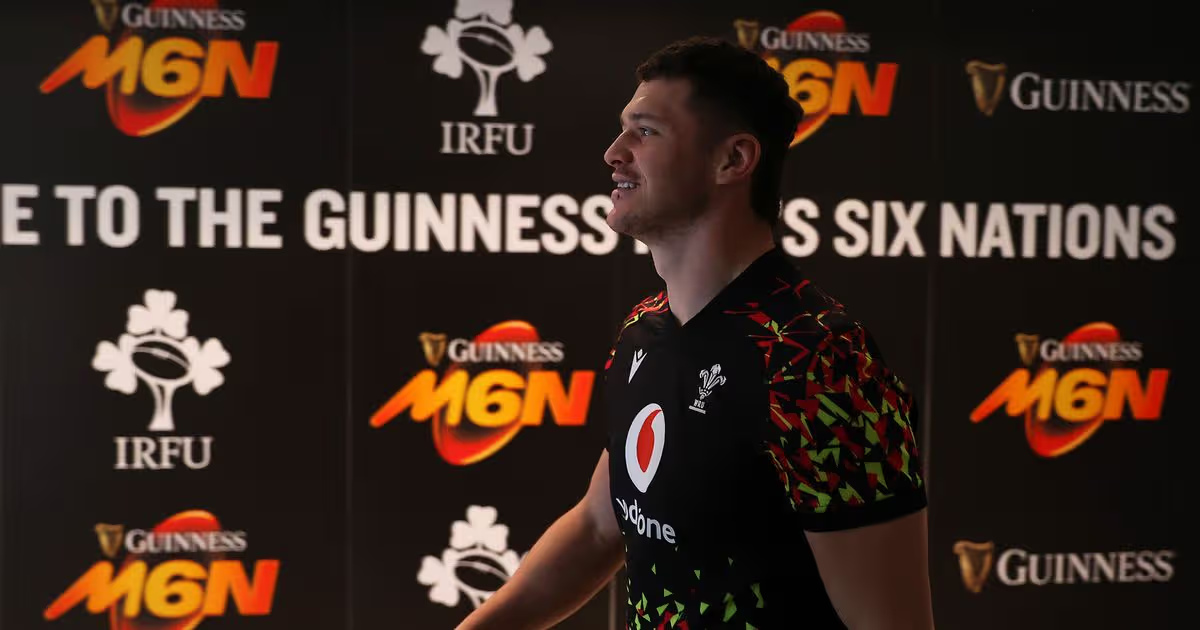
Wales back-row James Botham has revealed that he had good-natured stick from his famous grandfather following the slip-up that led to Darcy Graham’s crucial try in the Six Nations defeat to Scotland.
Advertisement
Steve Tandy’s side completely switched off from a kick-off after extending their lead to 23-12 in the second half of their last Six Nations match. Finn Russell’s quickly-taken restart allowed wing Graham to latch onto the kick to score, reducing the deficit and proving crucial as Gregor Townsend’s side eventually ran out 26-23 winners.
Cardiff flanker Botham, making his first Wales appearance in a year, was close to the action – with some pointing the blame at the 28-year-old.
Tandy hasn’t singled out Botham for criticism publicly, but that hasn’t stopped some of his team-mates giving him stick.
Advertisement
“I’ve had it every single day in training from Daf and a few of the other boys saying, ‘Jim! Look up!” quite a bit,” said Botham this week. “But that’s part and parcel of it, I suppose.
“It’s in that environment that you kind of need to be told, because obviously it can’t happen. So, I actually think it’s good I’m getting that from them, in a way.
“It’s funny at the time, to get a bit of stick. But this is professional sport, and we’re all athletes. We’ve got to get on with it.”
He added: “It’s one of those that happened all so fast, and there is learning to take from it, obviously. You can’t switch off at any point at this level. If you do, obviously, everything went because of that bounce.
Advertisement
“I reckon if you did that again a few times, then it probably wouldn’t have bounced the same. But look, it’s happened now. I can’t look back at it and say, oh, ‘what is this?’ It’s happened.
“I’ve just got to never let it happen again, I suppose, and also just focus on the next points and not let it affect me going forward.
“It was definitely louder, and even when the boys screamed, I couldn’t hear them. But it’s happened. It’s one of those where you’ve just got to move on.”
Not only have Botham’s team-mates given him some gentle ribbing, but he’s also had the same treatment from his family.
Advertisement
Dad Liam scored 42 tries in 72 matches for Cardiff, while he narrowly missed out on an England cap during his playing career in rugby union. And of course, James’ grandfather is English cricket legend Ian Botham, with Lord Botham regarded as one of Britain’s finest sportsmen.
“He usually gives me a bit of grief,” said Botham of his dad, Liam. “Even granddad (Ian) said something from the other side of the world.
“He always has a little say. So, I kind of knew it was coming and I was trying to avoid the call a little bit. But no, the FaceTime popped up, and I saw him, and I was like, ‘Oh, here we go!”
He added: “It was more the look, because I was on FaceTime, he didn’t really say too much. He just looked at me, kind of with his head down and smirked.
Advertisement
“But I knew exactly what he was on about. But to be fair, he was very chuffed for me that I had been able to get back out there and play. And apart from that one little thing, I felt good about the whole game really.”
On the influence of his family, Botham has always appreciated that honesty – especially coming from two men who have been there and done it in a sporting context. “That’s quite a good thing to have, I suppose,” he said.
“It was there from a young age. I’ve always knew after every game, there would be the dreaded call from dad. I never knew if it was going to be either good or bad.
“He would always tell me straight how it is, and it was the same with granddad. So, I think that’s helped me down the line.”
Advertisement
Despite the incident, Botham is instead celebrating a first start since the second match of last year’s Six Nations second round match against Italy.
The flanker had established himself as a regular in the latter days of Warren Gatland’s second spell in charge, having had to wait three years between his eighth and ninth cap.
Having been a part of the title-winning side in 2021, he wouldn’t feature for Wales until 2024 – making the last year on the fringes seem that little bit shorter.
“It doesn’t feel like a year since I last played,” he said. “It kind of felt like yesterday.
Advertisement
“When Steve called me, initially I thought that when we get the call, it’s sometimes to say we’re not involved. So my heart sank a bit when I saw it and then he told me it was good news. He’s been great with speaking to people.
“But it was weird. I had played the first few games and then I had about just shy of three years, then played. That felt like a long time.
“At the end of the day, that’s a prime example. You’ve just got to keep your head down and get on with it and hopefully your time comes again.
“Then with regards to then not playing for the summer and the autumn and then coming back in, that felt fast. But it was just one of those.
Advertisement
“You’ve just got to keep doing what you’re doing for your club and then hopefully get the opportunities. It’s not really in your control apart from when it’s on the field.”
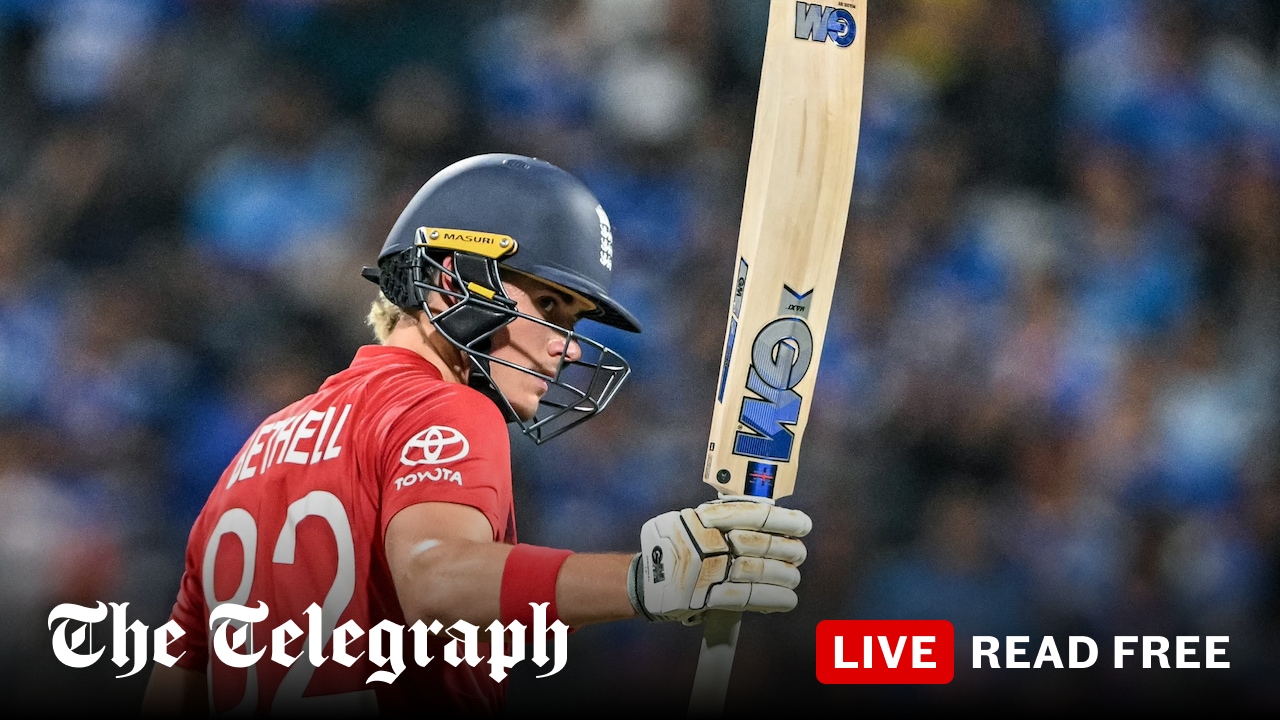
But Bethell would not quite complete what he had started. He only faced two more balls in the 19th over, leaving England needing 30 from the final over. Attempting a second run to stay on strike, Bethell’s desperate, forlorn dive ended with his face on the ground. Three sixes from Jofra Archer, when defeat was already mathematically confirmed, added to England’s anguish.
Yet English defeats have seldom been more admirable. A cocktail of a raucous home crowd, sumptuous batting conditions and the high-stakes of a World Cup semi-final combined to produce one of the greatest matches in T20 history.
After conceding their highest ever score in T20 cricket, and then losing Phil Salt in the second over, England responded with bravery and elan to their impossible pursuit. Bethell arrived at 38 for two, and promptly flicked Bumrah for six over fine leg from his second delivery.
Advertisement
Twenty-four hours earlier, Bethell had shadow-batted out on the square at the Wankhede. Yet surely not even in his visualisation can he have imagined batting with quite the fluency and range that he exhibited in Mumbai.
When mystery spinner Varun Chakravarthy came on, in the sixth over, Bethell showed off his audacity and range, launching Chakravarthy’s first ball over long on and his second over long off. His appetite unsated, Bethell then reverse-slogged Chakravarthy’s third delivery for another six, this time over deep point.
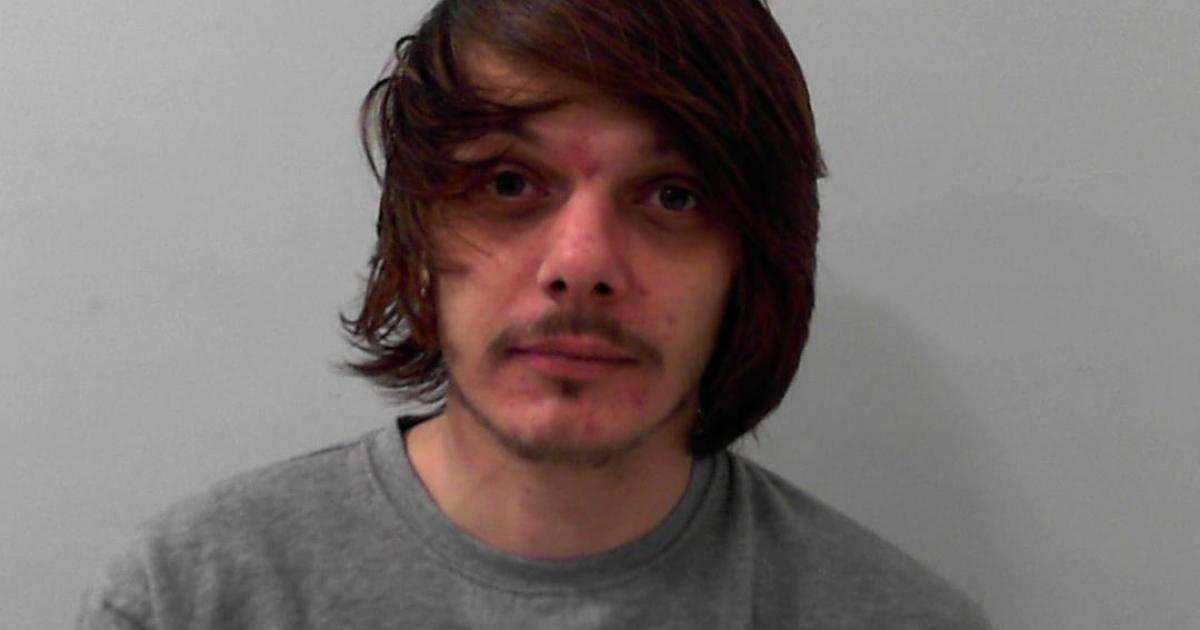
Liam Rodgers, 33, sexually assaulted the woman and while under investigation for that stabbed the man several times in an unrelated attack.
Both had to wait more than two years to see justice and endure many delays and postponements in the court system.
Confining him in a secure psychiatric unit under the Mental Health Act, Judge Simon Hickey told Rodgers: “You are not likely to be released for many, many years, if ever”.
Detective Constable Karen Everitt of North Yorkshire Police, who led the investigation into the sexual assaults that happened in September 2023, said: “The victim of these horrific sexual assaults was targeted by Rodgers who is a highly dangerous and manipulative man.
“Throughout the police investigation, she has shown remarkable strength and resilience. Her determination was driven by a desire to ensure that Rodgers could never treat anyone else in the same way again, and that he would finally be held accountable for his actions.
“This has been an extremely long and difficult journey for her, made even harder by the fact that Rodgers refused to take responsibility until the eve of the trial. As a result, she had to endure the full length of the police and CPS processes. Despite this, she has come through it and is now in a much stronger and happier place in her life.
Advertisement
“I hope she feels proud of herself for her courage in bringing Rodgers to justice and for ensuring that the public is now aware of him and his despicable behaviour. This outcome would not have been possible without the extraordinary strength she has shown throughout.”
Investigator Corrina Graham-Merrett of North Yorkshire Police said about the stabbing in January 2024: “Rodgers carried out a sudden and extremely violent attack on the victim, giving him no opportunity to defend himself or escape.
“The determination and courage shown by the victim throughout this investigation has been remarkable, especially given the fear and trauma he endured.
“Witnesses were clear that the nature of Rodgers’ actions made them believe he intended to kill, and today’s sentence reflects the gravity of that behaviour. I hope this outcome brings the victim some sense of justice as he continues to rebuild his life.”
Advertisement
A North Yorkshire Police statement said: “We never underestimate how difficult it is for survivors of sexual abuse to speak out and report what has happened.
But we hope cases like this one provide reassurance that victims will be listened to, treated with dignity and respect, and will be supported throughout the judicial process.
If you have been sexually abused, and you are not yet ready to report to police, please don’t suffer in silence.
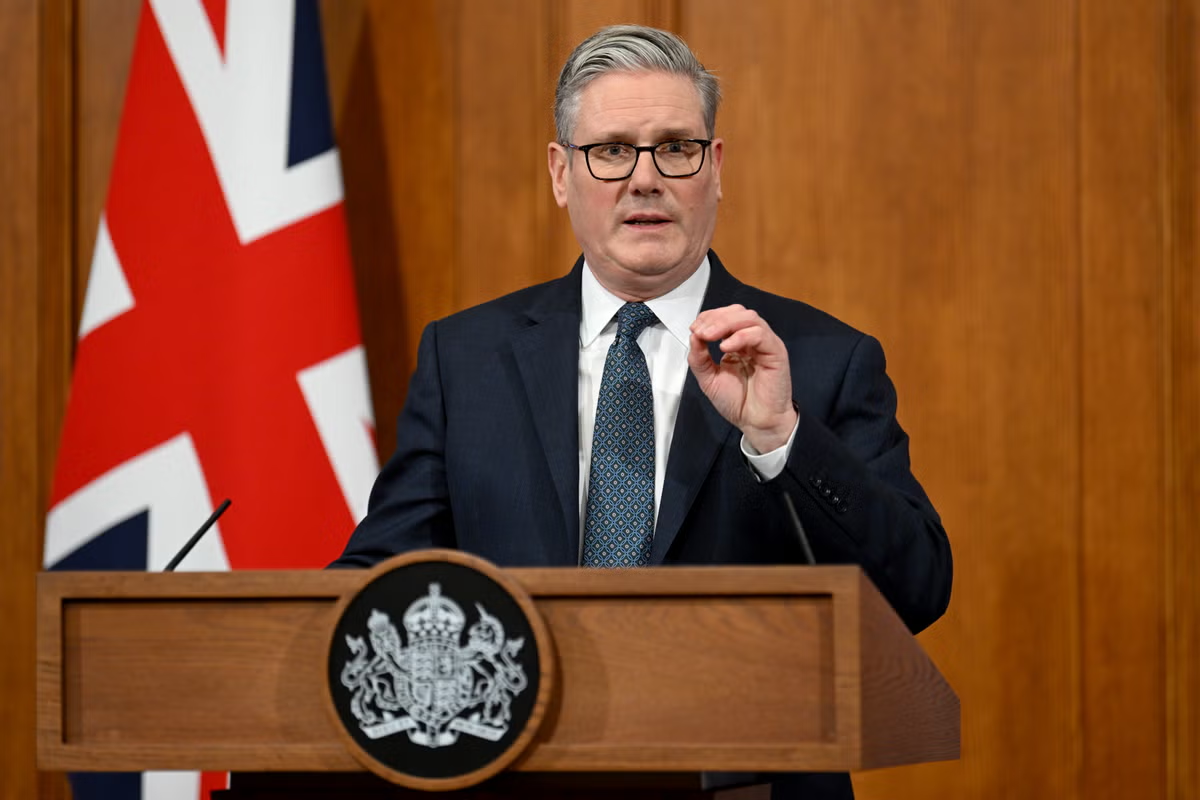
Announcing the extra military assets being sent to the region, Sir Keir said: “I can announce today that we’re sending four additional Typhoon jets to join our squadron in Qatar to strengthen our defensive operations in Qatar and across the region.”
Two Wildcat helicopters armed with drone-busting missiles will arrive in Cyprus on Friday, as the warship HMS Dragon is unlikely to arrive in the Mediterranean until next week.
Advertisement
Britain did not join the initial strikes on Iran, but has since allowed US forces to use British bases to strike in a defensive capacity (PA)
The move comes on the sixth day of a conflict between Iran and the US, which has dragged in countries across the Middle East and beyond.
Britain did not join the initial strikes on Iran, but has since allowed US forces to use British bases to strike in a defensive capacity.
Sir Keir called for de-escalation on Thursday, as he reiterated the need for a negotiated settlement with Iran over their nuclear ambitions.
Advertisement
It comes as Britain has been facing criticism for failing to have enough military assets in the Middle East after RAF Akrotiri in Cyprus was hit by a drone over the weekend.
The prime minister has faced harsh words from the US president, who said he is “no Winston Churchill”, while Cyprus’s high commissioner to the UK said a British military presence to defend the island was “the least we expect”, in a criticism of the UK’s approach to managing the war.
Four extra British Typhoon fighter jets are being deployed to Qatar (UK MOD)
But Sir Keir rejected such criticism, insisting the UK had been preparing for the possibility of conflict “long before” Israeli and US strikes began, by deploying “additional military capabilities to the region to defend our interests”.
Advertisement
He also said the special relationship between the US and the UK had not been fractured by the disagreement, telling reporters: “Look, the special relationship is in operation right now.
“We’re working with the Americans in the deployment from our bases. We are working together in the region, the US and the British, working together to protect both the US and the British in joint bases where we’re jointly located, and we’re sharing intelligence on 24/7 basis in the usual way.
Starmer insisted the special relationship between the US and the UK had not been fractured by the disagreement (PA)
“That is the special relationship. That is a special relationship in operation, and clearly, it’s for the president to take decisions that he considers in the national interest the right decisions for the US.”
Advertisement
Sir Keir said he had not spoken to Mr Trump since Saturday evening, but added: “We’re sharing intelligence on 24/7 basis in the usual way. That is the special relationship.”
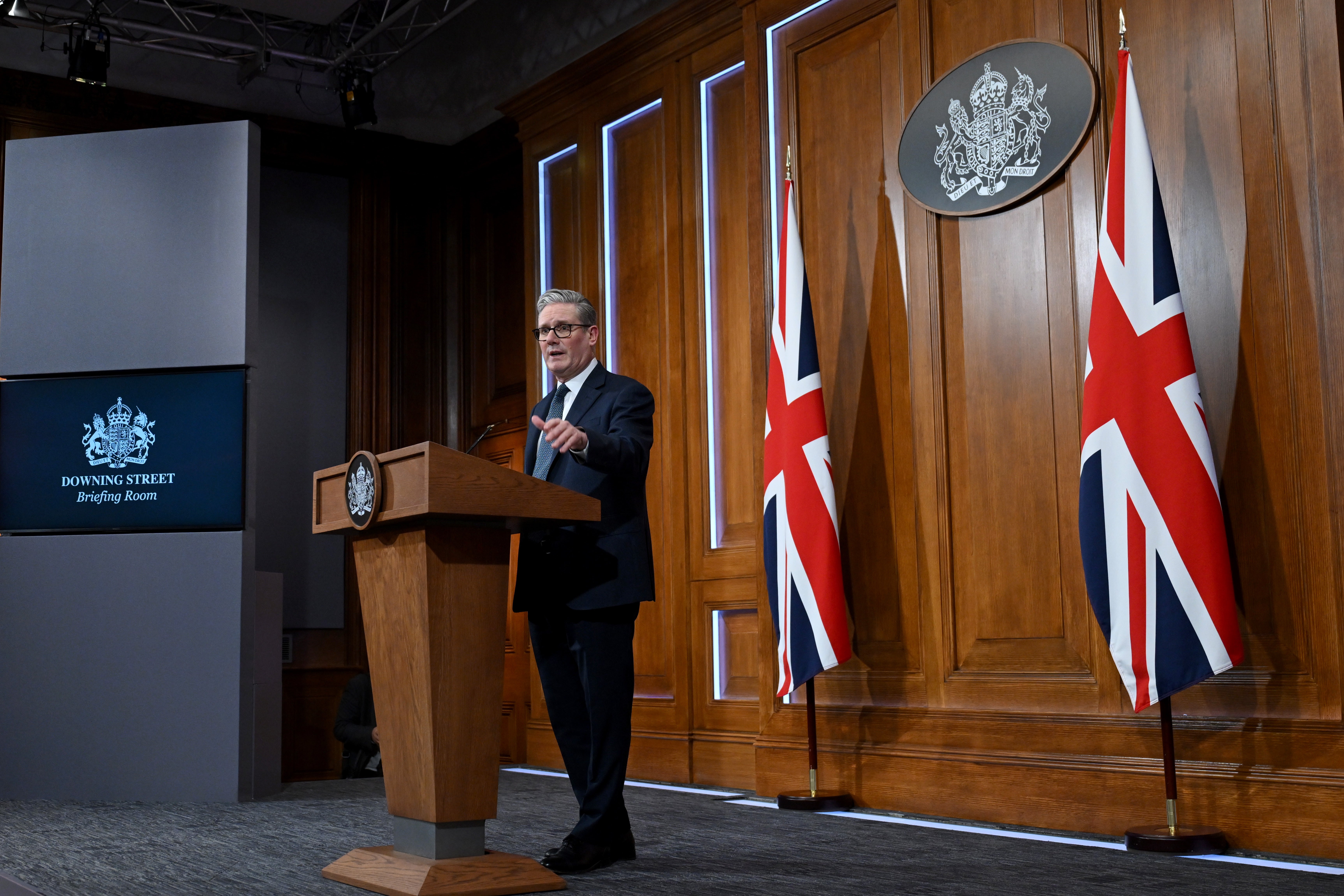
Speaking at a press conference on Thursday, Sir Keir also announced that the first government-chartered flight from Oman to Britain had finally taken off, after it was delayed from doing so overnight.
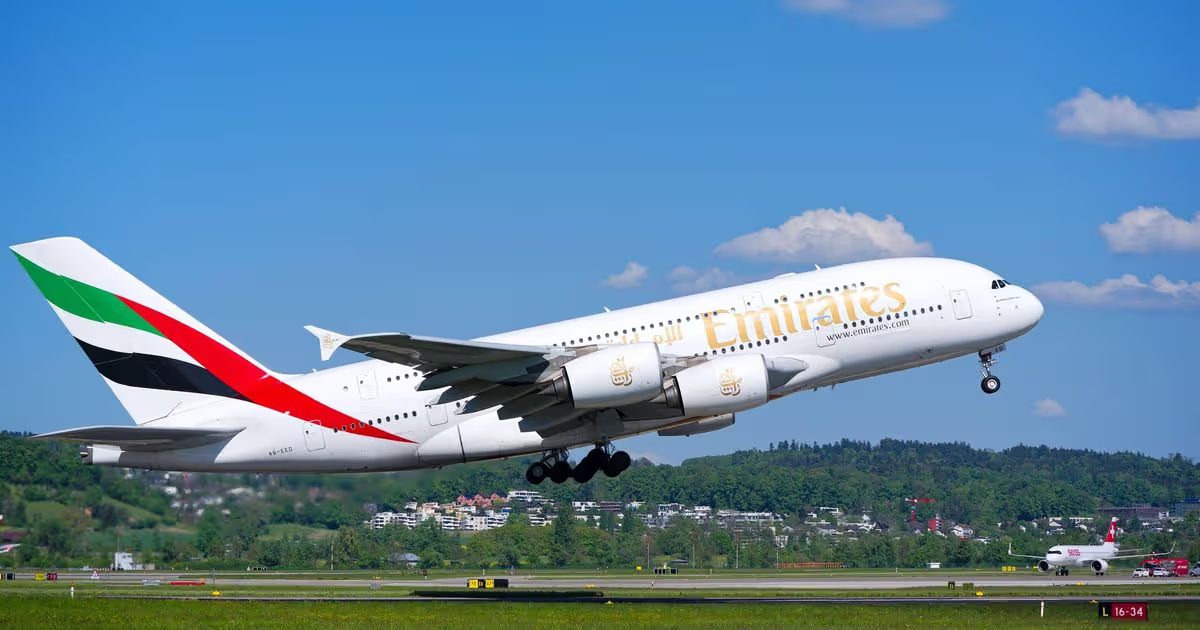
He said more than 4,000 people have now arrived back in the United Kingdom on commercial flights from the UAE, and that a further seven flights are due to leave the UAE for the UK on Thursday.
Sir Keir revealed he had chaired a Cobra meeting on Thursday, and acknowledged that people across the UK are “worried sick about their family and friends who are caught up in this”.
Advertisement
He added: “I want to reassure the British public about the action that we are taking while the region has been plunged into chaos.
“My focus is providing calm, level-headed leadership in the national interest.”