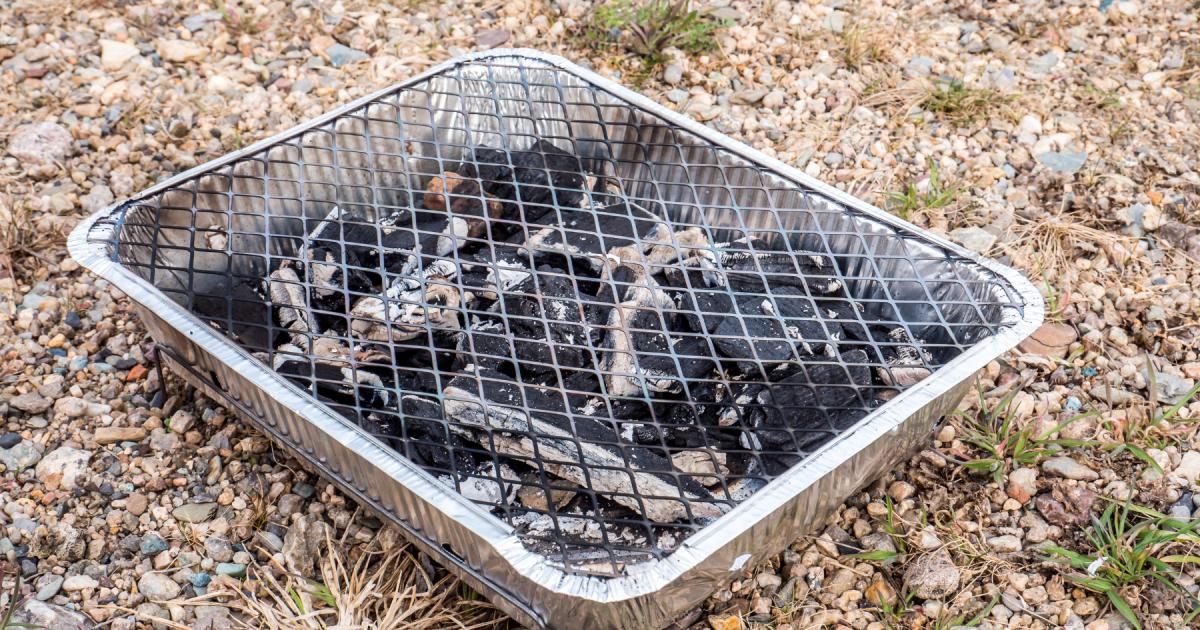
The temporary measure took effect on Friday (August 14) and follows a rise in blazes across England and Wales, which have already seen more incidents in 2026 than in the whole of 2025.
Prime Minister Andy Burnham said: “The temporary ban on barbecues, disposable barbecues, comes in today.
“All retailers will be receiving notification of that ban, and we ask them to, obviously, implement it in full until further notice when we can remove it.”
This evening, an Emergency Alert has been sent to people across England and Wales as the wildfire risk remains very high. The request came directly from Fire and Rescue Services.
I was in Stourbridge today and saw first-hand the devastating impact these fires have had on…
During a visit to Stourbridge where some houses had been destroyed by wildfire, he urged the public to avoid all open flames.
He said: “I would also want to say to the public, you can see what’s happening: 37 significant fires across England and Wales.
“Please do not light an open fire, a bonfire of any kind.”
Advertisement
The ban does not extend to Northern Ireland.
Disposable barbecues have been banned in England, Scotland and Wales, with Northern Ireland excluded (Image: Jonathan Brady/PA Wire)
Which UK retailers have banned disposable barbecues from sale?
Many retailers had already stopped selling the products following advice from the British Retail Consortium and the National Fire Chiefs Council.
These include:
Asda
Co-op
Home Bargains
Morrisons
The Range
Sainsbury’s
Tesco
Wilko
Retailers Aldi, Lidl, Waitrose and M&S stopped selling disposable barbecues in 2022.
Why have disposable barbecues been banned?
Government guidance describes single-use barbecues as the cause of “a number of serious wildfires across the country over the summer months”.
Advertisement
This has been exacerbated by the prolonged hot and dry weather experienced recently in the UK.
The Department for Business, Innovation, Science and Trade said on Friday: “Disposable barbecues cannot be considered a safe product in the context of the ongoing weather and environmental conditions and must not be made available for sale either in store or online at the current time.”
Business Secretary Jonathan Reynolds said: “We want everyone to enjoy summer safely.
“With wildfire risks exceptionally high, we’re taking common-sense steps to protect lives and the environment.
Advertisement
“Disposable barbecues pose an obvious threat in the extreme conditions we’re experiencing, so we’re telling retailers who haven’t already stopped selling them to do so now.”
Recommended reading :
Jon Pearce, Labour MP for High Peak, who campaigned for the ban, welcomed the decision and praised retailers who acted early.
He said: “This is an important step to help protect our countryside, wildlife, homes and communities.
Advertisement
“I will continue to push for action to reduce the risk of wildfires in the Peak District and across the country.”
Have you used a disposable barbecue before? Let us know in the comments.
The summer window is stepping up as Arsenal, Chelsea, Manchester United, Liverpool and Tottenham all work on more signings before the deadline. Arsenal are said to be plotting a shock bid for Jack Hinshelwood as they continue to chase England duo Ezri Konsa and Jarell Quansah, while Victor Osimhen could yet become Mikel Arteta’s statement attacking signing as the Gunners also remain in the race for Julian Alvarez.
Micro-cheating is not a physical affair but subtle actions that show your partner might not be as committed as you think.
But how do you know if they are crossing a line? From moving sneaky conversations to WhatsApp and keeping their phone a secret, to ‘minimising’ your romance to others, there are five tell-tale red flags you need to watch out for.
Advertisement
Share or comment on this article:
Is your partner micro-cheating? ROSIE GREEN reveals how to spot the signs
Danny Mavor, who served in the Royal Scots Dragoon Guards in Iraq, was paralysed from the neck down after a motorcycle accident six years ago.
Danyel VanReenen and Ruth Suter Chief Live News Reporter
08:58, 16 Aug 2026
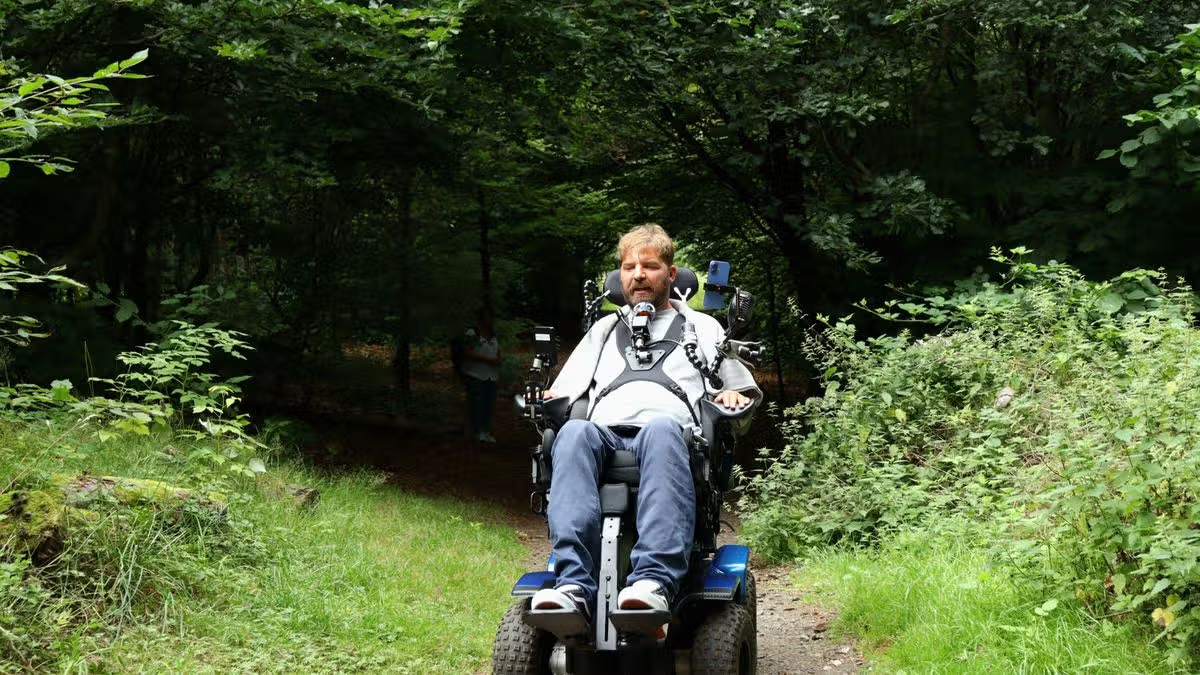
A tetraplegic veteran is taking on a 79-mile journey in his off-road wheelchair to prove that life goes on and can still be “extraordinary”.
Danny Mavor, who served in the Royal Scots Dragoon Guards in Iraq, was paralysed from the neck down after a motorcycle accident six years ago. He is now based at Erskine Hospital.
The 41-year-old, from Glasgow, is preparing to travel across Scotland along the Great Glen Way using a chin-controlled wheelchair in a major endurance challenge next month. The journey will take Mr Mavor from Fort William to Inverness over three days, raising funds for people living with spinal injuries through the charity Regain.
Advertisement
It will push him to his physical and mental limits, but he said he wants to help support other tetraplegics who are facing similarly life-changing spinal injuries.
“All my life, I’ve always enjoyed that feeling of a challenge,” Mr Mavor told the Press Association.
“You break your neck and your previous life is kind of history – who you were, what you were, everything you identified as – there’s a lot to get over.”
Advertisement
He said he wants to struggle on this challenge because he believes sitting still is slowly killing him. Mr Mavor said he struggles day to day with pain that he has felt since the moment he broke his neck.
“It intensifies when I’m doing things like this [or when] I’m talking about the past, but it also gives me a little bit of a buzz thinking about my old life,” he said. “I just know that I’m struggling anyway, so why not do the things that I loved, like mountains, like a challenge, like hanging out and [enjoying] camaraderie with the boys?”
Mr Mavor previously said attempting 25 miles a day through Scottish terrain feels somewhere between “inspiring and absolutely idiotic”. There will be at least two or three obstacles throughout the journey where Mr Mavor will need to use harnesses and rely on his support team to traverse steep inclines.
“The path is going to be walkable, and drivable in a wheelchair,” he said. “It’s going to be bobbly, it’s going to be bumpy, and I’m going to have a very sore chin.”
Advertisement
He added: “This chair is all-terrain, and that’s great, but there’s still bumps – like stones and just little cambers, things like that that are all going to make a huge difference to the start and the end of each day.”
He said Regain is a charity close to his heart. It is dedicated to improving the independence, mobility, and quality of life for individuals living with tetraplegia.
The shop will offer food and household items along with a post office and laundry services
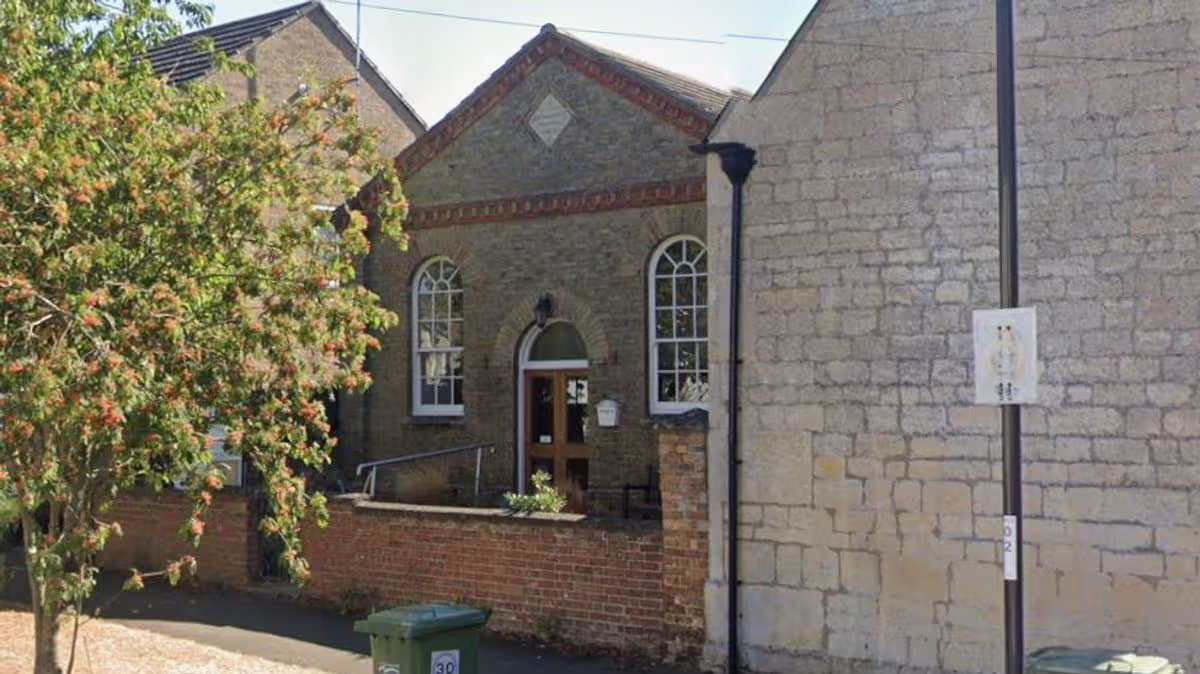
A former Methodist chapel will be converted to make way for a village’s first shop. Baston Shop Ltd applied to Peterborough City Council to convert the former Ailsworth Chapel into a community shop.
Advertisement
Ailsworth and neighbouring village Castor currently do not have a shop. The most recent shop the villages had was The Paper Shop, which closed in May 2025. The chapel on Main Street was built in 1860 and has not been used since 2022.
A planning statement said: “The proposal secures the long-term use and revitalisation of a valued community asset.” The shop will “offer a range of food, household items and other necessities, along with a post office and laundry services”.
The planning document added: “Public support for the proposal is positive, far outweighing any concerns around parking, which previously blighted an application for residential conversion at the site.”
According to the now-approved plans, it is suggested the shop will three part-time staff members. It is expected to open seven days a week between 7am and 8pm. The applicant also sought approval to build a flat at the back of the property.
Advertisement
The applicant added: “The vacant chapel will provide an excellent location for a community shop as it is centrally sited in Ailsworth and also offers ease of access for Castor residents.”
No dedicated car parking was proposed for the site but five cycle spaces were included in the plans. Ailsworth Parish Council (APC) recognised there was “without doubt” a need for a local shop in the village, but it objected to the plans because of concerns about the impact on parking and road safety.
A spokesperson for the parish council said: “Road safety concerns have been raised by APC to the Highways Department on a number of occasions over the years, with particular reference to dangerous parking on corners around Helpston Road, Maffitt Road and Main Street. The information provided in the application does not provide adequate mitigation for adding to these safety concerns.”
One resident raised a similar concern. They said: “Parking is severely restricted and the number of cars present during daytime makes driving through Main Street difficult at any time of day, and especially during the evenings and weekends. A shop operating from 7 am to 8 pm would only serve to make this much worse.”
They want to make sure he receives any required medical help
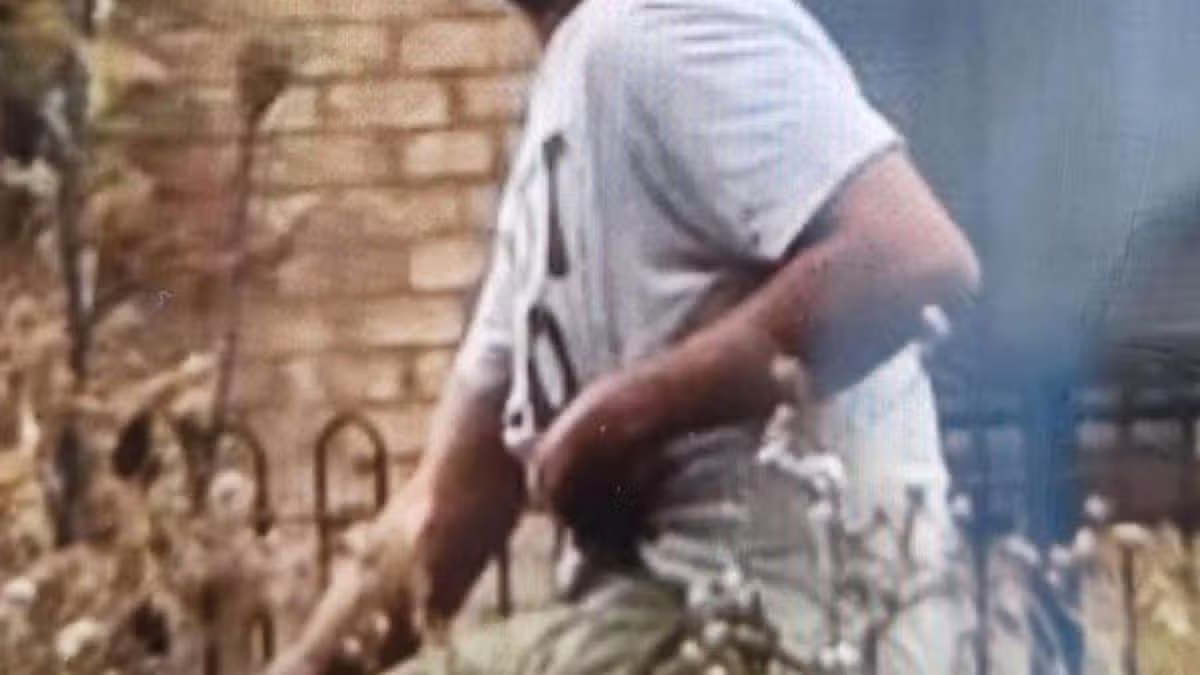
Police are asking for the public’s help to identify a man who was injured in Cambridge yesterday afternoon (August 15). The man was last seen in Stourbridge Common heading towards Fen Ditton on a bicycle at about 2.45pm.
Advertisement
Police believe that he has been injured in an altercation, and an investigation is continuing into what took place. Police’s main aim currently is to find out who he is, and make sure he gets medical help.
Detective Inspector Sean Clery said: “We are keen to hear from anyone who knows this man or his whereabouts. We believe he has been injured in an altercation, and an investigation is ongoing into the circumstances.
“However, our main aim at this time is to find out who he is and ensure he receives any required medical attention.” Anyone with any information is urged to contact the police online or via 101 quoting incident 362 of 15 August.
MH370 disappeared in 2014 with 239 people on board and has never been found, but the final words of the pilot continue to haunt those grieving the loss of their loved ones
In 2014, the Boeing 777 transmitted its final message two hours after departure, when the Malaysian pilot delivered a chilling last five words that have baffled investigators ever since.
Zaharie Ahmad Shah signed off from Malaysian airspace as he prepared to enter Vietnamese airspace, radioing air traffic control with the words: “Goodnight Malaysia three seven zero.”
They would prove to be the last words ever heard from the cockpit. One of the most enduring mysteries surrounding the disappearance of MH370 is how a large commercial aircraft such as the Boeing 777 could go missing in an age of unparalleled aerial monitoring.
The eerie silence that followed sparked a torrent of controversy. Speculation ran rife, with some suggesting the aircraft may have been brought down by bad actors, with accusations levelled variously at the Chinese, Americans, and Russians. As the fruitless search presses on, so do the theories.
Advertisement
The Malaysian government has approved multiple fresh searches for the missing aircraft, joining forces with Ocean Infinity, a British search firm that works on a “no find, no fee” arrangement. The hunt has concentrated on the Southern Indian Ocean, widely believed to be where the plane crashed.
The plot thickened when the plane “went dark” upon entering Vietnamese airspace on that fateful night, prompting speculation that its onboard systems were intentionally switched off from inside the cockpit.
Despite the failure of its operating system, a considerable volume of data remains which has helped in mapping the aircraft’s flight path.
Advertisement
This information has proved invaluable in planning previous searches across the Southern Indian Ocean and has been central to shaping theories regarding the plane’s ultimate fate, including Automatic Dependent Surveillance-Broadcast (ADS-B) data, radar data, Aircraft Communications Addressing and Reporting System (ACARS) data, and Inmarsat satellite data.
This data consistently suggests that the aircraft continued flying for more than seven hours over the Southern Indian Ocean before it finally disappeared — most likely plunging into the ocean’s depths, where any further detection became virtually impossible.
As a result, experts have painstakingly combed through this data, seeking conclusions rooted in evidence rather than conjecture and conspiracy theories. Simon Maskell, a distinguished professor in autonomous systems at the University of Liverpool, revealed to The Diplomat details of pioneering research his team undertook on MH370.
Advertisement
Employing data referred to as Weak Signal Propagation Reporter (WSPR), which harnesses low-frequency signals monitored by amateur radio operators over considerable distances, Maskell and his colleagues investigated the enigma thoroughly.
Through examining years of information from the WSPRnet database, the team succeeded in dismissing numerous implausible theories regarding the doomed flight’s fate.
Maskell explained that, according to their findings, three credible scenarios exist. He said: “The analysis we did indicated that there are three explanations that appear to be approximately equally consistent with the information we had at the time: there is a chance that a freak accident occurred and the crew were unable to communicate or land the aircraft elsewhere,” he stated.
“[Or] it was a murder-suicide with the murderer alive when the descent occurred, [or] a murder-suicide with the murderer no longer alive when the descent occurred.”
This emerges amid increased theories surrounding the murder-suicide hypothesis, which gathered momentum after Malaysian officials uncovered a flight simulator at pilot Shah’s home containing a route strikingly similar to MH370’s final known path over the Indian Ocean.
There is no concrete evidence or indication to suggest that Shah, or his co-pilot, had any premeditated intentions to hijack the aircraft and deliberately crash it.
Nevertheless, the murder-suicide theory has arguably attracted the most scrutiny over the years, potentially owing to the absence of any other credible explanations.
Advertisement
Maskell highlighted that alternative theories were less consistent with the available data. It is worth noting that many searches have been undertaken over the years, including a three-year operation by Australian authorities covering more than 120 square kilometres of the Southern Indian Ocean, all without success.
“Given the plane has not been found and the area that has been searched is underpinned by assumptions that involve there being no human intervention during the descent, it now seems more plausible that there was human intervention during the descent,” Maskell said.
“That therefore slightly nudges up the probability that there was someone alive in the cockpit during the descent. However, all three explanations remain commensurately likely.”
Advertisement
Whether the fresh search will yield any results remains to be seen, but the absence of definitive answers 11 years after the aircraft’s disappearance highlights the profound complexity of the case.
“While it transpires that our calculations indicate that an accident would be a commensurately rare event to there being a successful attempt at murder-suicide,” Maskell said, “all the explanations imply that something like this happens very rarely indeed.”
A McDonnell Douglas F/A-18A Hornet fighter jet of the Spain Air Force (Picture: Joan Valls/Urbanandsport /NurPhoto via Getty Images)
Two Spanish fighter jets were sent to shoot down a drone that entered Romanian airspace earlier this morning.
The pair of Nato jets were already in the air when they were tasked with intercepting the unmanned aircraft at around 4.45am.
Around 15 minutes later, it had been shot down, with the wreckage landing in an unpopulated area between two towns according to Romania’s Ministry of Defence.
The ministry did not confirm where the drone originated, but said radars detected it entering Romania – an EU and Nato member – from neighbouring Moldova.
Advertisement
Defence Minister Radu Miruţă said his country is ‘in the front line of defence of the European Union’ in a post on social media.
He added: ‘Romania is defending its airspace, and our allies stand with us.
Sign up for all of the latest stories
Start your day informed with Metro’s News Updates newsletter or get Breaking Newsalerts the moment it happens.
Advertisement
‘Vigilance, rapid response, and allied solidarity—these are the concrete guarantees of our security.’
According to news agency Reuters, the latest unmanned aircraft was the fourth shot down in Romania this year.
The country has a 382-mile land border with Ukraine and Russian drones have repeatedly entered its airspace since the war began four-and-a-half years ago.
Advertisement
Firefighters tackling a fire in Kyiv after a Russian strike last night (Picture: AP Photo/Francisco Seco)
In May, a drone from Russia hit a block of flats in the eastern town of Galați, which is close to the border with UKraine.
Two people were injured in the incident which also started a fire in the building, prompting an evacuation.
And last month, a cruise missile thought to be Russian landed in a field in Poland and left a crater 33 feet wide.
Meanwhile, an overnight missile and drone attack on Kryvyi Rih, the Ukrainian hometown of President Volodymyr Zelensky, has killed a woman and wounded six others.
Zelensky posted yesterday that successful missile attacks had hit a Russian electronics manufacturer, airbase, and oil facility deep inside the country.
However, if you are looking for a relaxing place to visit to soak up some sun, there are busier areas that you should avoid.
The Telegraph recently released a list of the 20 best secret and remote beaches around Britain to help you avoid the “madding crowds”.
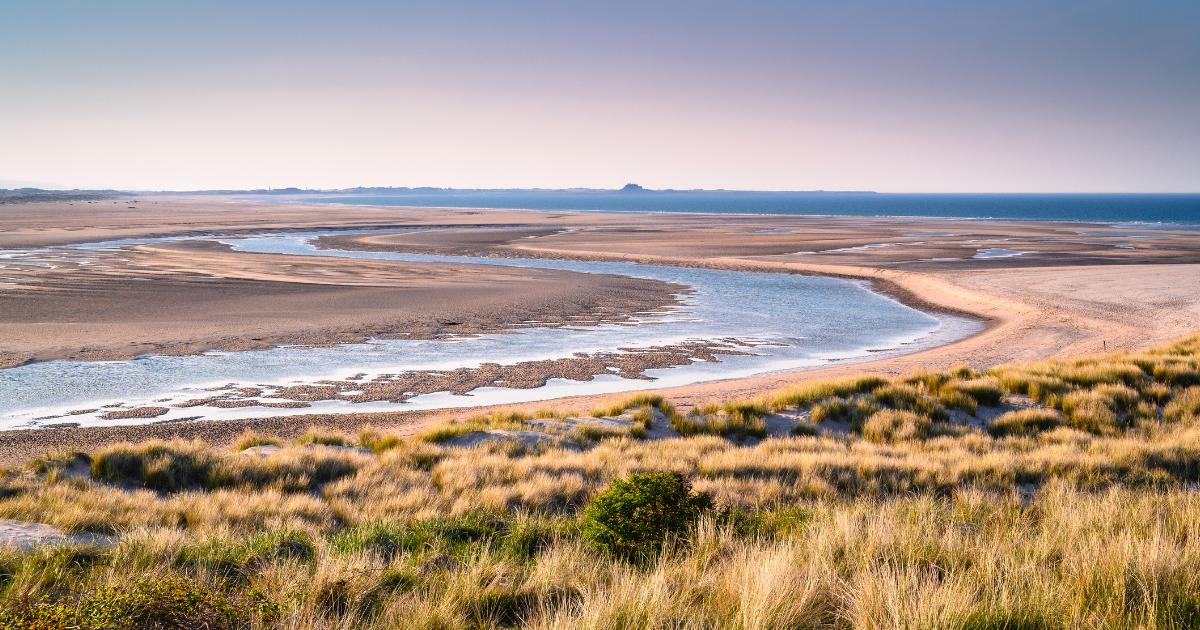
The quiet spot, Budle Bay, made it onto the list as an alternative to the usually busy Bamburgh.
Advertisement
Why should I visit Budle Bay?
On the beach, The Telegraph said: “Visitors to the popular coastal town of Bamburgh looking for a quieter seaside experience should head north, past the castle and the lighthouse at Stag Rocks and round the head to reach Budle Bay.
“Here, as well as acres of golden sands to enjoy and sea that is safe for swimming and watersports, you can see Lindisfarne – or Holy Island – in the distance.”
Budle Bay is described as being a “hidden gem” in Northumberland with “stunning scenery and rich wildlife”.
Budle Bay is made up of a narrow strip of sand that follows the bay around, with grassy dunes and Northumberland countryside backing it.
The area is great for birdwatching and spotting wildlife like wildfowl, wading, and migratory birds, and if you are lucky, you might even spot grey seals, dolphins, and otters.
Advertisement
There are lots of walking and hiking trails to follow around the bay, or if you prefer to relax, the area is great for swimming and sunbathing.
If you want to spend a weekend in the area, The Telegraph recommends staying at Budle Hall, which is a B&B with rooms and a camping field behind it.
There are also plenty of other campsites where you can stop and enjoy the area.
What do visitors say about Budle Bay?
Budle Bay has a score of 4.2 out of 5 on Tripadvisor with 60 reviews.
Advertisement
One reviewer wrote: “Just breathtaking! Even when the tide is out, the mudflats attract feeding rare birds – a nature reserve like no other.
“Sandy beach is about two miles out to see from the observation point but worth the walk.”
Another person said: “One of the best beaches we’ve visited.
“There’s nothing else there, no shops or amusements etc so I’ve rarely seen it super busy.
Advertisement
“When the tide is out it leaves behind big pools which are lovely for children and dogs to play in safely.
“One of my favourite places in Northumberland.”
What is your favourite secluded beach along the Northumberland coast? Let us know in the comments.
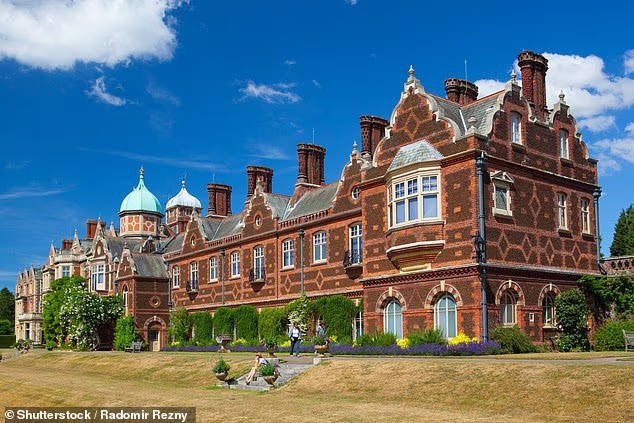
Standing under the archway where King Charles, the late Queen Elizabeth II and plenty of other Royal Family members have been pictured on Christmas Day every year, I look up at St Mary Magdalene church.
I’m spending the afternoon with my fiancé and some friends exploring Sandringham Estate’s house – there are eight rooms open to the public – and the 60-acre gardens.
After a couple of hours in the sunshine admiring the horticulture, including a hydrangea named ‘King George V‘ and countless beautiful roses, we cool off with an ice cream from the Stables Café.
Unlike most guests who visit this regal 20,000-acre Norfolk country retreat, we’re not going home at the end of day.
Advertisement
Instead, we’re checking into accommodation for the next two nights that’s located within the grounds of the estate.
Rather than checking into a stately abode though, we’re staying in a deluxe safari tent at Experience Freedom’s Sandringham Estate glamping site – but it very much feels like we’re in the monarch’s back garden.
The Experience Freedom campsite offers glamping breaks on King Charles’ sprawling Norfolk estate, just a 30-minute walk away from the main house
Advertisement
Travel reporter Alesia Fiddler checked into a safari tent on Experience Freedom’s Sandringham Estate glamping site
The Caravan and Motorhome Club has operated a campsite on the Norfolk-based land since 1977 and it was created with the help of the late Duke of Edinburgh, Prince Philip, who was known to love the outdoors.
It recently underwent a major redevelopment including a new facilities block and reopened earlier this year.
Our tent is one of four different types to choose from – there are 15 in total – and it is fully equipped with everything you might need including a stove top, kitchen appliances, a modern bathroom and even a dishwasher, it hardly feels like a tent.
Advertisement
With enough space for six people – and from just £79 a night in low season, there are three bedrooms including a double bedroom, a twin bedroom and a double cabin bedroom.
It’s deemed too hot to use charcoal and disposable barbecues on the site (the tent is kitted out with a disposable BBQ stand next to the decking), so to make the most of the outdoor space and warm evening, we bring along an electric pizza oven and set it up on the verandah.
Surrounded by towering trees, we tuck into molten slices of margarita and pepperoni pizza as we sit underneath the beige canopy and look out onto the forest and other tents.
At one point during the meal, a wild rabbit pays us a visit and scratches around the ground nearby the decking.
Advertisement
With only fabric walls to separate us from the outside, I feel completely connected to nature and it’s a refreshing change from the hot and muggy London I’ve experienced this summer.
The site sits surrounded by Norfolk nature, with a chance to explore the 20,000-acre royal estate too
In the evening, fairy lights twinkle along the edge of the verandah
There is a spacious outdoor deck area to enjoy that’s sheltered from sun and rain
Advertisement
The woodland walk across the estate from the site to the visitor centre and house
As the sun sets, a string of fairy lights come on and illuminate the edges of the tent and sparkle as the night draws in.
We head inside and spend the evening enjoying drinks and board games on a spacious wooden dining table.
In the morning, birds chirp loudly outside as we rustle up a bacon sandwich on the hob and enjoy it out in the fresh air.
Advertisement
Our plans for the day are scuppered by a downpour – the first I’ve seen in a while in this heatwave summer – and we sit outside under the verandah as rain patters down and bounces off the material.
Water trickles off the canopy and the air fills with the smell of damp earth but the break from the heat isn’t long lived. The rain subsides and the sun breaks through after a couple of hours.
We take the opportunity to explore our back garden – the estate – some more and walk to Sandringham House from the safari tent.
A woodland trail winding through ferns and trees, across wide pathways and a walk through heavily wooded sections of the forest leads us to the visitor centre in around 30 minutes, though it feels much shorter.
Advertisement
In the evening, we’re spoilt for choice with the amount of restaurants and pubs nearby.
We eventually settle for The Farmers – which is only a six-minute drive away – and tuck into homecooked food under wooden beams, sitting beside characterful bare brick walls.
The deluxe safari tent has three bedrooms including a double bedroom (pictured), a twin bedroom and a double cabin bedroom
The kitchen is fully equipped with a stove, sink, appliances and a dishwasher – it hardly feels like a tent
Advertisement
Several beaches are located just a short drive away from the site. Pictured: The red and white striped cliffs at Hunstanton
TRAVEL FACTS
Stays at Experience Freedom’s Sandringham Estate in Norfolk start from £79 per night based on a Deluxe Safari Tent. Guests can stay for a minimum of two nights.
With the sun still shining into the next day, we venture outside of the estate and head to the beach.
The Norfolk coastline is only 20 minutes away by car and we are soon walking along Hunstanton South Beach, which is popular with families and young children.
Advertisement
Further down, we find the famous red and white striped cliffs and soon reach Old Hunstanton Beach – much more peaceful than our first stop.
We have a paddle in the sea before heading home, this time to our flat rather than a royal estate, after enjoying a weekend fit for a king.












































You must be logged in to post a comment Login