Connect with us

NewsBeat

Locals ‘deeply upset’ as 200-year-old tree cut down

Published

on

Cambridgeshire Live

A council has said the decision to cut down the tree was a ‘last resort’

Residents in part of St Ives have been left feeling “deeply upset” after a 200-year-old tree was chopped down. Huntingdonshire District Council insist that the tree felling was a “last resort”, as the tree was causing “structural damage” to three nearby homes.

Advertisement

However locals say they were not told about plans to cut down the tree, and feel that a prominent part of their street has been lost. Local resident Rod Izatt’s friend told him that the mature oak tree in the Crescent, St Ives had been felled at the end of July. Rod went to see the tree for himself and was upset to see it had been cut down.

He shared a photo of it to Facebook and it gained over 170 comments, with many residents sharing their upset towards the loss of the tree. Rod and other residents feel they were not informed about the tree being cut down and he feels the street has lost a prominent sight.

He said: “My major concern is that this tree was over 200 years old – many people are deeply upset. With global warming and flooding occurring more, we need to change our focus from trees being obstacles to trees being solutions. They are living entities and support thousands, if not millions of species of wildlife.

“Essentially by cutting down this tree, we are breaking that link in nature. We need our woodlands, and that comes down to single trees in the end.”

Advertisement

Huntingdonshire District Council made the decision to fell the tree as it was causing “structural damage” to three nearby homes. A HDC spokesperson said: “We understand why people are upset by the loss of this mature oak tree.

“The tree was removed following a complex insurance subsidence claim affecting three neighbouring properties. Independent investigations concluded that it was a significant contributing factor to ongoing structural damage.”

The council spent three years trying to find options to retain the tree, however “no viable alternative was identified”. They added: “Although the tree appeared healthy, healthy trees can contribute to subsidence due to soil conditions and moisture demand.

“Removal was therefore a last resort, based on the evidence gathered and the need to prevent further damage to the affected properties.”

Advertisement

Source link

Continue Reading
Click to comment

You must be logged in to post a comment Login

Leave a Reply

NewsBeat

UK trains cancelled LIVE: Commuters braced for Friday delays after power outage

Published

on

Daily Mirror

In a new update to passengers published 20 minutes ago, National Rail is warning disruption will be here for hours, as one train company has told passengers not to travel this morning.

The update said: “A failure of the electricity supply at a communications centre means trains across the Greater Manchester area and North West of England are being disrupted.

“Trains across the Greater Manchester area and North West of England will be cancelled, severely delayed or revised. Where trains can run, some may be severely delayed or will be revised to only run part of its route.

Advertisement

“Northern are advising do not travel until 10:00.

“Engineers are working hard to restore the issue and we are hopeful that train services will return to normal tomorrow. However, due to a number of trains being in the location, there will be some disruption to services on Friday morning.

“Major disruption is expected until the end of the day.”

Source link

Advertisement
Continue Reading

NewsBeat

How Jamie Oliver and wife Jools struggled with his ‘rock star fame,’ affair claims and a ‘rut’ while building a 26-year marriage – as their daughter Poppy, 24, prepares to tie the knot herself after witnessing their love

Published

on

Jamie Oliver and Jools' love story: How celeb chef and his teen sweetheart struggled with his 'rock star fame,' affair claims and a 'rut' that almost broke them to build a lasting marriage

Behind every great man, there is often a great woman, and for Jamie Oliver that has been his wife of 26 years, Jools.

The TV chef and the midwife, both 51, met as teenagers after they were set up on a double date.

At the time, Jools, then aged 17, relocated to Tokyo for three months for work – with Jamie writing her love letters every day. 

They managed to keep their romance alive and went on to tie the knot in 2000 and welcomed five children together: Poppy Honey Rose, 24, Daisy Boo Pamela, age 23, Petal Blossom Rainbow, 17, Buddy Bear Maurice, 15, and River Rocket Blue Dallas, nine.

Advertisement

Now their eldest daughter Poppy is preparing to tie the knot herself after getting engaged this week to her boyfriend of five years, Ben.

No doubt she’ll be hoping to have a marriage as enduring and strong as her parents’ -but while Jools and Jamie’s romance sounds like it’s been lifted from a romcom, they have had their fair share of trying times too.

From struggling with his ‘rock star fame’ to claims of an affair and a ‘rut’ that almost broke them, they’ve had to put in plenty of work to keep their fairytale alive.

Advertisement

Jamie Oliver and Jools’ love story: How celeb chef and his teen sweetheart struggled with his ‘rock star fame,’ affair claims and a ‘rut’ that almost broke them to build a lasting marriage 

The TV chef and the midwife, both 51, met as teenagers after they were set up on a double date

The TV chef and the midwife, both 51, met as teenagers after they were set up on a double date

Now their eldest daughter Poppy is preparing to tie the knot herself after getting engaged to to boyfriend of five years, Ben, and is no doubt hoping for a marriage as enduring as her parents'

Now their eldest daughter Poppy is preparing to tie the knot herself after getting engaged to to boyfriend of five years, Ben, and is no doubt hoping for a marriage as enduring as her parents’

Jamie met his future wife in 1992 during a double date with his friend Jimmy Doherty, who went on to become a TV presenter.

Advertisement

In an interview with the Daily Mail in 2018, Jamie explained how Jimmy introduced him to Jools when he was 18 years old.

He said: ‘We went on a double date to the cinema in Cambridge – me, Jamie, Juliette and Sue Stump.

‘He had a Fiesta with big fog lights and an exhaust like a tractor on it. We were going over a hill listening to Bob Marley, Buffalo Soldier.

‘We’re all singing, the guy braked in front of us and Jamie smashed into him and knocked his front lights out.’

Advertisement

Oliver added: ‘My fog lights were hanging off so I just ripped them out and threw them away. I was so upset.’

‘Your car’s everything at that age,’ says Jimmy. ‘Juliette must have thought, “What the hell?”‘

Shortly after, Jools moved to Tokyo for a job and detailed how Jamie wrote to her every single day for three months straight.

In 2017, she posted a snap of the letter she has kept from her time away, writing: ‘When I was 17 I worked in Tokyo for three months and every single day Jamie sent me a letter or a fax without fail! These are only half of them.’

Advertisement

Reflecting on this time, Jamie admitted that they were heavily reliant on Jools’ job to survive in London.

He told Flow Magazine: ‘I was as poor as a church mouse; at the end of the month, I’d hardly have £100 left, and without Jools’ tips things would have been really grim.’

It didn’t take Jamie long to ask Jools’ father for his permission to propose. However, he was told they were too young to tie the knot.

Sadly, when Jools reached 22, her father passed away.

Advertisement

As Jamie could no longer ask him for permission, he decided to find a way to work his late father-in-law into his romantic proposal.

He explained: ‘I proposed to Jools in the pouring rain on Christmas Eve over his grave, which sounds really sad, but it was more out of respect for wanting to do it in front of him, even though he wasn’t alive.

‘It was a vile, dark time – but such a beautiful thing.’

In 1999, Jamie skyrocketed to fame when his show The Naked Chef premiered on BBC Two

In 1999, Jamie skyrocketed to fame when his show The Naked Chef premiered on BBC Two

Advertisement
They went on to tie the knot in 2000 and welcome five children together

They went on to tie the knot in 2000 and welcome five children together

In 1999, Jamie skyrocketed to fame when his show The Naked Chef premiered on BBC Two.

He went on to release a series of best-selling cookbooks, which helped turn him into a household name.

During the early days of their relationship, Jamie and Jools had agreed he would spend five years on the London restaurant scene before returning to Essex to open a pub and raise a family. 

Advertisement

However, this wasn’t the path that actually happened. 

After training at Westminster Catering College and working in Carluccio’s, the 23-year-old became the sous chef at The River Cafe,  where his natural talent in front of the cameras was picked up by BBC producers filming a documentary about the Fulham restaurant.

In an interview with The Telegraph in 2010, Jamie explained how women began ‘throwing themselves’ at him during the show’s three-year run.

He said: ‘It was classic slightly rock star-esque: random knickers and bras getting thrown at you.

Advertisement

‘When The Naked Chef kicked off, it was a bit like a pop band. The memories of it were absolutely ballistically crazy.’

One year after the show aired, Jamie and Jools tied the knot at their local church in Essex – with the chef later admitting he found the ceremony ‘awkward and embarrassing’.

During his appearance on the Newlyweds podcast, he explained: ‘The first time you get married, it’s like, it just feels a bit awkward and embarrassing with all your family there. 

‘But if you ever get married again, if you get to 10 years or 20 years, the words are different. Because you’ve earned every single line and it was really, really emotional.’

Advertisement

After their wedding, Jools worked as Jamie’s personal assistant – but stepped back from the role to focus on childcare.

Elsewhere in his Flow magazine interview, Jamie hinted that his wife never sought out fame – and would have ‘liked a more modest life’.

Although The Naked Chef ended in 2001, Jamie then went on to present the shows Oliver’s Twist and Jamie’s Kitchen.

Meanwhile, Jamie’s School Dinners saw the chef travel around the UK trying to improve the quality of meals served to schoolchildren.

Advertisement

In 2005, at the height of Jamie’s fame, he promised his wife he would step back from work for six months to spend more time with their growing family.

During this time, they had daughters Poppy Honey – who was born in March 2002 – and Daisy Boo, who followed in April 2003.

In 2005, at the height of Jamie's fame, he promised his wife he would step back from work for six months to spend more time with their growing family

In 2005, at the height of Jamie’s fame, he promised his wife he would step back from work for six months to spend more time with their growing family 

However, Jamie reportedly broke this promise when he embarked on a six-week tour of Italy for the Channel 4 show Jamie's Great Italian Escape

However, Jamie reportedly broke this promise when he embarked on a six-week tour of Italy for the Channel 4 show Jamie’s Great Italian Escape

Advertisement

However, Jamie reportedly broke this promise when he embarked on a six-week tour of Italy for the Channel 4 show Jamie’s Great Italian Escape.

At this time, fans began to speculate that the pair’s marriage was under strain due to the chef being filmed telling his wife to ‘f**k off’ when she called, The Metro reported.

But in the years that followed, Jamie admitted he regretted spending so much time away from his eldest daughters when they were younger.

He also credited his wife with helping him find a balance between his demanding career and personal life.

Advertisement

Speaking to the Daily Mail in 2013, he said: ‘I used to go away for four weeks at a time quite often when the girls were about two and three. I was growing a business. And I would think it didn’t matter and they were happy with Jools.

‘But I realise now it did matter. I have a wonderful relationship with my older girls and I’m not worried about anything, but I think I’ll have to earn my stripes with them when they’re older.’

As a result, Jamie adjusted his schedule, with Jools ensuring her husband takes weekends off and also has six weeks’ holiday per year.

In 2021, Jamie detailed how Jools has been a silent force who has allowed him to flourish in his career.

Advertisement

Speaking to the Australian magazine Women’s Weekly, he explained: ‘She’s been a really solid and utterly important part of my life and my job’s quite exciting.

‘[My job] expects quite a lot, and she’s my rock. She allows me to do my thing but then comes home and lets me be me… And I think she still quite likes me, which is really nice.’

Around this time, Jools said of their marriage: ‘We bicker all the time. A lot of my friends can’t believe how much. He drives me mad because he never listens to me and I drive him mad because I can be horribly selfish.’

In 2021, Jamie detailed how Jools has been a silent force who has allowed him to flourish in his career

In 2021, Jamie detailed how Jools has been a silent force who has allowed him to flourish in his career

Advertisement

Despite being devoted to each other for many years, Jools admitted that she keeps her husband in check by monitoring his devices and social media accounts.

She told The Telegraph in 2011: ‘I’ll check his email. I’ll check his Twitter.

‘I’ll check his phone. Everything seems fine. He says I’m a jealous girl, but I think I’m fairly laidback, considering.’

Seven years later, Jamie revealed his wife had accused him of having an affair in an interview with Closer magazine.

Advertisement

He said: ‘My missus accused me of having an affair once, because I kept disappearing and coming back with green on my knees. It was courgette season and I was in the vegetable patch!’

Jamie and his wife Jools went on to welcome Petal Blossom, 17, Buddy Bear, 15, and River Rocket, nine.

However, Jools’ road to motherhood wasn’t always smooth-sailing.

Over the years, the mother suffered five miscarriages, including one in lockdown and another that could have cost her her life.

Advertisement

Appearing on the baby loss charity Saying Goodbye’s Life & Soul podcast in 2021, Jools explained how she ‘felt guilty’ speaking about her miscarriages because she thought she was putting her loved ones ‘through hell for her own selfish gain’.

She said: ‘I stopped telling my friends, I didn’t even tell my mum as I was sure she was thinking, “You’re 40 something, you’ve got a wonderful family, you’ve got everything you’ve ever wanted, why are you pushing it?”‘

Two years ago Jamie and Jools flew out to the Maldives with their children to renew their vows

Two years ago Jamie and Jools flew out to the Maldives with their children to renew their vows

The couple with their five children: Poppy, 24, Daisy Boo, 23, Petal Blossom, 17, Buddy Bear, 15, and River Rocket, nine

The couple with their five children: Poppy, 24, Daisy Boo, 23, Petal Blossom, 17, Buddy Bear, 15, and River Rocket, nine

Advertisement

Elsewhere in the podcast, Jools detailed how her second miscarriage, which made her home look like a ‘murder scene’, could have proven fatal and has left her with PTSD.

In 2023, Jamie and Jools flew out to the Maldives with their children to renew their vows.

Speaking on the Newlyweds podcast, he told hosts Jamie Laing and Sophie Habboo: ‘We were going to renew our vows at 20 years and then covid happened. So, it was at 23 years.

‘The girls were leaving for university and stuff, so it did feel like the nest was starting to break up.

Advertisement

‘We’d never been on what you would call a posh holiday, so we went to the Maldives. 

‘I was a bit embarrassed about the whole thing, if I’m really honest, and I wasn’t so into it until we got there, and then when we got there, I think I probably enjoyed it more than anyone. It was just so nice’.

Elsewhere in the podcast, Jamie admitted that he has felt ‘lonely sometimes’ in his marriage and added: ‘There’s sometimes, like a month and a half, were you don’t quite like each other very much.’

However, he then went on to confess he’ll get over that feeling and fall in love with his wife all over again.

Advertisement

The couple tied the knot once again in a casual ceremony, in front of a tribute to Jool’s favourite hitmaker of all time, Elvis Presley in Vegas.

Last year, Jamie revealed Jools is neurodivergent – three months after confirming that some of the couple’s five children have also been diagnosed.

The chef spoke candidly about his wife to Davina McCall on her podcast Begin Again and admitted Jools’ condition can make life ‘really challenging’.

Jamie told Davina: ‘She’s quite in the background and she’s done that on purpose. She’s definitely the rock. She’s got incredible instinct…

Advertisement

‘She’s incredibly kind, very funny. I love her to bits. I can’t really talk for her but she has neurodiversities that make her life really interesting and really challenging…

‘Of course there’s positives, but there’s loads of things that, you know – she makes us the way that we are. And I’m very grateful for Jools… and an amazing mum.’

Neurodivergent is a term that describes people whose brains function differently, encompassing conditions like autism, ADHD, and dyslexia.

That year, the couple reflected on a quarter of a century together and lifted the lid on the secret to a happy marriage. 

Advertisement

Jamie gushed over his wife as he admitted ‘opposites attract’ and said he feels ‘very blessed’ to have been married for so long.

Jamie told Good Housekeeping UK: ‘I wouldn’t be the first to say opposites attract. We get on very well and we genuinely like each other, but we’re also very different.

‘That can create a certain tension, but it also seems to work, and I feel very blessed to have had 25 years.’

In June this year, the pair marked his 26th wedding anniversary with a slew of sweet throwback snaps.

Advertisement

In the trio of images, the couple looked loved-up and fresh-faced, with two images showing them cosied up and one striking snap of Jools on her own.

He added a caption reading: ‘Just a little @joolsoliver appreciation post because she has truly been my rock for 26 years !! What would I do without her?’

This week, the doting parents announced their eldest daughter Poppy has gotten engaged to her boyfriend, Ben, with Jools sharing pictures of Poppy's engagement on Instagram

This week, the doting parents announced their eldest daughter Poppy has gotten engaged to her boyfriend, Ben, with Jools sharing pictures of Poppy’s engagement on Instagram 

This week, the doting parents announced their eldest daughter Poppy has gotten engaged to her boyfriend Ben.

Advertisement

Jools shared pictures of their eldest daughter’s engagement on Instagram on Wednesday.

A delighted Jools wrote: ‘Probably one of my favourite reels so far. Our first baby Poppy Honey is getting married.

‘We are so excited, proud and happy. Ben we all adore you. Little did I know as we moved Pop in to her second house at university, whilst I was sweating over your shoe rack flat pack you seemed very distracted with the boy who had just moved in next door…

‘5 years later you had met you soul mate. so excited for the next chapter love you xxx @bennewman___ @katenewman.’

Advertisement

Jamie then added on his Story: ‘Happy engagement my baby girl Poppy and Ben. I’m so please for you both. What a wonderful moment.’

The post showed Ben getting down on one knee during a beautiful sunset on the beach.

Ben and Poppy met at university and then, after graduating, they went travelling around Australia together.

Source link

Advertisement
Continue Reading

NewsBeat

Adding an AI tool to Google Earth shook our trust in maps that has been centuries in the making

Published

on

Adding an AI tool to Google Earth shook our trust in maps that has been centuries in the making

Throughout the 18th and 19th centuries, Europe’s cartographers traded on their reputation for accuracy and detail at a time of huge societal change. But as demand grew for increasingly detailed maps of the world to support industrialisation at home and colonisation overseas, they didn’t always get it right.

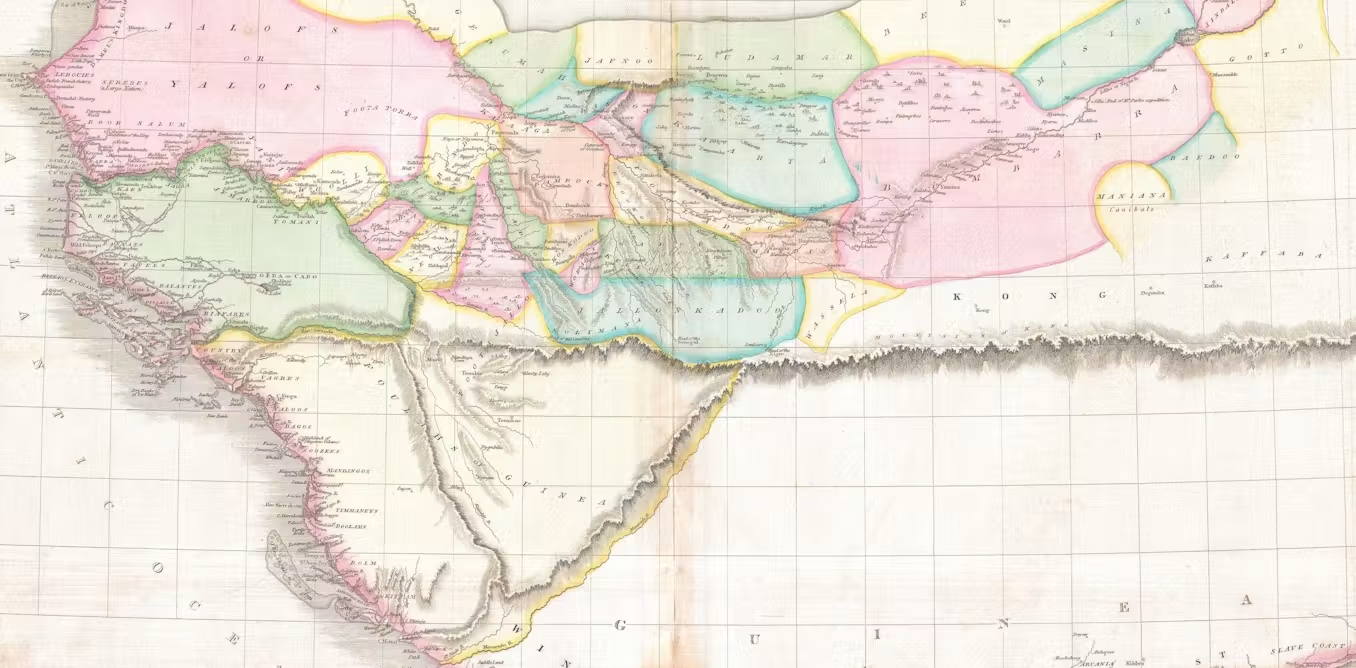
For over a century, the Mountains of Kong festooned maps of Africa after the Scottish surgeon and explorer Mungo Park returned from an expedition in the 1790s and described them to his cartographer, James Rennell, as a possible source for the Niger river.

Rennell, who is buried in Westminster Abbey, dutifully produced two maps featuring this supposed mountain chain, extending it well beyond Park’s journey into areas he could never have seen. His maps were widely copied, and doubts only grew about the mountain range’s existence towards the end of the 19th century.

In 1887-88, a French military officer, Louis-Gustave Binger, undertook an expedition to the area and proved it didn’t exist. Yet, in my work as a professor of cartography, I was amazed to stumble upon a reference to “Kong Mountains, French W. Africa” in the index of the 1936 edition of The Oxford Advanced Atlas – almost 50 years after Binger’s expedition.

Advertisement

This underlines the lasting impact that maps have on how we see and understand the world. Mapmakers even enabled important early case law for the copyright protections that are being tested by AI today.

In 1785, London map publisher Robert Sayer sued his local rival John Hamilton Moore for copying his nautical charts – but the court ruled in favour of Moore. It found that earlier charts could be consulted and improved, provided the new work was not simply a “servile imitation” but an improvement on what came before.

This ruling has been cited as a defence of AI, which consumes huge quantities of copyrighted material, but which reconstitutes it in ways that don’t appear as direct imitations.

A breakdown of trust

There has always been a huge amount of trust placed in the technology used to make our maps, from the ancient Greek dioptra (a surveying instrument) to modern satellites. But that trust was brought into question recently when Google added generative AI to its Google Earth satellite image platform, making it possible to create convincing but fictional satellite images.

Advertisement

Rather than take Google’s suggestions to render historic buildings or a “lakeside dream home”, some users were quick to make and share worrying images including bombed suburbs, collapsed landmarks and burning oil refineries.

The outcry was vociferous – including from fact checkers such as BBC Verify. Within 24 hours, Google rolled back the tool, Nano Banana 2, and promised “stronger guardrails” in the future.

Google Earth meets generative AI, briefly.
Google

The controversy is, in part, a tribute to the deep level of confidence Google Earth has earned from its user base – among them, fact checkers, journalists and the open-source intelligence community who depend on Google’s satellite mapping tool to verify life-threatening events in near-real time, from floods to famines.

Advertisement

Satellite imagery is now a key part of the visual vocabulary of our 24-hour news cycle. Countless times each day, we consult a map on our phones or scroll past satellite imagery in a news feed. These images have become so commonplace because they can track wildfires, reveal the destruction of Gaza, or document US military action in Iran. They offer a god’s eye view of Earth.

‘A mirror of the real world’

Journalists must act fast to verify and publish, which is why embedding generative AI within Google Earth was such a problem. Google stressed there would be an automatic AI watermark with every image generated – but this could be cropped out before sharing.

The process was also subtly different from requesting an entire image be created from scratch. In my test for this article, prompting ChatGPT to “generate a photorealistic satellite image of central London following a severe flood” appeared to return a plausible image.

Looking more closely, however, I could see that some buildings were misshapen and major roads were wonky. Verification against Google Earth (what else?) easily flagged these issues, so the image could safely be ignored and labelled a fake.

Advertisement

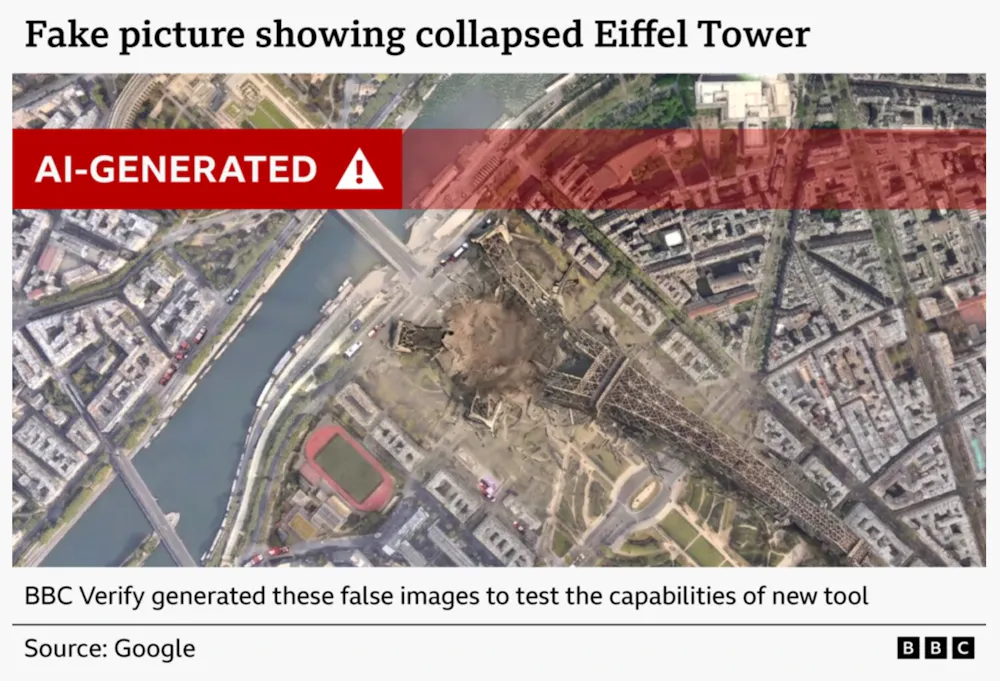
By uniting Google Earth with Nano Banana 2, genuine satellite images were being edited. If you wanted to collapse the Eiffel Tower, the points of reference around the disaster would still have aligned with the accredited source imagery. No oddities and errors would be found across the full image, thus providing much less for the fact checkers to go on when validating their sources.

BBC Verify's AI-generated image of the collapsed Eiffel Tower using Google Earth's Nano Banana 2 system.


BBC Verify/Google Earth

This validation process was used by the independent investigative journalism organisation Bellingcat to show that the Russian government had faked satellite imagery which suggested Malaysia Airlines MH17 had, in fact, been shot down by a Ukrainian fighter jet in July 2014. The headline of the Bellingcat article explaining its approach asked: “Who to trust, Google or the Russian MoD?”

Until the recent Google Earth AI furore, the answer to that question was in little doubt. As Google’s former geospatial technologist wrote: “We used to describe Google Earth and Maps as a mirror of the real world … That absolute bedrock of trust was structurally shattered this week.”

Our trust in maps has been built up over centuries. Trust in Google Earth has taken just two decades (it was originally launched as EarthViewer3D on June 11 2001 by a US tech startup that Google bought three years later). After countless pioneering refinements since the tool’s relaunch on June 28 2005, Google risked flooding the internet with more AI slop and fake images that run counter to what makes Google Earth, and maps in general, so valuable.

Advertisement

But Google’s rapid climbdown offers a welcome reminder about the values that have been at the heart of mapmaking throughout history. In the clamour to insert AI technology in every aspect of our lives, even the most evangelical tech companies still value trust above everything else.

Source link

Advertisement
Continue Reading

NewsBeat

Student, 14, shoots three teachers and three pupils dead and leaves 15 others injured in Bangkok high school massacre

Published

on

A student reunites with a relative after being evacuated from Debsirin Nonthaburi School

At least seven people were killed and dozens more were injured on Friday when a student opened fire at a school in Thailand before turning the gun on himself. 

The gunman started firing from inside the Debsirin Nonthaburi School on the outskirts of Bangkok, shortly after 10am local time. 

Thai Police spokesperson Trairong Piwpan confirmed three teachers and three students were killed in the shooting during an interview with news broadcaster Channel 3.

He added that the motive for the shooting was still being investigated and that the gun was believed to have been taken from a member of the student’s family. 

Advertisement

The suspect was reportedly seen reloading ammunition inside the building, according to sources at the scene.

Images from the scene about an hour after the shooting showed people standing outside the school comforting one another and police and first responders walking around inside the school. 

A witness told reporters that students hid inside a classroom while they heard gunshots from another building before police officers knocked on the door and cleared a way for them to leave the building. 

Photos published by local media show the suspect wearing a purple school uniform and carrying a black cross-body bag, with several bullet casings visible on the ground. 

Advertisement

Lt. Col. Dechrapee Kongdee, the Nonthaburi provincial police commander, confirmed earlier that the ⁠suspected gunman, understood to be a 14-year-old student, had ​taken his own life, while a man and a woman were found dead at his home. 

A student reunites with a relative after being evacuated from Debsirin Nonthaburi School

An injured teacher receives medical attention inside an ambulance at Debsirin Nonthaburi School

An injured teacher receives medical attention inside an ambulance at Debsirin Nonthaburi School

Advertisement
Students flee from the Debsirin Nonthaburi School after the shooting took place

Students flee from the Debsirin Nonthaburi School after the shooting took place

Prime Minister Anutin Charnvirakul offered his condolences and said he had ordered relevant officials to take care of the victims. 

‘It’s such a terrible incident. It should never have happened. How could this happen in our country?,’ he told reporters at Bangkok’s Government House. 

The Debsirin School is a well-known secondary school in Thailand and has branches across the country.

Advertisement

The original Debsirin School in Bangkok was founded by Thai King Chulalongkorn in 1885. 

Its school in Nonthaburi, where the shooting has taken place, is situated in the northwestern outskirts of Bangkok.

Deputy interior minister Polapee Suwunchwee told local broadcaster Thai PBS that the suspect used a handgun and the interior ministry was investigating how the student obtained it. 

Emergency radio communications requested a medical team to respond to the 6th floor of Building 5, where one victim was undergoing CPR.

Advertisement

Police Colonel Phatsakorn Chaitaweewong, superintendent of Plai Bang Police Station, confirmed the shooting took place inside the school and urged the public not to livestream the incident, saying authorities have not yet brought the situation under control. 

Armed police officer enters Debsirin Nonthaburi School, following a shooting incident at the school

Armed police officer enters Debsirin Nonthaburi School, following a shooting incident at the school

The suspect was reportedly seen reloading ammunition inside the building, according to sources at the scene. Pictured: The gun used in the shooting

The suspect was reportedly seen reloading ammunition inside the building, according to sources at the scene. Pictured: The gun used in the shooting

Deputy Interior Minister Polapee Suwunchwee  said the suspect used a handgun (pictured) and the interior ministry was investigating how the student obtained it

Deputy Interior Minister Polapee Suwunchwee  said the suspect used a handgun (pictured) and the interior ministry was investigating how the student obtained it

Advertisement
Students run as they evacuate from Debsirin Nonthaburi School, the site of a shooting incident, in Bang Kruai district in Nonthaburi province on the outskirts of Bangkok

Students run as they evacuate from Debsirin Nonthaburi School, the site of a shooting incident, in Bang Kruai district in Nonthaburi province on the outskirts of Bangkok

A schoolgirl cries outside her school where deaths and injuries were reported after a shooting in Thailand's Nonthaburi province, Friday, Aug. 7, 2026

A schoolgirl cries outside her school where deaths and injuries were reported after a shooting in Thailand’s Nonthaburi province, Friday, Aug. 7, 2026

The officer said: ‘The public and parents should avoid the area and follow official updates.’

Armed response units were deployed and were working to secure the school. Students and staff were also being evacuated from the campus as the operation continues.

Advertisement

Thailand has one of the highest rates of gun ownership in the region, with around 10 million firearms estimated to be in circulation – one for every seven inhabitants. 

In February, police shot and arrested a teenage shooter who opened fire at a school in the south of the country in February, leaving the school principal dead and two students injured.

The teen had used a police officer’s weapon in the shooting.

A local police chief said at the time that the suspect was hospitalised for psychiatric treatment in December and had been discharged.

Advertisement

The teen stabbed a police officer with a knife and stole his weapon – a 9mm pistol – just before the incident, and then used it to carry out the attack.

In 2022, an ex-policeman armed with a gun and a knife stormed into a nursery in the country’s north and murdered 24 children and 12 adults, one of Thailand’s deadliest massacres.

This is a breaking news story. More to follow 

Source link

Advertisement
Continue Reading

NewsBeat

I visited a hidden Hertfordshire gem with a Natural History Museum and independent shops

Published

on

Cambridgeshire Live

I visited a town in Hertfordshire, under two hours from Cambridge, and it was a hidden gem

The UK is home to countless hidden gems that attract little to no tourist footfall. Whether it’s the Cotswolds or further afield in North Wales, exploring these lesser-known spots is something of a passion.

One such discovery is a charming town in Hertfordshire, boasting a stunning high street and an abundance of places to eat.

Advertisement

Among Hertfordshire’s finest destinations is Tring, a town brimming with natural beauty, fascinating history and thriving local businesses. Sitting just one hour from London, it remains remarkably underrated and is well worth a visit, whether you’re passing through or keen to venture somewhere new.

Perched on the edge of the Chiltern Hills, Tring is a historic market town in western Hertfordshire that has been welcoming visitors for centuries. With a population of just over 12,000, it combines all the charm of a traditional English town with the practicality of a well-connected commuter hub.

Although evidence suggests the area has been inhabited since prehistoric times, Tring rose to prominence during the medieval period, receiving its market charter in the 14th century.

Its position along key coaching routes helped the town to prosper, drawing in trade and travellers alike.

Advertisement

Today, visitors are greeted by elegant Georgian and Victorian architecture lining the high street, which is dotted with independent retailers, traditional pubs and artisan shops.

Things to do in Tring

Natural History Museum

One of Tring’s most celebrated attractions is the Natural History Museum at Tring, one of the UK’s most remarkable museums. The museum exists thanks to Lionel Walter Rothschild, the eldest son of the famous banking family.

From an early age, he developed a passion for animals, gathering specimens from across the world and ultimately assembling one of the largest private zoological collections ever created.

Advertisement

In 1892, he made the museum accessible to visitors, showcasing thousands of mounted mammals, birds, reptiles and insects collected from every corner of the globe. His collection gained international acclaim, and following his death, it was handed over to the Natural History Museum in London, which maintains the Tring Museum to this day.

The museum proved captivating, with beautiful wooden cabinets containing everything from brightly coloured birds to rare mammals.

Explore the high street

Tring’s wide high street forms the centre of the town. Packed with independent boutiques, antique shops, gift shops and cafes, it’s an ideal way to pass a leisurely morning.

Advertisement

The blend of Georgian architecture and vibrant shopfronts generates an inviting atmosphere throughout the town.

Tring park

Once part of the Rothschild family’s estate, Tring Park offers expansive views over Hertfordshire and the neighbouring countryside.

It boasts woodland trails, open grassland and scenic viewpoints that make it particularly favoured amongst walkers and runners. The Grand Union Canal is also a popular destination for walkers and cyclists.

Food and drink

For a town of its size, Tring boasts a remarkable array of independent cafés, pubs and restaurants, making it a sought-after destination for food enthusiasts.

Begin your day at Black Goo Coffee, one of Tring’s most beloved spots. Renowned for its expertly crafted coffee, the café also offers an excellent food menu.

For a quintessential British pub experience, the Tufted Duck, formerly known as the Akeman, provides seasonal menus, locally sourced produce and a wonderful beer garden. This characterful pub serves mouth-watering food, including traditional Sunday roasts.

Those with a passion for Italian cuisine frequently make their way to Nonna’s, a family-run restaurant celebrated for its freshly prepared pasta and authentic pizzas.

Advertisement

Beer enthusiasts would be well advised to visit Tring Brewery. The award-winning brewery has been crafting traditional ales in the town since the early 1990s, supplying numerous pubs throughout Hertfordshire and Buckinghamshire.

Nearby attractions

Ashridge Estate

Just a short drive from Tring lies the breathtaking Ashridge Estate, one of the National Trust’s most stunning rural destinations. Ancient woodlands, rolling hills and miles of walking trails draw visitors throughout the year, while the food and drink on offer are equally impressive.

Whipsnade Zoo

Less than 15 minutes from Tring, Whipsnade Zoo ranks amongst Europe’s largest wildlife conservation parks. Home to elephants, rhinos, lions, giraffes and hundreds of other species, it makes for a thoroughly rewarding day out for the whole family.

Advertisement

Berkhamstead

The nearby market town of Berkhamstead provides another wonderful destination, boasting the striking remains of Berkhamstead Castle, charming independent retailers and a lively café scene centred along its bustling high street.

Source link

Continue Reading

NewsBeat

Transfer news LIVE: Shock Arsenal FC move, Alvarez talks; Man Utd done deal; Chelsea medical; Liverpool latest

Published

on

Transfer news LIVE: Shock Arsenal FC move, Alvarez talks; Man Utd done deal; Chelsea medical; Liverpool latest

The summer window is entering its final weeks as Arsenal, Chelsea, Manchester United, Liverpool and Tottenham all step up their push for new signings. Arsenal will announce the arrival of Bruno Guimaraes today, while they are said to have made a shock enquiry over Cristian Romero and agreed personal terms with Julian Alvarez after Vinicius Jr signed a new contract at Real Madrid.

Source link

Continue Reading

NewsBeat

The clever ways to make the most of citric acid in the home, according to readers

Published

on

The clever ways to make the most of citric acid in the home, according to readers

Citric acid has long been a favourite for descaling kettles and coffee machines, but its uses extend far beyond banishing limescale.

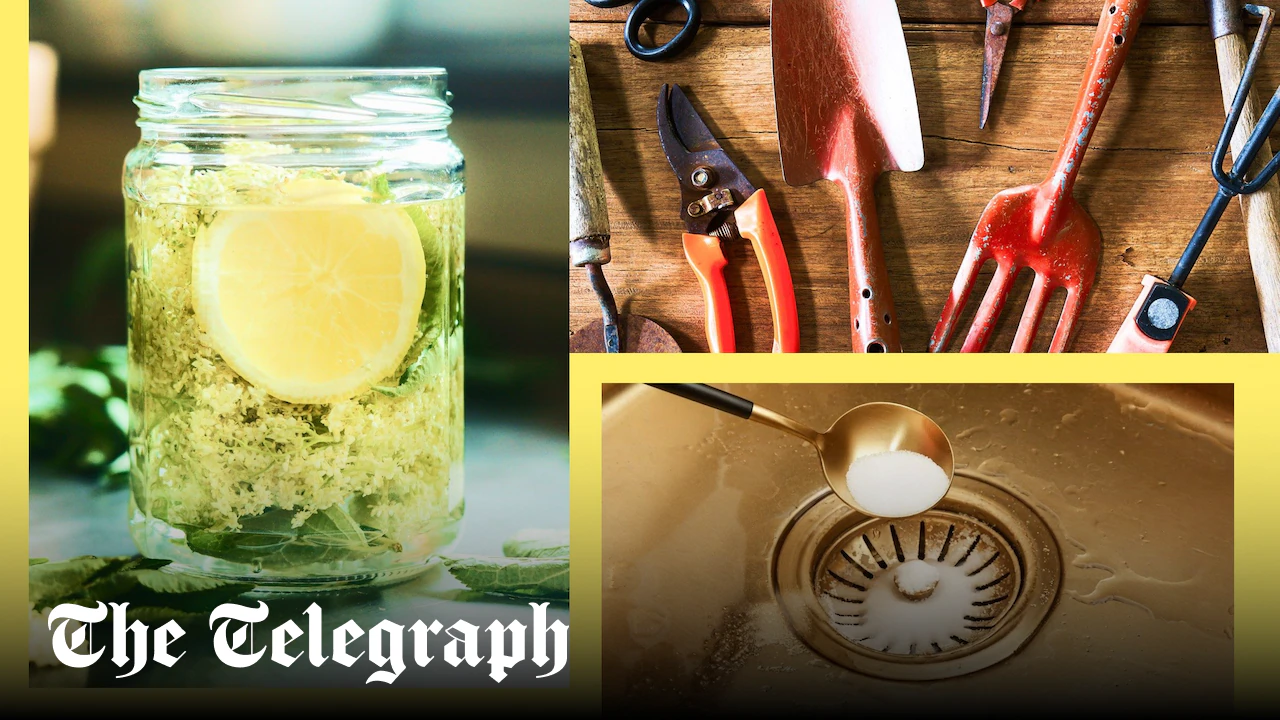
After Sarah-Jane Hoadley shared her top cleaning jobs for citric acid, readers flooded the comments with their own tips. They revealed just how versatile this inexpensive household staple can be, whether that’s using the powdered form, or lemons, in which it occurs naturally. 

From removing rust from tools to unblocking sinks and even making homemade elderflower cordial, here’s what our readers had to say. 

Advertisement

A cleaner barbecue

With barbecue season well underway, reader Tom Spencer tells us about his top tip.

“Cleaning with lemons is all over the internet nowadays,” he says. “I use cut lemons or limes to clean the barbecue grates after scraping with the wire scraper once at a high temperature. It is as simple as rubbing the halved lemon onto the bars. The acid does the rest, and gets any little bits off. Then put olive oil onto some kitchen roll and rub the bars so the food doesn’t stick.”

Summer drinks

Speaking of summer, citric acid can also be used in various cocktail, cordial and wine recipes, as detailed by Janet Adams, 74, from Scotland.

“I bought the citric acid last year to make elderflower wine. I was somewhat nervous about putting it in, acid after all,” she says. Janet has a host of self-seeded elder trees on the land where she lives. “Last year was the first time I put them to any use.”

Advertisement

When making cordial, the flower heads have to be picked on a hot day when the perfume is strong. They do get soaked overnight, but “be careful to allow anything crawly to escape before that”, Janet adds.

Source link

Continue Reading

NewsBeat

What went right this week: the good news that matters

Published

on

What went right this week: the good news that matters
The US murder rate plummeted again

The US has recorded another sharp fall in its murder rate, with homicides down 18% in the first six months of the year compared to the same period in 2025. 

That’s according to analysis from the Council on Criminal Justice (CCJ), which said that the US homicide rate has likely reached a “historic low”. 

It’s not just the murder rate that’s falling. The CCJ said that four types of crime have fallen by more than half in recent years: homicide (51% lower than 2022), carjacking (73% lower than 2023), residential burglary (56% lower than 2018), and vehicle theft (down 51% compared to 2023). 

Advertisement

While the White House has framed the data as a triumph for the Trump administration, crime rates in the US have been falling for years, albeit with some exceptions, notably shop-lifting and drug offences.      

“Murder and other crime rates are falling across the map, in cities with different political leadership, housing and economic conditions, policing and prosecution strategies, violence reduction models, and levels of federal enforcement activity,” said Adam Gelb, the CCJ’s president. 

“Local policies and programmes surely matter, but the striking consistency of the decline suggests that macro-level forces are exerting enormous influence as well.” 

Image: Andreas Strandman

Advertisement

Source link

Continue Reading

NewsBeat

How Queen Caroline turned King Arthur into an 18th-century royal PR strategy

Published

on

How Queen Caroline turned King Arthur into an 18th-century royal PR strategy

Amid family feuds, damaging headlines and questions about its future role, Britain’s royal family has spent much of the past decade managing its public image. But the importance of good royal PR dates back centuries.

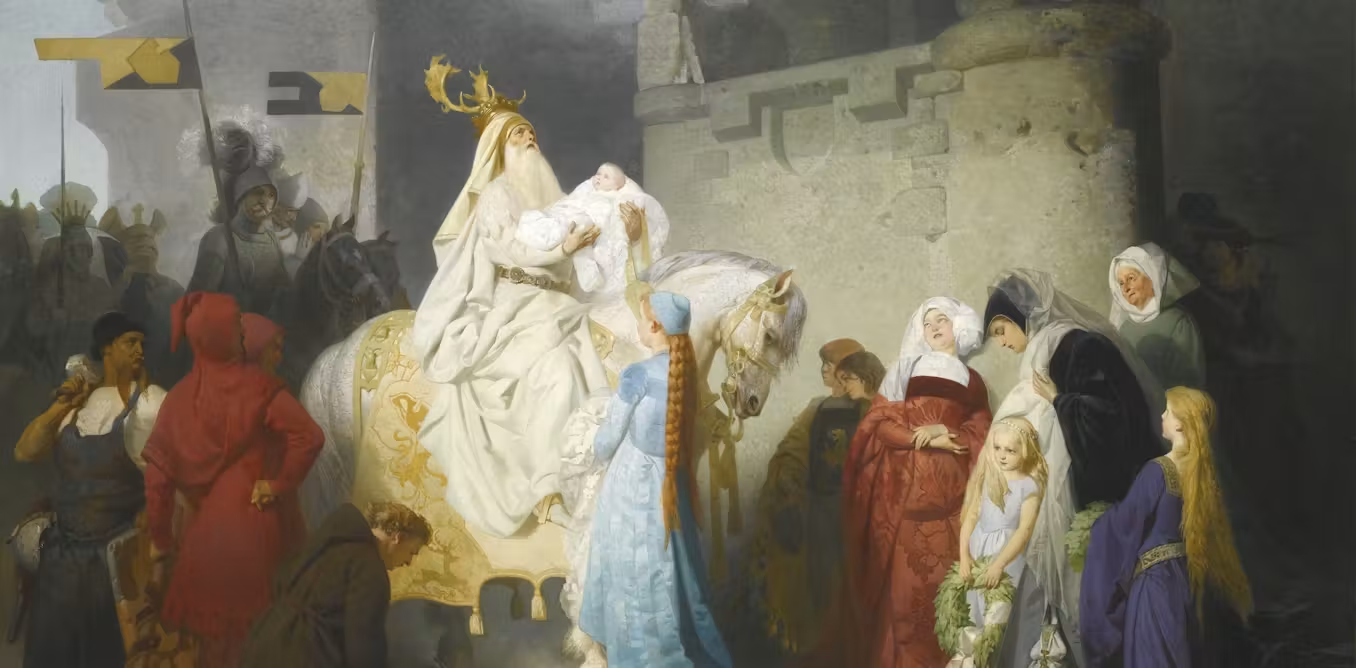
Long before communications teams and media advisers became fixtures of royal life, Queen Caroline (1683-1737) attempted a remarkable piece of image management. Faced with the challenge of making a German royal dynasty seem unmistakably British, she turned to one of Britain’s most powerful national stories: the legends of King Arthur and Merlin.

As the wife of the king of Great Britain and Ireland, George II (1683-1760), Caroline belonged to the House of Hanover. The German dynasty had inherited the British throne only two decades earlier and was still viewed with suspicion by many of their subjects. At the same time, an increasingly public feud between the king and his heir, Frederick, Prince of Wales, threatened to undermine the image of stability that a country recently torn apart by civil war, religious schisms and political revolution so desperately needed.

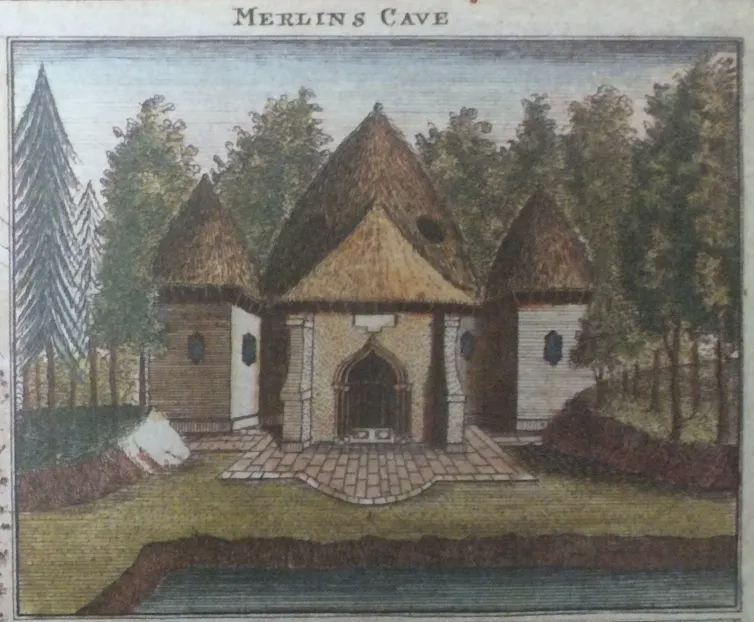
Caroline’s solution to this problem was unexpected. In 1735, she commissioned a curious attraction in the gardens of her palace at Richmond. Known as Merlin’s Cave, it looked like something from a fairy tale: a gothic thatched building filled with wax figures of Merlin, legendary prophets and other figures from Britain’s distant past. Many contemporaries thought it bizarre, with one critic dismissing its inhabitants as “a great many strange puppets”.

Advertisement
Portrait of Caroline of Ansbach in Manner of Michael Dahl (1730).
Shire Hall

Yet Merlin’s Cave was far more than an eccentric garden folly. Although an unlikely tool of statecraft, Caroline’s use of Arthurian iconography sought not only to strengthen the Hanovarian claim but also to promote a shared British identity at a time of political uncertainty.

Myth as messaging

Although the House of Hanover had inherited the British throne in 1714, it did not yet possess a deep-rooted place in the nation’s imagination. George I (who reigned 1714-1727) preferred his native Hanover to his new dominion and had relied heavily on interpreters and intermediaries throughout his reign. This exposed the dynasty to accusations that they were foreign rulers.

Supporters of the exiled Stuart dynasty, known as Jacobites, continued to regard James II’s son, the “Old Pretender” James Francis Edward Stuart, as Britain’s legitimate king. They had attempted ill-fated but bloody uprisings in 1715 and 1719. On his accession to the throne in 1727, George II therefore faced a challenge that was both political and cultural: he needed to not only rule Britain, but to persuade his people that he belonged there.

Arthurian legend offered a solution to this problem. Unlike the Jacobite claim, which emphasised hereditary right, it provided access to something broader and potentially more powerful: the idea of a shared British past. Arthur and Merlin were useful precisely because they belonged to no single dynasty. They could be appropriated to cultivate a different kind of legitimacy – one founded on patriotism, national identity and Britain’s historical traditions.

Advertisement

Queen Caroline was well placed to appreciate Arthur’s political usefulness. Unlike her husband, who famously cared little for the arts, Caroline was an enthusiastic reader who understood the political value of culture. Raised in the intellectually vibrant courts of Berlin and Hanover, she had access to extensive libraries that exposed her not only to Arthurian myth but to traditions linking the House of Guelph – the Hanoverian dynasty – with medieval English royalty.

While earlier monarchs such as Henry II and Edward I had often appropriated Arthur directly as a model of kingship, Caroline shifted attention towards Merlin. Throughout Arthurian tradition, Merlin acts as an adviser, genealogist and interpreter of Britain’s future. He guides Arthur while also foretelling the destiny of the realm. By placing Merlin at the centre of her cave, Caroline was employing these associations to connect the past, present and future in ways that linked the Hanoverians both to Britain’s ancient heritage and its future success.

A drawing of Merlin's Cave, a building within a manicured garden
Merlin’s Cave from John Rocque’s Plan of the Royal Gardens (1754).
British Library

This symbolism became even more pointed because the royal family itself was divided. George II and Caroline had a strained relationship with their son, Frederick, and contemporary supporters interpreted Merlin’s inclusion as a call for reconciliation. In a 1735 poem inspired by Merlin’s Cave, the Anglo-Welsh writer Jane Brereton has Merlin urge Frederick to fulfil his filial duty and “perpetuate Brunswick’s Race”, suggesting that at least some observers understood the Cave’s symbolism as a plea for dynastic harmony as well as political stability.

Not everyone was convinced, however. Caleb D’Anvers – a pseudonym for Nicholas D’Anvers, editor of the satirical journal The Craftsman – mocked Merlin’s Cave as an eccentric curiosity. Opposition writers, meanwhile, turned Merlin into a vehicle for attacks on both Caroline and her ally Sir Robert Walpole. Yet the very nature of these responses suggests that Caroline’s critics understood the political message she was trying to convey. Their objections stemmed not from confusion, but disagreement.

In the deeply divided political culture of the 1730s, Whig celebrations of Britain’s legendary past could easily become targets for Tory and Jacobite satire. The negative responses to the cave demonstrate that Caroline’s political opponents recognised her intentions well enough to parody them.

Advertisement

Merlin’s Cave therefore offers a revealing glimpse into the political uses of myth in 18th-century Britain. In turning to Arthurian legend to promote the image of a stable, legitimate and distinctly British monarchy, Caroline understood a lesson that monarchies continue to grapple with today: legitimacy depends not on inheritance, but on the stories people tell about who belongs to the nation and who should shape its future.

Source link

Advertisement
Continue Reading

NewsBeat

Mapped: The most dangerous parts of NI according to crime rates

Published

on

Belfast Live

The figures also reveal the safest place to live in Northern Ireland

People in South Belfast are more likely to witness crime than residents of any other part of Northern Ireland.

The latest PSNI recorded crime figures show that there has been a rise in some serious types of offending, including rape and all sexual offences (by 4%), stalking and harassment (1%), robbery (19%), drug offences (5%), and possession of weapons (14%).

However, the general trend of falling crime over the past decade has continued. In the year ending March 2026, 93,601 offences were recorded, a 2% drop on the previous 12 months.

Advertisement

The figures also reveal that some parts of the country are far more dangerous places to live than others. The highest volume of offences last year were recorded in Belfast, a total of 30,994 offences.

That means a third of all recorded crime in Northern Ireland last year took place in Belfast.

Crime rates, which account for population size, are generally considered the fairest way to compare crime across areas of wildly different sizes.

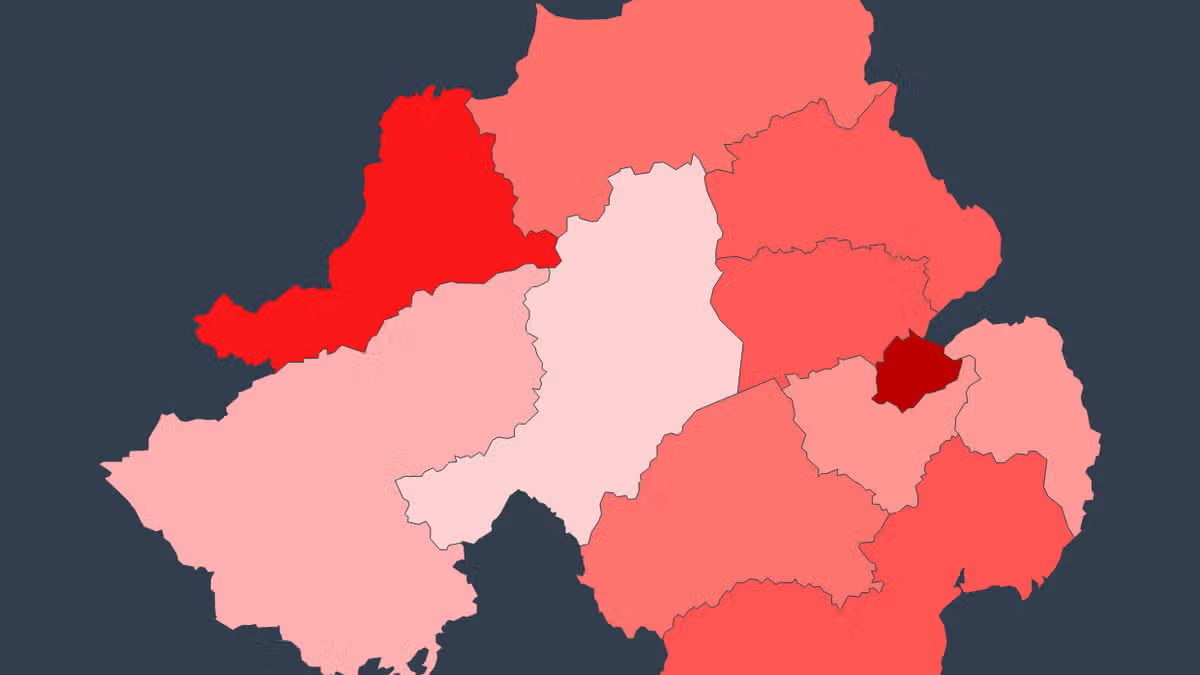
You can see how it compares where you live using our interactive map:

Advertisement

They show that Belfast also has the highest crime rate in Northern Ireland, of 88 crimes per 1,000 residents.

Population figures are not readily available for the four policing districts within Belfast – North, South, East, and West – so the crime rate is for the city as a whole. However, estimates based on census population ward figures show that residents in South Belfast are most likely to witness crime.

Last year, South Belfast, covered by the local policing team based on Lisburn Road, experienced the highest volume of crime, with 10,117 recorded offences. South Belfast also had the highest crime rate, followed by North, West, and then East Belfast.

However, higher crime rates in South Belfast may be driven by visitors to the district for its nightlife or shopping.

Advertisement

Outside of Belfast, residents of Derry City and Strabane were most likely to experience crime with a crime rate of 61 crimes per 1,000 residents, significantly lower than Belfast.

Meanwhile, Mid Ulster was the safest place to live in Northern Ireland, with the nation’s lowest crime rate of 29 crimes per 1,000 residents.

For all the latest news, visit the Belfast Live homepage here and sign up to our daily newsletter here.

Source link

Advertisement
Continue Reading

Trending

Copyright © 2025