

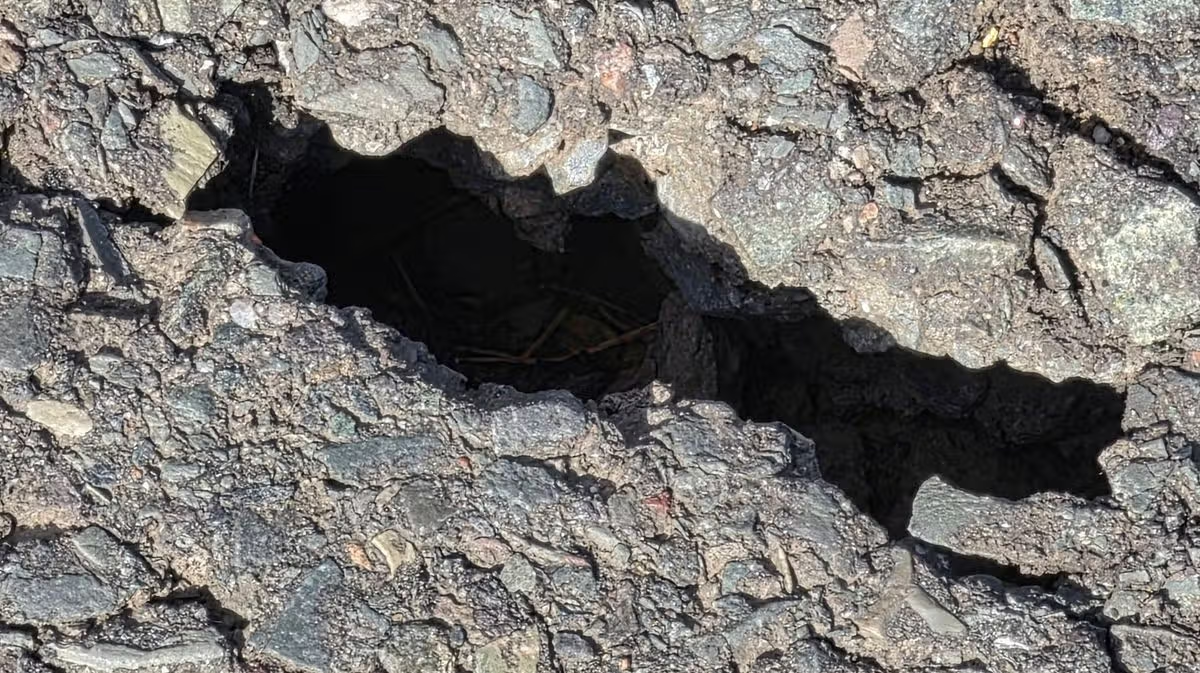
Residents across Cambridgeshire are calling for immediate road maintenance after describing local routes as ‘dangerous’ and ‘atrocious’
Readers of CambridgeshireLive have voiced their concerns about the condition of the county’s roads, with many reporting crumbling surfaces, faded markings, and routes they consider hazardous.
Motorists have described the state of one Cambridgeshire road as “atrocious”, with serious questions raised over road safety. Several roads across Cambridgeshire are laid on peat soil, making them particularly vulnerable to subsidence and rapid deterioration.
In Ramsey, Wells Bridge, a road built on peat soil, has been branded by local residents as “diabolical” and “dangerous”.
A Cambridgeshire County Council spokesperson said: “We are aware of residents’ concerns regarding the deteriorating condition of Wells Bridge Road.
“We are regularly monitoring the road for safety defects and will make repairs to keep all road users safe. As a precaution, a reduced speed limit and warning signs are currently in place. Our highways design team are also assessing the most appropriate way to stabilise and repair the road to ensure a longer-term solution.
“As part of this year’s budget, £2.5m will be spent on repairing peat soil affected roads across the county. This includes £700,000 towards reconstruction of Wells Bridge Road. These major repairs are anticipated to be delivered in the summer of 2027.”
One commenter, Riccy, writes: “Councils waste money on the Cambridge Market Square, you can see there it would all be better spent on the road. Why don’t the councils get their priorities right?”
Whynot2 feels: “Filling holes in isn’t chic, wasting money is.”
Calumen Nomen adds: “This ‘built on peat’ excuse is wearing a bit thin. How come they were OK for the past fifty years? We haven’t suddenly invented heavy lorries full of sugar-beet etc.”
Poppythecat believes: “It’s because people are driving around in gigantic SUV’s. They need to pay more tax. Glad you’ve finally identified the reason!”
Rootintootinredux joins in with: “EVs weigh more than SUVs. Focus on the proper problem.”
Topcat13 says: “Global warming has been affecting things at an ever increasing rate recently. Drying out the soil.”
Djexpat says: “This is just like Madingly, Earith and maybe dozens of roads in my area. Also, they seem to have stopped painting road markings years ago as well, and they’re all worn away. Chaos.”
Over on our Facebook page, Kevin S comments: ” You should try the one between Haddenham and Earith Bridge – practically impassable.”
Roger H says: “Try riding these roads on a motorbike!!”
Steve B writes: “Unfortunately, the Highways don’t have a money tree. I’m not supporting the lack of maintenance, but Fen Roads are built on peat, which has a tendency to shrink when it dries out and squash and subside. To make the roads perfect, they would need to strip the peat back, put sand and crushed hard-core down and start again. The Fen Roads were never meant to be arterial routes, but farmers’ tracks between villages and hamlets. With the invention of the motor car and heavy lorries, the paved tarmac just breaks up. The main roads have had money spent on them and are designed and built for longevity, and they follow the raised topography of clay soil. Unfortunately, Fen Roads are on or below the water table, and you can see how much the fields have sunk over the years.
“Highways spend millions on resurfacing, but it will never be permanent, a few years if you’re lucky, before it breaks and cracks again. It’s a choice of driving for the conditions of the road surface or speeding and hitting a pot hole or a divot. I have driven along Queen Adelaide Way from the Mildenhall Roundabout to A142 at Ely to work for years and have seen it resurfaced many times, but alas, it’s again falling away. Temporary traffic lights to divert you to the other side of the road( this was all resurfaced when the Boat Race was held during Covid), so they haven’t lasted long. Another route I take is across the Fen from Littleport to Mildenhall across Shippea Hill Crossing, again a 30mph speed limit and a 40mph limit. All Highways does is fill the dips with tons of tarmac. The other issue is an increase in traffic from the explosion of developments, people move to the countryside and think the A10 is as fast as the train and try to drive as such. The amount of fatalities on the roads is criminal. The speed limit may be 60 mph, but the road isn’t capable of supporting it. Some ask if it will be a dual carriageway. I think the construction and engineering challenges are going to be difficult to achieve, and I doubt it would follow the existing route. I guess we will have to wait and see.”
Do you think that the worst-affected roads need to be relaid completely? Comment HERE or below to have your say.















































You must be logged in to post a comment Login