Connect with us
DAPA Banner

NewsBeat

Locals still divided over Mill Road bus gate after nearly a year in operation

Published

on

Cambridgeshire Live

Some have said that they have seen a negative impact on their businesses, while others said that it has made a positive effect on the area by reducing congestion

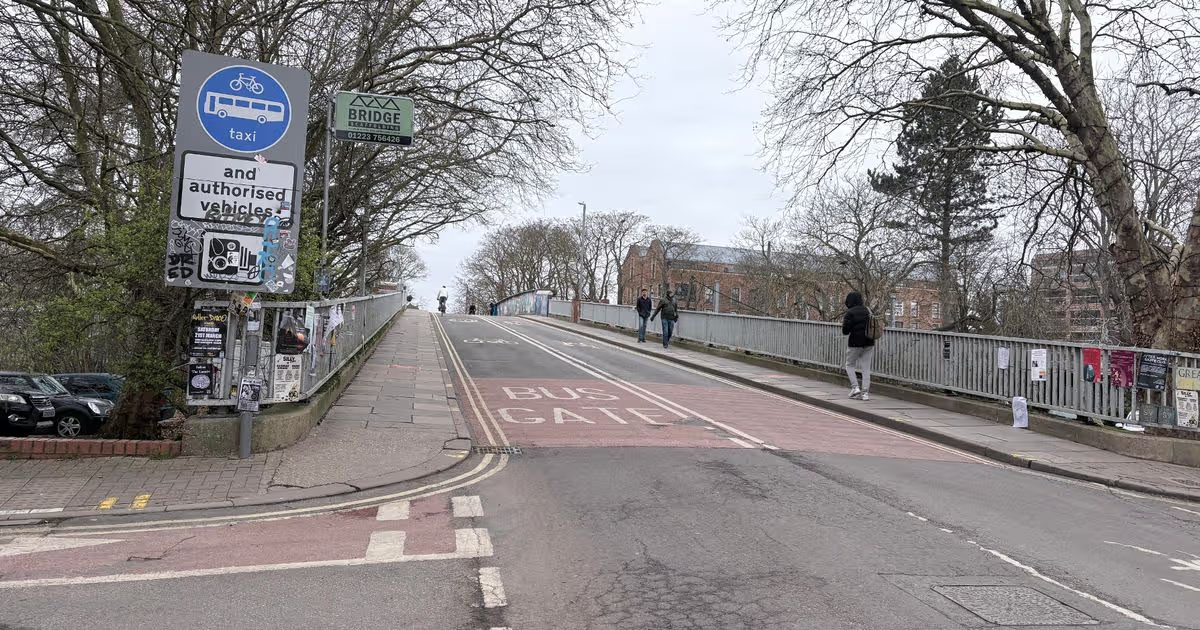
A controversial Cambridge bus gate continues to divide opinions nearly a year after it came into operation. Cambridgeshire County Council installed a permanent bus gate on Mill Road in 2025, with the first fines being issued from March.

Advertisement

The bus gate prevents all non-exempt vehicles passing through, meaning that they must use alternative routes. Those who breach this are issued with a Penalty Charge Notice of £70, discounted to £35 if paid within 21 days. Those exempt who can pass through without receiving a fine include buses, taxis, cyclists, and emergency vehicles.

More than 4,600 fines were issued in the first seven weeks after the bus gate was made operational, according a Freedom of Information request submitted by the Local Democracy Service. Nearly a year since the bus gate was introduced, we headed to Mill Road to find out what people now think about the bus gate.

A 23-year-old, who asked not to be named, works at Hilary’s Greengrocers. He claimed that some places on Mill Road have lost more than half of their business since the bridge closed to private vehicles.

“It has actually been a big problem”, he added. He said that he finds that there have been fewer people on the road, and said sometimes “you won’t be able to see a single person around here”.

Advertisement

A Cambridgeshire County Council spokesperson said: “We want Mill Road to be an enjoyable, safe place to visit, where local businesses are supported. Mill Road bridge is open to buses, those walking, wheeling, and cycling, emergency services, taxis, and vehicles that are exempt, such as those being driven by blue badge holders.”

A 50-year-old lady who gave her name as Guzel runs a business in Mill Road. She said that it has “really badly affected us” and in her opinion “it is pointless because for people using a car, when the bridge was open, it was a shortcut but otherwise they are going triple [the amount of] time to reach the other side”. Guzel said that she hopes for a good environment and fresh air. However, this “was not my solution”, she said.

Others have said that the bus gate has made a positive impact. Mill Road For People (MR4P), a group of local residents and traders, said: “One year on from the implementation of the Mill Road bus gate, we have seen a big reduction in congestion (especially on the Romsey side), cleaner air, and fewer collisions.

Advertisement

“There has also been a significant rise in the number of people walking and cycling, with all the health and environmental benefits that brings.” The group continued: “Many people have told us that they feel safer walking and cycling, especially with their children, building up healthy habits for the future.”

Steve Bezzant, 55, runs The Retro Shed on Mill Road. He said that “people are still coming up with push bikes or walking, so even now, it is not really affecting me.” He added: “I get most people coming in, just walking in. If they need to have a car here, they can put it there [near his store], so it hasn’t really affected me.“

Jake, who asked to use only his first name, works at Halls of Cambridge. He said that the bus gate “has slowed down business a bit more for traders than the general public“.

Rather than improving traffic, Jake believes that “it just puts congestion elsewhere“. He said that it he is not personally affected by the bus gate because he doesn’t come from that way.

Advertisement

A 35-year-old who works at Ocean Supermarket said that “people avoid coming here to pick up their groceries” and they “avoid coming to this area to avoid traffic”.

The Cambridgeshire County Council spokesperson added: “We are currently working with our partners to explore options for future public realm improvements for Mill Road. Over the next year, we will be hosting several public events and stakeholder meetings to bring forward ideas for the street that align with the requirements of local community groups, as well as businesses, faith organisations, and charities.”

Source link

Advertisement
Continue Reading
Click to comment

You must be logged in to post a comment Login

Leave a Reply

NewsBeat

Welsh Tesco store hosting marathon where runners will do laps of the shop

Published

on

Wales Online

Participants paid up to £49.95 to take part in the event which sold out in minutes

A supermarket in Wales is set to host what is believed to be the UK’s first ever “supermarketathon” -– and it has already sold out.

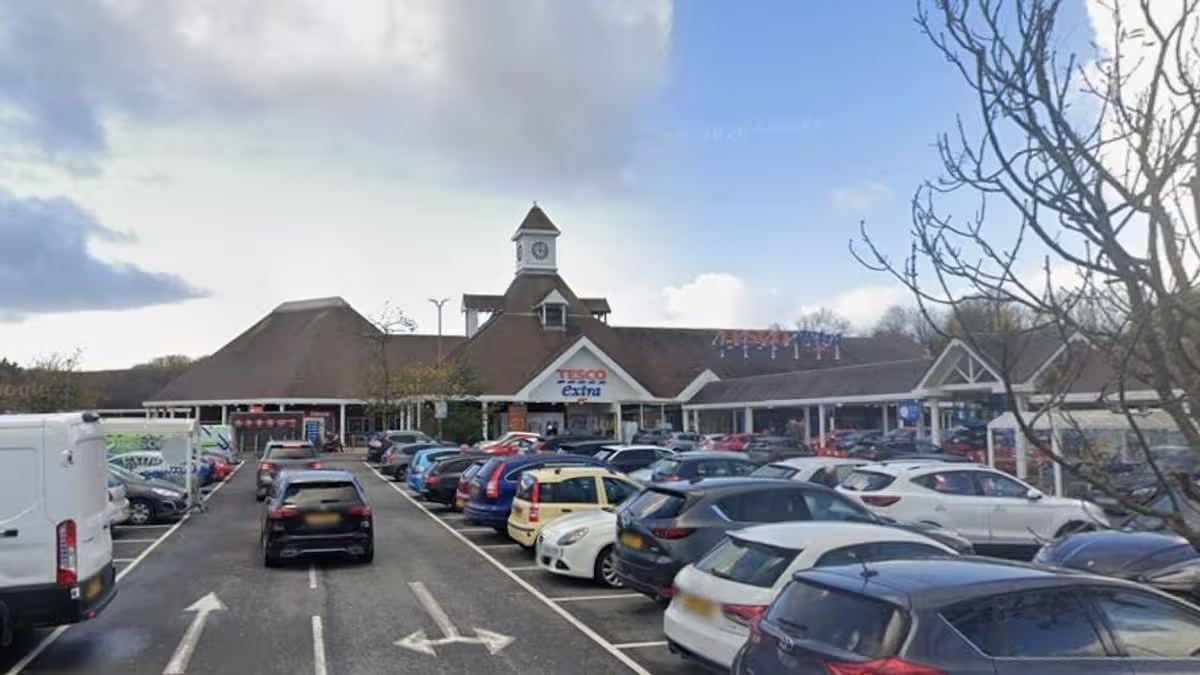
The event will take place at the Tesco Extra store in Bridgend, where 140 runners have signed up to take part in the unusual six-hour challenge organised by Phoenix Running.

Advertisement

Participants can complete anything from a 5km to a marathon or ultra distance by running repeated laps in and around the store.

The quirky course will start in the store foyer before heading outside to loop around the car park.

Runners will then head back inside and pass through the foyer and onto the travelator – although they’ll have to slow things down at that point as walking is mandatory for safety.

From there they will complete a lap of the first floor before heading back down and starting the whole process again.

Advertisement

Organisers say the final lap distance is still to be confirmed but is expected to be between 0.4 and 0.5 miles meaning competitors could find themselves repeating the same route dozens of times over the six-hour limit.

Runners will be free to complete as many or as few laps as they choose within the six-hour time limit. All participants will also receive a finisher’s medal regardless of distance completed. Stay informed on Bridgend news by signing up to our newsletter here

Tickets were priced at £47.95 for affiliated runners and £49.95 for unaffiliated entrants with all places now taken.

The event was met with a wave of excitement on social media with one person commenting: “That’s the stupidest thing I’ve ever heard, I’m definitely interested.”

Advertisement

A second said: “The two loves of my life. Running and supermarkets”, while a third wrote: “This has to be one of the daftest runs I’ve ever seen. I’m checking my diary and setting an alarm to enter.”

Officials from Tesco confirmed the Bridgend store will be hosting the event on June 28 to raise funds for the UK Armed Forces charity Help for Heroes. It will take place outside normal opening hours starting at 4.30pm.

A full risk assessment has been carried out prior to the event with staggered start times planned and safety measures in place including the requirement to walk on the travelator.

A Tesco spokesman said: “Our Bridgend Extra store is hosting this unique event to raise funds for our armed forces network partner charity Help for Heroes.

Advertisement

“It’s not every day that runners get to follow a course that goes through a supermarket so we are not surprised it has proved incredibly popular.”

Source link

Continue Reading

NewsBeat

Could the Middle East conflict open the door to price controls? Here’s how it works in Greece

Published

on

Could the Middle East conflict open the door to price controls? Here’s how it works in Greece

The US-Israel war with Iran has sent shockwaves through the global economy and predictions of COVID‑era inflation are becoming hard to ignore. In many countries, these pressures are already being felt, as households struggle to afford essentials.

During and after the height of the pandemic, governments across the political spectrum experimented with price controls in a bid to protect people from soaring living costs. Spain and Mexico, for example, implemented such measures from the political left; Greece did so from the right.

They were a response to the pressures of inflation, weakened household finances and growing insecurity for large swathes of the population.

Among these examples, Greece’s “household basket” programme stands out as a detailed attempt to keep essential goods affordable. As consumers may once again be facing a cost-of-living price spiral, it is a case study worth examining.

Advertisement

Greece entered the inflationary period (2021-22) with some of the lowest wages in Europe. Its average pay is still just a third of that in Germany. When inflation hit 10%-12% in 2022, everyday necessities such as food, dairy products and basic household supplies quickly became more expensive.

In November 2022, the centre-right New Democracy government introduced the household basket, requiring major supermarket chains to keep prices low on more than 50 categories of essentials. These included bread, pasta, rice, dairy products, cleaning materials and baby food. Relevant items were highlighted clearly in stores, and the list was updated weekly.

Originally presented as a temporary tool, the programme has been extended repeatedly because of ongoing inflation – most recently due to concerns about conflict-related price spikes. It has become a central part of the country’s strategy to stabilise living costs, along with related measures including profit caps in the fuel sector.

A system based on transparency

What distinguishes the Greek model is how it combines regulation with consumer access to information via a digital platform. Large supermarket chains are obliged to publish the prices of their basket items online.

Advertisement

Once placed on the list, an item’s price cannot rise for seven days, though it may fall at any time. Retailers face fines of up to €5 million (£4.3 million) for violations. The scheme also requires supermarkets to submit supplier price lists, giving regulators insights into where mark‑ups occur.

The platform allows shoppers to compare prices across retailers and locate branches stocking specific items. All purchases must take place in person, maintaining the scheme’s focus on physical retail while improving transparency.

Beyond the basket itself, in 2025 the Greek ministry of development and retailers agreed price cuts of 8% on average for 2,000 goods – and profit margins on essential items were capped at their 2021 level. Inspectors conducted regular audits to enforce compliance.

Advertisement

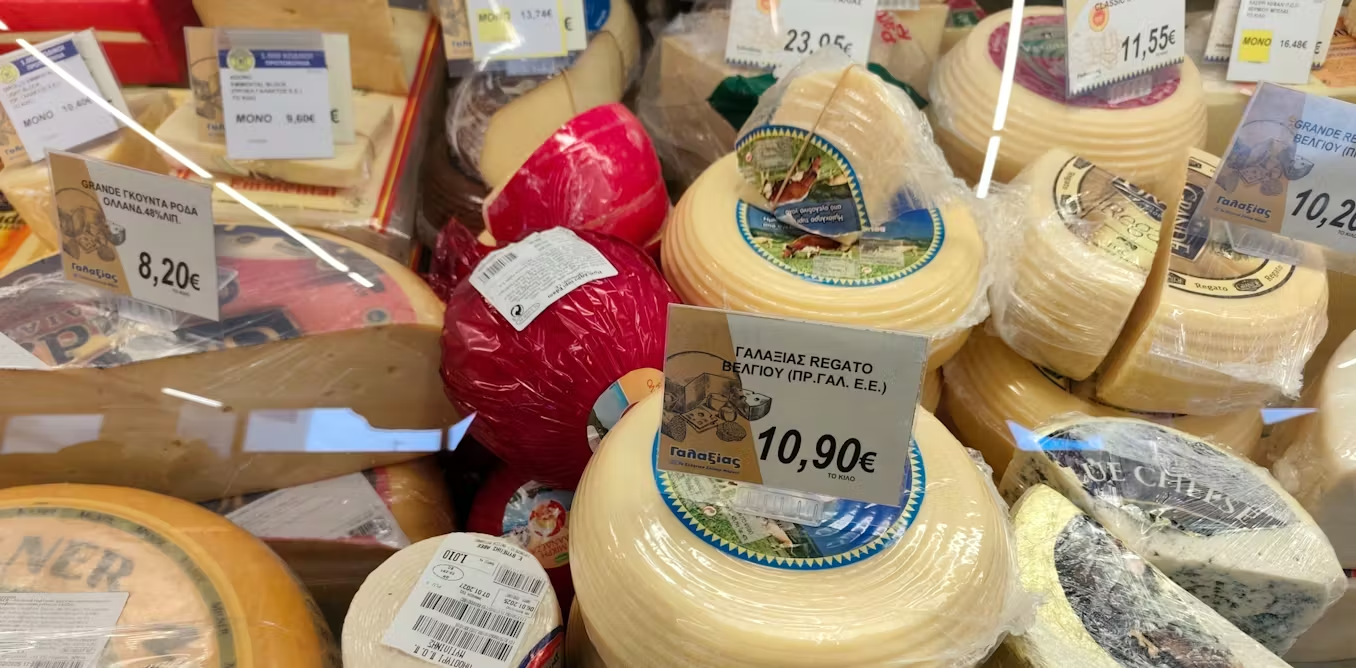
The contents of the Greek household basket can be tweaked temporarily to reflect holidays or special occasions.
vivooo/Shutterstock

Across many product categories, there were notable price declines. Among 56 breakfast foods and cereals, there was a price fall of up to 23%; among 34 cheese products, the fall was 5%-35%; and for fresh meat, the drop was 5%-7% across three products. On top of these, oils and fats dropped in price by 5%-16%, pasta by 3%-5%, and sweets and chocolate by 3%-17%.

The basket has gradually expanded to include pulses, fresh poultry, meat cuts, milk and cheese. The Greek government has also introduced short‑term “themed baskets” during periods of high seasonal demand. So far, Christmas and Easter baskets have included lamb, goat meat, turkey and chocolate Easter eggs to keep a cap on holiday costs.

Price controls remain controversial for some. Retailers in Greece have argued the system is unfair, and that they are unable to absorb the costs.

However, in the Greek case, supermarkets did accept reduced profit margins for the price-capped product lines. They responded with price wars to attract custom and boost market share, and with competitively priced own-brands. One consequence of these measures is that Greece now has a relatively cheap food basket compared with other EU countries.

Advertisement

In the UK at the height of the COVID pandemic, some large retailers raised prices above inflation – doubling their profits between 2019 and 2021-22. Under such circumstances, many may feel it is only fair to ask them to contribute to combating a cost-of-living crisis.

So, while price controls may not always please retail and other sectors, they are becoming more common. Many countries have been experimenting with ways to contain the cost of living, as practical tools to stabilise inflation and support citizens during unpredictable economic shocks.

Greece’s experience shows that such measures can be structured, transparent and enforceable. It also demonstrates that price controls need not be limited to one political tradition. They have been deployed by governments across the ideological spectrum when faced with inflationary pressures.

As the UK braces for further economic turbulence, triggered by conflict and volatile energy markets, Greece’s family basket offers a model worth studying. It is not a full solution to high inflation – nothing so simple exists – but it shows how governments can intervene to reduce pressure on households while maintaining oversight of essential markets.

Advertisement

A political party ready to champion measures that deliver immediate relief to struggling households could resonate widely at a moment when many people have yet to recover from the last cost‑of‑living crisis.

Source link

Advertisement
Continue Reading

NewsBeat

King Charles attends Easter service hours after ‘Not Our King’ graffiti protest

Published

on

Cambridgeshire Live

King Charles and Queen Camilla distributed Maundy money to 154 recipients at St Asaph Cathedral in North Wales, hours after ‘Not Our King’ graffiti was cleaned from the cathedral grounds

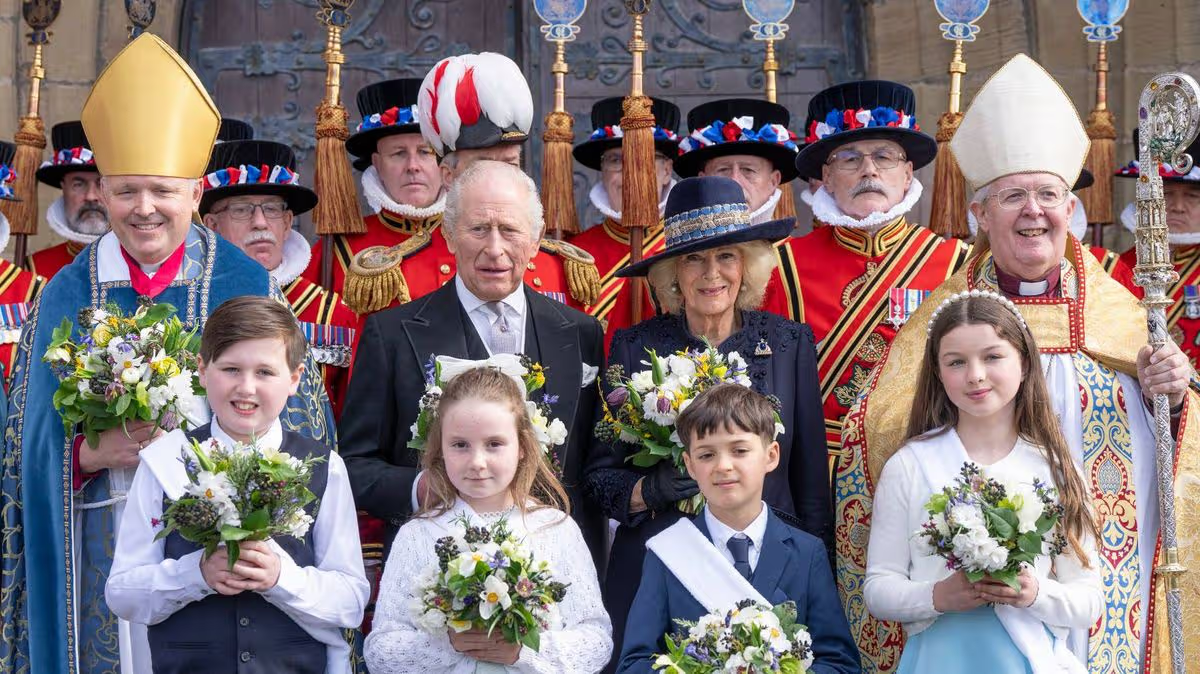
The King distributed Royal Maundy gifts at an annual Easter service – just hours after workers were called in to remove graffiti outside reading ‘Not Our King’. Charles, accompanied by Queen Camilla, attended the traditional ceremony at St Asaph Cathedral in North Wales, which was last held in the country in 1982.

He presented Royal Maundy gifts to 77 men and 77 women as part of the long-standing tradition, which takes place on the Thursday before Easter each year. It honours individuals who have demonstrated outstanding Christian service and made a meaningful difference to their local communities.

Advertisement

Recipients selected from dioceses in Wales or near the English border were each handed two leather purses. The white purse contained a set of specially minted silver Maundy coins totalling 77 pennies, reflecting the King’s age, while the red purse held a £5 coin commemorating 100 years since Queen Elizabeth II’s birth, along with a 50p coin marking the 50th anniversary of The King’s Trust.

Ahead of the service, well-wishers bearing Union flags and Welsh flags gathered along the street outside the cathedral to welcome the royal couple. Further along the road, separated from the main crowd by barriers, stood a group of protesters carrying yellow flags from Republic, an anti-monarchy campaign group.

They displayed a banner featuring photographs of Charles, his brother Andrew Mountbatten-Windsor and Prince William, alongside the slogan “What are you hiding? Royal Epstein inquiry now”.

In the hours before Charles and Camilla’s arrival, graffiti reading “Not our King” was scrubbed from a wall within the grounds of the building, which holds the distinction of being the UK’s smallest ancient cathedral, reports the Mirror.

Advertisement

The earliest recorded Royal Maundy service dates back to 1210 under King John. The ceremony commemorates the Last Supper of Jesus Christ, with the distribution of alms having since become a longstanding tradition.

Among those honoured with Maundy Money was Jean Carthy, 81, from Towyn. She revealed she had initially believed it to be a scam upon receiving a letter informing her of her nomination.

She said: “Even this morning I was wondering why I was there. It was just so, so special and especially because it was the first time it has been in North Wales. He gave me the purses and said ‘thank you for the work you do’ and that was really something.”

Fellow recipient Colin Pengelly, 77, from Castle Caereinion, near Welshpool, said: “It has been an amazing, humbling experience. The King put the purses in my hand and said ‘thank you for all you have done over the years’. I said to him ‘thank you too, keep doing it’.”

Advertisement

Speaking to recipients ahead of the King’s arrival, the Bishop of Norwich, the Right Rev Graham Usher, said: “It’s an act of humility on the part of the monarch in which a small representative group of people who have lived an exemplary life of service to their church and community is honoured. Enjoy this moment. It’s your moment.”

The bilingual ceremony, conducted in both English and Welsh, featured a specially written anthem, A Sacred Benediction, performed by soprano Rebecca Evans.

Charles and Camilla were welcomed by local schoolchildren as they left the cathedral. Many of the children had gathered bunches of flowers to hand to the royal couple, before the King and Queen paused to greet well-wishers who had been lining the High Street throughout the service.

For the occasion, Camilla chose a Philip Treacy hat, a navy blue silk crepe pleated dress and a navy blue wool crepe embroidered coat, both crafted by Christian Dior. She finished the ensemble with a sapphire and diamond brooch that had once belonged to the late Queen.

Advertisement

Source link

Continue Reading

NewsBeat

Brian Cox: My relationship with Scotland is complicated

Published

on

Brian Cox: My relationship with Scotland is complicated

Speaking about his homeland, he told The Times: “The way people treat Scotland, you know, it’s very beautiful and all that, but what we’ve done intellectually — we created television, the telephone, advances in medicine — it’s extraordinary. But we’re so low-graded, and because of that we don’t get what we deserve.

Source link

Continue Reading

NewsBeat

Westhoughton Carnival has council backing after 20-year absence

Published

on

Westhoughton Carnival has council backing after 20-year absence

The carnival is is set to be revived this summer after an almost 20-year absence, as local group Howfen Wakes seeks to bring back the popular tradition.

The carnival began many years ago as an agricultural show before blossoming into a full-scale event with floats, games, stalls, live performers, and a parade.

Westhoughton Carnival 2004 (Image: Danny Gifford)

Westhoughton councillor David Wilkinson said: “We were really pleased how our Christmas Markets went.

“The carnival coming back will be a big step forward for our community – it will be great.”

Advertisement

Cllr Arthur Price added: “Anything that brings the town together is a good thing.”

All councillors present agreed to approve Howfen Wakes’ £500 grant application to help organise the event.

Westhoughton Carnival 2004 (Image: Danny Gifford)

Howfen Wakes plans to start small in order to test public interest.

They have been granted the right to use the field in Westhoughton, where they will set up this summer.

Advertisement

The first carnival will be a party in the park – stalls, amusements, food, face painting and hair braiding for the kids.

One of the main issues with the original carnival was the cost of road closures and traffic management, so the plan is to keep that to a minimum this year.

Westhoughton Carnival 2004 (Image: Danny Gifford)

If the response is good and the carnival is popular, Howfen Wakes will expand it year on year until it begins to resemble its former pomp, with parades, floats, and performers.

‘Howfen’ is a slang term for a Westhoughtoner, so ‘Howfen Wakes’ refers to the reawakening of the Howfens as they revive their carnival.

Advertisement

As it stands, the carnival has been inactive for about 20 years.

Westhoughton Carnival 2004 (Image: Danny Gifford)

It’s folding was largely due to cost-related pressures, as the expanding carnival accrued expanding costs for policing, road closures, and performers.

This led to the first iteration of Westhoughton Carnival being cancelled in 2007, despite calls for support from local residents and councillors.

Advertisement

Source link

Continue Reading

NewsBeat

York’s Christmas Market could close on Tuesdays – council

Published

on

York Christmas Market- council proposals for future events

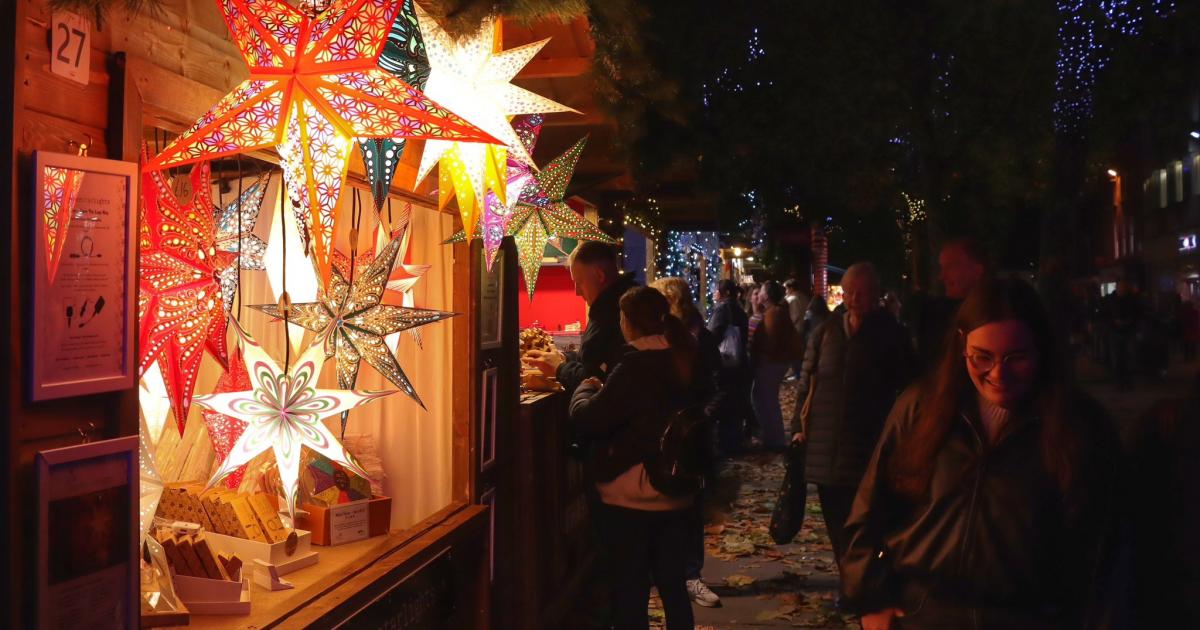
City of York Council says it is considering a new approach to the seasonal event, which would see the market close on Tuesdays each week to allow “business as usual” in the city centre.

It said that the rest day would ease access for residents who feel cut off by the market, with particular benefits intended for Blue Badge holders.


RECOMMENDED READING:


As reported by The Press in February, extra Blue Badge parking spaces, improving accessibility for buses, dedicated quiet and rest spaces, more cycle parking and benches are among proposals drawn up following a review of last year’s market.

Advertisement

Controversial restrictions were implemented last November following an Anti-Terror Traffic Regulation Order (ATTRO) requested by North Yorkshire Police which barred drivers from city centre streets during the market’s opening hours – restrictions the force said were needed to deter terrorist attacks.

However, campaigners have slammed the measures claiming they exclude some York residents from their own city centre – especially Blue Badge holders who are unable to drive into parts of the city.

Councillor Pete Kilbane, deputy leader of City of York Council, said: “York is the most Christmassy place to be which is why it’s enjoyed by residents and visitors from all around the world.

“At a special time of year with the winter lights and Christmas Market, it’s just a fantastic place to be.

Advertisement

“However, this isn’t the case for everyone. We know that some people can feel cut off from the city centre at this time of year and this can’t continue.

“This report looks to explore our options to improve access to the city centre in a way which also keeps the city safe.

“This includes looking at rest days for the market to support those who need to get into the city centre for everyday needs such as banking services, and for leisure such as enjoying York’s amazing retail and hospitality offer.”

Packed Christmas marketYork Christmas Market could close one day a week under fresh plans (Image: Staff)

If approved, York’s Christmas market would close every Tuesday – traditionally the day when footfall for the market is quieter.

Advertisement

This would allow Blue Badge holder access through the hostile vehicle measures on those Tuesdays, unless exceptional circumstances such as a national security threat, specific intelligence or a VIP visit required retricted access.

On the remaining days of the week, vehicle restrictions would remain in place in line with anti-terrorism measures requested by the police.

The council says the change could give residents and visitors greater freedom to access shops, services, and leisure options without the usual constraints of the market operating.

If the six-day market option is backed, 2026 would serve as a trial year, with arrangements for 2027 and beyond being reviewed following an evaluation of that season.

Advertisement

The proposal will be discussed at the council’s executive meeting on Tuesday, April 14, with papers for the meeting available on the City of York Council’s website.

The meeting will also be available to watch live or on demand at www.york.gov.uk/webcasts.

Source link

Advertisement
Continue Reading

NewsBeat

Meghan shares adorable video of Archie, 6, skilfully skiing with dad Prince Harry as she says he’s a ‘quick learner’

Published

on

Meghan shares adorable video of Archie, 6, skilfully skiing with dad Prince Harry as she says he’s a ‘quick learner’

A friend of Harry’s told The Sunday Times: “If he was invited by the King, he would get a package of security that automatically kicks in. He’d like an invite to Sandringham. Would he go? It would depend who was there. If the King was to say, ‘Come up and spend some time with the family’, he’d love that.”

Source link

Continue Reading

NewsBeat

Pink rhododendron plant takes over Smithills Estate

Published

on

Pink rhododendron plant takes over Smithills Estate

Rhododendron ponticum, bursting into bright colour at this time of year, has been spreading widely across the Smithills Estate for years, crowding out native species.

Rhododendron on Smithills trail (Image: NQ)

The Trailblazers, volunteers working in the area, say the plant’s thick growth is “choking” the woodland floor and leaving little room for other plant life to survive.

Work uncovers water feature on the estate after plants removed (Image: NQ)

Trailblazer Alan Cowardine said: “The problem with the rhododendron is it’s got a thick foliage. “No light gets to the ground, so nothing else can survive.

“So that could be creatures like earthworms, beetles, any flies, anything like that. We’ve actually seen nothing since we’ve been pulling out the rhododendrons.”

Advertisement

The plant spreads aggressively and is difficult to control once established.

Work is underway to control the plethora of out-of-control rhododendron bushes and Trailblazers are hopeful the can limit its growth, even if hedges found all over the trail are made mostly out of the daunting yet manageable rhododendron.

Rhododendron can cause illness and vomiting when eaten, but while the risks to people and pets are considered low, volunteers say the plant should not be consumed.

Mr Cowardine added: “Each plant will produce a million seeds, then the roots form and it spreads as well, so it’s not a good thing to have and it’s a toxic plant as well.”

Advertisement

“It is toxic, but you’d have to physically eat it, but it’s not good for the environment full stop.”

Smithills’ Woodland, which spans for acres and is a walking route for locals, is maintained every Monday by the Trailblazers.

Jean Turner (Image: NQ)

Each week, they come together to stay on top of plant life, create walkways for visitors and restore once neat areas, such as ponds.

They have had help from local organisations such as Bolton Council, Friends of Smithills hall, places of education, and Bolton Green Umbrella to name a few.

Advertisement

Volunteer at work (Image: NQ)

The plant’s impact goes beyond visibility, affecting the balance of the wider ecosystem.

Jean Turner, Chair of Edgworth and District Horticultural Society, said: “The problem we’ve got is rhododendron ponticum, a beautiful flower but deadly to the environment.

“Anything underneath a rhododendron bush will die because the rhododendrons have in themselves a chemical which kills or inhibits any growth.

“The rhododendron plant is poisonous to many animals, so sheep and cows won’t graze on it. I suppose the leaves don’t look very appetising, but you would take precautions.”

Advertisement

Efforts to remove the plant are ongoing, with volunteers working to dig out roots and prevent regrowth.

They hope that over time clearing the rhododendron will allow native plants and wildlife to return to help the woodland flourish.


Advertisement

Source link

Continue Reading

NewsBeat

Jamie Lynn Spears’ life now from Netflix show to ‘frustrating’ Britney relationship

Published

on

Daily Mirror
Jamie Lynn Spears’ life now from Netflix show to ‘frustrating’ Britney relationship – The Mirror