




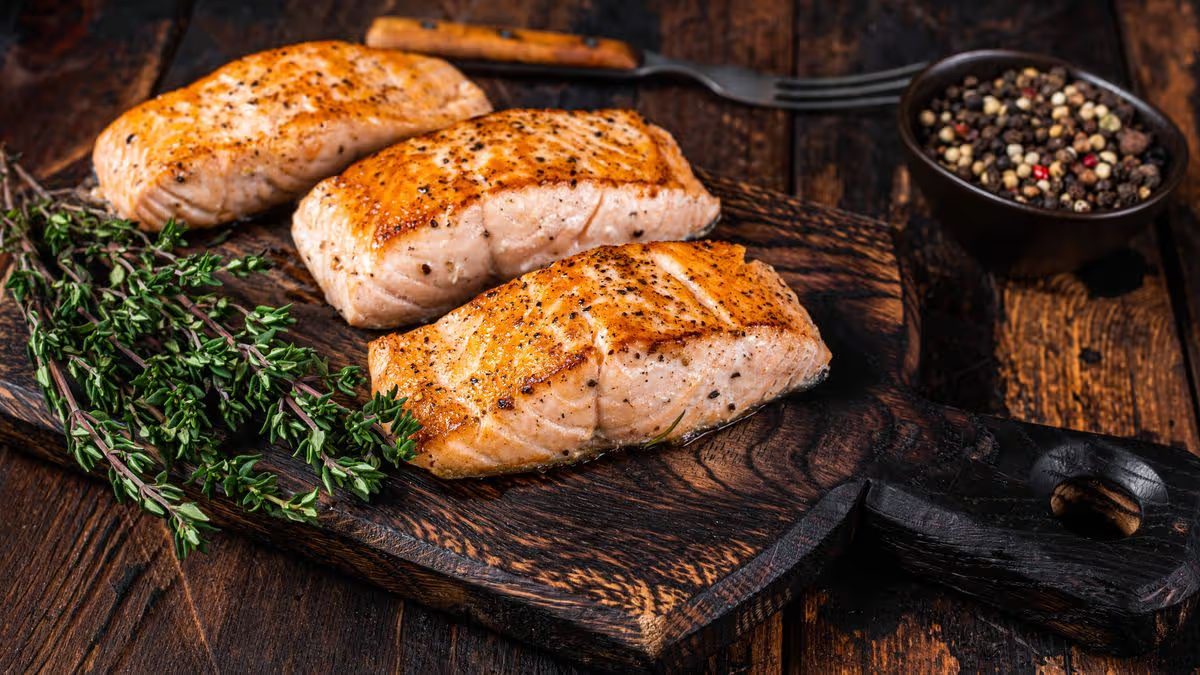
I compared three popular methods for cooking salmon to find out which produces the juiciest, most flavourful results.
Salmon is a nutritious and versatile protein that can be prepared in numerous delicious ways. Whether you bake, pan-fry, or air fry it, each technique offers a wholesome meal that draws out distinct flavours and textures.
While the air fryer is my preferred method for cooking salmon, I was keen to discover whether pan-frying or baking would yield superior results.
All three tests were carried out using identically sized skinless salmon fillets, which had been patted dry and left to marinate for one hour in the same glaze. The glaze recipe comprised sugar, soy sauce, white vinegar, paprika and garlic granules.
When comparing each method, I had several criteria in mind. First and foremost, I was after that succulent, moist texture.
However, an evenly cooked, perfectly flaky fillet wasn’t sufficient; I also wanted great flavour and simplicity, with a technique that demanded minimal time, effort, or culinary skill.
Oven
When I’m not reaching for my air fryer, the oven is invariably my next choice for cooking salmon.
For this approach, I began by preheating my oven to 140C. Too high a temperature risks stripping the fish of all its moisture before it has finished cooking.
I then lined my baking tray with parchment to stop the fish from sticking, while also promoting even cooking. As I was working with skinless salmon fillets, there was a greater likelihood of the fish adhering to the tray. I placed the salmon in the oven and checked on it after 15 minutes, though it ultimately required an additional five minutes.
The salmon fillets emerged from the oven with an appealing colour. Upon tasting, it was full of flavour and delightfully moist. The only drawback I encountered with this approach was the cooking time, though it wasn’t excessively lengthy.
In the pan
This was arguably the most challenging cooking method of the lot, as I’d never previously cooked salmon in a frying pan.
Despite adding a splash of oil and using a stainless steel pan, I noticed the salmon began to stick almost immediately and started to catch on one side. After 12 minutes of pan-frying the salmon, six minutes on each side, it was ready to serve.
While it had developed a decent seared crust, it was noticeably drier, nowhere near as moist as the oven-baked salmon. Should you choose this method, I’d recommend keeping a close eye on the heat, as it can burn rather quickly.
Air fryer
With this method, there was no requirement to preheat the appliance; I simply placed the fillet inside and set the temperature to 180C for seven minutes.
I find cooking salmon can sometimes feel rather daunting, but that feeling never arises when using an air fryer.
Once the timer finished, the salmon looked golden and perfectly cooked. The fish had crisped up beautifully, and was moist and slightly juicier than the oven-baked version.
The air fryer utilises circulating hot air to cook the salmon rapidly and evenly, while sealing in moisture and producing a wonderfully crisp outer texture.






















































You must be logged in to post a comment Login