Connect with us

NewsBeat

M62 traffic LIVE: Drivers stuck in delays with lanes shut on motorway

Published

on

Manchester Evening News

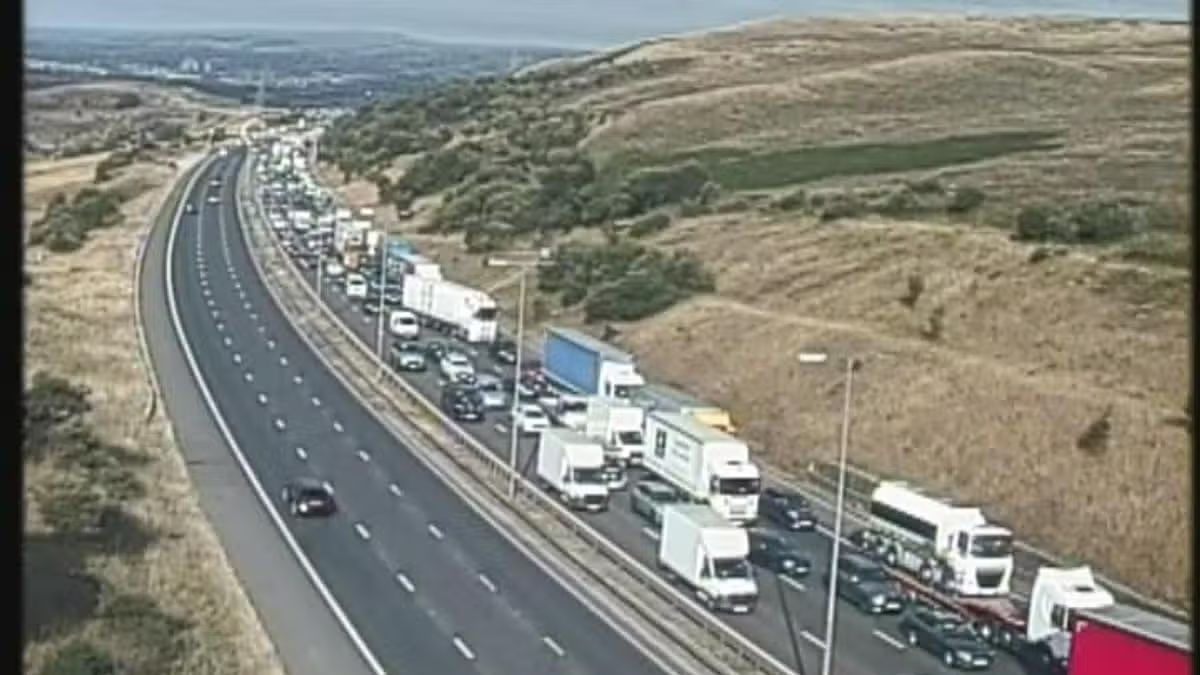
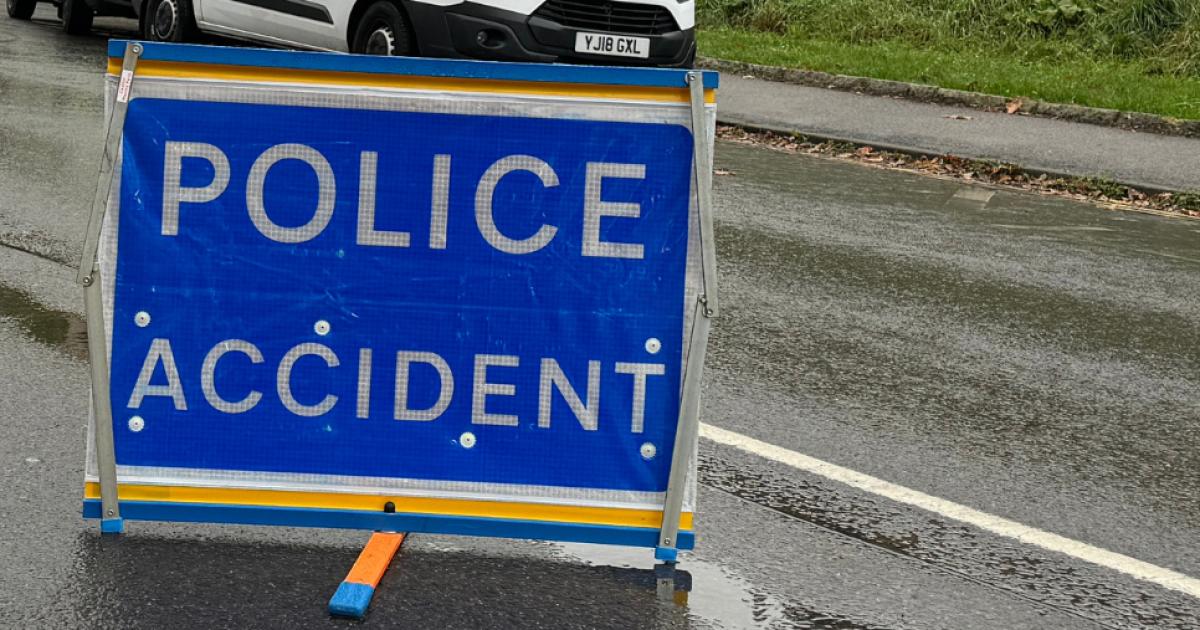
Drivers are facing delays on a stretch of the M62 motorway this morning (August 11).

Two lanes have been shut off on the westbound carriageway between junction 23 for Huddersfield and junction 22 for Rishworth Moor.

According to traffic alert service Inrix, ‘fire services activity’ is underway on the scene. Traffic is also being temporarily held on the eastbound side between junctions 22 and 23 due to ‘animals on the road’ as of 8.55am.

Advertisement

Click here to get the biggest stories straight to your inbox in our Daily Newsletter

Queues are building on both sides of the motorway.

Follow our live blog below for the latest traffic updates.

Source link

Advertisement
Continue Reading
Click to comment

You must be logged in to post a comment Login

Leave a Reply

NewsBeat

Trump hidden in catering truck in secret plane swap over Iran threat, reports say

Published

on

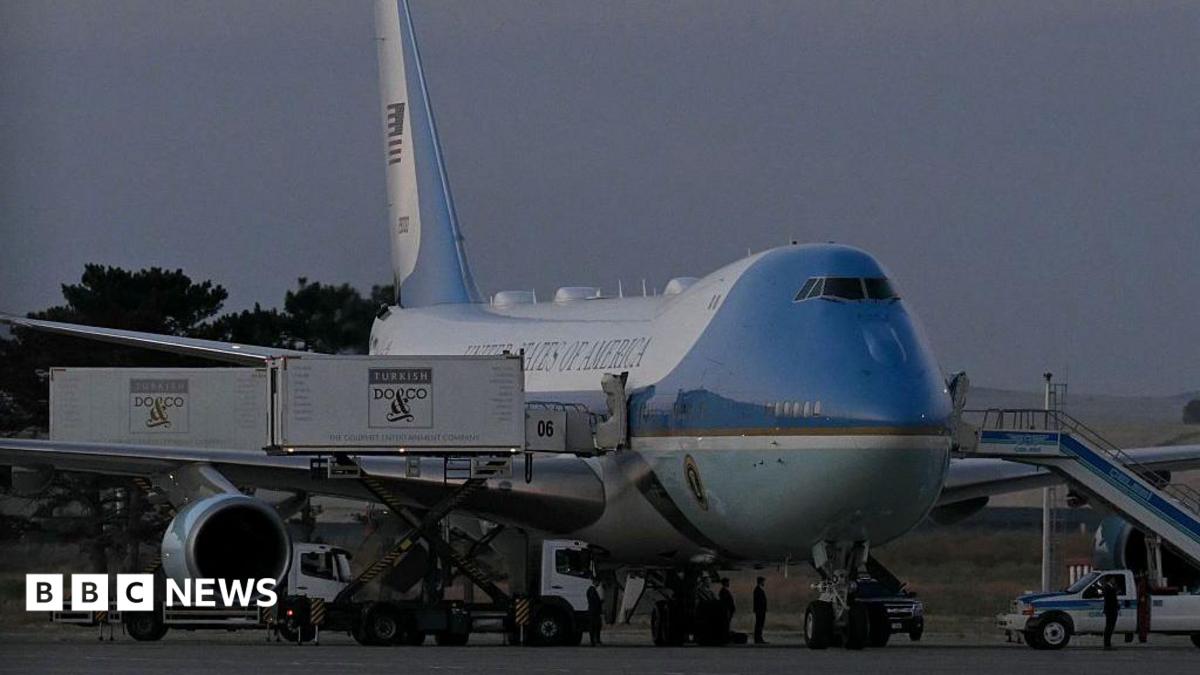
A catering truck parked alongside the old Air Force One jet prior to departure from Ankara

Donald Trump secretly swapped planes as he left a Nato summit in Turkey last month in response to a possible Iranian threat, US media report.

The US president boarded Air Force One in view of television cameras before being smuggled onto an elevated airport catering truck and transported to a military aircraft, without journalists and some White House staff on board knowing, the Washington Post said.

Officials told the BBC’s US partner CBS News that the US had detected a credible Iranian threat to fire a missile at the plane. The White House has not confirmed the secret switch.

Trump had earlier said he was Iran’s “number one target” during the summit in Ankara.

Advertisement

The clandestine manoeuvre came a day after the US renewed military strikes on Iran following a breakdown of negotiations between Washington and Tehran to end the war.

Trump had arrived in Turkey aboard a newer Boeing 747-8 donated by Qatar, but announced that he would leave on the old Air Force One “for old time’s sake”.

On 8 July, footage showed him boarding the presidential jet at Ankara airport. But according to the Washington Post, he was then secretly taken to a smaller C-32A military aircraft – a modified Boeing 757 often used by the vice president – via a catering truck which had been elevated to plane level on the opposite side to where he had boarded.

Defense Secretary Pete Hegseth boarded the C-32A separately using external stairs in an effort to make the flight appear normal, according to the newspaper.

Advertisement

Journalists and some White House staff boarded Air Force One and were reportedly told to close their window shades. They were unaware the president was no longer on board.

Trump then flew to the UK en route to the US, where he reboarded the old Air Force One and was seen descending from the aircraft after it landed at RAF Mildenhall. It is unclear how he moved from the C-32A back to the legacy jet.

Source link

Advertisement
Continue Reading

NewsBeat

Young man and woman killed in Gorton crash named for first time as suspect to appear in court

Published

on

Manchester Evening News

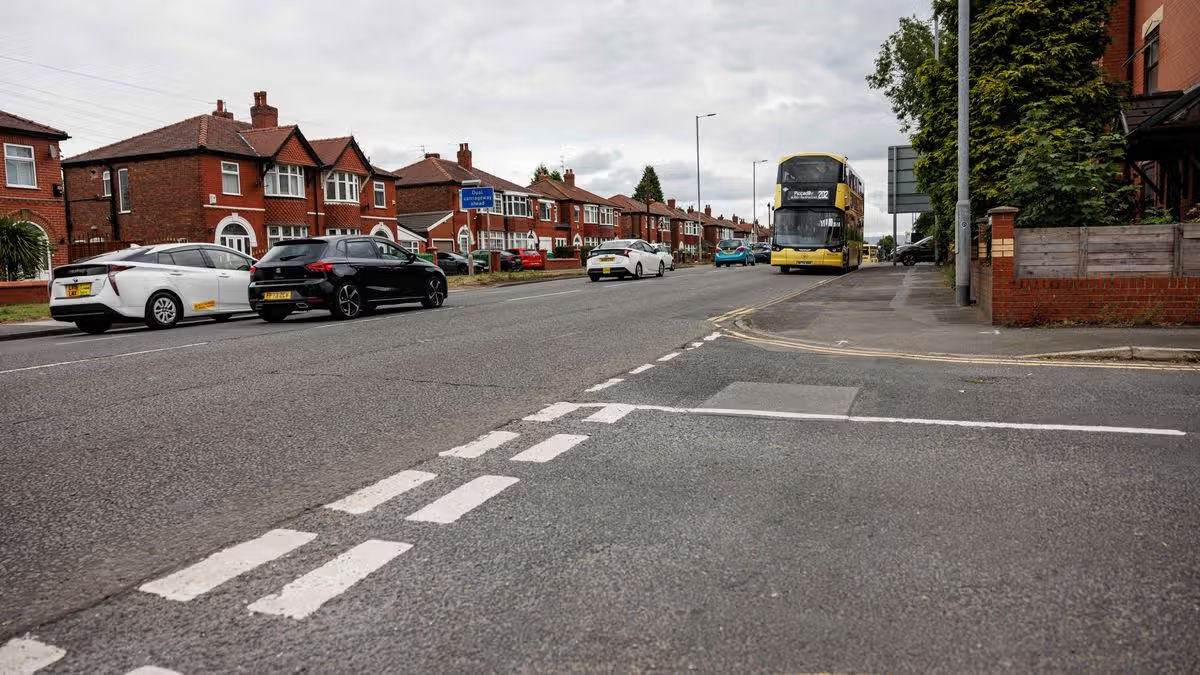
The man and woman were killed in the smash on Hyde Road

A young man and woman who died in a crash on a main road in Gorton have been named for the first time as Jack Cartwright and Natasha Denman.

Advertisement

The pair lost their lives in the crash on the A57 Hyde Road on August 5. Emergency services were called to the road, near the junction with Clumber Road, after a car hit a stationary digger at around 9.35pm.

Four people were inside the car at the time, a Greater Manchester Police spokesperson said previously. A young man and a woman, aged 23 and 24, sadly died at the scene.

Click here to get the biggest stories straight to your inbox in our Daily Newsletter

The man has now been named on official court documents as Mr Cartwright, while the woman has been named as Ms Denshaw. The car involved the crash has been identified in the court documents as being a Skoda Fabia.

Advertisement

Apollo Simms, 26, of Tealby Road, Manchester, has been charged with two counts of death by dangerous driving and failing to provide a sample for analysis. He is due to appear at Manchester Magistrates’ Court today (August 11).

Another man who was arrested has been released on bail, police confirmed.

Source link

Advertisement
Continue Reading

NewsBeat

Andy Burnham government hit with major backlash after announcing student loan changes

Published

on

Manchester Evening News

The Government has announced major changes for those paying off student loans

The Prime Minister should consider scrapping student debt or making interest payments interest free to encourage more people into higher education, M.E.N readers have said.

Advertisement

Yesterday, the Government announced major changes to interest rates and repayment thresholds for anyone with a student loan.

The Department of Education published its new interest rates for undergraduate and postgraduate loans; the new repayment thresholds for Plan 1 loans; and the interest rates and deferment threshold for Mortgage Style Student Loans.

Click here to get the biggest stories straight to your inbox in our Daily Newsletter

The new interest rates are set to affect the RPI rates for student loans – the base inflation measure. The government uses the RPI figure from March each year to set the baseline for student loan interest rates starting in September.

Advertisement

Depending on which plan you are on, you will be charged RPI plus up to an extra 3%. In the update issued yesterday, it has been confirmed that RPI rates are 4.1% for anyone paying back their loan from September 1. The repayment threshold for Plan 1 loans has also been affected.

You can see a full breakdown of changes to the student loan repayment plans here.

‘This is so wrong’

Following the announcement, M.E.N. readers expressed their views on the current student loan system on our Facebook page.

Ellen Vdk said: “Make it 0% and then the government has more chance of getting the full amount back.”

Advertisement

Su Bo expressed a similar view, adding: “Make it interest free or very very low interest. Those are the only sensible options. We want to encourage people to continue to go into higher education not put them off.”

Michelle Lindsay commented: “This is so wrong… why are we not trying to help students and our young people, on one hand we talk about NEET getting out of control and then on the other hand we’re putting up the interest rates for student loans, honestly the mind baffles!

“No wonder we have a shortage of teachers / nurses / doctors etc. because people can’t afford to pay the fees, living expenses etc etc.”

Tasha Hodrien shared her own story of the student loan system, saying: “When I left uni in 2018 my student loans totalled about £40k, I am a low earner so my repayments are low or £0 each month. With the interest adding in the last 8yrs mean my student loan is now almost £75k. I’m 50 and will probably never clear this debt.”

Advertisement

Natasha Burr also shared her personal story on experiencing student debt, saying: “I started paying my SL [student loan] back in 2016, it sat at 25K. I had only a small amount of time where I wasn’t paying anything back, I’m now down to 22K. Nearly 10 years paying it back, most months I pay back £200 something but interest is £100.”

Fiona Stewart compared the lower rates of student debt in Scotland compared to England. Eligible Scottish students receive free tuition funded by the government, while English students face tuition fees up to £9,790 per year.

Fiona said: “If Scotland can offer tuition fees for free why can’t the rest of the UK? Our domestic students are our next generation of innovators, health care professionals, SME’s, scientists.”

Irene Counsell expressed frustration at the different changes to the repayments on the various student loan plans.

Advertisement

Irene said: “Why is it so complicated? Just set a low fixed rate from the outset, or better still interest free.”

While Hannah Sofia Hulme said simply: “He [Andy Burnham] should be scrapping student debt.”

Source link

Advertisement
Continue Reading

NewsBeat

UK weather: Next heatwave begins with amber heat health alerts in place

Published

on

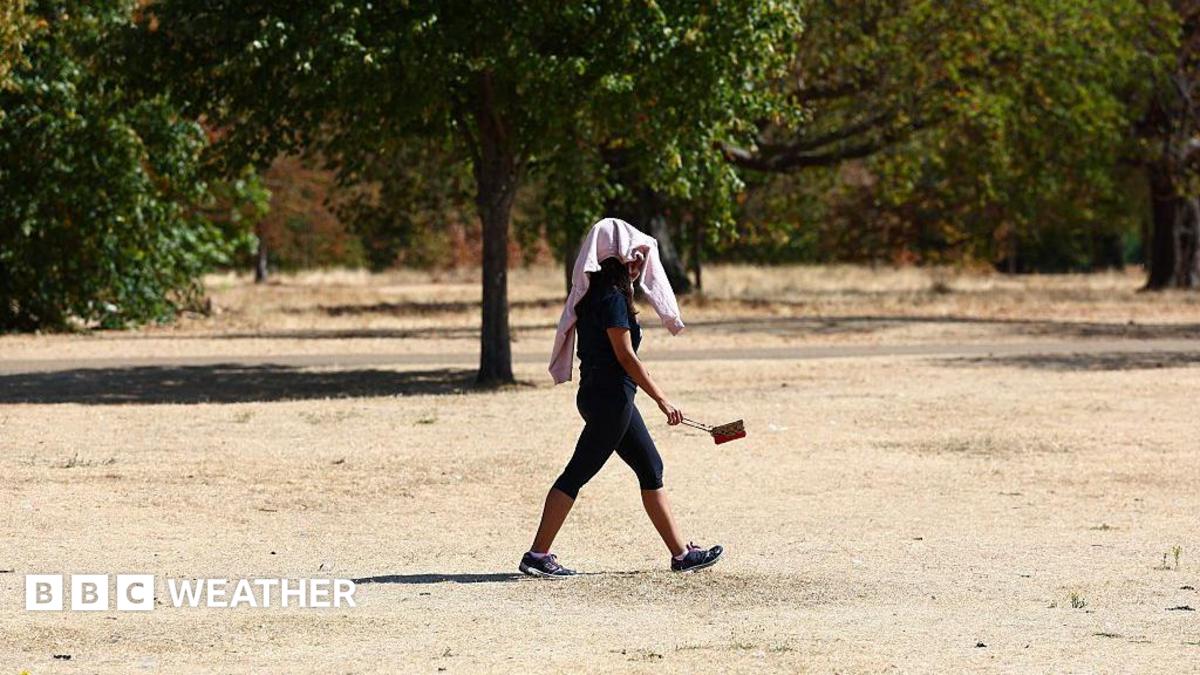
Person walking across a very dry and brown park with a towel over their head, providing shelter from the hot weather

The hot weather will intensify and be more widespread on Wednesday.

In an area from South Yorkshire to east Wales, Somerset and east across England temperatures will be in excess of 30C.

Some of the warmth will spread further north into northern England, Scotland and Northern Ireland with temperatures into the low to mid-20s.

The hottest weather will be around the Midlands and south-east England with 31 to 33C.

Advertisement

By Thursday and Friday, extreme heat is most likely in parts of the Midlands, eastern and south-east England where temperatures could be as high as 35 or 36C.

As heat builds throughout the week, overnight temperatures will stay relatively high bringing some uncomfortable nights for sleeping.

Minimum temperatures may not go lower than 16 to 18C across England and Wales.

There is also a possibility of a “tropical night” – where temperatures remain above 20C all night – in south-east England.

Advertisement

While the heat will not be quite as intense or feel as humid as the heatwaves in June and July, the BBC understands the Met Office may be considering issuing extreme heat warnings.

That would suggest that, as well as health impacts, there could be some concerns about infrastructure such as the transport network and power lines.

The highest temperatures in June and July were 38C and 35.5C respectively.

For the first time in recorded history we are expecting a temperature higher than 35C to have been recorded in the UK for four consecutive months – underlining that this has been a year like no other.

Advertisement

Source link

Continue Reading

NewsBeat

How to make a pinhole projector to view the solar eclipse

Published

on

How to make a pinhole projector to view the solar eclipse

Taking place on Wednesday (August 12) the eclipse will be the most coverage seen in the UK since 1999, when most of Cornwall and Devon experienced total coverage.

With most eclipse glasses sold out across the country, a pinhole projector offers a simple, homemade alternative to safely view the event.

Here is how to make one at home so you can still enjoy this week’s eclipse.

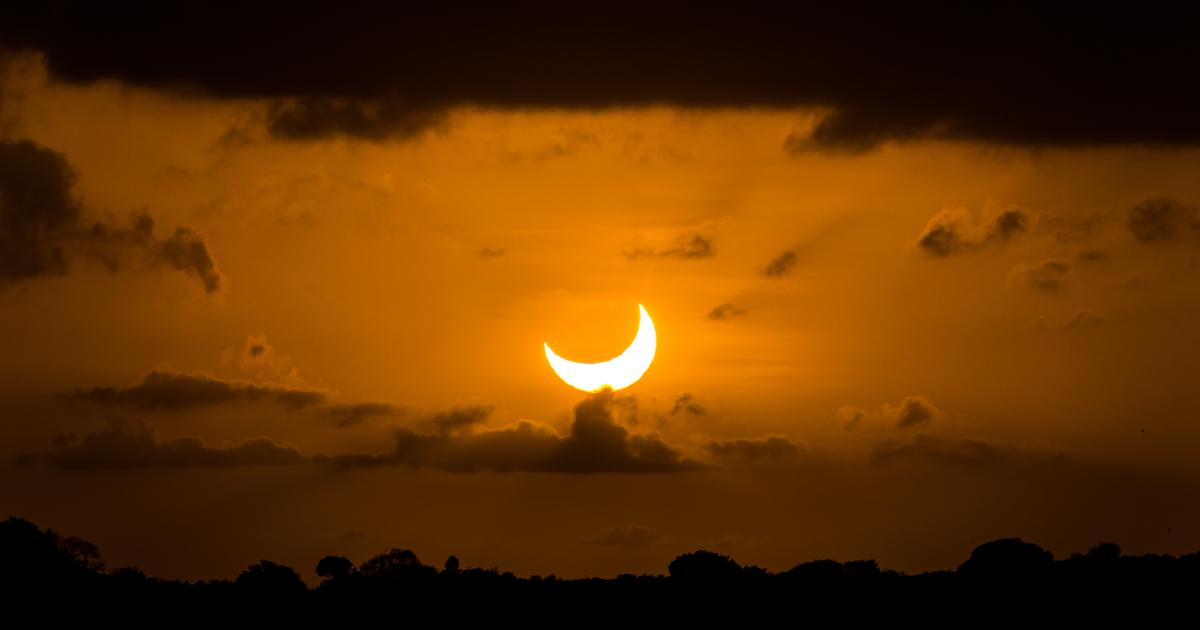
A partial solar eclipse as seen from the UKA partial solar eclipse will be visible in the UK this week (Image: Getty Images/iStockphoto)

How to make a pinhole projector for the solar eclipse

A pinhole projector, which can be assembled using everyday materials, allows people to observe the eclipse indirectly by projecting an image of the Sun onto a surface, making it safe for the eyes.

Advertisement

The method works best for partial eclipses, where the Sun takes on a crescent shape as the Moon moves across it.

To make a basic pinhole projector, all you need is two pieces of white card.

Poke a small hole in one piece and hold it above the other, with your back to the Sun.

The sunlight passing through the hole will project a small image of the Sun onto the second card.

Advertisement

During the eclipse, the shadow of the Moon will be visible within this tiny, projected disc.

A colander or even the gaps between tree leaves can serve the same purpose, casting multiple crescent shapes onto the ground.

For those looking for a slightly more involved project, a box pinhole projector can also be constructed for a steadier view.

Advertisement

Where to buy solar eclipse glasses in the UK

You can buy certified solar eclipse glasses in the UK from reputable astronomy retailers, specialised online distributors, or general online marketplaces such as Amazon UK.

However, many retailers are seeing shortages in stock as people across the country rush to secure them ahead of the event on Wednesday evening.

People have been warned not to look at the eclipse without glasses, as they block out the Sun’s harmful rays.

Regular sunglasses are not safe to use, as they don’t have adequate UV protection to protect your eyesight.

Advertisement

Adequate glasses should have safety certification ‘ISO 12312-2′ or ‘ISO 12312-2:2015’ printed somewhere on them.

There are other ways of viewing it, such as a solar telescope or watching official live streams, one of which is being run by the Royal Museums Greenwich (RMG).

What time will the solar eclipse be in the UK?

What time the solar eclipse will peak will depend on where you are in the UK, but it will be somewhere between 7.02pm and 7.16pm.

Here are the estimated eclipse times for areas across the UK, according to the RMG:

  • Edinburgh and Glasgow – begin at 6.08pm, peak at 7.05pm, end at 8pm
  • Manchester and Liverpool – begin at 6.13pm, peak at 7.10pm,  end at 8.03-04pm
  • Norwich and Birmingham – begin at 6.15pm, peak at 7.11pm, end at 8.04pm 
  • London, Bristol and Cardiff – begin at 6.17pm, peak at 7.12pm, end at 8.06pm
  • Truro, Cornwall – begin at 6.18pm, peak at 7.16pm, end at 8.10pm

Recommended reading:


At its peak, enough of the Sun will be covered to make a noticeable difference in the temperature and light levels.

Advertisement

However, unlike with a total eclipse, the sky will not become dark – it will feel more like a cloudy day or close to dusk or dawn.

Will you be watching the solar eclipse this week? Let us know in the comments.

Source link

Advertisement
Continue Reading

NewsBeat

Inside the mysterious rise of ‘milk duct’ cancer in women in their 40s… and the alarming link to IVF, alcohol and the Pill

Published

on

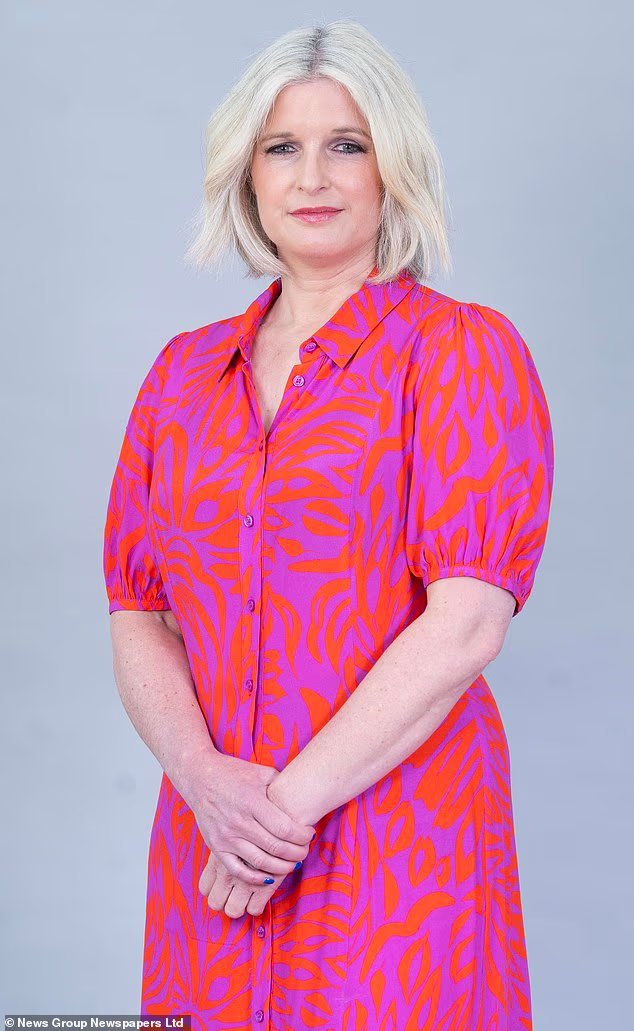
Sarah Stirk learned she had abnormal cells after a breast screening, and was later diagnosed with an early-stage breast cancer in the milk ducts

Just one hour after a mammogram that changed her life, Sarah Stirk arrived for her TV presenting job at Sky Sports and fought to put on a brave face.

The breast screening had revealed abnormal cells in her milk ducts, the tiny tubes that carry milk to the nipple, and while not always cancerous, Sarah had a gut feeling something wasn’t right.

‘I saw the doctor’s face and could tell straight away it wasn’t good news,’ recalls Sarah, 47, a golf presenter and mother of one from York.

‘I asked if there was a lump and she said: “no, but there are abnormal cells…”. Afterwards, I went straight to work. I was a bit of a mess. I didn’t know for sure but no part of me expected good news.’

Advertisement

And she was right. Sarah was later diagnosed with ductal carcinoma in situ (DCIS) in her left breast, an early-stage breast cancer within the milk ducts.

Sometimes known as a ‘stage zero’ cancer (as it hasn’t spread), DCIS is on the rise, particularly among women in their 40s. Until recently, it was usually only seen in women over 50.

Aged 47, three years before the NHS invites women for routine screening, Sarah only went for the mammogram as the private specialist she’d seen for perimenopause symptoms including hot flushes advised her to have the scan before starting HRT.

Advertisement

Sarah Stirk learned she had abnormal cells after a breast screening, and was later diagnosed with an early-stage breast cancer in the milk ducts

‘I had a feeling something wasn’t right so wanted to go for the appointment,’ says Sarah. ‘I’ve always had a fear of breast cancer. The fear was maybe irrational as size has nothing to do with cancer risk, but my breasts are quite large.’

The radiographers spotted a large area of calcifications, small white calcium deposits that sometimes indicate cancer – calcium deposits can occur with age but they can also form as a result of breast cells being replaced faster than usual, which can indicate pre-cancerous changes.

Sarah was referred to the NHS for a further mammogram and biopsy, which was carried out last December.

Advertisement

This time doctors said it was ‘50/50’ as to whether it was cancer. Two weeks later – just days before Christmas – Sarah had her hair cut and was standing outside the hairdresser’s when a consultant phoned and delivered the bad news.

She recalls: ‘I can’t remember exactly what was said but I remember hearing the word mastectomy. I was devastated.

‘My worst fears were realised. I was in tears and had to walk back through town to my car, crying. I knew I had a gruelling journey ahead of me.’

Professor James Harvey, a consultant oncoplastic breast surgeon at the private The Alexandra Hospital in Manchester, says DCIS is only picked up during screening as typically it’s symptomless.

Advertisement

‘The breast is full of milk ducts and inside each of those ducts is a lining of cells,’ he says.

‘DCIS is a cancerous overgrowth of those cells. They haven’t yet developed the ability to grow or spread. But if you leave them long enough, one of them will turn into invasive cancer, bursting out of the duct. It might create a lump and spread.’

A lumpectomy or radiotherapy are usually first-line treatments. But a mastectomy may be required if a large area is affected.

It is increasingly common – ‘we are seeing more younger women with DCIS, particularly in the last two or three years,’ explains Professor Harvey, who also works at the NHS Nightingale and Prevent Breast Cancer Centre in Manchester. The number of diagnoses has tripled in the UK since the early 1990s. Rates have increased by 29 per cent since 2019.

Advertisement
There is strong evidence in favour of doing mammography screening younger, Sarah says. She has signed a petition to lower the screening age to 40

There is strong evidence in favour of doing mammography screening younger, Sarah says. She has signed a petition to lower the screening age to 40

‘Research groups are being set up internationally to try to get to the bottom of why this is happening,’ says Professor Harvey.

‘It’s likely to be a combination of factors. Something to do with how our lifestyles have changed. No one knows for sure.’

Possible factors include women having children later as this changes exposure to oestrogen and other hormones, use of the contraceptive pill, alcohol and sedentary lifestyles.

Advertisement

Obesity is another factor, likely due to how it encourages inflammation in the body.

Sarah had IVF to have her son Milo, now four, and she believes the hormones she was given as part of the treatment might have had an impact.

Most studies suggest fertility drugs do not increase the risk of cancer, but evidence is limited and experts believe more research is needed.

Whatever the cause, Sarah’s cancer might have spread if she’d waited until 50 for a mammogram on the NHS.

Advertisement

‘I think there is good evidence that there is benefit of doing mammography screening younger, certainly from the age of 45,’ Professor Harvey explains.

‘It comes down to the resources available and whether we can afford that as a society.’

Sarah needed a mastectomy to remove all her cancer and choosing the right surgeon caused her ‘emotional turmoil’.

Sarah had IVF to have her son, Milo, and believes the hormones she was given as part of that treatment might have had an impact

Sarah had IVF to have her son, Milo, and believes the hormones she was given as part of that treatment might have had an impact

Advertisement

‘I’ve always had body confidence and liked my boobs,’ she says. ‘The decision I made was going to affect what I looked like for the rest of my life and it was very overwhelming.’

Using her private health insurance, she chose to have a mastectomy with a synthetic implant with Professor Harvey at The Alexandra Hospital. The procedure included a mastopexy, a breast lift and skin tightening on the right side to help her breasts look symmetrical.

‘On the day, I had a bit of a cold,’ recalls Sarah.

‘I was half hoping they’d say I was too unwell and to come back another day. The anxiety was horrific. I was worried that losing a breast would make me less of a woman somehow, less feminine.

Advertisement

‘I vividly remember walking to the anaesthetic table. I nearly said “I can’t do this”.

‘It was fear. I didn’t feel unwell and yet I was going into surgery and I knew I’d come out with a different body and have weeks of recovery ahead of me.’

Sarah’s four-hour surgery was a success and though she says ‘it was three months before I was able to look at myself in the mirror’, six months later she remains ‘sore and tired’ – but she is ‘delighted’ with the results. She has gone from a 35F to a 34DD.

‘After breastfeeding, my breasts had become heavy and saggy and were too big for my frame,’ she says. ‘But I didn’t want small boobs. Appearance matters to me, especially with the job I do.’

Advertisement

Sarah attends six-monthly scans and takes tamoxifen to cut the risk of her cancer returning.

She is now on a mission to raise awareness of DCIS and has signed a petition, organised by a chemotherapy nurse, to lower the screening age to 40. The petition, now closed, gathered more than 106,000 signatures.

‘DCIS is a silent killer,’ says Sarah. ‘The only way you catch this is with screening. If I’d waited until I was 50, my cancer might have been stage three or four. It might have been too late.’

She adds: ‘All the nurses told me they are seeing more younger women with DCIS. Lowering the screening age would save lives.’ Professor Harvey says if the screening age was lowered, the majority of women diagnosed would be offered radiotherapy and a lumpectomy and could keep their breasts.

Advertisement

This wasn’t an option for Sarah as the abnormal cells had spread to a larger area.

Some experts argue that as younger women have denser breast tissue, which can make mammograms less accurate, reducing the screening age may lead to overdiagnosis and unnecessary treatment.

Caught at its earliest stage, the cure rate for non-invasive DCIS is 99 per cent.

Jennifer Rusby, a consultant oncoplastic breast surgeon at The Royal Marsden NHS Foundation Trust in London, says if more women attended screenings when invited it would help catch breast cancer at this early stage and save more lives.

Advertisement

‘Breast screening is offered every three years to all women between the ages of 50 and 70. But, currently, only 60 to 70 per cent of women attend screening appointments when invited.’

The AgeX trial, run by the University of Oxford, has been looking at whether breast cancer outcomes could be improved if the screening age was lowered to 47 and raised to 73. Initial results are expected in December.

Treatment would be much less radical and invasive if caught early, says Ms Rusby.

Sarah returned to work in April: ‘I love my job and it’s great to get back to work and keeping busy,’ she says. ‘The team at Sky are like a little family and they have all been incredibly supportive.

Advertisement

‘But the diagnosis has changed me. I really embrace the small things in life and I’m incredibly grateful for everything I have and for catching it early.’

Source link

Continue Reading

NewsBeat

‘Urgent health warning’ issued about High Street underwear that could be leaving wearers with silent but stubborn foul-smelling bacterial infections

Published

on

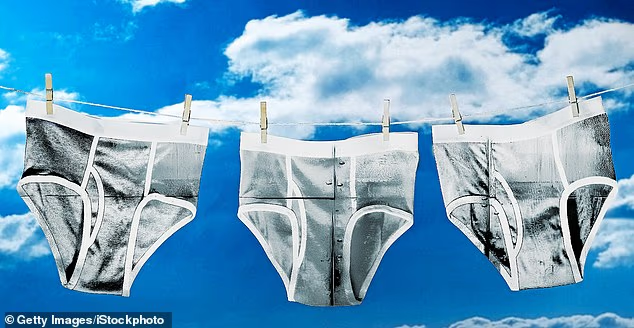
While silver-infused clothing is a lucrative market, research now shows the particles may kill off beneficial bacteria while leaving more resilient infectious bugs unharmed

From period pants or ‘leakproof’ underwear to sportswear, socks – and even ‘recovery-boosting’ post-surgery bras sold by Britain’s biggest cancer charity – all sorts of clothing is sold nowadays containing a material claimed to kill germs, prevent odour and even prevent infections.

That material is silver. It’s woven as tiny particles into clothes as an anti-bacterial agent.

And silver-infused clothing is a lucrative market, now worth an estimated £10.5billion worldwide, according to analysts Research and Markets – and it is projected to more than double by 2030.

But growing scientific evidence suggests silver in clothes may actually cause serious harm, possibly risking damage to internal organs, disrupting hormones and making wearers more susceptible to bacterial infections.

Advertisement

Currently, a proposed new law is making its way through Parliament that could effectively ban silver from being incorporated into clothing – especially underwear.

Launching the proposed legislation two years ago, Baroness [Natalie] Bennett of Manor Castle described the use of silver in clothing, as well as cosmetics and personal care products, as an ‘urgent health threat’.

Silver in clothing can kill bacteria because, when in contact with bodily fluids, such as sweat, saliva or menstrual fluid, it releases tiny, charged particles that lethally damage bacterial cell walls and DNA.

However, new research shows silver particles may kill off beneficial bacteria while leaving more resilient infectious bugs unharmed – leading to increased risk of bacterial infections.

Advertisement

While silver-infused clothing is a lucrative market, research now shows the particles may kill off beneficial bacteria while leaving more resilient infectious bugs unharmed

Furthermore, silver particles in clothing can enter the body and, ultimately, migrate to the liver – where they could affect its functioning and disrupt the natural balance of hormones in our body, according to a study published in 2024 in the journal Environmental Science: Nano.

The study’s laboratory tests on cell cultures showed that the particles can then interfere with the liver’s ability to regulate hormone levels.

Advertisement

In particular, this liver disruption seemed to reduce activity in the thyroid system (which regulates energy and metabolism) and separately the androgen system (which plays vital roles in development, reproduction and overall health).

Such worrying research prompted the European Union last year to impose a ban on the use of silver additives in all cosmetic products (it’s long been used as a germ-killing preservative and also as a shiny pigment in lipsticks and eyeshadow). The ban came into force in May.

Baroness Bennett’s Bill would restrict silver use in clothing and cosmetics in the UK.

In fact, action is already being taken here against cosmetics.

Advertisement

In February, the Office for Product Safety and Standards said that due to mounting scientific evidence, the use of silver nanoparticles and larger silver particles would be banned in cosmetics – new products have not been allowed to contain silver since March, while existing products containing it must be withdrawn from sale by the end of next month.

However, it’s still permitted in clothing. Of particular concern to experts are silver-containing period pants, marketed as an alternative to sanitary pads and tampons.

Dr Katy Stokes, a research fellow in biomedical research and health policy at the University of Warwick, who wrote the policy briefing paper advising the new parliamentary Bill, told Good Health: ‘Silver is typically added as an antimicrobial agent to period pants to combat user concerns about smell and hygiene. But the risks outweigh the benefits.’

Dr Stokes cites research backed by the US Food and Drug Administration, published in the journal ACS Applied Materials & Interfaces in 2018, which found nanosilver (silver in tiny particles measuring no bigger than 100 nanometres – by comparison a human hair is up to 100,000 nanometres wide) can kill protective healthy bacteria in the vagina.

Advertisement

‘This could potentially lead to increased incidence of bacterial infections among wearers,’ she says.

Indeed, the study found that nanosilver can kill helpful vaginal bacteria such as Lactobacillus very effectively. Worse, infectious bacteria such as Staphylococcus aureus that can colonise the area are so resilient they can shrug off attacks by nanosilver, researchers from the University of Memphis in the US, and Soochow University in China, found.

Another concern is the potential damage beyond women’s reproductive organs.

In 2024, scientists at the US National Center for Toxicological Research said their research on female rats showed that vaginal exposure to nanosilver promptly caused tissue inflammation and disrupted the healthy balance of bacteria.

Advertisement

Furthermore, the nanosilver found its way into the bloodstream, where it migrated to other organs of the body and throughout the digestive system.

Thiago Verano-Braga, an associate professor of physiology and biophysics at the Federal University of Minas Gerais in Brazil, who has studied silver nanoparticles’ effects for years, has declared that ‘manufacturers absolutely shouldn’t be using silver nanoparticles in pants before there is a critical assessment of potential risks’.

Professor Verano-Braga supported a scientific study by the UK consumer body Which? and the Italian consumer organisation Altroconsumo in 2023, that tested a range of period pants and found ‘unnecessary high levels of silver which could have unknown health implications for wearers and damage the environment’. (If particles leach into waterways they can be harmful to aquatic life.)

There are no legal limits in the UK about how much silver can be added to period pants. Nor do clothing manufacturers have to declare the presence of silver on the packaging or website.

Advertisement

Consumers might find several types of silver in clothing, including nanosilver, silver copper zeolite, silver zinc zeolite, silver chloride, or Agion (a branded product made with silver zeolite).

Which? and Altroconsumo’s tests were not able to determine which type of silver was present, but said they had safety concerns regardless of the type used.

Their analysis found Intima by Bodyform and Marks & Spencer’s period pants contained the highest amount of silver of all the UK-marketed brands tested, at 126.7mg/kg and 57.8mg/kg respectively.

A spokeswoman for M&S told Good Health that the company’s period-pant products still contain the same amount of silver as in the 2023 tests.

Advertisement

She added: ‘Silver chloride is approved under UK regulations for use on textile products.

‘We, like many brands, use a trace amount of silver chloride in the middle part of the gusset – away from the skin – which is perfectly safe and designed to combat odour.’ Silver-containing period pants are also still sold by other major brands such as Victoria’s Secret and Next.

However, a spokesman for Bodyform told Good Health: ‘Since 2023, Bodyform has switched suppliers for its range of washable absorbent underwear and the new product range – including any products launched in the last two and a half years – do not contain silver.’

Dr Stokes’s briefing paper highlighted concerns about a ‘healing bra’ containing silver that is marketed by Cancer Research UK and ‘designed for use after any type of breast or chest surgery’.

Advertisement

On its website, the cancer charity describes its Royce post-surgery bra – which sells for £37.50 – as being ‘developed from anti-bacterial, anti-odour, thermo-regulating X-STATIC silver fibre (which contains a silver alloy) to aid the healing process’.

But Dr Stokes is highly concerned about this product and its marketing. ‘As well as an example of inherent exposure risk, this can also be seen as exemplifying the worrying trend of the unnecessary incorporation of additives,’ her paper says.

A spokeswoman for Cancer Research UK told Good Health it believed the type of silver used in the bra was not harmful to wearers, but that the maker, Royce, should be contacted for a definitive comment.

Royce, however, has not responded to Good Health’s questions.

Advertisement

The website of arc.com, which markets the X-STATIC silver fabric yarn, states: ‘Disclaimer: Products containing X-STATIC are not intended to be used in the diagnosis, cure, or treatment of human infection.

‘They are solely intended to protect the finished product itself from microbial growth. We make no public health claim.’

Dr Stokes told Good Health: ‘I would also be concerned the bra might be used outside of doctors’ advice on wound care, or for prolonged periods, whereby antimicrobial properties may cause microbiome or hormone disruption.’

On top of such concerns is evidence suggesting that adding silver to clothes may not be very effective against odour-causing strains of bacteria anyway.

Advertisement

For a study published in the International Journal of Clothing Science and Technology in 2014, scientists led by Rachel McQueen, a professor of human ecology at the University of Alberta, Canada, analysed textiles coated in a silver compound after they had been worn.

They found the textiles were not as good at preventing micro-organisms from surviving in real life as the makers’ original lab tests had suggested.

According to Dr Stokes, old-fashioned textiles may offer more effective alternatives.

‘For instance, natural fibres like merino wool offer inherent anti-odour properties, thanks to their ability to wick moisture and naturally inhibit bacterial growth,’ she says.

Advertisement

‘Their use is not only potentially more sustainable but also safer for consumers.’

Source link

Continue Reading

NewsBeat

Coronation Street co-stars dating as they post romantic holiday snaps

Published

on

Daily Mirror

Coronation Street co-stars Jonathan Howard and Olivia Frances Brown – who play Carl Webster and Jodie Ramsey on the ITV soap – are dating

Coronation Street co-stars Jonathan Howard and Olivia Frances Brown have revealed they are dating

The pair – who star as Carl Webster and Jodie Ramsey on the ITV soap – have gone public with their romance after the actor shared new holiday photos of the pair in Ibiza with friend Jamie Lomas and his fiancé Jess Bell.

The couple ‘hard launched’ their romance on social media with pictures from Ibiza, and in one photo, they are lying next to each other on sunbeds whilst in another they’re out at a big club event.

Advertisement

Jonathan also later shared some snaps from a holiday in France, where his daughter spent quality time with her two grandmothers. His ex-wife Elodie Young is tagged in the new pictures.

Elodie is best known for starring as Elektra Natchios in the Marvel Cinematic Universe, whilst she has also appeared in Fox series The Cleaning Lady. She is currently in Los Angeles after relocating for film work.

Advertisement

“Jonathan and Elodie separated over a year ago and remain close friends and co parents,” a source told The Sun. Elodie has been open about her marriage to Jonathan, sharing how they wed in lockdown.

“It was during COVID, during lockdown. The cute part was we had another couple of friends (who) were here. Our parents are in Europe, my mum is in Paris, and his mum is in the UK,” she said.

“So Jonny had his mum on his phone, and I had my mum on my phone, and they were all dressed up. They made an effort! And this is how we did it, which was fun.”

Olivia was previously dating This City is Ours actor James Nelson-Joyce months after getting engaged. A source said at the time: “It’s finished. They were a rock-solid showbiz couple, and their fans will be absolutely shocked and devastated.”

Advertisement

Olivia’s character has caused quite a stir since her arrival on the Cobbles during the iconic Corriedale episode. The half sibling of Corrie fan favourite Shona Ramsey, Jodie has reunited with her sister but things have not got off to a good start as her love of lying and revenge has seen her thrown out by Shona and David Platt.

For Jonathan, his character Carl Webster has broken up his brother Kevin’s marriage to Abi by having an affair. Debbie was later revealed to be Carl’s mother after years of believing they were siblings.

Like this s tory? F or more of the latest showbiz news and gossip, follow Mirror Celebs on TikTok , Snapchat , Instagram , Twitter , Facebook , YouTube and Threads .

Advertisement

Source link

Continue Reading

NewsBeat

A0179 – crash in Market Weighton with traffic running slowly

Published

on

A0179 - crash in Market Weighton with traffic running slowly

As a subscriber, you are shown 80% less display advertising when reading our
articles.

Those ads you do see are predominantly from local businesses promoting local
services
.

These adverts enable local businesses to get in front of their target audience – the local
community
.

It is important that we continue to promote these adverts as our local businesses need
as much support as possible during these challenging times.

Advertisement

Source link

Advertisement
Continue Reading

NewsBeat

Andy Burnham HAS found a way to stop PC Harper’s killers being freed early, ministers claim

Published

on

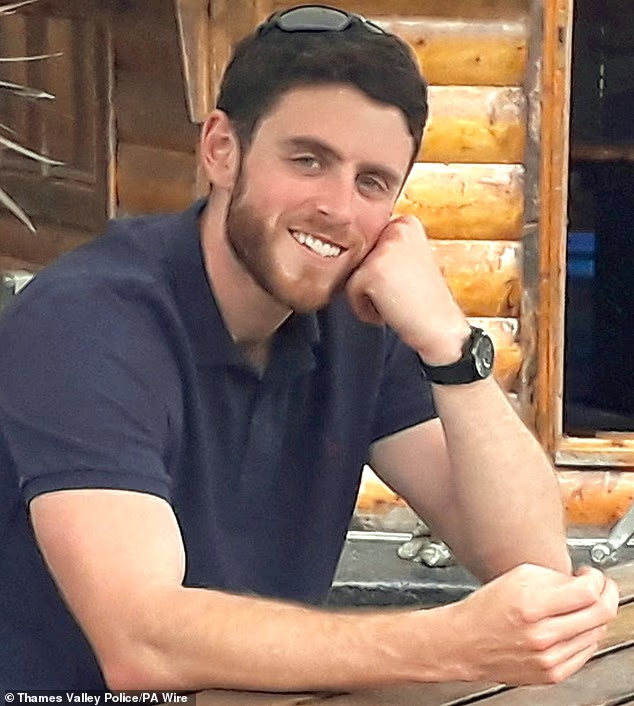
PC Andrew Harper, a Thames Valley Police officer, was killed in August 2019 when responding to a quad bike theft in Sulhamstead, Berkshire

Andy Burnham has found a way to prevent the early release from prison of PC Andrew Harper’s killers, ministers have claimed.

The Prime Minister is under huge pressure to block Jessie Cole and Albert Bowers from being freed under Labour‘s early release scheme.

Downing Street on Monday said it was ‘not possible’ to exempt ‘one or two offenders’ convicted of manslaughter from the early release scheme.

But less than 24 hours later, Angela Rayner, the Communities Secretary, said the Government would announce an exemption when Parliament returns from its summer break next month.

Advertisement

She told LBC this morning: ‘The Prime Minister is really clear, the Justice Secretary (Alex Norris) will come to Parliament in September to lay out our plans on how we keep the most serious criminals in jail.’

Asked to clarify if this included the killers of police officers, Ms Rayner replied: ‘Yes.

‘The Prime Minister is really clear that these people that have created the most abhorrent crimes should not be released early and that he wants to set out in September with the Justice Secretary how we can resolve this issue.’ 

Sally Jameson, a junior minister in Ms Rayner’s department, had earlier told Times Radio that a way to stop PC Harper’s killers being released early has been ‘identified’.

Advertisement

PC Andrew Harper, a Thames Valley Police officer, was killed in August 2019 when responding to a quad bike theft in Sulhamstead, Berkshire

The Prime Minister is under huge pressure to block Jessie Cole and Albert Bowers from being freed under Labour's early release scheme

The Prime Minister is under huge pressure to block Jessie Cole and Albert Bowers from being freed under Labour’s early release scheme

It came as Debbie Adlam, the mother of PC Harper, revealed she had been contacted by Downing Street on Monday night.

Advertisement

She told BBC Breakfast: ‘I had an interview yesterday, and it obviously must have shown something because I then had a call from Downing Street quite late last night.

‘It’s just been up and down. It’s just the rollercoaster of just hope, not even more than that is really, really draining. We’ve now got a little bit of hope that we didn’t have before.’

Discussing the call with a member of the PM’s staff, Ms Adlam said: ‘She said that he wanted to convey that he wants to do everything that he can and has more hope now of finding a resolution to this to try and keep them in prison.

‘I think the fact that it’s actually come from Downing Street – I’ve got to try and have some faith in it, but at the same time, I have to protect my own feelings.’

Advertisement

Discussing the efforts to keep her son’s killers in jail, Ms Adlam said: ‘It feels like a hash. It feels like a rush job. It feels like nobody’s put enough effort into actually look for reasons or ways.

‘We are having to push on every level, and it just doesn’t feel like, as a British citizen, I shouldn’t be doing this.

‘They weren’t given extreme sentences, and I’m only asking for them to do what they were given.’

PC Harper was fatally injured when he got caught in a strap attached to the back of a car and was dragged down a country road as the killers fled the scene of a quad bike theft in Sulhamstead, Berkshire, in 2019.

Advertisement

Two out of three of PC Harper’s killers, Cole and Bowers, are set to be released half way through their 13-year sentences, after being convicted of manslaughter in 2020.

Some 5,000 people are expected to be released early under sentencing changes, down from 6,000 after some exemptions were announced as part of an urgent review of the scheme to tackle jail overcrowding.

Exemptions were made for those convicted of rape, serious child sex offences and grooming offences.

Last week, the Prime Minister said he had ‘pushed to the very limits of what is possible to do without risking the prison system reaching capacity and collapsing’ by making these exemptions.

Advertisement

However, more than 880,000 people have signed a petition calling for Pc Harper’s killers to remain in jail.

Source link

Continue Reading

Trending

Copyright © 2025