Connect with us

NewsBeat

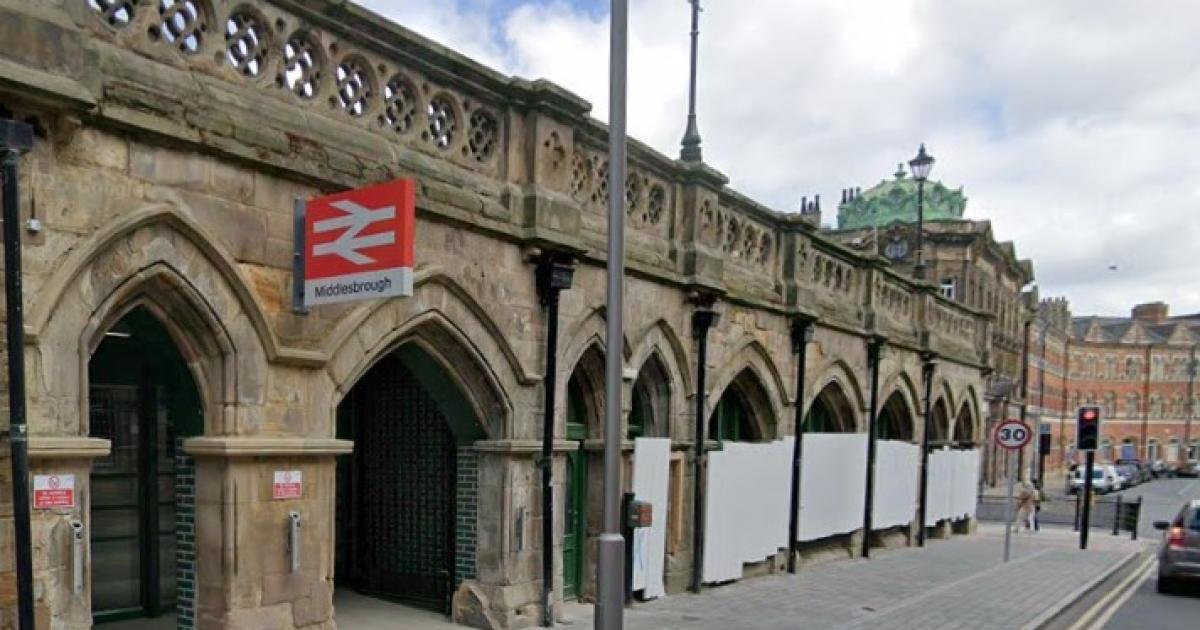
Major disruption as Teesside trainlines blocked due to ‘incident’

Published

on

Major disruption as Teesside trainlines blocked due to 'incident'

TransPennine Express has confirmed that all lines between Middlesbrough and Redcar Central are currently blocked while emergency services deal with the situation.

As a result, services on the Manchester Airport to Redcar Central route may be delayed, revised or cancelled in both directions.

Rail passengers have been warned that disruption is expected until at least 7pm today (September 14).

Advertisement

Those whose trains are cancelled or significantly delayed are being advised to postpone their journeys where possible or seek alternative travel arrangements.

Rail replacement transport has been requested between Middlesbrough and Redcar Central in both directions, with passengers urged to speak to station staff for onward travel assistance.

To help passengers complete their journeys, tickets are being accepted at no extra cost on:

  • Northern services between Middlesbrough and Darlington
  • TransPennine Express services between Darlington and Manchester stations
  • LNER and CrossCountry services between Darlington and York

The rail disruption comes as Cleveland Police urged motorists to avoid a major road in Middlesbrough because of an ongoing incident.

A force spokesperson said: “We’re urging motorists to avoid the Dockside Road area of Middlesbrough as road closures are in place, including Dockside Road to the roundabout before the stadium, while police deal with an incident.

Advertisement

“Traffic disruption is expected, so please avoid the area. Thank you for your co-operation and understanding.”

Drivers have been warned to expect delays around the area while road closures remain in place.

Passengers can check the latest rail updates through TransPennine Express journey information services.

Those delayed by 15 minutes or more may also be eligible to claim Delay Repay compensation.

Advertisement

Source link

Continue Reading
Click to comment

You must be logged in to post a comment Login

Leave a Reply

NewsBeat

Macklemore dropped from Ed Sheeran tour after ‘free Palestine’ speech

Published

on

Close up of Macklemore, who has shaved blonde hair, and is wearing a blue striped shirt.

But the backlash against Macklemore only grew louder, and included a petition by the Israeli-American Council urging Sheeran to remove him from the tour.

“This was an Ed Sheeran concert – not a political rally, not a protest, and not an activist event,” the council said, adding that the rapper used “biased messaging and disputed claims.”

In his statement on Instagram, which was nearly 1,000 words long, Macklemore said that after a week of “difficult conversations” with Sheeran, that ultimately ended “in a place of fundamental disagreement”, he was dropped from the lineup.

Tour promoter, Messina Touring Group, told Rolling Stone magazine that it had been told by venues that they would not allow Macklemore to perform, “which would result in the cancellation of the tour and impact hundreds of thousands of fans.”

Advertisement

American businessman Robert Kraft, who owns the Gillette Stadium in Massachusetts, said he banned Macklemore because the venue would not “provide a platform for hate speech,” accusing the rapper of “a broader history of antisemitic rhetoric”.

“I agree with Macklemore, too many lives have been lost and there has been too much suffering, but only sharing selective information and ignoring the actions of Hamas is not honest and only advances more divisiveness and hate,” Kraft said.

In his statement, Macklemore said he empathised with the difficult position Sheeran was in, but criticised the English singer for not taking a stance.

“Taking a side can cost you. Money, brand deals, sponsorships, festivals, private shows, relationships and access. I’ve lost all of those things. But there is no neutral position between the oppressor and the oppressed,” he wrote.

Advertisement

He also addressed the accusations of antisemitism, writing that “one of the most effective ways to enforce silence has been to weaponize the accusation of antisemitism”.

Macklemore added: “When criticizing Israel, opposing Zionism or saying “Free Palestine” gets conflated with hatred of Jewish people, it doesn’t protect Jewish people. It protects Israel from accountability.”

But he emphasised that even though he only did two shows on the tour, if his words succeeded in “turning the conversation back to Palestine, then it was the most successful tour I’ve ever been on.”

Source link

Advertisement
Continue Reading

NewsBeat

Met Office names areas facing heavy rain on Tuesday with 42 counties at risk

Published

on

Daily Mirror

Met Office meteorologists have warned Brits to expect heavy bursts of rain and the possibility of hailstorms as unsettled weather threatens to hit up to 42 counties

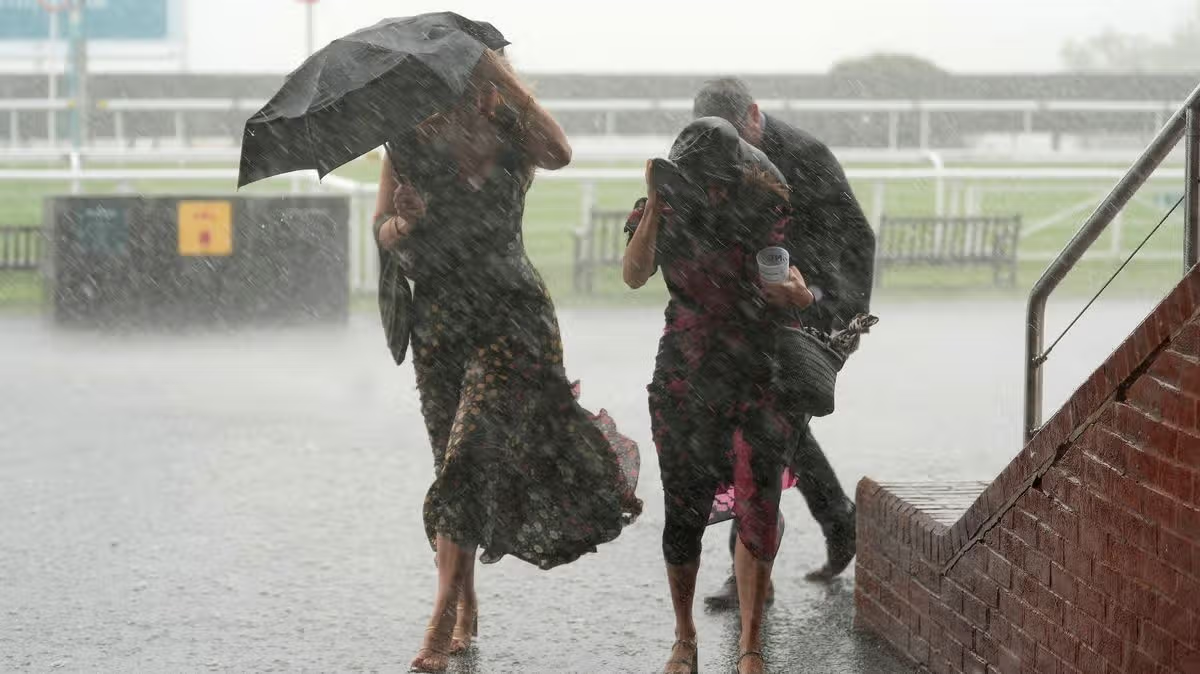
Britain is set for a soggy and unsettled Tuesday as a huge band of rain sweeps south, with some areas facing heavy downpours and even the odd hailstorm.

Advertisement

Met Office meteorologists say western Scotland and Northern Ireland will see frequent showers, while parts of northern England, Wales, the Midlands and southwest England could wake up to rain.

Up to 42 counties could see unsettled weather over the coming hours, with major cities including Oxford, Nottingham and Manchester in the firing line.

The weather front will push south through the morning before mostly fading, but showers will continue across Scotland and Northern Ireland.

A Met Office meteorologist said: “That’ll bring some heavy bursts of rain coming into northern Scotland, some heavy bursts of rain, and you might even be woken up by the odd hailstorm as it moves through.”

Advertisement

Rain will also spread into East Anglia and the southeast, although it is expected to largely weaken as it moves across the region.

One or two heavier showers could develop during the afternoon, but they are expected to be hit and miss, with sunshine returning across much of England and Wales.

Lancashire and Cumbria are also likely to see showers feeding in on a northwesterly breeze, while Scotland remains unsettled.

Advertisement

Rain will clear Kent quickly during Tuesday evening, but showers will continue to feed in from the north as the winds pick up.

The cold front will bring a noticeably fresher feel, with temperatures struggling to reach 20C or 21C in some areas, and other parts staying in the teens.

The Met Office said the brisk wind will make it feel cooler, while the air will also be less humid.

In the coming days, Brits have been warned conditions will stay “changeable” with “showers or longer spells of rain, interspersed with some drier and brighter spells.”

This will be followed by occasional rain or showers pushing in from the North Atlantic – most frequently across northern and western parts of the UK – and accompanied by strong winds at times.

The Met Office says there will also be some reasonably dry and more settled periods in between these systems, especially across southern areas.

Counties set for rain on Tuesday

  • Cheshire
  • Staffordshire
  • Derbyshire
  • Nottinghamshire
  • Yorkshire
  • Lincolnshire
  • Lancashire
  • Gloucestershire
  • Oxfordshire
  • Warwickshire
  • Northamptonshire
  • Flintshire
  • Denbighshire
  • Montgomeryshire
  • Shropshire
  • Radnorshire
  • Breconshire
  • Hertfordshire
  • Monmouthshire
  • Glamorgan
  • Cardiganshire
  • Carmarthenshire
  • Westmorland
  • Cumberland
  • East Lothian
  • Berwickshire
  • Roxburghshire
  • Aberdeenshire
  • Angus
  • Inverness-shire
  • Ross-shire and Cromartyshire
  • Argyllshire
  • Kincardineshire
  • Banffshire
  • Morayshire
  • Nairnshire
  • Buteshire
  • Perthshire
  • Stirlingshire
  • Dunbarton
  • Renfrewshire
  • Lanarkshire

Source link

Advertisement
Continue Reading

NewsBeat

York councillor on housing, projects and visitor levy

Published

on

York councillor on housing, projects and visitor levy

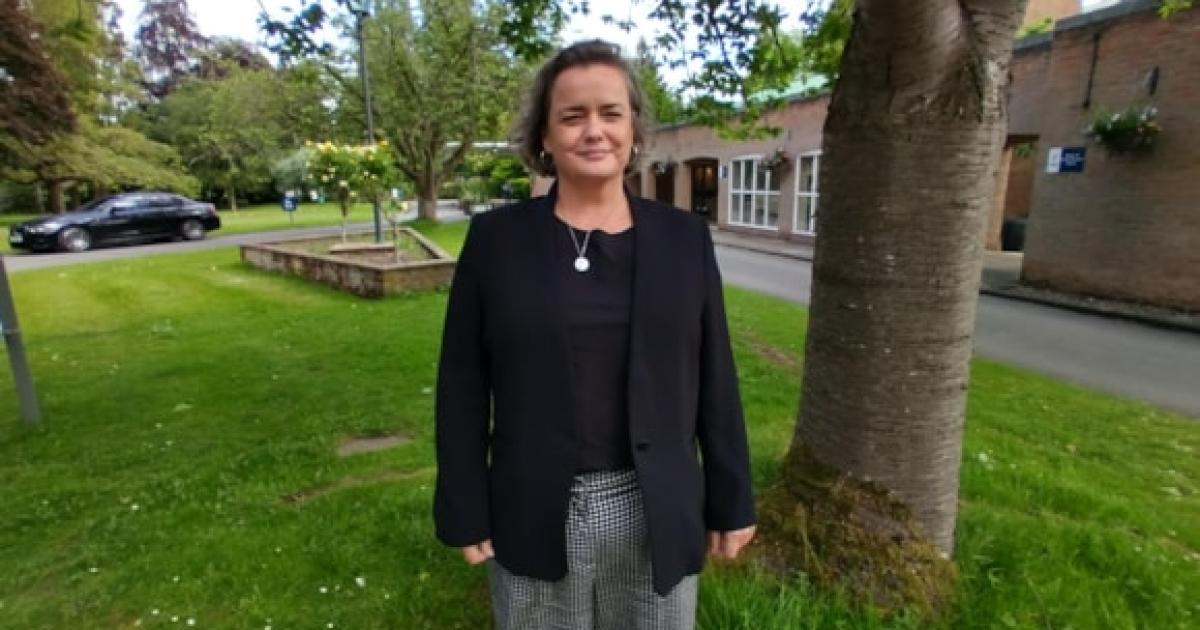
Cllr Katie Lomas spoke to the Local Democracy Reporting Service (LDRS) and answered Press readers’ questions before the council sets its budget for 2027/8 in the new year.

How is the council ensuring money raised through a second home premium on council tax is helping people struggling to afford homes in York?

Cllr Lomas said the 100 per cent council tax premium on second homes introduced in April 2025 was helping to fund efforts to help people with expensive living costs in York.

She added it came alongside the council’s aim for all homes on its sites to be affordable.

Advertisement

RECOMMENDED READING:


The executive member said: “We charge the premium on second homes because we think it’s the right thing to do.

“If people choose to have a second home they should contribute more to help those struggling to afford to live here.

“Receipts from the premium and council tax generally goes into our budgets which is spent on areas including housing and supporting the homeless, along with all the other services the council delivers.”

Advertisement

What’s happening with the York Outer Ring Road, Haxby Station projects and the £34 million Station Gateway overspend?

Cllr Lomas said progress was set to be made on the York Outer Ring Road scheme despite the almost £100 million funding gap it faced as of last year.

She added she understood frustration about the more than £34 million overspend on the regeneration of the front of York Station which has sparked political rows and calls for an explanation.

Cllr Lomas said: “When we took over the York Outer Ring Road project we immediately recognised that the money we had wasn’t enough.

Advertisement

“Funding has been delivered for that project but we’ve had to break it down into phased work.

“We’re about to deliver the first phase of improvements that will pave the way for further work as we secure funding to do that.

“That further work is important for residents, visitors and commuters, so we’re hopeful we can look at other sources of funding such as the York and North Yorkshire Combined Authority.

The overspend on the Station Gateway scheme now stands at more than £34m (Image: City of York Council)

“Haxby Station isn’t being led by the council, it’s led by Network Rail, but we’re working with them on the infrastructure while they progress with the design work.

Advertisement

“Station Gateway continues to be one of our more problematic projects, the contract the council inherited made us liable for extra costs.

“It wasn’t designed in a way that we would have but the contract was signed when we took over so we have to got on and deliver it in the best way we could.

“Once the project got underway we found additional things like an underground water tank that it cost money to deal with.

“We asked for an independent audit and the findings of that were helpful, we’ve brought in project management staff and we’ve worked to complete it as fast as we can.

Advertisement

“We’ve also been living through economically turbulent times and inflation in construction has consistently been running much higher than has been generally, so many of these projects are costing more especially when you’re working in a complicated place that has surprises waiting for us.”

What do you think about proposals for a visitor levy?

Cllr Lomas was asked about a visitor levy, or tourist tax as a study commissioned by York and North Yorkshire mayor David Skaith found a £1-a-night charge could raise £26m.

Cllr Lomas said: “The visitor levy will be hugely important for York and North Yorkshire, although we don’t know the details of what it will look like yet.

Advertisement

“We have an enormous visitor economy thanks to our beautiful, interesting city which people want to come and see but it costs money to provide services for them, keep our streets clean and do projects that provide transport for them.

“A levy on tourists could be used to fund these things, improve the places that people visit and relieve a bit of the financial pressure on councils for providing services visitors use.

“York must be one of the few places that has its own in-house stone mason working for the council to look after the city walls.

“The burden is falling on people who live to pay, it’s right that people who visit contribute to help keep York so nice.”

Advertisement

Source link

Continue Reading

NewsBeat

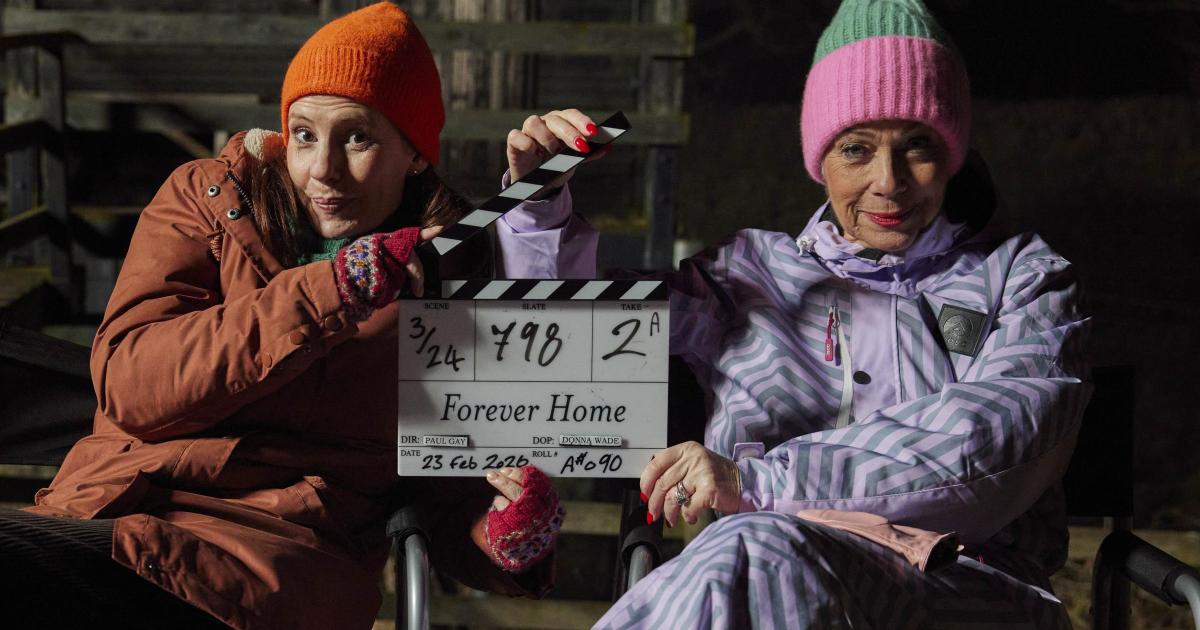
Who is Amy Nuttall? The Bolton star in Graham Norton’s Forever Home

Published

on

Who is Amy Nuttall? The Bolton star in Graham Norton's Forever Home

The series marks the second of Norton’s novels to be adapted for television and sees the Lostock-born actress take the lead role of Carol Crottie.

Originally set in a small Irish town, the story has been relocated to Northumberland for its television adaptation. Amy stars as Carol, a divorcee living with her new partner whose life is thrown into turmoil as long-buried secrets begin to surface.

Undated Handout Photo from Forever Home. Pictured: Amy Nuttall as Carol Crottie and Kevin Whately as Silent Dave. See PA Feature SHOWBIZ TV Forever Home WARNING: This picture must only be used to accompany PA Feature SHOWBIZ TV Forever Home. PA Photo. Picture credit should read: Helen Williams/ Channel 5 NOTE TO EDITORS: This picture must only be used to accompany PA Feature SHOWBIZ TV Forever Home (Image: Helen Williams)

Speaking about the drama on BBC Breakfast, Amy said the scripts kept her hooked from the start.

She said: “There’s something for everyone in this. When I got the scripts, I literally would be on my own and I’d get to the end of each episode and let out audible gasps because I couldn’t believe what I’d just read and I wanted to share it with someone.

Advertisement

(Image: Helen Williams/ Channel 5)

“On one page I’d be crying and really moved and the next page I’d be laughing out loud. And at the same time I was just so desperate to know what was going to happen next.”

Amy stars alongside The Revenge Club actor Douglas Henshall as Carol’s partner Robert Barrie, Emmerdale star Lewis Cope as his son Kaden and Heartstopper actress Jenny Walser as his daughter Sally.

The 44-year-old grew up in Lostock and attended Bury Grammar School before going on to become one of Bolton’s most successful television stars.

(Image: PA)

She first found fame as Chloe Atkinson in ITV’s Emmerdale, appearing in the role between 2000 and 2005.

Advertisement

Amy’s late mother, Elaine Nuttall, was well known on Bolton’s amateur dramatics scene and for her work as an artist and seemingly Amy followed in her footsteps.

Amy has performed at Bolton’s Octagon Theatre, including in A Streetcar Named Desire, before finding success on television.

STAR: Amy Nuttall at The Octagon Theatre where she will be appearing as Hermione in Shakespeare’s The Winter’s Tale

In recognition of her achievements, she was awarded an honorary Doctor of Arts degree by the University of Bolton in 2011.

Over the years, Amy has appeared in a string of popular television dramas, including Downton Abbey, Hotel Babylon, The Musketeers, Death in Paradise, Liar, All Creatures Great & Small, The Chemistry of Death, Mr Bates vs The Post Office, Silent Witness and The Feud.

Advertisement

Most recently, she appeared in Tim Burton’s Beetlejuice Beetlejuice, playing the adult Jane Butterfield.

Away from television, Amy has also enjoyed a successful stage and music career. At the age of 17, she became the youngest actress to understudy and perform the lead role of Christine in the national tour of The Phantom of the Opera.

Her theatre credits include My Fair Lady, Cabaret, Boeing-Boeing, Spamalot, Noises Off and The Hired Man at Bolton’s Octagon Theatre.

As a singer, she has performed at the Royal Albert Hall, the Royal Festival Hall and Old Trafford. She also won an edition of Celebrity Stars in Their Eyes as Sarah Brightman.

Advertisement

In 2005, Amy released the classical album Best Days, which reached number four in the UK classical chart and was nominated for Album of the Year at the 2006 Classic BRIT Awards.

Following the death of her mother, she also recorded the song Thank You Mother, written by John Hurley, to help raise awareness of brain tumours through The Brain Tumour Charity.

Source link

Advertisement
Continue Reading

NewsBeat

Synthetic data could ease people’s concerns about privacy breaches. But who gets to create it?

Published

on

Synthetic data could ease people’s concerns about privacy breaches. But who gets to create it?

For the past decade, most public debates about data have revolved around a familiar anxiety: too much of our personal information is being collected from our records and our online activity, and then shared and monetised. That concern has not gone away. But a shift is now under way – towards synthetic data.

Increasingly, data used by governments, hospitals, banks and technology companies to make decisions about the people they serve is not gathered directly from real people and events. It can be synthetic: generated by computer models that learn the statistical patterns in a real dataset and then produce artificial records that follow the same patterns. The aim is to keep the data useful while reducing the risk that individuals can be identified.

In a society concerned about surveillance and misuse of personal information, synthetic data promises useful knowledge in a way that may allay public concerns. In England, for example, researchers can use the Simulacrum, a synthetic cancer dataset built from NHS registry data, without ever seeing real patients’ records. Its artificial patients are generated from groups of at least 50 real cases – but this also means that rarer cancers are represented less realistically.

Building such a dataset does, of course, require access to the real records in the first place: the model has to learn from them before it can imitate them. Synthetic data therefore shifts the privacy question rather than dissolving it – the original data still has to be held, and protected, somewhere.

Advertisement


À lire aussi :
Can baby monitors protect children without
data security risks?


Traditionally, the law has asked whether data has been collected lawfully, used fairly and disclosed properly. When important decisions rely on synthetic data, those questions still matter – but they are no longer sufficient. We also need to know who designed this artificial world – and which populations, risks and behaviour were treated as “normal” when it was built. These questions are central to my research, including my forthcoming book, Corporate and Financial Information in the Age of Synthetic Data.

In other words, synthetic data does not take human judgment out of the picture. It moves it to an earlier, less visible stage. The crucial choices – what counts as typical, what can safely be left out – are made when the dataset is built, long before anyone uses it to make a decision about us.

An illusion of objective data?

That shift extends across healthcare, welfare, policing and finance, where synthetic data may shape how institutions define disease, vulnerability, risk and suspicious behaviour. Synthetic transaction data, for instance, is being used to develop and test the systems that flag possible fraud and money laundering – systems that can help decide whether a payment goes through or an account is frozen.

Advertisement

A report published by the Financial Conduct Authority, the UK’s financial regulator, based on the work of an expert group it set up, stresses that firms need to assess and mitigate the risks, including bias.

The wider risk to society is subtler than a privacy breach, but serious nonetheless. Synthetic data can create an illusion of objectivity because it looks scientific and orderly. Yet it is still the product of human choices, and those choices can carry bias.

If the generating model is too blunt, it may erase minority experiences or exceptional cases. If several institutions rely on similar synthetic environments, they may converge on the same blind spots.

This is why synthetic data should not be understood simply as a privacy technology, but as part of the emerging politics of knowledge. States and markets depend on systems that reveal where risks lie, where needs are greatest, where money is flowing and where intervention is justified.

Advertisement

As data becomes partly synthetic, the legitimacy of the growing number of decisions made by governments and firms will depend on whether the public can trust the methods they use.

It comes down to governance. Institutions should be able to explain in an accessible way why synthetic data was used, what it was likely to distort and how it was validated. They should also explain what safeguards exist if it proves misleading. That is especially important when the data informs decisions that affect rights, opportunities or how public money is spent.

England’s 2020 exam results show what can go wrong. With exams cancelled during the COVID pandemic, an algorithm brought teacher-assessed A-level grades into line with schools’ past results. Nearly two in five grades were marked down, and high-performing students in disadvantaged areas were hit hardest. The government backed down days later and scrapped the algorithm’s grades.

That system did not use synthetic data, but the lesson carries over. When a model’s version of the world shapes people’s futures, those affected need to know how it was built – and have a real way to challenge it.

Advertisement

Data helps steer the decisions that shape futures – but synthetic data comes with challenges.
Mounir Taha/Shutterstock

This also suggests that the language of transparency needs to evolve. For years, data governance has often focused on who has the data, who may share it and who may inspect it. Synthetic data complicates that picture. So attention needs to shift to whoever builds the model that generates the data.

The Information Commissioner’s Office treats synthetic data as part of a broader family of privacy-enhancing technologies. But where synthetic data begins shaping public and economic decisions, governance must also ask who is responsible for how institutions come to know what they claim to know.

These questions matter to every citizen because synthetic data brings both promise and danger. Properly governed, it could help tackle privacy issues and widen access to information that helps society. Poorly governed, it could create systems that are cleaner, safer and more efficient on paper – but detached from the messy truths of real life.

Advertisement

The governance of synthetic data, then, is not a niche issue for engineers and lawyers. It belongs squarely within the larger political conversation about trust, accountability and democratic control in data-driven societies. The question used to be who owned the data. The new question is more unsettling: who gets to manufacture credible versions of the world?

The real challenge is to ensure that as artificial information becomes woven into the fabric of governance, medicine, finance and public administration, we do not unquestioningly allow it to pass for the truth. Synthetic data can be genuinely useful, but we must be able to trust the world it constructs.

Source link

Advertisement
Continue Reading

NewsBeat

Donald Trump rules on pardon plea from Lindsay Clancy’s legal team | News US

Published

on

Donald Trump rules on pardon plea from Lindsay Clancy's legal team | News US
Lindsay Clancy won’t see a formal pardon from Donald Trump (Picture: Greg Derr / POOL / AFP via Getty Images)

US President Donald Trump has implied he won’t offer Lindsay Clancy a pardon after her trial ended in a hung jury.

The Massachusetts mother, 36, was on trial for the January 2023 killings of her three children: Cora, five, Dawson, three, and Callan, eight months.

After six weeks, 35 hours of deliberation, and over 80 witnesses, the jury was unable to reach a unanimous decision and declared a mistrial.

Her lawyer, Kevin Reddington, had made the plea to Trump to consider a pardon, claiming one juror was unable to be swayed towards a not-guilty verdict.

Advertisement

‘It’s a very sad situation,’ Trump told reporters Sunday, according to the New York Post. ‘I certainly heard that, but look, it’s very sad.

‘There is no winner there. There’s no win no matter what you do. Three children are dead.’

IN FLIGHT- SEPTEMBER 13: U.S. President Donald Trump speaks to reporters aboard Air Force One while traveling back from Ireland to Joint Base Andrews, Maryland on September 13, 2026 in flight. President Trump spoke to reporters about his trip to Ireland and a range of other topics including advancements in AI, Ukraine and the midterms. (Photo by Anna Moneymaker/Getty Images)
Presidential pardons are only for federal cases (Picture: Anna Moneymaker/Getty Images)

However, despite the defence lawyer’s initial comments on Good Morning America, a pardon is not something Trump is able to offer in this case.

The Clancy trial is ‘actually a state situation, not a federal’ so the US President does not have legal authority to grant a pardon.

Advertisement

On CBS Boston, Reddington shared: ‘If President Trump feels that this is a case that warrants that type of intervention from the executive branch, if you will — even though, legally, it’s not a federal case — he certainly has an awful lot of clout.

‘I think any type of help that we can get is helpful.’

Trump noted he believed Reddington to be ‘a very good attorney’ and said he ‘hopes [those involved in the case] can work something out’.

Clancy has not denied that she killed her children by strangulation before attempting to take her own life, which has left her paralysed from the waist down.

Advertisement

Her defence has instead claimed she was in a state of postpartum psychosis when the crimes took place, and therefore was not criminally responsible for her actions.

Defense attorney Kevin Reddington, seated with client Lindsay Clancy, listens to testimony by forensic phycologist Dr. Kirk Heilbrun, a prosecution rebuttal witness during Clancy's murder trial at Plymouth Superior Court, Monday, Aug. 24, 2026 in Plymouth, Mass. (Greg Derr/The Patriot Ledger via AP, Pool)
Her attorney Kevin Reddington asked Trump to ‘help’ (Picture: Greg Derr/The Patriot Ledger via AP, Pool)

Symptoms of postpartum psychosis — which is treated as a medical emergency — include insomnia, delusions, hallucinations, severe confusion, and dangerous thoughts regarding self-harm, suicide, or harming the infant.

She has pleaded not guilty by reason of insanity but the prosecution has argued that while she was suffering from depression, she still made a calculated decision to kill her children.

They also alleged that Clancy deliberately sent her ex-husband and father of her children, Patrick Clancy, out on an errand at the time of the killings so that she was free to commit the crimes.

Before the mistrial, Trump said the case was  ‘hard not to follow’ and called it a ‘horrible tragedy’.

Advertisement

‘Look, she did a horrible, horrible thing. Can’t be worse, but you’ll find out what the price to pay is. But I guess they gotta go through another trial. It’s too bad,’ he concluded.

It’s not known if the case will be tried again, with Clancy facing years in a state-run hospital should she be found not guilty by reason of insanity.

Get in touch with our news team by emailing us at webnews@metro.co.uk.

For more stories like this, check our news page.

Advertisement

Source link

Advertisement
Continue Reading

NewsBeat

North Down call for new powers to deal with antisocial behaviour on beaches

Published

on

Belfast Live

Beaches such as those at Helen’s Bay and Ballyholme have seen major incidents this year

Elected representatives from Ards and North Down Borough Council are calling for new powers to tackle antisocial behaviour at beaches in the summer.

Advertisement

North Down beaches have picked up a reputation, fairly or unfairly, of being hotspots for anti-social behavior during spells of warm weather in recent years. Controversies have centered around large crowds, underage drinking, drug use, fighting and intimidation, littering and transport disruptions.

This year Ballyholme bleach became the centre of attention again for large scale violence involving youths with weapons, and recent years have seen Crawfordsburn and Helen’s Bay the focus of negative attention. Helen’s Bay saw three men seriously assaulted during the busy May Bank Holiday weekend in a suspected race hate crime.

READ MORE: People in Ards and North Down say “no” to four dog walking limit

READ MORE: Unionist-led council boycotts Stormont consultation on flags and emblems

Advertisement

At a recent Ards and North Down Borough Council committee meeting, elected representatives approved a DUP motion calling on the Stormont Justice Minister Naomi Long for action on anti-social behaviour legislation, more police officers for the borough, the reopening of Bangor custody suite and the rejection of any increasing of the age of criminal responsibility.

On a vote 10 councillors supported the motion, and one voted against, from the SDLP, with five absent. The decision will go to the full council meeting later this month, where it is expected to pass.

The motion, presented by DUP Councillor Alistair Cathcart to the council’s Active and Healthy Communities Committee, states: “This council condemns recent anti-social behaviour witnessed in Bangor and the North Down coast and commits to reviewing our own resources, as well as working with relevant agencies to tackle this problem.

“While grateful for police action taken, this council recognises that the officers need additional powers to tackle anti-social behaviour and expresses disappointment that the Justice Minister has ruled out passing relevant legislation during this Assembly mandate.”

Advertisement

Councillor Cathcart told the chamber: “We all want to see good weather, unfortunately when we do see it, sometimes in Bangor and other seaside destinations here, we become a destination for those who want to undertake underage drinking, antisocial behaviour and other illegal activities.

“Some of the images from the summer were unacceptable and have done reputational harm. I thank all those involved in action to tackle antisocial behaviour on our seafronts, police officers, Translink staff, our community safety officers, street pastors, YMCA, and all the voluntary agencies involved.”

He said: “ It is not an easy task as trouble can occur all along our coasts. This happened at Seapark, all the way down to Ballyholme, it covers such a vast area and it is hard to predict exactly where it might happen. But we are being hampered in regards to our efforts against ASB in North Down by inaction and inertia by the Justice Minister to resource the police and to give the additional powers they have been calling for to really tackle the issue.

“The Minister is well aware that the legislation around ASB has to change, her own department has published a consultation on amending antisocial behaviour, where 97 percent of respondents felt that more needs to be done to improve legislation.

Advertisement

“This closed two and a half years ago, and the Minister’s current response, that it remains her intention to bring forward legislation in the next assembly mandate, is kicking the can down the road. There were two bills that ASB legislation could have been attached to in this mandate.”

He said: “There are no real powers to seize alcohol in public, police can seize alcohol from those who are under 18, but only if it is on clear display, they cannot search bags or seize alcohol if it has been placed in a Fanta bottle for example. So it is easy to get around.”

He added: “Often the ASB we see is a result of the gathering of large crowds. English police have the benefit of powers to break up these gatherings and help de-escalate situations.” He said the Justice department was also “kicking the can” on these powers.

The councillor said: “We simply don’t have enough police on our streets to address the seafront during the busy summer period. It is interesting to note that when we saw trouble at Crawfordsburn Country Park this summer, officers were employed from other areas with drones and dogs, and trouble fizzled away quite quickly. It shows if we have the level of support, we can be on top of it.”

Advertisement

He said local officers privately told him the reopening of Bangor Custody suite was required to allow officers to do their job “in a timely and efficient manner.” He added the council had to expand its CCTV coverage.

Alliance Councillor Victoria Moore told the chamber: “The Alliance Party appears to be living rent-free in our chamber-colleague’s heads. The Minister has only ruled out the legislation in this mandate, including the powers to seize alcohol, and that is nothing unique to the Justice Ministry, that is reflected across the entire Executive, who are trying to prioritise legislation, and bring things forward.”

She said: “There is still a question over who would enforce any new powers, and not all councils support taking on that responsibility. The Minister and the Chief Constable have already developed a plan to increase police numbers. That plan has been agreed by the Executive, but the additional funding required has not yet been approved.”

She proposed the council write to the Chief Constable regarding the reopening of Bangor Custody Suite and police numbers, as they were “policing operational matters.” She said “to raise the age of criminal responsibility would support the prevention of offending behaviours.”

Advertisement

For all the latest news, visit the Belfast Live homepage here and sign up to our daily newsletter here.

Source link

Continue Reading

NewsBeat

Italian international airport shuts down after Mount Etna starts spewing volcanic ash

Published

on

A drone view shows volcanic ash and fumes over the skyline during an eruption at Mount Etna on Monday

Advertisement

An airport in Sicily was forced to temporarily shut down again today after volcanic ash was spewed out of Mount Etna. 

‘Arrivals and departures at Catania Airport are suspended,’ the airport said in a statement on its website.

All flights at the airport will be suspended until 10pm local time (9pm UK time) on Monday.

Catania Airport is Sicily’s main gateway and Italy’s fifth-busiest airport by passenger traffic. Airlines operating flights between Catania and the UK include British Airways, easyJet, Ryanair and Wizz Air. 

Advertisement

The recent eruption has prompted experts at the Etna Volcano Observatory to issue a red VONA (Volcano Observatory Notice to Aviation) alert for the ash cloud, which drifted towards the airport.  

The airport, that usually services around 12 million passengers a year, was also closed for a week in August during the peak summer season.

Mount Etna is Europe’s highest and most active volcano at 3,324 metres (nearly 11,000 feet), which has caused numerous disruptions to flights. 

But ash emissions have been more frequent this summer, causing flight disruption to thousands of travellers and locals. 

Advertisement

A drone view shows volcanic ash and fumes over the skyline during an eruption at Mount Etna on Monday

This has sparked growing calls in Italy for Catania airport to be closed and for other hubs in Sicily to be expanded because of the proximity to Etna, about 40 kilometers (25 miles) away.

SAC said 36 per cent of flights bound for Catania were cancelled between August 6 and August 12. More than 600 flights were diverted to nearby airports including Palermo, Trapani, Comiso and Lamezia Terme.  

Advertisement

The eruption in August drew crowds of visitors to Mount Etna where spectacular lava flows could be observed close up.

But, as a result, Sicily’s primary airport was forced to shut for five consecutive days – leaving thousands of tourists, including Brits, stranded. 

It was the longest period the airport has had to close since 2002. 

Catania Airport said on Monday: ‘Due to Mount Etna’s eruptive activity, the airspace corresponding to sectors C1 and B3 has been closed.

Advertisement

‘Arrivals and departures at Catania Airport are suspended until 10pm local time.

‘Passengers are kindly requested to check the status of their flight with their airline before travelling to the airport. Further updates will follow in the coming hours.’

Advertisement

Source link

Continue Reading

NewsBeat

Prince Archie and Princess Lilibet ‘removed from school’ by Duke and Duchess of Sussex after just two days of term – due to security fears

Published

on

Archie, seven, and Lilibet, five, were enrolled in a British school - until new security fears

Prince Harry and Meghan have pulled their children from their new British school, it was revealed tonight.

The Duke and Duchess of Sussex removed Prince Archie and Princess Lilibet after just two days.

The children, seven and five, who grew up in America, only came to live in Britain a few days ago. Now, they have been taken out of their prep school for security reasons, according to ITV News.

It said they are now ‘starting somewhere new’ after Harry and Meghan ‘discussed the practicalities with their security team and it was decided they needed to change school’.

Advertisement

A spokesperson for the Sussexes said tonight: ‘The decision for the children to move school was taken following a discussion with the family’s security team about the practicalities of their current arrangements. 

‘The parents remain extremely grateful to all the teachers and staff for the love, care and effort they have shown their family. This decision should in no way be interpreted as a reflection on the school or the exceptional care the children have received there.’ 

Meanwhile, sources close to the couple said the decision was made due to the practicalities of getting the children there and back. 

‘It’s a real shame, because they absolutely adored the school, the kids and their parents. It was perfect for them in every way and the children really enjoyed their time there,’ a friend of the couple told HELLO! magazine. 

Advertisement

‘They really wanted to make it work, but they had to make a difficult decision based on the fact that the team couldn’t make the school run operationally secure.’ 

The dramatic development came as it emerged that Harry’s demand for taxpayer-funded police protection is being ‘reviewed’ now he is back in Britain.

Archie, seven, and Lilibet, five, were enrolled in a British school – until new security fears

Advertisement

The duke and duchess are said to have been informed that ‘a decision’ was made at a meeting last week to examine the threat to both of them.

The prince has been at loggerheads with the Home Office for years over its decision to remove his automatic right to security. Harry has long argued that he was born a prince and needs police protection when in the UK.

But he lost a series of legal battles against the Home Office which deemed he had forfeited the right to be able to call at will on taxpayer-funded protection after he quit as a frontline royal in 2020 and moved to a new life in California.

Only last year, after yet another defeat at the Royal Courts of Justice – against his father His Majesty’s government – the prince declared in a petulant BBC interview that he could not imagine a time when he could safely bring his family to his country of birth.

Advertisement

But now that he has had a sudden change of heart, bringing Meghan, Prince Archie, seven, and Princess Lilibet, five, to live in the UK, his access to police protection is being reviewed, it was reported tonight.

The decision is said to involve reviewing the risks to Prince Harry and also to his wife.

ITV News said the Home Office committee that decides on security provision for high-profile royals and politicians – known as Ravec – has written to Harry informing him a ‘full review’ will take place.

If true, then this decision defies complaints made by Team Sussex about the meeting held last week by Ravec, the Executive Committee for the Protection of Royalty and Public Figures.

Advertisement
Meghan, Duchess of Sussex, posted a video of herself, Harry and children in the UK to her Instagram

Meghan, Duchess of Sussex, posted a video of herself, Harry and children in the UK to her Instagram

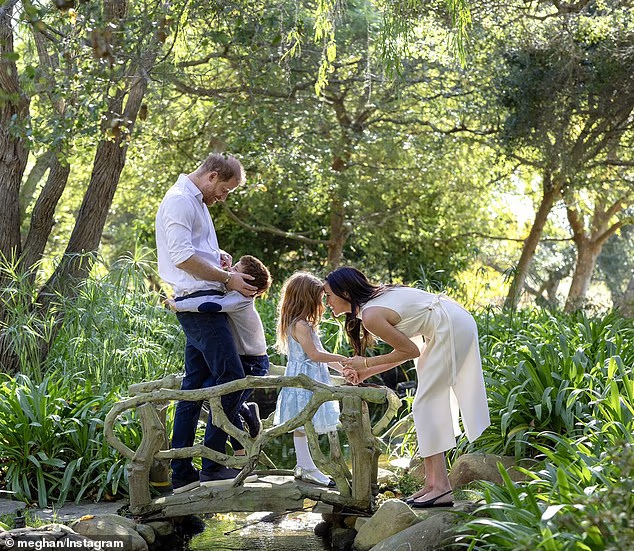
Meghan shared scenes of the family enjoying the British countryside as they settled into life in the UK

Meghan shared scenes of the family enjoying the British countryside as they settled into life in the UK 

Meghan and Harry pictured in 2022. Questions are now raging over who will fund security for the couple and their children

Meghan and Harry pictured in 2022. Questions are now raging over who will fund security for the couple and their children

Some in Harry’s camp had accused Buckingham Palace of trying to scupper the Ravec meeting with King Charles’s bombshell letter last week which made clear Buckingham Palace’s view that the Sussexes were ‘private citizens’ not working royals. 

Advertisement

Harry and Meghan were taken by surprise by the letter and would prefer to be known as ‘public figures’, it was made clear by sources close to them.

They believed the timing of the letter may have been an attempt to influence the Ravec committee on whether to reinstate Harry’s taxpayer-funded security.

At the time, the Daily Mail reported that such claims were incorrect, and the letter was sent out by the palace to offer clarity ahead of a busy programme for the Sussexes, not to interfere with his battles with the Home Office committee. In fact, those close to the King believed the move could make it easier for him to see his son privately.

Tonight, Harry’s fears that the letter could have been designed to block his bid for security appeared unfounded with the news that Ravec is going to fully review his need for protection for him and his family.

Advertisement

ITV News’s royal correspondent Chris Ship said: ‘It was decided that Harry should get a full review of his security now that he is resident in his home country and his children, Prince Archie and Princess Lilibet, have started classes at a British school.’

It was said the official review carried out by Ravec, called a Risk Management Board (RMB), would be conducted for both Harry and Meghan. It would be the first review of the potential risks and threats facing Meghan since the couple left the Monarchy in 2020.

Princess Lilibet, five, and Prince Archie, seven, playing carefree in the English countryside in a video posted online by their mother

Princess Lilibet, five, and Prince Archie, seven, playing carefree in the English countryside in a video posted online by their mother

Feet being warmed on the fire in a traditional English countryside setting, in a social media post shared by the duchess

Feet being warmed on the fire in a traditional English countryside setting, in a social media post shared by the duchess

Advertisement

In fact, Harry had a new ‘RMB’ completed in July, eight weeks ago, but this was conducted before those assessing his case knew about his plans to relocate his family to the UK.

Currently, said ITV News, the only protection the Sussexes have been given by British police is the phone number of a police liaison officer. The duke has been told to call the phone number should he need police help, but he believes this is essentially zero protection as it would take officers a long time to reach him, were he or his family to be in distress or under attack.

Harry argues he is the son of the British monarch, the fifth in line to the throne and a veteran of the British Army who completed two tours of duty in Afghanistan. He was criticised by some British officers for his decision to boast in his 2023 memoir Spare about how many people he had killed during his battles against the Taliban. Some suggested this had massively increased his need for protection against those who might seek revenge.

Scotland Yard does not discuss the security arrangements of royals but it is understood that protection is arranged on a case-by-case basis and is constantly under review. During some recent UK events attended by Harry, such as charity evenings, he has clearly been afforded police security.

Advertisement

Harry and Meghan also pay millions for private security. But in America, their bodyguards may be able to shoot people deemed a threat. In Britain, their close protection agents are not allowed to carry guns, explaining why the duke is desperate to reinstate his automatic police protection.

The Home Office and Team Sussex were contacted for comment.

Source link

Advertisement
Continue Reading

NewsBeat

Power goes out in Ainsworth for second time in a week

Published

on

Power goes out in Ainsworth for second time in a week

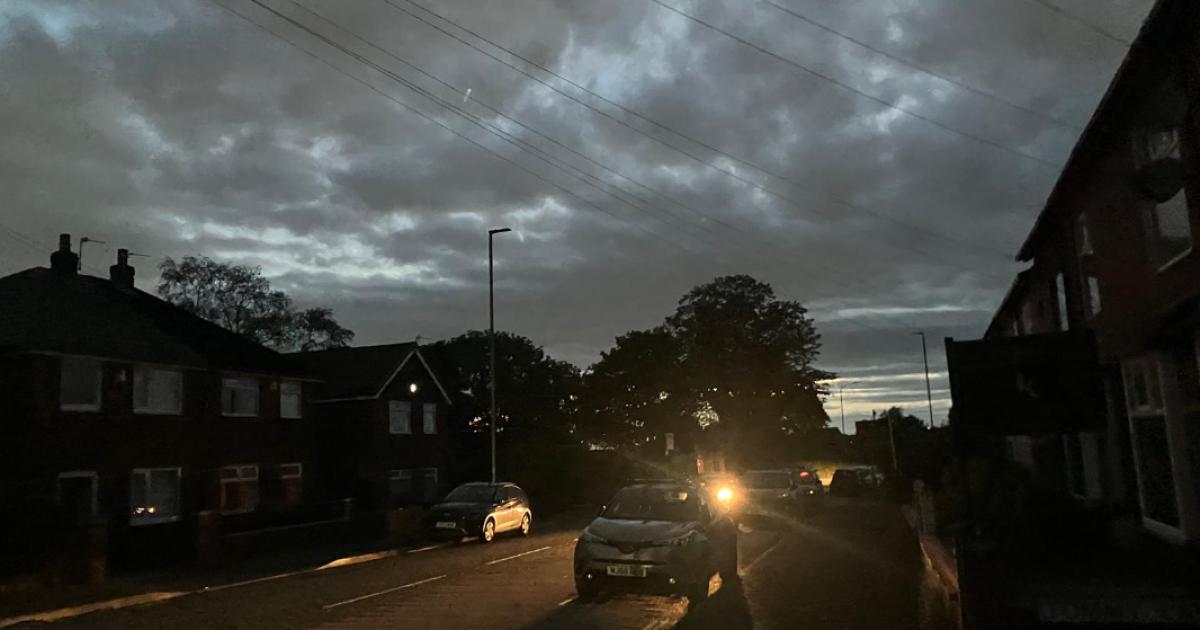
Power around the BL2 postcode area went off tonight (September 14) at around 8pm, leaving residents without power for the second time in a week.

A previous incident on September 5 left residents without power, which SP Electricity North West stated was due to a faulty fuse at a local substation.

One anonymous resident said: “This is no longer funny now.”

Advertisement

Electricity North West said: “This power cut has been caused by an unexpected incident with the underground cable that provides electricity to your home or business.”

They estimated that the issue should be fixed by around 10:30pm, and confirmed an engineer has been dispatched to the area to fix the issue.

Power outages in Ainsworth have been a frequent occurrence in recent weeks, with Electricity North West stating some issues may have been caused by bird strikes in the area.

More than 100 properties have been affected.

Advertisement

Source link

Continue Reading

Trending

Copyright © 2025