Connect with us

NewsBeat

Man arrested after boy attacked by man in York street

Published

on

Woman charged with possession of knife and Class B drug

North Yorkshire Police on Wednesday evening (July 5) said a man has been arrested in connection with the reported incident in Moss Street on Sunday.

The force said the man was released on police bail.

It comes after police issued an appeal for information about the alleged attack which reportedly happened near Moss Street’s junction with Caesar Court at about 12pm on Sunday.

Advertisement

A police spokesperson said the boy was “strangled, pushed and kicked” during the reported assault.

They said the boy was taken to hospital for treatment for injuries to his throat and neck after the alleged incident.

Source link

Advertisement
Continue Reading
Click to comment

You must be logged in to post a comment Login

Leave a Reply

NewsBeat

India and Pakistan’s 79-year rivalry has made the dangerous move into space

Published

on

India and Pakistan’s 79-year rivalry has made the dangerous move into space

India and Pakistan fought an intense four-day war in May 2025. But while the media narrative was dominated by fighter jets, drones and missiles, the most consequential contest unfolded in orbit a few hundred kilometres up.

That short war was, arguably, the first between two nuclear-armed states to be shaped decisively by the use of satellites. Few analysts acknowledged this – and the silence matters. South Asia is now sliding into a new kind of arms race with no rules to restrain it.

The opening night on May 6 carried a lesson that should unsettle far larger air forces than those of the two countries involved. Pakistan, with a smaller military, fought a tightly networked battle that fused ground radar, airborne early warning, data links and satellite navigation into a single kill chain, planning and executing attacks. Pakistan’s strategy has been developed by an air force whose leadership had drilled that doctrine for years.

Pakistani officials claimed that one of their Chinese-built J-10C fighters downed an Indian Rafale with a PL-15 missile at more than 200kms. This was a kill made from beyond visual range – something with little precedent in combat. India disputes the account, but its own chief of defence staff later conceded that the air force lost aircraft that day.

Advertisement

India regrouped and struck back hard over the following days. But the opening exchange was decided less by numbers, or by any single aircraft’s specifications, than by how well each side fused its radar, early warning, data links and missiles into one system, and by the training of the crews flying it.

Sitting over all this was space-based technology. Modern strikes run on satellites: satellite imagery to find targets, navigation to guide weapons and links to hold it together. Both sides drew on them and both used them to reach beyond their borders.

Despite the strength of India’s defence manufacturing industry, Delhi fell back on imagery bought from US commercial satellite firm Maxar Technologies to assess the damage its strikes had caused. Pakistan leaned on Chinese systems. According to India’s own deputy army chief, Beijing fed Pakistan live inputs on Indian deployments – and researchers have describe how a BeiDou-enabled satellite network (the Chinese equivalent of GPS) reportedly supplied targeting data during the fighting.

This is where the familiar story about Pakistan’s dependence on China needs correcting. Reliance on a great power patron is not peculiar to Pakistan – most countries start out developing their space programme this way. India launched its first satellite on a Soviet rocket in 1975 and built its heavy-lift capability around Russian cryogenic engines, the high-efficiency rocket motors that burn super-cooled liquid fuel to launch heavy satellites, acquired in 1991.

Advertisement

China itself began with Soviet missile designs. Pakistan’s turn to China, after years of relying on a US system it feared could be switched off in a crisis, is a rational decision of the same kind India once made when it sourced most of its weapons and its first satellite launch from Moscow rather than the west.

Borrowed capability still comes with a cost. Commercial and allied space assets are becoming a strategic equaliser in South Asia, giving a smaller state capabilities it could not achieve on its own. The risk is that this hands a third power a seat inside a bilateral nuclear rivalry and ties a regional quarrel to the wider contest between Washington, Moscow and Beijing.

India has chosen to respond with sheer volume, fast-tracking a home-grown programme worth US$3.2 billion (£2.4 billion) for 52 dedicated military satellites to watch Pakistan, China and the Indian Ocean, plus a new space doctrine and counterspace arsenal. It has already demonstrated its ability to destroy a satellite in orbit in its 2019 Mission Shakti test. Pakistan is likely to respond by deepening its partnership with China.

Split-second decisions

The deeper hazard is not a battle in orbit but the way these systems compress the timing with which operational decisions are made. When commanders can watch an adversary almost in real time and believe a target can be struck within minutes, the pull to move first, before the target slips away, becomes hard to resist.

Advertisement

As I have written on the doctrine of limited air wars, nuclear neighbours rarely escalate deliberately. They tend to stumble into conflict under time pressure. Satellites do not make these states reckless. They reduce the margin for miscalculation.

And there is no rule book. The 1967 Outer Space Treaty bans weapons of mass destruction in orbit, but is silent on the conventional, electronic and cyber tools that actually shaped this war. Fresh norms have stalled. India has abstained from recent United Nations resolutions on responsible behaviour in space, wary of a rule-making process it sees as led by the established western space powers and shaped without India’s full say.

Meanwhile, Pakistan urges a restraint it cannot yet enforce. Nothing in the space domain resembles even the imperfect hotlines and arms-control treaties that disciplined the cold war rivalry between Washington and Moscow.

For years, the debate about war in space has focused on the US, China and Russia. Yet it may be here, between two states partitioned in 1947 that have fought four wars since, that the world first sees what space-enabled conflict between nuclear powers really looks like.

Advertisement

Having spent 17 years in the Pakistan Air Force before turning to research, I think the May war is not so much a story about Pakistan’s reliance on China than as two nuclear rivals racing the same space-enabled technology ahead of any restraint. The tools are advancing fast. The guardrails are not.

Source link

Advertisement
Continue Reading

NewsBeat

Forget THAT other ‘guide’ – THIS is the definitive list of what to put in the fridge, which food tastes infinitely better left out on the sideboard… and the ‘natural enemy’ items to NEVER store next to each other

Published

on

Specialist dietitian Nichola Ludlam-Raine provides insight on the question 'to refrigerate or not to refrigerate?'

To some, the very idea of storing your eggs in a cupboard rather than the door of the fridge is horrifying.

Others will tell you that a bar of chocolate tastes far better when it’s chilled to the point that it could break your teeth.

There are those who insist that an open bottle of ketchup must be refrigerated – but who wants cold tomato sauce on their hot chips?

Is it any wonder that we’re all slightly baffled about what we should and shouldn’t chill? A survey found that three-quarters of us are so confused it’s leading to domestic fallouts.

Advertisement

To avoid further friction, here’s the ultimate expert guide to what you should keep in the fridge and what’s better off in the cupboard.

Advertisement

Specialist dietitian Nichola Ludlam-Raine provides insight on the question ‘to refrigerate or not to refrigerate?’

Eggs

When it comes to the ‘to chill or not to chill’ debate, eggs are undoubtedly the most contentious item.

Our fridges all come with egg storage containers, so surely that’s where we should keep them? But attempting to boil an egg from the fridge usually leads to some very lonely soldiers after the egg cracks and explodes.

Advertisement

Specialist dietician Nichola Ludlam-Raine says: ‘Eggs are better off in the fridge. However, keep them in the original box on a shelf, not a compartment in the door as that’s the area most variable in temperature.’

Butter

A dairy product, so logic dictates it should be chilled. But as everyone knows, if you try to spread it straight from the fridge it ends up tearing a huge hole in your £6 loaf of sourdough.

Previous generations stored their butter in a dish in a cool larder, keeping it deliciously soft. Should we be going the same way?

Nichola says: ‘Butter is now available in a form that will spread straight from the fridge. They add extra rapeseed oil and water to achieve that.

Advertisement

‘When people kept butter in a dish in the larder it was before the days of central heating. Modern houses are much warmer. A block of pure butter would be ok in a dish in cool weather, especially salted. But, generally, it’s better in the fridge.’

Bread and cake

A survey found that three-quarters of us are so confused about what to store in the fridge or the cupboard it causes domestic fallouts

A survey found that three-quarters of us are so confused about what to store in the fridge or the cupboard it causes domestic fallouts

Who wants dry, crusty bread? Keeping loaves in the fridge is an odd one but the popularity of huge, American-style fridges means that Brits store the majority of their food there, freeing up cupboard space for their ever-growing array of trendy kitchen gadgets.

Nichola says: ‘Refrigerated bread will be slower to grow mould but the starch firms up very quickly and it’s going to go stale much sooner, so there’s no value to chilling it. A bread bin on the side is best. Cakes contain a lot of sugar and so will last well in an airtight container in a cool, dark place.’

Advertisement

Fruit

What home doesn’t have a fruit bowl? All the fruit thrown in together, usually with a brown banana buried at the bottom and a pineapple that gets binned because nobody knows how to cut it up. But is a fruit bowl now old-fashioned?

Nichola says: ‘Fruit ripens better and faster at room temperature, so keep things out of the fridge until they’re ready to eat. Bananas are best out of a fridge always and stored on their own as they give off ethylene gas, which causes other fruits to spoil.

‘Apples are fine in a bowl but will last longer in a fridge and chilling won’t alter the taste. Remove bad apples from the chiller drawer, though, as they’ll turn the other ones. Ripen avocados on the side and then refrigerate.’

Vegetables

Did you know that potatoes and onions are the sworn enemies of the vegetable world and should never be kept together? Onions give off ethylene gas that will cause the potato to sprout and rot, while the potato releases water vapour that makes the onion go soft and mouldy.

Advertisement

The official advice about where to store your spuds has changed.

Previously, the advice was not to refrigerate in order to prevent ‘cold sweetening’ – the formation of additional sugars which convert to higher levels of potentially-carcinogenic acrylamide when cooked. Food scientists now believe this not to be the case.

Nichola says: ‘Most people keep their potatoes in a cupboard but they’ll keep for much longer if you refrigerate them. Onions and garlic are fine in a pantry until they’re cut. Leafy green veg should always be chilled to preserve nutrients.

‘Instagram is full of reels of influencers unwrapping their vegetables, washing and then storing. Don’t! Keep them in the wrappers until you use them.’

Advertisement

Tomatoes & salad

Nichola says produce like tomatoes can be kept out of the fridge, whereas lettuce and cucumber should remain chilled in their packaging

Nichola says produce like tomatoes can be kept out of the fridge, whereas lettuce and cucumber should remain chilled in their packaging 

Visit the home of anyone with a fancy kitchen and you’re likely to see a tick-list of things. Range oven? Tick. Flashy coffee machine? Tick. Tomato bowl? Tick. But is a bowl for your tomatoes the right thing to do?

Nichola says: ‘Tomatoes taste better at room temperature and they’ll ripen better out of the fridge too. If you keep them in a bowl on the side, make sure it’s out of direct sunlight. Always keep your lettuce and cucumber chilled and in the packaging – it’s designed to be protective and preserve the produce.’

Jams and spreads

For generations, people happily kept their opened jams, spreads and marmalades in cupboards without coming to any harm, only discarded once they grew a fetching fur coat.

Advertisement

Now, the advice is very much to keep refrigerated. But who wants icy-cold marmalade on their hot, buttered toast? Or chilly strawberry jam on their warm scone?

Nichola says: ‘Nut butters are fine in a cool, dark cupboard and honey should be out of the fridge, otherwise it will crystalise. But with jams, the jarring is a huge part of the preservation, so once you open and let oxygen in, it will start to spoil. So, yes, in the fridge.’

Kate Hall, a food waste expert advises: ‘If it simply has to be the cupboard for you, then always use a clean spoon or knife to avoid contamination from crumbs and butter. But never scrape mould off and hope for the best!’

Chocolate

Anybody who has ever kept a bar of milk or dark chocolate in the fridge will know that it starts to turn white. It’s because of ‘sugar bloom’ and it impacts the taste too. This happens when chocolate is chilled and then exposed to warmer temperatures. Condensation on the surface dissolves some of the sugar, which then re-crystallises.

Advertisement

Nichola says: ‘The joy of chocolate is the melt-in-the-mouth experience, which you don’t get if it’s very cold. Keep it in a cool, dry place. In a heatwave maybe go for an airtight container.’

Olive oil

The UK olive oil industry now exceeds £1billion. Prices are expected to soar after a summer of drought and wildfires. The last thing you want to do is ruin your expensive bottle.

Nichola says: ‘Keeping the oil away from light and heat is the key to keeping it at its best. Store in a cupboard, not the fridge. If you have it on the work surface, then make sure it’s away from the oven hob.’

Ketchup and mustard

The average bottle of ketchup has an 18-month use-by date – making them a super-tough and hardy food product. Yet the labels usually instruct us to put them in the fridge after opening. If they’re packed full of vinegar and sugar do they really turn into super-wimps that need to be chilled the minute they’re opened?

Advertisement

Nichola says: ‘The advice from manufacturers such as Heinz is to refrigerate after opening and they’re the ones that have done the testing. Do what the labels say.’

However, Kate Hall advises: ‘Ketchups are generally high in sugar and vinegar, so the risk of keeping them in the cupboard is low, especially if they’re going to be used up quickly. But I would definitely chill them during a heatwave. Opened mustard always needs to be kept in the fridge.’

Source link

Advertisement
Continue Reading

NewsBeat

PM promises ‘high street’ mental health centres to open in banks and libraries

Published

on

PM promises ‘high street’ mental health centres to open in banks and libraries

A series of new mental health centres are set to open in local libraries, banks and other high street locations across England to ensure people receive “support earlier closer to home”, the government has announced.

Under the plans, officials confirmed that individuals experiencing a mental health crisis will receive specialist care inside dedicated mental health emergency departments instead of waiting in overcrowded general A&Es.

Prime minister Andy Burnham said the new centres will serve as a “lifeline” for the thousands of patients who are currently waiting “months” to access help.

The Department of Health and Social Care stated that 100 new community mental health centres and 59 dedicated emergency departments will be created as part of the “biggest redesign of mental health services in a generation”.

Advertisement

These community centres are set to offer walk-in support where members of the public can attend without needing a medical referral.

While some of the community hubs will be newly built facilities, others will operate inside banks, libraries and additional high street premises, the Department said.

Prime Minister Andy Burnham speaks to residents, care workers, volunteers and social care stakeholders during a care home visit on July 29, 2026 in London
Prime Minister Andy Burnham speaks to residents, care workers, volunteers and social care stakeholders during a care home visit on July 29, 2026 in London (Getty)

In addition, extra mental health emergency departments will deliver same-day support for people undergoing a crisis who remain medically fit and do not require treatment in general A&E.

Situated within emergency departments, these specialist facilities will provide a “calm, therapeutic environment where people can be assessed quickly”, expanding England’s total to 82.

Mr Burnham said: “Nobody should be left to struggle with their mental health alone. But every day, thousands of people are waiting months for help, then finding the only door open to them is a busy A&E.

Advertisement

“These new centres will be a lifeline for so many. They will bring NHS services closer to home, making it easier to get support before problems get worse, and ensuring those in crisis get the right care in the right place.

“On the steps of Downing Street, I said we would build a country that acts sooner when people need help. Today is just the start of making that a reality.”

The Department said that the initiative is backed by £343 million and the first sites will open in autumn this year, with “further facilities following from March 2027”.

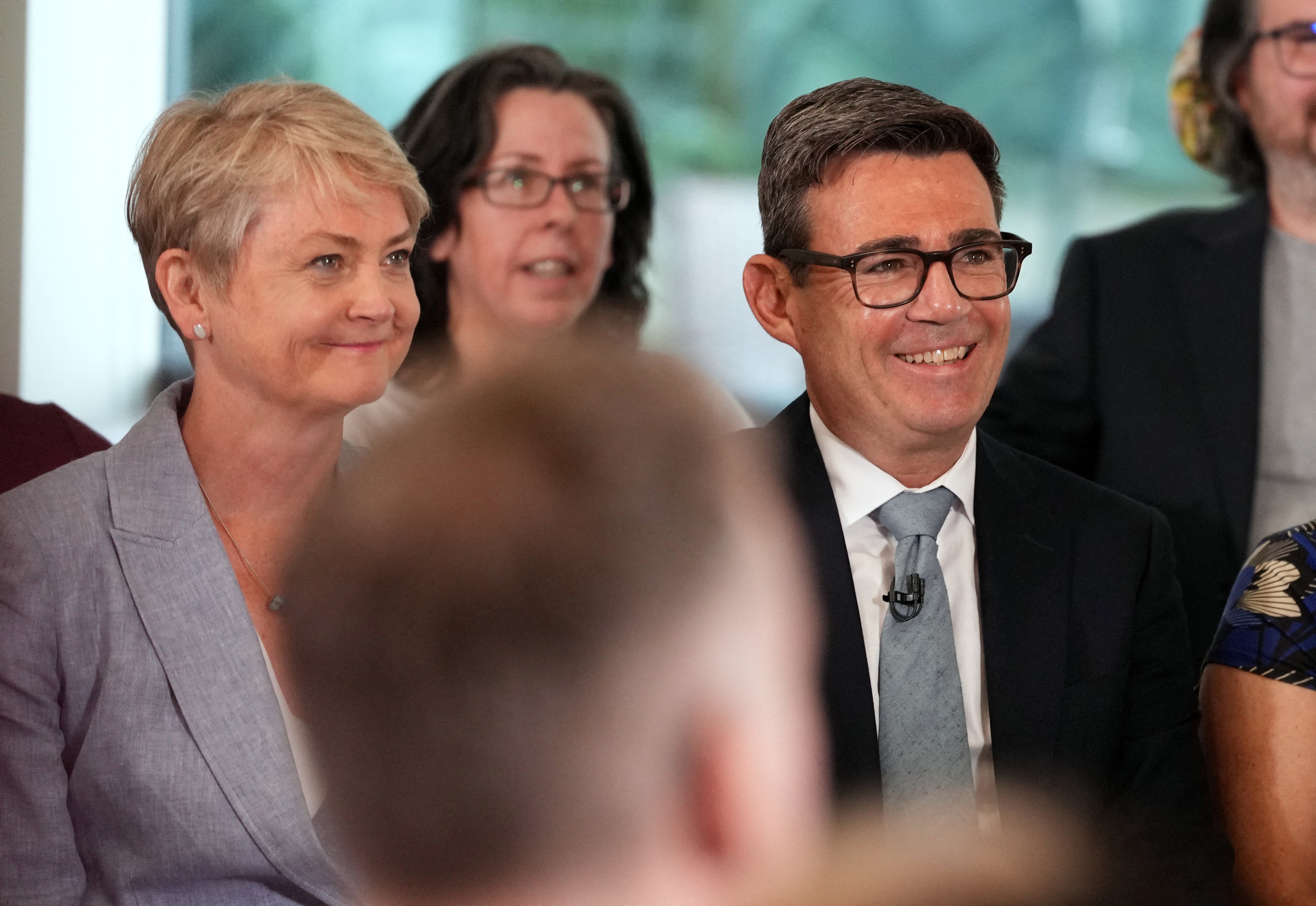
Britain's Health Secretary Yvette Cooper and Britain's Prime Minister Andy Burnham smile during a visit social care organisation Jewish Care, in north west London on July 29, 2026
Britain’s Health Secretary Yvette Cooper and Britain’s Prime Minister Andy Burnham smile during a visit social care organisation Jewish Care, in north west London on July 29, 2026 (AFP/Getty)

Health Secretary Yvette Cooper said: “Too many people are only getting mental health support when they reach crisis point, after struggling for far too long to get the help they need.

“These new community mental health centres will help people get support earlier and closer to home, making it easier to get the right care before problems escalate. And when someone does need urgent help, new mental health emergency departments will be able to make sure they are seen quickly by specialist teams in the right setting.

Advertisement

“This is how we can turn the tide on mental ill health – preventing more people from reaching crisis, cutting waits for care, and building an NHS which is there for everyone when they need it.”

The announcement forms part of the forthcoming Mental Health Strategy, which is expected to be published later this year.

The strategy will be informed by the independent review into mental health conditions, ADHD and autism, which is expected in the autumn.

According to NHS figures, 2.36 million people in England had an open referral with mental health services at the end of May 2026, up from 2.10 million a year earlier and 1.95 million in May 2024.

Advertisement

Brian Dow, deputy chief executive at the charity Rethink Mental Illness, said: “The expansion of neighbourhood mental health centres is a vital step towards making this a reality, building on the promising results of existing pilot sites.

“By bringing together treatment and wider support services under one roof, these centres can transform experiences of care, helping people to access support earlier and preventing them from reaching crisis point.”

Tom Pollard from the charity Mind added: “This is a promising step towards more people getting the mental health support they need, when they need it. Too often, we hear from people struggling to access overstretched services whose mental health worsens because of this.”

Source link

Advertisement
Continue Reading

NewsBeat

Salford fire LIVE as huge blaze rips through shop with Bury New Road closed and emergency services on scene – updates

Published

on

Manchester Evening News

Source link

Advertisement
Continue Reading

NewsBeat

Man falls into leg of statue and suffers terrifying death

Published

on

Daily Record

Tragedy struck a 39-year-old man unexpectedly after he tried to retrieve his phone that had fallen inside a statue

Police in Catalonia were faced with one of the strangest cases of accidental deaths in recent years when they got a report from a father and son back in 2021.

Advertisement

The duo were walking on a Saturday afternoon when they passed a papier-mache stegosaurus statue placed outside a building in Santa Coloma de Gramenet, a suburb of Barcelona.

They soon noticed a foul smell coming from the piece and went to take a closer look, only to find a body through a crack in the statue’s hollow leg.

Those were the mortal remains of a 39-year-old man, discovered by the regional police force, the Mossos d’Esquadra, who recovered the body from inside the statue.

A spokesperson for the authorities explained the man appeared to have climbed into the dinosaur’s leg – entering headfirst – while trying to retrieve a mobile phone he’d dropped, and had then become trapped, unable to work his way back out.

“It’s an accidental death; there was no violence,” she said at the time.

“This person got inside the statue’s leg and got trapped. It looks as though he was trying to retrieve a mobile phone, which he’d dropped. It looks like he entered the statue headfirst and couldn’t get out.”

The inside of the statue was such a tight fit that three fire brigade teams were called to the scene and were forced to cut open the leg of the stegosaurus replica.

Advertisement

According to local reports at the time, the man had been reported missing by his family only hours before his body was discovered, but police believed he had likely been trapped for a couple of days, and had not been able to confirm precisely how he’d ended up stuck upside down in the first place.

Several Spanish news outlets, including El País and La Vanguardia, reported on the case at the time, noting that the incident was widely discussed in the local community and covered by both regional and national media because of its unusual nature.

The statue was displayed outside the city’s Cubic Building, installed as decorative signage advertising an old cinema. Santa Coloma de Gramenet’s city council confirmed the statue’s removal in official statements following the discovery.

Advertisement

Source link

Continue Reading

NewsBeat

Walkden town centre housing project stalled as contractor goes bust

Published

on

Walkden town centre housing project stalled as contractor goes bust

The large red steel frame at the junction between Manchester Road, High Street, Bolton Road, Bridgewater Road, and Memorial Road was going to be turned into an over-55s housing retreat.

But the contractor that property manager Housing 21 employed to complete the work, Alderley Group, has gone bust, according to the National Fraud Helpline, leading to concerns over who will finish the project.

The red steel frame (Image: Dan Dougherty)

A Housing 21 Spokesperson said: “We are unable to comment on behalf of other organisations. However, we can confirm work on the site has been temporarily paused whilst we source a replacement contractor to deliver the scheme.

We are keeping all interested parties updated with progress and would like to thank everyone for their patience and understanding.

Advertisement

“Our priority remains to deliver quality Retirement Living properties for older people and we look forward to completing the development and welcoming the first residents as soon as possible.”

Initially, there were concerns amongst residents that the building had stalled due to a planning infraction, but this soon turned out to be false.

(Image: Dan Dougherty)

The building ceased in June because Alderley, the group responsible for bringing the project to life, went into administration.

Housing 21 are now looking for new contractors to deliver on the Walkden scheme, leading to delays in the building process.

Advertisement

The Alderley Group was a social housing investment group involved in numerous affordable property development schemes around the North West.

(Image: Dan Dougherty)

But the housing giant went into administration in June of this year, leaving many of its development projects, including the Walkden retirement centre, unfinished.

The website for the Alderley Group no longer exists, and it is no longer possible to contact them via email or phone.

The National Fraud Helpline is urging affected Alderley investors to come forward to reclaim potential losses.

Advertisement

Source link

Continue Reading

NewsBeat

I’ve taken the new Wegovy ‘skinny’ pill for a month. It finally broke my weight-loss plateau, writes LOUISE ATKINSON, but at what cost? Week by week, here’s my honest account of EVERYTHING that happened…

Published

on

After losing 2st on Mounjaro in 18 months, Louise Atkinson was looking forward to swapping the jabs for the simplicity of swallowing a tiny tablet once a day

When a box containing my first pack of Wegovy pills arrived I was excited – until, that is, I spotted the stash of extra medication to help with side-effects tucked in beside them.

After 18 months of weekly Mounjaro jabs I was looking forward to swapping all the druggy paraphernalia (refrigerated syringe pen, spare needles, alcohol wipes, sharps bin) for the simplicity of swallowing a tiny tablet once a day.

I’d put my name on a waiting list and was one of the first in the UK to get my hands on the new pills when stocks were shipped out early last month.

So, it was rather a shock to receive four separate packs of tablets for diarrhoea, bloating, constipation and heartburn.

Advertisement

I’d happily lost 2st on Mounjaro (dropping from 13st 5lb to 11st 5lb) barely troubled by any of those ailments, so this got me wondering what hell I might be letting myself in for.

It turns out the stash was very much needed. Here’s my diary of my tumultuous first month on the new skinny pill.

Week one

After losing 2st on Mounjaro in 18 months, Louise Atkinson was looking forward to swapping the jabs for the simplicity of swallowing a tiny tablet once a day

Advertisement

UK pharmacies start shipping out their first packs of Wegovy pills on July 7. Only the two lowest doses have so far been supplied by manufacturer, Novo Nordisk – 1.5mg for complete beginners and 4mg for people like me moving over from a low dose of Wegovy or Mounjaro injections.

The pills are not likely to be available via the NHS for months (pending NICE approval) but all the online pharmacies are selling them privately, pitching their prices in line with the Wegovy jab (around £100 for a one month supply of the lowest dose) rather than more expensive Mounjaro (£150). Like the jabs, the cost goes up with the dose.

I go through a strict screening process with online provider shemed.co.uk, showing proof that I reached the criteria (BMI of 30 or, in my case, 27 with health concerns) at the start of my GLP-1 journey and convincing them of my commitment to continue on a low dose to maintain my weight loss and hopefully shift the last stubborn half stone that would take my weight into the ‘healthy’ category (BMI of 25 and under).

These tablets contain the same GLP-1 drug – semaglutide – as you find in the Wegovy syringe but the active ingredient is encased in a special coating which protects the peptides from stomach acids and digestive enzymes just long enough so it can dissolve and pass through the stomach lining to enter the bloodstream. There’s been a huge buzz of excitement surrounding the pills which many believe will revolutionise the medicated weight-loss market, driving costs down and opening up the GLP-1 world to a new needlephobic clientele and beyond.

Advertisement

Why am I switching? I am committed to being on a low dose of GLP-1 forever to keep my weight steady, my brain free from food noise and to reap the many emerging long-term health benefits (protecting me against heart disease, cancers and dementia), and I’m intrigued by the relative ‘normality’ of taking a pill each morning. My health is so much better already (blood pressure and cholesterol back in normal ranges), that my hope is this daily pill will take the place of the blood pressure tablet and statin I no longer need.

The active ingredient in the pill works just like the injection with the same impact on the body and brain, and the same potential side effect warnings (nausea, vomiting, diarrhoea, constipation). Studies for both show more than 70 per cent of users are affected by these ‘gastric issues’ but the pills were expected to hit the gut harder because it passes through the digestive tract every single day.

My ‘day one’ is timed exactly seven days after my last Mounjaro injection and I go to bed with the box by my pillow ready to take my first pill the moment I wake.

Your stomach must be empty (ideally after an eight-hour overnight fast), you can’t use more than 120ml of water (equivalent to a small glass of wine) to swallow it down and you absolutely must not eat or drink anything else or take any other tablets for at least 30 minutes so it has the perfect conditions in your stomach to dissolve and disseminate. It’s a hot and sweaty night and I wake up desperate for a large glass of water but that would over-dilute the pill and render it ineffectual so I ration myself to a few sips which barely disguise the bitter taste.

Advertisement

My second night is blighted by stress dreams in which I’m accidentally eating. Waking at intervals throughout the night I’m constantly checking the time and wondering if I should take my pill. Plus I really miss the early morning cup of tea that my husband Jon usually brings me in bed.

I’m eating healthily during the day but each evening I am hit by a strong drive to search out something sweet to eat. The sugar cravings are so strong I have to make a batch of biscuits because I want to lick the bowl so badly.

I’m concerned this 4mg dose is not going to be powerful enough to keep my evil eating demons in check. I needn’t have worried.

UK pharmacies started shipping out their first packs of Wegovy pills on July 7

UK pharmacies started shipping out their first packs of Wegovy pills on July 7

Advertisement

On day four a wave of nausea hits. It’s not debilitating or vomit-inducing but more like the ‘yuk’ feeling you get if you try to read your phone when you’re a passenger in a car. It passes but I have to force myself to eat lunch with Jon. He has zero tolerance for nausea and is struggling to understand why I’m doing this to myself.

Rachael Joy, chief clinical officer at SheMed (and a registered nurse) tells me the semaglutide in my daily pill has been accumulating over the last four days. ‘Although you take the tablet every day, semaglutide has a long half-life [the time it takes to reduce to half its original quantity] of around seven days, so it is not flushed out of your system after 24 hours,’ she says.

‘Each daily tablet adds to the semaglutide that’s already in your body, gradually increasing the overall amount in your circulation until you reach steady state, which takes around four to five weeks of daily dosing.’

She reassures me that serious complications such as pancreatitis and gallbladder disease are uncommon and normally associated with rapid weight loss. ‘As oral Wegovy may produce more gradual weight loss, these complications are less likely on the pills, although more real world evidence is needed to understand this fully,’ she says.

Advertisement

The bowel perforation which led to the untimely death of a 73-year-old woman from Norfolk recently is so rare, she adds, that it is not even listed as a recognised side- effect of GLP-1 medicines.

But the next night my tummy pain keeps waking me up. I check the clock at 4am, then 5.30am worrying – now – whether the drug is too strong for me.

Week two

Louise suffered from feelings of nausea after beginning to take Wegovy pills. She is seen at the start of her weight loss journey prior to taking Mounjaro jabs

Louise suffered from feelings of nausea after beginning to take Wegovy pills. She is seen at the start of her weight loss journey prior to taking Mounjaro jabs

The scales tell me I’m 11st 6lb and I’m infuriated to see my weight slightly higher than when I started but I twisted my knee playing padel a few weeks ago which means I can’t walk the dog or do spin classes and my daily step count has plummeted.

Advertisement

And although I have all the self-control required to eat small, healthy meals during the day, I seem unable to resist nibbling and picking at food (or succumbing to a glass of wine) in the evening.

Mounjaro used to be strongest for the first days after the injection, before tailing off and the Wegovy pill seems to follow a similar but daily curve: waves of nausea in the morning which subside, then an infuriating ‘all bets are off’ blast of food noise in the evening.

Rachael Joy explains that peak blood concentrations are typically reached an hour after taking the tablet. ‘The concentration then gradually falls over the rest of the day,’ she says, ‘but the half-life means it won’t fall to zero and each day’s dose simply tops up the background level that’s already there.’

Levels of semaglutide in my system are clearly building but the daily dosage curve means it’s now far too easy to say ‘yes’ to a proffered glass of wine in the evening and the chemical cocktail seems to be ramping up a hangover.

Advertisement

After one ill-advised (but fun!) evening my body feels totally toxic and, bizarrely, I develop an itchy hives-like rash on the back of my neck/upper shoulders. I’m not a rashy person and I can’t work out what might have caused it. Possibly the Wegovy?

A series of bad nights follows with gastro discomfort and the itching rash keeping me awake. It means my days are spent feeling shattered with strong sensations of nausea interspersed with intermittent trips to the loo with diarrhoea.

I’m beginning to wonder if it’s worth it.

On the Facebook support groups I follow, pill-takers are starting to bail.

Advertisement

‘It’s been hard work living with this horrible yukky feeling all the time,’ says one, with another agreeing: ‘I can’t take any more of the sickness, headache, fatigue and generally feeling lousy.’

I could safely switch back to the Mounjaro jab 24 hours after taking my last pill but decide I need to push through with this. The expense of Mounjaro is so much more difficult to justify when you’re maintaining rather than losing weight and, despite the side- effects, as my body gets used to the drugs, I’m finding I need to deploy far less willpower to stay in ‘diet mode’.

The Wegovy pill might be hard work right now but the suppression I feel is impressive (like the first few months on Mounjaro) and steady every day. I’ve just got to hope the gastric side-effects diminish.

Week three

I’m relieved to find I’m 11st 5lb – just one pound down but I’m back on track.

Advertisement

Finally! No hunger all day, side-effects are less strong, no food noise, just measured healthy eating. Antihistamines clear the rash and the evening munchies (and wine craving) have disappeared.

I’ve stopped sleep-stressing about taking the tablet and it turns out it’s really not that hard to use up the required 30 minutes waiting time in the shower and getting dressed before the normal routines of daily life can resume. I still do get occasional waves of nausea but I find it strangely reassuring that the pill is working.

I’m eating so much less than I was before I started taking this pill. If only I wasn’t so sedentary I reckon the weight would be falling off now.

New week, new problem: constipation. I glug a fibre drink and spend the evening snacking on prunes (to me in this sugar-deprived state, they taste as delicious as Lindt balls). Disaster averted and I don’t need to dip into the constipation capsules in my ‘care’ package from SheMed.

Advertisement

Fatigue is also still bothersome. Mounjaro made me feel spritely and light but some days now I feel as if I could curl up and sleep, particularly during the afternoon.

I’m putting extra focus

on the quality of my nutrition but I wonder whether my poor microbiome (the population of good bacteria in my gut which influences digestion, mood and immunity) is having a tough time adjusting to swimming around in my GLP-1-infused intestinal soup.

Week four

On week four, Louise found that her weight began to drop more substantially, and side effects had subsided altogether

On week four, Louise found that her weight began to drop more substantially, and side effects had subsided altogether

Advertisement

I’m 11st 4lb. Finally, after a 12-month plateau, the scales are moving down and I feel optimistic that I might reach my original weight-loss goal and get my BMI into the ‘healthy’ category for the first time in 30 years.

The side-effects have completely disappeared now my body has got used to the new GLP-1 regime and I’m falling into an easy rhythm of taking the pill each morning and being ‘good’ about what I eat and drink.

It’s so much easier to pop the pills in my wash bag for a big girlie weekend away – no more worrying about trying to micromanage the timing of a weekly jab – and the strong steady suppression really helps me resist the cocktails and pastries on offer.

Bonus: all the girls had hideous hangovers apart from me.

Advertisement

I celebrate by ordering my next month’s supply of pills. The predicted shortages haven’t happened – perhaps because the claimed loss (17 per cent of body weight) is less than Wegovy jabs (20 per cent) and Mounjaro (22.5 per cent) and the pills aren’t as cheap as expected – yet.

The protocol for those starting out on the Wegovy pill is to move up a dose each month if symptoms allow and the bigger doses (9mg and even 25mg) are now available but I definitely couldn’t handle a higher dose. This is plenty.

In fact, if I can get down to my goal weight I think I’ll drop to the 1.5mg ‘starter’ dose pill which should be just enough to keep that trickle of GLP-1 in my system long-term.

The second box of 4mg pills arrive without the side-effects care package which Rachael Joy tells me is sent out as a gesture of support to all SheMed GLP-1 users in their first delivery, regardless of pill or jab. Not just because they were expecting me to be blighted by symptoms.

Advertisement

I’m keen to keep going and I’m hoping the cost of the tablets will soon come down so they can be more widely available to everyone.

Maybe when the next GLP-1 pill – Foundayo – is approved for the UK market later this year, a price war might work in our favour.

But right now I figure I’m saving so much money on food, wine, the taxis we no longer need because I volunteer to drive, my daily magic skinny pill is virtually cost free.

Source link

Advertisement
Continue Reading

NewsBeat

Bolton food bank under ‘immense pressure’ as donations run low

Published

on

Bolton food bank under 'immense pressure' as donations run low

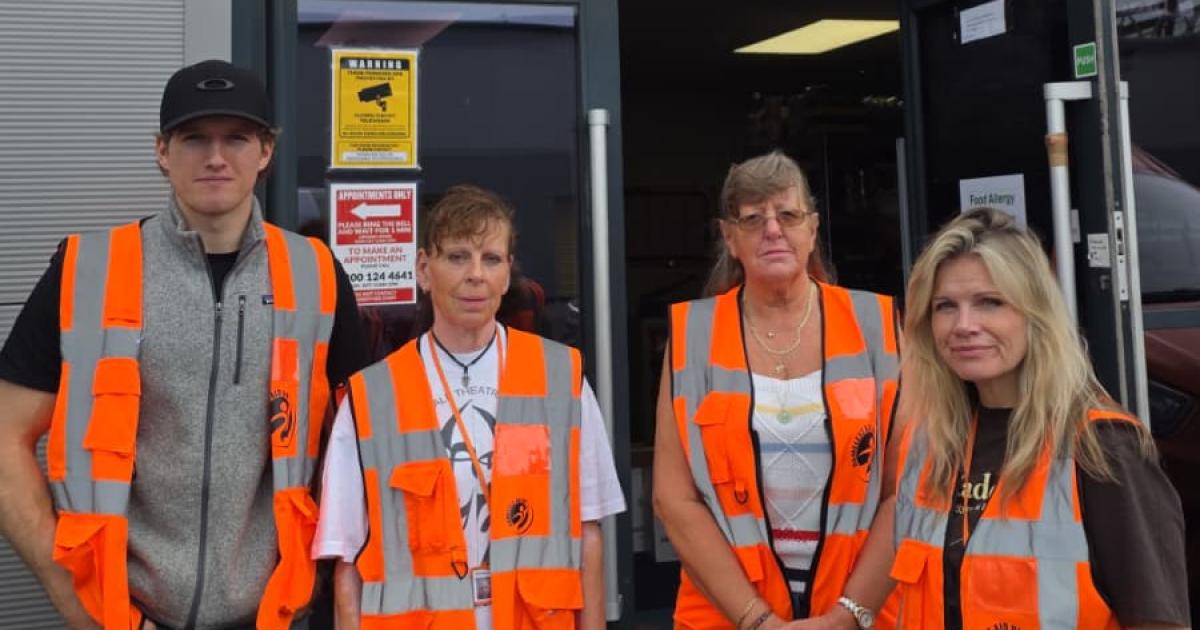
Homeless Aid UK, based on Orlando Street in Bolton, has warned that supplies are running dangerously low after the closure of another local food bank forced more people to turn to the charity for help.

It is now asking the community for donations of essential food items, including tinned vegetables, tinned meals such as macaroni cheese, cereal, Cup a Soup, sugar, tea bags, cooking oil, and rice.

Although grateful for the ongoing support, the group warns that stocks are extremely low and further donations are necessary.

Advertisement

“Our food bank is under immense pressure right now, and with demand higher than ever, we urgently need your support.

“Every tin, every box and every bag helps us support local individuals and families who are struggling.”

Homeless Aid UK provides its food parcels completely free of charge to people facing hardship across the borough.

Billa Ahmed, from Homeless Aid UK, said they had seen a dramatic increase in demand following the closure of another food bank in the area.

Advertisement

“There’s a local food bank, unfortunately, which is now closed down, and because of that, we’ve got a lot of pressure with the thousands and thousands of people that we are helping with free food hampers.

“Now we’ve got so many people coming from them who are now coming over to us.

“We urgently, urgently need your help.”

Mr Ahmed said the CIC focuses on providing practical ingredients that mean families can prepare nutritious meals without spending so much money on cooking costs.

Advertisement

He said: “People need to make a meal so we give them essentials that they can actually make a meal with.

“With the cost-of-living crisis and utilities being so high, gas and electric, we can’t give them something that is going to take a long time to cook.”

The appeal comes as many families continue to feel the strain of rising household bills during the summer holidays, with children not receiving free school meals and parents spending more on childcare as they continue to work.

Mr Ahmed said: “With the summer holidays and rising living costs, increased financial pressure, a lot of the local families are now struggling, even people who are working.”

Advertisement

At the same time, he explains how donations have fallen sharply as supporters face financial difficulties of their own.

“There’s been a massive, significant drop in donations because many people who used to regularly donate to us are now facing financial pressure themselves.”

They are now calling on anyone who can help to donate even a single item and reminding the community that every contribution could make a difference to a family in crisis.

Donations can be dropped off at Homeless Aid UK, Superstore Storage, Orlando Street, Bolton, and for more information, call 0800 124 4641.

Advertisement

Source link

Continue Reading

NewsBeat

Asian shares slip with Kospi down 4% after tech retreat on Wall Street

Published

on

Asian shares slip with Kospi down 4% after tech retreat on Wall Street

BANGKOK (AP) — Asian shares were mostly lower and South Korea’s Kospi dropped more than 4% on Thursday following declines for some Big Tech giants including memory chipmaker SK Hynix.

Oil prices held steady, with Brent crude trading near $79 a barrel. Uncertainty about the direction of the U.S. war with Iran is still overhanging markets despite hopes for a reopening of the Strait of Hormuz.

Markets will get an update Friday on U.S. jobs with the monthly employment report for July, and analysts say investors appear to be bracing for its potential impact.

“Asia’s chip selloff looks like a combination of profit-taking and risk reduction ahead of Friday’s nonfarm payroll report,” Stephen Innes of SPI Asset Management said in a commentary.

Advertisement

Strong corporate profits and expectations for more growth ahead generally have been steering U.S. stocks higher. But Asian benchmarks have been hit by bouts of selling of computer chipmakers and other companies related to the boom in artificial intelligence.

SK Hynix was down 9.7% after dropping ahead of the open in Seoul, while its larger rival Samsung Electronics lost 6.1% in the latest rout for shares linked to the AI boom.

The Kospi lost 4.5% to 6,306.40.

Japan’s Nikkei 225 lost 1.2% to 65,538.44.

Advertisement

In Hong Kong, the Hang Seng declined 1.8% to 25,463.51, while the Shanghai Composite index was nearly unchanged at 3,878.92.

Australia’s S&P/ASX 200 gained 0.5%.

U.S. President Donald Trump said a deal to reopen the Strait of Hormuz was coming soon. But there have been many stops and starts during the five-month-old conflict that has stifled the global supply of oil and rattled energy markets.

The price of Brent crude, the international standard, fell 0.3% to $79.24 a barrel. Oil prices have been swinging for months and were as high as $102 per barrel at one point during the conflict, jolting already stubbornly high inflation. Higher oil prices pushed gasoline prices higher and increased shipping costs for a wide range of products.

Advertisement

U.S. benchmark crude oil declined 0.4% to $74.93 a barrel.

On Wednesday, the S&P 500 slipped 0.2% from an all-time high to close at 7,723.55. The Dow industrials rose 0.5% to 54,349.12. The Nasdaq composite lost 0.8% to 26,363.44.

Among big technology companies losing ground, Google’s parent company, Alphabet, fell 4% and Microsoft lost 1.1%.

Overall, the market has been rising as companies head into the closing stretch of their latest round of earnings reports with sharp overall gains. Three-quarters of the companies within the S&P 500 have reported results so far, and Wall Street expects profit growth of 50% when they are all finished.

The Walt Disney Co. rose 3.6% after easily beating Wall Street’s profit forecasts, helped by a $1 billion box office haul from “Toy Story 5” and theme park revenue.

Booking Holdings jumped 6.6% after reporting that strong travel demand drove profit and revenue growth during its most recent quarter.

Advertisement

Elon Musk’s SpaceX fell 13.6% following the release late Tuesday of its first quarterly report as a public company, which showed that it sharply boosted spending on artificial intelligence. The company did help give semiconductor giant Nvidia a 3.4% boost after announcing it would exclusively use that company’s chips for its artificial intelligence technology.

Musk had said earlier he would use chips from both Nvidia and Advanced Micro Devices for SpaceX and his electric vehicle company, Tesla.

Inflation concerns have been hanging over markets and the Federal Reserve. The central bank has been holding its key benchmark rate steady as it monitors the costs and the impact on the economy.

In other dealings early Thursday, the dollar flipped to 157.73 Japanese yen from 157.77 yen. The euro fell to $1.1549 from $1.1555.

Advertisement

___

Associated Press writer Damian J. Troise contributed.

Advertisement

Source link

Continue Reading

NewsBeat

UK weather maps show next 37C heatwave starts on Sunday with 6 days above 30C

Published

on

Daily Mirror

The UK can expect to be hit by another heatwave at the end of this week as a scorching 37C is forecast as six days of sweltering heat are have been forecasted

Another heatwave is expected to kick off on Sunday, hitting a scorching 37C high next week.

Advertisement

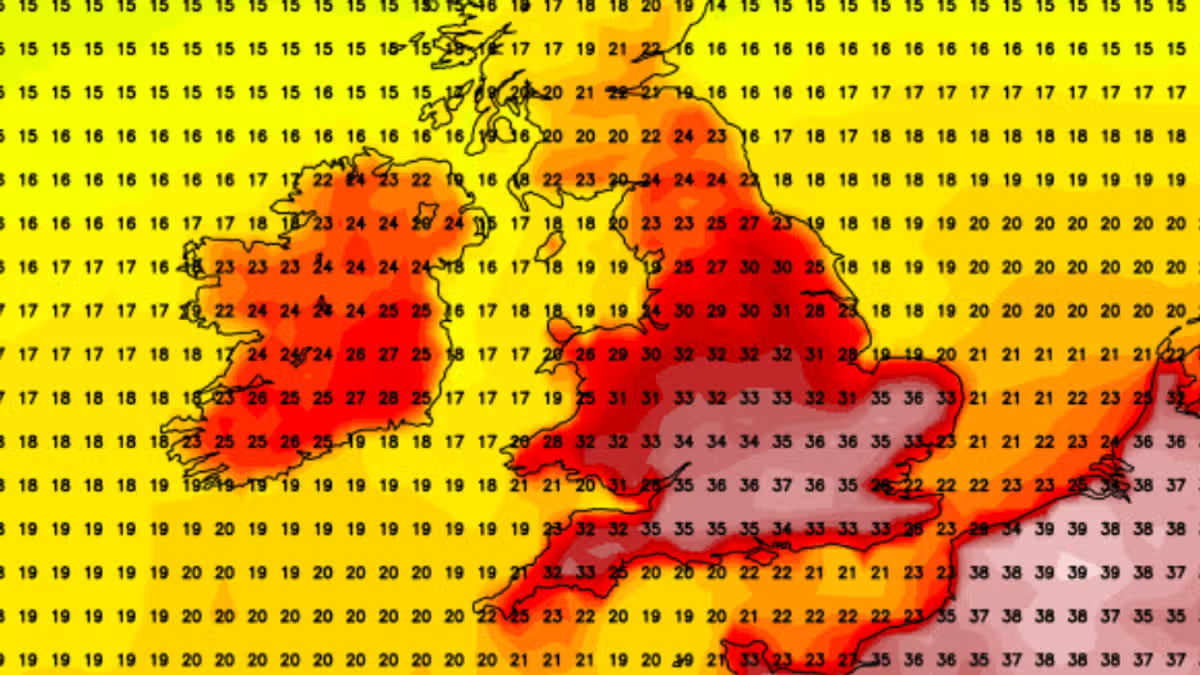
Netweather maps suggest that temperatures will begin to climb on Sunday, soaring above 30C, with the hot conditions expected to stay for six days.

On Sunday, August 9 there will be highs of 34C, with much of the south reach 32C or higher.

Elsewhere, highs of above 30C are also expected. With the East and West Midlands both sitting at around 32C.

Advertisement

In Suffolk, there will also be highs of 32C. Despite being slightly cooler, northern England will also see warm conditions, with Greater Manchester having the chance of reaching 29C.

On Monday, these sweltering conditions are set to remain, with it only getting hotter.

Highs of 37C are forecast in Berkshire, nearing the record 38C that was recorded at Lingwood, Norfolk on June, 26.

In London, Cambridgeshire, and certain parts of the south west, temperatures are also expected to skyrocket to 35C.

Hertfordshire is forecast to reach 36C alongside Suffolk.

These highs do not stop there, as on Tuesday much of the UK will be battered by the heat with the warmth travelling further north.

Many areas in the Midlands and the south will comfortably remain in the mid thirties as Greater Manchester and Cheshire are also expected to reach 34C and 35C.

Advertisement

On Wednesday, the weather maps are still a volcanic red, with some areas of Yorkshire also reaching 30C.

Areas in Wales and Scotland, although cooler, are also predicted to climb to the mid to late twenties.

Then, on Thursday, this prolonged spell of heat does not leave, with highs of 35C as much of London and the surrounding areas stays at 34C.

The whole week will be boiling as Friday is also expected to reach 35C in certain areas, including Sussex and Norfolk.

In Lincolnshire there are also expected to be highs of 33C, with Birmingham reaching 32C.

The Met Office says: “A heatwave is an extended period of hot weather relative to the expected conditions of the area at that time of year, which may be accompanied by high humidity.”

The UK’s threshold is met when a part of the country records a period of at least three consecutive days with daily maximum temperatures meeting or exceeding the heatwave temperature threshold – which varies by county.

Advertisement

According to these Netweather maps a heatwave is certainly on the cards for next week, as the warmth with smother much of England for a six day period.

The Met Office forecast says that it will be dry for most on Monday with temperatures on the very warm to hot side.

The longer range forecast then continues adding: “For the most part, temperatures look to remain above average, especially in the south, and perhaps turning very warm or hot.”

Source link

Advertisement
Continue Reading

Trending

Copyright © 2025