
Connect with us
DAPA Banner

NewsBeat

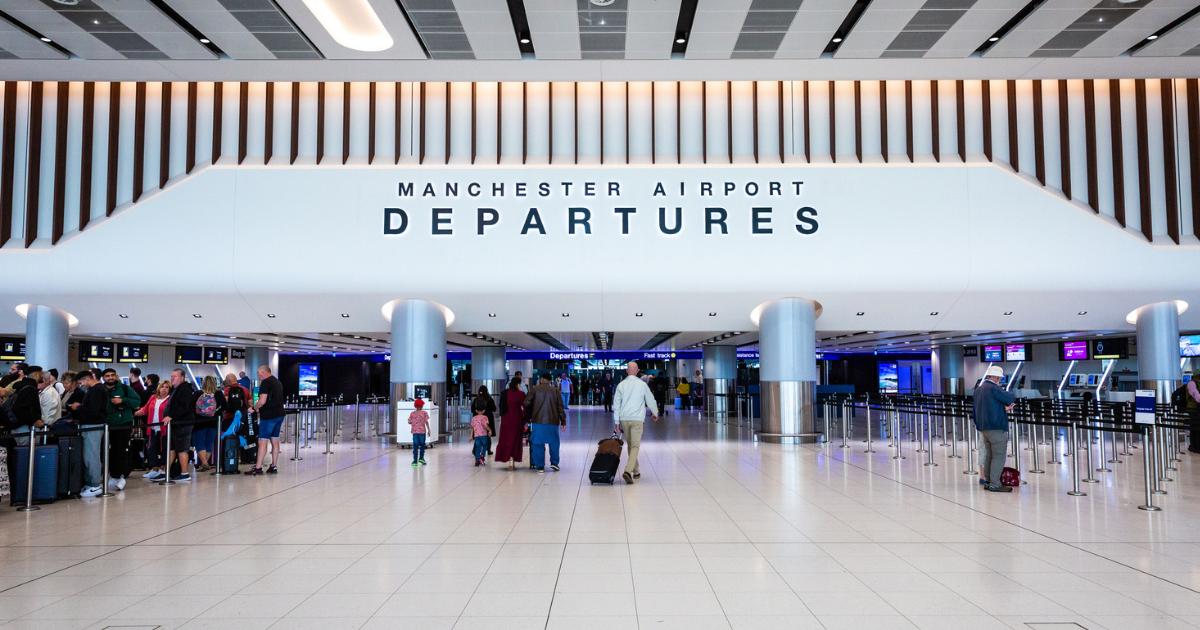
Manchester Airport disruption affect over one million passengers

Published

on

Manchester Airport rolls out barrierless parking at T2 car park

Analysis by passenger rights firm AirHelp found that 36 per cent of passengers travelling through the airport between January and March experienced some form of disruption.

That equates to around 1.03 million people, including more than 47,700 whose flights were cancelled.

The figures come ahead of the busy summer travel period and reflect wider challenges across the aviation sector.

Advertisement

Across the UK and Ireland, 18.5 million passengers – roughly 31 per cent– were impacted by delays or cancellations during the same period.

Manchester Airport was among several major hubs to see higher-than-average disruption levels, alongside airports such as Birmingham (33 per cent).

Airport officials say the figures need to be viewed in context, pointing to a range of external factors that have affected punctuality across the industry.

A spokesperson for Manchester Airport said: “This analysis of the Civil Aviation Authority’s data is misleading as it ignores important context – context which is directly referenced by the CAA in the notes accompanying the research and in the research itself.

Advertisement

“Punctuality is affected by factors that are outside of an airport’s control. The two most significant factors contributing to delays in the last year have been industrial action affecting air traffic control in Europe, and the weather.

“These were exacerbated by airspace restrictions above conflict zones meaning airports with significant long-haul networks, like Manchester, were more significantly affected than others.

 “As an industry we are working collectively to achieve the best possible on-time departure rates, while protecting flight schedules and avoiding the need for cancellations.”

Flights from the Far East or South Asia are regularly delayed due to restrictions on flying over Ukraine or the Middle East, forcing more circuitous routes.

Advertisement

This can delay arrivals and have a knock-on effect on outbound departures.

The Civil Aviation Authority (CAA) also notes that disruption data should be treated with caution, stating that factors such as severe weather, technical issues and other extraordinary circumstances beyond the control of airports and airlines can impact schedules and do not necessarily reflect overall performance.

Despite the disruption, AirHelp said hundreds of thousands of passengers could be eligible for compensation, with more than 440,000 potential claims identified across the UK and Ireland.

AirHelp chief executive Tomasz Pawliszyn said: “Passengers travelling through Manchester have faced a challenging start to the year, with disruption levels above the national average.

Advertisement

“As we head into peak travel season, this is a reminder that delays and cancellations remain a widespread issue.”

Passengers are being encouraged to check their rights and eligibility for compensation before travelling through the AirHelp app.

Source link

Advertisement
Continue Reading
Click to comment

You must be logged in to post a comment Login

Leave a Reply

NewsBeat

Belfast Blitz memorial approved for East Belfast

Published

on

Belfast Live

Nearly 1,000 people died during the four raids with the highest fatalities in North Belfast, around the Antrim Road, Crumlin Road and New Lodge

A new Belfast Blitz memorial sculpture has been approved for East Belfast.

A blitz memorial sculpture, made from concrete and set on a plinth, will be erected within the grounds of Westbourne Presbyterian Church, Newtownards Road BT4.

The applicant is Mervyn Gibson, Minister at Westbourne Presbyterian Church. He is also the grand secretary of the Orange Order.

Advertisement

READ MORE: Lisburn Road property acting as illegal HMO for over two years

READ MORE: Women paid more than men at Belfast Council after internal figures revealed for first time

The sculpture will be positioned on the hardstanding area to the front of Westbourne Presbyterian Church adjacent to the pedestrian footpath. Following advertisement in the local press and neighbour notification, no representations were received by the council. None of the Stormont departments or any other statutory consultees objected.

The council planning officer recommended the application for approval. The planning report states: “The scale, design and materials of the proposal will not detract from the appearance and character of the surrounding area. The proposal is considered to comply with relevant planning policy and guidance.”

Advertisement

The sculpture will measure approximately 2.4 metres by 0.5 metres. It will be cast in glass reinforced concrete with a dark charcoal finish and set on a masonry pier with red brick. It depicts a male rescue worker and a woman in front of the destroyed facade of a house.

Earlier this month, designs for the city centre Belfast Blitz Memorial were revealed by acclaimed Berlin-born artist Ralf Sander, and his daughter Naomi Sander, ahead of the 85th anniversary of the tragic events.

The result of a partnership between Belfast Council and The Northern Ireland War Memorial Museum, the planned memorial will be located in Cathedral Gardens, an area between St Anne’s Cathedral and the Ulster University Belfast campus.

Advertisement

It is anticipated that the memorial will be unveiled in spring 2027, when the revamped Cathedral Gardens open, featuring a large multi-use events space, a play area inspired by nature, and a kids’ interactive digital play zone.

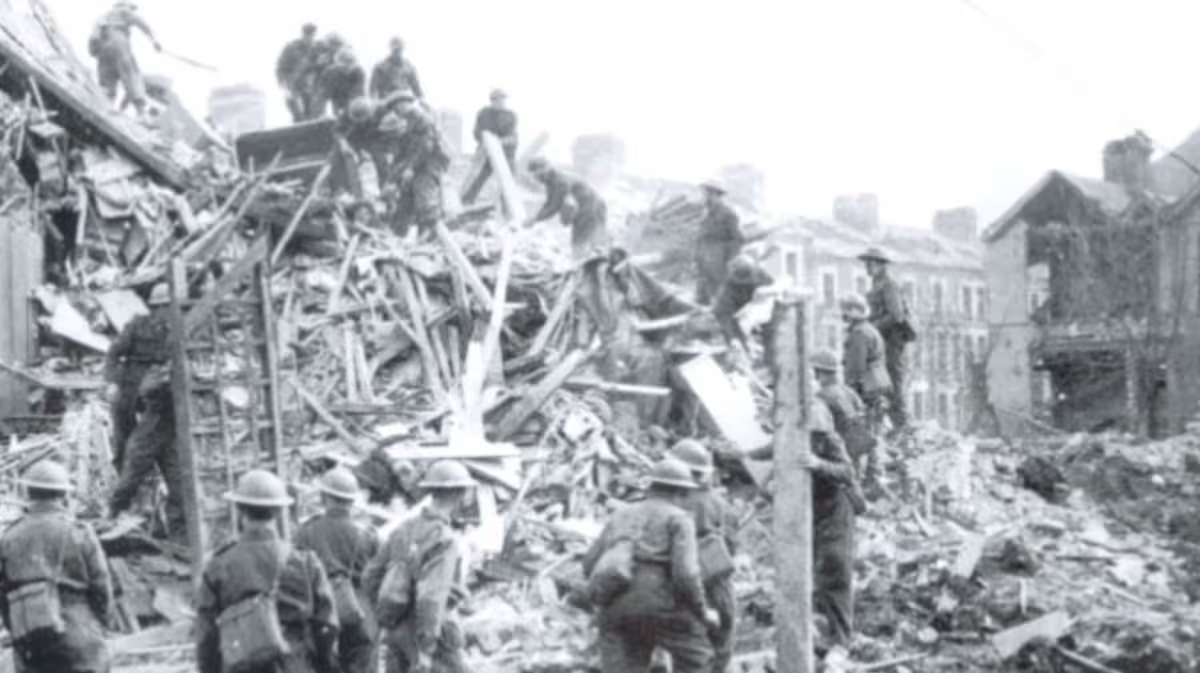
Belfast suffered four bombing raids from the Luftwaffe in 1941, now known as the Dockside Raid on April 7 and 8, the Easter Tuesday Raid on April 15 and 16, the Fire Raid on May 4 and 5 and the Final Raid on May 5 and 6.

Nearly 1,000 people died during the Belfast Blitz, with the highest fatalities occurring in North Belfast, around the Antrim Road, Crumlin Road, and New Lodge areas. 1,500 people were injured, 400 of them seriously.

50,000 houses, more than half the houses in the city, were damaged. 11 churches, two hospitals and two schools were destroyed. Densely populated residential streets, such as Hogarth Street, were devastated, while industrial areas like York Street Mill, Harland and Wolff, and the docks were also hit.

Advertisement

The devastation caused roughly 100,000 people to become homeless. Due to the destruction, makeshift morgues were established at locations like St George’s Market and Falls Road Baths.

In the east of the city, Westbourne and Newcastle Streets on the Newtownards Road, Thorndyke Street off the Albertbridge Road and Ravenscroft Avenue were destroyed or damaged.

For all the latest news, visit the Belfast Live homepage here and sign up to our daily newsletter here.

Source link

Advertisement
Continue Reading

NewsBeat

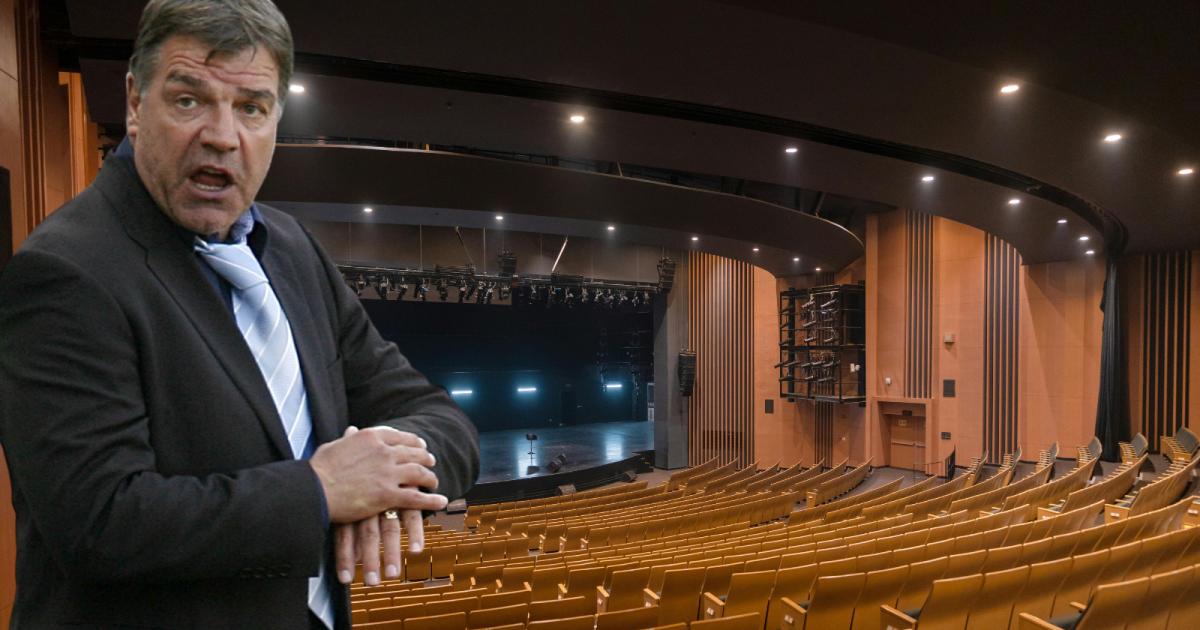
Bolton fans have chance to help shape Big Sam: The Musical

Published

on

Bolton fans have chance to help shape Big Sam: The Musical

Plans for a brand-new theatre show inspired by the legendary Whites boss are in their early days, with hopes to bring it to life on the stage in 2028.

Backed by the club, The Octagon and the Arts Council, Allardici’s: The Big Sam Musical is the brainchild of lifelong supporter Jamie Walsh and will be assembled with the help of his company Small Talk Productions.

And the writer is now looking for input from fellow Bolton fans as he looks to shape the development of the musical over the summer.

Advertisement

He told The Bolton News: “Big Sam somehow became a punchline, labelled a long-ball manager with an old school team. But obviously that was never true!

“I’ve been a Wanderers fan my whole life, and those years under Big Sam were extraordinary: electric football, world-class players, and a feeling that anything was possible. I want to celebrate all of that.

“Allardici’s combines my two great passions – creativity and Bolton Wanderers – and I’d   love as many fans as possible to help shape it from day one.

“Your memories, your voices, your stories. Come and be part of it.”

Advertisement

Allardici’s is a surreal comedy musical about football, fame and what happens when you defy expectations.

Set in a fictional Costa Blanca lounge bar owned by Sam Allardyce, Big Sam now holds a nightly residency. Backed by a house band of former players, he tells his story.

What follows is a cartoonish fever dream of footballing faces, press stings and Premier League legends.

The first phase of development will begin with a series of workshops held at the Community and Wellbeing Hub at the Toughsheet Stadium on Tuesday, June 23 (2pm to 3.30pm and 6pm to 7.30pm) and Tuesday, June 30 (2pm to 3.30pm and 6pm to 7.30pm). Sessions will finish before England’s scheduled World Cup fixtures and are limited to 30 people.

Advertisement

These sessions will give fans the chance to share memories, stories and perspectives from the Big Sam era, helping shape the development of the musical from the ground up.

The workshops will explore the Premier League days under Allardyce, the iconic players and figures of the day and how the period has been remembered by supporters. Contributions will directly inform the script, music and visual feel of the show.

Fans can also take part remotely via an online form, sharing stories, photos, videos and memories if they’re unable to attend in person.

More information on how to book a place on the workshop can be found on the Facebook page, facebook.com/smalltalkprods on Twitter/X on @smalltalkprods and Instagram @smalltalkprods.

Advertisement

Source link

Continue Reading

NewsBeat

Why the dawn chorus sounds different from place to place

Published

on

Why the dawn chorus sounds different from place to place

Each May, nature lovers get out of bed early to experience the seasonal wonder of birds singing, as the sun rises above the horizon to take part in International Dawn Chorus Day.

In Europe you may hear blackbirds, chiffchaffs and nightingales. In the US, cardinals, chickadees and blue jays. In East Africa, morning thrush, hornbills and wood doves. Each with their own song.

There is no single dawn chorus, but the harmonies of hundreds of bird voices at first light change from place to place in a huge wave that surfs around the world as the planet rotates.

A dawn chorus is part of a wider soundscape – the interaction between biological sounds from birds and other animals (biophony), natural physical sounds such as wind or water (geophony) and human‑generated sounds like traffic (anthrophony). The dawn chorus is often the most prominent component of the soundscape at sunrise, but it never exists in isolation.

Advertisement

Scientists believe that birds structure their early morning singing in a way that prevents overlap and masking of each other’s vocalisations. They use different pitches and timings to partition and share the acoustic space. Birds in open landscapes such as grasslands use shorter, scratchier sounding song phrases, while birds in woodlands use longer whistling notes – each evolved to allow the best transmission of their song in their own habitat. So birdsong is filtered by trees, grasses, across water and through urban areas, to create a soundscape phenomenon that differs very clearly from region to region.

In the Caledonian pinewoods of northern Scotland, the first morning sounds are often geophonic: wind moving through tall pine canopies. Typically before first light, male western capercaillies gather together to vie for females. The males fan out their tail feathers, puff out their chests and produce a series of clicks, pops and wheezing notes. These are short‑range sounds, shaped by the open understorey and the resonant qualities of the forest.

Fieldwork in these woods has shown how these vocalisations are tied to group mating activity (known as lekking) and can be used to assess the populations of this rare and declining species. These sounds indicate a specialised habitat that has remained untouched for a long time? and without much human disturbance, where the secretive birds can go about their lives, while contributing to the distinctive acoustic character of the pinewoods.

Advertisement

Move to a lowland heath in southern England though, and the differences are immediate. The geophony shifts to the dry hiss of wind across heather and scattered gorse. The dawn biophony is dominated by an assemblage of species that are rare across Europe. The nightjar might have been producing its continuous churring since well before first light. Woodlarks add clear, falling song phrases, while Dartford warblers deliver rapid, scratchy calls from gorse clumps. Research on heathland species has shown how these calls are useful indicators of local habitat quality and structure.

In urban areas, birds have to compete with the noises made by people and their machines. Cars, motorbikes, trains. Sirens and alarms. Nightclubs and pubs. The urban architecture often makes this worse, with reflective hard surfaces bouncing these noises around the streets, instead of absorbing them as natural spaces would.

Birds have to adjust their behaviour around this. Some advance or delay the timing of their singing; others increase volume or shift pitch to higher frequencies. Large‑scale studies indicate that spring soundscapes across Europe and the US are becoming quieter and less varied, due to changes and declines in bird communities, linked to climate change and habitat loss.

Advertisement

Because many people hear birds more often than they see them, changes in soundscape complexity can be one of the earliest signs that local biodiversity is under pressure. Long‑term listeners of bird song – whether through formal monitoring or casual early‑morning walks – may be detecting real ecological change.


Listen up

Understanding soundscapes can help make sense of these changes. A chorus lacking high‑frequency elements may indicate the loss of particular warblers; reduced low‑frequency components may point to declines in larger bird species.

Changes in the geophony, such as increased wind noise in fragmented woodland, can alter how well birds communicate. And increasing man-made noise can mask quieter species entirely, leading to an impression of silence even where birds are still present.

In the UK, pinewoods and heaths both depend upon active vegetation management for conservation and long‑term habitat stability. Maintaining these landscapes means maintaining the conditions that support their characteristic sounds.

Advertisement

Paying attention to how different places sound at first light can be a reminder that biodiversity is something we can hear as well as see. You can even compare it with the sounds that accompany sunrise from other places. Arts cooperative SoundCamp’s Reveil project offers a 24‑hour broadcast that relays sunrise sounds from microphones around the world, allowing us to track the soundscape as the Earth rotates through one full day each spring.

A dawn chorus is more than an aesthetic experience: it is a summary of local ecology, habitat condition and the pressures shaping both.

Source link

Advertisement
Continue Reading

NewsBeat

Emmerdale’s Jacob falls into a despicable trap laid by conniving Dr Todd | Soaps

Published

on

Emmerdale's Jacob falls into a despicable trap laid by conniving Dr Todd | Soaps
She knows exactly what she’s doing (Picture: ITV)

If Jacob Gallagher (Joe-Warren Plant) didn’t live in Emmerdale, reporting Doctor Caitlin Todd (Caroline Harker) to HR probably would’ve worked. Unfortunately, he resides in a village that seemingly cannot function without secrets, lies and manipulation, which means his fight against the bullying surgeon isn’t over yet.

Jacob’s confidence has been chipped away at by Doctor Todd for weeks now. Even when he wasn’t working a shift at Hotten General Hospital, Jacob felt an intense amount of pressure at home due to his boss asking for new research papers.

His home life and work life merged even more when Jacob discovered Todd was moving in with Vanessa Woodfield (Michelle Hardwick).

As if humiliating him at hospital wasn’t bad enough, Doctor Todd now takes pleasure in making it seem as though Jacob is obsessed with her, and she ensures this happens in front of a stunned Vanessa and local GP Manpreet Sharma (Rebecca Sarker).

Advertisement

To view this video please enable JavaScript, and consider upgrading to a web
browser that
supports HTML5
video

Next week, Caitlin continues to mock Jacob while in the village, and maliciously implies to Sarah Sugden (Katie Hill) that Jacob is desperate to return to work, despite the fact that baby Leyla has just been born.

Advertisement

After being confronted by Sarah, Jacob heads to see Doctor Todd and warns her off after lying to his wife. Jacob then follows Todd into the toilets of the pub, and quickly realises he’s fallen into her trap. Seconds later, Vanessa enters, and is very alarmed to find Jacob standing beside Todd.

Later, Jacob tearfully confesses the extent of Todd’s bullying to Sarah, who says they’ll face the problem together.

Jacob Gallagher looking nervous as he speaks to a colleague in Emmerdale.
Jacob previously tried to tell HR about Todd (Picture: ITV)
Doctor Todd speaks to Sarah and Jacob in the street in Emmerdale
Doctor Todd is also trying to make it seem as though Jacob is obsessed with her (Picture: ITV)

The next day, Jacob arrives at a meeting with Carol from HR. He decides to make a formal complaint against Todd, but is blindsided when Carol reveals that Caitlin has already submitted a complaint about him.

Stunned, Jacob then learns that Doctor Todd has provided a substantial file of evidence for her case, including voice recordings.

Heading home, Jacob makes it clear to Sarah that he’s ready to give up the fight. Sarah’s support is enough for Jacob to change his mind though, as he heads to Tug Ghyll to speak to Doctor Todd once more.

Advertisement

What will happen next?

Advertisement
Advertisement

Source link

Continue Reading

NewsBeat

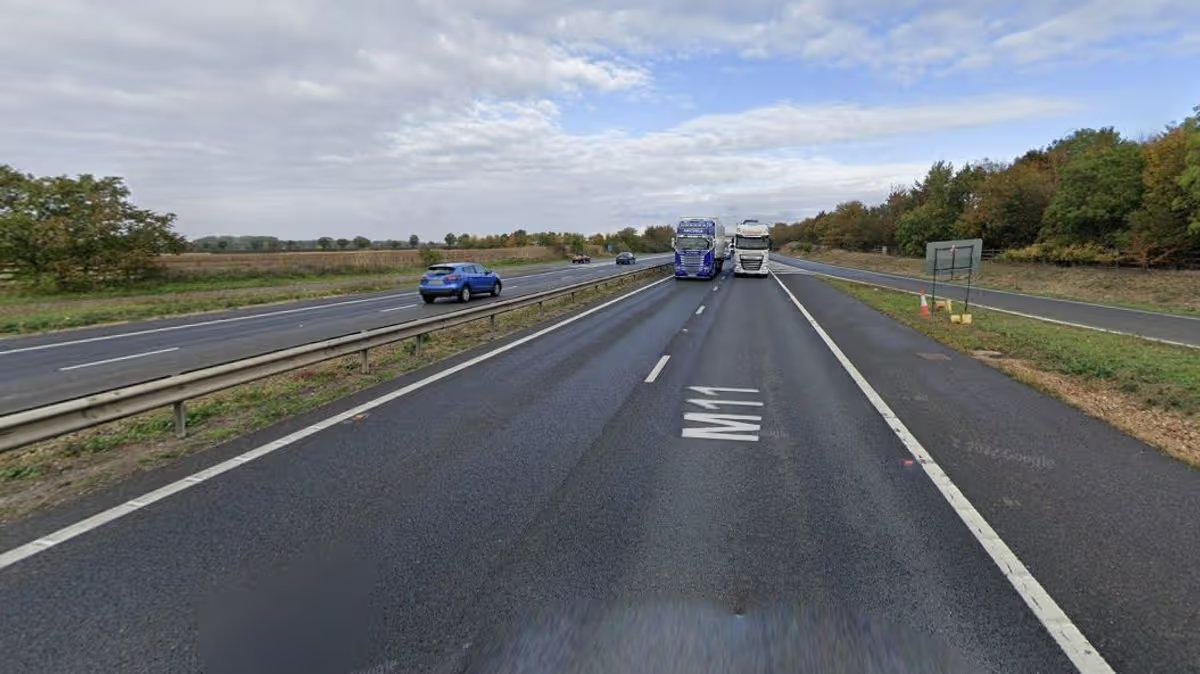
Drivers face ‘severe delays’ after vehicle overturns on M11

Published

on

Cambridgeshire Live

Source link

Continue Reading

NewsBeat

Inquest opened into death of biker Aran Sadler in Scarborough crash

Published

on

Inquest opened into death of biker Aran Sadler in Scarborough crash

Aran Sadler, 32, from Durham, died on April 11 during the event at Oliver’s Mount in Scarborough.

An inquest opened into his death on Thursday (April 23), and heard that Aran was competing in the SuperSport A Race 1 at the Bob Smith Spring Cup on his Kawasaki ZX636.

Aran Sadler (Image: Aran Sadler Racing / Facebook)

Catherine Devereux, assistant coroner for North Yorkshire and York, said the 32-year-old was pronounced dead at the scene, and his provisional cause of death recorded as hypovolaemic shock and traumatic ruptured heart.

Mrs Devereux said: “The circumstances known at this time are that Aran Sadler was involved in a collision as part of a race event at Oliver’s Mount, Scarborough, on April 11, 2026. Mr Sadler was pronounced deceased at the scene.”

Advertisement

Aran gears up for a race (Image: Aran Sadler Racing / Facebook)

The inquest was adjourned until a date yet to be fixed.

Following Mr Sadler’s death, his fiancée, Lorna, paid tribute to her “incredible” husband-to-be.

She wrote: “We are all devastated by Aran’s loss and are struggling to come to terms with it. Although we were aware of the risks of his sport, we never imagined we would be doing this.

“Aran was a fantastic motorcycle racer with incredible raw talent, but he was also a son, brother, and fiancé.

Advertisement

Aran on the racing track (Image: Aran Sadler Racing / Facebook)

“As a family, we appreciate the lovely tributes being made to Aran via social media and directly to us. We already knew that Aran was an incredible man with a heart of gold and it is comforting to see that so many of you felt the same.

“Aran touched so many lives wherever he went, and it was clear that to meet Aran was to love him. He had the most beautiful, contagious smile.

“We appreciate everyone’s support and understanding as we try to navigate our lives following his passing.”

The world of motorsport also mourned the loss of the 32-year-old earlier this month.

Advertisement

Aran on the racing track (Image: Aran Sadler Racing / Facebook)

Teesside Motorsports said: “We are extremely saddened to hear of the passing of Aran Sadler following an incident at Oliver’s Mount.

“Aran was a familiar and valued face at Teesside, attending many events over the years, and he will be greatly missed by all who knew him.

“Our thoughts and condolences are with his family, friends, and the wider racing community at this difficult time. Rest in peace, Aran.”

Advertisement

Source link

Continue Reading

NewsBeat

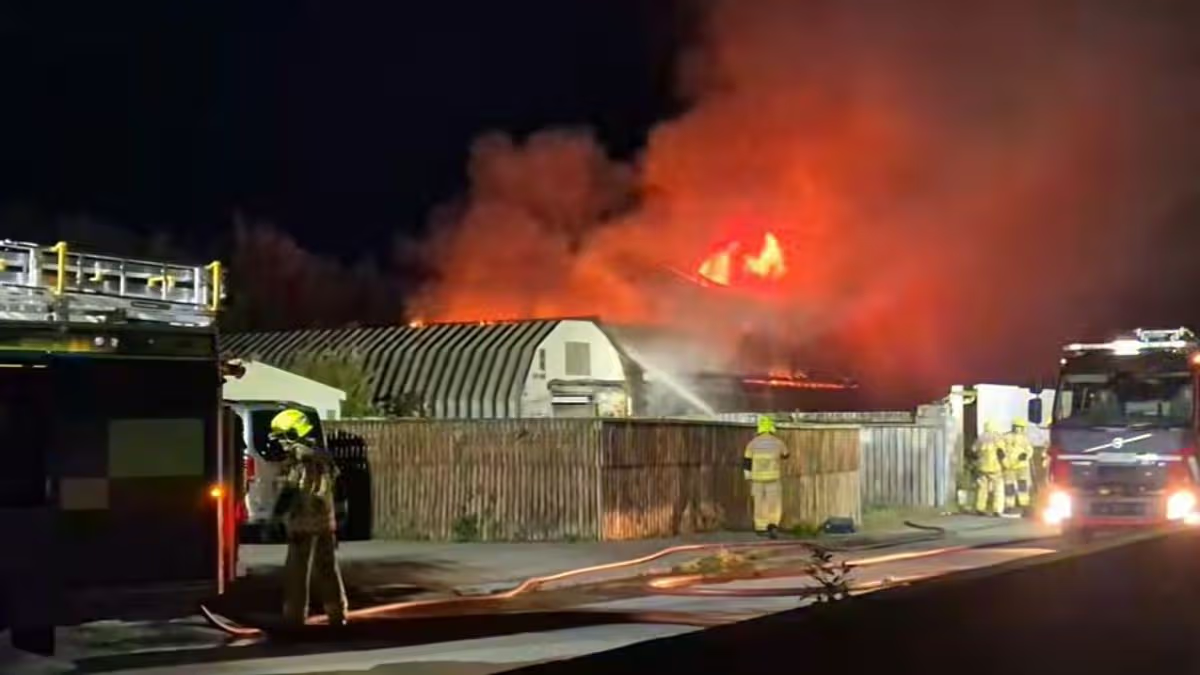
Suspected arson destroys derelict building

Published

on

Wales Online
Suspected arson destroys derelict building | Wales Online