Connect with us
DAPA Banner
DAPA Coin
DAPA
COIN PAYMENT ASSET
PRIVACY · BLOCKDAG · HOMOMORPHIC ENCRYPTION · RUST
ElGamal Encrypted MINE DAPA
🚫 GENESIS SOLD OUT
DAPAPAY COMING

NewsBeat

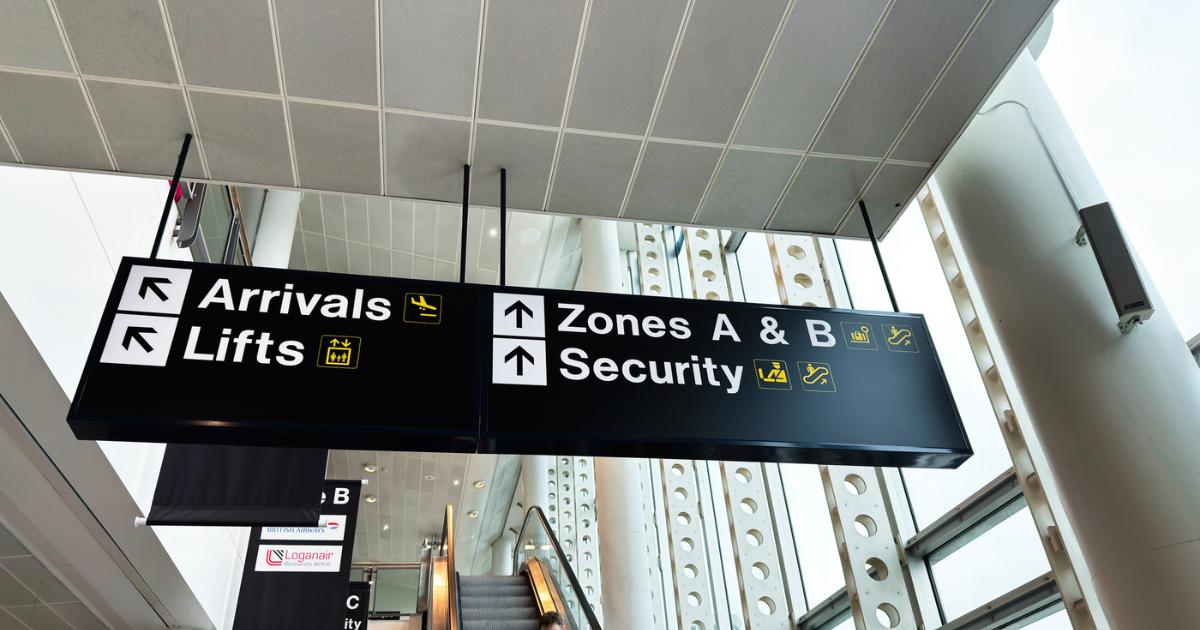
Manchester Airport passengers face 6-hour queues at 3 hotspots

Published

on

Manchester Airport passengers face 6-hour queues at 3 hotspots

It comes due to the wider rollout of the EU’s Entry and Exit System (EES).

The new system requires British travellers and other non-EU visitors to provide biometric data, including fingerprints and facial scans, when entering the Schengen Area.

It has received backlash since its introduction, due to it causing longer waits for passengers at airports.

Advertisement

Major airlines, including Jet2 and Ryanair, have called for the rollout of the new system to be suspended until after the summer to allow for a “smoother airport experience” during peak travel season.

CEO of Ryanair’s Malta subsidiary, Malta Air, David O’Brien, has also threatened to pull all flights.

Now, Brits have been issued a fresh warning of six-hour waits at several major European airports due to the EES.

Manchester Airport passengers warned of 6-hour airport queues

Airline industry leaders have warned that the new checks could dramatically increase processing times at passport control.

Rafael Schvartzman, vice-president for Europe at IATA, said the system increases passenger processing times from around 20-25 seconds to as much as 90 seconds per traveller, creating a “hard risk” of lengthy queues and missed flights.

Advertisement

Schvartzman told IATA’s annual meeting that places were implementing the system differently, some did not have the required technology or infrastructure, and kiosks were understaffed, The Times reports.

He added: “What we are seeing is a very hard risk of really challenging times or waiting times, talking about expectations of three, four, five, six hours, which is unacceptable.

“We know for a fact there are many cases where people have lost flights or their connectivity.”

Among the worst-affected holiday hotspots are Lisbon, Lanzarote, Alicante, and Mallorca.

Advertisement

Manchester Airport offers flights to three of the four locations (Lisbon, Lanzarote, and Alicante), meaning passengers travelling from the area may be affected.


The new EU entry and exit system explained


Nicole Kerr, chief executive of transport platform Mozio, said holidaymakers should be prepared for potential disruption.

“UK searches for ‘summer holiday deals’ have increased by 123% in the past three months, as Brits look to secure their travel plans ahead of peak season,” she said.

She continued: “While a holiday is meant to be a relaxing and stress-free experience, experts have warned that changes to the travel industry could cause delays and confusion.”

Advertisement

Nicole said EES was likely to be one of the biggest challenges facing travellers this summer: “Passengers travelling to European airports will now have to use the new European Entry/Exit System, which requires biometric data, such as fingerprints and a facial image.

“While the new system is expected to reduce wait times at passport control in the future, Brits have already experienced long delays as the rollout continues.”

She also warned that delays may not end when passengers leave the terminal.

“Alongside these procedures, travellers will inevitably be met with other challenges which could cause delays, such as airport strikes and long taxi queues when leaving the terminal,” Ms Kerr said.

Advertisement

She added: “In 2025, travellers reported long taxi queues at airports across popular tourist destinations, including the Canary Islands.”

EES is not the only travel change Brits need to know

Britons have also been warned to prepare for the introduction of the European Travel Information and Authorisation System (ETIAS), expected to launch later in 2026.

Under the scheme, visa-exempt travellers, including UK passport holders, will need permission to enter 30 European countries for short stays.

Applications will cost €20, although under-18s and over-70s will be exempt from the fee.

Meanwhile, travellers heading to the United States are being encouraged to use the Mobile Passport Control app, which allows passengers to complete border information digitally before arriving at passport control.

Advertisement

Travel expert Gianni Leone, senior product director at Away Holidays, says preparation is key, particularly for families travelling with children.

Parents are advised to:

  • Arrive at airports earlier than usual
  • Keep passports and travel documents easily accessible
  • Pack extra snacks, drinks and activities for children
  • Download any required travel apps before departure
  • Allow additional time for passport control and security checks
  • Pre-book airport transfers where possible

For travellers looking to avoid further delays after landing, it is recommended to book airport transfers in advance.

Sometimes there is an option to use metro or train systems, and even regular buses, but they often need pre-planning.

What are your holiday plans this year? Let us know in the comments.

Advertisement

Source link

Continue Reading
Click to comment

You must be logged in to post a comment Login

Leave a Reply

NewsBeat

Social media ban: Government issues update about curfew for 16 and 17 year olds

Published

on

Manchester Evening News

The government has confirmed if it will introduce a curfew as part of its social media ban

Keir Starmer announces social media ban for under 16s

The Government has confirmed that it will be looking in more detail at introducing overnight curfews as part of its social media ban that it introduced today, June 15.

Sir Keir Starmer announced this morning that under-16s will be banned from a range of social media in a “big moment for our country.” The Prime Minister said the Government is looking to “‘move at speed” to pass the legislation as he made the announcement today (June 15).

Advertisement

The Prime Minister announced the restriction in a Downing Street press conference as he warned social media was having an impact on children’s happiness and mental health.

Click here to get the biggest stories straight to your inbox in our Daily Newsletter

Sir Keir said he would not compromise on the “safety and happiness of our children” and that he was confident the ban can be effective but acknowledged some children would find their way around it.

Reports had indicated the announcement would include a night-time social media curfew for 16 and 17 year olds. But in an update after Sir Keir’s speech, the Government has confirmed it will be looking in more detail at overnight curfews and breaks in infinite scrolling for under-18-year-olds and ‘will set out more detail in July’.

Advertisement

Under 16s social media ban to come in next year

Announcing the ban for all children under the age of 16, the Prime Minister confirmed that the Government will seek to pass the legislation before Christmas this year, in the hope that the law will come into effect in early 2027, ‘probably around spring time’.

The government says it plans to use the same model for a social media ban as Australia, which would capture user-to-user platforms, whose purpose is to enable social interaction and which allow users to post material, alongside algorithms.

The ban will therefore include platforms like Snapchat, TikTok, YouTube, Instagram, Facebook and X. However, messaging services like WhatsApp and Signal will not be included in the social media ban.

So-called AI ‘romantic companion’ chatbots – designed to simulate sexual relationships or roleplay with users – will have to enforce a minimum age of 18. Similar intimate functionalities will be restricted for under-18s on AI chatbots more widely.

Advertisement

The Government also announced that it will take “world leading” action on gaming and live streaming platforms so strangers will not be able to contact children, Sir Keir Starmer said.

Speaking at the press conference, Sir Keir Starmer said: “This is not something I do lightly, and I will not present it as cost-free, as if social media has brought no benefits to young people, because clearly that is wrong.

“But government is always about choices, and it’s clear to me that a full ban is the right choice. I come to it as a parent myself. I know exactly the fears that we all feel when we’re thinking about this issue.

“All I’ve ever wanted for my own children, hand on heart, is for them to be happy and for them to be safe, and I think that’s what any parent wants, but I ask the question now, ‘do we truly believe that social media creates a happy environment for our children?’

“Do we truly believe that it’s a place where they can feel safe? I don’t think I even need to answer those questions, do I? Every parent can see it with their own eyes. Social media is making children unhappy.”

He added that social media was “making it easier for bullies to harass and abuse” children and “could even be harming their mental health – exposing them to content that is dangerous, because that’s what grabs the attention”.

Advertisement

He said: “It’s designed to be addictive, of course it is. Features like the infinite scroll, they’re designed to lock you in for hours, and if nothing else, there’s an opportunity cost to that.

“It stops children doing their homework, reading, playing with their friends outside, going to bed a decent hour. Now that may not sound like much, but these are the activities that help a child develop into an adult.

“We know how important they are. We just never thought that something would come along to threaten them.”

The announcement comes following a public consultation on the issue, which closed on May 26 and received about 116,000 responses, making it the second-largest in history.

Advertisement

Over 83% of parents who responded said social media risks outweigh the benefits for children – with 91% backing a minimum age of 16 before platforms can offer their services to children.

Almost two thirds (62%) of children who responded said restricting the high-risk features would make them safer online. But 72% also said they were worried about feeling left out if restrictions came in.Sir Keir last week issued a three-month ultimatum to Apple and Google to make it technologically impossible for children to take, share or view nude images on their smartphones.

The latest move risks prompting a backlash from Donald Trump’s pro-tech US administration, which warned against a blanket ban for under-16s.

In a response to the consultation, the US embassy in London said the country preferred “narrowly targeted requirements”, that “most content should be accessible by default”, and that age verification requirements could “impose disproportionate compliance burdens on American companies”.

Advertisement

Source link

Continue Reading

NewsBeat

Loganair to cut flights to 3 destinations from July 19

Published

on

Loganair to cut flights to 3 destinations from July 19

Loganair offers flights to and from destinations across the UK and France, including Paris, Jersey, Edinburgh, Glasgow, and London.

But the regional airline has revealed it can no longer maintain its current level of service “without impacting the wider business”.


Full list of flights being cut by Loganair

Loganair will reduce flights between Inverness and Stornoway, Orkney, and Shetland from July 19.

Advertisement

There are currently daily flights from Inverness to Orkney (Kirkwall) and Shetland (Sumburgh), and a regular service to Stornoway.

But flights between these destinations will only operate on Saturdays and Sundays from July.

Chief executive of Loganair, Luke Farajallah, speaking to the BBC, said: “We do not take these decisions lightly.”

He continued: “The recent increase in fuel prices, together with escalations in aircraft repair costs, airport fees and route charges, mean that Loganair, Hial and Transport Scotland must find a way to sustain lifeline routes where passenger numbers are limited.”

Advertisement

“These routes matter to us and to the communities they serve, but we must balance that commitment with the long-term sustainability of Loganair and the wider network those communities also rely on.”

Mr Farajallah said that if more funding were secured, then full services could resume in October.

A support package has been offered by Hial, owned by the Scottish government, but it warned that any assistance must be affordable.

British Airways and Ryanair among other major airlines to have cut flights

Several other airlines have been forced to cut flights, increase fares, or axe UK routes in 2026.

UK airline Skybus announced back in April that it had ceased all flights between Cornwall and London due to “the huge rise in the global cost of fuel” and “a significant drop in new passenger bookings”.

Aer Lingus has also cut around 500 flights from its schedule due to “mandatory maintenance”.

Rising costs have also seen Ryanair cut flights from 19 airports across the UK and Europe recently.

Advertisement

The budget airline has also been forced to close two of its bases abroad in Thessaloniki and Berlin.

British Airways, like most airlines, was forced to cancel or suspend all flights in and out of the Middle East in March due to the conflict between the US, Israel, and Iran.

BA had been set to resume its regular schedule to Dubai International Airport on July 1.

Advertisement

However, this has now been delayed, and all flights between the UK and Dubai have been cancelled until October 25.

All flights to Amman, Bahrain, and Tel Aviv have also been cancelled until October.


BA has also confirmed it is reducing its Doha schedule to one daily flight, set to resume from August 1, according to Time Out.

Advertisement

Wizz Air has warned it could be forced to cut routes from the UK due to rising air passenger duty (APD).

UK airlines that have fallen into administration/liquidation in 2026

Meanwhile, four UK airlines have fallen into administration or liquidation in 2026:

Four UK travel companies have also closed in 2026:

  • Regen Central Ltd
  • Gold Crest Holidays
  • Asiara UK Ltd
  • Simply Florida Travel Ltd

Luxury UK holiday company Salamander Voyages shut down back in April after entering administration.

Do the Loganair flight cuts impact your travel plans? Let us know in the poll above or in the comments below.

Advertisement

Source link

Continue Reading

NewsBeat

What apps will be banned in UK under-16s social media ban?

Published

on

What apps will be banned in UK under-16s social media ban?

Sir Keir confirmed the plans at a press conference at Downing Street on Monday, June 15, sharing: “The government will ban access to social media for all children under the age of 16.”

He said: “This is not something I do lightly, and I will not present it as cost-free, as if social media has brought no benefits to young people, because clearly that is wrong.

“But government is always about choices, and it’s clear to me that a full ban is the right choice.

“I come to it as a parent myself. I know exactly the fears that we all feel when we’re thinking about this issue.

Advertisement

“All I’ve ever wanted for my own children, hand on heart, is for them to be happy and for them to be safe, and I think that’s what any parent wants, but I ask the question now, ‘do we truly believe that social media creates a happy environment for our children?’

“Do we truly believe that it’s a place where they can feel safe? I don’t think I even need to answer those questions, do I?

“Every parent can see it with their own eyes. Social media is making children unhappy.”

What apps will be banned as part of the under-16 social media ban?

More details on the exact apps have yet to be confirmed, but it’s understood that social media platforms, TikTok, Instagram, Threads, Facebook, X, YouTube, Snapchat, and Reddit will be banned for under-16s.

Advertisement

The ban will also stop under-16s from accessing romantic or sexual AI chatbots.

The PM did confirm that there will be a limit on their ability to chat with strangers on gaming and live-streaming platforms.

The ban is expected to come into full force by Spring 2027.

Sir Keir said that the ban will give children “more freedom to grow up” and “more opportunity”.

Advertisement

The PM has announced a social media ban. (Image: Danny Lawson/PA Wire)

Why is social media being banned for under-16s?

The ban comes in response to overwhelming support during a government consultation, which found that 91 per cent of parents backed raising the minimum age for social media access to 16.

The consultation on the proposals closed on May 26 and drew about 116,000 responses, making it the second-largest in history.

More than 83 per cent of parents who responded said the risks of social media outweigh the benefits for children.

Among younger respondents, 62 per cent said restricting high-risk features would improve their safety online.

Advertisement

However, 72 per cent expressed concerns about feeling left out if such restrictions were introduced.

Do you agree with a social media ban for under-16s? Let us know your thoughts in the comments.

Source link

Advertisement
Continue Reading

NewsBeat

What day is Clarkson’s Farm on?

Published

on

Wales Online

Need to know

Clarkson’s Farm Season 5 is back on Prime Video with Jeremy Clarkson facing fresh challenges at Diddly Squat Farm.

Jeremy Clarkson and Charlie Ireland are back for new episodes of Clarkson’s Farm(Image: PRIME VIDEO)

Everything you need to know about what day Clarkson’s Farm is on

  1. Clarkson’s Farm Season 5 continues on Prime Video with episodes seven and eight dropping on June 17, following the first six episodes that aired on June 3 and June 10. New episodes drop each Wednesday, with the final two instalments airing this week.
  2. Jeremy Clarkson admits he still struggles with basic farming tasks despite years of experience. “After six or seven years of farming, I still can’t attach anything to the back of a tractor,” he confessed. The former Top Gear host has faced major challenges this season, including a heart scare that forced him to make life at Diddly Squat less stressful.
  3. Season 5 has also seen Clarkson participate in farmers’ protests against Inheritance Tax and create a Santa’s Grotto at The Farmer’s Dog pub. Executive producer Andy Wilman promises the final episodes will be “much heavier and more emotional than anything we’ve seen before.”
  4. Upcoming episodes will feature high-tech farming equipment, Endgame the bull becoming a father, and chilli expert Tomas returning for a spicy pub dinner. Things are set to take a dark turn before the season ends, with the final two episodes expected to be particularly hard on Clarkson.
  5. As for what time the episodes will drop, Prime Video tends to release new seasons at midnight Greenwich Mean Time, which is 1am British Summer Time. This is good news for fans because as soon as they wake up on the day of release, the final two episodes will be ready and waiting for them to binge.

READ THE FULL STORY: Clarkson’s Farm season 5 release time: What time are new episodes out?

Source link

Continue Reading

NewsBeat

New council housing development at key site in Coatbridge now underway

Published

on

Daily Record

The Bank Street project will see 11 supported accommodation units and six flats for social rent delivered by Cruden and forms part of North Lanarkshire Council’s ambitious new housing supply programme, which aims to deliver 6,000 new homes by 2035.

A new council housing development at a key site in Coatbridge is now underway.

Advertisement

The Bank Street project will see 11 supported accommodation units and six flats for social rent delivered by Cruden and forms part of North Lanarkshire Council’s ambitious new housing supply programme, which aims to deliver 6,000 new homes by 2035.

The derelict site, which formerly comprised shops, offices and a public house, all of which have since been demolished, is set to transform the gateway to the town centre.

The site, within the Coatbridge, Blairhill and Dunbeth Conservation Area, will see the proposed new-build design complement the area’s heritage while providing modern, energy-efficient housing.

Regeneration of this dilapidated site is in line with the Coatbridge Town Vision, bringing gap sites back into productive use and encouraging new housing provision within town-centre locations. The site will deliver much-needed homes for Coatbridge in the form of social-rented housing as well as supported accommodation.

Advertisement

Attending the sod-cutting ceremony were Convener of Housing, Councillor Michael McPake; Convener of Communities, Councillor Geraldine Woods; and Vice Convener of Housing, Councillor Andrew Bustard. They were joined by representatives from Cruden and the council’s housing team.

Councillor Michael McPake said: “I’m delighted this exciting new project is now underway, transforming a key site on the approach to Coatbridge town centre and providing more housing for the area.

“Our new supply programme is key to delivering transformational change, as set out in The Plan for North Lanarkshire, by providing affordable, modern homes while realising our vision of regenerating town centres and promoting town-centre living.”

The project is being delivered by Cruden and is expected to be completed by summer 2027.

Advertisement

Paul Doran, Development Director of Cruden Homes, said: “It’s great to mark the start of construction at Bank Street, which is another fantastic example of successful collaboration with our valued partners at North Lanarkshire Council. The development will transform this vacant town-centre site into high-quality, energy-efficient homes and play an important role in meeting local housing needs.

“We have also been engaging with local schools while construction is underway to create meaningful opportunities. This includes delivering workshops at Coatbridge High School aimed at inspiring the next generation to explore careers in construction and the built environment.”

*Don’t miss the latest headlines from around Lanarkshire. Sign up to our newsletters here.

And did you know Lanarkshire Live had its own app? Download yours for free here.

Advertisement

Source link

Continue Reading

NewsBeat

A timeline of Iran’s nuclear program and tensions with the US

Published

on

What we know about a possible deal to end the Iran war

The United States and Iran have reached an interim deal aimed at ending the war and reopening the Strait of Hormuz.

There are plans for a signing of the deal on Friday in Switzerland. However, previous announcements fell through, and what the deal contained remained in dispute Monday.

Here’s a timeline of the tensions over Iran’s atomic program:

Early days

1967 — Iran takes possession of the Tehran Research Reactor supplied by America under the “Atoms for Peace” program.

Advertisement

1979 — U.S. ally Shah Mohammad Reza Pahlavi, fatally ill, flees Iran as popular protests against him surge. Ayatollah Ruhollah Khomeini returns to Tehran and the Islamic Revolution sweeps him to power. Students seize the U.S. Embassy in Tehran, beginning the 444-day hostage crisis. Iran’s nuclear program goes fallow under international pressure.

August 2002 — Western intelligence services and an Iranian opposition group reveal Iran’s secret Natanz nuclear enrichment facility.

June 2003 — Britain, France and Germany engage Iran in nuclear negotiations.

October 2003 — Iran suspends uranium enrichment under international pressure.

Advertisement

February 2006 — Iran announces it will restart uranium enrichment following the election of hard-line President Mahmoud Ahmadinejad. Britain, France and Germany walk out of stalled negotiations.

June 2009 — Iran’s disputed presidential election sees Ahmadinejad reelected despite fraud allegations, sparking protests known as the Green Movement and a violent government crackdown.

October 2009 — Under U.S. President Barack Obama, the U.S. and Iran open a secret back-channel for messages in the sultanate of Oman.

July 2012 — U.S. and Iranian officials hold secret face-to-face talks in Oman.

Advertisement

July 2015 — World powers and Iran announce a long-term, comprehensive nuclear agreement that limits Tehran’s enrichment of uranium in exchange for the lifting of economic sanctions.

The nuclear deal collapses

May 8, 2018 — U.S. President Donald Trump unilaterally withdraws the U.S. from the nuclear agreement, calling it the “worst deal ever.” He says he’ll get better terms in new negotiations to stop Iran’s missile development and support for regional militias. Those talks don’t happen in his first term.

May 8, 2019 — Iran announces it will begin backing away from the accord. A series of regional attacks on land and at sea blamed on Tehran follow.

Jan. 3, 2020 — A U.S. drone strike in Baghdad kills Gen. Qassem Soleimani, the architect of Tehran’s proxy wars in the Middle East.

Jan. 8, 2020 — In retaliation for Soleimani’s killing, Iran launches a barrage of missiles at military bases in Iraq that are home to thousands of American and Iraqi troops. More than 100 U.S. service members suffer traumatic brain injuries, according to the Pentagon. As Iran braces for a counterattack, the Revolutionary Guard shoots down a Ukrainian passenger plane shortly after takeoff from Tehran’s international airport, reportedly mistaking it for a U.S. cruise missile. All 176 people on board are killed.

July 2, 2020 — A mysterious explosion tears apart a centrifuge production plant at Iran’s Natanz nuclear enrichment facility. Iran blames the attack on Israel.

Advertisement

April 6, 2021 — Iran and the U.S. under President Joe Biden begin indirect negotiations in Vienna over how to restore the nuclear deal. Those talks, and others between Tehran and European nations, fail to reach any agreement.

April 11, 2021 — A second attack within a year targets Iran’s Natanz nuclear site, again likely carried out by Israel.

April 16, 2021 — Iran begins enriching uranium up to 60% — its highest purity ever and a technical step from weapons-grade levels of 90%.

Feb. 24, 2022 — Russia launches its full-scale invasion of Ukraine. Moscow ultimately will come to rely on Iranian bomb-carrying drones in the conflict, as well as missiles.

Advertisement

July 17, 2022 — An adviser to Iran’s supreme leader, Kamal Kharrazi, says Iran is technically capable of making a nuclear bomb, but has not decided whether to build one.

Mideast wars rage

Oct. 7, 2023 — Hamas militants from the Gaza Strip storm into Israel, killing around 1,200 people and taking 251 others hostage, beginning the most intense war ever between Israel and Hamas. Iran, which has armed Hamas, offers support to the militants. Regional tensions spike.

Nov. 19, 2023 — Yemen’s Houthi rebels, long supported by Iran, seize the ship Galaxy Leader, beginning a monthslong campaign of attacks on shipping through the Red Sea corridor that the U.S. Navy describes as the most intense combat it has seen since World War II. The attacks mirror tactics earlier used by Iran.

April 14, 2024 — Iran launches an unprecedented direct attack on Israel, firing over 300 missiles and attack drones. Israel, working with a U.S.-led international coalition, intercepts much of the incoming fire.

Advertisement

April 19, 2024 — A suspected Israeli strike hits an air defense system by an airport in Isfahan, Iran.

July 31, 2024 — Ismail Haniyeh, a Hamas leader, is assassinated during a visit to Tehran after the inauguration of reformist President Masoud Pezeshkian. Israel later takes responsibility for the assassination.

Sept. 27, 2024 — An Israeli airstrike kills Hezbollah leader Hassan Nasrallah in Lebanon.

Oct. 1, 2024 — Iran launches its second direct attack on Israel, though a U.S.-led coalition and Israel shoot down most of the missiles.

Advertisement

Oct. 16, 2024 — Israel kills Hamas leader Yahya Sinwar in the Gaza Strip.

Oct. 26, 2024 — Israel openly attacks Iran for the first time, striking air defense systems and sites associated with its missile program.

Trump returns and reaches out

Jan. 20, 2025 — Trump is inaugurated for his second term as president.

Feb. 7, 2025 — Iran’s Supreme Leader Ayatollah Ali Khamenei says proposed talks with the U.S. are “not intelligent, wise or honorable.”

Advertisement

March 7, 2025 — Trump says he sent a letter to Khamenei seeking a new nuclear deal with Tehran.

March 15, 2025 — Trump launches intense airstrikes targeting Houthi rebels in Yemen, the last members of Iran’s self-described “Axis of Resistance” capable of daily attacks.

April 7, 2025 — Trump announces the U.S. and Iran will hold direct talks in Oman. Iran says they’ll be indirect talks.

April 12, 2025 — The first round of talks between Iran and the U.S. take place in Oman, ending with a promise to hold more talks after U.S. Mideast envoy Steve Witkoff and Iranian Foreign Minister Abbas Araghchi “briefly spoke” together.

Advertisement

April 19, 2025 — The second round of talks between the U.S. and Iran are held in Rome.

April 26, 2025 — Iran and the U.S. meet in Oman a third time, but the negotiations include talks at the expert level for the first time.

May 11, 2025 — Iran and the U.S. meet in Oman for a fourth round of negotiations ahead of Trump’s trip to the Mideast.

May 23, 2025 — Iran and the U.S. meet in Rome for a fifth round of talks, with Oman saying the negotiations made “some but not conclusive progress.”

Advertisement

The Iran-Israel war begins

June 9, 2025 — Iran signals it won’t accept a U.S. proposal over the nuclear program.

June 12, 2025 — The Board of Governors at the International Atomic Energy Agency finds Iran in noncompliance with its nuclear obligations. Iran responds by announcing it has built and will activate a third nuclear enrichment facility.

June 13, 2025 — Israel launches its war against Iran. Over 12 days, it hits nuclear and military sites, as well as other government installations.

June 22, 2025 — The U.S. intervenes in the war, attacking three Iranian nuclear sites.

Advertisement

June 23, 2025 — Iran responds to the U.S. attack by targeting a military base in Qatar used by American troops, causing limited damage.

June 24, 2025 — Trump announces a ceasefire in the war.

July 25, 2025 — Iranian and European diplomats hold talks in Istanbul over Iran’s nuclear program.

Aug. 8, 2025 — France, Germany and the United Kingdom warn Iran in a letter that it will reimplement U.N. sanctions if there is no “satisfactory solution” to the nuclear standoff by Aug. 31.

Advertisement

Aug. 28, 2025 — France, Germany and the United Kingdom say they’ve started the process to “snapback” U.N. sanctions on Iran.

Sept. 9, 2025 — Iran and the International Atomic Energy Agency reach a deal over potentially starting inspections, but questions remain over its implementation.

Sept. 19, 2025 — U.N. Security Council declines to stop “snapback” sanctions on Iran.

Sept. 26, 2025 — U.N. Security Council rejects China and Russia’s last-minute effort to stop “snapback.”

Advertisement

Sept. 28, 2025 — U.N. reimposes “snapback” sanctions on Iran barring any last-minute diplomacy.

New protests roil Iran

Dec. 28, 2025: Protests break out in two major markets in downtown Tehran after the Iranian rial plunges to a record low — 1.42 million rials to one U.S. dollar — compounding inflationary pressure and pushing up the prices of food and other daily necessities.

Jan. 3, 2026: Khamenei says “rioters must be put in their place,” in what is seen as a green light for security forces to begin more aggressively putting down the demonstrations.

Jan. 8, 2026: Following a call from Iran’s exiled crown prince, a mass of people shout from their windows and take to the streets in nationwide protests. The government responds by blocking the internet and international telephone calls to cut off the country from outside influence. An ensuing security force crackdown kills thousands and sees tens of thousands detained.

Advertisement

Jan. 13, 2026: Trump says he has called off any meetings with the Iranians and promises that unspecified “help is on its way.”

Jan. 26, 2026: The aircraft carrier USS Abraham Lincoln and three accompanying warships arrive in the Middle East amid Trump’s threats to attack.

Feb. 3, 2026: A U.S. Navy fighter jet shoots down an Iranian drone approaching the Lincoln in the Arabian Sea. Iranian fast-attack boats attempt to stop a U.S.-flagged ship in the Strait of Hormuz.

Feb. 6, 2026: Iran and the U.S. hold indirect nuclear talks in Oman, with the head of the U.S. military’s Central Command also coming.

Advertisement

Feb. 17, 2026: Iran and the U.S. hold talks in Geneva while Tehran says it has temporarily closed the Strait of Hormuz, the narrow mouth of the Persian Gulf through which a fifth of all oil traded passes.

Feb. 26, 2026: Iran and the U.S. hold another round of talks in Geneva as America assembles the largest fleet of warplanes and aircraft in the Mideast in decades.

The Iran war

Feb. 28, 2026: Israel and the United States launch a war on Iran, killing Khamenei in the conflict’s first moments.

March 9, 2026: Iran names Ayatollah Mojtaba Khamenei, the late supreme leader’s son, as country’s new paramount ruler.

Advertisement

April 7, 2026: A fragile ceasefire in the Iran war is announced, with talks to continue. Israel is not included in negotiations.

April 8, 2026: Israel bombards Lebanon’s capital, Beirut, killing over 300 people in a 10-minute attack.

April 11, 2026: U.S. Vice President JD Vance leads an American delegation to Islamabad, meeting with Iranian team led by parliament speaker Mohammad Bagher Qalibaf, the highest-level direct talks between the two nations since the 1979 Islamic Revolution. The talks end after 21 hours without a deal.

May 31, 2026: Israel’s ground invasion of Lebanon makes its deepest incursion in over a quarter century.

Advertisement

June 15, 2026: The United States and Iran reach an initial agreement to open the Strait of Hormuz and further extend a shaky ceasefire in the Iran war.

Source link

Advertisement
Continue Reading

NewsBeat

Alliance Learning, Bolton celebrates 60th anniversary

Published

on

Alliance Learning, Bolton celebrates 60th anniversary

Alliance Learning, based at Horwich Business Park on Chorley New Road, was founded back in 1966 and has been seen thousands of learners pass through its doors ever since.

Having been ranked “good” across all areas in its most recent Ofsted inspection in June 2024, Alliance Learning now employs more than 50 people, having started with just five.

Chief executive officer Dave Haslam said: “Our 60th anniversary is more than a milestone, it is a celebration of every learner, educator, partner, and employer who has been part of our journey.”

“For six decades, we have believed that learning changes lives.

Advertisement

Staff and learners are celebrating the milestone year (Image: University of Greater Manchester)

“That belief continues to drive everything we do as we look toward the future.”

 The anniversary year has and will feature a series of events, alumni spotlights, and partner collaborations designed to honour the organisation’s legacy while inspiring the next generation of learners.

 As part of the University of Greater Manchester, formerly known as the University of Bolton, group Alliance Learning had more than 300 learners at the time of its last inspection.

Generations of people have honed their skills with Alliance Learning (Image: University of Greater Manchester)

More than half of those learners have been between 16 and 18 years old.

Advertisement

It has been providing apprentices with training in engineering, administration and business management for around 150 employers, mainly based in the North West.

Staff and learners are now planning several ways of marking its milestone year.

Alliance Learning has taught skills to generations of people over 60 years (Image: University of Greater Manchester)

This will feature a series of events, alumni spotlights, and partner collaborations designed to honour the organisation’s legacy while inspiring the next generation of learners.

Anniversary events will also include special celebrations to recognise long-serving staff and showcase learner success stories.

Advertisement

The celebrations will aim to highlight the contributions of employers and community partners who have supported Alliance Learning over the decades.

Leading figures at the group say that as industries evolve and technology changes they hope to stay at the forefront of innovation, inclusion, and opportunity.

Alliance Learning operations executive officer Jonathan Wetherby said: “Education is not just about gaining knowledge, it is about building confidence, creating opportunities, and strengthening communities.

“As we celebrate 60 years, we are also looking ahead with excitement and ambition for what the future holds.”

Advertisement

Source link

Continue Reading

NewsBeat

Family turn Cambridgeshire home into Airbnb and move to shack in Bali

Published

on

Cambridgeshire Live

Lucy and Paul had everything in the UK with a cushy life – but say life in Bali is so much better they will never come back

Family ditch UK for windowless home on tropical island and have no regrets

A family has left the UK for good to raise their children in Bali in a home with no windows or doors. Lucy Argent and husband Paul say they had a good life in the UK – but wanted more for their children and ‘felt stuck in the same routine.

Lucy, 41, and Paul, 36, have turned their Cambridgeshire home into an Airbnb and have moved into a ‘shack’ in Baliu with their three children – seven-year-old Amaya, six-year-old Roo and four-year-old Lela.

Now, they say life is so sweet that they can’t seem themselves ever returning to their home country – even if it means sacrificing…walls. “We won’t ever live in the UK again,” said Lucy, who owned beauty salons prior to the move, while Paul worked as a builder.

“We had a nice life in the UK – a beautiful house, great careers, we made good money and had achieved everything. But we felt like we weren’t living. I had my third baby and thought ‘How can this be my life for the next 30 years?’

“There had to be more to life than just surviving. Now, we are outside all the time, the TV is barely on and we’re a lot more active because of the weather. It’s a fraction of the cost to live here, and we don’t have to work a 9-5. The children are thriving in this environment.”

Lucy, who moved to Bali two years ago, has been documenting their new lives on TikTok, where she has amassed over 100,000 followers. A recent post went viral with over half a million views, where she gave an insight into their unusual home, which is largely open to the outdoors.

She said: “The villa that we live in has no windows or doors. They’re kind of overrated here, really. We have these little roller blinds that come down, so when it rains heavily the inside is protected from the elements.

“But we’ve gotten used to having no windows or doors.” Outside, they have a swimming pool and garden, with the villa wrapping around the space.

Advertisement

Much of it has no windows or doors – with their living room almost totally outside, overlooking the pool. Lucy added: “It’s very nice – it’s a social villa and we love that it’s all open plan.”

Despite being largely open, the home has air conditioning and fans to keep things cool, and they use incense to keep the mosquitos at bay. Meanwhile their bedroom has a tall, traditional ceiling with Lucy jokes is likely home to “a few animals”, and their bathroom is outdoors, too – though still private.

Lucy said: “It was very, very strange for us when we first arrived in Bali. But we’ve lived here for over a year now, and this is pretty normal. And when we move on – if we are ever lucky enough to build our own villa – we would design it like this, with the outdoor space and open-plan, open living, no windows and doors situation.

Advertisement

“We thought we would want something modern and aesthetic, but since living here we would absolutely more go down the traditional route – it’s so perfect for families.”

Source link

Advertisement
Continue Reading

NewsBeat

Tyra Banks Sues Netflix For Defamation After Top Model Documentary

Published

on

Tyra Banks Sues Netflix For Defamation After Top Model Documentary

Tyra Banks is taking legal action against Netflix over the streaming giant’s recent documentary about her time at the helm of America’s Next Top Model.

Earlier this year, fans were surprised to see that Tyra had sat down for an extended chat to discuss her many years as Top Model’s host, head judge and co-executive producer for a documentary titled Reality Check: Inside America’s Next Top Model, which charted the show’s rise as well as some of its more thorny and controversial issues.

It later emerged that she’d “never asked to have any creative input or control”, but four months after the three-part series aired, she is now suing Netflix about it.

People magazine reported on Saturday that it had seen court documents in which Tyra alleged the documentary’s creators had “stripped of context and reassembled” the three-hour interview she gave, in order to “support a false and defamatory narrative unrelated to what she actually expressed”.

Advertisement

In these court documents, it’s alleged: “The false narrative the producers constructed – through selective editing, deliberate omission, and surgical manipulation of continuous footage – included that Ms. Banks knowingly allowed a contestant to be sexually assaulted on her show, exploited that contestant’s trauma for ratings, and then could not even remember it when asked.

“That narrative about Ms. Banks is a complete fabrication – one that Netflix streamed to a global audience of millions.”

HuffPost UK has contacted representatives for both Netflix and Tyra Banks for comment.

Advertisement

An official Netflix synopsis for the three-part doc teased: “Since ANTM ended, a decade ago, longtime fans and new audiences alike – fueled in part by pandemic-era binge-watching – have revisited the show and taken to social media to reconsider its place in the culture, scrutinising controversial moments and questioning whether contestants were treated fairly.

“In the docuseries, Tyra Banks, [executive producer] Ken Mok, and former judges and contestants speak directly to those questions and reflect on the show’s complicated history.”

Vanessa Golembewski, an executive producer on Reality Check, said earlier this year: “From the beginning, this documentary took an incredible amount of trust. Tyra’s perspective was always important to the series, but it was just as important that her involvement was as an interview subject only. She afforded us the same level of trust as everyone else who participates in the documentary.

“She never asked to have any creative input or control, and she’s seeing the footage for the first time alongside the rest of the world.”

Advertisement

Source link

Continue Reading

NewsBeat

Emmerdale and Corrie’s TV schedule changes this week

Published

on

Emmerdale and Corrie's TV schedule changes this week

This week, football on ITV1 impacts the usual TV slots for the two soaps, which regularly get moved around for matches.

Here’s what we know about the changes and which episodes the TV schedule shake-up affects.

Emmerdale and Coronation Street to see schedule changes due to World Cup this week

On Monday, June 15, soap fans can watch Emmerdale at its usual time of 8pm, but the episode will last an hour instead of 30 minutes, meaning Coronation Street will follow from 9pm until 10pm, as it also gets a longer episode.

This is also the case on Tuesday, June 16, however, on Wednesday and Thursday (June 17 and 18), there will be no episodes on ITV1 as back-to-back World Cup matches take over.

Advertisement

Emmerdale and Corrie are back to their usual 30-minute slots on Friday, June 19 at 8pm and 8.30pm respectively.

Over the course of this week, the schedule changes mean that Emmerdale and Corrie will still have the same amount of soaps to watch, but they are split differently.

Normally, you can expect 5x 30-minute episodes of each soap.

EastEnders will also see some schedule changes throughout the week due to the BBC’s World Cup coverage.


Do you remember these emotional Coronation Street plots?


Have you noticed ITV’s new scheduling this year?

Advertisement

From January 2026, the broadcaster introduced a “soaps power hour” on weekdays with 30-minute Emmerdale episodes at 8pm and 30-minute Coronation Street episodes at 8.30pm.

Coronation Street previously aired three hour-long episodes a week, while Emmerdale aired four 30-minute episodes and one hour-long instalment.

Do you think it’s fair for the soaps to be moved while football is on? Tell us in the comments below.

Advertisement

Source link

Continue Reading

Trending

Copyright © 2025