The flight bound for Torp, Norway left the airport an hour after is scheduled departure
A flight departing from Manchester Airport sparked concern after declaring an emergency mid-air and turning back shortly after take-off.
Advertisement
The Ryanair service, Flight RK3226, left Manchester at 8.39am, almost an hour behind its scheduled departure, bound for Sandefjord Airport, Torp, in Norway.
The aircraft, a Boeing 737-800, appeared to be progressing normally during the early part of the journey. However, around 40 minutes into the flight, while cruising at 37,000 feet over the North Sea, the crew issued a Squawk 7700, the international code indicating a general emergency.
Get MEN Premium now for just £1 HERE – or get involved in our WhatsApp group by clicking HERE. And don’t miss out on our brilliant selection of newsletters HERE.
A spokesperson for Ryanair said: “This flight from Manchester to Oslo Torp (24 Mar) diverted back to Manchester due to a minor technical issue with the aircraft. To minimise disruption, we arranged for a replacement aircraft to operate this flight to Oslo Torp.
“This flight departed for Oslo Torp at 11:21am local time.”
An estimated 595 million people globally are living with osteoarthritis. This makes it one of the leading causes of pain and disability.
Osteoarthritis is a degenerative joint disease, in which tissues in the joint break down over time. The condition can affect any joint, but most commonly the knees, hips, hands and spine.
However, the impact of osteoarthritis often goes beyond the affected joint. The condition can have profound effects on daily life.
Research shows that people with osteoarthritis are less likely to remain in work and more likely to develop additional health problems, such as diabetes, obesity and poor mental health, than those without the disease.
Advertisement
One of the key approaches recommended for managing osteoarthritis is exercise, including aerobic exercise and muscle strengthening. It’s shown to be extremely beneficial for managing the condition and its associated symptoms.
But not everyone who has osteoarthritis is able to exercise due to pain and limited mobility. This is why electrical muscle stimulation, a novel technology that uses small electrical impulses to help muscles contract, is being investigated for managing osteoarthritis.
Exercise for osteoarthritis
Aerobic and muscle strengthening exercises are both proven to address key drivers of osteoarthritis symptoms.
Muscle strengthening exercise improves joint stability by supporting the surrounding musculature. This reduces stress on the joint and improves movement.
Together, these approaches can help to break the cycle of pain, inactivity, weight gain and physical decline that can happen in osteoarthritis.
In fact, data suggests that people with musculoskeletal conditions (such as osteoarthritis) are around twice as likely to be physically inactive as their healthy counterparts.
Reported barriers to physical activity include pain, limited mobility, negative experiences of physical activity and a lack of motivation. But the less we move, the more muscle mass and strength we gradually lose.
A difficult cycle can then emerge, whereby pain, stiffness and fear of making symptoms worse all discourage movement. Then, without movement, stiffness and pain worsen.
An alternative approach
When exercise feels too painful or isn’t possible, electrical muscle stimulation (EMS) may offer an alternative method for maintaining and improving strength.
Advertisement
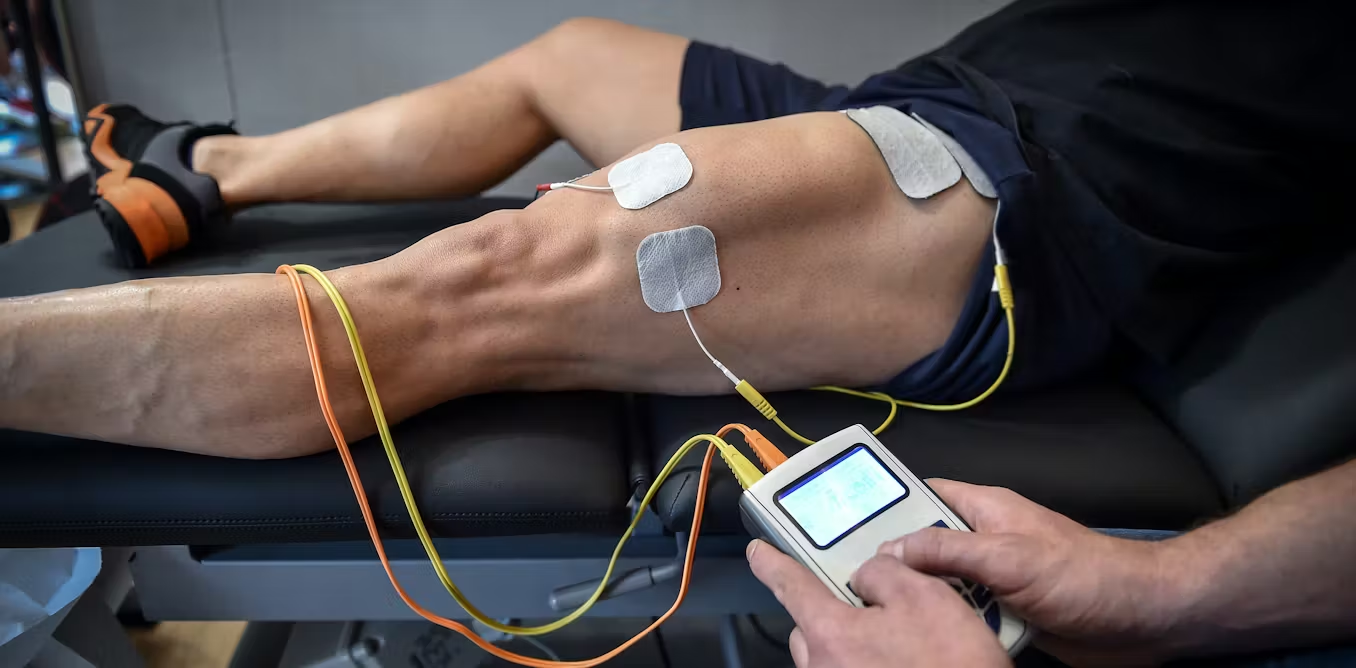
This works by placing electrodes on the skin to deliver small electrical impulses, causing muscles to contract without the joint needing to move. The electrical impulse is similar to the signal we normally send from our nervous system when we want to perform a movement.
Electrodes applied to the skin help the muscles to contract. Louise Burgess, Author provided (no reuse)
The therapy can be used in isolation, or it can be applied during exercise to activate even more muscle fibres in what is called a superimposed muscle contraction.
Electrical muscle stimulation also shows promise for those with severe, end-stage osteoarthritis who are preparing for surgery.
Advertisement
For example, one study compared the effects of performing EMS or exercise before surgery for knee osteoarthritis on postoperative outcomes. The study found that participants who used EMS for 20 minutes a day, five days a week in the six weeks before surgery saw greater improvements in postoperative muscle mass, strength and function, compared with patients who performed physical exercise.
Muscle weakness is common both before and after surgery, partly due to pain and reduced movement. While exercise programmes before and after surgery are widely recommended, research suggests they often only have modest effects on functional recovery from joint replacement surgery.
That said, electrical muscle stimulation is not a magic solution and has its limitations. In many cases, it works best as a complement to, not a substitute for, active rehabilitation.
The body of evidence for its effectiveness in osteoarthritis is also still evolving. Some studies showed inconsistent results or were only conducted using a small sample.
Some people find the sensation of electrical stimulation uncomfortable. Some aren’t suitable for its use (for example, those with pacemakers) and devices can be expensive to buy.
Nonetheless, for those who cannot exercise due to pain, swelling or limited mobility, EMS offers a practical tool to maintain muscle strength. This can help them stay active and independent for longer, recover quicker from surgery, and maintain a better quality of life.
One of the victims to the attack was treated in hospital having a quarter of his ear almost cut off
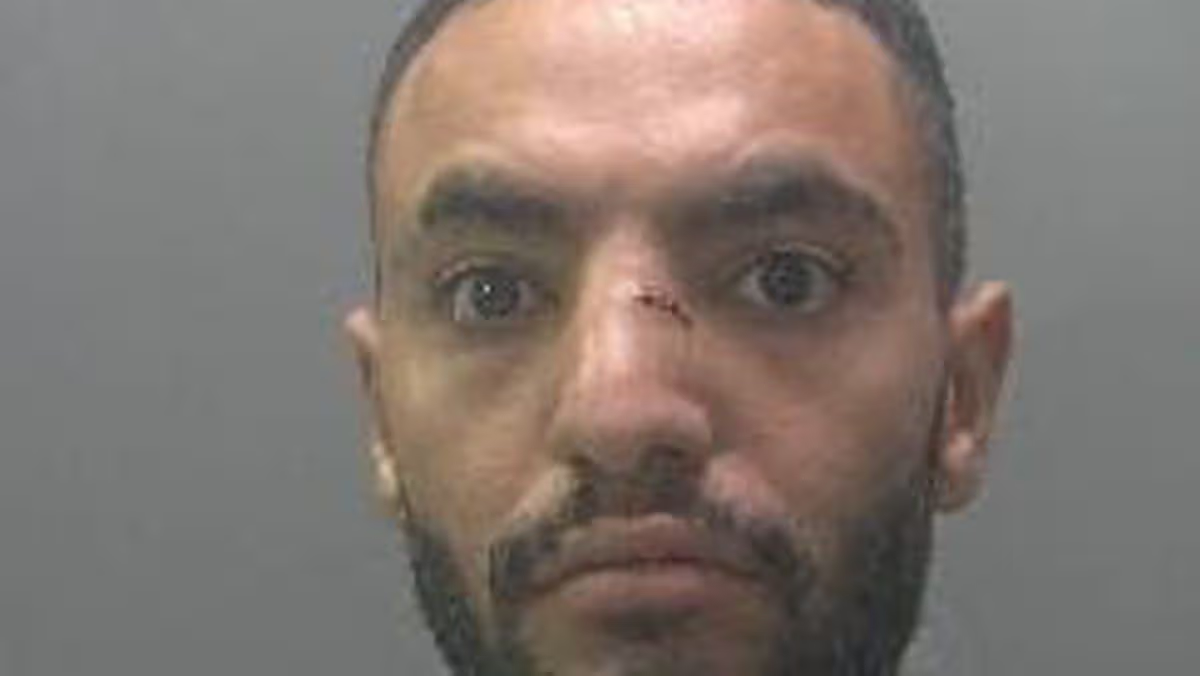
Two butchers have been convicted of an attack in a Peterborough street in which a man had part of his ear almost cut off. Armed with knives they picked up from the butchers where they worked, Mohamed Moustafa, 27, and Adham Mustafa, 19, attacked the two victims outside Elfaseh Halal Meat, in Gladstone Street in Millfield, at about 3pm on September 16.
Advertisement
The victims, aged 26 and 28, were known to the attackers and were attempting to retrieve a phone that Moustafa had stolen following a dispute two days prior. The 26-year-old was treated in hospital after having a quarter of his ear almost cut off, while the other suffered a cut to his shoulder.
Police went to the scene after receiving multiple calls and Moustafa and Mustafa were arrested. Moustafa, of Huntly Grove, Eastfield, Peterborough, admitted inflicting grievous bodily harm without intent and affray, and was found guilty of theft and threatening a person with a bladed article in a private place following a trial at Cambridge Crown Court in March and April this year.
Mustafa, of Lincoln Road, Millfield, Peterborough, pleaded guilty to affray and, at the same trial, was found guilty of threatening a person with a bladed article in a private place.
They both appeared at the same court on Friday, May 8, where Moustafa was jailed for three-and-a-half years. The 19-year-old was sentenced to 19 months in prison, suspended for 18 months. He must also complete 120 hours of unpaid work and a 20-day rehabilitation activity requirement.
Advertisement
Detective Sergeant Sam Moorby, who investigated, said: “The victims had come to try to retrieve a phone that Moustafa had stolen in an earlier incident, but the defendants responded with completely disproportionate violence which has left the victims suffering not only physically, but also emotionally and mentally.
“Thanks to the swift action of our officers, we were able to arrest this violent pair at the scene and put together a case that has resulted in multiple convictions.”
Pivovar has lodged a planning application to convert the vacant Guildhall Restaurant building into a venue dubbed Mittel River Terrace overlooking the River Ouse.
The firm, which runs Elvington Brewery and venues across York and the North, stated they would bring the vacant building into use while being sensitive to the surrounding Guildhall complex.
Pivovar’s planning application comes after the firm’s bid to licence the building was approved by York Council on Monday, April 13.
The two-storey building has stood empty since 2022 when it was built as part of a £20m regeneration of the wider Guildhall complex.
Advertisement
RECOMMENDED READING:
New plans for the space propose seats for up to 300 patrons spread across two floors.
Brewing equipment would be installed at the centre of the ground floor which would also feature riverside garden, kitchen, toilets and back of house facilities.
More seating and service areas would be on the first floor, along with an outdoor terrace.
Advertisement
The venue would operate from 8am to midnight and serve drinks from 10am to 11.30pm daily.
Pivovar Director Jamie Hawksworth previously told the Local Democracy Reporting Service (LDRS) a range of lagers would be made on-site with a bespoke brewhouse made in the Czech Republic.
He added it would serve food including oysters and rotisserie pork and chicken sourced from local suppliers.
Mr Hawksworth said they hoped to offer the best private views of the River Ouse in York.
Advertisement
The outside of the Guildhall Restaurant, off Lendal, in York (Image: LDRS)
The director added in February were hoping to open the venue in the summer, subject to the council approving the company’s plans.
Councillors heard in April around £250,000 was set to be spent kitchen facilities alone and it would focus on food though people would be able to come just for drinks.
But representatives of three businesses based in the Guildhall complex told the licensing hearing they were concerned about noise and disruption coming from the venue’s patrons.
A total of five objections were lodged against the company’s bid to licence the building.
Advertisement
York Archaeology Data Services’ Julian Richards said his firm was set to move into offices in the Guildhall in June but took a shorter one-year lease because of the plans.
He added their nightmare scenario was having stag and hen do groups leaning against their office window while staff try to work.
Mr Hawksworth told the meeting they were aiming to foster a continental-style atmosphere at the venue and not have patrons standing shoulder-to-shoulder.
Councillors also heard most customers were expected to come to the venue outside of working hours.
Advertisement
The planning application is awaiting a council decision.
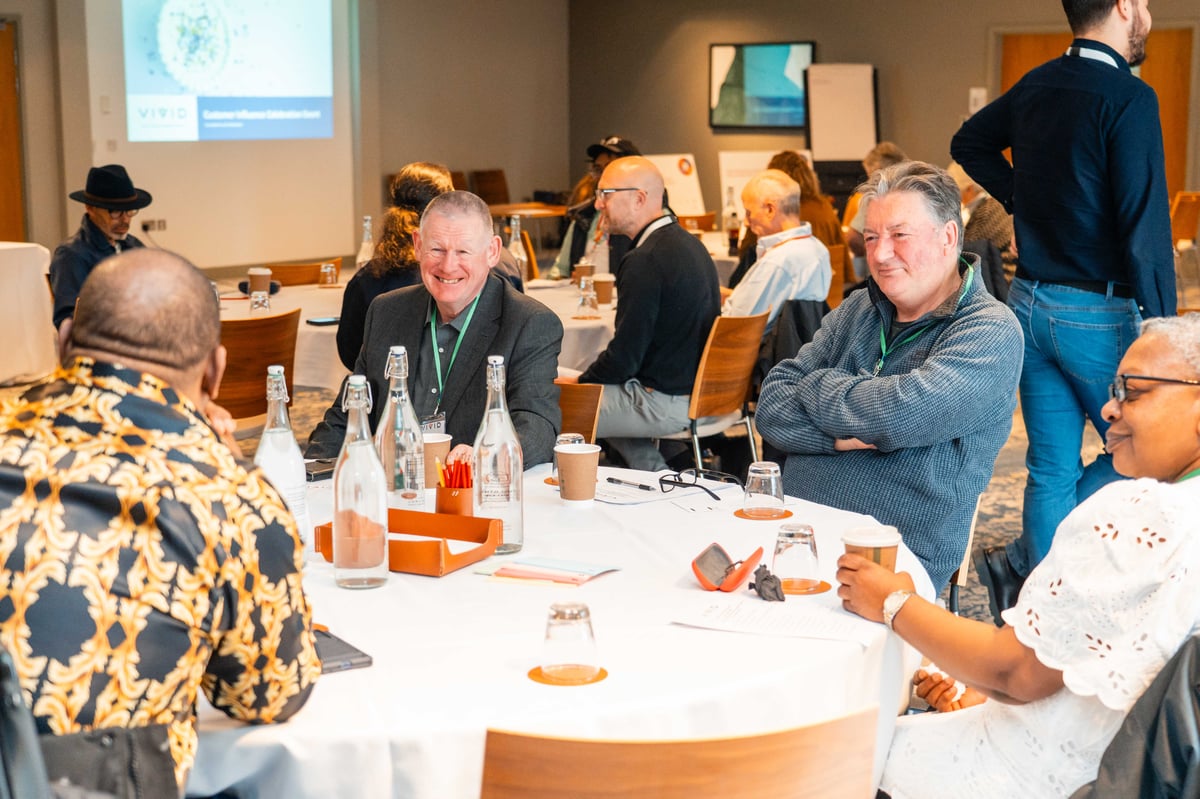
Nearly 40 customers joined VIVID in Winchester for an event celebrating the impact their voices are having across the organisation. Customers are influencing and shaping not only the services they receive, but also the decisions that affect their homes, communities and neighbourhoods. This was an opportunity to say thank you and explore how customers can stay involved in shaping VIVID’s future direction.
It was a night I’ll remember for a long time (Picture: Tristan Fewings/Bafta/Getty Images for Bafta)
On Sunday night, I attended the Bafta TV Awards as a guest for the very first time.
It was a real pinch-me moment. I’ve been a TV fanatic my entire life, and an entertainment journalist for five and a half years… and here I was, brushing shoulders with some of the most talented performers and creators in the industry.
One minute, I was walking the red carpet, sipping champagne, watching the awards ceremony and eating my dinner, having been invited by Prime Video.
The next, I was casually passing Danny Dyer, Alex Hassell, Matt Smith, Aimee Lou Wood and Adjoa Andoh as they chatted to their friends, colleagues and families, letting their hair down as they celebrated one of the biggest nights in British TV.
Advertisement
The whole night was a blast, aside from my agonising pain from wearing heels for eight hours before changing into flats for the dancefloor. But there were several surreal moments that are going to stick in my mind for a very long time to come.
Anyone missing a Bafta?
I couldn’t believe my eyes when I went to fetch my bag and coat during the early hours after the Bafta TV Awards. There it was, in all its glory – one of the iconic bronze mask trophies, casually propped up on a shelf of the cloakroom.
I couldn’t believe a Bafta was just sitting on a shelf in the cloakroom (Picture: Metro)
The afterparty at London’s Royal Festival Hall had been popping. Champagne flowing, the dancefloor overspilling with partygoers dancing their butts off, and several winners from the night proudly carrying their trophies everywhere they want.
While I trusted the safety of the cloakroom, there’s no way I’d leave my prize in there if I were a lucky winner. When I congratulated Simon Schama over his Bafta win in the cloakroom queue, he was holding his award with an iron-tight grip. I’d do the same.
The Adolescence team knows how to party
We’ve all heard throughout awards season how the Adolescence family loves to get down – and on Sunday night, I witnessed their celebrations firsthand… and they were as glorious as you’d hope.
Advertisement
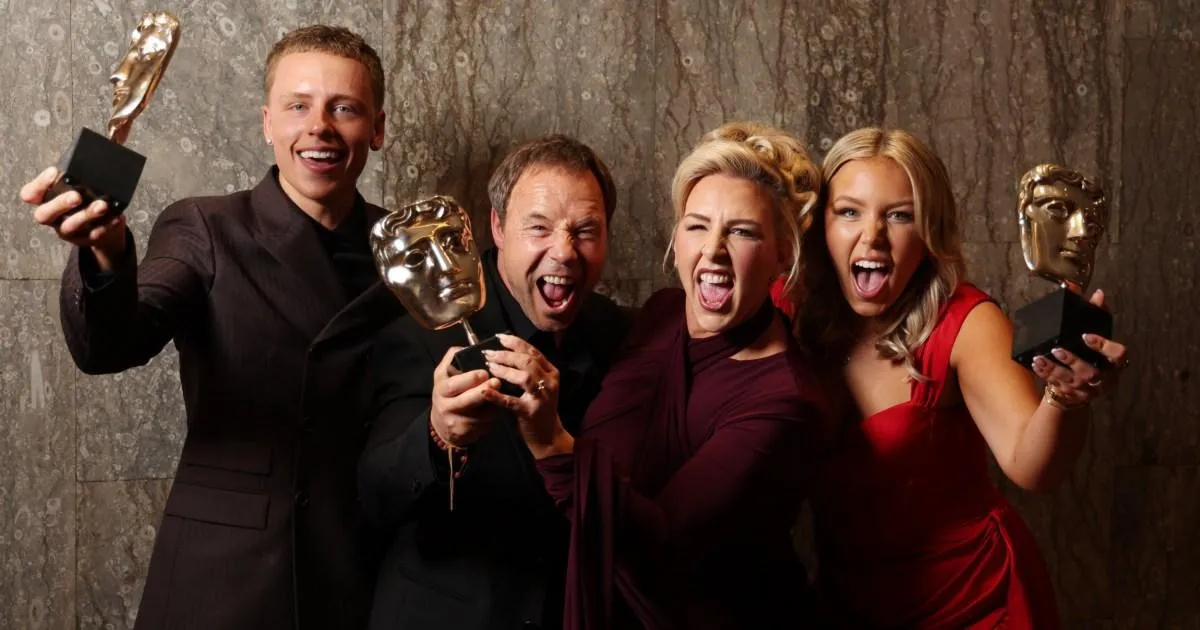
Off the back of their many deserving wins – including Best Limited Drama, Best Actor for Stephen Graham and Best Supporting Actor for Owen Cooper – the team took over a corner of the bar area during the afterparty, hugging, taking photos, chilling on sofas and singing while everyone else watched on.
Advertisement
At one point when I looked over, Hannah Walters was dancing with an epic scrunched expression on her face, a testament to the banging, nostalgic playlist being cranked up by the DJs behind the deck. If she’d been on the actual dancefloor, there’s no doubt she would have been in the centre of it.
Dancing with A-listers made me miss the tube – it was worth it
The Bafta TV Awards afterparty was genuinely one of the best nights out I’ve had in a while. At first, I wasn’t sure if it would pop off. The dancefloor was empty, people milling around everywhere having mellow drinks… but then everything changed.
Dancing until the early hours meant a shoe change was needed (Picture: Metro)
Children’s non-scripted – World. War. Me. (Sky Kids Investigates)
Children’s scripted – Crongto
Entertainment – Last One Laughing
Limited Drama – Adolescence
Single documentary – Grenfell: Uncovered
Short form – Hustle and Run
Live Event Coverage – VE Day 80
Actor in a comedy – Steve Coogan, How Are You? It’s Alan (Partridge)
Actress in a comedy – Katherine Parkinson, Here We Go
Soap – EastEnders
Sports coverage – UEFA Women’s Euro 2025
Daytime – Scam Interceptors
Current Affairs – Gaza: Doctors Under Attack
News coverage – Channel 4 News: Israel-Iran: The Twelve Day War
Factual entertainment – Go Back To Where You Came From
Bafta special award – Martin Lewis
P&O Cruises memorable moment – Alan Carr wins The Celebrity Traitors
International – The Studio
Bafta Fellowship – Dame Mary Berry
Entertainment performance – Bob Mortimer, Last One Laughing
Drama series – Code of Silence
Leading actress – Narges Rashidi, Prisoner 951
Leading actor – Stephen Graham, Adolescence
Once the DJ started playing the Sugababes, that was the final push (the button) the crowd needed to move to the dancefloor, packing every inch of it. Tunes followed the Scissor Sisters, Whitney Houston, and Natasha Bedingfield, and it just kept getting better and better.
At one point, I found myself dancing with the fabulous Angellica Bell, who declared me her dance partner when the people we were with ventured off to get drinks. I’ll be living off that title for the next week.
Advertisement
As I Wanna Dance With Somebody started playing, Anita Rani was living her best life, singing every word in unison with everyone in the room. The vibes were immaculate, and were the reason I ended up staying until the early hours.
Poor Seth Rogen being chased around the room
The Bafta TV Awards are obviously a major event in global entertainment, and yet for some reason, a part of me still finds it strange when American Hollywood stars cross over the pond to attend. I know it makes no sense – the Baftas are a huge deal – but I can’t help it.
Advertisement
Sunday night saw Seth Rogen attend to represent The Studio in the International category, for which they won, while Severance star Adam Scott and former Bafta Rising star nominee Awkwafina also appeared on stage to present awards.
While at dinner at the Royal Festival Hall, I heard whispers about a gaggle of people surrounding Seth in the smoking area, asking for photos. From the sounds of it, he very politely obliged – despite more people apparently trailing him around the venue in the hopes of coveted selfies.
I was over the moon to have a photo with the legendary Celia Imrie, who made light of Seth’s on-stage quip about only knowing her from her Celebrity Traitors fart. You’ll be glad to hear – and unsurprised, I’m sure –that she was utterly lovely.
Advertisement
I can’t believe my faux pas with comedy royalty
Two years ago, I covered the Bafta TV Awards, interviewing stars on the red carpet and in the winner’s press conference. This year marked my first time attending as a guest, and so there were some moments when my adrenaline was racing, and I was in a bit of a fluster.
I wish I’d made a cooler first impression on David Mitchell. Ah well! (Picture: George Gottlieb/Baftavia Getty Images)
Following the ceremony, I made my way down five flights of stairs to the dining area, spotted my table on the seating chart and headed over. I shuffled around my table trying to spot my name place, but there was a man inadvertently standing in the way.
I politely said excuse me, to which the man apologised and moved to allow me some space – and as I looked up, David Mitchell was staring back at me.
Rather than say anything remotely smooth to introduce myself to the Last One Laughing UK season two winner, I just stared back awkwardly and then sat down in my seat. Next time I’ll be cooler… hopefully.
The 2026 Bafta TV Awards are available to stream on BBC iPlayer.
Advertisement
Got a story?
If you’ve got a celebrity story, video or pictures get in touch with the Metro.co.uk entertainment team by emailing us celebtips@metro.co.uk, calling 020 3615 2145 or by visiting our Submit Stuff page – we’d love to hear from you.
A social media influencer has been arrested after he allegedly refused to pay his tab costing nearly $400 at a Nashville restaurant.
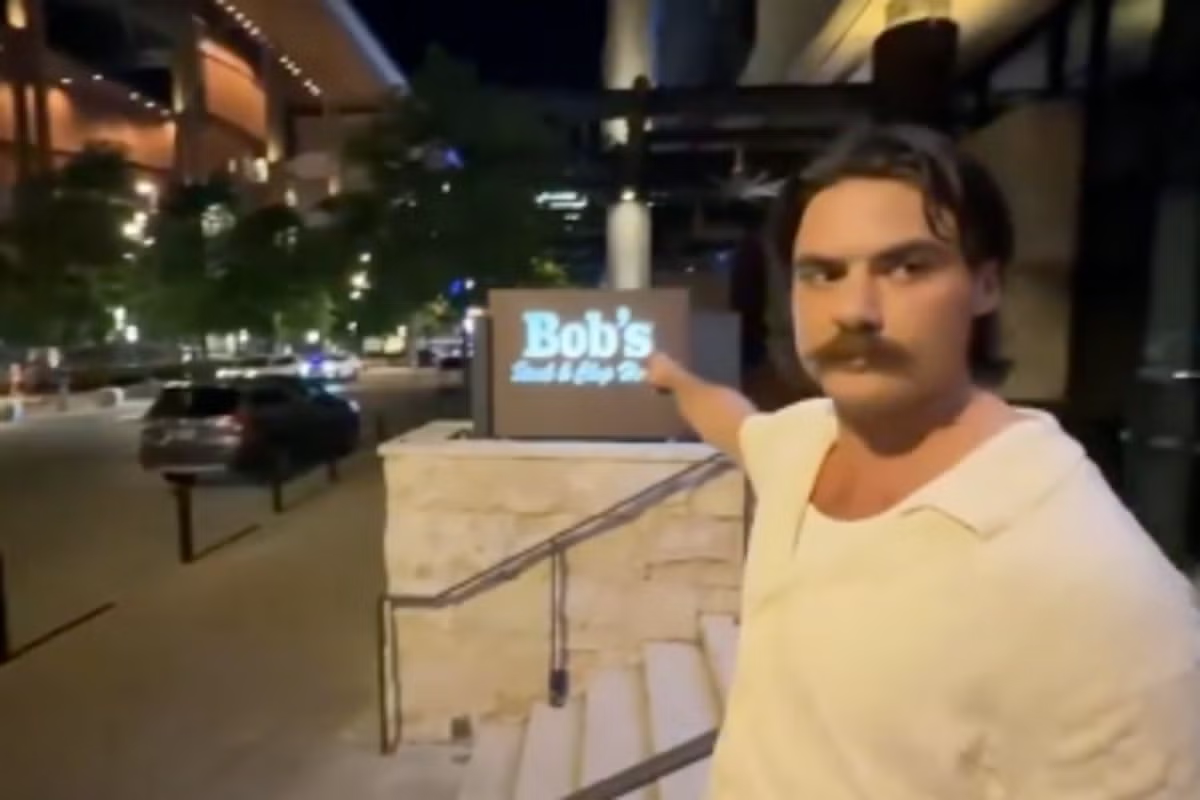
Dalton Eatherly — who goes by Chud the Builder online and is known for trying to provoke people during his livestreams by saying racial slurs — was taken into custody Saturday night after police were called to Bob’s Steak & Chop House, which is located in a hotel downtown.
According to Eatherly’s arrest affidavit, the restaurant staff and security manager told cops that they had asked Eatherly not to be disruptive or livestream while he was being served, according to local NBC affiliate WSMV.
The 28-year-old contractor went on to order two full entrees, drinks and appetizers that amounted to a $371.55 bill, the police report said. The restaurant workers then realized that he had allegedly been live streaming on the crypto trading platform pump.fun the entire time, and asked him to stop.
Advertisement
Eatherly allegedly became disruptive at the request and began to make racial statements, yell and cause a scene. He then said, “I’m not paying if you are kicking me out,” according to the affidavit.
Dalton Eatherly allegedly told staff, ‘I’m not paying if you are kicking me out’ (ChudTheBuilder)
He then left the restaurant, which is when staff called the Davidson County Sheriff’s Office.
Officers found the streamer walking on Broadway. The affidavit said he “pulled his arm away” while being taken into custody, but was otherwise arrested without incident.
He was admitted to jail Sunday at around 4 a.m. local time, according to online inmate records. He was booked on a bond totaling $5,000 and was released around seven hours later.
Eatherly is charged with disorderly conduct, resisting arrest and theft of services.
Advertisement
Eatherly was booked into jail Sunday and released several hours later after posting a $5,000 bond (Getty)
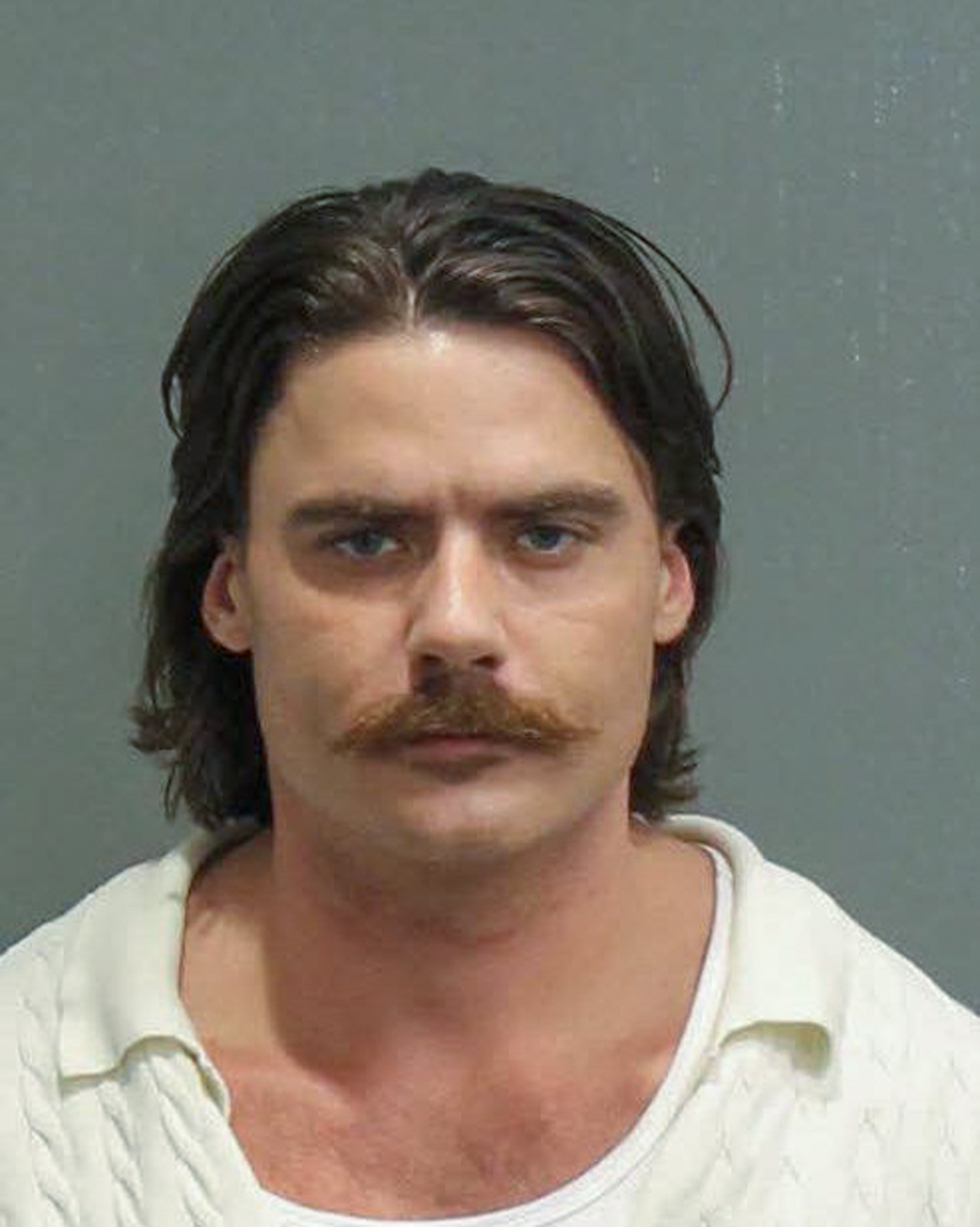
After the incident, Eatherly shared the full livestream footage on X, claimed that police had taken his phone as “evidence of the crime,” and made his mugshot his profile picture on the platform.
“Just got back to my airbnb after 13hours in custody for leaving a restaurant when i was asked to,” he wrote.
He said in a separate post: “I partially ate the two appetizers i ordered. Never got my meal, and couldnt enjoy or finish the food i did get.”
Eatherly did not immediately return The Independent’s request for comment on the recent allegations against him.
The streamer has defended his inflammatory behavior as free speech in the past.
Advertisement
On a fundraising page launched in November, Eatherly asked for financial help after saying his contracting business in Clarksville, Tennessee, was struggling because he was “under attack” for his racist online presence.
“I’ve shared mild jokes, unfiltered thoughts, and yes, sometimes I’ve used the N-word in what I thought was edgy, harmless humor,” Eatherly said on the site. “ I know it’s controversial, but it’s my right to speak freely.”
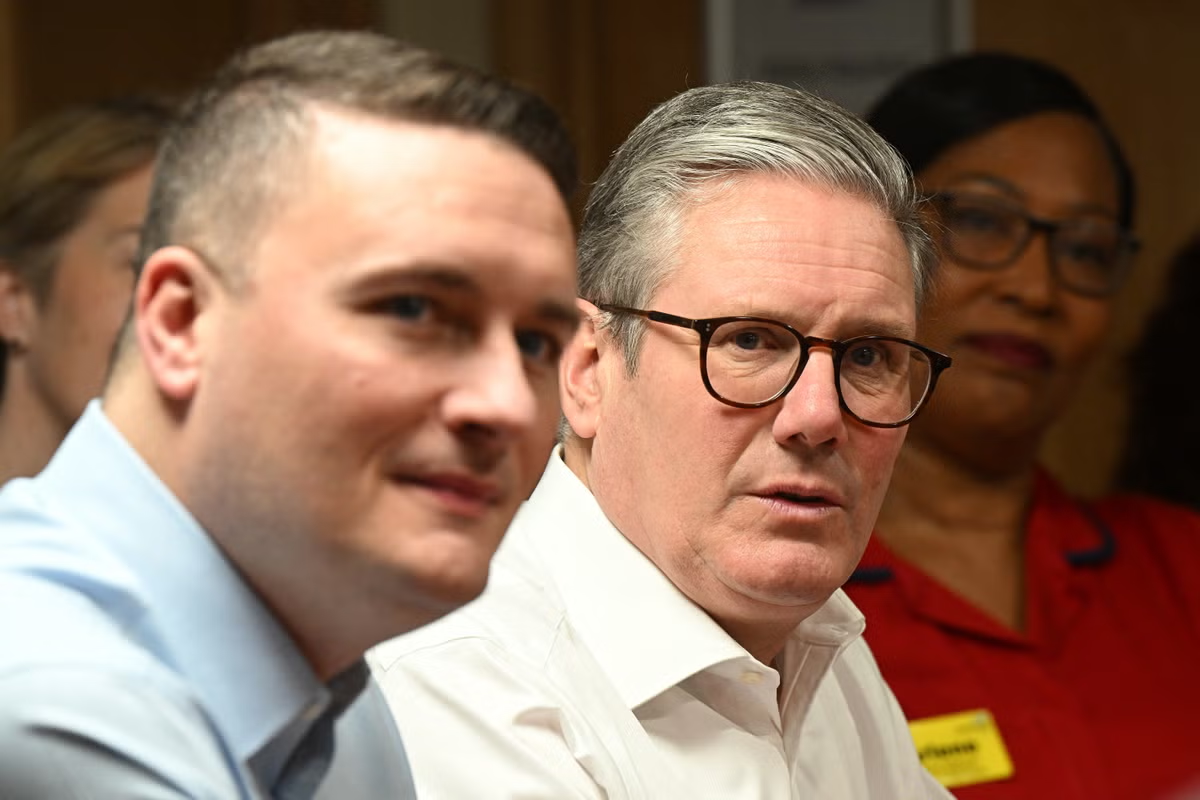
Joe Morris has resigned as a ministerial aide to Wes Streeting, who is widely seen as a potential leadership contender, as he called for Sir Keir Starmer to set out “a swift timetable” to step aside.
In a message posted on social media, he wrote: “The message from last week’s elections was clear: the Prime Minister has lost the confidence of the public.
Advertisement
“Local councillors who have served their communities for decades, as well as first time candidates and the Labour members who campaigned for them, ended up taking the blame for decisions that were not theirs.
“A Reform government would destroy our public services and cripple our economy. It would target the voiceless and the most vulnerable while enriching the very richest. Despite the Prime Minister’s best efforts, voters simply do not accept that he can lead the change they voted for.
“Whether in Northumberland or in Newcastle, constituents need a Labour government in order to reduce the cost of living, to invest in our communities and our infrastructure and to make good on the promises made at the general election.
“I have boundless confidence in the Labour Party and in our ability to rise to this moment. However, regrettably, it is now clear that the Prime Minister no longer has the trust or confidence of the public to lead this change.
Advertisement
“It is in the best interests of the country and the party that the Prime Minister sets out a swift timetable to ensure that a new leader is in place to regain the confidence of the public and to ensure that the government can deliver on the commitments it has made.
“I was elected after 100 years of Conservative MPs treating our area with complacency. My first duty will always be to deliver for communities in my constituency, from Gilsland to Walbottle and from Kielder to Whittonstall. Only a strong Labour government, led by strong leadership, can deliver the change our communities deserve.”
Dan Haygarth11 May 2026 18:42
Advertisement
Labour MPs on Wes Streeting watch as health secretary’s allies call for Starmer to quit
Speculation is mounting that Wes Streeting is about to attempt to launch a coup against Keir Starmer after a number of his allies quit the government and called for the PM to go.
Mr Streeting’s camp was remaining silent but Labour sources have told The Independent that the health secretary is now expected to launch a leadership bid on Tuesday.
This came as his parliamentary private secretary Joe Morris quit the government while other allies Sally Jamieson and Tom Rutland also resigned from junior positions and called for Sir Keir to go.
The push against the embattled prime minister by Mr Streeting’s allies began at the weekend with former minister John Simons from the right of the party joining leftwingers in demanding Sir Keir set a timetable to end his premiership.
Advertisement
After the prime minister’s make or break speech on Monday morning another leading ally of Mr Street Chris Curtis, chair of the influential growth group, joined those demanding the prime minister goes.
This was followed by Jamieson, Rutland and Morris, with Streeting’s neighbour Jas Athwal also demanding he goes.
There has been speculation that Mr Streeting has been considering a leadership bid since late last year when Downing Street felt the need to brief against him.
But with more than 60 MPs from different wings of the party now calling for a change of leadership, Sir Keir appears to be too weakened to hold off a challenge.
Advertisement
David Maddox11 May 2026 18:28
PPS resigns as calls for Starmer to resign increase
In a statement posted on social media, Tom Rutland said: “It is with regret that I believe the Prime Minister should now set out a timetable for his departure and for a new leader to be chosen to lead the Labour Party and the country.
“I watched brilliant councillors lose their seats last week through no fault of their own.
Advertisement
“Time and time again, speaking with voters at their doors, I heard little dislike for local councillors nor for the Labour Party, but the animosity towards the Prime Minister was clear from every voter who was choosing to vote for another party or considering doing so.
“It reminded me of the reaction I got when speaking with voters under a former leader.
“It is clear to me that the Prime Minister has lost authority not just within the Parliamentary Labour Party but across the country and that he will not be able to regain it.
“That significantly impedes the ability of the Government to deliver the change that people voted for at the general election — change that we must deliver.
Advertisement
“We also have a generational responsibility to stop Reform’s hatred and division from taking over our great country.
“It weighs heavily on me and all of us must do all we can to prevent this from happening.
“I do not have faith that the Prime Minister can meet this challenge.
“It is not compatible to hold this view and continue to serve on the frontbench, so I have resigned as a parliamentary private secretary to the Secretary of State for Environment, Food and Rural Affairs, and will continue to represent my wonderful constituents in East Worthing and Shoreham from the backbenches.”
Advertisement
Dan Haygarth11 May 2026 18:22
‘Labour sticking with Keir Starmer isn’t loyalty – it’s laziness’
Changing a leader – especially in the Labour Party – is not easy and comes with great peril. But there is also a fatal cost to not doing anything, and if you need any further proof of that, just speak to any Democrat, says Ayesha Hazarika. Read below.
Dan Haygarth11 May 2026 18:15
Advertisement
Calls for Starmer to go coming thick and fast
Dan Haygarth11 May 2026 18:03
MP for Halesowen says party risks ‘handing the country to the far right’ without leadership change
Dan Haygarth11 May 2026 17:55
Advertisement
Two more MPs join calls for Starmer to go
Dan Haygarth11 May 2026 17:03
‘My constituents are as fed up as I am’: 54th Labour MP calls on Starmer to step aside
Lorraine Beavers, MP for Blackpool North and Fleetwood, has become the 54th Labour MP to call for the prime minister to go.
Advertisement
She wrote in a statement on Facebook: “I’ve spent the weekend listening to my constituents, local party members, and local councillors. They are as fed up as I am.
“Without a massive change in approach, when elections are held in my corner of Lancashire next year, voters will send the same message with even greater force.
“I wanted to give the Prime Minister the chance to set out that change this morning. It was a passionate speech – passion I wish I’d heard more often from the Prime Minister over the last two years.
“But the content of the speech did not suggest anything close to the scale of change needed to rebuild communities like mine.
Advertisement
“I believe that the Prime Minister should announce a timetable for leaving office. We must have a new leader in place well in advance of next year’s local elections.
“For our Party to rediscover its connection with working-class communities like mine, we need a democratic contest involving the most talented leaders from across our movement.
“A cabinet appointment, without consulting the wider party and labour movement, would risk repeating the same mistakes already made.”
Dan Haygarth11 May 2026 16:48
Advertisement
Blue Labour faction calls for Starmer to set out timetable for departure
Blue Labour, a faction of the party led in parliament by Liverpool Walton MP Dan Carden which promotes a socially conservative agenda, has called for the prime minister to set out a timetable for his departure.
The group said in a statement on X: “It’s time for Keir Starmer to set out a timetable for his departure.
“Nothing has convinced us that he is able to rise to the challenge confronting this country.
Advertisement
“As the process unfolds, no candidate should be blocked from standing; the job is too important for factional warfare and NEC machinations.
“Labour must now navigate a very difficult transition to a new prime minister.
“It must avoid the danger of retreating back into its comfort zone in which it can pretend there are no hard choices and trade-offs in rebuilding the country.
“There is a hard road ahead. The people of our islands are looking for the light at the end of the tunnel.
Advertisement
“The next leader must have a clear programme of government and story to tell the British people about how we will get there.”
Dan Haygarth11 May 2026 16:36
Delegates reject move to disaffiliate trade union from Labour
A move to terminate a trade union’s affiliation to the Labour Party has been defeated despite criticism of the Government’s policies since it came into office.
Advertisement
Delegates at the annual conference of the Communication Workers Union (CWU) in Bournemouth held a lengthy debate on the historic relationship with Labour, some arguing it was time to “reclaim” the party.
Midlands delegate Neil Singh questioned what influence the union had on issues including ownership of the Royal Mail and NHS privatisation and said the Birmingham bin strike showed that Labour was prepared to “take on” workers involved in disputes.
He said the Government had failed to tackle wealth inequality, asking why the CWU was continuing to fund a party he believed was not backing working class people.
CWU general secretary Dave Ward pointed to the achievements of the Government such as the Employment Rights Act, rent reforms and ending the two-child benefit cap.
Advertisement
But he said achievements had been overshadowed by “self-inflicted mistakes” on issues including the winter fuel allowance and the Waspi campaign on women’s pensions.
A motion calling for the CWU to terminate its affiliation to Labour was defeated.
Spin bowling was the area of England’s Ashes masterplan left most exposed in Australia. After asking Shoaib Bashir to learn on the job, England then turned to batting all-rounder Will Jacks for four Tests, with predictable results.
In that sense, Jacks is the man in possession, and the battle to be England’s number one spinner has appeared to be wide open.
There would be an irony in England ignoring Bashir, who was picked for Test cricket when he could not get a game for Somerset, and now could be left out despite playing regularly for new county Derbyshire.
Jack Leach remains probably the most reliable spinner in the country, while leg-spinner Mason Crane is bowling well for Glamorgan eight years after he won his only England cap. Nottinghamshire left-armer Liam Patterson-White, Sussex off-spinner Jack Carson and Northants all-rounder Calvin Harrison are all respected in county cricket.
Advertisement
Perhaps it is time for England to invest in Rehan Ahmed. In 2022, Ahmed was an original Bazball pick when, at 18, he became the youngest man to play for England.
He has hovered on the fringe of the England team since, with none of his five caps coming at home or as the sole spinner.
As a young leg-spinner, Ahmed will have times when his bowling goes off the boil, but he also has an X-factor. Root and Bethell are reasonable options if England need a spinner to hold an end.
With six first-class hundreds, Ahmed is an ideal number eight, meaning England would never have to worry about the tail-end batting as they rotate their seamers. When Stokes retires, Ahmed could move up the order as England’s all-rounder.
Advertisement
Leicestershire’s Ahmed is currently at the Indian Premier League, though his Delhi Capitals face a battle to reach the latter stages. England have also shown that an IPL stint is not a barrier to Test selection.
With England at a low ebb, Ahmed would bring some mystery, exuberance and excitement.
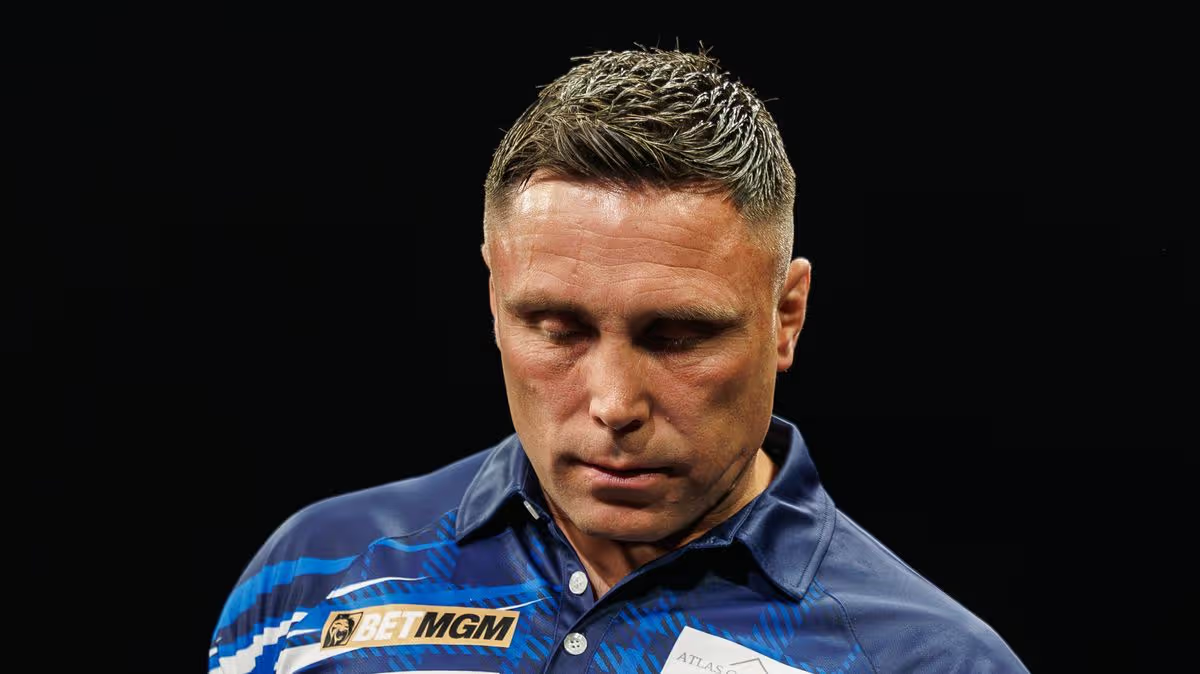
Gerywn Price has pulled out of competing for Wales at the World Cup of Darts this summer, just days after revealing a worrying health battle
Gerwyn Price will NOT represent Wales at the World Cup of Darts this summer.
Advertisement
‘The Iceman’, who is ranked eighth in the PDC Order of Merit, has made himself unavailable for selection, leaving Nick Kenny to join an in-form Jonny Clayton at the tournament in mid-June.
Price and Clayton reached the World Cup final in 2025. They battled past Philippines, Hong Kong and Netherlands to reach the showpiece event and go head-to-head against Northern Ireland.
But Price and Clayton were beaten by Josh Rock and Daryl Gurney in the final, denying Wales their third World Cup title since the competition was established 16 years ago.
Although Luke Littler and Luke Humphries go into the 2026 tournament as overwhelming favourites for England, Price and Clayton would have put Wales as third seed.
Advertisement
However, Price’s omission and a call-up for world No.60 Kenny has moved Wales down to seventh, meaning they will have to go through the group round one qualifiers.
It’s the second time in three years that Caerphilly arrowsmith Price hasn’t competed at the World Cup, after the Welshman pulled out with Jim Williams taking his spot.
Last week, Price revealed a concerning health update following a crushing Premier League defeat to Wales teammate Clayton in Leeds. “My focus is there, it’s just health-wise I am not in a great place at the moment. But I am battling on and searching for some results,” said Price.
Advertisement
“Hopefully in the next couple of weeks they will come and they will put me at ease. Then I will be able to enjoy darts again. Frustrating times. Time to rely on Lady Luck and see what happens over the next two weeks. Hopefully make the play-offs, but I need a lot of luck to go my way. Hopefully see you at the O2. It’s not good playing once a week and hopefully I get the results I want in three weeks’ time.
“This year has been great in the Premier League and it’s been a great start to the season. The crowd has got me through a lot of games but sometimes things happen you can’t control.”
Price, who pulled out of competing at the Austrian Open on the weekend, has enjoyed a stellar start to the season, winning on the floor and the European Tour.
Although the 2021 world champion hasn’t made a major final in three years, he has shown glimpses in the Premier League this term and is on course to make the play-offs. But on Thursday evening, the 41-year-old’s ambitions of playing at London’s O2 Arena were dealt a blow as he was defeated 6-2 by Clayton.
Advertisement
This loss means Price has 21 points with two weeks left and sits in third, but Luke Humphries, Michael van Gerwen and Gian van Veen are all in striking distance.
Price is next expected to compete in the Premier League on Night 15 in Birmingham this Thursday. It’s the penultimate week of the regular campaign, before the semi-finals at the O2.
The trust has said “Business continuity arrangements were put in place to manage the outage”
17:46, 11 May 2026Updated 17:50, 11 May 2026
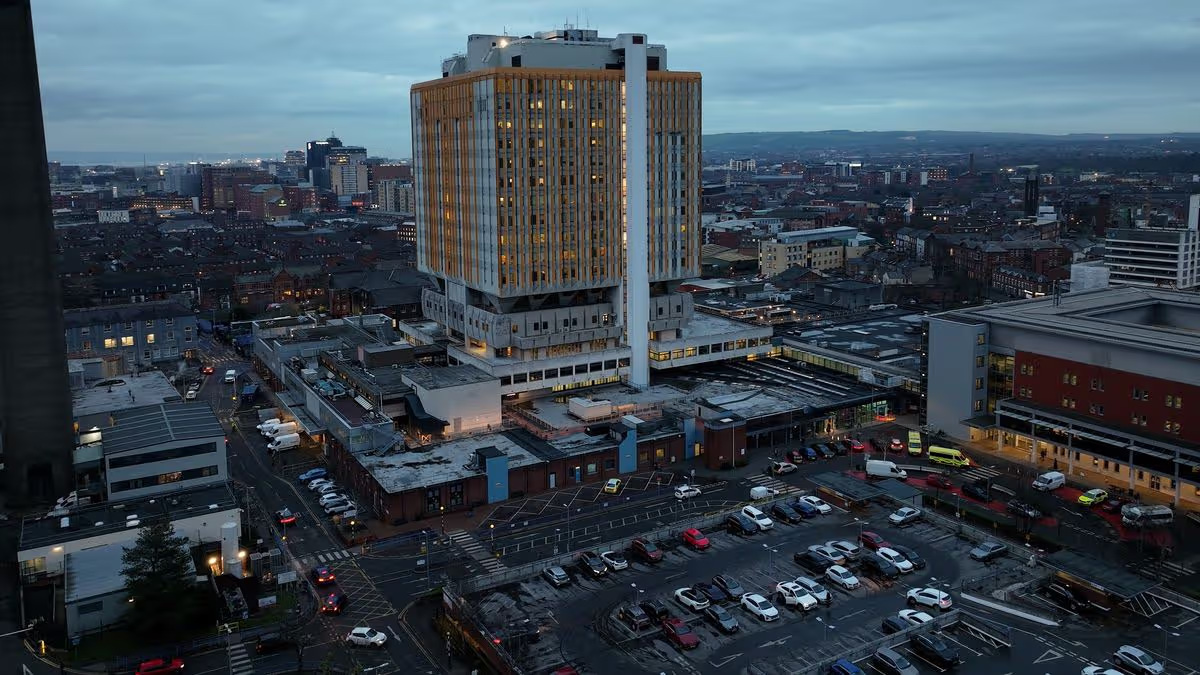
Patient appointments and procedures at the Belfast Trust have been cancelled due to “intermittent network issues”.
The health trust issued a statement this evening saying that it has been experiencing problems with its computer systems and has had to cancel procedures and appointments as a result.
The trust has not said how many cancellations have taken place or what specific computer system the intermittent network issues impacted.
Advertisement
In June, 2024, the Belfast Trust became the second NI health trust to go live with the Encompass digital patient record system which is now operates across all trusts.
A Belfast Health and Social Care Trust spokesperson said: “Belfast Trust has been experiencing intermittent network issues impacting a number of our services. Business continuity arrangements were put in place to manage the outage.
“The system is currently operating as normal.
“Unfortunately, we have had to cancel some procedures and appointments as a result. Many patients will already have had their appointment rescheduled. If your appointment is affected, our team will be in touch as soon as possible to arrange an alternative appointment.
Advertisement
“We appreciate your support and understanding at this time.”













































You must be logged in to post a comment Login