Retirement used to be a time when you’d kick back and relax. Not so for the boomers spending their golden years getting nicked in the name of ‘intergenerational justice’
“I thought, ‘this is going to be huge. There’s not a person on the planet who doesn’t know Stonehenge’,” says Rajan Naidu, recounting the time when he and fellow Just Stop Oil protestor Niamh Lynch sprayed the iconic prehistoric structure with orange powder (a non-toxic blend of cornflour and food colouring). It was a stunt that went viral.
Naidu was 73, Lynch 21 – at opposite ends of their lives but united in their commitment to a cause they cared about. Afterwards, they sat silently, crosslegged by the stones in the warm June air. Time seemed to slow right down. And then they were arrested. The action didn’t stop there. It continued in every piece of press coverage, every social media post, every conversation, in their eventual acquittal.
Advertisement
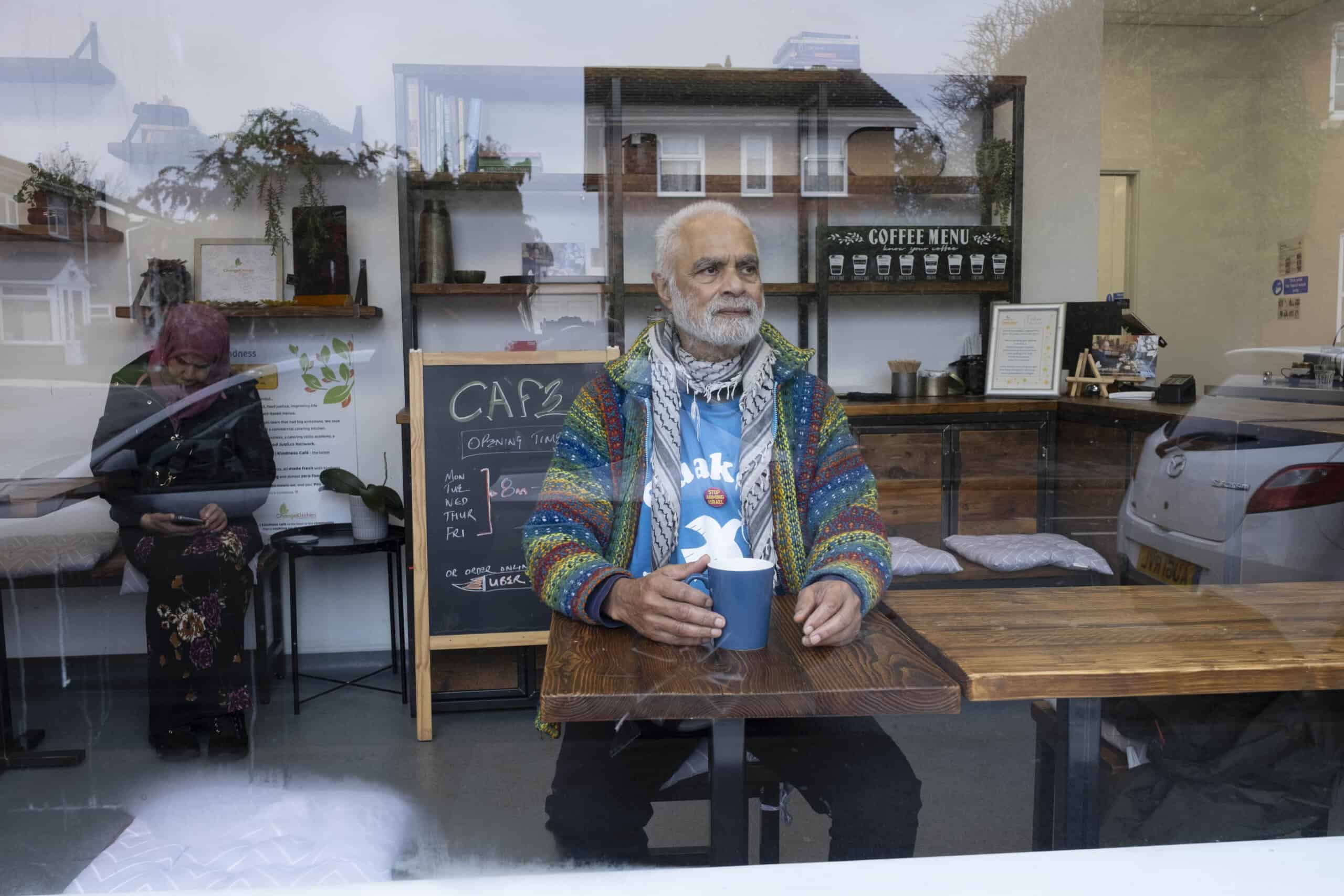
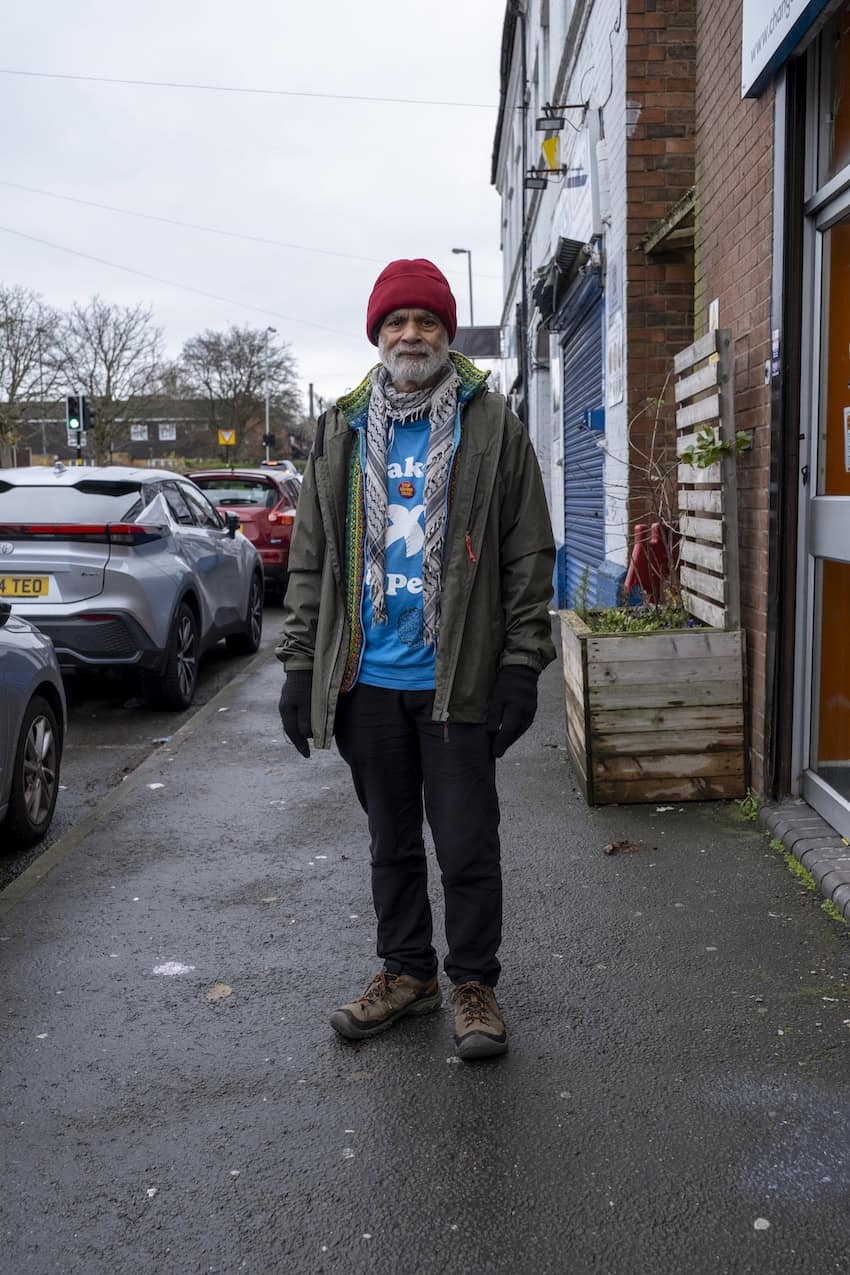
I’m sitting with Naidu (main picture) in the community cafe of The Old Print Works in Birmingham as he recounts all this. It’s mid-November, a fortnight since he, Lynch and Luke Watson, another activist who filmed the Stonehenge protest, were cleared of causing a public nuisance. Rain taps on the large old windows, while reggae wafts through the space. We tuck into steaming piles of chickpea curry. With his warm smile, white beard and colourful cardie, he’s not how the media might have you picture a protestor: young, shouty, looking for trouble. But he’s part of a recent wave of older protesters shifting those stereotypes.
Solutions every Saturday Uplift your inbox with our weekly newsletter. Positive News editors select the week’s top stories of progress, bringing you the essential briefing about what’s going right. Sign up
“Everybody is a potential activist,” Naidu tells me, cradling his coffee. “Everybody has concerns about the world, things they’d like to put right.” Fairness, he says, is an instinct we have from childhood. Growing up in London, where his family moved from India when he was a toddler, Naidu recalls his parents’ generosity, his father’s respect for others, no matter who they were, and his mother’s kindness. He spent his life working and volunteering in education, reforestation, mental health support, with stints at the Post Office and in factories. Only in his late 60s did he get involved in the kind of non-violent civil resistance that would see him led away in handcuffs “many times”.
It used to be a given that when you hit retirement age, you’d earned the right to put your feet up. Do some gentle gardening, join a choir, go on a cruise. But spending the night in a police cell, surely not? There had been grannies at Greenham Common, those silver-haired civil rights leaders, but they were generally the exception. Largely, protest was seen as the preserve of students, not pensioners.
Advertisement
And yet in campaigns for disability rights, against library closures and historic building demolitions, or opposing the rise of the far right, older people are taking a stand. I’ve been to meetings for these causes where I, at 42, am one of the youngest in the room. The advanced age of placard holders was particularly notable at 2025’s Lift the Ban demonstrations that called on the government to reverse its ban on the protest group Palestine Action. Of 523 people arrested in August, more than 50% were over 60.
One of them was 75-year-old Jonathon Porritt CBE. “I think this is genuinely unique in terms of the history of social movements and campaigning of this kind. I don’t think there’s been that sort of demographic story before,” the lifelong environmentalist and former leader of the Green Party explains.
At 73, Porritt retired from his job focused on corporate sustainability, frustrated with the slow pace of change, and returned to the front line of politics. At the time of writing, he’s been arrested twice at Lift the Ban events and counting. We chat over Zoom from Chichester, where he is on a book tour for Love, Anger and Betrayal, a collection of interviews with young Just Stop Oil campaigners.
Advertisement
Perhaps it’s inevitable that a generation who came of age at a time of optimism that they would make the world a better place are looking around and seeing work to be done. Porritt, a former teacher, is driven by “intergenerational justice”, the idea that meeting our needs must not come at the expense of our descendants’ ability to meet theirs.
Everybody is a potential activist. Everyone has concerns about the world
Too many older people, he says, “don’t seem to care at all about what is going to happen to young people in the future. That really does anger me, I’ll be honest, because we’ve made an appalling mess of everything,” he adds. “I don’t expect everybody to go and glue themselves to motorways to demonstrate how much they care about the climate, but I do expect them to be more respectful of and supportive of people who are taking those kinds of direct actions to focus politicians on the true nature of the crisis.”
Trudi Warner feels similarly compelled by a sharp sense of responsibility. Warner made headlines and became the inspiration for Defend Our Juries, the group behind the Lift the Ban campaign, after she was prosecuted for contempt of court sitting outside a climate activists’ trial holding a sign that read: “Jurors: you have an absolute right to acquit a defendant according to your conscience.” The charges were eventually dropped. It was with “some trepidation” that Warner, a retired children’s social worker, stepped up as an activist. “I was schooled in obedience,” she says, closing her eyes in concentration before opening them wide. “But it was something I had to do.”
The strategy of sitting with a sign is less physically demanding than other forms of protest such as marching, Warner notes. And though it can take up to eight hours of sitting before an arrest is made – a feat of endurance – older people tend to have spare time. Porritt points out that while the threats of legal sanctions are “still scary, undoubtedly”, they don’t weigh on him as they might other, younger people with fledgling careers or dependent children to consider. But there are real sacrifices, risks and consequences. Tim Hewes, a 73-year-old retired dentist and priest, spent six weeks imprisoned on remand accused of conspiring to shut down the M25 motorway during 2022 Just Stop Oil protests, as chronicled in his book, Finding Beauty Behind Bars.
Advertisement
Though the prospect of doing press interviews filled her with dread, Warner came to realise that the visibility of older people like herself – former priests, rabbis, war veterans – was powerful.
Advertisement
“It’s harder for the media to trash us,” she says. Their presence lends the climate and peace movements a credibility, a gravity, a sense that what they’re demanding is mainstream. The calm that older people have brought to the climate and peace movements is distinctive, too. “It’s counter cultural,”adds Warner, “because in our culture, everybody’s rushing about all the time, being noisy, being attention seeking.”
When Union, the northern school for creativity and activism, launched a call out for their first ever residency aimed at ‘elders’, due to take place in January 2026, it was booked out. Union, which had offered similar programmes for early and mid-career people, devised this partly in response to demand, partly to the rise they’d noticed in older activists. The organisation explores the role that ‘elders’ can play, how they might “hold the space” for others, as director Adrian Sinclair puts it, and what they want from this stage.
It’s not a young people’s movement. It’s not an old people’s movement. It’s a people’s movement
“What’s my legacy? What do I pass on? Those questions are important to older people.” There is also a wellbeing element to it. Studies show that a longer, healthier life isn’t just about staying active or eating well, it’s about having purpose and finding social connection, too.
Back in Birmingham, three young men in hoodies recognise Naidu from his Stonehenge coverage and ask if they can join us to chat. They are fans, full of admiration and full of questions, which Naidu answers graciously.
Advertisement
“When you see me, you see this old man,” he says. “I don’t define myself in this.” But he is reluctant to talk about himself, instead talking about the “beloved community” that Martin Luther King Jr described, a community that forms through shared values, and about friends of all ages and backgrounds who have greeted him as he emerged from police stations, in the cold and dark, with a hug and a snack.
“It’s not a young people’s movement. It’s not an old people’s movement. It’s a people’s movement.”
Main image by Jaskirt Dhaliwal-Boora
Advertisement
Be part of the solution
At Positive News, we’re not chasing clicks or profits for media moguls – we’re here to serve you and have a positive social impact. We can’t do this unless enough people like you choose to support our journalism.
Give once from just £1, or join 1,800+ others who contribute an average of £3 or more per month. Together, we can build a healthier form of media – one that focuses on solutions, progress and possibilities, and empowers people to create positive change.
In a speech at Sunderland Live Arena, the Clacton MP said the May 7 polls were a “referendum on our entire political class”.
In recent months, several high profile Tories have jumped ship to Reform, including former chancellor Nadhim Zahawi, former shadow minister Robert Jenrick, and former home secretary Suella Braverman.
Advertisement
But during her visit to Redcar, where she announced that a Conservative Government would axe carbon tax, Ms Badenoch criticised some of the defectors.
She said: “I think I’ve been very clear that Nigel Farage has been doing my spring cleaning. These are people who were causing problems in the Conservative Party.
“They’re his problem now.”
Conservative Party leader Kemi Badenoch in Sunderland (Image: owen humphreys)
Ms Badenoch made the comments responding to a question about former Reform housing spokesman Simon Dudley, who was sacked this week after he said the Grenfell Tower fire in London was a “tragedy” but that “everyone dies in the end”.
Advertisement
The Tory leader said: “The fact is, it is quite inappropriate to say everyone dies in response to a tragedy.
“That’s the sort of chaos you get from Reform, they are full of people who are in politics, not for public service, but for self service, and we are well shot of them.”
During the launch in Sunderland, Nigel Farage said the party would campaign on “local policies” and on seeking to control council tax levels, but that the local elections would also be a “vital stepping stone” to changing the Westminster Government.
Reform UK leader Nigel Farage in Sunderland (Image: NORTH NEWS AND PICTURES)
He said: “This effectively will be a referendum on our entire political class and our message is simple.
Advertisement
“If you want real change, if you want different people, if you want those with the courage, who are prepared to stand up and put the interests of British people first, not international treaties or bogus organisations, if you want people who will make sure that it’s British people that go to the top of social housing lists, and not young men who’ve just arrived by boat, if you want change on May 7, you’ve got a chance to vote for change.”
He added: “Something remarkable is happening out there, and it’s because people understand that the two-party system has broken Britain.”
“We’ll begin on May 7, with that campaign, and indeed for the general election, May 7 is an essential, vital stepping stone.
“While local government matters, it’s winning national government ultimately that we have to achieve to change things and turn this country around, change attitudes, and get out of the negativity of managed decline.
Advertisement
“Let’s start believing in Britain and believing in ourselves.”
Stormont’s Economy Minister has called for fuel duty to be slashed amid rising costs
The cost of petrol and diesel is continuing to rise across Northern Ireland with some forecourts closing to customers due to fuel shortages. The Consumer Council’s Fuel Price Checker, which is updated weekly, shows that the current average price of petrol in Northern Ireland is 149.1p per litre, while diesel is 177.8p.
Advertisement
Compared to last week, the cost of petrol has risen by 4.5p while diesel has increased by 8.1p. Since March 5, soon after the US-Israel war with Iran began, the average price of petrol has increased by 22.9p per litre, while diesel has risen by 44p.
The price of fuel varies depending on where you are in Northern Ireland, with some areas coming in below the regional average. Fuel prices here are set by independent retailers based on global oil costs, exchange rates, and local competition at forecourts.
This week, the cheapest place locally to buy petrol is the Dungannon area, where prices are 6.7p below average at 142.4p per litre. Magherafelt is the most expensive area to fill up on petrol, with prices 7.8p above average at 156.9p.
Advertisement
For diesel, Coleraine is the cheapest area to buy this week, with prices 7p below average at 170.8p per litre. Armagh is currently the most expensive area to buy diesel in, with prices 8.1p above average at 185.9p.
The continually rising prices have led to Stormont’s Economy Minister urging the UK Government to immediately slash fuel duty. Minister Archibald said she raised concerns over the impact of petrol and diesel prices during discussions with the Cabinet Office on Thursday morning, and also in a letter to Business and Trade Secretary Peter Kyle.
She pointed to action which has been taken by the Irish government to temporarily reduce excise duty for motor fuels as the impact of the war in the Gulf continues.
“Fuel duty must be reduced as a matter of urgency,” she said. “Petrol and diesel prices across the north have risen by between 20% and 40% in just a matter of days, creating sudden and unmanageable costs for households and businesses.
Advertisement
“The Irish government has already acted by reducing Mineral Oil Tax across petrol, diesel and marked gas oil. That action has been widely welcomed by consumers and businesses in the south.”
Ms Archibald said the UK Government “must now act with the same urgency.”
“Alongside an immediate reduction in fuel duty, the planned fuel duty increases due to come into effect from September must be withdrawn if fuel prices remain elevated,” she said.
A spokesperson for the Treasury said: “We have the right economic plan for a more volatile world, taking a responsible approach to supporting working people in the national interest.
Advertisement
“Fuel duty is frozen until September and we’re enabling targeted support for those facing higher heating oil costs. We’re also acting to protect people from unfair price rises if they occur and to bring down food prices at the till.”
The 6-foot-9, 250-pound forward proved tough enough to score through physical play. Rangy enough to space the floor and shoot from outside. Deft enough as a passer to find teammates, whether against constant double teams coming for him as the top name on every scouting report or while running the entire offense from up top.
“You just want to affect winning in whatever way you can,” Boozer said.
The high-end NBA prospect did that all season for a team that won 35 games, reached No. 1 in the AP Top 25 poll, claimed the top overall seed for March Madness and reached the NCAA Tournament’s Elite Eight. Now he’s The Associated Press men’s college basketball national player of the year, only the fifth freshman to earn the honor and the second in a row for a Duke program that keeps adding to the longest list of winners in the country.
Advertisement
“It just goes to show more about what our team has done, just because I think that really helps awards like this, having great team success,” Boozer told the AP. “It’s really just not me.”
Boozer, named unanimous first-team AP all-American last month, received 59 of 61 votes from AP Top 25 voters in results released Friday. BYU freshman AJ Dybantsa, another potential top NBA pick, received the other two votes after averaging a national-best 25.5 points per game.
A short list
Boozer, son of Duke and longtime NBA player Carlos Boozer, ranked averaged 22.5 points (ninth in Division I) and 10.2 rebounds (12th) while finishing tied for the national lead with 22 double-doubles. He also averaged 4.1 assists while posting efficient shooting numbers at 55.6% overall and 39.1% from 3-point range.
“I’m very grateful just that I’m even in those (NBA) conversations,” Boozer said. “I think a lot of people dream of being where I am. Sometimes you’ve got to take a step back and just remember that once upon a time, you were a kid dreaming to be here. So I think it’s very special.”
His coaches think the same of him.
“We’ve been fortunate enough the last two years to have two of the best freshmen to ever play in college basketball back to back,” Duke associate head coach and former Blue Devils player Chris Carrawell said. “And Cam is right up there.
Boozer is Duke’s ninth AP winner, each coming from a different player. UCLA is the next closest with five winners, though that included Kareem Abdul-Jabbar (1967 and 1969) and Bill Walton (1972 and 1973) as two-time selections.
Advertisement
UCLA, Ohio State and Duke rival North Carolina are the only other programs with as many as three different players to win the award.
Big-game successes
Boozer arrived at Duke alongside twin brother Cayden after the two led Miami’s Columbus High to four straight state championships. By late February, the Blue Devils were starting a four-week reign atop the AP Top 25 that would carry to March Madness. Boozer — who said he looks at winning as a skill — routinely posted top performances in Duke’s biggest games, including during a rugged nonconference slate.
He matched a season high with 35 points in a November win against Arkansas. He followed with 29 points against defending national champion Florida. He also had big performances at Michigan State (18 points, 15 rebounds) and flirted with a triple-double (18 points, 10 rebounds, seven assists) in a February win against Michigan.
Along the way, he pushed through bumps and shoves. He closed Sunday’s season-ending loss to UConn with 27 points and his right eye swollen from a first-half blow.
Advertisement
“There’s no agenda other than figuring out a way to win,” Wolverines coach Dusty May said. “I’ve seen him play a number of times this year where there’s six guys in the paint, and it’s not as if he’s jumping 40, 50 inches off the floor. His desire to rebound the ball, to set physical screens, to play to his advantages, is as impressive as any freshman that I can recall.”
“He does a great job of flushing it and not letting it dwell on him too much,” Cayden said. “That’s something he’s always been able to do since we were younger. Obviously I talk to him when he needs me to. And I sometimes just understood that, hey, he’s going through something, give him some space for a little bit and he’ll figure it out.”
Cameron said getting away for time alone and putting down the phone helps. He points to prayer and even a recent effort to read more.
Advertisement
The rest of the time, though, he’ll throw himself into becoming a better player. There’s comfort in that routine, the results yet to fail him.
“I think just being prepared alleviates pressure,” Cameron said. “Being ready for a game, watching film, working out, knowing you put your time in, being confident in yourself — I think all that takes away a lot of the pressure that people talk about. At the end of the day, pressure really is what you put on yourself.”
I had a sneak peek at what the Loftlines development will bring to Belfast when it opens in the Titanic Quarter this summer
19:49, 03 Apr 2026
Advertisement
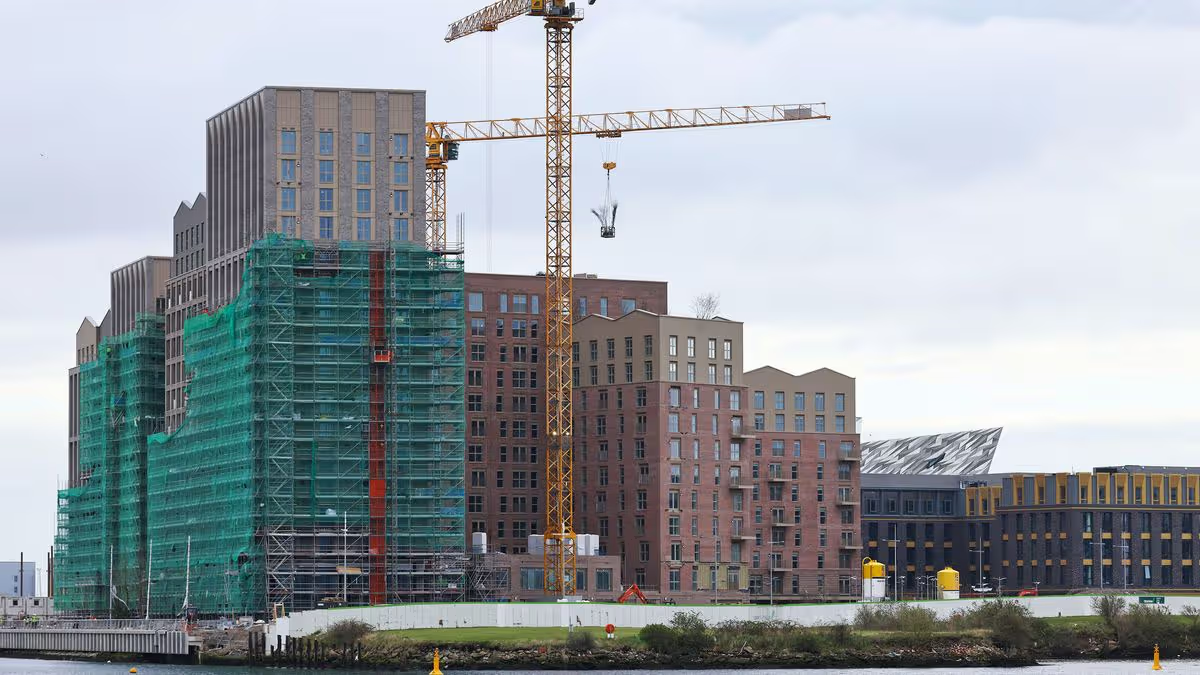
Construction work is due to be completed this summer on Loftlines – a landmark development that will bring 778 new homes to Belfast city centre.
Set within the iconic Titanic Quarter, Loftlines is one of Northern Ireland’s most ambitious regeneration projects and will be the city’s first major residential scheme to be built in 25 years. The development is home to Northern Ireland’s first Build-to-Rent (BTR) homes.
Ahead of the scheme opening to the public in July or August, Belfast Live was given the opportunity to spend some time in a similar scheme in England. Build-to-Rent schemes have massively increased in popularity across England over the last decade, with many opting to move into similar developments in places like Liverpool, Manchester and London.
The scheme in Belfast has been created by Legal and General, which owns a development in Leeds called Tower Works, where I stayed for a couple of days to get a feel for what living in one would be like. This development, much like Loftlines in Titanic Quarter, is pretty central but not directly in the middle of the city, so it didn’t feel too busy around it.
Advertisement
What can people expect?
I stayed in a studio apartment in the Canalside building, and, like many BTR schemes, it is one of a few buildings in the development. While the apartment was not massive by any stretch of the imagination, it was very modern and really well presented throughout. The finishings on it were great and had a lot of storage for such a small space, which definitely helped make it feel bigger.
Even though this was a studio, it was designed so the bedroom still felt separate, not the kind where you felt like you were sleeping in the kitchen. It is worth noting that the apartment range spans from studios to three bedrooms, and the best fit depends on lifestyle and needs.
From the moment we arrived, it was noticeable staff were very friendly, and the front-of-house team at reception were on hand for anything we needed. This concept, in itself, is a little alien to Belfast, with few developments offering a full-time receptionist to help with any needs.
Advertisement
Something equally as handy was that they were on hand for any parcels you might be having delivered, which are then kept in a secure room for you to collect when you’re ready. This in itself will save so much time trekking to the post office for another missed parcel, and something many would find very handy.
While there, I was shown around the amenities, in both Tower Works and Tura, a new BTR scheme in Leeds, to see what was on offer. There was a gym on-site and it was definitely high-end, but it was something we could see in other developments throughout Belfast.
However, it was the other amenities, like the large private dining facilities you can rent for you and a group to host dinner parties, that showed this is bringing something brand new.
Advertisement
It didn’t stop there; there were communal ‘living spaces’ where groups could gather to watch TV on large screens, which would be great for things like the World Cup. There were also pool and shuffleboard tables you could play on at any time.
On top of this, there were also places to work ‘from home’, but also feel like you were getting out of your apartment. These amenities went a long way toward expanding your living quarters beyond the apartment you were in to the entire building.
Often, a complaint about apartment living is the lack of outdoor space, and once again, these schemes try to tackle this issue. While they don’t have private gardens, they do have large communal courtyards and rooftops that anyone can use to catch a few rays during the warmer months.
Advertisement
However, these spaces are completely redundant if no one uses them as they are intended. During our stay, there was a community event to celebrate Eid with a wreath-making class. I went along to see how much interest there was among residents in these events and to find out from them what it was like to live here long-term.
About 20 people showed up and the activity took place at a large table, so everyone had an opportunity to chat. I spoke to one group and asked them openly whether it was as good as I had perceived so far. This group all came to live in this development as strangers, but were now firm friends as a result of resident events.
They were all from different walks of life and ages, but were able to actually bond as neighbours, which is something that rarely happens these days. They now all arrange to go to these events together and also meet up outside of resident events.
A community has clearly been created there through the hard work of the staff, who all arrange and put on these events. Most of which are free, and those that aren’t carry a small charge, depending on what it is. These friendships were real and would not have happened had they not lived here. It is not easy to bring people together anymore, and this scheme has succeeded in doing so.
Advertisement
BTR is brand new for the local market, and before now, the two most popular avenues for housing were private rental or home ownership. This differs in the sense that every apartment within the building will remain in Legal and General’s hands and only ever be rented out, but not like a typical private rental with a landlord.
Loftlines in Belfast is making fast progress ahead of its planned opening this summer, so I visited the site and compare what I had seen in England. While there is still some way to go before it is habitable, the show apartments matched the quality of those in Leeds and really lines up with the strategy they have in other schemes.
Like Leeds and other BTR schemes, Belfast will have on-site staff available at all times. Much of the same amenities like a gym, private dining room, games area and outdoor space. It also now has some incredible views of one of the best parts of Belfast, the Titanic Quarter.
Advertisement
Iconic site ‘overshadowed’
Steeped in history, the Titanic Quarter, before Loftlines, was home to the Titanic Museum – named the world’s leading tourst attraction in 2016 – and hotel, but not much else. There was very limited development there prior to this, except for The Arc, which meant it had some wide-open spaces. Loftlines has come under fire for being quite an imposing addition to our skyline and blocking the view of the architectural spectacle that is the Titanic Museum.
While it would be ideal to always have uninterrupted views of such buildings, it was always in the plan to develop the area and add more housing.
When renting one of the apartments, a basic set of furniture, including a dining table, chairs, a sofa, a bed, and a mattress, will be provided. On top of this, residents are free to, and encouraged to, decorate as they please. This includes hanging things on the wall and painting if they wish. If a tenant wishes to decorate but doesn’t fancy DIY, the scheme can provide someone to paint at a cost. There will also be maintenance on site, which means that if any issues arise with your apartment, they will be solved quickly in-house.
Advertisement
The Loftlines development has supported 650+ jobs and local businesses through the construction and delivery of the scheme. £92 million has already been spent locally within 40 miles of the scheme, with 90% of the supply chain partners being local. In addition, around 50% of personnel working on the scheme are from BT1-BT17 postcodes.
There are further plans for the development, which include a convenience store and a restaurant. This will serve the general public and add further employment opportunities for the city.
One fear is that, in developing this, there would be no sympathy for the area’s, the city’s, and indeed the country’s history. So when posed with the question about whether it was considered when planning the scheme, I was told that “the interiors were designed by one of the UK’s most experienced BTR interior design specialists, Lister + Lister, who were inspired by the rich heritage of the area and authentic colour palettes found in Belfast’s iconic dry docks and this can be seen in what has been delivered so far”.
Major step forward
We are in the midst of a housing crisis throughout the country, and this is a major step forward in addressing Northern Ireland’s housing shortage. It also provides market choice for those who want elevated city living. It will also go some way toward addressing the issue of a large number of student accommodation units in the city, leaving young professionals moving out of those areas with more choice about where to go next.
Advertisement
Belfast experiences high levels of ‘brain drain’ as it stands, so it will be interesting to see whether this trend helps reduce it.
This scheme will not only plug a gap in the housing market but also raise the standards of the private rental market, as it will have to compete with Loftlines and the amenities it offers. It isn’t perfect, but it marks a new era for the city and will bring it into line with other major cities, offering people elevated living in the heart of Belfast.
At the time of publishing, pricing for Loftlines was unavailable, but Belfast Live was told “it will be competitive”.
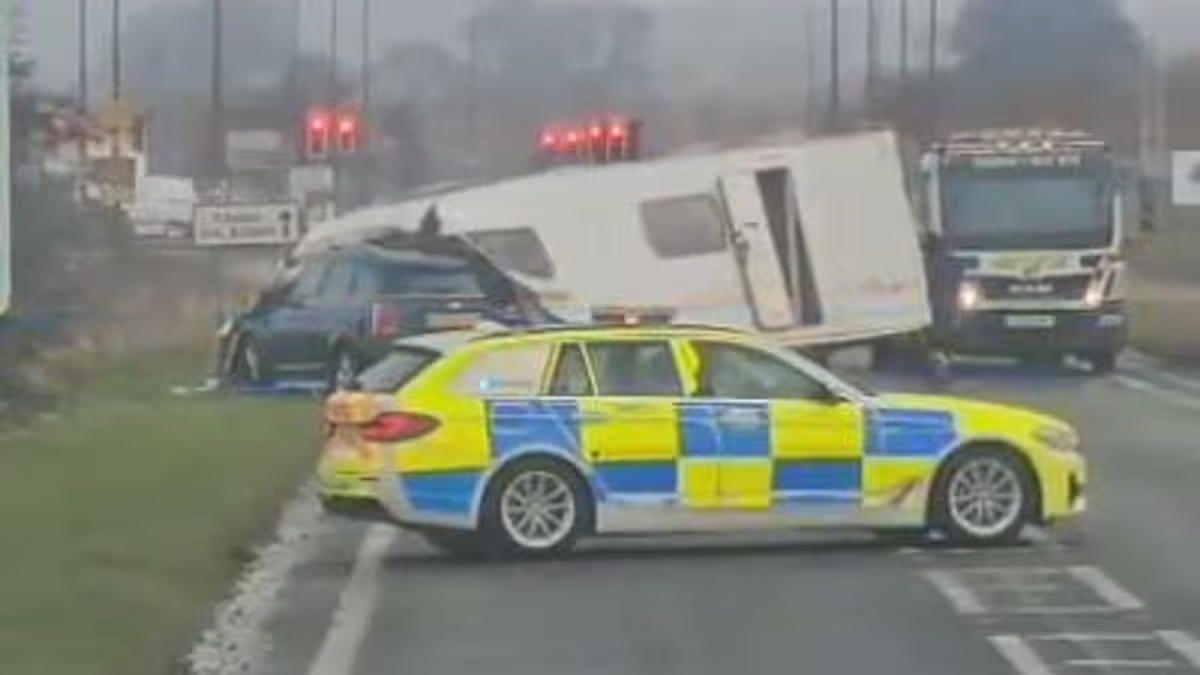
The collision occurred this afternoon on the A71 near East Calder, which saw the road closed in both directions around 2pm. Images from the scene showed a Mini Cooper smashed through a large caravan as debris is sprawled across the road.
A recovery vehicle can be seen parked beside the caravan. A cop car is seen stationed in front of the crash, cordoning off the stretch of road. It is not known if anyone was injured in the collision.
Donald Trump has responded after a US F-15 fighter jet was shot down over Iran, marking the first time a US jet has been downed by enemy fire in the conflict
Mikey Smith Deputy Political Editor in Dallas, Texas, Eliana Nunes News Reporter and Emma O’Neill Content Editor
22:08, 03 Apr 2026
Donald Trump has spoken out following the downing of a US fighter jet in Iran.
When questioned by NBC News about whether the shooting down of the F-15E Strike Eagle impacts negotiations with Iran, the US president responded: “No, not at all. No, it’s war. We’re in war.”
Advertisement
Trump refused to discuss the continuing search and rescue operation for the missing crew member and voiced irritation regarding certain media reporting of the mission due to its delicate nature, NBC News stated.
The incident represents a significant intensification of the conflict, now entering its fifth week, marking the first occasion a US jet has been brought down by hostile fire. Three American F-15E jets were accidentally shot down by friendly Kuwaiti forces on March 2 amidst an Iranian aerial offensive. All six crew members successfully ejected and were retrieved in stable condition, the US military confirmed at that time.
An F-15E carries a price tag of approximately $31 million for variants delivered in the late 1990s, while more recent models cost nearer to $100 million, according to specialist publication Airforce Technology, reports the Mirror.
Advertisement
Separately, a second US warplane is believed to have crashed in the Persian Gulf today, with the pilot managing to eject safely over water.
The A-10 Thunderbolt II attack aircraft, nicknamed the Warthog, came down near the Strait of Hormuz at roughly the same time as an F-15 was shot down over Iran, two officials informed The New York Times. The pilot of the single-seat aircraft was recovered by US forces.
The officials declined to provide additional details surrounding the circumstances of the incident. Iranian state television has claimed that “an American A-10 aircraft was shot by the defence systems of the Army Air Defence Force and crashed in the Persian Gulf in southern Iran”, according to the Iranian Army.
The broadcaster stated the Warthog went down close to the Strait of Hormuz. The aircraft carries a price tag of approximately $18.8 million, as reported by specialist news outlet Military Machine.
Advertisement
This development follows Trump’s sharp criticism on Tuesday of allies reluctant to contribute more substantially to the US military campaign against Iran, instructing them to “go get your own oil” and insisting it wasn’t America’s responsibility to safeguard the Strait of Hormuz.
Global leaders have grappled with ending Iran’s grip on the strait, which has triggered widespread ramifications for the world economy and represents its most significant strategic asset in the conflict. The UN Security Council was due to address the issue on Saturday.
Trump has oscillated between issuing warnings to Iran should it fail to reopen the waterway and urging other countries to “go get your own oil”. On Friday, he declared via social media that “with a little more time, we can easily OPEN THE HORMUZ STRAIT, TAKE THE OIL, and MAKE A FORTUNE”.
Advertisement
Since hostilities commenced with US and Israeli air strikes on February 28, upwards of 1,900 individuals have perished in Iran. An assessment published on Friday by the US-based organisation Armed Conflict Location and Event Data determined that civilian fatalities were concentrated around attacks on security and state-affiliated locations “rather than indiscriminate bombardment” of built-up areas.
Over two dozen individuals have tragically lost their lives in Gulf states and the occupied West Bank, while 19 fatalities have been reported in Israel, including 13 US service members. In Lebanon, the death toll exceeds 1,300 with over a million displaced. Additionally, ten Israeli soldiers have been killed on Lebanese soil.
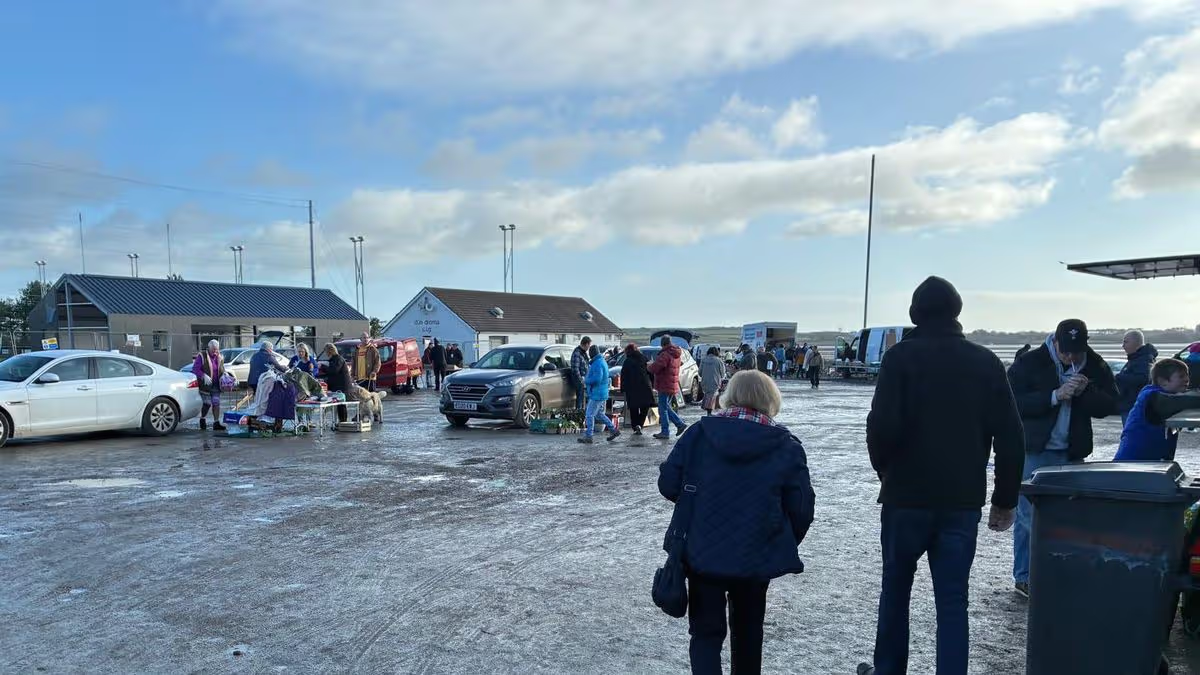
You didn’t know you needed Auf Wiedersehn Mallorca, a 1976 multi-lingual holiday hits complication complete with frollicking fraulein, until you see it poking from a pile of old vinyl at Dundrum car boot sale.
A discreet once-over, don’t look to keen. “Much?” “A pound, they were my mother-in-law’s records” Done. Where you gonna get anything for a pound much less a musical masterpiece from the early days of mass tourism?
This is what markets used to be like – older generations still have PTSD from being dragged as children around the old St George’s in Belfast which was once a dark and dank midden of fishmongers, fruit and veg, junk and bric-a-brac. Now it’s mostly hipsters and cruise ship tourists. But Dundrum car boot is a glorious riot of sights and sounds held most Sundays in the grounds of Dundrum GAC on the Newcastle Road in Dundrum Co Down.
My unofficial guide for the day, who would only give his name as Eddie, met me at the pitch gates bright and early at 8am a few Sundays ago. “You need to be the early bird or the best stuff goes quick, and if you like it buy it ‘cos some other git will swoop in behind you and have it”. Wise words we can all live by.
Eddie is a rummager by nature and mapped out our route through the tangle of stalls, cars, trestle tables and heaped flotsam and jetsam. Handshakes were fired his way from the regulars. I think I dislocated a wee finger getting a rigorous handshake from Big McAllister The Master Angler. Two mitts like sledgehammers. Eddie also pointed out some other characters, Ruta The Florist, The Crafty Cockney, The Veg Man, The Dogfood man, The Signs Man. There was a slight theme to the monikers I noticed.
Advertisement
A slow start, due to the handshakes, but soon we were away. But Eddie pulled me to one side for a whispered debrief and he had one final bit of local lore to share. Apparently. Now, apparently, a modern masterpiece was found at Dundrum and made its way to an auction in New York where it was valued at a potential $6million.
The story goes that a small Edward Hopper (1882-1967) original entitled The Study of High Noon was unearthed here in 2007 for buttons, posted on ebay for $580 and was soon recognised as the real deal and sold for millions. I got stuck right in to the bargain hunting with a renewed vigour.
And what was my first buy, a £5 ornamental concrete skull. Why? Why not. Have you a £5 ornamental concrete skull?
Advertisement
With the heady scent of victory in my nostrils – that might be the burgers and onions being fired up at the fantastic chip hut actually – I move on slowly and methodically to my next purchases. I’m in a flow state now and my eye has settled in to sort the tat from even more tat.
After Mallorca, comes a souvenir medal all the way from Paris with Napoleon himself on it. What the little Corsican corporal would make of Bruce Springsteen Born In the USA or 20 Buzzin Tracks (Energy Rush II) on cassette is anyone’s guess (the two for £2). I think he was a CD man myself.
Advertisement
Ed tells me these came from The House Clearance Man’s stall. And once you took in the contents of the tables it became clear someone’s old life or home was laid out for sale. The cassettes were in an old black plastic carry case/sorter. The type once seen in every ‘good’ room or teenager’s bedroom. in the 80s and early 90s. There was clothes, ornaments, kitchen utensils, tools, tool box. There was even a GCSE Art sketch pad filled with paintings, doodles and portraits of faces long changed. Not worth Edward Hopper’s $6million but once priceless.
And there lies the beauty of a good car boot, all humanity is here. Warts and all. Speaking of warts my final buy was a bit warty. A cry from one of the vendors went up: “Three pigs’ ears for two poun’.” Stopped in my tracks.
Advertisement
Now I know pigs don’t have three ears naturally so I guessed these were loose. And like a grim Woolworth’s pick’n’mix three choice dried slithers of hide from The Butcher were selected and bagged up for my dog to chew on.
With a short drive to Belfast looming we retired to the highly-recommended Frenchs Cafe & Bistro for a restoring fry and cup of tea where Eddie cast a dismayed eye over my purchases before I headed home to sort out my loot.
Just need a record and cassette player now – will be back next Sunday.
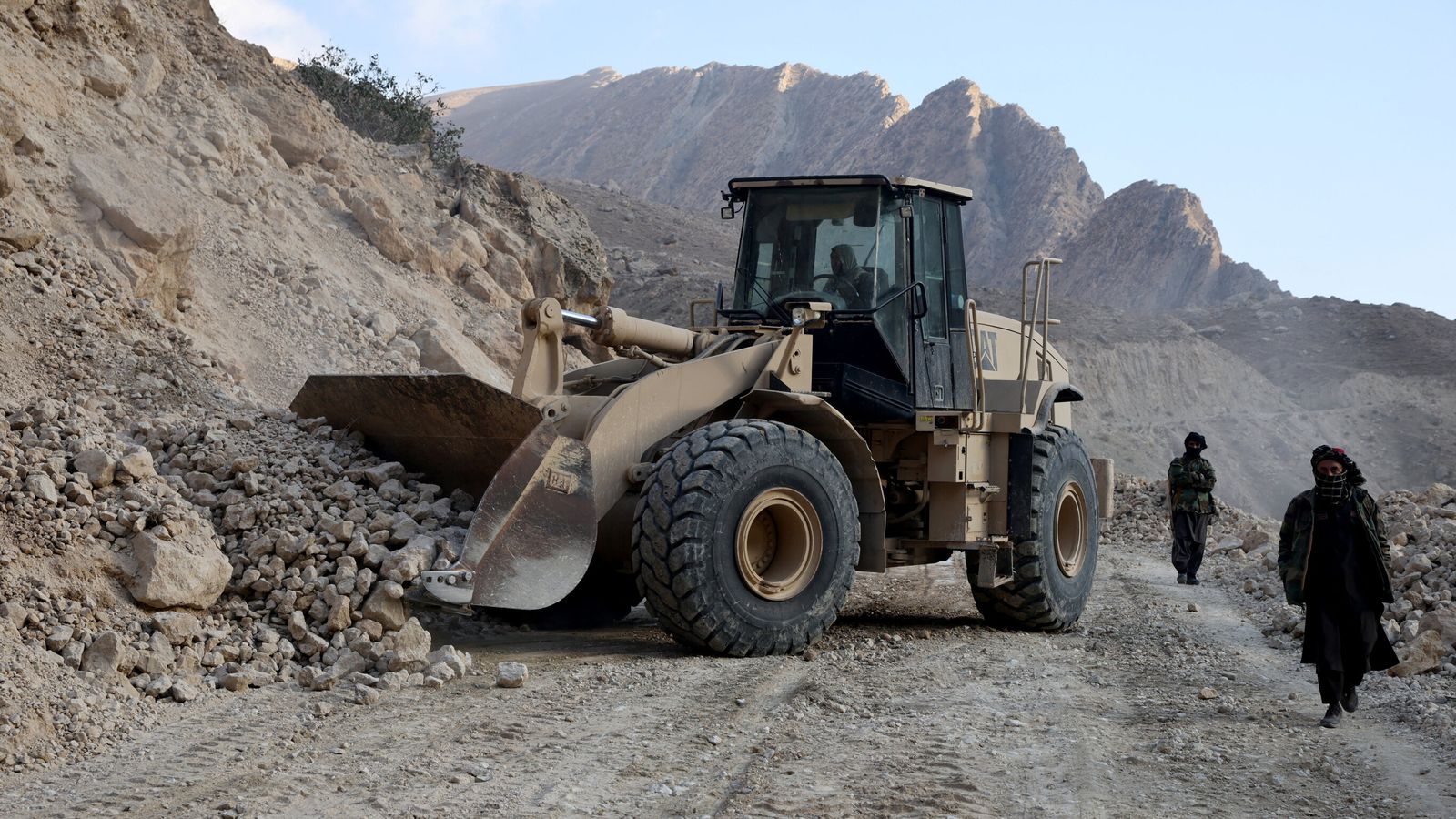
At least eight people are dead, and a child injured, after a 5.9 magnitude earthquake hit parts of Afghanistan and Pakistan late on Friday.
The eight dead and injured child are all members of the same family and were involved in a house collapse, Hafizullah Basharat, a spokesman for the Kabul governor, said.
The earthquake struck Afghanistan’s Hindu Kush region at a depth of 110 miles (177km), according to the German Research Centre for Geosciences.
Advertisement
Provincial health authorities in the country have been put on alert.
Strong tremors were also felt in Pakistan’s capital, Islamabad.
The region is highly seismically active, with earthquakes causing thousands of deaths in recent years.
Last August, a 6.0 earthquake in eastern Afghanistan killed more than 1,400 people, and injured at least 3,250 others – destroying villages and trapping people under rubble.
Most of the casualties in that disaster were in the country’s Kunar province, where people typically live in wood and mud-brick houses along steep valleys.
Advertisement
In November, a 6.3 earthquake struck Samangan province in northern Afghanistan, killing at least 27 people and injuring more than 950.
While in 2023, thousands were killed when a 6.3 quake, followed by strong aftershocks, rocked western Afghanistan.
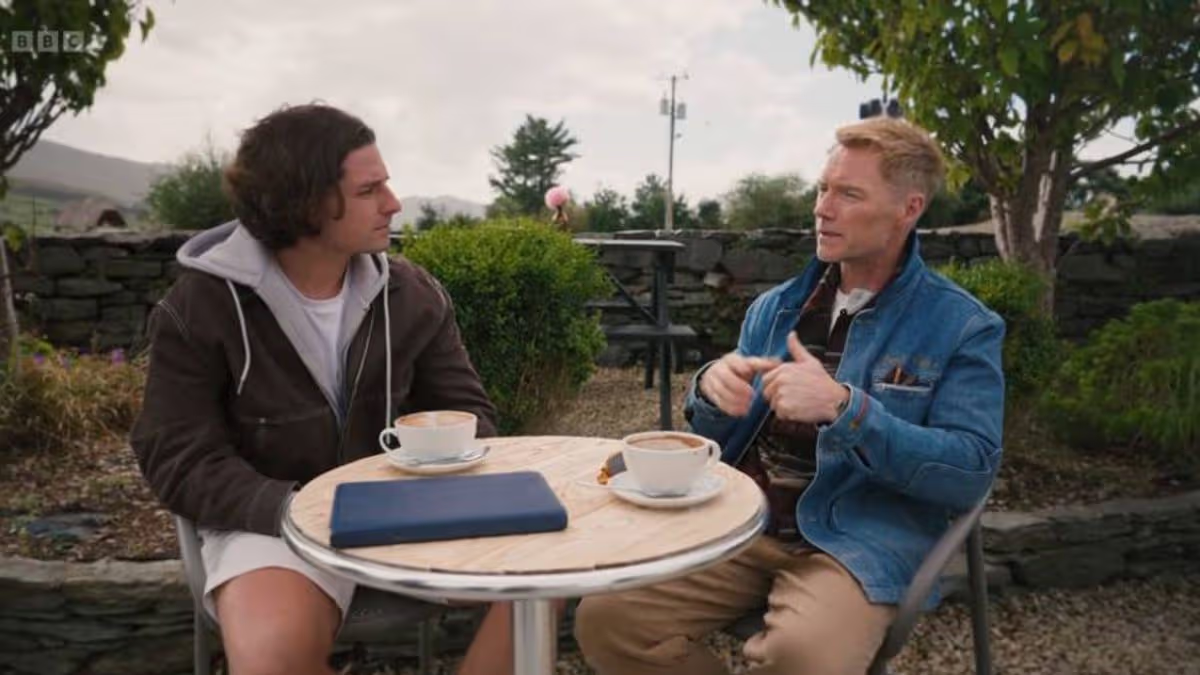
During Friday’s (April 3) instalment of The One Show, footage from Ronan Keating’s Wild Atlantic showed the musician speaking with his nephew, professional footballer Ruairí Keating, about the passing of his father and Ronan’s sibling, Ciarán Keating.
Ciarán was killed in a road collision in 2023 while travelling to watch his son play football, with his wife Annemarie sustaining serious injuries.
In a deeply moving exchange, Ronan disclosed that “our lives haven’t been the same” following his brother’s death, describing him as his “hero”, reports the Irish Mirror.
The Life Is A Rollercoaster performer said: “I’ve kind of parked my emotions for the last two years. I haven’t been able to really deal with it, with the loss.
“And I think this journey that I’m on is me trying to understand more, so that I can somehow grieve and let go because I found it very hard.”
Fighting back emotion, Ronan added: “He was so proud of you and he will still be so proud of you in everything that you’re doing. All of you kids, you were his world.
Advertisement
“I never get to say it but like, I was the baby. He’s my hero. I’ve very hard.”
Ciarán’s son Ruairí also revealed that he continues to “looks up” while playing football and thinks he can still spot his late dad amongst the spectators, and confessed the “hardest part” is no longer witnessing his father’s name appear on his phone following each match.
Ronan proceeded to explain that his brother served as his motivation for undertaking Wild Atlantic as a venture.
Advertisement
He previously stated: ‘It started as a celebration of the west coast of Ireland, the Wild Atlantic Way, the cliffs, the beaches, the people.
“I spent so many summers there, so it already meant a lot to me but as we began filming, it naturally evolved into something more personal.”
Alluding to Ciaran’s decision to reside on the west coast, Ronan continued: “So the journey became about understanding that decision, what drew him there, what he found there.”
Advertisement
‘It turned into a very emotional and very beautiful exploration of his love for that part of Ireland mine too.”
The One Show and Ronan Keating’s Wild Atlantic are available to watch on BBC iPlayer
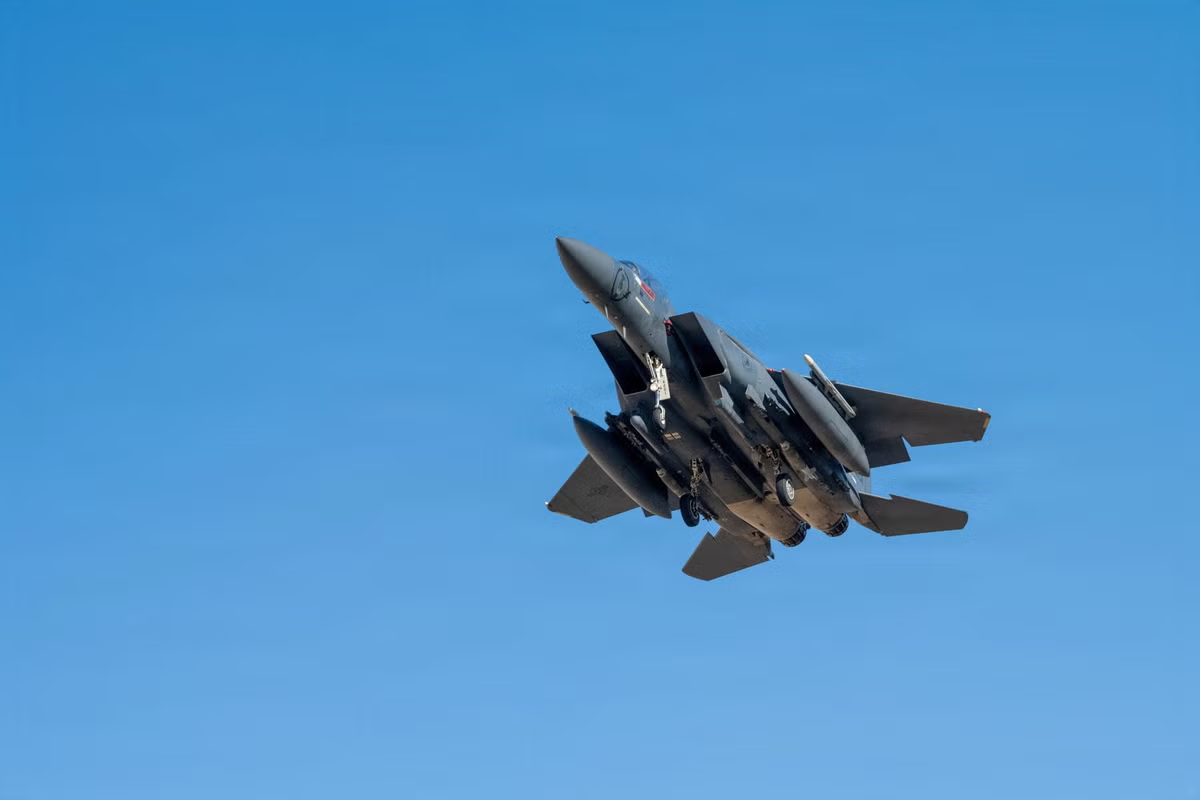
One crew member has been rescued and the search continues for the second pilot after a U.S. F-15 fighter jet was shot down over Iran, the first aircraft downed in Iranian territory since the war began nearly five weeks ago.
The jet, flown by a two-member crew, was shot down by Iranian forces around 6:45 a.m. ET on Friday and a rescue mission was quickly launched. One of the pilots, who had ejected before the aircraft went down, was rescued by U.S. forces, two U.S. officials have told CBS News. The pilot is alive and receiving medical attention, officials said.
U.S. forces are racing to recover the second pilot, a weapons system officer, before Iranian forces can reach them. Israel is helping the United States with the search and rescue operation.
Meanwhile, an Iranian news anchor has urged residents to hand over any “enemy pilot” to police and promised a reward for anyone who did. An on-screen crawl earlier urged the public to “shoot them if you see them”, referring to social media footage circulating of what appeared to be U.S. aircraft in the area.
Advertisement
The incident marked a major escalation in the conflict just two days after President Donald Trump said in a national address that the U.S. has “beaten and completely decimated Iran” and was “going to finish the job, and we’re going to finish it very fast.”
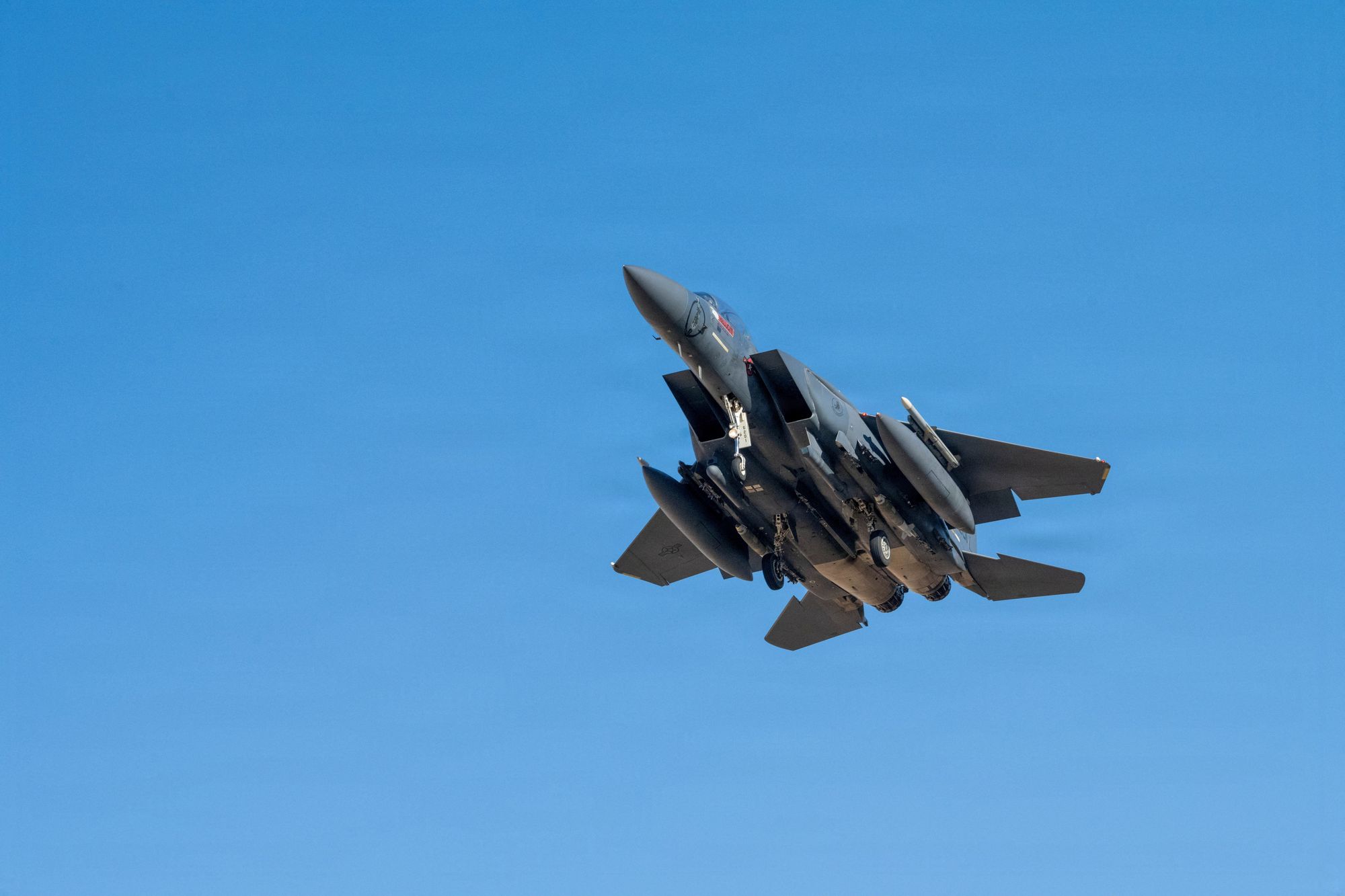
A U.S. Air Force F-15E Strike Eagle aircraft was shot down over Iran (File photo) (via REUTERS)
In a brief phone interview with The Independent, the president said he could not comment on what his course of action might be if Iranian forces get to the downed airman.
“We hope that’s not going to happen,” said the president, who ended the call shortly thereafter.
Hours after Trump was briefed on the development, the president made no mention of the incident as he took to Truth Social, writing: “KEEP THE OIL, ANYONE?”
But when asked about it during a brief interview with NBC News, Trump said that the downing of the US fighter jet would not affect any negotiations with Iran.
Advertisement
“No, not at all. No, it’s war. We’re in war,” he said on the call.
He declined to discuss the ongoing search and rescue mission.
Earlier Friday, Iranian state-linked media outlets reported that helicopters were deployed to search for the downed jet’s crew, though there were conflicting accounts about their origin.
The Fars news agency said it was unclear who operated the aircraft, while Tasnim reported they were American and claimed at least one helicopter was forced to retreat after coming under fire. Tasnim also said a US C-130 Hercules aircraft was involved in the operation.
Advertisement
Mizan, an outlet affiliated with Iran’s judiciary, reported that an American rescue mission was active and published images it claimed showed U.S. aircraft in Iranian airspace.
Iranian officials called on civilians to be on the lookout for survivors, according to Reuters. The governor of Iran‘s Kohgiluyeh and Boyer-Ahmad province said whoever captured or killed the crew “would be specially commended,” according to the semi-official Iranian news agency ISNA.
This video grab taken from UGC images posted on social media on April 3, 2026 show a US aircraft, followed by two helicopters, flying over the town of Zaras in the southern Iran’s Khuzestan province (UGC/AFP via Getty Images)
The incident comes as the US and Israel continue to deliver strikes against Iran (AFP via Getty Images)
The incident could represent a significant political complication for Trump, who suggested in a primetime address to the nation this week that the war was ending and that Iran’s military capability had been all but destroyed. He nevertheless said the US-Israeli bombardment would continue for “two or three weeks”.
“With a little more time, we can easily OPEN THE HORMUZ STRAIT, TAKE THE OIL, & MAKE A FORTUNE. IT WOULD BE A “GUSHER” FOR THE WORLD??? President DONALD J. TRUMP”
Advertisement
Iran’s attacks on Gulf energy infrastructure and its tight grip on the Strait of Hormuz, through which a fifth of the world’s oil and natural gas transits in peacetime, have roiled stock markets, sent oil prices skyrocketing, and threatened to raise the cost of many basic goods, including food.
Trump has threatened further escalation, warning of potential strikes on Iran’s energy grid if the strait is not reopened. Iranian officials have rejected negotiations under current conditions.
“Bridges next, then Electric Power Plants!” he wrote on social media late Thursday. “New Regime leadership knows what has to be done, and has to be done, FAST!”
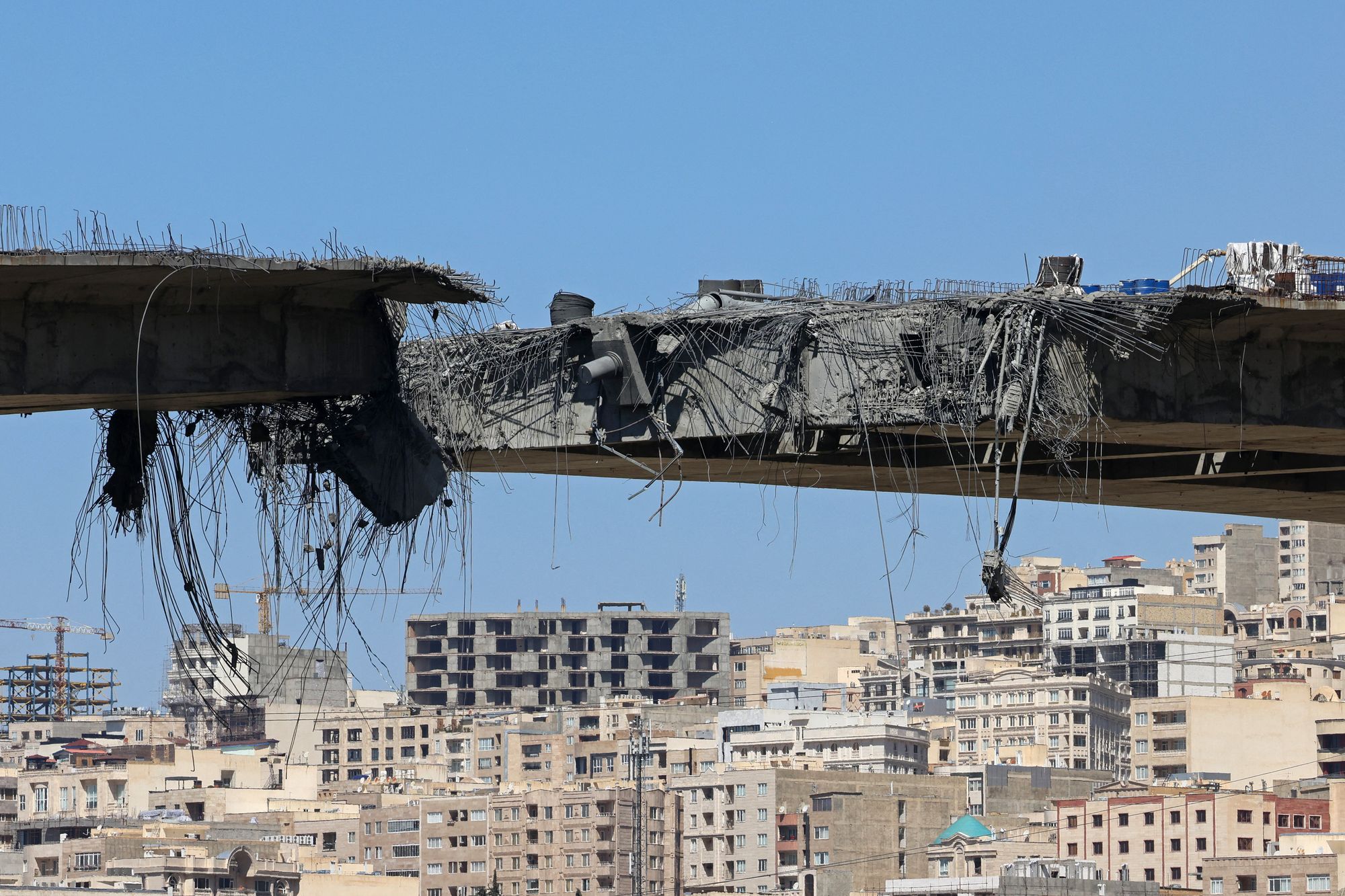
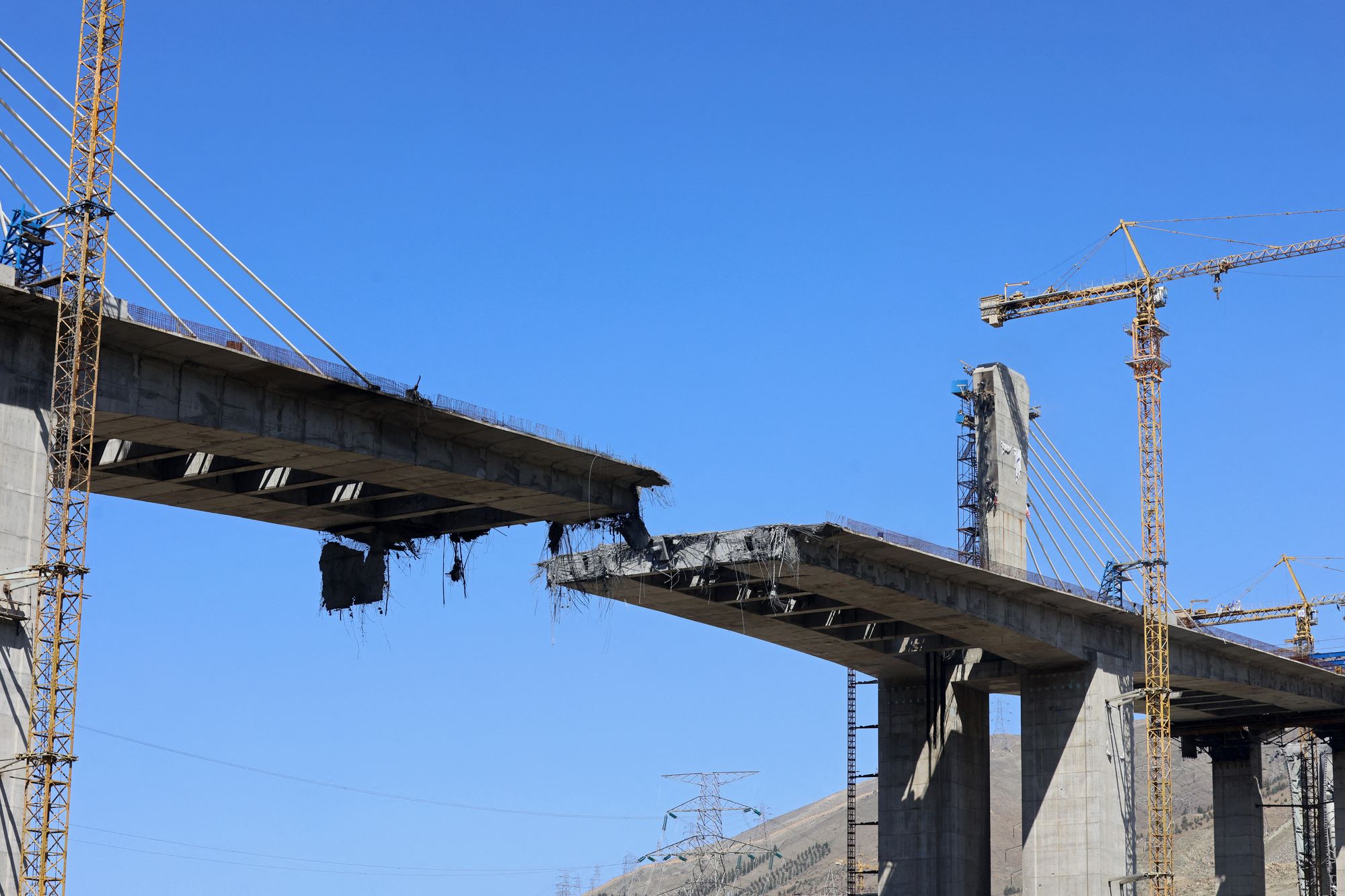
On Friday, Trump celebrated the bombing of an Iranian bridge, as he warned on social media that there was “much more to follow.” Footage showed the moment the B1 bridge in Karaj, west of Tehran, was cut in half by the strike on Thursday. The attack killed eight people and wounded 95, Iranian news media reported.
Advertisement
A view of the B1 bridge is pictured, a day after it was destroyed by a strike in Karaj, southwest of Tehran (AFP via Getty Images)
Today’s incident is the first U.S. or Israeli jet to have been shot down over Iran since the war started. Three U.S. F-15E Strike Eagle jets were downed by friendly fire over Kuwait in March. None of the aircrews were injured.
More than 1,900 people have been killed in Iran since the war began on 28 February with U.S. and Israeli strikes, the Associated Press reported. In a review released Friday, the Armed Conflict Location and Event Data, a U.S.-based group, said it found that civilian casualties were clustered around strikes on security and state-linked sites “rather than indiscriminate bombardment” of urban areas.
More than two dozen people have died in Gulf states and the occupied West Bank, 19 have been reported dead in Israel, and 13 U.S. service members have been killed. More than 1,300 people have been killed and more than 1 million displaced in Lebanon. Ten Israeli soldiers have also died there.















































You must be logged in to post a comment Login